Aberrant Activation of the Hedgehog Pathway in Cutaneous Melanoma: Therapeutic Potential of Pharmacological Inhibitors
 , , , ,
Abstract
1. Introduction
2. Results
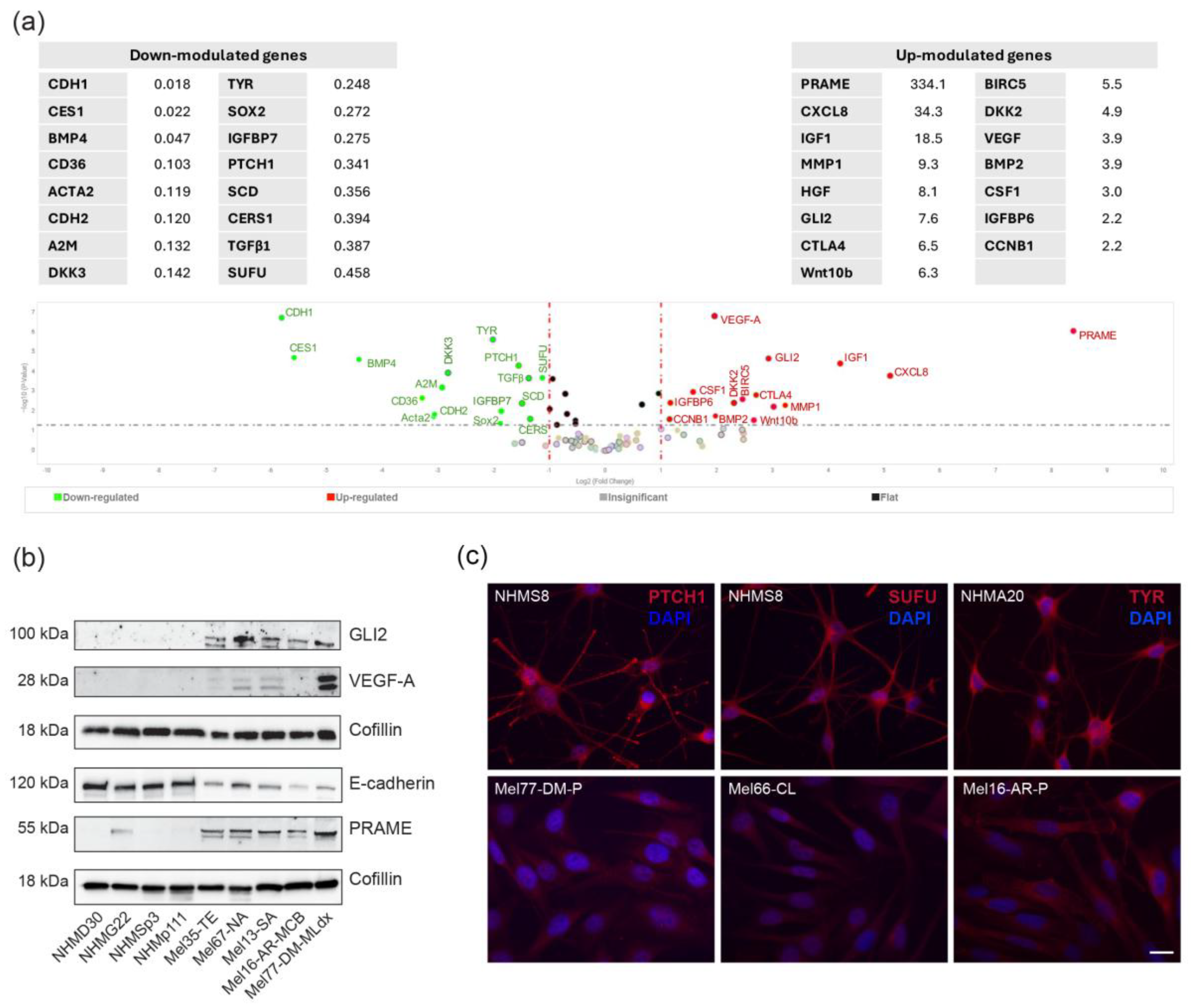
2.1. The Hh Signaling Pathway Is Overactive in Human Melanoma Cells
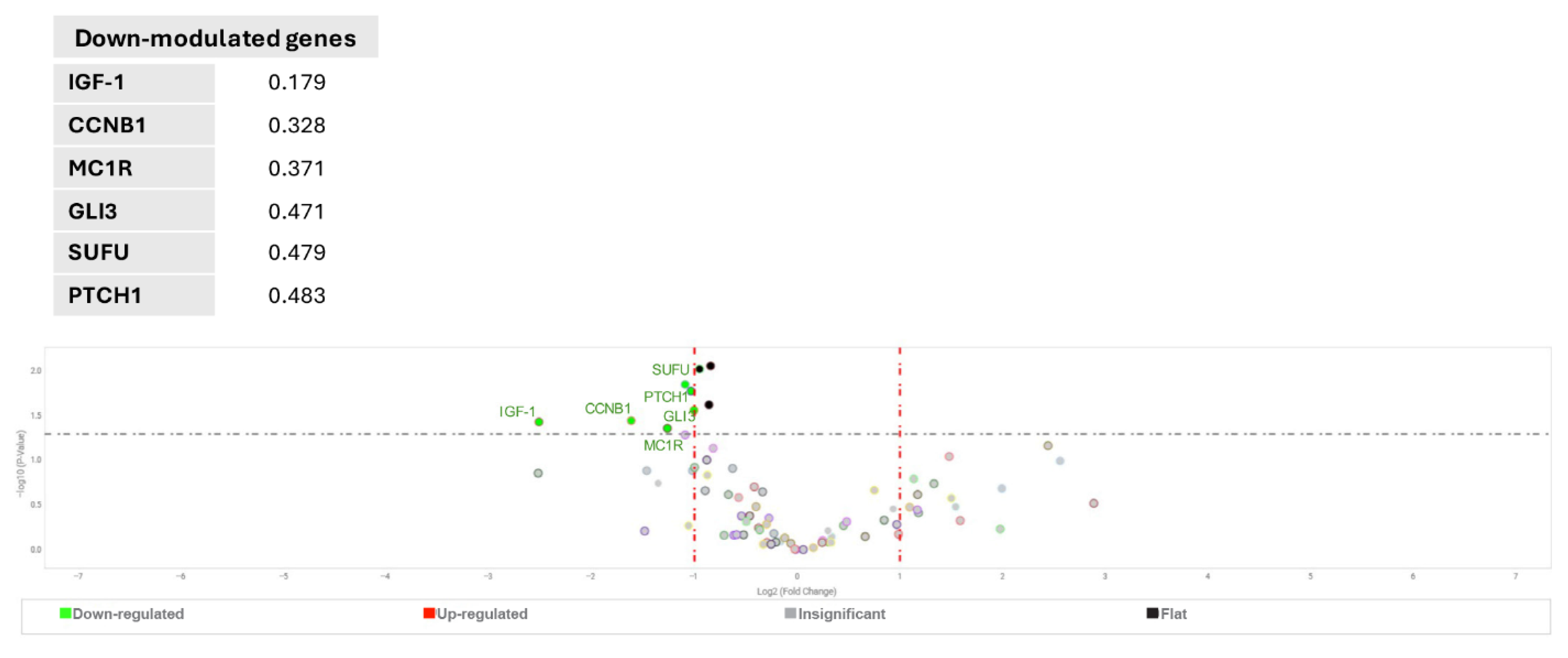
2.2. Hedgehog Pathway Mutational Profile in Melanoma Cells
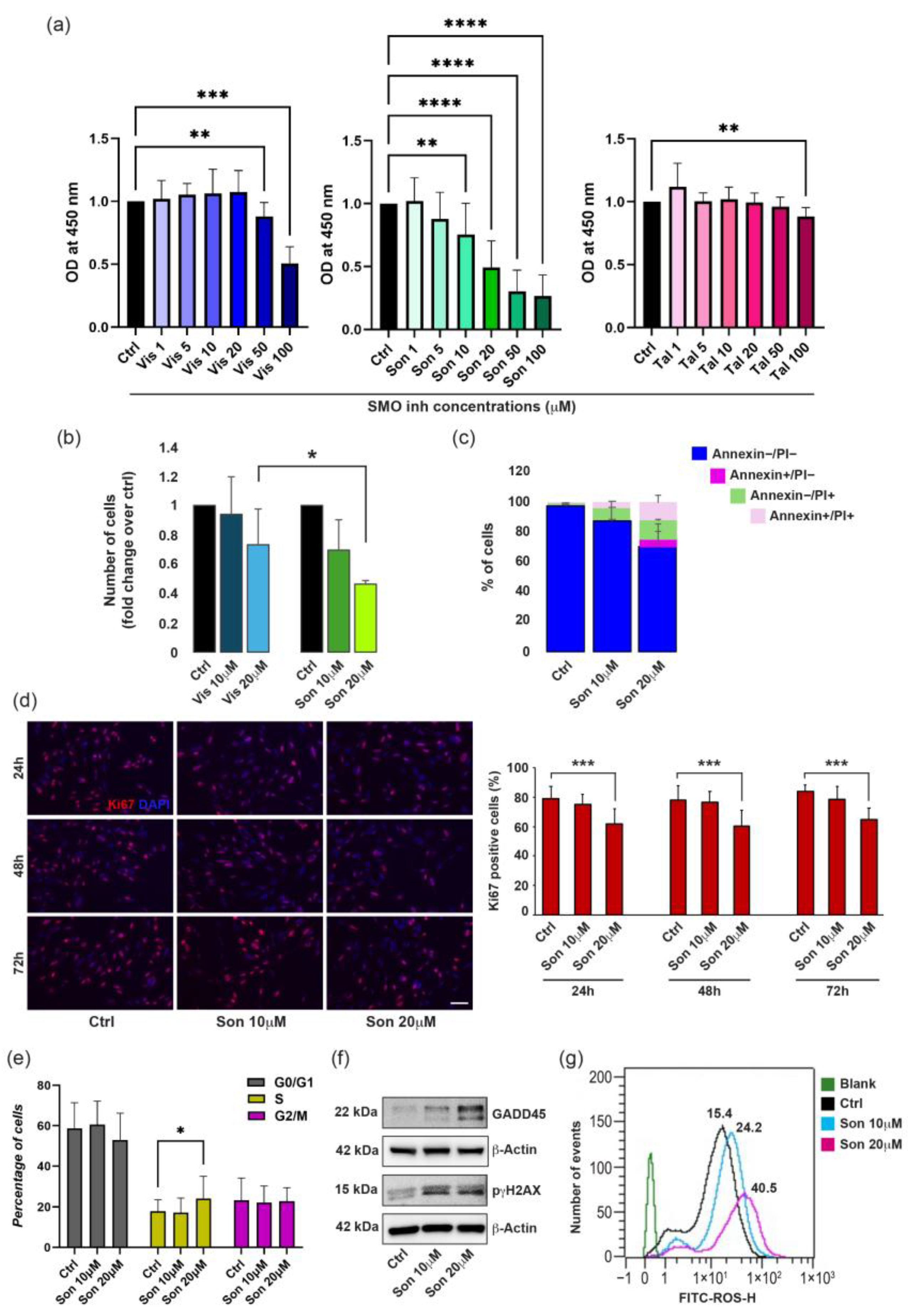
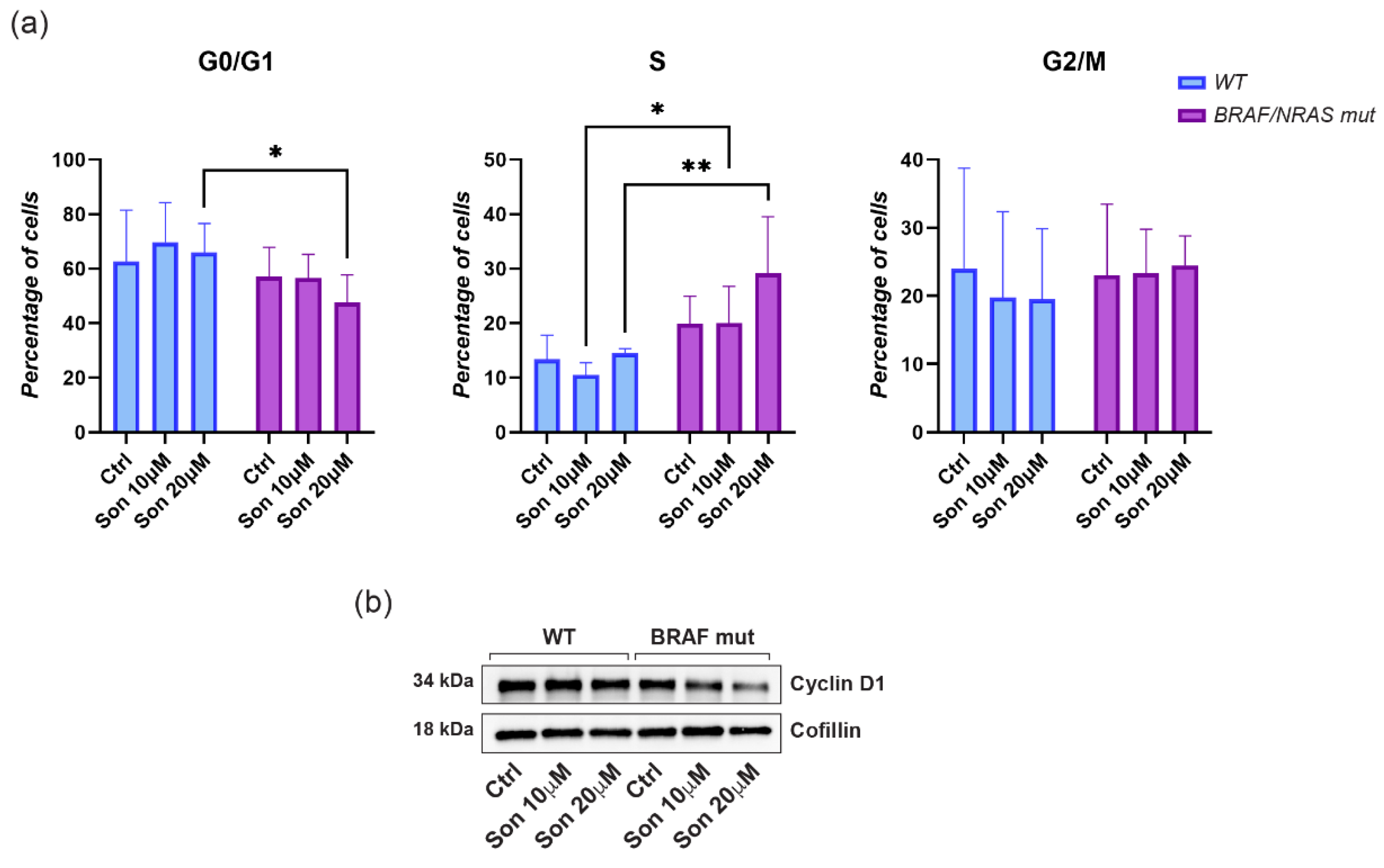
2.3. SMO Antagonists Reduce the Proliferative Capacity of Melanoma Cells and Induce Apoptosis In Vitro
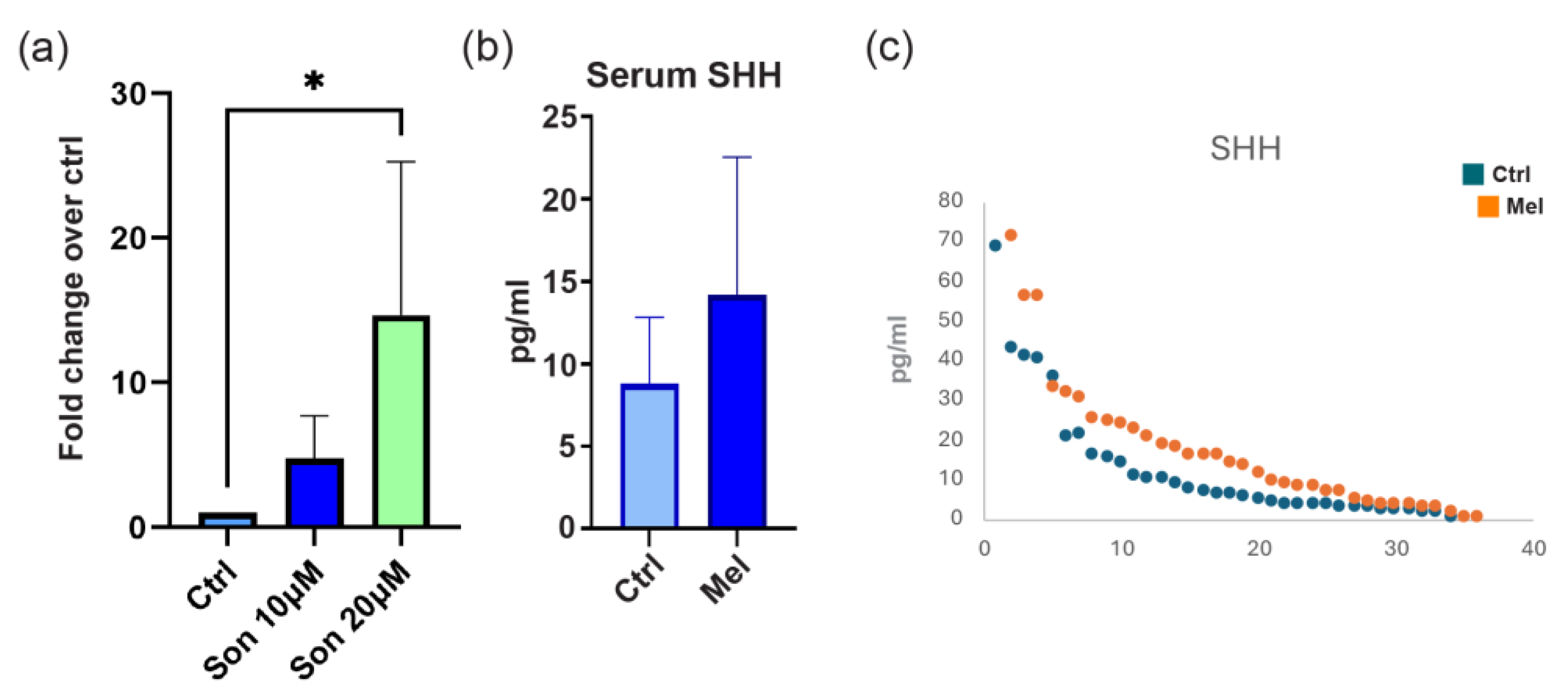
2.4. Inhibition of SMO Stimulates the Autocrine Production of Hh Ligands
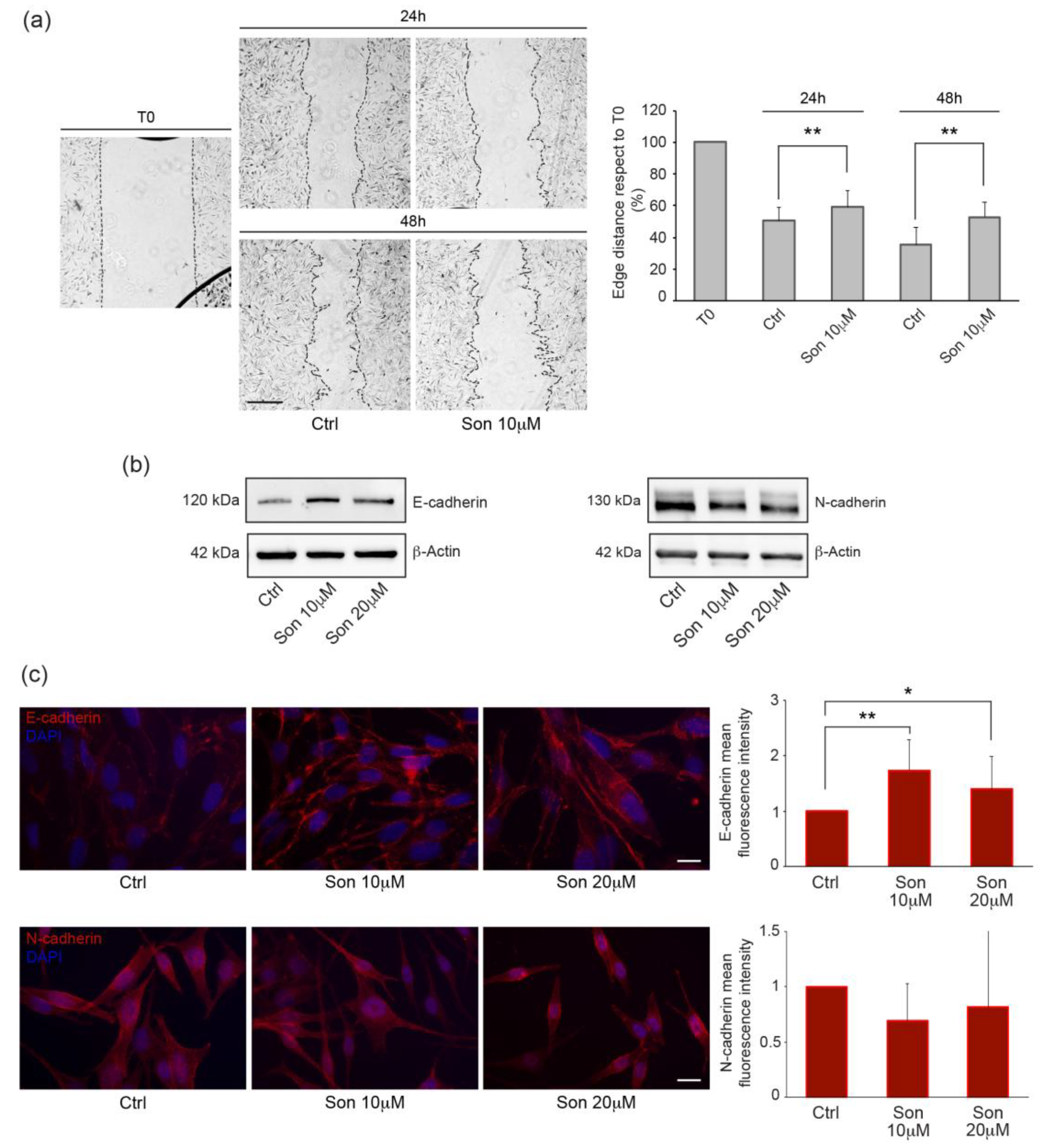
2.5. SMO Inhibition Counteracts Melanoma Cell Migration Impacting the Expression of Adhesion Molecules
2.6. SMO Inhibition Impact on the Production of Inflammatory Mediators
2.7. SMO Inhibition Modestly Affects the Production of Growth Factors by Melanoma Cells
3. Discussion
4. Materials and Methods
Supplementary Materials
Author Contributions
Funding
Institutional Review Board Statement
Informed Consent Statement
Data Availability Statement
Conflicts of Interest
References
- Zhou, L.; Zhong, Y.; Han, L.; Xie, Y.; Wan, M. Global, Regional, and National Trends in the Burden of Melanoma and Non-Melanoma Skin Cancer: Insights from the Global Burden of Disease Study 1990–2021. Sci. Rep. 2025, 15, 5996. [Google Scholar] [CrossRef] [PubMed]
- Conforti, C.; Zalaudek, I. Epidemiology and Risk Factors of Melanoma: A Review. Dermatol. Pract. Concept. 2021, 11, e2021161S. [Google Scholar] [CrossRef] [PubMed]
- Manganelli, M.; Stabile, G.; Scharf, C.; Brunetti, A.P.; Paolino, G.; Giuffrida, R.; Bigotto, G.D.; Damiano, G.; Mercuri, S.R.; Sallustio, F.; et al. Skin Photodamage and Melanomagenesis: A Comprehensive Review. Cancers 2025, 17, 1784. [Google Scholar] [CrossRef] [PubMed]
- Garrison, Z.R.; Hall, C.M.; Fey, R.M.; Clister, T.; Khan, N.; Nichols, R.; Kulkarni, R.P. Advances in Early Detection of Melanoma and the Future of at-Home Testing. Life 2023, 13, 974. [Google Scholar] [CrossRef]
- Kubelis-López, D.E.; Zapata-Salazar, N.A.; Said-Fernández, S.L.; Sánchez-Domínguez, C.N.; Salinas-Santander, M.A.; Martínez-Rodríguez, H.G.; Vázquez-Martínez, O.T.; Wollina, U.; Lotti, T.; Ocampo-Candiani, J. Updates and New Medical Treatments for Vitiligo (Review). Exp. Ther. Med. 2021, 22, 797. [Google Scholar] [CrossRef]
- Boutros, A.; Croce, E.; Ferrari, M.; Gili, R.; Massaro, G.; Marconcini, R.; Arecco, L.; Tanda, E.T.; Spagnolo, F. The Treatment of Advanced Melanoma: Current Approaches and New Challenges. Crit. Rev. Oncol. Hematol. 2024, 196, 104276. [Google Scholar] [CrossRef]
- Salaritabar, A.; Berindan-Neagoe, I.; Darvish, B.; Hadjiakhoondi, F.; Manayi, A.; Devi, K.P.; Barreca, D.; Orhan, I.E.; Süntar, I.; Farooqi, A.A.; et al. Targeting Hedgehog Signaling Pathway: Paving the Road for Cancer Therapy. Pharmacol. Res. 2019, 141, 466–480. [Google Scholar] [CrossRef]
- Yu, M.; Qin, K.; Fan, J.; Zhao, G.; Zhao, P.; Zeng, W.; Chen, C.; Wang, A.; Wang, Y.; Zhong, J.; et al. The Evolving Roles of Wnt Signaling in Stem Cell Proliferation and Differentiation, the Development of Human Diseases, and Therapeutic Opportunities. Genes Dis. 2023, 11, 101026. [Google Scholar] [CrossRef]
- Abe, Y.; Tanaka, N. Roles of the Hedgehog Signaling Pathway in Epidermal and Hair Follicle Development, Homeostasis, and Cancer. J. Dev. Biol. 2017, 5, 12. [Google Scholar] [CrossRef]
- Frech, S.; Forsthuber, A.; Korosec, A.; Lipp, K.; Kozumov, V.; Lichtenberger, B.M. Hedgehog Signaling in Papillary Fibroblasts is Essential for Hair Follicle Regeneration during Wound Healing. J. Investig. Dermatol. 2022, 142, 1737–1748.e5. [Google Scholar] [CrossRef]
- Wang, W.; Li, F.; Wang, J.; Liu, Z.; Tian, M.; Wang, Z.; Li, H.; Qu, J.; Chen, Y.; Hou, L. Disrupting Hedgehog Signaling in Melanocytes by SUFU Knockout Leads to Ocular Melanocytosis and Anterior Segment Malformation. Dis. Model. Mech. 2023, 16, dmm050210. [Google Scholar] [CrossRef] [PubMed]
- Chitsazan, A.; Ferguson, B.; Villani, R.; Handoko, H.Y.; Mukhopadhyay, P.; Gabrielli, B.; Mooi, W.J.; Soyer, H.P.; Lambie, D.; Khosrotehrani, K.; et al. Keratinocyte Sonic Hedgehog Upregulation Drives the Development of Giant Congenital Nevi Via Paracrine Endothelin-1 Secretion. J. Investig. Dermatol. 2018, 138, 893–902. [Google Scholar] [CrossRef] [PubMed]
- Peterson, S.C.; Eberl, M.; Vagnozzi, A.N.; Belkadi, A.; Veniaminova, N.A.; Verhaegen, M.E.; Bichakjian, C.K.; Ward, N.L.; Dlugosz, A.A.; Wong, S.Y. Basal Cell Carcinoma Preferentially Arises from Stem Cells within Hair Follicle and Mechanosensory Niches. Cell Stem Cell 2015, 16, 400–412. [Google Scholar] [CrossRef] [PubMed]
- Grachtchouk, V.; Grachtchouk, M.; Lowe, L.; Johnson, T.; Wei, L.; Wang, A.; de Sauvage, F.; Dlugosz, A.A. The Magnitude of Hedgehog Signaling Activity Defines Skin Tumor Phenotype. EMBO J. 2003, 22, 2741–2751. [Google Scholar] [CrossRef]
- Sheng, H.; Goich, S.; Wang, A.; Grachtchouk, M.; Lowe, L.; Mo, R.; Lin, K.; de Sauvage, F.J.; Sasaki, H.; Hui, C.; et al. Dissecting the Oncogenic Potential of Gli2: Deletion of an NH(2)-Terminal Fragment Alters Skin Tumor Phenotype. Cancer Res. 2002, 62, 5308–5316. [Google Scholar]
- Sachse, M.M.; Kähler, K.C. Alopecia due to Chemotherapeutics, Hedgehog Inhibitors, Targeted Antibody Therapies and Immune Checkpoint Inhibitors: Pathogenesis, Clinical Picture, Diagnostics and Prophylaxis. Dermatologie 2024, 75, 459–465. [Google Scholar] [CrossRef]
- Choi, H.; Shin, J.H.; Kim, E.S.; Park, S.J.; Bae, I.; Jo, Y.K.; Jeong, I.Y.; Kim, H.; Lee, Y.; Park, H.C.; et al. Primary Cilia Negatively Regulate Melanogenesis in Melanocytes and Pigmentation in a Human Skin Model. PLoS ONE 2016, 11, e0168025. [Google Scholar] [CrossRef]
- Javelaud, D.; Alexaki, V.I.; Pierrat, M.J.; Hoek, K.S.; Dennler, S.; van Kempen, L.; Bertolotto, C.; Ballotti, R.; Saule, S.; Delmas, V.; et al. GLI2 and M-MITF transcription factors control exclusive gene expression programs and inversely regulate invasion in human melanoma cells. Pig. Cell Mel. Res. 2011, 24, 932–943. [Google Scholar] [CrossRef]
- Kim, N.; Lee, A. Oxidative Stress Induces Skin Pigmentation in Melasma by Inhibiting Hedgehog Signaling. Antioxidants 2023, 12, 1969. [Google Scholar] [CrossRef]
- Jing, J.; Wu, Z.; Wang, J.; Luo, G.; Lin, H.; Fan, Y.; Zhou, C. Hedgehog Signaling in Tissue Homeostasis, Cancers, and Targeted Therapies. Signal Transduct. Target. Ther. 2023, 8, 315. [Google Scholar] [CrossRef]
- Foulkes, W.D.; Kamihara, J.; Evans, D.G.R.; Brugières, L.; Bourdeaut, F.; Molenaar, J.J.; Walsh, M.F.; Brodeur, G.M.; Diller, L. Cancer Surveillance in Gorlin Syndrome and Rhabdoid Tumor Predisposition Syndrome. Clin. Cancer Res. 2017, 23, e62–e67. [Google Scholar] [CrossRef] [PubMed]
- Di Nardo, L.; Pellegrini, C.; Di Stefani, A.; Ricci, F.; Fossati, B.; Del Regno, L.; Carbone, C.; Piro, G.; Corbo, V.; Delfino, P.; et al. Molecular Alterations in Basal Cell Carcinoma Subtypes. Sci. Rep. 2021, 11, 13206. [Google Scholar] [CrossRef] [PubMed]
- Brankov, N.; Prodanovic, E.M.; Hurley, M.Y. Pigmented Basal Cell Carcinoma: Increased Melanin or Increased Melanocytes? J. Cutan. Pathol. 2016, 43, 1139–1142. [Google Scholar] [CrossRef] [PubMed]
- Wang, Y.; Chen, H.; Jiao, X.; Wu, L.; Yang, Y.; Zhang, J.; Wu, L.; Liu, C.; Zhuo, N.; Li, S.; et al. PTCH1 Mutation Promotes Antitumor Immunity and the Response to Immune Checkpoint Inhibitors in Colorectal Cancer Patients. Cancer Immunol. Immunother. 2022, 71, 111–120. [Google Scholar] [CrossRef]
- Wang, C.; Chang, Y.; Kuo, Y.; Lee, K.; Chen, P.; Cheung, C.H.A.; Chang, C.; Phan, N.N.; Shen, M.; Hsu, H. Mutation of the PTCH1 Gene Predicts Recurrence of Breast Cancer. Sci. Rep. 2019, 9, 16359. [Google Scholar] [CrossRef]
- Shevde, L.A.; Samant, R.S. Nonclassical Hedgehog-GLI Signaling and its Clinical Implications. Int. J. Cancer 2014, 135, 1–6. [Google Scholar] [CrossRef]
- Gigante, E.D.; Caspary, T. Signaling in the Primary Cilium through the Lens of the Hedgehog Pathway. Wiley Interdiscip. Rev. Dev. Biol. 2020, 9, e377. [Google Scholar] [CrossRef]
- Gorojankina, T. Hedgehog Signaling Pathway: A Novel Model and Molecular Mechanisms of Signal Transduction. Cell Mol. Life Sci. 2016, 73, 1317–1332. [Google Scholar] [CrossRef]
- Falkenstein, K.N.; Vokes, S.A. Transcriptional Regulation of Graded Hedgehog Signaling. Semin. Cell Dev. Biol. 2014, 33, 73–80. [Google Scholar] [CrossRef]
- O’Reilly, K.E.; de Miera, E.V.; Segura, M.F.; Friedman, E.; Poliseno, L.; Han, S.W.; Zhong, J.; Zavadil, J.; Pavlick, A.; Hernando, E.; et al. Hedgehog Pathway Blockade Inhibits Melanoma Cell Growth in Vitro and in Vivo. Pharmaceuticals 2013, 6, 1429–1450. [Google Scholar] [CrossRef]
- Giuntini, G.; Monaci, S.; Cau, Y.; Mori, M.; Naldini, A.; Carraro, F. Inhibition of Melanoma Cell Migration and Invasion Targeting the Hypoxic Tumor Associated CAXII. Cancers 2020, 12, 3018. [Google Scholar] [CrossRef] [PubMed]
- Falsini, A.; Giuntini, G.; Mori, M.; Ghirga, F.; Quaglio, D.; Cucinotta, A.; Coppola, F.; Filippi, I.; Naldini, A.; Botta, B.; et al. Hedgehog Pathway Inhibition by Novel Small Molecules Impairs Melanoma Cell Migration and Invasion Under Hypoxia. Pharmaceuticals 2024, 17, 227. [Google Scholar] [CrossRef] [PubMed]
- Stecca, B.; Mas, C.; Clement, V.; Zbinden, M.; Correa, R.; Piguet, V.; Beermann, F.; Ruiz, I.; Altaba, A. Melanomas require HEDGEHOG-GLI signaling regulated by interactions between GLI1 and the RAS-MEK/AKT pathways. Proc. Natl. Acad. Sci. USA 2007, 104, 5895–5900. [Google Scholar] [CrossRef] [PubMed]
- Tusa, I.; Gagliardi, S.; Menconi, A.; Maresca, L.; Tubita, A.; Lulli, M.; Stecca, B.; Rovida, E. The MEK5/ERK5 pathway promotes the activation of the Hedgehog/GLI signaling in melanoma cells. Cell. Oncol. 2025, 48, 789–799. [Google Scholar] [CrossRef]
- Kovacs, D.; Migliano, E.; Muscardin, L.; Silipo, V.; Catricalà, C.; Picardo, M.; Bellei, B. The Role of Wnt/Β-Catenin Signaling Pathway in Melanoma Epithelial-to-Mesenchymal-Like Switching: Evidences from Patients-Derived Cell Lines. Oncotarget 2016, 7, 43295–43314. [Google Scholar] [CrossRef]
- Chen, Y.; Zhang, W.; Qiu, Y.; Ke, L.; Chen, H.; Chen, G. PRAME is a Useful Marker for the Differential Diagnosis of Melanocytic Tumours and Histological Mimics. Histopathology 2023, 82, 285–295. [Google Scholar] [CrossRef]
- Nikulin, S.V.; Raigorodskaya, M.P.; Poloznikov, A.A.; Zakharova, G.S.; Schumacher, U.; Wicklein, D.; Stürken, C.; Riecken, K.; Fomicheva, K.A.; Alekseev, B.Y.; et al. Role of IGFBP6 Protein in the Regulation of Epithelial-Mesenchymal Transition Genes. Bull. Exp. Biol. Med. 2018, 164, 650–654. [Google Scholar] [CrossRef]
- Zhou, Y.; Song, K.Y.; Giubellino, A. The Role of MET in Melanoma and Melanocytic Lesions. Am. J. Pathol. 2019, 189, 2138–2148. [Google Scholar] [CrossRef]
- Gao, Q.; Li, N.; Pan, Y.; Chu, P.; Zhou, Y.; Jia, H.; Cheng, Y.; Xue, G.; Song, J.; Zhang, Y.; et al. Hepatocyte Growth Factor Promotes Melanoma Metastasis through Ubiquitin-Specific Peptidase 22-Mediated Integrins Upregulation. Cancer Lett. 2024, 604, 217196. [Google Scholar] [CrossRef]
- Tsuchida, R.; Osawa, T.; Wang, F.; Nishii, R.; Das, B.; Tsuchida, S.; Muramatsu, M.; Takahashi, T.; Inoue, T.; Wada, Y.; et al. BMP4/Thrombospondin-1 Loop Paracrinically Inhibits Tumor Angiogenesis and Suppresses the Growth of Solid Tumors. Oncogene 2014, 33, 3803–3811. [Google Scholar] [CrossRef]
- Morozova, V.; Pellegata, D.; Charles, R.; Gertsch, J. Carboxylesterase 1-Mediated Endocannabinoid Metabolism in Skin: Role in Melanoma Progression in BRaf(V600E)/Pten(-/-) Mice. Cancer Metab. 2025, 13, 8. [Google Scholar] [CrossRef] [PubMed]
- Wang, C.; Wang, Z.; Yao, T.; Zhou, J.; Wang, Z. The Immune-Related Role of Beta-2-Microglobulin in Melanoma. Front. Oncol. 2022, 12, 944722. [Google Scholar] [CrossRef] [PubMed]
- Liu, R.; Yu, Y.; Wang, Q.; Zhao, Q.; Yao, Y.; Sun, M.; Zhuang, J.; Sun, C.; Qi, Y. Interactions between Hedgehog Signaling Pathway and the Complex Tumor Microenvironment in Breast Cancer: Current Knowledge and Therapeutic Promises. Cell. Commun. Signal. 2024, 22, 432–436. [Google Scholar] [CrossRef]
- Johnson, R.L.; Rothman, A.L.; Xie, J.; Goodrich, L.V.; Bare, J.W.; Bonifas, J.M.; Quinn, A.G.; Myers, R.M.; Cox, D.R.; Epstein, E.H.J.; et al. Human Homolog of Patched, a Candidate Gene for the Basal Cell Nevus Syndrome. Science 1996, 272, 1668–1671. [Google Scholar] [CrossRef]
- Goodrich, L.V.; Milenković, L.; Higgins, K.M.; Scott, M.P. Altered Neural Cell Fates and Medulloblastoma in Mouse Patched Mutants. Science 1997, 277, 1109–1113. [Google Scholar] [CrossRef]
- Hahn, H.; Wojnowski, L.; Zimmer, A.M.; Hall, J.; Miller, G.; Zimmer, A. Rhabdomyosarcomas and Radiation Hypersensitivity in a Mouse Model of Gorlin Syndrome. Nat. Med. 1998, 4, 619–622. [Google Scholar] [CrossRef]
- Wen, J.; Hadden, M.K. Medulloblastoma Drugs in Development: Current Leads, Trials and Drawbacks. Eur. J. Med. Chem. 2021, 215, 113268. [Google Scholar] [CrossRef]
- Papaccio, F.; Marrapodi, R.; Eibenschutz, L.; D’Arino, A.; Caputo, S.; Marini, A.; Scano, S.; Presaghi, A.; Cota, C.; Melucci, E.; et al. Resistance to SMO Inhibitors in Advanced Basal Cell Carcinoma: A Case Highlighting the Role of Molecular Tumor Profiling. Int. J. Mol. Sci. 2026, 27, 68. [Google Scholar] [CrossRef]
- Eibenschutz, L.; Caputo, S.; Camera, E.; Carbone, A.; Silipo, V.; Migliano, E.; Aurizi, C.; Cota, C.; Frascione, P.; Bellei, B. Evaluation of Hedgehog Pathway Inhibition on Nevoid Basal Cell Carcinoma Syndrome Fibroblasts and Basal Cell Carcinoma-Associated Fibroblasts: Are Vismodegib and Sonidegib Useful to Target Cancer-Prone Fibroblasts? Cancers 2021, 13, 5858. [Google Scholar] [CrossRef]
- Cong, G.; Zhu, X.; Chen, X.R.; Chen, H.; Chong, W. Mechanism and therapeutic potential of the hedgehog signaling pathway in cancer. Cell Death Discov. 2025, 40, 1. [Google Scholar] [CrossRef]
- Duan, F.; Lin, M.; Li, C.; Ding, X.; Qian, G.; Zhang, H.; Ge, S.; Fan, X.; Li, J. Effects of Inhibition of Hedgehog Signaling on Cell Growth and Migration of Uveal Melanoma Cells. Cancer Biol. Ther. 2014, 15, 544–559. [Google Scholar] [CrossRef] [PubMed]
- D’Arcy, C.; Kiel, C. Cell Adhesion Molecules in Normal Skin and Melanoma. Biomolecules 2021, 11, 1213. [Google Scholar] [CrossRef] [PubMed]
- Marrapodi, R.; Bellei, B. The Keratinocyte in the Picture Cutaneous Melanoma Microenvironment. Cancers 2024, 16, 913. [Google Scholar] [CrossRef]
- Petitprez, F.; Meylan, M.; de Reyniès, A.; Sautès-Fridman, C.; Fridman, W.H. The Tumor Microenvironment in the Response to Immune Checkpoint Blockade Therapies. Front. Immunol. 2020, 11, 784. [Google Scholar] [CrossRef]
- Hanssen, F.; Garcia, M.U.; Folkersen, L.; Pedersen, A.S.; Lescai, F.; Jodoin, S.; Miller, E.; Seybold, M.; Wacker, O.; Smith, N.; et al. Scalable and Efficient DNA Sequencing Analysis on Different Compute Infrastructures Aiding Variant Discovery. NAR Genom. Bioinform. 2024, 6, lqae031. [Google Scholar] [CrossRef]
- Newnes, H.V.; Armitage, J.D.; Buzzai, A.C.; de Jong, E.; Audsley, K.M.; Barnes, S.A.; Srinivasan, S.; Serralha, M.; Fear, V.S.; Guo, B.B.; et al. Interleukin-4 Modulates Type I Interferon to Augment Antitumor Immunity. Sci. Adv. 2025, 11, eadt3618. [Google Scholar] [CrossRef]
- Vuletić, A.M.; Konjević, G.M.; Larsen, A.K.; Babović, N.L.; Jurišić, V.B.; Krivokuća, A.; Mirjačić Martinović, K.M. Interleukin-4-Induced Natural Killer Cell Antitumor Activity in Metastatic Melanoma Patients. Eur. Cytokine Netw. 2020, 32, 104–112. [Google Scholar] [CrossRef]
- Hoon, D.S.; Banez, M.; Okun, E.; Morton, D.L.; Irie, R.F. Modulation of Human Melanoma Cells by Interleukin-4 and in Combination with Gamma-Interferon or Alpha-Tumor Necrosis Factor. Cancer Res. 1991, 51, 2002–2008. [Google Scholar]
- McWilliams, E.M.; Mele, J.M.; Cheney, C.; Timmerman, E.A.; Fiazuddin, F.; Strattan, E.J.; Mo, X.; Byrd, J.C.; Muthusamy, N.; Awan, F.T. Therapeutic CD94/NKG2A blockade improves natural killer cell dysfunction in chronic lymphocytic leukemia. Oncoimmunology 2016, 5, e1226720. [Google Scholar] [CrossRef]
- Li, Z.; Jiang, J.; Wang, Z.; Zhang, J.; Xiao, M.; Wang, C.; Lu, Y.; Qin, Z. Endogenous interleukin-4 promotes tumor development by increasing tumor cell resistance to apoptosis. Cancer Res. 2008, 68, 8687–8694. [Google Scholar] [CrossRef]
- Skeate, J.G.; Otsmaa, M.E.; Prins, R.; Fernandez, D.J.; Da Silva, D.M.; Kast, W.M. TNFSF14: LIGHTing the Way for Effective Cancer Immunotherapy. Front. Immunol. 2020, 11, 922. [Google Scholar] [CrossRef] [PubMed]
- Mortarini, R.; Scarito, A.; Nonaka, D.; Zanon, M.; Bersani, I.; Montaldi, E.; Pennacchioli, E.; Patuzzo, R.; Santinami, M.; Anichini, A. Constitutive Expression and Costimulatory Function of LIGHT/TNFSF14 on Human Melanoma Cells and Melanoma-Derived Microvesicles. Cancer Res. 2005, 65, 3428–3436. [Google Scholar] [CrossRef] [PubMed]
- Kumar, A.; Wadei, H.M. Kidney After Liver Transplantation for all: Are You Kidneying Me? Clin. J. Am. Soc. Nephrol. 2024, 19, 289–291. [Google Scholar] [CrossRef]
- Zhang, X.; Chen, L.; Dang, W.; Cao, M.; Xiao, J.; Lv, S.; Jiang, W.; Yao, X.; Lu, H.; Miao, J.; et al. CCL8 Secreted by Tumor-Associated Macrophages Promotes Invasion and Stemness of Glioblastoma Cells Via ERK1/2 Signaling. Lab. Investig. 2020, 100, 619–629. [Google Scholar] [CrossRef]
- Reschke, R.; Enk, A.H.; Hassel, J.C. Chemokines and Cytokines in Immunotherapy of Melanoma and Other Tumors: From Biomarkers to Therapeutic Targets. Int. J. Mol. Sci. 2024, 25, 6532. [Google Scholar] [CrossRef]
- Motlak, M.; Mathews, M.; Al-Odat, O.S.; Pandey, M.K. Is it Possible to Treat Melanoma by Intercepting the CXCR4/CXCL12 Pathway? Cytokine 2024, 179, 156629. [Google Scholar] [CrossRef]
- Schaller, T.H.; Batich, K.A.; Suryadevara, C.M.; Desai, R.; Sampson, J.H. Chemokines as Adjuvants for Immunotherapy: Implications for Immune Activation with CCL3. Expert Rev. Clin. Immunol. 2017, 13, 1049–1060. [Google Scholar] [CrossRef]
- Nakasone, Y.; Fujimoto, M.; Matsushita, T.; Hamaguchi, Y.; Huu, D.L.; Yanaba, M.; Sato, S.; Takehara, K.; Hasegawa, M. Host-Derived MCP-1 and MIP-1α Regulate Protective Anti-Tumor Immunity to Localized and Metastatic B16 Melanoma. Am. J. Pathol. 2012, 180, 365–374. [Google Scholar] [CrossRef]
- Liu, N.; Yan, M.; Lu, C.; Tao, Q.; Wu, J.; Zhou, Z.; Chen, J.; Chen, X.; Peng, C. Eravacycline Improves the Efficacy of Anti-PD1 Immunotherapy Via AP1/CCL5 Mediated M1 Macrophage Polarization in Melanoma. Biomaterials 2025, 314, 122815. [Google Scholar] [CrossRef]
- Payne, A.S.; Cornelius, L.A. The Role of Chemokines in Melanoma Tumor Growth and Metastasis. J. Investig. Dermatol. 2002, 118, 915–922. [Google Scholar] [CrossRef]
- Boyle, G.M.; Pedley, J.; Martyn, A.C.; Banducci, K.J.; Strutton, G.M.; Brown, D.A.; Breit, S.N.; Parsons, P.G. Macrophage Inhibitory Cytokine-1 is Overexpressed in Malignant Melanoma and is Associated with Tumorigenicity. J. Investig. Dermatol. 2009, 129, 383–391. [Google Scholar] [CrossRef] [PubMed]
- Haake, M.; Haack, B.; Schäfer, T.; Harter, P.N.; Mattavelli, G.; Eiring, P.; Vashist, N.; Wedekink, F.; Genssler, S.; Fischer, B.; et al. Tumor-Derived GDF-15 Blocks LFA-1 Dependent T Cell Recruitment and Suppresses Responses to Anti-PD-1 Treatment. Nat. Commun. 2023, 14, 4253. [Google Scholar] [CrossRef]
- Lee, J.; Jin, Y.; Lee, M.; Lee, H. Macrophage Inhibitory Cytokine-1 Produced by Melanoma Cells Contributes to Melanoma Tumor Growth and Metastasis in Vivo by Enhancing Tumor Vascularization. Melanoma Res. 2022, 32, 1–10. [Google Scholar] [CrossRef] [PubMed]
- Wedel, S.; Martic, I.; Guerrero Navarro, L.; Ploner, C.; Pierer, G.; Jansen-Dürr, P.; Cavinato, M. Depletion of Growth Differentiation Factor 15 (GDF15) Leads to Mitochondrial Dysfunction and Premature Senescence in Human Dermal Fibroblasts. Aging Cell 2023, 22, e13752. [Google Scholar] [CrossRef]
- Li, H.; Chen, B.; Chen, Z.; Luo, J.; Yang, B. Overexpression of Growth Differentiation Factor 15 Reduces Neuronal Cell Damage Induced by Oxygen-Glucose Deprivation/Reoxygenation Via Inhibiting Endoplasmic Reticulum Stress-Mediated Ferroptosis. Dev. Neurobiol. 2025, 85, e22957. [Google Scholar] [CrossRef]
- Rampazzo Morelli, N.; Préfontaine, C.; Pipella, J.; Thompson, P.J. Secreted GDF15 Maintains Transcriptional Responses during DNA Damage-Mediated Senescence in Human Beta Cells. Am. J. Physiol. Endocrinol. Metab. 2024, 327, E552–E562. [Google Scholar] [CrossRef]
- Oliver, J.L.; Alexander, M.P.; Norrod, A.G.; Mullins, I.M.; Mullins, D.W. Differential Expression and Tumor Necrosis Factor-Mediated Regulation of TNFRSF11b/Osteoprotegerin Production by Human Melanomas. Pigment Cell Melanoma Res. 2013, 26, 571–579. [Google Scholar] [CrossRef]
- Treskova, I.; Topolcan, O.; Windrichova, J.; Simanek, V.; Slouka, D.; Treska, V.; Kucera, R. OPG, OPN, EGF and VEGF Levels at Individual Breslow Score Stages in Malignant Melanoma. Anticancer Res. 2018, 38, 4907–4911. [Google Scholar] [CrossRef]
- do Prado, D.; Boia-Ferreia, M.; da Justa, H.C.; Senff-Ribeiro, A.; Padilha, S.L. Insulin Inhibits Melanoma Tumor Growth through the Expression of Activating Transcription Factor 4, without Detectable Expression of Transcription Factor CHOP: An in Vivo Model. An. Bras. Dermatol. 2024, 99, 587–591. [Google Scholar] [CrossRef]
- Jalili, A.; Mertz, K.D.; Romanov, J.; Wagner, C.; Kalthoff, F.; Stuetz, A.; Pathria, G.; Gschaider, M.; Stingl, G.; Wagner, S.N. NVP-LDE225, a Potent and Selective SMOOTHENED Antagonist Reduces Melanoma Growth in Vitro and in Vivo. PLoS ONE 2013, 8, e69064, Erratum in PLoS ONE 2013, 8. [Google Scholar] [CrossRef]
- Kurtović, M.; Piteša, N.; Čonkaš, J.; Hajpek, H.; Vučić, M.; Musani, V.; Ozretić, P.; Sabol, M. GLI Transcriptional Targets S100A7 and KRT16 show Upregulated Expression Patterns in Epidermis Overlying the Tumor Mass in Melanoma Samples. Int. J. Mol. Sci. 2024, 25, 6084. [Google Scholar] [CrossRef]
- Boateng, S.T.; Roy, T.; Agbo, M.E.; Mahmud, M.A.; Banang-Mbeumi, S.; Chamcheu, R.N.; Yadav, R.K.; Bramwell, M.; Pham, L.K.; Dang, D.D.; et al. Multifaceted Approach Toward Mapping Out the Anticancer Properties of Small Molecules Via in Vitro Evaluation on Melanoma and Nonmelanoma Skin Cancer Cells, and in Silico Target Fishing. Chem. Biol. Drug Des. 2024, 103, e14418. [Google Scholar] [CrossRef] [PubMed]
- Yue, S.; Tang, L.; Tang, Y.; Tang, Y.; Shen, Q.; Ding, J.; Chen, Y.; Zhang, Z.; Yu, T.; Zhang, Y.E.; et al. Requirement of Smurf-Mediated Endocytosis of Patched1 in Sonic Hedgehog Signal Reception. Elife 2014, 3, e02555. [Google Scholar] [CrossRef] [PubMed]
- Michaud, N.R.; Wang, Y.; McEachern, K.A.; Jordan, J.J.; Mazzola, A.M.; Hernandez, A.; Jalla, S.; Chesebrough, J.W.; Hynes, M.J.; Belmonte, M.A.; et al. Novel Neutralizing Hedgehog Antibody MEDI-5304 Exhibits Antitumor Activity by Inhibiting Paracrine Hedgehog Signaling. Mol. Cancer Ther. 2014, 13, 386–398. [Google Scholar] [CrossRef]
- Berman, D.M.; Karhadkar, S.S.; Maitra, A.; Montes De Oca, R.; Gerstenblith, M.R.; Briggs, K.; Parker, A.R.; Shimada, Y.; Eshleman, J.R.; Watkins, D.N.; et al. Widespread Requirement for Hedgehog Ligand Stimulation in Growth of Digestive Tract Tumours. Nature 2003, 425, 846–851. [Google Scholar] [CrossRef]
- Hanna, A.; Shevde, L.A. Hedgehog Signaling: Modulation of Cancer Properies and Tumor Mircroenvironment. Mol. Cancer 2016, 15, 24, Erratum in Mol. Cancer 2016, 15, 35.. [Google Scholar] [CrossRef]
- Cuneo, K.; Geng, L.; Cooper, M.; Sekhar, K.; Fu, A.; Hallahan, D. Hedgehog Signaling in the Tumor Microenvironment. Cancer Res. 2007, 67, 5368. [Google Scholar]
- Giammona, A.; De Vellis, C.; Crivaro, E.; Maresca, L.; Amoriello, R.; Ricci, F.; Anichini, G.; Pietrobono, S.; Pease, D.R.; Fernandez-Zapico, M.E.; et al. Tumor-Derived GLI1 Promotes Remodeling of the Immune Tumor Microenvironment in Melanoma. J. Exp. Clin. Cancer Res. 2024, 43, 214. [Google Scholar] [CrossRef]
- Shamsoon, K.; Hiraki, D.; Yoshida, K.; Takabatake, K.; Takebe, H.; Yokozeki, K.; Horie, N.; Fujita, N.; Nasrun, N.E.; Okui, T.; et al. The Role of Hedgehog Signaling in the Melanoma Tumor Bone Microenvironment. Int. J. Mol. Sci. 2023, 24, 8862. [Google Scholar] [CrossRef]
- Wang, J.; Cui, B.; Li, X.; Zhao, X.; Huang, T.; Ding, X. The Emerging Roles of Hedgehog Signaling in Tumor Immune Microenvironment. Front. Oncol. 2023, 13, 1171418. [Google Scholar] [CrossRef]
- Gazzaniga, S.; Bravo, A.I.; Guglielmotti, A.; van Rooijen, N.; Maschi, F.; Vecchi, A.; Mantovani, A.; Mordoh, J.; Wainstok, R. Targeting Tumor-Associated Macrophages and Inhibition of MCP-1 Reduce Angiogenesis and Tumor Growth in a Human Melanoma Xenograft. J. Investig. Dermatol. 2007, 127, 2031–2041. [Google Scholar] [CrossRef] [PubMed]
- Hoon, D.S.; Hayashi, Y.; Morisaki, T.; Foshag, L.J.; Morton, D.L. Interleukin-4 Plus Tumor Necrosis Factor Alpha Augments the Antigenicity of Melanoma Cells. Cancer Immunol. Immunother. 1993, 37, 378–384. [Google Scholar] [CrossRef]
- Gunarta, I.K.; Li, R.; Nakazato, R.; Suzuki, R.; Boldbaatar, J.; Suzuki, T.; Yoshioka, K. Critical Role of Glioma-Associated Oncogene Homolog 1 in Maintaining Invasive and Mesenchymal-Like Properties of Melanoma Cells. Cancer Sci. 2017, 108, 1602–1611. [Google Scholar] [CrossRef]
- Katoh, Y.; Katoh, M. Hedgehog Signaling, Epithelial-to-Mesenchymal Transition and miRNA (Review). Int. J. Mol. Med. 2008, 22, 271–275. [Google Scholar] [CrossRef]
- El Khatib, M.; Kalnytska, A.; Palagani, V.; Kossatz, U.; Manns, M.P.; Malek, N.P.; Wilkens, L.; Plentz, R.R. Inhibition of Hedgehog Signaling Attenuates Carcinogenesis in Vitro and Increases Necrosis of Cholangiocellular Carcinoma. Hepatology 2013, 57, 1035–1045, Erratum in Hepatology 2014, 60, 771.. [Google Scholar] [CrossRef] [PubMed]
- Alexaki, V.; Javelaud, D.; Van Kempen, L.C.L.; Mohammad, K.S.; Dennler, S.; Luciani, F.; Hoek, K.S.; Juàrez, P.; Goydos, J.S.; Fournier, P.J.; et al. GLI2-Mediated Melanoma Invasion and Metastasis. J. Natl. Cancer Inst. 2010, 102, 1148–1159. [Google Scholar] [CrossRef]
- Atwood, S.X.; Sarin, K.Y.; Whitson, R.J.; Li, J.R.; Kim, G.; Rezaee, M.; Ally, M.S.; Kim, J.; Yao, C.; Chang, A.L.S.; et al. Smoothened Variants Explain the Majority of Drug Resistance in Basal Cell Carcinoma. Cancer Cell 2015, 27, 342–353. [Google Scholar] [CrossRef]
- Pricl, S.; Cortelazzi, B.; Dal Col, V.; Marson, D.; Laurini, E.; Fermeglia, M.; Licitra, L.; Pilotti, S.; Bossi, P.; Perrone, F. Smoothened (SMO) Receptor Mutations Dictate Resistance to Vismodegib in Basal Cell Carcinoma. Mol. Oncol. 2015, 9, 389–397. [Google Scholar] [CrossRef]



| Target | Son 20 μM |
|---|---|
| Eotaxin | 140.9 ± 278.1 |
| GCP-2 | 1.399 ± 0.3418 ** |
| IL-1a | 4.841 ± 10.74 |
| IL-1b | 8.799 ± 19.28 |
| IL-4 | 1.985 ± 1.271 * |
| IL-5 | 32.04 ± 88.84 |
| IL-9 | 5.170 ± 5.882 |
| IL-10 | 5.785 ± 14.69 |
| LIGHT | 0.2846 ± 0.3462 ** |
| Lymphotactin | 6.578 ± 12.90 |
| MCP-2 | 0.00 ± 0.00 **** |
| MCP-3 | 0.1959 ± 0.3025 ** |
| MCP-4 | 0.00 ± 0.00 **** |
| MDC | 0.00 ± 0.00 **** |
| MIF | 4.622 ± 6.988 |
| MIP-1a | 2.397 ± 2.674 |
| MIP-1b | 4.976 ± 12.15 |
| MSP | 0.00 ± 0.00 **** |
| RANTES | 10.74 ± 35.76 |
| SDF-1a | 1.381 ± 0.4057 * |
| TARC | 0.1795 ± 0.2539 |
| TNFa | 2.963 ± 3.502 |
| TSLP | 1.310 ± 0.3089 * |
| Target | Son 20 μM |
|---|---|
| GDF-15 | 1.473 ± 0.5353 ** |
| Insulin | 1.781 ± 1.169 * |
| OPG | 1.314 ± 0.3189 ** |
Disclaimer/Publisher’s Note: The statements, opinions and data contained in all publications are solely those of the individual author(s) and contributor(s) and not of MDPI and/or the editor(s). MDPI and/or the editor(s) disclaim responsibility for any injury to people or property resulting from any ideas, methods, instructions or products referred to in the content. |
© 2026 by the authors. Licensee MDPI, Basel, Switzerland. This article is an open access article distributed under the terms and conditions of the Creative Commons Attribution (CC BY) license.
Share and Cite
Papaccio, F.; Kovacs, D.; Marrapodi, R.; Caputo, S.; Migliano, E.; Melucci, E.; Scalera, S.; Cota, C.; Maugeri-Saccà, M.; Bellei, B. Aberrant Activation of the Hedgehog Pathway in Cutaneous Melanoma: Therapeutic Potential of Pharmacological Inhibitors. Int. J. Mol. Sci. 2026, 27, 762. https://doi.org/10.3390/ijms27020762
Papaccio F, Kovacs D, Marrapodi R, Caputo S, Migliano E, Melucci E, Scalera S, Cota C, Maugeri-Saccà M, Bellei B. Aberrant Activation of the Hedgehog Pathway in Cutaneous Melanoma: Therapeutic Potential of Pharmacological Inhibitors. International Journal of Molecular Sciences. 2026; 27(2):762. https://doi.org/10.3390/ijms27020762
Chicago/Turabian StylePapaccio, Federica, Daniela Kovacs, Ramona Marrapodi, Silvia Caputo, Emilia Migliano, Elisa Melucci, Stefano Scalera, Carlo Cota, Marcello Maugeri-Saccà, and Barbara Bellei. 2026. "Aberrant Activation of the Hedgehog Pathway in Cutaneous Melanoma: Therapeutic Potential of Pharmacological Inhibitors" International Journal of Molecular Sciences 27, no. 2: 762. https://doi.org/10.3390/ijms27020762
APA StylePapaccio, F., Kovacs, D., Marrapodi, R., Caputo, S., Migliano, E., Melucci, E., Scalera, S., Cota, C., Maugeri-Saccà, M., & Bellei, B. (2026). Aberrant Activation of the Hedgehog Pathway in Cutaneous Melanoma: Therapeutic Potential of Pharmacological Inhibitors. International Journal of Molecular Sciences, 27(2), 762. https://doi.org/10.3390/ijms27020762