


Surgical Management of Stage IV Melanoma: Clinical, Molecular, and Therapeutic Considerations

Abstract
1. Introduction
2. Historical Perspective of Surgery in Metastatic Melanoma
3. Prognostic Factors in Metastatic Melanoma to Consider in the Surgical Patient
3.1. Clinical Factors
3.2. Biochemical Factors
3.3. Molecular and Mutational Factors
3.4. Additional Prognostic Tools

| Authors | Number and Population of Patients with Melanoma and Number | Setting | ctDNA Platform | ctDNA Time Point and Metrics | OS | Outcome |
|---|---|---|---|---|---|---|
| Syeda et al. [61] | 870 patients with resected BRAFV600-mutant stage III melanoma | Post-treatment surveillance | BRAF mutation ddPCR | Detectable vs. undetectable | Placebo: 33.90 months [13.96-NR] vs. NR; HR 3.35 [2.01–5.55], combination therapy: 40.31 months [24.90-NR] vs. NR; HR 4.27 [2.50–7.27] | Placebo: RFS 3.71 months [95% CI 29.39–6.89] vs. 24.41 months [17.28–43.13], HR 2.91 [95% CI 1.99–4.25]; combination therapy: RFS 16.59 months [95% CI 12.02–26.80] vs. 68.11 months [50.36.28-NR], HR 2.98 [95% CI 1.95–4.54] |
| Lee et al. [62] | 161 patients with stage II/III melanoma | Post-op | Mutation-specific ddPCR | Detectable vs. undetectable at baseline and post-op | Detectable ctDNA: 5 years OS = 33% [95% CI 14–55%]; undetectable ctDNA: 5 years OS = 65% (95% CI 56–72%); detectable ctDNA: median OS = 2.9 years [95% CI 0.9-NR] vs. NR [95% CI 6.0-NR] (undetectable) | Detectable: median DFI 0.3 years [95% CI 0.1–1.0] vs. 4.2 years [95% CI 2.5-NR] (undetectable); detectable: DMFI 0.6 years [95% CI 0.2–2.8] vs. NR [95% CI 5.0-NR] (undetectable) |
| Tan et al. [82] | 133 patients with stage III resected cutaneous melanoma | Pre-op and post-op | NGS assay and ddPCR | Detectable vs. undetectable at baseline and post-op | Not reported | Baseline: RFS HR 2.9 [95% CI 1.5–5.6]; post-operative: HR 10 [95% CI 4.3–24; baseline DMFS HR 2.9 [95% CI 1.3–5.7]; post-operative: DMFS HR 10 [95% CI 4.3–27] |
| Lee et al. [83] | 119 patients with stage IIIB/C/D melanoma | Pre-op | ddPCR | Detectable vs. undetectable at pre-op | Not reported | Detectable ctDNA median MSS: 17.6 months vs. 49.4 months (undetectable ctDNA) [HR 2.11 (95% CI 1.20–3.71)]; detectable ctDNA median DM-RFS: 6.2 months vs. 13.9 months (undetectable ctDNA) [HR 1.59 (95% CI 1.0–2.52)] |
| Seremet et al. [65] | 85 patients with BRAF- or NRAS-mutant stage IV melanoma | Post-treatment surveillance | ddPCR | Detectable vs. undetectable at baseline and post-treatment | Undetectable baseline: median OS = NR vs. detectable baseline, OS 21 weeks (95% CI 0–43); undetectable baseline: 1 year SR = 70% (95% CI 54.3–85.7); 2.5 years SR = 54% (95% CI 34.4–73.6); detectable baseline: 1 year SR = 32% (95% CI 14.36–49.64); 2.5 years SR = 16% (95% CI 7.52–39.52) | Undetectable baseline: median PFS = 26 weeks (95% CI 0–71.1%) vs. detectable baseline, PFS 9 weeks (95% CI 6.9–11) |
| Herbreteau et al. [63] | 53 patients with stage IV or non-resectable BRAF- or NRAS-mutant stage IIIc melanoma | Pre- and post-treatment surveillance | Mutation-specific dPCR | Detectable vs. undetectable at baseline and post-treatment | Undetectability at baseline: > 6 months survival rate (90.0% vs. 56.2% in detectable ctDNA) | Absent bR: 0% RR, 0% PFS rate at 120 days, median OS = 130 days; initial bR + bP: 0% RR, median PFS = 115 days, median OS = 148 days; persistent bR: 100% RR, and 100% PFS and OS rates for follow-up periods of 305 to 755 days |
| Herbreteau et al. [64] | 49 patients with stage IV or non-resectable BRAF- or NRAS-mutant stage III metastatic melanoma | Post-treatment surveillance | Mutation-specific dPCR | Detectable vs. undetectable at baseline and post-treatment | Low/undetectable: 1 year OS = 81%; absent bP: 1 year OS = 13%; absent initial bP: 1 year OS = 73%; bP: 1 year OS = 81% | Low/undetectable: 4 months PFS = 80%; absent initial bP: 4 months PFS = 78%; absent bP: 4 months PFS = 78%; bP: 4 months PFS = 0% |
| Lee et al. [71] | 86 patients with BRAF-, NRAS-, KIT-mutant stage IV metastatic melanoma | During treatment and post-treatment | Mutation-specific dPCR | Detectable vs. undetectable at baseline, during and post-treatment | Median OS (group A and B) = NR, 9.2 months for group C [HR 0.02]; total cohort: 1 year OS = 77% | RECIST response: group A 72%, group B 77%, group C 6%; median PFS: NR (group A [HR 0.08 (95% CI 0.03–0.20]) and B [HR 0.15 (95% CI 0.03–0.18]), 2.7 months (group C [HR 0.08 (95% CI 0.03–0.20]); total cohort: RR = 53%; 1 year PFS = 51% |
| Variable | Prognostic | Predictive |
|---|---|---|
| LDH | Yes—High LDH levels are associated with worse OS [25]. | Yes—Early decrease in LDH during treatment corresponds to better response to therapy [84]. |
| S100B | Yes—High S100B levels are associated with worse OS [28,29,30]. | Yes—Early decrease in S100B during treatment corresponds to better response to therapy [84]. Patients with normal S100B prior to metastatectomy have improved OS following surgery [25,30]. |
| BRAF V600E Mutation | Yes—BRAF-mutated tumors are associated with worse OS [14,32]. | Yes—BRAF-mutated tumors demonstrate improved response to BRAF/MEK-targeted treatment [33], as well as to dual-agent ICI [34,35]. |
| NRAS Mutation | Yes—NRAS-mutated tumors are associated with more aggressive phenotype [39,41,42]. | No. |
| NF-1 Mutation | Yes—NF-1 mutations are associated with worse MSS [85]. | Yes—NF-1 mutations confer resistance to BRAF/MEK-targeted treatment even in the setting of BRAF-mutated disease [86]. |
| Nodular Subtype | Yes—Nodular subtype is associated with NRAS mutations, a more aggressive phenotype, and worse OS [52,53]. | No. |
| Acral Subtype | Yes—AM is associated with worse OS compared to other subtypes of cutaneous melanoma [87]. | Yes—Low TMB is associated with worse response to ICI [54,55]. |
| PD-L1 | No—Results are inconsistent. | No—Results are inconsistent. |
| ctDNA | Yes—Detectable ctDNA levels following treatment (surgery or systemic) confer worse OS [67,68,82]. | Yes—Rising ctDNA levels during systemic therapy are associated with shorter DMFS in adjuvant setting and shorter PFS in the metastatic setting [88]. |
| GEP | Yes—High-risk signatures are associated with a higher probability of SLN positivity [89] and worse MSS [77,78]. | No. |
4. Surgery for Metastatic Melanoma in the Modern Era
4.1. Contemporary Patient Selection
4.2. Surgery for Partial Responders
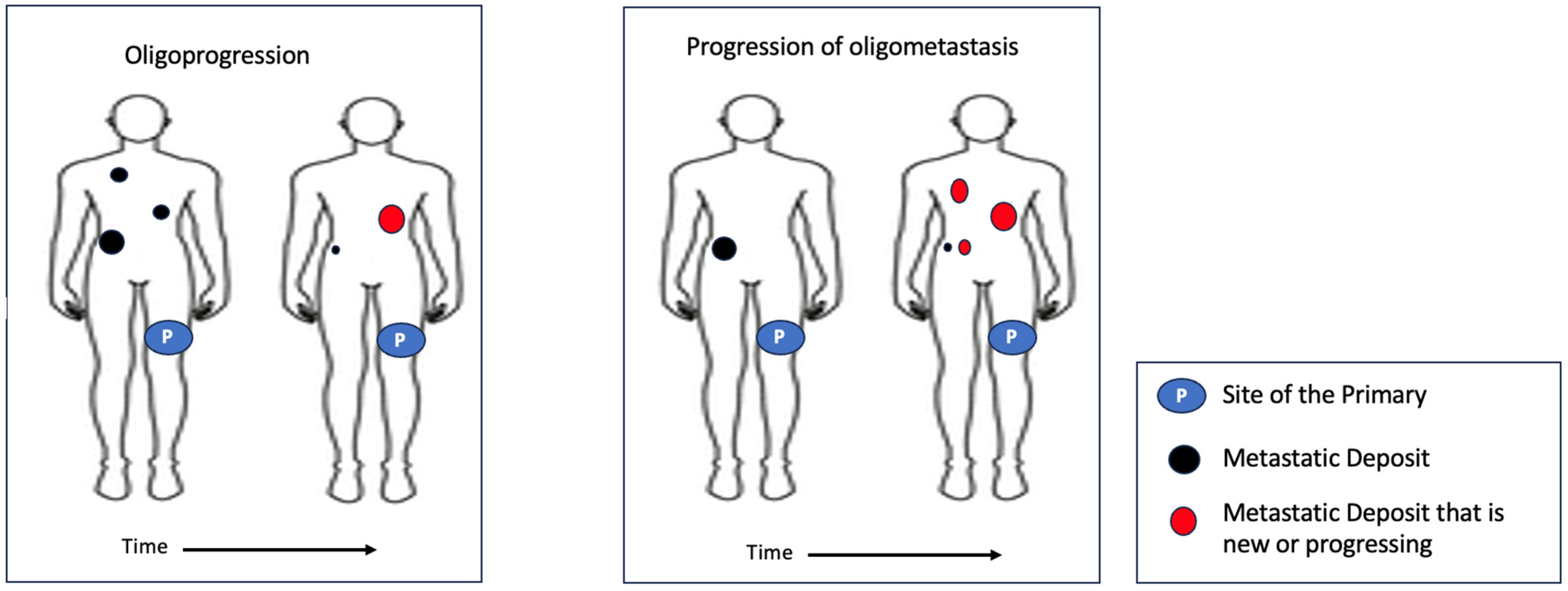
4.3. Surgery for Oligoprogressive Disease
4.4. Optimal Timing for Metastatectomy Following Systemic Treatment
4.5. Surgery for Palliation
5. Conclusions
Author Contributions
Funding
Institutional Review Board Statement
Informed Consent Statement
Data Availability Statement
Conflicts of Interest
References
- American Cancer Society. Cancer Facts & Figures 2025. Atlanta: American Cancer Society. 2025. Available online: https://www.cancer.org/content/dam/cancer-org/research/cancer-facts-and-statistics/annual-cancer-facts-and-figures/2025/2025-cancer-facts-and-figures-acs.pdf (accessed on 25 April 2025).
- Rebecca, V.W.; Sondak, V.K.; Smalley, K.S. A brief history of melanoma: From mummies to mutations. Melanoma Res. 2012, 22, 114–122. [Google Scholar] [CrossRef]
- Bodenham, D.C. A study of 650 observed malignant melanomas in the South-West region. Ann. R. Coll. Surg. Engl. 1968, 43, 218–239. [Google Scholar] [PubMed]
- José, A.M. Pneumonectomie Totale (Le Tampon-drainage en Chirugie Endothoracique). In Mémoires de l’Académie de Chirurgie; Masson et Cie (Éditeurs): Paris, France, 1936; Volume 62. [Google Scholar]
- Ochsner, A.; Debakey, M. Primary pulmonary malignancy: Treatment by total pneumonectomy; analysis of 79 collected cases and presentation of 7 personal cases. Ochsner J. 1999, 1, 109–125. [Google Scholar]
- Carlucci, G.A.; Schleussner, R.C. Primary (?) melanoma of the lung: A Case Report. J. Thorac. Surg. 1941, 11, 643–649. [Google Scholar] [CrossRef]
- Chapman, E.; Wyman, S. Metastatic malignant melanoma of lung. N. Engl. J. Med. 1948, 239, 408–410. [Google Scholar] [CrossRef]
- Cahan, W.G. Excision of melanoma metastases to lung: Problems in diagnosis and management. Ann. Surg. 1973, 178, 703–709. [Google Scholar] [CrossRef]
- Mathisen, D.J.; Flye, M.W.; Peabody, J. The role of thoracotomy in the management of pulmonary metastases from malignant melanoma. Ann. Thorac. Surg. 1979, 27, 295–299. [Google Scholar] [CrossRef] [PubMed]
- Dahlbäck, O.; Hafström, L.; E Jönsson, P.; Sundqvist, K. Lung resection for metastatic melanoma. Clin. Oncol. 1980, 6, 15–20. [Google Scholar] [PubMed]
- Harpole, D.H., Jr.; Johnson, C.M.; Wolfe, W.G.; George, S.L.; Seigler, H.F. Analysis of 945 cases of pulmonary metastatic melanoma. J. Thorac. Cardiovasc. Surg. 1992, 103, 743–750; discussion 8–50. [Google Scholar] [CrossRef]
- Tafra, L.; Dale, P.S.; Wanek, L.A.; Ramming, K.P.; Morton, D.L. Resection and adjuvant immunotherapy for melanoma metastatic to the lung and thorax. J. Thorac. Cardiovasc. Surg. 1995, 110, 119–129; discussion 29. [Google Scholar] [CrossRef]
- Deutsch, G.B.; Kirchoff, D.D.; Faries, M.B. Metastasectomy for stage IV melanoma. Surg. Oncol. Clin. N. Am. 2015, 24, 279–298. [Google Scholar] [CrossRef] [PubMed]
- van Not, O.J.; Eertwegh, A.J.M.v.D.; Jalving, H.; Bloem, M.; Haanen, J.B.; van Rijn, R.S.; Aarts, M.J.B.; Berkmortel, F.W.P.J.v.D.; Blank, C.U.; Boers-Sonderen, M.J.; et al. Long-Term Survival in Patients with Advanced Melanoma. JAMA Netw. Open 2024, 7, e2426641. [Google Scholar] [CrossRef] [PubMed]
- Howard, J.H.; Thompson, J.F.; Mozzillo, N.; Nieweg, O.E.; Hoekstra, H.J.; Roses, D.F.; Sondak, V.K.; Reintgen, D.S.; Kashani-Sabet, M.; Karakousis, C.P.; et al. Metastasectomy for distant metastatic melanoma: Analysis of data from the first Multicenter Selective Lymphadenectomy Trial (MSLT-I). Ann. Surg. Oncol. 2012, 19, 2547–2555. [Google Scholar] [CrossRef] [PubMed]
- Petersen, R.P.; Hanish, S.I.; Haney, J.C.; Miller, C.C.; Burfeind, W.R.; Tyler, D.S.; Seigler, H.F.; Wolfe, W.; D’amico, T.A.; Harpole, D.H. Improved survival with pulmonary metastasectomy: An analysis of 1720 patients with pulmonary metastatic melanoma. J. Thorac. Cardiovasc. Surg. 2007, 133, 104–110.e2. [Google Scholar] [CrossRef]
- Essner, R.; Lee, J.H.; Wanek, L.A.; Itakura, H.; Morton, D.L. Contemporary surgical treatment of advanced-stage melanoma. Arch. Surg. 2004, 139, 961–967; discussion 6–7. [Google Scholar] [CrossRef]
- Faries, M.B.; Mozzillo, N.; Kashani-Sabet, M.; Thompson, J.F.; Kelley, M.C.; DeConti, R.C.; Lee, J.E.; Huth, J.F.; Wagner, J.; MMAIT-IV Clinical Trial Group; et al. Long-Term Survival after Complete Surgical Resection and Adjuvant Immunotherapy for Distant Melanoma Metastases. Ann. Surg. Oncol. 2017, 24, 3991–4000. [Google Scholar] [CrossRef]
- Collins, V.P.; Loeffler, R.K.; Tivey, H. Observations on growth rates of human tumors. Am. J. Roentgenol. Radium. Ther. Nucl. Med. 1956, 76, 988–1000. [Google Scholar]
- Joseph, W.L.; Morton, D.L.; Adkins, P.C. Prognostic significance of tumor doubling time in evaluating operability in pulmonary metastatic disease. J. Thorac. Cardiovasc. Surg. 1971, 61, 23–32. [Google Scholar] [CrossRef]
- Ollila, D.W.; Stern, S.L.; Morton, D.L. Tumor doubling time: A selection factor for pulmonary resection of metastatic melanoma. J. Surg. Oncol. 1998, 69, 206–211. [Google Scholar] [CrossRef]
- Luen, S.; Wong, S.W.; Mar, V.; Kelly, J.W.; McLean, C.; McArthur, G.A.; Haydon, A. Primary Tumor Thickness is a Prognostic Factor in Stage IV Melanoma: A Retrospective Study of Primary Tumor Characteristics. Am. J. Clin. Oncol. 2018, 41, 90–94. [Google Scholar] [CrossRef]
- Wolchok, J.D.; Chiarion-Sileni, V.; Rutkowski, P.; Cowey, C.L.; Schadendorf, D.; Wagstaff, J.; Queirolo, P.; Dummer, R.; Butler, M.O.; Hill, A.G.; et al. Final, 10-Year Outcomes with Nivolumab plus Ipilimumab in Advanced Melanoma. N. Engl. J. Med. 2025, 392, 11–22. [Google Scholar] [CrossRef]
- Gershenwald, J.E.; Scolyer, R.A.; Hess, K.R.; Sondak, V.K.; Long, G.V.; Ross, M.I.; Lazar, A.J.; Faries, M.B.; Kirkwood, J.M.; McArthur, G.A.; et al. Melanoma staging: Evidence-based changes in the American Joint Committee on Cancer eighth edition cancer staging manual. CA Cancer J. Clin. 2017, 67, 472–492. [Google Scholar] [CrossRef] [PubMed]
- Weide, B.; Elsässer, M.; Büttner, P.; Pflugfelder, A.; Leiter, U.; Eigentler, T.K.; Bauer, J.; Witte, M.; Meier, F.; Garbe, C. Serum markers lactate dehydrogenase and S100B predict independently disease outcome in melanoma patients with distant metastasis. Br. J. Cancer 2012, 107, 422–428. [Google Scholar] [CrossRef] [PubMed]
- Finck, S.J.; Giuliano, A.E.; Morton, D.L. LDH and melanoma. Cancer 1983, 51, 840–843. [Google Scholar] [CrossRef] [PubMed]
- Deichmann, M.; Benner, A.; Bock, M.; Jäckel, A.; Uhl, K.; Waldmann, V.; Näher, H. S100-Beta, melanoma-inhibiting activity, and lactate dehydrogenase discriminate progressive from nonprogressive American Joint Committee on Cancer stage IV melanoma. J. Clin. Oncol. 1999, 17, 1891. [Google Scholar] [CrossRef]
- Janka, E.A.; Várvölgyi, T.; Sipos, Z.; Soós, A.; Hegyi, P.; Kiss, S.; Dembrovszky, F.; Csupor, D.; Kéringer, P.; Pécsi, D.; et al. Predictive Performance of Serum S100B Versus LDH in Melanoma Patients: A Systematic Review and Meta-Analysis. Front. Oncol. 2021, 11, 772165. [Google Scholar] [CrossRef]
- Egberts, F.; Pollex, A.; Egberts, J.-H.; Kaehler, K.C.; Weichenthal, M.; Hauschild, A. Long-term survival analysis in metastatic melanoma: Serum S100B is an independent prognostic marker and superior to LDH. Onkologie 2008, 31, 380–384. [Google Scholar] [CrossRef]
- Wagner, N.B.; Forschner, A.; Leiter, U.; Garbe, C.; Eigentler, T.K. S100B and LDH as early prognostic markers for response and overall survival in melanoma patients treated with anti-PD-1 or combined anti-PD-1 plus anti-CTLA-4 antibodies. Br. J. Cancer 2018, 119, 339–346. [Google Scholar] [CrossRef]
- Ascierto, P.A.; Kirkwood, J.M.; Grob, J.-J.; Simeone, E.; Grimaldi, A.M.; Maio, M.; Palmieri, G.; Testori, A.; Marincola, F.M.; Mozzillo, N. The role of BRAF V600 mutation in melanoma. J. Transl. Med. 2012, 10, 85. [Google Scholar] [CrossRef]
- Ny, L.; Hernberg, M.; Nyakas, M.; Koivunen, J.; Oddershede, L.; Yoon, M.; Wang, X.; Guyot, P.; Geisler, J. BRAF mutational status as a prognostic marker for survival in malignant melanoma: A systematic review and meta-analysis. Acta Oncol. 2020, 59, 833–844. [Google Scholar] [CrossRef]
- Long, G.V.; Stroyakovskiy, D.; Gogas, H.; Levchenko, E.; de Braud, F.; Larkin, J.; Garbe, C.; Jouary, T.; Hauschild, A.; Grob, J.J.; et al. Combined BRAF and MEK inhibition versus BRAF inhibition alone in melanoma. N. Engl. J. Med. 2014, 371, 1877–1888. [Google Scholar] [CrossRef]
- Schummer, P.; Schilling, B.; Gesierich, A. Long-Term Outcomes in BRAF-Mutated Melanoma Treated with Combined Targeted Therapy or Immune Checkpoint Blockade: Are We Approaching a True Cure? Am. J. Clin. Dermatol. 2020, 21, 493–504. [Google Scholar] [CrossRef]
- Atkins, M.B.; Julian, C.; Secrest, M.H.; Lee, J.; Abajo-Guijarro, A.M.; McKenna, E. Real-world treatment patterns and overall survival in BRAF-mutant melanoma patients treated with immunotherapy or targeted therapy. Future Oncol. 2022, 18, 2233–2245. [Google Scholar] [CrossRef]
- Livingstone, E.; Zimmer, L.; Hassel, J.C.; Fluck, M.; Eigentler, T.K.; Loquai, C.; Haferkamp, S.; Gutzmer, R.; Meier, F.; Mohr, P.; et al. Adjuvant nivolumab plus ipilimumab or nivolumab alone versus placebo in patients with resected stage IV melanoma with no evidence of disease (IMMUNED): Final results of a randomised, double-blind, phase 2 trial. Lancet 2022, 400, 1117–1129. [Google Scholar] [CrossRef]
- Reijers, I.L.M.; Menzies, A.M.; van Akkooi, A.C.J.; Versluis, J.M.; Heuvel, N.M.J.v.D.; Saw, R.P.M.; Pennington, T.E.; Kapiteijn, E.; van der Veldt, A.A.M.; Suijkerbuijk, K.P.M.; et al. Personalized response-directed surgery and adjuvant therapy after neoadjuvant ipilimumab and nivolumab in high-risk stage III melanoma: The PRADO trial. Nat. Med. 2022, 28, 1178–1188. [Google Scholar] [CrossRef] [PubMed]
- Albino, A.P.; Le Strange, R.; Oliff, A.I.; Furth, M.E.; Old, L.J. Transforming ras genes from human melanoma: A manifestation of tumour heterogeneity? Nature 1984, 308, 69–72. [Google Scholar] [CrossRef] [PubMed]
- Thumar, J.; Shahbazian, D.; A Aziz, S.; Jilaveanu, L.B.; Kluger, H.M. MEK targeting in N-RAS mutated metastatic melanoma. Mol. Cancer 2014, 13, 45. [Google Scholar] [CrossRef] [PubMed]
- Dummer, R.; Schadendorf, D.; A Ascierto, P.; Arance, A.; Dutriaux, C.; Di Giacomo, A.M.; Rutkowski, P.; Del Vecchio, M.; Gutzmer, R.; Mandala, M.; et al. Binimetinib versus dacarbazine in patients with advanced NRAS-mutant melanoma (NEMO): A multicentre, open-label, randomised, phase 3 trial. Lancet Oncol. 2017, 18, 435–445. [Google Scholar] [CrossRef]
- Ulivieri, A.; Cardillo, G.; Manente, L.; Paone, G.; Mancuso, A.P.; Vigna, L.; Di Stasio, E.; Gasbarra, R.; Girlando, S.; Leone, A. Molecular characterization of a selected cohort of patients affected by pulmonary metastases of malignant melanoma: Hints from BRAF, NRAS and EGFR evaluation. Oncotarget 2015, 6, 19868–19879. [Google Scholar] [CrossRef][Green Version]
- Liszkay, G.; Mátrai, Z.; Czirbesz, K.; Jani, N.; Bencze, E.; Kenessey, I. Predictive and Prognostic Value of BRAF and NRAS Mutation of 159 Sentinel Lymph Node Cases in Melanoma-A Retrospective Single-Institute Study. Cancers 2021, 13, 3302. [Google Scholar] [CrossRef]
- Kirchberger, M.C.; Ugurel, S.; Mangana, J.; Heppt, M.V.; Eigentler, T.K.; Berking, C.; Schadendorf, D.; Schuler, G.; Dummer, R.; Heinzerling, L. MEK inhibition may increase survival of NRAS-mutated melanoma patients treated with checkpoint blockade: Results of a retrospective multicentre analysis of 364 patients. Eur. J. Cancer 2018, 98, 10–16. [Google Scholar] [CrossRef] [PubMed]
- Johnson, D.B.; Lovly, C.M.; Flavin, M.; Panageas, K.S.; Ayers, G.D.; Zhao, Z.; Iams, W.T.; Colgan, M.; DeNoble, S.; Terry, C.R.; et al. Impact of NRAS mutations for patients with advanced melanoma treated with immune therapies. Cancer Immunol. Res. 2015, 3, 288–295. [Google Scholar] [CrossRef]
- Guida, M.; Bartolomeo, N.; Quaglino, P.; Madonna, G.; Pigozzo, J.; Di Giacomo, A.M.; Minisini, A.M.; Tucci, M.; Spagnolo, F.; Occelli, M.; et al. No Impact of NRAS Mutation on Features of Primary and Metastatic Melanoma or on Outcomes of Checkpoint Inhibitor Immunotherapy: An Italian Melanoma Intergroup (IMI) Study. Cancers 2021, 13, 475. [Google Scholar] [CrossRef]
- Menzies, A.M.; Amaria, R.N.; Rozeman, E.A.; Huang, A.C.; Tetzlaff, M.T.; van de Wiel, B.A.; Lo, S.; Tarhini, A.A.; Burton, E.M.; Pennington, T.E.; et al. Pathological response and survival with neoadjuvant therapy in melanoma: A pooled analysis from the International Neoadjuvant Melanoma Consortium (INMC). Nat. Med. 2021, 27, 301–309. [Google Scholar] [CrossRef]
- Versluis, J.M.; Menzies, A.M.; Sikorska, K.; Rozeman, E.A.; Saw, R.P.M.; Van Houdt, W.J.; Blank, C.U. Survival update of neoadjuvant ipilimumab plus nivolumab in macroscopic stage III melanoma in the OpACIN and OpACIN-neo trials. Ann. Oncol. 2023, 34, 420–430. [Google Scholar] [CrossRef]
- Berry, D.; Moldoveanu, D.; Rajkumar, S.; Lajoie, M.; Lin, T.; Tchelougou, D.; Sakthivel, S.; Sharon, I.; Bernard, A.; Pelletier, S.; et al. The NF1 tumor suppressor regulates PD-L1 and immune evasion in melanoma. Cell Rep. 2025, 44, 115365. [Google Scholar] [CrossRef] [PubMed]
- Thielmann, C.M.; Chorti, E.; Matull, J.; Murali, R.; Zaremba, A.; Lodde, G.; Jansen, P.; Richter, L.; Kretz, J.; Möller, I.; et al. NF1-mutated melanomas reveal distinct clinical characteristics depending on tumour origin and respond favourably to immune checkpoint inhibitors. Eur. J. Cancer 2021, 159, 113–124. [Google Scholar] [CrossRef]
- Haugh, A.M.; Osorio, R.C.; Francois, R.A.; Tawil, M.E.; Tsai, K.K.; Tetzlaff, M.; Daud, A.; Vasudevan, H.N. Targeted DNA Sequencing of Cutaneous Melanoma Identifies Prognostic and Predictive Alterations. Cancers 2024, 16, 1347. [Google Scholar] [CrossRef] [PubMed] [PubMed Central]
- Sukniam, K.; Manaise, H.K.; Popp, K.; Popp, R.; Gabriel, E. Role of Surgery in Metastatic Melanoma and Review of Melanoma Molecular Characteristics. Cells 2024, 13, 465. [Google Scholar] [CrossRef] [PubMed]
- Lattanzi, M.; Lee, Y.; Simpson, D.; Moran, U.; Darvishian, F.; Kim, R.H.; Hernando, E.; Polsky, D.; Hanniford, D.; Shapiro, R.; et al. Primary Melanoma Histologic Subtype: Impact on Survival and Response to Therapy. J. Nat. Cancer Inst. 2019, 111, 180–188. [Google Scholar] [CrossRef]
- Rauwerdink, D.J.W.; van Doorn, R.; van der Hage, J.; Eertwegh, A.J.M.V.D.; Haanen, J.B.A.G.; Aarts, M.; Berkmortel, F.; Blank, C.U.; Boers-Sonderen, M.J.; De Groot, J.W.B.; et al. Systemic Therapy in Advanced Nodular Melanoma versus Superficial Spreading Melanoma: A Nation-Wide Study of the Dutch Melanoma Treatment Registry. Cancers 2022, 14, 5694. [Google Scholar] [CrossRef]
- Garbe, C.; Amaral, T.; Peris, K.; Hauschild, A.; Arenberger, P.; Basset-Seguin, N.; Bastholt, L.; Bataille, V.; del Marmol, V.; Dréno, B.; et al. European consensus-based interdisciplinary guideline for melanoma. Part 2: Treatment—Update 2022. Eur. J. Cancer 2022, 170, 256–284. [Google Scholar] [CrossRef]
- Bhave, P.; Ahmed, T.; Lo, S.N.; Shoushtari, A.; Zaremba, A.; Versluis, J.M.; Mangana, J.; Weichenthal, M.; Si, L.; Lesimple, T.; et al. Efficacy of anti-PD-1 and ipilimumab alone or in combination in acral melanoma. J. Immunother. Cancer 2022, 10, e004668. [Google Scholar] [CrossRef]
- Hodi, F.S.; Corless, C.L.; Giobbie-Hurder, A.; Fletcher, J.A.; Zhu, M.; Marino-Enriquez, A.; Friedlander, P.; Gonzalez, R.; Weber, J.S.; Gajewski, T.F.; et al. Imatinib for melanomas harboring mutationally activated or amplified KIT arising on mucosal, acral, and chronically sun-damaged skin. J. Clin. Oncol. 2013, 31, 3182–3190. [Google Scholar] [CrossRef] [PubMed]
- Jung, S.; Armstrong, E.; Wei, A.Z.; Ye, F.; Lee, A.; Carlino, M.S.; Sullivan, R.J.; Carvajal, R.D.; Shoushtari, A.N.; Johnson, D.B. Clinical and genomic correlates of imatinib response in melanomas with KIT alterations. Br. J. Cancer 2022, 127, 1726–1732. [Google Scholar] [CrossRef] [PubMed]
- Hamid, O.; Robert, C.; Daud, A.; Hodi, F.S.; Hwu, W.J.; Kefford, R.; Wolchok, J.D.; Hersey, P.; Joseph, R.; Weber, J.S.; et al. Five-year survival outcomes for patients with advanced melanoma treated with pembrolizumab in KEYNOTE-001. Ann. Oncol. 2019, 30, 582–588. [Google Scholar] [CrossRef]
- Yang, J.; Dong, M.; Shui, Y.; Zhang, Y.; Zhang, Z.; Mi, Y.; Zuo, X.; Jiang, L.; Liu, K.; Liu, Z.; et al. A pooled analysis of the prognostic value of PD-L1 in melanoma: Evidence from 1062 patients. Cancer Cell Int. 2020, 20, 96. [Google Scholar] [CrossRef] [PubMed]
- Daud, A.I.; Wolchok, J.D.; Robert, C.; Hwu, W.-J.; Weber, J.S.; Ribas, A.; Hodi, F.S.; Joshua, A.M.; Kefford, R.; Hersey, P.; et al. Programmed Death-Ligand 1 Expression and Response to the Anti-Programmed Death 1 Antibody Pembrolizumab in Melanoma. J. Clin. Oncol. 2016, 34, 4102–4109. [Google Scholar] [CrossRef]
- Syeda, M.M.; Long, G.V.; Garrett, J.; Atkinson, V.; Santinami, M.; Schadendorf, D.; Hauschild, A.; Millward, M.; Mandala, M.; Chiarion-Sileni, V.; et al. Clinical validation of droplet digital PCR assays in detecting BRAF(V600)-mutant circulating tumour DNA as a prognostic biomarker in patients with resected stage III melanoma receiving adjuvant therapy (COMBI-AD): A biomarker analysis from a double-blind, randomised phase 3 trial. Lancet Oncol. 2025, 26, 641–653. [Google Scholar] [CrossRef]
- Lee, R.; Gremel, G.; Marshall, A.; Myers, K.; Fisher, N.; Dunn, J.; Dhomen, N.; Corrie, P.; Middleton, M.; Lorigan, P.; et al. Circulating tumor DNA predicts survival in patients with resected high-risk stage II/III melanoma. Ann. Oncol. 2018, 29, 490–496. [Google Scholar] [CrossRef]
- Herbreteau, G.; Vallée, A.; Knol, A.-C.; Théoleyre, S.; Quéreux, G.; Varey, E.; Khammari, A.; Dréno, B.; Denis, M.G. Quantitative monitoring of circulating tumor DNA predicts response of cutaneous metastatic melanoma to anti-PD1 immunotherapy. Oncotarget 2018, 9, 25265–25276. [Google Scholar] [CrossRef]
- Herbreteau, G.; Vallée, A.; Knol, A.-C.; Théoleyre, S.; Quéreux, G.; Varey, E.; Khammari, A.; Dréno, B.; Denis, M.G. Circulating Tumor DNA Early Kinetics Predict Response of Metastatic Melanoma to Anti-PD1 Immunotherapy: Validation Study. Cancers 2021, 13, 1826. [Google Scholar] [CrossRef]
- Seremet, T.; Jansen, Y.; Planken, S.; Njimi, H.; Delaunoy, M.; El Housni, H.; Awada, G.; Schwarze, J.K.; Keyaerts, M.; Everaert, H.; et al. Undetectable circulating tumor DNA (ctDNA) levels correlate with favorable outcome in metastatic melanoma patients treated with anti-PD1 therapy. J. Transl. Med. 2019, 17, 303. [Google Scholar] [CrossRef]
- Feng, S.; Cen, X.; Tan, R.; Wei, S.; Sun, L. The prognostic value of circulating tumor DNA in patients with melanoma: A systematic review and meta-analysis. Transl. Oncol. 2021, 14, 101072. [Google Scholar] [CrossRef] [PubMed]
- Gandini, S.; Zanna, I.; De Angelis, S.P.; Cocorocchio, E.; Queirolo, P.; Lee, J.H.; Carlino, M.S.; Mazzarella, L.; Duso, B.A.; Palli, D.; et al. Circulating tumour DNA and melanoma survival: A systematic literature review and meta-analysis. Crit. Rev. Oncol. 2021, 157, 103187. [Google Scholar] [CrossRef]
- Váraljai, R.; Wistuba-Hamprecht, K.; Seremet, T.; Diaz, J.M.S.; Nsengimana, J.; Sucker, A.; Griewank, K.; Placke, J.-M.; Horn, P.A.; von Neuhoff, N.; et al. Application of Circulating Cell-Free Tumor DNA Profiles for Therapeutic Monitoring and Outcome Prediction in Genetically Heterogeneous Metastatic Melanoma. JCO Precis. Oncol. 2019, 3, 1–10. [Google Scholar] [CrossRef]
- Mariani, P.; Bidard, F.-C.; Rampanou, A.B.; Houy, A.; Servois, V.; Ramtohul, T.; Pierron, G.; Chevrier, M.; Renouf, B.; Lantz, O.; et al. Circulating Tumor DNA as a Prognostic Factor in Patients with Resectable Hepatic Metastases of Uveal Melanoma. Ann. Surg. 2023, 278, e827–e834. [Google Scholar] [CrossRef]
- Bratman, S.V.; Yang, S.Y.C.; Iafolla, M.A.J.; Liu, Z.; Hansen, A.R.; Bedard, P.L.; Lheureux, S.; Spreafico, A.; Razak, A.A.; Shchegrova, S.; et al. Personalized circulating tumor DNA analysis as a predictive biomarker in solid tumor patients treated with pembrolizumab. Nat. Cancer 2020, 1, 873–881. [Google Scholar] [CrossRef]
- Lee, J.H.; Long, G.V.; Boyd, S.; Lo, S.; Menzies, A.M.; Tembe, V.; Guminski, A.; Jakrot, V.; Scolyer, R.A.; Mann, G.J.; et al. Circulating tumour DNA predicts response to anti-PD1 antibodies in metastatic melanoma. Ann. Oncol. 2017, 28, 1130–1136. [Google Scholar] [CrossRef] [PubMed]
- Brunsgaard, E.K.; Bowles, T.L.; Asare, E.A.; Grossmann, K.; Boucher, K.M.; Grossmann, A.; Jackson, J.A.; Wada, D.A.; Rathore, R.; Budde, G.; et al. Feasibility of personalized circulating tumor DNA detection in stage II and III melanoma. Melanoma Res. 2023, 33, 184–191. [Google Scholar] [CrossRef] [PubMed]
- Li, W.; Huang, X.; Patel, R.; Schleifman, E.; Fu, S.; Shames, D.S.; Zhang, J. Analytical evaluation of circulating tumor DNA sequencing assays. Sci. Rep. 2024, 14, 4973. [Google Scholar] [CrossRef] [PubMed]
- McKelvey, B.A.; Andrews, H.S.; Baehner, F.L.; Chen, J.; Espenschied, C.R.; Fabrizio, D.; Gorton, V.; Gould, C.; Guinney, J.; Jones, G.; et al. Advancing Evidence Generation for Circulating Tumor DNA: Lessons Learned from A Multi-Assay Study of Baseline Circulating Tumor DNA Levels across Cancer Types and Stages. Diagnostics 2024, 14, 912. [Google Scholar] [CrossRef] [PubMed]
- Gerami, P.; Cook, R.W.; Wilkinson, J.; Russell, M.C.; Dhillon, N.; Amaria, R.N.; Gonzalez, R.; Lyle, S.; Johnson, C.E.; Oelschlager, K.M.; et al. Development of a prognostic genetic signature to predict the metastatic risk associated with cutaneous melanoma. Clin. Cancer Res. 2015, 21, 175–183. [Google Scholar] [CrossRef]
- Zager, J.S.; Gastman, B.R.; Leachman, S.; Gonzalez, R.C.; Fleming, M.D.; Ferris, L.K.; Ho, J.; Miller, A.R.; Cook, R.W.; Covington, K.R.; et al. Performance of a prognostic 31-gene expression profile in an independent cohort of 523 cutaneous melanoma patients. BMC Cancer 2018, 18, 130. [Google Scholar] [CrossRef]
- Podlipnik, S.; Boada, A.; López-Estebaranz, J.L.; Martín-González, M.M.; Redondo, P.; Martin, B.; Quick, A.P.; Bailey, C.N.; Kurley, S.J.; Cook, R.W.; et al. Using a 31-Gene Expression Profile Test to Stratify Patients with Stage I–II Cutaneous Melanoma According to Recurrence Risk: Update to a Prospective, Multicenter Study. Cancers 2022, 14, 1060. [Google Scholar] [CrossRef]
- Durgham, R.A.; Nassar, S.I.; Gun, R.; Nguyen, S.A.; Asarkar, A.A.; Nathan, C.-A.O. The Prognostic Value of the 31-Gene Expression Profile Test in Cutaneous Melanoma: A Systematic Review and Meta-Analysis. Cancers 2024, 16, 3714. [Google Scholar] [CrossRef]
- Jarell, A.; Skenderis, B.; Dillon, L.D.; Dillon, K.; Martin, B.; Quick, A.P.; Siegel, J.J.; Rackley, B.B.; Cook, R.W. The 31-gene expression profile stratifies recurrence and metastasis risk in patients with cutaneous melanoma. Future Oncol. 2021, 17, 5023–5031. [Google Scholar] [CrossRef]
- Bartlett, E.K.; O’donoghue, C.; Boland, G.; Bowles, T.; Delman, K.A.; Hieken, T.J.; Moncrieff, M.; Wong, S.; White, R.L.; Karakousis, G.; et al. Society of Surgical Oncology Consensus Statement: Assessing the Evidence for and Utility of Gene Expression Profiling of Primary Cutaneous Melanoma. Ann. Surg. Oncol. 2025, 32, 1429–1442. [Google Scholar] [CrossRef]
- Pavlick, A.C.; E Ariyan, C.; I Buchbinder, E.; Davar, D.; Gibney, G.T.; Hamid, O.; Hieken, T.J.; Izar, B.; Johnson, D.B.; Kulkarni, R.P.; et al. Society for Immunotherapy of Cancer (SITC) clinical practice guideline on immunotherapy for the treatment of melanoma, version 3.0. J. Immunother. Cancer 2023, 11, e006947. [Google Scholar] [CrossRef]
- Tan, L.; Sandhu, S.; Lee, R.; Li, J.; Callahan, J.; Ftouni, S.; Dhomen, N.; Middlehurst, P.; Wallace, A.; Raleigh, J.; et al. Prediction and monitoring of relapse in stage III melanoma using circulating tumor DNA. Ann. Oncol. 2019, 30, 804–814. [Google Scholar] [CrossRef] [PubMed]
- Lee, J.; Saw, R.; Thompson, J.; Lo, S.; Spillane, A.; Shannon, K.; Stretch, J.; Howle, J.; Menzies, A.; Carlino, M.; et al. Pre-operative ctDNA predicts survival in high-risk stage III cutaneous melanoma patients. Ann. Oncol. 2019, 30, 815–822. [Google Scholar] [CrossRef]
- Gassenmaier, M.; Lenders, M.M.; Forschner, A.; Leiter, U.; Weide, B.; Garbe, C.; Eigentler, T.K.; Wagner, N.B. Serum S100B and LDH at Baseline and During Therapy Predict the Outcome of Metastatic Melanoma Patients Treated with BRAF Inhibitors. Target. Oncol. 2021, 16, 197–205. [Google Scholar] [CrossRef] [PubMed]
- Cirenajwis, H.; Lauss, M.; Ekedahl, H.; Törngren, T.; Kvist, A.; Saal, L.H.; Olsson, H.; Staaf, J.; Carneiro, A.; Ingvar, C.; et al. NF1-mutated melanoma tumors harbor distinct clinical and biological characteristics. Mol. Oncol. 2017, 11, 438–451. [Google Scholar] [CrossRef]
- Nissan, M.H.; Pratilas, C.A.; Jones, A.M.; Ramirez, R.; Won, H.; Liu, C.; Solit, D.B. Loss of NF1 in cutaneous melanoma is associated with RAS activation and MEK dependence. Cancer Res. 2014, 74, 2340–2350. [Google Scholar] [CrossRef]
- Reinhard, S.; Utikal, J.S.; Zaremba, A.; Lodde, G.; von Wasielewski, I.; Klespe, K.C.; Meier, F.; Haferkamp, S.; Kähler, K.C.; Herbst, R.; et al. First-line checkpoint inhibitor therapy in metastatic acral lentiginous melanoma compared to other types of cutaneous melanoma: A multicenter study from the prospective skin cancer registry ADOREG. Eur. J. Cancer 2025, 220, 115356. [Google Scholar] [CrossRef]
- Eroglu, Z.; Krinshpun, S.; Kalashnikova, E.; Sudhaman, S.; Topcu, T.O.; Nichols, M.; Martin, J.; Bui, K.M.; Palsuledesai, C.C.; Malhotra, M.; et al. Circulating tumor DNA-based molecular residual disease detection for treatment monitoring in advanced melanoma patients. Cancer 2023, 129, 1723–1734. [Google Scholar] [CrossRef]
- Hieken, T.J.; Egger, M.E.; Angeles, C.V.; Hyngstrom, J.R.; Burke, E.E.; Lowe, M.C.; Sondak, V.K. Gene Expression Profile-Based Test to Predict Melanoma Sentinel Node Status: The MERLIN_001 Study. JAMA Surg. 2025, 160, 1358–1366. [Google Scholar] [CrossRef]
- Barth, A.; A Wanek, L.; Morton, D.L. Prognostic factors in 1521 melanoma patients with distant metastases. J. Am. Coll. Surg. 1995, 181, 193–201. [Google Scholar]
- Manola, J.; Atkins, M.; Ibrahim, J.; Kirkwood, J. Prognostic factors in metastatic melanoma: A pooled analysis of Eastern Cooperative Oncology Group trials. J. Clin. Oncol. 2000, 18, 3782–3793. [Google Scholar] [CrossRef] [PubMed]
- Wolchok, J.D.; Chiarion-Sileni, V.; Gonzalez, R.; Grob, J.-J.; Rutkowski, P.; Lao, C.D.; Cowey, C.L.; Schadendorf, D.; Wagstaff, J.; Dummer, R.; et al. Long-Term Outcomes with Nivolumab Plus Ipilimumab or Nivolumab Alone Versus Ipilimumab in Patients with Advanced Melanoma. J. Clin. Oncol. 2022, 40, 127–137. [Google Scholar] [CrossRef] [PubMed]
- Geary, M. Society of Surgical Oncology 72nd Annual Cancer Symposium. Ann. Surg. Oncol. 2019, 26, 1–164. [Google Scholar] [CrossRef]
- Wankhede, D.; Grover, S. Outcomes After Curative Metastasectomy for Patients with Malignant Melanoma: A Systematic Review and Meta-analysis. Ann. Surg. Oncol. 2022, 29, 3709–3723. [Google Scholar] [CrossRef]
- Medina, B.D.; Choi, B.H.; Rodogiannis, K.G.; Moran, U.; Shapiro, R.L.; Pavlick, A.; Osman, I.; Berman, R.S.; Lee, A.Y. Metastasectomy for melanoma is associated with improved overall survival in responders to targeted molecular or immunotherapy. J. Surg. Oncol. 2020, 122, 555–561. [Google Scholar] [CrossRef]
- Ascierto, P.A.; Melero, I. Reframing adjuvant immunotherapy in melanoma: All of it starts with priming. J. Immunother. Cancer 2025, 13, e013766. [Google Scholar] [CrossRef]
- Amaria, R.N.; Reddy, S.M.; Tawbi, H.A.; Davies, M.A.; Ross, M.I.; Glitza, I.C.; Cormier, J.N.; Lewis, C.; Hwu, W.-J.; Hanna, E.; et al. Neoadjuvant immune checkpoint blockade in high-risk resectable melanoma. Nat. Med. 2018, 24, 1649–1654, Correction in Nat. Med. 2018, 24, 1941–1942. [Google Scholar] [CrossRef]
- Patel, S.P.; Othus, M.; Chen, Y.; Wright, G.P.; Yost, K.J.; Hyngstrom, J.R.; Hu-Lieskovan, S.; Lao, C.D.; Fecher, L.A.; Truong, T.-G.; et al. Neoadjuvant-Adjuvant or Adjuvant-Only Pembrolizumab in Advanced Melanoma. N. Engl. J. Med. 2023, 388, 813–823. [Google Scholar] [CrossRef]
- Sindhu, K.K.; Leiter, A.; Moshier, E.; Lin, J.-Y.; Carroll, E.; Brooks, D.; Ben Shimol, J.; Eisenberg, E.; Gallagher, E.J.; Stock, R.G.; et al. Durable disease control with local treatment for oligoprogression of metastatic solid tumors treated with immune checkpoint blockade. Cancer Treat. Res. Commun. 2020, 25, 100216. [Google Scholar] [CrossRef]
- Guida, M.; Bartolomeo, N.; De Risi, I.; Fucci, L.; Armenio, A.; Filannino, R.; Ruggieri, E.; Macina, F.; Traversa, M.; Nardone, A.; et al. The Management of Oligoprogression in the Landscape of New Therapies for Metastatic Melanoma. Cancers 2019, 11, 1559. [Google Scholar] [CrossRef]
- Bello, D.M.; Panageas, K.S.; Hollmann, T.; Shoushtari, A.N.; Momtaz, P.; Chapman, P.B.; Postow, M.A.; Callahan, M.K.; Wolchok, J.D.; Brady, M.S.; et al. Survival Outcomes After Metastasectomy in Melanoma Patients Categorized by Response to Checkpoint Blockade. Ann. Surg. Oncol. 2020, 27, 1180–1188. [Google Scholar] [CrossRef]
- Li, A.T.; Vakharia, K.; Lo, S.N.; Varey, A.H.R.; Carlino, M.S.; Saw, R.P.M.; Shannon, K.F.; Howle, J.R.; Pennington, T.E.; Stretch, J.R.; et al. Survival Outcomes of Salvage Metastasectomy After Failure of Modern-Era Systemic Therapy for Melanoma. Ann. Surg. Oncol. 2021, 28, 6109–6123. [Google Scholar] [CrossRef]
- Asher, N.; Ben-Betzalel, G.; Lev-Ari, S.; Shapira-Frommer, R.; Steinberg-Silman, Y.; Gochman, N.; Schachter, J.; Meirson, T.; Markel, G. Real World Outcomes of Ipilimumab and Nivolumab in Patients with Metastatic Melanoma. Cancers 2020, 12, 2329. [Google Scholar] [CrossRef]
- Klemen, N.D.; Feingold, P.L.; Goff, S.L.; Hughes, M.S.; Kammula, U.S.; Yang, J.C.; Schrump, D.S.; Rosenberg, S.A.; Sherry, R.M. Metastasectomy Following Immunotherapy with Adoptive Cell Transfer for Patients with Advanced Melanoma. Ann. Surg. Oncol. 2017, 24, 135–141. [Google Scholar] [CrossRef] [PubMed]
- Prieto, P.A.; Yang, J.C.; Sherry, R.M.; Hughes, M.S.; Kammula, U.S.; White, D.E.; Levy, C.L.; Rosenberg, S.A.; Phan, G.Q. CTLA-4 blockade with ipilimumab: Long-term follow-up of 177 patients with metastatic melanoma. Clin. Cancer Res. 2012, 18, 2039–2047. [Google Scholar] [CrossRef]
- Topalian, S.L.; Sznol, M.; McDermott, D.F.; Kluger, H.M.; Carvajal, R.D.; Sharfman, W.H.; Brahmer, J.R.; Lawrence, D.P.; Atkins, M.B.; Powderly, J.D.; et al. Survival, durable tumor remission, and long-term safety in patients with advanced melanoma receiving nivolumab. J. Clin. Oncol. 2014, 32, 1020–1030. [Google Scholar] [CrossRef] [PubMed]
- Wolchok, J.D.; Hoos, A.; O’Day, S.; Weber, J.S.; Hamid, O.; Lebbé, C.; Maio, M.; Binder, M.; Bohnsack, O.; Nichol, G.; et al. Guidelines for the evaluation of immune therapy activity in solid tumors: Immune-related response criteria. Clin. Cancer Res. 2009, 15, 7412–7420. [Google Scholar] [CrossRef] [PubMed]
- Hodi, F.S.; Chesney, J.; Pavlick, A.C.; Robert, C.; Grossmann, K.F.; McDermott, D.F.; Linette, G.P.; Meyer, N.; Giguere, J.K.; Agarwala, S.S.; et al. Combined nivolumab and ipilimumab versus ipilimumab alone in patients with advanced melanoma: 2-year overall survival outcomes in a multicentre, randomised, controlled, phase 2 trial. Lancet Oncol. 2016, 17, 1558–1568. [Google Scholar] [CrossRef]
- Wornom, I.L.I.; Soong, S.-J.; Urist, M.M.; Smith, J.W.A.; McELVEIN, R.; Balch, C.M. Surgery as palliative treatment for distant metastases of melanoma. Ann. Surg. 1986, 204, 181–185. [Google Scholar] [CrossRef]
- Mantas, D.; Tsaparas, P.; Charalampoudis, P.; Gogas, H.; Kouraklis, G. Emergency surgery for metastatic melanoma. Int. J. Surg. Oncol. 2014, 2014, 987170. [Google Scholar] [CrossRef]
- Wong, P.; Wisneski, A.D.; Tsai, K.K.; Chang, T.T.; Hirose, K.; Nakakura, E.K.; Daud, A.I.; Maker, A.V.; Corvera, C.U. Metastatic melanoma to small bowel: Metastasectomy is supported in the era of immunotherapy and checkpoint inhibitors. World J. Surg. Oncol. 2024, 22, 77. [Google Scholar] [CrossRef]
Disclaimer/Publisher’s Note: The statements, opinions and data contained in all publications are solely those of the individual author(s) and contributor(s) and not of MDPI and/or the editor(s). MDPI and/or the editor(s) disclaim responsibility for any injury to people or property resulting from any ideas, methods, instructions or products referred to in the content. |
© 2026 by the authors. Licensee MDPI, Basel, Switzerland. This article is an open access article distributed under the terms and conditions of the Creative Commons Attribution (CC BY) license.
Share and Cite
Uche, I.K.; Lyons, J.M., III. Surgical Management of Stage IV Melanoma: Clinical, Molecular, and Therapeutic Considerations. Int. J. Mol. Sci. 2026, 27, 2327. https://doi.org/10.3390/ijms27052327
Uche IK, Lyons JM III. Surgical Management of Stage IV Melanoma: Clinical, Molecular, and Therapeutic Considerations. International Journal of Molecular Sciences. 2026; 27(5):2327. https://doi.org/10.3390/ijms27052327
Chicago/Turabian StyleUche, Ifeanyi K., and John M. Lyons, III. 2026. "Surgical Management of Stage IV Melanoma: Clinical, Molecular, and Therapeutic Considerations" International Journal of Molecular Sciences 27, no. 5: 2327. https://doi.org/10.3390/ijms27052327
APA StyleUche, I. K., & Lyons, J. M., III. (2026). Surgical Management of Stage IV Melanoma: Clinical, Molecular, and Therapeutic Considerations. International Journal of Molecular Sciences, 27(5), 2327. https://doi.org/10.3390/ijms27052327

