Review

Socceromics: A Systematic Review of Omics Technologies to Optimize Performance and Health in Soccer
1
Centre de Recherche et d’Innovation sur le Sport, Université Claude Bernard Lyon.1, 69100 Lyon, France
2
Blackburn Rovers, Blackburn BB2 4JF, UK
3
Physical Education and Sports Teaching Department, Faculty of Kazim Karabekir Education, Atatürk University, 25030 Erzurum, Turkey
4
Jozef Pilsudski University of Physical Education in Warsaw, 00-968 Warsaw, Poland
5
Orthopedics and Orthopedic Oncology, Department of Surgery, Oncology and Gastroenterology (DiSCOG), University of Padua, 35122 Padua, Italy
6
Department of Psychology, eCampus University, 22060 Novedrate, Italy
7
Department of Neuroscience, Rehabilitation, Ophthalmology, Genetics, Maternal and Child Health, University of Genoa, 16126 Genoa, Italy
8
Human Nutrition Unit (HNU), Department of Food and Drugs, University of Parma, 43121 Parma, Italy
*
Authors to whom correspondence should be addressed.
Int. J. Mol. Sci. 2026, 27(2), 749; https://doi.org/10.3390/ijms27020749
Submission received: 6 October 2025 / Revised: 13 December 2025 / Accepted: 17 December 2025 / Published: 12 January 2026
(This article belongs to the Special Issue Molecular and Physiological Mechanisms of Exercise)

Abstract

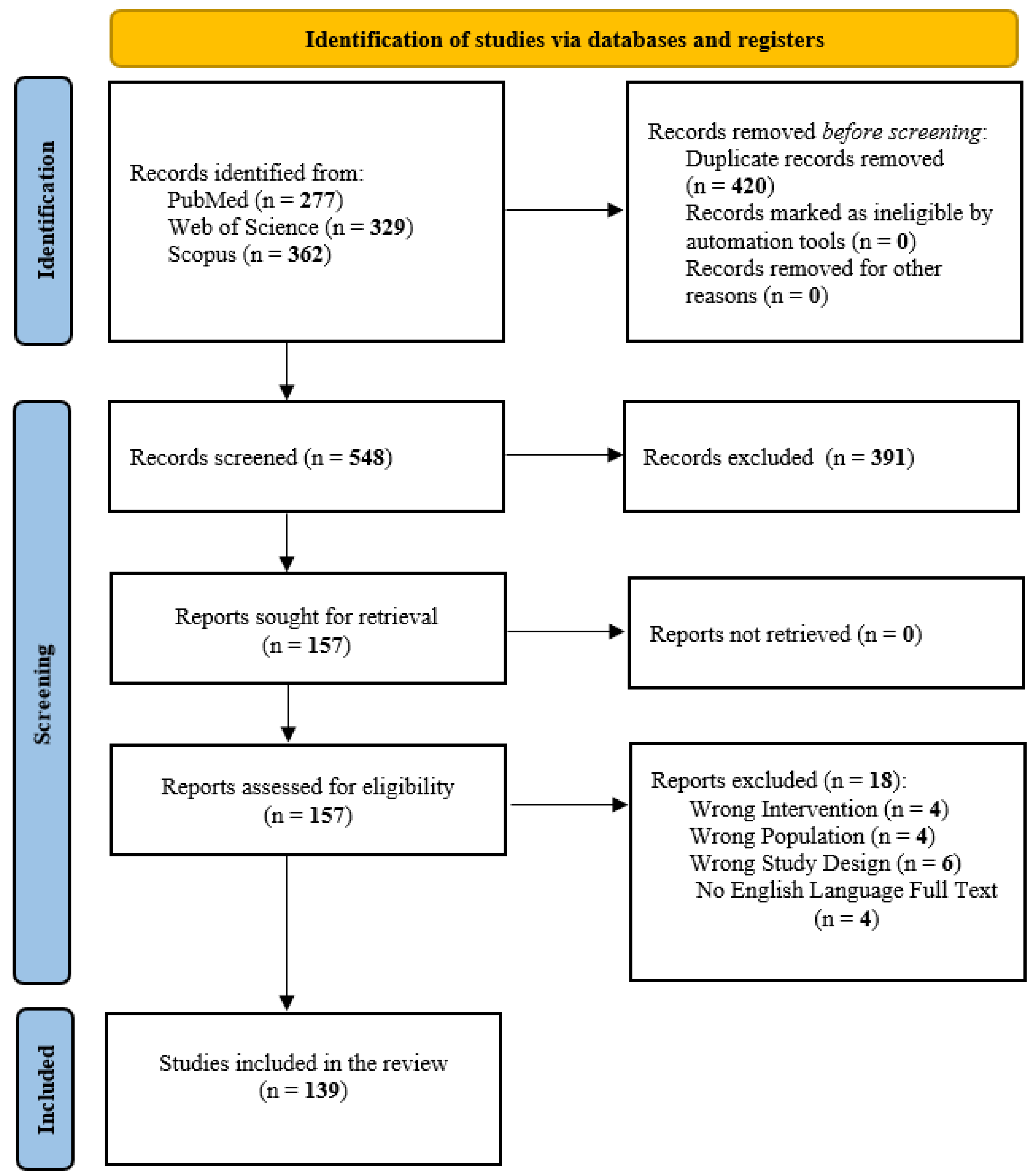
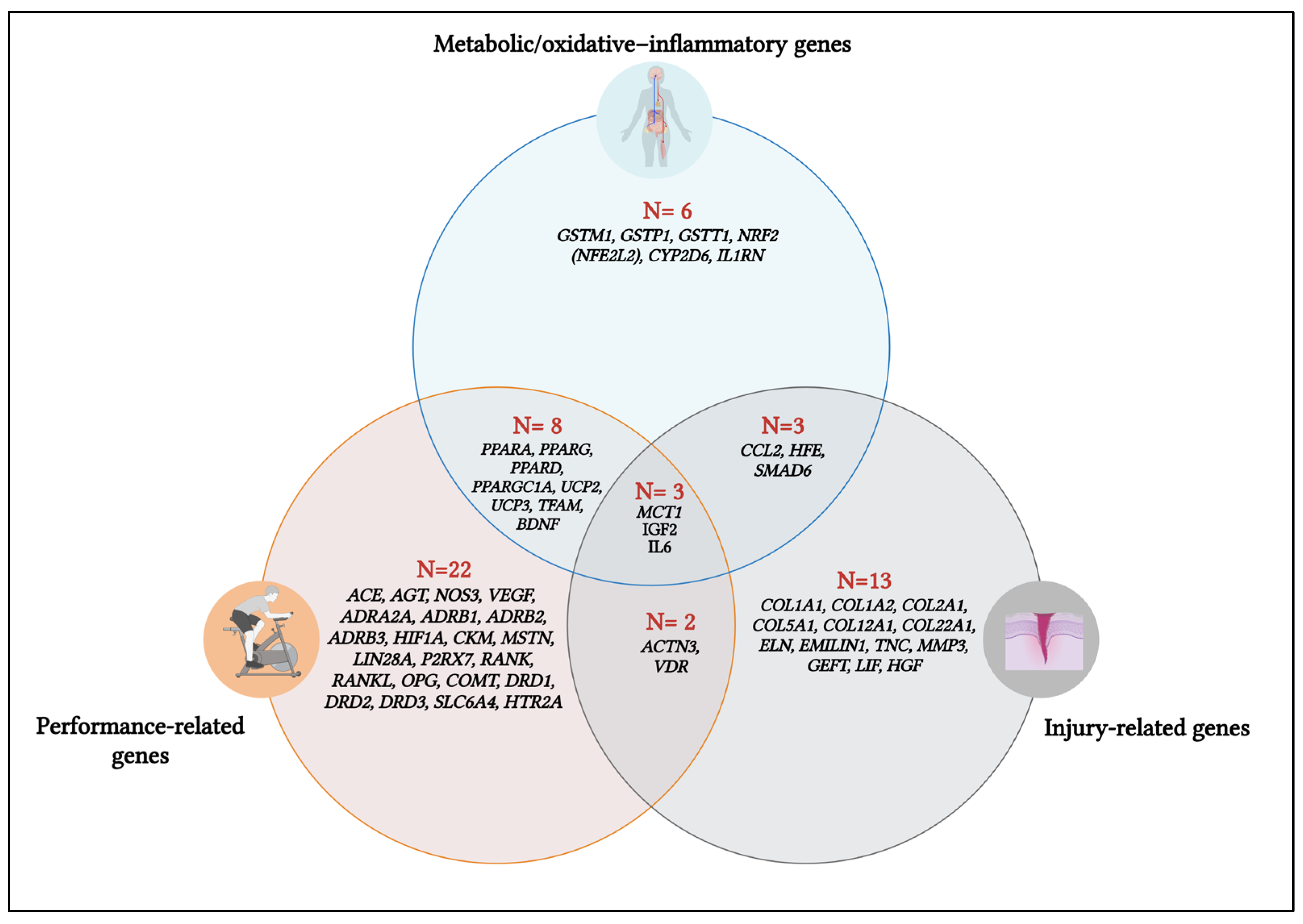
The integration of omics technologies, including genomics, proteomics, metabolomics, and microbiomics, has transformed sports science, particularly soccer, by providing new opportunities to optimize player performance, reduce injury risk, and enhance recovery. This systematic literature review was conducted in accordance with PRISMA 2020 guidelines and structured using the PICOS/PECOS framework. Comprehensive searches were performed in PubMed, Scopus, and Web of Science up to August 2025. Eligible studies were peer-reviewed original research involving professional or elite soccer players that applied at least one omics approach to outcomes related to performance, health, recovery, or injury prevention. Reviews, conference abstracts, editorials, and studies not involving soccer or omics technologies were excluded. A total of 139 studies met the inclusion criteria. Across the included studies, a total of 19,449 participants were analyzed. Genomic investigations identified numerous single-nucleotide polymorphisms (SNPs) spanning key biological pathways. Cardiovascular and vascular genes (e.g., ACE, AGT, NOS3, VEGF, ADRA2A, ADRB1–3) were associated with endurance, cardiovascular regulation, and recovery. Genes related to muscle structure, metabolism, and hypertrophy (e.g., ACTN3, CKM, MLCK, TRIM63, TTN-AS1, HIF1A, MSTN, MCT1, AMPD1) were linked to sprint performance, metabolic efficiency, and muscle injury susceptibility. Neurotransmission-related genes (BDNF, COMT, DRD1–3, DBH, SLC6A4, HTR2A, APOE) influenced motivation, fatigue, cognitive performance, and brain injury recovery. Connective tissue and extracellular matrix genes (COL1A1, COL1A2, COL2A1, COL5A1, COL12A1, COL22A1, ELN, EMILIN1, TNC, MMP3, GEFT, LIF, HGF) were implicated in ligament, tendon, and muscle injury risk. Energy metabolism and mitochondrial function genes (PPARA, PPARG, PPARD, PPARGC1A, UCP1–3, FTO, TFAM) shaped endurance capacity, substrate utilization, and body composition. Oxidative stress and detoxification pathways (GSTM1, GSTP1, GSTT1, NRF2) influenced recovery and resilience, while bone-related variants (VDR, P2RX7, RANK/RANKL/OPG) were associated with bone density and remodeling. Beyond genomics, proteomics identified markers of muscle damage and repair, metabolomics characterized fatigue- and energy-related signatures, and microbiomics revealed links between gut microbial diversity, recovery, and physiological resilience. Evidence from omics research in soccer supports the potential for individualized approaches to training, nutrition, recovery, and injury prevention. By integrating genomics, proteomics, metabolomics, and microbiomics data, clubs and sports practitioners may design precision strategies tailored to each player’s biological profile. Future research should expand on multi-omics integration, explore gene–environment interactions, and improve representation across sexes, age groups, and competitive levels to advance precision sports medicine in soccer.
Keywords: soccer; omics technologies; genomics; proteomics; metabolomics; microbiomics; integrative omics; sportomics; athlomics; socceromics soccer; omics technologies; genomics; proteomics; metabolomics; microbiomics; integrative omics; sportomics; athlomics; socceromics