The Role of Astaxanthin as an Antioxidant and Anti-Inflammatory Agent in Human Health: A Systematic Review

 ,
,  ,
,  , , ,
, , ,  , ,
, ,  ,
,  and
and 
Abstract
1. Introduction
1.1. Carotenoids and Natural Therapies
1.2. Astaxanthin: Oxidative Stress, Inflammation and the Need for Complementary Natural Strategies
1.3. Mechanisms of Action: Antioxidant, Anti-Inflammatory and Tissue-Protective Effects
1.4. Challenges, Gaps and the Natural Medicine Perspective
1.5. The Role of Astaxanthin in Preventive and Adjunctive Natural Medicine
1.6. Aim of the Study
2. Materials and Methods
2.1. Protocol and Registration
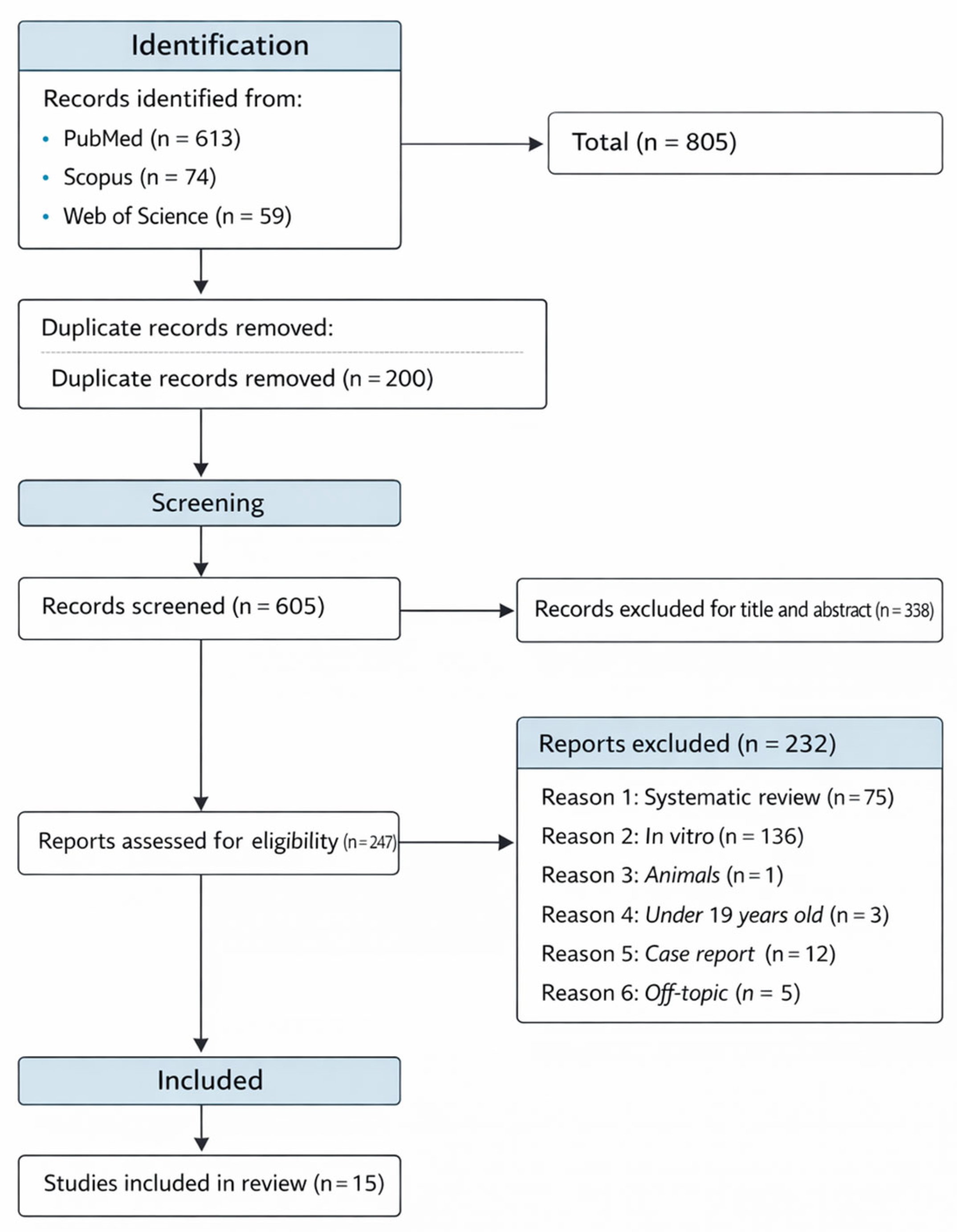
2.2. Search Process
2.3. Inclusion and Exclusion Criteria
- Open-access and written in English;
- Published within the last five years;
- Full-text articles available for review;
- Designed as randomized controlled trials (RCTs);
- Conducted on human participants;
- Included adults aged 19 years and older;
- Investigated patients with pathological or clinical conditions relevant to the research topic.
- Preprints or unpublished manuscripts;
- Systematic reviews, meta-analyses, case reports, or case series;
- Letters to the editor, conference abstracts, or commentaries;
- Studies involving animal models;
- In vitro or laboratory-based experiments.
2.4. PICO Question
2.5. Data Processing
3. Results
3.1. Selected Studies and Their Characteristics
3.2. Quality and Risk of Bias Assessment for the Included Articles
4. Discussion
4.1. Obesity and Lipid Metabolism: A Complex Picture of Synergies and Specific Contexts
4.2. Diabetes and Glycemic Control: Molecular Mechanisms and Clinical Perspectives
4.3. Gynecological Use: Support for Fertility Through the Modulation of Cellular Stress
4.4. Other Studies: From Physical Exertion Response to the Management of Systemic and Local Inflammation
5. Conclusions
6. Future Limitations
Author Contributions
Funding
Institutional Review Board Statement
Informed Consent Statement
Data Availability Statement
Conflicts of Interest
Abbreviations
| AMPK | AMP-Activated Protein Kinase |
| APACHE | Acute Physiology and Chronic Health Evaluation |
| ART | Assisted Reproductive Technology |
| ASX | Astaxanthin |
| BMI | Body Mass Index |
| CAD | Computer-Aided Diagnosis |
| CHOP | C/EBP Homologous Protein |
| CRP | C-Reactive Protein |
| DNA | Deoxyribonucleic Acid |
| ER | Endoplasmic Reticulum |
| HDL-C | High-Density Lipoprotein Cholesterol |
| IL-2 | Interleukin-2 |
| IL-6 | Interleukin-6 |
| LDL-C | Low-Density Lipoprotein Cholesterol |
| MDA | Malondialdehyde |
| NF-κB | Nuclear Factor kappa-light-chain-enhancer of activated B cells |
| Nrf2 | Nuclear Factor Erythroid 2-Related Factor 2 |
| PCOS | Polycystic Ovary Syndrome |
| ROS | Reactive Oxygen Species |
| SOD | Superoxide Dismutase |
| SOFA | Sequential Organ Failure Assessment |
| TAC | Total Antioxidant Capacity |
| TGF-β | Transforming Growth Factor-beta |
| TNF-α | Tumor Necrosis Factor-alpha |
| XBP1 | X-Box Binding Protein-1 |
Appendix A
Appendix A.1. PubMed Query String
Appendix A.2. Scopus Query String
Appendix A.3. Web of Science Query String
References
- Abebe, W. An Overview of Herbal Supplement Utilization with Particular Emphasis on Possible Interactions with Dental Drugs and Oral Manifestations. J. Dent. Hyg. 2003, 77, 37–46. [Google Scholar]
- Lotto, M.; Zakir Hussain, I.; Kaur, J.; Butt, Z.A.; Cruvinel, T.; Morita, P.P. Analysis of Fluoride-Free Content on Twitter: Topic Modeling Study. J. Med. Internet Res. 2023, 25, e44586. [Google Scholar] [CrossRef] [PubMed]
- Rafey, A.; Amin, A.; Kamran, M.; Haroon, U.; Farooq, K.; Foubert, K.; Pieters, L. Analysis of Plant Origin Antibiotics against Oral Bacterial Infections Using In Vitro and In Silico Techniques and Characterization of Active Constituents. Antibiotics 2021, 10, 1504. [Google Scholar] [CrossRef] [PubMed]
- Inchingolo, A.D.; Dipalma, G.; Inchingolo, A.M.; Malcangi, G.; Santacroce, L.; D’Oria, M.T.; Isacco, C.G.; Bordea, I.R.; Candrea, S.; Scarano, A.; et al. The 15-Months Clinical Experience of SARS-CoV-2: A Literature Review of Therapies and Adjuvants. Antioxidants 2021, 10, 881. [Google Scholar] [CrossRef] [PubMed]
- Inchingolo, F.; Tatullo, M.; Abenavoli, F.M.; Marrelli, M.; Inchingolo, A.D.; Corelli, R.; Inchingolo, A.M.; Dipalma, G. Upper Eyelid Reconstruction: A Short Report of an Eyelid Defect Following a Thermal Burn. Head. Face Med. 2009, 5, 26. [Google Scholar] [CrossRef]
- Ihn, H.J.; Kim, T.H.; Kim, K.; Kim, G.-Y.; Jeon, Y.-J.; Choi, Y.H.; Bae, J.-S.; Kim, J.-E.; Park, E.K. 2-O-Digalloyl-1,3,4,6-Tetra-O-Galloyl-β-D-Glucose Isolated from Galla Rhois Suppresses Osteoclast Differentiation and Function by Inhibiting NF-κB Signaling. BMB Rep. 2019, 52, 409–414. [Google Scholar] [CrossRef]
- Chin, Y.-T.; Hsieh, M.-T.; Lin, C.-Y.; Kuo, P.-J.; Yang, Y.-C.S.H.; Shih, Y.-J.; Lai, H.-Y.; Cheng, G.-Y.; Tang, H.-Y.; Lee, C.-C.; et al. 2,3,5,4′-Tetrahydroxystilbene-2-O-β-Glucoside Isolated from Polygoni Multiflori Ameliorates the Development of Periodontitis. Mediators Inflamm. 2016, 2016, 6953459. [Google Scholar] [CrossRef]
- Wang, T.-H.; Chou, L.-F.; Chen, C.-C.; Yeh, C.-T.; Liu, Y.-T.; Chu, Y.-D.; Lin, H.-W.; Chen, K.-Y.; Yu, C.-C.; Chen, C.-Y. 4′-Hydroxywogonin Inhibits Oral Squamous Cell Carcinoma Progression by Targeting Gas6/Axl Signaling Axis. J. Dent. Sci. 2025, 20, 1639–1647. [Google Scholar] [CrossRef]
- Uctasli, M.B.; Garoushi, S.; Uctasli, M.; Vallittu, P.K.; Lassila, L. A Comparative Assessment of Color Stability among Various Commercial Resin Composites. BMC Oral Health 2023, 23, 789. [Google Scholar] [CrossRef]
- Gopikrishnan, S.; Melath, A.; Ajith, V.V.; Mathews, N.B. A Comparative Study of Bio Degradation of Various Orthodontic Arch Wires: An In Vitro Study. J. Int. Oral Health 2015, 7, 12–17. [Google Scholar]
- Prasad, M.; Jayaraman, S.; Eladl, M.A.; El-Sherbiny, M.; Abdelrahman, M.A.E.; Veeraraghavan, V.P.; Vengadassalapathy, S.; Umapathy, V.R.; Jaffer Hussain, S.F.; Krishnamoorthy, K.; et al. A Comprehensive Review on Therapeutic Perspectives of Phytosterols in Insulin Resistance: A Mechanistic Approach. Molecules 2022, 27, 1595. [Google Scholar] [CrossRef] [PubMed]
- Ullah, A.; Ul Haq, M.; Iqbal, M.; Irfan, M.; Khan, S.; Muhammad, R.; Ullah, A.; Khurram, M.; Alharbi, M.; Alasmari, A.F.; et al. A Computational Quest for Identifying Potential Vaccine Candidates against Moraxella Lacunata: A Multi-Pronged Approach. J. Biomol. Struct. Dyn. 2024, 42, 2976–2989. [Google Scholar] [CrossRef]
- Yano, J.; Lilly, E.A.; Noverr, M.C.; Fidel, P.L. A Contemporary Warming/Restraining Device for Efficient Tail Vein Injections in a Murine Fungal Sepsis Model. J. Vis. Exp. (JoVE) 2020, 165, e61961. [Google Scholar]
- Abidi, A.H.; Alghamdi, S.S.; Derefinko, K. A Critical Review of Cannabis in Medicine and Dentistry: A Look Back and the Path Forward. Clin. Exp. Dent. Res. 2022, 8, 613–631. [Google Scholar] [CrossRef] [PubMed]
- Atsumi, T.; Tonosaki, K.; Fujisawa, S. Salivary Free Radical-Scavenging Activity Is Affected by Physical and Mental Activities. Oral. Dis. 2008, 14, 490–496. [Google Scholar] [CrossRef] [PubMed]
- Abdul-Wahab, H.Y.; Salah, R.; Abdulbaqi, H.R. Salivary Levels of Catalase, Total Antioxidant Capacity and Interleukin-1β and Oral Health-Related Quality of Life after Matcha and Green Tea Consumption for Patients with Gingivitis: A Randomized Clinical Trial. Int. J. Dent. Hyg. 2025, 23, 114–123. [Google Scholar] [CrossRef]
- Tenovuo, J.; Lumikari, M.; Soukka, T. Salivary Lysozyme, Lactoferrin and Peroxidases: Antibacterial Effects on Cariogenic Bacteria and Clinical Applications in Preventive Dentistry. Proc. Finn. Dent. Soc. 1991, 87, 197–208. [Google Scholar]
- Levrini, L.; Nosotti, M.G.; Saran, S.; Deppieri, A.; Carganico, A. Salivary pH after Taking Coffee with and without Sugar. Minerva Dent. Oral Sci. 2025, 74, 172–176. [Google Scholar] [CrossRef]
- Guo, Y.; Li, Y.; Xue, L.; Severino, R.P.; Gao, S.; Niu, J.; Qin, L.-P.; Zhang, D.; Brömme, D. Salvia miltiorrhiza: An Ancient Chinese Herbal Medicine as a Source for Anti-Osteoporotic Drugs. J. Ethnopharmacol. 2014, 155, 1401–1416. [Google Scholar] [CrossRef]
- Apolinario, R.S.; Mdgam, C.; Gonçalves, H.R.M.; Martins, I.C.F.; De Paula, R.M.; Granato, A.P.A.; Polonini, H.C.; Brandão, M.A.F.; Ferreira, A.D.O.; Raposo, N.R.B. Compounded Orodispersible Films with Natural Ingredients for Halitosis: A Clinical Experience. Int. J. Pharm. Compd. 2018, 22, 512–515. [Google Scholar]
- Karygianni, L.; Cecere, M.; Argyropoulou, A.; Hellwig, E.; Skaltsounis, A.L.; Wittmer, A.; Tchorz, J.P.; Al-Ahmad, A. Compounds from Olea europaea and Pistacia lentiscus Inhibit Oral Microbial Growth. BMC Complement. Altern. Med. 2019, 19, 51. [Google Scholar] [CrossRef] [PubMed]
- Antoniadou, M.; Rozos, G.; Vaou, N.; Zaralis, K.; Ersanli, C.; Alexopoulos, A.; Dadamogia, A.; Varzakas, T.; Tzora, A.; Voidarou, C.C. Comprehensive Bio-Screening of Phytochemistry and Biological Capacity of Oregano (Origanum vulgare) and Salvia triloba Extracts against Oral Cariogenic and Food-Origin Pathogenic Bacteria. Biomolecules 2024, 14, 619. [Google Scholar] [CrossRef] [PubMed]
- Zulhendri, F.; Felitti, R.; Fearnley, J.; Ravalia, M. The Use of Propolis in Dentistry, Oral Health, and Medicine: A Review. J. Oral Biosci. 2021, 63, 23–34. [Google Scholar] [CrossRef]
- Blaudez, F.; Ivanovski, S.; Fournier, B.; Vaquette, C. The Utilisation of Resolvins in Medicine and Tissue Engineering. Acta Biomater. 2022, 140, 116–135. [Google Scholar] [CrossRef] [PubMed]
- Zou, Y.; Huang, D.; Jiang, Q.; Guo, Y.; Chen, C. The Vaccine Efficacy Against the SARS-CoV-2 Omicron: A Systemic Review and Meta-Analysis. Front. Public Health 2022, 10, 940956. [Google Scholar] [CrossRef]
- Rosen, E.; Venezia, N.B.; Azizi, H.; Kamburoglu, K.; Meirowitz, A.; Ziv-Baran, T.; Tsesis, I. A Comparison of Cone-Beam Computed Tomography with Periapical Radiography in the Detection of Separated Instruments Retained in the Apical Third of Root Canal-Filled Teeth. J. Endod. 2016, 42, 1035–1039. [Google Scholar] [CrossRef]
- Snarska, J.; Jakimiuk, K.; Strawa, J.W.; Tomczyk, T.M.; Tomczykowa, M.; Piwowarski, J.P.; Tomczyk, M. A Comprehensive Review of Pedunculagin: Sources, Chemistry, Biological and Pharmacological Insights. Int. J. Mol. Sci. 2024, 25, 11511. [Google Scholar] [CrossRef]
- De-Deus, G.; Belladonna, F.G.; Carestiato, M.H.; da Silva Oliveira, D.; Carvalhal, J.C.A.; Simões-Carvalho, M.; Silva, E.J.N.L.; Souza, E.M.; Versiani, M.A. Extrusion Degree of a New Low-Viscosity, Injectable, Light-Cured Endodontic Filling Material: An in-Situ Study in a Cadaveric Close-to-Mouth Experimental Model. Clin. Oral Investig. 2025, 29, 254. [Google Scholar] [CrossRef]
- Inchingolo, F.; Inchingolo, A.M.; Ferrante, L.; de Ruvo, E.; Di Noia, A.; Palermo, A.; Inchingolo, A.D.; Dipalma, G. Pharmacological Sedation in Paediatric Dentistry. Eur. J. Paediatr. Dent. 2024, 25, 230–237. [Google Scholar] [CrossRef]
- Iwanaga, J.; Fukuoka, H.; Fukuoka, N.; Yutori, H.; Ibaragi, S.; Tubbs, R.S. A Narrative Review and Clinical Anatomy of Herpes Zoster Infection Following COVID-19 Vaccination. Clin. Anat. 2022, 35, 45–51. [Google Scholar] [CrossRef]
- Flynn, P.M.; Stull, C.; Jain, V.M.; Evans, M.D. A National Cross-Sectional Study of Dentists’ Vaccine Hesitancy and Intention to Provide HPV Vaccines Following Emergency COVID-19 Vaccination Authorization. Vaccine 2025, 53, 127035. [Google Scholar] [CrossRef] [PubMed]
- Haldar, R.; Halder, P.; Koley, H.; Miyoshi, S.-I.; Das, S. A Newly Developed Oral Infection Mouse Model of Shigellosis for Immunogenicity and Protective Efficacy Studies of a Candidate Vaccine. Infect. Immun. 2025, 93, e0034624. [Google Scholar] [CrossRef] [PubMed]
- Accardo, C.; Himel, V.T.; Lallier, T.E. A Novel GuttaFlow Sealer Supports Cell Survival and Attachment. J. Endod. 2014, 40, 231–234. [Google Scholar] [CrossRef] [PubMed]
- De Rossi, S.S.; Thoppay, J.; Dickinson, D.P.; Looney, S.; Stuart, M.; Ogbureke, K.U.E.; Hsu, S. A Phase II Clinical Trial of a Natural Formulation Containing Tea Catechins for Xerostomia. Oral Surg. Oral Med. Oral Pathol. Oral Radiol. 2014, 118, 447–454.e3. [Google Scholar] [CrossRef]
- Awadalla, H.I.; Ragab, M.H.; Bassuoni, M.W.; Fayed, M.T.; Abbas, M.O. A Pilot Study of the Role of Green Tea Use on Oral Health. Int. J. Dent. Hyg. 2011, 9, 110–116. [Google Scholar] [CrossRef]
- Schmierer, K.; Wiendl, H.; Oreja-Guevara, C.; Centonze, D.; Chudecka, A.; Roy, S.; Boschert, U. A Plain Language Summary of the Impact of Vaccines against Flu and Chickenpox in People with Multiple Sclerosis Treated with Cladribine Tablets. Neurodegener. Dis. Manag. 2023, 13, 15–21. [Google Scholar] [CrossRef]
- Inchingolo, A.M.; Malcangi, G.; Inchingolo, A.D.; Mancini, A.; Palmieri, G.; Di Pede, C.; Piras, F.; Inchingolo, F.; Dipalma, G.; Patano, A. Potential of Graphene-Functionalized Titanium Surfaces for Dental Implantology: Systematic Review. Coatings 2023, 13, 725. [Google Scholar] [CrossRef]
- The Most Suitable System to Grind the Whole Tooth to Use It as Graft Material. Available online: https://www.explorationpub.com/Journals/em/Article/1001202 (accessed on 28 November 2025).
- Salles, M.M.; Badaró, M.M.; de Arruda, C.N.F.; Leite, V.M.F.; da Silva, C.H.L.; Watanabe, E.; de Cássia Oliveira, V.; de Freitas Oliveira Paranhos, H. Antimicrobial Activity of Complete Denture Cleanser Solutions Based on Sodium Hypochlorite and Ricinus Communis—A Randomized Clinical Study. J. Appl. Oral Sci. 2015, 23, 637–642. [Google Scholar] [CrossRef]
- Arumugam, B.; Subramaniam, A.; Alagaraj, P. A Review on Impact of Medicinal Plants on the Treatment of Oral and Dental Diseases. Cardiovasc. Hematol. Agents Med. Chem. 2020, 18, 79–93. [Google Scholar] [CrossRef]
- Kapourani, A.; Kontogiannopoulos, K.N.; Manioudaki, A.-E.; Poulopoulos, A.K.; Tsalikis, L.; Assimopoulou, A.N.; Barmpalexis, P. A Review on Xerostomia and Its Various Management Strategies: The Role of Advanced Polymeric Materials in the Treatment Approaches. Polymers 2022, 14, 850. [Google Scholar] [CrossRef]
- Zhang, P.; Chen, S.G.; Wang, J.T.; Wang, J.D.; Chen, Z.H.; Lin, H.S. A Study on the Impact of Gargling with Compound Scutellaria baicalensis Georgi on Oral Health and Microflora Changes in Fixed Orthodontic Patients: An Experimental Study. Medicine 2024, 103, e39397. [Google Scholar] [CrossRef]
- Aizenbud, D.; Peled, M.; Figueroa, A.A. A Combined Orthodontic and Surgical Approach in Osteogenesis Imperfecta and Severe Class III Malocclusion: Case Report. J. Oral Maxillofac. Surg. 2008, 66, 1045–1053. [Google Scholar] [CrossRef] [PubMed]
- Ballini, A.; Cantore, S.; Scacco, S.; Perillo, L.; Scarano, A.; Aityan, S.K.; Contaldo, M.; Cd Nguyen, K.; Santacroce, L.; Syed, J.; et al. A Comparative Study on Different Stemness Gene Expression between Dental Pulp Stem Cells vs. Dental Bud Stem Cells. Eur. Rev. Med. Pharmacol. Sci. 2019, 23, 1626–1633. [Google Scholar] [CrossRef] [PubMed]
- Bianchi, F.P.; Stefanizzi, P.; Migliore, G.; Melpignano, L.; Daleno, A.; Vimercati, L.; Marra, M.; Working Group, C.R.; Tafuri, S. A COVID-19 Nosocomial Cluster in a University Hospital in Southern Italy: A Social Network Analysis. Ann. Ig. 2023, 35, 39–48. [Google Scholar] [CrossRef] [PubMed]
- Shin, J.; Saini, R.K.; Oh, J.-W. Low Dose Astaxanthin Treatments Trigger the Hormesis of Human Astroglioma Cells by Up-Regulating the Cyclin-Dependent Kinase and Down-Regulated the Tumor Suppressor Protein P53. Biomedicines 2020, 8, 434. [Google Scholar] [CrossRef]
- D’Amico, R.; Trovato Salinaro, A.; Cordaro, M.; Fusco, R.; Impellizzeri, D.; Interdonato, L.; Scuto, M.; Ontario, M.L.; Crea, R.; Siracusa, R.; et al. Hidrox® and Chronic Cystitis: Biochemical Evaluation of Inflammation, Oxidative Stress, and Pain. Antioxidants 2021, 10, 1046, Correction in Antioxidants 2025, 14, 1106. https://doi.org/10.3390/antiox14091106. [Google Scholar] [CrossRef]
- Scuto, M.; Rampulla, F.; Reali, G.M.; Spanò, S.M.; Trovato Salinaro, A.; Calabrese, V. Hormetic Nutrition and Redox Regulation in Gut-Brain Axis Disorders. Antioxidants 2024, 13, 484. [Google Scholar] [CrossRef]
- Scuto, M.; Majzúnová, M.; Torcitto, G.; Antonuzzo, S.; Rampulla, F.; Di Fatta, E.; Trovato Salinaro, A. Functional Food Nutrients, Redox Resilience Signaling and Neurosteroids for Brain Health. Int. J. Mol. Sci. 2024, 25, 12155. [Google Scholar] [CrossRef]
- D’Amico, R.; Cordaro, M.; Siracusa, R.; Impellizzeri, D.; Trovato Salinaro, A.; Scuto, M.; Ontario, M.L.; Crea, R.; Cuzzocrea, S.; Di Paola, R.; et al. Wnt/β-Catenin Pathway in Experimental Model of Fibromyalgia: Role of Hidrox®. Biomedicines 2021, 9, 1683. [Google Scholar] [CrossRef]
- Scuto, M.C.; Anfuso, C.D.; Lombardo, C.; Di Fatta, E.; Ferri, R.; Musso, N.; Zerbo, G.; Terrana, M.; Majzúnová, M.; Lupo, G.; et al. Neuronutrition and Nrf2 Brain Resilience Signaling: Epigenomics and Metabolomics for Personalized Medicine in Nervous System Disorders from Bench to Clinic. Int. J. Mol. Sci. 2025, 26, 9391. [Google Scholar] [CrossRef]
- Cordaro, M.; Scuto, M.; Siracusa, R.; D’amico, R.; Filippo Peritore, A.; Gugliandolo, E.; Fusco, R.; Crupi, R.; Impellizzeri, D.; Pozzebon, M.; et al. Effect of N-Palmitoylethanolamine-Oxazoline on Comorbid Neuropsychiatric Disturbance Associated with Inflammatory Bowel Disease. FASEB J. 2020, 34, 4085–4106, Erratum in FASEB J. 2024, 38, e23503. https://doi.org/10.1096/fj.202400297. [Google Scholar] [CrossRef] [PubMed]
- Amanpour, S.; Akbari Javar, M.; Sarhadinejad, Z.; Doustmohammadi, M.; Moghadari, M.; Sarhadynejad, Z. A Systematic Review of Medicinal Plants and Herbal Products’ Effectiveness in Oral Health and Dental Cure with Health Promotion Approach. J. Educ. Health Promot. 2023, 12, 306. [Google Scholar] [CrossRef] [PubMed]
- Gartika, M.; Pramesti, H.T.; Kurnia, D.; Satari, M.H. A Terpenoid Isolated from Sarang Semut (Myrmecodia Pendans) Bulb and Its Potential for the Inhibition and Eradication of Streptococcus Mutans Biofilm. BMC Complement. Altern. Med. 2018, 18, 151. [Google Scholar] [CrossRef] [PubMed]
- Liu, J.; Willems, H.M.E.; Sansevere, E.A.; Allert, S.; Barker, K.S.; Lowes, D.J.; Dixson, A.C.; Xu, Z.; Miao, J.; DeJarnette, C.; et al. A Variant ECE1 Allele Contributes to Reduced Pathogenicity of Candida albicans during Vulvovaginal Candidiasis. PLoS Pathog. 2021, 17, e1009884. [Google Scholar] [CrossRef]
- Kawano, Y.; Tanaka, M.; Fujishima, M.; Okumura, E.; Takekoshi, H.; Takada, K.; Uehara, O.; Abiko, Y.; Takeda, H. Acanthopanax Senticosus Harms Extract Causes G0/G1 Cell Cycle Arrest and Autophagy via Inhibition of Rubicon in Human Liver Cancer Cells. Oncol. Rep. 2021, 45, 1193–1201. [Google Scholar] [CrossRef]
- Chanapairin, B.; Kulvitit, S.; Sathorn, C. Post Retention Strength of Apical and Conventional Coating Obturation Methods Using Bioceramic Sealer: A Laboratory Investigation. BMC Oral Health 2024, 24, 3. [Google Scholar] [CrossRef]
- Khabiri, M.; Kamgar, S.; Iranmanesh, P.; Khademi, A.; Torabinejad, M. Postoperative Pain of Single-Visit Endodontic Treatment with Gutta-Percha versus MTA Filling: A Randomized Superiority Trial. BMC Oral Health 2023, 23, 1026. [Google Scholar] [CrossRef]
- Veloso, D.J.; Abrão, F.; Martins, C.H.G.; Bronzato, J.D.; Gomes, B.P.F.A.; Higino, J.S.; Sampaio, F.C. Potential Antibacterial and Anti-Halitosis Activity of Medicinal Plants against Oral Bacteria. Arch. Oral Biol. 2020, 110, 104585. [Google Scholar] [CrossRef]
- Nilsson, B.; Back, V.; Wei, R.; Plane, F.; Jurasz, P.; Bungard, T.J. Potential Antimigraine Effects of Warfarin: An Exploration of Biological Mechanism with Survey of Patients. TH Open 2019, 3, e180–e189. [Google Scholar] [CrossRef]
- Inchingolo, A.D.; Inchingolo, A.M.; Malcangi, G.; Avantario, P.; Azzollini, D.; Buongiorno, S.; Viapiano, F.; Campanelli, M.; Ciocia, A.M.; De Leonardis, N.; et al. Effects of Resveratrol, Curcumin and Quercetin Supplementation on Bone Metabolism-A Systematic Review. Nutrients 2022, 14, 3519. [Google Scholar] [CrossRef]
- Inchingolo, A.D.; Pezzolla, C.; Patano, A.; Ceci, S.; Ciocia, A.M.; Marinelli, G.; Malcangi, G.; Montenegro, V.; Cardarelli, F.; Piras, F.; et al. Experimental Analysis of the Use of Cranial Electromyography in Athletes and Clinical Implications. Int. J. Environ. Res. Public Health 2022, 19, 7975. [Google Scholar] [CrossRef] [PubMed]
- Kurnia, D.; Lestari, S.; Mayanti, T.; Gartika, M.; Nurdin, D. Anti-Infection of Oral Microorganisms from Herbal Medicine of Piper Crocatum Ruiz & Pav. Drug Des. Devel Ther. 2024, 18, 2531–2553. [Google Scholar] [CrossRef] [PubMed]
- Alexandre, J.T.M.; Sousa, L.H.T.; Lisboa, M.R.P.; Furlaneto, F.A.C.; do Val, D.R.; Marques, M.; Vasconcelos, H.C.; de Melo, I.M.; Leitão, R.; Castro Brito, G.A.; et al. Anti-Inflammatory and Antiresorptive Effects of Calendula Officinalis on Inflammatory Bone Loss in Rats. Clin. Oral Investig. 2018, 22, 2175–2185. [Google Scholar] [CrossRef] [PubMed]
- Niazi, F.H.; Kamran, M.A.; Naseem, M.; AlShahrani, I.; Fraz, T.R.; Hosein, M. Anti-Plaque Efficacy of Herbal Mouthwashes Compared to Synthetic Mouthwashes in Patients Undergoing Orthodontic Treatment: A Randomised Controlled Trial. Oral. Health Prev. Dent. 2018, 16, 409–416. [Google Scholar] [CrossRef]
- Oh, J.-H.; Mo, S.; Ngoc, L.T.N.; Lee, J.; Kim, M.-Y.; Park, H.-S.; Kim, J.-H.; Ha, Y.-J.; Sung, L.; Lee, Y.-C.; et al. Anti-Streptococcus Mutans and Anti-Inflammatory Effects of Ginsenoside Compound K and Enzyme-Treated Red Ginseng Extract (BTEX-K). J. Oral Biosci. 2024, 66, 19–27. [Google Scholar] [CrossRef]
- Ocheng, F.; Bwanga, F.; Joloba, M.; Borg-Karlson, A.-K.; Gustafsson, A.; Obua, C. Antibacterial Activities of Extracts from Ugandan Medicinal Plants Used for Oral Care. J. Ethnopharmacol. 2014, 155, 852–855. [Google Scholar] [CrossRef]
- Saccomanno, S.; Saran, S.; Petricca, M.T.; Caramaschi, E.; Ferrante, L.; Inchingolo, F.; Inchingolo, A.M.; Palermo, A.; Dipalma, G.; Inchingolo, A.D. Does Orthodontic Postgraduate Education Influence the Choice of Orthodontic Treatment? Front. Dent. Med. 2025, 6, 1665422. [Google Scholar] [CrossRef]
- Mazur, M.; Duś-Ilnicka, I.; Jedliński, M.; Ndokaj, A.; Janiszewska-Olszowska, J.; Ardan, R.; Radwan-Oczko, M.; Guerra, F.; Luzzi, V.; Vozza, I.; et al. Facial and Oral Manifestations Following COVID-19 Vaccination: A Survey-Based Study and a First Perspective. Int. J. Environ. Res. Public Health 2021, 18, 4965. [Google Scholar] [CrossRef]
- Sakagami, H.; Kishino, K.; Kobayashi, M.; Hashimoto, K.; Iida, S.; Shimetani, A.; Nakamura, Y.; Takahashi, K.; Ikarashi, T.; Fukamachi, H.; et al. Selective Antibacterial and Apoptosis-Modulating Activities of Mastic. In Vivo 2009, 23, 215–223. [Google Scholar]
- Baker, D.; MacDougall, A.; Kang, A.S.; Schmierer, K.; Giovannoni, G.; Dobson, R. Seroconversion Following COVID-19 Vaccination: Can We Optimize Protective Response in CD20-Treated Individuals? Clin. Exp. Immunol. 2022, 207, 263–271. [Google Scholar] [CrossRef]
- Arias-Moliz, M.-T.; Rojas, L.; Liébana-Cabanillas, F.; Bernal, C.; Castillo, F.; Rodríguez-Archilla, A.; Castillo, A.; Liébana, J. Serologic Control against Hepatitis B Virus among Dental Students of the University of Granada, Spain. Med. Oral Patol. Oral Cir. Bucal 2015, 20, e566–e571. [Google Scholar] [CrossRef]
- Edris, A.; Nour, M.O.; Zedan, O.O.; Mansour, A.E.; Ghandour, A.A.; Omran, T. Seroprevalence and Risk Factors for Hepatitis B and C Virus Infection in Damietta Governorate, Egypt. East. Mediterr. Health J. 2014, 20, 605–613. [Google Scholar] [CrossRef] [PubMed]
- Tallarico, M.; Ortensi, L.; Martinolli, M.; Casucci, A.; Ferrari, E.; Malaguti, G.; Montanari, M.; Scrascia, R.; Vaccaro, G.; Venezia, P.; et al. Multicenter Retrospective Analysis of Implant Overdentures Delivered with Different Design and Attachment Systems: Results Between One and 17 Years of Follow-Up. Dent. J. 2018, 6, 71. [Google Scholar] [CrossRef] [PubMed]
- Alves, M.D.; Tateyama, M.A.; Pavan, N.; Queiroz, A.F.; Nunes, M.; Endo, M.S. Multidisciplinary Approach to Complicated Crown-Root Fracture Treatment: A Case Report. Oper. Dent. 2021, 46, 484–490. [Google Scholar] [CrossRef] [PubMed]
- Nakao, R.; Takatsuka, A.; Mandokoro, K.; Narisawa, N.; Ikeda, T.; Takai, H.; Ogata, Y. Multimodal Inhibitory Effect of Matcha on Porphyromonas Gingivalis. Microbiol. Spectr. 2024, 12, e0342623. [Google Scholar] [CrossRef]
- Guan, Y.; Xu, J.; Qiu, J.; Cai, H.; Xia, W.; Ye, Z.; Sang, T. Multiparametric Performance Comparison of Dental Composites for Clear Aligner Attachments. BMC Oral Health 2025, 25, 1206. [Google Scholar] [CrossRef]
- Dipalma, G.; Inchingolo, A.D.; Calò, F.; Lagioia, R.; Bassi, P.; de Ruvo, E.; Inchingolo, F.; Palermo, A.; Marinelli, G.; Inchingolo, A.M. Eighty-Four-Month Clinical Outcomes of Autologous Dentin Graft Using Tooth Transformer® and Concentrated Growth Factors in Maxillary Atrophy: A Retrospective Study of 31 Patients. J. Funct. Biomater. 2025, 16, 357. [Google Scholar] [CrossRef]
- Israelson, L. The Role of Natural Products in Oral Health Care. J. Clin. Dent. 1988, 1, A4–A5. [Google Scholar]
- Budala, D.G.; Martu, M.-A.; Maftei, G.-A.; Diaconu-Popa, D.A.; Danila, V.; Luchian, I. The Role of Natural Compounds in Optimizing Contemporary Dental Treatment-Current Status and Future Trends. J. Funct. Biomater. 2023, 14, 273. [Google Scholar] [CrossRef]
- Aghaloo, T.; Valentini, P.; Yardley, R.; Zadeh, H.H. Application of Biologics in Maxillary Sinus Augmentation Surgery: A Narrative Review. Clin. Implant. Dent. Relat. Res. 2025, 27, e70004. [Google Scholar] [CrossRef]
- Baelum, V.; Machiulskiene, V.; Nyvad, B.; Richards, A.; Vaeth, M. Application of Survival Analysis to Carious Lesion Transitions in Intervention Trials. Community Dent. Oral Epidemiol. 2003, 31, 252–260. [Google Scholar] [CrossRef]
- Abbasi, A.J.; Mohammadi, F.; Bayat, M.; Gema, S.M.; Ghadirian, H.; Seifi, H.; Bayat, H.; Bahrami, N. Applications of Propolis in Dentistry: A Review. Ethiop. J. Health Sci. 2018, 28, 505–512. [Google Scholar] [CrossRef]
- Michelotto, A.L.d.C.; Gasparetto, J.C.; Campos, F.R.; Sydney, G.B.; Pontarolo, R. Applying Liquid Chromatography-Tandem Mass Spectrometry to Assess Endodontic Sealer Microleakage. Braz. Oral Res. 2015, 29, 1–7. [Google Scholar] [CrossRef] [PubMed][Green Version]
- Inchingolo, A.M.; Fatone, M.C.; Malcangi, G.; Avantario, P.; Piras, F.; Patano, A.; Di Pede, C.; Netti, A.; Ciocia, A.M.; De Ruvo, E.; et al. Modifiable Risk Factors of Non-Syndromic Orofacial Clefts: A Systematic Review. Children 2022, 9, 1846. [Google Scholar] [CrossRef] [PubMed]
- Khemawoot, P.; Hunsakunachai, N.; Anukunwithaya, T.; Bangphumi, K.; Ongpipattanakul, B.; Jiratchariyakul, W.; Soawakontha, R.; Inthachart, T.; Dechatiwongse Na Ayudhya, T.; Koontongkaew, S.; et al. Pharmacokinetics of Compound D, the Major Bioactive Component of Zingiber Cassumunar, in Rats. Planta Med. 2016, 82, 1186–1191. [Google Scholar] [CrossRef] [PubMed]
- Riley, P.; Glenny, A.-M.; Hua, F.; Worthington, H.V. Pharmacological Interventions for Preventing Dry Mouth and Salivary Gland Dysfunction Following Radiotherapy. Cochrane Database Syst. Rev. 2017, 7, CD012744. [Google Scholar] [CrossRef]
- Sedek, E.M.; Kamoun, E.A.; El-Deeb, N.M.; Abdelkader, S.; Fahmy, A.E.; Nouh, S.R.; Khalil, N.M. Photocrosslinkable Gelatin-Treated Dentin Matrix Hydrogel as a Novel Pulp Capping Agent for Dentin Regeneration: I. Synthesis, Characterizations and Grafting Optimization. BMC Oral Health 2023, 23, 536. [Google Scholar] [CrossRef]
- Saitawee, D.; Teerakapong, A.; Morales, N.P.; Jitprasertwong, P.; Hormdee, D. Photodynamic Therapy of Curcuma Longa Extract Stimulated with Blue Light against Aggregatibacter Actinomycetemcomitans. Photodiagn. Photodyn. Ther. 2018, 22, 101–105. [Google Scholar] [CrossRef]
- Dipalma, G.; Inchingolo, A.M.; Patano, A.; Palumbo, I.; Guglielmo, M.; Trilli, I.; Netti, A.; Ferrara, I.; Viapiano, F.; Inchingolo, A.D.; et al. Photobiomodulation and Growth Factors in Dentistry: A Systematic Review. Photonics 2023, 10, 1095. [Google Scholar] [CrossRef]
- Rapone, B.; Inchingolo, A.D.; Trasarti, S.; Ferrara, E.; Qorri, E.; Mancini, A.; Montemurro, N.; Scarano, A.; Inchingolo, A.M.; Dipalma, G.; et al. Long-Term Outcomes of Implants Placed in Maxillary Sinus Floor Augmentation with Porous Fluorohydroxyapatite (Algipore® FRIOS®) in Comparison with Anorganic Bovine Bone (Bio-Oss®) and Platelet Rich Plasma (PRP): A Retrospective Study. J. Clin. Med. 2022, 11, 2491. [Google Scholar] [CrossRef]
- Kandasamy, B.; Kaur, N.; Tomar, G.K.; Bharadwaj, A.; Manual, L.; Chauhan, M. Long-Term Retrospective Study Based on Implant Success Rate in Patients with Risk Factor: 15-Year Follow-Up. J. Contemp. Dent. Pract. 2018, 19, 90–93. [Google Scholar] [CrossRef]
- Inchingolo, F.; Tatullo, M.; Abenavoli, F.M.; Marrelli, M.; Inchingolo, A.D.; Palladino, A.; Inchingolo, A.M.; Dipalma, G. Oral Piercing and Oral Diseases: A Short Time Retrospective Study. Int. J. Med. Sci. 2011, 8, 649–652. [Google Scholar] [CrossRef]
- Johnson, B.; Toland, B.; Chokshi, R.; Mochalin, V.; Koutzaki, S.; Polyak, B. Magnetically Responsive Paclitaxel-Loaded Biodegradable Nanoparticles for Treatment of Vascular Disease: Preparation, Characterization and in Vitro Evaluation of Anti-Proliferative Potential. Curr. Drug Deliv. 2010, 7, 263–273. [Google Scholar] [CrossRef]
- Dipalma, G.; Inchingolo, A.M.; Malcangi, G.; Ferrara, I.; Viapiano, F.; Netti, A.; Patano, A.; Isacco, C.G.; Inchingolo, A.D.; Inchingolo, F. Sixty-Month Follow Up of Clinical MRONJ Cases Treated with CGF and Piezosurgery. Bioengineering 2023, 10, 863. [Google Scholar] [CrossRef] [PubMed]
- Asmussen, E.; Peutzfeldt, A. Substitutes for Methylene Chloride as Dental Softening Agent. Eur. J. Oral Sci. 2000, 108, 335–340. [Google Scholar] [CrossRef] [PubMed]
- Inchingolo, A.M.; Ceci, S.; Coloccia, G.; Azzollini, D.; Malcangi, G.; Mancini, A.; Inchingolo, F.; Trerotoli, P.; Dipalma, G.; Patano, A. Predictability and Effectiveness of Nuvola® Aligners in Dentoalveolar Transverse Changes: A Retrospective Study. Biomedicines 2023, 11, 1366. [Google Scholar] [CrossRef]
- Minetti, E.; Palermo, A.; Malcangi, G.; Inchingolo, A.D.; Mancini, A.; Dipalma, G.; Inchingolo, F.; Patano, A.; Inchingolo, A.M. Dentin, Dentin Graft, and Bone Graft: Microscopic and Spectroscopic Analysis. J. Funct. Biomater. 2023, 14, 272. [Google Scholar] [CrossRef]
- Inchingolo, A.M.; Patano, A.; De Santis, M.; Del Vecchio, G.; Ferrante, L.; Morolla, R.; Pezzolla, C.; Sardano, R.; Dongiovanni, L.; Inchingolo, F.; et al. Comparison of Different Types of Palatal Expanders: Scoping Review. Children 2023, 10, 1258. [Google Scholar] [CrossRef] [PubMed]
- Jacobsen, P.L.; Cohan, R.P. Alternative Dental Products. J. Calif. Dent. Assoc. 1998, 26, 191–198. [Google Scholar] [CrossRef]
- Hwang, S.-Y.; Chae, J.-I.; Kwak, A.-W.; Lee, M.-H.; Shim, J.-H. Alternative Options for Skin Cancer Therapy via Regulation of AKT and Related Signaling Pathways. Int. J. Mol. Sci. 2020, 21, 6869. [Google Scholar] [CrossRef]
- Saleh, W.; Alharbi, H.; Cha, S. Increased Prevalence of Erythema Multiforme in Patients with COVID-19 Infection or Vaccination. Sci. Rep. 2024, 14, 2801. [Google Scholar] [CrossRef] [PubMed]
- Wong, A.W.-Y.; Zhang, S.; Li, S.K.-Y.; Zhu, X.; Zhang, C.; Chu, C.-H. Incidence of Post-Obturation Pain after Single-Visit versus Multiple-Visit Non-Surgical Endodontic Treatments. BMC Oral Health 2015, 15, 96. [Google Scholar] [CrossRef] [PubMed]
- Charitos, I.A.; Inchingolo, A.M.; Ferrante, L.; Inchingolo, F.; Inchingolo, A.D.; Castellaneta, F.; Cotoia, A.; Palermo, A.; Scacco, S.; Dipalma, G. The Gut Microbiota’s Role in Neurological, Psychiatric, and Neurodevelopmental Disorders. Nutrients 2024, 16, 4404. [Google Scholar] [CrossRef] [PubMed]
- Rattanpornsompong, K.; Rattanaprukskul, K.; Prachanukoon, S.; Sriwangyang, K.; Rinkrathok, M.; Tagami, J.; Porntaveetus, T. Influence of Alloplastic Materials, Biologics, and Their Combinations, along with Defect Characteristics, on Short-Term Intrabony Defect Surgical Treatment Outcomes: A Systematic Review and Network Meta-Analysis. BMC Oral Health 2025, 25, 413. [Google Scholar] [CrossRef]
- Dabdoub, S.M.; Greenlee, A.; Abboud, G.; Brengartner, L.; Zuiker, E.; Gorr, M.W.; Wold, L.E.; Kumar, P.S.; Cray, J. Acute Exposure to Electronic Cigarette Components Alters mRNA Expression of Pre-Osteoblasts. FASEB J. 2024, 38, e70017. [Google Scholar] [CrossRef]
- Tomita, J.; Mochizuki, S.; Fujimoto, S.; Kashihara, N.; Akasaka, T.; Tanimoto, M.; Yoshida, K. Acute Improvement of Endothelial Functions after Oral Ingestion of Isohumulones, Bitter Components of Beer. Biochem. Biophys. Res. Commun. 2017, 484, 740–745. [Google Scholar] [CrossRef]
- Periyasamy, S.; Krishnappa, P.; Renuka, P. Adherence to Components of Health Promoting Schools in Schools of Bengaluru, India. Health Promot. Int. 2019, 34, 1167–1178, Correction in Health Promot. Int. 2020, 35, 174. https://doi.org/10.1093/heapro/day115. [Google Scholar] [CrossRef]
- Palmer, R.M.; Matthews, J.P.; Wilson, R.F. Adjunctive Systemic and Locally Delivered Metronidazole in the Treatment of Periodontitis: A Controlled Clinical Study. Br. Dent. J. 1998, 184, 548–552. [Google Scholar] [CrossRef]
- Di Lorenzo, L.; Inchingolo, F.; Pipoli, A.; Cassano, F.; Maggiore, M.E.; Inchingolo, A.M.; Ceci, S.; Patano, A.; Malcangi, G.; Mancini, A.; et al. Mixed-Dust Pneumoconiosis in a Dental Technician: A Multidisciplinary Diagnosis Case Report. BMC Pulm. Med. 2022, 22, 161. [Google Scholar] [CrossRef]
- de Menezes, R.F.; de Araújo, N.C.; Santa Rosa, J.M.C.; Carneiro, V.S.M.; Santos Neto, A.P.D.; Costa, V.; Moreno, L.M.; Miranda, J.M.; de Albuquerque, D.S.; Albuquerque, M.; et al. Detection of Vertical Root Fractures in Endodontically Treated Teeth in the Absence and in the Presence of Metal Post by Cone-Beam Computed Tomography. BMC Oral Health 2016, 16, 48. [Google Scholar] [CrossRef]
- Montero, J.; Leiva, L.A.; Martín-Quintero, I.; Rosel, E.; Barrios-Rodriguez, R. Determinants of Masticatory Performance Assessed by Mixing Ability Tests. J. Prosthet. Dent. 2022, 128, 382–389. [Google Scholar] [CrossRef] [PubMed]
- Silva, T.M.; Bolzan, T.C.A.; Zanini, M.S.; Alencar, T.; Rodrigues, W.D.; Bastos, K.A.; Severi, J.A.; Resende, J.A.; Villanova, J.C.O. Development and Evaluation of a Novel Oral Mucoadhesive Ointment Containing Pomegranate Peel Extract as an Adjuvant for Oral Hygiene of Dogs. J. Vet. Dent. 2020, 37, 133–140. [Google Scholar] [CrossRef] [PubMed]
- Uddin, T.M.; Chakraborty, A.J.; Khusro, A.; Zidan, B.R.M.; Mitra, S.; Emran, T.B.; Dhama, K.; Ripon, M.K.H.; Gajdács, M.; Sahibzada, M.U.K.; et al. Antibiotic Resistance in Microbes: History, Mechanisms, Therapeutic Strategies and Future Prospects. J. Infect. Public Health 2021, 14, 1750–1766. [Google Scholar] [CrossRef]
- Liu, C.; Wang, L.; Zhu, R.; Liu, H.; Ma, R.; Chen, B.; Li, L.; Guo, Y.; Jia, Q.; Shi, S.; et al. Rehmanniae Radix Preparata Suppresses Bone Loss and Increases Bone Strength through Interfering with Canonical Wnt/β-Catenin Signaling Pathway in OVX Rats. Osteoporos. Int. 2019, 30, 491–505, Erratum in Osteoporos. Int. 2019, 30, 1537–1540. https://doi.org/10.1007/s00198-019-05028-0. [Google Scholar] [CrossRef]
- Ferati, K.; Bexheti-Ferati, A.; Palermo, A.; Pezzolla, C.; Trilli, I.; Sardano, R.; Latini, G.; Inchingolo, A.D.; Inchingolo, A.M.; Malcangi, G.; et al. Diagnosis and Orthodontic Treatment of Obstructive Sleep Apnea Syndrome Children-A Systematic Review. Diagnostics 2024, 14, 289. [Google Scholar] [CrossRef] [PubMed]
- Nuno-Gonzalez, A.; Martin-Carrillo, P.; Magaletsky, K.; Martin Rios, M.D.; Herranz Mañas, C.; Artigas Almazan, J.; García Casasola, G.; Perez Castro, E.; Gallego Arenas, A.; Mayor Ibarguren, A.; et al. Prevalence of Mucocutaneous Manifestations in 666 Patients with COVID-19 in a Field Hospital in Spain: Oral and Palmoplantar Findings. Br. J. Dermatol. 2021, 184, 184–185. [Google Scholar] [CrossRef]
- Nunn, M.E.; Fan, J.; Su, X.; Levine, R.A.; Lee, H.-J.; McGuire, M.K. Development of Prognostic Indicators Using Classification and Regression Trees for Survival. Periodontology 2000, 58, 134–142. [Google Scholar] [CrossRef]
- Inchingolo, A.M.; Inchingolo, A.D.; Latini, G.; Garofoli, G.; Sardano, R.; De Leonardis, N.; Dongiovanni, L.; Minetti, E.; Palermo, A.; Dipalma, G.; et al. Caries Prevention and Treatment in Early Childhood: Comparing Strategies. A Systematic Review. Eur. Rev. Med. Pharmacol. Sci. 2023, 27, 11082–11092. [Google Scholar] [CrossRef]
- Inchingolo, F.; Tatullo, M.; Marrelli, M.; Inchingolo, A.M.; Tarullo, A.; Inchingolo, A.D.; Dipalma, G.; Podo Brunetti, S.; Tarullo, A.; Cagiano, R. Combined Occlusal and Pharmacological Therapy in the Treatment of Temporo-Mandibular Disorders. Eur. Rev. Med. Pharmacol. Sci. 2011, 15, 1296–1300. [Google Scholar]
- Chai, S.J.; Fong, S.C.Y.; Gan, C.P.; Pua, K.C.; Lim, P.V.H.; Lau, S.H.; Zain, R.B.; Abraham, T.; Ismail, S.M.; Abdul Rahman, Z.A.; et al. In Vitro Evaluation of Dual-Antigenic PV1 Peptide Vaccine in Head and Neck Cancer Patients. Hum. Vaccin. Immunother. 2019, 15, 167–178. [Google Scholar] [CrossRef]
- Abdelnaby, P.; Ibrahim, M.; ElBackly, R. In Vitro Evaluation of Filling Material Removal and Apical Debris Extrusion after Retreatment Using Reciproc Blue, Hyflex EDM and ProTaper Retreatment Files. BMC Oral Health 2023, 23, 902. [Google Scholar] [CrossRef]
- Polat Sagsoz, N.; Orhan, F.; Baris, O.; Sagsoz, O. In Vitro Evaluation of Plant Antimicrobials Against Candida Albicans Biofilm on Denture Base Materials: A Comparison with Chemical Denture Cleansers. Polymers 2025, 17, 2869. [Google Scholar] [CrossRef] [PubMed]
- Laghios, C.D.; Cutler, C.W.; Gutmann, J.L. In Vitro Evidence That Lipopolysaccharide of an Oral Pathogen Leaks from Root-End Filled Teeth. Int. Endod. J. 2000, 33, 333–339. [Google Scholar] [CrossRef] [PubMed]
- Yoon, C.S.; Kim, M.K.; Kim, Y.S.; Lee, S.K. In Vitro Protein Expression Changes in RAW 264.7 Cells and HUVECs Treated with Dialyzed Coffee Extract by Immunoprecipitation High Performance Liquid Chromatography. Sci. Rep. 2018, 8, 13841. [Google Scholar] [CrossRef]
- Manton, D.J.; Walker, G.D.; Cai, F.; Cochrane, N.J.; Shen, P.; Reynolds, E.C. Remineralization of Enamel Subsurface Lesions in Situ by the Use of Three Commercially Available Sugar-Free Gums. Int. J. Paediatr. Dent. 2008, 18, 284–290. [Google Scholar] [CrossRef]
- Dipalma, G.; Marinelli, G.; Bassi, P.; Lagioia, R.; Calò, F.; Cavino, M.; Inchingolo, F.; Vinjolli, F.; Bordea, I.R.; Minervini, G.; et al. Impact of Functional Therapy on Skeletal Structures and Airways in Patients with Class II Malocclusion: Comparison of Treatment in Prepubertal and Pubertal Phases. Life 2025, 15, 1144. [Google Scholar] [CrossRef] [PubMed]
- Hayasaki, H.; Sawami, T.; Saitoh, I.; Iwase, Y.; Nakata, S.; Nakata, M. Length of the Occlusal Glide during Chewing in Children with Primary Dentition. J. Oral Rehabil. 2003, 30, 1138–1141. [Google Scholar] [CrossRef]
- Liu, M.; Xiong, S.; Tan, F.; Liu, Y. Less Extrusion Debris during the Retreatment of Curved Canals Using Twisted Files with Higher Rotational Speeds: An Ex Vivo Study. BMC Oral Health 2017, 17, 45. [Google Scholar] [CrossRef][Green Version]
- Francis, C.A.; Hector, M.P.; Proctor, G.B. Levels of Pre-Kallikrein in Resting and Stimulated Human Parotid and Submandibular Saliva. Eur. J. Oral Sci. 2001, 109, 365–368. [Google Scholar] [CrossRef]
- Saleh, W.; Alharbi, H.; Yue, S.; Fernandes, R.P. Lichen Planus after COVID-19 Infection and Vaccination. Oral. Dis. 2024, 30, 3925–3930. [Google Scholar] [CrossRef]
- Lombardo Bedran, T.B.; Palomari Spolidorio, D.; Grenier, D. Green Tea Polyphenol Epigallocatechin-3-Gallate and Cranberry Proanthocyanidins Act in Synergy with Cathelicidin (LL-37) to Reduce the LPS-Induced Inflammatory Response in a Three-Dimensional Co-Culture Model of Gingival Epithelial Cells and Fibroblasts. Arch. Oral Biol. 2015, 60, 845–853. [Google Scholar] [CrossRef]
- Lagha, A.B.; Groeger, S.; Meyle, J.; Grenier, D. Green Tea Polyphenols Enhance Gingival Keratinocyte Integrity and Protect against Invasion by Porphyromonas Gingivalis. Pathog. Dis. 2018, 76, fty030. [Google Scholar] [CrossRef] [PubMed]
- Gaur, S.; Agnihotri, R. Green Tea: A Novel Functional Food for the Oral Health of Older Adults. Geriatr. Gerontol. Int. 2014, 14, 238–250. [Google Scholar] [CrossRef] [PubMed]
- Giannobile, W.V.; Somerman, M.J. Growth and Amelogenin-like Factors in Periodontal Wound Healing. A Systematic Review. Ann. Periodontol. 2003, 8, 193–204. [Google Scholar] [CrossRef] [PubMed]
- Klionsky, D.J.; Abdel-Aziz, A.K.; Abdelfatah, S.; Abdellatif, M.; Abdoli, A.; Abel, S.; Abeliovich, H.; Abildgaard, M.H.; Abudu, Y.P.; Acevedo-Arozena, A.; et al. Guidelines for the Use and Interpretation of Assays for Monitoring Autophagy (4th Edition)1. Autophagy 2021, 17, 1–382. [Google Scholar] [CrossRef]
- Triggiano, F.; Veschetti, E.; Veneri, F.; Montagna, M.T.; De Giglio, O. Best Practices for Disinfection in Dental Settings: Insights from Italian and European Regulations. Ann. Ig. 2025, 37, 292–301. [Google Scholar] [CrossRef]
- Minetti, E.; Dipalma, G.; Palermo, A.; Patano, A.; Inchingolo, A.D.; Inchingolo, A.M.; Inchingolo, F. Biomolecular Mechanisms and Case Series Study of Socket Preservation with Tooth Grafts. J. Clin. Med. 2023, 12, 5611. [Google Scholar] [CrossRef]
- Moqaddam, M.A.; Nemati, M.; Dara, M.M.; Hoteit, M.; Sadek, Z.; Ramezani, A.; Rand, M.K.; Abbassi-Daloii, A.; Pashaei, Z.; Almaqhawi, A.; et al. Exploring the Impact of Astaxanthin Supplementation in Conjunction with a 12-Week CrossFit Training Regimen on Selected Adipo-Myokines Levels in Obese Males. Nutrients 2024, 16, 2857. [Google Scholar] [CrossRef]
- Sharifi-Rigi, A.; Zal, F.; Aarabi, M.-H.; Rad, N.R.; Naghibalhossaini, F.; Shafiee, S.M.; Aminorroaya, A. The Effects of Astaxanthin on AMPK/Autophagy Axis and Inflammation in Type 2 Diabetes Patients: A Randomized, Double-Blind, Placebo-Controlled Trial. Gene Rep. 2023, 33, 101844. [Google Scholar] [CrossRef]
- Gonzalez, D.E.; Dickerson, B.L.; Johnson, S.E.; Woodruff, K.E.; Leonard, M.; Yoo, C.; Ko, J.; Xing, D.; Martinez, V.; Kendra, J.; et al. Impact of Astaxanthin Supplementation on Markers of Cardiometabolic Health and Tactical Performance among Firefighters. J. Int. Soc. Sports Nutr. 2024, 21, 2427751. [Google Scholar] [CrossRef]
- Mohammadi, S.G.; Feizi, A.; Bagherniya, M.; Shafie, D.; Ahmadi, A.R.; Kafeshani, M. The Effect of Astaxanthin Supplementation on Inflammatory Markers, Oxidative Stress Indices, Lipid Profile, Uric Acid Level, Blood Pressure, Endothelial Function, Quality of Life, and Disease Symptoms in Heart Failure Subjects. Trials 2024, 25, 518. [Google Scholar] [CrossRef]
- Ciaraldi, T.P.; Boeder, S.C.; Mudaliar, S.R.; Giovannetti, E.R.; Henry, R.R.; Pettus, J.H. Astaxanthin, a Natural Antioxidant, Lowers Cholesterol and Markers of Cardiovascular Risk in Individuals with Prediabetes and Dyslipidaemia. Diabetes Obes. Metab. 2023, 25, 1985–1994. [Google Scholar] [CrossRef] [PubMed]
- Jabarpour, M.; Aleyasin, A.; Nashtaei, M.S.; Lotfi, S.; Amidi, F. Astaxanthin Treatment Ameliorates ER Stress in Polycystic Ovary Syndrome Patients: A Randomized Clinical Trial. Sci. Rep. 2023, 13, 3376. [Google Scholar] [CrossRef]
- Jabarpour, M.; Amidi, F.; Aleyasin, A.; Nashtaei, M.S.; Marghmaleki, M.S. Randomized Clinical Trial of Astaxanthin Supplement on Serum Inflammatory Markers and ER Stress-Apoptosis Gene Expression in PBMCs of Women with PCOS. J. Cell Mol. Med. 2024, 28, e18464. [Google Scholar] [CrossRef] [PubMed]
- Jabarpour, M.; Aleyasin, A.; Shabani Nashtaei, M.; Amidi, F. Astaxanthin Supplementation Impact on Insulin Resistance, Lipid Profile, Blood Pressure, and Oxidative Stress in Polycystic Ovary Syndrome Patients: A Triple-Blind Randomized Clinical Trial. Phytother. Res. 2024, 38, 321–330. [Google Scholar] [CrossRef] [PubMed]
- Youssef, F.M.; Ateyya, H.; Hanna Samy, A.E.; Elmokadem, E.M. The Anti-Inflammatory and Antioxidant Effects of Astaxanthin as an Adjunctive Therapy in Community-Acquired Pneumonia: A Randomized Controlled Trial. Front. Pharmacol. 2025, 16, 1621308. [Google Scholar] [CrossRef]
- Heidari, M.; Chaboksafar, M.; Alizadeh, M.; Sohrabi, B.; Kheirouri, S. Effects of Astaxanthin Supplementation on Selected Metabolic Parameters, Anthropometric Indices, Sirtuin1 and TNF-α Levels in Patients with Coronary Artery Disease: A Randomized, Double-Blind, Placebo-Controlled Clinical Trial. Front. Nutr. 2023, 10, 1104169. [Google Scholar] [CrossRef]
- Tian, L.; Wen, Y.; Li, S.; Zhang, P.; Wang, Y.; Wang, J.; Cao, K.; Du, L.; Wang, N.; Jie, Y. Benefits and Safety of Astaxanthin in the Treatment of Mild-To-Moderate Dry Eye Disease. Front. Nutr. 2021, 8, 796951. [Google Scholar] [CrossRef]
- Rostami, S.; Alyasin, A.; Saedi, M.; Nekoonam, S.; Khodarahmian, M.; Moeini, A.; Amidi, F. Astaxanthin Ameliorates Inflammation, Oxidative Stress, and Reproductive Outcomes in Endometriosis Patients Undergoing Assisted Reproduction: A Randomized, Triple-Blind Placebo-Controlled Clinical Trial. Front. Endocrinol. 2023, 14, 1144323. [Google Scholar] [CrossRef]
- Nieman, D.C.; Woo, J.; Sakaguchi, C.A.; Omar, A.M.; Tang, Y.; Davis, K.; Pecorelli, A.; Valacchi, G.; Zhang, Q. Astaxanthin Supplementation Counters Exercise-Induced Decreases in Immune-Related Plasma Proteins. Front. Nutr. 2023, 10, 1143385. [Google Scholar] [CrossRef]
- Saeidi, A.; Nouri-Habashi, A.; Razi, O.; Ataeinosrat, A.; Rahmani, H.; Mollabashi, S.S.; Bagherzadeh-Rahmani, B.; Aghdam, S.M.; Khalajzadeh, L.; Al Kiyumi, M.H.; et al. Astaxanthin Supplemented with High-Intensity Functional Training Decreases Adipokines Levels and Cardiovascular Risk Factors in Men with Obesity. Nutrients 2023, 15, 286. [Google Scholar] [CrossRef]
- Supriya, R.; Shishvan, S.R.; Kefayati, M.; Abednatanzi, H.; Razi, O.; Bagheri, R.; Escobar, K.A.; Pashaei, Z.; Saeidi, A.; Shahrbanian, S.; et al. Astaxanthin Supplementation Augments the Benefits of CrossFit Workouts on Semaphorin 3C and Other Adipokines in Males with Obesity. Nutrients 2023, 15, 4803. [Google Scholar] [CrossRef] [PubMed]



| Article-screening strategy | Keywords: “astaxanthin; Haematococcus pluvialis; oral administration; oxidative stress; anti-inflammatory; metabolic syndrome” |
| Boolean Indicators: OR and AND | |
| Timespan: January 2020 to July 2025 | |
| Electronic databases: PubMed; Scopus; WOS. |
| Authors | Study Type | Sample Used and Country of Study | Study Objective | Materials and Methods | Conclusions |
|---|---|---|---|---|---|
| Moqaddam et al. (2024) [139] | Randomized Controlled Trial (RCT), double-blind | 60 obese males (BMI > 30 kg/m2), divided into 4 groups (n = 15 per group at the end); Iran | To explore the impact of ASX supplementation combined with CrossFit training on adipo-myokines, insulin insensitivity, and lipid levels | Duration: 12 weeks. Groups: Control, Supplement only (20 mg/day ASX), Training only (CrossFit 3x/week), Training + Supplement. Measurements of Decorin (DCN), Activin A, Myostatin, TGF-β1, Follistatin | CrossFit training with ASX reduced anthropometric, metabolic, and lipid factors. It significantly increased Follistatin and Decorin and reduced Activin A, Myostatin, and TGF-β1. The combined effect was superior to individual interventions |
| Sharifi-Rigi et al. (2023) [140] | Randomized, double-blind, placebo-controlled clinical trial | 60 patients with Type 2 Diabetes (T2D) (n = 30 ASX, n = 30 Placebo); Iran | To determine the effects of ASX on the autophagy pathway and inflammation markers in T2D patients | Duration: 12 weeks. Dosage: 10 mg/day of ASX or placebo. Analysis of autophagy-related gene/protein expression (mTOR, Beclin-1, LC3B) in PBMCs and serum cytokines (TNF-α, IL-6, IL-1β) | ASX significantly increased the expression of Beclin-1, LC3B, Atg-5, and Atg-7 and reduced mTOR expression compared to placebo. It significantly reduced serum levels of TNF-α, IL-6, and IL-1β, suggesting an improvement in autophagy and inflammation |
| Gonzalez et al. (2024) [141] | Randomized double-blind, placebo-controlled, crossover study | 15 career male firefighters (mean age 34.5 years); Spain | To examine the impact of ASX on oxidative stress, inflammation, cardiometabolic health, and tactical performance | Duration: 4 weeks per treatment (crossover with washout). Dosage: 12 mg/day ASX or placebo. Maximal exercise test and fire ground test (FGT). Blood/saliva analysis pre/post-exertion | ASX attenuated the ventilatory anaerobic threshold (VANT) and reduced the acute inflammatory response (IL-1β, cortisol, uric acid) to intense exercise. No significant effect on resting lipids or performance in the fire ground test |
| Mohammadi et al. (2024) [142] | Study Protocol (Double-blind RCT) | Planned 80 patients with heart failure (stage C and D); Iran | To evaluate the effect of ASX on inflammation, oxidative stress, lipids, blood pressure, endothelial function, and quality of life in heart failure | Planned duration: 8 weeks. Groups: Intervention (20 mg/day ASX) vs. Placebo (maltodextrin). Outcomes: Total Antioxidant Capacity (TAC), lipids, nitric oxide, quality of life questionnaires | Study protocol; results are pending. It aims to verify if AX supplementation improves total antioxidant capacity, inflammation, oxidative stress, lipid profiles, and quality of life in heart failure patients. |
| Ciaraldi et al. (2023) [143] | Randomized, double-blind, placebo-controlled trial | 34 adults with prediabetes and dyslipidemia; United States | To determine the effects of ASX treatment on lipids, CVD markers, glucose tolerance, insulin action, and inflammation | Duration: 24 weeks. Dosage: 12 mg/day ASX or placebo. Tests: OGTT, hyperinsulinemic-euglycemic clamp, indirect calorimetry | ASX significantly reduced Total Cholesterol and LDL. It reduced cardiovascular risk markers (fibrinogen, L-selectin, fetuin-A). Trend towards improvement in insulin sensitivity, but primary endpoint not statistically reached |
| Jabarpour et al. (2023) [144] | Randomized controlled trial | 58 infertile women with PCOS. two groups: Astaxanthin 12 mg/day for 60 days (n = 29) and placebo (n = 29). After losses to follow-up, 53 patients were analyzed (27 ASX, 26 placebo; Iran | To evaluate whether astaxanthin (ASX) supplementation can ameliorate endoplasmic reticulum (ER) stress in granulosa cells (GCs) of women with PCOS. | Procedures: standard antagonist ovarian stimulation protocol followed by ICSI. Biological analyses: Granulosa cells collected at oocyte retrieval were analyzed for gene expression (GRP78, CHOP, XBP1, ATF4, ATF6) using qPCR and protein expression using Western Blot. Follicular fluid was tested for oxidative stress markers (TAC, SOD, MDA). Clinical outcomes: Number of retrieved oocytes, MII oocyte rate, total oocyte score (TOS), fertilization rate, embryo number and quality, biochemical and clinical pregnancy rates. | reduced ER stress markers (GRP78, CHOP, XBP1); increased ATF4 and TAC, improved the MII oocyte rate, high-quality oocyte rate, and high-quality embryo rate |
| Jabarpour et al. (2024) [Phytother Res] [145] | Triple-blind randomized clinical trial | 58 infertile women with Polycystic Ovary Syndrome (PCOS); Iran | To investigate the effect of ASX on lipid profile, insulin resistance (IR), blood pressure, and oxidative stress | Duration: 8 weeks. Dosage: 12 mg/day (2 × 6 mg) ASX or placebo. Measurement of FBS, Insulin, HOMA-IR, malondialdehyde (MDA), TAC, SOD, and lipid profile | ASX significantly reduced fasting blood sugar (FBS), HOMA-IR, Insulin, MDA and LDL cholesterol. It increased total antioxidant capacity (TAC) and HDL cholesterol. No effect on blood pressure or BMI |
| Jabarpour et al. (2024) [J Cell Mol Med] [146] | Randomized, double-blind clinical trial | 56 women with PCOS (aged 18–40); Iran | To determine the effect of ASX on serum inflammatory markers and gene expression of endoplasmic reticulum (ER) stress and apoptosis in PBMCs | Duration: 8 weeks. Dosage: 12 mg/day ASX or placebo. Real-time PCR analysis for genes (GRP78, CHOP, etc.) and ELISA for cytokines (TNF-α, IL-6, IL-18, C-reactive protein) | ASX reduced the expression of pro-apoptotic and ER stress genes (CHOP, XBP1, ATF4, DR5) and reduced serum levels of TNF-α, IL-18, IL-6, and active caspase-3. No significant difference for C-reactive protein (CRP) or caspase-8. No clinical effect on hirsutism or BMI |
| Youssef et al. (2025) [147] | Prospective, randomized, double-blind, placebo-controlled study | 80 adults with Community-Acquired Pneumonia (CAP); Egypt | To evaluate ASX as an adjunctive therapy on inflammatory cytokines and clinical outcomes (severity scores) | Duration: 7 days. Dosage: 12 mg/day ASX or placebo + standard antibiotic therapy. Measurements: IL-6, TNF-α, IL-10, SOFA and APACHE II scores | ASX significantly reduced pro-inflammatory cytokines (IL-6, TNF-α) compared to placebo. Severity scores (SOFA and APACHE II) improved more in the ASX group. Non-significant reduction in hospital stay |
| Heidari et al. (2023) [148] | Randomized, double-blind, placebo-controlled clinical trial. | 50 patients with coronary artery disease (CAD) (aged 40–65); Iran | To assess the effects of astaxanthin (AX) supplementation on cardiometabolic risk factors (lipid profile, glycemic indices, anthropometric indices), SIRT1, and TNF-α levels. | Participants were randomly allocated into two groups: AX supplements (12 mg/day) or placebo for 8 weeks, along with a low-calorie diet. BMI, body composition, fasting blood sugar, insulin, lipid profile, TNF-α, and SIRT1 were measured. | AX supplementation showed no significant between-group differences for body composition, glycemic indices, or inflammation (TNF-α, SIRT1). However, significant intra-group reduction in total cholesterol and LDL-C was observed in the AX group. AX may play a beneficial role in lipid profiles, but further studies are needed. |
| Tian et al. (2021) [149] | Prospective, single-group, pretest-posttest quasi-experimental study. | 60 middle-aged and elderly patients (120 eyes) with mild-to-moderate dry eye disease (DED); China | To evaluate the efficacy and safety of astaxanthin in the treatment of mild-to-moderate dry eye disease (DED). | Oral administration of astaxanthin tablets (12 mg total per day, divided into two doses) for 30 days. OSDI score, non-invasive tear break-up time (NIBUT/FBUT), CFS score, eyelid margin signs, and meibum quality were measured before and after treatment. | The OSDI score, tear film stability (NIBUT/FBUT), CFS score, and eyelid margin signs improved significantly after treatment. No significant changes were observed in tear quantity (Schirmer test). Oral AX was found safe and effective in improving symptoms and signs of DED. |
| Rostami et al. (2023) [150] | Randomized, triple-blind, placebo-controlled clinical trial. | 50 infertile women with endometriosis (stage III/IV) candidates for assisted reproductive techniques (ART); Iran | To study the effect of AX on pro-inflammatory cytokines, oxidative stress markers, and early pregnancy outcomes. | Treatment with 6 mg/day of AX or placebo for 12 weeks before and during ovarian stimulation. Cytokines (IL-1β, IL-6, TNF-α) and oxidative stress markers (MDA, SOD, CAT, TAC) were measured in serum and follicular fluid, along with ART outcomes. | X significantly reduced oxidative stress (MDA) and inflammation (IL-1β, IL-6, TNF-α) and increased antioxidant capacity (TAC, SOD). Supplementation improved the number of oocytes retrieved, oocyte maturity, and embryo quality. |
| Nieman et al. (2023) [151] | Randomized, double-blind, placebo-controlled crossover study. | 18 healthy runners (11 male, 7 female); United States | To examine the efficacy of 4-week AX ingestion in moderating exercise-induced inflammation and immune dysfunction using a multi-omics approach. | Supplementation with 8 mg/day of AX or placebo for 4 weeks prior to a 2.25-h run at 70% VO2max (including downhill running). Pre/post-exercise blood analysis for cytokines, oxylipins, and untargeted proteomics (immunoglobulins). | AX did not counter exercise-induced increases in plasma cytokines, oxylipins, or muscle soreness. However, it prevented the post-exercise decrease of 82 plasma proteins related to immune function and significantly countered the drop in immunoglobulins (IgM), providing immune support. |
| Saeidi et al. (2023) [152] | Randomized controlled trial (stratified into 4 groups). | 68 males with obesity (BMI > 30 kg/m2); Iran | To investigate the effects of 12 weeks of high-intensity functional training (HIFT) with AX supplementation on adipokines (CTRP9, CTRP2, GDF8, GDF15), insulin resistance, and lipids. | Participants were divided into 4 groups: Control, Supplement only (20 mg/day AX), Training only (HIFT), and Training + Supplement. The intervention lasted 12 weeks. Metabolic profiles and specific adipokines were measured. | The combined group (Training + AX) showed the greatest improvements. Significant reductions in body weight, body fat percentage, BMI, lipid profile, and insulin resistance were observed. Adipokines CTRP9, CTRP2, GDF8, and GDF15 decreased significantly, especially in the combined group. |
| Supriya et al. (2023) [153] | Randomized controlled trial (stratified into 4 groups). | 68 males with obesity (BMI ~33.6 kg/m2); Iran | To investigate the effects of 12 weeks of CrossFit training combined with AX supplementation on Semaphorin 3C (SEMA3C) and other adipokines (apelin, chemerin, omentin1, visfatin, resistin, etc.). | 4 groups: Control, Supplement (20 mg/day AX), CrossFit, CrossFit + Supplement. Duration 12 weeks. Analysis of plasma levels of an extensive panel of adipokines. | The combined intervention (CrossFit + AX) produced the most pronounced results. Significant reductions were found in resistin, visfatin, apelin, RBP4, chemerin, vaspin, and SEMA3C. Significant increases in adiponectin and omentin1 were observed. AX augments the metabolic benefits of exercise. |
| Authors and Year | D1 | D2 | D3 | D4 | D5 | Overall |
|---|---|---|---|---|---|---|
| Tian et al. (2021) [149] |  | |  | | | |
| Heidari et al. (2023) [148] | | | | | | |
| Jabarpour et al. (2023) [144] | | | | | | |
| Rostami et al. (2023) [150] | | | | | | |
| Saeidi et al. (2023) [152] | | | | | | |
| Sharifi-Rigi et al. (2023) [140] | | | | | | |
| Ciaraldi et al. (2023) [143] | | | | | | |
| Supriya et al. (2023) [153] | | | | | | |
| Nieman et al. (2023) [151] | | | | | | |
| Jabarpour et al. (2023) [145] | | | | | | |
| Gonzalez et al. (2024) [141] | | | | | | |
| Jabarpour et al. (2024) [146] | | | | | | |
| Moqaddam et al. (2024) [139] | | | | | | |
| Mohammadi et al. (2024) [142] | | | | | | |
| Youssef et al. (2025) [147] | | | | | | |
 : Hight; : Some concerns; : Low.
Disclaimer/Publisher’s Note: The statements, opinions and data contained in all publications are solely those of the individual author(s) and contributor(s) and not of MDPI and/or the editor(s). MDPI and/or the editor(s) disclaim responsibility for any injury to people or property resulting from any ideas, methods, instructions or products referred to in the content. |
© 2026 by the authors. Licensee MDPI, Basel, Switzerland. This article is an open access article distributed under the terms and conditions of the Creative Commons Attribution (CC BY) license.
Share and Cite
Malcangi, G.; Inchingolo, A.M.; Casamassima, L.; Trilli, I.; Ferrante, L.; Longo, M.; Inchingolo, F.; Marinelli, G.; Palermo, A.; Dipalma, G.; et al. The Role of Astaxanthin as an Antioxidant and Anti-Inflammatory Agent in Human Health: A Systematic Review. Int. J. Mol. Sci. 2026, 27, 700. https://doi.org/10.3390/ijms27020700
Malcangi G, Inchingolo AM, Casamassima L, Trilli I, Ferrante L, Longo M, Inchingolo F, Marinelli G, Palermo A, Dipalma G, et al. The Role of Astaxanthin as an Antioxidant and Anti-Inflammatory Agent in Human Health: A Systematic Review. International Journal of Molecular Sciences. 2026; 27(2):700. https://doi.org/10.3390/ijms27020700
Chicago/Turabian StyleMalcangi, Giuseppina, Angelo Michele Inchingolo, Lucia Casamassima, Irma Trilli, Laura Ferrante, Marialuisa Longo, Francesco Inchingolo, Grazia Marinelli, Andrea Palermo, Gianna Dipalma, and et al. 2026. "The Role of Astaxanthin as an Antioxidant and Anti-Inflammatory Agent in Human Health: A Systematic Review" International Journal of Molecular Sciences 27, no. 2: 700. https://doi.org/10.3390/ijms27020700
APA StyleMalcangi, G., Inchingolo, A. M., Casamassima, L., Trilli, I., Ferrante, L., Longo, M., Inchingolo, F., Marinelli, G., Palermo, A., Dipalma, G., & Inchingolo, A. D. (2026). The Role of Astaxanthin as an Antioxidant and Anti-Inflammatory Agent in Human Health: A Systematic Review. International Journal of Molecular Sciences, 27(2), 700. https://doi.org/10.3390/ijms27020700