
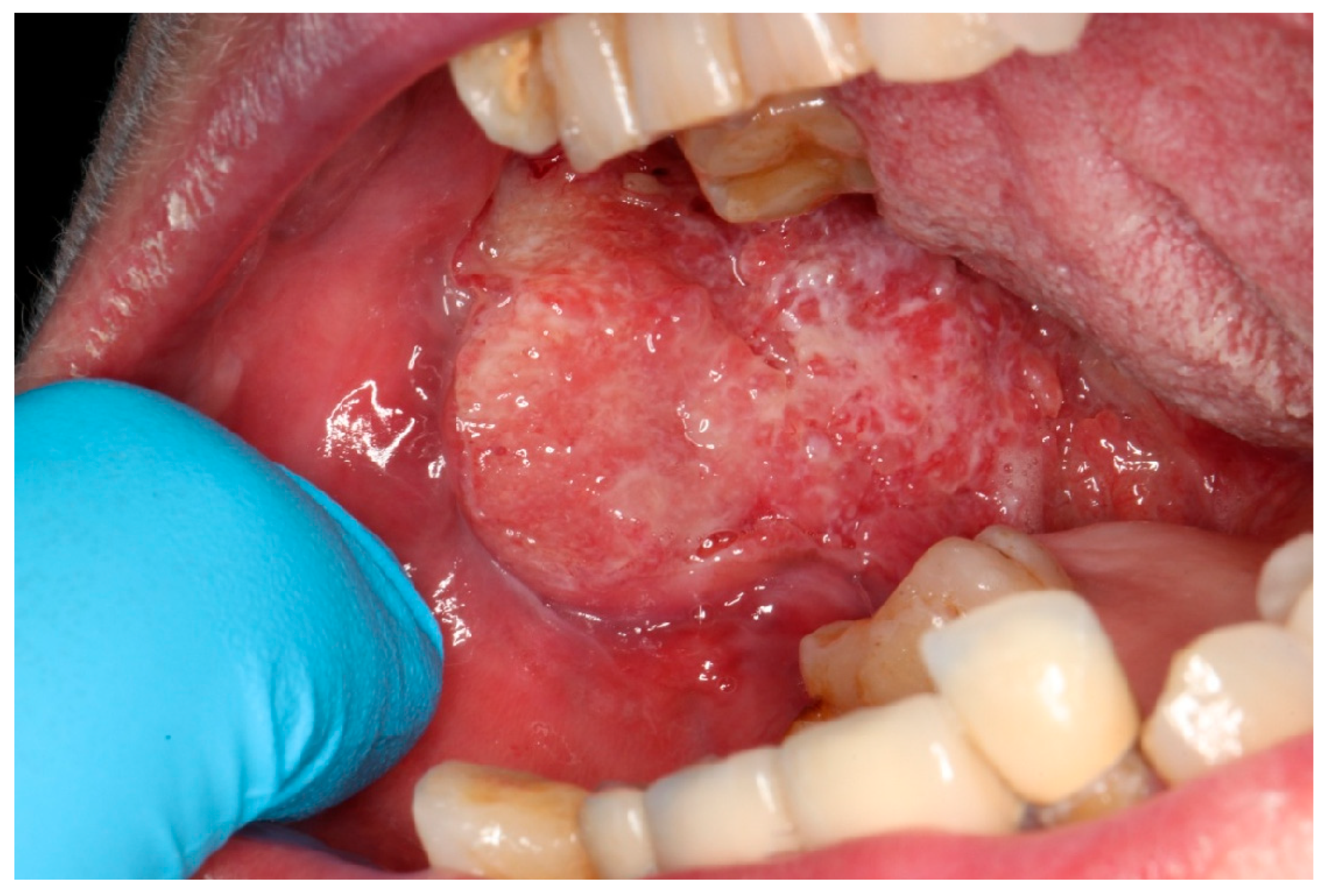
The Role of Liquid Biopsy in the Diagnosis of Oral Squamous Cell Carcinoma: A Systematic Review



Abstract
1. Introduction
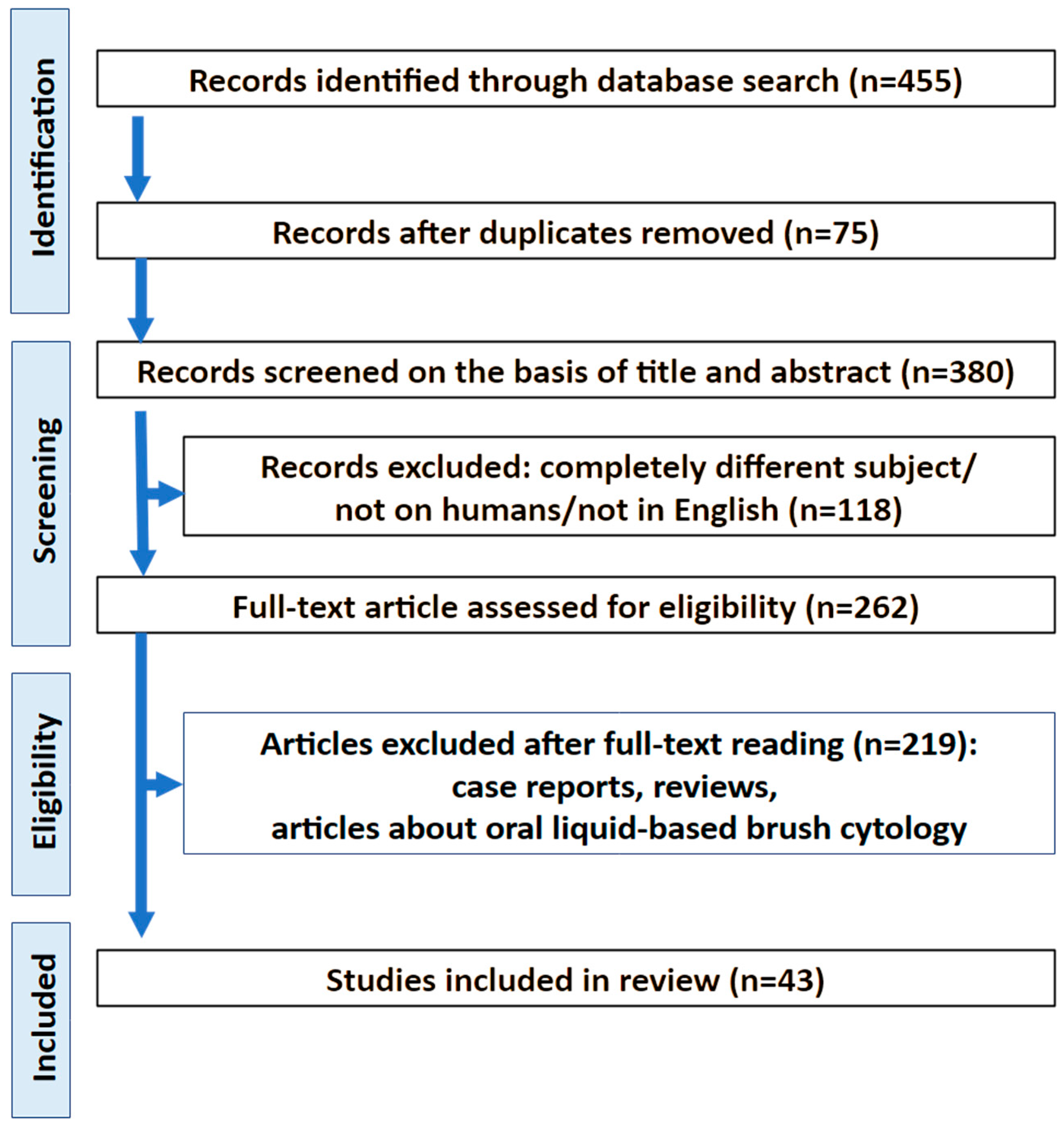
2. Methods
2.1. Search Criteria
2.1.1. Inclusion Criteria
2.1.2. Exclusion Criteria
2.2. Data Collection
2.3. Quality Assessment
3. Results and Discussion
3.1. Study Characteristics
3.2. Risk of Bias
3.3. Discussion
4. Conclusions
Author Contributions
Funding
Institutional Review Board Statement
Informed Consent Statement
Data Availability Statement
Conflicts of Interest
References
- Jagadeesan, D.; Sathasivam, K.V.; Fuloria, N.K.; Balakrishnan, V.; Khor, G.H.; Ravichandran, M.; Solyappan, M.; Fuloria, S.; Gupta, G.; Ahlawat, A.; et al. Comprehensive insights into oral squamous cell carcinoma: Diagnosis, pathogenesis, and therapeutic advances. Pathol.-Res. Pract. 2024, 261, 155489. [Google Scholar] [CrossRef] [PubMed]
- Irani, S. New Insights into Oral Cancer—Risk Factors and Prevention: A Review of Literature. Int. J. Prev. Med. 2020, 11, 202. [Google Scholar] [CrossRef]
- Cancer Today. Available online: https://gco.iarc.who.int/today/ (accessed on 1 June 2025).
- Raporty|Krajowy Rejestr Nowotworów. Available online: http://onkologia.org.pl/pl/raporty (accessed on 1 June 2025).
- Chamoli, A.; Gosavi, A.S.; Shirwadkar, U.P.; Wangdale, K.V.; Behera, S.K.; Kurrey, N.K.; Kalia, K.; Mandoli, A. Overview of oral cavity squamous cell carcinoma: Risk factors, mechanisms, and diagnostics. Oral Oncol. 2021, 121, 105451. [Google Scholar] [CrossRef]
- Bagnardi, V.; Rota, M.; Botteri, E.; Tramacere, I.; Islami, F.; Fedirko, V.; Scotti, L.; Jenab, M.; Turati, F.; Pasquali, E.; et al. Alcohol consumption and site-specific cancer risk: A comprehensive dose–response meta-analysis. Br. J. Cancer 2015, 112, 580–593. [Google Scholar] [CrossRef]
- Gupta, N.; Yumnam, G.; Sharma, C.; Patel, A.; Sharma, R.; Dev, S.; Ghadage, M. Relationship among Tobacco Habits, Human Papilloma Virus (HPV) Infection, p53 Polymorphism/Mutation, and the Risk of Oral Squamous Cell Carcinoma. J. Pharm. Bioallied Sci. 2024, 16, S3424–S3426. [Google Scholar] [CrossRef]
- Freitas de Morais, E.; Almangush, A.; Salo, T. Emerging Histopathological Parameters in the Prognosis of Oral Squamous Cell Carcinomas. Histol. Histopathol. 2023, 39, 1–12. [Google Scholar] [CrossRef]
- Ferreira, A.K.A.; de Carvalho, S.H.G.; Granville-Garcia, A.F.; Sarmento, D.; Agripino, G.; Abreu, M.; Melo, M.; Caldas, A.D.; Godoy, G. Survival and prognostic factors in patients with oral squamous cell carcinoma. Med. Oral Patol. Oral Cir. Bucal 2021, 26, e387–e392. [Google Scholar] [CrossRef] [PubMed]
- Carreras-Torras, C.; Gay-Escoda, C. Techniques for early diagnosis of oral squamous cell carcinoma: Systematic review. Med. Oral Patol. Oral Cir. Bucal 2015, 20, e305–e315. [Google Scholar] [CrossRef]
- Pantel, K.; Alix-Panabières, C. Circulating tumour cells in cancer patients: Challenges and perspectives. Trends Mol. Med. 2010, 16, 398–406. [Google Scholar] [CrossRef]
- Ma, L.; Guo, H.; Zhao, Y.; Liu, Z.; Wang, C.; Bu, J.; Sun, T.; Wei, J. Liquid biopsy in cancer: Current status, challenges and future prospects. Signal Transduct. Target. Ther. 2024, 9, 336. [Google Scholar] [CrossRef]
- Wang, K.; Wang, X.; Pan, Q.; Zhao, B. Liquid biopsy techniques and pancreatic cancer: Diagnosis, monitoring, and evaluation. Mol. Cancer 2023, 22, 167. [Google Scholar] [CrossRef] [PubMed]
- Wang, Y.; Springer, S.; Mulvey, C.L.; Silliman, N.; Schaefer, J.; Sausen, M.; James, N.; Rettig, E.M.; Guo, T.; Pickering, C.R.; et al. Detection of somatic mutations and HPV in the saliva and plasma of patients with head and neck squamous cell carcinomas. Sci. Transl. Med. 2015, 7, 293ra104. [Google Scholar] [CrossRef] [PubMed]
- Mehdipour, M.; Shahidi, M.; Anbari, F.; Mirzaei, H.; Jafari, S.; Kholghi, A.; Lotfi, E.; Manifar, S.; Mashhadiabbas, F. Salivary level of microRNA-146a and microRNA-155 biomarkers in patients with oral lichen planus versus oral squamous cell carcinoma. BMC Oral Health 2023, 23, 433. [Google Scholar] [CrossRef]
- Ahmed, A.A.; Sborchia, M.; Bye, H.; Roman-Escorza, M.; Amar, A.; Henley-Smith, R.; Odell, E.; McGurk, M.; Simpson, M.; Ng, T.; et al. Mutation detection in saliva from oral cancer patients. Oral Oncol. 2024, 151, 106717. [Google Scholar] [CrossRef]
- Chang, Y.A.; Weng, S.L.; Yang, S.F.; Chou, C.H.; Huang, W.C.; Tu, S.J.; Chang, T.H.; Huang, C.N.; Jong, Y.J.; Huang, H.D. A three-microRNA signature as a potential biomarker for the early detection of oral cancer. Int. J. Mol. Sci. 2018, 19, 758. [Google Scholar] [CrossRef]
- Chen, L.; Hu, J.; Pan, L.; Yin, X.; Wang, Q.; Chen, H. Diagnostic and prognostic value of serum miR-99a expression in oral squamous cell carcinoma. Cancer Biomark. 2018, 23, 333–339. [Google Scholar] [CrossRef]
- De Souza, M.G.; de Jesus, S.F.; Santos, E.M.; Gomes, E.S.B.; de Paulo Santiago Filho, A.; Santos, E.M.S.; da Silveira, L.H.; Santos, S.H.S.; de Paula, A.M.B.; Farias, L.C.; et al. Radiation therapy reduced blood levels of LDH, HIF-1α, and miR-210 in OSCC. Pathol. Oncol. Res. 2020, 26, 433–442. [Google Scholar] [CrossRef]
- Dong, G.; Chen, H.; Shi, Y.; Jiang, C.; Yang, H. MicroRNA-758 regulates oral squamous cell carcinoma via COX-2. Indian J. Surg. 2021, 83, 932–938. [Google Scholar] [CrossRef]
- Duz, M.B.; Karatas, O.F.; Guzel, E.; Turgut, N.F.; Yilmaz, M.; Creighton, C.J.; Ozen, M. Identification of miR-139-5p as a saliva biomarker for tongue squamous cell carcinoma: A pilot study. Cell. Oncol. 2016, 39, 187–193. [Google Scholar] [CrossRef]
- Emami, N.; Mohamadnia, A.; Mirzaei, M.; Bayat, M.; Mohammadi, F.; Bahrami, N. miR-155, miR-191, and miR-494 as diagnostic biomarkers for oral squamous cell carcinoma and the effects of Avastin on these biomarkers. J. Korean Assoc. Oral Maxillofac. Surg. 2020, 46, 341–347. [Google Scholar] [CrossRef] [PubMed]
- Farshbaf, A.; Mohajertehran, F.; Aghaee-Bakhtiari, S.H.; Ayatollahi, H.; Douzandeh, K.; Pakfetrat, A.; Mohtasham, N. Downregulation of salivary miR-3928 as a potential biomarker in patients with oral squamous cell carcinoma and oral lichen planus. Clin. Exp. Dent. Res. 2024, 10, e877. [Google Scholar] [CrossRef]
- Gai, C.; Camussi, F.; Broccoletti, R.; Gambino, A.; Cabras, M.; Molinaro, L.; Carossa, S.; Camussi, G.; Arduino, P.G. Salivary extracellular vesicle-associated miRNAs as potential biomarkers in oral squamous cell carcinoma. BMC Cancer 2018, 18, 439. [Google Scholar] [CrossRef]
- He, L.; Ping, F.; Fan, Z.; Zhang, C.; Deng, M.; Cheng, B.; Xia, J. Salivary exosomal miR-24-3p serves as a potential detective biomarker for oral squamous cell carcinoma screening. Biomed. Pharmacother. 2020, 121, 109553. [Google Scholar] [CrossRef] [PubMed]
- Hu, Y.; Xu, M.; Liu, M.; Peng, H. Comparison of saliva and blood derived cell free RNAs for detecting oral squamous cell carcinoma. Sci. Rep. 2025, 15, 4645. [Google Scholar] [CrossRef] [PubMed]
- Karimi, A.; Bahrami, N.; Sayedyahossein, A.; Derakhshan, S. Evaluation of circulating serum three types of microRNA as biomarkers of oral squamous cell carcinoma: A pilot study. J. Oral Pathol. Med. 2020, 49, 43–48. [Google Scholar] [CrossRef] [PubMed]
- Kumari, P.; Syed, S.A.; Wahid, M.; Qureshi, M.A.; Kumar, R. Expression of miR-31 in saliva liquid biopsy in patients with oral squamous cell carcinoma. J. Taibah Univ. Med. Sci. 2021, 16, 733–739. [Google Scholar] [CrossRef]
- Li, C.; Feng, Y.; Shao, W. Changes of serum miR-223-3p in patients with oral cancer treated with TPF regimen and the prognosis. Oncol. Lett. 2020, 19, 2527–2532. [Google Scholar] [CrossRef]
- Liu, C.J.; Kao, S.Y.; Tu, H.F.; Tsai, M.M.; Chang, K.W.; Lin, S.C. Increase of microRNA miR-31 level in plasma could be a potential marker of oral cancer. Oral Dis. 2010, 16, 360–364. [Google Scholar] [CrossRef]
- Liu, C.J.; Lin, S.C.; Yang, C.C.; Cheng, H.W.; Chang, K.W. Exploiting salivary miR-31 as a clinical biomarker of oral squamous cell carcinoma. Head Neck 2012, 34, 219–224. [Google Scholar] [CrossRef]
- Liu, C.J.; Tsai, M.M.; Tu, H.F.; Lui, M.T.; Cheng, H.W.; Lin, S.C. miR-196a overexpression and miR-196a2 gene polymorphism are prognostic predictors of oral carcinoma. Ann. Surg. Oncol. 2013, 20, S406–S414. [Google Scholar] [CrossRef]
- Liu, C.J.; Lin, J.S.; Cheng, H.W.; Hsu, Y.H.; Cheng, C.Y.; Lin, S.C. Plasma miR-187* is a potential biomarker for oral carcinoma. Clin. Oral Investig. 2017, 21, 1131–1138. [Google Scholar] [CrossRef]
- Lu, Y.C.; Chang, J.T.; Huang, Y.C.; Huang, C.C.; Chen, W.H.; Lee, L.Y.; Huang, B.S.; Chen, Y.J.; Li, H.F.; Cheng, A.J. Combined determination of circulating miR-196a and miR-196b levels produces high sensitivity and specificity for early detection of oral cancer. Clin. Biochem. 2015, 48, 115–121. [Google Scholar] [CrossRef] [PubMed]
- Maclellan, S.A.; Lawson, J.; Baik, J.; Guillaud, M.; Poh, C.F.; Garnis, C. Differential expression of miRNAs in the serum of patients with high-risk oral lesions. Cancer Med. 2012, 1, 268–274. [Google Scholar] [CrossRef]
- Mahmood, N.; Hanif, M.; Ahmed, A.; Jamal, Q.; Mushtaq, S.; Khan, A.; Saqib, M. Circulating miR-21 as a prognostic and predictive biomarker in oral squamous cell carcinoma. Pak. J. Med. Sci. 2019, 35, 1408–1412. [Google Scholar] [CrossRef] [PubMed]
- Momen-Heravi, F.; Trachtenberg, A.J.; Kuo, W.P.; Cheng, Y.S. Genomewide study of salivary microRNAs for detection of oral cancer. J. Dent. Res. 2014, 93, 86S–93S. [Google Scholar] [CrossRef]
- Park, N.J.; Zhou, H.; Elashoff, D.; Henson, B.S.; Kastratovic, D.A.; Abemayor, E.; Wong, D.T. Salivary microRNA: Discovery, characterization, and clinical utility for oral cancer detection. Clin. Cancer Res. 2009, 15, 5473–5477. [Google Scholar] [CrossRef]
- Pedersen, N.J.; Jensen, D.H.; Lelkaitis, G.; Kiss, K.; Charabi, B.W.; Ullum, H.; Specht, L.; Schmidt, A.Y.; Nielsen, F.C.; von Buchwald, C. MicroRNA-based classifiers for diagnosis of oral cavity squamous cell carcinoma in tissue and plasma. Oral Oncol. 2018, 83, 46–52. [Google Scholar] [CrossRef] [PubMed]
- Ries, J.; Vairaktaris, E.; Agaimy, A.; Kintopp, R.; Baran, C.; Neukam, F.W.; Nkenke, E. miR-186, miR-3651 and miR-494: Potential biomarkers for oral squamous cell carcinoma extracted from whole blood. Oncol. Rep. 2014, 31, 1429–1436. [Google Scholar] [CrossRef]
- Ries, J.; Baran, C.; Wehrhan, F.; Weber, M.; Neukam, F.W.; Krautheim-Zenk, A.; Nkenke, E. Prognostic significance of altered miRNA expression in whole blood of OSCC patients. Oncol. Rep. 2017, 37, 3467–3474. [Google Scholar] [CrossRef]
- Ries, J.; Baran, C.; Wehrhan, F.; Weber, M.; Motel, C.; Kesting, M.; Nkenke, E. The altered expression levels of miR-186, miR-494 and miR-3651 in OSCC tissue vary from those of the whole blood of OSCC patients. Cancer Biomark. 2019, 24, 19–30. [Google Scholar] [CrossRef]
- Rocchetti, F.; Tenore, G.; Macali, F.; Vicidomini, T.; Podda, G.M.; Fantozzi, P.J.; Silvestri, V.; Porzio, V.; Valentini, V.; Ottini, L.; et al. Expression Analysis of Circulating microRNAs in Saliva and Plasma for the Identification of Clinically Relevant Biomarkers for Oral Squamous Cell Carcinoma and Oral Potentially Malignant Disorders. Cancers 2024, 16, 2990. [Google Scholar] [CrossRef]
- Romani, C.; Salviato, E.; Paderno, A.; Zanotti, L.; Ravaggi, A.; Deganello, A.; Berretti, G.; Gualtieri, T.; Marchini, S.; D’Incalci, M.; et al. Genome-wide study of salivary miRNAs identifies miR-423-5p as promising diagnostic and prognostic biomarker in oral squamous cell carcinoma. Theranostics 2021, 11, 2987–2999. [Google Scholar] [CrossRef]
- Shahidi, M.; Jafari, S.; Barati, M.; Mehdipour, M.; Gholami, M.S. Predictive value of salivary microRNA-320a, vascular endothelial growth factor receptor 2, CRP and IL-6 in oral lichen planus progression. Inflammopharmacology 2017, 25, 381–389. [Google Scholar] [CrossRef]
- Shanmugam, A.; Hariharan, A.K.; Hasina, R.; Nair, J.R.; Katragadda, S.; Irusappan, S.; Ravichandran, A.; Veeramachaneni, V.; Bettadapura, R.; Bhati, M.; et al. Ultrasensitive detection of tumor-specific mutations in saliva of patients with oral cavity squamous cell carcinoma. Cancer 2021, 127, 1576–1589. [Google Scholar] [CrossRef]
- Shi, B.; Ma, C.; Liu, G.; Guo, Y. MiR-106a directly targets LIMK1 to inhibit proliferation and EMT of oral carcinoma cells. Cell. Mol. Biol. Lett. 2019, 24, 1. [Google Scholar] [CrossRef] [PubMed]
- Singh, P.; Srivastava, A.N.; Sharma, R.; Mateen, S.; Shukla, B.; Singh, A.; Chandel, S. Circulating microRNA-21 expression as a novel serum biomarker for oral submucous fibrosis and oral squamous cell carcinoma. Asian Pac. J. Cancer Prev. 2018, 19, 1053–1057. [Google Scholar] [CrossRef]
- Sun, L.; Liu, L.; Fu, H.; Wang, Q.; Shi, Y. Association of decreased expression of serum miR-9 with poor prognosis of oral squamous cell carcinoma patients. Med. Sci. Monit. 2016, 22, 289–294. [Google Scholar] [CrossRef] [PubMed]
- Sun, G.; Cao, Y.; Wang, P.; Song, H.; Bie, T.; Li, M.; Huai, D. miR-200b-3p in plasma is a potential diagnostic biomarker in oral squamous cell carcinoma. Biomarkers 2018, 23, 137–141. [Google Scholar] [CrossRef]
- Tachibana, H.; Sho, R.; Takeda, Y.; Zhang, X.; Yoshida, Y.; Narimatsu, H.; Otani, K.; Ishikawa, S.; Fukao, A.; Asao, H.; et al. Circulating miR-223 in oral cancer: Its potential as a novel diagnostic biomarker and therapeutic target. PLoS ONE 2016, 11, e0159693. [Google Scholar] [CrossRef]
- Tarrad, N.A.F.; Hassan, S.; Shaker, O.G.; AbdelKawy, M. Salivary LINC00657 and miRNA-106a as diagnostic biomarkers for oral squamous cell carcinoma, an observational diagnostic study. BMC Oral Health 2023, 23, 994. [Google Scholar] [CrossRef] [PubMed]
- Wen, J.; Xu, H.; Liu, R.; Chen, Q.; Dai, Y.; Xu, Y. miR-92b as a marker for TPF-induced chemotherapy response prediction and prognosis evaluation in advanced oral squamous cell carcinoma patients. Cell. Mol. Biol. 2020, 66, 24–31. [Google Scholar] [CrossRef] [PubMed]
- Xu, H.; Yang, Y.; Zhao, H.; Yang, X.; Luo, Y.; Ren, Y.; Liu, W.; Li, N. Serum miR-483-5p: A novel diagnostic and prognostic biomarker for patients with oral squamous cell carcinoma. Tumour Biol. 2016, 37, 447–453. [Google Scholar] [CrossRef] [PubMed]
- Yang, C.C.; Hung, P.S.; Wang, P.W.; Liu, C.J.; Chu, T.H.; Cheng, H.W.; Lin, S.C. miR-181 as a putative biomarker for lymph-node metastasis of oral squamous cell carcinoma. J. Oral Pathol. Med. 2011, 40, 397–404. [Google Scholar] [CrossRef]
- Zahran, F.; Ghalwash, D.; Shaker, O.; Al-Johani, K.; Scully, C. Salivary microRNAs in oral cancer. Oral Dis. 2015, 21, 739–747. [Google Scholar] [CrossRef]
- Bellairs, J.A.; Hasina, R.; Agrawal, N. Tumor DNA: An emerging biomarker in head and neck cancer. Cancer Metastasis Rev. 2017, 36, 515–523. [Google Scholar] [CrossRef]
- Hoadley, K.A.; Yau, C.; Hinoue, T.; Wolf, D.M.; Lazar, A.J.; Drill, E.; Shen, R.; Taylor, A.M.; Cherniack, A.D.; Thorsson, V.; et al. Cell-of-origin patterns dominate the molecular classification of 10,000 tumors from 33 types of cancer. Cell 2018, 173, 291–304.e6. [Google Scholar] [CrossRef] [PubMed]
- India Project Team of the International Cancer Genome Consortium. Mutational landscape of gingivo-buccal oral squamous cell carcinoma reveals new recurrently mutated genes and molecular subgroups. Nat. Commun. 2013, 4, 2873. [Google Scholar] [CrossRef]
- Pickering, C.R.; Zhang, J.; Yoo, S.Y.; Bengtsson, L.; Moorthy, S.; Neskey, D.M.; Zhao, M.; Alves, M.V.O.; Chang, K.; Drummond, J.; et al. Integrative genomic characterization of oral squamous cell carcinoma identifies frequent somatic drivers. Cancer Discov. 2013, 3, 770–781. [Google Scholar] [CrossRef]
- O’Brien, J.; Hayder, H.; Zayed, Y.; Peng, C. Overview of microRNA biogenesis, mechanisms of action, and circulation. Front. Endocrinol. 2018, 9, 402. [Google Scholar] [CrossRef]
- Wang, K.; Jin, J.; Ma, T.; Zhai, H. miR-139-5p inhibits tumorigenesis and progression of oral squamous carcinoma cells by targeting HOXA9. J. Cell. Mol. Med. 2017, 21, 3730–3740. [Google Scholar] [CrossRef]
- Xu, H.; Liu, X.; Zhao, J. Down-regulation of miR-3928 promotes osteosarcoma growth. Cell Physiol. Biochem. 2014, 33, 1547–1556. [Google Scholar] [CrossRef]
- Georgakopoulou, E.A.; Achtari, M.D.; Achtaris, M.; Foukas, P.G.; Kotsinas, A. Oral lichen planus as a preneoplastic inflammatory model. J. Biomed. Biotechnol. 2012, 2012, 759626. [Google Scholar] [CrossRef]
- Sha, H.H.; Wang, D.D.; Chen, D.; Liu, S.W.; Wang, Z.; Yan, D.L.; Dong, S.C.; Feng, J.F. miR-138: A promising therapeutic target for cancer. Tumour Biol. 2017, 39, 1010428317697575. [Google Scholar] [CrossRef]
- Bolandparva, F.; Hashemi Nasab, M.S.; Mohamadnia, A.; Garajei, A.; Farhadi Nasab, A.; Bahrami, N. Early diagnosis of oral squamous cell carcinoma by miR-138 and miR-424-5p expression as cancer markers. Asian Pac. J. Cancer Prev. 2021, 22, 2185–2189. [Google Scholar] [CrossRef] [PubMed]
- Li, S.; Wu, Y.; Zhang, J.; Sun, H.; Wang, X. Role of miRNA-424 in cancers. OncoTargets Ther. 2020, 13, 9611–9622. [Google Scholar] [CrossRef]
- Ghafouri-Fard, S.; Askari, A.; Hussen, B.M.; Taheri, M.; Akbari Dilmaghani, N. Role of miR-424 in carcinogenesis. Clin. Transl. Oncol. 2024, 26, 16–38. [Google Scholar] [CrossRef]
- Sagar, S.K. miR-106b as an emerging therapeutic target in cancer. Genes Dis. 2021, 9, 889–899. [Google Scholar] [CrossRef]
- Tang, X.; Zeng, X.; Huang, Y.; Chen, S.; Lin, F.; Yang, G.; Yang, N. miR-423-5p serves as a diagnostic indicator and inhibits proliferation and invasion of ovarian cancer. Exp. Ther. Med. 2018, 15, 4723–4730. [Google Scholar] [CrossRef]
- Lin, Y.; Zhao, X.; Du, Z.; Jia, Z.; Zhou, S.; Cao, G.; Wang, H. microRNA miR-193b-3p regulates esophageal cancer progression through targeting RSF1. Cells 2025, 14, 928. [Google Scholar] [CrossRef]
- Li, W.; Xing, X.; Shen, C.; Hu, C. Tumor cell-derived exosomal miR-193b-3p promotes tumor-associated macrophage activation to facilitate nasopharyngeal cancer invasion and radioresistance. Heliyon 2024, 10, e30808. [Google Scholar] [CrossRef] [PubMed]
- Kookli, K.; Soleimani, K.T.; Amr, E.F.; Ehymayed, H.M.; Zabibah, R.S.; Daminova, S.B.; Saadh, M.J.; Alsaikhan, F.; Adil, M.; Ali, M.S.; et al. Role of microRNA-146a in cancer development through regulation of apoptosis. Pathol. Res. Pract. 2024, 254, 155050. [Google Scholar] [CrossRef]
- Moutabian, H.; Radi, U.K.; Saleman, A.Y.; Adil, M.; Zabibah, R.S.; Chaitanya, M.N.; Saadh, M.J.; Jawad, M.J.; Hazrati, E.; Bagheri, H.; et al. MicroRNA-155 and cancer metastasis: Regulation of invasion, migration, and epithelial-to-mesenchymal transition. Pathol. Res. Pract. 2023, 250, 154789. [Google Scholar] [CrossRef]
- Tang, J.; Fang, X.; Chen, J.; Zhang, H.; Tang, Z. Long Non-Coding RNA (lncRNA) in Oral Squamous Cell Carcinoma: Biological Function and Clinical Application. Cancers 2021, 13, 5944. [Google Scholar] [CrossRef]
- Yu, J.; Liu, Y.; Guo, C.; Zhang, S.; Gong, Z.; Tang, Y.; Yang, L.; He, Y.; Lian, Y.; Li, X.; et al. Upregulated long non-coding RNA LINC00152 expression is associated with progression and poor prognosis of tongue squamous cell carcinoma. J. Cancer 2017, 8, 523–530. [Google Scholar] [CrossRef] [PubMed]
- Tang, H.; Wu, Z.; Zhang, J.; Su, B. Salivary lncRNA as a potential marker for oral squamous cell carcinoma diagnosis. Mol. Med. Rep. 2013, 7, 761–766. [Google Scholar] [CrossRef]
- Ghafouri-Fard, S.; Azimi, T.; Hussen, B.M.; Abak, A.; Taheri, M.; Dilmaghani, N.A. Non-coding RNA Activated by DNA Damage: Review of Its Roles in the Carcinogenesis. Front. Cell Dev. Biol. 2021, 9, 714787. [Google Scholar] [CrossRef]
- Zhong, P.; Bai, L.; Hong, M.; Ouyang, J.; Wang, R.; Zhang, X.; Chen, P. A Comprehensive Review on Circulating cfRNA in Plasma: Implications for Disease Diagnosis and Beyond. Diagnostics 2024, 14, 1045. [Google Scholar] [CrossRef]
- Li, Q.; Shen, Z.; Shen, Y.; Deng, H.; Shen, Y.; Wang, J.; Zhan, G.; Zhou, C. Identification of immune-related lncRNA panel for predicting immune checkpoint blockade and prognosis in head and neck squamous cell carcinoma. J. Clin. Lab. Anal. 2022, 36, e24484. [Google Scholar] [CrossRef] [PubMed]
- Kawaharada, M.; Maruyama, S.; Yamazaki, M.; Abé, T.; Chan, N.N.; Funayama, A.; Uenoyama, A.; Akimori, T.; Tomihara, K.; Tanuma, J.-I. Clinicopathologic Factors Influencing the Screening Accuracy of Oral Cytology: A Retrospective Cohort Study. Oncol. Lett. 2022, 24, 385. [Google Scholar] [CrossRef] [PubMed]


| No | References | Country | No. of Patients (OSCC) | Liquid Biopsy | Conclusions |
|---|---|---|---|---|---|
| 1 | Ahmed et al., 2024 [16] | UK | 14 | saliva; plasma | The findings contribute further evidence suggesting that salivary DNA assessment may play a significant role in monitoring treatment response and identifying early relapses in OSCC. Detecting recurrence at an early stage could improve the effectiveness of salvage surgical interventions for this cancer. |
| 2 | Chang et al., 2018 [17] | Taiwan | 112 | plasma | Three plasma miRNAs were identified as potential biomarkers for distinguishing OL from OSCC. This miRNA panel indicated high diagnostic accuracy and may be useful for OL monitoring and early OSCC detection, supporting the role of circulating miRNAs in tracking malignant transformation. |
| 3 | Chen et al., 2018 [18] | China | 121 | serum | miR-99a may be a useful biomarker for early detection and prognosis of OSCC. |
| 4 | De Sousa et al., 2018 [19] | Brazil | 16 | whole blood | Proteomic analyses identified LDH to be a key radiotherapy (RT) target under hypoxic conditions. Although hypoxia may counteract the effects of RT in OSCC, RT reduced HIF-1α, miR-210, and LDH levels both in vitro and in vivo, highlighting the need for further investigation of RT effects in blood. |
| 5 | Dong et al., 2020 [20] | China | 28 | serum/saliva | This study showed that miR-758 regulates OSCC progression by modulating COX-2 expression, suggesting its potential role in OSCC pathogenesis and as a therapeutic target. |
| 6 | Duz et al., 2016 [21] | Turkey | 25 | saliva | Saliva is a feasible source for routine TSCC diagnostics, and miR-139-5p may serve as a potential biomarker for early detection of TSCC. |
| 7 | Emami et al., 2020 [22] | Iran | 50 | whole blood | This study shows that miR-155, miR-191, and miR-494 are overexpressed in OSCC, and that Avastin reduces their expression while promoting apoptosis in HN5 cancer cells. |
| 8 | Farshbaf et al., 2024 [23] | Iran | 31 | saliva | Given the possible tumor-suppressive function of miR-3928 in the development of OSCC, this microRNA may serve as a promising biomarker for early diagnosis, screening, and future targeted therapies. Saliva represents a dependable medium for evaluating miR-3928, offering notable practical advantages. |
| 9 | Gai et al., 2018 [24] | Italy | 21 | saliva | Salivary extracellular vesicles (EVs) were isolated using a simple precipitation method. They represent a non-invasive source of miRNAs for OSCC diagnosis, with selected EV-enriched miRNAs showing potential as biomarkers. |
| 10 | He et al., 2019 [25] | China | 45 | saliva | Salivary exosomal miR-24-3p may serve as a diagnostic biomarker for OSCC and supports tumor cell proliferation via PER1 targeting. |
| 11 | Hu et al., 2025 [26] | China | 10 | saliva; plasma | The findings indicate that saliva may be a superior source of liquid biopsy compared to blood (plasma) for detecting cfRNA in OSCC. Salivary CLEC2B, DAZL, F9, and AC008735.2 could represent promising diagnostic biomarkers for OSCC and deserve further exploration. |
| 12 | Karimi et al., 2020 [27] | Iran | 20 | serum | Serum miR-21, miR-24, and miR-29a may serve as biomarkers for OSCC detection and potential therapeutic targets. |
| 13 | Kumari et al., 2021 [28] | Pakistan | 19 | saliva | These data support the use of miR-31 as a non-invasive adjunct marker for postoperative monitoring in OSCC patients. |
| 14 | Li et al., 2020 [29] | China | 50 | serum | Higher miR-223-3p expression and tumor differentiation were associated with improved 3-year survival, indicating that reduced miR-223-3p levels may predict treatment response and prognosis in OSCC patients receiving TPF therapy. |
| 15 | Liu et al., 2010 [30] | Taiwan | 43 | plasma | miR-31 in plasma is a diagnostic biomarker for OSCC. |
| 16 | Liu et al., 2012 [31] | Taiwan | 45 | saliva | Salivary miR-31 shows potential as a biomarker for early diagnosis and postoperative follow-up of oral carcinoma. |
| 17 | Liu et al., 2013 [32] | Taiwan | 95 | plasma | Increased miR-196a expression in tumor samples and the TT polymorphism of miR-196a2 correlate with unfavorable survival in patients with OSCC. |
| 18 | Liu et al., 2016 [33] | Taiwan | 63 | plasma | miR-187* has oncogenic effects in oral cancer and could be used as a diagnostic plasma marker for OSCC. |
| 19 | Lu et al., 2014 [34] | Taiwan | 90 | plasma | Joint evaluation of circulating miR-196a and miR-196b levels may provide a plasma biomarker panel for the early identification of OSCC. |
| 20 | Maclellan et al., 2012 [35] | Canada | 30 | serum | Five miRNAs (miR-16, let-7b, miR-338-3p, miR-223, and miR-29a) showed high diagnostic accuracy, indicating their potential as non-invasive biomarkers for oral cancer detection, particularly when combined with other screening methods. |
| 21 | Mahmood et al., 2019 [36] | Pakistan | 100 | plasma | Plasma miR-21 levels in OSCC patients indicate its potential as a diagnostic and prognostic biomarker. |
| 22 | Mehdipour et al., 2023 [15] | Iran | 15 | saliva | Considering the altered expression of microRNA-146a and microRNA-155 in dysplastic OLP and OSCC, their altered expression may serve as a sign of malignancy. |
| 23 | Momen-Heravi et al., 2014 [37] | USA | 17 | saliva | miR-27b may serve as a useful biomarker for differentiating OSCC patients from other groups, supporting the diagnostic value of salivary miRNA profiles in OSCC. |
| 24 | Park et al., 2009 [38] | Serbia | 50 | saliva | Stable miRNAs are present in both whole and supernatant saliva of healthy individuals, supporting the use of salivary miRNAs for OSCC detection. |
| 25 | Pedersen et al., 2018 [39] | Denmark | 55 | plasma | Plasma miR-30a-5p and miR-769-5p can serve as minimally invasive biomarkers for OSCC diagnosis and monitoring of T-site recurrence. |
| 26 | Ries et al., 2014 [40] | Germany | 57 | whole blood | In OSCC patients, miR-494 and miR-3651 were upregulated, while miR-186 was downregulated. miR-3651 overexpression correlated with lymph node status, tumor grade, and clinical stage, suggesting that altered blood miRNA profiles may enable minimally invasive OSCC screening. |
| 27 | Ries et al., 2017 [41] | Germany | 54 | whole blood | Changes in miR-494, miR-3651, and miR-186 expression were significantly associated with OSCC recurrence, indicating their potential use in a minimally invasive blood test for detecting recurrence. |
| 28 | Ries et al., 2019 [42] | Germany | 53 | whole blood | Reduced miR-3651 expression in OSCC tissue may serve as a diagnostic marker, while its inverse expression in the blood suggests that it has distinct tissue and circulating roles. |
| 29 | Rocchetti et al., 2024 [43] | Italy | 14 | saliva; plasma | Overall, our results showed that liquid biopsy from saliva may be a useful tool for identifying diagnostic molecular biomarkers in OSCC and OPMDs. |
| 30 | Romani et al., 2021 [44] | Italy | 89 | saliva | Salivary miR-106b-5p, miR-423-5p, and miR-193b-3p appear to reliably detect OSCC and differentiate patients based on their risk of recurrence. These markers may hold particular value for screening and monitoring high-risk groups, as well as for providing prognostic insights before surgery. |
| 31 | Shahidi et al., 2017 [45] | Iran | 15 | saliva | Salivary microRNA-320a and hs-CRP may represent convenient non-invasive predictors of dysplastic OLP, while IL-6 can serve as a diagnostic and therapeutic target in both non-dysplastic and dysplastic OLP. |
| 32 | Shanmugam et al., 2021 [46] | India | 121 | saliva | Results demonstrate that liquid biopsy can be used to detect low-frequency tumor-associated mutations in salivary oral rinse specimens collected from patients with OSCC. |
| 33 | Shi et al., 2019 [47] | China | 170 | serum | miR-626 and miR-5100 were independently associated with the prognosis of OSCC, highlighting their potential as prognostic biomarkers. |
| 34 | Singh et al., 2018 [48] | India | 170 | serum | miR-21 is significantly upregulated in OSCC compared to OSMF. Higher miR-21 expression correlates with advanced clinical stages of OSCC and with a history of chewing pan-masala. miR-21 may serve as a potential diagnostic and prognostic biomarker. |
| 35 | Sun et al., 2016 [49] | China | 104 | serum | Serum miR-9 levels were reduced in OSCC and OL patients; lower expression was associated with a poor OSCC prognosis, suggesting its tumor-suppressive role and potential as a biomarker. |
| 36 | Sun et al., 2018 [50] | China | 80 | plasma | Plasma miR-200b-3p may serve as a diagnostic biomarker for OSCC. |
| 37 | Tachibana et al., 2016 [51] | Japan | 31 | plasma | miR-223 acts as a tumor suppressor and circulating miR-223 may serve as a diagnostic biomarker and potential therapeutic target in OSCC. |
| 38 | Tarrad et al., 2023 [52] | Egypt | 12 | saliva | Salivary LINC00657 and miR-106a appear to be promising biomarkers for the diagnosis of OSCC. Salivary LINC00657 demonstrates substantial accuracy in distinguishing OSCC from OPMD, and reduced levels of salivary miR-106a may further indicate the presence of malignancy. |
| 39 | Wang et al., 2015 [14] | USA | 46 | saliva; plasma | Tumor DNA in saliva and plasma is a potentially valuable biomarker for detection. |
| 40 | Wen et al., 2020 [53] | China | 114 | serum | MiR-92b is upregulated in patients with advanced OSCC, which can be used as a marker for induction of chemotherapy and prognostic evaluation of advanced OSCC. |
| 41 | Xu et al., 2016 [54] | China | 114 | serum | Elevated serum miR-483-5p was associated with poorer survival and independently predicted prognosis in OSCC, indicating its potential value as both a diagnostic and prognostic biomarker. |
| 42 | Yang et al., 2011 [55] | Taiwan | 39 | plasma | miR-181 may promote lymph node metastasis by influencing cell migration and could serve as a potential biomarker in OSCC. |
| 43 | Zahran et al., 2015 [56] | Saudi Arabia | 20 | saliva | Assessment of salivary miRNAs, particularly miR-184, may provide a rapid, non-invasive, adjunct tool for detecting malignant transformation in oral mucosal lesions. |
| No | References | Sample Selection | Comparability | Exposure/Outcome | Total | |||||
|---|---|---|---|---|---|---|---|---|---|---|
| Adequate Case Definition | Representativeness of the Cases | Selection of Control | Definition of Control | Comparability of Cases | Controls Based on the Analysis | Ascertainment of Exposure | Data Completeness | |||
| 1 | Ahmed et al., 2024 [16] | ★ | ★ | ★ | ★ | ★ | ★ | ★ | ★ | 8 |
| 2 | Chang et al., 2018 [17] | ★ | ★ | ★ | ★ | ★ | ★ | ★ | ★ | 8 |
| 3 | Chen et al., 2018 [18] | ★ | ★ | ★ | ★ | ★ | ★ | ★ | ★ | 8 |
| 4 | De Sousa et al., 2018 [19] | ★ | - | - | - | - | - | ★ | - | 2 |
| 5 | Dong et al., 2020 [20] | ★ | - | - | - | - | - | ★ | - | 2 |
| 6 | Duz et al., 2016 [21] | ★ | - | ★ | ★ | - | ★ | ★ | ★ | 6 |
| 7 | Emami et al., 2020 [22] | ★ | - | ★ | ★ | - | ★ | ★ | ★ | 6 |
| 8 | Farshbaf et al., 2024 [23] | ★ | - | - | ★ | - | ★ | ★ | ★ | 5 |
| 9 | Gai et al., 2018 [24] | ★ | ★ | ★ | ★ | ★ | ★ | ★ | ★ | 8 |
| 10 | He et al., 2019 [25] | ★ | ★ | ★ | ★ | ★ | ★ | ★ | ★ | 8 |
| 11 | Hu et al., 2025 [26] | ★ | ★ | ★ | ★ | ★ | ★ | ★ | ★ | 8 |
| 12 | Karimi et al., 2020 [27] | ★ | - | ★ | ★ | - | ★ | ★ | ★ | 6 |
| 13 | Kumari et al., 2021 [28] | ★ | - | ★ | ★ | - | ★ | ★ | ★ | 6 |
| 14 | Li et al., 2020 [29] | ★ | - | ★ | - | ★ | - | ★ | - | 4 |
| 15 | Liu et al., 2010 [30] | ★ | ★ | ★ | ★ | ★ | ★ | ★ | ★ | 8 |
| 16 | Liu et al., 2012 [31] | ★ | ★ | ★ | ★ | ★ | ★ | ★ | ★ | 8 |
| 17 | Liu et al., 2013 [32] | ★ | ★ | ★ | - | ★ | - | ★ | - | 5 |
| 18 | Liu et al., 2016 [33] | ★ | ★ | ★ | ★ | ★ | ★ | ★ | ★ | 8 |
| 19 | Lu et al., 2014 [34] | ★ | ★ | ★ | ★ | ★ | ★ | ★ | ★ | 8 |
| 20 | Maclellan et al., 2012 [35] | ★ | ★ | ★ | ★ | ★ | ★ | ★ | ★ | 8 |
| 21 | Mahmood et al., 2019 [36] | ★ | - | ★ | ★ | ★ | ★ | ★ | ★ | 7 |
| 22 | Mehdipour et al., 2023 [15] | ★ | - | - | ★ | - | ★ | ★ | - | 4 |
| 23 | Momen-Heravi et al., 2014 [37] | ★ | ★ | ★ | ★ | ★ | ★ | ★ | ★ | 8 |
| 24 | Park et al., 2009 [38] | ★ | ★ | ★ | ★ | ★ | ★ | ★ | ★ | 8 |
| 25 | Pedersen et al., 2018 [39] | ★ | ★ | ★ | ★ | ★ | ★ | ★ | ★ | 8 |
| 26 | Ries et al., 2014 [40] | ★ | ★ | - | - | ★ | - | ★ | - | 4 |
| 27 | Ries et al., 2017 [41] | ★ | ★ | - | - | ★ | - | ★ | - | 4 |
| 28 | Ries et al., 2019 [42] | ★ | ★ | - | - | ★ | - | ★ | - | 4 |
| 29 | Rocchetti et al., 2024 [43] | ★ | ★ | ★ | ★ | ★ | ★ | ★ | ★ | 8 |
| 30 | Romani et al., 2021 [44] | ★ | ★ | ★ | ★ | ★ | ★ | ★ | ★ | 8 |
| 31 | Shahidi et al., 2017 [45] | ★ | - | ★ | ★ | - | - | ★ | - | 4 |
| 32 | Shanmugam et al., 2021 [46] | ★ | ★ | ★ | ★ | ★ | ★ | ★ | ★ | 8 |
| 33 | Shi et al., 2019 [47] | ★ | - | - | - | - | - | ★ | - | 2 |
| 34 | Singh et al., 2018 [48] | ★ | - | ★ | ★ | ★ | ★ | ★ | ★ | 7 |
| 35 | Sun et al., 2016 [49] | ★ | ★ | ★ | ★ | ★ | ★ | ★ | ★ | 8 |
| 36 | Sun et al., 2018 [50] | ★ | ★ | ★ | ★ | ★ | ★ | ★ | ★ | 8 |
| 37 | Tachibana et al., 2016 [51] | ★ | ★ | ★ | ★ | ★ | ★ | ★ | ★ | 8 |
| 38 | Tarrad et al., 2023 [52] | ★ | - | - | ★ | - | ★ | ★ | ★ | 5 |
| 39 | Wang et al., 2015 [14] | ★ | ★ | ★ | ★ | ★ | ★ | ★ | ★ | 8 |
| 40 | Wen et al., 2020 [53] | ★ | - | ★ | - | ★ | - | ★ | - | 4 |
| 41 | Xu et al., 2016 [54] | ★ | ★ | ★ | ★ | ★ | - | ★ | ★ | 7 |
| 42 | Yang et al., 2011 [55] | ★ | ★ | ★ | ★ | ★ | - | ★ | ★ | 7 |
| 43 | Zahran et al., 2015 [56] | ★ | - | - | ★ | - | - | - | - | 2 |
Disclaimer/Publisher’s Note: The statements, opinions and data contained in all publications are solely those of the individual author(s) and contributor(s) and not of MDPI and/or the editor(s). MDPI and/or the editor(s) disclaim responsibility for any injury to people or property resulting from any ideas, methods, instructions or products referred to in the content. |
© 2026 by the authors. Licensee MDPI, Basel, Switzerland. This article is an open access article distributed under the terms and conditions of the Creative Commons Attribution (CC BY) license.
Share and Cite
Niekra, P.; Adamska, P. The Role of Liquid Biopsy in the Diagnosis of Oral Squamous Cell Carcinoma: A Systematic Review. Int. J. Mol. Sci. 2026, 27, 677. https://doi.org/10.3390/ijms27020677
Niekra P, Adamska P. The Role of Liquid Biopsy in the Diagnosis of Oral Squamous Cell Carcinoma: A Systematic Review. International Journal of Molecular Sciences. 2026; 27(2):677. https://doi.org/10.3390/ijms27020677
Chicago/Turabian StyleNiekra, Piotr, and Paulina Adamska. 2026. "The Role of Liquid Biopsy in the Diagnosis of Oral Squamous Cell Carcinoma: A Systematic Review" International Journal of Molecular Sciences 27, no. 2: 677. https://doi.org/10.3390/ijms27020677
APA StyleNiekra, P., & Adamska, P. (2026). The Role of Liquid Biopsy in the Diagnosis of Oral Squamous Cell Carcinoma: A Systematic Review. International Journal of Molecular Sciences, 27(2), 677. https://doi.org/10.3390/ijms27020677