Article

Integrated Blood Biomarker and Neurobehavioural Signatures of Latent Neuroinjury in Experienced Military Breachers Exposed to Repetitive Low-Intensity Blast


1
Toronto Research Centre, Defence Research and Development Canada, Toronto, ON M3K 2C9, Canada
2
Faculty of Kinesiology and Physical Education, University of Toronto, Toronto, ON M5S 2W6, Canada
3
Department of Psychology, University of Toronto, Toronto, ON M5S 2W6, Canada
4
Suffield Research Centre, Defence Research and Development Canada, Medicine Hat, AB T1A 8K6, Canada
*
Author to whom correspondence should be addressed.
Int. J. Mol. Sci. 2026, 27(2), 592; https://doi.org/10.3390/ijms27020592
Submission received: 23 November 2025 / Revised: 15 December 2025 / Accepted: 24 December 2025 / Published: 6 January 2026
(This article belongs to the Section Molecular Neurobiology)

Abstract

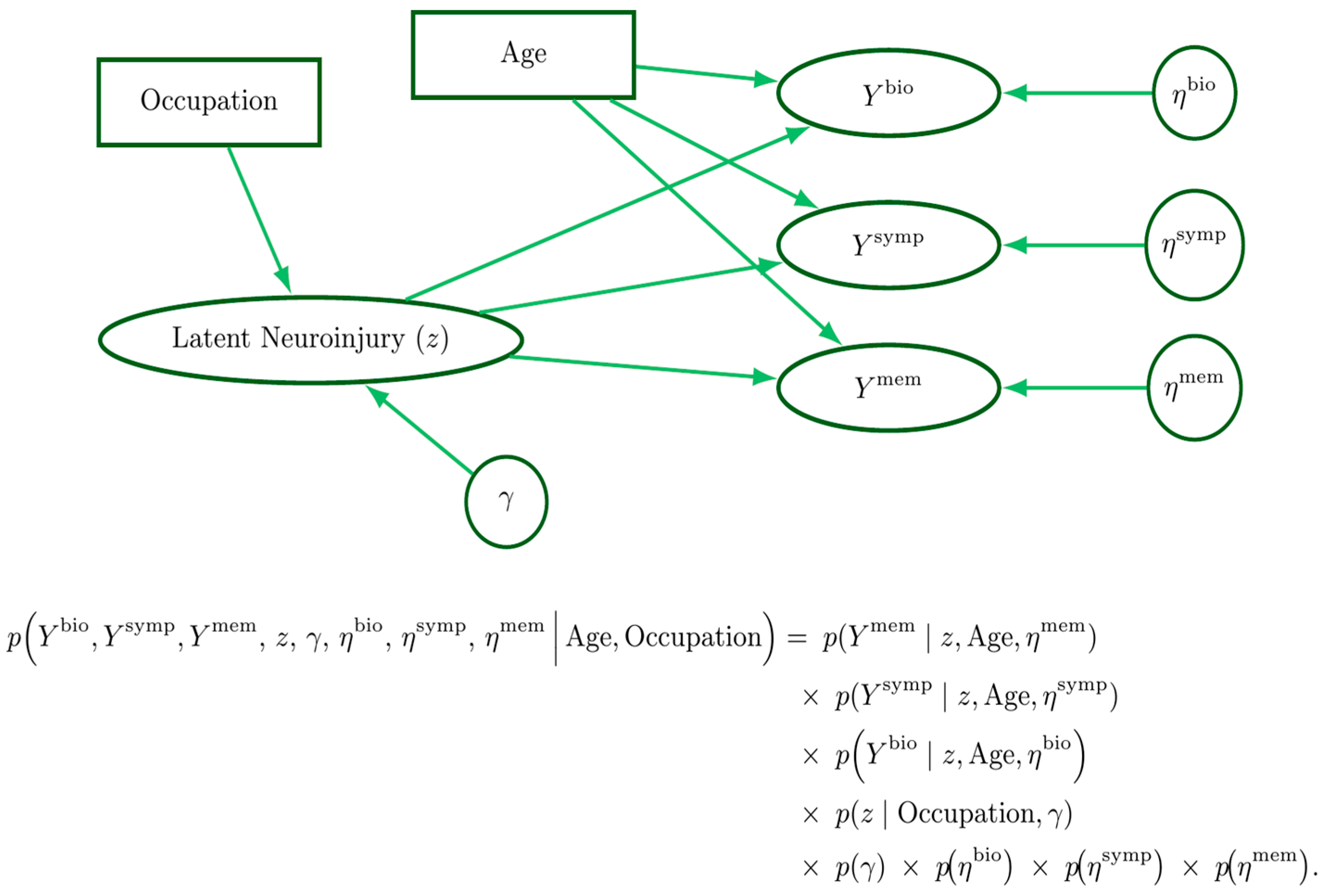
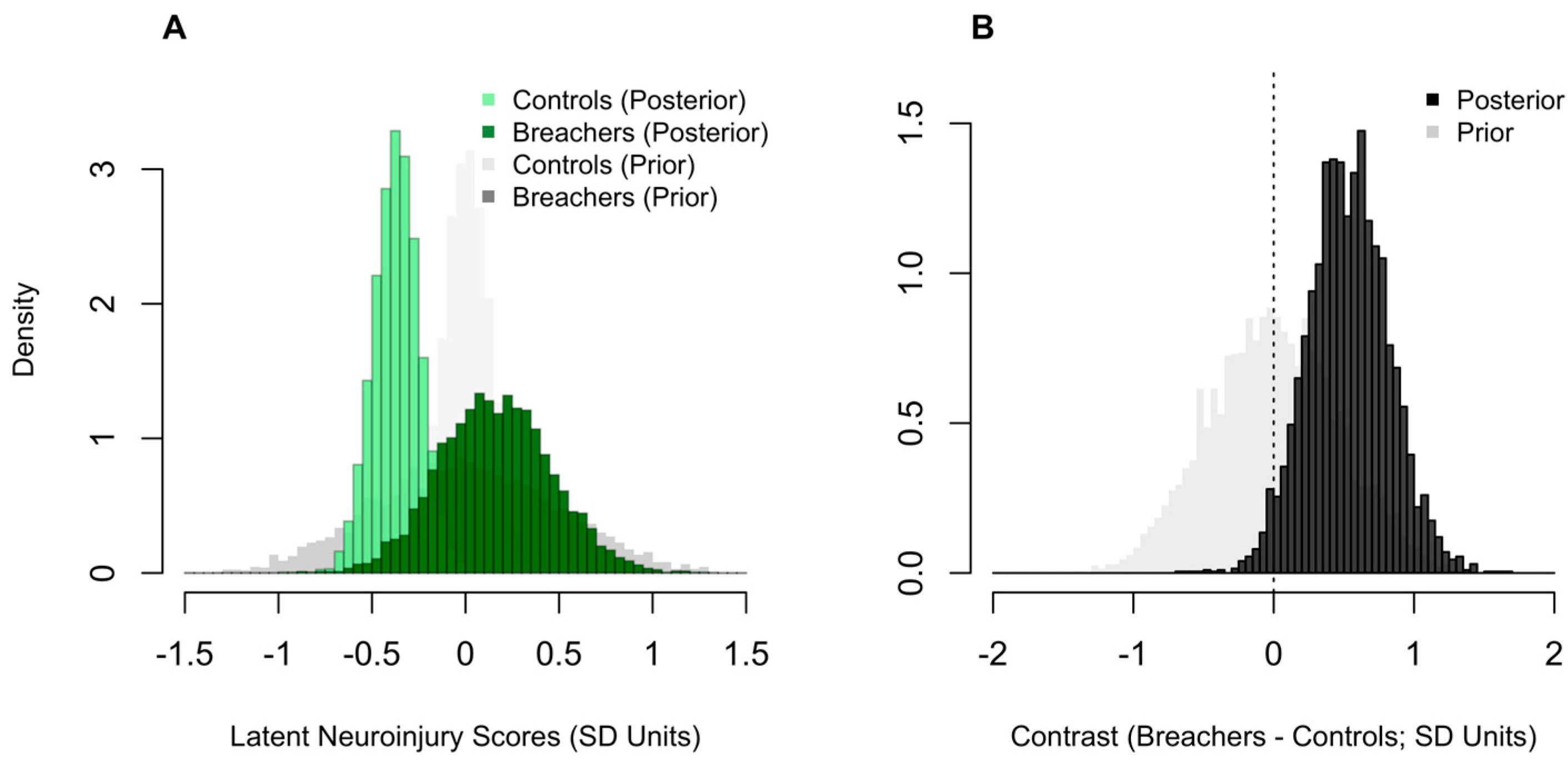
Repeated exposure to low-level blast overpressure (BOP) during controlled detonations is an emerging occupational health concern for military breachers and Special Operations Forces personnel, given accumulating evidence that chronic exposure may produce subtle, subclinical neurotrauma. This study derived a latent neuroinjury construct integrating three complementary domains of brain health—post-concussive symptoms, working-memory performance, and circulating biomarkers—to determine whether breachers exhibit coherent patterns of neurobiological alteration. Symptom severity was assessed using the Rivermead Post-Concussion Questionnaire (RPQ), and working memory was assessed with the N-Back task and a panel of thirteen neuroproteomic biomarkers was measured reflecting astroglial activation, neuronal and axonal injury, oxidative stress, inflammatory signaling, and neurotrophic regulation. Experienced Canadian Armed Forces breachers with extensive occupational BOP exposure were compared with unexposed controls. Bayesian latent-variable modeling provided probabilistic evidence for a chronic, subclinical neurobiological signal, with the strongest contributions arising from self-reported symptoms and smaller but consistent contributions from the biomarker domain. Working-memory performance did not load substantively on the latent factor. Several RPQ items and circulating biomarkers showed robust loadings, and the latent neuroinjury factor was elevated in breachers relative to controls (97% posterior probability). The pattern is broadly consistent with subclinical neurobiological stress in the absence of measurable cognitive impairment, suggesting early or compensated physiological alterations rather than overt dysfunction. This multidomain, biomarker-informed framework provides a mechanistically grounded and scalable approach for identifying subtle neurobiological strain in military personnel routinely exposed to repetitive low-level blast. It may offer value for risk stratification, operational health surveillance, and the longitudinal monitoring of neurobiological change in high-risk occupations.
Keywords: axonal injury; blast overpressure; brain health monitoring; traumatic brain injury; military breachers; occupational exposure; subconcussive neurotrauma; blood biomarkers; GFAP; neurofilament light chain; tau protein; Bayesian latent-variable modeling; working memory; Rivermead Post-Concussion Symptoms Questionnaire axonal injury; blast overpressure; brain health monitoring; traumatic brain injury; military breachers; occupational exposure; subconcussive neurotrauma; blood biomarkers; GFAP; neurofilament light chain; tau protein; Bayesian latent-variable modeling; working memory; Rivermead Post-Concussion Symptoms Questionnaire