The Genomic Characterization of a Novel Candidatus Genus of the Family Gallionellaceae, a Novel Candidatus Species of the Genus Gallionella and Their Metabolic Potential for Iron Oxidation



Abstract
1. Introduction
2. Results and Discussion
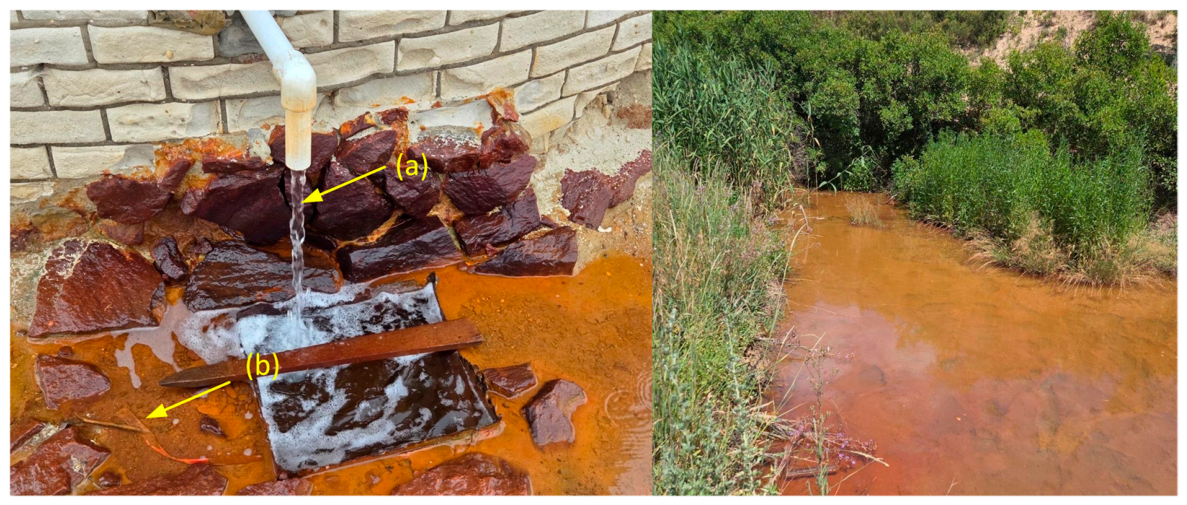
2.1. The Physicochemical Characteristics of the Sampling Site
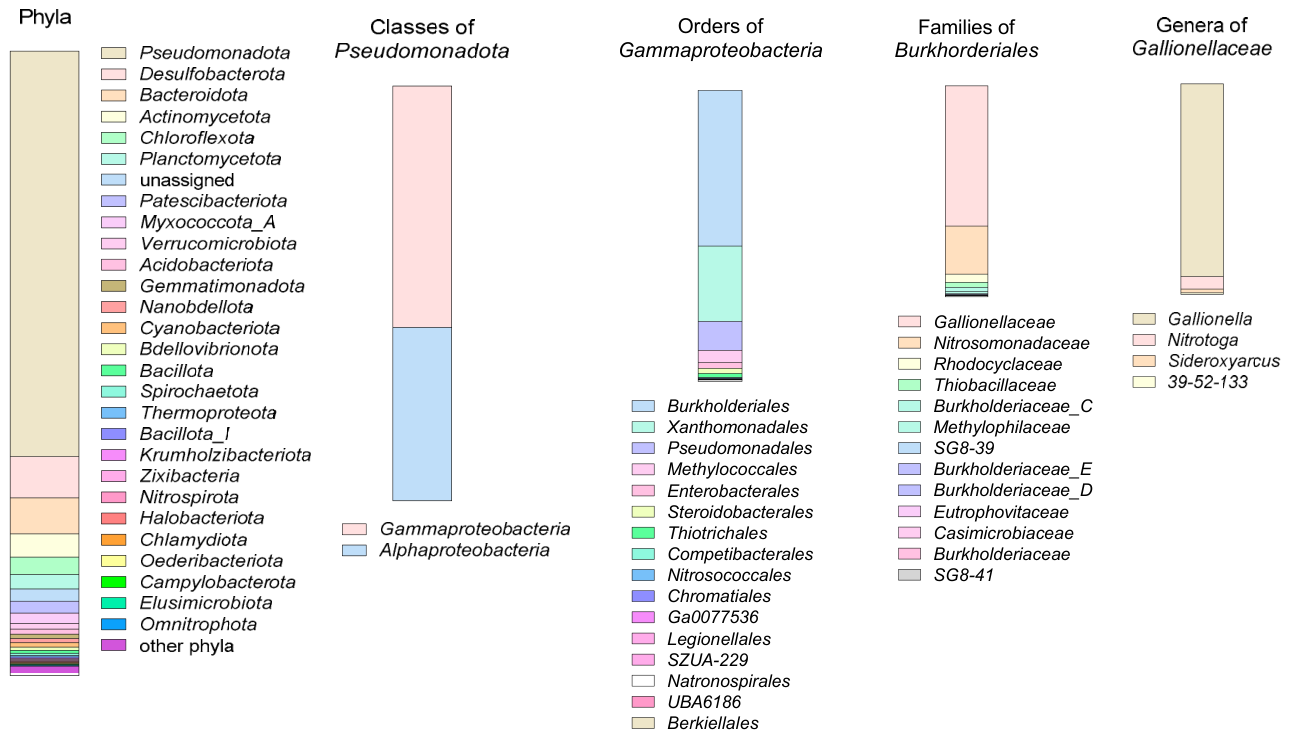
2.2. An Overview of the Composition of the Microbial Community
2.3. Genome Assembly
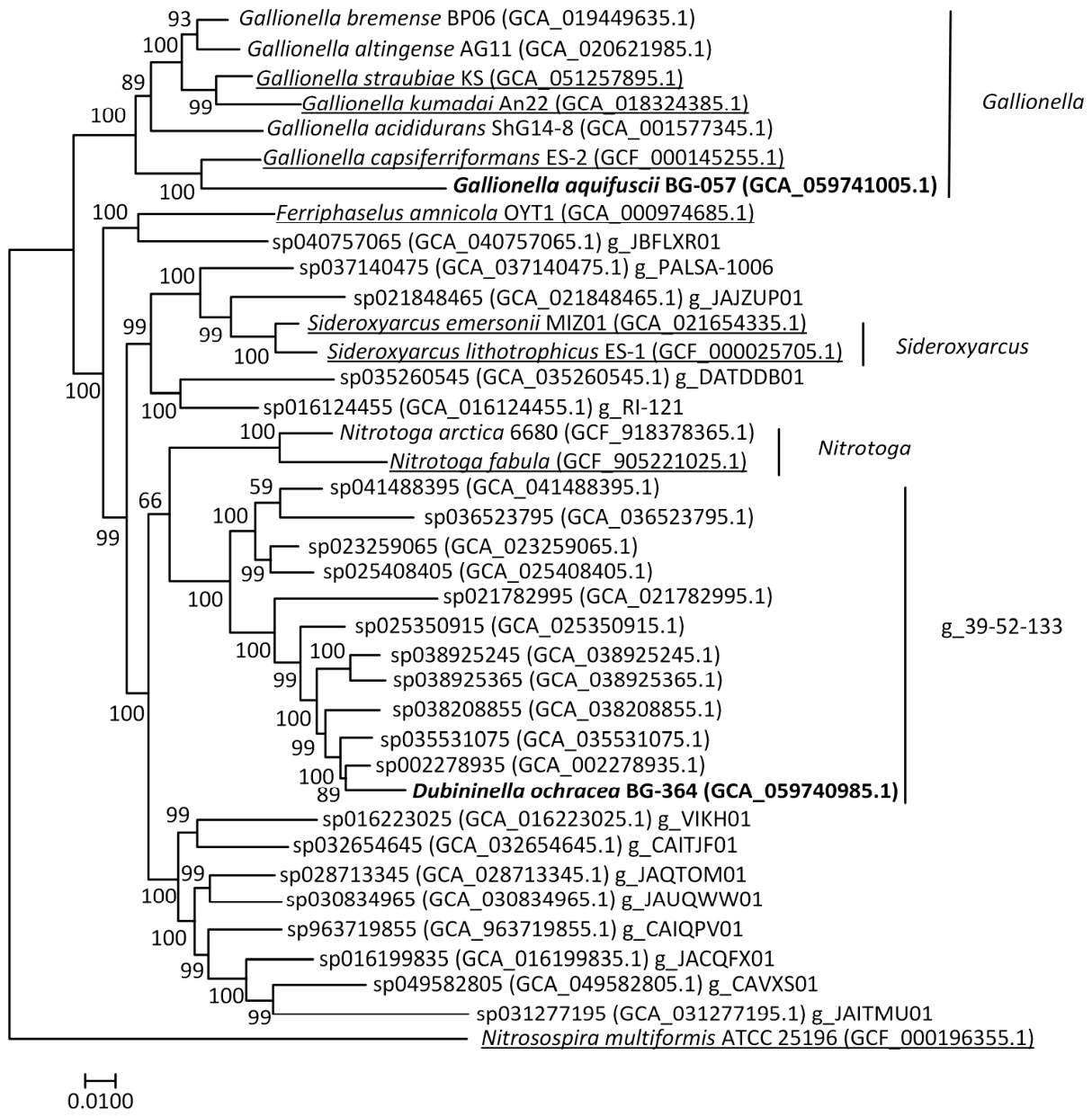
2.4. Taxonomic Placement
2.5. Iron Metabolism
2.5.1. Lithotrophic Growth in the Presence of Fe (II)
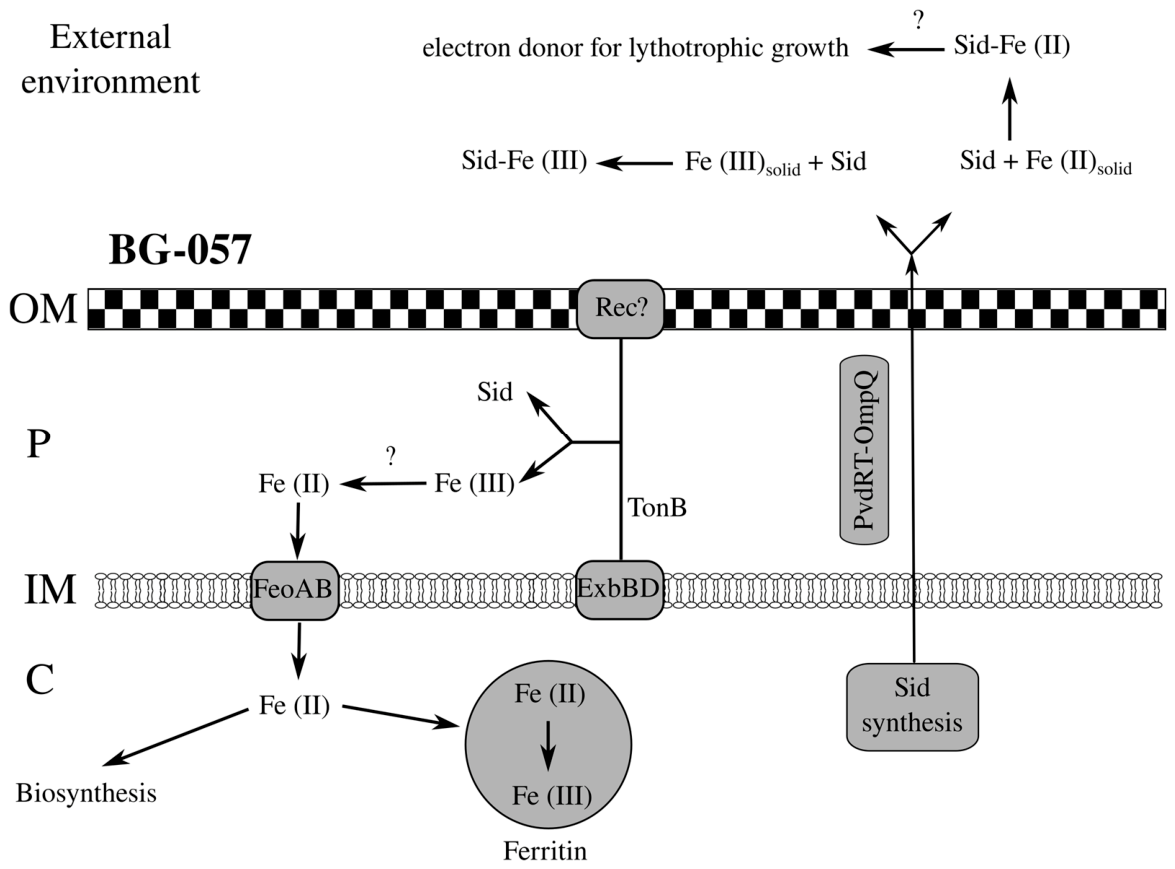
2.5.2. Formation of Complexing Ligands Such as Siderophores and Transport of Fe–Siderophore Complexes into Cell
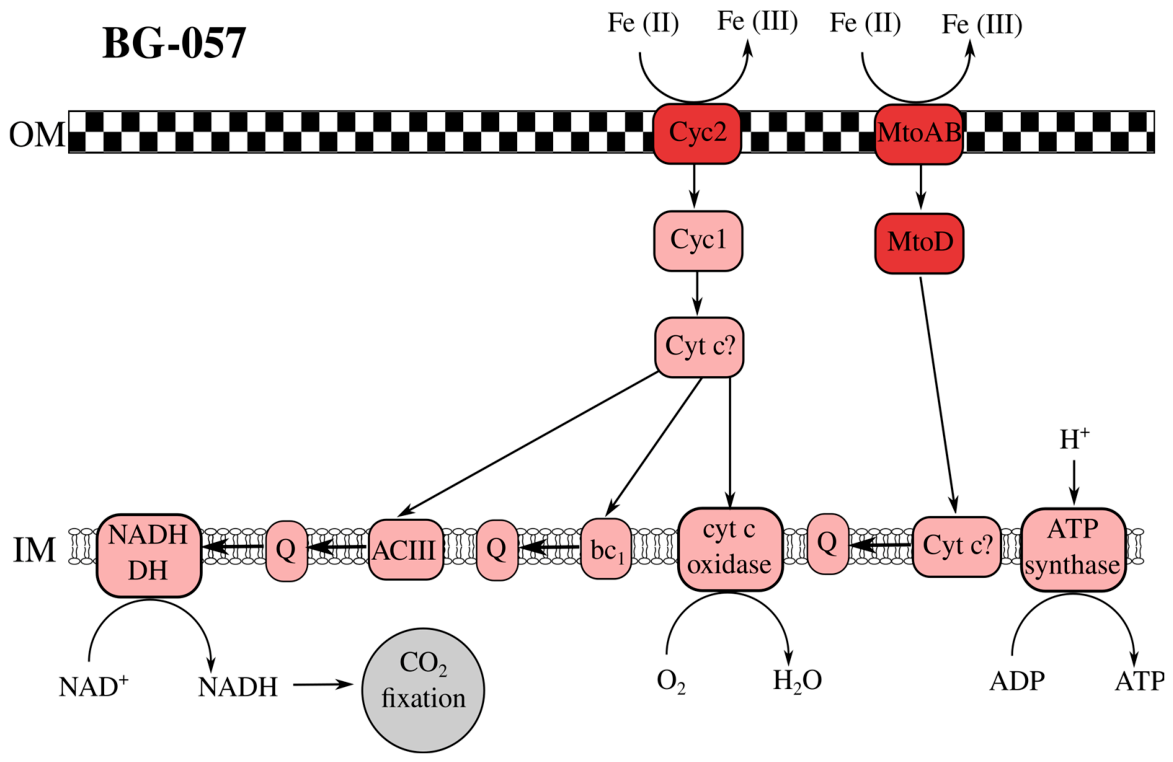
BG-057
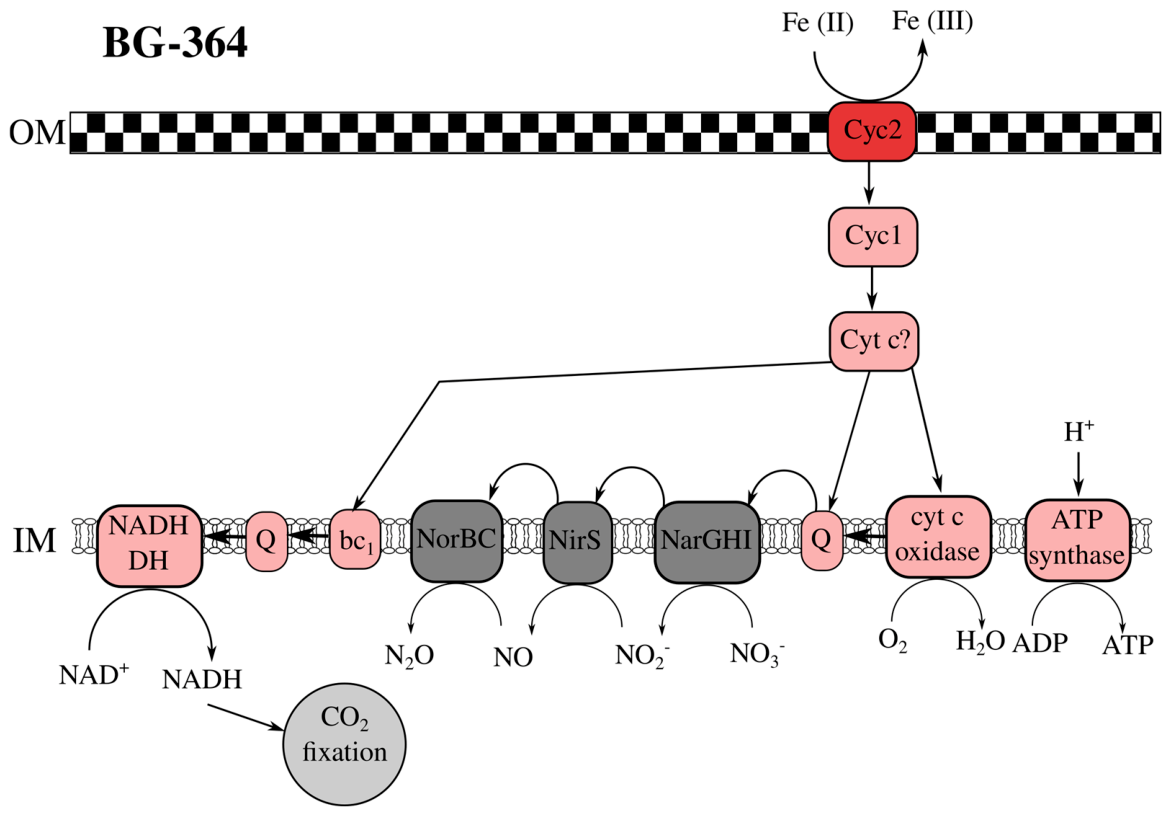
BG-364
2.6. Autotrophy
2.7. Lithotrophy
2.7.1. Lithotrophy in the Presence of Mn (II)
2.7.2. Lithotrophy in the Presence of Arsenic
2.7.3. Lithotrophy in the Presence of Reduced Sulfur Compounds
2.7.4. Hydrogenases
2.8. Nitrate Reduction
2.9. Terminal Oxidases and Reverse Electron Transport
2.10. Central Metabolism
2.11. Description of New Genus and Species
2.11.1. Description of “Candidatus Dubininella”
2.11.2. Description of “Candidatus Dubininella ochracea”
2.11.3. Description of “Candidatus Gallionella aquifuscii”
3. Materials and Methods
3.1. Sampling
3.2. Metagenome Sequencing and MAG Assembly
3.3. Genome Analysis
4. Conclusions
Supplementary Materials
Author Contributions
Funding
Institutional Review Board Statement
Informed Consent Statement
Data Availability Statement
Acknowledgments
Conflicts of Interest
Abbreviations
| ANI | Average nucleotide identity |
| AAI | Average amino acid identity |
| CBB cycle | Calvin-Benson-Bassham cycle |
| ATP | Adenosine triphosphate |
| APS | Adenosine 5′-phosphosulfate |
| MAG | Metagenome-assembled genome |
| NADH | Nicotinamide adenine dinucleotide |
| GTDB | Genome Taxonomy Database |
| ETC | Electron transport chain |
| FeOB | Iron-oxidizing bacteria |
| NRPS | Non-ribosomal peptide synthetase |
| NIS | NRPS-independent siderophore |
| ABC | ATP-binding cassette |
| Rubisco | Ribulose-1,5-bisphosphate carboxylase/oxygenase |
| FCSD | Flavocytochrome c sulfide dehydrogenase |
| FBA | Fructose-1,6-bisphosphate aldolase |
| Km | Michaelis constant |
| ACIII | Alternative complex III |
| OPPP | Oxidative pentose phosphate pathway |
| PFOR | Pyruvate:ferredoxin oxidoreductase |
| TCA | Tricarboxylic acid |
| NCBI | National Center for Biotechnology Information |
References
- Ehrenberg, G. Vorlaufige Mitteilung iiber das wirkliche Vorkommen fossiler Infusorien und ihre grosse Verbreitung. Ann. Phys. 1836, 38, 13–227. [Google Scholar]
- Winogradsky, S.J. Über Eisenbakterien. Bot. Ztg. 1888, 46, 262–270. [Google Scholar]
- Winogradsky, S. Eisenbakterien als Anorgoxydanten. Zentralblatt Für Bakteriol. Parasitenkd. Und Infekt. 1922, 57, 1–21. [Google Scholar]
- Hallbeck, L.E.-L.; Pedersen, K. Gallionella. In Bergey’s Manual of Systematics of Archaea and Bacteria; Whitman, W.B., Ed.; Wiley: Hoboken, NJ, USA, 2015. [Google Scholar] [CrossRef] [Scilit]
- Huang, Y.M.; Jakus, N.; Straub, D.; Konstantinidis, K.T.; Blackwell, N.; Kappler, A.; Kleindienst, S. ‘Candidatus ferrigenium straubiae’ sp. nov., ‘Candidatus ferrigenium bremense’ sp. nov., ‘Candidatus ferrigenium altingense’ sp. nov., are autotrophic Fe(II)-oxidizing bacteria of the family Gallionellaceae. Syst. Appl. Microbiol. 2022, 45, 126306. [Google Scholar] [CrossRef] [Scilit] [PubMed]
- Chan, C.S.; Fakra, S.C.; Emerson, D.; Fleming, E.J.; Edwards, K.J. Lithotrophic iron-oxidizing bacteria produce organic stalks to control mineral growth: Implications for biosignature formation. ISME J. 2011, 5, 717–727. [Google Scholar] [CrossRef] [Scilit] [PubMed]
- Hoover, R.L.; Keffer, J.L.; Polson, S.W.; Chan, C.S. Gallionellaceae pangenomic analysis reveals insight into phylogeny, metabolic flexibility, and iron oxidation mechanisms. mSystems 2023, 8, e0003823. [Google Scholar] [CrossRef] [Scilit] [PubMed]
- Huang, Y.M.; Straub, D.; Blackwell, N.; Kappler, A.; Kleindienst, S. Meta-omics reveal Gallionellaceae and Rhodanobacter species as interdependent key players for Fe(II) oxidation and nitrate reduction in the autotrophic enrichment culture KS. Appl. Environ. Microbiol. 2021, 87, e0049621. [Google Scholar] [CrossRef] [Scilit] [PubMed]
- Uchijima, T.; Kato, S.; Tanimoto, K.; Shiraishi, F.; Hamamura, N.; Tokunaga, K.; Makita, H.; Kondo, M.; Ohkuma, M.; Mitsunobu, S. Custom-made medium approach for effective enrichment and isolation of chemolithotrophic iron-oxidizing bacteria. FEMS Microbiol. Ecol. 2025, 101, fiaf051. [Google Scholar] [CrossRef] [Scilit] [PubMed]
- Parks, D.H.; Chuvochina, M.; Waite, D.W.; Rinke, C.; Skarshewski, A.; Chaumeil, P.A.; Hugenholtz, P. A standardized bacterial taxonomy based on genome phylogeny substantially revises the tree of life. Nat. Biotechnol. 2018, 36, 996–1004. [Google Scholar] [CrossRef] [Scilit] [PubMed]
- Khalifa, A.; Nakasuji, Y.; Saka, N.; Honjo, H.; Asakawa, S.; Watanabe, T. Ferrigenium kumadai gen. nov., sp. nov., a microaerophilic iron-oxidizing bacterium isolated from a paddy field soil. Int. J. Syst. Evol. Microbiol. 2018, 68, 2587–2592. [Google Scholar] [CrossRef] [Scilit] [PubMed]
- Emerson, D.; Rentz, J.A.; Lilburn, T.G.; Davis, R.E.; Aldrich, H.; Chan, C.; Moyer, C.L. A novel lineage of proteobacteria involved in formation of marine Fe-oxidizing microbial mat communities. PLoS ONE 2007, 2, e667. [Google Scholar] [CrossRef] [Scilit] [PubMed]
- Nunley, J.W.; Krieg, N.R. Isolation of Gallionella ferruginea by use of formalin. Can. J. Microbiol. 1968, 14, 385–389. [Google Scholar] [CrossRef] [Scilit] [PubMed]
- Emerson, D.; Moyer, C. Isolation and characterization of novel iron-oxidizing bacteria that grow at circumneutral pH. Appl. Environ. Microbiol. 1997, 63, 4784–4792. [Google Scholar] [CrossRef] [Scilit] [PubMed]
- Kato, S.; Krepski, S.; Chan, C.; Itoh, T.; Ohkuma, M. Ferriphaselus amnicola gen. nov., sp. nov., a neutrophilic, stalk-forming, iron-oxidizing bacterium isolated from an iron-rich groundwater seep. Int. J. Syst. Evol. Microbiol. 2014, 64, 921–925. [Google Scholar] [CrossRef] [Scilit] [PubMed]
- Kadnikov, V.V.; Ivasenko, D.A.; Beletskii, A.V.; Mardanov, A.V.; Danilova, E.V.; Pimenov, N.V.; Karnachuk, O.V.; Ravin, N.V. A novel uncultured bacterium of the family Gallionellaceae: Description and genome reconstruction based on the metagenomic analysis of microbial community in acid mine drainage. Microbiology 2016, 85, 449–461. [Google Scholar] [CrossRef] [Scilit]
- Zhiskar, M. Bromine and iodine-bromine mineral waters of the Voronezh region. Vestn. Voronezhskogo Gos. Univ. Seriya Geogr. Geoekologiya 2022, 4, 131–140. [Google Scholar] [CrossRef] [Scilit]
- Woodcroft, B.J.; Aroney, S.T.N.; Zhao, R.; Cunningham, M.; Mitchell, J.A.M.; Nurdiansyah, R.; Blackall, L.; Tyson, G.W. Comprehensive taxonomic identification of microbial species in metagenomic data using SingleM and Sandpiper. Nat. Biotechnol. 2026, 44, 948–953. [Google Scholar] [CrossRef] [Scilit] [PubMed]
- Konstantinidis, K.T.; Tiedje, J.M. Genomic insights that advance the species definition for prokaryotes. Proc. Natl. Acad. Sci. USA 2005, 102, 2567–2572. [Google Scholar] [CrossRef] [Scilit] [PubMed]
- Konstantinidis, K.T.; Rosselló-Móra, R.; Amann, R. Uncultivated microbes in need of their own taxonomy. ISME J. 2017, 11, 2399–2406. [Google Scholar] [CrossRef] [Scilit] [PubMed]
- Riesco, R.; Trujillo, M.E. Update on the proposed minimal standards for the use of genome data for the taxonomy of prokaryotes. Int. J. Syst. Evol. Microbiol. 2024, 74, 006300. [Google Scholar] [CrossRef] [Scilit] [PubMed]
- Zhou, N.; Kupper, R.J.; Catalano, J.G.; Thompson, A.; Chan, C.S. Biological oxidation of Fe(II)-bearing smectite by microaerophilic iron oxidizer Sideroxydans lithotrophicus using dual Mto and Cyc2 iron oxidation pathways. Environ. Sci. Technol. 2022, 56, 17443–17453. [Google Scholar] [CrossRef] [Scilit] [PubMed]
- Keffer, J.L.; Zhou, N.; Rushworth, D.D.; Yu, Y.; Chan, C.S. Microbial magnetite oxidation via MtoAB porin-multiheme cytochrome complex in Sideroxydans lithotrophicus ES-1. Appl. Environ. Microbiol. 2025, 91, e0186524. [Google Scholar] [CrossRef] [Scilit] [PubMed]
- Keffer, J.L.; McAllister, S.M.; Garber, A.I.; Hallahan, B.J.; Sutherland, M.C.; Rozovsky, S.; Chan, C.S. Iron oxidation by a fused cytochrome-porin common to diverse iron-oxidizing bacteria. mBio 2021, 12, e0107421. [Google Scholar] [CrossRef] [Scilit] [PubMed]
- He, S.; Barco, R.A.; Emerson, D.; Roden, E.E. Comparative genomic analysis of neutrophilic iron(II) oxidizer genomes for candidate genes in extracellular electron transfer. Front. Microbiol. 2017, 21, 8:1584. [Google Scholar] [CrossRef] [Scilit] [PubMed]
- Pitts, K.E.; Dobbin, P.S.; Reyes-Ramirez, F.; Thomson, A.J.; Richardson, D.J.; Seward, H.E. Characterization of the Shewanella oneidensis MR-1 decaheme cytochrome MtrA: Expression in Escherichia coli confers the ability to reduce soluble Fe(III) chelates. J. Biol. Chem. 2003, 278, 27758–27765. [Google Scholar] [CrossRef] [Scilit] [PubMed]
- Liu, J.; Wang, Z.; Belchik, S.M.; Edwards, M.J.; Liu, C.; Kennedy, D.W.; Merkley, E.D.; Lipton, M.S.; Butt, J.N.; Richardson, D.J.; et al. Identification and characterization of MtoA: A decaheme C-type cytochrome of the neutrophilic Fe(II)-oxidizing bacterium Sideroxydans lithotrophicus ES-1. Front. Microbiol. 2012, 3, 37. [Google Scholar] [CrossRef] [Scilit] [PubMed]
- Ross, D.E.; Flynn, J.M.; Baron, D.B.; Gralnick, J.A.; Bond, D.R. Towards electrosynthesis in Shewanella: Energetics of reversing the Mtr pathway for reductive metabolism. PLoS ONE 2011, 6, e16649. [Google Scholar] [CrossRef] [Scilit] [PubMed]
- Jain, A.; Kalb, M.J.; Gralnick, J.A. Reconstructing electron transfer components from an Fe(II)-oxidizing bacterium. Microbiology 2022, 168, 001240. [Google Scholar] [CrossRef] [Scilit] [PubMed]
- Lower, B.H.; Shi, L.; Yongsunthon, R.; Droubay, T.C.; McCready, D.E.; Lower, S.K. Specific bonds between an iron oxide surface and outer membrane cytochromes MtrC and OmcA from Shewanella oneidensis MR-1. J. Bacteriol. 2007, 189, 4944–4952. [Google Scholar] [CrossRef] [Scilit] [PubMed]
- Shi, L.; Fredrickson, J.K.; Zachara, J.M. Genomic analyses of bacterial porin-cytochrome gene clusters. Front. Microbiol. 2014, 5, 657. [Google Scholar] [CrossRef] [Scilit] [PubMed]
- Garber, A.I.; Nealson, K.H.; Okamoto, A.; McAllister, S.M.; Chan, C.S.; Barco, R.A.; Merino, N. FeGenie: A comprehensive tool for the identification of iron genes and iron gene neighborhoods in genome and metagenome assemblies. Front. Microbiol. 2020, 11, 37. [Google Scholar] [CrossRef] [Scilit] [PubMed]
- Coelho, A.; Silva, J.M.; Cantini, F.; Piccioli, M.; Louro, R.O.; Paquete, C.M. Resonance assignments of cytochrome MtoD from the extracellular electron uptake pathway of Sideroxydans lithotrophicus ES-1. Biomol. NMR Assign. 2024, 18, 139–146. [Google Scholar] [CrossRef] [Scilit] [PubMed]
- Weber, K.A.; Achenbach, L.A.; Coates, J.D. Microorganisms pumping iron: Anaerobic microbial iron oxidation and reduction. Nat. Rev. Microbiol. 2006, 4, 752–764. [Google Scholar] [CrossRef] [Scilit] [PubMed]
- Krewulak, K.D.; Vogel, H.J. TonB or not TonB: Is that the question? Biochem Cell Biol. 2011, 89, 87–97. [Google Scholar] [CrossRef] [Scilit] [PubMed]
- Carroll, C.S.; Moore, M.M. Ironing out siderophore biosynthesis: A review of non-ribosomal peptide synthetase (NRPS)-independent siderophore synthetases. Crit. Rev. Biochem Mol. Biol. 2018, 53, 356–381. [Google Scholar] [CrossRef] [Scilit] [PubMed]
- Contreras, H.; Chim, N.; Credali, A.; Goulding, C.W. Heme uptake in bacterial pathogens. Curr. Opin. Chem. Biol. 2014, 19, 34–41. [Google Scholar] [CrossRef] [Scilit] [PubMed]
- Luscher, A.; Moynié, L.; Auguste, P.S.; Bumann, D.; Mazza, L.; Pletzer, D.; Naismith, J.H.; Köhler, T. TonB-Dependent receptor repertoire of Pseudomonas aeruginosa for uptake of siderophore-drug conjugates. Antimicrob. Agents Chemother. 2018, 62, e00097-18. [Google Scholar] [CrossRef] [Scilit] [PubMed]
- Emerson, D.; Field, E.K.; Chertkov, O.; Davenport, K.W.; Goodwin, L.; Munk, C.; Nolan, M.; Woyke, T. Comparative genomics of freshwater Fe-oxidizing bacteria: Implications for physiology, ecology, and systematics. Front. Microbiol. 2013, 4, 254. [Google Scholar] [CrossRef] [Scilit] [PubMed]
- Bradley, J.M.; Le Brun, N.E.; Moore, G.R. Ferritins: Furnishing proteins with iron. J. Biol. Inorg. Chem. 2016, 21, 13–28. [Google Scholar] [CrossRef] [Scilit] [PubMed]
- Guo, Y.; Liu, Y.; Li, F.; Pan, H.; Yi, X.; Liu, Y.; Zhou, H. Heterologous expression, purification and characteristics of a high molecular weight manganese oxidase McoA from Pseudomonas sp. AN-1. Int. J. Biol. Macromol. 2026, 355, 151530. [Google Scholar] [CrossRef] [Scilit] [PubMed]
- He, B.; Yun, Z.; Shi, J.; Jiang, G. Research progress of heavy metal pollution in China: Sources, analytical methods, status, and toxicity. Chin. Sci. Bull. 2013, 58, 134–140. [Google Scholar] [CrossRef] [Scilit]
- Yan, G.; Chen, X.; Du, S.; Deng, Z.; Wang, L.; Chen, S. Genetic mechanisms of arsenic detoxification and metabolism in bacteria. Curr. Genet 2019, 65, 329–338. [Google Scholar] [CrossRef] [Scilit] [PubMed]
- Kashyap, D.R.; Botero, L.M.; Franck, W.L.; Hassett, D.J.; McDermott, T.R. Complex regulation of arsenite oxidation in Agrobacterium tumefaciens. J. Bacteriol. 2006, 188, 1081–1088. [Google Scholar] [CrossRef] [Scilit] [PubMed]
- Koechler, S.; Cleiss-Arnold, J.; Proux, C.; Sismeiro, O.; Dillies, M.A.; Goulhen-Chollet, F.; Hommais, F.; Lièvremont, D.; Arsène-Ploetze, F.; Coppée, J.Y.; et al. Multiple controls affect arsenite oxidase gene expression in Herminiimonas arsenicoxydans. BMC Microbiol. 2010, 10, 53, Erratum in BMC Microbiol 2017 28, 74. https://doi.org/10.1186/s12866-017-0976-8. [Google Scholar] [CrossRef] [Scilit] [PubMed]
- Vignais, P.M. Hydrogenases and H+-reduction in primary energy conservation. Results Probl. Cell Differ. 2008, 45, 223–252. [Google Scholar] [CrossRef] [Scilit] [PubMed]
- Fang, Y.; Liu, J.; Yang, J.; Wu, G.; Hua, Z.; Dong, H.; Hedlund, B.P.; Baker, B.J.; Jiang, H. Compositional and metabolic responses of autotrophic microbial community to salinity in lacustrine environments. mSystems 2022, 7, e0033522. [Google Scholar] [CrossRef] [Scilit] [PubMed]
- Bueno, E.; Mesa, S.; Bedmar, E.J.; Richardson, D.J.; Delgado, M.J. Bacterial adaptation of respiration from oxic to microoxic and anoxic conditions: Redox control. Antioxid. Redox Signal 2012, 16, 819–852. [Google Scholar] [CrossRef] [Scilit] [PubMed]
- D’mello, R.; Hill, S.; Poole, R.K. The cytochrome bd quinol oxidase in Escherichia coli has an extremely high oxygen affinity and two oxygen-binding haems: Implications for regulation of activity in vivo by oxygen inhibition. Microbiology 1996, 142, 755–763. [Google Scholar] [CrossRef] [Scilit] [PubMed]
- Lyons, J.; Aragão, D.; Slattery, O.; Pisliakov, A.V.; Soulimane, T.; Caffrey, M. Structural insights into electron transfer in caa3-type cytochrome oxidase. Nature 2012, 487, 514–518. [Google Scholar] [CrossRef] [Scilit] [PubMed]
- Pan, N.; Imlay, J.A. How does oxygen inhibit central metabolism in the obligate anaerobe Bacteroides thetaiotaomicron. Mol. Microbiol. 2001, 39, 1562–1571. [Google Scholar] [CrossRef] [Scilit] [PubMed]
- Wang, Y.; Chen, X.; Spengler, K.; Terberger, K.; Boehm, M.; Appel, J.; Barske, T.; Timm, S.; Battchikova, N.; Hagemann, M.; et al. Pyruvate:Ferredoxin oxidoreductase and low abundant ferredoxins support aerobic photomixotrophic growth in cyanobacteria. Elife 2022, 11, e71339. [Google Scholar] [CrossRef] [Scilit] [PubMed]
- Martin, M. Cutadapt removes adapter sequences from high-throughput sequencing reads. EMBnet. J. 2011, 17, 10–12. [Google Scholar] [CrossRef] [Scilit]
- Magoč, T.; Salzberg, S.L. FLASH: Fast length adjustment of short reads to improve genome assemblies. Bioinformatics 2011, 27, 2957–2963. [Google Scholar] [CrossRef] [Scilit] [PubMed]
- Li, D.; Liu, C.M.; Luo, R.; Sadakane, K.; Lam, T.W. MEGAHIT: An ultra-fast single-node solution for large and complex metagenomics assembly via succinct de Bruijn graph. Bioinformatics 2015, 31, 1674–1676. [Google Scholar] [CrossRef] [Scilit] [PubMed]
- Kang, D.D.; Li, F.; Kirton, E.; Thomas, A.; Egan, R.; An, H.; Wang, Z. MetaBAT 2: An adaptive binning algorithm for robust and efficient genome reconstruction from metagenome assemblies. PeerJ 2019, 7, e7359. [Google Scholar] [CrossRef] [Scilit] [PubMed]
- Wang, Z.; You, R.; Han, H.; Liu, W.; Sun, F.; Zhu, S. Effective binning of metagenomic contigs using contrastive multi-view representation learning. Nat. Commun. 2024, 15, 585. [Google Scholar] [CrossRef] [Scilit] [PubMed]
- Alneberg, J.; Bjarnason, B.S.; de Bruijn, I.; Schirmer, M.; Quick, J.; Ijaz, U.Z.; Lahti, L.; Loman, N.J.; Andersson, A.F.; Quince, C. Binning metagenomic contigs by coverage and composition. Nat. Methods 2014, 11, 1144–1146. [Google Scholar] [CrossRef] [Scilit] [PubMed]
- Wu, Y.W.; Simmons, B.A.; Singer, S.W. MaxBin 2.0: An automated binning algorithm to recover genomes from multiple metagenomic datasets. Bioinformatics 2016, 32, 605–607. [Google Scholar] [CrossRef] [Scilit] [PubMed]
- Sieber, C.M.K.; Probst, A.J.; Sharrar, A.; Thomas, B.C.; Hess, M.; Tringe, S.G.; Banfield, J.F. Recovery of genomes from metagenomes via a dereplication, aggregation and scoring strategy. Nat. Microbiol. 2018, 3, 836–843. [Google Scholar] [CrossRef] [Scilit] [PubMed]
- Chklovski, A.; Parks, D.H.; Woodcroft, B.J.; Tyson, G.W. CheckM2: A rapid, scalable and accurate tool for assessing microbial genome quality using machine learning. Nat. Methods 2023, 20, 1203–1212, Erratum in Nat Methods. 2024, 21, 735. https://doi.org/10.1038/s41592-024-02248-z. [Google Scholar] [CrossRef] [Scilit] [PubMed]
- Chaumeil, P.A.; Mussig, A.J.; Hugenholtz, P.; Parks, D.H. GTDB-Tk v2: Memory friendly classification with the genome taxonomy database. Bioinformatics 2022, 38, 5315–5316. [Google Scholar] [CrossRef] [Scilit] [PubMed]
- Brettin, T.; Davis, J.J.; Disz, T.; Edwards, R.A.; Gerdes, S.; Olsen, G.J.; Olson, R.; Overbeek, R.; Parrello, B.; Pusch, G.D.; et al. RASTtk: A modular and extensible implementation of the RAST algorithm for building custom annotation pipelines and annotating batches of genomes. Sci. Rep. 2015, 5, 8365. [Google Scholar] [CrossRef] [Scilit] [PubMed]
- Almagro Armenteros, J.J.; Tsirigos, K.D.; Sønderby, C.K.; Petersen, T.N.; Winther, O.; Brunak, S.; von Heijne, G.; Nielsen, H. SignalP 5.0 improves signal peptide predictions using deep neural networks. Nat. Biotechnol. 2019, 37, 420–423. [Google Scholar] [CrossRef] [Scilit] [PubMed]
- Krogh, A.; Larsson, B.; von Heijne, G.; Sonnhammer, E.L. Predicting transmembrane protein topology with a hidden Markov model: Application to complete genomes. J. Mol. Biol. 2001, 305, 567–580. [Google Scholar] [CrossRef] [Scilit] [PubMed]
- Guindon, S.; Dufayard, J.F.; Lefort, V.; Anisimova, M.; Hordijk, W.; Gascuel, O. New algorithms and methods to estimate maximum-likelihood phylogenies: Assessing the performance of PhyML 3.0. Syst. Biol. 2010, 59, 307–321. [Google Scholar] [CrossRef] [Scilit] [PubMed]
- Anisimova, M.; Gil, M.; Dufayard, J.F.; Dessimoz, C.; Gascuel, O. Survey of branch support methods demonstrates accuracy, power, and robustness of fast likelihood-based approximation schemes. Syst. Biol. 2011, 60, 685–699. [Google Scholar] [CrossRef] [Scilit] [PubMed]
- Hallbeck, L.; Pedersen, K. Autotrophic and mixotrophic growth of Gallionella ferruginea. J. General. Microbiol. 1991, 137, 2657–2661. [Google Scholar] [CrossRef] [Scilit]
- Hoover, R.L.; Küsel, K.; Chan, C.S. An organotrophic Sideroxydans reveals potential iron oxidation marker genes. Appl. Environ. Microbiol. 2025, 91, e0039525. [Google Scholar] [CrossRef] [Scilit] [PubMed]
- Cooper, R.E.; Finck, J.; Chan, C.; Küsel, K. Mixotrophy broadens the ecological niche range of the iron oxidizer Sideroxydans sp. CL21 isolated from an iron-rich peatland. FEMS Microbiol. Ecol. 2023, 99, fiac156. [Google Scholar] [CrossRef] [Scilit] [PubMed]



| Genome No. | Genome Assembly | Size (Mb) | Contigs | Completeness (%) | Contamination (%) | G + C Content (Mol%) |
|---|---|---|---|---|---|---|
| BG-057 | JCAWNT000000000 | 3.55 | 209 | 93.24 | 1.67 | 53.1 |
| BG-364 | JCAWNS000000000 | 3.17 | 333 | 96.71 | 1.95 | 49.6 |
Disclaimer/Publisher’s Note: The statements, opinions and data contained in all publications are solely those of the individual author(s) and contributor(s) and not of MDPI and/or the editor(s). MDPI and/or the editor(s) disclaim responsibility for any injury to people or property resulting from any ideas, methods, instructions or products referred to in the content. |
© 2026 by the authors. Licensee MDPI, Basel, Switzerland. This article is an open access article distributed under the terms and conditions of the Creative Commons Attribution (CC BY) license.
Share and Cite
Ravin, N.V.; Gureeva, M.V.; Beletsky, A.V.; Grabovich, M.Y. The Genomic Characterization of a Novel Candidatus Genus of the Family Gallionellaceae, a Novel Candidatus Species of the Genus Gallionella and Their Metabolic Potential for Iron Oxidation. Int. J. Mol. Sci. 2026, 27, 8801. https://doi.org/10.3390/ijms27198801
Ravin NV, Gureeva MV, Beletsky AV, Grabovich MY. The Genomic Characterization of a Novel Candidatus Genus of the Family Gallionellaceae, a Novel Candidatus Species of the Genus Gallionella and Their Metabolic Potential for Iron Oxidation. International Journal of Molecular Sciences. 2026; 27(19):8801. https://doi.org/10.3390/ijms27198801
Chicago/Turabian StyleRavin, Nikolai V., Maria V. Gureeva, Alexey V. Beletsky, and Margarita Y. Grabovich. 2026. "The Genomic Characterization of a Novel Candidatus Genus of the Family Gallionellaceae, a Novel Candidatus Species of the Genus Gallionella and Their Metabolic Potential for Iron Oxidation" International Journal of Molecular Sciences 27, no. 19: 8801. https://doi.org/10.3390/ijms27198801
APA StyleRavin, N. V., Gureeva, M. V., Beletsky, A. V., & Grabovich, M. Y. (2026). The Genomic Characterization of a Novel Candidatus Genus of the Family Gallionellaceae, a Novel Candidatus Species of the Genus Gallionella and Their Metabolic Potential for Iron Oxidation. International Journal of Molecular Sciences, 27(19), 8801. https://doi.org/10.3390/ijms27198801