Endocrine-Disrupting Pesticides as Drivers of Human Disease: Mechanistic Toxicology and Life-Course Health Effects

 ,
,  ,
,  and
and
Abstract
1. Introduction
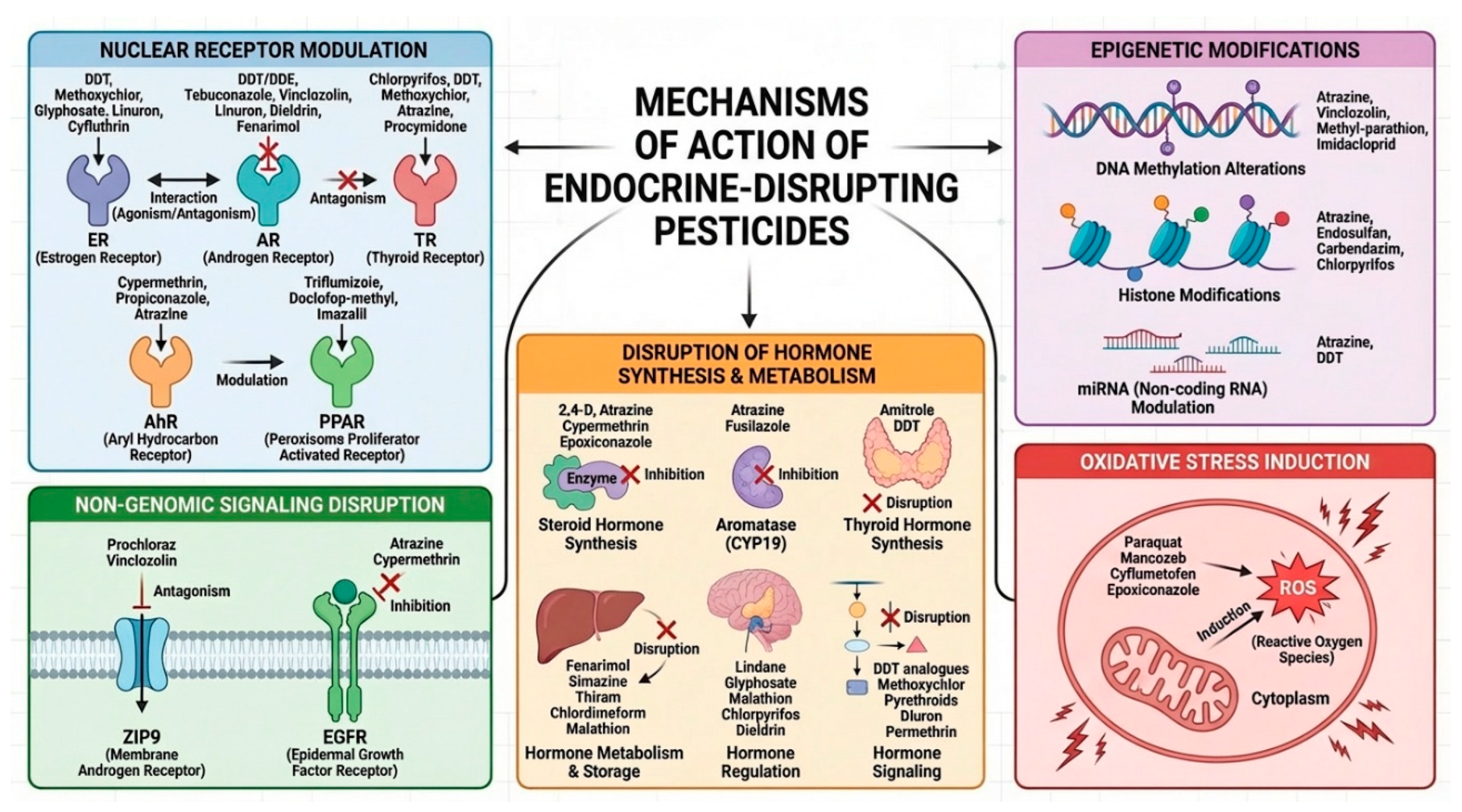
2. Modes of Action of EDPs
2.1. Nuclear Receptor Interactions
2.2. Non-Genomic Signaling Disruption
2.3. Disruption of Hormone Synthesis, Metabolism, and Transport
2.4. Epigenetic Modifications
2.5. Oxidative Stress Induction
3. Health Impacts of EDPs
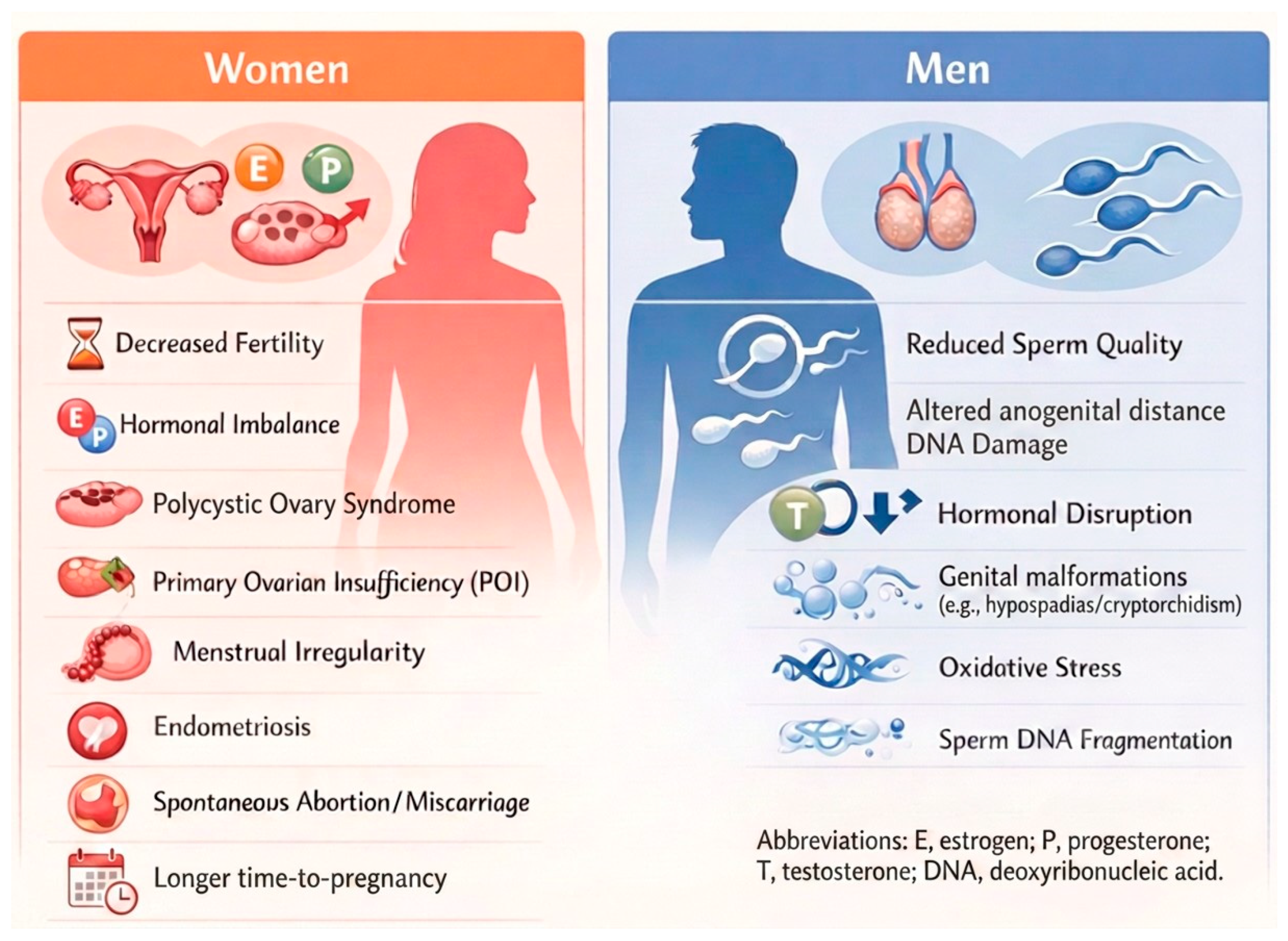
3.1. Reproductive Health Issues
3.2. Endocrine-Related Cancers
3.2.1. Testicular Cancer
3.2.2. Prostate Cancer
3.2.3. Breast Cancer
3.3. Metabolic Disorders (Obesity, Diabetes, Metabolic Syndrome)

| Study Design/Location | Sample Characteristics | Exposure Type/Biospecimen | Pesticide(s) | Key Findings | References |
|---|---|---|---|---|---|
| Obesity | |||||
| Cohort/ USA | 8365 male pesticide applicators | Occupational exposure/self-reported (interview/ questionnaire) | Atrazine | Higher body mass index (BMI) observed among applicators with higher estimated lifetime atrazine exposure; suggests a possible link between triazine exposure and obesity | [111] |
| Cohort/ USA | 218 women (18–40 years) | Pre-pregnancy exposure/Plasma | 9 organochlorine pesticides | Total gestational weight gain was statistically associated with oxychlordane. The gestational weight gain curve was associated with p,p’-DDT. HCB was positively associated with total weight gain during pregnancy. | [136] |
| Cross-sectional/ Spain | 429 adults (9.3% with T2D). | Environmental exposure/Serum | p,p’-DDE | p,p’-DDE level was significantly higher in people with BMI ≥ 25 kg/m2 than in people with normal BMI. | [112] |
| Cohort | 240 children, 12 years | Prenatal exposure/Serum maternal collected during pregnancy | DDT DDE | Among boys, 10-fold increases in prenatal DDT and DDE concentrations were associated with increased BMI z-score (o,p’-DDT, adj-β = 0.37, 95% CI: 0.08, 0.65; p,p’-DDT, adj-β = 0.26, 95% CI: 0.03, 0.48; p,p’-DDE, adj-β = 0.31, 95% CI: 0.02, 0.59). | [20] |
| Cross-sectional/Sweden | 988 adults | Environmental exposure/plasma | p,p’-DDE | p,p’-DDE levels were associated with increased fasting glucose, BMI, hypertension and left ventricular mass in separate models adjusted for sex. | [113] |
| Cross-sectional/ Iran | 242 children/adolescents (6–18 years) | Environmental exposure/Urine | 2,5-DCP | 2,5-DCP: ↑ BMI z-score β = 0.07 (95% CI 0.04–0.10); ↑ waist circumference β = 0.79 (95% CI 0.54–1.03); ↑ obesity OR = 1.09 (95% CI 1.01–1.19). | [137] |
| Cross-sectional/ USA | Children (n = 784, 6–19 y) and adults (n = 1672, ≥20 y) | Environmental exposure/Urine | 5 organophosphate esters | Exposure to select organophosphate esters differentially associated with increased or decreased general and central obesity in children and adults. | [138] |
| Prospective Cohort/ USA | n = 2334 pregnant women (8–13 wks) | Prenatal exposure/Plasma samples | 11 organochlorine pesticides (OCPs) | OCPs such as DDT, DDE, HCB were associated with excessive weight gain during pregnancy. | [117] |
| Cohort/USA | 511 middle-aged people | Prenatal exposure/serum | o,p’-DDT | Maternal o,p’-DDT associated with higher adult BMI: β = 0.59 kg/m2 per ln(ng/mL) (95% CI 0.17–1.00); waist circumference β = 1.19 cm (95% CI 0.26–2.13). | [18] |
| Cohort/ Spain | 379 4–18 years | Prenatal exposure/Cord blood | HCB, p,p’-DDT, p,p’-DDE | HCB exposure in the third tertile, was associated with higher BMI (β = 0.24; 95% CI: 0.01, 0.47), waist-to-height ratio (WHtR) z-score (β = 0.27; 95% CI: 0.04, 0.51), and elevated body fat % (β per 10-fold increase = 4.21; 95% CI: 0.51, 7.92). | [21] |
| Cross-sectional/ India | 100 adults | Environmental exposure/Adipose tissue | o,p’-DDT p,p’ DDD | o,p’-DDT (OR = 1.354 (1.022, 1.794)) and p,p’ DDD (OR = 1.070 (0.904–1.267) were strongly correlated with central obesity. | [114] |
| Cross-sectional/ USA | 1675 adults > 19 | Environmental exposure/Urine | Multiple Neonicotinoids/metabolites | No association between imidacloprid, clothianidin and N-desmethylacetamiprid and the occurrence of obesity. 5-Hydroxyimidacloprid was connected with an 11% increased incidence of overweight or obesity. | [119] |
| Cross-sectional/ South Korea | 3692 adults | Environmental exposure/Urine | Pyrethroid metabolite (3-PBA) | 3-PBA significantly associated with obesity (ORs = 1.0, 1.23, 1.43, 1.63) and increased BMI (ORs = 0.34, 0.46, 0.52). | [116] |
| Cross-sectional/ USA | 7796 adults (4065 women) (≥20 years) | Environmental exposure/Urine | 3-PBA | Among females, participants in the highest tertile of urinary 3-PBA had higher odds of obesity (OR = 1.22, 95% CI: 1.00, 1.48) compared to those in the lowest tertile after adjusting for covariates. Among males, the association was not statistically significant. | [17] |
| Cross-sectional/ Belgium & Luxembourg | Adults (n ≈ 989; 502 Belgium, 487 Luxembourg) | Environmental exposure/Hair | 7 OCPs | Positive associations were found between obesity and HCB, chlorpyrifos, and β-HCH. | [115] |
| Cross-sectional/Finland | 102 mother–child pairs | Environmental (Prenatal exposure)/Maternal plasma & cord plasma | p,p’-DDE | Pre-pregnancy BMI and weight change during pregnancy were positively associated with p,p’-DDE in children. | [118] |
| Insulin resistance/Diabetes | |||||
| Cohort/ Spain | 107 women with a history of gestational diabetes mellitus | Environmental exposure/Serum | p,p’-DDE HCB | HCB, and p,p’-DDE were positively associated with HOMA-IR [(β = 0.40 (0.13, 0.67)], higher 2 h IRI, higher 2 h glucose, and lower insulin sensitivity. | [124] |
| Cross-sectional/ Canada | 2172 Inuit adults | Environmental/ Serum | p,p’-DDE | p,p’-DDE was associated with increased risk of diabetes [OR = 2.5 (1.1, 6.0)]. | [125] |
| Cross-sectional/ United Kingdom | 192 adults. South Asians of Tamil or Telugu descent (n = 120) and European whites (n = 72) | Environmental exposure/ Plasma | p,p-DDE | South Asians had 9–30-fold higher p,p’-DDE levels than European whites. Diabetes strongly associated with elevated p,p’-DDE; OR = 7.00 (95% CI: 2.22–22.06). | [139] |
| Case–control/ Thailand | 866 cases with diabetes/1021 healthy controls (Farmers) | Occupational exposure/ Questionnaire | Multiple pesticides: insecticides, herbicides, fungicides, rodenticides | Diabetes risk was significantly increased with exposure to endosulfan (OR = 1.40), mevinphos (OR = 2.22), carbaryl (OR = 1.50), benlate (OR = 2.08), and rodenticides (OR = 1.35). | [128] |
| Case–control/USA | 793 middle-aged women | Environmental exposure/Plasma | 3 OCPs HCB, β-HCH p,p’-DDE | High vs. low tertile pesticide exposure increased type 2 diabetes risk: HCB OR = 1.67 (1.24, 2.23; Ptrend < 0.001), β-HCH OR = 3.62 (2.57–5.11; Ptrend < 0.001), and p,p’-DDE OR = 1.55 (1.13–2.13; Ptrend < 0.001). | [126] |
| Cross-sectional/ USA | 2796 adults aged 20–79 years | Environmental exposure/Urine | 3-PBA | Significant dose–response association between urinary 3-PBA levels and diabetes prevalence. Highest vs. lowest quartile: OR = 2.18 (95% CI: 1.18–4.03). | [17] |
| Case–control/ Germany | 132/263 adults, older than 45 years | Environmental exposure/Serum | HCB, p,p’-DDE β-HCH | HCB OR = 1.42 (1.11; 1.82), 4,4′-DDE (OR = 1.22 (1.00; 1.48) were significantly (p < 0.05) associated with an increased odds of having incident diabetes. | [127] |
| Cross-sectional/ Pakistan & Cameroon | 904 adults: 592 exposed (lived in OP-sprayed agricultural area) & 312 unexposed | Occupational exposure/Plasma | Malathion, chlorpyrifos, parathion | In both population samples, pesticide exposure was associated with marked pancreatic and metabolic dysregulation, including significantly elevated fasting glucose, insulin, and HOMA-IR. | [140] |
| Cross-sectional/ Thailand | 36 sprayers and 42 nonsprayers | Occupational exposure/Urine | Mix organophosphates | No significant association showed between chronic organophosphates exposure and HOMA-IR. | [120] |
| Case–control/ Algeria | 361 adults (180 cases with T2D and 181 non-diabetic) | Environmental exposure/Plasma | p,p’-DDE; HCB | Exposure to p,p’-DDE OR = 12.58 (95% CI: 4.76–33.26) and HCB OR = 3.69 (1.90–7.15) was associated with an increased risk of type 2 diabetes. | [141] |
| Case–control/ India | 100 normal/100 prediabetic/100 new diabetics | Environmental exposure/ Whole blood | β-HCH Dieldrin p,p’-DDE | Insulin resistance positively correlated with β-HCH and dieldrin. Adjusted ORs for diabetes risk: β-HCH (OR = 2.70), dieldrin (OR = 2.83), p,p’-DDE (OR = 2.55). | [114] |
| Cross-sectional/ Canada | 419 women | Environmental exposure/ Serum | p,p’-DDT p,p’-DDE | the highest detectable levels of DDT (PR = 1.93, 1.17, 3.19), and tertiles of DDE (PR = 3.58, 1.10, 11.70) were significantly associated with prevalent T2DM in the fully adjusted model. | [142] |
| Case–control/ USA | 442 youth 10–22 years | Environmental exposure/Plasma | p,p’-DDE, p,p’-DDT, hexachlorobenzene, tNONA | p,p’-DDE and tNONA were associated with higher odds of type 1 diabetes with normal insulin sensitivity (ORs ≈ 2.0–2.5 for 2nd/3rd tertiles). | [143] |
| Metabolic syndrome | |||||
| Cross-sectional/USA | 1706 non-diabetic adults (20–79 years) | Environmental exposure/Urine | 2,5-DCP | Dose-dependent increase in MetS prevalence by urinary 2,5-DCP quartile; Adjusted ORs: Q3 1.47 (95% CI 1.02–2.14); Q4 1.56 (95% CI 1.10–2.23) vs. Q1. | [132] |
| Combined cross-sectional + 10 yr longitudinal/Spain | n = 387 adipose baseline n = 154 longitudinal | Environmental exposure/Adipose tissue | β-HCH, HCB | After adjusting for confounders, β-HCH and HCB were independently associated with an increased risk of being metabolically compromised [HRs =1.28, 95% CI =1.01–1.61 (β-HCH); 1.26, 95% CI =1.00–1.59 (HCB)]. | [133] |
| Cross-sectional/USA | 548 adults (no diabetes) | Environmental exposure/Serum | 9 OCPs | Several OCPs were found to have significant associations with metabolic syndrome. Oxychlordane [OR =2.09 (1.07–4.07)]; tNONA [3.19 (1.45–7.00)]; HCB [OR =6.15 (1.66–22.88)]. | [134] |
| Cross-sectional/ Spain | 1374 adults | Environmental exposure/Serum | HCB β-HCH | Higher serum HCB [PRs up to 2.1 (95% CI 1.0–4.3)], β-HCH [PRs up to 2.8 (95% CI 1.1–6.7)] were strongly associated with an increased prevalence of metabolically unhealthy phenotype among normal-weight adults. | [16] |
| Cross-sectional/USA | 601 adults (18–84 y) | Environmental exposure/Serum | OCPs (HCB, DDE, and Mirex) | HCB (tertile3: β = 0.59) and DDE (tertile3: β = 1.19) strongly associated with risk of the MetS. | [135] |
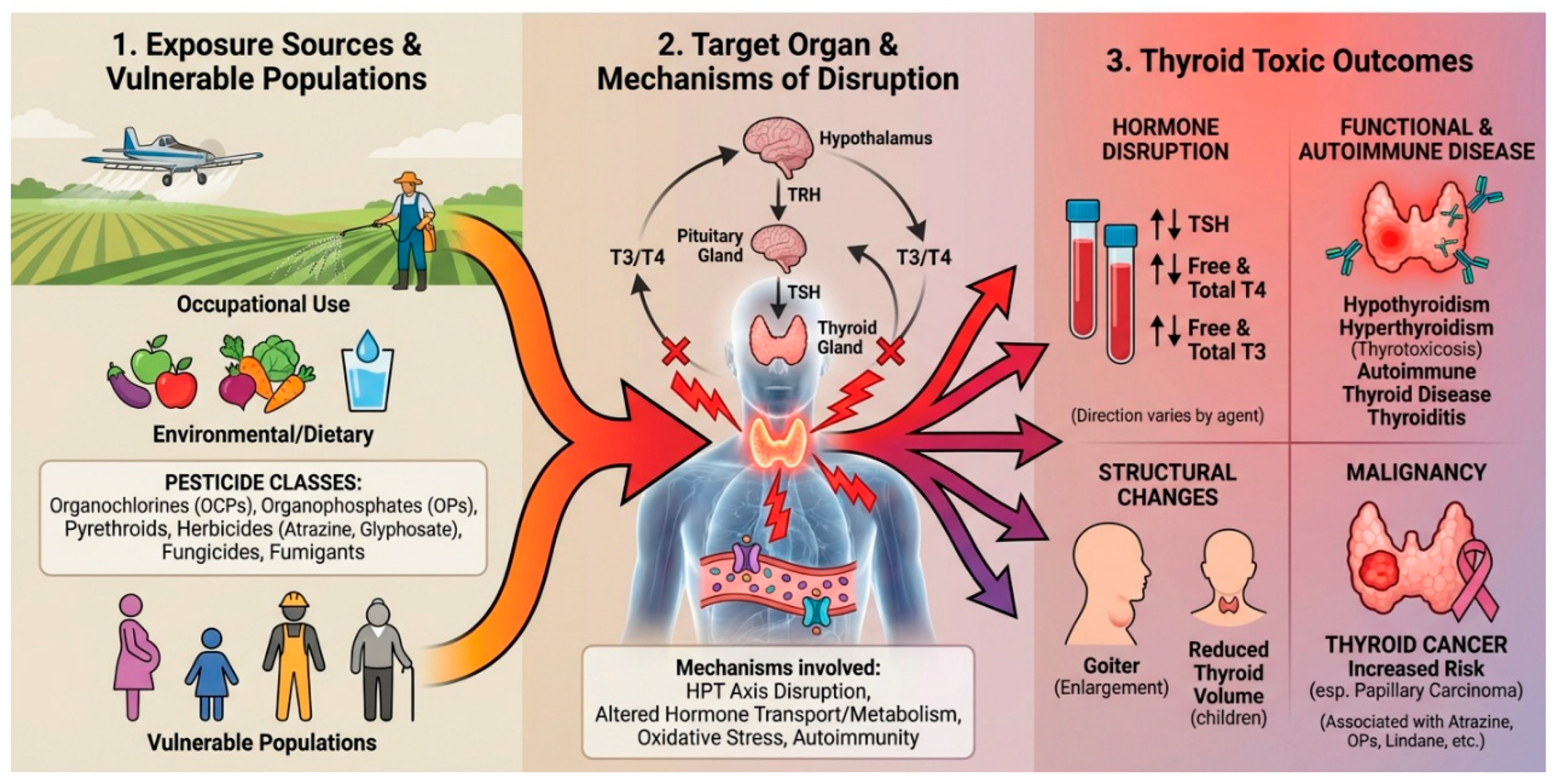
3.4. Thyroid Disorders
3.5. Neurodevelopmental Problems
3.5.1. Attention Deficit Hyperactivity Disorder (ADHD)
3.5.2. Autism Spectrum Disorder (ASD)
4. Future Directions and Research Gaps
5. Conclusions
Supplementary Materials
Author Contributions
Funding
Data Availability Statement
Conflicts of Interest
References
- Kuiper, G.G.J.M.; Lemmen, J.G.; Carlsson, B.; Corton, J.C.; Safe, S.H.; Van Der Saag, P.T.; Van Der Burg, B.; Gustafsson, J.-Å. Interaction of Estrogenic Chemicals and Phytoestrogens with Estrogen Receptor β. Endocrinology 1998, 139, 4252–4263. [Google Scholar] [CrossRef] [PubMed]
- Vethaak, D.; Legler, J. Endocrine Disruption in Wildlife: Background, Effects, and Implications. In Endocrine Disrupters; Matthiessen, P., Ed.; Wiley: Hoboken, NJ, USA, 2013; pp. 7–58. ISBN 978-0-470-93209-4. [Google Scholar]
- Zhou, Y.; Zhu, K.; Wang, Q.; Chen, M.; He, C.; Yang, C.; Zuo, Z. Aryl Hydrocarbon Receptor Agonist Diuron and Its Metabolites Cause Reproductive Disorders in Male Marine Medaka (Oryzias melastigma). Chemosphere 2022, 305, 135388. [Google Scholar] [CrossRef] [PubMed]
- Gaido, K.W.; Maness, S.C.; McDonnell, D.P.; Dehal, S.S.; Kupfer, D.; Safe, S. Interaction of Methoxychlor and Related Compounds with Estrogen Receptor α and β, and Androgen Receptor: Structure-Activity Studies. Mol. Pharmacol. 2000, 58, 852–858. [Google Scholar] [CrossRef]
- Muñoz, J.P.; Araya-Osorio, R.; Mera-Adasme, R.; Calaf, G.M. Glyphosate Mimics 17β-Estradiol Effects Promoting Estrogen Receptor Alpha Activity in Breast Cancer Cells. Chemosphere 2023, 313, 137201. [Google Scholar] [CrossRef] [PubMed]
- Buck Louis, G.M.; Rios, L.I.; McLain, A.; Cooney, M.A.; Kostyniak, P.J.; Sundaram, R. Persistent Organochlorine Pollutants and Menstrual Cycle Characteristics. Chemosphere 2011, 85, 1742–1748. [Google Scholar] [CrossRef] [PubMed]
- Radwan, M.; Jurewicz, J.; Wielgomas, B.; Sobala, W.; Piskunowicz, M.; Radwan, P.; Hanke, W. Semen Quality and the Level of Reproductive Hormones After Environmental Exposure to Pyrethroids. J. Occup. Environ. Med. 2014, 56, 1113–1119. [Google Scholar] [CrossRef] [PubMed]
- Cremonese, C.; Piccoli, C.; Pasqualotto, F.; Clapauch, R.; Koifman, R.J.; Koifman, S.; Freire, C. Occupational Exposure to Pesticides, Reproductive Hormone Levels and Sperm Quality in Young Brazilian Men. Reprod. Toxicol. 2017, 67, 174–185. [Google Scholar] [CrossRef] [PubMed]
- Dalsager, L.; Christensen, L.E.; Kongsholm, M.G.; Kyhl, H.B.; Nielsen, F.; Schoeters, G.; Jensen, T.K.; Andersen, H.R. Associations of Maternal Exposure to Organophosphate and Pyrethroid Insecticides and the Herbicide 2,4-D with Birth Outcomes and Anogenital Distance at 3 Months in the Odense Child Cohort. Reprod. Toxicol. 2018, 76, 53–62. [Google Scholar] [CrossRef] [PubMed]
- Ploteau, S.; Cano-Sancho, G.; Volteau, C.; Legrand, A.; Vénisseau, A.; Vacher, V.; Marchand, P.; Le Bizec, B.; Antignac, J.-P. Associations between Internal Exposure Levels of Persistent Organic Pollutants in Adipose Tissue and Deep Infiltrating Endometriosis with or without Concurrent Ovarian Endometrioma. Environ. Int. 2017, 108, 195–203. [Google Scholar] [CrossRef] [PubMed]
- Dziewirska, E.; Radwan, M.; Wielgomas, B.; Klimowska, A.; Radwan, P.; Kałużny, P.; Hanke, W.; Słodki, M.; Jurewicz, J. Human Semen Quality, Sperm DNA Damage, and the Level of Urinary Concentrations of 1N and TCPY, the Biomarkers of Nonpersistent Insecticides. Am. J. Men’s Health 2019, 13, 1557988318816598. [Google Scholar] [CrossRef] [PubMed]
- Lahimer, M.; Capelle, S.; Lefranc, E.; Cabry, R.; Montjean, D.; Bach, V.; Ajina, M.; Ali, H.B.; Benkhalifa, M.; Khorsi-Cauet, H. Effect of Pesticide Exposure on Human Sperm Characteristics, Genome Integrity, and Methylation Profile Analysis. Environ. Sci. Pollut. Res. 2023, 30, 77560–77567. [Google Scholar] [CrossRef] [PubMed]
- Engel, L.S.; Werder, E.; Satagopan, J.; Blair, A.; Hoppin, J.A.; Koutros, S.; Lerro, C.C.; Sandler, D.P.; Alavanja, M.C.; Beane Freeman, L.E. Insecticide Use and Breast Cancer Risk among Farmers’ Wives in the Agricultural Health Study. Environ. Health Perspect. 2017, 125, 097002. [Google Scholar] [CrossRef] [PubMed]
- Guth, M.; Coste, A.; Lefevre, M.; Deygas, F.; Danjou, A.; Ahmadi, S.; Dananché, B.; Pérol, O.; Boyle, H.; Schüz, J.; et al. Testicular Germ Cell Tumour Risk by Occupation and Industry: A French Case–Control Study—TESTIS. Occup. Environ. Med. 2023, 80, 407–417. [Google Scholar] [CrossRef] [PubMed]
- Paul, A.; Danjou, A.M.N.; Deygas, F.; Guth, M.; Coste, A.; Lefevre, M.; Dananché, B.; Kromhout, H.; Spinosi, J.; Béranger, R.; et al. Parental Occupations at Birth and Risk of Adult Testicular Germ Cell Tumors in Offspring: A French Nationwide Case–Control Study. Front. Public Health 2024, 11, 1303998. [Google Scholar] [CrossRef] [PubMed]
- Gasull, M.; Castell, C.; Pallarès, N.; Miret, C.; Pumarega, J.; Téllez-Plaza, M.; López, T.; Salas-Salvadó, J.; Lee, D.-H.; Goday, A.; et al. Blood Concentrations of Persistent Organic Pollutants and Unhealthy Metabolic Phenotypes in Normal-Weight, Overweight, and Obese Individuals. Am. J. Epidemiol. 2018, 187, 494–506. [Google Scholar] [CrossRef] [PubMed]
- Park, J.; Park, S.K.; Choi, Y.-H. Environmental Pyrethroid Exposure and Diabetes in U.S. Adults. Environ. Res. 2019, 172, 399–407. [Google Scholar] [CrossRef] [PubMed]
- La Merrill, M.A.; Krigbaum, N.Y.; Cirillo, P.M.; Cohn, B.A. Association between Maternal Exposure to the Pesticide Dichlorodiphenyltrichloroethane (DDT) and Risk of Obesity in Middle Age. Int. J. Obes. 2020, 44, 1723–1732. [Google Scholar] [CrossRef] [PubMed]
- Tyagi, S.; Mishra, B.K.; Sharma, T.; Tawar, N.; Urfi, A.J.; Banerjee, B.D.; Madhu, S.V. Level of Organochlorine Pesticide in Prediabetic and Newly Diagnosed Diabetes Mellitus Patients with Varying Degree of Glucose Intolerance and Insulin Resistance among North Indian Population. Diabetes Metab. J. 2021, 45, 558–568. [Google Scholar] [CrossRef] [PubMed]
- Warner, M.; Ye, M.; Harley, K.; Kogut, K.; Bradman, A.; Eskenazi, B. Prenatal DDT Exposure and Child Adiposity at Age 12: The CHAMACOS Study. Environ. Res. 2017, 159, 606–612. [Google Scholar] [CrossRef] [PubMed]
- Güil-Oumrait, N.; Valvi, D.; Garcia-Esteban, R.; Guxens, M.; Sunyer, J.; Torrent, M.; Casas, M.; Vrijheid, M. Prenatal Exposure to Persistent Organic Pollutants and Markers of Obesity and Cardiometabolic Risk in Spanish Adolescents. Environ. Int. 2021, 151, 106469. [Google Scholar] [CrossRef] [PubMed]
- Von Ehrenstein, O.S.; Ling, C.; Cui, X.; Cockburn, M.; Park, A.S.; Yu, F.; Wu, J.; Ritz, B. Prenatal and Infant Exposure to Ambient Pesticides and Autism Spectrum Disorder in Children: Population Based Case-Control Study. BMJ 2019, 364, l962, Erratum in BMJ 2019, 365, l4032. https://doi.org/10.1136/bmj.l4032. [Google Scholar] [CrossRef] [PubMed]
- Rohlman, D.S.; Ismail, A.; Bonner, M.R.; Abdel Rasoul, G.; Hendy, O.; Ortega Dickey, L.; Wang, K.; Olson, J.R. Occupational Pesticide Exposure and Symptoms of Attention Deficit Hyperactivity Disorder in Adolescent Pesticide Applicators in Egypt. NeuroToxicology 2019, 74, 1–6. [Google Scholar] [CrossRef] [PubMed]
- Lerro, C.C.; Beane Freeman, L.E.; DellaValle, C.T.; Andreotti, G.; Hofmann, J.N.; Koutros, S.; Parks, C.G.; Shrestha, S.; Alavanja, M.C.R.; Blair, A.; et al. Pesticide Exposure and Incident Thyroid Cancer among Male Pesticide Applicators in Agricultural Health Study. Environ. Int. 2021, 146, 106187. [Google Scholar] [CrossRef] [PubMed]
- Zhou, W.; Deng, Y.; Zhang, C.; Dai, H.; Guan, L.; Luo, X.; He, W.; Tian, J.; Zhao, L. Chlorpyrifos Residue Level and ADHD among Children Aged 1–6 Years in Rural China: A Cross-Sectional Study. Front. Pediatr. 2022, 10, 952559. [Google Scholar] [CrossRef] [PubMed]
- Kelce, W.R.; Stone, C.R.; Laws, S.C.; Gray, L.E.; Kemppainen, J.A.; Wilson, E.M. Persistent DDT Metabolite p,p’–DDE Is a Potent Androgen Receptor Antagonist. Nature 1995, 375, 581–585. [Google Scholar] [CrossRef] [PubMed]
- Lambright, C. Cellular and Molecular Mechanisms of Action of Linuron: An Antiandrogenic Herbicide That Produces Reproductive Malformations in Male Rats. Toxicol. Sci. 2000, 56, 389–399. [Google Scholar] [CrossRef] [PubMed]
- Lv, X.; Pan, L.; Wang, J.; Lu, L.; Yan, W.; Zhu, Y.; Xu, Y.; Guo, M.; Zhuang, S. Effects of Triazole Fungicides on Androgenic Disruption and CYP3A4 Enzyme Activity. Environ. Pollut. 2017, 222, 504–512. [Google Scholar] [CrossRef] [PubMed]
- Du, G.; Shen, O.; Sun, H.; Fei, J.; Lu, C.; Song, L.; Xia, Y.; Wang, S.; Wang, X. Assessing Hormone Receptor Activities of Pyrethroid Insecticides and Their Metabolites in Reporter Gene Assays. Toxicol. Sci. 2010, 116, 58–66. [Google Scholar] [CrossRef] [PubMed]
- Boas, M.; Feldt-Rasmussen, U.; Main, K.M. Thyroid Effects of Endocrine Disrupting Chemicals. Mol. Cell. Endocrinol. 2012, 355, 240–248. [Google Scholar] [CrossRef] [PubMed]
- Xiang, D.; Han, J.; Yao, T.; Wang, Q.; Zhou, B.; Mohamed, A.D.; Zhu, G. Editor’s Highlight: Structure-Based Investigation on the Binding and Activation of Typical Pesticides With Thyroid Receptor. Toxicol. Sci. 2017, 160, 205–216. [Google Scholar] [CrossRef] [PubMed]
- Takeuchi, S.; Matsuda, T.; Kobayashi, S.; Takahashi, T.; Kojima, H. In Vitro Screening of 200 Pesticides for Agonistic Activity via Mouse Peroxisome Proliferator-Activated Receptor (PPAR)α and PPARγ and Quantitative Analysis of in Vivo Induction Pathway. Toxicol. Appl. Pharmacol. 2006, 217, 235–244. [Google Scholar] [CrossRef] [PubMed]
- Li, X.; Pham, H.T.; Janesick, A.S.; Blumberg, B. Triflumizole Is an Obesogen in Mice That Acts through Peroxisome Proliferator Activated Receptor Gamma (PPAR γ). Environ. Health Perspect. 2012, 120, 1720–1726. [Google Scholar] [CrossRef] [PubMed]
- Ghisari, M.; Long, M.; Tabbo, A.; Bonefeld-Jørgensen, E.C. Effects of Currently Used Pesticides and Their Mixtures on the Function of Thyroid Hormone and Aryl Hydrocarbon Receptor in Cell Culture. Toxicol. Appl. Pharmacol. 2015, 284, 292–303. [Google Scholar] [CrossRef] [PubMed]
- Zhang, B.; Wei, Y.; Yan, S.; Shi, H.; Nie, Y.; Zou, G.; Zhang, X.; Luo, L. Characterization of Selenium Accumulation of Different Rice Genotypes in Chinese Natural Seleniferous Soil. Plant Soil Environ. 2019, 65, 15–20. [Google Scholar] [CrossRef]
- Thomas, P.; Dong, J. Novel Mechanism of Endocrine Disruption by Fungicides through Binding to the Membrane Androgen Receptor, ZIP9 (SLC39A9), and Antagonizing Rapid Testosterone Induction of the Intrinsic Apoptotic Pathway. Steroids 2019, 149, 108415. [Google Scholar] [CrossRef] [PubMed]
- Hardesty, J.E.; Al-Eryani, L.; Wahlang, B.; Falkner, K.C.; Shi, H.; Jin, J.; Vivace, B.J.; Ceresa, B.P.; Prough, R.A.; Cave, M.C. Epidermal Growth Factor Receptor Signaling Disruption by Endocrine and Metabolic Disrupting Chemicals. Toxicol. Sci. 2018, 162, 622–634. [Google Scholar] [CrossRef] [PubMed]
- Harada, Y.; Tanaka, N.; Ichikawa, M.; Kamijo, Y.; Sugiyama, E.; Gonzalez, F.J.; Aoyama, T. PPARα-Dependent Cholesterol/Testosterone Disruption in Leydig Cells Mediates 2,4-Dichlorophenoxyacetic Acid-Induced Testicular Toxicity in Mice. Arch. Toxicol. 2016, 90, 3061–3071. [Google Scholar] [CrossRef] [PubMed]
- Zhang, D.; Wu, Y.; Yuan, Y.; Liu, W.; Kuang, H.; Yang, J.; Yang, B.; Wu, L.; Zou, W.; Xu, C. Exposure to 2,4-Dichlorophenoxyacetic Acid Induces Oxidative Stress and Apoptosis in Mouse Testis. Pestic. Biochem. Physiol. 2017, 141, 18–22. [Google Scholar] [CrossRef] [PubMed]
- Háhn, J.; Szoboszlay, S.; Krifaton, C.; Kovács, K.J.; Ferenczi, S.; Kriszt, B. Development of a Combined Method to Assess the Complex Effect of Atrazine on Sex Steroid Synthesis in H295R Cells. Chemosphere 2016, 154, 507–514. [Google Scholar] [CrossRef] [PubMed]
- Ji, C.; Yu, C.; Yue, S.; Zhang, Q.; Yan, Y.; Fan, J.; Zhao, M. Enantioselectivity in Endocrine Disrupting Effects of Four Cypermethrin Enantiomers Based on in Vitro Models. Chemosphere 2019, 220, 766–773. [Google Scholar] [CrossRef] [PubMed]
- Girish, B.P.; Reddy, P.S. Forskolin Ameliorates Mancozeb-induced Testicular and Epididymal Toxicity in Wistar Rats by Reducing Oxidative Toxicity and by Stimulating Steroidogenesis. J. Biochem. Mol. Toxicol. 2018, 32, e22026. [Google Scholar] [CrossRef] [PubMed]
- Xie, L.; Li, X.; Mo, J.; Li, L.; Chen, X.; Chen, L.; Ma, L.; Chen, Y.; Ge, F.; Zhao, J.; et al. Delayed Puberty by Ziram Is Associated with Down Regulation of Testicular Phosphorylated AKT1 and SIRT1/PGC-1α Signaling. Chem. Res. Toxicol. 2018, 31, 1315–1322. [Google Scholar] [CrossRef] [PubMed]
- Taxvig, C.; Hass, U.; Axelstad, M.; Dalgaard, M.; Boberg, J.; Andeasen, H.R.; Vinggaard, A.M. Endocrine-Disrupting Activities In Vivo of the Fungicides Tebuconazole and Epoxiconazole. Toxicol. Sci. 2007, 100, 464–473. [Google Scholar] [CrossRef] [PubMed]
- Lauschke, K.; Dalgaard, M.D.; Emnéus, J.; Vinggaard, A.M. Transcriptomic Changes upon Epoxiconazole Exposure in a Human Stem Cell-Based Model of Developmental Toxicity. Chemosphere 2021, 284, 131225. [Google Scholar] [CrossRef] [PubMed]
- Draskau, M.K.; Lardenois, A.; Evrard, B.; Boberg, J.; Chalmel, F.; Svingen, T. Transcriptome Analysis of Fetal Rat Testis Following Intrauterine Exposure to the Azole Fungicides Triticonazole and Flusilazole Reveals Subtle Changes despite Adverse Endocrine Effects. Chemosphere 2021, 264, 128468. [Google Scholar] [CrossRef] [PubMed]
- Pan, H.; Sun, Y.; Zhang, L. The Effects of Amitrole on Thyroglobulin and Iodide Uptake in FRTL-5 Cells. Toxicol. Ind. Health 2011, 27, 187–192. [Google Scholar] [CrossRef] [PubMed]
- Yaglova, N.V.; Yaglov, V.V. Mechanisms of Disruptive Action of Dichlorodiphenyltrichloroethane (DDT) on the Function of Thyroid Follicular Epitheliocytes. Bull. Exp. Biol. Med. 2015, 160, 231–233. [Google Scholar] [CrossRef] [PubMed]
- Bretveld, R.W.; Thomas, C.M.; Scheepers, P.T.; Zielhuis, G.A.; Roeleveld, N. Pesticide Exposure: The Hormonal Function of the Female Reproductive System Disrupted? Reprod. Biol. Endocrinol. 2006, 4, 30. [Google Scholar] [CrossRef] [PubMed]
- Lopez-Antia, A.; Ortiz-Santaliestra, M.E.; Blas, E.G.; Camarero, P.R.; Mougeot, F.; Mateo, R. Adverse Effects of Thiram-Treated Seed Ingestion on the Reproductive Performance and the Offspring Immune Function of the Red-Legged Partridge. Environ. Toxicol. Chem. 2015, 34, 1320–1329. [Google Scholar] [CrossRef] [PubMed]
- Elham, R.; Ebrahim, T.; Leila, K.; Farzad, P.; Nazanin, S.; Mohammad, P.; Hossein, K. The Effect of Herbicide Paraquat and Organophosphate Pesticide Malathion on Changes of Sex Hormones in Female Rats. Biomed. Pharmacol. J. 2015, 8, 993–999. [Google Scholar] [CrossRef]
- Inoue-Choi, M.; Weyer, P.J.; Jones, R.R.; Booth, B.J.; Cantor, K.P.; Robien, K.; Ward, M.H. Atrazine in Public Water Supplies and Risk of Ovarian Cancer among Postmenopausal Women in the Iowa Women’s Health Study. Occup. Environ. Med. 2016, 73, 582–587. [Google Scholar] [CrossRef] [PubMed]
- Tiemann, U. In Vivo and in Vitro Effects of the Organochlorine Pesticides DDT, TCPM, Methoxychlor, and Lindane on the Female Reproductive Tract of Mammals: A Review. Reprod. Toxicol. 2008, 25, 316–326. [Google Scholar] [CrossRef] [PubMed]
- Darbandi, M.; Darbandi, S.; Agarwal, A.; Sengupta, P.; Durairajanayagam, D.; Henkel, R.; Sadeghi, M.R. Reactive Oxygen Species and Male Reproductive Hormones. Reprod. Biol. Endocrinol. 2018, 16, 87. [Google Scholar] [CrossRef] [PubMed]
- Birch, M.R.; Johansen, M.; Skakkebæk, N.E.; Andersson, A.-M.; Rehfeld, A. In Vitro Investigation of Endocrine Disrupting Effects of Pesticides on Ca2+-Signaling in Human Sperm Cells through Actions on the Sperm-Specific and Steroid-Activated CatSper Ca2+-Channel. Environ. Int. 2022, 167, 107399. [Google Scholar] [CrossRef] [PubMed]
- Nilsson, E.E.; Sadler-Riggleman, I.; Skinner, M.K. Environmentally Induced Epigenetic Transgenerational Inheritance of Disease. Environ. Epigenet. 2018, 4, dvy016. [Google Scholar] [CrossRef] [PubMed]
- Hernandez-Cortes, D.; Alvarado-Cruz, I.; Solís-Heredia, M.J.; Quintanilla-Vega, B. Epigenetic Modulation of Nrf2 and Ogg1 Gene Expression in Testicular Germ Cells by Methyl Parathion Exposure. Toxicol. Appl. Pharmacol. 2018, 346, 19–27. [Google Scholar] [CrossRef] [PubMed]
- Wang, W.; Ito, T.; Otsuka, S.; Nansai, H.; Abe, K.; Nakao, Y.; Ohgane, J.; Yoneda, M.; Sone, H. Epigenetic Effects of Insecticides on Early Differentiation of Mouse Embryonic Stem Cells. Toxicol. In Vitro 2021, 75, 105174. [Google Scholar] [CrossRef] [PubMed]
- Hao, C.; Gely-Pernot, A.; Kervarrec, C.; Boudjema, M.; Becker, E.; Khil, P.; Tevosian, S.; Jégou, B.; Smagulova, F. Exposure to the Widely Used Herbicide Atrazine Results in Deregulation of Global Tissue-Specific RNA Transcription in the Third Generation and Is Associated with a Global Decrease of Histone Trimethylation in Mice. Nucleic Acids Res. 2016, 44, 9784–9802. [Google Scholar] [CrossRef] [PubMed]
- Ghosh, K.; Chatterjee, B.; Jayaprasad, A.G.; Kanade, S.R. The Persistent Organochlorine Pesticide Endosulfan Modulates Multiple Epigenetic Regulators with Oncogenic Potential in MCF-7 Cells. Sci. Total Environ. 2018, 624, 1612–1622. [Google Scholar] [CrossRef] [PubMed]
- Liu, J.; Zhang, P.; Zhao, Y.; Zhang, H. Low Dose Carbendazim Disrupts Mouse Spermatogenesis Might Be through Estrogen Receptor Related Histone and DNA Methylation. Ecotoxicol. Environ. Saf. 2019, 176, 242–249. [Google Scholar] [CrossRef] [PubMed]
- Tilghman, S.L.; Bratton, M.R.; Segar, H.C.; Martin, E.C.; Rhodes, L.V.; Li, M.; McLachlan, J.A.; Wiese, T.E.; Nephew, K.P.; Burow, M.E. Endocrine Disruptor Regulation of MicroRNA Expression in Breast Carcinoma Cells. PLoS ONE 2012, 7, e32754. [Google Scholar] [CrossRef] [PubMed]
- Wirbisky, S.E.; Weber, G.J.; Schlotman, K.E.; Sepúlveda, M.S.; Freeman, J.L. Embryonic Atrazine Exposure Alters Zebrafish and Human miRNAs Associated with Angiogenesis, Cancer, and Neurodevelopment. Food Chem. Toxicol. 2016, 98, 25–33. [Google Scholar] [CrossRef] [PubMed]
- Dinisri, I.; Kodikara, S.; Prasadani, M.; Pathirana, I.; Rathnayake, C.; Alexander, B.; Lee, K.-F.; Kodithuwakku, S.P. Impairment of Caprine Oocyte Maturation in Vitro and Alteration of Granulosa Cells Functions by Widely Used Fungicide Mancozeb. Trop. Anim. Health Prod. 2021, 53, 406. [Google Scholar] [CrossRef] [PubMed]
- Schwarzbacherová, V.; Wnuk, M.; Lewinska, A.; Potocki, L.; Zebrowski, J.; Koziorowski, M.; Holečková, B.; Šiviková, K.; Dianovský, J. Evaluation of Cytotoxic and Genotoxic Activity of Fungicide Formulation Tango® Super in Bovine Lymphocytes. Environ. Pollut. 2017, 220, 255–263. [Google Scholar] [CrossRef] [PubMed]
- Zhang, Y.; Kong, Z.; Gregoire, N.; Li, L.; Yang, L.; Zhao, M.; Jin, N.; Wang, F.; Fan, B.; Francis, F.; et al. Enantioselective Activity and Toxicity of Chiral Acaricide Cyflumetofen toward Target and Non-Target Organisms. Chemosphere 2023, 325, 138431. [Google Scholar] [CrossRef] [PubMed]
- Upson, K.; De Roos, A.J.; Thompson, M.L.; Sathyanarayana, S.; Scholes, D.; Barr, D.B.; Holt, V.L. Organochlorine Pesticides and Risk of Endometriosis: Findings from a Population-Based Case–Control Study. Environ. Health Perspect. 2013, 121, 1319–1324. [Google Scholar] [CrossRef] [PubMed]
- Whitworth, K.W.; Baird, D.D.; Steiner, A.Z.; Bornman, R.M.S.; Travlos, G.S.; Wilson, R.E.; Longnecker, M.P. Anti-Müllerian Hormone and Lifestyle, Reproductive, and Environmental Factors Among Women in Rural South Africa. Epidemiology 2015, 26, 429–435. [Google Scholar] [CrossRef] [PubMed]
- Yang, Q.; Zhao, Y.; Qiu, X.; Zhang, C.; Li, R.; Qiao, J. Association of Serum Levels of Typical Organic Pollutants with Polycystic Ovary Syndrome (PCOS): A Case–Control Study. Hum. Reprod. 2015, 30, 1964–1973. [Google Scholar] [CrossRef] [PubMed]
- Guo, Z.; Qiu, H.; Wang, L.; Wang, L.; Wang, C.; Chen, M.; Zuo, Z. Association of Serum Organochlorine Pesticides Concentrations with Reproductive Hormone Levels and Polycystic Ovary Syndrome in a Chinese Population. Chemosphere 2017, 171, 595–600. [Google Scholar] [CrossRef] [PubMed]
- Pan, W.; Ye, X.; Yin, S.; Ma, X.; Li, C.; Zhou, J.; Liu, W.; Liu, J. Selected Persistent Organic Pollutants Associated with the Risk of Primary Ovarian Insufficiency in Women. Environ. Int. 2019, 129, 51–58. [Google Scholar] [CrossRef] [PubMed]
- Björvang, R.D.; Gennings, C.; Lin, P.-I.; Hussein, G.; Kiviranta, H.; Rantakokko, P.; Ruokojärvi, P.; Lindh, C.H.; Damdimopoulou, P.; Bornehag, C.-G. Persistent Organic Pollutants, Pre-Pregnancy Use of Combined Oral Contraceptives, Age, and Time-to-Pregnancy in the SELMA Cohort. Environ. Health 2020, 19, 67. [Google Scholar] [CrossRef] [PubMed]
- Hu, T.; Li, H.; Li, J.; Zhao, G.; Wu, W.; Liu, L.; Wang, Q.; Guo, Y. Absorption and Bio-Transformation of Selenium Nanoparticles by Wheat Seedlings (Triticum aestivum L.). Front. Plant Sci. 2018, 9, 597. [Google Scholar] [CrossRef] [PubMed]
- Bapayeva, G.; Issayeva, R.; Zhumadilova, A.; Nurkasimova, R.; Kulbayeva, S.; Tleuzhan, R. Organochlorine Pesticides and Female Puberty in South Kazakhstan. Reprod. Toxicol. 2016, 65, 67–75. [Google Scholar] [CrossRef] [PubMed]
- Rahimi, T.; Rafati, F.; Sharifi, H.; Seyedi, F. General and Reproductive Health Outcomes among Female Greenhouse Workers: A Comparative Study. BMC Women’s Health 2020, 20, 103. [Google Scholar] [CrossRef] [PubMed]
- Varnell, R.R.; Arnold, T.J.; Quandt, S.A.; Talton, J.W.; Chen, H.; Miles, C.M.; Daniel, S.S.; Sandberg, J.C.; Anderson, K.A.; Arcury, T.A. Menstrual Cycle Patterns and Irregularities in Hired Latinx Child Farmworkers. J. Occup. Environ. Med. 2021, 63, 38–43. [Google Scholar] [CrossRef] [PubMed]
- Hossain, F.; Ali, O.; D’souza, U.J.A.; Naing, D.K.S. Effects of Pesticide Use on Semen Quality among Farmers in Rural Areas of Sabah, Malaysia. J. Occup. Health 2010, 52, 353–360. [Google Scholar] [CrossRef] [PubMed]
- Hu, L.; Fan, H.; Wu, D.; Liao, Y.; Shen, F.; Liu, W.; Huang, R.; Zhang, B.; Wang, X. Effects of Selenium on Antioxidant Enzyme Activity and Bioaccessibility of Arsenic in Arsenic-Stressed Radish. Ecotoxicol. Environ. Saf. 2020, 200, 110768. [Google Scholar] [CrossRef] [PubMed]
- Specht, I.O.; Bonde, J.P.E.; Toft, G.; Giwercman, A.; Spanò, M.; Bizzaro, D.; Manicardi, G.C.; Jönsson, B.A.G.; Robbins, W.A. Environmental Hexachlorobenzene Exposure and Human Male Reproductive Function. Reprod. Toxicol. 2015, 58, 8–14. [Google Scholar] [CrossRef] [PubMed]
- Bornman, M.; Delport, R.; Farías, P.; Aneck-Hahn, N.; Patrick, S.; Millar, R.P.; De Jager, C. Alterations in Male Reproductive Hormones in Relation to Environmental DDT Exposure. Environ. Int. 2018, 113, 281–289. [Google Scholar] [CrossRef] [PubMed]
- Blanc-Petitjean, P.; Rahban, R.; Dananché, B.; Senn, A.; Zufferey, F.; Stettler, E.; Multigner, L.; Nef, S.; Garlantézec, R. Prenatal Occupational Exposure to Endocrine-Disrupting Chemicals during Pregnancy and Adult Male Reproductive Hormones. Reprod. BioMed. Online 2026, 52, 105236. [Google Scholar] [CrossRef] [PubMed]
- Agopian, A.J.; Lupo, P.J.; Canfield, M.A.; Langlois, P.H. Case–Control Study of Maternal Residential Atrazine Exposure and Male Genital Malformations. Am. J. Med. Genet. Part A 2013, 161, 977–982. [Google Scholar] [CrossRef] [PubMed]
- Haraux, E.; Tourneux, P.; Kouakam, C.; Stephan-Blanchard, E.; Boudailliez, B.; Leke, A.; Klein, C.; Chardon, K. Isolated Hypospadias: The Impact of Prenatal Exposure to Pesticides, as Determined by Meconium Analysis. Environ. Int. 2018, 119, 20–25. [Google Scholar] [CrossRef] [PubMed]
- Loreto-Gómez, C.; Farías, P.; Moreno-Macías, H.; Guzmán, C.; Riojas-Rodríguez, H. Prenatal Exposure to Persistent Organic Compounds and Their Association with Anogenital Distance in Infants. Reprod. BioMed. Online 2018, 37, 732–740. [Google Scholar] [CrossRef] [PubMed]
- Desalegn, A.A.; Iszatt, N.; Stigum, H.; Jensen, T.K.; Eggesbø, M. A Case-Cohort Study of Perinatal Exposure to Potential Endocrine Disrupters and the Risk of Cryptorchidism in the Norwegian HUMIS Study. Environ. Int. 2021, 157, 106815. [Google Scholar] [CrossRef] [PubMed]
- Sharma, A.; Mollier, J.; Brocklesby, R.W.K.; Caves, C.; Jayasena, C.N.; Minhas, S. Endocrine-disrupting Chemicals and Male Reproductive Health. Reprod. Med. Biol. 2020, 19, 243–253. [Google Scholar] [CrossRef] [PubMed]
- Ye, X.; Liu, J. Effects of Pyrethroid Insecticides on Hypothalamic-Pituitary-Gonadal Axis: A Reproductive Health Perspective. Environ. Pollut. 2019, 245, 590–599. [Google Scholar] [CrossRef] [PubMed]
- Jain, D.; Kumar Verma, R.; Sharma, V.; Kaur, A.; Rai, A.R.; Kumari, P.; Nagar, V.; Singh Sankhla, M.; Parihar, K. Associations between High Levels Pesticide and Adverse Reproductive Outcomes in Females: A Comprehensive Review. Mater. Today Proc. 2023, 95, 50–60. [Google Scholar] [CrossRef]
- Le Cornet, C.; Fervers, B.; Oksbjerg Dalton, S.; Feychting, M.; Pukkala, E.; Tynes, T.; Hansen, J.; Nordby, K.-C.; Béranger, R.; Kauppinen, T.; et al. Testicular Germ Cell Tumours and Parental Occupational Exposure to Pesticides: A Register-Based Case–Control Study in the Nordic Countries (NORD-TEST Study). Occup. Environ. Med. 2015, 72, 805–811. [Google Scholar] [CrossRef] [PubMed]
- Uldbjerg, C.S.; Rantakokko, P.; Lim, Y.-H.; Petersen, J.H.; Sørensen, K.M.; Coull, B.A.; Lindh, C.; Hauser, R.; Bräuner, E.V.; Skakkebæk, N.E.; et al. Prenatal Exposure to Organochlorine Pesticides and Polychlorinated Biphenyls and Risk of Testicular Germ Cell Cancer Later in Life. Sci. Total Environ. 2025, 970, 179054. [Google Scholar] [CrossRef] [PubMed]
- Franco, A.P.D.S.; Lima Figueiredo, E.R.; Melo, G.S.; Souza, J.D.S.E.; Gonçalves, N.V.; Gomes, F.D.C.; Neto, J.S.D.M. Predictors of Testicular Cancer Mortality in Brazil: A 20-Year Ecological Study. Cancers 2023, 15, 4149. [Google Scholar] [CrossRef] [PubMed]
- Danjou, A.M.N.; Pérol, O.; Coste, A.; Faure, E.; Béranger, R.; Boyle, H.; Belladame, E.; Grassot, L.; Dubuis, M.; Spinosi, J.; et al. Domestic Use of Pesticides during Early Periods of Development and Risk of Testicular Germ Cell Tumors in Adulthood: A French Nationwide Case-Control Study. Environ. Health 2021, 20, 111. [Google Scholar] [CrossRef] [PubMed]
- Band, P.R.; Abanto, Z.; Bert, J.; Lang, B.; Fang, R.; Gallagher, R.P.; Le, N.D. Prostate Cancer Risk and Exposure to Pesticides in British Columbia Farmers. Prostate 2011, 71, 168–183. [Google Scholar] [CrossRef] [PubMed]
- Koutros, S.; Beane Freeman, L.E.; Lubin, J.H.; Heltshe, S.L.; Andreotti, G.; Barry, K.H.; DellaValle, C.T.; Hoppin, J.A.; Sandler, D.P.; Lynch, C.F.; et al. Risk of Total and Aggressive Prostate Cancer and Pesticide Use in the Agricultural Health Study. Am. J. Epidemiol. 2013, 177, 59–74. [Google Scholar] [CrossRef] [PubMed]
- Pardo, L.A.; Beane Freeman, L.E.; Lerro, C.C.; Andreotti, G.; Hofmann, J.N.; Parks, C.G.; Sandler, D.P.; Lubin, J.H.; Blair, A.; Koutros, S. Pesticide Exposure and Risk of Aggressive Prostate Cancer among Private Pesticide Applicators. Environ. Health 2020, 19, 30. [Google Scholar] [CrossRef] [PubMed]
- Hong, D.; Min, J.-Y.; Min, K. Association between Pyrethroids and Prostate Endpoints; Stratified According to Renal Function. Environ. Int. 2021, 153, 106489. [Google Scholar] [CrossRef] [PubMed]
- Antignac, J.-P.; Figiel, S.; Pinault, M.; Blanchet, P.; Bruyère, F.; Mathieu, R.; Lebdai, S.; Fournier, G.; Rigaud, J.; Mahéo, K.; et al. Persistent Organochlorine Pesticides in Periprostatic Adipose Tissue from Men with Prostate Cancer: Ethno-Geographic Variations, Association with Disease Aggressiveness. Environ. Res. 2023, 216, 114809. [Google Scholar] [CrossRef] [PubMed]
- Erickson, P.A.; Andreotti, G.; Remigio, R.V.; Ward, M.H.; Parks, C.G.; Sandler, D.P.; Albert, P.S.; Barry, K.H.; Hofmann, J.N.; Beane Freeman, L.E. Carbaryl Use and Incident Cancer in the Agricultural Health Study: An Updated Analysis. Int. J. Hyg. Environ. Health 2025, 268, 114615. [Google Scholar] [CrossRef] [PubMed]
- Ekenga, C.C.; Parks, C.G.; Sandler, D.P. Chemical Exposures in the Workplace and Breast Cancer Risk: A Prospective Cohort Study. Int. J. Cancer 2015, 137, 1765–1774. [Google Scholar] [CrossRef] [PubMed]
- Tayour, C.; Ritz, B.; Langholz, B.; Mills, P.K.; Wu, A.; Wilson, J.P.; Shahabi, K.; Cockburn, M. A Case–Control Study of Breast Cancer Risk and Ambient Exposure to Pesticides. Environ. Epidemiol. 2019, 3, e070. [Google Scholar] [CrossRef] [PubMed]
- Franke, A.A.; Li, X.; Shvetsov, Y.B.; Lai, J.F. Pilot Study on the Urinary Excretion of the Glyphosate Metabolite Aminomethylphosphonic Acid and Breast Cancer Risk: The Multiethnic Cohort Study. Environ. Pollut. 2021, 277, 116848. [Google Scholar] [CrossRef] [PubMed]
- Rebouillat, P.; Vidal, R.; Cravedi, J.-P.; Taupier-Letage, B.; Debrauwer, L.; Gamet-Payrastre, L.; Touvier, M.; Deschasaux-Tanguy, M.; Latino-Martel, P.; Hercberg, S.; et al. Prospective Association between Dietary Pesticide Exposure Profiles and Postmenopausal Breast-Cancer Risk in the NutriNet-Santé Cohort. Int. J. Epidemiol. 2021, 50, 1184–1198. [Google Scholar] [CrossRef] [PubMed]
- De Rezende, L.M.; Da Silva Santos, S.; Monteiro, G.T.R. Exposure to Pesticides and Breast Cancer in the City of Petrópolis, Brazil. Environ. Sci. Pollut. Res. 2023, 30, 56534–56541. [Google Scholar] [CrossRef] [PubMed]
- Panis, C.; Candiotto, L.Z.P.; Gaboardi, S.C.; Teixeira, G.T.; Alves, F.M.; Da Silva, J.C.; Scandolara, T.B.; Rech, D.; Gurzenda, S.; Ponmattam, J.; et al. Exposure to Pesticides and Breast Cancer in an Agricultural Region in Brazil. Environ. Sci. Technol. 2024, 58, 10470–10481. [Google Scholar] [CrossRef] [PubMed]
- De Morais Valentim, J.M.B.; Pizzatti, L.; Coradi, C.; Cristina Cazagranda, I.; Fadel, B.; Vacario, B.G.L.; Gaboardi, S.C.; Iago Oliveira Coletto, M.; Kern, R.; Pavanelli, W.R.; et al. Pesticide Exposome Reveals Oxidative Stress and Immune Response Disruptions in Occupationally Exposed Women with Breast Cancer. Sci. Rep. 2025, 15, 30910. [Google Scholar] [CrossRef] [PubMed]
- Van Maele-Fabry, G.; Libotte, V.; Willems, J.; Lison, D. Review and Meta-Analysis of Risk Estimates for Prostate Cancer in Pesticide Manufacturing Workers. Cancer Causes Control 2006, 17, 353–373. [Google Scholar] [CrossRef] [PubMed]
- Silva, J.F.S.; Mattos, I.E.; Luz, L.L.; Carmo, C.N.; Aydos, R.D. Exposure to Pesticides and Prostate Cancer: Systematic Review of the Literature. Rev. Environ. Health 2016, 31, 311–327. [Google Scholar] [CrossRef] [PubMed]
- Lewis-Mikhael, A.-M.; Bueno-Cavanillas, A.; Ofir Guiron, T.; Olmedo-Requena, R.; Delgado-Rodríguez, M.; Jiménez-Moleón, J.J. Occupational Exposure to Pesticides and Prostate Cancer: A Systematic Review and Meta-Analysis. Occup. Environ. Med. 2016, 73, 134–144, Erratum in Occup. Environ. Med. 2017, 74, 699. https://doi.org/10.1136/oemed-2014-102692corr1. [Google Scholar] [CrossRef] [PubMed]
- Octavia, A.M.N.; Wisudanti, D.D.; Wulandari, P. The Correlation Between Organophosphate Pesticide Exposure and Incidence of Prostate Cancer: A Systematic Review. Indones. J. Cancer 2024, 18, 501–506. [Google Scholar] [CrossRef]
- Phelps, N.H.; Singleton, R.K.; Zhou, B.; Heap, R.A.; Mishra, A.; Bennett, J.E.; Paciorek, C.J.; Lhoste, V.P.; Carrillo-Larco, R.M.; Stevens, G.A.; et al. Worldwide Trends in Underweight and Obesity from 1990 to 2022: A Pooled Analysis of 3663 Population-Representative Studies with 222 Million Children, Adolescents, and Adults. Lancet 2024, 403, 1027–1050. [Google Scholar] [CrossRef] [PubMed]
- LaVerda, N.L.; Goldsmith, D.F.; Alavanja, M.C.R.; Hunting, K.L. Pesticide Exposures and Body Mass Index (BMI) of Pesticide Applicators From the Agricultural Health Study. J. Toxicol. Environ. Health Part A 2015, 78, 1255–1276. [Google Scholar] [CrossRef] [PubMed]
- Henríquez-Hernández, L.A.; Luzardo, O.P.; Valerón, P.F.; Zumbado, M.; Serra-Majem, L.; Camacho, M.; González-Antuña, A.; Boada, L.D. Persistent Organic Pollutants and Risk of Diabetes and Obesity on Healthy Adults: Results from a Cross-Sectional Study in Spain. Sci. Total Environ. 2017, 607–608, 1096–1102. [Google Scholar] [CrossRef] [PubMed]
- La Merrill, M.A.; Lind, P.M.; Salihovic, S.; Van Bavel, B.; Lind, L. The Association between p,P′-DDE Levels and Left Ventricular Mass Is Mainly Mediated by Obesity. Environ. Res. 2018, 160, 541–546. [Google Scholar] [CrossRef] [PubMed]
- Tawar, N.; Banerjee, B.D.; Mishra, B.K.; Sharma, T.; Tyagi, S.; Madhu, S.V.; Agarwal, V.; Gupta, S. Adipose Tissue Levels of DDT as Risk Factor for Obesity and Type 2 Diabetes Mellitus. Indian J. Endocrinol. Metab. 2021, 25, 160–165. [Google Scholar] [CrossRef] [PubMed]
- Peng, F.-J.; Lin, C.-A.; Wada, R.; Bodinier, B.; Iglesias-González, A.; Palazzi, P.; Streel, S.; Guillaume, M.; Vuckovic, D.; Chadeau-Hyam, M.; et al. Association of Hair Polychlorinated Biphenyls and Multiclass Pesticides with Obesity, Diabetes, Hypertension and Dyslipidemia in NESCAV Study. J. Hazard. Mater. 2024, 461, 132637. [Google Scholar] [CrossRef] [PubMed]
- Nguyen, H.D.; Oh, H.; Jo, W.H.; Hoang, N.H.M.; Kim, M.-S. Mixtures Modeling Identifies Heavy Metals and Pyrethroid Insecticide Metabolites Associated with Obesity. Environ. Sci. Pollut. Res. 2022, 29, 20379–20397. [Google Scholar] [CrossRef] [PubMed]
- Rahman, M.L.; Zhang, C.; Smarr, M.M.; Lee, S.; Honda, M.; Kannan, K.; Tekola-Ayele, F.; Buck Louis, G.M. Persistent Organic Pollutants and Gestational Diabetes: A Multi-Center Prospective Cohort Study of Healthy US Women. Environ. Int. 2019, 124, 249–258. [Google Scholar] [CrossRef] [PubMed]
- Palaniswamy, S.; Salah, S.; Přibylová, P.; Kukučka, P.; Laatio, L.; Sieppi, E.; Kummu, M.; Rautio, A.; Myllynen, P.; Abass, K. Mother-Child Exposure to Polychlorinated Biphenyls and Organochlorine Pesticides in the Northern Finland Cohort (NUGEN). Environ. Toxicol. Pharmacol. 2025, 115, 104679. [Google Scholar] [CrossRef] [PubMed]
- Godbole, A.M.; Moonie, S.; Coughenour, C.; Zhang, C.; Chen, A.; Vuong, A.M. Exploratory Analysis of the Associations between Neonicotinoids and Measures of Adiposity among US Adults: NHANES 2015–2016. Chemosphere 2022, 300, 134450. [Google Scholar] [CrossRef] [PubMed]
- Seesen, M.; Lucchini, R.G.; Siriruttanapruk, S.; Sapbamrer, R.; Hongsibsong, S.; Woskie, S.; Kongtip, P. Association between Organophosphate Pesticide Exposure and Insulin Resistance in Pesticide Sprayers and Nonfarmworkers. Int. J. Environ. Res. Public Health 2020, 17, 8140. [Google Scholar] [CrossRef] [PubMed]
- Elmore, S.E.; La Merrill, M.A. Oxidative Phosphorylation Impairment by DDT and DDE. Front. Endocrinol. 2019, 10, 122. [Google Scholar] [CrossRef] [PubMed]
- Kim, S.-K.; Park, S.; Chang, S.-J.; Kim, S.-K.; Song, J.S.; Kim, H.-R.; Oh, S.-S.; Koh, S.-B. Pesticides as a Risk Factor for Metabolic Syndrome: Population-Based Longitudinal Study in Korea. Mol. Cell. Toxicol. 2019, 15, 431–441. [Google Scholar] [CrossRef]
- Minh, H.V.; Tien, H.A.; Sinh, C.T.; Thang, D.C.; Chen, C.; Tay, J.C.; Siddique, S.; Wang, T.; Sogunuru, G.P.; Chia, Y.; et al. Assessment of Preferred Methods to Measure Insulin Resistance in Asian Patients with Hypertension. J. Clin. Hypertens. 2021, 23, 529–537. [Google Scholar] [CrossRef] [PubMed]
- Arrebola, J.P.; González-Jiménez, A.; Fornieles-González, C.; Artacho-Cordón, F.; Olea, N.; Escobar-Jiménez, F.; Fernández-Soto, M.L. Relationship between Serum Concentrations of Persistent Organic Pollutants and Markers of Insulin Resistance in a Cohort of Women with a History of Gestational Diabetes Mellitus. Environ. Res. 2015, 136, 435–440. [Google Scholar] [CrossRef] [PubMed]
- Singh, K.; Chan, H.M. Persistent Organic Pollutants and Diabetes among Inuit in the Canadian Arctic. Environ. Int. 2017, 101, 183–189. [Google Scholar] [CrossRef] [PubMed]
- Zong, G.; Valvi, D.; Coull, B.; Göen, T.; Hu, F.B.; Nielsen, F.; Grandjean, P.; Sun, Q. Persistent Organic Pollutants and Risk of Type 2 Diabetes: A Prospective Investigation among Middle-Aged Women in Nurses’ Health Study II. Environ. Int. 2018, 114, 334–342. [Google Scholar] [CrossRef] [PubMed]
- Wolf, K.; Bongaerts, B.W.C.; Schneider, A.; Huth, C.; Meisinger, C.; Peters, A.; Schneider, A.; Wittsiepe, J.; Schramm, K.-W.; Greiser, K.H.; et al. Persistent Organic Pollutants and the Incidence of Type 2 Diabetes in the CARLA and KORA Cohort Studies. Environ. Int. 2019, 129, 221–228. [Google Scholar] [CrossRef] [PubMed]
- Juntarawijit, C.; Juntarawijit, Y. Association between Diabetes and Pesticides: A Case-Control Study among Thai Farmers. Environ. Health Prev. Med. 2018, 23, 3. [Google Scholar] [CrossRef] [PubMed]
- Ozmen, O.; Sahinduran, S.; Mor, F. Pathological and Immunohistochemical Examinations of the Pancreas in Subacute Endosulfan Toxicity in Rabbits. Pancreas 2010, 39, 367–370. [Google Scholar] [CrossRef] [PubMed]
- Montgomery, M.K.; Turner, N. Mitochondrial Dysfunction and Insulin Resistance: An Update. Endocr. Connect. 2015, 4, R1–R15. [Google Scholar] [CrossRef] [PubMed]
- Haverinen, E.; Fernandez, M.F.; Mustieles, V.; Tolonen, H. Metabolic Syndrome and Endocrine Disrupting Chemicals: An Overview of Exposure and Health Effects. Int. J. Environ. Res. Public Health 2021, 18, 13047. [Google Scholar] [CrossRef] [PubMed]
- Wei, Y.; Zhu, J. Associations between Urinary Concentrations of 2,5-Dichlorophenol and Metabolic Syndrome among Non-Diabetic Adults. Environ. Sci. Pollut. Res. 2016, 23, 581–588. [Google Scholar] [CrossRef] [PubMed]
- Mustieles, V.; Fernández, M.F.; Martin-Olmedo, P.; González-Alzaga, B.; Fontalba-Navas, A.; Hauser, R.; Olea, N.; Arrebola, J.P. Human Adipose Tissue Levels of Persistent Organic Pollutants and Metabolic Syndrome Components: Combining a Cross-Sectional with a 10-Year Longitudinal Study Using a Multi-Pollutant Approach. Environ. Int. 2017, 104, 48–57. [Google Scholar] [CrossRef] [PubMed]
- Rosenbaum, P.F.; Weinstock, R.S.; Silverstone, A.E.; Sjödin, A.; Pavuk, M. Metabolic Syndrome Is Associated with Exposure to Organochlorine Pesticides in Anniston, AL, United States. Environ. Int. 2017, 108, 11–21. [Google Scholar] [CrossRef] [PubMed]
- Aminov, Z.; Carpenter, D.O. Serum Concentrations of Persistent Organic Pollutants and the Metabolic Syndrome in Akwesasne Mohawks, a Native American Community. Environ. Pollut. 2020, 260, 114004. [Google Scholar] [CrossRef] [PubMed]
- Jaacks, L.; Boyd Barr, D.; Sundaram, R.; Grewal, J.; Zhang, C.; Buck Louis, G. Pre-Pregnancy Maternal Exposure to Persistent Organic Pollutants and Gestational Weight Gain: A Prospective Cohort Study. Int. J. Environ. Res. Public Health 2016, 13, 905. [Google Scholar] [CrossRef] [PubMed]
- Parastar, S.; Ebrahimpour, K.; Hashemi, M.; Maracy, M.R.; Ebrahimi, A.; Poursafa, P.; Kelishadi, R. Association of Urinary Concentrations of Four Chlorophenol Pesticides with Cardiometabolic Risk Factors and Obesity in Children and Adolescents. Environ. Sci. Pollut. Res. 2018, 25, 4516–4523. [Google Scholar] [CrossRef] [PubMed]
- Boyle, M.; Buckley, J.P.; Quirós-Alcalá, L. Associations between Urinary Organophosphate Ester Metabolites and Measures of Adiposity among U.S. Children and Adults: NHANES 2013–2014. Environ. Int. 2019, 127, 754–763. [Google Scholar] [CrossRef] [PubMed]
- Daniels, S.I.; Chambers, J.C.; Sanchez, S.S.; La Merrill, M.A.; Hubbard, A.E.; Macherone, A.; McMullin, M.; Zhang, L.; Elliott, P.; Smith, M.T.; et al. Elevated Levels of Organochlorine Pesticides in South Asian Immigrants Are Associated With an Increased Risk of Diabetes. J. Endocr. Soc. 2018, 2, 832–841. [Google Scholar] [CrossRef] [PubMed]
- Leonel Javeres, M.N.; Raza, S.; Judith, N.; Anwar, F.; Habib, R.; Batool, S.; Nurulain, S.M. Mixture of Organophosphates Chronic Exposure and Pancreatic Dysregulations in Two Different Population Samples. Front. Public Health 2020, 8, 534902. [Google Scholar] [CrossRef] [PubMed]
- Mansouri, E.H.; Reggabi, M. Association between Type 2 Diabetes and Exposure to Chlorinated Persistent Organic Pollutants in Algeria: A Case-Control Study. Chemosphere 2021, 264, 128596. [Google Scholar] [CrossRef] [PubMed]
- Zuk, A.; Liberda, E.N.; Tsuji, L.J.S. Environmental Contaminants and the Disproportionate Prevalence of Type-2 Diabetes Mellitus among Indigenous Cree Women in James Bay Quebec, Canada. Sci. Rep. 2021, 11, 24050. [Google Scholar] [CrossRef] [PubMed]
- Bresson, S.E.; Isom, S.; Jensen, E.T.; Huber, S.; Oulhote, Y.; Rigdon, J.; Lovato, J.; Liese, A.D.; Pihoker, C.; Dabelea, D.; et al. Associations between Persistent Organic Pollutants and Type 1 Diabetes in Youth. Environ. Int. 2022, 163, 107175. [Google Scholar] [CrossRef] [PubMed]
- Mallya, M.; Ogilvy-Stuart, A.L. Thyrotropic Hormones. Best Pract. Res. Clin. Endocrinol. Metab. 2018, 32, 17–25. [Google Scholar] [CrossRef] [PubMed]
- Taylor, P.N.; Albrecht, D.; Scholz, A.; Gutierrez-Buey, G.; Lazarus, J.H.; Dayan, C.M.; Okosieme, O.E. Global Epidemiology of Hyperthyroidism and Hypothyroidism. Nat. Rev. Endocrinol. 2018, 14, 301–316. [Google Scholar] [CrossRef] [PubMed]
- Freeman, L.E.B.; Rusiecki, J.A.; Hoppin, J.A.; Lubin, J.H.; Koutros, S.; Andreotti, G.; Zahm, S.H.; Hines, C.J.; Coble, J.B.; Barone-Adesi, F.; et al. Atrazine and Cancer Incidence Among Pesticide Applicators in the Agricultural Health Study (1994–2007). Environ. Health Perspect. 2011, 119, 1253–1259. [Google Scholar] [CrossRef] [PubMed]
- Lerro, C.C.; Koutros, S.; Andreotti, G.; Friesen, M.C.; Alavanja, M.C.; Blair, A.; Hoppin, J.A.; Sandler, D.P.; Lubin, J.H.; Ma, X.; et al. Organophosphate Insecticide Use and Cancer Incidence among Spouses of Pesticide Applicators in the Agricultural Health Study. Occup. Environ. Med. 2015, 72, 736–744. [Google Scholar] [CrossRef] [PubMed]
- Rusiecki, J.A.; McAdam, J.; Denic-Roberts, H.; Sjodin, A.; Davis, M.; Jones, R.; Hoang, T.D.; Ward, M.H.; Ma, S.; Zhang, Y. Organochlorine Pesticides and Risk of Papillary Thyroid Cancer in U.S. Military Personnel: A Nested Case-Control Study. Environ. Health 2024, 23, 28. [Google Scholar] [CrossRef] [PubMed]
- Blanco-Muñoz, J.; Lacasaña, M.; López-Flores, I.; Rodríguez-Barranco, M.; González-Alzaga, B.; Bassol, S.; Cebrian, M.E.; López-Carrillo, L.; Aguilar-Garduño, C. Association between Organochlorine Pesticide Exposure and Thyroid Hormones in Floriculture Workers. Environ. Res. 2016, 150, 357–363. [Google Scholar] [CrossRef] [PubMed]
- Piccoli, C.; Cremonese, C.; Koifman, R.J.; Koifman, S.; Freire, C. Pesticide Exposure and Thyroid Function in an Agricultural Population in Brazil. Environ. Res. 2016, 151, 389–398. [Google Scholar] [CrossRef] [PubMed]
- Lerro, C.C.; Beane Freeman, L.E.; DellaValle, C.T.; Kibriya, M.G.; Aschebrook-Kilfoy, B.; Jasmine, F.; Koutros, S.; Parks, C.G.; Sandler, D.P.; Alavanja, M.C.R.; et al. Occupational Pesticide Exposure and Subclinical Hypothyroidism among Male Pesticide Applicators. Occup. Environ. Med. 2018, 75, 79–89. [Google Scholar] [CrossRef] [PubMed]
- Yamazaki, K.; Itoh, S.; Araki, A.; Miyashita, C.; Minatoya, M.; Ikeno, T.; Kato, S.; Fujikura, K.; Mizutani, F.; Chisaki, Y.; et al. Associations between Prenatal Exposure to Organochlorine Pesticides and Thyroid Hormone Levels in Mothers and Infants: The Hokkaido Study on Environment and Children’s Health. Environ. Res. 2020, 189, 109840. [Google Scholar] [CrossRef] [PubMed]
- Requena, M.; López-Villén, A.; Hernández, A.F.; Parrón, T.; Navarro, Á.; Alarcón, R. Environmental Exposure to Pesticides and Risk of Thyroid Diseases. Toxicol. Lett. 2019, 315, 55–63. [Google Scholar] [CrossRef] [PubMed]
- Han, B.; Wang, L.; Wang, X.; Huang, K.; Shen, Y.; Wang, Z.; Jing, T. Association between Multipollutant Exposure and Thyroid Hormones in Elderly People: A Cross-Sectional Study in China. Environ. Res. 2024, 252, 118781. [Google Scholar] [CrossRef] [PubMed]
- Zhong, F.; Xu, C.; Deng, F.; Li, J.; Wei, Y.; Qin, P.; Peng, R.; Tan, L. Association of Urinary Pesticide Metabolites and Iodine with Thyroid Volume in School-Aged Children. Environ. Pollut. 2025, 377, 126469. [Google Scholar] [CrossRef] [PubMed]
- Wei, G.; Shen, Y.; Wang, X.; Xiong, D.; Zhang, L.; Zhao, T.; Li, X.; Sun, M.; Yu, S.; Huang, X.; et al. The Association between Urinary Levels of Organic Phosphorus Insecticide Exposure and Subclinical Thyroid Disorders. Toxicol. Lett. 2025, 413, 111723. [Google Scholar] [CrossRef] [PubMed]
- Liu, C.; Shi, Y.; Li, H.; Wang, Y.; Yang, K. p,p′-DDE Disturbs the Homeostasis of Thyroid Hormones via Thyroid Hormone Receptors, Transthyretin, and Hepatic Enzymes. Horm. Metab. Res. 2011, 43, 391–396. [Google Scholar] [CrossRef] [PubMed]
- Mnif, W.; Hassine, A.I.H.; Bouaziz, A.; Bartegi, A.; Thomas, O.; Roig, B. Effect of Endocrine Disruptor Pesticides: A Review. Int. J. Environ. Res. Public Health 2011, 8, 2265–2303. [Google Scholar] [CrossRef] [PubMed]
- Crofton, K.M. Thyroid Disrupting Chemicals: Mechanisms and Mixtures. Int. J. Androl. 2008, 31, 209–223. [Google Scholar] [CrossRef] [PubMed]
- Salimi, F.; Asadikaram, G.; Abolhassani, M.; Nejad, H.Z.; Abbasi-Jorjandi, M.; Bagheri, F.; Kahnouei, M.M.R.; Sanjari, M. Organochlorine Pesticides Induce Promoter Hypermethylation of MGMT in Papillary Thyroid Carcinoma. Gene Rep. 2021, 23, 101142. [Google Scholar] [CrossRef]
- Dalsager, L.; Fage-Larsen, B.; Bilenberg, N.; Jensen, T.K.; Nielsen, F.; Kyhl, H.B.; Grandjean, P.; Andersen, H.R. Maternal Urinary Concentrations of Pyrethroid and Chlorpyrifos Metabolites and Attention Deficit Hyperactivity Disorder (ADHD) Symptoms in 2-4-Year-Old Children from the Odense Child Cohort. Environ. Res. 2019, 176, 108533. [Google Scholar] [CrossRef] [PubMed]
- Lee, K.-S.; Lim, Y.-H.; Lee, Y.A.; Shin, C.H.; Kim, B.-N.; Hong, Y.-C.; Kim, J.I. The Association of Prenatal and Childhood Pyrethroid Pesticide Exposure with School-Age ADHD Traits. Environ. Int. 2022, 161, 107124. [Google Scholar] [CrossRef] [PubMed]
- Fage-Larsen, B.; Andersen, H.R.; Wesselhoeft, R.; Larsen, P.V.; Dalsager, L.; Nielsen, F.; Rauh, V.; Bilenberg, N. Exposure to Chlorpyrifos and Pyrethroid Insecticides and Symptoms of Attention Deficit Hyperactivity Disorder (ADHD) in Preschool Children from the Odense Child Cohort. Environ. Res. 2024, 241, 117679. [Google Scholar] [CrossRef] [PubMed]
- Purece, A.; Thomsen, S.T.; Plass, D.; Spyropoulou, A.; Machera, K.; Palmont, P.; Crépet, A.; Benchrih, R.; Devleesschauwer, B.; Wieland, N.; et al. A Preliminary Estimate of the Environmental Burden of Disease Associated with Exposure to Pyrethroid Insecticides and ADHD in Europe Based on Human Biomonitoring. Environ. Health 2024, 23, 91. [Google Scholar] [CrossRef] [PubMed]
- Manley, C.K.; Villanger, G.D.; Thomsen, C.; Cequier, E.; Sakhi, A.K.; Reichborn-Kjennerud, T.; Herring, A.H.; Øvergaard, K.R.; Zeiner, P.; Roell, K.R.; et al. Prenatal Exposure to Organophosphorus Pesticides and Preschool ADHD in the Norwegian Mother, Father and Child Cohort Study. Int. J. Environ. Res. Public Health 2022, 19, 8148. [Google Scholar] [CrossRef] [PubMed]
- Cheslack-Postava, K.; Rantakokko, P.; Kiviranta, H.; Hinkka-Yli-Salomäki, S.; Surcel, H.-M.; Vivio, N.; Falabella, G.; McKeague, I.W.; Sourander, A.; Brown, A.S. Maternal Serum Persistent Organic Pollutant Exposure and Offspring Diagnosed ADHD in a National Birth Cohort. Environ. Res. 2022, 212, 113145. [Google Scholar] [CrossRef] [PubMed]
- Brown, A.S.; Cheslack-Postava, K.; Rantakokko, P.; Kiviranta, H.; Hinkka-Yli-Salomäki, S.; McKeague, I.W.; Surcel, H.-M.; Sourander, A. Association of Maternal Insecticide Levels With Autism in Offspring From a National Birth Cohort. Am. J. Psychiatry 2018, 175, 1094–1101. [Google Scholar] [CrossRef] [PubMed]
- Philippat, C.; Barkoski, J.; Tancredi, D.J.; Elms, B.; Barr, D.B.; Ozonoff, S.; Bennett, D.H.; Hertz-Picciotto, I. Prenatal Exposure to Organophosphate Pesticides and Risk of Autism Spectrum Disorders and Other Non-Typical Development at 3 Years in a High-Risk Cohort. Int. J. Hyg. Environ. Health 2018, 221, 548–555. [Google Scholar] [CrossRef] [PubMed]
- Barkoski, J.M.; Philippat, C.; Tancredi, D.; Schmidt, R.J.; Ozonoff, S.; Barr, D.B.; Elms, W.; Bennett, D.H.; Hertz-Picciotto, I. In Utero Pyrethroid Pesticide Exposure in Relation to Autism Spectrum Disorder (ASD) and Other Neurodevelopmental Outcomes at 3 Years in the MARBLES Longitudinal Cohort. Environ. Res. 2021, 194, 110495. [Google Scholar] [CrossRef] [PubMed]
- Lizé, M.; Monfort, C.; Rouget, F.; Limon, G.; Durand, G.; Tillaut, H.; Chevrier, C. Prenatal Exposure to Organophosphate Pesticides and Autism Spectrum Disorders in 11-Year-Old Children in the French PELAGIE Cohort. Environ. Res. 2022, 212, 113348. [Google Scholar] [CrossRef] [PubMed]
- Román, P.; Ruiz-González, C.; Rueda-Ruzafa, L.; Cardona, D.; Requena, M.; Alarcón, R. Exposure to Environmental Pesticides and the Risk of Autism Spectrum Disorders: A Population-Based Case-Control Study. Medicina 2024, 60, 479. [Google Scholar] [CrossRef] [PubMed]
- Hai, Y.; Leng, G. A More than Four-Fold Sex-Specific Difference of Autism Spectrum Disorders and the Possible Contribution of Pesticide Usage in China 1990–2030. Front. Public Health 2022, 10, 945172. [Google Scholar] [CrossRef] [PubMed]
- Badr, A.M. Organophosphate toxicity: Updates of malathion potential toxic effects in mammals and potential treatments. Environ. Sci. Pollut. Res. 2020, 27, 26036–26057. [Google Scholar] [CrossRef] [PubMed]
- Bloom, M.S.; Fujimoto, V.Y.; Storm, R.; Zhang, L.; Butts, C.D.; Sollohub, D.; Jansing, R.L. Persistent organic pollutants (POPs) in human follicular fluid and in vitro fertilization outcomes, a pilot study. Reprod. Toxicol. 2017, 67, 165–173. [Google Scholar] [CrossRef] [PubMed]
- Chen, M.-W.; Santos, H.M.; Que, D.E.; Gou, Y.-Y.; Tayo, L.L.; Hsu, Y.-C.; Chen, Y.-B.; Chen, F.-A.; Chao, H.-R.; Huang, K.-L. Association between Organochlorine Pesticide Levels in Breast Milk and Their Effects on Female Reproduction in a Taiwanese Population. Int. J. Environ. Res. Public Health 2018, 15, 931. [Google Scholar] [CrossRef] [PubMed]
- Danzo, B.J. Environmental xenobiotics may disrupt normal endocrine function by interfering with the binding of physiological ligands to steroid receptors and binding proteins. Environ. Health Perspect. 1997, 105, 294–301. [Google Scholar] [CrossRef] [PubMed]
- Dufour, P.; Pirard, C.; Petrossians, P.; Beckers, A.; Charlier, C. Association between mixture of persistent organic pollutants and thyroid pathologies in a Belgian population. Environ. Res. 2020, 181, 108922. [Google Scholar] [CrossRef] [PubMed]
- Han, X.; Meng, L.; Li, Y.; Li, A.; Turyk, M.E.; Yang, R.; Wang, P.; Xiao, K.; Li, W.; Zhao, J.; et al. Associations between Exposure to Persistent Organic Pollutants and Thyroid Function in a Case-Control Study of East China. Environ. Sci. Technol. 2019, 53, 9866–9875. [Google Scholar] [CrossRef] [PubMed]
- Kalinina, T.S.; Kononchuk, V.V.; Gulyaeva, L.F. Expression of hormonal carcinogenesis genes and related regulatory microRNAs in uterus and ovaries of DDT-treated female rats. Biochemistry 2017, 82, 1118–1128. [Google Scholar] [CrossRef] [PubMed]
- Pent, G.J. Over-yielding in temperate silvopastures: A meta-analysis. Agrofor. Syst. 2020, 94, 1741–1758. [Google Scholar] [CrossRef]
- Knebel, C.; Kebben, J.; Eberini, I.; Palazzolo, L.; Hammer, H.S.; Süssmuth, R.D.; Heise, T.; Hessel-Pras, S.; Lampen, A.; Braeuning, A.; et al. Propiconazole is an activator of AHR and causes concentration additive effects with an established AHR ligand. Arch. Toxicol. 2018, 92, 3471–3486. [Google Scholar] [CrossRef] [PubMed]
- Leemans, M.; Couderq, S.; Demeneix, B.; Fini, J.-B. Pesticides With Potential Thyroid Hormone-Disrupting Effects: A Review of Recent Data. Front. Endocrinol. 2019, 10, 743. [Google Scholar] [CrossRef] [PubMed]
- Luo, D.; Pu, Y.; Tian, H.; Wu, W.; Sun, X.; Zhou, T.; Tao, Y.; Yuan, J.; Shen, X.; Feng, Y.; et al. Association of in utero exposure to organochlorine pesticides with thyroid hormone levels in cord blood of newborns. Environ. Pollut. 2017, 231, 78–86. [Google Scholar] [CrossRef] [PubMed]
- Lwin, T.Z.; Than, A.A.; Min, A.Z.; Robson, M.G.; Siriwong, W. Effects of pesticide exposure on reproductivity of male groundnut farmers in Kyauk Kan village, Nyaung-U, Mandalay region, Myanmar. Risk Manag. Health Policy 2018, 11, 235–241. [Google Scholar] [CrossRef] [PubMed]
- Mahalingaiah, S.; Missmer, S.A.; Maity, A.; Williams, P.L.; Meeker, J.D.; Berry, K.; Ehrlich, S.; Perry, M.J.; Cramer, D.W.; Hauser, R. Association of Hexachlorobenzene (HCB), Dichlorodiphenyltrichloroethane (DDT), and Dichlorodiphenyldichloroethylene (DDE) with In Vitro Fertilization (IVF) Outcomes. Environ. Health Perspect. 2012, 120, 316–320. [Google Scholar] [CrossRef] [PubMed]
- Omidakhsh, N.; E Heck, J.; Cockburn, M.; Ling, C.; Hershman, J.M.; Harari, A. Thyroid Cancer and Pesticide Use in a Central California Agricultural Area: A Case Control Study. J. Clin. Endocrinol. Metab. 2022, 107, e3574–e3582. [Google Scholar] [CrossRef] [PubMed]
- Rahman, H.U.U.; Asghar, W.; Nazir, W.; Sandhu, M.A.; Ahmed, A.; Khalid, N. A comprehensive review on chlorpyrifos toxicity with special reference to endocrine disruption: Evidence of mechanisms, exposures and mitigation strategies. Sci. Total. Environ. 2021, 755, 142649. [Google Scholar] [CrossRef] [PubMed]
- Saillenfait, A.-M.; Ndiaye, D.; Sabaté, J.-P. The estrogenic and androgenic potential of pyrethroids in vitro. Rev. Toxicol. Vitr. 2016, 34, 321–332. [Google Scholar] [CrossRef] [PubMed]
- Shrestha, S.; Parks, C.G.; Goldner, W.S.; Kamel, F.; Umbach, D.M.; Ward, M.H.; Lerro, C.C.; Koutros, S.; Hofmann, J.N.; Freeman, L.E.B.; et al. Incident thyroid disease in female spouses of private pesticide applicators. Environ. Int. 2018, 118, 282–292. [Google Scholar] [CrossRef] [PubMed]
- Ventura, C.; Zappia, C.D.; Lasagna, M.; Pavicic, W.; Richard, S.; Bolzan, A.D.; Monczor, F.; Nunez, M.; Cocca, C. Effects of the pesticide chlorpyrifos on breast cancer disease. Implication of epigenetic mechanisms. J. Steroid Biochem. Mol. Biol. 2019, 186, 96–104. [Google Scholar] [CrossRef] [PubMed]
- Wang, Z.; Fu, K.; Zhang, X.; Chen, G.; Zheng, L.; Liang, Y.; Deng, W.-J.; Sun, H.; Xu, Z.; Lin, H.; et al. Plasma exposure levels of polycyclic aromatic hydrocarbons, pesticides and metals/metalloids among reproductive-age men in Jinhua, China: Influencing factors and links to semen quality. Ecotoxicol. Environ. Saf. 2025, 305, 119191. [Google Scholar] [CrossRef] [PubMed]
- Zeng, F.; Lerro, C.; Lavoué, J.; Huang, H.; Siemiatycki, J.; Zhao, N.; Ma, S.; Deziel, N.C.; Friesen, M.C.; Udelsman, R.; et al. Occupational exposure to pesticides and other biocides and risk of thyroid cancer. Occup. Environ. Med. 2017, 74, 502–510. [Google Scholar] [CrossRef] [PubMed]


| Study Design/Location | Sample Characteristics | Exposure Type/Biospecimen | Pesticide(s) | Key Findings | References |
|---|---|---|---|---|---|
| Testicular cancer | |||||
| Registry-based case–control/Denmark, Finland, Norway, Sweden | 9569 testicular germ cell tumor (TGCT) cases/32,028 controls | Parental occupational exposure/History from census or pension data linked to a Job-Exposure Matrix (FINJEM). | General occupational pesticide exposure (fungicides, herbicides, insecticides). | No overall association found between maternal or paternal occupational pesticide exposure and TGCT risk in sons. | [89] |
| Case–control/France | 304 TGCT cases/274 controls. | Self-reported domestic use/Questionnaire data collected from mothers/relatives | Domestic insecticides, fungicides, and herbicides | Statistically significant increased risk of TGCT overall (OR = 1.73) and Non-Seminoma subtype (OR = 2.44) associated with domestic use of fungicides. | [92] |
| Multicenter case–control/(TESTIS study)/France | 454 TGCT cases/670 controls | Occupational exposure/Self-reported | Occupational Agricultural | Increased risk of TGCT observed in agricultural and animal husbandry workers. | [14] |
| Nationwide Case–control (TESTIS study)/France | 454 TGCT cases/670 controls | Parental occupational exposure/Self-reported | General occupational exposure inferred from job titles (e.g., farmers, crops). | Pesticides: “Specialized farmers” and “Crops” (sensitivity analysis) job titles associated with increased risk, suggesting a link to pesticide exposure. | [15] |
| Nested case–control/Denmark | 332 mother-son pairs (65 TGCT cases and 267 matched controls) | Parental exposure/Maternal serum samples collected during pregnancy (biobanked). | Organochlorine pesticides (OCPs) and polychlorinated biphenyls (PCBs). | Prenatal exposure to OCPs and PCBs was not associated with the risk of developing TGCT later in life. | [90] |
| Prostate cancer | |||||
| Case–control; British Columbia, Canada | 1153 prostate cancer cases/3999 Control | Occupational exposure/job exposure matrix | Multiple (180) active ingredients (e.g., DDT, lindane, simazine, 2,4-D, 2,4-DB, others) | Higher cumulative exposure to several pesticides (notably DDT, lindane, simazine, 2,4-D, 2,4-DB, dinoseb amine, carbaryl, malathion, endosulfan) was associated with increased prostate cancer risk, generally with dose–response patterns. | [93] |
| Prospective cohort/USA | 54,412 male pesticide applicators; 1962 incident prostate cancers, including 919 aggressive cases | Self-reported lifetime pesticide use at enrollment and 5-year follow-up | 48 specific pesticides; key: organophosphate insecticides fonofos, malathion, terbufos; organochlorine insecticide aldrin | No clear association with total prostate cancer overall. Aggressive prostate cancer risk was increased in the highest exposure quartile for fonofos (RR 1.63), malathion (RR 1.43), terbufos (RR 1.29), and aldrin (RR 1.49). For fonofos and aldrin, risks were stronger among men with a family history of prostate cancer. | [94] |
| Prospective cohort/USA | 883 aggressive prostate cancer cases | Occupational exposure/Self-reported pesticide use (questionnaires) | Dimethoate (organophosphate insecticide), triclopyr (herbicide) among 39 pesticides | Dimethoate use was positively associated with aggressive prostate cancer (HR ~1.4); triclopyr use was inversely associated (HR ~0.7), strongest for ≥4 years use; other pesticides showed no clear associations. | [95] |
| Cross-sectional/ Seoul, Korea | 1305 men ≥ 40 years without prostate cancer | Environmental exposure/Urine & serum | 3-PBA (pyrethroid metabolite) | Highest urinary 3-PBA associated with ~2-fold higher odds of elevated total prostate-specific antigen (≥4 ng/mL) and low prostate-specific antigen ratio (<15%), especially in men with normal kidney function, suggesting possible pyrethroid-related prostate damage. | [96] |
| Case–control/France mainland and French West Indies | 160 men with prostate cancer | Environmental exposure/Periprostatic adipose tissue | 29 OCPs | No positive association between any pesticide and aggressive prostate cancer; mirex was inversely associated with aggressiveness. | [97] |
| Prospective cohort/USA | 52,625 pesticide applicators | Occupational exposure/Self-reported carbaryl use (questionnaires) | Carbaryl (carbamate insecticide) | Total prostate cancer: no clear association. Aggressive prostate cancer: no association unlagged, but with 30-year lag, highest exposure linked to higher risk (RR 1.56, 95% CI 1.18–2.08). | [98] |
| Breast cancer | |||||
| Prospective cohort/USA | 47,640 women; 1966 incident breast cancer cases | Occupational exposure/Self-reported (Questionnaires) | Multiple pesticides | Occupational pesticide use (~2% ever exposed) was not significantly associated with breast cancer (total, invasive, in situ, or by hormone receptor status). | [99] |
| Cohort/USA | 30,594 farmers’ wives without breast cancer; 1081 incident invasive breast cancers. | Occupational exposure/Self-reported (Questionnaires) | Multiple insecticides | Wives’ overall insecticide use was not associated with breast cancer, but ever-use of chlorpyrifos (HR 1.4, 95% CI 1.0–2.0) and terbufos (HR 1.5, 95% CI 1.0–2.1) was linked to higher risk, especially for premenopausal breast cancer. | [13] |
| Case–control/USA | 155 postmenopausal breast cancer cases/150 controls | Histories linked to commercial pesticide reports and land use data. | Multiple OCPs and Ops | No association between breast cancer and OCPs. Ambient exposure to chlorpyrifos was linked to ~3-fold higher breast cancer odds vs. unexposed (adjusted OR 3.22; 95% CI 1.38–7.53), robust to latency exclusions. | [100] |
| Multiethnic Cohort/USA | 124 breast cancer cases/126 matched controls | Environmental exposure/Urine | AMPA, main metabolite of glyphosate | Women in the highest vs. lowest quintile of AMPA excretion had OR 4.49 (95% CI 1.46–13.77; p-trend = 0.029), suggesting higher AMPA exposure is associated with increased breast cancer risk. | [101] |
| Prospective cohort (NutriNet-Santé)/France | 13,149 postmenopausal women; 169 incident breast cancer cases | Modeled dietary exposure to 25 pesticide active substances from FFQ (conventional vs. organic foods) combined with residue database. | Mixtures of fungicides, insecticides, herbicides; key pattern 1 driven by chlorpyrifos, imazalil, malathion, thiabendazole; pattern 3 = low synthetic pesticide exposure/higher spinosad. | A low-synthetic-pesticide profile (Component 3) was associated with lower postmenopausal breast cancer risk (Q5 vs. Q1 HR 0.57; 95% CI 0.34–0.93). A high-exposure profile to chlorpyrifos/imazalil/malathion/thiabendazole (Component 1) was linked to increased risk only in overweight/obese women (BMI ≥ 25 kg/m2; Q5 vs. Q1 HR 4.13; 95% CI 1.50–11.44). | [102] |
| Case–control study/Brazil | 191 breast cancer cases/185 controls | Environmental and occupational exposure/Questionnaire | Mixed/unspecified pesticides | Women reporting pesticide use for >10 years had higher odds of breast cancer than those never/≤10 years exposed, but this was not statistically significant after adjustment (adjusted OR 1.40; 95% CI 0.85–2.49). | [103] |
| Case–control/Brazil | 728 women for risk analysis. | Occupational exposure/Urine& Questionnaires | Mainly herbicides glyphosate, atrazine, and 2,4-D. | Exposed women had higher crude breast cancer risk (OR 1.58; 95% CI 1.18–2.13), attenuated and non-significant after adjustment (OR 1.30; 95% CI 0.87–1.95). In the substudy, 53% of urine samples were pesticide-positive, including women only handling dilution and washing personal protection equipment/clothes. | [104] |
| Hospital-based observational study/Brazil | 215 women with breast cancer (128 occupationally exposed rural; 87 unexposed urban) | Occupational exposure/plasma, tumor tissue, and pooled urine | Mainly herbicides; region dominated by glyphosate | Exposed women showed altered plasma proteome and marked immune/nitrosative dysregulation: lower systemic IL-1β, IL-12, TNF-α, IL-17A; reduced IL-12 and TNF-α in tumors; fewer TILs; higher CTLA-4 in TILs; lower NOx and iNOS, indicating pesticide-related immune compromise in breast cancer. | [105] |
| Study Design/Location | Sample Characteristics | Exposure Type/Biospecimen | Pesticide(s) | Key Findings | References |
|---|---|---|---|---|---|
| ADHD | |||||
| Prospective cohort/Denmark | 948 mother–child pairs | Prenatal exposure/Maternal urine | Chlorpyrifos metabolite (TCPY) & pyrethroid metabolites (via 3-PBA, trans-DCCA) | Maternal 3-PBA and trans-DCCA were associated with higher ADHD risk, particularly when 3-PBA co-occurred with TCPY. | [161] |
| Cohort/Egypt | 64 adolescents: 39 pesticide applicators & 25 non-applicators | Occupational exposure/urine | Chlorpyrifos metabolite (TCPY) | Applicators showed higher TCPY levels, greater cholinesterase inhibition, and more ADHD symptoms than non-applicators, with a clear dose–response relationship. | [23] |
| Nested case–control within national birth cohort/Finland | 359 ADHD cases, 359 controls | Prenatal exposure/Maternal serum. | p,p’-DDE (DDT metabolite; organochlorine insecticide). | No association between maternal DDE (75th/90th percentile or continuous) and offspring ADHD diagnosis. | [166] |
| Prospective cohort/South Korea | 524 mother–child pairs | Prenatal exposure/Urine | Multiple pyrethroid insecticide via 3-PBA | Doubling of prenatal and age-2 3-PBA was associated with higher ADHD symptom scores at age 6; doubling at ages 4 and 6 was associated with higher ADHD scores at age 8. | [162] |
| Cohort/Norway | 259 preschool ADHD cases and 547 reference children | Prenatal exposure/Maternal urine | Organophosphorus pesticides: (DAP) metabolites summed as ∑DEP and ∑DMP | No association between prenatal ∑DEP or ∑DMP and preschool ADHD; quartile analyses near null, slightly inverse, non-monotonic. | [165] |
| Cross-sectional/China | 673 children aged 1–6 years | Environmental exposure/Urine | Chlorpyrifos | 21.4% had detectable urinary chlorpyrifos. Higher chlorpyrifos exposure was associated with higher ADHD risk. Vitamin D was protective and partially mediated the chlorpyrifos–ADHD association (~19% mediation). | [25] |
| Prospective cohort/Denmark | 614 pregnant women 814 children at 5 years | Prenatal exposure/Urine | Chlorpyrifos via TCPY; multiple pyrethroids via 3-PBA/trans-DCCA. | No statistically significant associations between prenatal or child TCPY/3-PBA (alone or combined) and ADHD score ≥ 90th percentile at age 5. | [163] |
| Autism | |||||
| Nested case–control within national birth cohort/Finland | 778 childhood autism cases/778 controls | Prenatal exposure/Serum | Organochlorine insecticide metabolite p,p’-DDE (from DDT) | Maternal p,p’-DDE > 75th percentile associated with higher odds of autism (OR 1.32, 95% CI 1.02–1.71), and >2-fold higher odds for autism with intellectual disability (OR 2.21, 95% CI 1.32–3.69). | [167] |
| Prospective high-risk cohort/USA | 203 mother–child pairs at elevated familial ASD risk; | Prenatal exposure/Urine | Organophosphate pesticides (OPs) | No association between prenatal OP metabolites and ASD or other developmental concerns when sexes combined. In girls only, higher DMTP showed a suggestive increase in ASD risk (OR per doubling 1.64; 95% CI 0.95–2.82), not seen in boys. | [168] |
| Case–control/USA | 2961 cases/35,370 controls | Prenatal exposure/Pesticide use reporting | 11 high-use pesticides | Prenatal exposure to several pesticides was associated with modestly higher ASD odds (e.g., glyphosate OR 1.16; chlorpyrifos 1.13; diazinon 1.11; permethrin 1.10). For ASD with intellectual disability, prenatal and especially first-year exposure showed larger increases in risk (e.g., first-year glyphosate OR 1.60). | [22] |
| Prospective cohort/USA | 201 mother–child pairs at elevated familial ASD risk | Prenatal exposure/Urine | Pyrethroid metabolite (3-PBA) | A higher level of 2nd-trimester 3-PBA was associated with a relative risk ratio (RRR) of approximately 1.5 for ASD (95% CI 0.89–2.51). | [169] |
| Prospective birth cohort/France | 185 mother–child pairs | Prenatal exposure/Urine | Organophosphate insecticides and their metabolites | No association for DAPs, terbufos, or metabolites. Detection of chlorpyrifos or chlorpyrifos-oxon in maternal urine was associated with higher CAST scores (IRR 1.27; 95% CI 1.05–1.52), stronger in boys (IRR 1.39; 95% CI 1.07–1.82); high diazinon showed a similar, weaker pattern. | [170] |
| Population-based case–control/Spain | 52,393 residents; 2821 ASD cases | Environmental exposure: districts classified as high vs. low pesticide use | Mixed agricultural pesticides | ASD prevalence was higher in high- vs. low-use areas (1.03 vs. 0.76 per 100; OR 1.34, 95% CI 1.24–1.44). Adjusted logistic regression: living in high-use areas OR 1.52 (95% CI 1.41–1.64); males had a higher risk than females (OR 2.41, 95% CI 2.21–2.62). | [171] |
Disclaimer/Publisher’s Note: The statements, opinions and data contained in all publications are solely those of the individual author(s) and contributor(s) and not of MDPI and/or the editor(s). MDPI and/or the editor(s) disclaim responsibility for any injury to people or property resulting from any ideas, methods, instructions or products referred to in the content. |
© 2026 by the authors. Licensee MDPI, Basel, Switzerland. This article is an open access article distributed under the terms and conditions of the Creative Commons Attribution (CC BY) license.
Share and Cite
Zidan, N.E.-H.; Alshaal, T.; Elhawat, N.; Elhamalawy, O.; Malhat, F.; Eissa, F. Endocrine-Disrupting Pesticides as Drivers of Human Disease: Mechanistic Toxicology and Life-Course Health Effects. Int. J. Mol. Sci. 2026, 27, 6928. https://doi.org/10.3390/ijms27156928
Zidan NE-H, Alshaal T, Elhawat N, Elhamalawy O, Malhat F, Eissa F. Endocrine-Disrupting Pesticides as Drivers of Human Disease: Mechanistic Toxicology and Life-Course Health Effects. International Journal of Molecular Sciences. 2026; 27(15):6928. https://doi.org/10.3390/ijms27156928
Chicago/Turabian StyleZidan, Nour El-Hoda, Tarek Alshaal, Nevien Elhawat, Osama Elhamalawy, Farag Malhat, and Fawzy Eissa. 2026. "Endocrine-Disrupting Pesticides as Drivers of Human Disease: Mechanistic Toxicology and Life-Course Health Effects" International Journal of Molecular Sciences 27, no. 15: 6928. https://doi.org/10.3390/ijms27156928
APA StyleZidan, N. E.-H., Alshaal, T., Elhawat, N., Elhamalawy, O., Malhat, F., & Eissa, F. (2026). Endocrine-Disrupting Pesticides as Drivers of Human Disease: Mechanistic Toxicology and Life-Course Health Effects. International Journal of Molecular Sciences, 27(15), 6928. https://doi.org/10.3390/ijms27156928