Immunometabolic Stress and Immune Suppression in Clear-Cell Renal Cell Carcinoma: Perspectives in Therapeutic Strategy


Abstract
1. Introduction
2. Clear-Cell Renal Cell Carcinoma (ccRCC) Is Immune-Hot Yet Immunosuppressed
3. Metabolic Reprogramming Is a Key Driver of Immune Suppression
3.1. Generation of Immunosuppressive Tumor Microenvironment (TME)
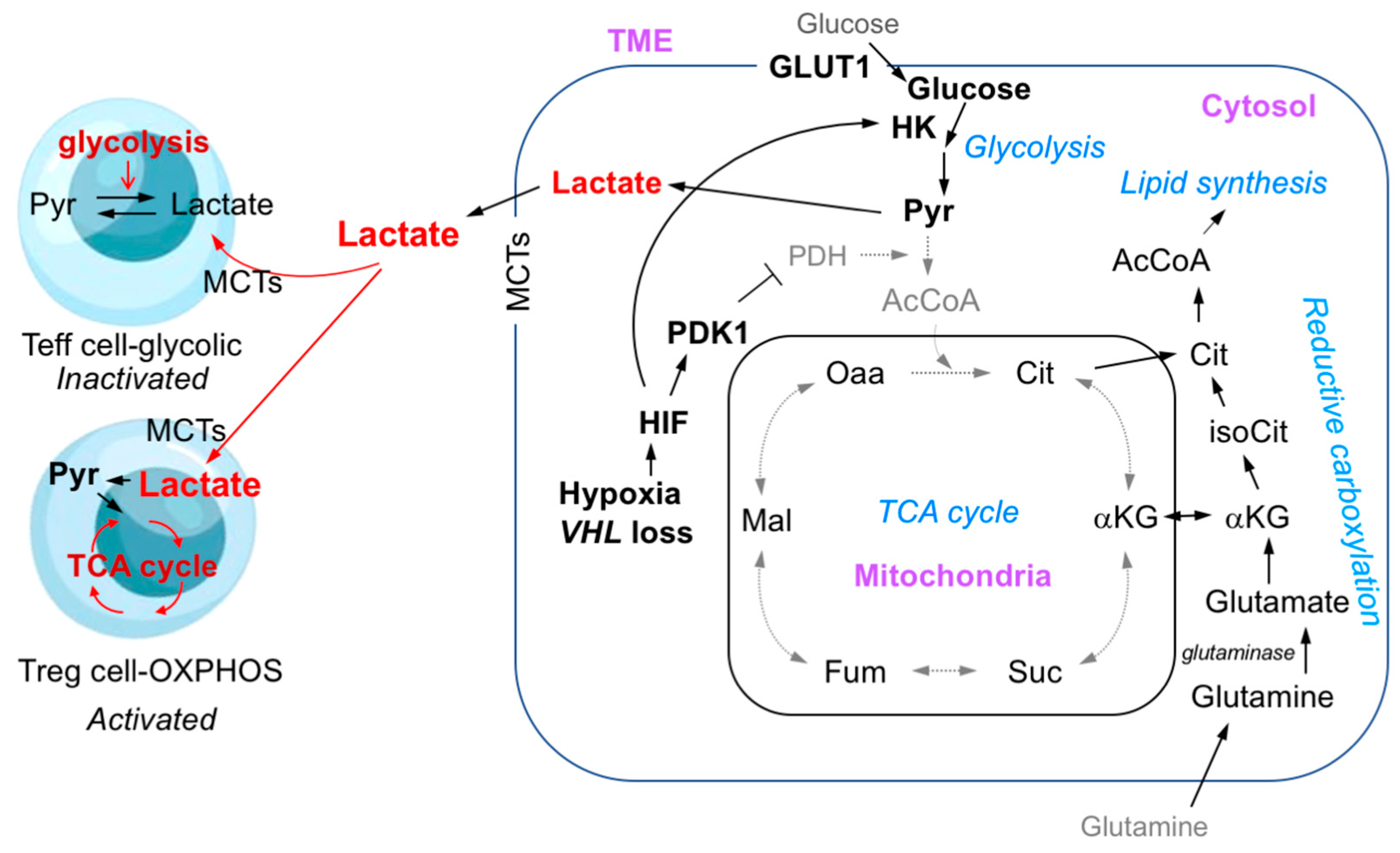
3.2. Lactate Accumulation and Acidosis
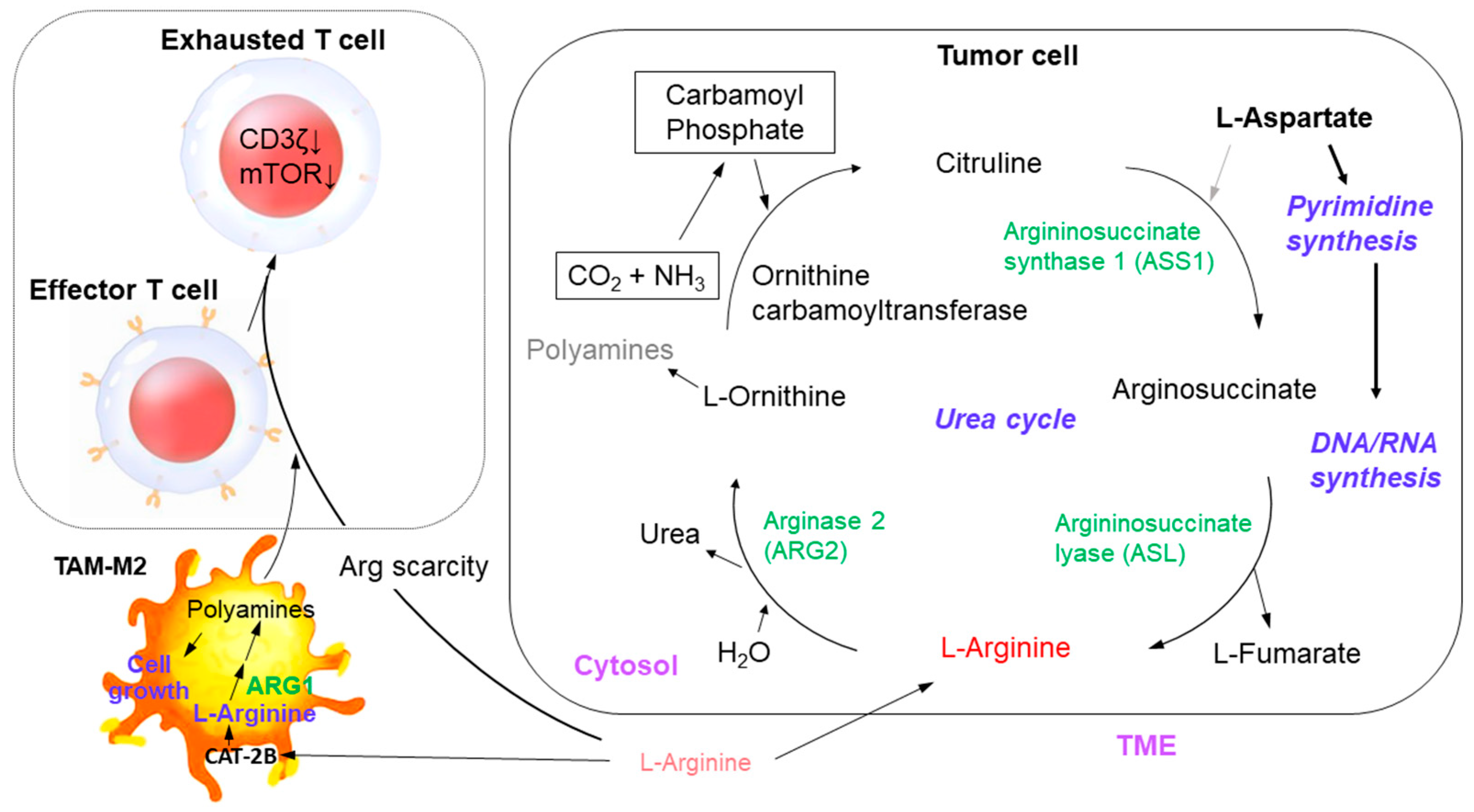
3.3. Arginine (Arg) Depletion
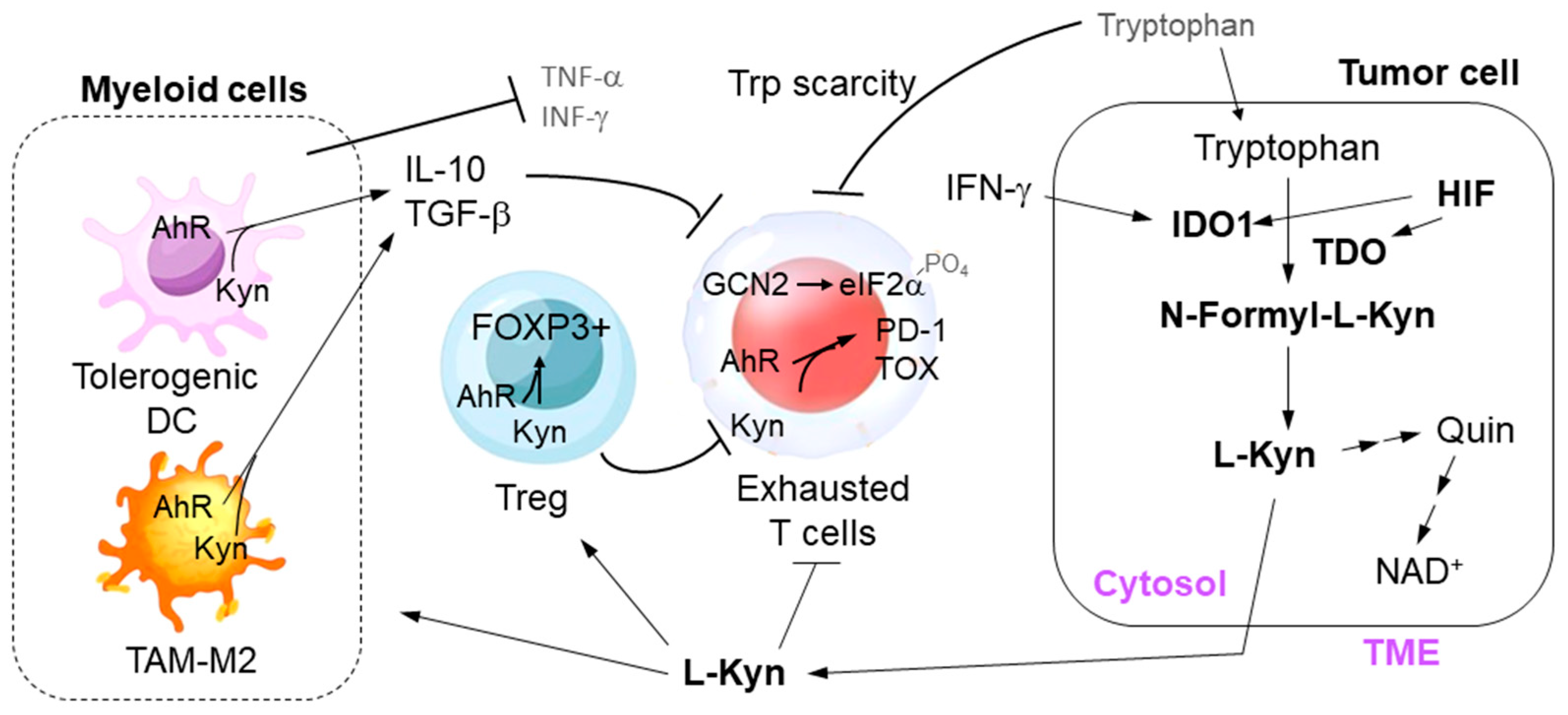
3.4. Tryptophan (Trp) Depletion
3.5. Kynurenine (Kyn)-Mediated T-Cell Exhaustion
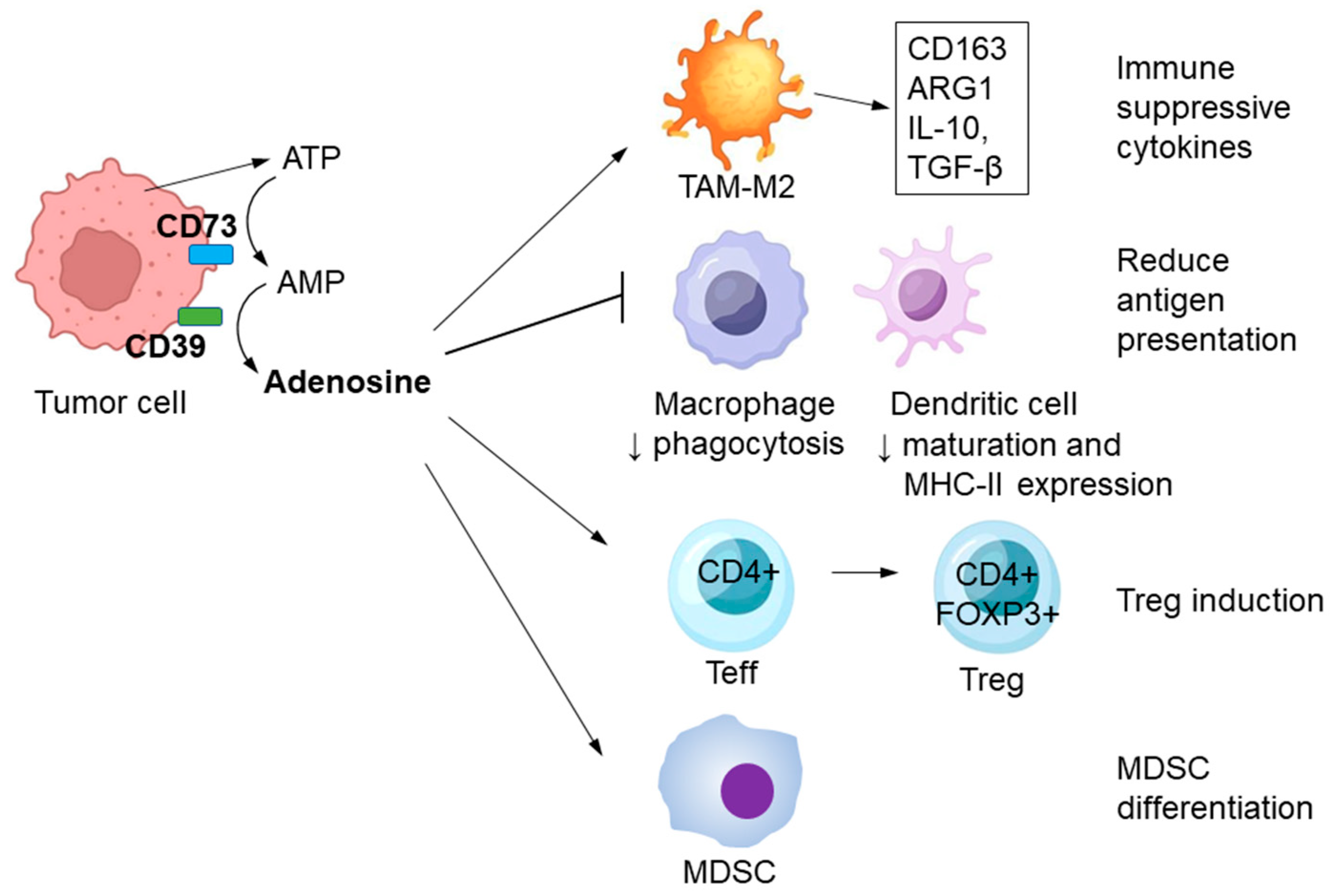
3.6. Adenosine-Driven Immune Suppression
3.7. Vascular Involvement
3.8. Why Immunotherapy Fails Despite Immune Infiltration
4. Therapeutic Outlook
4.1. HIF-2α Inhibitors
4.2. Targeting Other Metabolic Pathways

| Class | Target | Example Agents | ccRCC Clinical Status | Limitations |
|---|---|---|---|---|
| Glutamine metabolism | Glutaminase | Telaglenastat/CB-839 | (1) Phase 1b trial (NCT02071862) showed activity with everolimus/cabozantinib in ccRCC [119], but (2) Phase 2/3 CANTATA trial did not improve PFS in combination therapy [120]. | (1) A small, non-randomized trial; no validated biomarker selection. (2) Adding telaglenastat to cabozantinib did not improve outcome in an unselected population; no monotherapy arm. |
| Lactate import/export | MCT1 | AZD3965 | First-in-human trial in advanced solid tumors/lymphoma, not in ccRCC; acceptable safety, target engagement, and evidence of lactate transport inhibition [121]. | A safety study, not an efficacy study; AZD3965 is a MCT1 inhibitor, but ccRCC expresses high MCT4. |
| MCT1 | BAY-8002 | Preclinical study; inhibits MCT1-mediated lactate transport, suppresses tumor cell proliferation, and shows antitumor activity in MCT1-dependent models. Not in ccRCC [122]. | A preclinical study; BAY-8002 is a MCT1 inhibitor, but ccRCC expresses high MCT4. | |
| MCT4 | MCT4 inhibitor syrosingopine | Preclinical study; causes lactate accumulation in ccRCC cells and reduced viability [123]. | Preclinical study. Strong dependence on combination therapy with metformin and phenformin. | |
| Lactate production | LDHA | LDHA inhibition (represented by experimental inhibitors such as FX11 and GNE-140) | Preclinical study. Small-molecule inhibitors such as FX11 and GNE-140 demonstrate antitumor activity [124,125]; not in ccRCC. | Preclinical study; not ccRCC-focused; cytostatic rather than cytotoxic activity (FX11); development of resistance. |
| Hypoxia pathway therapy | HIF-2α | Belzutifan | Approved after PD-1/PD-L1 + VEGF therapy; improved PFS/ORR vs everolimus in LITESPARK-005 [117,118]. | Resistance commonly develops; anemia a common on-target toxicity; can develop hypoxemia, necessitating monitoring of oxygen saturation during therapy. |
| Tryptophan–kynurenine pathway | IDO1 | Epacadostat | Phase 3 KEYNOTE-679/ECHO-302 trial (NCT03260894) of pembrolizumab plus epacadostat vs. sunitinib or pazopanib in metastatic ccRCC; terminated early [126]. | Did not reach originally planned statistical maturity; no pembrolizumab-alone control arm; no marker-selected for IDO1 expression, serum kynurenine, Kyn/Trp ratio, or AhR activation; incomplete suppression of Kyn level. |
| Kynurenine–AhR axis | AhR | IK-175 | Early clinical development in solid tumors/urothelial cancer (NCT04200963); no established ccRCC role [86,127]. | IK-175: Phase 1 study, no ccRCC cohort; limited improvement over nivolumab monotherapy. |
| Arginine immune checkpoint | ARG1/ARG2 | INCB001158 | Phase 1 solid-tumor trial (NCT02903914); no ccRCC-specific use [128]. | No ccRCC cohort; evidence of arginase inhibition but antitumor activity limited; no biomarker selection such as ARG1 expression. |
| Circulating Arg | ADI-PEG20 (Pegylated arginine deiminase) | Various clinical trials in different cancers but not in ccRCC [129,130]. | Improved survival in some cancers [129,130]; no trials in ccRCC; may exacerbate systemic Arg deficiency; neutralizing anti-ADI antibodies can develop. | |
| Adenosine generation | CD73/CD39 | Oleclumab (anti-CD73), anti-CD39 antibodies | Early solid-tumor trials NCT02503774; not in ccRCC [131]. | No ccRCC; modest monotherapy activity. |
| Adenosine pathway | A2AR | Ciforadenant/CPI-444 | Phase 1 RCC trial (NCT02655822) showed safety and modest activity alone or with atezolizumab [132]. | Small patient size; patients had advanced, heavily pretreated RCC; modest efficacy likely due to receptor redundancy (A2BR). |
4.3. Combination Therapy
4.4. Metabolism-Targeted Therapies—Current Status
4.5. Unresolved Issues and Future Perspectives
5. Conclusions
Author Contributions
Funding
Institutional Review Board Statement
Informed Consent Statement
Data Availability Statement
Acknowledgments
Conflicts of Interest
References
- Hsieh, J.J.; Purdue, M.P.; Signoretti, S.; Swanton, C.; Albiges, L.; Schmidinger, M.; Heng, D.Y.; Larkin, J.; Ficarra, V. Renal cell carcinoma. Nat. Rev. Dis. Primers 2017, 3, 17009. [Google Scholar] [CrossRef] [PubMed]
- Padala, S.A.; Barsouk, A.; Thandra, K.C.; Saginala, K.; Mohammed, A.; Vakiti, A.; Rawla, P.; Barsouk, A. Epidemiology of Renal Cell Carcinoma. World J. Oncol. 2020, 11, 79–87. [Google Scholar] [CrossRef] [PubMed]
- Bergers, G.; Hanahan, D. Modes of resistance to anti-angiogenic therapy. Nat. Rev. Cancer 2008, 8, 592–603. [Google Scholar] [CrossRef] [PubMed]
- Liu, Z.L.; Chen, H.H.; Zheng, L.L.; Sun, L.P.; Shi, L. Angiogenic signaling pathways and anti-angiogenic therapy for cancer. Signal Transduct. Target Ther. 2023, 8, 198. [Google Scholar] [CrossRef] [PubMed]
- Motzer, R.J.; Escudier, B.; McDermott, D.F.; George, S.; Hammers, H.J.; Srinivas, S.; Tykodi, S.S.; Sosman, J.A.; Procopio, G.; Plimack, E.R.; et al. Nivolumab versus Everolimus in Advanced Renal-Cell Carcinoma. N. Engl. J. Med. 2015, 373, 1803–1813. [Google Scholar] [CrossRef] [PubMed]
- Topalian, S.L.; Hodi, F.S.; Brahmer, J.R.; Gettinger, S.N.; Smith, D.C.; McDermott, D.F.; Powderly, J.D.; Carvajal, R.D.; Sosman, J.A.; Atkins, M.B.; et al. Safety, activity, and immune correlates of anti-PD-1 antibody in cancer. N. Engl. J. Med. 2012, 366, 2443–2554. [Google Scholar] [CrossRef] [PubMed]
- Motzer, R.J.; Tannir, N.M.; McDermott, D.F.; Aren Frontera, O.; Melichar, B.; Choueiri, T.K.; Plimack, E.R.; Barthelemy, P.; Porta, C.; George, S.; et al. Nivolumab plus Ipilimumab versus Sunitinib in Advanced Renal-Cell Carcinoma. N. Engl. J. Med. 2018, 378, 1277–1290. [Google Scholar] [CrossRef] [PubMed]
- Rini, B.I.; Plimack, E.R.; Stus, V.; Gafanov, R.; Hawkins, R.; Nosov, D.; Pouliot, F.; Alekseev, B.; Soulieres, D.; Melichar, B.; et al. Pembrolizumab plus Axitinib versus Sunitinib for Advanced Renal-Cell Carcinoma. N. Engl. J. Med. 2019, 380, 1116–1127. [Google Scholar] [CrossRef] [PubMed]
- The Cancer Genome Atlas Research Network. Comprehensive molecular characterization of clear cell renal cell carcinoma. Nature 2013, 499, 43–49. [Google Scholar] [CrossRef] [PubMed]
- Sato, Y.; Yoshizato, T.; Shiraishi, Y.; Maekawa, S.; Okuno, Y.; Kamura, T.; Shimamura, T.; Sato-Otsubo, A.; Nagae, G.; Suzuki, H.; et al. Integrated molecular analysis of clear-cell renal cell carcinoma. Nat. Genet. 2013, 45, 860–867. [Google Scholar] [CrossRef] [PubMed]
- Shen, C.; Kaelin, W.G., Jr. The VHL/HIF axis in clear cell renal carcinoma. Semin. Cancer Biol. 2013, 23, 18–25. [Google Scholar] [CrossRef] [PubMed]
- Semenza, G.L. Regulation of cancer cell metabolism by hypoxia-inducible factor 1. Semin. Cancer Biol. 2009, 19, 12–16. [Google Scholar] [CrossRef] [PubMed]
- Zhang, Y.; Zhang, S.; Sun, H.; Xu, L. The pathogenesis and therapeutic implications of metabolic reprogramming in renal cell carcinoma. Cell Death Discov. 2025, 11, 186. [Google Scholar] [CrossRef] [PubMed]
- Kim, M.C.; Jin, Z.; Kolb, R.; Borcherding, N.; Chatzkel, J.A.; Falzarano, S.M.; Zhang, W. Updates on Immunotherapy and Immune Landscape in Renal Clear Cell Carcinoma. Cancers 2021, 13, 5856. [Google Scholar] [CrossRef] [PubMed]
- Sobottka, B.; Vetter, V.; Banaei-Esfahani, A.; Nowak, M.; Lorch, A.; Sirek, A.; Mertz, K.D.; Brunelli, M.; Berthold, D.; de Leval, L.; et al. Immune Phenotype-Genotype Associations in Primary Clear Cell Renal Cell Carcinoma and Matched Metastatic Tissue. Mod. Pathol. 2024, 37, 100558. [Google Scholar] [CrossRef] [PubMed]
- Au, L.; Hatipoglu, E.; Robert de Massy, M.; Litchfield, K.; Beattie, G.; Rowan, A.; Schnidrig, D.; Thompson, R.; Byrne, F.; Horswell, S.; et al. Determinants of anti-PD-1 response and resistance in clear cell renal cell carcinoma. Cancer Cell 2021, 39, 1497–1518. [Google Scholar] [CrossRef] [PubMed]
- Borcherding, N.; Vishwakarma, A.; Voigt, A.P.; Bellizzi, A.; Kaplan, J.; Nepple, K.; Salem, A.K.; Jenkins, R.W.; Zakharia, Y.; Zhang, W. Mapping the immune environment in clear cell renal carcinoma by single-cell genomics. Commun. Biol. 2021, 4, 122. [Google Scholar] [CrossRef] [PubMed]
- Chevrier, S.; Levine, J.H.; Zanotelli, V.R.T.; Silina, K.; Schulz, D.; Bacac, M.; Ries, C.H.; Ailles, L.; Jewett, M.A.S.; Moch, H.; et al. An Immune Atlas of Clear Cell Renal Cell Carcinoma. Cell 2017, 169, 736–749. [Google Scholar] [CrossRef] [PubMed]
- Braun, D.A.; Street, K.; Burke, K.P.; Cookmeyer, D.L.; Denize, T.; Pedersen, C.B.; Gohil, S.H.; Schindler, N.; Pomerance, L.; Hirsch, L.; et al. Progressive immune dysfunction with advancing disease stage in renal cell carcinoma. Cancer Cell 2021, 39, 632–648. [Google Scholar] [CrossRef] [PubMed]
- Dieterich, L.C.; Tacconi, C.; Ducoli, L.; Detmar, M. Lymphatic vessels in cancer. Physiol. Rev. 2022, 102, 1837–1879. [Google Scholar] [CrossRef] [PubMed]
- Donnan, M.D.; Kenig-Kozlovsky, Y.; Quaggin, S.E. The lymphatics in kidney health and disease. Nat. Rev. Nephrol. 2021, 17, 655–675. [Google Scholar] [CrossRef] [PubMed]
- Russell, P.S.; Hong, J.; Windsor, J.A.; Itkin, M.; Phillips, A.R.J. Renal Lymphatics: Anatomy, Physiology, and Clinical Implications. Front. Physiol. 2019, 10, 251. [Google Scholar] [CrossRef] [PubMed]
- Dufies, M.; Giuliano, S.; Ambrosetti, D.; Claren, A.; Ndiaye, P.D.; Mastri, M.; Moghrabi, W.; Cooley, L.S.; Ettaiche, M.; Chamorey, E.; et al. Sunitinib Stimulates Expression of VEGFC by Tumor Cells and Promotes Lymphangiogenesis in Clear Cell Renal Cell Carcinomas. Cancer Res. 2017, 77, 1212–1226. [Google Scholar] [CrossRef] [PubMed]
- Dieterich, L.C.; Ikenberg, K.; Cetintas, T.; Kapaklikaya, K.; Hutmacher, C.; Detmar, M. Tumor-Associated Lymphatic Vessels Upregulate PDL1 to Inhibit T-Cell Activation. Front. Immunol. 2017, 8, 66. [Google Scholar] [CrossRef] [PubMed]
- Li, X.; Liu, P.; Li, M.; Zhou, Y.; Li, T.; Yang, T.; Dong, J.; Fu, C.; Zhu, Y.; Chen, L.; et al. Combining spatial and single-cell transcriptome data to analyze tertiary lymphoid structures in clear cell renal cell carcinoma reveals prognostic biomarkers. J. Transl. Med. 2026, 24, 171. [Google Scholar] [CrossRef] [PubMed]
- Xu, W.; Lu, J.; Liu, W.R.; Anwaier, A.; Wu, Y.; Tian, X.; Su, J.Q.; Qu, Y.Y.; Yang, J.; Zhang, H.; et al. Heterogeneity in tertiary lymphoid structures predicts distinct prognosis and immune microenvironment characterizations of clear cell renal cell carcinoma. J. Immunother. Cancer 2023, 11, e006667. [Google Scholar] [CrossRef] [PubMed]
- Linehan, W.M.; Schmidt, L.S.; Crooks, D.R.; Wei, D.; Srinivasan, R.; Lang, M.; Ricketts, C.J. The Metabolic Basis of Kidney Cancer. Cancer Discov. 2019, 9, 1006–1021. [Google Scholar] [CrossRef] [PubMed]
- Hakimi, A.A.; Reznik, E.; Lee, C.H.; Creighton, C.J.; Brannon, A.R.; Luna, A.; Aksoy, B.A.; Liu, E.M.; Shen, R.; Lee, W.; et al. An Integrated Metabolic Atlas of Clear Cell Renal Cell Carcinoma. Cancer Cell 2016, 29, 104–116. [Google Scholar] [CrossRef] [PubMed]
- Chen, C.; Pore, N.; Behrooz, A.; Ismail-Beigi, F.; Maity, A. Regulation of glut1 mRNA by hypoxia-inducible factor-1. Interaction between H-ras and hypoxia. J. Biol. Chem. 2001, 276, 9519–9525. [Google Scholar] [CrossRef] [PubMed]
- Hayashi, M.; Sakata, M.; Takeda, T.; Yamamoto, T.; Okamoto, Y.; Sawada, K.; Kimura, A.; Minekawa, R.; Tahara, M.; Tasaka, K.; et al. Induction of glucose transporter 1 expression through hypoxia-inducible factor 1alpha under hypoxic conditions in trophoblast-derived cells. J. Endocrinol. 2004, 183, 145–154. [Google Scholar] [CrossRef] [PubMed]
- Guo, D.; Meng, Y.; Jiang, X.; Lu, Z. Hexokinases in cancer and other pathologies. Cell Insight 2023, 2, 100077. [Google Scholar] [CrossRef] [PubMed]
- Metallo, C.M.; Gameiro, P.A.; Bell, E.L.; Mattaini, K.R.; Yang, J.; Hiller, K.; Jewell, C.M.; Johnson, Z.R.; Irvine, D.J.; Guarente, L.; et al. Reductive glutamine metabolism by IDH1 mediates lipogenesis under hypoxia. Nature 2012, 481, 380–384. [Google Scholar] [CrossRef] [PubMed]
- Kim, J.W.; Gao, P.; Liu, Y.C.; Semenza, G.L.; Dang, C.V. Hypoxia-inducible factor 1 and dysregulated c-Myc cooperatively induce vascular endothelial growth factor and metabolic switches hexokinase 2 and pyruvate dehydrogenase kinase 1. Mol. Cell Biol. 2007, 27, 7381–7393. [Google Scholar] [CrossRef] [PubMed]
- Gameiro, P.A.; Yang, J.; Metelo, A.M.; Perez-Carro, R.; Baker, R.; Wang, Z.; Arreola, A.; Rathmell, W.K.; Olumi, A.; Lopez-Larrubia, P.; et al. In vivo HIF-mediated reductive carboxylation is regulated by citrate levels and sensitizes VHL-deficient cells to glutamine deprivation. Cell Metab. 2013, 17, 372–385. [Google Scholar] [CrossRef] [PubMed]
- Kaelin, W.G., Jr. The von Hippel-Lindau tumour suppressor protein: O2 sensing and cancer. Nat. Rev. Cancer 2008, 8, 865–873. [Google Scholar] [PubMed]
- Siska, P.J.; Beckermann, K.E.; Mason, F.M.; Andrejeva, G.; Greenplate, A.R.; Sendor, A.B.; Chiang, Y.J.; Corona, A.L.; Gemta, L.F.; Vincent, B.G.; et al. Mitochondrial dysregulation and glycolytic insufficiency functionally impair CD8 T cells infiltrating human renal cell carcinoma. JCI Insight 2017, 2, e93411. [Google Scholar] [CrossRef] [PubMed]
- Reinfeld, B.I.; Rathmell, W.K.; Kim, T.K.; Rathmell, J.C. The therapeutic implications of immunosuppressive tumor aerobic glycolysis. Cell Mol. Immunol. 2022, 19, 46–58. [Google Scholar] [CrossRef] [PubMed]
- Chang, C.H.; Curtis, J.D.; Maggi, L.B., Jr.; Faubert, B.; Villarino, A.V.; O’Sullivan, D.; Huang, S.C.; van der Windt, G.J.; Blagih, J.; Qiu, J.; et al. Posttranscriptional control of T cell effector function by aerobic glycolysis. Cell 2013, 153, 1239–1251. [Google Scholar] [CrossRef] [PubMed]
- Dimeloe, S.; Burgener, A.V.; Grahlert, J.; Hess, C. T-cell metabolism governing activation, proliferation and differentiation; a modular view. Immunology 2017, 150, 35–44. [Google Scholar] [CrossRef] [PubMed]
- Kumagai, S.; Koyama, S.; Itahashi, K.; Tanegashima, T.; Lin, Y.T.; Togashi, Y.; Kamada, T.; Irie, T.; Okumura, G.; Kono, H.; et al. Lactic acid promotes PD-1 expression in regulatory T cells in highly glycolytic tumor microenvironments. Cancer Cell 2022, 40, 201–218. [Google Scholar] [CrossRef] [PubMed]
- Watson, M.J.; Vignali, P.D.A.; Mullett, S.J.; Overacre-Delgoffe, A.E.; Peralta, R.M.; Grebinoski, S.; Menk, A.V.; Rittenhouse, N.L.; DePeaux, K.; Whetstone, R.D.; et al. Metabolic support of tumour-infiltrating regulatory T cells by lactic acid. Nature 2021, 591, 645–651. [Google Scholar] [CrossRef] [PubMed]
- Angelin, A.; Gil-de-Gomez, L.; Dahiya, S.; Jiao, J.; Guo, L.; Levine, M.H.; Wang, Z.; Quinn, W.J., 3rd; Kopinski, P.K.; Wang, L.; et al. Foxp3 Reprograms T Cell Metabolism to Function in Low-Glucose, High-Lactate Environments. Cell Metab. 2017, 25, 1282–1293. [Google Scholar] [CrossRef] [PubMed]
- Howie, D.; Cobbold, S.P.; Adams, E.; Ten Bokum, A.; Necula, A.S.; Zhang, W.; Huang, H.; Roberts, D.J.; Thomas, B.; Hester, S.S.; et al. Foxp3 drives oxidative phosphorylation and protection from lipotoxicity. JCI Insight 2017, 2, e89160. [Google Scholar] [CrossRef] [PubMed]
- Chandel, N.S. Amino Acid Metabolism. Cold Spring Harb. Perspect. Biol. 2021, 13, a040584. [Google Scholar] [CrossRef] [PubMed]
- Brosnan, M.E.; Brosnan, J.T. Renal arginine metabolism. J. Nutr. 2004, 134, 2791S–2795S. [Google Scholar] [CrossRef] [PubMed]
- Chen, G.F.; Baylis, C. In vivo renal arginine release is impaired throughout development of chronic kidney disease. Am. J. Physiol. Ren. Physiol. 2010, 298, F95–F102. [Google Scholar] [CrossRef] [PubMed]
- Deng, H.; Bloomfield, V.A.; Benevides, J.M.; Thomas, G.J., Jr. Structural basis of polyamine-DNA recognition: Spermidine and spermine interactions with genomic B-DNAs of different GC content probed by Raman spectroscopy. Nucleic Acids Res. 2000, 28, 3379–3385. [Google Scholar] [CrossRef] [PubMed]
- Miska, J.; Rashidi, A.; Lee-Chang, C.; Gao, P.; Lopez-Rosas, A.; Zhang, P.; Burga, R.; Castro, B.; Xiao, T.; Han, Y.; et al. Polyamines drive myeloid cell survival by buffering intracellular pH to promote immunosuppression in glioblastoma. Sci. Adv. 2021, 7, eabc8929. [Google Scholar] [CrossRef] [PubMed]
- Dantzler, W.H.; Layton, A.T.; Layton, H.E.; Pannabecker, T.L. Urine-concentrating mechanism in the inner medulla: Function of the thin limbs of the loops of Henle. Clin. J. Am. Soc. Nephrol. 2014, 9, 1781–1789. [Google Scholar] [CrossRef] [PubMed]
- Ochocki, J.D.; Khare, S.; Hess, M.; Ackerman, D.; Qiu, B.; Daisak, J.I.; Worth, A.J.; Lin, N.; Lee, P.; Xie, H.; et al. Arginase 2 Suppresses Renal Carcinoma Progression via Biosynthetic Cofactor Pyridoxal Phosphate Depletion and Increased Polyamine Toxicity. Cell Metab. 2018, 27, 1263–1280. [Google Scholar] [CrossRef] [PubMed]
- Khare, S.; Kim, L.C.; Lobel, G.; Doulias, P.T.; Ischiropoulos, H.; Nissim, I.; Keith, B.; Simon, M.C. ASS1 and ASL suppress growth in clear cell renal cell carcinoma via altered nitrogen metabolism. Cancer Metab. 2021, 9, 40. [Google Scholar] [CrossRef] [PubMed]
- Chantranupong, L.; Scaria, S.M.; Saxton, R.A.; Gygi, M.P.; Shen, K.; Wyant, G.A.; Wang, T.; Harper, J.W.; Gygi, S.P.; Sabatini, D.M. The CASTOR Proteins Are Arginine Sensors for the mTORC1 Pathway. Cell 2016, 165, 153–164. [Google Scholar] [CrossRef] [PubMed]
- Saxton, R.A.; Chantranupong, L.; Knockenhauer, K.E.; Schwartz, T.U.; Sabatini, D.M. Mechanism of arginine sensing by CASTOR1 upstream of mTORC1. Nature 2016, 536, 229–233. [Google Scholar] [CrossRef] [PubMed]
- Wang, S.; Tsun, Z.Y.; Wolfson, R.L.; Shen, K.; Wyant, G.A.; Plovanich, M.E.; Yuan, E.D.; Jones, T.D.; Chantranupong, L.; Comb, W.; et al. Lysosomal amino acid transporter SLC38A9 signals arginine sufficiency to mTORC1. Science 2015, 347, 188–194. [Google Scholar] [CrossRef] [PubMed]
- Groth, C.; Hu, X.; Weber, R.; Fleming, V.; Altevogt, P.; Utikal, J.; Umansky, V. Immunosuppression mediated by myeloid-derived suppressor cells (MDSCs) during tumour progression. Br. J. Cancer 2019, 120, 16–25. [Google Scholar] [CrossRef] [PubMed]
- Li, K.; Shi, H.; Zhang, B.; Ou, X.; Ma, Q.; Chen, Y.; Shu, P.; Li, D.; Wang, Y. Myeloid-derived suppressor cells as immunosuppressive regulators and therapeutic targets in cancer. Signal Transduct. Target Ther. 2021, 6, 362. [Google Scholar] [CrossRef] [PubMed]
- Fletcher, M.; Ramirez, M.E.; Sierra, R.A.; Raber, P.; Thevenot, P.; Al-Khami, A.A.; Sanchez-Pino, D.; Hernandez, C.; Wyczechowska, D.D.; Ochoa, A.C.; et al. l-Arginine depletion blunts antitumor T-cell responses by inducing myeloid-derived suppressor cells. Cancer Res. 2015, 75, 275–283. [Google Scholar] [CrossRef] [PubMed]
- Rodriguez, P.C.; Zea, A.H.; Culotta, K.S.; Zabaleta, J.; Ochoa, J.B.; Ochoa, A.C. Regulation of T cell receptor CD3zeta chain expression by L-arginine. J. Biol. Chem. 2002, 277, 21123–21129. [Google Scholar] [CrossRef] [PubMed]
- Zea, A.H.; Rodriguez, P.C.; Culotta, K.S.; Hernandez, C.P.; DeSalvo, J.; Ochoa, J.B.; Park, H.J.; Zabaleta, J.; Ochoa, A.C. L-Arginine modulates CD3zeta expression and T cell function in activated human T lymphocytes. Cell Immunol. 2004, 232, 21–31. [Google Scholar] [CrossRef] [PubMed]
- Geiger, R.; Rieckmann, J.C.; Wolf, T.; Basso, C.; Feng, Y.; Fuhrer, T.; Kogadeeva, M.; Picotti, P.; Meissner, F.; Mann, M.; et al. L-Arginine Modulates T Cell Metabolism and Enhances Survival and Anti-tumor Activity. Cell 2016, 167, 829–842. [Google Scholar] [CrossRef] [PubMed]
- Munn, D.H.; Sharma, M.D.; Baban, B.; Harding, H.P.; Zhang, Y.; Ron, D.; Mellor, A.L. GCN2 kinase in T cells mediates proliferative arrest and anergy induction in response to indoleamine 2,3-dioxygenase. Immunity 2005, 22, 633–642. [Google Scholar] [CrossRef] [PubMed]
- Chen, M.; Nie, Z.; Huang, D.; Gao, Y.; Cao, H.; Zheng, L.; Zhang, S. Development of a polyamine gene expression score for predicting prognosis and treatment response in clear cell renal cell carcinoma. Front. Immunol. 2022, 13, 1048204. [Google Scholar] [CrossRef] [PubMed]
- di Meo, N.A.; Lasorsa, F.; Rutigliano, M.; Loizzo, D.; Ferro, M.; Stella, A.; Bizzoca, C.; Vincenti, L.; Pandolfo, S.D.; Autorino, R.; et al. Renal Cell Carcinoma as a Metabolic Disease: An Update on Main Pathways, Potential Biomarkers, and Therapeutic Targets. Int. J. Mol. Sci. 2022, 23, 14360. [Google Scholar] [CrossRef] [PubMed]
- Gong, Z.; Lin, H.; Wang, J.; Hua, J.; Wei, J.; Chen, W.; Luo, J.; Pang, J.; Chen, X. A robust ammonia metabolism gene signature identified by machine learning predicts prognosis and immunotherapy response in clear cell renal cell carcinoma. Front. Oncol. 2025, 15, 1709096. [Google Scholar] [CrossRef] [PubMed]
- Zhang, Y.; Narayanan, S.P.; Mannan, R.; Raskind, G.; Wang, X.; Vats, P.; Su, F.; Hosseini, N.; Cao, X.; Kumar-Sinha, C.; et al. Single-cell analyses of renal cell cancers reveal insights into tumor microenvironment, cell of origin, and therapy response. Proc. Natl. Acad. Sci. USA 2021, 118, e2103240118. [Google Scholar] [CrossRef] [PubMed]
- Opitz, C.A.; Somarribas Patterson, L.F.; Mohapatra, S.R.; Dewi, D.L.; Sadik, A.; Platten, M.; Trump, S. The therapeutic potential of targeting tryptophan catabolism in cancer. Br. J. Cancer 2020, 122, 30–44. [Google Scholar] [CrossRef] [PubMed]
- Yusri, K.; Jose, S.; Vermeulen, K.S.; Tan, T.C.M.; Sorrentino, V. The role of NAD(+) metabolism and its modulation of mitochondria in aging and disease. npj Metab. Health Dis. 2025, 3, 26. [Google Scholar] [CrossRef] [PubMed]
- Seo, S.K.; Kwon, B. Immune regulation through tryptophan metabolism. Exp. Mol. Med. 2023, 55, 1371–1379. [Google Scholar] [CrossRef] [PubMed]
- Fagny, M.; Platig, J.; Kuijjer, M.L.; Lin, X.; Quackenbush, J. Nongenic cancer-risk SNPs affect oncogenes, tumour-suppressor genes, and immune function. Br. J. Cancer 2020, 122, 569–577. [Google Scholar] [CrossRef] [PubMed]
- Hennequart, M.; Pilotte, L.; Cane, S.; Hoffmann, D.; Stroobant, V.; Plaen, E.; Van den Eynde, B.J. Constitutive IDO1 Expression in Human Tumors Is Driven by Cyclooxygenase-2 and Mediates Intrinsic Immune Resistance. Cancer Immunol. Res. 2017, 5, 695–709. [Google Scholar] [CrossRef] [PubMed]
- Munn, D.H.; Mellor, A.L. IDO in the Tumor Microenvironment: Inflammation, Counter-Regulation, and Tolerance. Trends Immunol. 2016, 37, 193–207. [Google Scholar] [CrossRef] [PubMed]
- Joisten, N.; Ruas, J.L.; Braidy, N.; Guillemin, G.J.; Zimmer, P. The kynurenine pathway in chronic diseases: A compensatory mechanism or a driving force? Trends Mol. Med. 2021, 27, 946–954. [Google Scholar] [CrossRef] [PubMed]
- Collins, B.E.; Smith, B.A.; Bengtson, P.; Paulson, J.C. Ablation of CD22 in ligand-deficient mice restores B cell receptor signaling. Nat. Immunol. 2006, 7, 199–206. [Google Scholar] [CrossRef] [PubMed]
- Fallarino, F.; Grohmann, U.; You, S.; McGrath, B.C.; Cavener, D.R.; Vacca, C.; Orabona, C.; Bianchi, R.; Belladonna, M.L.; Volpi, C.; et al. The combined effects of tryptophan starvation and tryptophan catabolites down-regulate T cell receptor zeta-chain and induce a regulatory phenotype in naive T cells. J. Immunol. 2006, 176, 6752–6761. [Google Scholar] [CrossRef] [PubMed]
- de Candia, P.; Procaccini, C.; Russo, C.; Lepore, M.T.; Matarese, G. Regulatory T cells as metabolic sensors. Immunity 2022, 55, 1981–1992. [Google Scholar] [CrossRef] [PubMed]
- Halaby, M.J.; Hezaveh, K.; Lamorte, S.; Ciudad, M.T.; Kloetgen, A.; MacLeod, B.L.; Guo, M.; Chakravarthy, A.; Medina, T.D.S.; Ugel, S.; et al. GCN2 drives macrophage and MDSC function and immunosuppression in the tumor microenvironment. Sci. Immunol. 2019, 4, eaax8189. [Google Scholar] [CrossRef] [PubMed]
- Pichler, R.; Siska, P.J.; Tymoszuk, P.; Martowicz, A.; Untergasser, G.; Mayr, R.; Weber, F.; Seeber, A.; Kocher, F.; Barth, D.A.; et al. A chemokine network of T cell exhaustion and metabolic reprogramming in renal cell carcinoma. Front. Immunol. 2023, 14, 1095195. [Google Scholar] [CrossRef] [PubMed]
- Tang, C.; Xie, A.X.; Liu, E.M.; Kuo, F.; Kim, M.; DiNatale, R.G.; Golkaram, M.; Chen, Y.B.; Gupta, S.; Motzer, R.J.; et al. Immunometabolic coevolution defines unique microenvironmental niches in ccRCC. Cell Metab. 2023, 35, 1424–1440. [Google Scholar] [CrossRef] [PubMed]
- Liu, Y.; Liang, X.; Dong, W.; Fang, Y.; Lv, J.; Zhang, T.; Fiskesund, R.; Xie, J.; Liu, J.; Yin, X.; et al. Tumor-Repopulating Cells Induce PD-1 Expression in CD8(+) T Cells by Transferring Kynurenine and AhR Activation. Cancer Cell 2018, 33, 480–494. [Google Scholar] [CrossRef] [PubMed]
- Campesato, L.F.; Budhu, S.; Tchaicha, J.; Weng, C.H.; Gigoux, M.; Cohen, I.J.; Redmond, D.; Mangarin, L.; Pourpe, S.; Liu, C.; et al. Blockade of the AHR restricts a Treg-macrophage suppressive axis induced by L-Kynurenine. Nat. Commun. 2020, 11, 4011. [Google Scholar] [CrossRef] [PubMed]
- Mezrich, J.D.; Fechner, J.H.; Zhang, X.; Johnson, B.P.; Burlingham, W.J.; Bradfield, C.A. An interaction between kynurenine and the aryl hydrocarbon receptor can generate regulatory T cells. J. Immunol. 2010, 185, 3190–3198. [Google Scholar] [CrossRef] [PubMed]
- Rad Pour, S.; Morikawa, H.; Kiani, N.A.; Yang, M.; Azimi, A.; Shafi, G.; Shang, M.; Baumgartner, R.; Ketelhuth, D.F.J.; Kamleh, M.A.; et al. Exhaustion of CD4+ T-cells mediated by the Kynurenine Pathway in Melanoma. Sci. Rep. 2019, 9, 12150. [Google Scholar] [CrossRef] [PubMed]
- Lucarelli, G.; Rutigliano, M.; Ferro, M.; Giglio, A.; Intini, A.; Triggiano, F.; Palazzo, S.; Gigante, M.; Castellano, G.; Ranieri, E.; et al. Activation of the kynurenine pathway predicts poor outcome in patients with clear cell renal cell carcinoma. Urol. Oncol. 2017, 35, 461.e15–461.e27. [Google Scholar] [CrossRef] [PubMed]
- Wu, Z.; Wang, H.; Zheng, Z.; Lin, Y.; Bian, L.; Geng, H.; Huang, X.; Zhu, J.; Jing, H.; Zhang, Y.; et al. IDO1 inhibition enhances CLDN18.2-CAR-T cell therapy in gastrointestinal cancers by overcoming kynurenine-mediated metabolic suppression in the tumor microenvironment. J. Transl. Med. 2025, 23, 275. [Google Scholar] [CrossRef] [PubMed]
- Yang, Q.; Hao, J.; Chi, M.; Wang, Y.; Xin, B.; Huang, J.; Lu, J.; Li, J.; Sun, X.; Li, C.; et al. Superior antitumor immunotherapy efficacy of kynureninase modified CAR-T cells through targeting kynurenine metabolism. Oncoimmunology 2022, 11, 2055703. [Google Scholar] [CrossRef] [PubMed]
- McGovern, K.; Castro, A.C.; Cavanaugh, J.; Coma, S.; Walsh, M.; Tchaicha, J.; Syed, S.; Natarajan, P.; Manfredi, M.; Zhang, X.M.; et al. Discovery and Characterization of a Novel Aryl Hydrocarbon Receptor Inhibitor, IK-175, and Its Inhibitory Activity on Tumor Immune Suppression. Mol. Cancer Ther. 2022, 21, 1261–1272. [Google Scholar] [CrossRef] [PubMed]
- Martins, I.; Wang, Y.; Michaud, M.; Ma, Y.; Sukkurwala, A.Q.; Shen, S.; Kepp, O.; Metivier, D.; Galluzzi, L.; Perfettini, J.L.; et al. Molecular mechanisms of ATP secretion during immunogenic cell death. Cell Death Differ. 2014, 21, 79–91. [Google Scholar] [CrossRef] [PubMed]
- Aymeric, L.; Apetoh, L.; Ghiringhelli, F.; Tesniere, A.; Martins, I.; Kroemer, G.; Smyth, M.J.; Zitvogel, L. Tumor cell death and ATP release prime dendritic cells and efficient anticancer immunity. Cancer Res. 2010, 70, 855–858. [Google Scholar] [CrossRef] [PubMed]
- Yegutkin, G.G. Nucleotide- and nucleoside-converting ectoenzymes: Important modulators of purinergic signalling cascade. Biochim. Biophys. Acta 2008, 1783, 673–694. [Google Scholar] [CrossRef] [PubMed]
- Allard, B.; Longhi, M.S.; Robson, S.C.; Stagg, J. The ectonucleotidases CD39 and CD73: Novel checkpoint inhibitor targets. Immunol. Rev. 2017, 276, 121–144. [Google Scholar] [CrossRef] [PubMed]
- Synnestvedt, K.; Furuta, G.T.; Comerford, K.M.; Louis, N.; Karhausen, J.; Eltzschig, H.K.; Hansen, K.R.; Thompson, L.F.; Colgan, S.P. Ecto-5′-nucleotidase (CD73) regulation by hypoxia-inducible factor-1 mediates permeability changes in intestinal epithelia. J. Clin. Investig. 2002, 110, 993–1002. [Google Scholar] [CrossRef] [PubMed][Green Version]
- Tripathi, A.; Lin, E.; Xie, W.; Flaifel, A.; Steinharter, J.A.; Stern Gatof, E.N.; Bouchard, G.; Fleischer, J.H.; Martinez-Chanza, N.; Gray, C.; et al. Prognostic significance and immune correlates of CD73 expression in renal cell carcinoma. J. Immunother. Cancer 2020, 8, e001467. [Google Scholar] [CrossRef] [PubMed]
- de Lera Ruiz, M.; Lim, Y.H.; Zheng, J. Adenosine A2A receptor as a drug discovery target. J. Med. Chem. 2014, 57, 3623–3650. [Google Scholar] [CrossRef] [PubMed]
- Ohta, A.; Sitkovsky, M. Role of G-protein-coupled adenosine receptors in downregulation of inflammation and protection from tissue damage. Nature 2001, 414, 916–920. [Google Scholar] [CrossRef] [PubMed]
- Ohta, A.; Gorelik, E.; Prasad, S.J.; Ronchese, F.; Lukashev, D.; Wong, M.K.; Huang, X.; Caldwell, S.; Liu, K.; Smith, P.; et al. A2A adenosine receptor protects tumors from antitumor T cells. Proc. Natl. Acad. Sci. USA 2006, 103, 13132–13137. [Google Scholar] [CrossRef] [PubMed]
- Vecchio, E.A.; Tan, C.Y.; Gregory, K.J.; Christopoulos, A.; White, P.J.; May, L.T. Ligand-Independent Adenosine A2B Receptor Constitutive Activity as a Promoter of Prostate Cancer Cell Proliferation. J. Pharmacol. Exp. Ther. 2016, 357, 36–44. [Google Scholar] [CrossRef] [PubMed]
- Kamai, T.; Kijima, T.; Tsuzuki, T.; Nukui, A.; Abe, H.; Arai, K.; Yoshida, K.I. Increased expression of adenosine 2A receptors in metastatic renal cell carcinoma is associated with poorer response to anti-vascular endothelial growth factor agents and anti-PD-1/Anti-CTLA4 antibodies and shorter survival. Cancer Immunol. Immunother. 2021, 70, 2009–2021. [Google Scholar] [CrossRef] [PubMed]
- Yang, L.; Zhang, Y.; Yang, L. Adenosine signaling in tumor-associated macrophages and targeting adenosine signaling for cancer therapy. Cancer Biol. Med. 2024, 21, 995–1011. [Google Scholar] [CrossRef] [PubMed]
- Cekic, C.; Day, Y.J.; Sag, D.; Linden, J. Myeloid expression of adenosine A2A receptor suppresses T and NK cell responses in the solid tumor microenvironment. Cancer Res. 2014, 74, 7250–7259. [Google Scholar] [CrossRef] [PubMed]
- Imani, S.; Jabbarzadeh Kaboli, P.; Babaeizad, A.; Maghsoudloo, M. Neoantigen mRNA vaccines and A(2)A receptor antagonism: A strategy to enhance T cell immunity. Hum. Vaccin. Immunother. 2025, 21, 2458936. [Google Scholar] [CrossRef] [PubMed]
- Wang, L.; Zhang, J.; Zhang, W.; Zheng, M.; Guo, H.; Pan, X.; Li, W.; Yang, B.; Ding, L. The inhibitory effect of adenosine on tumor adaptive immunity and intervention strategies. Acta Pharm. Sin. B 2024, 14, 1951–1964. [Google Scholar] [CrossRef] [PubMed]
- Schmiel, S.E.; Yang, J.A.; Jenkins, M.K.; Mueller, D.L. Cutting Edge: Adenosine A2a Receptor Signals Inhibit Germinal Center T Follicular Helper Cell Differentiation during the Primary Response to Vaccination. J. Immunol. 2017, 198, 623–628. [Google Scholar] [CrossRef] [PubMed]
- Iannone, R.; Miele, L.; Maiolino, P.; Pinto, A.; Morello, S. Blockade of A2b adenosine receptor reduces tumor growth and immune suppression mediated by myeloid-derived suppressor cells in a mouse model of melanoma. Neoplasia 2013, 15, 1400–1409. [Google Scholar] [CrossRef] [PubMed]
- Clayton, A.; Al-Taei, S.; Webber, J.; Mason, M.D.; Tabi, Z. Cancer exosomes express CD39 and CD73, which suppress T cells through adenosine production. J. Immunol. 2011, 187, 676–683. [Google Scholar] [CrossRef] [PubMed]
- Vijayan, D.; Young, A.; Teng, M.W.L.; Smyth, M.J. Targeting immunosuppressive adenosine in cancer. Nat. Rev. Cancer 2017, 17, 709–724, Erratum in Nat. Rev. Cancer 2017, 17, 765. https://doi.org/10.1038/nrc.2017.110. [Google Scholar] [CrossRef] [PubMed]
- Takeda, M.; Akamatsu, S.; Kita, Y.; Goto, T.; Kobayashi, T. The Roles of Extracellular Vesicles in the Progression of Renal Cell Carcinoma and Their Potential for Future Clinical Application. Nanomaterials 2023, 13, 1611. [Google Scholar] [CrossRef] [PubMed]
- Rohde, D.; Wiesner, C.; Graf, D.; Wolff, J.; Fuzesi, L.; Jakse, G. Interstitial fluid pressure is increased in renal cell carcinoma xenografts. Urol. Res. 2000, 28, 1–5. [Google Scholar] [CrossRef] [PubMed]
- Milosevic, M.F.; Fyles, A.W.; Hill, R.P. The relationship between elevated interstitial fluid pressure and blood flow in tumors: A bioengineering analysis. Int. J. Radiat. Oncol. Biol. Phys. 1999, 43, 1111–1123. [Google Scholar] [CrossRef] [PubMed]
- Heldin, C.H.; Rubin, K.; Pietras, K.; Ostman, A. High interstitial fluid pressure—An obstacle in cancer therapy. Nat. Rev. Cancer 2004, 4, 806–813. [Google Scholar] [CrossRef] [PubMed]
- Wu, M.; Frieboes, H.B.; McDougall, S.R.; Chaplain, M.A.; Cristini, V.; Lowengrub, J. The effect of interstitial pressure on tumor growth: Coupling with the blood and lymphatic vascular systems. J. Theor. Biol. 2013, 320, 131–151. [Google Scholar] [CrossRef] [PubMed]
- Nia, H.T.; Munn, L.L.; Jain, R.K. Physical traits of cancer. Science 2020, 370, eaaz0868. [Google Scholar] [CrossRef] [PubMed]
- Lobel, G.P.; Jiang, Y.; Simon, M.C. Tumor microenvironmental nutrients, cellular responses, and cancer. Cell Chem. Biol. 2023, 30, 1015–1032. [Google Scholar] [CrossRef] [PubMed]
- Abbott, K.L.; Ali, A.; Reinfeld, B.I.; Deik, A.; Subudhi, S.; Landis, M.D.; Hongo, R.A.; Young, K.L.; Kunchok, T.; Nabel, C.S.; et al. Metabolite profiling of human renal cell carcinoma reveals tissue-origin dominance in nutrient availability. Elife 2024, 13, RP95652. [Google Scholar] [CrossRef] [PubMed]
- Jain, R.K. Normalization of tumor vasculature: An emerging concept in antiangiogenic therapy. Science 2005, 307, 58–62. [Google Scholar] [CrossRef] [PubMed]
- Huang, Y.; Yuan, J.; Righi, E.; Kamoun, W.S.; Ancukiewicz, M.; Nezivar, J.; Santosuosso, M.; Martin, J.D.; Martin, M.R.; Vianello, F.; et al. Vascular normalizing doses of antiangiogenic treatment reprogram the immunosuppressive tumor microenvironment and enhance immunotherapy. Proc. Natl. Acad. Sci. USA 2012, 109, 17561–17566. [Google Scholar] [CrossRef] [PubMed]
- Magnussen, A.L.; Mills, I.G. Vascular normalisation as the stepping stone into tumour microenvironment transformation. Br. J. Cancer 2021, 125, 324–336. [Google Scholar] [CrossRef] [PubMed]
- Beckermann, K. From prevention to progression: Can belzutifan-based strategies deliver across the RCC disease continuum? Oncologist 2026, 31, oyag193. [Google Scholar] [CrossRef] [PubMed]
- Choueiri, T.K.; Powles, T.; Peltola, K.; de Velasco, G.; Burotto, M.; Suarez, C.; Ghatalia, P.; Iacovelli, R.; Lam, E.T.; Verzoni, E.; et al. Belzutifan versus Everolimus for Advanced Renal-Cell Carcinoma. N. Engl. J. Med. 2024, 391, 710–721. [Google Scholar] [CrossRef] [PubMed]
- Meric-Bernstam, F.; Tannir, N.M.; Iliopoulos, O.; Lee, R.J.; Telli, M.L.; Fan, A.C.; DeMichele, A.; Haas, N.B.; Patel, M.R.; Harding, J.J.; et al. Telaglenastat Plus Cabozantinib or Everolimus for Advanced or Metastatic Renal Cell Carcinoma: An Open-Label Phase I Trial. Clin. Cancer Res. 2022, 28, 1540–1548. [Google Scholar] [CrossRef] [PubMed]
- Tannir, N.M.; Agarwal, N.; Porta, C.; Lawrence, N.J.; Motzer, R.; McGregor, B.; Lee, R.J.; Jain, R.K.; Davis, N.; Appleman, L.J.; et al. Efficacy and Safety of Telaglenastat Plus Cabozantinib vs Placebo Plus Cabozantinib in Patients With Advanced Renal Cell Carcinoma: The CANTATA Randomized Clinical Trial. JAMA Oncol. 2022, 8, 1411–1418. [Google Scholar] [CrossRef] [PubMed]
- Halford, S.; Veal, G.J.; Wedge, S.R.; Payne, G.S.; Bacon, C.M.; Sloan, P.; Dragoni, I.; Heinzmann, K.; Potter, S.; Salisbury, B.M.; et al. A Phase I Dose-escalation Study of AZD3965, an Oral Monocarboxylate Transporter 1 Inhibitor, in Patients with Advanced Cancer. Clin. Cancer Res. 2023, 29, 1429–1439. [Google Scholar] [CrossRef] [PubMed]
- Quanz, M.; Bender, E.; Kopitz, C.; Grunewald, S.; Schlicker, A.; Schwede, W.; Eheim, A.; Toschi, L.; Neuhaus, R.; Richter, C.; et al. Preclinical Efficacy of the Novel Monocarboxylate Transporter 1 Inhibitor BAY-8002 and Associated Markers of Resistance. Mol. Cancer Ther. 2018, 17, 2285–2296. [Google Scholar] [CrossRef] [PubMed]
- Menig-Benzig, L.S.; Stuhler, V.; Mazzola, P.; Heinrich, H.; Hofmann, U.; Widmann, N.; Bohnert, R.; Neef, S.K.; Sauter-Meyerhoff, C.; Schmees, C.; et al. Drug targeting of the monocarboxylate transporter MCT4 is a novel treatment strategy for metastatic ccRCC. Pharmacol. Res. 2025, 222, 108057. [Google Scholar] [CrossRef] [PubMed]
- Boudreau, A.; Purkey, H.E.; Hitz, A.; Robarge, K.; Peterson, D.; Labadie, S.; Kwong, M.; Hong, R.; Gao, M.; Del Nagro, C.; et al. Metabolic plasticity underpins innate and acquired resistance to LDHA inhibition. Nat. Chem. Biol. 2016, 12, 779–786. [Google Scholar] [CrossRef] [PubMed]
- Le, A.; Cooper, C.R.; Gouw, A.M.; Dinavahi, R.; Maitra, A.; Deck, L.M.; Royer, R.E.; Vander Jagt, D.L.; Semenza, G.L.; Dang, C.V. Inhibition of lactate dehydrogenase A induces oxidative stress and inhibits tumor progression. Proc. Natl. Acad. Sci. USA 2010, 107, 2037–2042. [Google Scholar] [CrossRef] [PubMed]
- Lara, P.N., Jr.; Villanueva, L.; Ibanez, C.; Erman, M.; Lee, J.L.; Heinrich, D.; Lipatov, O.N.; Gedye, C.; Gokmen, E.; Acevedo, A.; et al. A randomized, open-label, phase 3 trial of pembrolizumab plus epacadostat versus sunitinib or pazopanib as first-line treatment for metastatic renal cell carcinoma (KEYNOTE-679/ECHO-302). BMC Cancer 2024, 23, 1253. [Google Scholar] [CrossRef] [PubMed]
- Aggen, D.H.; McKean, M.; Hoffman-Censits, J.H.; Lakhani, N.J.; Alhalabi, O.; Guancial, E.A.; Bashir, B.; Bowman, I.A.; Tan, A.; Lingaraj, T.; et al. IK-175, an Oral Aryl Hydrocarbon Receptor Inhibitor, Alone and with Nivolumab in Patients with Advanced Solid Tumors and Urothelial Carcinoma. Clin. Cancer Res. 2026, 32, 94–105. [Google Scholar] [CrossRef] [PubMed]
- Naing, A.; Papadopoulos, K.P.; Pishvaian, M.J.; Rahma, O.; Hanna, G.J.; Garralda, E.; Saavedra, O.; Gogov, S.; Kallender, H.; Cheng, L.; et al. First-in-human phase 1 study of the arginase inhibitor INCB001158 alone or combined with pembrolizumab in patients with advanced or metastatic solid tumours. BMJ Oncol. 2024, 3, e000249. [Google Scholar] [CrossRef] [PubMed]
- Szlosarek, P.W.; Creelan, B.C.; Sarkodie, T.; Nolan, L.; Taylor, P.; Olevsky, O.; Grosso, F.; Cortinovis, D.; Chitnis, M.; Roy, A.; et al. Pegargiminase Plus First-Line Chemotherapy in Patients With Nonepithelioid Pleural Mesothelioma: The ATOMIC-Meso Randomized Clinical Trial. JAMA Oncol. 2024, 10, 475–483. [Google Scholar] [CrossRef] [PubMed]
- Chu, Y.D.; Lai, M.W.; Yeh, C.T. Unlocking the Potential of Arginine Deprivation Therapy: Recent Breakthroughs and Promising Future for Cancer Treatment. Int. J. Mol. Sci. 2023, 24, 10668. [Google Scholar] [CrossRef] [PubMed]
- Bendell, J.; LoRusso, P.; Overman, M.; Noonan, A.M.; Kim, D.W.; Strickler, J.H.; Kim, S.W.; Clarke, S.; George, T.J.; Grimison, P.S.; et al. First-in-human study of oleclumab, a potent, selective anti-CD73 monoclonal antibody, alone or in combination with durvalumab in patients with advanced solid tumors. Cancer Immunol. Immunother. 2023, 72, 2443–2458. [Google Scholar] [CrossRef] [PubMed]
- Fong, L.; Hotson, A.; Powderly, J.D.; Sznol, M.; Heist, R.S.; Choueiri, T.K.; George, S.; Hughes, B.G.M.; Hellmann, M.D.; Shepard, D.R.; et al. Adenosine 2A Receptor Blockade as an Immunotherapy for Treatment-Refractory Renal Cell Cancer. Cancer Discov. 2020, 10, 40–53. [Google Scholar] [CrossRef] [PubMed]
- Wang, Y.; Ma, A.; Song, N.J.; Shannon, A.E.; Amankwah, Y.S.; Chen, X.; Wu, W.; Wang, Z.; Saadey, A.A.; Yousif, A.; et al. Proteotoxic stress response drives T cell exhaustion and immune evasion. Nature 2025, 647, 1025–1035. [Google Scholar] [CrossRef] [PubMed]
- Hu, J.; Wang, S.G.; Hou, Y.; Chen, Z.; Liu, L.; Li, R.; Li, N.; Zhou, L.; Yang, Y.; Wang, L.; et al. Multi-omic profiling of clear cell renal cell carcinoma identifies metabolic reprogramming associated with disease progression. Nat. Genet. 2024, 56, 442–457. [Google Scholar] [CrossRef] [PubMed]
- Cao, Y.W.; Liu, Y.; Dong, Z.; Guo, L.; Kang, E.H.; Wang, Y.H.; Zhang, W.; Niu, H.T. Monocarboxylate transporters MCT1 and MCT4 are independent prognostic biomarkers for the survival of patients with clear cell renal cell carcinoma and those receiving therapy targeting angiogenesis. Urol. Oncol. 2018, 36, 311.e15–311.e25. [Google Scholar] [CrossRef] [PubMed]
- Motzer, R.J.; Mazumdar, M.; Bacik, J.; Berg, W.; Amsterdam, A.; Ferrara, J. Survival and prognostic stratification of 670 patients with advanced renal cell carcinoma. J. Clin. Oncol. 1999, 17, 2530. [Google Scholar] [CrossRef] [PubMed]
- Heng, D.Y.; Xie, W.; Regan, M.M.; Warren, M.A.; Golshayan, A.R.; Sahi, C.; Eigl, B.J.; Ruether, J.D.; Cheng, T.; North, S.; et al. Prognostic factors for overall survival in patients with metastatic renal cell carcinoma treated with vascular endothelial growth factor-targeted agents: Results from a large, multicenter study. J. Clin. Oncol. 2009, 27, 5794–5799. [Google Scholar] [CrossRef] [PubMed]
- Huang, J.; Wang, Y.; Xu, F.; Wang, Z.; Wu, G.; Kong, W.; Cheoklong, N.G.; Tricard, T.; Wu, X.; Zhai, W.; et al. Neoadjuvant toripalimab combined with axitinib in patients with locally advanced clear cell renal cell carcinoma: A single-arm, phase II trial. J. Immunother. Cancer 2024, 12, e008475. [Google Scholar] [CrossRef] [PubMed]
- Seeber, A.; Klinglmair, G.; Fritz, J.; Steinkohl, F.; Zimmer, K.C.; Aigner, F.; Horninger, W.; Gastl, G.; Zelger, B.; Brunner, A.; et al. High IDO-1 expression in tumor endothelial cells is associated with response to immunotherapy in metastatic renal cell carcinoma. Cancer Sci. 2018, 109, 1583–1591. [Google Scholar] [CrossRef] [PubMed]
- Li, H.; Bullock, K.; Gurjao, C.; Braun, D.; Shukla, S.A.; Bosse, D.; Lalani, A.A.; Gopal, S.; Jin, C.; Horak, C.; et al. Metabolomic adaptations and correlates of survival to immune checkpoint blockade. Nat. Commun. 2019, 10, 4346. [Google Scholar] [CrossRef] [PubMed]
- Quintas, G.; Sanmartin, E.; Garcia-Gimenez, A.; Munoz-Langa, J.; Collado, A.; Suarez, C.; Garcia Del Muro, X.; Mendez-Vidal, M.J.; Garcia-Sanchez, J.; Salvador-Coloma, C.; et al. Distinct protein and metabolic profiles in patients with advanced clear-cell renal cell carcinoma treated with sunitinib: A study of the Spanish oncology genitourinary group. Front. Oncol. 2026, 16, 1639330. [Google Scholar] [CrossRef] [PubMed]


| Strategy | Biological Rationale | Biomarker-Selected Population | Advantage | Potential Limitations |
|---|---|---|---|---|
| Belzutifan + AhR inhibitor | Belzutifan addresses the upstream driver, while an AhR inhibitor addresses the downstream Kyn escape pathway | Patients with:
| Uses clinically advanced agents; mechanistically coherent; some biomarkers already available | No validated AhR biomarker yet |
| Belzutifan + MCT4 inhibitor | Belzutifan addresses the upstream driver, while a MCT4 inhibitor prevents lactate secretion and potentially causing toxicity in ccRCC cells | Patients with:
| Strong preclinical ccRCC-specific evidence | No mature clinical-stage MCT4 inhibitor currently exists |
| Belzutifan + A2AR/CD73 blockade | Belzutifan may reduce adenosine generation, while A2AR/CD73 blockade prevents downstream signaling | Patients with:
| Adenosine is a validated metabolic checkpoint in ccRCC; targeting a immunosuppressive metabolite in the TME, with low toxicity | Adenosine receptor redundancy |
| Metabolic Pathways | Potential Markers | Clinical Applications | References |
|---|---|---|---|
| Lactate acidosis | Tissue IHC: MCT1 and MCT4 | High MCT1 or MCT4 expression independently predicted worse OS and PFS of ccRCC patients. In patients treated with VEGFR inhibitors, high MCT4 predicted shorter PFS. | [135] |
| Liquid biopsy: Serum LDH (traditionally prognostic, but now tested as a surrogate for global TME acidity and tumor burden). | Baseline serum LDH was included in the original Memorial Sloan Kettering Cancer Center (MSKCC) prognostic model, where elevated levels identified poor-risk metastatic RCC. Replaced by neutrophilia and thrombocytosis in the International Metastatic RCC Database Consortium (IMDC) model, but elevated LDH remains an adverse prognostic biomarker for high tumor burden and enhanced glycolysis. | [136,137] | |
| Arginine depletion | Tissue: NanoString nCounter PanCancer IO 360 Panel and multiplexed immuno-fluorescence staining for ARG1 in ccRCC tumor tissue. | Tissue ARG1 as an outcome predictor: In toripalimab combined with axitinib treatment in ccRCC patients (NCT04118855). Responders exhibited lower pretreatment expression of ARG1. | [138] |
| Liquid biopsy: Mass spec-based determination of a low plasma L-Arg to L-Orn ratio or elevated circulating/exosomal ARG1 protein concentrations. | In studies involving dual arginase inhibitors combined with ICIs for metastatic solid tumors, tracking the correction of the plasma L-Arg deficit to confirm “on-target” metabolic reversal in vivo. Not ccRCC-specific. | [128] | |
| Tryptophan depletion & Kyn-mediated T-cell exhaustion | Tissue: IHC or transcriptomic evaluation of IDO1 and TDO2 expression (spatial presence in tumor endothelial cells or immune infiltrates). | Endothelial IDO1 for Nivolumab stratification: In metastatic RCC patients undergoing second-line ICI therapy with Nivolumab, IDO1 expression is a superior predictive marker over traditional PD-L1 scoring. High IDO1 expression localized in tumor endothelial cells (>10% by IHC) correlates with a 100% ORR and a superior PFS compared. | [139] |
| Liquid biopsy: Longitudinal serum samples from three independent clinical trials of nivolumab: two Phase 1 trials, and a Phase 3 CheckMate 025 trial for metastatic RCC, comparing nivolumab to everolimus. | Serum Kyn levels and Kyn/Trp ratio as outcome predictors: Increased Kyn/Trp ratio indicates an adaptive resistance mechanism associated with worse OS. | [140] | |
| Liquid biopsy: Quantification of the plasma Kyn/Trp ratio using liquid chromatography-mass spectrometry. | Kyn/Trp ratio and ARG1 expression as sunitinib outcome predictors: In retrospective, multicenter trials evaluating first-line sunitinib efficacy in advanced ccRCC, elevated Kyn/Trp ratio, along with higher serum ARG1 concentrations, serve as significant independent predictors of shorter PFS and OS. | [141] | |
| Adenosine-driven immune suppression | Tissue: RNA from RCC tumor tissues using NanoSptring PanCancer Immune Profiling Panel. | AdenoSig as an outcome predicter: In phase 1 study of the first-in-class A2A receptor antagonist ciforadenant for RCC patients, clinical benefit was associated with a pretreatment adenosine-regulated gene expression signature (AdenoSig: IL1β, PTGS2, and CXCL1, 2, 3, 5, 6, 8). | [132] |
| Pathway | Cause | Result | Pathological Effect | Therapeutic Targets/ccRCC Clinical Status (y/n) | Outcomes and Limitations |
|---|---|---|---|---|---|
| Acidosis [36,37] | Increased glycolysis | Lactic acid accumulation in the TME | Acidification resulting in loss of Teffs activity and activation of Tregs | 1. MCT1, 4/n 2. LDHA/n 3. HIF-2α/y | 1. Preclinical studies; not ccRCC-focused; MCT1 and MCT4 having redundant functions [121,122]; dependent on combination with metformin and phenformin [123]. 2. Preclinical study; showing cytostatic rather than cytotoxic activity; development of resistance [124,125]. 3. FDA-approved; on-target side effect [117,118]. |
| Reductive carboxylation [32,34,119] | Reduced TCA cycle and increased metabolism of glutamine | Increased AcCoA and lipid synthesis | Lipid accumulation | Glutaminase/y (ccRCC clinical trials) | Failure to improve PFS in phase 3 randomized ccRCC trial [120]. |
| Arginine depletion [57,60] | Downregulation of urea cycle enzymes ASS1 and ASL | Arg auxotrophy in cancer cells; Arg deficiency in the TME | Increased exhaustion of effector cells | Depleting circulating Arg by ADI-PEG20/n (Various clinical trials; not in ccRCC) | Demonstrated improved survival in some cancers [129,130]; no ccRCC; may exacerbate systemic Arg deficiency; ADI is a bacterial enzyme, neutralizing antibodies can develop. |
| Increased expression of ARG1 in myeloid cells | Arg deficiency in the TME | Increased exhaustion of effector cells and activation of TAM-M2 and MDSCs | ARG1 inhibitor/n (phase 1 solid-tumor trial; no ccRCC) | Evidence of arginase inhibition but antitumor activity limited; no published ccRCC-specific clinical benefit [128]. | |
| Tryptophan depletion [66,68,71] | Upregulation of IDO1 and TDO | Increased Trp uptake from TME; increased production of Kyn | Depletion of Trp in the TME; inactivation of effector cells | IDO1 inhibitor/y (Clinical trial in ccRCC) | Did not reach originally planned statistical maturity; incomplete suppression of Kyn accumulation [126]. |
| Kyn-mediated T cell exhaustion [72,81,82,83] | Upregulation of Kyn-AhR signaling | Increased Kyn production and levels of Kyn in TME | Increased exhaustion of Teffs; activation of Tregs; increased activation of tolerogenic DC and TAM-M2 | AhR inhibitor/n (Clinical trial on urothelial carcinoma) | Small phase 1 trial; limited improvement over nivolumab monotherapy; no published ccRCC-specific clinical benefit [86,127]. |
| Adenosine-driven immune suppression [89,90,91] | Increased ATP release and conversion to adenosine by CD73 and CD39 | Induce A2AR and A2BR receptor signaling in various immune cells | Induce TAM-M2 and MDSC; reduce antigen presentation in macrophages and DCs; induce Treg | A2AR inhibitor/y (phase 1 clinical trial in RCC) | Small patient size; modest efficacy likely due to adenosine receptor redundancy [132]. |
| CD39 antibody/n (Early solid-tumor trials; not in ccRCC) | Modest monotherapy activity; no established efficacy in ccRCC [131]. |
Disclaimer/Publisher’s Note: The statements, opinions and data contained in all publications are solely those of the individual author(s) and contributor(s) and not of MDPI and/or the editor(s). MDPI and/or the editor(s) disclaim responsibility for any injury to people or property resulting from any ideas, methods, instructions or products referred to in the content. |
© 2026 by the authors. Licensee MDPI, Basel, Switzerland. This article is an open access article distributed under the terms and conditions of the Creative Commons Attribution (CC BY) license.
Share and Cite
Nguyen, T.-V.; Hsu, T. Immunometabolic Stress and Immune Suppression in Clear-Cell Renal Cell Carcinoma: Perspectives in Therapeutic Strategy. Int. J. Mol. Sci. 2026, 27, 6021. https://doi.org/10.3390/ijms27136021
Nguyen T-V, Hsu T. Immunometabolic Stress and Immune Suppression in Clear-Cell Renal Cell Carcinoma: Perspectives in Therapeutic Strategy. International Journal of Molecular Sciences. 2026; 27(13):6021. https://doi.org/10.3390/ijms27136021
Chicago/Turabian StyleNguyen, Tuong-Vi, and Tien Hsu. 2026. "Immunometabolic Stress and Immune Suppression in Clear-Cell Renal Cell Carcinoma: Perspectives in Therapeutic Strategy" International Journal of Molecular Sciences 27, no. 13: 6021. https://doi.org/10.3390/ijms27136021
APA StyleNguyen, T.-V., & Hsu, T. (2026). Immunometabolic Stress and Immune Suppression in Clear-Cell Renal Cell Carcinoma: Perspectives in Therapeutic Strategy. International Journal of Molecular Sciences, 27(13), 6021. https://doi.org/10.3390/ijms27136021