1. Introduction
Fungal polyketides represent a unique class of secondary metabolites featuring complex structural diversity and extensive biological functions, which span medicinal active substances to harmful mycotoxin compounds. The biosynthesis of these compounds is predominantly catalyzed by iterative type I polyketide synthases (PKSs), including non-reducing (NR), partially reducing (PR) and highly reducing (HR) PKSs [
1]. NR-PKSs often contain starter-unit acyltransferase (SAT), β-ketoacyl synthase (KS), acyltransferase (AT), product template (PT), acyl carrier protein (ACP), and product release domains, along with an optional C-methyltransferase (CMT) domain, but lack β-carbonyl modification modules to facilitate the formation of nonreduced products, including poly-β-ketone and aromatic metabolites. Notably, the SAT and PT domains are specifically conserved in fungal NR-PKSs. The SAT domain initiates polyketide chain assembly by catalyzing the transfer of specific starter substrate to the ACP domain [
2]. The KS domain is responsible for elongating the starter unit to a designated chain length. Subsequently, the PT domain mediates specific aldol cyclization and aromatization reactions [
3]. Finally, products are released with the assistance of thioesterase (TE), reductase (R), or other releasing domains [
3,
4].
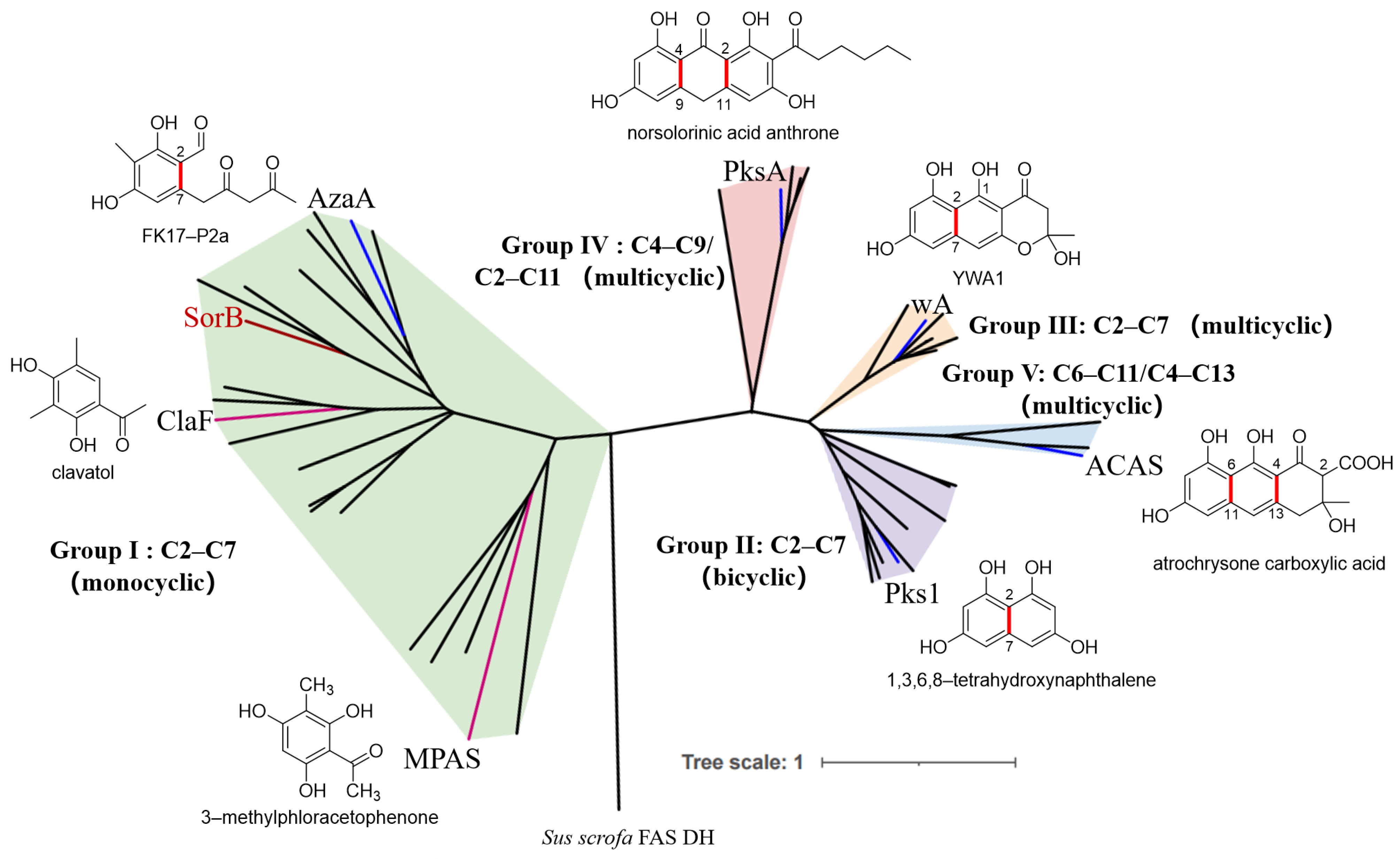
The PT domain is unique in NR-PKSs and responsible for the formation of aromatic rings. As for fungal NR-PKS products, three different first ring cyclization patterns (C4-C9, C2-C7, and C6-C11) have been reported [
3]. Among which, the monocyclic aromatic polyketides were mostly from the C2-C7 cyclization pattern; however, some were generated by NR-PKS with a seemingly inactive PT domain, such as SorB, ClaF, and MPAS, which produce sorbicillin (SorB) and clavatol (ClaF) via Knoevenagel cyclisation, or 3-methylphloracetophenone (MPAS) via Claisen/Dieckmann condensation by the TE/Claisen cyclase (TE/CLC) domain. From these nascent polyketides, a diverse array of complex structures are produced, such as sorbicillinoids [
5,
6], penilactones [
7], and usnic acid [
8]. It is unclear what role such PTs play in NR-PKSs.
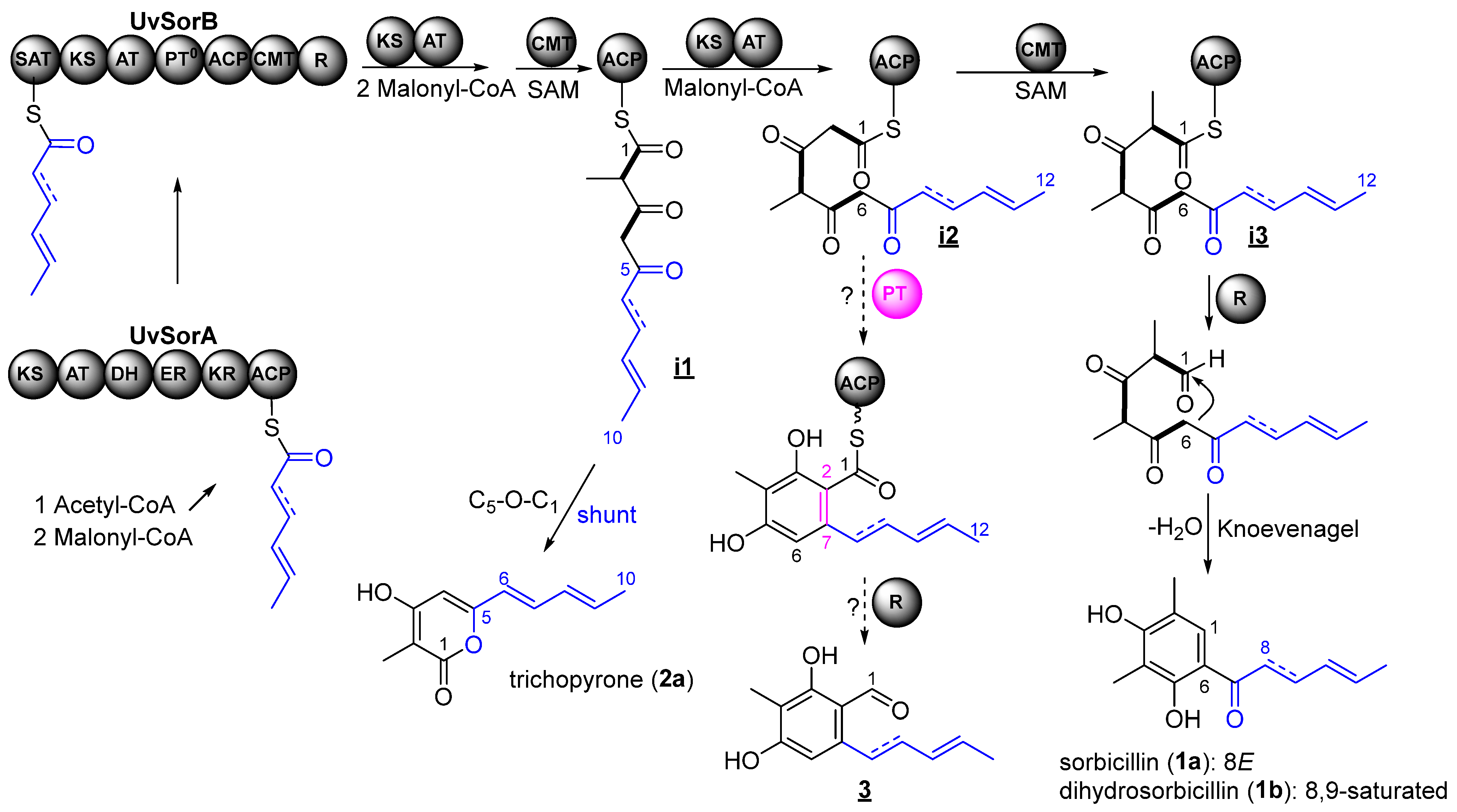
To address this issue, we turned to the sorbicillin NR-PKS SorB, which accepts a sorboyl side chain provided by the collaborating HR-PKS (SorA) [
9,
10,
11]. SorB contains SAT/KS/AT/PT/ACP/CMT/R domains, and elongates the sorboyl starter three times with malonyl CoA by the catalysis of KS and AT domains to generate the hexaketide skeleton (
Figure 1). During the elongation, α-methylation occurs at C2 and C4 by the catalysis of CMT, before a reductive release with the R domain to afford an aldehyde that was spontaneously cyclized to give the final product (dihydro)sorbicillin (
1a/
1b) (
Figure 1). Obviously, the PT domain seems inactive judging from the proposed biosynthetic pathway (
Figure 1).
In this study, we engineered the PT and CMT domain of UvSorB with various efforts. The results are reported herein.
3. Discussion
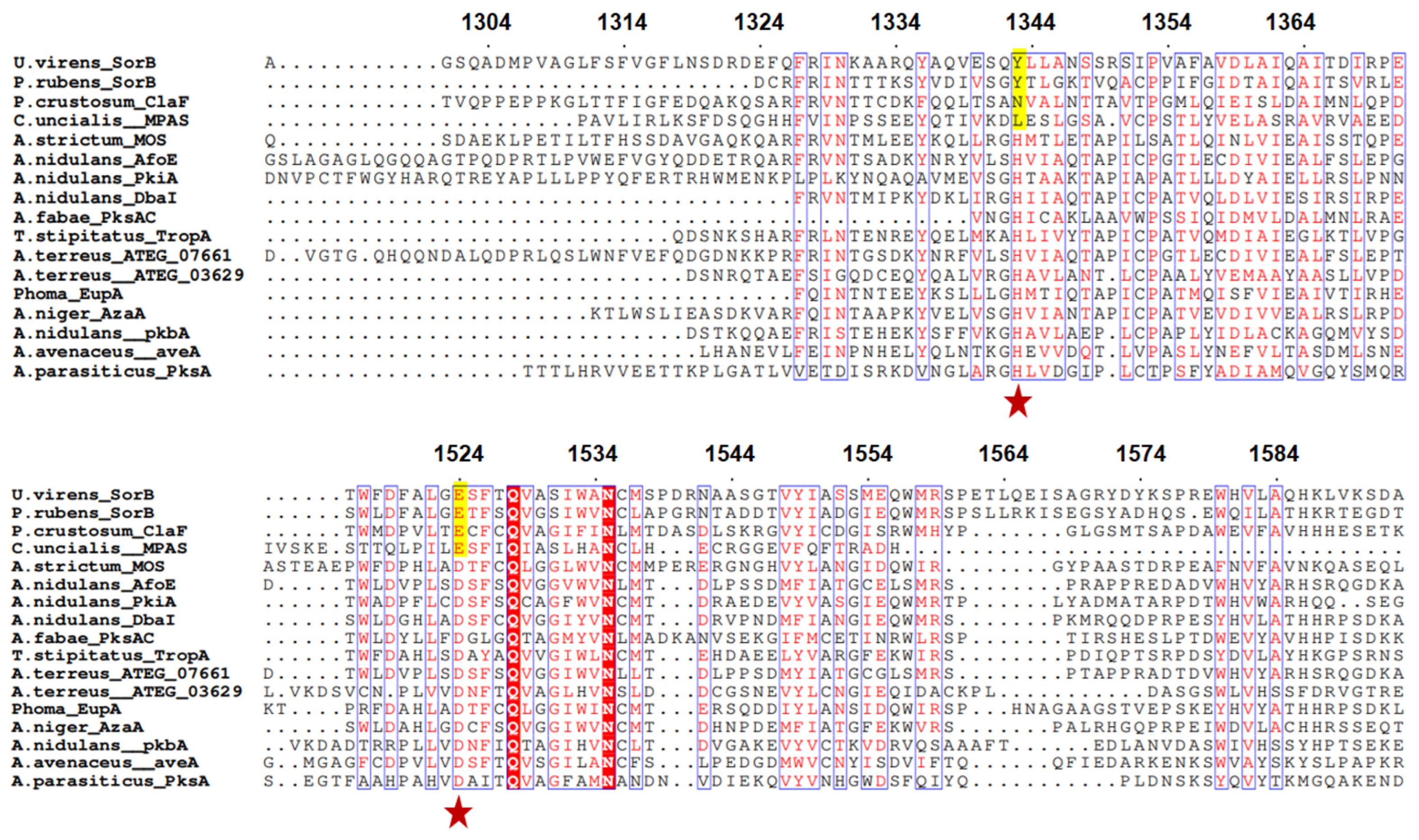
Although PT domain appears to be specifically present in NR-PKS, its function has not been revealed where the PT domain seems non-functional. In this study, the sorbicillin NR-PKS UvSorB which has an apparently inactive PT domain was investigated. Through phylogenetic analysis and multiple sequence comparison, the conserved catalytic dyad (H1345/D1543) in functional PT (PksA) was found to mutate to Y/E, N/E, and L/E in SorB, ClaF, and MPAS, respectively (
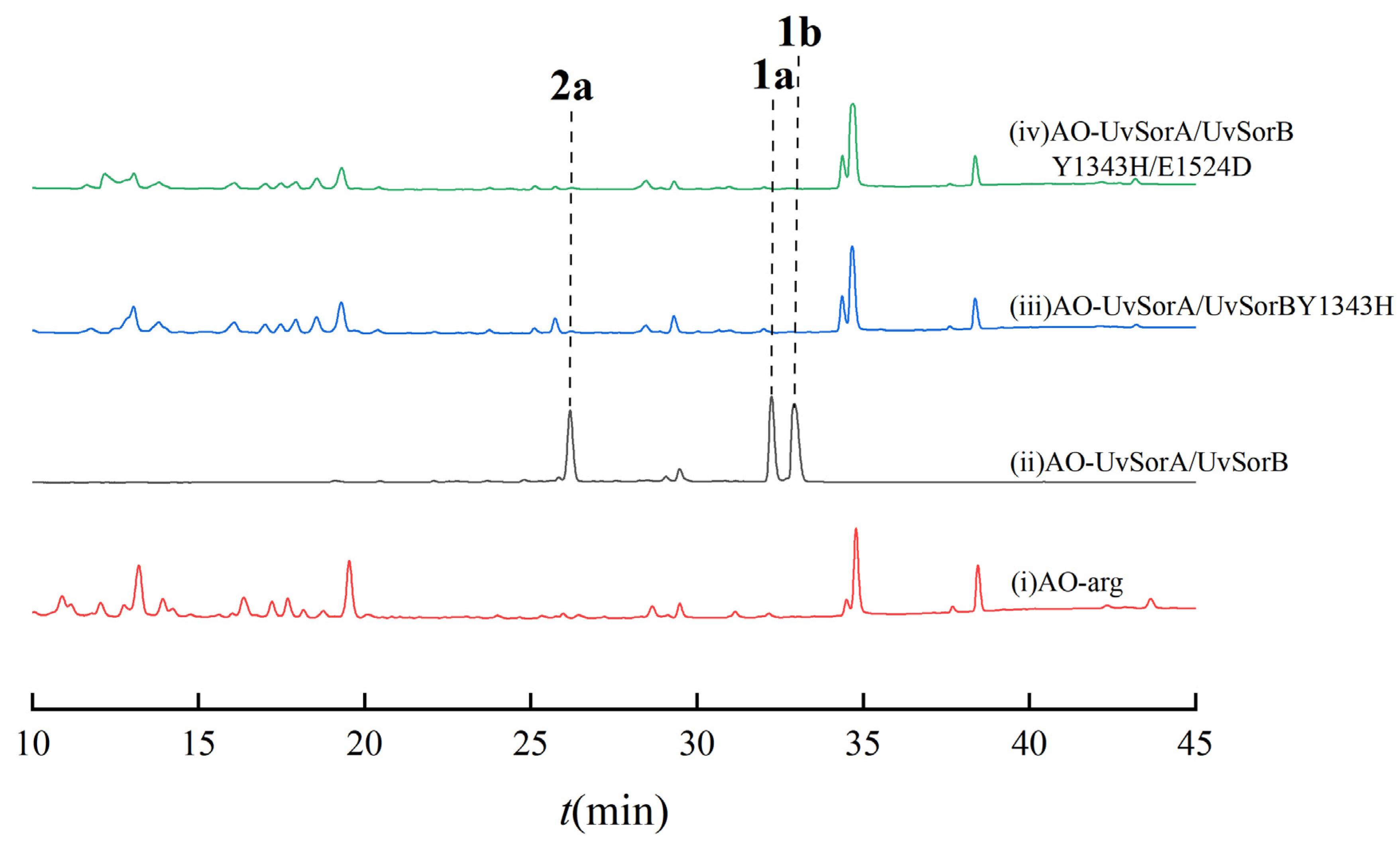
Figure 3). Then, back-mutation of both catalytic residues in UvSorB to the revolutionarily conserved residues was carried out. However, no products corresponding to a functional PT could be obtained (
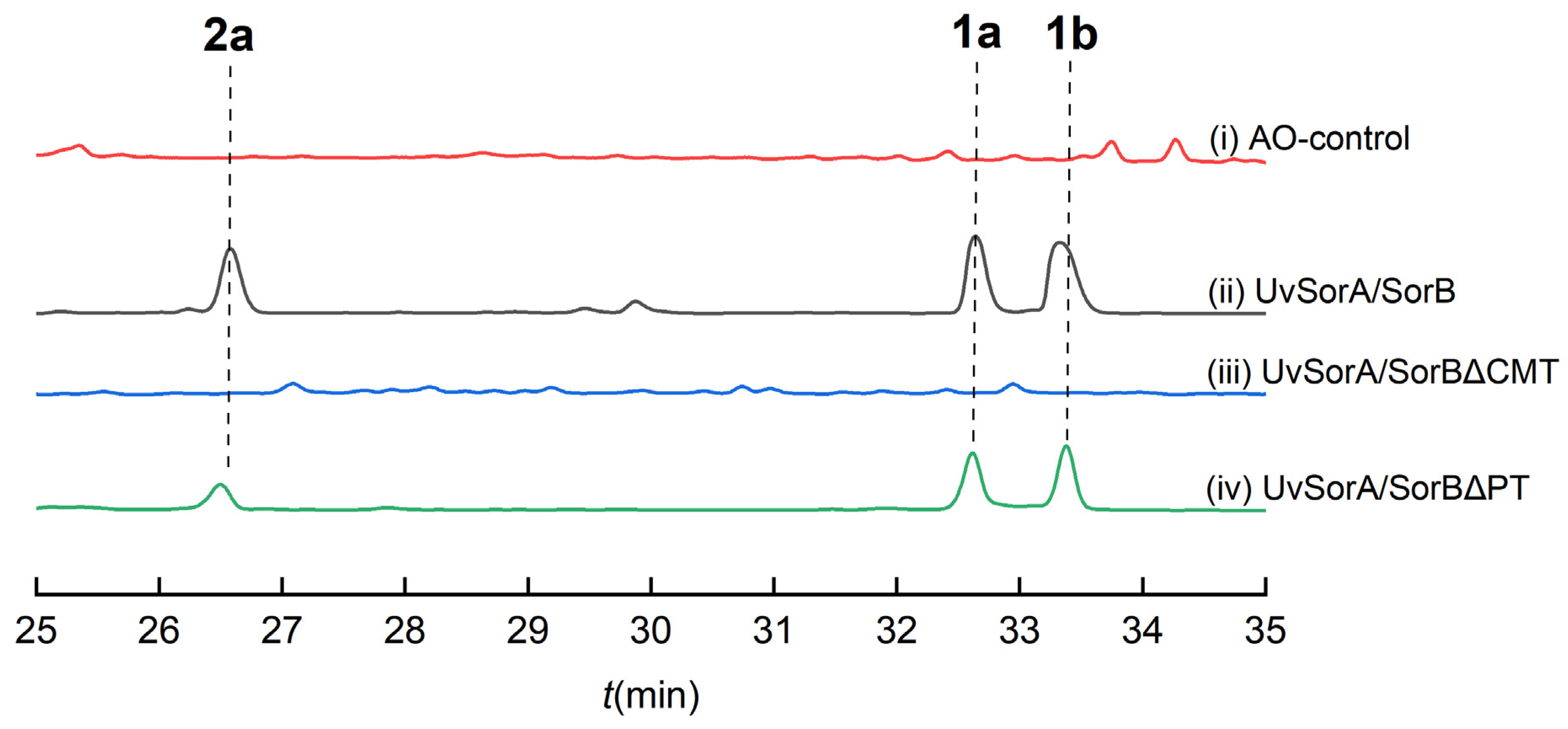
Figure 5). Instead, such mutations cause the NR-PKS to stop functioning. In contrast, removal of the PT domain does not affect the production of sorbicillins albeit with a relative lower yield (
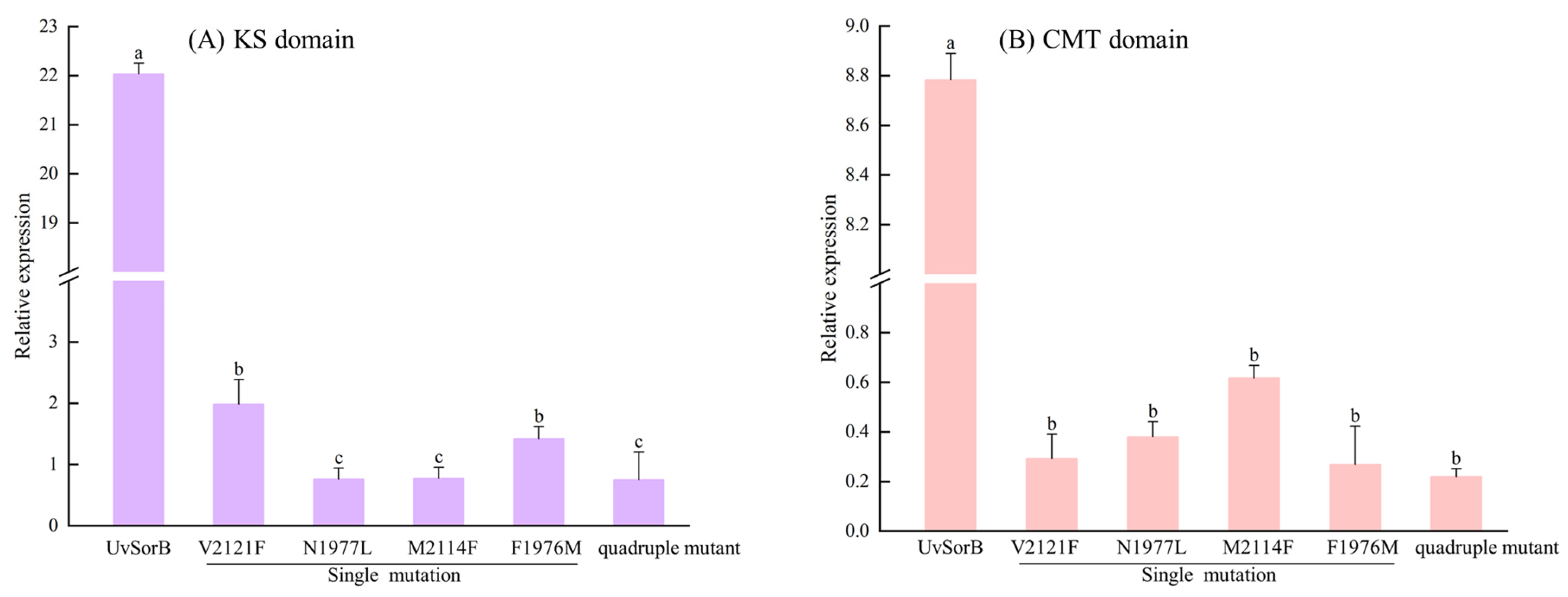
Figure 4, trace iv). Consistently, transcriptional analysis of the KS domain revealed that the knockout mutant has a much lower transcriptional level than the WT. These results suggest that PT contributes to a high catalytic efficiency, plausibly by affecting the protein integrity, or domain–domain interaction, though not necessitated for the catalysis, which requires further study.
The competition between CMT and KS in fungal NR-PKS for acyl-ACP intermediate has been proposed for exploring polyketide C-methylation [
16]. Similarly, the engineered PT and CMT might compete for the thioester intermediate (
i2) for further programming (
Figure 1); it was unknown why the restored PT did not outcompete the CMT, and why these mutations in PT render the PKS not productive. There could be many explanations, such as impaired protein folding, altered conformational dynamics, defective ACP–domain interactions, disrupted substrate channeling, or reduced protein stability, which remains to be investigated using substrate mimic of
i2 and dissected protein in vitro.
This pinpoints the importance of the CMT domain in sorbicillin polyketide biosynthesis in vivo, which was supported by the domain deletion experiment, in which the polyketide production was shut down when the CMT domain was removed (
Figure 4, trace iii).
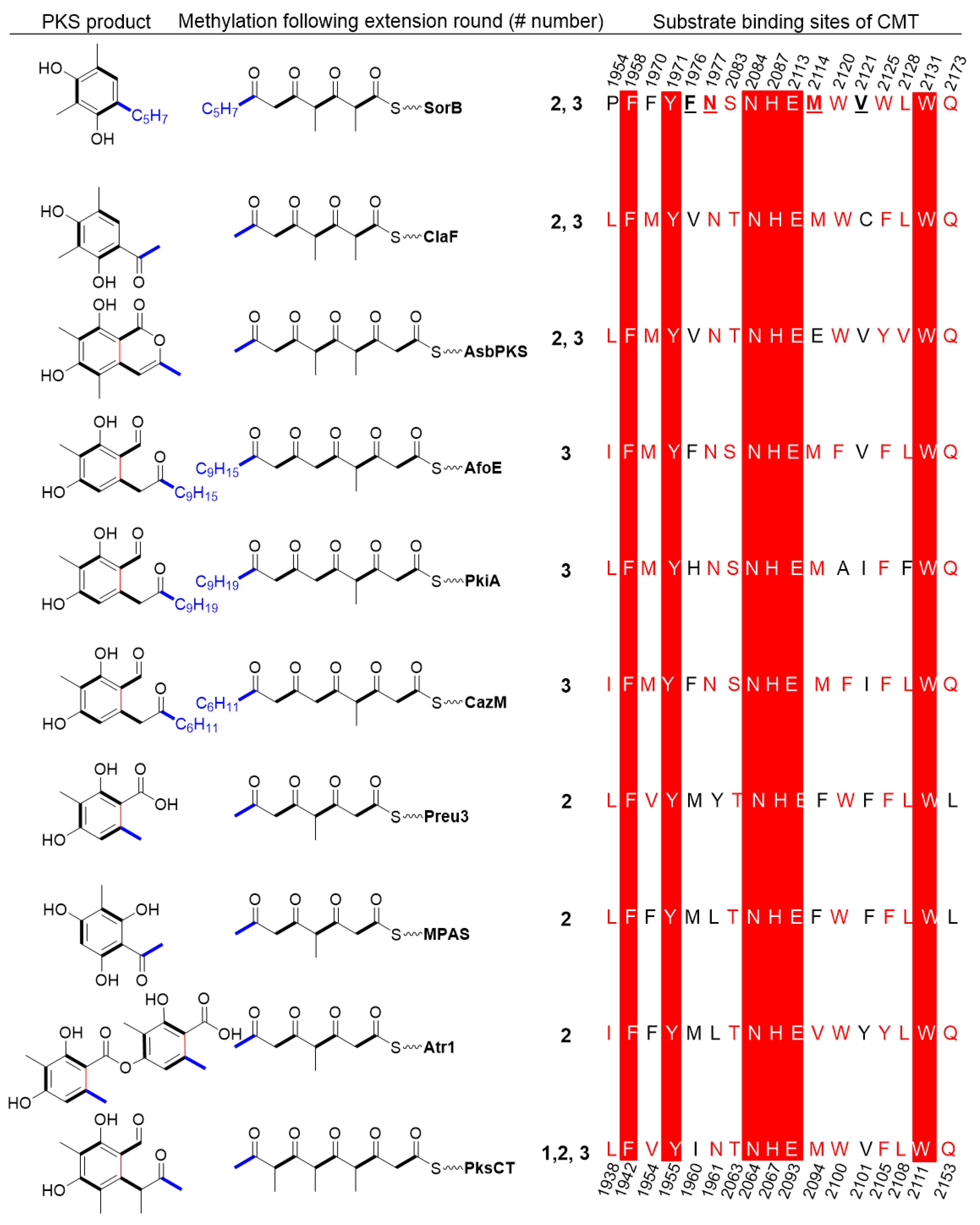
From the multiple sequence analysis, the methylation pattern seems well correlated to the CMT binding residues regardless of the starter unit (
Figure 6). As for NR-PKSs with an acetyl-loading SAT, mutation of the substrate binding sites of CMT has led to products with an altered methylation pattern in an earlier study, though with less efficacy [
17]. It was found that a single mutation (F2044L) of a 3,5-dimethylorsellinic acid synthase (NvfA) led to production of 5-methylorsellinic acid, albeit minor, in
A. oryzae NSAR1; E2052M/L mutants of AsbPKS produced a trace compound with one additional methyl group as detected by LC-MS [
17]. However, it is unknown if the methylation pattern could be altered in a collaborating NR-PKS prior to this study.
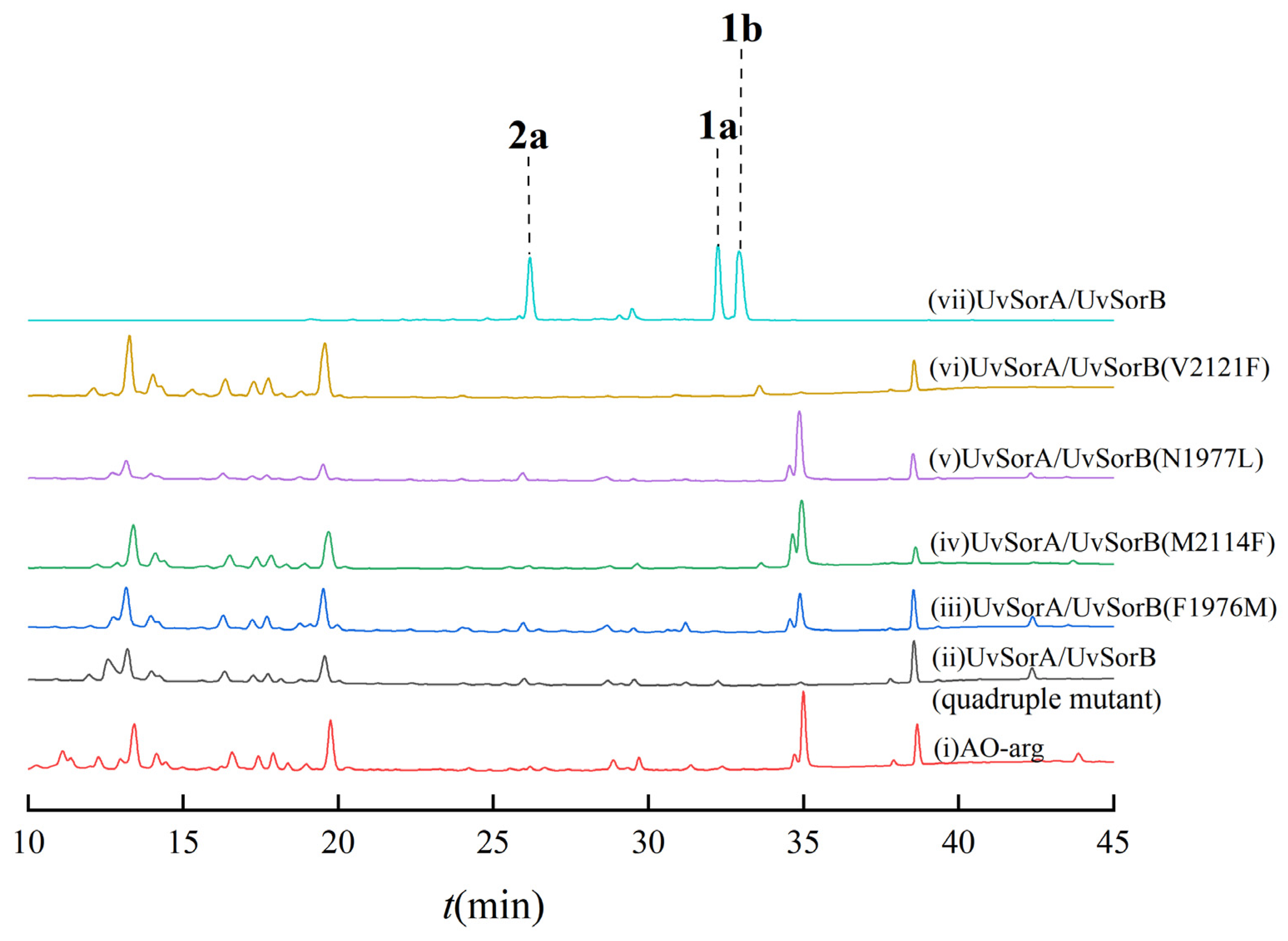
In the current study, we engineer the CMT of a collaborating NR-PKS (UvSorB), aiming at remodeling the methylating events (from pattern #2,3 to #2). Single mutations at four different sites and quadruple mutations of UvSorB_CMT have been created successfully. However, no sorbicillin analogues could be detected from the CMT mutants (
Figure 7), and neither were any demethylated products of this kind found. Further analysis of the transcriptional levels of these CMT mutants (
Figure 8) revealed they displayed a much lower level than the WT regarding the KS and CMT domains. This suggested that the mutations rendered the PKS less efficient in chain extension and methylation. These results implied that those residues are important for the CMT function.
It is unclear whether the point mutations to the CMT domain of UvSorB had the desired effect. If it succeeded, the intermediate
i2 would be accumulated (
Figure 1), which was not a native substrate for the R domain, however. This might cause the hexaketide to release as a polyketo-acid, which could be subjected to degradation via β-oxidation in vivo, and this requires further investigation. These results somehow mirrored those of Cox and co-workers, who attempted to alter the methylation pattern by mutating the CMT domain of squalestatin tetraketide synthase (a HR-PKS) [
18], which led to no effect or total abrogation of polyketide production. They proposed that the product might have been formed but transformed in vivo, likely through β-oxidation, as the proposed oct-2-enoic acid could not be detected after feeding it to
A. oryzae for 24 h. From this aspect, it is possible that the methylation pattern might have changed from #2,3 to #2 after point mutation, resulting in a pre-matured release of the polyketide as pyrone shunt(s); however, more evidence should be obtained. One limitation for in vivo experiments is the presence of other enzymes, which might cause chemical transformation of the target products. Without analysis of purified enzymes, it remains difficult to distinguish catalytic effects from indirect consequences on protein assembly or stability. For future investigations, in vitro studies on the effect of dissected domains using specific substrates would be required.
4. Materials and Methods
4.1. Reagents and Chemicals
All solvents and reagents used in the experiments were purchased from Sigma-Aldrich (St. Louis, MO, USA) and Fisher Scientific (Waltham, MA, USA). Solvents for liquid chromatography–mass spectrometry (LC-MS) and high performance liquid chromatography (HPLC) analysis were of chromatographic grade. Conventional molecular biology procedures were performed in accordance with standard protocols, and relevant molecular biology kits were used following the manufacturers’ instructions. DNA polymerases for PCR amplification and restriction endonucleases were obtained from Takara Bio Inc. (Otsu, Shiga, Japan).
4.2. Liquid Chromatography and LC-MS Analysis
HPLC-DAD analysis was performed using a Shimadzu LC-20A system (Shimadzu Corporation, Kyoto, Japan) equipped with an SPD-M20A photodiode array detector and a Phenomenex (Torrance, CA, USA) C18 chromatographic column (250 mm × 4.6 mm, 5 μm) Methanol was used as solvent A, and water containing 0.2% trifluoroacetic acid was used as solvent B. The sample analysis procedure was as follows: gradient elution with 10% to 100% solvent A was applied within 0–33 min; subsequently, the column was rinsed with 100% solvent A from 33 to 45 min; finally, the column was re-equilibrated with 10% solvent A during 45–56 min. The flow rate was set at 0.85 mL/min, and the detection wavelength was 210 nm.
LC-DAD-MS data were acquired using an Agilent 1260 HPLC system coupled with a Q-TOF 6520 mass spectrometer (Agilent Technologies, Santa Clara, CA, USA), equipped with a Phenomenex C18 column (150 mm × 2.0 mm, 3 μm). The mass spectrometer was operated in both ESI+ and ESI− modes with a mass range of 50–1400 m/z. The mobile phases consisted of solvent A (water containing 0.1% formic acid) and solvent B (acetonitrile containing 0.1% formic acid). The flow rate was set to 0.25 mL/min. The elution procedure was as follows: gradient elution with 10% to 90% solvent B within 0–18 min, followed by column rinsing with 90% solvent B from 18 to 23 min, and column re-equilibration with 10% solvent B during 23–30 min. Data analysis was performed using MassHunter B.07.00 software.
Extracted ion chromatography (EIC) was applied to monitor specific ions corresponding to (dihydro)sorbicillin and its potential demethylated analogs, with the mass tolerance set at ±0.05 Da. Sorbicillin (1a) (molecular mass 232.1) and dihydrosorbicillin (1b) (molecular mass 234.1) were monitored under both negative and positive mode of ESI, while the pseudo-molecular ions for potential demethylated analogs were searched at m/z 217.1, 219.1 [M−H]− in the negative mode, and at m/z 219.1, 221.1 [M+H]+; 241.1, 243.1 [M+Na]+ in the positive mode, respectively. The product should appear only in the mutants but not in the control. Similarly, special ions corresponding to the hypothesized pyrone shunts of the proposed pathway were searched.
4.3. HRMS
High-Resolution Mass Spectrometry (HRMS) data were determined using an Agilent 6500 Q-TOF mass spectrometer coupled with an HPLC system (Agilent Technologies, Santa Clara, CA, USA).
4.4. Strains and Culture Conditions
Ustilaginoidea virens strain P1 was cultured on PSA medium (containing 20% potato, 2% glucose, and 2% agar) at 28 °C. For RNA extraction, the strain was incubated on PSA plates covered with cellophane for two weeks.
The A. oryzae NSAR1 strain and its expression vectors (pTYGS-arg and pTYGS-met) used for heterologous expression were kindly provided by Professor Russell Cox at Leibniz University Hannover. Transformants and wild-type strains were cultivated on DPY medium (containing 2% dextrin, 1% polypeptone, 0.5% yeast extract, 0.5% potassium dihydrogen phosphate, and 0.5% magnesium sulfate hexahydrate, 1.5% agar) at 28 °C. For shake-culture experiments, strains were incubated in 100 mL of DPY medium at 28 °C with shaking at 180 rpm.
Plasmids used for yeast recombination and heterologous expression were constructed using Saccharomyces cerevisiae CEN.PK2. The strain was cultured on YPAD medium (containing 1% yeast extract, 2% tryptone, 2% glucose, 0.03% adenine, and 1.5% agar) at 30 °C. Correct transformants were selected on SM-URA selective medium (containing 0.67% YNB with ammonium sulfate, 2% glucose, 0.077% uracil-free complete supplement mixture, and 1.5% agar).
Cloning and plasmid amplification experiments were carried out using Escherichia coli DH5α. The strain was cultured on LA medium (containing 5% yeast extract, 10% tryptone, 10% sodium chloride, and 1.5% agar) at 37 °C. Corresponding antibiotics were added to the medium for transformant selection.
4.5. Bioinformatics Analysis
Genomic data were analyzed using the antiSMASH 7.0 software [
19], and BLASTP 2.17.0+ program was employed to analyze gene functions (
https://blast.ncbi.nlm.nih.gov/Blast.cgi, accessed on 24 May 2026). Multiple sequence alignment was performed using the online CLUSTALW tool (
https://www.genome.jp/tools-bin/clustalw, accessed on 24 May 2026). Conserved domain prediction of proteins was carried out based on the Conserved Domain Database (CDD) of the National Center for Biotechnology Information (NCBI) [
20].
4.6. UvSorB_PT Phylogenetic Tree Construction
The sequences of NR-PKSs with diverse cyclization modes were retrieved via literature mining ([
3,
21]) and NCBI BLASTP 2.17.0+ homology search using UvSorB as a query using DELTA-BLAST algorithm. For the purpose of retrieving PKSs with known products, the UniProtKB/Swiss-Prot database was searched, and only the sequences with identity >20%, query coverage >70% were used for analysis. Protein sequences were directly imported to MEGA 11, before sequence alignments using the CLUSTALW algorithm built within the software with default parameters. The phylogenetic tree was constructed via the neighbor-joining method using MEGA 11. A bootstrap test with 1000 replicates was conducted to assess phylogenetic confidence, and
Sus scrofa FAS DH was designated as an outgroup. The final phylogenetic tree was visualized and optimized using the online platform iTOL (
https://itol.embl.de/upload.cgi, accessed on 24 May 2026).
4.7. Construction of Heterologous Expression Vectors
For fragment-vector ligation based on yeast assembly technology, homologous sequences of more than 30 bp are required between the inserted fragments and the vector (
Table S1). Two plasmids were selected according to different auxotrophic markers: pTYGS-arg for arginine auxotrophy and pTYGS-met for methionine auxotrophy. Both plasmids contain four conserved gene cloning sites, including P/TamyB, P/Tadh, P/TgpdA, and P/Teno, which allow insertion of target genes according to specific experimental requirements. Using pTYGS-UvSorB as the template, the upstream and downstream fragments of the PT and CMT domains were amplified separately. The two fragments were designed to possess homologous sequences with each other and homologous arms of no less than 30 bp to the vector. Yeast assembly was utilized to ligate the two fragments into the pTYGS-arg vector [
13], and two knockout plasmids, pTYGS-arg-UvSorBΔPT and pTYGS-arg-UvSorBΔCMT, were finally constructed respectively (
Figure S8).
4.8. Construction of Vector for Expressing Point-Mutated Gene
Using pTYGS-arg-UvSorB as the template, the UvSorB gene was divided into upstream and downstream segments and amplified separately. Single-point mutations were introduced at the 5′ end of the reverse primer for the upstream segment and the 3′ end of the forward primer for the downstream segment, respectively (
Table S1). Subsequently, the upstream and downstream fragments with homologous arms were ligated into the pTYGS-arg vector via yeast homologous recombination [
13]. Finally, four single-point mutation and one four-point mutations of the CMT domain were constructed, including pTYGS-arg-UvSorB-F1976M, -N1977L, -M2114F, -V2121F, and -Quadruple, respectively. Meanwhile, one single-point mutation and one double-point mutations of the PT domain were obtained, namely pTYGS-arg-UvSorB-Y1343H and -Y1343H/E1524D (
Figure S9).
4.9. Transformation of A. oryzae NSAR1
The transformation of
A. oryzae was performed according to the method described by Kahlert et al. [
13]. Finally, PCR amplification was used to verify the identity of positive transformants (
Table S1).
4.10. Fermentation and Extraction Procedures
Ten transformants were individually inoculated into 100 mL of DPY medium and incubated at 28 °C with shaking at 180 rpm for 7 days. Subsequently, the mycelium and culture filtrate were repeatedly extracted with ethyl acetate until the eluate became colorless. The ethyl acetate layer was dried over magnesium sulfate, filtered through filter paper, and concentrated under vacuum at 42 °C. The organic residue was redissolved in methanol and analyzed by HPLC and LC-MS. All experiments were performed in three independent biological replicates.
4.11. qRT-PCR Analysis
The strains were cultured on DPY plates covered with cellophane, and the cultures were continued until the mycelia fully covered the cellophane. Total RNA was extracted from the harvested mycelia using the Trizol method, and the purity and integrity of RNA were evaluated by spectrophotometry and agarose gel electrophoresis. High-quality RNA was reverse-transcribed into cDNA using a reverse transcription kit (Vazyme Biotech Co., Ltd., Nanjing, China).
qRT-PCR was performed in a total reaction volume of 10 μL with SYBR Green qPCR Master Mix (Vazyme) on a QuantStudio 7 real-time PCR system (Thermo Fisher Scientific, Waltham, MA, USA). The primers used in qRT-PCR were listed in
Table S2. The amplification program was set as follows: initial denaturation at 95 °C for 60 s, followed by 40 cycles of 95 °C for 3 s, 54 °C for 30 s and 72 °C for 10 s. Subsequently, the samples were incubated at 95 °C for 15 s and 60 °C for 60 s. Melting curve analysis was conducted by gradually increasing the temperature from 60 °C to 95 °C to confirm the specificity of amplified products. Three independent transformants of each mutant were selected as biological replicates, and each qRT-PCR detection was performed with three technical replicates. The relative gene expression levels were calculated using the 2
−ΔCt method with a reference gene (actin) for normalization.
4.12. Statistical Analysis
All data were statistically analyzed using SPSS 27.0 software. One-way analysis of variance (ANOVA) was used for inter-group difference comparison, and LSD method and Duncan’s multiple range test was applied for post hoc multiple comparisons. A p value less than 0.05 (p < 0.05) was defined as the threshold for statistically significant differences. All experimental results were presented as bar graphs with error bars and significance markers.





 and
and