Discovery-Driven Plasma Proteomics Identifies a Multi-Protein Signature for Amyloid PET Positivity: A Machine Learning Analysis of the Bio-Hermes Cohort


Abstract
1. Introduction
2. Results
2.1. Patient Characteristics and Demographics
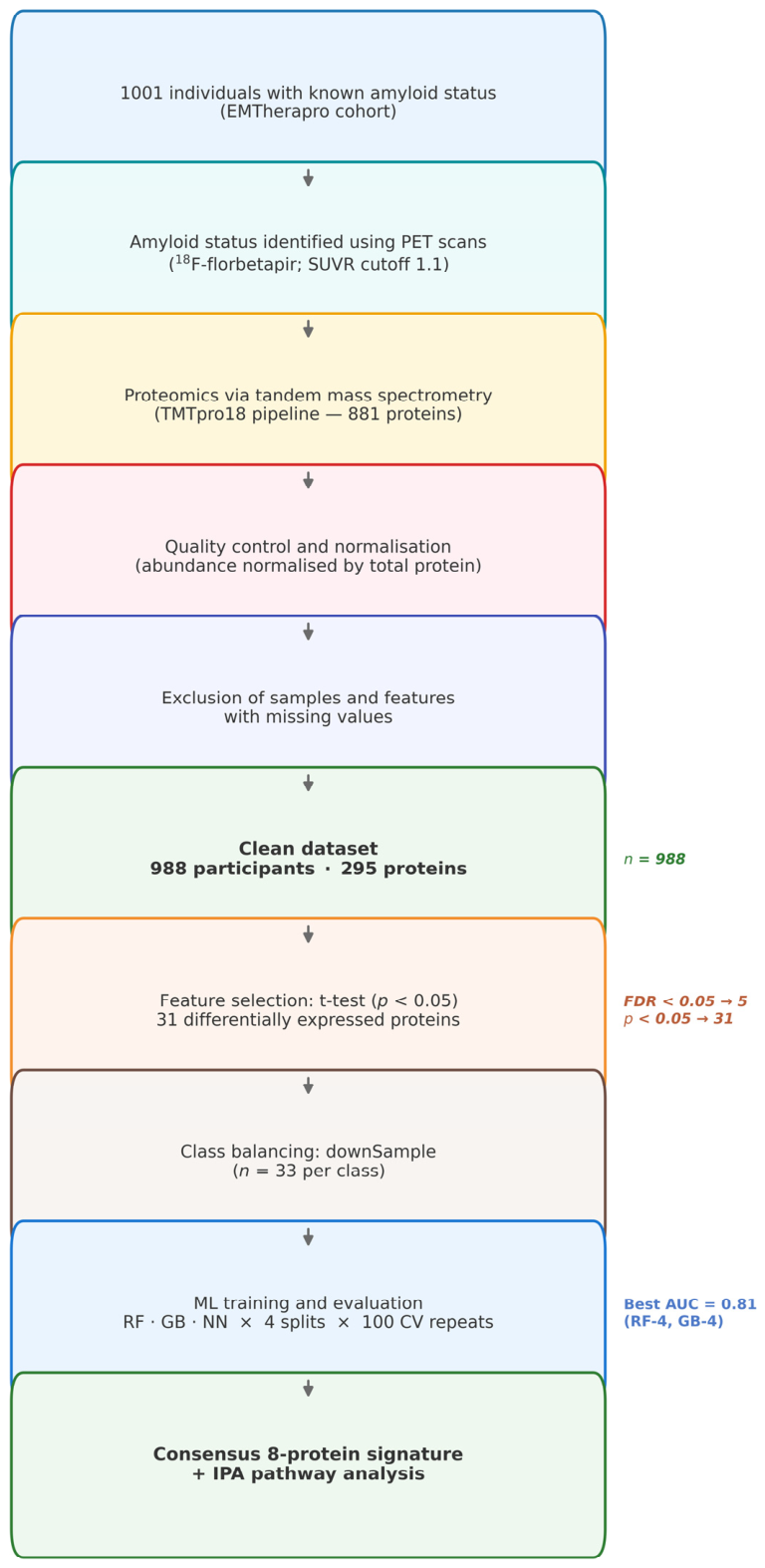
2.2. Sample Overview and Feature Selection
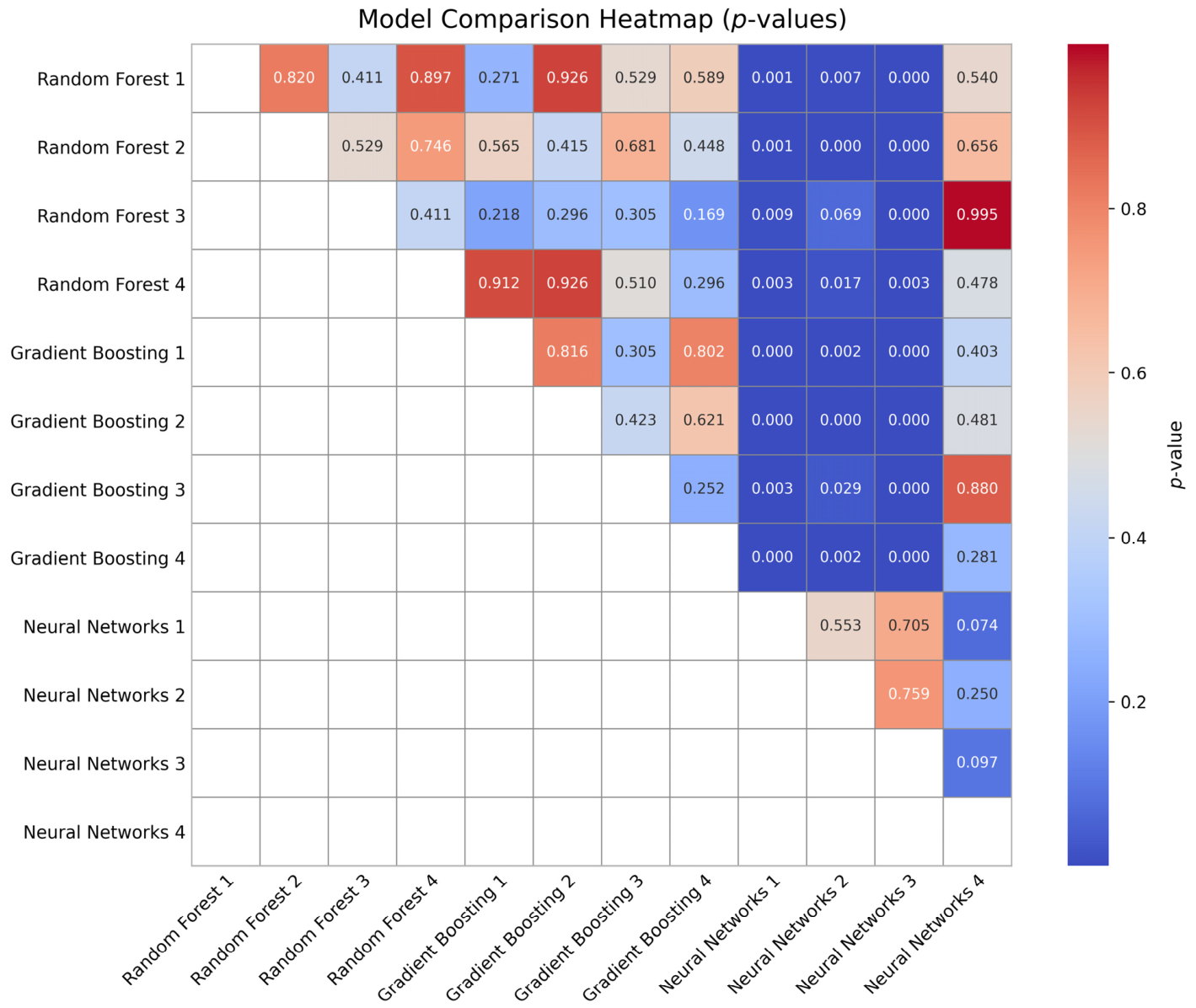
2.3. Machine-Learning Model Performance
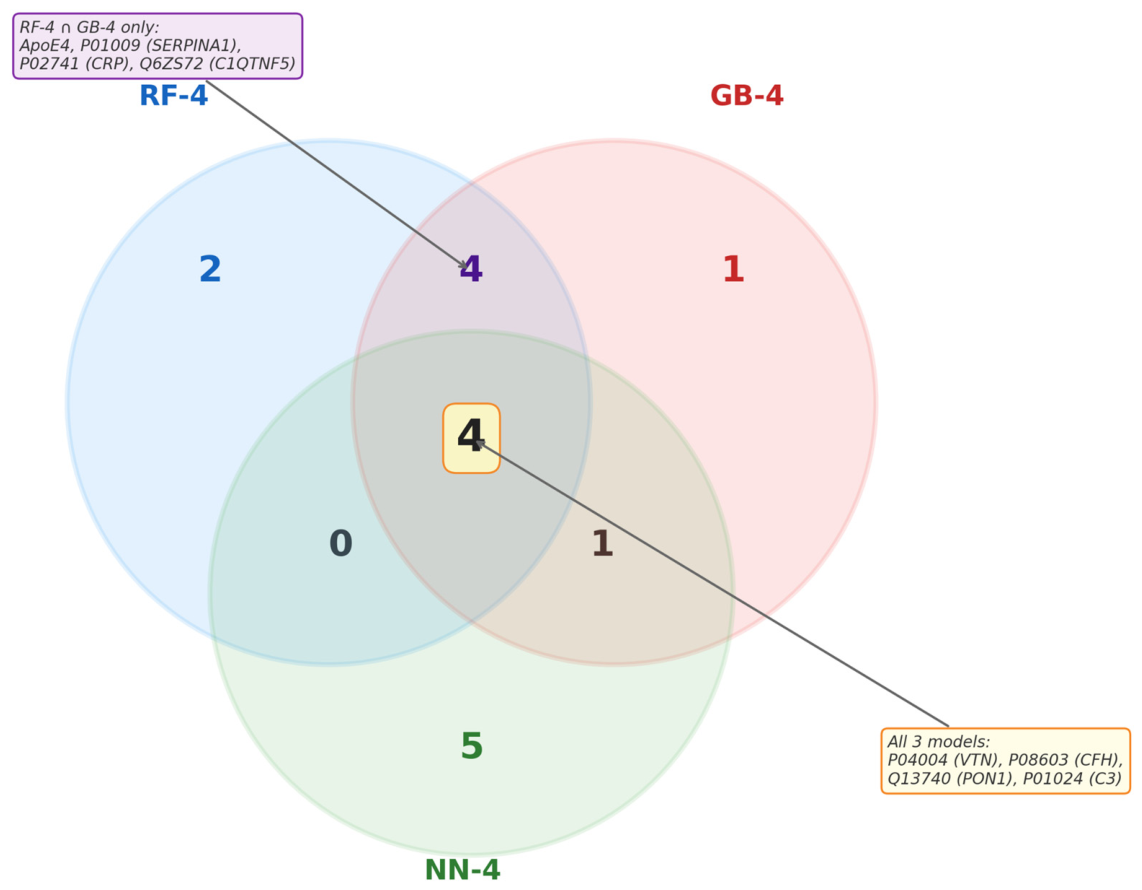
2.4. Consensus Protein Signature
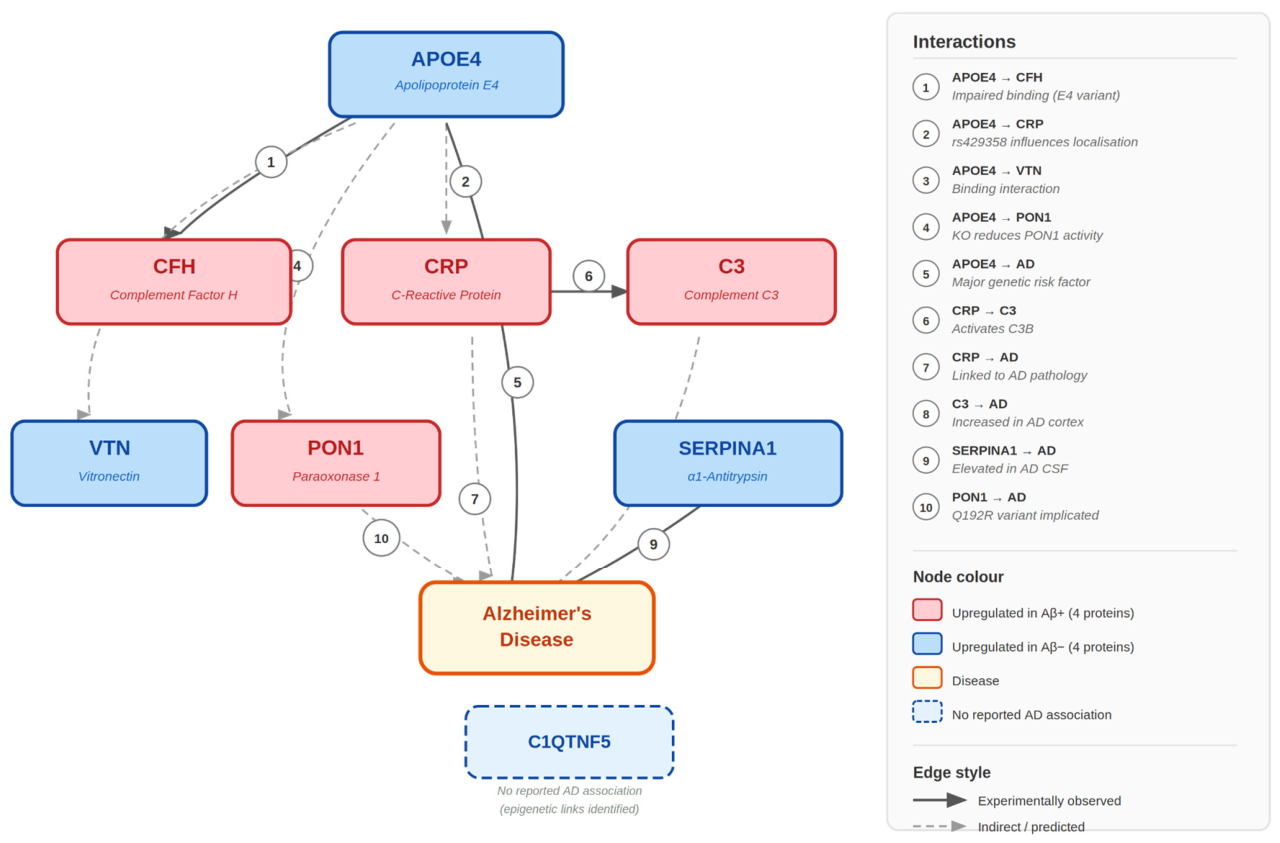
2.5. Protein Association with Dementia and Alzheimer’s Disease

3. Discussion
Limitations and Future Directions
4. Materials and Methods
4.1. Study Objective and Design
4.2. Data Source
4.3. Data Preparation and Preprocessing
4.4. Feature Selection
4.5. Machine-Learning Pipeline
4.6. Feature Integration and Comparative Analysis
4.7. Pathway and Disease Association Analysis
4.8. Data, Code, Ethics, and Reproducibility
5. Conclusions
Supplementary Materials
Author Contributions
Funding
Institutional Review Board Statement
Informed Consent Statement
Data Availability Statement
Acknowledgments
Conflicts of Interest
Abbreviations
| AD | Alzheimer’s disease |
| ADDI | Alzheimer’s Disease Data Initiative |
| APOE4 | Apolipoprotein E4 |
| APP | Amyloid precursor protein |
| AUC | Area under the receiver operating characteristic curve |
| Aβ | Amyloid-beta |
| BA | Balanced accuracy |
| BH | Benjamini–Hochberg |
| CFH | Complement factor H |
| CRP | C-reactive protein |
| CSF | Cerebrospinal fluid |
| DL | Deep learning |
| FDR | False discovery rate |
| GB | Gradient Boosting |
| GFAP | Glial fibrillary acidic protein |
| IPA | Ingenuity Pathway Analysis |
| ML | Machine learning |
| NfL | Neurofilament light chain |
| NN | Neural Network |
| NPV | Negative predictive value |
| PET | Positron emission tomography |
| PON1 | Paraoxonase 1 |
| PPV | Positive predictive value |
| RF | Random Forest |
| ROC | Receiver operating characteristic |
| RR | Random Repeats |
| SERPINA1 | Serpin family A member 1/alpha-1-antitrypsin |
| SHAP | SHapley Additive exPlanations |
| SMOTE | Synthetic Minority Oversampling Technique |
| SUVR | Standardised uptake value ratio |
| TRIPOD+AI | Transparent Reporting of a multivariable prediction model for Individual Prognosis Or Diagnosis plus Artificial Intelligence |
| VTN | Vitronectin |
References
- Schultz, C.; Del Tredici, K.; Braak, H. Neuropathology of Alzheimer’s Disease. In Alzheimer’s Disease; Richter, R.W., Richter, B.Z., Eds.; Current Clinical Neurology; Humana Press: Totowa, NJ, USA, 2004; pp. 21–31. [Google Scholar] [CrossRef]
- DeTure, M.A.; Dickson, D.W. The neuropathological diagnosis of Alzheimer’s disease. Mol. Neurodegener. 2019, 14, 32. [Google Scholar] [CrossRef] [PubMed]
- Frisoni, G.B.; Hansson, O.; Nichols, E.; Garibotto, V.; Schindler, S.E.; van der Flier, W.M.; Jessen, F.; Villain, N.; Arenaza-Urquijo, E.M.; Crivelli, L.; et al. New landscape of the diagnosis of Alzheimer’s disease. Lancet 2025, 406, 1389–1407. [Google Scholar] [CrossRef] [PubMed]
- Armstrong, R.A. The Pathogenesis of Alzheimer’s Disease: A Reevaluation of the Amyloid Cascade Hypothesis. Int. J. Alzheimer’s Dis. 2011, 2011, 630865. [Google Scholar] [CrossRef]
- Schilling, L.P.; Zimmer, E.R.; Shin, M.; Leuzy, A.; Pascoal, T.A.; Benedet, A.L.; Borelli, W.V.; Palmini, A.; Gauthier, S.; Rosa-Neto, P. Imaging Alzheimer’s disease pathophysiology with PET. Dement. Neuropsychol. 2016, 10, 79–90. [Google Scholar] [CrossRef] [PubMed]
- Ewers, M.; Mattsson, N.; Minthon, L.; Molinuevo, J.L.; Antonell, A.; Popp, J.; Jessen, F.; Herukka, S.K.; Soininen, H.; Maetzler, W.; et al. CSF biomarkers for the differential diagnosis of Alzheimer’s disease: A large-scale international multicenter study. Alzheimer’s Dement. 2015, 11, 1306–1315. [Google Scholar] [CrossRef] [PubMed]
- Leuzy, A.; Bollack, A.; Pellegrino, D.; Teunissen, C.E.; La Joie, R.; Rabinovici, G.D.; Franzmeier, N.; Johnson, K.; Barkhof, F.; Shaw, L.M.; et al. Considerations in the clinical use of amyloid PET and CSF biomarkers for Alzheimer’s disease. Alzheimer’s Dement. 2025, 21, e14528. [Google Scholar] [CrossRef]
- Villa, C.; Lavitrano, M.; Salvatore, E.; Combi, R. Molecular and Imaging Biomarkers in Alzheimer’s Disease: A Focus on Recent Insights. J. Pers. Med. 2020, 10, 61. [Google Scholar] [CrossRef] [PubMed]
- Marizzoni, M.; Mirabelli, P.; Mombelli, E.; Coppola, L.; Festari, C.; Lopizzo, N.; Luongo, D.; Mazzelli, M.; Naviglio, D.; Blouin, J.L.; et al. A peripheral signature of Alzheimer’s disease featuring microbiota-gut-brain axis markers. Alzheimer’s Res. Ther. 2023, 15, 101. [Google Scholar] [CrossRef] [PubMed]
- Dhauria, M.; Mondal, R.; Deb, S.; Shome, G.; Chowdhury, D.; Sarkar, S.; Benito-Leon, J. Blood-Based Biomarkers in Alzheimer’s Disease: Advancing Non-Invasive Diagnostics and Prognostics. Int. J. Mol. Sci. 2024, 25, 10911. [Google Scholar] [CrossRef] [PubMed]
- Ignjatovic, V.; Geyer, P.E.; Palaniappan, K.K.; Chaaban, J.E.; Omenn, G.S.; Baker, M.S.; Deutsch, E.W.; Schwenk, J.M. Mass Spectrometry-Based Plasma Proteomics: Considerations from Sample Collection to Achieving Translational Data. J. Proteome Res. 2019, 18, 4085–4097. [Google Scholar] [CrossRef] [PubMed]
- Rehiman, S.H.; Lim, S.M.; Neoh, C.F.; Majeed, A.B.A.; Chin, A.V.; Tan, M.P.; Kamaruzzaman, S.B.; Ramasamy, K. Proteomics as a reliable approach for discovery of blood-based Alzheimer’s disease biomarkers: A systematic review and meta-analysis. Ageing Res. Rev. 2020, 60, 101066. [Google Scholar] [CrossRef] [PubMed]
- Liu, Y.; Guo, Y.; Yu, J. Blood-based biomarkers of Alzheimer’s disease: Standardization and comprehensiveness. Neuroprotection 2024, 2, 246–254. [Google Scholar] [CrossRef] [PubMed]
- Adams, C.; Bittremieux, W. A 2025 perspective on the role of machine learning for biomarker discovery in clinical proteomics. Expert Rev. Proteom. 2025, 22, 363–374. [Google Scholar] [CrossRef] [PubMed]
- Climente-Gonzalez, H.; Oh, M.; Chajewska, U.; Hosseini, R.; Mukherjee, S.; Gan, W.; Traylor, M.; Hu, S.; Fatemifar, G.; Ghouse, J.; et al. Interpretable machine learning leverages proteomics to improve cardiovascular disease risk prediction and biomarker identification. Commun. Med. 2025, 5, 170. [Google Scholar] [CrossRef] [PubMed]
- Carrasco-Zanini, J.; Pietzner, M.; Koprulu, M.; Wheeler, E.; Kerrison, N.D.; Wareham, N.J.; Langenberg, C. Proteomic prediction of diverse incident diseases: A machine learning-guided biomarker discovery study using data from a prospective cohort study. Lancet Digit. Health 2024, 6, e470–e479. [Google Scholar] [CrossRef] [PubMed]
- Shahin-Shamsabadi, A.; Cappuccitti, J. Proteomics and machine learning: Leveraging domain knowledge for feature selection in a skeletal muscle tissue meta-analysis. Heliyon 2024, 10, e40772. [Google Scholar] [CrossRef] [PubMed]
- Hartman, E.; Scott, A.M.; Karlsson, C.; Mohanty, T.; Vaara, S.T.; Linder, A.; Malmström, L.; Malmström, J. Interpreting biologically informed neural networks for enhanced proteomic biomarker discovery and pathway analysis. Nat. Commun. 2023, 14, 5359. [Google Scholar] [CrossRef] [PubMed]
- Pienaar, M.A.; Naidoo, K.D. Classification and predictive models using supervised machine learning: A conceptual review. S. Afr. J. Crit. Care 2025, 41, e2937. [Google Scholar] [CrossRef] [PubMed]
- Zhang, J.; Goodlett, D.R.; Quinn, J.F.; Peskind, E.R.; Kaye, J.A.; Zhou, Y.; Pan, C.; Yi, E.; Eng, J.; Wang, Q.; et al. Quantitative proteomics of cerebrospinal fluid from patients with Alzheimer disease. J. Alzheimers Dis. 2005, 7, 125–133. [Google Scholar] [CrossRef] [PubMed]
- Wang, X.; Liu, L.; Jiang, X.; Saredy, J.; Xi, H.; Cueto, R.; Sigler, D.; Khan, M.; Wu, S.; Ji, Y.; et al. Identification of methylation-regulated genes modulating microglial phagocytosis in hyperhomocysteinemia-exacerbated Alzheimer’s disease. Alzheimer’s Res. Ther. 2023, 15, 164. [Google Scholar] [CrossRef]
- Gershov, D.; Kim, S.; Brot, N.; Elkon, K.B. C-Reactive protein binds to apoptotic cells, protects the cells from assembly of the terminal complement components, and sustains an antiinflammatory innate immune response: Implications for systemic autoimmunity. J. Exp. Med. 2000, 192, 1353–1364. [Google Scholar] [CrossRef] [PubMed]
- Irizarry, M.C. Biomarkers of Alzheimer disease in plasma. NeuroRx 2004, 1, 226–234. [Google Scholar] [CrossRef]
- Hurko, O.; Ryan, J.L. Translational research in central nervous system drug discovery. NeuroRx 2005, 2, 671–682. [Google Scholar] [CrossRef] [PubMed]
- Carter, C.J. Convergence of genes implicated in Alzheimer’s disease on the cerebral cholesterol shuttle: APP, cholesterol, lipoproteins, and atherosclerosis. Neurochem. Int. 2007, 50, 12–38. [Google Scholar] [CrossRef] [PubMed]
- Deelen, J.; Beekman, M.; Uh, H.W.; Helmer, Q.; Kuningas, M.; Christiansen, L.; Kremer, D.; van der Breggen, R.; Suchiman, H.E.D.; Lakenberg, N.; et al. Genome-wide association study identifies a single major locus contributing to survival into old age; the APOE locus revisited. Aging Cell 2011, 10, 686–698. [Google Scholar] [CrossRef] [PubMed]
- Haapasalo, K.; van Kessel, K.P.M.; Nissilä, E.; Metso, J.; Johansson, T.; Miettinen, S.; Varjosalo, M.; Kirveskari, J.; Kuusela, P.; Chroni, A.; et al. Complement Factor H Binds to Human Serum Apolipoprotein E and Mediates Complement Regulation on High Density Lipoprotein Particles. J. Biol. Chem. 2015, 290, 28977–28987. [Google Scholar] [CrossRef] [PubMed]
- Calero, M.; Rostagno, A.; Ghiso, J. Search for amyloid-binding proteins by affinity chromatography. Methods Mol. Biol. 2012, 849, 213–223. [Google Scholar] [CrossRef] [PubMed]
- Forte, T.M.; Subbanagounder, G.; Berliner, J.A.; Blanche, P.J.; Clermont, A.O.; Jia, Z.; Oda, M.N.; Krauss, R.M.; Bielicki, J.K. Altered activities of anti-atherogenic enzymes LCAT, paraoxonase, and platelet-activating factor acetylhydrolase in atherosclerosis-susceptible mice. J. Lipid Res. 2002, 43, 477–485. [Google Scholar] [CrossRef] [PubMed]
- Silverman, S.M.; Ma, W.; Wang, X.; Zhao, L.; Wong, W.T. C3- and CR3-dependent microglial clearance protects photoreceptors in retinitis pigmentosa. J. Exp. Med. 2019, 216, 1925–1943. [Google Scholar] [CrossRef] [PubMed]
- He, X.M.; Zhang, Z.X.; Zhang, J.W.; Zhou, Y.T.; Tang, M.N.; Wu, C.B.; Hong, Z. Gln192Arg polymorphism in paraoxonase 1 gene is associated with Alzheimer disease in a Chinese Han ethnic population. Chin. Med. J. 2006, 119, 1204–1209. [Google Scholar] [CrossRef]
- Shen, Y.; Zhu, W.; Li, S.; Zhang, Z.; Zhang, J.; Li, M.; Zheng, W.; Wang, D.; Zhong, Y.; Li, M.; et al. Integrated analyses of 5mC, 5hmC methylation and gene expression reveal pathology-associated AKT3 gene and potential biomarkers for Alzheimer’s disease. J. Psychiatr. Res. 2024, 178, 367–377. [Google Scholar] [CrossRef] [PubMed]
- Kononikhin, A.S.; Zakharova, N.V.; Semenov, S.D.; Bugrova, A.E.; Brzhozovskiy, A.G.; Indeykina, M.I.; Fedorova, Y.B.; Kolykhalov, I.V.; Strelnikova, P.A.; Ikonnikova, A.Y.; et al. Prognosis of Alzheimer’s Disease Using Quantitative Mass Spectrometry of Human Blood Plasma Proteins and Machine Learning. Int. J. Mol. Sci. 2022, 23, 7907. [Google Scholar] [CrossRef] [PubMed]
- Song, M.; Jung, H.; Lee, S.; Kim, D.; Ahn, M. Diagnostic Classification and Biomarker Identification of Alzheimer’s Disease with Random Forest Algorithm. Brain Sci. 2021, 11, 453. [Google Scholar] [CrossRef] [PubMed]
- Ivarsson Orrelid, C.; Rosberg, O.; Weiner, S.; Johansson, F.D.; Gobom, J.; Zetterberg, H.; Mwai, N.; Stempfle, L. Applying machine learning to high-dimensional proteomics datasets for the identification of Alzheimer’s disease biomarkers. Fluids Barriers CNS 2025, 22, 23. [Google Scholar] [CrossRef] [PubMed]
- Palmqvist, S.; Janelidze, S.; Quiroz, Y.T.; Zetterberg, H.; Lopera, F.; Stomrud, E.; Su, Y.; Chen, Y.; Serrano, G.E.; Leuzy, A.; et al. Discriminative accuracy of plasma phospho-tau217 for Alzheimer disease vs other neurodegenerative disorders. JAMA 2020, 324, 772–781. [Google Scholar] [CrossRef] [PubMed]
- Palmqvist, S.; Warmenhoven, N.; Anastasi, F.; Pilotto, A.; Janelidze, S.; Tideman, P.; Stomrud, E.; Mattsson-Carlgren, N.; Smith, R.; Ossenkoppele, R.; et al. Plasma phospho-tau217 for Alzheimer’s disease diagnosis in primary and secondary care using a fully automated platform. Nat. Med. 2025, 31, 2036–2043. [Google Scholar] [CrossRef] [PubMed]
- Rudolph, M.D.; Sutphen, C.L.; Register, T.C.; Lockhart, S.N.; Rundle, M.M.; Hughes, T.M.; Bateman, J.R.; Sai, K.K.S.; Whitlow, C.T.; Craft, S.; et al. Evaluation of plasma p-tau217 for detecting amyloid pathology in a heterogeneous community-based cohort. Alzheimer’s Dement. 2025, 21, e70426. [Google Scholar] [CrossRef]
- Rissman, R.A.; Langford, O.; Raman, R.; Donohue, M.C.; Abdel-Latif, S.; Meyer, M.R.; Verghese, P.B.; Braunstein, J.B.; Sperling, R.A.; Aisen, P.S. Plasma A beta42/A beta40 and phospho-tau217 concentration ratios increase the accuracy of amyloid PET classification in preclinical Alzheimer’s disease. Alzheimer’s Dement. 2024, 20, 1214–1224. [Google Scholar] [CrossRef]
- Chernyaeva, L.; Ratti, G.; Teirilä, L.; Fudo, S.; Rankka, U.; Pelkonen, A.; Korhonen, P.; Leskinen, K.; Keskitalo, S.; Salokas, K.; et al. Reduced binding of apoE4 to complement factor H promotes amyloid-beta oligomerization and neuroinflammation. EMBO Rep. 2023, 24, e56467. [Google Scholar] [CrossRef] [PubMed]
- Walker, D.G.; McGeer, P.L. Vitronectin expression in Purkinje cells in the human cerebellum. Neurosci. Lett. 1998, 251, 109–112. [Google Scholar] [CrossRef] [PubMed]
- Shin, T.M.; Isas, J.M.; Hsieh, C.L.; Kayed, R.; Glabe, C.G.; Langen, R.; Chen, J. Formation of soluble amyloid oligomers and amyloid fibrils by the multifunctional protein vitronectin. Mol. Neurodegener. 2008, 3, 16. [Google Scholar] [CrossRef] [PubMed]
- Ruzha, Y.; Ni, J.; Quan, Z.; Li, H.; Qing, H. Role of Vitronectin and Its Receptors in Neuronal Function and Neurodegenerative Diseases. Int. J. Mol. Sci. 2022, 23, 12387. [Google Scholar] [CrossRef] [PubMed]
- Barba, L.; Halbgebauer, S.; Paolini Paoletti, F.; Bellomo, G.; Abu-Rumeileh, S.; Steinacker, P.; Massa, F.; Parnetti, L.; Otto, M. Specific Cerebrospinal Fluid SerpinA1 Isoform Pattern in Alzheimer’s Disease. Int. J. Mol. Sci. 2022, 23, 6922. [Google Scholar] [CrossRef] [PubMed]
- Wu, T.; Dejanovic, B.; Gandham, V.D.; Gogineni, A.; Edmonds, R.; Schauer, S.P.; Srinivasan, K.; Huntley, M.A.; Wang, Y.; Wang, T.M.; et al. Complement C3 Is Activated in Human AD Brain and Is Required for Neurodegeneration in Mouse Models of Amyloidosis and Tauopathy. Cell Rep. 2019, 28, 2111–2123.e6. [Google Scholar] [CrossRef] [PubMed]
- Tao, Q.; Ang, T.F.A.; Akhter-Khan, S.C.; Itchapurapu, I.S.; Killiany, R.; Zhang, X.; Budson, A.E.; Turk, K.W.; Goldstein, L.; Mez, J.; et al. Impact of C-Reactive Protein on Cognition and Alzheimer Disease Biomarkers in Homozygous APOE epsilon4 Carriers. Neurology 2021, 97, e1243–e1252. [Google Scholar] [CrossRef] [PubMed]
- Hegazy, S.H.; Thomassen, J.Q.; Rasmussen, I.J.; Nordestgaard, B.G.; Tybjaerg-Hansen, A.; Frikke-Schmidt, R. C-reactive protein levels and risk of dementia-Observational and genetic studies of 111,242 individuals from the general population. Alzheimer’s Dement. 2022, 18, 2262–2271. [Google Scholar] [CrossRef]
- Liu, C.C.; Kanekiyo, T.; Xu, H.; Bu, G. Apolipoprotein E and Alzheimer disease: Risk, mechanisms and therapy. Nat. Rev. Neurol. 2013, 9, 106–118, Erratum in Nat. Rev. Neurol. 2013, 9, 184. https://doi.org/10.1038/nrneurol.2013.32. PMID: 23296339; PMCID: PMC3726719. [Google Scholar] [CrossRef] [PubMed]
- Montagne, A.; Nation, D.A.; Sagare, A.P.; Barisano, G.; Sweeney, M.D.; Chakhoyan, A.; Pachicano, M.; Joe, E.; Nelson, A.R.; D’Orazio, L.M.; et al. APOE4 leads to blood-brain barrier dysfunction predicting cognitive decline. Nature 2020, 581, 71–76. [Google Scholar] [CrossRef]
- Leduc, V.; Poirier, J. Polymorphisms at the paraoxonase 1 L55M and Q192R loci affect the pathophysiology of Alzheimer’s disease: Emphasis on the cholinergic system and beta-amyloid levels. Neurodegener. Dis. 2008, 5, 225–227. [Google Scholar] [CrossRef] [PubMed]
- Seow, D.C.C.; Gao, Q.; Yap, P.; Gan, J.M.; Chionh, H.L.; Lim, S.C.; Feng, L.; Ng, T.P. Profile of the Paraoxonase 1 (PON1) Gene 192Q/R Polymorphism and Clinical Associations among Older Singaporean Chinese with Alzheimer’s and Mixed Dementia. Dement. Geriatr. Cogn. Dis. Extra 2016, 6, 43–54. [Google Scholar] [CrossRef] [PubMed]
- Cervellati, C.; Valacchi, G.; Tisato, V.; Zuliani, G.; Marsillach, J. Evaluating the link between Paraoxonase-1 levels and Alzheimer’s disease development. Minerva Med. 2019, 110, 238–250. [Google Scholar] [CrossRef] [PubMed]
- Hastie, T.; Tibshirani, R.; Friedman, J. The Elements of Statistical Learning: Data Mining, Inference, and Prediction, 2nd ed.; Springer: New York, NY, USA, 2009. [Google Scholar]
- Chawla, N.V.; Bowyer, K.W.; Hall, L.O.; Kegelmeyer, W.P. SMOTE: Synthetic Minority Over-sampling Technique. J. Artif. Intell. Res. 2002, 16, 321–357. [Google Scholar] [CrossRef]
- Van Calster, B.; McLernon, D.J.; van Smeden, M.; Wynants, L.; Steyerberg, E.W.; Topic Group Evaluating Diagnostic Tests and Prediction Models of the STRATOS Initiative. Calibration: The Achilles heel of predictive analytics. BMC Med. 2019, 17, 230. [Google Scholar] [CrossRef] [PubMed]
- Lundberg, S.M.; Lee, S.-I. A unified approach to interpreting model predictions. Adv. Neural Inf. Process. Syst. 2017, 30, 4765–4774. [Google Scholar] [CrossRef]
- AlMansoori, M.E.; Jemimah, S.; Abuhantash, F.; AlShehhi, A. Predicting early Alzheimer’s with blood biomarkers and clinical features. Sci. Rep. 2024, 14, 6039, Erratum in Sci. Rep. 2024, 14, 20210. https://doi.org/10.1038/s41598-024-71400-8. PMID: 38472245; PMCID: PMC10933308. [Google Scholar] [CrossRef] [PubMed]
- Christodoulou, R.; Christofi, G.; Pitsillos, R.; Ibrahim, R.; Papageorgiou, P.; Papageorgiou, S.G.; Vassiliou, E.; Georgiou, M.F. AI-Based Classification of Mild Cognitive Impairment and Cognitively Normal Patients. J. Clin. Med. 2025, 14, 5261. [Google Scholar] [CrossRef] [PubMed]
- Christodoulou, R.C.; Eller, D.; Papageorgiou, P.S.; Angelopoulou, E.; Vassiliou, E.; Papageorgiou, S.G. Metabolic Dysfunction in Alzheimer’s Disease: Brain Glucose Hypometabolism as an Early Precursor to Amyloid and Tau Pathology. J. Clin. Med. 2026, 15, 1884. [Google Scholar] [CrossRef] [PubMed]
- Mohs, R.C.; Beauregard, D.; Dwyer, J.; Gaudioso, J.; Bork, J.; MaGee-Rodgers, T.; Key, M.N.; Kerwin, D.R.; Hughes, L.; Cordell, C.B.; et al. The Bio-Hermes Study: Biomarker database developed to investigate blood-based and digital biomarkers in community-based, diverse populations clinically screened for Alzheimer’s disease. Alzheimer’s Dement. 2024, 20, 2752–2765. [Google Scholar] [CrossRef] [PubMed]
- Collins, G.S.; Moons, K.G.M.; Dhiman, P.; Riley, R.D.; Beam, A.L.; Van Calster, B.; Ghassemi, M.; Liu, X.; Reitsma, J.B.; van Smeden, M.; et al. TRIPOD+AI statement: Updated guidance for reporting clinical prediction models that use regression or machine learning methods. BMJ 2024, 385, e078378, Erratum in BMJ 2024, 385, q902. https://doi.org/10.1136/bmj.q902. PMID: 38626948; PMCID: PMC11019967. [Google Scholar] [CrossRef] [PubMed]



| Characteristic | Value |
|---|---|
| Total sample size | 988 |
| Age (years) | Range: 59–85; mean: 72; median: 72 |
| Sex, % (n) | Female: 56% (553); male: 44% (435) |
| Race/ethnicity, % (n) | White: 85.6% (845); Black or African American: 11.5% (113); Asian: 1.9% (19); American Indian or Alaska Native: 0.2% (2); Native Hawaiian or Other Pacific Islander: 0.1% (1); unknown: 0.8% (8) |
| Amyloid status, % (n) | Positive: 34% (337); negative: 66% (651) |
| Metric | RF1 | RF2 | RF3 | RF4 | GB1 | GB2 | GB3 | GB4 | NN1 | NN2 | NN3 | NN4 |
|---|---|---|---|---|---|---|---|---|---|---|---|---|
| AUC | 0.79 | 0.74 | 0.72 | 0.81 | 0.78 | 0.76 | 0.73 | 0.79 | 0.53 | 0.62 | 0.58 | 0.71 |
| NPV | 0.78 | 0.73 | 0.64 | 0.74 | 0.77 | 0.72 | 0.63 | 0.71 | 0.58 | 0.61 | 0.57 | 0.64 |
| PPV | 0.63 | 0.68 | 0.69 | 0.72 | 0.62 | 0.67 | 0.64 | 0.69 | 0.51 | 0.54 | 0.52 | 0.67 |
| BA | 0.71 | 0.69 | 0.64 | 0.73 | 0.70 | 0.68 | 0.62 | 0.71 | 0.54 | 0.58 | 0.55 | 0.66 |
| Specificity | 0.62 | 0.67 | 0.71 | 0.64 | 0.61 | 0.66 | 0.68 | 0.68 | 0.48 | 0.53 | 0.34 | 0.67 |
| Sensitivity | 0.81 | 0.71 | 0.57 | 0.82 | 0.79 | 0.71 | 0.57 | 0.74 | 0.59 | 0.63 | 0.76 | 0.64 |
| Accuracy | 0.69 | 0.68 | 0.63 | 0.71 | 0.68 | 0.67 | 0.61 | 0.70 | 0.52 | 0.57 | 0.56 | 0.66 |
| UniProt ID | Protein Name | Gene Symbol | Function |
|---|---|---|---|
| P04004 | Vitronectin | VTN | Involved in cell adhesion, coagulation, and inhibition of the membrane attack complex. |
| P08603 | Complement factor H | CFH | Regulates the complement system to prevent damage to host cells. |
| Q13740 | Serum paraoxonase/aryl-esterase 1 | PON1 | Detoxifies organophosphates and protects lipoproteins from oxidative damage. |
| P01024 | Complement C3 | C3 | Central component of the complement cascade; marks pathogens for destruction. |
| P01009 | Alpha-1-antitrypsin | SERPINA1 | Protease inhibitor that protects tissues from enzymes of inflammatory cells. |
| P02741 | C-reactive protein | CRP | Acute-phase protein that binds to phosphocholine on dying cells and pathogens. |
| ApoE4 | Apolipoprotein E, isoform E4 variant | APOE | Lipid transport and injury repair in the central nervous system; E4 isoform linked to Alzheimer’s risk. |
| Q6ZS72 | Complement C1q tumour necrosis factor-related protein 5 | C1QTNF5 | Involved in immune response and retinal structure maintenance. |
Disclaimer/Publisher’s Note: The statements, opinions and data contained in all publications are solely those of the individual author(s) and contributor(s) and not of MDPI and/or the editor(s). MDPI and/or the editor(s) disclaim responsibility for any injury to people or property resulting from any ideas, methods, instructions or products referred to in the content. |
© 2026 by the authors. Licensee MDPI, Basel, Switzerland. This article is an open access article distributed under the terms and conditions of the Creative Commons Attribution (CC BY) license.
Share and Cite
Lamprou, S.; Mavromati, K.; Gunn-Moore, F.J.; Quinn, T.J. Discovery-Driven Plasma Proteomics Identifies a Multi-Protein Signature for Amyloid PET Positivity: A Machine Learning Analysis of the Bio-Hermes Cohort. Int. J. Mol. Sci. 2026, 27, 5533. https://doi.org/10.3390/ijms27125533
Lamprou S, Mavromati K, Gunn-Moore FJ, Quinn TJ. Discovery-Driven Plasma Proteomics Identifies a Multi-Protein Signature for Amyloid PET Positivity: A Machine Learning Analysis of the Bio-Hermes Cohort. International Journal of Molecular Sciences. 2026; 27(12):5533. https://doi.org/10.3390/ijms27125533
Chicago/Turabian StyleLamprou, Stelios, Kalliopi Mavromati, Frank J. Gunn-Moore, and Terry J. Quinn. 2026. "Discovery-Driven Plasma Proteomics Identifies a Multi-Protein Signature for Amyloid PET Positivity: A Machine Learning Analysis of the Bio-Hermes Cohort" International Journal of Molecular Sciences 27, no. 12: 5533. https://doi.org/10.3390/ijms27125533
APA StyleLamprou, S., Mavromati, K., Gunn-Moore, F. J., & Quinn, T. J. (2026). Discovery-Driven Plasma Proteomics Identifies a Multi-Protein Signature for Amyloid PET Positivity: A Machine Learning Analysis of the Bio-Hermes Cohort. International Journal of Molecular Sciences, 27(12), 5533. https://doi.org/10.3390/ijms27125533