Opposing Changes in Cerebellar Dopaminergic Genes Co-Expression Networks in Different Models of Neurodevelopmental Disorders
 , ,
, , 
Abstract
1. Introduction
2. Results
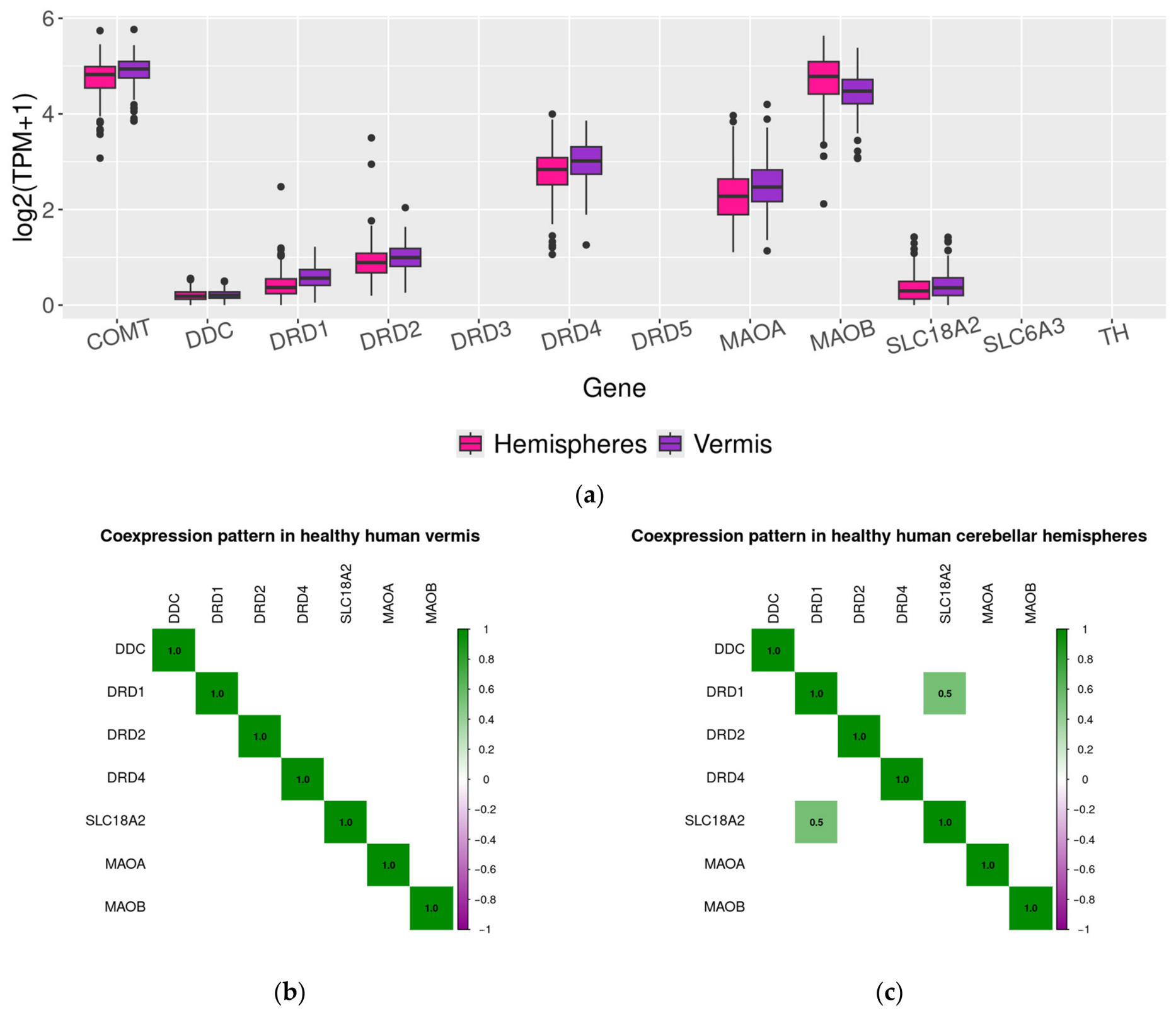
2.1. Dopamine System’s Gene Expression Pattern in Cerebellum in GTEx Data
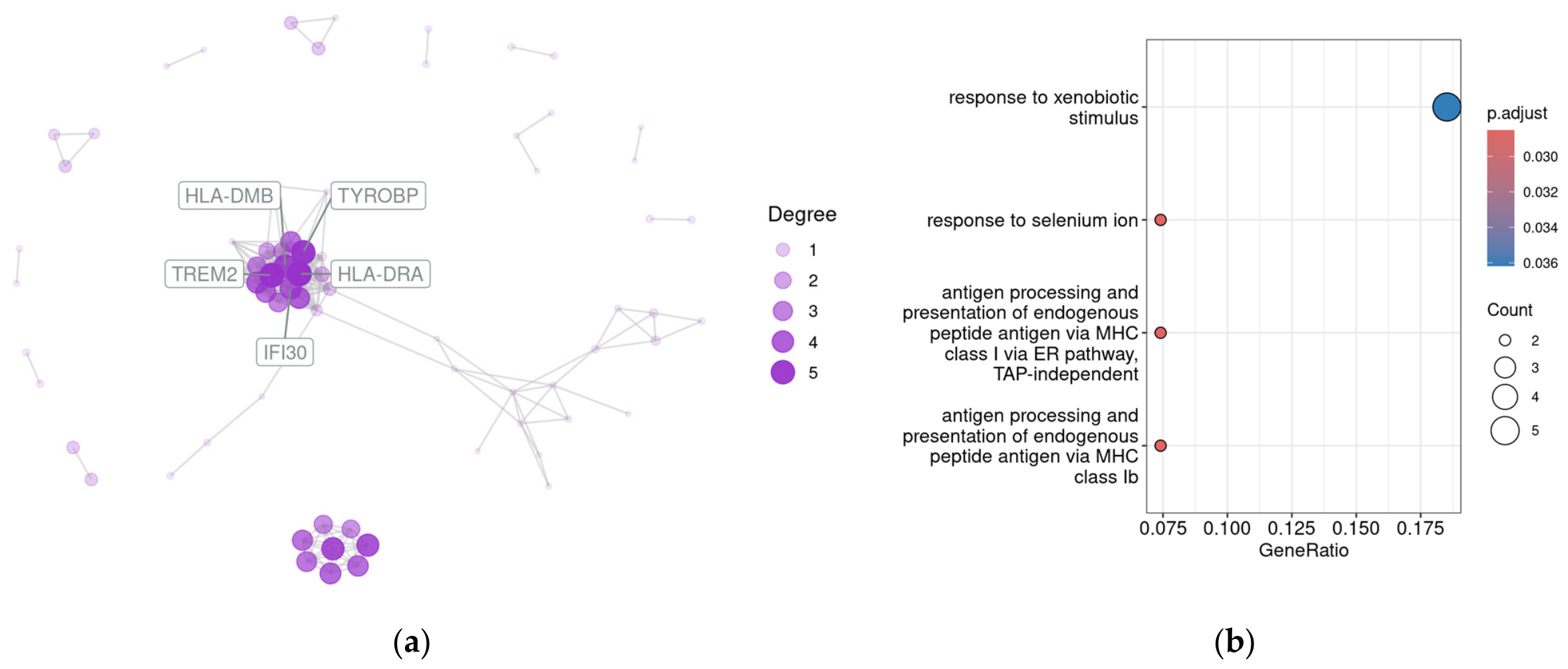
2.2. MAOB Gene mRNA Is Co-Expressed with Microglial Genes in Human Cerebellar Samples
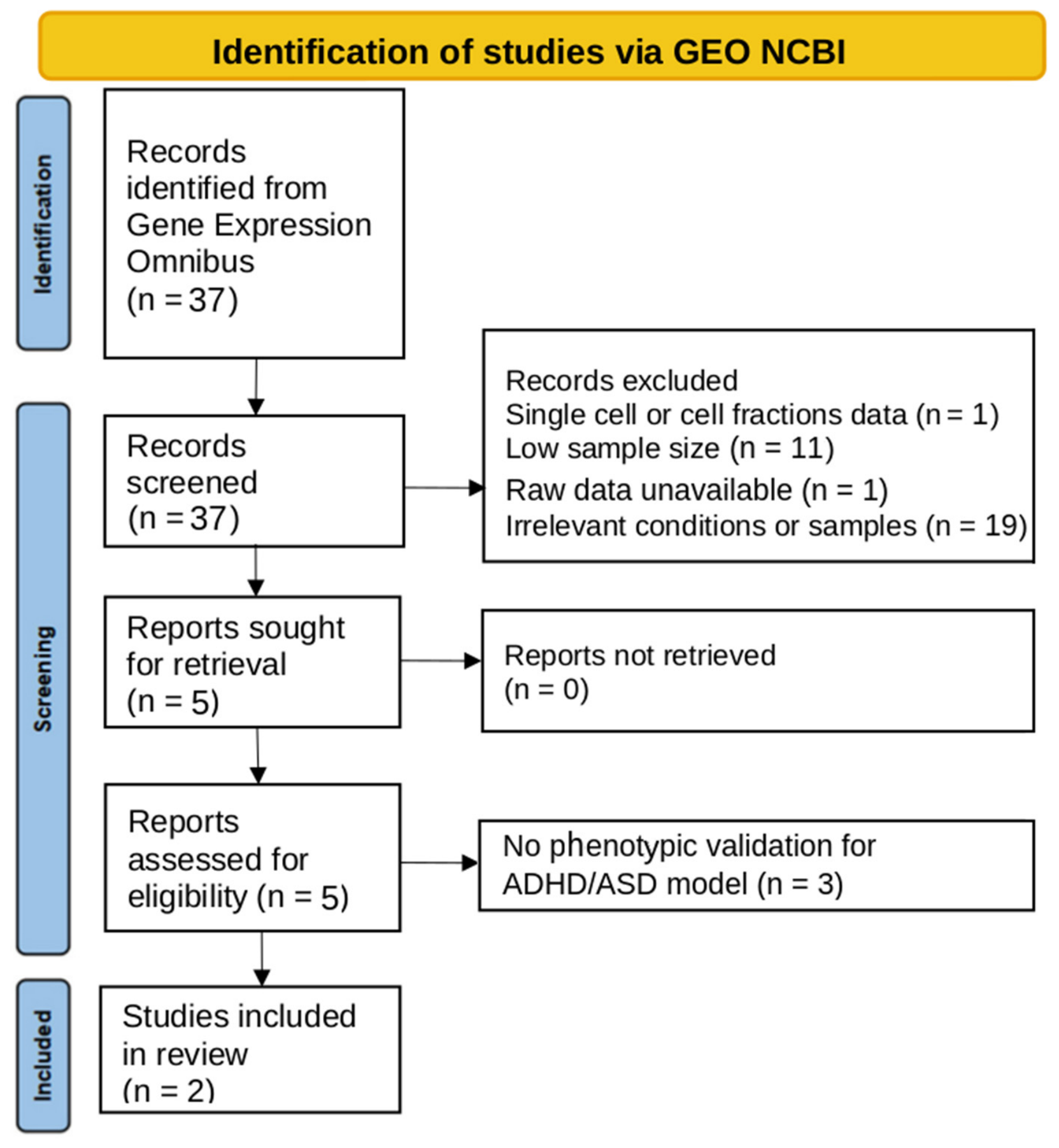
2.3. GEO Data Search and Inclusion
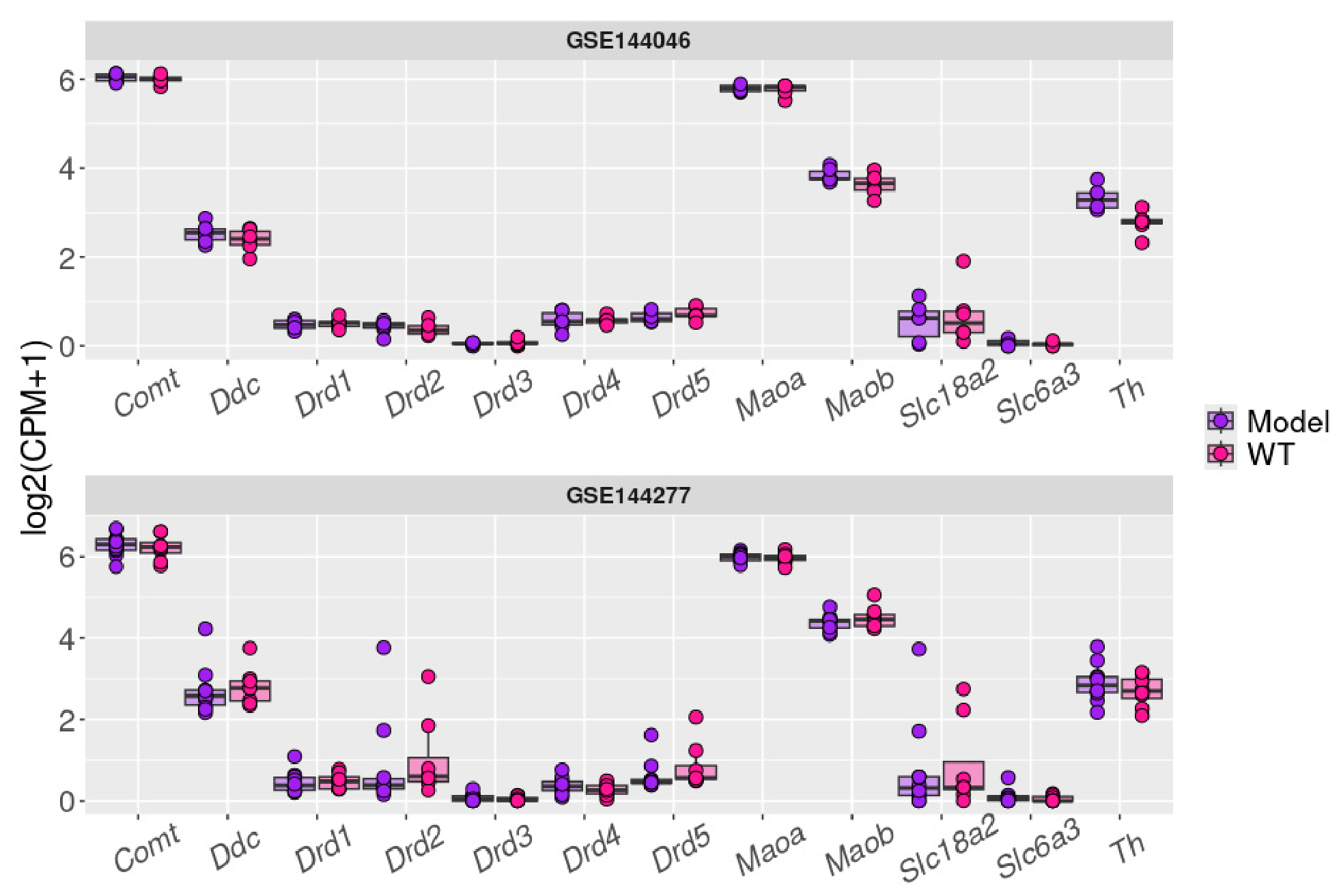
2.4. Distribution of Dopaminergic Genes mRNA in GEO Cerebellar Datasets
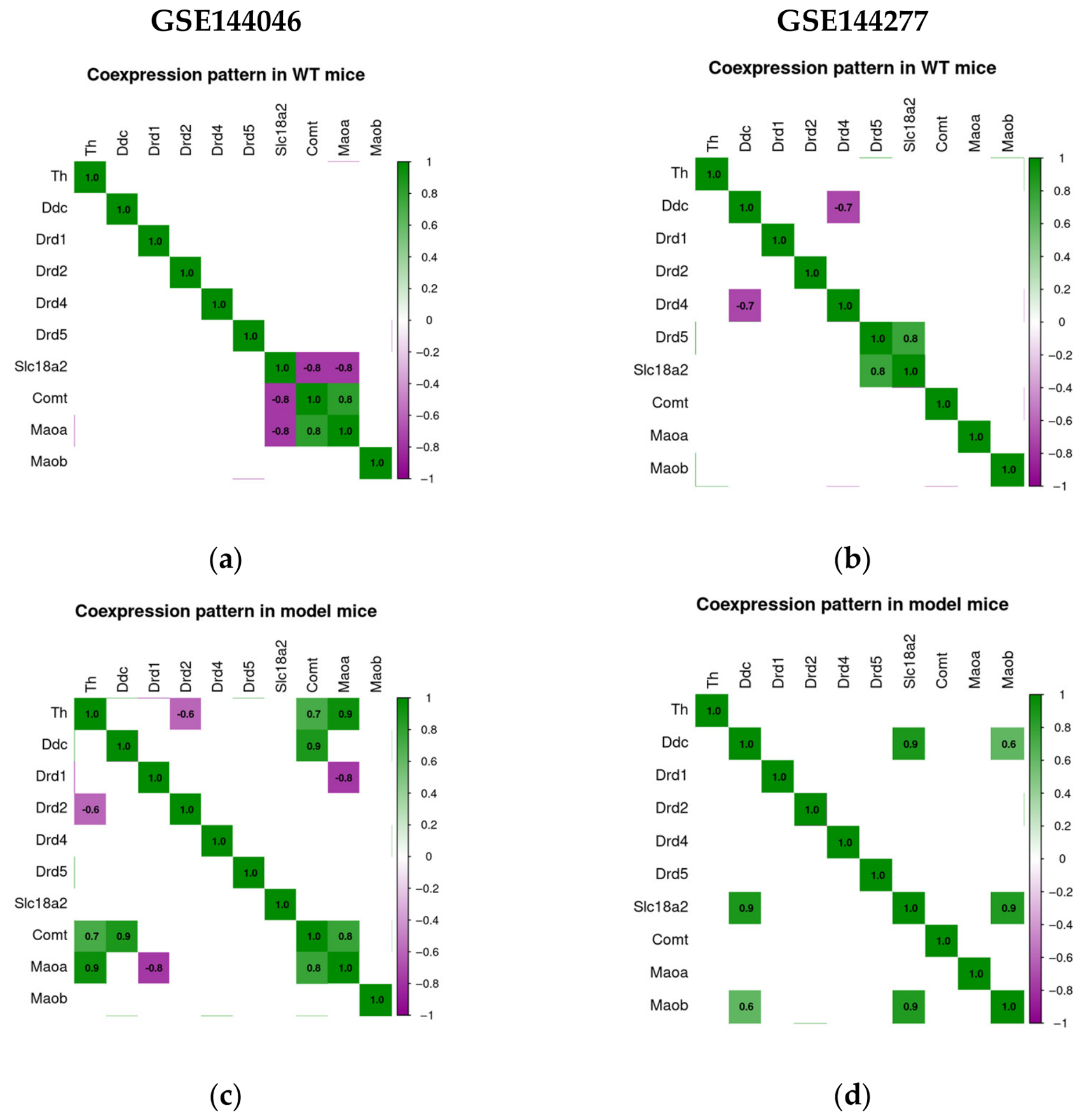
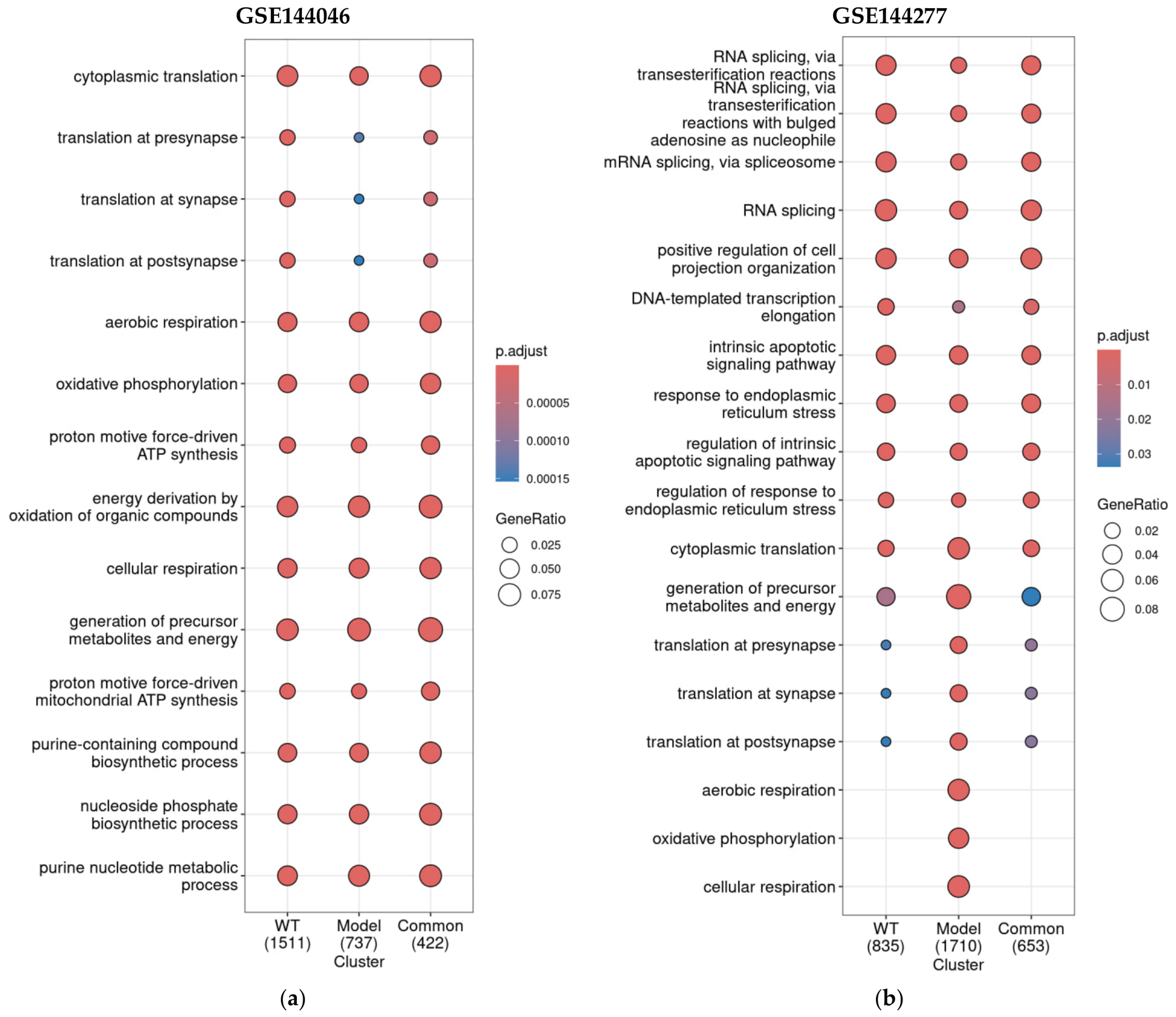
2.5. Comt Participates in Weighted Gene Co-Expression Networks Enriched with Genes of Transcription/Transaltion Apparatus
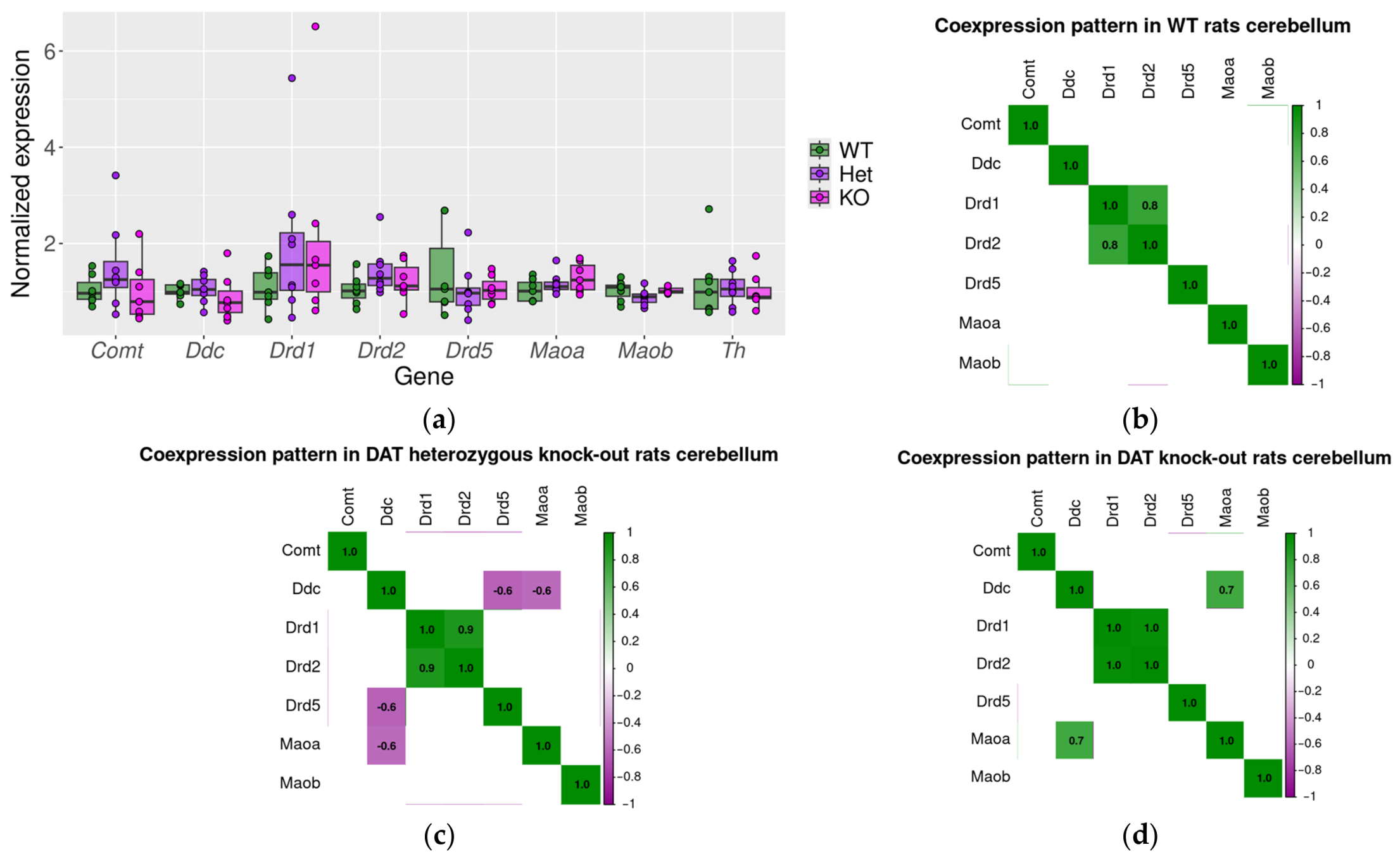
2.6. Dopaminergic Genes Expression in the Cerebellum in Rat DAT-KO ADHD/ASD Model
3. Discussion
4. Materials and Methods
4.1. Gene Expression Omnibus Database Search
4.2. Data Analysis
4.3. Animals
4.4. RNA Isolation, Reverse Transcription, and Quantitative Polymerase Chain Reaction (qPCR)
4.5. Statistical Analysis
5. Conclusions
Supplementary Materials
Author Contributions
Funding
Institutional Review Board Statement
Informed Consent Statement
Data Availability Statement
Acknowledgments
Conflicts of Interest
Abbreviations
| ADHD | Attention deficit/hyperactivity disorder |
| ASD | Autistic spectrum disorders |
| cDNA | Coding DNA |
| COMT | Catechol-O-methyltransferase |
| DAT | Dopamine transporter |
| DEG | Differently expressed genes |
| GEO | Gene Expression Omnibus |
| GTEx | Genotype-Tissue Expression |
| Het | Heterozygote |
| KO | Knockout |
| MAO | Monoamine oxidase |
| PCs | Purkinje cells |
| qPCR | Quantitative polymerase chain reaction |
| RT | Reverse transcription |
| TPM | Transcripts per million |
| VTA | Ventral tegmental area |
| WGCNA | Weighted gene co-expression network analysis |
| WT | Wild type |
References
- Amore, G.; Spoto, G.; Ieni, A.; Vetri, L.; Quatrosi, G.; Di Rosa, G.; Nicotera, A.G. A Focus on the Cerebellum: From Embryogenesis to an Age-Related Clinical Perspective. Front. Syst. Neurosci. 2021, 15, 646052. [Google Scholar] [CrossRef] [PubMed]
- van Essen, M.J.; Nayler, S.; Becker, E.B.E.; Jacob, J. Deconstructing Cerebellar Development Cell by Cell. PLoS Genet. 2020, 16, e1008630. [Google Scholar] [CrossRef] [PubMed]
- d’Oleire Uquillas, F.; Sefik, E.; Li, B.; Trotter, M.A.; Steele, K.A.; Seidlitz, J.; Gesue, R.; Latif, M.; Fasulo, T.; Zhang, V.; et al. Multimodal Evidence for Cerebellar Influence on Cortical Development in Autism: Structural Growth amidst Functional Disruption. Mol. Psychiatry 2025, 30, 1558–1572. [Google Scholar] [CrossRef] [PubMed]
- Pierce, J.E.; Péron, J. The Basal Ganglia and the Cerebellum in Human Emotion. Soc. Cogn. Affect. Neurosci. 2020, 15, 599–613. [Google Scholar] [CrossRef] [PubMed]
- Washburn, S.; Oñate, M.; Yoshida, J.; Vera, J.; Bhuvanasundaram, R.; Khatami, L.; Nadim, F.; Khodakhah, K. The Cerebellum Directly Modulates the Substantia Nigra Dopaminergic Activity. Nat. Neurosci. 2024, 27, 497–513. [Google Scholar] [CrossRef] [PubMed]
- Manto, M.; Adamaszek, M.; Apps, R.; Carlson, E.; Guarque-Chabrera, J.; Heleven, E.; Kakei, S.; Khodakhah, K.; Kuo, S.-H.; Lin, C.-Y.R.; et al. Consensus Paper: Cerebellum and Reward. Cerebellum 2024, 23, 2169–2192. [Google Scholar] [CrossRef] [PubMed]
- Wagner, M.J.; Luo, L. Neocortex–Cerebellum Circuits for Cognitive Processing. Trends Neurosci. 2020, 43, 42–54. [Google Scholar] [CrossRef] [PubMed]
- Bylemans, T.; Heleven, E.; Baetens, K.; Deroost, N.; Baeken, C.; Van Overwalle, F. Mentalizing and Narrative Coherence in Autistic Adults: Cerebellar Sequencing and Prediction. Neurosci. Biobehav. Rev. 2023, 146, 105045. [Google Scholar] [CrossRef] [PubMed]
- Frosch, I.R.; Mittal, V.A.; D’Mello, A.M. Cerebellar Contributions to Social Cognition in ASD: A Predictive Processing Framework. Front. Integr. Neurosci. 2022, 16, 810425. [Google Scholar] [CrossRef] [PubMed]
- Cutando, L.; Puighermanal, E.; Castell, L.; Tarot, P.; Belle, M.; Bertaso, F.; Arango-Lievano, M.; Ango, F.; Rubinstein, M.; Quintana, A.; et al. Cerebellar Dopamine D2 Receptors Regulate Social Behaviors. Nat. Neurosci. 2022, 25, 900–911. [Google Scholar] [CrossRef] [PubMed]
- Sivalingam, A.M.; Pandian, A. Cerebellar Roles in Motor and Social Functions and Implications for ASD. Cerebellum 2024, 23, 2564–2574. [Google Scholar] [CrossRef] [PubMed]
- Chen, X.; Zhang, Y. A Review of the Neurotransmitter System Associated with Cognitive Function of the Cerebellum in Parkinson’s Disease. Neural Regen. Res. 2024, 19, 324–330. [Google Scholar] [CrossRef] [PubMed]
- De Benedictis, A.; Rossi-Espagnet, M.C.; de Palma, L.; Carai, A.; Marras, C.E. Networking of the Human Cerebellum: From Anatomo-Functional Development to Neurosurgical Implications. Front. Neurol. 2022, 13, 806298. [Google Scholar] [CrossRef] [PubMed]
- Faris, P.; Pischedda, D.; Palesi, F.; D’Angelo, E. New Clues for the Role of Cerebellum in Schizophrenia and the Associated Cognitive Impairment. Front. Cell. Neurosci. 2024, 18, 1386583. [Google Scholar] [CrossRef] [PubMed]
- Li, C.; Saliba, N.B.; Martin, H.; Losurdo, N.A.; Kolahdouzan, K.; Siddiqui, R.; Medeiros, D.; Li, W. Purkinje Cell Dopaminergic Inputs to Astrocytes Regulate Cerebellar-Dependent Behavior. Nat. Commun. 2023, 14, 1613. [Google Scholar] [CrossRef] [PubMed]
- Isaac, V.; Lopez, V.; Escobar, M.J. Can Attention-Deficit/Hyperactivity Disorder Be Considered a Form of Cerebellar Dysfunction? Front. Neurosci. 2025, 19, 1453025. [Google Scholar] [CrossRef] [PubMed]
- Flace, P.; Livrea, P.; Basile, G.A.; Galletta, D.; Bizzoca, A.; Gennarini, G.; Bertino, S.; Branca, J.J.V.; Gulisano, M.; Bianconi, S.; et al. The Cerebellar Dopaminergic System. Front. Syst. Neurosci. 2021, 15, 650614. [Google Scholar] [CrossRef] [PubMed]
- Cundari, M.; Vestberg, S.; Gustafsson, P.; Gorcenco, S.; Rasmussen, A. Neurocognitive and Cerebellar Function in ADHD, Autism and Spinocerebellar Ataxia. Front. Syst. Neurosci. 2023, 17, 1168666, Erratum in Front. Syst. Neurosci. 2024, 18, 1462062. https://doi.org/10.3389/fnsys.2024.1462062. [Google Scholar] [CrossRef] [PubMed]
- Triarhou, L.C.; Manto, M. The Discovery of the Monoaminergic Innervation of the Cerebellum: Convergence of Divergent and Point-to-Point Systems. Cerebellum 2023, 22, 1045–1051. [Google Scholar] [CrossRef] [PubMed]
- Locke, T.M.; Soden, M.E.; Miller, S.M.; Hunker, A.; Knakal, C.; Licholai, J.A.; Dhillon, K.S.; Keene, C.D.; Zweifel, L.S.; Carlson, E.S. Dopamine D1 Receptor–Positive Neurons in the Lateral Nucleus of the Cerebellum Contribute to Cognitive Behavior. Biol. Psychiatry 2018, 84, 401–412. [Google Scholar] [CrossRef] [PubMed]
- Biswas, M.S.; Roy, S.K.; Hasan, R.; Pk, M.M.U. The Crucial Role of the Cerebellum in Autism Spectrum Disorder: Neuroimaging, Neurobiological, and Anatomical Insights. Health Sci. Rep. 2024, 7, e2233. [Google Scholar] [CrossRef] [PubMed]
- Guedes, J.R.; Ferreira, P.A.; Costa, J.; Laranjo, M.; Pinto, M.J.; Reis, T.; Cardoso, A.M.; Lebre, C.; Casquinha, M.; Gomes, M.; et al. IL-4 Shapes Microglia-Dependent Pruning of the Cerebellum during Postnatal Development. Neuron 2023, 111, 3435–3449.e8. [Google Scholar] [CrossRef] [PubMed]
- Olson, I.R.; Hoffman, L.J.; Jobson, K.R.; Popal, H.S.; Wang, Y. Little Brain, Little Minds: The Big Role of the Cerebellum in Social Development. Dev. Cogn. Neurosci. 2023, 60, 101238. [Google Scholar] [CrossRef] [PubMed]
- Stoodley, C.J. Distinct Regions of the Cerebellum Show Gray Matter Decreases in Autism, ADHD, and Developmental Dyslexia. Front. Syst. Neurosci. 2014, 8, 92. [Google Scholar] [CrossRef] [PubMed]
- Zhao, Y.; Zheng, X.; Gao, X.; Wang, N.; Fu, Z.; Tian, J.; Zhang, K.; Wang, P.; Li, S.; Zhang, J.; et al. Deep Adversarial Learning Identifies ADHD-Specific Associations between Apoptotic Genes and White Matter Microstructure in Frontal-Striatum-Cerebellum Circuit. Transl. Psychiatry 2025, 15, 320. [Google Scholar] [CrossRef] [PubMed]
- Elandaloussi, Y.; Floris, D.L.; Coupé, P.; Duchesnay, E.; Mihailov, A.; Grigis, A.; Bègue, I.; Victor, J.; Frouin, V.; Leboyer, M.; et al. Understanding the Relationship between Cerebellar Structure and Social Abilities. Mol. Autism 2023, 14, 18, Correction in Mol. Autism 2023, 14, 24. https://doi.org/10.1186/s13229-023-00553-6. [Google Scholar] [CrossRef] [PubMed]
- Gill, J.S.; Sillitoe, R.V. Functional Outcomes of Cerebellar Malformations. Front. Cell. Neurosci. 2019, 13, 441. [Google Scholar] [CrossRef] [PubMed]
- Olivito, G.; Siciliano, L.; Clausi, S.; Lupo, M.; Baiocco, R.; Gragnani, A.; Saettoni, M.; Delle Chiaie, R.; Laghi, F.; Leggio, M. The Cerebellum Gets Social: Evidence from an Exploratory Study of Cerebellar, Neurodevelopmental, and Psychiatric Disorders. Biomedicines 2023, 11, 309. [Google Scholar] [CrossRef] [PubMed]
- Cakar, M.E.; Okada, N.J.; Cummings, K.K.; Jung, J.; Bookheimer, S.Y.; Dapretto, M.; Green, S.A. Functional Connectivity of the Sensorimotor Cerebellum in Autism: Associations with Sensory over-Responsivity. Front. Psychiatry 2024, 15, 1337921. [Google Scholar] [CrossRef] [PubMed]
- McKinney, W.S.; Kelly, S.E.; Unruh, K.E.; Shafer, R.L.; Sweeney, J.A.; Styner, M.; Mosconi, M.W. Cerebellar Volumes and Sensorimotor Behavior in Autism Spectrum Disorder. Front. Integr. Neurosci. 2022, 16, 821109, Erratum in Front. Integr. Neurosci. 2022, 16, 1020980. https://doi.org/10.3389/fnint.2022.1020980. [Google Scholar] [CrossRef] [PubMed]
- Bloomer, B.F.; Morales, J.J.; Bolbecker, A.R.; Kim, D.-J.; Hetrick, W.P. Cerebellar Structure and Function in Autism Spectrum Disorder. J. Psychiatr. Brain Sci. 2022, 7, e220003. [Google Scholar] [CrossRef] [PubMed]
- Hours, C.; Recasens, C.; Baleyte, J.-M. ASD and ADHD Comorbidity: What Are We Talking About? Front. Psychiatry 2022, 13, 837424. [Google Scholar] [CrossRef] [PubMed]
- Jiang, S.; Wu, H. The Cerebellum Modulates Mood with Movement. Neurosci. Bull. 2024, 40, 1396–1398. [Google Scholar] [CrossRef] [PubMed]
- Kong, Y.; Roser, M.; Bègue, I.; Elandaloussi, Y.; Neu, N.; Grigis, A.; Duchesnay, E.; Leboyer, M.; Houenou, J.; Laidi, C. Cerebellum and Social Abilities: A Structural and Functional Connectivity Study in a Transdiagnostic Sample. Hum. Brain Mapp. 2024, 45, e26749. [Google Scholar] [CrossRef] [PubMed]
- Parlatini, V.; Itahashi, T.; Lee, Y.; Liu, S.; Nguyen, T.T.; Aoki, Y.Y.; Forkel, S.J.; Catani, M.; Rubia, K.; Zhou, J.H.; et al. White Matter Alterations in Attention-Deficit/Hyperactivity Disorder (ADHD): A Systematic Review of 129 Diffusion Imaging Studies with Meta-Analysis. Mol. Psychiatry 2023, 28, 4098–4123. [Google Scholar] [CrossRef] [PubMed]
- Wang, B.; LeBel, A.; D’Mello, A.M. Ignoring the Cerebellum Is Hindering Progress in Neuroscience. Trends Cogn. Sci. 2025, 29, 318–330. [Google Scholar] [CrossRef] [PubMed]
- Laidi, C.; Floris, D.L.; Tillmann, J.; Elandaloussi, Y.; Zabihi, M.; Charman, T.; Wolfers, T.; Durston, S.; Moessnang, C.; Dell’Acqua, F.; et al. Cerebellar Atypicalities in Autism? Biol. Psychiatry 2022, 92, 674–682. [Google Scholar] [CrossRef] [PubMed]
- Mapelli, L.; Soda, T.; D’Angelo, E.; Prestori, F. The Cerebellar Involvement in Autism Spectrum Disorders: From the Social Brain to Mouse Models. Int. J. Mol. Sci. 2022, 23, 3894. [Google Scholar] [CrossRef] [PubMed]
- Zhao, X.; Zhu, S.; Cao, Y.; Cheng, P.; Lin, Y.; Sun, Z.; Jiang, W.; Du, Y. Abnormalities of Gray Matter Volume and Its Correlation with Clinical Symptoms in Adolescents with High-Functioning Autism Spectrum Disorder. Neuropsychiatr. Dis. Treat. 2022, 18, 717–730. [Google Scholar] [CrossRef] [PubMed]
- Baizer, J.S. Neuroanatomy of Autism: What Is the Role of the Cerebellum? Cereb. Cortex 2024, 34, 94–103. [Google Scholar] [CrossRef] [PubMed]
- D’Mello, S.R. Autism Spectrum Disorder: The Cerebellum, Genes, and Pathways. Neurol. Int. 2025, 17, 173. [Google Scholar] [CrossRef] [PubMed]
- Sydnor, L.M.; Aldinger, K.A. Structure, Function, and Genetics of the Cerebellum in Autism. J. Psychiatr. Brain Sci. 2022, 7, e220008. [Google Scholar] [CrossRef] [PubMed]
- MacDonald, H.J.; Kleppe, R.; Szigetvari, P.D.; Haavik, J. The Dopamine Hypothesis for ADHD: An Evaluation of Evidence Accumulated from Human Studies and Animal Models. Front. Psychiatry 2024, 15, 1492126. [Google Scholar] [CrossRef] [PubMed]
- Wu, S.-C.J.; Hsu, J.-W.; Huang, K.-L.; Bai, Y.-M.; Tu, P.-C.; Chen, M.-H. Functional Dysconnectivity of Cerebellum and Attention Networks in Emotional Dysregulation Shared between Attention Deficit Hyperactivity Disorder and Major Depressive Disorder: A Multimodal Imaging Study. CNS Spectr. 2023, 28, 470–477. [Google Scholar] [CrossRef] [PubMed]
- Murayama, C.; Iwabuchi, T.; Kato, Y.; Yokokura, M.; Harada, T.; Goto, T.; Tamayama, T.; Kameno, Y.; Wakuda, T.; Kuwabara, H.; et al. Extrastriatal Dopamine D2/3 Receptor Binding, Functional Connectivity, and Autism Socio-Communicational Deficits: A PET and fMRI Study. Mol. Psychiatry 2022, 27, 2106–2113. [Google Scholar] [CrossRef] [PubMed]
- Leo, D.; Sukhanov, I.; Zoratto, F.; Illiano, P.; Caffino, L.; Sanna, F.; Messa, G.; Emanuele, M.; Esposito, A.; Dorofeikova, M.; et al. Pronounced Hyperactivity, Cognitive Dysfunctions, and BDNF Dysregulation in Dopamine Transporter Knock-out Rats. J. Neurosci. 2018, 38, 1959–1972. [Google Scholar] [CrossRef] [PubMed]
- Belskaya, A.; Kurzina, N.; Savchenko, A.; Sukhanov, I.; Gromova, A.; Gainetdinov, R.R.; Volnova, A. Rats Lacking the Dopamine Transporter Display Inflexibility in Innate and Learned Behavior. Biomedicines 2024, 12, 1270. [Google Scholar] [CrossRef] [PubMed]
- Fesenko, Z.; Ptukha, M.; da Silva, M.M.; de Carvalho, R.S.M.; Tsytsarev, V.; Gainetdinov, R.R.; Faber, J.; Volnova, A.B. Electrophysiological and Behavioral Markers of Hyperdopaminergia in DAT-KO Rats. Biomedicines 2024, 12, 2114. [Google Scholar] [CrossRef] [PubMed]
- Lloyd, J.T.; Yee, A.G.; Kalligappa, P.K.; Jabed, A.; Cheung, P.Y.; Todd, K.L.; Karunasinghe, R.N.; Vlajkovic, S.M.; Freestone, P.S.; Lipski, J. Dopamine Dysregulation and Altered Responses to Drugs Affecting Dopaminergic Transmission in a New Dopamine Transporter Knockout (DAT-KO) Rat Model. Neuroscience 2022, 491, 43–64. [Google Scholar] [CrossRef] [PubMed]
- Savchenko, A.; Targa, G.; Fesenko, Z.; Leo, D.; Gainetdinov, R.R.; Sukhanov, I. Dopamine Transporter Deficient Rodents: Perspectives and Limitations for Neuroscience. Biomolecules 2023, 13, 806. [Google Scholar] [CrossRef] [PubMed]
- Manoni, G.; Puzzo, C.; Gigantesco, A.; Adriani, W. Behavioral Phenotype in Heterozygous DAT Rats: Transgenerational Transmission of Maternal Impact and the Role of Genetic Asset. Brain Sci. 2022, 12, 469. [Google Scholar] [CrossRef] [PubMed]
- Ptukha, M.; Fesenko, Z.; Belskaya, A.; Gromova, A.; Pelevin, A.; Kurzina, N.; Gainetdinov, R.R.; Volnova, A. Effects of Atomoxetine on Motor and Cognitive Behaviors and Brain Electrophysiological Activity of Dopamine Transporter Knockout Rats. Biomolecules 2022, 12, 1484. [Google Scholar] [CrossRef] [PubMed]
- Traktirov, D.S.; Nazarov, I.R.; Artemova, V.S.; Gainetdinov, R.R.; Pestereva, N.S.; Karpenko, M.N. Alterations in Serotonin Neurotransmission in Hyperdopaminergic Rats Lacking the Dopamine Transporter. Biomedicines 2023, 11, 2881. [Google Scholar] [CrossRef] [PubMed]
- Reinwald, J.R.; Gass, N.; Mallien, A.S.; Sartorius, A.; Becker, R.; Sack, M.; Falfan-Melgoza, C.; Clemm von Hohenberg, C.; Leo, D.; Pfeiffer, N.; et al. Dopamine Transporter Silencing in the Rat: Systems-Level Alterations in Striato-Cerebellar and Prefrontal-Midbrain Circuits. Mol. Psychiatry 2022, 27, 2329–2339. [Google Scholar] [CrossRef] [PubMed]
- Amar, M.; Pramod, A.B.; Yu, N.-K.; Herrera, V.M.; Qiu, L.R.; Moran-Losada, P.; Zhang, P.; Trujillo, C.A.; Ellegood, J.; Urresti, J.; et al. Autism-Linked Cullin3 Germline Haploinsufficiency Impacts Cytoskeletal Dynamics and Cortical Neurogenesis through RhoA Signaling. Mol. Psychiatry 2021, 26, 3586–3613. [Google Scholar] [CrossRef] [PubMed]
- Camarena, V.; Cao, L.; Abad, C.; Abrams, A.; Toledo, Y.; Araki, K.; Araki, M.; Walz, K.; Young, J.I. Disruption of Mbd5 in Mice Causes Neuronal Functional Deficits and Neurobehavioral Abnormalities Consistent with 2q23.1 Microdeletion Syndrome. EMBO Mol. Med. 2014, 6, 1003–1015. [Google Scholar] [CrossRef] [PubMed]
- Zhou, P.; Peng, S.; Wen, S.; Lan, Q.; Zhuang, Y.; Li, X.; Shi, M.; Zhang, C. The Cerebellum–Ventral Tegmental Area Microcircuit and Its Implications for Autism Spectrum Disorder: A Narrative Review. Neuropsychiatr. Dis. Treat. 2024, 20, 2039–2048. [Google Scholar] [CrossRef] [PubMed]
- Itahashi, T.; Tanji, K.; Shikauchi, Y.; Naoe, T.; Okimura, T.; Nakamura, M.; Ohta, H.; Hashimoto, R.-I. Iron Deposition and Functional Connectivity Alterations in the Right Substantia Nigra of Adult Males with Autism. Cereb. Cortex 2025, 35, bhaf216. [Google Scholar] [CrossRef] [PubMed]
- Tomasi, D.; Volkow, N.D. Functional Connectivity of Substantia Nigra and Ventral Tegmental Area: Maturation during Adolescence and Effects of ADHD. Cereb. Cortex 2014, 24, 935–944. [Google Scholar] [CrossRef] [PubMed]
- Vaganova, A.N.; Fesenko, Z.S.; Volnova, A.B.; Gainetdinov, R.R. Stable Dopamine-Signaling mRNA Co-Expression in the Substantia Nigra Is Deregulated in Pathological Conditions, but Not in Dopamine Transporter Knockout Rats. Biomolecules 2025, 15, 1117. [Google Scholar] [CrossRef] [PubMed]
- Langfelder, P.; Horvath, S. WGCNA: An R Package for Weighted Correlation Network Analysis. BMC Bioinform. 2008, 9, 559. [Google Scholar] [CrossRef] [PubMed]
- Zhang, B.; Horvath, S. A General Framework for Weighted Gene Co-Expression Network Analysis. Stat. Appl. Genet. Mol. Biol. 2005, 4, 17. [Google Scholar] [CrossRef] [PubMed]
- Naffaa, M.M. Monoamine Oxidase B in Astrocytic GABA Synthesis: A Central Mechanism in Neurodegeneration and Neuroinflammation. J. Cell. Signal. 2025, 6, 53–70. [Google Scholar] [CrossRef]
- Cho, H.-U.; Kim, S.; Sim, J.; Yang, S.; An, H.; Nam, M.-H.; Jang, D.-P.; Lee, C.J. Redefining Differential Roles of MAO-A in Dopamine Degradation and MAO-B in Tonic GABA Synthesis. Exp. Mol. Med. 2021, 53, 1148–1158. [Google Scholar] [CrossRef] [PubMed]
- Nisha Aji, K.; Lalang, N.; Ramos-Jiménez, C.; Rahimian, R.; Mechawar, N.; Turecki, G.; Chartrand, D.; Boileau, I.; Meyer, J.H.; Rusjan, P.M.; et al. Evidence of Altered Monoamine Oxidase B, an Astroglia Marker, in Early Psychosis and High-Risk State. Mol. Psychiatry 2025, 30, 2049–2058. [Google Scholar] [CrossRef] [PubMed]
- Jaisa-aad, M.; Muñoz-Castro, C.; Healey, M.A.; Hyman, B.T.; Serrano-Pozo, A. Characterization of Monoamine Oxidase-B (MAO-B) as a Biomarker of Reactive Astrogliosis in Alzheimer’s Disease and Related Dementias. Acta Neuropathol. 2024, 147, 66. [Google Scholar] [CrossRef] [PubMed]
- Mallajosyula, J.K.; Kaur, D.; Chinta, S.J.; Rajagopalan, S.; Rane, A.; Nicholls, D.G.; Monte, D.A.D.; Macarthur, H.; Andersen, J.K. MAO-B Elevation in Mouse Brain Astrocytes Results in Parkinson’s Pathology. PLoS ONE 2008, 3, e1616, Erratum in PLoS ONE 2012, 7, 10.1371/annotation/3c37bef4-bb5e-4f1e-8551-01afc006df90. https://doi.org/10.1371/annotation/3c37bef4-bb5e-4f1e-8551-01afc006df90. [Google Scholar] [CrossRef] [PubMed]
- Triantopoulou, N.; Vidaki, M. Local mRNA Translation and Cytoskeletal Reorganization: Mechanisms That Tune Neuronal Responses. Front. Mol. Neurosci. 2022, 15, 949096. [Google Scholar] [CrossRef] [PubMed]
- Rajgor, D.; Welle, T.M.; Smith, K.R. The Coordination of Local Translation, Membranous Organelle Trafficking, and Synaptic Plasticity in Neurons. Front. Cell Dev. Biol. 2021, 9, 711446. [Google Scholar] [CrossRef] [PubMed]
- Coulson, R.L.; Mourrain, P.; Wang, G.X. The Intersection of Sleep and Synaptic Translation in Synaptic Plasticity Deficits in Neurodevelopmental Disorders. J. Comp. Physiol. B 2024, 194, 253–263. [Google Scholar] [CrossRef] [PubMed]
- Kong, C.; Bing, Z.; Yang, L.; Huang, Z.; Wang, W.; Grebogi, C. Transcriptomic Evidence Reveals the Dysfunctional Mechanism of Synaptic Plasticity Control in ASD. Genes 2024, 16, 11. [Google Scholar] [CrossRef] [PubMed]
- Walz, K.; Young, J.I. The Methyl Binding Domain Containing Protein MBD5 Is a Transcriptional Regulator Responsible for 2q23.1 Deletion Syndrome. Rare Dis. 2014, 2, e967151. [Google Scholar] [CrossRef] [PubMed]
- Almeida-Silva, F.; Venancio, T.M. BioNERO: An All-in-One R/Bioconductor Package for Comprehensive and Easy Biological Network Reconstruction. Funct. Integr. Genom. 2022, 22, 131–136. [Google Scholar] [CrossRef]
- Clough, E.; Barrett, T.; Wilhite, S.E.; Ledoux, P.; Evangelista, C.; Kim, I.F.; Tomashevsky, M.; Marshall, K.A.; Phillippy, K.H.; Sherman, P.M.; et al. NCBI GEO: Archive for Gene Expression and Epigenomics Data Sets: 23-Year Update. Nucleic Acids Res. 2023, 52, D138–D144. [Google Scholar] [CrossRef] [PubMed]
- The GTEx Consortium. The GTEx Consortium atlas of genetic regulatory effects across human tissues. Science 2020, 369, 1318–1330. [Google Scholar] [CrossRef] [PubMed]
- Robinson, M.D.; McCarthy, D.J.; Smyth, G.K. edgeR: A Bioconductor Package for Differential Expression Analysis of Digital Gene Expression Data. Bioinformatics 2010, 26, 139–140. [Google Scholar] [CrossRef] [PubMed]
- Wu, T.; Hu, E.; Xu, S.; Chen, M.; Guo, P.; Dai, Z.; Feng, T.; Zhou, L.; Tang, W.; Zhan, L.; et al. clusterProfiler 4.0: A Universal Enrichment Tool for Interpreting Omics Data. Innovation 2021, 2, 100141. [Google Scholar] [CrossRef] [PubMed]
- Wickham, H. Ggplot2: Elegant Graphics for Data Analysis; Springer: New York, NY, USA, 2016; ISBN 978-3-319-24277-4. [Google Scholar]
- Wei, T.; Simko, V.; Levy, M.; Xie, Y.; Jin, Y.; Zemla, J. R Package “Corrplot”: Visualization of a Correlation Matrix. Available online: https://cran.r-project.org/web/packages/corrplot/index.html (accessed on 30 April 2026).




| GEO ID | Title | Platform | Groups and Model |
|---|---|---|---|
| GSE144046 | Autism-linked Cullin3 germline haploinsufficiency severely impacts mouse brain development and cortical neurogenesis through RhoA signaling | Illumina HiSeq 4000 (Illumina, Inc., San Diego, CA, USA). | E3-ubiquitin ligase Cullin3 (Cul3) mutations are associated with ASD. Its haploinsufficiency in mice is associated with hyperactivity, impaired memory, and social behavior [55]. 6 WT and 6 Cul3−/+ mice (P35, male and female in both groups). |
| GSE144277 | Functional genomic consequences of MBD5 knockdown in mouse brain and CRISPR-derived neurons [mouse] | Illumina HiSeq 2000 (Illumina, Inc., San Diego, CA, USA). | MBD5, encoding the methyl-CpG-binding domain 5, is implicated in ASD, and its heterozygous knockout in mice (MBD5+/GT) leads to abnormal social behavior, cognitive impairment, craniofacial abnormalities, and motor deficits [56]. 10 MBD5+/GT mice, 8 WT mice (8 weeks old, male and female in both groups). |
| Dataset | GSE144046 | GSE144277 | ||
|---|---|---|---|---|
| Group | WT | Model | WT | Model |
| Gene count | 1775 | 1093 | 980 | 2100 |
| Density | 0.17 | 0.07 | 0.55 | 0.48 |
| Clustering coefficient | 0.34 | 0.23 | 0.64 | 0.59 |
| Mean connectivity | 313.7 | 74.8 | 536.4 | 1012.8 |
| Scaled connectivity | 0.18 | 0.068 | 0.548 | 0.482 |
| Target | Gene Name | Forward Primer | Reverse Primer |
|---|---|---|---|
| Th | Tyrosine hydroxylase | CGCTTCTTGAAGGAGCGGACTG | GCATGGCGGATATACTGGGTGC |
| Ddc | DOPA-decarboxylase | TGGCGTGGAGTTTGCAGATTCC | GTCCTGGTGACTGTGCCTCAGA |
| Drd1 | Dopamine receptor D1 | CGACACCTGAGGTCCAAGGTGA | CGCTGATCACGCAGAGGTTCAG |
| Drd2 | Dopamine receptor D1 | CTTGAAGAGCCGTGCCACCC | TGTCTGCCTTCCCTTCTGACCC |
| Drd3 | Dopamine receptor D1 | ACAGGTACACAGCGGTGGTCAT | GCAGGTGTGACAAAAGGGGGTC |
| Drd4 | Dopamine receptor D1 | GGACAGGTTTGTGGCTGTGACC | TCAGGAAGGCCCCAACTACCAC |
| Drd5 | Dopamine receptor D1 | CGGAGAACTGTGACTCCAGCCT | CTTCTTGATGGACGCTCGCAGG |
| Slc18a2 | Solute carrier family18 member A2 | TGTCTGCCTTCCCTTCTGACCC | AGGAGTCCACCATCCCAATTGCA |
| Comt | Catechol-O-methyltransferase | AACCCTGACTACGCTGCCATCA | AGCAGGCCACATTTCTCCAGGA |
| Maoa | Monoamineoxidase A | GTCCAAGGATGTTCCAGCCA | ATCTTGAGCAGACCAGGCAC |
| Maob | Monoamineoxidase B | AACTGCGGAGACCCATGAGGTT | GGCCTCTCCAGCTTCACTCTGT |
| Hprt 1 | Hypoxanthine phosphoribosyltransferase1 | ATGGACTGATTATGGACAGGAC | GCAGGTCAGCAAAGAACTTATAGCC |
Disclaimer/Publisher’s Note: The statements, opinions and data contained in all publications are solely those of the individual author(s) and contributor(s) and not of MDPI and/or the editor(s). MDPI and/or the editor(s) disclaim responsibility for any injury to people or property resulting from any ideas, methods, instructions or products referred to in the content. |
© 2026 by the authors. Licensee MDPI, Basel, Switzerland. This article is an open access article distributed under the terms and conditions of the Creative Commons Attribution (CC BY) license.
Share and Cite
Belskaya, A.D.; Fesenko, Z.S.; Volnova, A.B.; Gainetdinov, R.R.; Vaganova, A.N. Opposing Changes in Cerebellar Dopaminergic Genes Co-Expression Networks in Different Models of Neurodevelopmental Disorders. Int. J. Mol. Sci. 2026, 27, 5508. https://doi.org/10.3390/ijms27125508
Belskaya AD, Fesenko ZS, Volnova AB, Gainetdinov RR, Vaganova AN. Opposing Changes in Cerebellar Dopaminergic Genes Co-Expression Networks in Different Models of Neurodevelopmental Disorders. International Journal of Molecular Sciences. 2026; 27(12):5508. https://doi.org/10.3390/ijms27125508
Chicago/Turabian StyleBelskaya, Anastasia D., Zoia S. Fesenko, Anna B. Volnova, Raul R. Gainetdinov, and Anastasia N. Vaganova. 2026. "Opposing Changes in Cerebellar Dopaminergic Genes Co-Expression Networks in Different Models of Neurodevelopmental Disorders" International Journal of Molecular Sciences 27, no. 12: 5508. https://doi.org/10.3390/ijms27125508
APA StyleBelskaya, A. D., Fesenko, Z. S., Volnova, A. B., Gainetdinov, R. R., & Vaganova, A. N. (2026). Opposing Changes in Cerebellar Dopaminergic Genes Co-Expression Networks in Different Models of Neurodevelopmental Disorders. International Journal of Molecular Sciences, 27(12), 5508. https://doi.org/10.3390/ijms27125508