Article

Effects of Haplotypes of the Rice Sucrose Transporter Genes OsSWEET11 and OsSWEET15 on Grain Traits in Local Yunnan Germplasm Resources

1
College of Agronomy and Biotechnology, Yunnan Agricultural University, Kunming 650201, China
2
Rice Research Institute, Yunnan Agricultural University, Kunming 650201, China
*
Author to whom correspondence should be addressed.
These authors contributed equally to this work.
Int. J. Mol. Sci. 2026, 27(12), 5505; https://doi.org/10.3390/ijms27125505
Submission received: 26 April 2026 / Revised: 7 June 2026 / Accepted: 14 June 2026 / Published: 18 June 2026
(This article belongs to the Special Issue Molecular Research on Crop Quality)

Abstract

The translocation of sucrose into spike grains during the grain-filling stage directly affects rice yield and quality. The sugar transporters OsSWEET11 and OsSWEET15 are key sucrose transporters essential for rice (Oryza sativa L.) grain filling. To elucidate their effects on grain traits, we analyzed sequence polymorphisms of these two genes in 139 landrace rice varieties from Yunnan, China, and conducted association and haplotype analyses. Our results indicated that grain filling degree was closely associated with grain shape, where wider grains negatively impacted grain plumpness. The association analysis revealed eight significant SNPs: six located in the coding region of OsSWEET15 that influenced grain length, thickness, density, and 1000-grain weight (TGW), while two SNPs in OsSWEET11 affected TGW and the thickness of milled rice grains. Haplotype analysis further validated these trait associations: OsSWEET15 Hap2 and Hap3 conferred longer grains (with Hap2 additionally increasing TGW and Hap3 enhancing grain density/plumpness), whereas Hap1 produced narrower and thicker grains. Consistently, OsSWEET11 Hap2 was also linked to higher TGW. The superior haplotypes identified here deepen our understanding of the genetic basis of rice grain filling and serve as potential molecular markers for marker-assisted rice breeding.

1. Introduction

Rice is a vital staple crop for over half of the global population [1]. The rising demand for high-quality rice has made the simultaneous improvement in yield and quality a core goal of rice breeding. Appearance quality is the initial visual impression for consumers and is a crucial commercial trait [2]. This encompasses traits such as grain length, width, thickness, the length-to-width ratio and chalkiness. These traits may also correlate with milling quality (brown rice rate, polished rice rate and whole polished rice rate), amylose content, and protein content [3]. In recent years, significant advances have been made in the research on rice grain shape, resulting in the cloning of numerous genes associated with grain shape [4]. Subsequently, further research has found that the grain filling characteristics directly determine the final grain weight of rice by regulating the accumulation of starch and protein in the endosperm, and thus affecting the formation of quality traits [5].
Grain filling involves the transportation, allocation and accumulation of photosynthetic products from source organs to sink organs [6,7,8,9]. During this process, plants utilize sucrose as the primary transported form and load it into the phloem via the apoplastic pathway. This pathway involves the transmembrane transport of sucrose and requires the assistance of sucrose transporters [10]. Consequently, proteins involved in sucrose transport play a crucial regulatory role in the grain-filling process [11]. The SWEET sugar transporter family, as a type of sugar transporter, is unique in that it does not rely on proton gradients to mediate transmembrane transport, but rather relies on sugar concentration gradients inside and outside the cell to drive it [12]. SWEET proteins can mediate bidirectional transmembrane sugar transport along the concentration gradient, driven by solute potential [12,13]. In plants, SWEET transporters mediate the efflux of sugars from source cells. Specifically, they can transport sugars from the cytosol to the apoplast (efflux) or from the apoplast into the cytosol (uptake), with the direction of transport depending on the difference in sugar concentration across the membrane.
Members of the SWEET gene family are known to be involved in the transport of sucrose. In Arabidopsis, AtSWEET11 and AtSWEET12 are localized to the plasma membrane, where they facilitate the efflux of sucrose from cells into the apoplast, enabling its loading into the phloem for long-distance transport [14]. Similarly, OsSWEET11 and OsSWEET15 also exhibit sucrose transport activity in rice. OsSWEET11 is highly expressed in the nucellar epidermis, ovule vasculature and transverse cells during the early stages of spikelet development. The OsSWEET11 protein plays a crucial role in regulating sucrose export from nucellar epidermal cells during grain filling, and gene-edited plants demonstrated poorly filled rice grains and reduced seed set. Furthermore, OsSWEET11 expression has been identified in endosperm cells, indicating its involvement in transporting sucrose from the outer to the inner layers of the endosperm during the early stages of spikelet development [15]. Although both OsSWEET15 and OsSWEET11 regulate grain filling in rice, OsSWEET15 exerts a much weaker individual regulatory effect on grain filling relative to OsSWEET11. The OsSWEET15 mutant did not exhibit any obvious phenotypic differences compared to the wild type. However, the OsSWEET11/OsSWEET15 double mutant accumulated starch in the fruit peel and was unable to develop functional endosperm within the spikelets [16]. These findings indicate that OsSWEET11 and OsSWEET15 play significant roles in rice grain filling [17].
Effective grain filling is crucial for enhancing both the yield and quality of rice. Identifying superior genetic resources and alleles of sugar transport genes within rice germplasm, as well as elucidating their effects on yield and quality traits, holds significant value for breeding ideal grain filling characteristics. To our knowledge, research on the impact of genes associated with grain filling on the appearance of polished rice and the rough rice grain traits remains limited.
This study utilized sequence polymorphisms of the OsSWEET11 and OsSWEET15 genes, as well as grain phenotypic data, from 139 landrace rice germplasm accessions in Yunnan, China. Through association analysis, we investigated the effects of these two genes on rice grain and appearance quality traits. By identifying beneficial natural variants of these genes, this study has paved the way for molecular breeding in rice.

2. Results

2.1. The Landrace Rice Germplasm in Yunnan Is Highly Diverse in Terms of Grain Traits

An analysis of the rough rice grain shape and polished rice traits in 139 landrace rice germplasm accessions from Yunnan, alongside six modern cultivated varieties, revealed significant genetic diversity within this population. Regarding rough rice grain shape, the coefficient of variation (CV) for the length-to-width ratio of the grain reached 14.35%, with a range of 1.74, indicating substantial diversity in grain shape among the accessions. This finding aligns with the relatively high CV and ranges of variation observed for both grain length and width. Furthermore, there were great differences in 1000-grain weight among the accessions, with the maximum value being more than twice that of the minimum. Additionally, significant differences were observed among the germplasm accessions in terms of rice appearance and milled rice quality traits (Table 1).
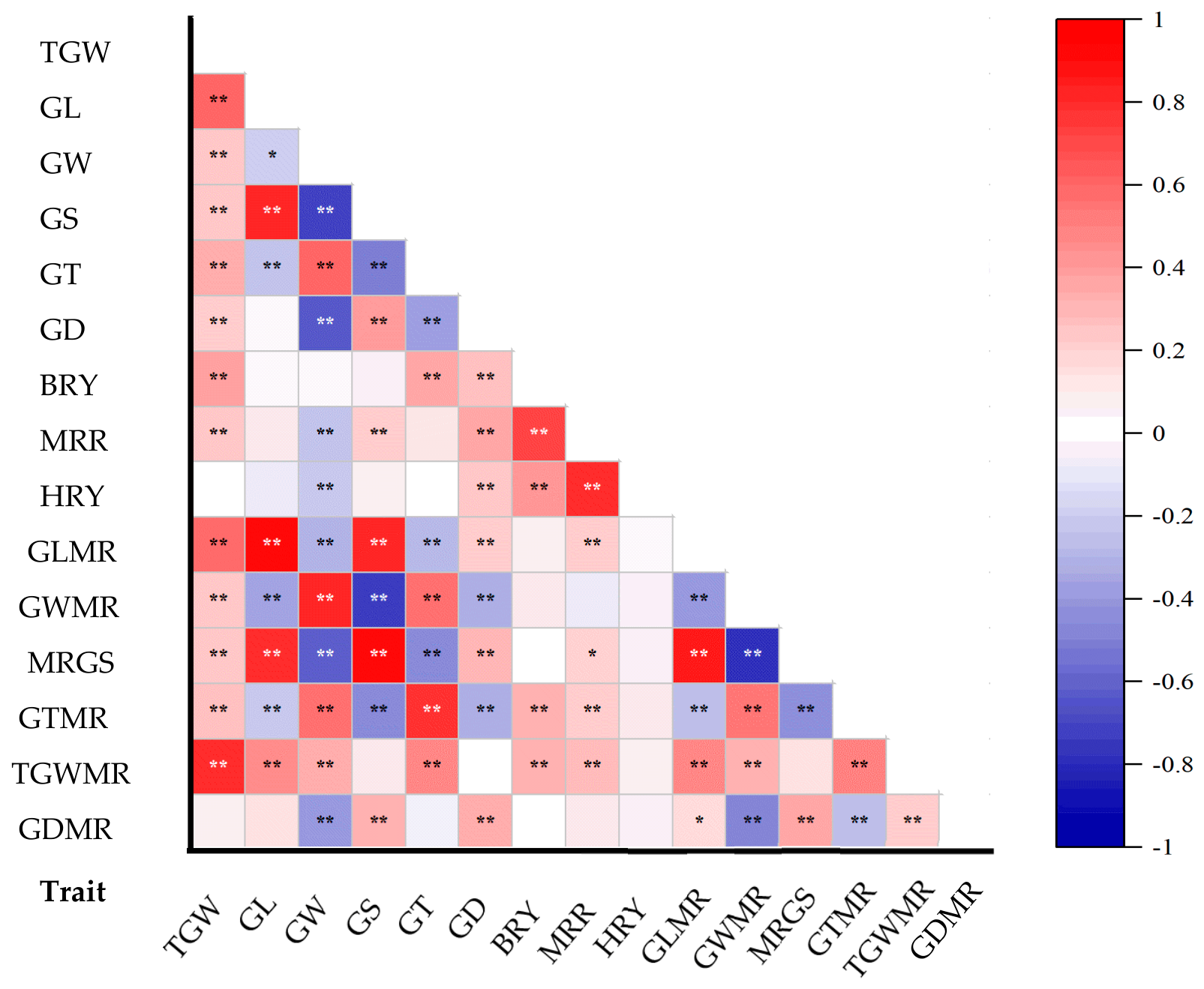
Correlation analysis shows that rough rice grain shape is highly correlated with polished rice shape. While 1000-grain weight shows a highly significant positive correlation with the weight of polished rice. Furthermore, 1000-grain weight exhibits a highly significant positive correlation with grain length, grain width, grain thickness, brown rice rate, polished rice rate, and the length-to-width ratio of grains. Conversely, grain width exhibits a significant negative correlation with the polished rice ratio, brown rice ratio, grain length and grain density. Additionally, both brown and polished rice rates are extremely significantly positively correlated with grain thickness (Figure 1).

2.2. Sequence Variation in OsSWEET11 and OsSWEET15 Within the Germplasm Population

The SWEET11 gene (LOC_Os08g42350) is located on chromosome 8 of rice, with a genomic length of 2854 bp. It comprises six exons and five introns, with a coding sequence (CDS) of 924 bp, encoding a protein of 307 amino acids that exhibits the typical SWEET proteins, featuring two symmetrical MtN3/saliva domains (sugar efflux transporters). The SWEET15 gene (LOC_Os02g30910) is situated on rice chromosome 2, with a genomic length of 2746 bp. It contains six exons and five introns, with a CDS of 957 bp that encodes a plasma membrane protein of 319 amino acids.
After obtaining the gene sequences for these two genes from 139 rice germplasm accessions, SNPs with a missing rate exceeding 20% and a minor allele frequency below 0.05 were excluded. Ultimately, a total of eight SNPs were identified in OsSWEET11 and OsSWEET15.
To avoid false associations, the population structure was evaluated using Structure2.2 with 80 SSR markers previously. The resulting subpopulation membership percentages were consistent with the subspecies classification [18].
All eight SNPs were found to be significantly associated with grain traits (p < 0.05). Specifically, two loci (SNP236 and SNP1817) were found in OsSWEET11, while six other loci (SNP1845, SNP1848, SNP1853, SNP1874, SNP1990 and SNP2070) were found in OsSWEET15. Notably, all six SNPs in OsSWEET15 were located within the coding sequence and were strongly associated with traits such as grain length, grain thickness and 1000-grain weight. In contrast, the SNP1817 locus in OsSWEET11 was located in the coding region and was primarily associated with 1000-grain weight. Meanwhile, the SNP236 locus in OsSWEET11 was found in the intron region and was associated with grain thickness (Table 2).
Analysis of allelic variations in the coding sequence revealed three nonsynonymous mutations in three SNPs (SNP1853, SNP1874 and SNP1990) in OsSWEET15. Specifically, the base at SNP1853 changes from T to C, resulting in a change from valine to alanine. The base at SNP1874 changes from T to C, resulting in a change from isoleucine to threonine, and the base at SNP1990 changes from C to A, resulting in a change from proline to threonine (Table 3).

2.3. Different Haplotypes of OsSWEET15 and OsSWEET11 Are Significantly Associated with Grain Traits

2.3.1. Association Analysis of OsSWEET15 Haplotypes and Grain Traits

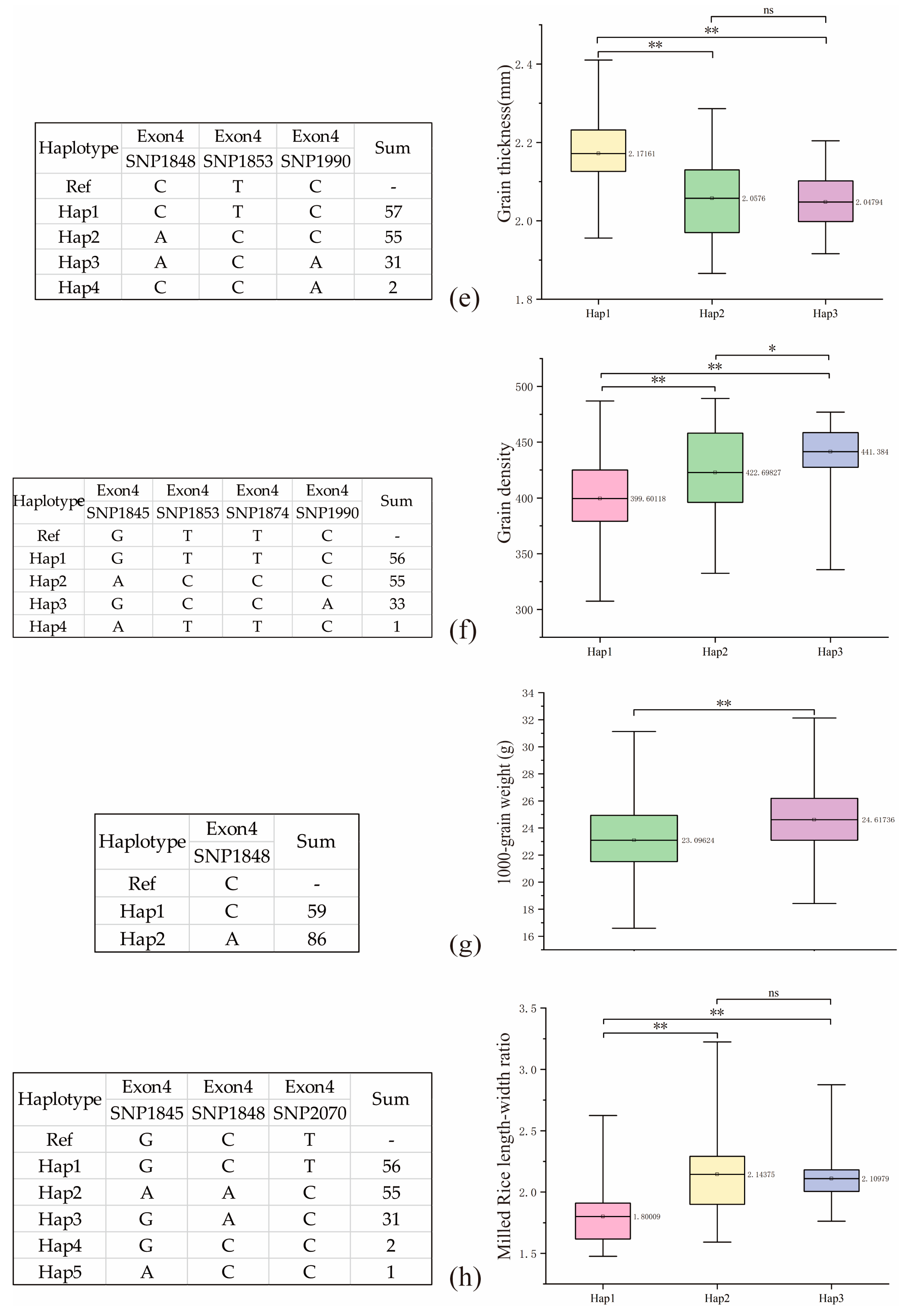
A haplotype-based association analysis of grain traits revealed significant differences in terms of grain length, length-to-width ratio, grain thickness and 1000-grain weight among the OsSWEET15 germplasm resources.
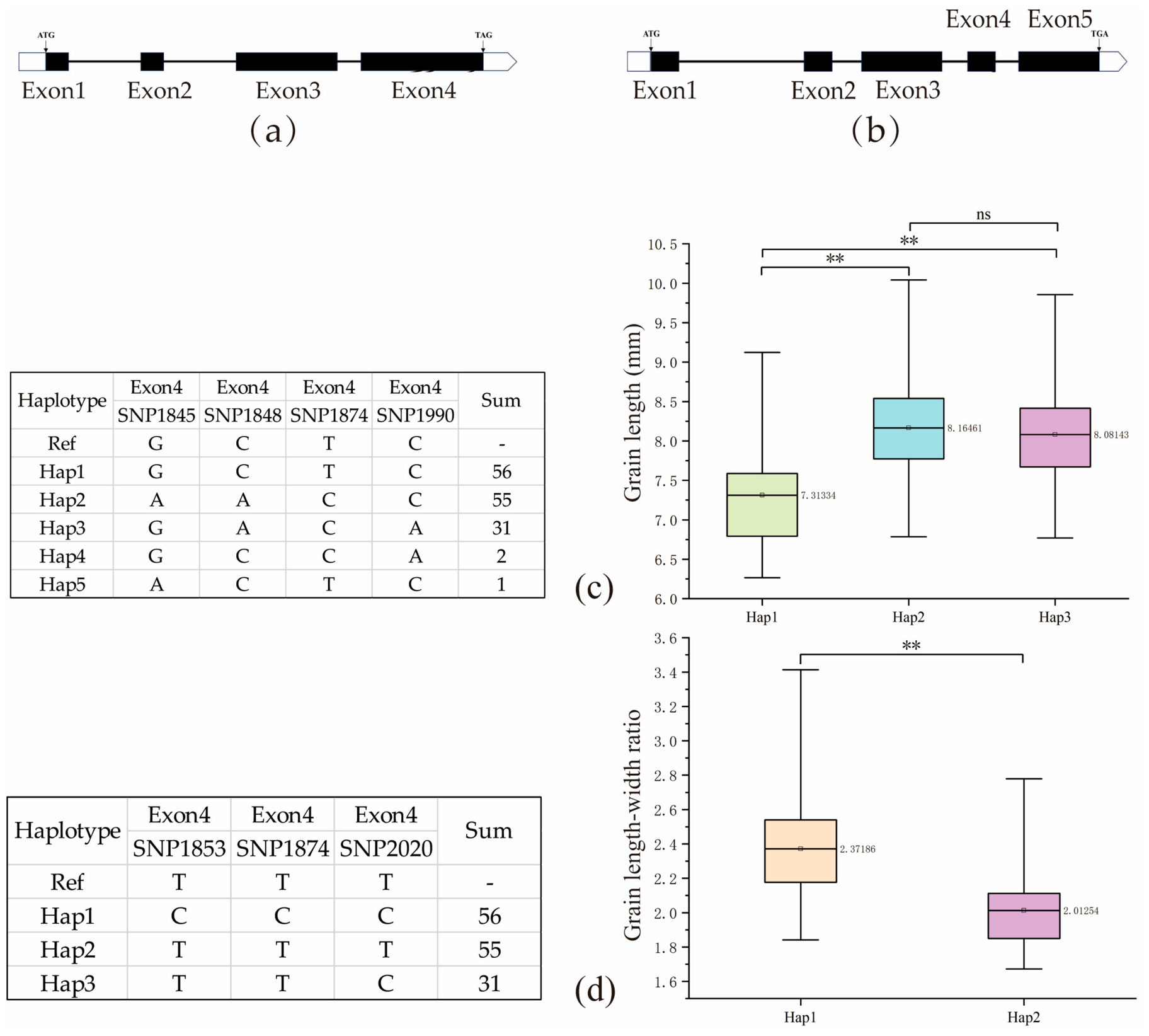
Five OsSWEET15 haplotypes were associated with grain length. Accessions with haplotypes Hap2 and Hap3 were found to have longer grains, exhibiting significant differences (p < 0.01) in grain length compared to accessions carrying the Hap1 haplotype. In contrast, only two and one accessions comprised haplotypes Hap4 and Hap5, respectively (Figure 2a).
Three haplotypes were associated with the grain length-to-width ratio, where the ratio of accessions with haplotype Hap1 was significantly greater than that of accessions with haplotype Hap2 (Figure 2b).
Among the four haplotypes associated with grain thickness, accessions with Hap1 exhibited significantly thicker grains (Figure 2c).
Among the four haplotypes associated with grain density, significant differences in grain density were observed between Hap1, Hap2 and Hap3. In particular, the germplasm carrying Hap3 shows higher grain density, suggesting that this germplasm may possess superior grain-filling characteristics (Figure 2d).
Of the two haplotypes associated with 1000-grain weight, accessions carrying Hap2 exhibited significantly higher values than those carrying Hap1.
Regarding polished rice grain shape, OsSWEET15 exhibits five haplotypes that differ significantly in polished rice length-to-width ratio, with relatively few accessions carrying Hap4 and Hap5. Accessions carrying Hap2 and Hap3 had an extremely significantly greater polished rice length-to-width ratio than those carrying Hap1 (Figure 2f).
Among the two haplotypes associated with polished rice thickness, the thickness of Hap1 was significantly greater than that of the Hap2 haplotype (Figure 2g).

2.3.2. Association Analysis of OsSWEET11 Haplotypes and Grain Traits

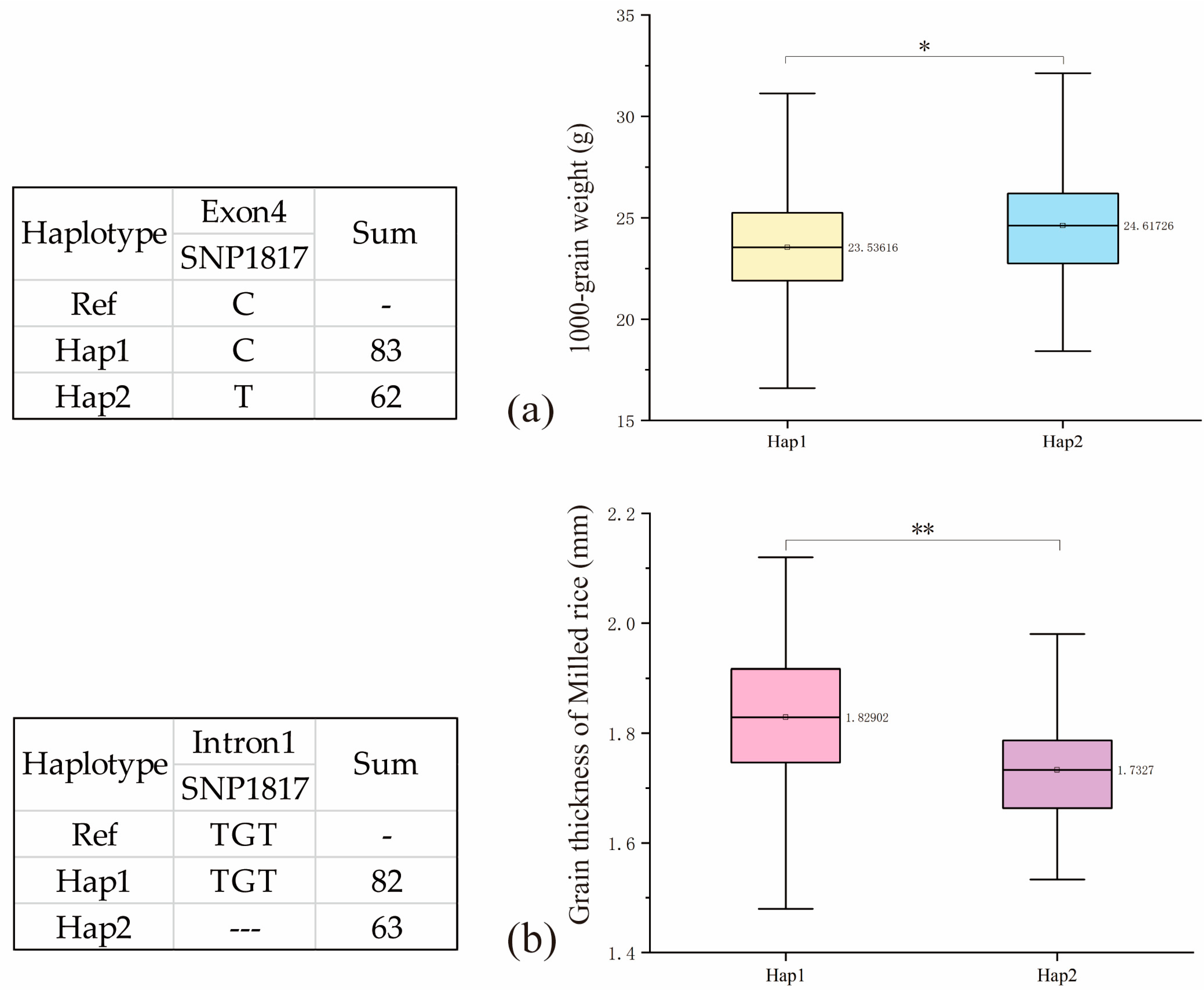
Analysis of haplotypes for the OsSWEET11 gene revealed that two haplotypes are associated with 1000-grain weight. Accessions of haplotype Hap2 exhibited significantly higher 1000-grain weights compared to those of haplotype Hap1 (Figure 3a).
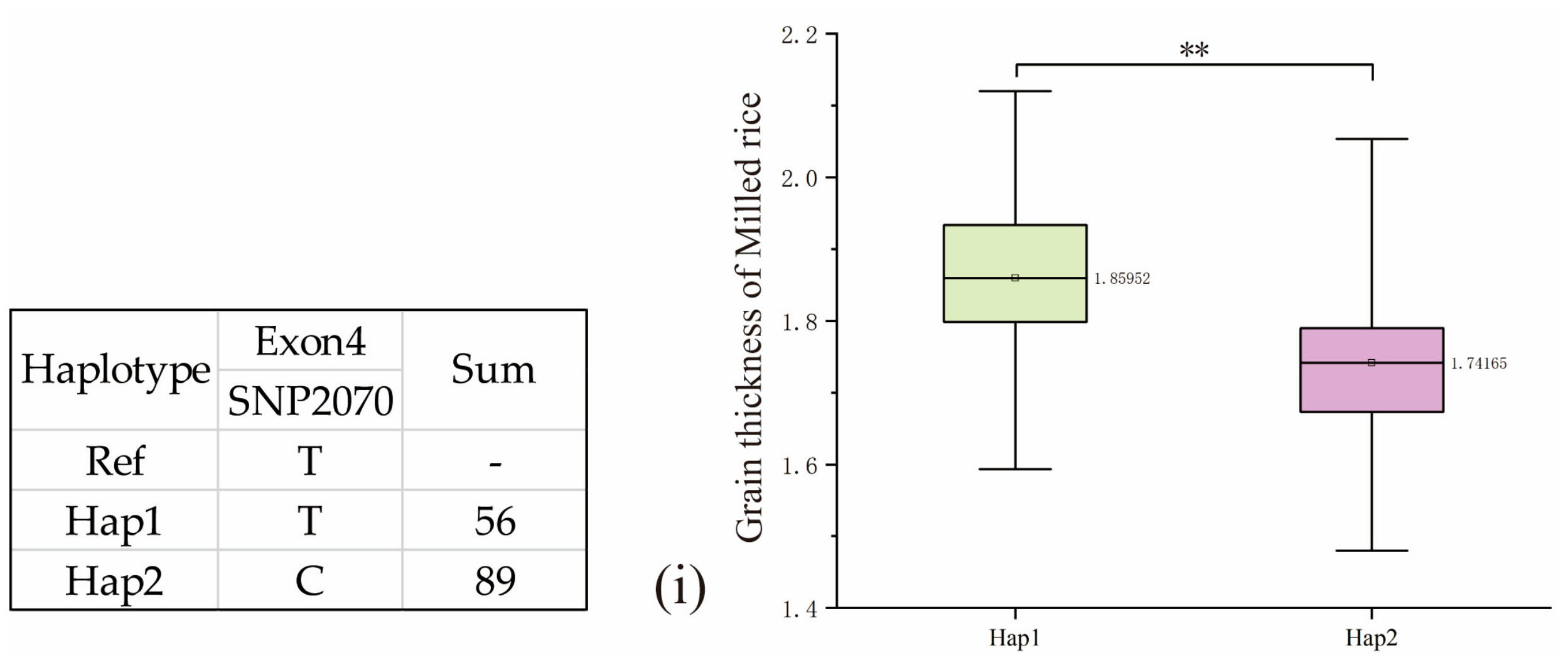
Furthermore, among the two haplotypes associated with grain thickness, haplotype Hap1 demonstrated a highly significant increase in grain thickness compared to haplotype Hap2 (Figure 3b).

3. Discussion

Our study demonstrates that the landrace rice germplasm in Yunnan exhibits substantial genetic diversity in terms of grain traits, rice appearance, and milling quality characteristics. Furthermore, grain filling is closely associated with grain shape [19]. Correlation analysis revealed an extremely significant positive correlation between the 1000-grain weight and the grain length-to-width ratio. This indicates that within the landrace rice germplasm resources, slender grains (characterized by larger length-to-width ratios) tend to have a higher grain weight, suggesting denser filling [20]. This finding is consistent with the observation of a highly significant negative correlation between grain width and the brown rice rate, polished rice rate and grain density. This suggests that wider grains are less favorable for optimal rice grain filling.
OsSWEET11 and OsSWEET15 are both sucrose transporters associated with grain filling. Notably, mutations in OsSWEET11 can lead to significant hindrances in grain filling, while mutations in OsSWEET15 exhibit no apparent phenotypic alterations [21]. However, the double mutant of OsSWEET11 and OsSWEET15 demonstrates severe defects in grain filling, suggesting that OsSWEET11 serves as the primary protein for sucrose transport during this process, exerting a substantial influence on grain sugar transport. Conversely, OsSWEET15 appears to be a minor-effect gene that collaborates with OsSWEET11 in rice grain filling.
Our findings further support this result. Among the variation sites identified in OsSWEET11, only one was located in the coding region, and it was a synonymous mutation. This observation aligns with the key role of OsSWEET11 in regulating sucrose transport during grain filling; it has likely undergone significant selective pressure, as mutations in the coding region would impair the functionality of sucrose transport, resulting in the retention of the gene sequence through evolution. In contrast, six variation sites were identified in the OsSWEET15 coding sequence, three of which were non-synonymous mutations. This suggests that OsSWEET15, functioning as a minor-effect sucrose transporter during grain filling, has experienced weaker purifying selection than OsSWEET11 throughout evolution, allowing it to accumulate greater genetic variation and thereby enrich the genetic diversity of rice populations. Importantly, not all of this variation is neutral: we found that polymorphisms at these loci were significantly associated with changes in grain length, length-to-width ratio, grain thickness and grain density. Among these functional variations, three non-synonymous mutations in the coding region are particularly noteworthy: Ala123Val (SNP1234, G → T), Ile187Thr (SNP1874, T → C), and Pro245Thr (SNP1990, C → A). All three mutations are located in the central sucrose-binding pocket of OsSWEET15, but exert distinct effects on protein function through different molecular mechanisms: the Ala-Val mutation reduces the volume of the binding pocket and increases substrate binding specificity; the Ile-Thr mutation introduces an additional hydrogen bond with sucrose, significantly enhancing substrate binding affinity and leading to increased total sugar accumulation in grains; and the Pro-Thr mutation increases the conformational flexibility of the binding pocket exit, accelerating sucrose release into the apoplast and improving grain filling uniformity. These distinct functional effects directly explain the divergent phenotypic performances of OsSWEET15 haplotypes: Hap2 carrying the Ile187Thr mutation shows significantly higher 1000-grain weight, while Hap3 carrying the Pro245Thr mutation exhibits markedly higher grain density.
This pattern indicates that OsSWEET15 has accumulated diverse functional genetic variations through both natural and artificial selection, which enables rice to adapt to different grain-filling patterns and grain type requirements. However, the minor effects of individual OsSWEET15 variants result in subtle phenotypic changes that are often subtle and easily masked by environmental factors or the influence of major genes. This makes traditional genetic methods, such as map-based cloning, single-gene mutation and gene editing, inadequate for accurately dissecting its function. Consequently, candidate gene association analysis, which can detect small-effect genetic variations in natural populations, emerges as a particularly powerful tool for elucidating the function of minor-effect genes like OsSWEET15. A critical consideration in all candidate gene association studies is the potential impact of population stratification, which can lead to spurious associations between genetic markers and traits. To address this issue, we used the mixed linear model (MLM) that simultaneously incorporates both the population structure matrix (Q matrix) derived from STRUCTURE analysis and the pairwise kinship matrix (K matrix) for all association tests.
Germplasm resources harboring superior haplotypes are crucial genetic resources for crop breeding [22,23]. Association analysis can be used to explore the relationships between target genes and associated traits. When integrated with haplotype analysis, association analysis enables the identification of natural variant sites and advantageous haplotypes that contribute positively to the phenotype. Our study demonstrated that the 1000-grain weight of the Hap2 haplotype of OsSWEET11 is significantly higher than that of other haplotypes; however, whether this increase is related to the haplotype’s capacity to enhance grain filling requires further investigation. Furthermore, the Hap2 haplotype of OsSWEET15 was found to result in a higher 1000-grain weight. Germplasm possessing the Hap3 haplotype showed significant advantages in terms of both grain and polished rice density, suggesting that germplasm carrying this haplotype experiences more effective grain filling. Furthermore, germplasm containing both Hap2 and Hap3 had a larger length-to-width ratio, resulting in slimmer grains and improved appearance quality.
Our study elucidated the effects of natural variation in OsSWEET11 and OsSWEET15 on the grain-related characteristics of landrace rice germplasm resources in Yunnan, identifying superior haplotypes and their breeding value.
Although the role of OsSWEET11 and OsSWEET15 in regulating rice grain traits has been effectively validated, this study has several limitations that should be acknowledged: This study relied solely on natural population association and haplotype analysis, without conducting gene expression profiling analysis, subcellular localization analysis, or transgenic/CRISPR knockout/overexpression experiments to validate the effects of identified SNPs and haplotypes on OsSWEET15/OsSWEET11 expression, protein function, and sucrose transport activity. Therefore, there is a lack of direct molecular evidence linking sequence variations to biological function; all phenotype data were collected from plants grown in greenhouses in Kunming, and grain traits are highly sensitive to environmental factors such as temperature, light, and soil fertility [24,25]. Therefore, the lack of multi-environment field experiments limits the generalizability of our research results, and the genetic effects of SNP/haplotypes identified under field conditions are still unclear. The natural population used here possesses a fixed sample size, and the restricted germplasm resource may overlook rare functional allelic variants with minor genetic effects. Moreover, the current analysis mainly focuses on the individual genetic effect of OsSWEET11/OsSWEET15, and epistatic interactions between these two SWEET genes or other grain-filling-related loci were not systematically explored, which restricts a comprehensive interpretation of the genetic regulatory network underlying rice grain development.
Germplasm resources carrying superior haplotypes are crucial genetic resources for crop breeding [26]. Our study identified OsSWEET15 Hap2 (high 1000-grain weight) and Hap3 (high grain density) as elite haplotypes for rice grain quality and yield improvement, as well as OsSWEET11 Hap2 for higher grain weight. These favorable haplotypes provide valuable molecular markers for marker-assisted selection (MAS) in rice breeding. These markers can be applied to early-generation seedling screening in rice breeding practice, effectively avoiding the blindness of traditional phenotypic selection, shortening the breeding cycle, and improving the accuracy of targeted selection for high-yield and high-quality rice varieties.
Overall, this study systematically described the natural genetic variations of OsSWEET11 and OsSWEET15 in different rice germplasm populations, and successfully identified multiple elite haplotypes closely related to grain weight and density traits. This work provides new haplotype resources and candidate functional SNPs, further enriching the genetic basis of rice grain filling and yield variation, providing valuable germplasm resources and molecular markers for precise improvement in rice yield and quality, and providing clear and feasible goals for subsequent gene function research and molecular breeding.

4. Materials and Methods

4.1. Materials

The rice accessions used in the study included 139 landraces from Yunnan, China, as well as six modern cultivated varieties. Of these, 89 were japonica, and 56 were indica (Appendix A.1).

4.2. Measurement of Grain Traits

All rice accessions were cultivated in a greenhouse in Kunming, Yunnan (102°44′ E, 25°7′ N). Once mature, each variety was harvested. The rice grains were sun-dried and stored in a room for three months until their physical and chemical characteristics had stabilized. The grain traits assessed included grain length, width, thickness, the length-to-width ratio and the 1000-grain weight. Appearance quality traits measured included polished rice length, width, length-to-width ratio, chalky grain ratio, brown rice ratio, polished rice ratio, and 1000-grain weight of polished rice, according to the standard NY/T83-2017 issued by the Chinese Ministry of Agriculture for measurement and analysis. Measurement of brown rice yield is as follows: weigh 50.00 g of dried rice grains (with a moisture content controlled at approximately 12%) (error ≤ 0.02), use a huller (Kett Electric Laboratory Co. Ltd., Tokyo, Japan) to remove the shell, and then weigh the weight of the resulting brown rice; for precision rice rate, weigh approximately 20 g of ground brown rice, use a precision rice mill (Shanghai Qingpu Lüzhou Instrument Co., Ltd., Shanghai, China) to grind it, use a 100-mesh sieve to remove surface dust, weigh it and calculate the precision rice rate; for whole rice rate, weigh approximately 10 g of the obtained polished rice, select incomplete grains (grain length ≤ 3/4), miscellaneous grains, and yellow grains from the polished rice, weigh them, and calculate the whole rice rate.
The measurement of appearance quality involves taking 10 healthy, plump, and uniformly sized intact grains from the grain/milled rice, arranging them end-to-end above a ruler and measuring them with a Vernier caliper (Harbin Measuring & Cutting Tool Group Co., Ltd., Harbin, China), with an accuracy of 0.01 mm and a repetition error of ≤0.50 mm. Each material is repeated three times, and the average of the three measurements is taken as the final value.

4.3. Gene Sequence Analysis

4.3.1. Genomic DNA Extraction

Collect fresh young leaves from 2-week-old rice seedlings of each variety, immediately freeze them in liquid nitrogen, and store them at −80 °C until use. Genomic DNA was extracted using an improved cetyltrimethylammonium bromide (CTAB) method.

4.3.2. PCR Amplification of Target Fragment

Based on the Rice Annotation Project Database, primers were designed based on the sequences of OsSWEET11 (LOC_Os08g42350, 2854 bp) and OsSWEET15 (LOC_Os02g30910, 2746 bp) (Table 4). PCR amplification was carried out in a 25 μL reaction system, which included: 12.5 μL 2× Taq PCR Master Mix (from BioNTech (Shanghai) Co., Ltd., Shanghai, China), 1 μL forward primer (10 μM), 1 µL reverse primer (10 µM) (synthesized by BioNTech (Shanghai) Co., Ltd.), 1 μL genomic DNA template, and 9.5 μL nuclease-free water.
The PCR reaction procedure is as follows: initial denaturation at 94 °C for 5 min; denaturate for 30 s and 35 cycles at 94 °C, annealing time for 30 s, annealing temperature 58 °C, extend for 1 min/kb at 72 °C, and finally extend for 10 min at 72 °C. PCR products were detected by electrophoresis on 1.5% agarose gel stained with ethidium bromide (EB) and observed under an gel documentation system (Shanghai Tanon Science & Technology Co., Ltd., Shanghai, China) to confirm whether there were specific amplicons of the expected size. After PCR amplification, qualified PCR products were submitted to Biotechnology (Shanghai) Co., Ltd. (Shanghai, China) for Sanger sequencing using an Applied Biosystems™ 3730XL DNA Analyzer (Thermo Fisher Scientific, Waltham, MA, USA). Raw sequencing chromatograms were assembled and trimmed via SnapGene; multiple sequence alignment of OsSWEET11 and OsSWEET15 was performed with MEGA11 to screen valid SNP variants after removing low-quality and missing-data sites.

4.4. Statistical Analysis

The phenotypic data were organized using Microsoft Excel 2019 (Microsoft Corporation, Redmond, WA, USA). SnapGene (version 6.2.1, GSL Biotech LLC, Chicago, IL, USA) was used to assemble the sequencing reads, and MEGA11(version 11.0.13, Institute for Genomics and Evolutionary Medicine, Temple University, Philadelphia, PA, USA) was used for sequence alignment. We performed significance tests on the data differences to analyze genetic sequence polymorphisms using SPSS 27.0 (IBM Corp., Armonk, NY, USA). Haplotype analysis of significantly associated polymorphic loci was performed using DnaSP6 (version 6.12.03, Universitat de Barcelona, Barcelona, Spain) and Excel to investigate the association between genotypic haplotypes and phenotypic traits. Within the specified analysis interval, all samples with identical nucleotide sequences are classified as the same haplotype (Haplotype, Hap), and there is at least one nucleotide difference (SNP or Indel) between different haplotypes. In addition, OriginPro 2024 (64-bit) SR1 version 10.1.0.178 (OriginLab Corporation, Northampton, MA, USA) was used for data visualization. The mixed linear model (MLM) program in the TASSEL5 software (version 5.2.93, Cornell University, Ithaca, NY, USA) was used to perform correlation analysis between selected genes and measured phenotypic traits. The associated region is the coding region, and the most polymorphic and relatively concentrated fragments are selected. The Q matrix is obtained by running the Structure [27] software (version 2.3.4, Stanford University, Stanford, CA, USA), and the K matrix is calculated by SPAGeDi software (version 1.5, Université Libre de Bruxelles, Brussels, Belgium). A population structure analysis on the obtained Q matrix and K matrix was conducted, and it was used as a covariate to correct the data and reduce the influence of kinship on the results [28,29].

5. Conclusions

The landrace rice germplasm resources in Yunnan exhibited rich genetic diversity in terms of grain traits. Correlation analysis of these traits revealed that grain filling was closely related to grain shape. This indicates that varieties with wider grains are less favorable for achieving full grain filling in rice.
A total of eight significantly associated SNP loci were identified in the association analysis. Of these, six coding-region loci were found in OsSWEET15, which exerted significant effects on traits such as grain length, grain thickness, grain density and 1000-grain weight. OsSWEET11 harbored two loci, one of which was situated in the coding region.
Different haplotypes of OsSWEET15 exhibited significant associations with rough rice weight and shape traits: germplasms carrying the Hap1 haplotype had a higher grain length-to-width ratio and produced slender rough grains, those with the Hap3 haplotype showed higher grain density and better grain filling characteristics, and those harboring the Hap2 haplotype exhibited higher TGW. Similarly, germplasms carrying the Hap2 haplotype of OsSWEET11 also tended to have higher TGW. These results suggest that natural variations in OsSWEET11 and OsSWEET15 may be involved in regulating rice grain trait formation, and the identified superior haplotypes provide potential molecular markers for rice breeding.


Author Contributions

J.X. supervised the study and designed the experiments. F.L., D.K., Y.L. and K.L. performed the experiments. All authors have read and agreed to the published version of the manuscript.

Funding

This study was supported by Yunnan Fundamental Research Projects (grant NO. 202401AS070005) and the National Natural Science Foundation of China (32260515).

Institutional Review Board Statement

Not applicable.

Informed Consent Statement

Not applicable.

Data Availability Statement

The data supporting the findings of this study are available within the article.

Conflicts of Interest

The authors declare no conflicts of interest.

Abbreviations

The following abbreviations are used in this manuscript:
TGW1000-grain weight
GWGrain width
GLGrain length
GSGrain shape (length-to-width ratio)
GTGrain thickness
GDGrain density
BRYBrown rice yield
MRRMilled rice recovery
HRYHead rice yield
GLMRGrain length of Milled rice
GWMRGrain width of Milled rice
MRGSMilled Rice Grain shape
GTMRGrain thickness of Milled rice
TGWMR1000-grain weight of Milled rice
GDMRGrain density of Milled rice
SNPSingle nucleotide polymorphism
bpBase pair
DNADeoxyribonucleic Acid
CTABCetyltrimethylammonium bromide
V/A/IValine/Alanine/Isoleucine
T/P/SThreonine/Proline/Serine
C/YCysteine/Tyrosine

Appendix A

Appendix A.1

Table A1. Yunnan rice landraces resources.
Serial NumberIDVarietyOriginSubpopulation
1LR-1Yu NuoYunnanIndica rice
2LR-2Hongpi NuoYunnanJaponica rice
3LR-3Sanbang BangYunnanIndica rice
4LR-4Zhongguo HongbianguYunnanJaponica rice
5LR-6Guangyedao 1YunnanJaponica rice
6LR-7Zao Nuo 1 HaoYunnanJaponica rice
7LR-8Hongqiao HuiguYunnanJaponica rice
8LR-9Maxian GuYunnanJaponica rice
9LR-10Guanshan GuYunnanIndica rice
10LR-11HongmaoyingYunnanJaponica rice
11LR-12HongmaoyingYunnanJaponica rice
12LR-13Youzhi Changli JingYunnanJaponica rice
13LR-14Huangke NuoYunnanIndica rice
14LR-15Huangke NuoYunnanIndica rice
15LR-16Tengchong LufengguYunnanIndica rice
16LR-17EbuqinYunnanJaponica rice
17LR-18Xiaoma GuYunnanJaponica rice
18LR-19Shuiza GuYunnanIndica rice
19LR-20QiannaniYunnanIndica rice
20LR-22Liuyue GuYunnanIndica rice
21LR-23Liandao GuYunnanJaponica rice
22LR-25Shala GuYunnanIndica rice
23LR-26Xi GuYunnanIndica rice
24LR-27Lübang GuYunnanIndica rice
25LR-28LaoshuyaYunnanIndica rice
26LR-29P1-238-2YunnanIndica rice
27LR-30P1-522YunnanJaponica rice
28LR-31Hua’er HanYunnanIndica rice
29LR-32Yongshan HanguYunnanIndica rice
30LR-33Liuyue GuYunnanIndica rice
31LR-34LR-34YunnanJaponica rice
32LR-35Aijiao NuoYunnanIndica rice
33LR-36Mengbai XiaohongguYunnanJaponica rice
34LR-37Paozhu GuYunnanIndica rice
35LR-38Hongjiao GuYunnanIndica rice
36LR-39Dawan GuYunnanJaponica rice
37LR-40ChangmangguYunnanJaponica rice
38LR-41HonganguYunnanJaponica rice
39LR-42Guangyedao 2YunnanJaponica rice
40LR-43LiandaoguYunnanJaponica rice
41LR-44Yunlu 52YunnanJaponica rice
42LR-45HonganlaoYunnanJaponica rice
43LR-46ChenganxiangYunnanJaponica rice
44LR-48BainaqianYunnanIndica rice
45LR-49BanmangguYunnanJaponica rice
46LR-50Yunlu 54YunnanJaponica rice
47LR-51MaqianguYunnanIndica rice
48LR-53EbendianYunnanJaponica rice
49LR-54MaqianYunnanIndica rice
50LR-55Qianni HongmiYunnanIndica rice
51LR-56Wuyu 28YunnanJaponica rice
52LR-57Zhaotong XiaomaguYunnanJaponica rice
53LR-58MengwangguYunnanJaponica rice
54LR-59Yongning XiaobaiguYunnanJaponica rice
55LR-60Wuzui HongguYunnanIndica rice
56LR-61HainanguYunnanIndica rice
57LR-62MazhaguYunnanIndica rice
58LR-63Dibaigu-2YunnanJaponica rice
59LR-64BaihaiguYunnanJaponica rice
60LR-65Daxianggu-2YunnanJaponica rice
61LR-66Guangyedao 3YunnanJaponica rice
62LR-67DabaiguYunnanIndica rice
63LR-68Daxianggu-3YunnanJaponica rice
64LR-69Yongning Qunxuan 2 HaoYunnanJaponica rice
65LR-70ZhushinuoYunnanJaponica rice
66LR-71Bendi HanguYunnanJaponica rice
67LR-72Lufeng NuguYunnanJaponica rice
68LR-73Lufeng NuguYunnanIndica rice
69LR-74QiantuoheYunnanIndica rice
70LR-75Yongning XiaomaguYunnanJaponica rice
71LR-76Yunkang 09YunnanJaponica rice
72LR-77Dalaka HongguYunnanJaponica rice
73LR-78DenglengYunnanIndica rice
74LR-79LR-79YunnanIndica rice
75LR-80Fuha HaniYunnanJaponica rice
76LR-81Hongjiao XiangjingYunnanIndica rice
77LR-82P1-229YunnanIndica rice
78LR-83MaqianYunnanIndica rice
79LR-84Lengshui GuYunnanIndica rice
80LR-85Laolai HuangYunnanIndica rice
81LR-86Shuangbai GuYunnanIndica rice
82LR-87Xianwei DaoYunnanIndica rice
83LR-88Xiang GuYunnanJaponica rice
84LR-89HeilengshuiYunnanJaponica rice
85LR-90Langcang DabaiguYunnanJaponica rice
86LR-91Langcang DabaiguYunnanIndica rice
87LR-92Langcang DabaiguYunnanJaponica rice
88LR-93Hua GuYunnanJaponica rice
89LR-94Wanli XiangYunnanJaponica rice
90LR-95Xiaohuang NuoYunnanJaponica rice
91LR-96Maqian GuYunnanIndica rice
92LR-97Luoge MaqianYunnanJaponica rice
93LR-98Daxianggu-1YunnanJaponica rice
94LR-99Achuche (Lengshui Gu)YunnanIndica rice
95LR-100Laolai Hong 1YunnanIndica rice
96LR-102Xiao AijiaoYunnanJaponica rice
97LR-103MaqingYunnanJaponica rice
98LR-104MaqingYunnanIndica rice
99LR-105Huangsi Nuo GuYunnanJaponica rice
100LR-106Tian 1087YunnanIndica rice
101LR-107Han GuYunnanIndica rice
102LR-109ManchecheranYunnanJaponica rice
103LR-110Wadu XiaobaiguYunnanJaponica rice
104LR-111Pannong 1 HaoYunnanIndica rice
105LR-112LR-114YunnanJaponica rice
106LR-113Xiao HongguYunnanJaponica rice
107LR-114YL1311YunnanJaponica rice
108LR-115M1-448 (Yongning Laopinzhong)YunnanJaponica rice
109LR-116M1-429 (Yongning Laopinzhong)YunnanIndica rice
110LR-117Xiaobaigu 1YunnanJaponica rice
111LR-118XiaohongguYunnanJaponica rice
112LR-119Huaaigu 2YunnanJaponica rice
113LR-120Xiaobaigu 2YunnanJaponica rice
114LR-122ErsiguYunnanIndica rice
115LR-123Lijiang Xintuan HeiguYunnanIndica rice
116LR-124Yongning DabaiguYunnanJaponica rice
117LR-125Yongning Wadu XiaobaiguYunnanIndica rice
118LR-126Misha HongguYunnanJaponica rice
119LR-127Long 16HeilongjiangJaponica rice
120LR-128Long 16-2HeilongjiangJaponica rice
121LR-129LR129YunnanJaponica rice
122LR-130LR-18YunnanJaponica rice
123LR-131LR139YunnanJaponica rice
124LR-132LR140YunnanJaponica rice
125LR-133LR141YunnanJaponica rice
126LR-134LR142YunnanJaponica rice
127LR-135LR143YunnanJaponica rice
128LR-136Jinning XiangguYunnanJaponica rice
129LR-137HongmiYunnanJaponica rice
130LR-138ChenuYunnanJaponica rice
131LR-139US19USAJaponica rice
132LR-140US30USAJaponica rice
133LR-141Menghai XiangguYunnanJaponica rice
134LR-142LananguYunnanJaponica rice
135LR-143DaxiangnuoYunnanJaponica rice
136LR-144KaogouguYunnanJaponica rice
137LR-145JiegunuoYunnanJaponica rice
138LR-146LR16YunnanIndica rice
139LR-147Long 16-3HeilongjiangJaponica rice
140LR-148ZhenzhuHeilongjiangJaponica rice
141LR-149Long 18YunnanJaponica rice
142LR-150LR-139YunnanIndica rice
143LR-151LR-140YunnanJaponica rice
144LR-152LR-141YunnanJaponica rice
145LR-153LR-142YunnanIndica rice

Appendix A.2

Table A2. Phenotypic data of germplasm.
Serial NumberTGW (g)GL (mm)GW (mm)GSGT (mm)GD (g/L)BRY (%)MRR (%)HRY (%)GLMR (mm)GWMR (mm)MRGSGTMR (mm)TGWMR (g)GDMR g/L
LR-121.747.673.442.232.01410.9775.21%65.12%60.28%5.492.781.971.7517.12638.65
LR-219.687.023.142.241.94460.0273.01%63.58%61.88%4.832.721.771.6715.77716.54
LR-323.586.863.451.992.18457.5077.58%67.91%64.20%5.092.781.831.7919.58772.57
LR-419.556.773.491.942.06402.3770.62%61.50%60.39%4.992.841.751.7216.55679.25
LR-628.078.033.882.072.22405.1077.74%66.87%65.18%5.882.971.981.8921.28644.84
LR-726.967.683.462.222.18466.0977.24%65.71%61.85%5.432.662.041.8219.93761.61
LR-823.496.863.432.002.16462.5478.74%68.03%64.42%5.082.711.871.7918.65756.29
LR-924.096.833.441.982.09489.2480.22%69.56%66.80%4.982.781.791.7919.07770.04
LR-1022.757.673.442.231.97438.8574.08%64.77%60.60%5.632.582.181.6917.33704.42
LR-1118.566.273.621.732.00408.6473.25%64.15%62.72%4.732.891.641.7615.97663.62
LR-1224.687.283.651.992.14433.8274.28%64.60%62.41%5.262.861.841.8520.37730.83
LR-1325.268.843.312.671.96440.6876.31%67.35%65.75%6.222.482.511.5917.83725.99
LR-1424.988.324.052.052.41307.4274.59%57.96%52.45%5.422.961.832.1121.52633.23
LR-1526.817.943.972.002.24379.5773.97%59.53%51.68%5.082.761.842.0020.07718.14
LR-1624.557.773.452.251.96466.1778.75%67.07%65.14%5.492.692.041.7117.47691.53
LR-1719.626.593.441.912.17398.0179.96%67.76%66.41%4.422.851.551.8114.80646.98
LR-1819.356.723.611.862.13374.5478.59%67.81%66.45%4.372.781.571.8415.93714.64
LR-1924.638.333.392.462.03430.8174.01%60.95%51.82%5.582.702.071.7118.52716.60
LR-2024.378.713.042.862.00458.8577.72%67.55%64.78%6.472.222.911.6818.55766.65
LR-2224.067.373.422.162.07460.5977.89%69.11%66.53%5.412.831.911.8718.05632.32
LR-2324.167.513.472.172.02459.5377.48%67.66%64.57%5.412.731.981.7817.73672.05
LR-2518.437.403.032.441.87440.0672.40%66.03%64.49%5.352.382.251.5614.55736.12
LR-2626.327.703.572.162.09458.5979.74%68.52%66.08%5.602.941.901.7220.22712.22
LR-2724.606.773.501.942.19475.0280.85%67.64%63.60%5.262.981.761.8618.73643.90
LR-2823.747.013.492.012.15451.4079.92%65.40%60.45%5.032.761.821.8418.70731.83
LR-2925.178.143.412.391.97459.7572.73%60.21%49.39%5.462.781.961.7317.77674.35
LR-3023.156.683.671.822.19431.2977.23%65.19%63.14%4.982.881.731.7717.95707.87
LR-3125.778.043.472.322.03453.5879.40%66.33%53.38%5.622.792.011.7220.33752.89
LR-3220.027.673.402.261.92400.8277.88%68.15%66.72%5.472.642.071.6215.65669.41
LR-3324.477.343.602.042.20420.2580.51%64.53%56.27%5.152.841.811.7917.53668.49
LR-3423.437.383.721.982.16395.0679.03%65.04%63.43%4.873.031.611.8117.30650.38
LR-3520.008.003.022.651.89438.2577.70%63.78%58.51%5.522.602.131.4814.05662.89
LR-3622.207.053.831.842.08396.1480.59%60.68%53.72%4.712.961.591.7315.07624.93
LR-3722.538.283.102.671.89465.0774.91%65.95%64.43%5.762.462.351.6517.45745.52
LR-3821.938.393.342.511.92406.7776.15%67.21%64.28%5.722.462.321.5816.92760.13
LR-3919.837.053.771.872.13350.2673.88%66.39%65.51%4.863.081.581.9617.02579.18
LR-4025.238.043.562.262.08423.1878.40%66.44%64.54%5.462.732.001.7418.35708.65
LR-4123.607.233.791.912.26380.8375.97%64.83%63.42%4.943.181.551.8018.48655.66
LR-4224.778.773.462.532.02403.7078.70%71.61%69.70%6.112.802.181.7620.23671.41
LR-4324.688.723.342.612.07409.9778.36%71.96%69.84%5.982.632.281.7420.33741.15
LR-4420.906.943.571.941.99422.3868.23%59.62%57.21%4.822.771.741.8415.87645.20
LR-4526.957.133.611.982.15486.9779.21%68.09%65.91%4.782.861.671.9117.45667.30
LR-4621.286.783.501.942.13420.6679.69%71.79%68.97%4.832.881.681.8617.78687.00
LR-4823.437.533.392.222.13431.9380.10%66.01%62.56%5.302.771.921.7617.25668.24
LR-4919.786.733.701.822.06386.9878.66%67.00%63.66%4.642.931.591.8015.95652.15
LR-5027.428.323.592.322.13430.4379.52%69.51%58.85%5.912.722.171.7220.85754.06
LR-5123.108.153.382.412.00418.4479.31%64.47%58.63%5.472.592.121.6916.50691.75
LR-5320.126.583.751.752.13383.7577.95%69.52%66.27%4.592.991.542.1218.72642.78
LR-5425.177.383.711.992.30400.1578.57%71.05%69.27%5.342.791.922.0219.98666.59
LR-5522.257.833.362.331.98427.3579.05%65.60%60.70%5.532.672.071.7016.85672.86
LR-5622.458.323.222.591.93433.4678.00%66.63%63.52%5.692.462.311.5916.08721.40
LR-5727.187.983.782.112.18413.6178.01%65.42%62.62%5.723.011.901.8519.62615.25
LR-5829.808.543.992.142.29383.0380.20%73.12%72.07%5.823.191.832.0224.33648.45
LR-5925.257.563.652.072.21415.0878.95%70.80%67.52%5.562.931.901.8822.37728.57
LR-6024.238.263.112.662.06456.8580.36%62.97%54.28%5.722.662.151.7317.88680.46
LR-6120.088.003.332.401.89398.2074.82%63.64%59.03%5.442.382.281.6114.22679.87
LR-6224.088.233.442.402.04418.0077.81%65.66%60.62%5.582.672.091.6517.43712.01
LR-6323.337.123.562.002.17423.9779.65%70.24%69.38%5.052.881.751.8817.95656.76
LR-6422.186.613.671.802.23409.6881.91%70.38%67.59%4.572.911.571.8417.73727.14
LR-6523.737.423.781.962.15394.3280.48%71.86%69.45%5.232.861.831.9418.27629.63
LR-6624.907.913.862.052.20371.4279.96%69.37%65.04%5.072.931.731.8919.78703.04
LR-6724.858.373.362.492.06429.9878.53%67.13%64.99%5.832.582.261.6618.43740.37
LR-6829.278.523.522.422.14455.7780.13%69.40%65.44%5.992.952.031.7620.70665.73
LR-6922.207.123.392.102.16426.0082.38%69.39%67.87%5.152.641.961.7517.32730.34
LR-7018.487.233.222.241.93411.7877.34%69.21%67.39%4.592.471.851.6813.60712.64
LR-7126.788.543.402.512.02456.2880.67%68.14%65.36%5.932.772.141.7319.55687.24
LR-7226.008.443.412.482.00452.9680.50%73.02%71.90%5.952.812.111.7519.90681.60
LR-7326.208.413.392.492.00460.7279.95%73.05%72.56%6.122.762.221.7520.20685.15
LR-7427.808.683.572.432.07433.8978.18%65.59%61.19%6.132.842.161.6420.90732.76
LR-7522.657.203.512.052.14419.3377.57%65.00%64.00%5.172.841.821.8017.45657.80
LR-7632.1310.044.012.512.16369.5178.26%62.21%52.50%6.262.842.201.9823.32661.68
LR-7723.677.783.252.392.07451.7377.80%67.63%65.40%5.512.712.031.7717.03645.54
LR-7826.687.973.522.262.10452.1480.07%68.66%64.05%5.722.782.051.7518.23656.15
LR-7921.527.273.651.992.21367.5972.62%59.36%55.62%4.902.681.831.8117.37732.30
LR-8025.858.263.422.412.07442.4575.14%66.04%64.24%5.782.682.161.6319.02751.87
LR-8124.437.383.662.022.14422.1479.17%56.49%39.96%5.002.791.791.8017.32688.94
LR-8226.888.543.612.362.09417.6878.53%66.54%64.15%6.062.932.071.6620.22685.28
LR-8326.928.083.542.282.11445.9280.61%69.23%63.71%5.682.812.021.7614.10500.91
LR-8426.808.463.662.312.06420.8276.39%64.83%60.85%5.982.652.261.6519.82759.37
LR-8522.776.593.661.802.36399.2682.36%69.98%66.95%4.282.841.511.9717.73739.95
LR-8625.027.583.462.192.00476.8879.99%67.48%64.00%5.552.772.011.7518.73696.62
LR-8724.936.903.831.802.19430.6680.62%65.89%61.69%4.713.191.481.8818.97670.48
LR-8822.836.953.971.752.26366.1578.82%66.72%64.01%4.832.911.661.9418.15663.67
LR-8923.537.413.452.151.99462.6181.74%71.32%69.94%5.382.821.911.7317.82679.97
LR-9028.658.753.622.422.07437.9579.59%66.46%60.30%5.963.011.981.7021.03688.17
LR-9124.137.463.751.992.26381.5779.04%64.75%62.52%4.762.851.672.0217.55639.54
LR-9225.858.254.161.982.23337.4279.03%65.98%60.19%5.983.031.982.0522.43603.49
LR-9326.588.544.232.022.19335.8380.16%66.53%57.39%5.933.071.931.9923.83660.27
LR-9426.078.494.112.062.25332.4478.57%66.13%60.27%5.873.221.821.9523.90649.94
LR-9522.657.483.332.242.04446.2880.50%69.86%69.77%5.112.751.861.7016.48690.66
LR-9622.956.653.461.922.30433.1683.84%71.30%65.88%4.782.891.651.9718.97699.00
LR-9717.976.443.621.782.02382.7375.83%65.87%64.75%4.572.761.651.8114.87650.14
LR-9824.927.903.442.302.04448.7779.94%67.82%59.27%5.612.821.991.7617.82641.10
LR-9924.908.023.562.252.02431.0080.21%69.74%64.74%5.692.792.041.7218.32672.48
LR-10024.278.033.852.092.09375.6981.57%70.35%59.73%5.492.951.861.7113.28479.84
LR-10220.506.483.871.672.11387.8076.41%64.84%61.79%4.472.981.501.7715.23647.76
LR-10323.907.533.482.162.22411.0779.23%68.89%65.49%5.072.701.881.8118.63753.08
LR-10424.177.383.562.072.25407.5080.02%68.51%65.79%5.062.891.751.9218.50658.46
LR-10525.038.403.132.682.05463.6580.50%68.45%63.04%5.622.512.241.7418.85770.39
LR-10624.858.353.202.612.03458.9179.24%66.00%55.50%5.742.512.291.7918.57720.21
LR-10725.637.883.562.212.06444.1478.99%67.12%64.88%5.382.612.061.6818.53784.59
LR-10920.007.683.532.172.07356.9569.07%60.32%59.28%5.552.642.101.6417.37724.54
LR-11020.827.813.062.551.92453.3779.60%67.97%65.25%5.572.552.181.6315.25659.23
LR-11122.127.673.162.431.92474.9080.02%68.83%64.05%5.352.612.051.6416.10704.94
LR-11222.787.313.322.202.21426.1581.92%70.54%69.39%5.122.552.011.8117.75753.39
LR-11325.958.534.052.102.08361.2777.10%62.49%58.01%5.803.011.931.7520.68677.55
LR-11426.138.604.022.142.10359.8377.89%62.35%58.72%5.783.141.841.9420.30577.51
LR-11523.678.553.032.821.96464.8476.94%66.62%63.22%5.732.452.341.5816.40736.95
LR-11631.137.903.682.152.36452.1885.41%72.05%57.54%5.622.931.922.0925.20731.49
LR-11723.207.693.492.212.14405.3379.43%66.35%62.23%5.022.741.831.8219.00758.39
LR-11823.007.803.332.342.27390.3681.04%66.56%64.29%4.952.741.811.8917.40678.56
LR-11928.408.393.502.402.07466.4778.17%70.71%68.72%6.122.852.151.8820.95637.82
LR-12026.337.553.991.892.23392.4081.34%69.62%61.43%5.173.121.661.7920.33705.42
LR-12228.778.903.452.582.03462.7078.53%70.06%68.36%6.052.772.191.7621.00712.26
LR-12323.537.443.242.302.22439.8084.96%72.40%68.44%5.502.622.101.8819.72728.01
LR-12425.508.363.242.582.10446.7178.50%66.51%59.86%6.022.632.291.6520.07768.02
LR-12522.957.033.831.842.15397.0778.02%68.54%67.17%5.342.851.881.7317.58669.56
LR-12622.737.673.472.212.31370.0682.67%73.95%72.85%5.582.602.141.9419.40687.86
LR-12722.277.463.522.122.16393.2178.79%66.08%63.24%5.252.612.011.8818.40714.27
LR-12823.577.553.722.032.13394.2680.75%72.55%70.98%5.442.851.911.8920.10685.69
LR-12929.998.653.372.562.11487.5579.08%69.92%67.07%6.432.742.341.8323.80738.10
LR-13021.907.483.612.072.13379.9875.42%63.96%62.34%5.202.811.851.7917.78680.69
LR-13119.756.823.881.762.08358.8673.57%58.77%55.13%4.722.901.631.8517.37687.01
LR-13224.878.363.722.252.11378.5676.20%69.38%66.84%5.802.931.981.7420.12680.22
LR-13328.637.624.061.882.37390.1682.33%70.78%69.84%4.993.231.551.9421.87699.18
LR-13424.077.183.991.802.22378.7579.49%66.44%64.85%4.983.041.641.9218.38633.27
LR-13523.858.663.022.872.12430.2181.96%74.79%74.03%6.142.352.611.8620.20751.37
LR-13626.659.243.422.702.02418.4477.50%66.25%57.04%6.642.522.631.7320.83717.30
LR-13721.076.303.461.822.15449.2082.64%73.01%72.30%4.362.761.581.9216.38708.50
LR-13825.109.083.322.732.13390.6778.63%70.28%65.91%6.442.472.611.9122.05726.93
LR-13924.938.683.252.672.18406.7082.59%76.54%67.58%6.202.432.551.9820.27680.46
LR-14021.956.733.501.922.20424.0783.10%76.78%76.58%4.472.801.601.9317.62730.77
LR-14128.109.123.282.782.18430.0981.87%73.00%48.01%6.342.422.621.8521.07742.63
LR-14222.978.753.002.922.04429.5279.28%71.78%71.32%5.892.372.491.7817.75717.21
LR-14319.888.093.442.351.97361.7777.61%64.51%61.87%5.422.472.191.6614.38647.53
LR-14426.558.194.082.012.17366.4476.69%61.32%55.44%5.503.071.791.8321.23685.55
LR-14518.708.123.352.421.87367.6371.72%60.98%54.08%5.382.342.301.5313.43695.49
LR-14625.587.833.582.192.02452.7480.06%69.13%63.76%5.642.692.101.7718.77700.03
LR-14726.1710.002.933.411.95458.1882.42%75.63%74.08%7.422.303.221.7420.95703.88
LR-14819.308.492.633.231.87463.0877.06%67.85%67.51%6.222.023.081.5614.15722.32
LR-14929.089.863.452.862.12403.8577.87%66.19%63.30%6.922.412.871.6421.52787.38
LR-15016.606.863.521.951.99345.6668.73%51.13%47.66%4.372.651.651.6411.95628.72
LR-15122.887.453.971.882.32333.6475.33%57.51%53.20%4.802.811.711.7417.52748.05
LR-15226.059.113.013.022.03467.2679.24%69.10%66.18%6.532.272.881.7419.37753.41
LR-15322.639.213.612.552.03335.7175.37%63.23%59.71%6.462.412.681.6117.62702.32
Note: The value is the average of three repetitions.

References

  1. Yuan, S.; Linquist, B.A.; Wilson, L.T.; Cassman, K.G.; Stuart, A.M.; Pede, V.; Miro, B.; Saito, K.; Agustiani, N.; Aristya, V.E.; et al. Sustainable intensification for a larger global rice bowl. Nat. Commun. 2021, 12, 7163. [Google Scholar] [CrossRef] [PubMed]
  2. Shi, W.; Zhu, G.; Sun, M.F.; Wang, A.M.; Chen, Z.B.; Yan, G.H. Progress in research on factors affecting rice grain filling and their mechanisms. China Agric. Sci. Bull. 2020, 36, 1–7. [Google Scholar]
  3. Xing, Y.; Zhang, Q. Genetic and molecular bases of rice yield. Annu. Rev. Plant Biol. 2010, 61, 421–442. [Google Scholar] [CrossRef] [PubMed]
  4. Huang, R.; Jiang, L.; Zheng, J.; Wang, T.; Wang, H.; Huang, Y.; Hong, Z. Genetic bases of rice grain shape: So many genes, so little known. Trends Plant Sci. 2013, 18, 218–226. [Google Scholar] [CrossRef] [PubMed]
  5. Thomas, R. Source-sink regulation by sugar and stress. Curr. Opin. Plant Biol. 1999, 2, 198–206. [Google Scholar] [CrossRef] [PubMed]
  6. Rennie, E.A.; Turgeon, R. A comprehensive picture of phloem loading strategies. Proc. Natl. Acad. Sci. USA 2009, 106, 14162–14167. [Google Scholar] [CrossRef] [PubMed]
  7. Slewinski, T.L. Diverse functional roles of monosaccharide transporters and their homologs in vascular plants: A physiological perspective. Mol. Plant 2011, 4, 641–662. [Google Scholar] [CrossRef] [PubMed]
  8. Chen, L.Q.; Cheung, L.S.; Feng, L.; Tanner, W.; Frommer, W.B. Transport of sugars. Annu. Rev. Biochem. 2015, 84, 865–894. [Google Scholar] [CrossRef] [PubMed]
  9. Bermejo, C.; Haerizadeh, F.; Takanaga, H.; Chermak, D.; Frommer, W.B. Optical sensors for measuring dynamic changes of cytosolic metabolite levels in yeast. Nat. Protoc. 2011, 6, 1806–1817. [Google Scholar] [CrossRef] [PubMed]
  10. Chen, L.-Q.; Hou, B.-H.; Lalonde, S.; Takanaga, H.; Hartung, M.L.; Qu, X.-Q.; Guo, W.-J.; Kim, J.-G.; Underwood, W.; Chaudhuri, B.; et al. Sugar transporters for intercellular exchange and nutrition of pathogens. Nature 2010, 468, 527–532. [Google Scholar] [CrossRef] [PubMed]
  11. Xu, X.; Ren, Y.; Wang, C.; Zhang, H.; Wang, F.; Chen, J.; Liu, X.; Zheng, T.; Cai, M.; Zeng, Z.; et al. OsVIN2 Encodes a Vacuolar Acid Invertase That Affects Grain Size by Altering Sugar Metabolism in Rice. Plant Cell Rep. 2019, 38, 1273–1290. [Google Scholar] [CrossRef] [PubMed]
  12. Ma, L.; Zhang, D.; Miao, Q.; Yang, J.; Xuan, Y.; Hu, Y. Essential Role of Sugar Transporter OsSWEET11 During the Early Stage of Rice Grain Filling. Plant Cell Physiol. 2017, 58, 863–873. [Google Scholar] [CrossRef] [PubMed]
  13. Anjali, A.; Fatima, U.; Manu, M.; Ramasamy, S.; Senthil-Kumar, M. Structure and regulation of SWEET transporters in plants: An update. Plant Physiol. Biochem. 2020, 156, 1–6. [Google Scholar] [CrossRef] [PubMed]
  14. Chen, L.-Q.; Qu, X.-Q.; Hou, B.-H.; Sosso, D.; Osorio, S.; Fernie, A.R.; Frommer, W.B. Sucrose efflux mediated by SWEET proteins as a key step for phloem transport. Science 2011, 335, 207–211. [Google Scholar] [PubMed]
  15. Yang, J.C.; Zhang, J.H. Grain filling of cereals under soil drying. New Phytol. 2006, 169, 223–236. [Google Scholar] [PubMed]
  16. Wang, W.H.; Guo, W.S.; Fang, M.K.; Feng, C.N.; Zhu, X.K.; Peng, Y.X. Dynamic of cell proliferation and substance accumulation in wheat grain endosperm. Acta Agron. Sin. 2003, 5, 779–784. [Google Scholar]
  17. Fei, H.; Yang, Z.; Lu, Q.; Wen, X.; Zhang, Y.; Zhang, A.; Lu, C. OsSWEET14 cooperates with OsSWEET11 to contribute to grain filling in rice. Plant Sci. Int. J. Exp. Plant Biol. 2021, 306, 110851. [Google Scholar] [CrossRef] [PubMed]
  18. Feng, J.S. Analysis of the Genetic Diversity of Local Rice Germplasm Resources in Yunnan. Master’s Thesis, Yunnan Agricultural University, Kunming, China, 2017. [Google Scholar]
  19. Luo, X. QTL Mapping Analysis of Grain Shape, Grain Weight and Grain Filling Rate in Rice BILs Population. Master’s Thesis, Jiangxi Agricultural University, Nanchang, China, 2020. [Google Scholar]
  20. Zhan, P.; Ma, S.; Xiao, Z.; Li, F.; Wei, X.; Lin, S.; Wang, X.; Ji, Z.; Fu, Y.; Pan, J.; et al. Natural variations in grain length 10 (GL10) regulate rice grain size. J. Genet. Genom. = Yi Chuan Xue Bao 2022, 49, 405–413. [Google Scholar] [CrossRef] [PubMed]
  21. Yang, J.; Luo, D.; Yang, B.; Frommer, W.B.; Eom, J.-S. SWEET11 and 15 as key players in seed filling in rice. New Phytol. 2018, 218, 604–615. [Google Scholar] [CrossRef] [PubMed]
  22. Lu, Y.X.; Zhang, Z.J.; Tian, Z.H. Application of association analysis in genetic studies of rice yield traits. Zhejiang Agric. Sci. 2021, 62, 1293–1298. [Google Scholar]
  23. Mao, T.; Zhu, M.; Sheng, Z.; Shao, G.; Jiao, G.; Mawia, A.M.; Ahmad, S.; Xie, L.; Tang, S.; Wei, X.; et al. Effects of Grain Shape Genes Editing on Appearance Quality of Erect-Panicle Geng/Japonica Rice. Rice 2021, 14, 72. [Google Scholar] [CrossRef] [PubMed]
  24. Wang, G.Q.; Zhang, J.H. Carbohydrate, hormone and enzyme regulations of rice grain filling under post-anthesis soil drying. Environ. Exp. Bot. 2020, 178, 104165. [Google Scholar] [CrossRef]
  25. Dou, Z.; Zhou, Y.; Zhang, Y.; Guo, W.; Xu, Q.; Gao, H. Influence of Nitrogen Applications during Grain-Filling Stage on Rice (Oryza sativa L.) Yield and Grain Quality under High Temperature. Agronomy 2024, 14, 216. [Google Scholar] [CrossRef]
  26. Wang, D.; Wang, J.; Sun, W.; Qiu, X.; Yuan, Z.; Yu, S. Verifying the Breeding Value of a Rare Haplotype of Chalk7, GS3, and Chalk5 to Improve Grain Appearance Quality in Rice. Plants 2022, 11, 1470. [Google Scholar] [CrossRef] [PubMed]
  27. Evanno, G.; Regnaut, S.; Goudet, J. Detecting the number of clusters of individuals using the software STRUCTURE: A simulation study. Mol. Ecol. 2005, 14, 2611–2620. [Google Scholar] [CrossRef] [PubMed]
  28. Bradbury, P.J.; Zhang, Z.; Kroon, D.E.; Casstevens, T.M.; Ramdoss, Y.; Buckler, E.S. TASSEL: Software for association mapping of complex traits in diverse samples. Bioinformatics 2007, 23, 2633–2635. [Google Scholar] [CrossRef] [PubMed]
  29. Yu, J.; Pressoir, G.; Briggs, W.H.; Vroh Bi, I.; Yamasaki, M.; Doebley, J.F.; McMullen, M.D.; Gaut, B.S.; Nielsen, D.M.; Holland, J.B.; et al. A unified mixed-model method for association mapping that accounts for multiple levels of relatedness. Nat. Genet. 2006, 38, 203–208. [Google Scholar] [PubMed]
Figure 1. Pearson correlation analysis of rough rice traits, polished rice traits and milling quality traits. Correlation coefficients were calculated based on the mean values of three biological replicates from 145 rice accessions. Two-tailed test was used for significance analysis. “*” means p < 0.05 significant, “**” means p < 0.01 extremely significant.
Ijms 27 05505 g001
Figure 2. The associations between the OsSWEET15 haplotypes and grain traits. (a) For the OsSWEET15 gene structure diagram; (b) OsSWEET11 gene structure diagram; (c) haplotype analysis of OsSWEET15 and its association with grain length; (d) haplotype analysis of OsSWEET15 and its association with grain length-to-width ratio; (e) haplotype analysis of OsSWEET15 and its association with grain thickness; (f) haplotype analysis of OsSWEET15 and its association with grain density; (g) haplotype analysis of OsSWEET15 and its association with 1000-grain weight; (h) haplotype analysis of OsSWEET15 and its association with Milled rice length-to-width ratio; (i) haplotype analysis of OsSWEET15 and its association with Milled rice thickness. The left side of each figure shows the gene structure of OsSWEET15 and the polymorphic SNP loci that constitute the haplotype; the “Sum” column indicates the number of germplasm accessions carrying this haplotype within the population. The box-and-whisker plot on the right illustrates the association analysis between haplotype and grain phenotypes; the values are presented as mean ± standard deviation (SD) from the same haplotype landraces. Differences between multiple haplotypes were analyzed by one-way analysis of variance (ANOVA) followed by Duncan’s multiple range test. *: Significant differences (p < 0.05); **: highly significant (p < 0.01); ns: no significant differences.
Ijms 27 05505 g002aIjms 27 05505 g002bIjms 27 05505 g002c
Figure 3. The associations between the OsSWEET11 haplotypes and grain traits. (a) OsSWEET11 haplotype analysis and association analysis with 1000-grain weight; (b) OsSWEET11 haplotype analysis and association analysis with Milled rice thickness. The left side of each figure shows the gene structure of OsSWEET11 and the polymorphic SNP loci that constitute the haplotype; the “Sum” column indicates the number of germplasm accessions carrying this haplotype within the population. The box-and-whisker plot on the right illustrates the association analysis between haplotype and grain phenotypes; the values are presented as mean ± standard deviation (SD) from the same haplotype landraces. Differences between multiple haplotypes were analyzed by one-way analysis of variance (ANOVA) followed by Duncan’s multiple range test. *: Significant differences (p < 0.05); **: highly significant (p < 0.01); ns: no significant differences.
Ijms 27 05505 g003
Table 1. Variation in grain-related traits of landrace rice germplasm in Yunnan.
Trait aMINMAXAVSDCV(%)
TGW (g)16.6032.1324.002.8111.71
GL (mm)6.2710.047.800.779.87
GW (mm)2.634.233.520.287.95
GS1.673.412.230.3214.35
GT (mm)1.872.412.100.115.24
GD (g/L)307.42489.24417.9538.109.12
BRY (%)68.2385.4178.362.983.80
MRR (%)51.1376.7867.084.025.99
HRY (%)39.9676.5863.165.709.02
GLMR (mm)4.287.425.450.5610.28
GWMR (mm)2.023.232.750.228.00
MRGS1.483.222.000.3316.50
GTMR (mm)1.482.121.790.126.70
TGWMR (g)11.9525.2018.442.3612.80
GDMR (g/L)479.84787.38691.8649.117.10
All traits were measured with three biological replicates. Values are presented as minimum (MIN), maximum (MAX), mean (AV), standard deviation (SD) and coefficient of variation (CV, %) of each trait. a TGW, 1000-grain weight. GL, grain length. GW, grain width. GS, grain shape (length-to-width ratio). GT, grain thickness. GD, grain density. BRY, brown rice yield. MRR, milled rice recovery. HRY, head rice yield. GLMR, grain length of milled rice. GWMR, grain width of milled rice. MRGS, milled rice grain shape. GTMR, grain thickness of milled rice. TGWMR, 1000-grain weight of milled rice. GDMR, grain density of milled rice. The same below.
Table 2. SNPs associated with grain traits.
GeneTraitSNP Sitep-ValueGeneTraitSNP Sitep-Value
OsSWEET15GL18451.00 × 10−20OsSWEET15MRGS18740.022448
OsSWEET15 18482.54 × 10−39OsSWEET15 20700.014485
OsSWEET15 18742.00 × 10−30OsSWEET15GD18450.006925
OsSWEET15 19907.21 × 10−8OsSWEET15 18532.26 × 10−12
OsSWEET15GT18480.003198OsSWEET15 18744.39 × 10−5
OsSWEET15 18536.83 × 10−21OsSWEET15 19906.76 × 10−5
OsSWEET15 19902.45 × 10−12
OsSWEET15TGW18482.85 × 10−5OsSWEET11TGW18170.047214
OsSWEET15GS18538.22 × 10−4OsSWEET11GTMR2360.01243
Table 3. Allelic variants in the coding sequence of OsSWEET11 and OsSWEET15.
GenePosition in the CDS Region/bpBase Variation aCodon Variation
OsSWEET11SNP1817C/TUAC/UAU
OsSWEET15SNP1845G/AUCG/UCA
SNP1848C/AUCC/UCA
SNP2070T/CGCU/GCC
SNP1853T/CGUG/GCG
SNP1874T/CAUC/ACC
SNP1990C/ACCC/ACC
a A, T, C, G, represent adenine, thymine, guanine, cytosine, respectively.
Table 4. Sequence of primers used in the study.
Primer NamePrimer SequenceAnnealing Temperature (℃)
OsSWEET11-1FCTGGCTAGTTTCTAGCTGGTGTC58
OsSWEET11-1RTTGTACACCTGCAAGAACGTCG
OsSWEET11-2FCATCTCCTTCCTGGTGTTCCTTG58
OsSWEET11-2RTCTGTCGTCGTCGAGATCAGTC
OsSWEET15-FCTCAAGAAGGACGTGTTCGTGG58
OsSWEET15-RGACTACACTTCCACAACAATGGCC
Disclaimer/Publisher’s Note: The statements, opinions and data contained in all publications are solely those of the individual author(s) and contributor(s) and not of MDPI and/or the editor(s). MDPI and/or the editor(s) disclaim responsibility for any injury to people or property resulting from any ideas, methods, instructions or products referred to in the content.