Maclura tinctoria as a Modulator of Oxidative Stress and Inflammatory Responses

 , ,
, ,  ,
,  , ,
, ,  and
and 
Abstract
1. Introduction
2. Results
2.1. Collection of Plant Material and Extraction
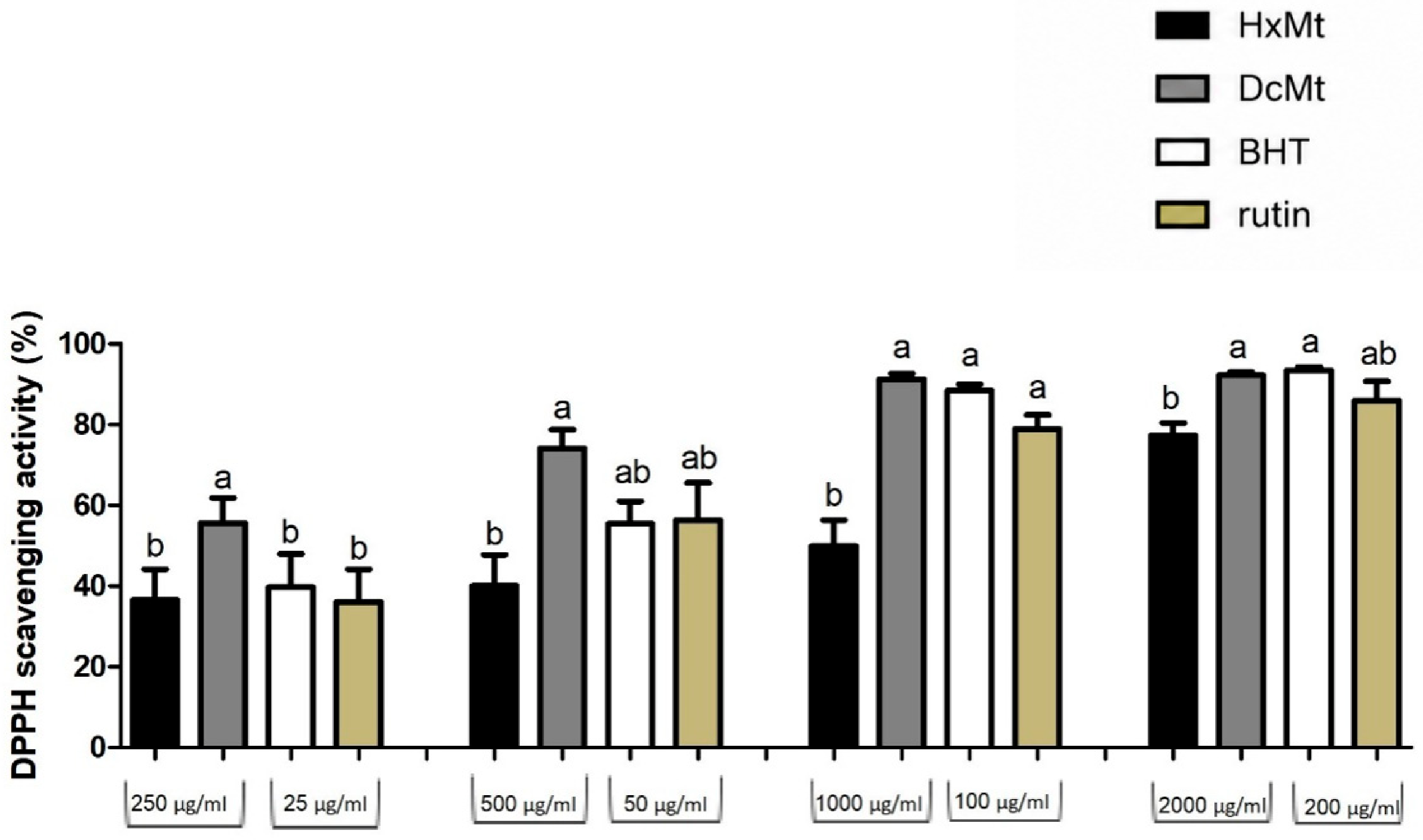
2.2. DPPH Radical Scavenging
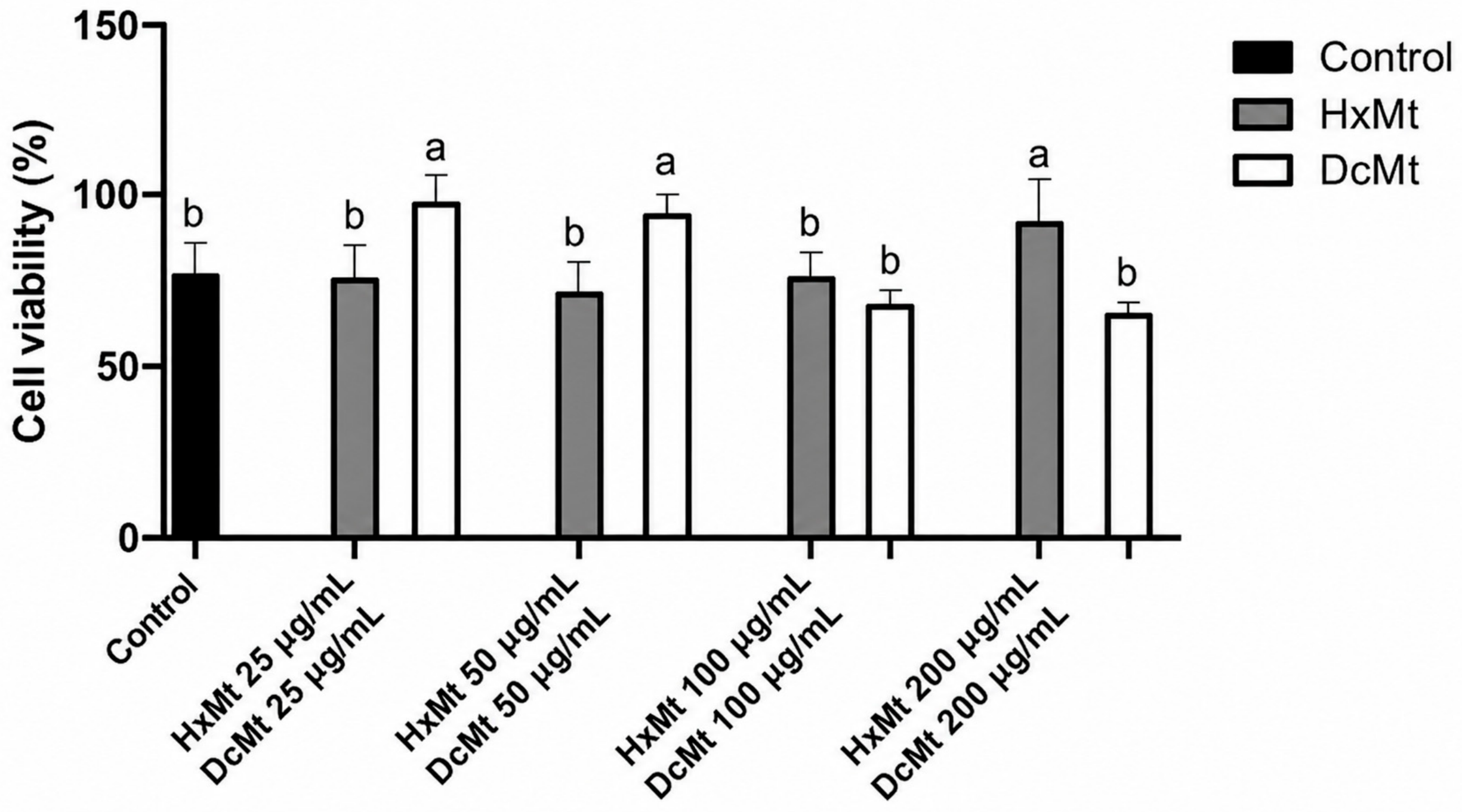
2.3. Cell Viability
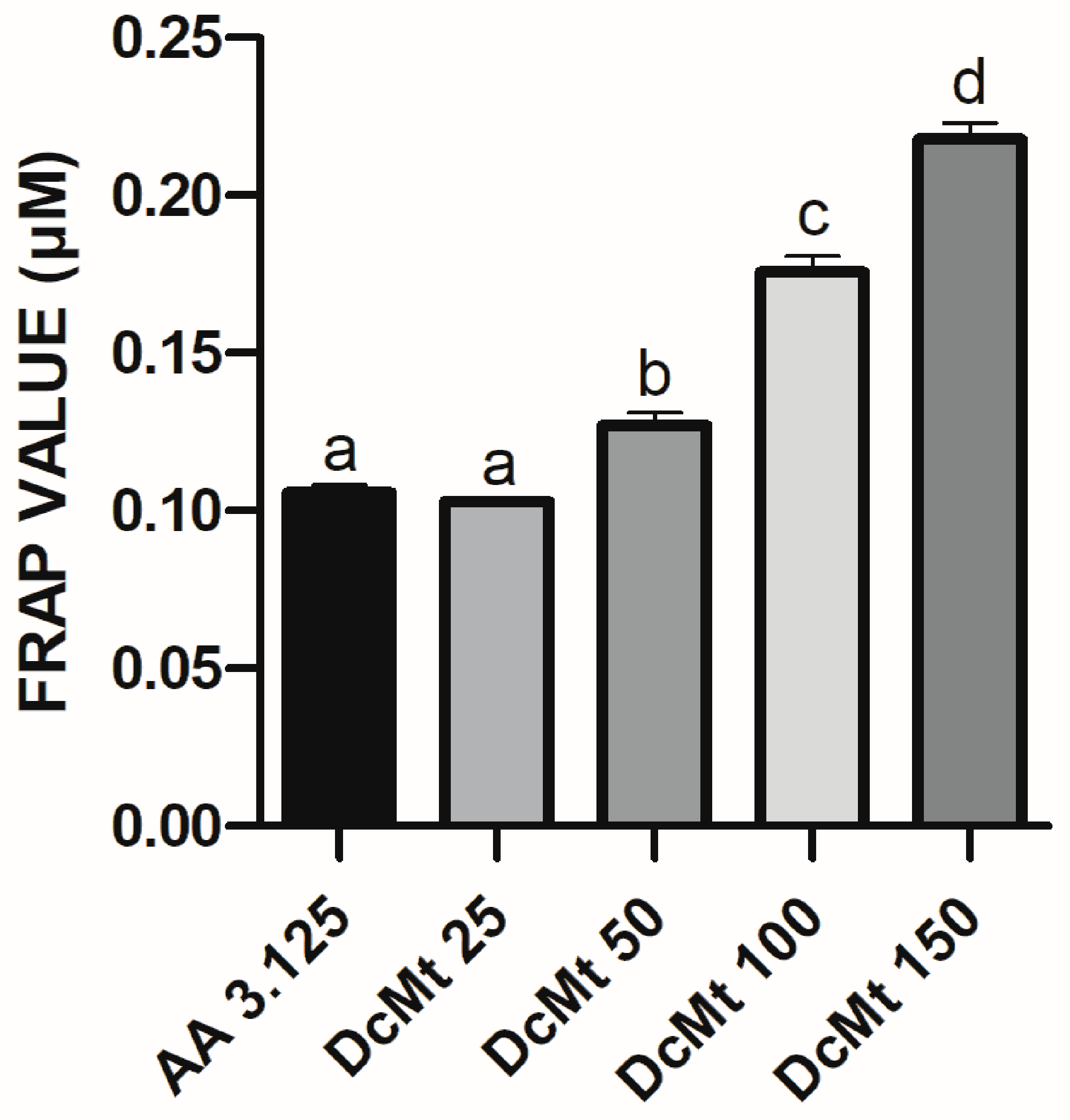
2.4. Ferric Reducing Antioxidant Power (FRAP) Assay
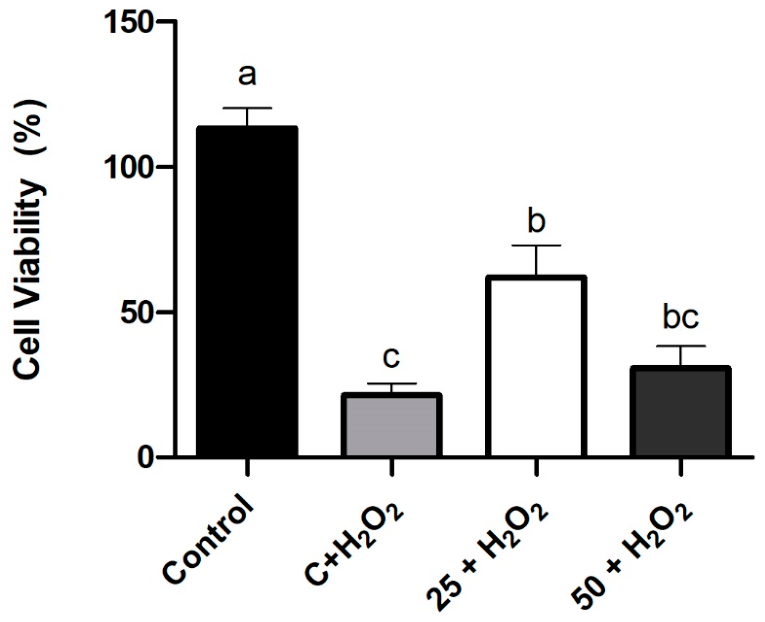
2.5. Assessment of RAW264.7 Macrophage Cell Viability After Induction of Oxidative Stress with H2O2
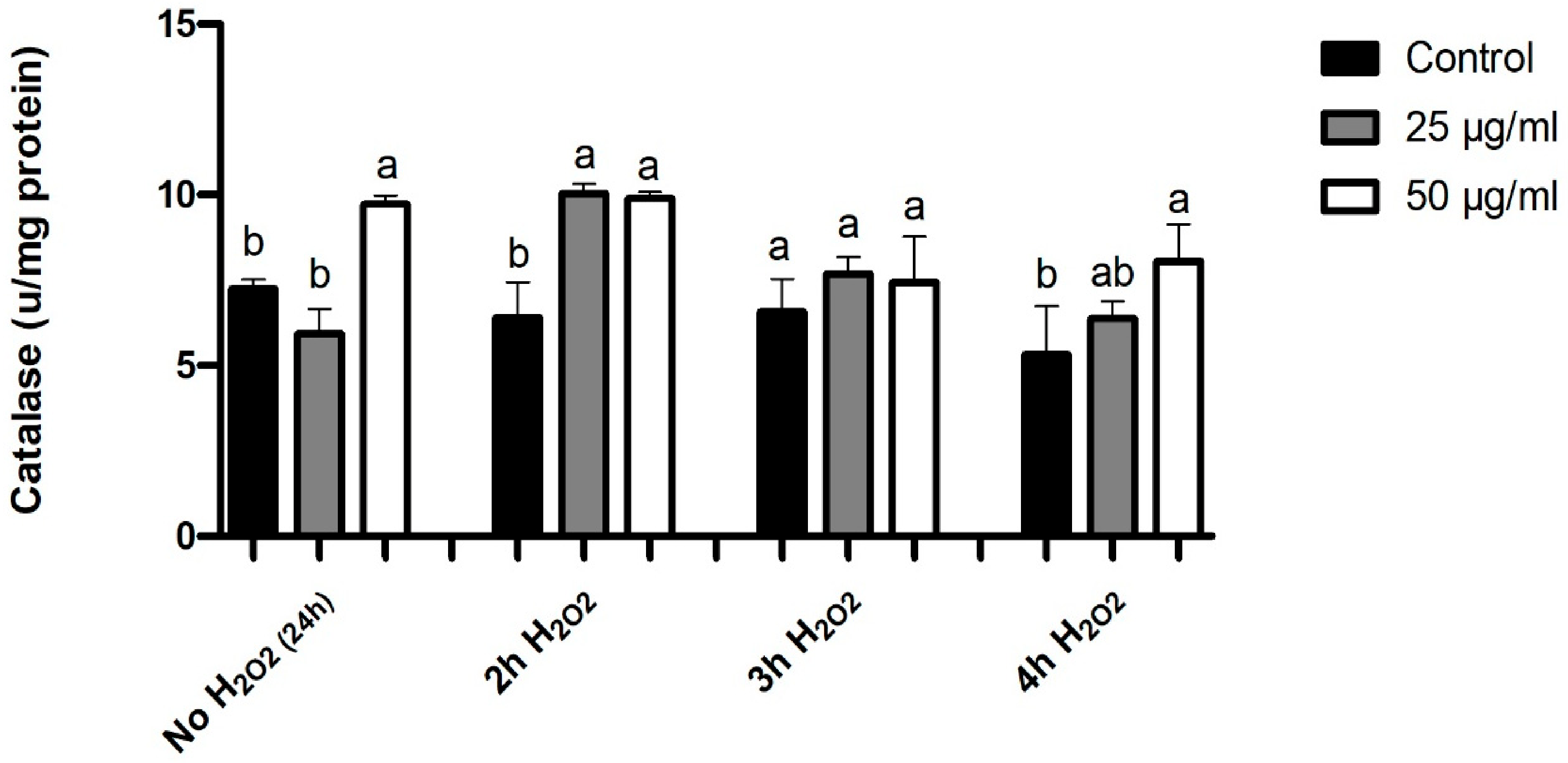
2.6. Evaluation of Catalase with RAW264.7 Macrophages
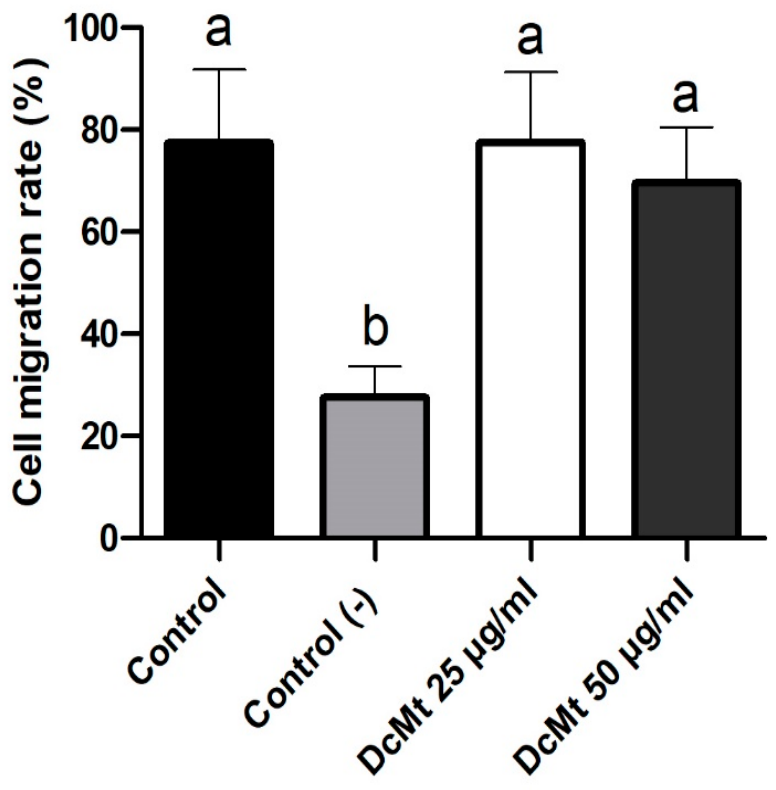
2.7. Scratch Assay
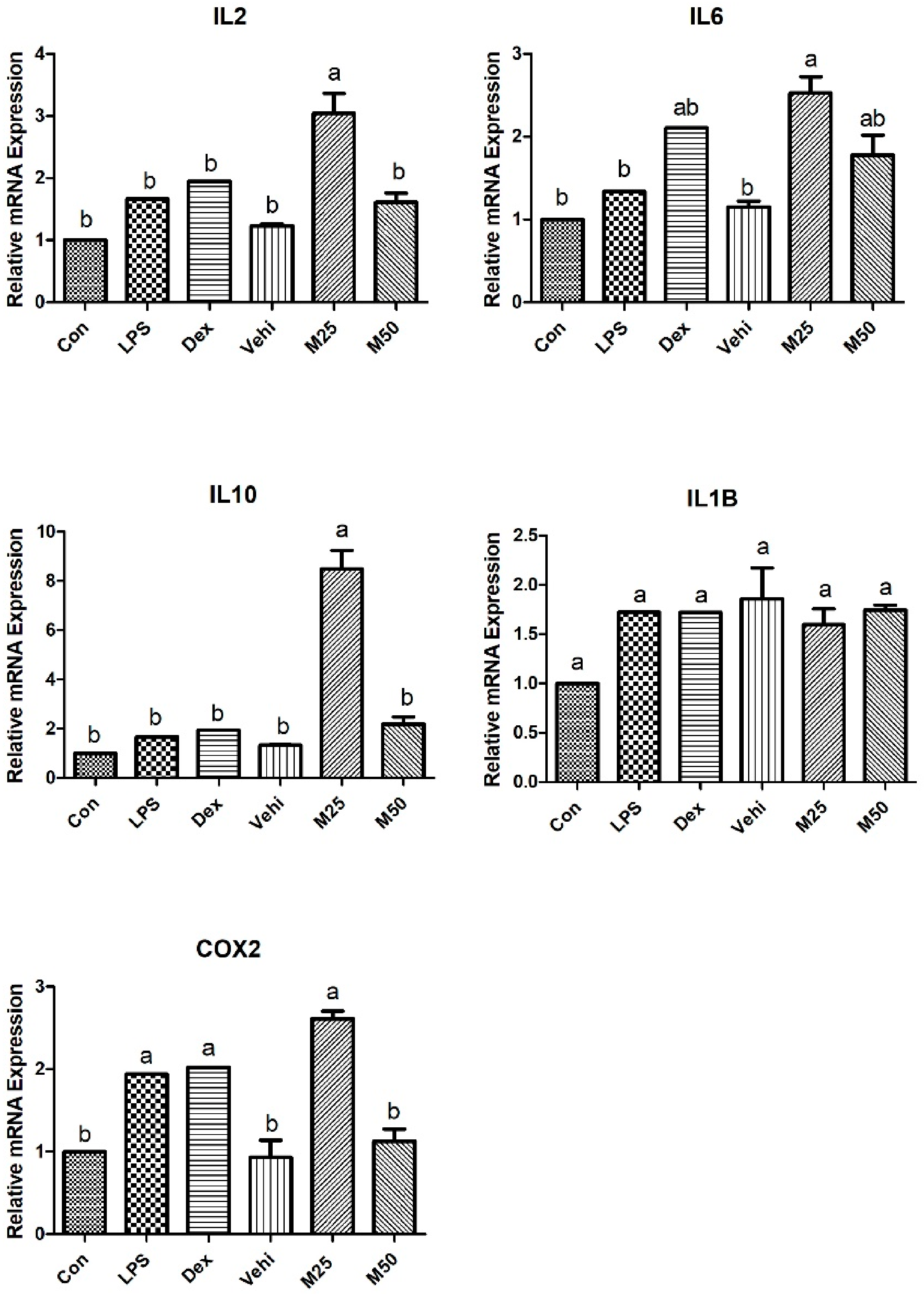
2.8. mRNA Extraction and Gene Expression Analysis by Real-Time PCR
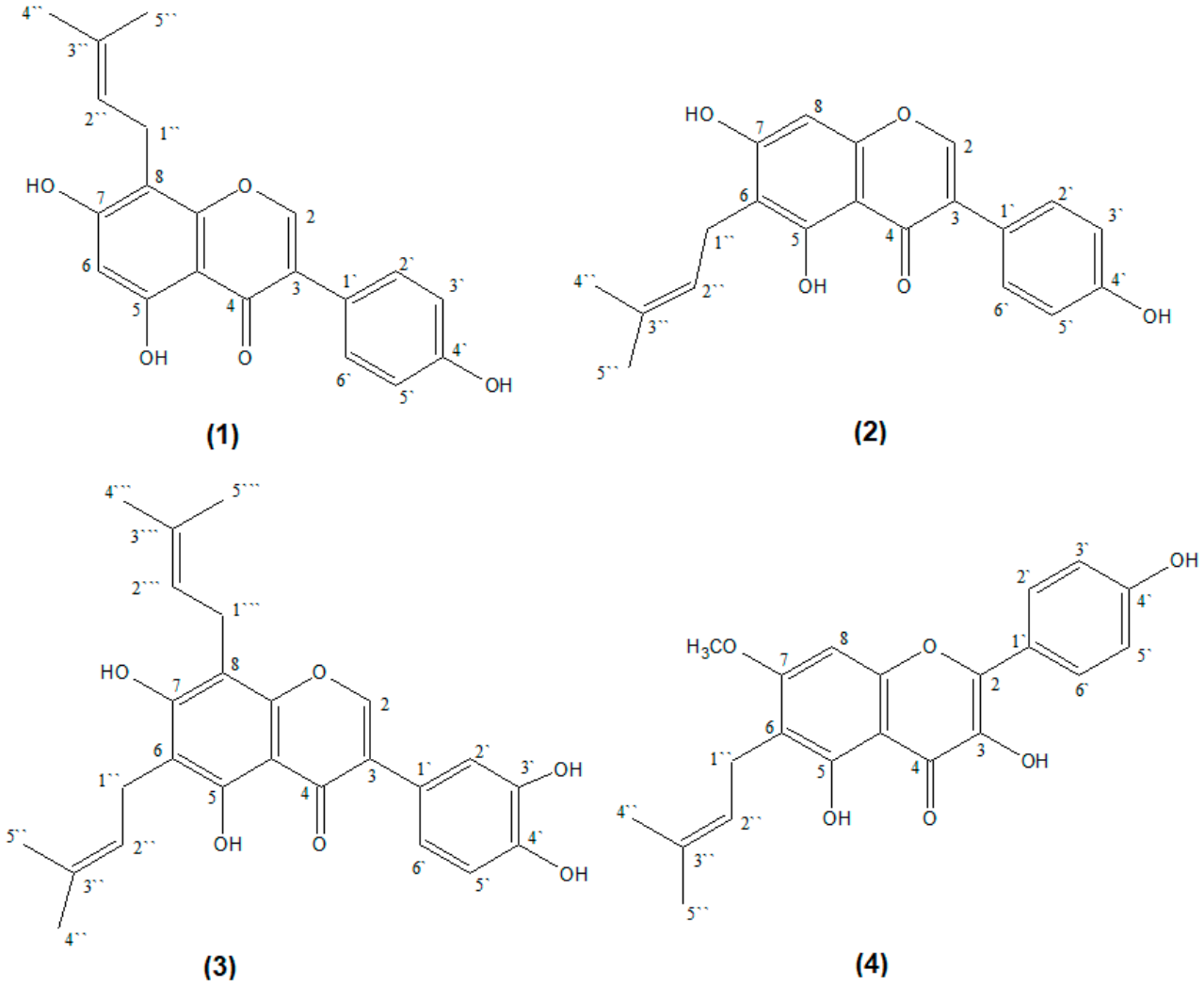
2.9. Isolation and Identification of Compounds from DcMt Extract
3. Discussion
4. Materials and Methods
4.1. Collection of Plant Material and Extraction
4.2. DPPH Radical Scavenging
4.3. Analysis of Cell Viability Using RAW264.7 Macrophages
4.4. Ferric Reducing Antioxidant Power (FRAP) Assay
4.5. Hydrogen Peroxide (H2O2)-Mediated Oxidative Stress Analyses
4.6. Evaluation of the Cell Viability of RAW264.7 Macrophages After Induction of Oxidative Stress with H2O2
4.7. Evaluation of Catalase with RAW264.7 Macrophages
- -
- Unstressed control: treated only with DMEM culture medium for 24 h.
- -
- Stressed treatment: treated with 25 and 50 μg/mL of DcMt for 24 h, followed by exposure to 2 mM H2O2 for 2, 3, and 4 h.
4.8. Scratch Assay
4.9. mRNA Extraction and Gene Expression Analysis by Real-Time PCR
4.10. Thin Layer Chromatography (TLC) Analysis
4.11. Isolation of Compounds
4.12. Structural Identification
4.13. Statistical Analysis
5. Conclusions
Supplementary Materials
Author Contributions
Funding
Institutional Review Board Statement
Informed Consent Statement
Data Availability Statement
Acknowledgments
Conflicts of Interest
References
- Yi, Q.; Xu, Z.; Thakur, A.; Zhang, K.; Liang, Q.; Liu, Y.; Yan, Y. Current understanding of plant-derived exosome-like nanoparticles in regulating the inflammatory response and immune system microenvironment. Pharmacol. Res. 2023, 190, 1043–6618. [Google Scholar] [CrossRef] [PubMed]
- Zeppa, L.; Aguzzi, C.; Morelli, M.B. Exploring the Therapeutic Potential of Natural Compounds and Plant Extracts in Human Health. Biomolecules 2025, 15, 774. [Google Scholar] [CrossRef] [PubMed]
- Nakadate, K.; Ito, N.; Kawakami, K.; Yamazaki, N. Anti-Inflammatory Actions of Plant-Derived Compounds and Prevention of Chronic Diseases: From Molecular Mechanisms to Applications. Int. J. Mol. Sci. 2025, 26, 5206. [Google Scholar] [CrossRef] [PubMed]
- Eming, S.; Krieg, T.; Davidson, J. Inflammation in wound repair: Molecular and cellular mechanisms. J. Investig. Dermatol. 2007, 127, 514–525. [Google Scholar] [CrossRef] [PubMed]
- Qin, Y.; Qian, C.; Li, W.; Wang, Q.; Sheng, Q.; Chen, Z.; Zhang, W.; Li, W.; Ge, G.; Yan, Z.; et al. Oxidative Stress: Molecular Mechanisms, Diseases, and Therapeutic Targets. MedComm 2026, 7, e70600. [Google Scholar] [CrossRef] [PubMed] [PubMed Central]
- Lopes, F.B.; Sarandy, M.M.; Novaes, R.D.; Valacchi, G.; Gonçalves, R.V. OxInflammatory responses in the wound healing process: A systematic review. Antioxidants 2024, 13, 823. [Google Scholar] [CrossRef] [PubMed]
- Sargent, A.; Leedberg, J.; Burress, J.; Dalwadi, P.; O’Fallon, K.; Gaffney-Stomberg, E.; Gaines, P. Quantitatively assessing the respiratory burst in innate immune cells. Methods Mol. Biol. 2023, 2614, 47–70. [Google Scholar] [CrossRef] [PubMed]
- Duan, M.; Zhu, Z.; Pi, H.; Chen, J.; Cai, J.; Wu, Y. Mechanistic Insights and Analytical Advances in Food Antioxidants: A Comprehensive Review of Molecular Pathways, Detection Technologies, and Nutritional Applications. Antioxidants 2025, 14, 438. [Google Scholar] [CrossRef] [PubMed]
- Valacchi, G.; Virgili, F.; Cervellati, C.; Pecorelli, A. OxInflammation: From subclinical condition to pathological biomarker. Front. Physiol. 2018, 9, 858. [Google Scholar] [CrossRef] [PubMed]
- Garlanda, C.; Di Ceglie, I.; Jaillon, S. IL-1 family cytokines in inflammation and immunity. Cell. Mol. Immunol. 2025, 22, 1345–1362. [Google Scholar] [CrossRef] [PubMed]
- Al-Qahtani, A.A.; Alhamlan, F.S.; Al-Qahtani, A.A. Pro-Inflammatory and Anti-Inflammatory Interleukins in Infectious Diseases: A Comprehensive Review. Trop. Med. Infect. Dis. 2024, 9, 13. [Google Scholar] [CrossRef] [PubMed]
- Saraiva, M.; Vieira, P.; O’Garra, A. Biology and therapeutic potential of interleukin-10. J. Exp. Med. 2020, 217, e20190418. [Google Scholar] [CrossRef] [PubMed]
- Desai, S.J.; Prickril, B.; Rasooly, A. Mechanisms of phytonutrient modulation of cyclooxygenase-2 (COX-2) and inflammation related to cancer. Nutr. Cancer 2018, 70, 350–375. [Google Scholar] [CrossRef] [PubMed]
- Arulselvan, P.; Fard, M.T.; Tan, W.S.; Gothai, S.; Fakurazi, S.; Norhaizan, M.E.; Kumar, S.S. Role of antioxidants and natural products in inflammation. Oxidative Med. Cell. Longev. 2016, 2016, 5276130. [Google Scholar] [CrossRef] [PubMed]
- Taciak, B.; Białasek, M.; Braniewska, A.; Sas, Z.; Sawicka, P.; Kiraga, Ł.; Rygiel, T.; Król, M. Evaluation of phenotypic and functional stability of RAW 264.7 cell line through serial passages. PLoS ONE 2018, 13, e0198943. [Google Scholar] [CrossRef] [PubMed]
- Ding, T.; Du, Y.; Yang, B.; Tian, W.; Li, J.; Xie, J. Comprehensive review of macrophage models: Primary cells and immortalized lines across species. Front. Immunol. 2025, 16, 1640935. [Google Scholar] [CrossRef] [PubMed] [PubMed Central]
- Huang, M.L.; Chiang, S.; Kalinowski, D.S.; Bae, D.H.; Sahni, S.; Richardson, D.R. The role of the antioxidant response in mitochondrial dysfunction in degenerative diseases: Cross-talk between antioxidant defense, autophagy, and apoptosis. Oxidative Med. Cell. Longev. 2019, 2019, 6392763. [Google Scholar] [CrossRef] [PubMed]
- Mattosinhos, P.D.S.; Sarandy, M.M.; Novaes, R.D.; Esposito, D.; Gonçalves, R.V. Anti-inflammatory, antioxidant, and skin regenerative potential of secondary metabolites from plants of the Brassicaceae family: A systematic review of in vitro and in vivo preclinical evidence. Antioxidants 2022, 11, 1346. [Google Scholar] [CrossRef] [PubMed]
- Almeida, A.A.; Lima, G.D.A.; Simão, M.V.R.C.; Moreira, G.A.; Siqueira, R.P.; Zanatta, A.C.; Vilegas, W.; Machado, M.; Bressan, G.C.; Leite, J.P.V. Screening of plants from the Brazilian Atlantic Forest led to identification of Athenaea velutina (Solanaceae) as a novel source of antimetastatic agents. Int. J. Exp. Pathol. 2020, 101, 106–121. [Google Scholar] [CrossRef] [PubMed]
- Rodrigues, L.A.; Almeida, A.C.; Gontijo, D.C.; Salustiano, I.V.; Almeida, A.A.; Brandão, G.C.; Ribon, A.O.B.; Leite, J.P.V. Antibacterial screening of plants from the Brazilian Atlantic Forest led to the identification of active compounds in Miconia latecrenata (DC.) Naudin. Nat. Prod. Res. 2020, 34, 3–4. [Google Scholar] [CrossRef]
- Bourd, G.; Chavez de Michel, L.; Roca-Coulthard, A. Pharmacopoeia in a shamanistic society: The Izoceño-Guaraní (Bolivian Chaco). J. Ethnopharmacol. 2004, 91, 189–208. [Google Scholar] [CrossRef]
- Almeida, A.C.; Rodrigues, L.A.; Santos, G.P.; Aguilar, A.P.; Almeida, A.; Ferreira, S.O.; Brandão, G.C.; Leite, J.P.V.; Ribon, A.O.B. Prenylated flavonoid-enriched fraction from Maclura tinctoria shows biological activity against Staphylococcus aureus and protects Galleria mellonella larvae from bacterial infection. BMC Complement. Altern. Med. 2019, 19, 189. [Google Scholar] [CrossRef] [PubMed]
- Groweiss, A.; Cardellina, J.; Boyd, M. HIV-inhibitory prenylated xanthones and flavones from Maclura tinctoria. J. Nat. Prod. 2000, 63, 1537–1539. [Google Scholar] [CrossRef] [PubMed]
- Lamounier, K.C.; Cunha, L.C.; de Morais, S.A.; de Aquino, F.J.; Chang, R.; do Nascimento, E.A.; de Souza, M.G.; Martins, C.H.; Cunha, W.R. Chemical analysis and study of phenolics, antioxidant activity, and antibacterial effect of the wood and bark of Maclura tinctoria (L.) D. Don ex Steud. Evid.-Based Complement. Altern. Med. 2012, 2012, 451039. [Google Scholar] [CrossRef] [PubMed][Green Version]
- Kim, Y.K.; Guo, Q.; Packer, L. Free radical scavenging activity of red ginseng aqueous extracts. Toxicology 2002, 172, 149–156. [Google Scholar] [CrossRef] [PubMed]
- Al-Maharik, N.; Botting, N.P. Synthesis of lupiwighteone via a para-Claisen–Cope rearrangement. Tetrahedron 2003, 59, 4177–4181. [Google Scholar] [CrossRef]
- Oyama, S.; Baldoqui, D.C.; Sarragiotto, M.H.; Silva, A. Prenylated flavonoids from Maclura tinctoria fruits. Quím. Nova 2013, 36, 800–802. [Google Scholar] [CrossRef][Green Version]
- Jeon, J.S.; Kim, S.M.; Lee, H.J.; Um, B.H.; Kim, H.K.; Kim, C.Y. Preparative isolation and purification from Cudrania tricuspidata fruits using centrifugal partition chromatography. J. Liq. Chromatogr. Relat. Technol. 2012, 35, 1607–1615. [Google Scholar] [CrossRef]
- Perron, N.R.; Brumaghim, J.L. A review of the antioxidant mechanisms of polyphenol compounds related to iron binding. Cell Biochem. Biophys. 2009, 53, 75–100. [Google Scholar] [CrossRef] [PubMed]
- Souza, G.R.; Oliveira-Junior, R.G.; Diniz, T.C.; Branco, A.; Lima-Saraiva, S.R.G.; Guimarães, A.L.; Oliveira, A.P.; Pacheco, A.G.M.; Silva, M.G.; Moraes-Filho, M.O.; et al. Assessment of the antibacterial, cytotoxic and antioxidant activities of Morus nigra L. (Moraceae). Braz. J. Biol. 2018, 78, 248–254. [Google Scholar] [PubMed]
- Benzie, I.F.F.; Strain, J.J. The ferric reducing ability of plasma (FRAP) as a measure of antioxidant power: The FRAP assay. Anal. Biochem. 1996, 239, 70–76. [Google Scholar] [CrossRef] [PubMed]
- Calabrese, E.J.; Hayes, A.W.; Pressman, P. Flavonoids commonly induce hormetic responses. Arch. Toxicol. 2024, 98, 1237–1240. [Google Scholar] [CrossRef] [PubMed]
- Gulcin, İ. Antioxidants and antioxidant methods: An updated overview. Arch. Toxicol. 2020, 94, 651–715. [Google Scholar] [CrossRef] [PubMed]
- Surai, F.P. Antioxidant systems in poultry biology: Superoxide dismutase. J. Anim. Res. Nutr. 2016, 1, 8. [Google Scholar]
- Calabrese, E.J.; Bachmann, K.A.; Bailer, A.J.; Bolger, P.M.; Borak, J.; Cai, L.; Clarkson, T. Biological stress response terminology: Integrating the concepts of adaptive response and preconditioning stress within a hormetic dose–response framework. Toxicol. Appl. Pharmacol. 2007, 222, 122–128. [Google Scholar] [CrossRef] [PubMed]
- Toren, F. Oxygen radicals and signaling. Curr. Opin. Cell Biol. 1998, 10, 248–253. [Google Scholar] [CrossRef] [PubMed]
- Dunnill, C.; Patton, T.; Brennan, J.; Barrett, J.; Dryden, M.; Cooke, J.; Georgopoulos, N.T. Reactive oxygen species (ROS) and wound healing: The functional role of ROS and emerging ROS-modulating technologies for augmentation of the healing process. Int. Wound J. 2015, 14, 89–96. [Google Scholar] [CrossRef] [PubMed]
- Yokozawa, T.; Satoh, A.; Kim, Y.J. Modulation of oxidative stress by proanthocyanidin in H2O2-exposed human diploid fibroblast cells. Biosci. Biotechnol. Biochem. 2013, 77, 2056–2060. [Google Scholar] [CrossRef] [PubMed]
- Sen, P.; Mukherjee, S.; Bhaumik, G.; Das, P.; Ganguly, S.; Choudhury, N.; Raha, S. Enhancement of catalase activity by repetitive low-grade H2O2 exposures protects fibroblasts from subsequent stress-induced apoptosis. Mutat. Res. 2003, 529, 87–94. [Google Scholar] [CrossRef] [PubMed]
- Ishida, Y.; Gao, J.L.; Murphy, P.M. Chemokine receptor CX3CR1 mediates skin wound healing by promoting macrophage and fibroblast accumulation and function. J. Immunol. 2008, 180, 569–579. [Google Scholar] [CrossRef] [PubMed]
- Ponnusamy, Y.; Chear, N.J.Y.; Ramanathan, S.; Lai, C. Polyphenols rich fraction of Dicranopteris linearis promotes fibroblast cell migration and proliferation in vitro. J. Ethnopharmacol. 2015, 168, 305–313. [Google Scholar] [CrossRef] [PubMed]
- Steen, E.H.; Wang, X.; Balaji, S.; Butte, M.J.; Bollyky, P.L.; Keswani, S.G. The role of the anti-inflammatory cytokine interleukin-10 in tissue fibrosis. Adv. Wound Care 2020, 9, 184–198. [Google Scholar] [CrossRef]
- Andres-Hernando, A.; Okamura, K.; Bhargava, R.; Kiekhaefer, C.M.; Soranno, D.; Kirkbride-Romeo, L.A.; Gil, H.W.; Altmann, C.; Faubel, S. Circulating IL-6 upregulates IL-10 production in splenic CD4+ T cells and limits acute kidney injury-induced lung inflammation. Kidney Int. 2017, 91, 1057–1069. [Google Scholar] [CrossRef] [PubMed]
- Braune, J.; Weyer, U.; Hobusch, C.; Mauer, J.; Brüning, J.C.; Bechmann, I.; Gericke, M. IL-6 regulates M2 polarization and local proliferation of adipose tissue macrophages in obesity. J. Immunol. 2017, 198, 2927–2934. [Google Scholar] [CrossRef] [PubMed]
- Dinarello, C.A. Interleukin-1 in the pathogenesis and treatment of inflammatory diseases. Blood 2011, 117, 3720–3732. [Google Scholar] [CrossRef] [PubMed]
- Cheng, H.; Huang, H.; Guo, Z.; Chang, Y.; Li, Z. Role of prostaglandin E2 in tissue repair and regeneration. Theranostics 2021, 11, 8836–8854. [Google Scholar] [CrossRef] [PubMed]
- Kulesza, A.; Paczek, L.; Burdzinska, A. The role of COX-2 and PGE2 in the regulation of immunomodulation and other functions of mesenchymal stromal cells. Biomedicines 2023, 11, 445. [Google Scholar] [CrossRef] [PubMed]
- Malek, T.R. The biology of interleukin-2. Annu. Rev. Immunol. 2008, 26, 453–479. [Google Scholar] [CrossRef] [PubMed]
- Brand-Williams, W.; Cuvelier, M.E.; Berse, C. Use of a free radical method to evaluate antioxidant activity. LWT Food Sci. Technol. 1995, 28, 25–30. [Google Scholar] [CrossRef]
- Mu, L.; Tang, J.; Liu, H.; Shen, C.; Rong, M.; Zhang, Z. A potential wound-healing-promoting peptide from salamander skin. FASEB J. 2014, 28, 3919–3929. [Google Scholar] [CrossRef] [PubMed]
- Aebi, H. Catalase in vitro. Methods Enzymol. 1984, 105, 121–126. [Google Scholar] [CrossRef] [PubMed]
- Balekar, N.; Katkam, N.G.; Nakpheng, T.; Jehtae, K.; Srichana, T. Evaluation of the wound healing potential of Wedelia trilobata (L.) leaves. J. Ethnopharmacol. 2012, 141, 817–824. [Google Scholar] [CrossRef] [PubMed]
- Wagner, H.; Bladt, S. Plant Drug Analysis: A Thin Layer Chromatography Atlas; Springer Science & Business Media: Berlin/Heidelberg, Germany, 1996. [Google Scholar]





| Compound | Retention Time (min) | Name |
|---|---|---|
| 1 | 6.07 | Lupiwighteone |
| 2 | 6.35 | Wighteone |
| 3 | 6.93 | 6,8-Diprenylorobol |
| 4 | 7.03 | 3,4′,5-trihydroxy-6-(3″-methylbut-2″-enyl)-7-methoxyflavonol |
Disclaimer/Publisher’s Note: The statements, opinions and data contained in all publications are solely those of the individual author(s) and contributor(s) and not of MDPI and/or the editor(s). MDPI and/or the editor(s) disclaim responsibility for any injury to people or property resulting from any ideas, methods, instructions or products referred to in the content. |
© 2026 by the authors. Licensee MDPI, Basel, Switzerland. This article is an open access article distributed under the terms and conditions of the Creative Commons Attribution (CC BY) license.
Share and Cite
Costa, E.P.; Pires, A.R.; Sarandy, M.M.; Novaes, R.D.; Brandão, G.C.; Leite, J.P.V.; Salustiano, I.V.; Esposito, D.; Gonçalves, R.V. Maclura tinctoria as a Modulator of Oxidative Stress and Inflammatory Responses. Int. J. Mol. Sci. 2026, 27, 5504. https://doi.org/10.3390/ijms27125504
Costa EP, Pires AR, Sarandy MM, Novaes RD, Brandão GC, Leite JPV, Salustiano IV, Esposito D, Gonçalves RV. Maclura tinctoria as a Modulator of Oxidative Stress and Inflammatory Responses. International Journal of Molecular Sciences. 2026; 27(12):5504. https://doi.org/10.3390/ijms27125504
Chicago/Turabian StyleCosta, Eduarda Pires, Allan Rodrigues Pires, Mariáurea Matias Sarandy, Romulo Dias Novaes, Geraldo Célio Brandão, Joao Paulo Viana Leite, Iorrana Vieira Salustiano, Debora Esposito, and Reggiani Vilela Gonçalves. 2026. "Maclura tinctoria as a Modulator of Oxidative Stress and Inflammatory Responses" International Journal of Molecular Sciences 27, no. 12: 5504. https://doi.org/10.3390/ijms27125504
APA StyleCosta, E. P., Pires, A. R., Sarandy, M. M., Novaes, R. D., Brandão, G. C., Leite, J. P. V., Salustiano, I. V., Esposito, D., & Gonçalves, R. V. (2026). Maclura tinctoria as a Modulator of Oxidative Stress and Inflammatory Responses. International Journal of Molecular Sciences, 27(12), 5504. https://doi.org/10.3390/ijms27125504