1. Introduction
In a global context of increasingly stringent regulatory controls, the illicit drug market has adapted through the emergence of New Psychoactive Substances (NPS). These synthetic compounds are designed to mimic the effects of traditional drugs of abuse, with minor chemical modifications capable of preserving or even enhancing pharmacological potency [
1], while remaining undetectable by standard toxicological assays and thereby complicating regulatory control [
2].
Where possible, NPS are investigated to determine their pharmacological profile and abuse potential, providing essential data to support regulatory decision-making; accordingly, since 2008, the United Nations Office on Drugs and Crime (UNODC) has reported 1446 NPS identified across 153 countries [
3,
4].
Among the various classes of NPS, New Synthetic Opioids (NSO) have emerged as a particularly concerning group due to their high potency and risk of overdose [
5]. They include fentanyl analogues, such as acetylfentanyl and 3-methylfentanylas well as non-fentanyl derivatives, namely MT-45 and brorphine [
6,
7].
NSOs exert their effects primarily through activation of the μ (MOR), δ (DOR) and κ (KOR) opioid receptors, leading to inhibition of central nervous system activity. The resulting clinical manifestations depend on receptor selectivity and on the amount of ligand reaching the target site and its affinity. Typical opioid-like effects include analgesia, sedation and euphoria, whereas adverse outcomes may involve respiratory depression and, in severe cases, life-threatening intoxication [
8,
9].
Within the broad group of non-fentanyl analogues, nitazenes represent one of the most alarming compounds. They were originally developed between the late 1950s and early 1960s by the Swiss pharmaceutical company Chemische Industrie Basel Aktiengesellschaft (CIBA). This research program, initiated even before the synthesis of fentanyl, sought to identify new analgesics that diverged structurally from traditional morphine-like opioids. Several molecules proceeded to early clinical testing, yet none achieved therapeutic approval due to severe adverse effects and a narrow therapeutic margin that offered no real advantage over morphine [
10,
11].
In recent years, illicit chemists have exploited early pharmacological research to revive nitazenes, producing new analogues at a rate that outpaces law enforcement efforts. As of February 2026, a total of 34 new variants have been notified to UNODC [
12].
The main concern related to these compounds lies in their frequent presence in combination with other opioids within heroin mixtures; consequently, users are unlikely to be aware of consuming a nitazene, let alone the specific analogue involved [
13]. Since 2023, the United Kingdom has reported outbreaks of nitazene-related overdoses, including more than 60 fatalities, linked to adulterated heroin and counterfeit oxycodone tablets [
14]. Even more concerning is the detection of nitazenes in non-opioid mixtures, posing an additional risk of unintentional ingestion, particularly among opioid-naïve individuals [
15].
Nitazenes are available in various forms, such as powders, counterfeit tablets, nasal drops or sprays and vaping liquids, and can be administered via multiple routes, such as injection, smoking, snorting or ingestion [
16,
17].
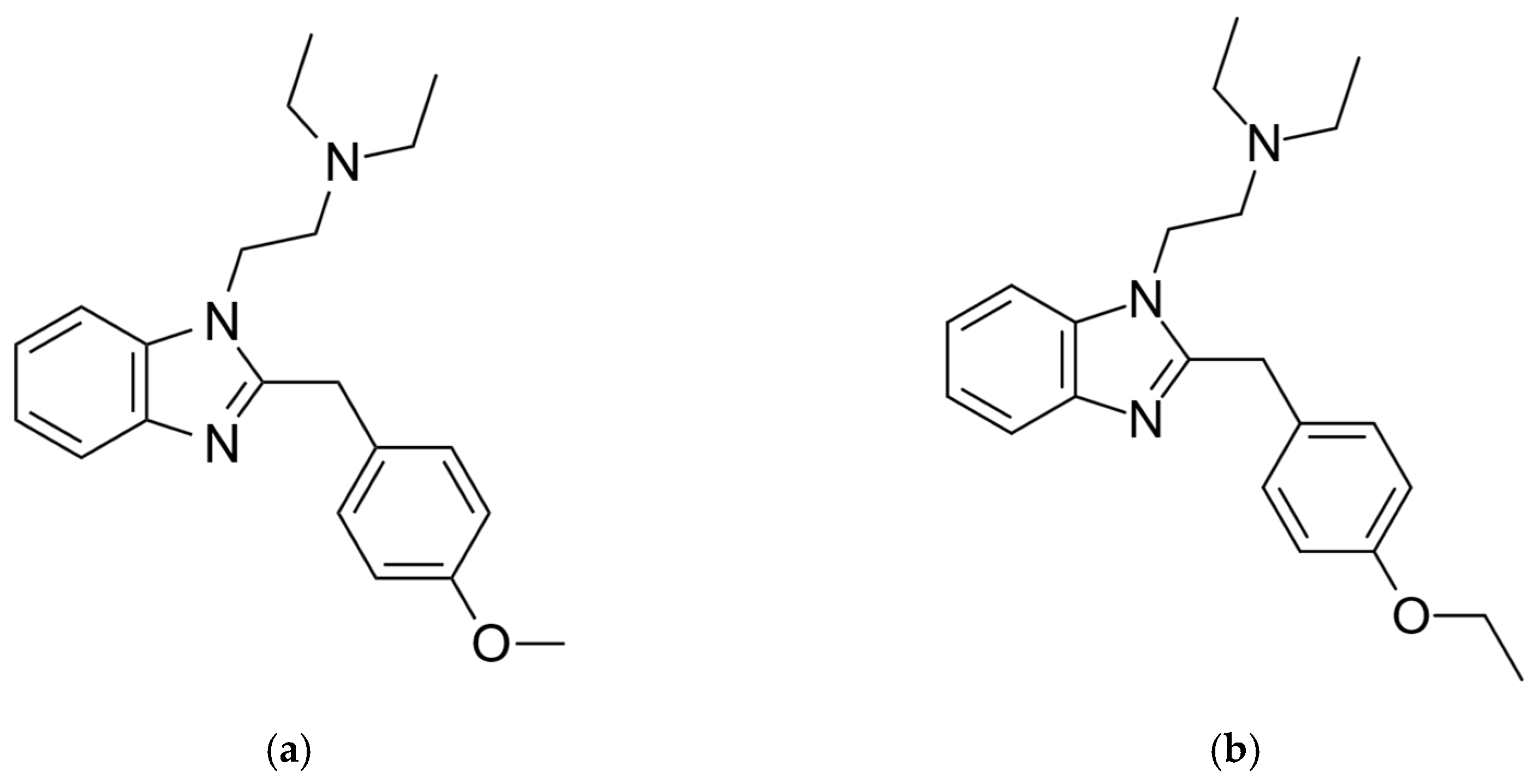
Regarding a structural perspective, nitazenes consist of a 2-benzylbenzimidazole scaffold, with a benzimidazole core substituted at the para position with a benzyl group. Structural variations are frequently observed at the 5-position of the benzimidazole ring, where a nitro group can be present, as in metonitazene and etonitazene, or absent, as in metodesnitazene (also known as metazene) and etodesnitazene (etazene), shown in
Figure 1 [
16,
18].
The potency of these compounds varies significantly among analogues, as reflected in their pharmacodynamic profiles: nitazenes generally act as full agonists at MOR, binding at nanomolar concentrations, and as full or partial agonists at DOR and KOR. These properties reduce the clinical effectiveness of naloxone, the receptor antagonist used to treat opioid overdoses, often requiring higher or repeated doses for reversal [
19].
Interestingly, an in vitro study from Vandeputte et al. (2024) [
20] suggests that strong MOR binding does not always predict the degree of receptor activation. The overall pharmacological effects may also depend on factors such as bioavailability, blood–brain barrier penetration, metabolic stability and potential interactions with other receptors.
Based on the data provided by Kozell et al. (2024) [
21], metodesnitazene and etodesnitazene show distinct interactions with the three opioid receptor subtypes. The latter binds to MOR with an affinity comparable to fentanyl, indicating strong receptor engagement, whereas the former shows lower MOR binding and requires higher concentrations to achieve similar effects. Both compounds have reduced affinity for DOR and KOR. In terms of potency, etodesnitazene is more effective than metodesnitazene at activating MOR and KOR. This finding is consistent with historical in vivo studies in mice conducted by CIBA, in which metodesnitazene displayed a relative potency comparable to morphine, while etodesnitazene exhibited 70-fold higher antinociceptive potency [
11]. Nevertheless, several studies report that “desnitazenes” generally manifest a 10 to 100-fold reduction in potency compared with their 5-nitro counterparts [
18,
21,
22].
In silico evaluations of absorption, distribution, metabolism and excretion indicate that etodesnitazene exhibits a bioavailability score of 0.55 and a lipophilicity approximately three times higher than that of morphine, which facilitates its absorption in the gastrointestinal tract and its penetration across the blood–brain barrier. It is not a substrate of P-glycoprotein and is predicted to inhibit multiple cytochrome P450 isoforms [
23,
24].
A recent study by Taoussi et al. (2024) [
25] identified metabolites of metodesnitazene and etodesnitazene, totaling 10 and 22, respectively. The research was carried out by incubating the two substances with human hepatocytes and by analyzing postmortem biological fluids. The predominant metabolic reactions included N-deethylation and O-dealkylation, followed by O-glucuronidation. Minor pathways, such as hydroxylation and oxidative deamination, were also observed. Parent compounds were generally present at low levels in blood and urine, highlighting the importance of their metabolites as reliable biomarkers of exposure. In fact, due to their extreme potency, nitazenes are consumed in low doses, resulting in concentrations often below 10 ng/mL in biological matrices, posing challenges for toxicological detection, demanding highly sensitive analytical methods and likely contributing to the underestimation of nitazene-related intoxications and fatalities [
25,
26].
Because of their high abuse potential and the lack of accepted medical use, on 11 April 2024, etodesnitazene was added to Schedule I of the U.S Controlled Substances Act by the Drug Enforcement Administration (DEA), followed by metodesnitazene on 25 October 2024 [
27,
28].
Despite the registration of some nitazenes, experimental data regarding their toxicological profile, and particularly their genotoxic potential, remain extremely limited or completely lacking. This important gap in scientific knowledge contributes to a low awareness of the possible mutagenic and long-term health risks associated with these substances, not only among drug users but also within the general population [
29].
In response to institutional early warnings, the characterization of emerging nitazene analogs has become an analytical priority. In a previous work, we characterized the behavior of metonitazene and etonitazene [
29]. Building upon the previous findings, the present study focuses on evaluating how minor structural modifications in metodesnitazene and etodesnitazene influence their behavior. For the two molecules addressed in this manuscript, the only recent study available concerns etodesnitazene, which was found to induce a dose-dependent developmental toxicity in zebrafish, manifested as increased mortality, morphological abnormalities, delayed hatching and cardiotoxic effects [
24].
To deepen the understanding of the health risks associated with these emerging synthetic opioids, this study investigated the genotoxicity of metodesnitazene and etodesnitazene in human lymphoblastoid TK6 cells following the Organisation for Economic Co-operation and Development (OECD) guideline No. 487 “In Vitro Mammalian Cell Micronucleus Test” [
30]. As these substances undergo biotransformation in the human body, this research incorporated a metabolic activation system to evaluate possible genotoxic effects arising from their metabolites. Therefore, micronuclei (MNi) frequency was determined following a previously published flow cytometric protocol developed in our laboratory [
31]. To better elucidate the molecular mechanisms underlying the observed genotoxic potential of these compounds, further analyses were carried out to assess the production of reactive oxygen species (ROS). While DNA is continuously subjected to a multitude of exogenous and endogenous genotoxic insults, intracellular ROS—frequently generated as by-products of mitochondrial respiration—represent a primary source of endogenous oxidative damage, leading to critical base lesions such as 8-oxoguanine (8-oxoG). Therefore, investigating ROS production was essential to determine whether oxidative stress serves as a key pathway mediating the genotoxicity of these compounds.
2. Results
In accordance with OECD guideline No. 487, cytotoxicity and cytostasis assays, supported by apoptosis evaluation, were performed to select the concentrations suitable for subsequent MNi frequency analysis [
30]. These assessments were conducted first with the parent compounds and then repeated in the presence of metabolic activation. Lastly, the production of ROS was analyzed as a potential mechanism of DNA damage.
2.1. Cytotoxicity
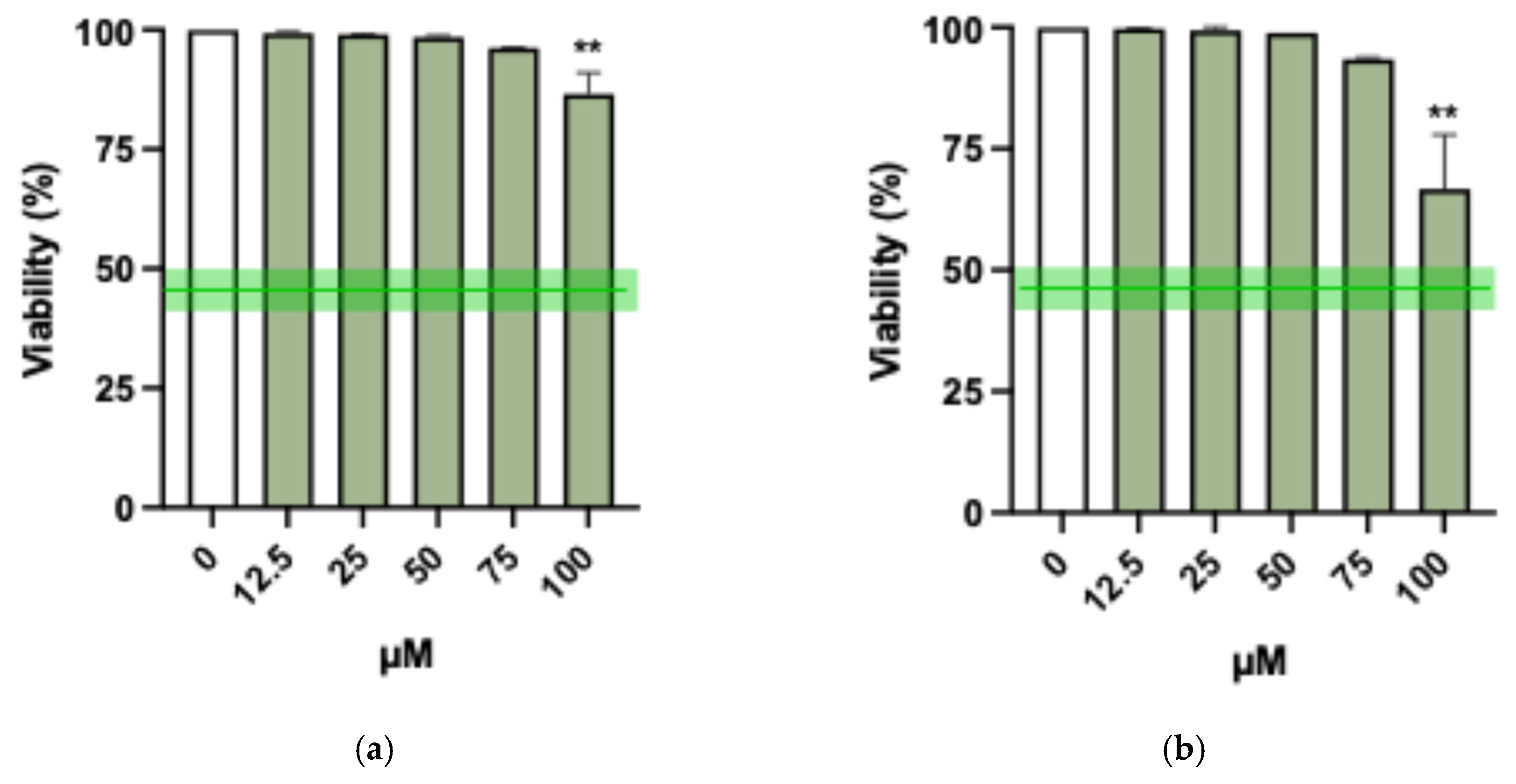
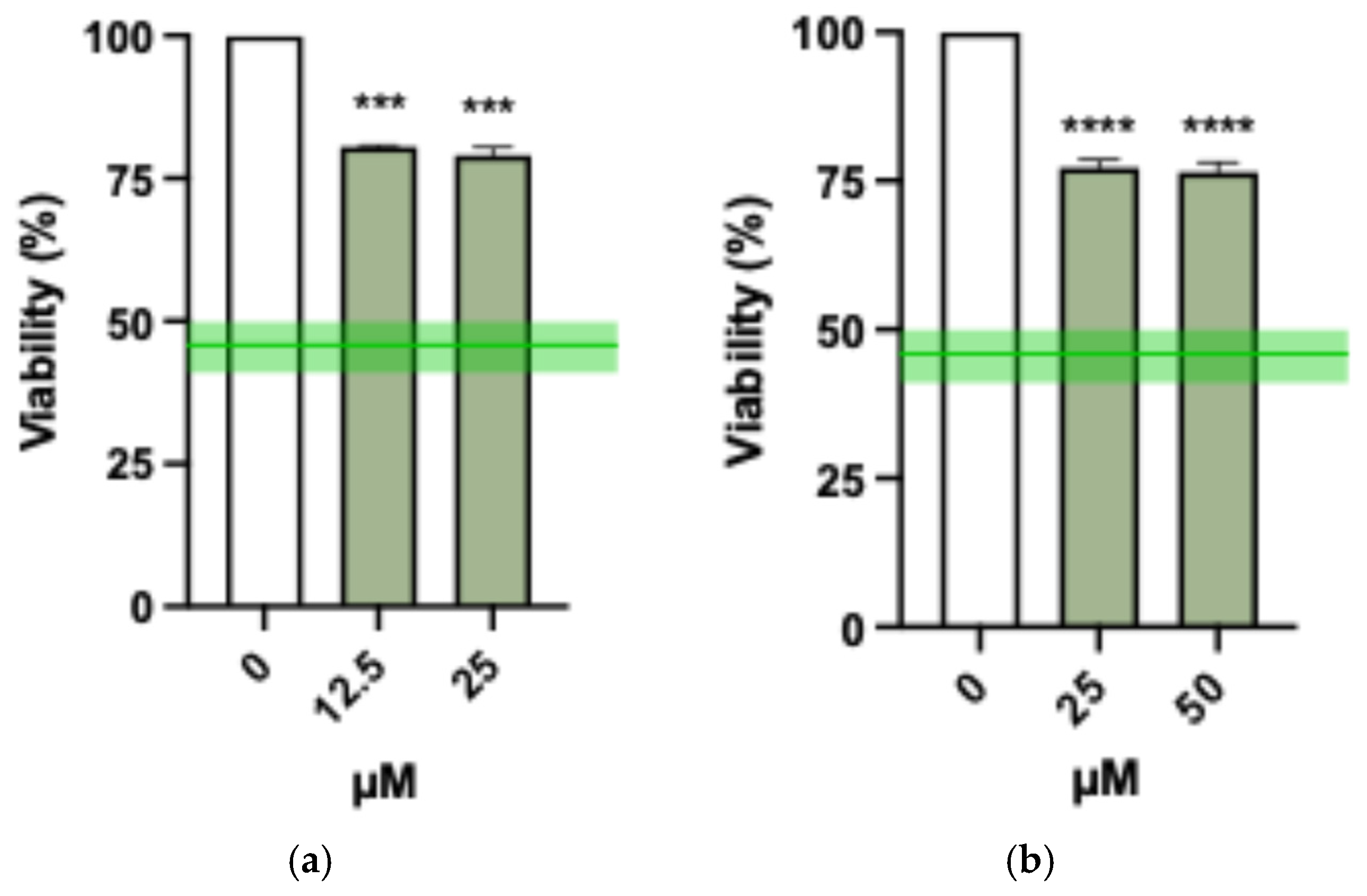
Cells were treated with metodesnitazene and etodesnitazene concentrations of 12.5, 25, 50, 75 and 100 μM. After long treatment (26 h) exposure in absence of S9, cytotoxicity was evaluated staining necrotic cells with Propidium Iodide (PI), and data were normalized to the negative control (0 μM). As none of the tested concentrations induced cytotoxicity above the threshold of 55 ± 5% (corresponding to a cell viability of at least 45 ± 5%), all were considered for the following analyses.
Figure 2 illustrates that, for both molecules, cell viability remained consistently above the OECD threshold indicated by the green line.
2.2. Cytostasis
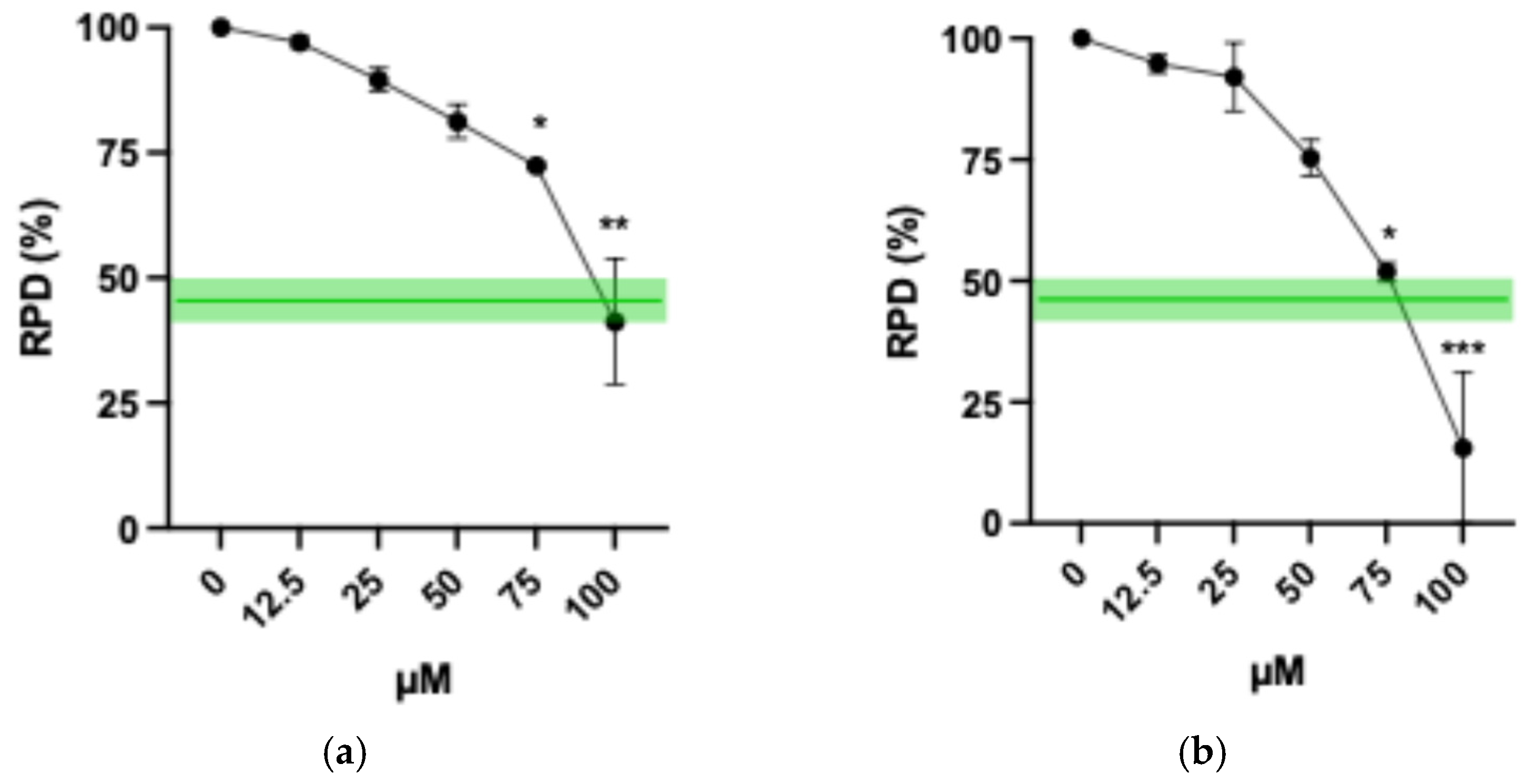
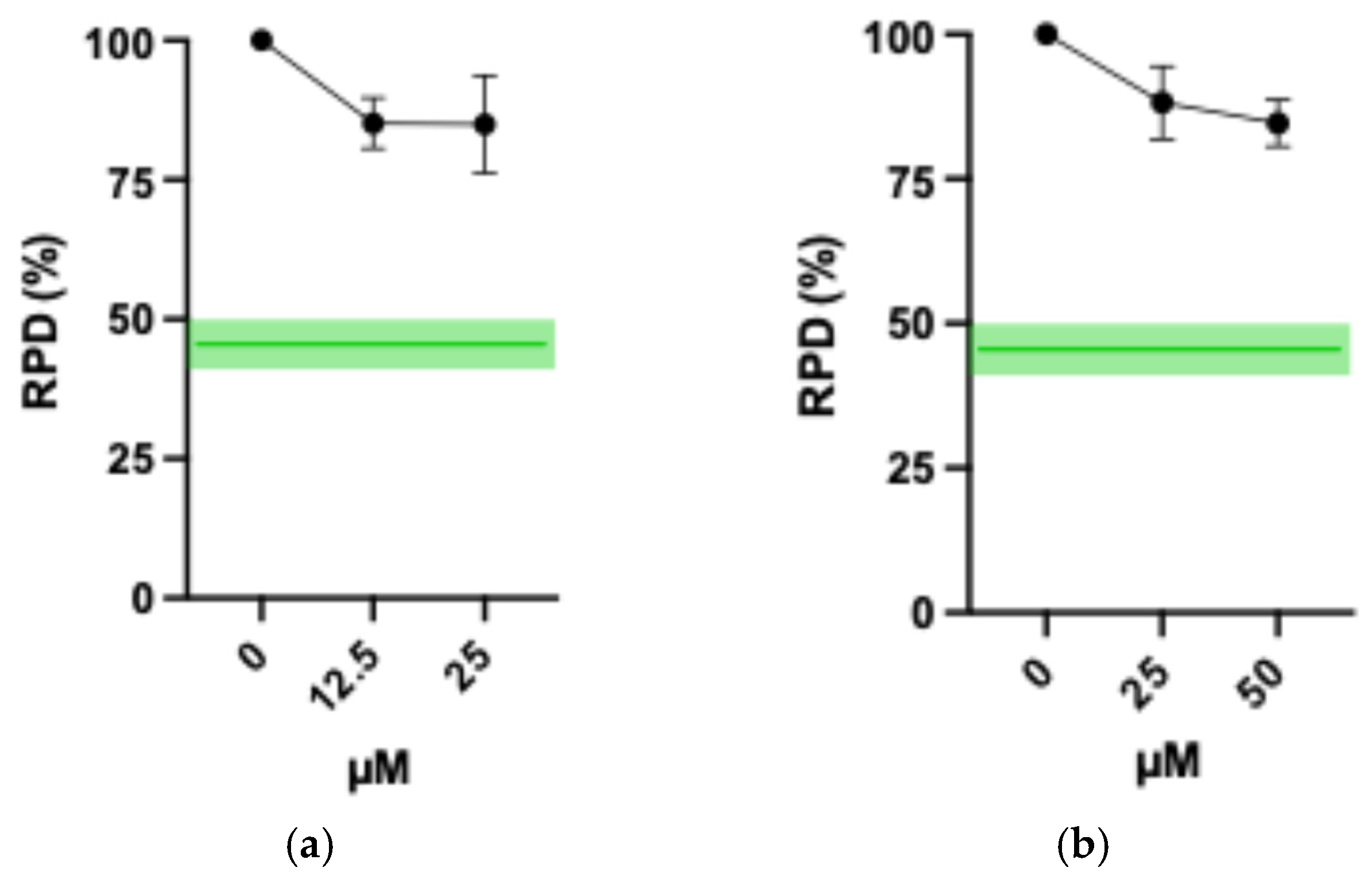
Cytostasis was assessed by performing the same experiment as for cytotoxicity and was calculated using the relative population doubling (RPD), which provides an estimate of replicative activity in treated cultures compared to the negative control. According to the OECD guideline criteria, RPD values should not fall below 45 ± 5%.
As illustrated in
Figure 3, at 100 μM the RPD dropped below the threshold for both compounds, leading to the exclusion of this concentration from MNi frequency analysis.
2.3. Apoptosis
PI staining alone allows discrimination between viable and necrotic cells, but early apoptotic cells may not be detected due to their intact membrane; for this reason, Annexin V Alexa Fluor 488 was also used to distinguish between early and late apoptotic cells.
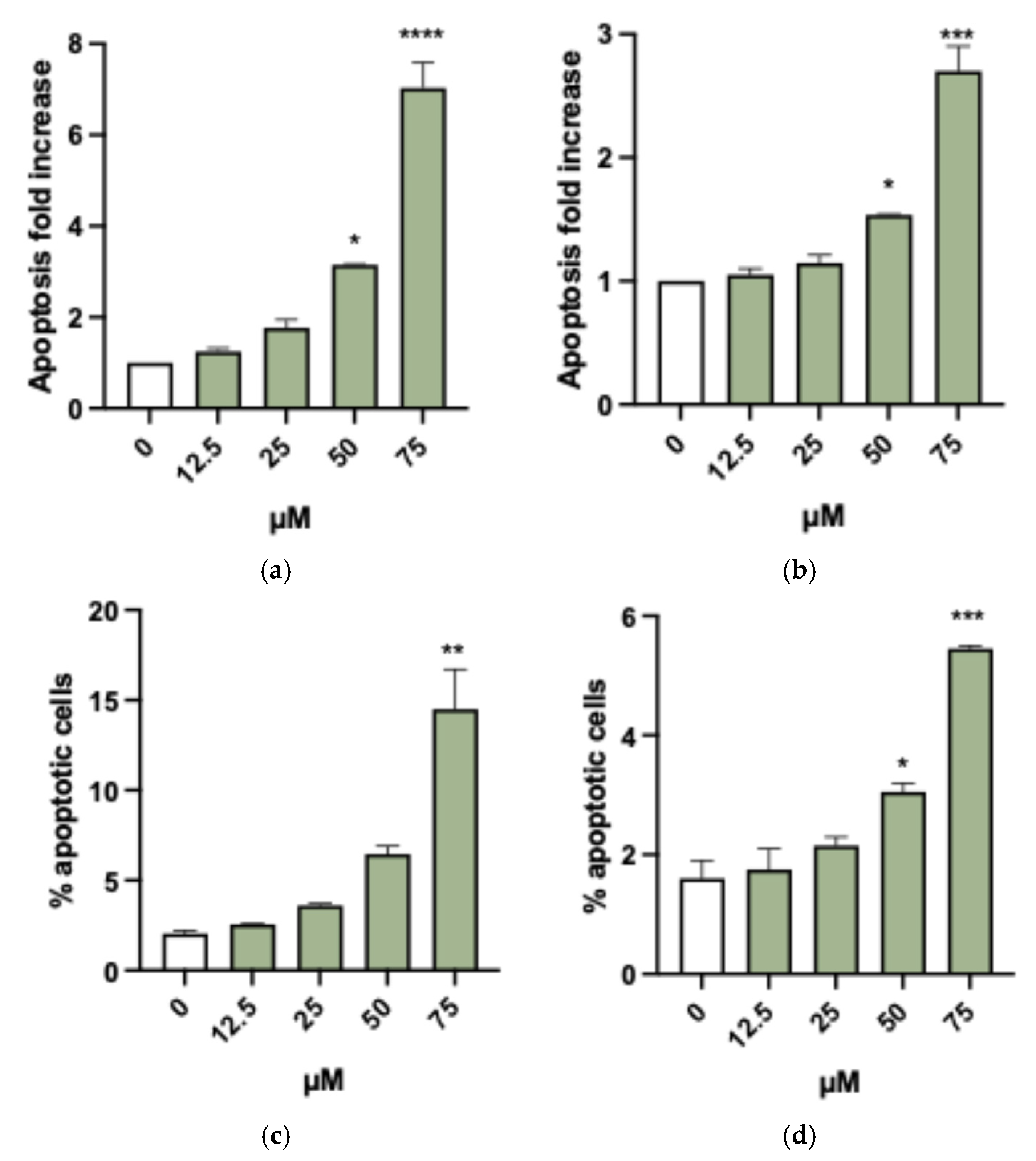
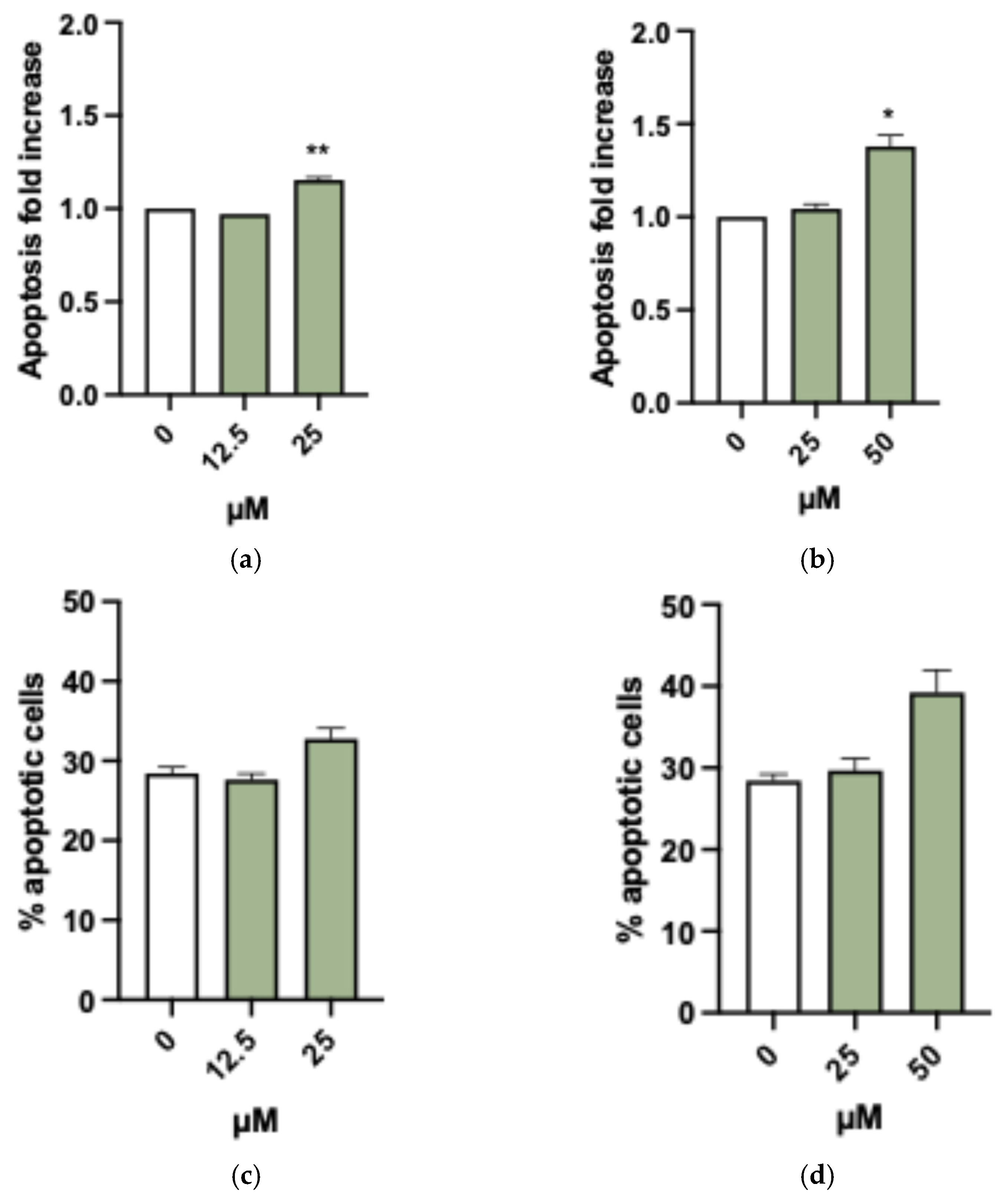
Concentrations of 12.5, 25, 50 and 75 μM were tested, and those that induced more than a twofold increase in apoptosis compared to the negative control were excluded.
As shown in
Figure 4, metodesnitazene exceeded this threshold at 50 and 75 μM, whereas etodesnitazene exceeded it only at 75 μM.
2.4. MNi Frequency
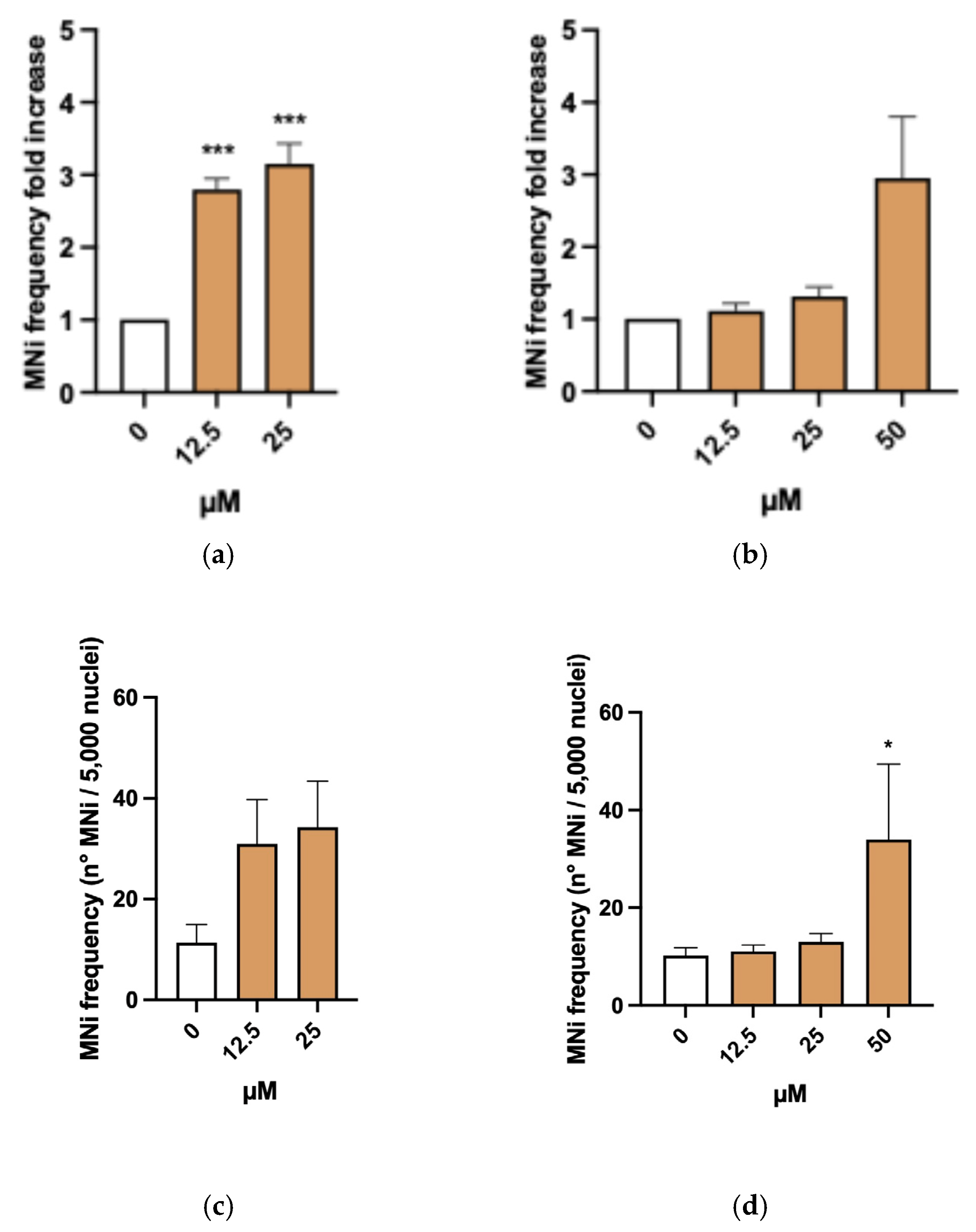
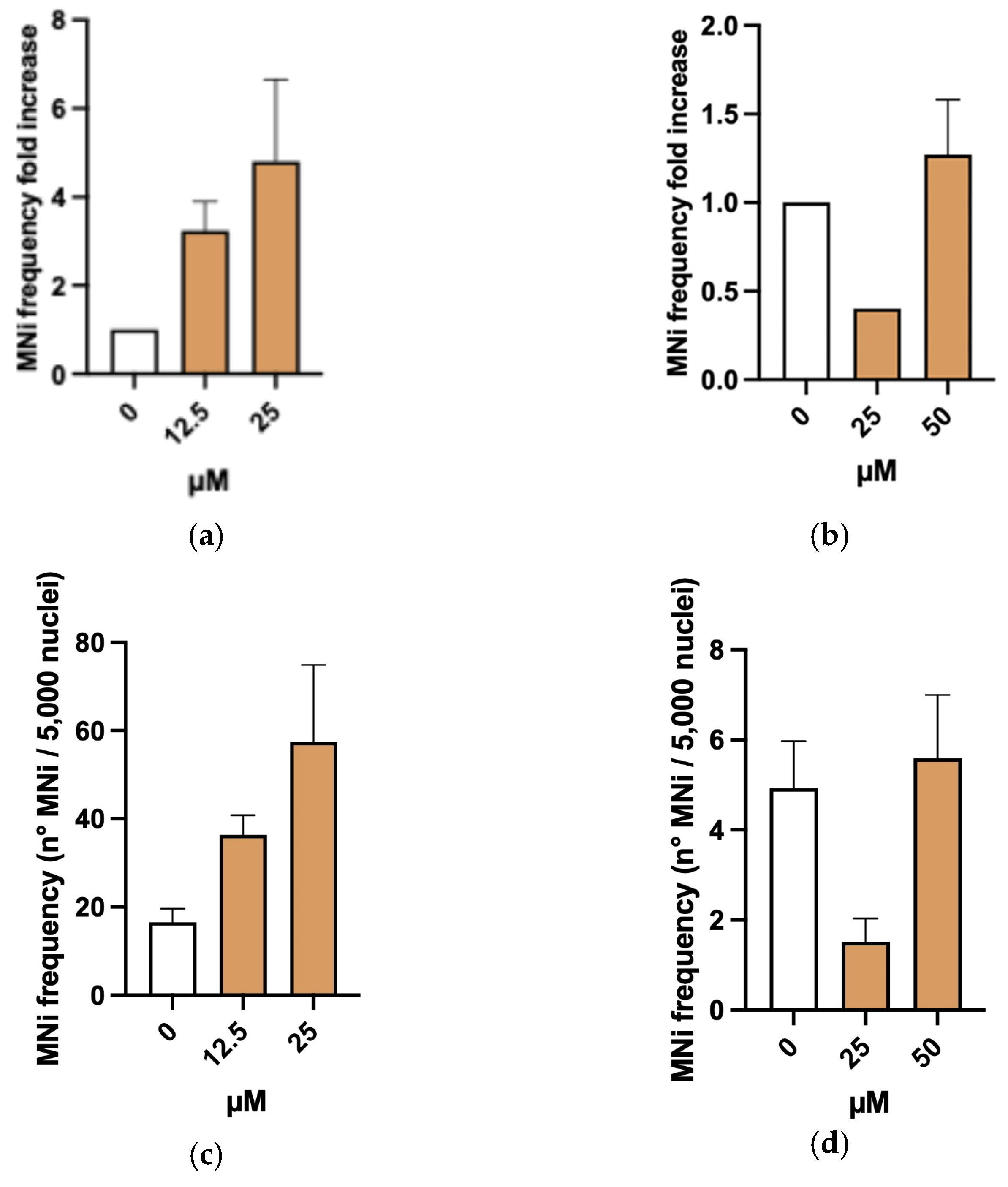
Based on the results of cytotoxicity, cytostasis and apoptosis assessments, the concentrations selected for MNi frequency evaluation were 12.5 and 25 μM for metodesnitazene and 12.5, 25 and 50 μM for etodesnitazene. The MNi quantification was conducted using SYTOX Green dye.
In
Figure 5, metodesnitazene increases MNi frequency already at 12.5 μM, inducing an increase higher than twice that of untreated cultures, with an even greater increase at 25 μM. In contrast, etodesnitazene treatment induces a double increase only at 50 μM.
2.5. Cytotoxicity, Cytostasis, Apoptosis and MNi Frequency with S9 Metabolic Activation
To obtain a more comprehensive assessment, the compounds were also evaluated in the presence of metabolic activation. For this purpose, the selected concentrations for cytotoxicity, cytostasis and apoptosis were 12.5 and 25 μM for metodesnitazene, 25 and 50 μM for etodesnitazene. Cells were exposed for 3 h in presence of S9 mix, followed by a 23 h recovery period in fresh medium.
As shown in
Figure 6, the percentage of viable cells remained above the threshold for all tested concentrations. Compared to the data recorded in the absence of S9 mix, a slight decrease in viability was observed, which may be attributed to the metabolic activation system itself or to the formation of cytotoxic metabolites.
Cell proliferation results are reported in
Figure 7. Compared to the parental drug alone, cells treated with metodesnitazene in the presence of metabolic activation exhibited a slightly lower RPD. Etodesnitazene, on the other hand, produced similar values with or without S9 mix. In both cases, RPD remained above the OECD threshold, indicating adequate cell division.
Finally,
Figure 8 indicates that apoptosis levels were comparable to those observed in the negative controls, confirming that in the presence of metabolic activation, the treatment did not induce excessive programmed cell death.
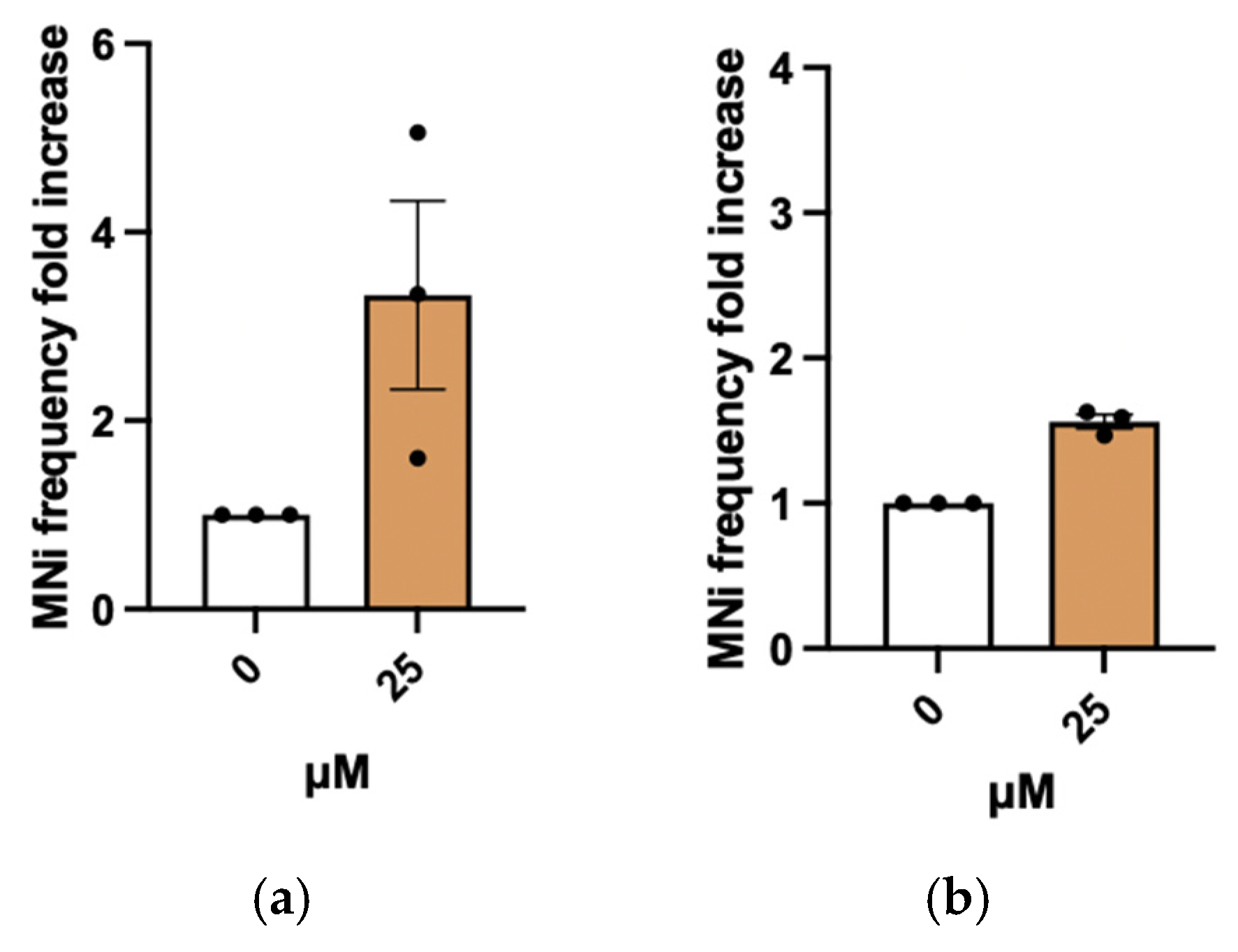
Regarding genotoxicity, the results reported in
Figure 9 revealed a partially different pattern from that observed in the parent compounds alone. Cultures treated with metodesnitazene in the presence of S9 mix showed no genotoxic effect at 12.5 μM, whilst a notable increase in MNi frequency was detected at 25 μM. In contrast, etodesnitazene under metabolic activation remained non-genotoxic at both tested concentrations.
2.6. ROS
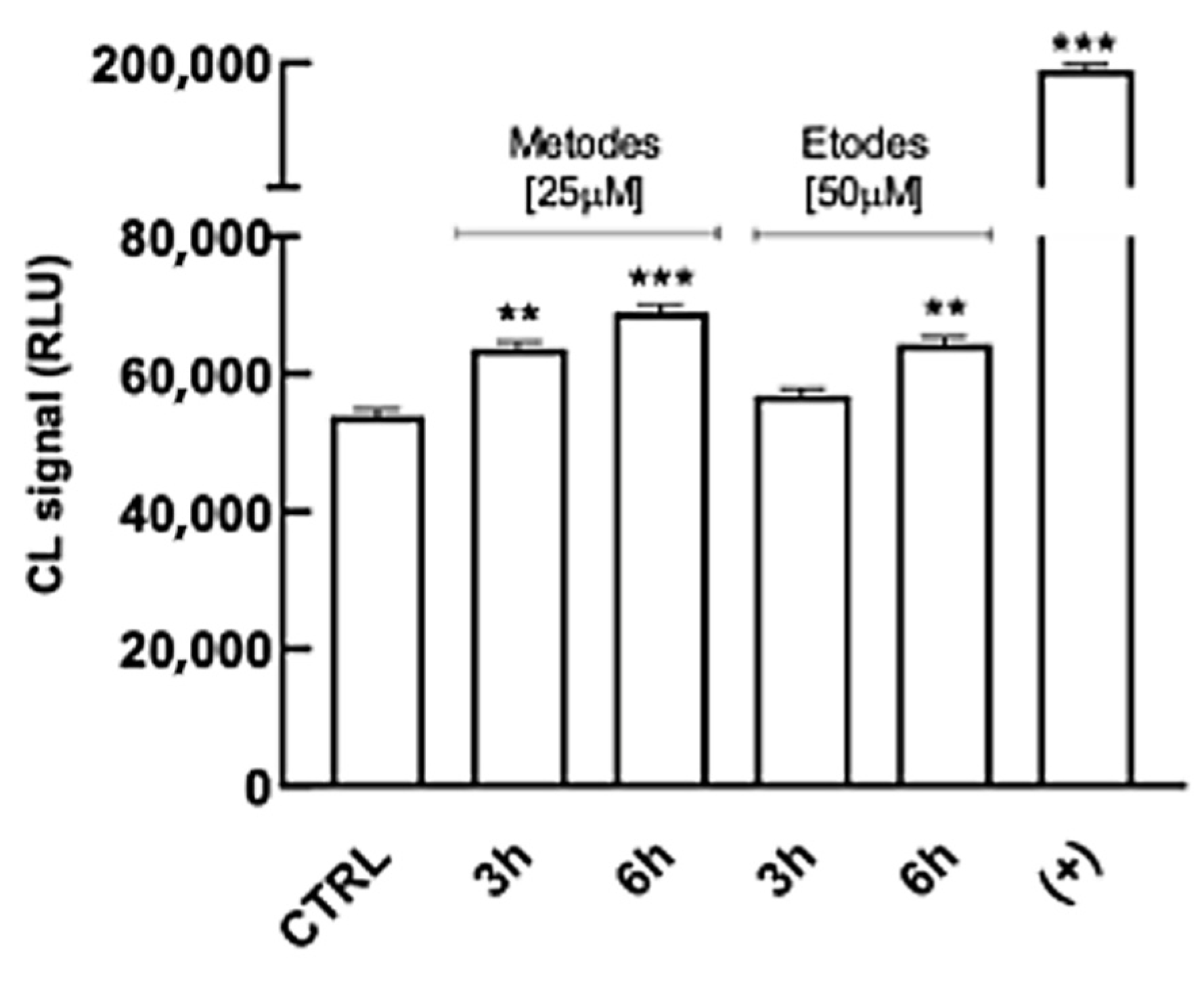
As a final investigation, intracellular ROS production was assessed in cells exposed to the highest concentrations previously shown to induce genotoxicity, namely 25 μM metodesnitazene and 50 μM etodesnitazene. Hydrogen peroxide (H
2O
2) was used as a marker of intracellular ROS generation because of its relatively long half-life. The chemiluminescent (CL) signal elicited by the CL probe [
32], which is proportional to H
2O
2 intracellular levels, was measured after 3 and 6 h of treatment.
As illustrated in
Figure 10, metodesnitazene induced a significant increase in the CL signal as early as 3 h, with a further enhancement observed at 6 h. In contrast, etodesnitazene did not produce a measurable increase at the 3 h time point, whereas a significant rise was detected following 6 h of exposure. As expected, a marked increase in the CL signal was observed in cells injured with menadione (25 μM), used as a positive control, thereby confirming the assay’s sensitivity to intracellular ROS levels.
Metodesnitazene and etodesnitazene both promote intracellular ROS production, with a faster response observed with the former and a delayed effect for the latter.
3. Discussion
The ongoing spread of nitazenes continues to raise major public health concerns. Given the structural diversity within this class and the possibility that even minor chemical modifications may markedly alter biological activity, compound-specific toxicological assessments are preferable rather than relying on analogies with other NSOs. This is especially critical as the toxicological profile of most NSOs remains narrowly focused on acute effects, leaving a significant gap concerning the long-term health consequences. Among these, genotoxicity warrants particular attention. In vitro genotoxicity assays such as the MN test provide evidence of a compound’s ability to induce chromosomal damage, a key event that may ultimately lead to stable genetic alterations. It is well established that mutagenicity represents a major mechanistic factor associated with an increased risk of several chronic diseases, including cancer and neurodegenerative disorders. Indeed, DNA damage and chromosomal alterations are widely recognized as important contributors to carcinogenesis and have also been implicated in the pathogenesis of a variety of neurodegenerative conditions [
33].
In this regard, an extensive search of major scientific databases, such as PubMed, confirmed a substantial lack of studies addressing the genotoxic evaluation of NSOs, including nitazenes. Currently, our earlier findings represent the only available evidence in this field [
29,
34,
35]. Since NSOs are frequently used chronically by dependent individuals, the absence of genotoxicity data means that a significant population may be unknowingly exposed to cumulative mutagenic risk. Thus, without comprehensive testing, these potential adverse outcomes remain unmonitored and overlooked in harm reduction strategies.
Aiming to overcome this knowledge gap, our previous research focused on the genotoxic assessment of several NSOs subclasses. We first evaluated fentanyl and its analogues (acrylfentanyl, furanfentanyl and ocfentanyl), finding that while fentanyl itself was non-genotoxic, its derivatives exhibited positive responses [
34]. Our investigation then expanded to non-fentanyl analogues, specifically brorphine and its derivatives (orphine, chlorphine, iodorphine and fluorphine), where only brorphine and orphine were found to be non-genotoxic [
35]. Most recently, we explored the nitazene class, testing metonitazene, etonitazene, isotonitazene and clonitazene; of these compounds, only the latter two demonstrated genotoxic activity [
29]. Our findings confirm that even within the same class, NSOs can act through distinct mechanisms contributing to DNA damage and mutagenicity.
Building on these results, the present study was designed to evaluate the mutagenic potential of metodesnitazene and etodesnitazene, adhering to the standard hazard identification recommendations of OECD guideline No. 487 [
30]. A flow cytometry-based protocol was chosen due to its clear advantages over traditional microscopy methods, which are limited by low cell counts, time-consuming analysis and operator-dependent variability. In contrast, the flow cytometric approach allows the rapid and accurate analysis of approximately 5000 cells within just two to three minutes, thereby improving efficiency and reproducibility [
31].
Preliminary analyses indicate that both compounds remained within the acceptable cytotoxicity range across all concentrations. Respecting the threshold is crucial for maintaining biological relevance, as pronounced cell death or impaired proliferation can compromise the accurate and reliable determination of MNi. Cytostasis evaluation showed slowed cell cycle progression at the highest concentration (100 μM) for both substances, as the value was under the OECD threshold. Considering the results obtained on MNi frequency in subsequent assays, the lack of cytotoxicity and only mild cytostasis is particularly concerning, as it implies that cells are unable to counteract the activity of the two nitazenes. Cells may appear viable, proliferative and functionally unaffected, while nonetheless accumulating genetic damage that is not effectively repaired and can be transmitted to daughter cells.
The guideline also recommends the assessment of additional markers of cellular stress to complement the primary cytotoxicity evaluations, provided they are not used as a substitute for the standard measurements [
30]. In this study, apoptosis was selected as an additional endpoint to prevent apoptotic bodies from being erroneously scored as MNi, which could lead to false-positive results. Accordingly, a two-fold increase relative to the control was considered beyond the acceptable threshold. Based on this criterion, metodesnitazene at 50 and 75 μM and etodesnitazene at 75 μM surpassed this limit. Although these concentrations did not induce detectable cytotoxicity, the activation of programmed cell death suggests that the defensive mechanism can identify and eliminate cells deemed unsuitable for survival. However, while the induction of apoptosis at high doses serves as a positive indicator of cellular competence, it is not efficient enough to prevent genotoxic effects at lower concentrations.
These evaluations allowed the selection of concentrations suitable for MNi analysis. A consistent dose-dependent trend was observed across independent experiments compared to the concurrent negative control. In particular an increase in MNi frequency was detected in treated cells at both concentrations of metodesnitazene (12.5 and 25 μM) and at the highest concentration of etodesnitazene (50 μM), with values approximately two-fold higher than those of the untreated control. Despite such increase, consistently exceeding a twofold change, statistical significance was not always reached (most likely because of the high SEM values, associated with these datasets.). This aspect remains relevant and represent the main limitation of this study and requires further investigation.
However, this trend in MNi frequency increase gain further importance when considered in relation to our previous results on metonitazene and etonitazene, for which no genotoxic effects were detected under comparable experimental conditions [
29]. The contrasting behavior observed between these compounds and their corresponding desnitro suggests a possible structure–activity relationship within this class. In particular, the absence of the 5-nitro group appears to be associated with the emergence of a mutagenic response, hinting that even subtle structural modifications could critically influence the genotoxic profile of nitazenes, potentially altering their interactions with cellular targets. However, this hypothesis requires further studies. Considering these results, the effects linked to metabolites formed under metabolic activation were also investigated to better mimic in vivo conditions. Since the cytotoxicity, cytostasis, and apoptosis threshold values were respected, MNi frequency was assessed at the same concentrations used in the experiments without metabolic activation. In presence of S9 mix, only cells treated with metodesnitazene at 25 μM showed a two-fold increase in MNi frequency compared with the negative control.
The study by Taoussi et al. (2024) [
25], conducted in vitro on human hepatocytes and post-mortem biological fluids (supported by in silico predictions), identified 10 metabolites of metodesnitazene and 22 metabolites of etodesnitazene. While the use of an exogenous metabolic activation system provided a broader toxicological evaluation, the specific metabolites formed and their individual effects are unknown. This represents a limitation of the current study, as the observed genotoxic responses were elicited by a complex pool of metabolic products rather than a single identified molecule. Further investigations using isolated metabolites would be necessary to pinpoint the exacts molecular entity responsible for DNA damage.
In presence of S9 mix, cell viability decreased to approximately 75% already at the lowest treatment concentration compared with the S9-matched control, suggesting a possible effects of metabolite generation. Cytostasis results also showed a general reduction in RPD, suggesting that metabolites may induce a mild cell-cycle slowing, which at higher concentrations could progress to arrest. Interestingly, apoptosis induction decreased under metabolic activation for all tested concentrations and compounds. Regarding genotoxic analysis, metodesnitazene alone showed an increase in MNi frequency at both concentrations tested. In presence of S9 metabolic activation, the 12.5 μM concentration yielded a result comparable to the negative control, whereas the 25 μM concentration showed an increase approaching four-fold relative to control levels. Out of the three concentrations tested, etodesnitazene alone showed an increase in MNi frequency only at the highest concentration; whereas under metabolic activation, the 25 μM concentration resulted in a reduction compared to the negative control, while the 50 μM showed a slight increase, which remained within the range of variability of the control values. At least three independent experimental replicates were performed, fully adhering to the standard hazard identification recommendations of OECD Guideline No. 487. While statistical significance was not systematically achieved across all tested concentrations and the graphs show wide error margins, the overall evaluation of the genotoxic potential was based on biological relevance and trend consistency across the independent runs, as suggested by international regulatory frameworks. The dose-dependent upward trend observed across all independent replicates warrants consideration as a biologically relevant signal, albeit descriptive and requiring further mechanistic validation. Furthermore, this apparent variability is indicative of the stochastic nature of genotoxic events. Therefore, the present findings indicate that both metodesnitazene and etodesnitazene may be associated with genotoxic responses in TK6 cells. The data also suggest a possible modulation of the observed effects by metabolic activation; however, these results should be interpreted with caution given that not all effects reached statistical significance and the mechanistic interpretation remains preliminary. Indeed, the genotoxic potential of a substance can manifest through various molecular pathways, ranging from the formation of covalent DNA adducts to the interference with the mitotic spindle apparatus and the induction of oxidative stress [
33]. In this study, we aimed to investigate the latter mechanism; specifically, TK6 cells were treated with 25 μM metodesnitazene or 50 μM etodesnitazene, and intracellular ROS production was evaluated using a CL-based bioassay. Metodesnitazene induced a significant increase in ROS at both time points. Etodesnitazene, though, generated a notable rise only at 6 h. Collectively, these results indicate that both compounds promote intracellular ROS generation, with metodesnitazene eliciting a more rapid pro-oxidant response and etodesnitazene displaying a delayed effect. While the observed increase in ROS levels supports oxidative stress as a possible contributor to the trend in MNi frequency increase induced by metodesnitazene and etodesnitazene, our data do not establish a direct causal or quantitative relationship between ROS production and MNi frequency. Menadione was used only as a positive control for the ROS assay and not as a reference compound for genotoxic potency [
36,
37,
38,
39]. Accordingly, these findings should be interpreted as suggesting a possible involvement of oxidative stress rather than proving a causal mechanism. Future studies employing antioxidant co-treatment, oxidative DNA damage markers, and/or metabolite characterization will be required to further clarify the mechanistic relationship between oxidative stress, biotransformation, and genotoxicity [
40]. These investigations fall outside the scope of the present study and represent valuable directions for future research.
Although illicit substances are subject to strict regulatory controls and are not intended for use, their consumption nonetheless persists worldwide, emphasizing the urgent need for a solid scientific understanding of the associated health impacts. This study demonstrates that both metodesnitazene and etodesnitazene may induce genotoxic damage in TK6 cells, with the magnitude of the response influenced by metabolic activation. From a public health perspective, these findings strengthen the growing concern surrounding nitazenes, which are increasingly found on the illicit drug market and frequently consumed unknowingly or in combination with other psychoactive substances [
13]. In this context, the identification of genotoxic effects raises important questions regarding potential long-term health consequences in exposed individuals. Unlike acute toxicity, which is often associated with respiratory depression and overdose, genotoxicity may remain clinically silent while contributing to cumulative DNA damage. In a broader biological framework, persistent macromolecular damage is theoretically associated with an increased long-term risk of chronic-degenerative pathologies [
19,
41]. However, it must be emphasized that the concentrations utilized in this screening were selected in strict accordance with the OECD Guideline No. 487 requirements, which mandate testing up to cytotoxic levels to ensure reliable hazard identification. Since these experimental conditions reflect a standard high-dose regulatory screening rather than actual physiological exposure levels, these potential long-term outcomes must be interpreted with caution.
Moreover, the variability observed among structurally related compounds complicates risk assessment, limiting the ability to predict the safety profile of newly emerging derivatives. A key objective for future research will be to identify the specific metabolites responsible for the genotoxic effects observed under metabolic activation. Finally, further efforts in toxicological profiling, including chronic exposure investigations, will be essential to limit the harm associated with these substances as their presence in the illicit drug market continues to expand.



 ,
,