Amplicon-Based Profiling of Fungal Communities Associated with Scots Pine Bark Beetles: Selective Antagonism and Monoterpene Tolerance




Abstract
1. Introduction
2. Results
2.1. Sequencing Statistics
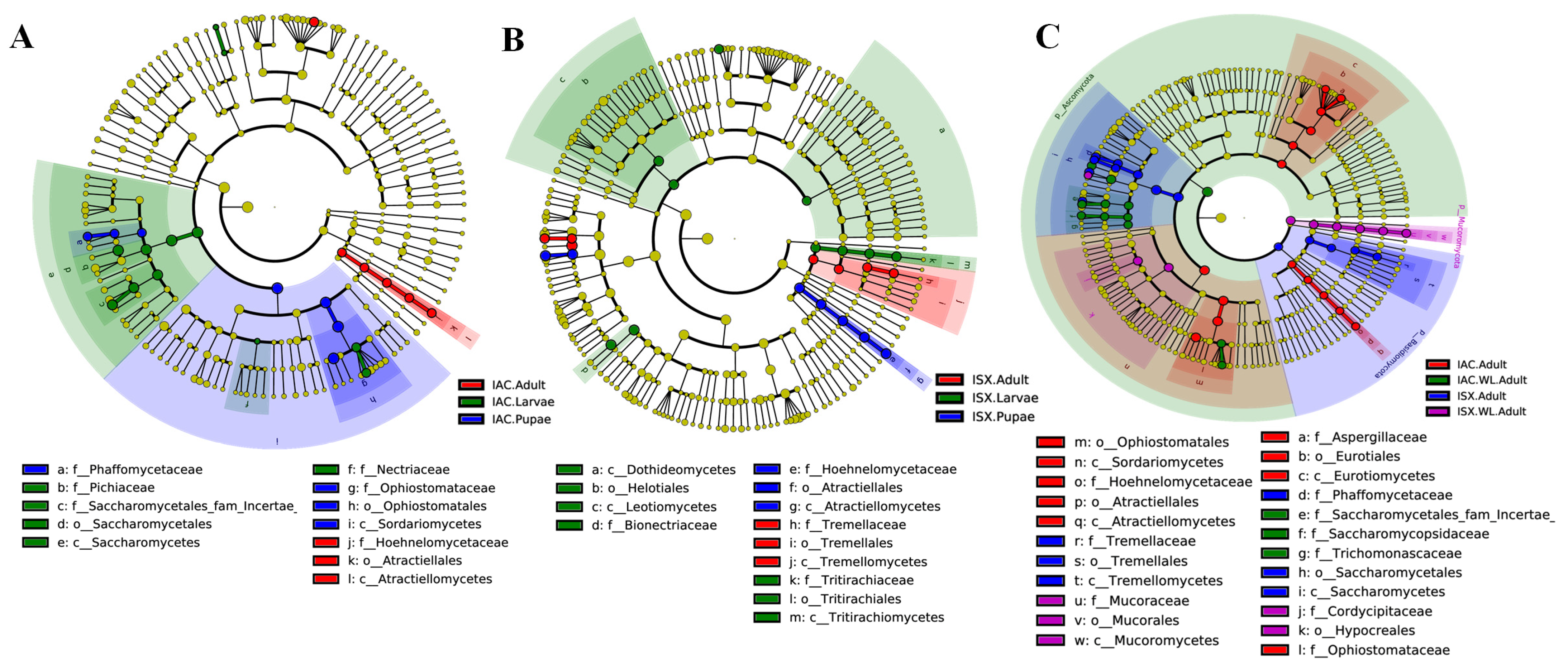
2.2. Mycobiome Composition and Diversity
2.2.1. Fungal Taxonomic Abundance
2.2.2. ASV Abundance
2.2.3. Alpha Diversity
2.2.4. Beta Diversity
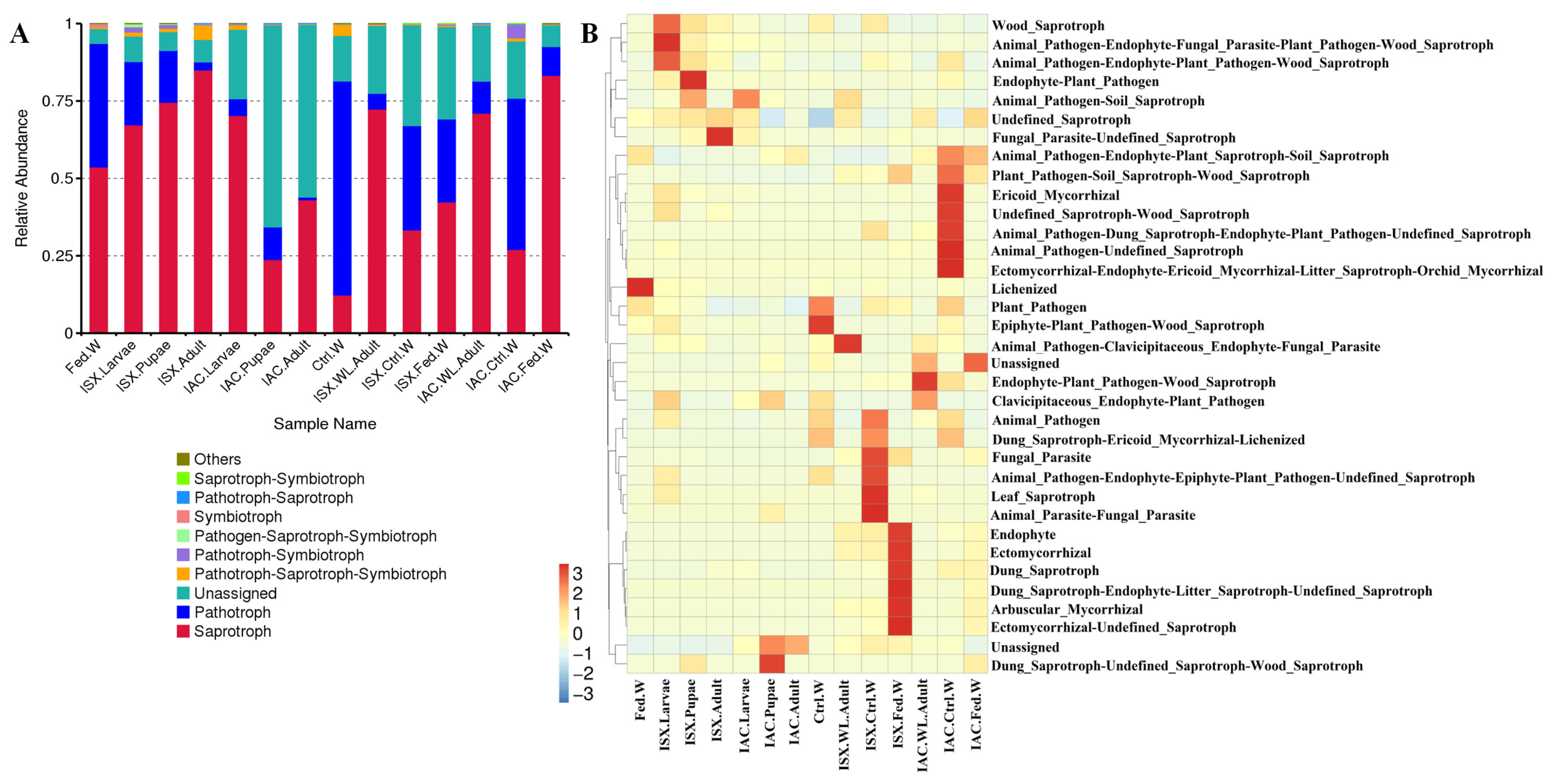
2.3. Functional Prediction of Beetle Mycobiome
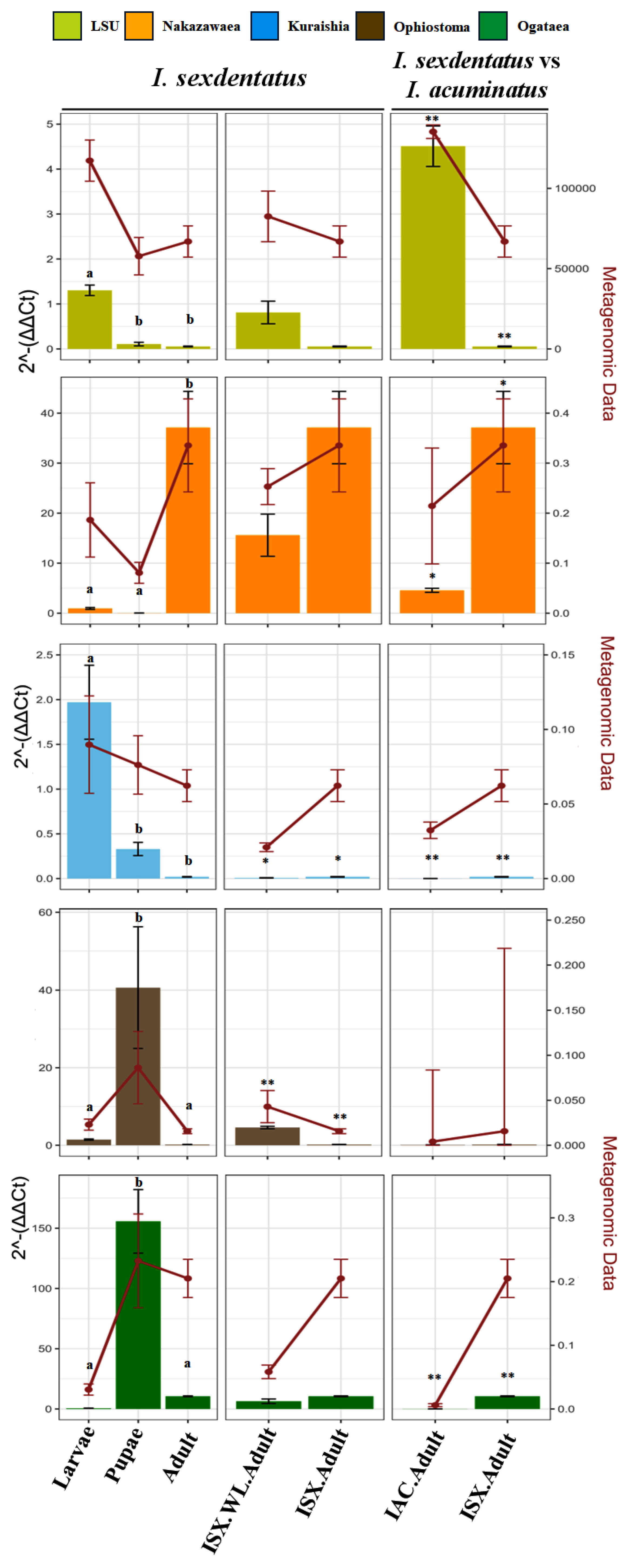
2.4. Fungal Relative Abundance Determined by Quantitative PCR Assay
2.4.1. Ips sexdentatus Life Stages
2.4.2. Wild-Collected Adults vs. Lab-Bred Adults
2.4.3. I. sexdentatus vs. I. acuminatus Adults
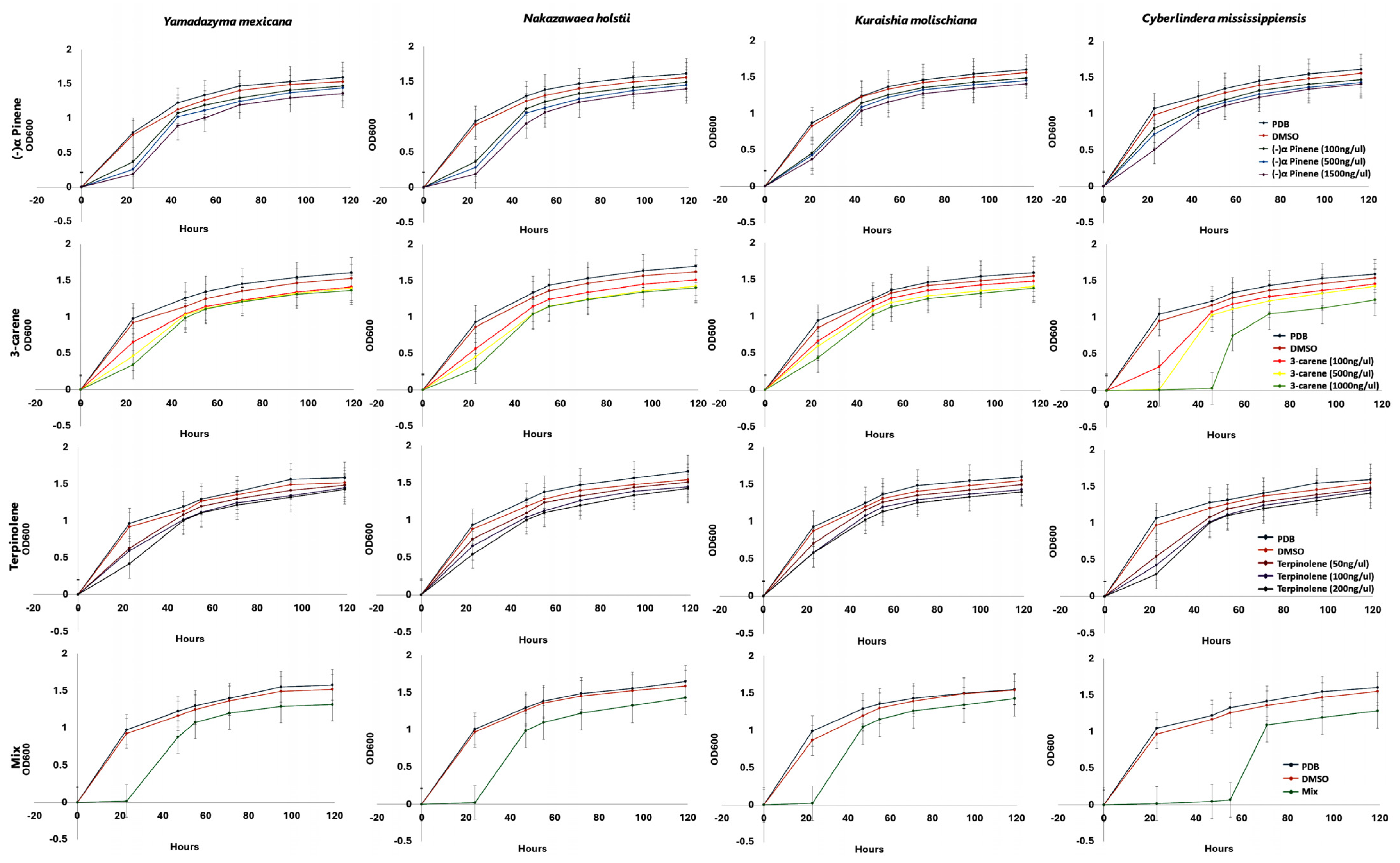
2.5. Effects of Monoterpenes on Pine Bark Beetle-Associated Yeasts
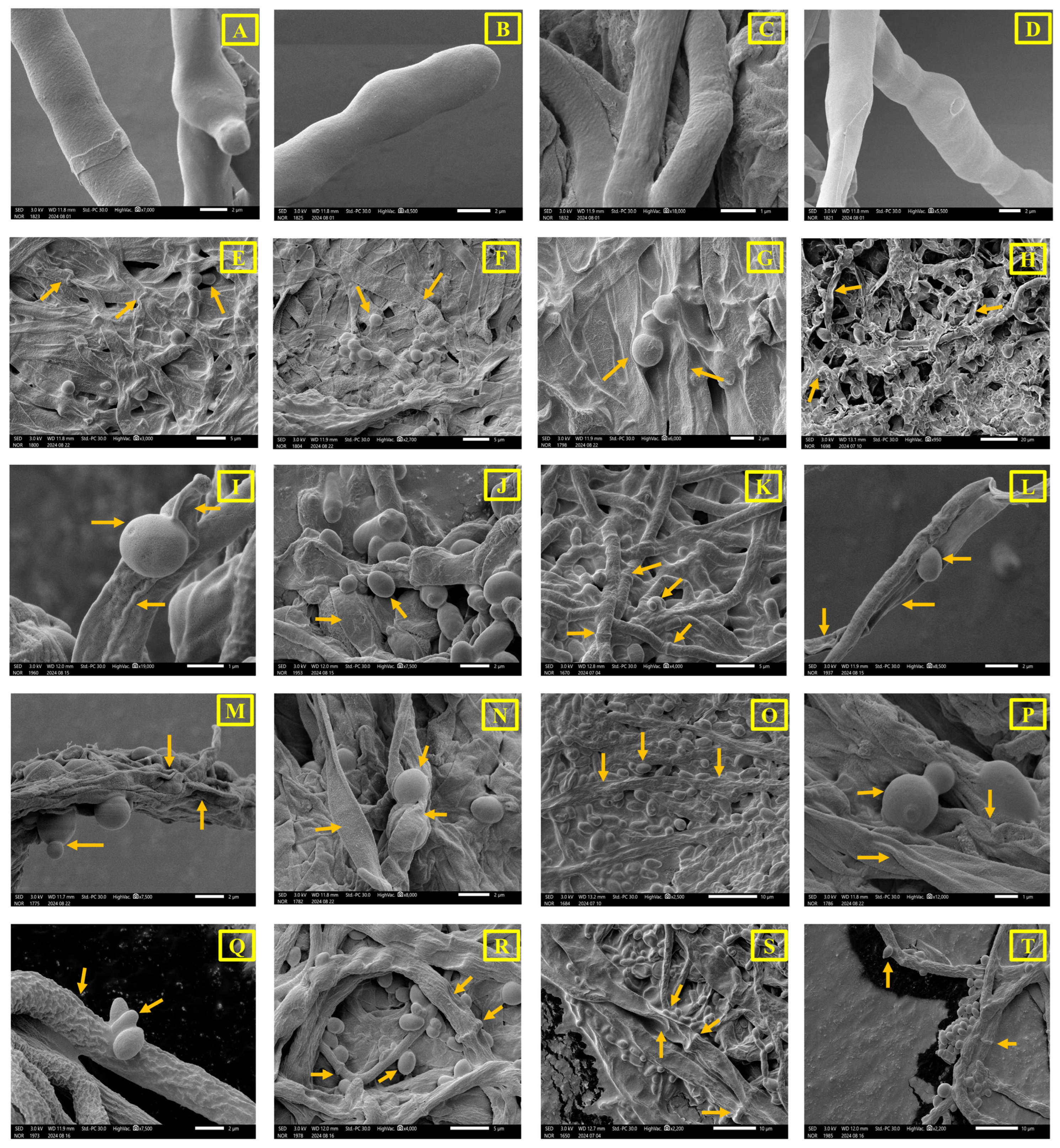
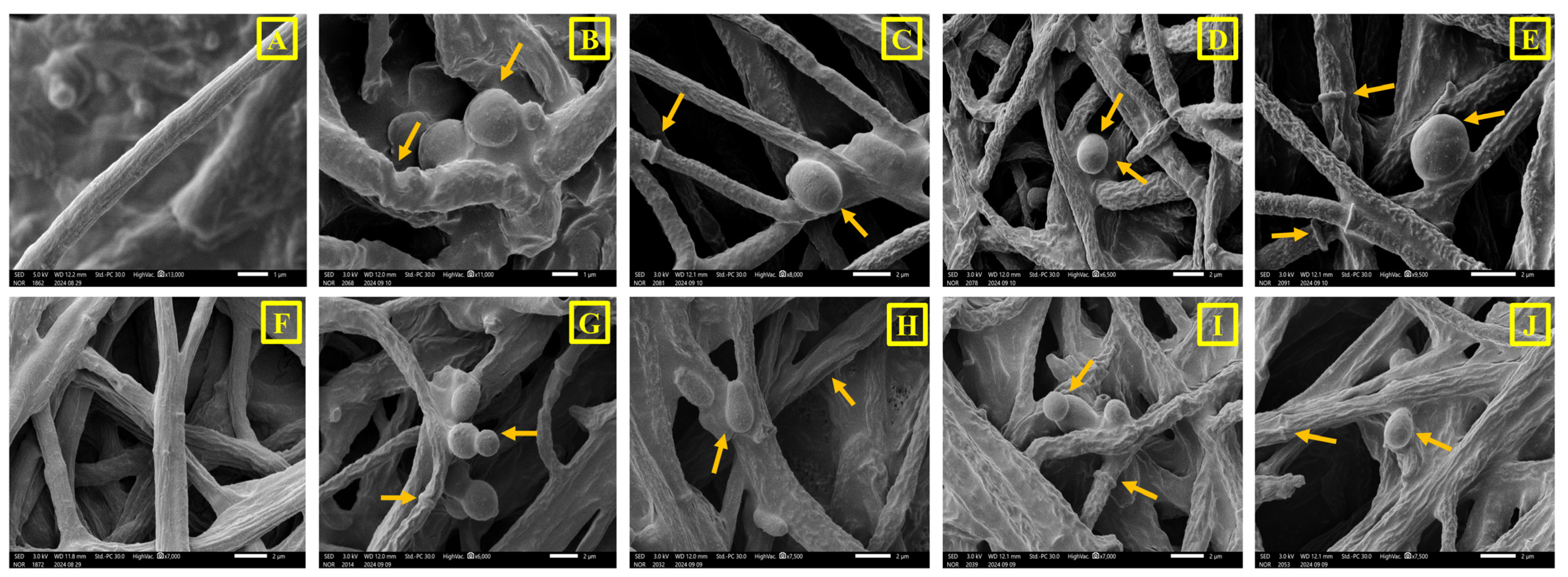
2.6. Gut Microbial Colonisation and Biofilm Formation
2.7. Fungal Interactions In Vitro
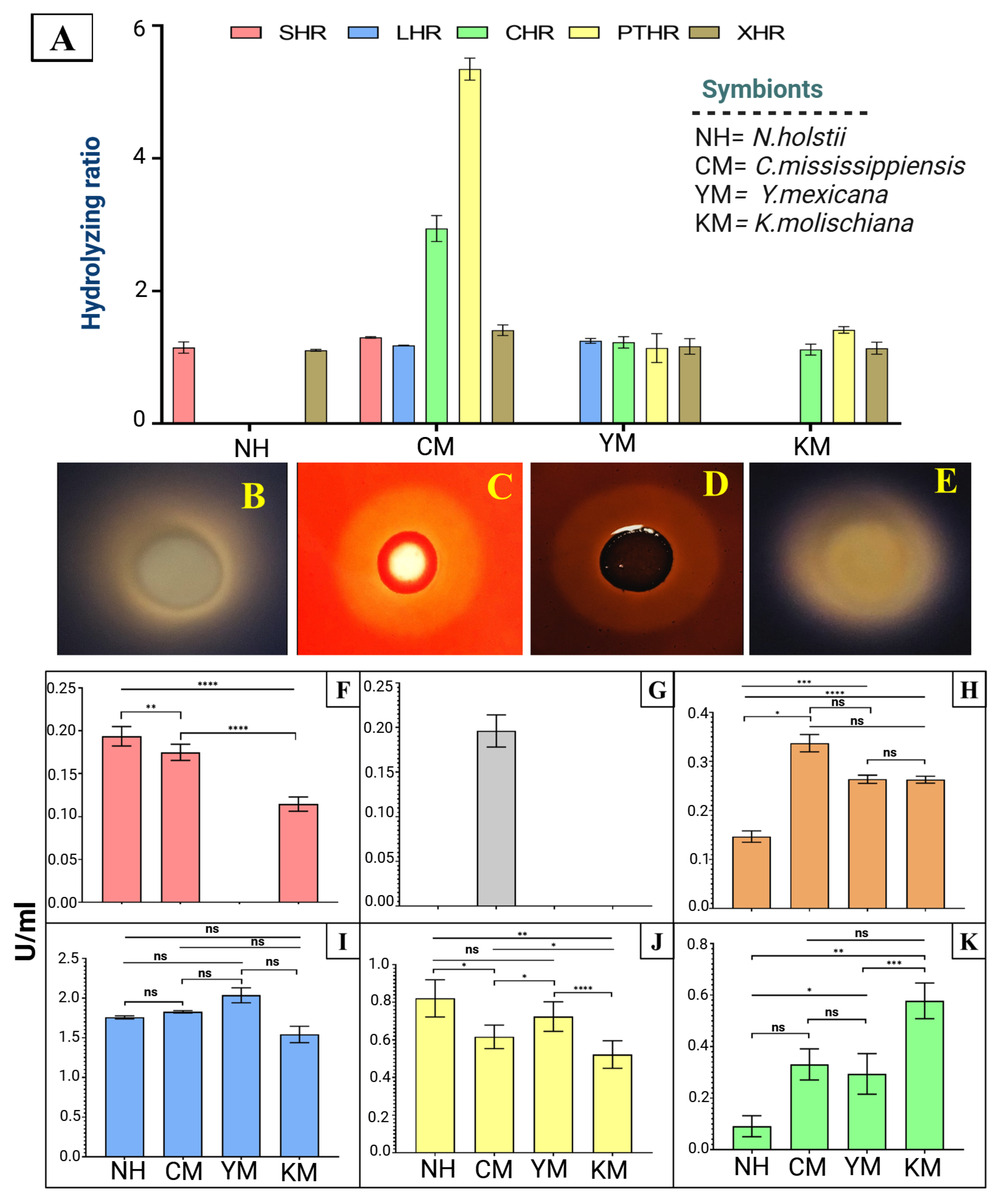
2.8. Enzyme Production
Antifungal and Digestive Enzyme Production
3. Discussion
4. Materials and Methods
4.1. Bark Beetle Rearing and Collection
4.2. DNA Extraction
4.3. Amplicon Sequencing
4.4. Bioinformatic Data Analysis
4.4.1. Data Processing and Species Annotation
4.4.2. Alpha Diversity
4.4.3. Beta Diversity
4.5. Quantitative PCR Assay
4.6. Fungal Cultures and Identification
4.7. Monoterpene BIOASSAY
4.8. Scanning Electron Microscopy (SEM)
4.8.1. Gut Colonisation of Fungi
4.8.2. Biofilm Formation
4.8.3. Antifungal Activity
4.9. Enzyme Production Assay
4.9.1. Estimation of Antifungal Enzymes
4.9.2. Estimation of Digestive Enzymes
5. Conclusions
Supplementary Materials
Author Contributions
Funding
Institutional Review Board Statement
Informed Consent Statement
Data Availability Statement
Acknowledgments
Conflicts of Interest
References
- Singh, V.V.; Naseer, A.; Mogilicherla, K.; Trubin, A.; Zabihi, K.; Roy, A.; Jakuš, R.; Erbilgin, N. Understanding bark beetle outbreaks: Exploring the impact of changing temperature regimes, droughts, forest structure, and prospects for future forest pest management. Rev. Environ. Sci. Bio/Technol. 2024, 23, 257–290. [Google Scholar] [CrossRef]
- Biedermann, P.H.; Müller, J.; Grégoire, J.C.; Gruppe, A.; Hagge, J.; Hammerbacher, A.; Hofstetter, R.W.; Kandasamy, D.; Kolarik, M.; Kostovcik, M.; et al. Bark beetle population dynamics in the Anthropocene: Challenges and solutions. Trends Ecol. Evol. 2019, 34, 914–924. [Google Scholar] [CrossRef] [PubMed]
- Colombari, F.; Schroeder, M.L.; Battisti, A.; Faccoli, M. Spatio-temporal dynamics of an Ips acuminatus outbreak and implications for management. Agric. For. Entomol. 2013, 15, 34–42. [Google Scholar] [CrossRef]
- Faccoli, M.; Finozzi, V.; Colombari, F. Effectiveness of different trapping protocols for outbreak management of the engraver pine beetle Ips acuminatus (Curculionidae, Scolytinae). Int. J. Pest Manag. 2012, 58, 267–273. [Google Scholar] [CrossRef]
- Pineau, X.; David, G.; Peter, Z.; Sallé, A.; Baude, M.; Lieutier, F.; Jactel, H. Effect of temperature on the reproductive success, developmental rate and brood characteristics of Ips sexdentatus (Boern.). Agric. For. Entomol. 2017, 19, 23–33. [Google Scholar] [CrossRef]
- Plewa, R.; Mokrzycki, T. Occurrence, biology, and economic importance of the sharp-dentated bark beetle Ips acuminatus (Gyllenhal, 1827) (Coleoptera, Curculionidae, Scolytinae) in Poland. Sylwan 2017, 161, 619–629. [Google Scholar] [CrossRef]
- Liška, J.; Knížek, M.; Véle, A. Evaluation of insect pest occurrence in areas of calamitous mortality of Scots pine. Cent. Eur. For. J. 2021, 67, 85–90. [Google Scholar] [CrossRef]
- Marini, L.; Økland, B.; Jönsson, A.M.; Bentz, B.; Carroll, A.; Forster, B.; Grégoire, J.C.; Hurling, R.; Nageleisen, L.M.; Netherer, S.; et al. Climate drivers of bark beetle outbreak dynamics in Norway spruce forests. Ecography 2017, 40, 1426–1435. [Google Scholar] [CrossRef]
- Raffa, K.F.; Aukema, B.H.; Bentz, B.J.; Carroll, A.L.; Hicke, J.A.; Turner, M.G.; Romme, W.H. Cross-scale drivers of natural disturbances prone to anthropogenic amplification: The dynamics of bark beetle eruptions. Bioscience 2008, 58, 501–517. [Google Scholar] [CrossRef]
- McNichol, B.H.; Clarke, S.R.; Faccoli, M.; Montes, C.R.; Nowak, J.T.; Reeve, J.D.; Gandhi, K.J. Relationships between drought, coniferous tree physiology, and Ips bark beetles under climatic changes. In Bark Beetle Management, Ecology, and Climate Change; Elsevier: London, UK, 2022; pp. 153–194. [Google Scholar]
- Mumm, R.; Hilker, M. Direct and indirect chemical defence of pine against folivorous insects. Trends Plant Sci. 2006, 11, 351–358. [Google Scholar] [CrossRef] [PubMed]
- Linnakoski, R.; De Beer, Z.W.; Niemelä, P.; Wingfield, M.J. Associations of conifer-infesting bark beetles and fungi in Fennoscandia. Insects 2012, 3, 200–227. [Google Scholar] [CrossRef]
- Blow, F.; Douglas, A.E. The hemolymph microbiome of insects. J. Insect Physiol. 2019, 115, 33–39. [Google Scholar] [CrossRef]
- Francke-Grosmann, H. Ectosymbiosis in wood-inhabiting insects. Symbiosis 1967, 2, 141–205. [Google Scholar]
- Six, D.L.; Wingfield, M.J. The role of phytopathogenicity in bark beetle–fungus symbioses: A challenge to the classic paradigm. Annu. Rev. Entomol. 2011, 56, 255–272. [Google Scholar] [CrossRef]
- Seifert, K.A.; De Beer, Z.W.; Wingfield, M.J. The Ophiostomatoid Fungi: Expanding Frontiers; CBS-KNAW Biodiversity Centre: Utrecht, The Netherlands, 2013. [Google Scholar]
- Douglas, A.E. Multiorganismal insects: Diversity and function of resident microorganisms. Annu. Rev. Entomol. 2015, 60, 17–34. [Google Scholar] [CrossRef]
- Kirk, T.K.; Cowling, E.B. Biological decomposition of solid wood. Chem. Solid Wood 1984, 207, 455–487. [Google Scholar]
- Valiev, A.; Ogel, Z.B.; Klepzig, K.D. Analysis of cellulase and polyphenol oxidase production by southern pine beetle associated fungi. Symbiosis 2009, 49, 37–42. [Google Scholar] [CrossRef]
- Hammerbacher, A.; Schmidt, A.; Wadke, N.; Wright, L.P.; Schneider, B.; Bohlmann, J.; Brand, W.A.; Fenning, T.M.; Gershenzon, J.; Paetz, C. A common fungal associate of the spruce bark beetle metabolizes the stilbene defenses of Norway spruce. Plant Physiol. 2013, 162, 1324–1336. [Google Scholar] [CrossRef]
- Zhao, T.; Kandasamy, D.; Krokene, P.; Chen, J.; Gershenzon, J.; Hammerbacher, A. Fungal associates of the tree-killing bark beetle, Ips typographus, vary in virulence, ability to degrade conifer phenolics and influence bark beetle tunneling behavior. Fungal Ecol. 2019, 38, 71–79. [Google Scholar] [CrossRef]
- Kandasamy, D.; Zaman, R.; Nakamura, Y.; Zhao, T.; Hartmann, H.; Andersson, M.N.; Hammerbacher, A.; Gershenzon, J. Conifer-killing bark beetles locate fungal symbionts by detecting volatile fungal metabolites of host tree resin monoterpenes. PLoS Biol. 2023, 21, e3001887. [Google Scholar] [CrossRef] [PubMed]
- Hunt, D.W.; Borden, J.H. Conversion of verbenols to verbenone by yeasts isolated from Dendroctonus ponderosae (Coleoptera: Scolytidae). J. Chem. Ecol. 1990, 16, 1385–1397. [Google Scholar] [CrossRef] [PubMed]
- Netherer, S.; Kandasamy, D.; Jirosová, A.; Kalinová, B.; Schebeck, M.; Schlyter, F. Interactions among Norway spruce, the bark beetle Ips typographus and its fungal symbionts in times of drought. J. Pest Sci. 2021, 94, 591–614. [Google Scholar] [CrossRef]
- Davis, T.S.; Stewart, J.E.; Mann, A.; Bradley, C.; Hofstetter, R.W. Evidence for multiple ecological roles of Leptographium abietinum, a symbiotic fungus associated with the North American spruce beetle. Fungal Ecol. 2019, 38, 62–70. [Google Scholar] [CrossRef]
- Davis, T.S. The ecology of yeasts in the bark beetle holobiont: A century of research revisited. Microb. Ecol. 2015, 69, 723–732. [Google Scholar] [CrossRef]
- Rivera, F.N.; Gonzalez, E.; Gomez, Z.; Lopez, N.; Hernandez-Rodriguez, C.; Berkov, A.; Zuniga, G. Gut-associated yeast in bark beetles of the genus Dendroctonus Erichson (Coleoptera: Curculionidae: Scolytinae). Biol. J. Linn. Soc. 2009, 98, 325–342. [Google Scholar] [CrossRef]
- Liu, F.; Ye, F.; Cheng, C.; Kang, Z.; Kou, H.; Sun, J. Symbiotic microbes aid host adaptation by metabolizing a deterrent host pine carbohydrate d-pinitol in a beetle-fungus invasive complex. Sci. Adv. 2022, 8, eadd5051. [Google Scholar] [CrossRef]
- Khadempour, L.; LeMay, V.; Jack, D.; Bohlmann, J.; Breuil, C. The relative abundance of mountain pine beetle fungal associates through the beetle life cycle in pine trees. Microb. Ecol. 2012, 64, 909–917. [Google Scholar] [CrossRef] [PubMed]
- Taerum, S.J.; Duong, T.A.; De Beer, Z.W.; Gillette, N.; Sun, J.H.; Owen, D.R.; Wingfield, M.J. Large shift in symbiont assemblage in the invasive red turpentine beetle. PLoS ONE 2013, 8, e78126. [Google Scholar] [CrossRef]
- Chakraborty, A.; Purohit, A.; Khara, A.; Modlinger, R.; Roy, A. Life-stage and geographic location determine the microbial assemblage in Eurasian spruce bark beetle, Ips typographus L. (Coleoptera: Curculionidae). Front. For. Glob. Change 2023, 6, 1176160. [Google Scholar] [CrossRef]
- Veselská, T.; Švec, K.; Kostovčík, M.; Peral-Aranega, E.; Garcia-Fraile, P.; Křížková, B.; Havlíček, V.; Saati-Santamaría, Z.; Kolařík, M. Proportions of taxa belonging to the gut core microbiome change throughout the life cycle and season of the bark beetle Ips typographus. FEMS Microbiol. Ecol. 2023, 99, fiad072. [Google Scholar] [CrossRef] [PubMed]
- Davydenko, K.; Vasaitis, R.; Menkis, A. Fungi associated with Ips acuminatus (Coleoptera: Curculionidae) in Ukraine with a special emphasis on pathogenicity of ophiostomatoid species. Eur. J. Entomol. 2017, 114, 77–85. [Google Scholar] [CrossRef]
- Musso, A.; Fortier, C.; Huber, D.; Carroll, A.; Evenden, M. Naïve pine terpene response to the mountain pine beetle (Dendroctonus ponderosae) through the seasons. J. Chem. Ecol. 2023, 49, 299–312. [Google Scholar] [CrossRef]
- Seybold, S.J.; Huber, D.P.; Lee, J.C.; Graves, A.D.; Bohlmann, J. Pine monoterpenes and pine bark beetles: A marriage of convenience for defense and chemical communication. Phytochem. Rev. 2006, 5, 143–178. [Google Scholar] [CrossRef]
- Mann, A.J.; Davis, T.S. Entomopathogenic fungi to control bark beetles: A review of ecological recommendations. Pest Manag. Sci. 2021, 77, 3841–3846. [Google Scholar] [CrossRef] [PubMed]
- Hofstetter, R.W.; Dinkins-Bookwalter, J.; Davis, T.S.; Klepzig, K.D. Symbiotic associations of bark beetles. In Bark Beetles; Acadamic Press: San Diego, CA, USA, 2015; pp. 209–245. [Google Scholar] [CrossRef]
- Six, D.L.; Klepzig, K.D. Context dependency in bark beetle-fungus mutualisms revisited: Assessing potential shifts in interaction outcomes against varied genetic, ecological, and evolutionary backgrounds. Front. Microbiol. 2021, 12, 682187. [Google Scholar] [CrossRef] [PubMed]
- Baños-Quintana, A.P.; Gershenzon, J.; Kaltenpoth, M. The Eurasian spruce bark beetle Ips typographus shapes the microbial communities of its offspring and the gallery environment. Front. Microbiol. 2024, 15, 1367127. [Google Scholar] [CrossRef] [PubMed]
- Chakraborty, A.; Modlinger, R.; Ashraf, M.Z.; Synek, J.; Schlyter, F.; Roy, A. Core mycobiome and their ecological relevance in the gut of five Ips bark beetles (Coleoptera: Curculionidae: Scolytinae). Front. Microbiol. 2020, 11, 568853. [Google Scholar] [CrossRef]
- Briones-Roblero, C.I.; Hernández-García, J.A.; Gonzalez-Escobedo, R.; Soto-Robles, L.V.; Rivera-Orduña, F.N.; Zúñiga, G. Structure and dynamics of the gut bacterial microbiota of the bark beetle, Dendroctonus rhizophagus (Curculionidae: Scolytinae) across their life stages. PLoS ONE 2017, 12, e0175470. [Google Scholar] [CrossRef]
- Barcoto, M.O.; Carlos-Shanley, C.; Fan, H.; Ferro, M.; Nagamoto, N.S.; Bacci, M., Jr.; Currie, C.R.; Rodrigues, A. Fungus-growing insects host a distinctive microbiota apparently adapted to the fungiculture environment. Sci. Rep. 2020, 10, 12384. [Google Scholar] [CrossRef]
- Cheng, T.; Veselská, T.; Křížková, B.; Švec, K.; Havlíček, V.; Stadler, M.; Kolařík, M. Insight into the genomes of dominant yeast symbionts of European spruce bark beetle, Ips typographus. Front. Microbiol. 2023, 14, 1108975. [Google Scholar] [CrossRef]
- Zaman, R.; May, C.; Ullah, A.; Erbilgin, N. Bark beetles utilize ophiostomatoid fungi to circumvent host tree defenses. Metabolites 2023, 13, 239. [Google Scholar] [CrossRef]
- Sela, R.; Laviad-Shitrit, S.; Halpern, M. Changes in microbiota composition along the metamorphosis developmental stages of Chironomus transvaalensis. Front. Microbiol. 2020, 11, 586678. [Google Scholar] [CrossRef] [PubMed]
- Peral-Aranega, E.; Saati-Santamaría, Z.; Ayuso-Calles, M.; Kostovčík, M.; Veselská, T.; Švec, K.; Rivas, R.; Kolařik, M.; García-Fraile, P. New insight into the bark beetle Ips typographus bacteriome reveals unexplored diversity potentially beneficial to the host. Environ. Microbiome 2023, 18, 53. [Google Scholar] [CrossRef] [PubMed]
- Khara, A.; Chakraborty, A.; Modlinger, R.; Synek, J.; Roy, A. Comparative metagenomic study unveils new insights on bacterial communities in two pine-feeding Ips beetles (Coleoptera: Curculionidae: Scolytinae). Front. Microbiol. 2024, 15, 1400894. [Google Scholar] [CrossRef] [PubMed]
- Biedermann, P.H.; Vega, F.E. Ecology and evolution of insect–fungus mutualisms. Annu. Rev. Entomol. 2020, 65, 431–455. [Google Scholar] [CrossRef]
- Ibarra-Juarez, L.A.; Desgarennes, D.; Vázquez-Rosas-Landa, M.; Villafan, E.; Alonso-Sánchez, A.; Ferrera-Rodríguez, O.; Moya, A.; Carrillo, D.; Cruz, L.; Carrión, G.; et al. Impact of rearing conditions on the ambrosia beetle’s microbiome. Life 2018, 8, 63. [Google Scholar] [CrossRef]
- Augustinos, A.A.; Tsiamis, G.; Cáceres, C.; Abd-Alla, A.M.; Bourtzis, K. Taxonomy, diet, and developmental stage contribute to the structuring of gut-associated bacterial communities in tephritid pest species. Front. Microbiol. 2019, 10, 2004. [Google Scholar] [CrossRef]
- Kikuchi, Y.; Hosokawa, T.; Fukatsu, T. Insect-microbe mutualism without vertical transmission: A stinkbug acquires a beneficial gut symbiont from the environment every generation. Appl. Environ. Microbiol. 2007, 73, 4308–4316. [Google Scholar] [CrossRef]
- Hartmann, A.C.; Baird, A.H.; Knowlton, N.; Huang, D. The paradox of environmental symbiont acquisition in obligate mutualisms. Curr. Biol. 2017, 27, 3711–3716.e3. [Google Scholar] [CrossRef]
- Sugio, A.; Dubreuil, G.; Giron, D.; Simon, J.C. Plant–insect interactions under bacterial influence: Ecological implications and underlying mechanisms. J. Exp. Bot. 2015, 66, 467–478. [Google Scholar] [CrossRef]
- Papek, E.; Ritzer, E.; Biedermann, P.H.; Cognato, A.I.; Baier, P.; Hoch, G.; Kirisits, T.; Schebeck, M. The pine bark beetle Ips acuminatus: An ecological perspective on life-history traits promoting outbreaks. J. Pest Sci. 2024, 97, 1093–1122. [Google Scholar] [CrossRef]
- Gladieux, P.; Byrnes, E.J., III; Aguileta, G.; Fisher, M.C.; Heitman, J.; Giraud, T. Epidemiology and evolution of fungal pathogens in plants and animals. Genet. Evol. Infect. Dis. 2011, 59–132. [Google Scholar] [CrossRef]
- Trollip, C.; Carnegie, A.J.; Dinh, Q.; Kaur, J.; Smith, D.; Mann, R.; Rodoni, B.; Edwards, J. Ophiostomatoid fungi associated with pine bark beetles and infested pines in south-eastern Australia, including Graphilbum ipis-grandicollis sp. nov. IMA Fungus 2021, 12, 24, Correction in IMA Fungus 2021, 12, 27. [Google Scholar] [CrossRef]
- Adams, A.S.; Boone, C.K.; Bohlmann, J.; Raffa, K.F. Responses of bark beetle-associated bacteria to host monoterpenes and their relationship to insect life histories. J. Chem. Ecol. 2011, 37, 808–817. [Google Scholar] [CrossRef]
- Chiu, C.C.; Keeling, C.I.; Bohlmann, J. Toxicity of pine monoterpenes to mountain pine beetle. Sci. Rep. 2017, 7, 8858. [Google Scholar] [CrossRef]
- Prado, S.S.; Zucchi, T.D. Host-Symbiont Interactions for Potentially Managing Heteropteran Pests. Psyche A J. Entomol. 2012, 2012, 269473. [Google Scholar] [CrossRef]
- Lanan, M.C.; Rodrigues, P.A.P.; Agellon, A.; Jansma, P.; Wheeler, D.E. A bacterial filter protects and structures the gut microbiome of an insect. ISME J. 2016, 10, 1866–1876. [Google Scholar] [CrossRef]
- Burtseva, O.; Baulina, O.; Zaytseva, A.; Fedorenko, T.; Chekanov, K.; Lobakova, E. In vitro biofilm formation by bioluminescent bacteria isolated from the marine fish gut. Microb. Ecol. 2021, 81, 932–940. [Google Scholar] [CrossRef]
- Agius, J.E.; Phalen, D.N.; Rose, K.; Eden, J.-S. Genomic insights into the pathogenicity of a novel biofilm-forming Enterococcus sp. bacteria (Enterococcus lacertideformus) identified in reptiles. Front. Microbiol. 2021, 12, 635208. [Google Scholar] [CrossRef]
- Kim, J.K.; Kwon, J.Y.; Kim, S.K.; Han, S.H.; Won, Y.J.; Lee, J.H.; Kim, C.-H.; Fukatsu, T.; Lee, B.L. Purine biosynthesis, biofilm formation, and persistence of an insect-microbe gut symbiosis. Appl. Environ. Microbiol. 2014, 80, 4374–4382. [Google Scholar] [CrossRef] [PubMed]
- De Vos, W.M. Microbial biofilms and the human intestinal microbiome. npj Biofilms Microbiomes 2015, 1, 15005. [Google Scholar] [CrossRef]
- Toral, L.; Rodríguez, M.; Béjar, V.; Sampedro, I. Antifungal activity of lipopeptides from Bacillus XT1 CECT 8661 against Botrytis cinerea. Front. Microbiol. 2018, 9, 1315. [Google Scholar] [CrossRef] [PubMed]
- Daskaya-Dikmen, C.; Karbancioglu-Guler, F.; Ozcelik, B. Cold active pectinase, amylase and protease production by yeast isolates obtained from environmental samples. Extremophiles 2018, 22, 599–606. [Google Scholar] [CrossRef] [PubMed]
- Morais, C.G.; Sena, L.M.; Lopes, M.R.; Santos, A.R.O.; Barros, K.O.; Alves, C.R.; Uetanabaro, A.P.T.; Lachance, M.-A.; Rosa, C.A. Production of ethanol and xylanolytic enzymes by yeasts inhabiting rotting wood isolated in sugarcane bagasse hydrolysate. Fungal Biol. 2020, 124, 639–647. [Google Scholar] [CrossRef] [PubMed]
- Lopes, M.R.; Lara, C.A.; Moura, M.E.; Uetanabaro, A.P.T.; Morais, P.B.; Vital, M.J.; Rosa, C.A. Characterisation of the diversity and physiology of cellobiose-fermenting yeasts isolated from rotting wood in Brazilian ecosystems. Fungal Biol. 2018, 122, 668–676. [Google Scholar] [CrossRef]
- Kham, N.N.N.; Phovisay, S.; Unban, K.; Kanpiengjai, A.; Saenjum, C.; Lumyong, S.; Shetty, K.; Khanongnuch, C. A Thermotolerant yeast Cyberlindnera rhodanensis DK isolated from Laphet-so capable of extracellular thermostable β-glucosidase production. J. Fungi 2024, 10, 243. [Google Scholar] [CrossRef]
- Pineda-Mendoza, R.M.; Gutiérrez-Ávila, J.L.; Salazar, K.F.; Rivera-Orduña, F.N.; Davis, T.S.; Zúñiga, G. Comparative metabarcoding and biodiversity of gut-associated fungal assemblages of Dendroctonus species (Curculionidae: Scolytinae). Front. Microbiol. 2024, 15, 1360488. [Google Scholar] [CrossRef]
- Hulcr, J.; Gomez, D.F.; Johnson, A.J. Collecting and preserving bark and ambrosia beetles (Coleoptera: Curculionidae: Scolytinae & Platypodinae). PLoS ONE 2022, 17, e0265910. [Google Scholar] [CrossRef]
- White, T.J.; Bruns, T.; Lee, S.J.W.T.; Taylor, J. Amplification and direct sequencing of fungal ribosomal RNA genes for phylogenetics. In PCR Protocols: A Guide to Methods and Applications; Academic Press: New York, NY, USA, 1990; Volume 18, pp. 315–322. [Google Scholar]
- Bolyen, E.; Rideout, J.R.; Dillon, M.R.; Bokulich, N.A.; Abnet, C.C.; Al-Ghalith, G.A.; Alexander, H.; Alm, E.J.; Arumugam, M.; Asnicar, F.; et al. Reproducible, interactive, scalable and extensible microbiome data science using QIIME 2. Nat. Biotechnol. 2019, 37, 852–857, Correction in Nat. Biotechnol. 2019, 37, 1091. [Google Scholar] [CrossRef]
- Magoč, T.; Salzberg, S.L. FLASH: Fast length adjustment of short reads to improve genome assemblies. Bioinformatics 2011, 27, 2957–2963. [Google Scholar] [CrossRef]
- Rognes, T.; Flouri, T.; Nichols, B.; Quince, C.; Mahé, F. VSEARCH: A versatile open source tool for metagenomics. PeerJ 2016, 4, e2584. [Google Scholar] [CrossRef] [PubMed]
- Callahan, B.J.; McMurdie, P.J.; Rosen, M.J.; Han, A.W.; Johnson, A.J.A.; Holmes, S.P. DADA2: High-resolution sample inference from Illumina amplicon data. Nat. Methods 2016, 13, 581–583. [Google Scholar] [CrossRef]
- Li, M.; Shao, D.; Zhou, J.; Gu, J.; Qin, J.; Chen, W.; Wei, W. Signatures within esophageal microbiota with progression of esophageal squamous cell carcinoma. Chin. J. Cancer Res. 2020, 32, 755–767. [Google Scholar] [CrossRef]
- Nilsson, R.H.; Larsson, K.H.; Taylor, A.F.S.; Bengtsson-Palme, J.; Jeppesen, T.S.; Schigel, D.; Kennedy, P.; Picard, K.; Glöckner, F.O.; Tedersoo, L.; et al. The UNITE database for molecular identification of fungi: Handling dark taxa and parallel taxonomic classifications. Nucleic Acids Res. 2019, 47, D259–D264. [Google Scholar] [CrossRef] [PubMed]
- Bokulich, N.A.; Kaehler, B.D.; Rideout, J.R.; Dillon, M.; Bolyen, E.; Knight, R.; Huttley, G.A.; Gregory Caporaso, J. Optimizing taxonomic classification of marker-gene amplicon sequences with QIIME 2’s q2-feature-classifier plugin. Microbiome 2018, 6, 90. [Google Scholar] [CrossRef]
- Magurran, A.E. Ecological Diversity and its Measurement; Springer Science & Business Media: Dordrecht, The Netherlands, 2013. [Google Scholar]
- Chao, A.; Lee, S.M.; Chen, T.C. A generalized Good’s nonparametric coverage estimator. Chin. J. Math. 1988, 16, 189–199. [Google Scholar]
- The R Core Team. R: A Language and Environment for Statistical Computing; Vienna, Austria: R Foundation for Statistical Computing; The R Core Team: Vienna, Austria, 2014. [Google Scholar]
- Lozupone, C.; Lladser, M.E.; Knights, D.; Stombaugh, J.; Knight, R. UniFrac: An effective distance metric for microbial community comparison. ISME J. 2011, 5, 169–172. [Google Scholar] [CrossRef]
- Oksanen, J. R package, Version 2; Vegan: Community ecology package; The R Core Team: Vienna, Austria, 2015; p. 3.
- Anderson, M.J. A new method for non-parametric multivariate analysis of variance. Austral Ecol. 2001, 26, 32–46. [Google Scholar] [CrossRef]
- Clarke, K.R. Non-parametric multivariate analyses of changes in community structure. Aust. J. Ecol. 1993, 18, 117–143. [Google Scholar] [CrossRef]
- Stat, M.; Pochon, X.; Franklin, E.C.; Bruno, J.F.; Casey, K.S.; Selig, E.R.; Gates, R.D. The distribution of the thermally tolerant symbiont lineage (Symbiodinium clade D.) in corals from Hawaii: Correlations with host and the history of ocean thermal stress. Ecol. Evol. 2013, 3, 1317–1329. [Google Scholar] [CrossRef]
- Chapman, M.G.; Underwood, A.J. Ecological patterns in multivariate assemblages: Information and interpretation of negative values in ANOSIM tests. Mar. Ecol. Prog. Ser. 1999, 180, 257–265. [Google Scholar] [CrossRef]
- Paulson, J.N.; Pop, M.; Bravo, H.C. Metastats: An improved statistical method for analysis of metagenomic data. Genome Biol. 2011, 12, P17. [Google Scholar] [CrossRef]
- Nearing, J.T.; Douglas, G.M.; Hayes, M.G.; MacDonald, J.; Desai, D.K.; Allward, N.; Jones, C.M.; Wright, R.J.; Dhanani, A.S.; Comeau, A.M.; et al. Microbiome differential abundance methods produce different results across 38 datasets. Nat. Commun. 2022, 13, 342, Correction in Nat. Commun. 2022, 13, 777. [Google Scholar] [CrossRef]
- D’Argenio, V.; Casaburi, G.; Precone, V.; Salvatore, F. Comparative metagenomic analysis of human gut microbiome composition using two different bioinformatic pipelines. BioMed Res. Int. 2014, 2014, 325340. [Google Scholar] [CrossRef]
- Segata, N.; Izard, J.; Waldron, L.; Gevers, D.; Miropolsky, L.; Garrett, W.S.; Huttenhower, C. Metagenomic biomarker discovery and explanation. Genome Biol. 2011, 12, R60. [Google Scholar] [CrossRef]
- Nguyen, N.H.; Song, Z.; Bates, S.T.; Branco, S.; Tedersoo, L.; Menke, J.; Schilling, J.S.; Kennedy, P.G. FUNGuild: An open annotation tool for parsing fungal community datasets by ecological guild. Fungal Ecol. 2016, 20, 241–248. [Google Scholar] [CrossRef]
- Sellamuthu, G.; Amin, S.; Bílý, J.; Synek, J.; Modlinger, R.; Sen, M.K.; Chakraborty, A.; Roy, A. Reference gene selection for normalizing gene expression in Ips sexdentatus (Coleoptera: Curculionidae: Scolytinae) under different experimental conditions. Front. Physiol. 2021, 12, 752768. [Google Scholar] [CrossRef]
- Navidshad, B.; Liang, J.B.; Jahromi, M.F. Correlation coefficients between different methods of expressing bacterial quantification using real time PCR. Int. J. Mol. Sci. 2012, 13, 2119–2132. [Google Scholar] [CrossRef] [PubMed]
- Danso, B.; Ali, S.S.; Xie, R.; Sun, J. Valorisation of wheat straw and bioethanol production by a novel xylanase-and cellulase-producing Streptomyces strain isolated from the wood-feeding termite, Microcerotermes species. Fuel 2022, 310, 122333. [Google Scholar] [CrossRef]
- Dhayalan, A.; Thillainathan, N.; Velramar, B.; Athiyappagounder, P.; Sundaramoorthy, D.; Pachiappan, P. Pectinase from a fish gut bacterium, Aeromonas guangheii (SS6): Production, cloning and characterization. Protein J. 2022, 41, 572–590. [Google Scholar] [CrossRef]
- Jacobs, M.B.; Gerstein, M.J. Handbook of Microbiology; van Nostrand Princeton: Princeton, NJ, USA, 1960. [Google Scholar]
- Saima; Kuddus, M.; Roohi; Ahmad, I. Isolation of novel chitinolytic bacteria and production optimization of extracellular chitinase. J. Genet. Eng. Biotechnol. 2013, 11, 39–46. [Google Scholar] [CrossRef]
- Muriithi, J.; Matofari, J.W.; Nduko, J.M. Amylolytic microorganisms from diverse tropical environments: Isolation, identification, and amylase production. Appl. Res. 2022, 1, e202100007. [Google Scholar] [CrossRef]
- Teather, R.M.; Wood, P.J. Use of Congo red-polysaccharide interactions in enumeration and characterization of cellulolytic bacteria from the bovine rumen. Appl. Environ. Microbiol. 1982, 43, 777–780. [Google Scholar] [CrossRef]
- Wu, Q.; Dou, X.; Wang, Q.; Guan, Z.; Cai, Y.; Liao, X. Isolation of β-1, 3-glucanase-producing microorganisms from Poria cocos cultivation soil via molecular biology. Molecules 2018, 23, 1555. [Google Scholar] [CrossRef]
- Cupp-Enyard, C. Sigma’s non-specific protease activity assay-casein as a substrate. J. Vis. Exp. JoVE 2008, 19, 899. [Google Scholar]
- Ghose, T. Measurement of cellulase activities. Pure Appl. Chem. 1987, 59, 257–268. [Google Scholar] [CrossRef]
- Miller, G.L. Use of dinitrosalicylic acid reagent for determination of reducing sugar. Anal. Chem. 1959, 31, 426–428. [Google Scholar] [CrossRef]
- Guan, Y.; Wang, D.; Lv, C.; Zhang, Y.; Gelbic, I.; Ye, X. Archives of microbiology: Screening of pectinase-producing bacteria from citrus peel and characterization of a recombinant pectate lyase with applied potential. Arch. Microbiol. 2020, 202, 1005–1013, Correction in Arch. Microbiol. 2020, 202, 2021. [Google Scholar] [CrossRef]
- Shi, W.; Ding, S.-Y.; Yuan, J.S. Comparison of insect gut cellulase and xylanase activity across different insect species with distinct food sources. Bioenergy Res. 2011, 4, 1–10. [Google Scholar] [CrossRef]
- Anand, A.; Kumar, V.; Satyanarayana, T. Characteristics of thermostable endoxylanase and β-xylosidase of the extremely thermophilic bacterium Geobacillus thermodenitrificans TSAA1 and its applicability in generating xylooligosaccharides and xylose from agro-residues. Extremophiles 2013, 17, 357–366. [Google Scholar] [CrossRef]
- Banerjee, G.; Ray, A.K. Impact of microbial proteases on biotechnological industries. Biotechnol. Genet. Eng. Rev. 2017, 33, 119–143. [Google Scholar] [CrossRef] [PubMed]
- Gandotra, S.; Bhuyan, P.M.; Gogoi, D.K.; Kumar, A.; Subramanian, S. Screening of Nutritionally Important Gut Bacteria from the Lepidopteran Insects Through Qualitative Enzyme Assays. Proc. Natl. Acad. Sci. India Sect. B Biol. Sci. 2016, 88, 329–337. [Google Scholar] [CrossRef]
- Anand, A.A.P.; Vennison, S.J.; Sankar, S.G.; Prabhu, D.I.G.; Vasan, P.T.; Raghuraman, T.; Geoffrey, C.J.; Vendan, S.E. Isolation and Characterization of Bacteria from the Gut of Bombyx mori that Degrade Cellulose, Xylan, Pectin and Starch and Their Impact on Digestion. J. Insect Sci. 2010, 10, 107. [Google Scholar] [CrossRef] [PubMed]
- Raja, H.A.; Miller, A.N.; Pearce, C.J.; Oberlies, N.H. Fungal Identification Using Molecular Tools: A Primer for the Natural Products Research Community. J. Nat. Prod. 2017, 80, 756–770. [Google Scholar] [CrossRef]
- Saha, S.; Roy, R.N.; Sen, S.K.; Ray, A.K. Characterization of cellulase-producing bacteria from the digestive tract of tilapia, Oreochromis mossambica (Peters) and grass carp, Ctenopharyngodon idella (Valenciennes). Aquac. Res. 2006, 37, 380–388. [Google Scholar] [CrossRef]
- Vilgalys, R. Conserved Primer Sequences for PCR Amplification of Fungal rDNA; Duke University: Durham, NC, USA, 2018; Available online: https://sites.duke.edu/vilgalyslab/rdna_primers_for_fungi/ (accessed on 6 November 2025).


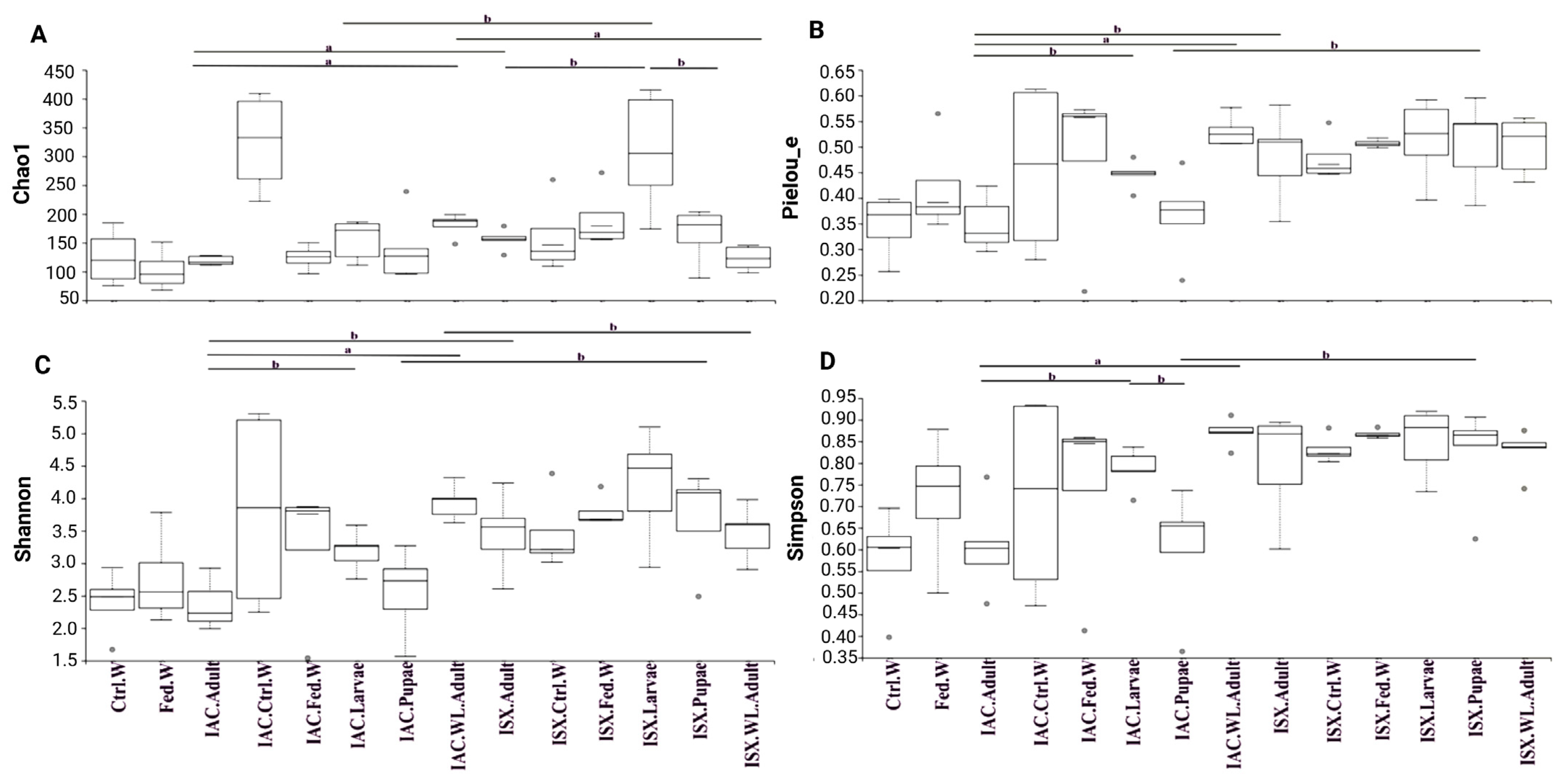



| Sample Code | Sample Details | Collection |
|---|---|---|
| Ctrl.W | Uninfested pine wood control for lab rearing | Under lab environment |
| Fed.W | Ips sexdentatus-infested gallery wood from F2 generation | Under lab environment |
| ISX.Larvae | Ips sexdentatus larvae from F2 generation | Lab-bred |
| ISX.Pupae | Ips sexdentatus pupae from F2 generation | Lab- bred |
| ISX.Adult | Ips sexdentatus adults from F2 generation | Lab-bred |
| ISX.WL.Adult | Ips sexdentatus wild-collected adults | Collected from forest |
| ISX.Ctrl.W | Uninfested wood control for Ips sexdentatus | Collected from forest |
| ISX.Fed.W | Ips sexdentatus-infested gallery wood | Collected from forest |
| IAC.Larvae | Ips acuminatus larvae from F2 generation | Lab-bred |
| IAC.Pupae | Ips acuminatus pupae from F2 generation | Lab-bred |
| IAC.Adult | Ips acuminatus adult from F2 generation | Lab-bred |
| IAC.WL.Adult | Ips acuminatus wild-collected adults | Collected from forest |
| IAC.Ctrl.W | Uninfested wood control for Ips acuminatus | Collected from forest |
| IAC.Fed.W | Ips acuminatus-infested gallery or fed wood | Collected from forest |
| Group | Significantly Different Present Fungal Genera (Top 10 Most Abundant, p < 0.05) | ||
|---|---|---|---|
| Group 1 | Group 2 | Significantly Different in Group 1 | Significantly Different in Group 2 |
| ISX.Larvae | ISX.Adult | Clonostachys, Paratritirachium, Oidiodendron, Talaromyces, Endoconidiophora, Acremonium | Ogataea, Wickerhamomyces, Cryptococcus, Candida |
| ISX.Larvae | ISX.Pupae | Penicillium, Paratritirachium, Oidiodendron, Talaromyces, Acremonium, Endoconidiophora, Scoliciosporum, Lecanora | Ogataea, Cryptococcus |
| ISX.Pupae | ISX.Adult | Crumenulopsis, Acremonium, Rhexographium, Endoconidiophora, Neonectria, Infundichalara, Mollisia | Nakazawaea, Wickerhamomyces, Cryptococcus |
| IAC.Larvae | IAC.Adult | Kuraishia, Ophiostoma, Cyberlindnera, Leptographium, Cryptococcus, Pseudogymnoascus | Graphilbum, Atractiella, Ogataea, Trichoderma |
| IAC.Larvae | IAC.Pupae | Nakazawaea, Cryptococcus, Kuraishia, Penicillium, Wickerhamomyces, Aspergillus, Peterozyma | Graphilbum, Ceratocystiopsis |
| IAC.Pupae | ISX.Adult | Cyberlindnera, Crumenulopsis, Pseudogymnoascus, Ophiostoma, Botrytis | Dichotomopilus |
| ISX.Adult | IAC.Adult | Ophiostoma, Ogataea, Kuraishia, Cyberlindnera, Wickerhamomyces, Cryptococcus, Crumenulopsis, Candida | Graphilbum, Graphium |
| ISX.Larvae | IAC.Larvae | Ogataea, Clonostachys, Paratritirachium, Talaromyces, Oidiodendron, Acremonium | Graphilbum, Nakazawaea, Kuraishia, Cryptococcus |
| ISX.Pupae | IAC.Pupae | Ogataea, Cyberlindnera, Crumenulopsis, Cryptococcus, Oidiodendron, Acremonium, Wickerhamomyces, Diplodia, Rhexographium | Graphilbum |
| ISX.WL.Adult | ISX.Adult | Leptographium, Peterozyma, Myxozyma, Cordyceps | Ogataea, Kuraishia, Wickerhamomyces, Cryptococcus, Clonostachys, Talaromyces |
| IAC.WL.Adult | IAC.Adult | Myxozyma, Ogataea, Kuraishia, Therrya, Saccharomycopsis, Cyberlindnera, Ophiostoma, Clonostachys | Graphilbum, Atractiella |
Disclaimer/Publisher’s Note: The statements, opinions and data contained in all publications are solely those of the individual author(s) and contributor(s) and not of MDPI and/or the editor(s). MDPI and/or the editor(s) disclaim responsibility for any injury to people or property resulting from any ideas, methods, instructions or products referred to in the content. |
© 2026 by the authors. Licensee MDPI, Basel, Switzerland. This article is an open access article distributed under the terms and conditions of the Creative Commons Attribution (CC BY) license.
Share and Cite
Khara, A.; Banerjee, S.; Chakraborty, A.; Dušek, J.; Synek, J.; Roy, A. Amplicon-Based Profiling of Fungal Communities Associated with Scots Pine Bark Beetles: Selective Antagonism and Monoterpene Tolerance. Int. J. Mol. Sci. 2026, 27, 4526. https://doi.org/10.3390/ijms27104526
Khara A, Banerjee S, Chakraborty A, Dušek J, Synek J, Roy A. Amplicon-Based Profiling of Fungal Communities Associated with Scots Pine Bark Beetles: Selective Antagonism and Monoterpene Tolerance. International Journal of Molecular Sciences. 2026; 27(10):4526. https://doi.org/10.3390/ijms27104526
Chicago/Turabian StyleKhara, Arunabha, Sandipan Banerjee, Amrita Chakraborty, Jakub Dušek, Jiří Synek, and Amit Roy. 2026. "Amplicon-Based Profiling of Fungal Communities Associated with Scots Pine Bark Beetles: Selective Antagonism and Monoterpene Tolerance" International Journal of Molecular Sciences 27, no. 10: 4526. https://doi.org/10.3390/ijms27104526
APA StyleKhara, A., Banerjee, S., Chakraborty, A., Dušek, J., Synek, J., & Roy, A. (2026). Amplicon-Based Profiling of Fungal Communities Associated with Scots Pine Bark Beetles: Selective Antagonism and Monoterpene Tolerance. International Journal of Molecular Sciences, 27(10), 4526. https://doi.org/10.3390/ijms27104526