Type-1 Ryanodine Receptor Plays an Important Role in Cardiac Hypertrophy and Heart Failure by Increasing Type-2 Ryanodine Receptor-Mediated Calcium Release

 ,
,  ,
,  and
and
Abstract
1. Introduction
2. Results
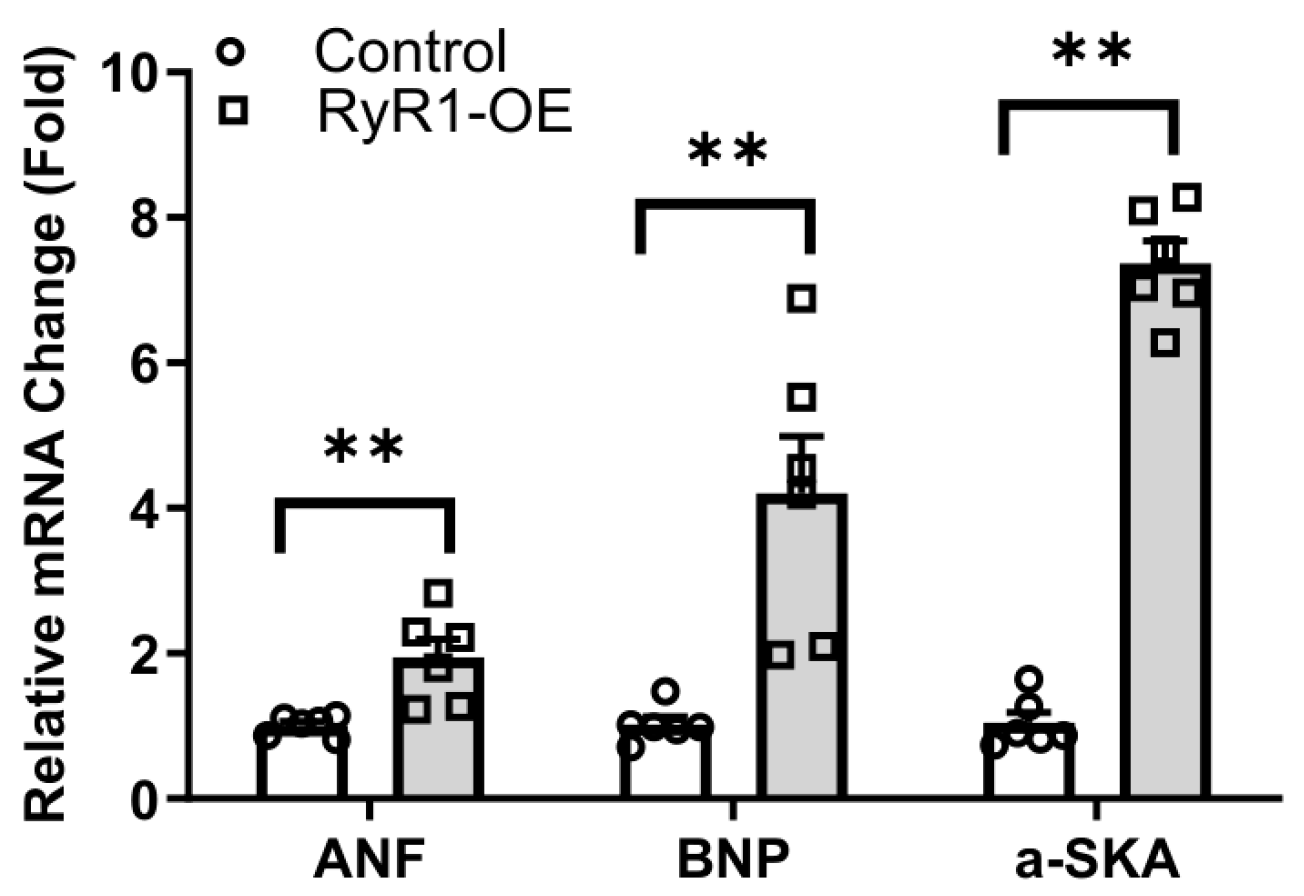
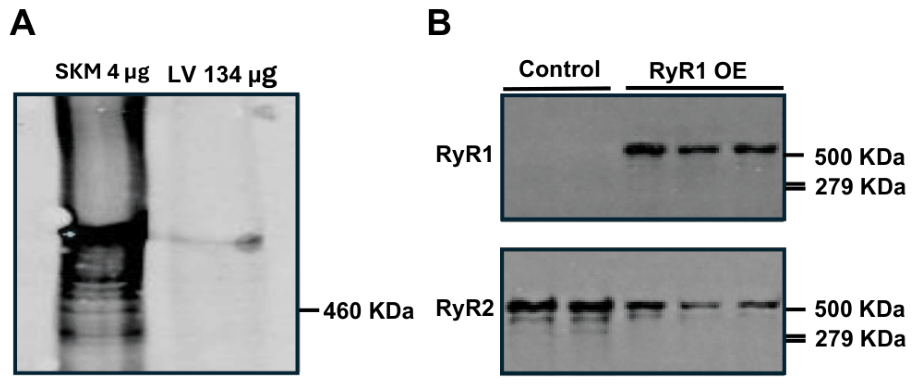
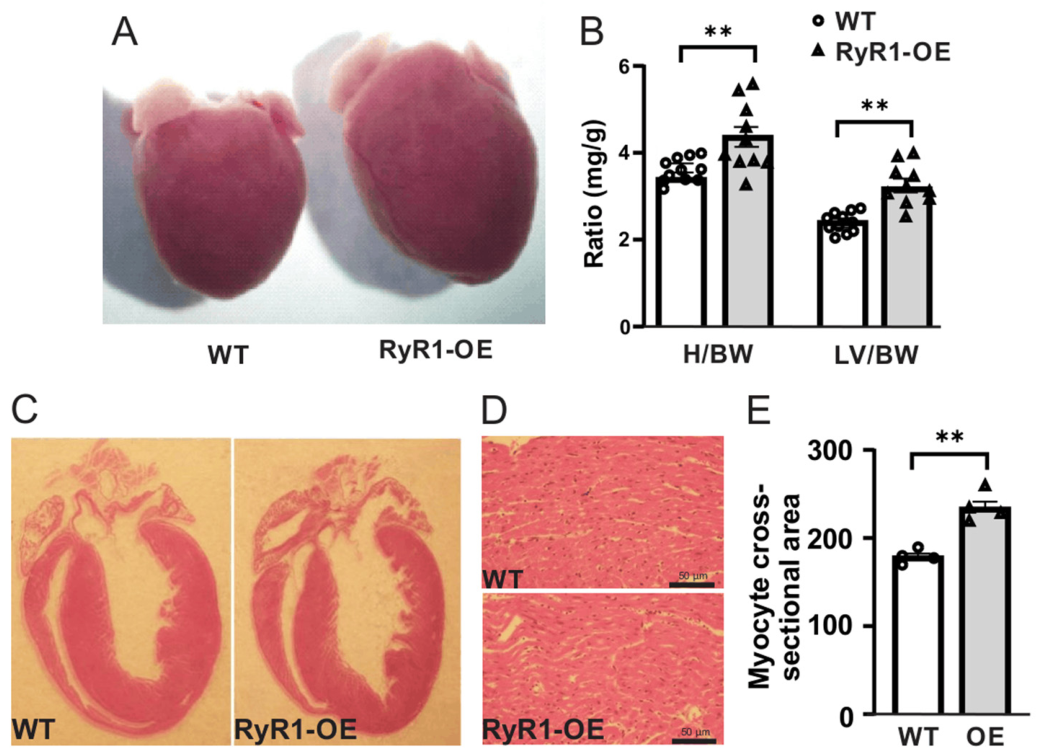
2.1. RyR1 OE Causes Cardiac Hypertrophy and Heart Dysfunction in Mice
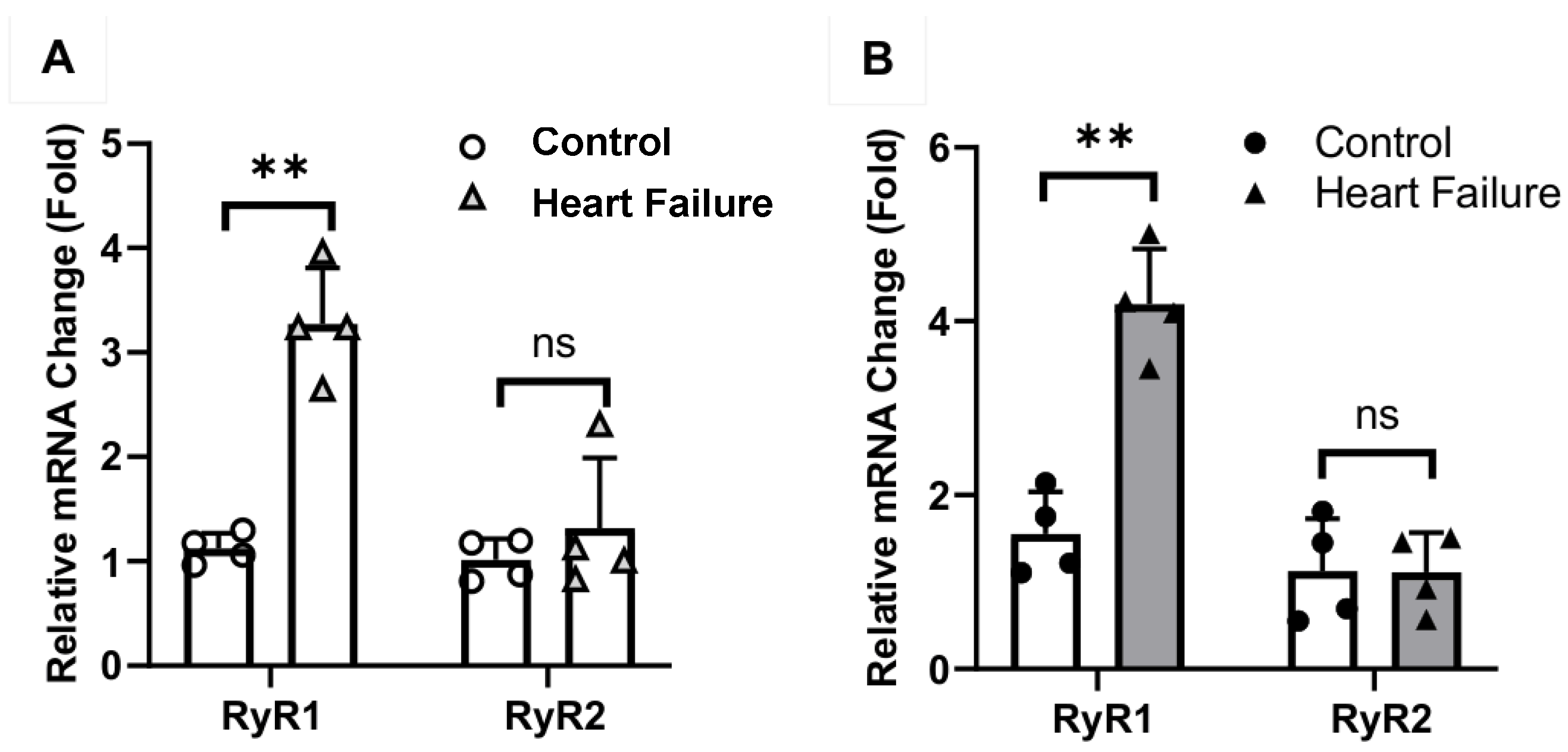
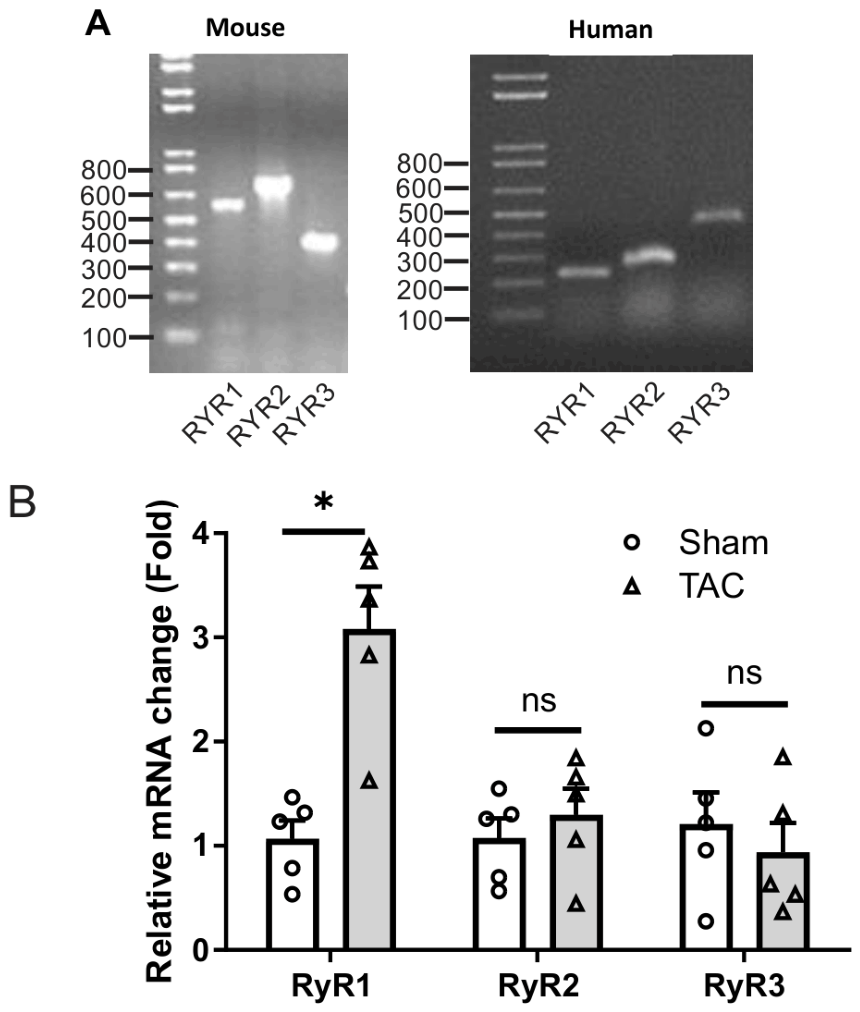
2.2. RyR1 mRNA Expression Is Significantly Increased in Cardiac Myocytes from Animals and Human Patients with Various Cardiac Hypertrophy and Heart Failure
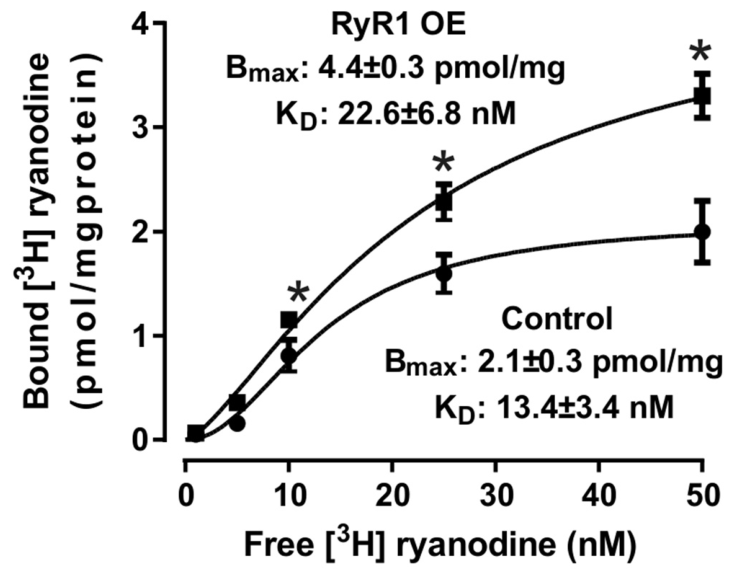
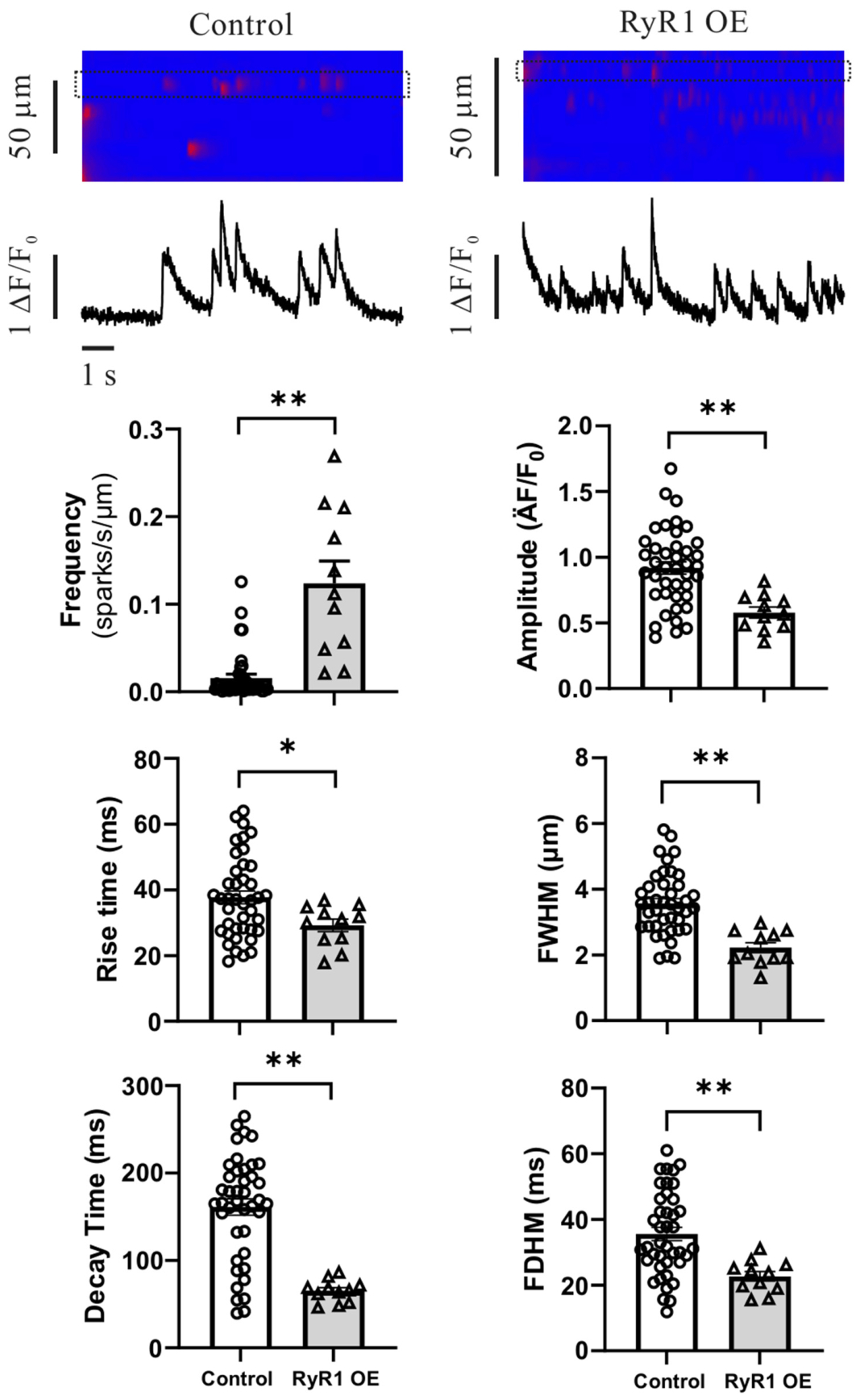
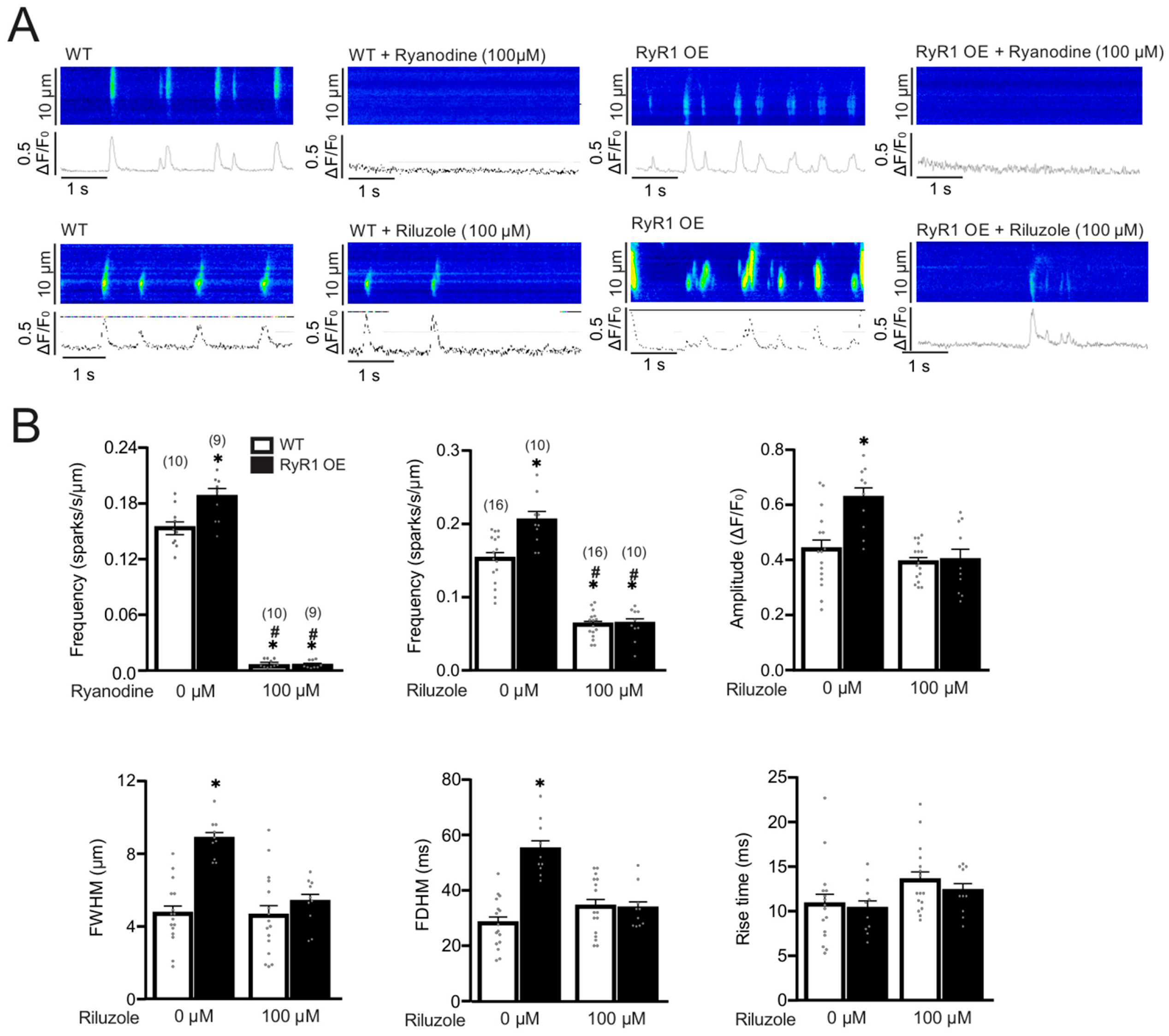
2.3. RyR1 OE Causes an Apparent Increase in RyR Activity in Mice
2.4. RyR2 May Mediate the Increased RyR Activity in Cardiac Myocytes from Cardiac RyR1 OE Mice
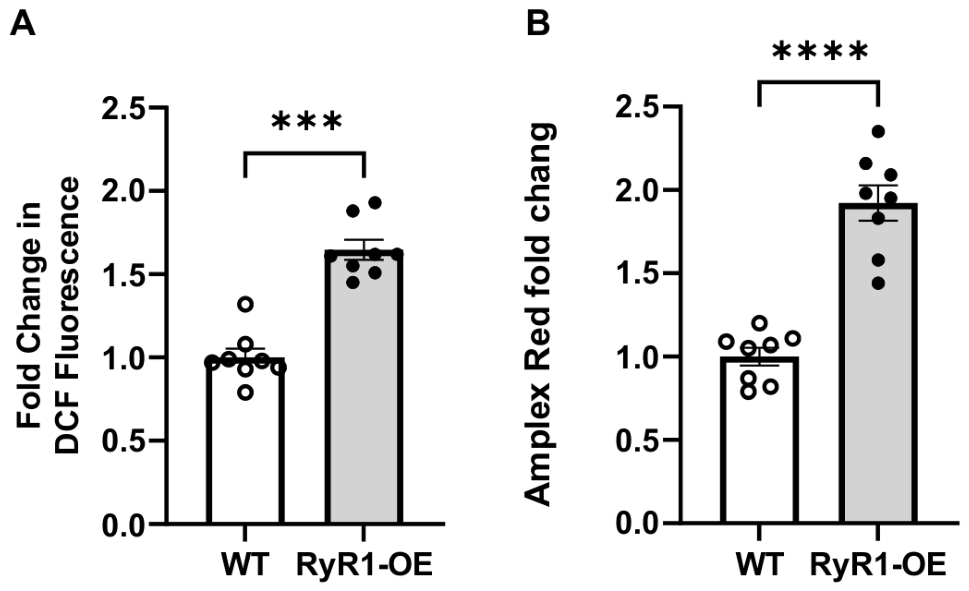
2.5. The Role of RyR2 Is Likely to Be a Result of the Increased Mitochondrial ROS in Cardiomyocyte from RyR1 OE Mice
3. Discussion
4. Translational Perspective
5. Materials and Methods
5.1. Generation of Cardiac RyR1 Overexpression (OE) Mice
5.2. Histologic Assessment of Cardiomyocyte Size
5.3. Electrocardiogram
5.4. Echocardiography
5.5. Quantitative RT-PCR
5.6. Western Blotting
5.7. Transverse Aortic Constriction (TAC)
5.8. Ca2+ Spark Measurement
5.9. [3H]-Ryanodine Binding Assay
5.10. Mitochondrial Reactive Oxygen Species (ROS) Measurement
5.11. Statistics
Author Contributions
Funding
Institutional Review Board Statement
Informed Consent Statement
Data Availability Statement
Conflicts of Interest
References
- Mei, L.; Zheng, Y.M.; Wang, Y.X. Ryanodine and inositol trisphosphate receptors/Ca2+ release channels in airway smooth muscle cells. In Calcium Signaling in Airway Smooth Muscle Cells; Wang, Y.X., Ed.; Springer International Publishing: Cham, Switzerland, 2014; pp. 1–20. [Google Scholar]
- Murayama, T.; Kurebayashi, N.; Ishida, R.; Kagechika, H. Drug development for the treatment of RyR1-related skeletal muscle diseases. Curr. Opin. Pharmacol. 2023, 69, 102356. [Google Scholar] [CrossRef] [PubMed]
- Münch, G.; Bölck, B.; Sugaru, A.; Schwinger, R.H. Isoform expression of the sarcoplasmic reticulum Ca2+ release channel (ryanodine channel) in human myocardium. J. Mol. Med. 2000, 78, 352–360. [Google Scholar] [CrossRef]
- Münch, G.; Bölck, B.; Sugaru, A.; Brixius, K.; Bloch, W.; Schwinger, R.H. Increased expression of isoform 1 of the sarcoplasmic reticulum Ca2+-release channel in failing human heart. Circulation 2001, 103, 2739–2744. [Google Scholar] [CrossRef]
- Jeyakumar, L.H.; Gleaves, L.A.; Ridley, B.D.; Chang, P.; Atkinson, J.; Barnett, J.V.; Fleischer, S. The skeletal muscle ryanodine receptor isoform 1 is found at the intercalated discs in human and mouse hearts. J. Muscle Res. Cell Motil. 2002, 23, 285–292. [Google Scholar] [CrossRef]
- Zheng, J.; Dooge, H.C.; Pérez-Hernández, M.; Zhao, Y.T.; Chen, X.; Hernandez, J.J.; Valdivia, C.R.; Palomeque, J.; Rothenberg, E.; Delmar, M.; et al. Preserved cardiac performance and adrenergic response in a rabbit model with decreased ryanodine receptor 2 expression. J. Mol. Cell. Cardiol. 2022, 167, 118–128. [Google Scholar] [CrossRef]
- Do, T.Q.; Knollmann, B.C. Inhibitors of Intracellular RyR2 Calcium Release Channels as Therapeutic Agents in Arrhythmogenic Heart Diseases. Annu. Rev. Pharmacol. Toxicol. 2025, 65, 443–463. [Google Scholar] [CrossRef]
- Marks, A.R. Targeting ryanodine receptors to treat human diseases. J. Clin. Investig. 2023, 133, e162891. [Google Scholar] [CrossRef] [PubMed]
- Iyer, K.A.; Barnakov, V.; Samsó, M. Three-dimensional perspective on ryanodine receptor mutations causing skeletal and cardiac muscle-related diseases. Curr. Opin. Pharmacol. 2023, 68, 102327. [Google Scholar] [CrossRef] [PubMed]
- Gonano, L.A.; Kinns, A.M.; Bergan-Dahl, A.; Louch, W.E.; Jones, P.P. Interplay Between Ryanodine Receptor Arrangement and Function: Implications for (Patho)physiological Control of Calcium Release. Circ. Res. 2025, 137, 902–923. [Google Scholar] [CrossRef]
- Takeshima, H.; Komazaki, S.; Hirose, K.; Nishi, M.; Noda, T.; Iino, M. Embryonic lethality and abnormal cardiac myocytes in mice lacking ryanodine receptor type 2. EMBO J. 1998, 17, 3309–3316. [Google Scholar] [CrossRef]
- Million-Hearts. Costs & Consequences (of Heart Disease and Stroke). Available online: https://millionhearts.hhs.gov/learn-prevent/cost-consequences.html (accessed on 5 April 2025).
- Bazgir, F.; Nau, J.; Nakhaei-Rad, S.; Amin, E.; Wolf, M.J.; Saucerman, J.J.; Lorenz, K.; Ahmadian, M.R. The Microenvironment of the Pathogenesis of Cardiac Hypertrophy. Cells 2023, 12, 1780. [Google Scholar] [CrossRef]
- Mazur, M.; Braksator, W.; Popjes, E. Hypertrophic Cardiomyopathy: From Medical Treatment to Advanced Heart Failure Therapies. Curr. Cardiol. Rep. 2024, 26, 985–994. [Google Scholar] [CrossRef]
- Peikert, A.; Solomon, S.D. Contemporary treatment options in heart failure with preserved ejection fraction. Eur. Heart J. Cardiovasc. Imaging 2024, 25, 1517–1524. [Google Scholar] [CrossRef]
- Shen, H.; Dong, S.Y.; Ren, M.S.; Wang, R. Ventricular arrhythmia and sudden cardiac death in hypertrophic cardiomyopathy: From bench to bedside. Front. Cardiovasc. Med. 2022, 9, 949294. [Google Scholar] [CrossRef] [PubMed]
- Zheng, Y.M.; Wang, Y.X. The relation between experimental myocardial hypertrophy and oxygen free radicals. Zhonghua Xin Xue Guan Bing Za Zhi 1993, 21, 379–380, 382. [Google Scholar]
- Zou, Y.; Liang, Y.; Gong, H.; Zhou, N.; Ma, H.; Guan, A.; Sun, A.; Wang, P.; Niu, Y.; Jiang, H.; et al. Ryanodine receptor type 2 is required for the development of pressure overload-induced cardiac hypertrophy. Hypertension 2011, 58, 1099–1110. [Google Scholar] [CrossRef]
- Zheng, Y.M.; Wang, Q.S.; Liu, Q.H.; Rathore, R.; Yadav, V.; Wang, Y.X. Heterogeneous gene expression and functional activity of ryanodine receptors in resistance and conduit pulmonary as well as mesenteric artery smooth muscle cells. J. Vasc. Res. 2008, 45, 469–479. [Google Scholar] [CrossRef] [PubMed]
- Zheng, Y.M.; Wang, Q.S.; Rathore, R.; Zhang, W.H.; Mazurkiewicz, J.E.; Sorrentino, V.; Singer, H.A.; Kotlikoff, M.I.; Wang, Y.X. Type-3 ryanodine receptors mediate hypoxia-, but not neurotransmitter-induced calcium release and contraction in pulmonary artery smooth muscle cells. J. Gen. Physiol. 2005, 125, 427–440. [Google Scholar] [CrossRef] [PubMed]
- Mei, L.; Zheng, Y.M.; Song, T.; Yadav, V.R.; Joseph, L.C.; Truong, L.; Kandhi, S.; Barroso, M.M.; Takeshima, H.; Judson, M.A.; et al. Rieske iron-sulfur protein induces FKBP12.6/RyR2 complex remodeling and subsequent pulmonary hypertension through NF-κB/cyclin D1 pathway. Nat. Commun. 2020, 11, 3527. [Google Scholar] [CrossRef]
- Xin, H.B.; Senbonmatsu, T.; Cheng, D.S.; Wang, Y.X.; Copello, J.A.; Ji, G.J.; Collier, M.L.; Deng, K.Y.; Jeyakumar, L.H.; Magnuson, M.A.; et al. Oestrogen protects FKBP12.6 null mice from cardiac hypertrophy. Nature 2002, 416, 334–337. [Google Scholar] [CrossRef]
- Wang, Q.S.; Zheng, Y.M.; Dong, L.; Ho, Y.S.; Guo, Z.; Wang, Y.X. Role of mitochondrial reactive oxygen species in hypoxia-dependent increase in intracellular calcium in pulmonary artery myocytes. Free Radic. Biol. Med. 2007, 42, 642–653. [Google Scholar] [CrossRef] [PubMed]
- Rathore, R.; Zheng, Y.M.; Niu, C.F.; Liu, Q.H.; Korde, A.; Ho, Y.S.; Wang, Y.X. Hypoxia activates NADPH oxidase to increase [ROS]i and [Ca2+]i through the mitochondrial ROS-PKCɛ signaling axis in pulmonary artery smooth muscle cells. Free Radic. Biol. Med. 2008, 45, 1223–1231. [Google Scholar] [CrossRef]
- Tanaka, S.; Fujio, Y.; Nakayama, H. Caveolae-Specific CaMKII Signaling in the Regulation of Voltage-Dependent Calcium Channel and Cardiac Hypertrophy. Front. Physiol. 2018, 9, 1081. [Google Scholar] [CrossRef]
- Gómez, A.M.; Ruiz-Hurtado, G.; Benitah, J.P.; Domínguez-Rodríguez, A. Ca2+ fluxes involvement in gene expression during cardiac hypertrophy. Curr. Vasc. Pharmacol. 2013, 11, 497–506. [Google Scholar] [CrossRef]
- Eder, P.; Molkentin, J.D. TRPC channels as effectors of cardiac hypertrophy. Circ. Res. 2011, 108, 265–272. [Google Scholar] [CrossRef] [PubMed]
- Cannell, M.B.; Soeller, C. Mechanisms underlying calcium sparks in cardiac muscle. J. Gen. Physiol. 1999, 113, 373–376, Correction in J. Gen. Physiol. 1999, 113, 761.. [Google Scholar] [CrossRef]
- Wang, Y.X.; Reyes-García, J.; Di Mise, A.; Zheng, Y.M. Role of ryanodine receptor 2 and FK506-binding protein 12.6 dissociation in pulmonary hypertension. J. Gen. Physiol. 2023, 155, e202213100. [Google Scholar] [CrossRef]
- Takenaka, M.; Kodama, M.; Murayama, T.; Ishigami-Yuasa, M.; Mori, S.; Ishida, R.; Suzuki, J.; Kanemaru, K.; Sugihara, M.; Iino, M.; et al. Screening for Novel Type 2 Ryanodine Receptor Inhibitors by Endoplasmic Reticulum Ca2+ Monitoring. Mol. Pharmacol. 2023, 104, 275–286. [Google Scholar] [CrossRef]
- Beutner, G.; Sharma, V.K.; Lin, L.; Ryu, S.Y.; Dirksen, R.T.; Sheu, S.S. Type 1 ryanodine receptor in cardiac mitochondria: Transducer of excitation-metabolism coupling. Biochim. Biophys. Acta 2005, 1717, 1–10. [Google Scholar] [CrossRef]
- Altschafl, B.A.; Beutner, G.; Sharma, V.K.; Sheu, S.S.; Valdivia, H.H. The mitochondrial ryanodine receptor in rat heart: A pharmaco-kinetic profile. Biochim. Biophys. Acta 2007, 1768, 1784–1795. [Google Scholar] [CrossRef] [PubMed]
- Ryu, S.Y.; Beutner, G.; Dirksen, R.T.; Kinnally, K.W.; Sheu, S.S. Mitochondrial ryanodine receptors and other mitochondrial Ca2+ permeable channels. FEBS Lett. 2010, 584, 1948–1955. [Google Scholar] [CrossRef] [PubMed]
- Ryu, S.Y.; Beutner, G.; Kinnally, K.W.; Dirksen, R.T.; Sheu, S.S. Single channel characterization of the mitochondrial ryanodine receptor in heart mitoplasts. J. Biol. Chem. 2011, 286, 21324–21329. [Google Scholar] [CrossRef] [PubMed]
- Uchi, J.; Jhun, B.S.; Hurst, S.; Bisetto, S.; Gross, P.; Chen, M.; Kettlewell, S.; Park, J.; Oyamada, H.; Smith, G.L.; et al. Overexpression of ryanodine receptor type 1 enhances mitochondrial fragmentation and Ca2+-induced ATP production in cardiac H9c2 myoblasts. Am. J. Physiol.-Heart Circ. Physiol. 2013, 305, H1736–H1751. [Google Scholar] [CrossRef]
- Jakob, R.; Beutner, G.; Sharma, V.K.; Duan, Y.; Gross, R.A.; Hurst, S.; Jhun, B.S.; O-Uchi, J.; Sheu, S.S. Molecular and functional identification of a mitochondrial ryanodine receptor in neurons. Neurosci. Lett. 2014, 575, 7–12. [Google Scholar] [CrossRef] [PubMed]
- Li, Y.; Wei, J.; Guo, W.; Sun, B.; Estillore, J.P.; Wang, R.; Yoruk, A.; Roston, T.M.; Sanatani, S.; Wilde, A.A.M.; et al. Human RyR2 (Ryanodine Receptor 2) Loss-of-Function Mutations: Clinical Phenotypes and In Vitro Characterization. Circ. Arrhythmia Electrophysiol. 2021, 14, e010013. [Google Scholar] [CrossRef]
- Kobayashi, T.; Kurebayashi, N.; Murayama, T. The Ryanodine Receptor as a Sensor for Intracellular Environments in Muscles. Int. J. Mol. Sci. 2021, 22, 10795. [Google Scholar] [CrossRef]
- Cooper, S.T.E.; Westaby, J.D.; Haines, Z.H.R.; Malone, G.O.; Sheppard, M.N.; Meijles, D.N. Of Mouse and Man: Cross-Species Characterization of Hypertensive Cardiac Remodeling. Int. J. Mol. Sci. 2022, 23, 7709. [Google Scholar] [CrossRef]
- Liu, Q.H.; Zheng, Y.M.; Korde, A.S.; Yadav, V.R.; Rathore, R.; Wess, J.; Wang, Y.X. Membrane depolarization causes a direct activation of G protein-coupled receptors leading to local Ca2+ release in smooth muscle. Proc. Natl. Acad. Sci. USA 2009, 106, 11418–11423. [Google Scholar] [CrossRef]
- Korde, A.S.; Yadav, V.R.; Zheng, Y.M.; Wang, Y.X. Primary role of mitochondrial Rieske iron-sulfur protein in hypoxic ROS production in pulmonary artery myocytes. Free Radic. Biol. Med. 2011, 50, 945–952. [Google Scholar] [CrossRef]






| Parameters | WT (n = 9) | RyR1 OE (n = 8) |
|---|---|---|
| IVSD (mm) | 0.85 ± 0.09 | 0.97 ± 0.14 |
| IVSS (mm) | 1.38 ± 0.21 | 1.45 ± 0.25 |
| LVIDD (mm) | 3.97 ± 0.22 | 3.58 ± 0.57 |
| LVIDS (mm) | 2.68 ± 0.22 | 2.33 ± 0.55 |
| LVPWD (mm) | 0.81 ± 0.13 | 1.14 ± 0.42 * |
| LVPWS (mm) | 1.19 ± 0.16 | 1.52 ± 0.44 * |
| EF (%) | 65.07 ± 3.74 | 63.01 ± 9.75 |
| FS (%) | 35.23 ± 2.83 | 34.03 ± 6.96 |
| CO (mL/min) | 20.49 ± 3.61 | 15.21 ± 4.39 * |
| SV(μl) | 45.95 ± 7.11 | 30.5 ± 13.01 * |
| RWT | 0.41 ± 0.07 | 0.56 ± 0.21 |
| LVRI | 30.82 ± 3.96 | 40.77 ± 6.22 |
| Parameter | Unit | WT (n = 11) | RyR1 OE (n = 10) | p Value |
|---|---|---|---|---|
| HR | bpm | 705.8 ± 41.8 | 737.5 ± 13.1 | 0.02 |
| HRV | bpm | 5.87 ± 1.87 | 5.98 ± 1.87 | 0.89 |
| CV | % | 1.12 ± 0.55 | 0.82 ± 0.24 | 0.1 |
| RR | ms | 84.62 ± 5.7 | 83.07 ± 4.8 | 0.47 |
| PQ | ms | 21.38 ± 3.1 | 19.80 ± 2.0 | 0.15 |
| PR | ms | 27.34 ± 3.3 | 25.33 ± 2.0 | 0.08 |
| QRS | ms | 9.30 ± 0.8 | 11.00 ± 1.9 | 0.01 |
| QT | ms | 40.93 ± 1.6 | 43.59 ± 2.9 | 0.01 |
| ST | ms | 32.93 ± 2.0 | 32.13 ± 1.5 | 0.27 |
| QTC | ms | 46.34 ± 2.4 | 45.35 ± 1.4 | 0.24 |
| QT dispersion | ms | 24.98 ± 3.2 | 23.36 ± 2.1 | 0.16 |
| QTc dispersion | ms | 27.21 ± 3.6 | 25.74 ± 2.3 | 0.25 |
| Mean SR amplitude | mV | 0.95 ± 0.32 | 0.83 ± 0.24 | 0.3 |
| Mean R amplitude | mV | 0.87 ± 0.23 | 0.72 ± 0.24 | 0.12 |
| rMSSD | ms | 1.17 ± 0.88 | 0.79 ± 0.13 | 0.15 |
| VVTI | — | −0.40 ± 0.84 | −0.96 ± 0.50 | 0.06 |
Disclaimer/Publisher’s Note: The statements, opinions and data contained in all publications are solely those of the individual author(s) and contributor(s) and not of MDPI and/or the editor(s). MDPI and/or the editor(s) disclaim responsibility for any injury to people or property resulting from any ideas, methods, instructions or products referred to in the content. |
© 2026 by the authors. Licensee MDPI, Basel, Switzerland. This article is an open access article distributed under the terms and conditions of the Creative Commons Attribution (CC BY) license.
Share and Cite
Wang, Y.-X.; Santos, E.W.; Mistretta, S.; Yuan, Y.; Singer, H.A.; Sheu, S.-S.; Zheng, Y.-M. Type-1 Ryanodine Receptor Plays an Important Role in Cardiac Hypertrophy and Heart Failure by Increasing Type-2 Ryanodine Receptor-Mediated Calcium Release. Int. J. Mol. Sci. 2026, 27, 4291. https://doi.org/10.3390/ijms27104291
Wang Y-X, Santos EW, Mistretta S, Yuan Y, Singer HA, Sheu S-S, Zheng Y-M. Type-1 Ryanodine Receptor Plays an Important Role in Cardiac Hypertrophy and Heart Failure by Increasing Type-2 Ryanodine Receptor-Mediated Calcium Release. International Journal of Molecular Sciences. 2026; 27(10):4291. https://doi.org/10.3390/ijms27104291
Chicago/Turabian StyleWang, Yong-Xiao, Ed Wilson Santos, Sarahann Mistretta, Yuexing Yuan, Harold A. Singer, Shey-Shing Sheu, and Yun-Min Zheng. 2026. "Type-1 Ryanodine Receptor Plays an Important Role in Cardiac Hypertrophy and Heart Failure by Increasing Type-2 Ryanodine Receptor-Mediated Calcium Release" International Journal of Molecular Sciences 27, no. 10: 4291. https://doi.org/10.3390/ijms27104291
APA StyleWang, Y.-X., Santos, E. W., Mistretta, S., Yuan, Y., Singer, H. A., Sheu, S.-S., & Zheng, Y.-M. (2026). Type-1 Ryanodine Receptor Plays an Important Role in Cardiac Hypertrophy and Heart Failure by Increasing Type-2 Ryanodine Receptor-Mediated Calcium Release. International Journal of Molecular Sciences, 27(10), 4291. https://doi.org/10.3390/ijms27104291