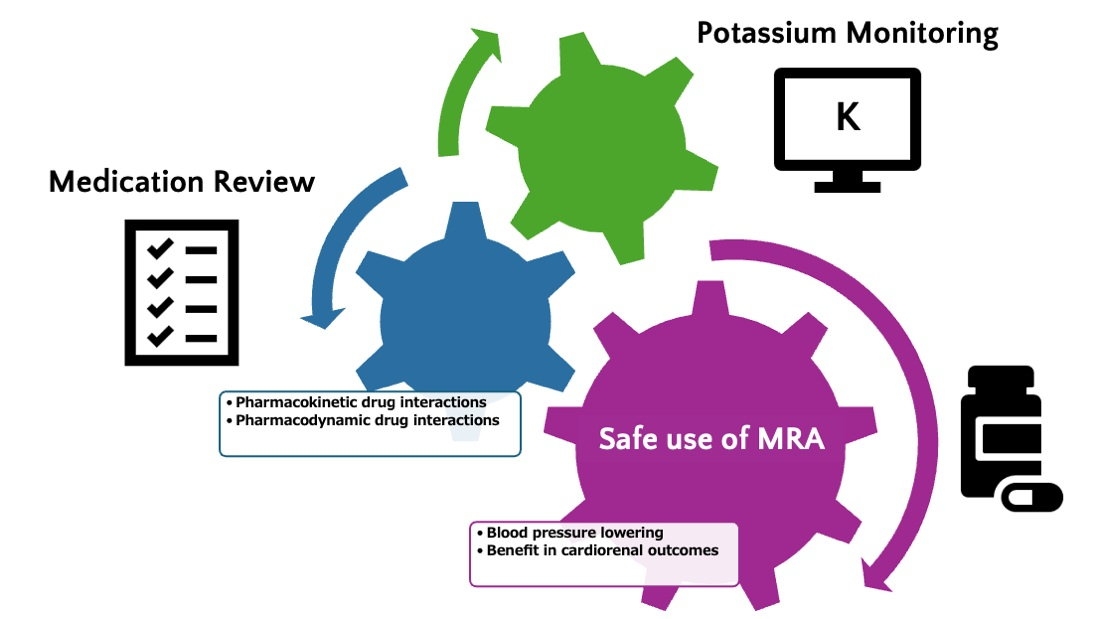
Mineralocorticoid Receptor Antagonists in Chronic Kidney Disease: Clinical Evidence, Pharmacology, and Drug–Drug Interactions for Personalized Management of Hyperkalemia


Abstract
1. Introduction
2. Clinical Evidence
2.1. Spironolactone
2.2. Eplerenone
2.3. Finerenone
2.4. Esaxerenone
3. Pharmacological Insights
3.1. Chemical Structures and Receptor Selectivity
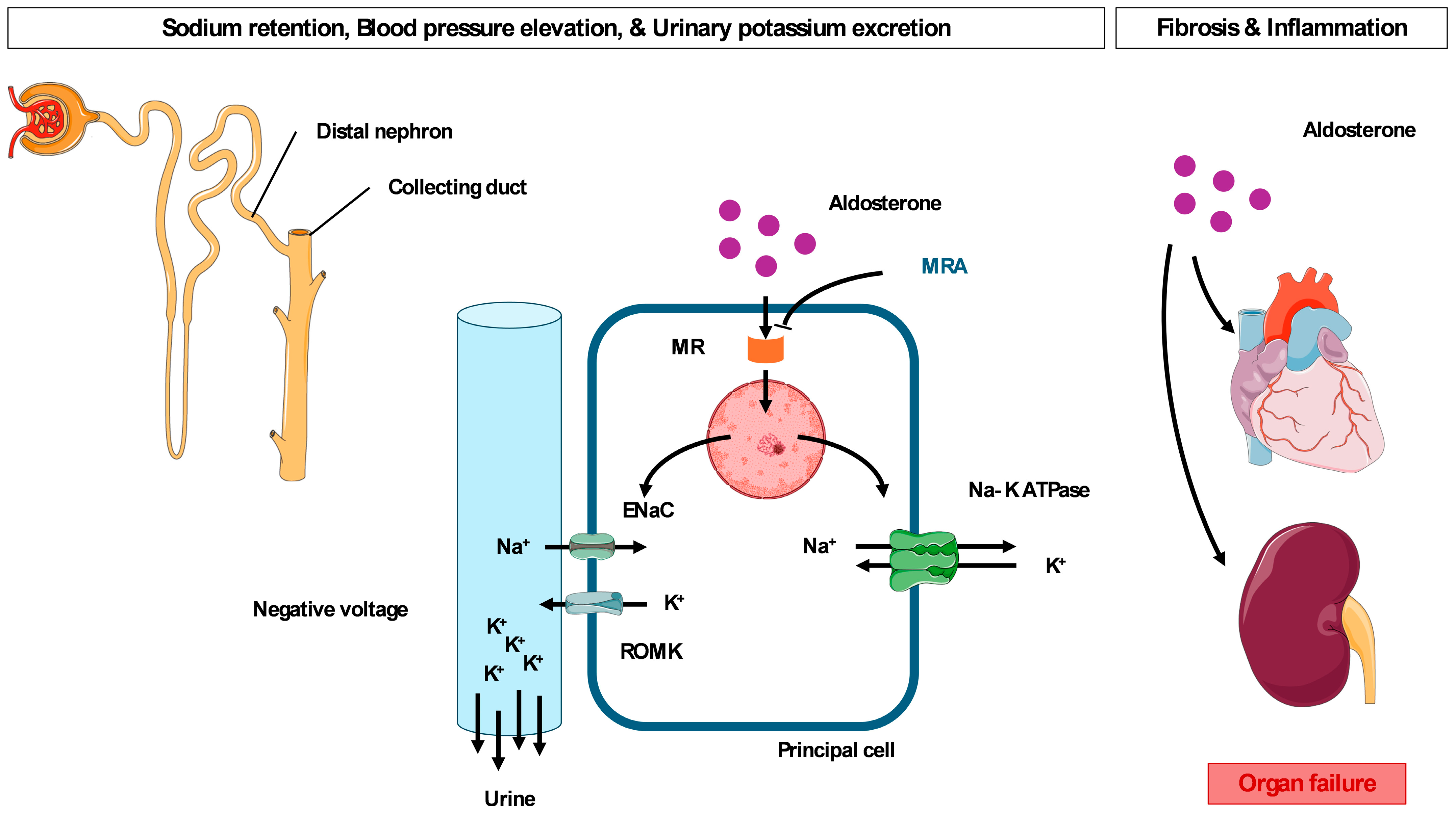
3.2. Mechanism of Action
3.3. Mechanism of Adverse Events
3.3.1. Hyperkalemia
3.3.2. Endocrine Adverse Effects
4. Pharmacokinetics and Drug–Drug Interactions
4.1. Pharmacokinetic Profile and Principle
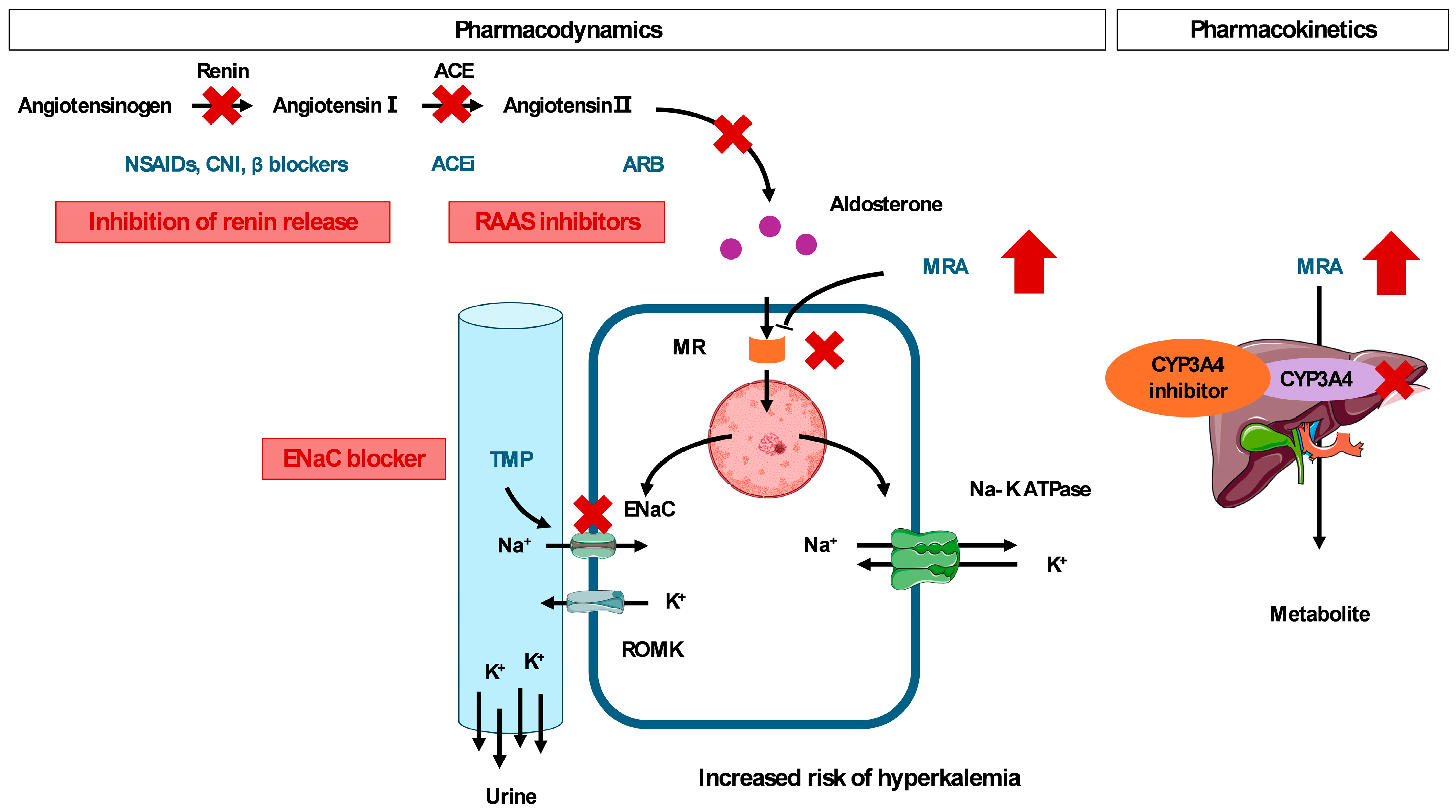
4.2. Pharmacokinetic Drug-Drug Interaction
4.3. Pharmacodynamic Drug-Drug Interaction
4.3.1. RAAS Inhibitors
4.3.2. Trimethoprim
4.3.3. Non-Steroidal Anti-Inflammatory Drugs (NSAIDs)
4.3.4. Calcineurin Inhibitors
4.3.5. β-Blockers
5. Safety Issues
5.1. Monitoring
5.2. Medication Review
5.3. Correction of Metabolic Acidosis
5.4. Potassium-Lowering Strategy
6. Future Perspectives
7. Conclusions
Author Contributions
Funding
Institutional Review Board Statement
Informed Consent Statement
Data Availability Statement
Acknowledgments
Conflicts of Interest
Abbreviations
References
- Chesnaye, N.C.; Ortiz, A.; Zoccali, C.; Stel, V.S.; Jager, K.J. The impact of population ageing on the burden of chronic kidney disease. Nat. Rev. Nephrol. 2024, 20, 569–585. [Google Scholar] [CrossRef]
- Mark, P.B.; Stafford, L.K.; Grams, M.E.; Aalruz, H.; Abd ElHafeez, S.; Abdelgalil, A.A.; Abdulkader, R.S.; Abeywickrama, H.M.; Abiodun, O.O.; Abramov, D.; et al. Global, regional, and national burden of chronic kidney disease in adults, 1990–2023, and its attributable risk factors: A systematic analysis for the Global Burden of Disease Study 2023. Lancet 2025, 406, 2461–2482. [Google Scholar] [CrossRef]
- Jha, V.; Al-Ghamdi, S.M.G.; Li, G.; Wu, M.S.; Stafylas, P.; Retat, L.; Card-Gowers, J.; Barone, S.; Cabrera, C.; Garcia Sanchez, J.J. Global Economic Burden Associated with Chronic Kidney Disease: A Pragmatic Review of Medical Costs for the Inside CKD Research Programme. Adv. Ther. 2023, 40, 4405–4420. [Google Scholar] [CrossRef] [PubMed]
- Chadban, S.; Arıcı, M.; Power, A.; Wu, M.S.; Mennini, F.S.; Arango Álvarez, J.J.; Garcia Sanchez, J.J.; Barone, S.; Card-Gowers, J.; Martin, A.; et al. Projecting the economic burden of chronic kidney disease at the patient level (Inside CKD): A microsimulation modelling study. EClinicalMedicine 2024, 72, 102615. [Google Scholar] [CrossRef]
- Levin, A.S.; Bilous, R.W.; Coresh, J. Chapter 1: Definition and classification of CKD. Kidney Int. Suppl. 2013, 3, 19–62. [Google Scholar] [CrossRef] [PubMed]
- Lundberg, S.M.; Lee, S.I. KDIGO 2024 Clinical Practice Guideline for the Evaluation and Management of Chronic Kidney Disease. Kidney Int. 2024, 105, S117–S314. [Google Scholar] [CrossRef] [PubMed]
- Pitt, B.; Zannad, F.; Remme, W.J.; Cody, R.; Castaigne, A.; Perez, A.; Palensky, J.; Wittes, J. The effect of spironolactone on morbidity and mortality in patients with severe heart failure. Randomized Aldactone Evaluation Study Investigators. N. Engl. J. Med. 1999, 341, 709–717. [Google Scholar] [CrossRef]
- Vardeny, O.; Wu, D.H.; Desai, A.; Rossignol, P.; Zannad, F.; Pitt, B.; Solomon, S.D. Influence of baseline and worsening renal function on efficacy of spironolactone in patients with severe heart failure: Insights from RALES (Randomized Aldactone Evaluation Study). J. Am. Coll. Cardiol. 2012, 60, 2082–2089. [Google Scholar] [CrossRef]
- Vardeny, O.; Cavallari, L.H.; Claggett, B.; Desai, A.S.; Anand, I.; Rossignol, P.; Zannad, F.; Pitt, B.; Solomon, S.D. Race influences the safety and efficacy of spironolactone in severe heart failure. Circ. Heart Fail. 2013, 6, 970–976. [Google Scholar] [CrossRef]
- Pitt, B.; Pfeffer, M.A.; Assmann, S.F.; Boineau, R.; Anand, I.S.; Claggett, B.; Clausell, N.; Desai, A.S.; Diaz, R.; Fleg, J.L.; et al. Spironolactone for heart failure with preserved ejection fraction. N. Engl. J. Med. 2014, 370, 1383–1392. [Google Scholar] [CrossRef]
- Hobbs, F.D.R.; McManus, R.J.; Taylor, C.J.; Jones, N.R.; Rahman, J.K.; Wolstenholme, J.; Kim, S.; Kwon, J.; Jones, L.; Hirst, J.A.; et al. Low-dose spironolactone and cardiovascular outcomes in moderate stage chronic kidney disease: A randomized controlled trial. Nat. Med. 2024, 30, 3634–3645. [Google Scholar] [CrossRef]
- Zannad, F.; McMurray, J.J.; Krum, H.; van Veldhuisen, D.J.; Swedberg, K.; Shi, H.; Vincent, J.; Pocock, S.J.; Pitt, B. Eplerenone in patients with systolic heart failure and mild symptoms. N. Engl. J. Med. 2011, 364, 11–21. [Google Scholar] [CrossRef]
- Pitt, B.; Remme, W.; Zannad, F.; Neaton, J.; Martinez, F.; Roniker, B.; Bittman, R.; Hurley, S.; Kleiman, J.; Gatlin, M. Eplerenone, a selective aldosterone blocker, in patients with left ventricular dysfunction after myocardial infarction. N. Engl. J. Med. 2003, 348, 1309–1321, Erratum in N. Engl. J. Med. 2003, 348, 2271. https://doi.org/10.1056/NEJMoa030207.. [Google Scholar] [CrossRef]
- Bakris, G.L.; Agarwal, R.; Anker, S.D.; Pitt, B.; Ruilope, L.M.; Rossing, P.; Kolkhof, P.; Nowack, C.; Schloemer, P.; Joseph, A.; et al. Effect of Finerenone on Chronic Kidney Disease Outcomes in Type 2 Diabetes. N. Engl. J. Med. 2020, 383, 2219–2229. [Google Scholar] [CrossRef]
- Pitt, B.; Filippatos, G.; Agarwal, R.; Anker, S.D.; Bakris, G.L.; Rossing, P.; Joseph, A.; Kolkhof, P.; Nowack, C.; Schloemer, P.; et al. Cardiovascular Events with Finerenone in Kidney Disease and Type 2 Diabetes. N. Engl. J. Med. 2021, 385, 2252–2263. [Google Scholar] [CrossRef]
- Solomon, S.D.; McMurray, J.J.V.; Vaduganathan, M.; Claggett, B.; Jhund, P.S.; Desai, A.S.; Henderson, A.D.; Lam, C.S.P.; Pitt, B.; Senni, M.; et al. Finerenone in Heart Failure with Mildly Reduced or Preserved Ejection Fraction. N. Engl. J. Med. 2024, 391, 1475–1485. [Google Scholar] [CrossRef]
- Ito, S.; Itoh, H.; Rakugi, H.; Okuda, Y.; Yoshimura, M.; Yamakawa, S. Double-Blind Randomized Phase 3 Study Comparing Esaxerenone (CS-3150) and Eplerenone in Patients with Essential Hypertension (ESAX-HTN Study). Hypertension 2020, 75, 51–58. [Google Scholar] [CrossRef]
- Motoki, H.; Inobe, Y.; Fukui, T.; Iwasaki, A.; Hiramitsu, S.; Koyama, S.; Masuda, I.; Sekimura, N.; Yamamoto, K.; Sato, A.; et al. Efficacy and Safety of Esaxerenone in Hypertensive Patients with Diabetes Mellitus Undergoing Treatment with Sodium-Glucose Cotransporter 2 Inhibitors (EAGLE-DH). Adv. Ther. 2023, 40, 5055–5075. [Google Scholar] [CrossRef] [PubMed]
- Tezuka, Y.; Ito, S. The Time to Reconsider Mineralocorticoid Receptor Blocking Strategy: Arrival of Nonsteroidal Mineralocorticoid Receptor Blockers. Curr. Hypertens. Rep. 2022, 24, 215–224. [Google Scholar] [CrossRef] [PubMed]
- Gomez-Sanchez, E.P. Third-generation Mineralocorticoid Receptor Antagonists: Why Do We Need a Fourth? J. Cardiovasc. Pharmacol. 2016, 67, 26–38. [Google Scholar] [CrossRef] [PubMed]
- Takahashi, M.; Ubukata, O.; Homma, T.; Asoh, Y.; Honzumi, M.; Hayashi, N.; Saito, K.; Tsuruoka, H.; Aoki, K.; Hanzawa, H. Crystal structure of the mineralocorticoid receptor ligand-binding domain in complex with a potent and selective nonsteroidal blocker, esaxerenone (CS-3150). FEBS Lett. 2020, 594, 1615–1623. [Google Scholar] [CrossRef] [PubMed]
- Bärfacker, L.; Kuhl, A.; Hillisch, A.; Grosser, R.; Figueroa-Pérez, S.; Heckroth, H.; Nitsche, A.; Ergüden, J.K.; Gielen-Haertwig, H.; Schlemmer, K.H.; et al. Discovery of BAY 94-8862: A nonsteroidal antagonist of the mineralocorticoid receptor for the treatment of cardiorenal diseases. ChemMedChem 2012, 7, 1385–1403. [Google Scholar] [CrossRef]
- Yang, J.; Young, M.J. Mineralocorticoid receptor antagonists-pharmacodynamics and pharmacokinetic differences. Curr. Opin. Pharmacol. 2016, 27, 78–85. [Google Scholar] [CrossRef]
- Arai, K.; Homma, T.; Morikawa, Y.; Ubukata, N.; Tsuruoka, H.; Aoki, K.; Ishikawa, H.; Mizuno, M.; Sada, T. Pharmacological profile of CS-3150, a novel, highly potent and selective non-steroidal mineralocorticoid receptor antagonist. Eur. J. Pharmacol. 2015, 761, 226–234. [Google Scholar] [CrossRef] [PubMed]
- Fernandes-Rosa, F.L.; Boulkroun, S.; Fedlaoui, B.; Hureaux, M.; Travers-Allard, S.; Drossart, T.; Favier, J.; Zennaro, M.C. New advances in endocrine hypertension: From genes to biomarkers. Kidney Int. 2023, 103, 485–500. [Google Scholar] [CrossRef]
- Polidoro, J.Z.; Luchi, W.M.; Seguro, A.C.; Malnic, G.; Girardi, A.C.C. Paracrine and endocrine regulation of renal K+ secretion. Am. J. Physiol. Ren. Physiol. 2022, 322, F360–F377. [Google Scholar] [CrossRef]
- Epstein, M.; Lifschitz, M.D. Potassium homeostasis and dyskalemias: The respective roles of renal, extrarenal, and gut sensors in potassium handling. Kidney Int. Suppl. 2016, 6, 7–15. [Google Scholar] [CrossRef]
- Gumz, M.L.; Rabinowitz, L.; Wingo, C.S. An Integrated View of Potassium Homeostasis. N. Engl. J. Med. 2015, 373, 60–72, Erratum in N. Engl. J. Med. 2015, 373, 1281. https://doi.org/10.1056/NEJMra1313341.. [Google Scholar] [CrossRef]
- DuBose, T.D., Jr. Regulation of Potassium Homeostasis in CKD. Adv. Chronic Kidney Dis. 2017, 24, 305–314. [Google Scholar] [CrossRef] [PubMed]
- Blaine, J.; Chonchol, M.; Levi, M. Renal control of calcium, phosphate, and magnesium homeostasis. Clin. J. Am. Soc. Nephrol. 2015, 10, 1257–1272, Erratum in Clin. J. Am. Soc. Nephrol. 2015, 10, 1886-7. https://doi.org/10.2215/cjn.09750913.. [Google Scholar] [CrossRef]
- Shibata, S.; Fujita, T. The kidneys and aldosterone/mineralocorticoid receptor system in salt-sensitive hypertension. Curr. Hypertens. Rep. 2011, 13, 109–115. [Google Scholar] [CrossRef]
- Luther, J.M.; Fogo, A.B. The role of mineralocorticoid receptor activation in kidney inflammation and fibrosis. Kidney Int. Suppl. 2022, 12, 63–68. [Google Scholar] [CrossRef]
- Bauersachs, J.; Jaisser, F.; Toto, R. Mineralocorticoid receptor activation and mineralocorticoid receptor antagonist treatment in cardiac and renal diseases. Hypertension 2015, 65, 257–263. [Google Scholar] [CrossRef]
- Noels, H.; van der Vorst, E.P.C.; Rubin, S.; Emmett, A.; Marx, N.; Tomaszewski, M.; Jankowski, J. Renal-Cardiac Crosstalk in the Pathogenesis and Progression of Heart Failure. Circ. Res. 2025, 136, 1306–1334. [Google Scholar] [CrossRef] [PubMed]
- Epstein, M. Aldosterone and Mineralocorticoid Receptor Signaling as Determinants of Cardiovascular and Renal Injury: From Hans Selye to the Present. Am. J. Nephrol. 2021, 52, 209–216. [Google Scholar] [CrossRef]
- Kovesdy, C.P. Epidemiology of hyperkalemia: An update. Kidney Int. Suppl. 2016, 6, 3–6. [Google Scholar] [CrossRef]
- Montford, J.R.; Linas, S. How Dangerous Is Hyperkalemia? J. Am. Soc. Nephrol. 2017, 28, 3155–3165. [Google Scholar] [CrossRef] [PubMed]
- Matsumoto, S.; Henderson, A.D.; Shen, L.; Yang, M.; Swedberg, K.; Vaduganathan, M.; van Veldhuisen, D.J.; Solomon, S.D.; Pitt, B.; Zannad, F.; et al. Mineralocorticoid Receptor Antagonists in Patients with Heart Failure and Impaired Renal Function. J. Am. Coll. Cardiol. 2024, 83, 2426–2436. [Google Scholar] [CrossRef] [PubMed]
- Jhund, P.S.; Talebi, A.; Henderson, A.D.; Claggett, B.L.; Vaduganathan, M.; Desai, A.S.; Lam, C.S.P.; Pitt, B.; Senni, M.; Shah, S.J.; et al. Mineralocorticoid receptor antagonists in heart failure: An individual patient level meta-analysis. Lancet 2024, 404, 1119–1131. [Google Scholar] [CrossRef]
- Amornritvanich, P.; Anothaisintawee, T.; Attia, J.; McKay, G.J.; Thakkinstian, A. Efficacy of Mineralocorticoid Receptor Antagonists on Kidney and Cardiovascular Outcomes in Patients with Chronic Kidney Disease: An Umbrella Review. Kidney Med. 2025, 7, 100943. [Google Scholar] [CrossRef]
- Trevisan, M.; Fu, E.L.; Xu, Y.; Savarese, G.; Dekker, F.W.; Lund, L.H.; Clase, C.M.; Sjölander, A.; Carrero, J.J. Stopping mineralocorticoid receptor antagonists after hyperkalaemia: Trial emulation in data from routine care. Eur. J. Heart Fail. 2021, 23, 1698–1707. [Google Scholar] [CrossRef]
- Lisi, F.; Parisi, G.; Gioia, M.I.; Amato, L.; Bellino, M.C.; Grande, D.; Massari, F.; Caldarola, P.; Ciccone, M.M.; Iacoviello, M. Mineralcorticoid Receptor Antagonist Withdrawal for Hyperkalemia and Mortality in Patients with Heart Failure. Cardiorenal Med. 2020, 10, 145–153. [Google Scholar] [CrossRef]
- Xu, Y.; Fu, E.L.; Trevisan, M.; Jernberg, T.; Sjölander, A.; Clase, C.M.; Carrero, J.J. Stopping renin-angiotensin system inhibitors after hyperkalemia and risk of adverse outcomes. Am. Heart J. 2022, 243, 177–186. [Google Scholar] [CrossRef]
- Hashimoto, N.; Sakaguchi, Y.; Hattori, K.; Kawano, Y.; Kawaoka, T.; Doi, Y.; Oka, T.; Kusunoki, Y.; Yamamoto, S.; Yamato, M.; et al. Discontinuing renin-angiotensin system inhibitors after incident hyperkalemia and clinical outcomes: Target trial emulation. Hypertens. Res. 2025, 48, 2034–2044. [Google Scholar] [CrossRef]
- Nuttall, F.Q.; Warrier, R.S.; Gannon, M.C. Gynecomastia and drugs: A critical evaluation of the literature. Eur. J. Clin. Pharmacol. 2015, 71, 569–578. [Google Scholar] [CrossRef]
- Viveiros, T.M.; Deshpande, N.; Karderinis, I.; Ma, Y.; Clarke, S.; Talaulikar, V.; Wattar, B. Short-Term, Low-Dose Spironolactone for Treatment of Hyperandrogenic Symptoms of Polycystic Ovary Syndrome-A Systematic Review. Clin. Endocrinol. 2026, 104, 179–187. [Google Scholar] [CrossRef] [PubMed]
- Berbenetz, N.M.; Mrkobrada, M. Mineralocorticoid receptor antagonists for heart failure: Systematic review and meta-analysis. BMC Cardiovasc. Disord. 2016, 16, 246. [Google Scholar] [CrossRef] [PubMed]
- Barrera-Chimal, J.; Kolkhof, P.; Lima-Posada, I.; Joachim, A.; Rossignol, P.; Jaisser, F. Differentiation between emerging non-steroidal and established steroidal mineralocorticoid receptor antagonists: Head-to-head comparisons of pharmacological and clinical characteristics. Expert Opin. Investig. Drugs 2021, 30, 1141–1157. [Google Scholar] [CrossRef] [PubMed]
- Krause, W.; Karras, J.; Seifert, W. Pharmacokinetics of canrenone after oral administration of spironolactone and intravenous injection of canrenoate-K in healthy man. Eur. J. Clin. Pharmacol. 1983, 25, 449–453. [Google Scholar] [CrossRef]
- Karim, A.; Zagarella, J.; Hribar, J.; Dooley, M. Spironolactone. I. Disposition and metabolism. Clin. Pharmacol. Ther. 1976, 19, 158–169. [Google Scholar] [CrossRef]
- Karim, A.; Hribar, J.; Aksamit, W.; Doherty, M.; Chinn, L.J. Spironolactone metabolism in man studied by gas chromatography-mass spectrometry. Drug Metab. Dispos. 1975, 3, 467–478. [Google Scholar] [CrossRef]
- Ho, P.C.; Bourne, D.W.; Triggs, E.J.; Heazlewood, V. Pharmacokinetics of canrenone and metabolites after base hydrolysis following single and multiple dose oral administration of spironolactone. Eur. J. Clin. Pharmacol. 1984, 27, 441–446. [Google Scholar] [CrossRef]
- The Interview Form for Eplerenone. Available online: https://pins.japic.or.jp/pdf/medical_interview/IF00003637.pdf (accessed on 29 March 2026).
- Cook, C.S.; Berry, L.M.; Bible, R.H.; Hribar, J.D.; Hajdu, E.; Liu, N.W. Pharmacokinetics and metabolism of [14C]eplerenone after oral administration to humans. Drug Metab. Dispos. 2003, 31, 1448–1455. [Google Scholar] [CrossRef] [PubMed]
- Heinig, R.; Eissing, T. The Pharmacokinetics of the Nonsteroidal Mineralocorticoid Receptor Antagonist Finerenone. Clin. Pharmacokinet. 2023, 62, 1673–1693. [Google Scholar] [CrossRef] [PubMed]
- The Interview Form for Finerenone. Available online: https://pins.japic.or.jp/pdf/medical_interview/IF00005142.pdf (accessed on 29 March 2026).
- Kurata, A.; Furuie, H.; Ishizuka, T.; Nakatsu, T.; Shimizu, T.; Kato, M.; Nishikawa, Y.; Ishizuka, H. Absolute Bioavailability of Esaxerenone and Food Effects on its Pharmacokinetics After a Single Oral Dose in Healthy Japanese Subjects: An Open-Label Crossover Study. Adv. Ther. 2019, 36, 1618–1627. [Google Scholar] [CrossRef]
- The Interview Form for Esaxerenone. Available online: https://pins.japic.or.jp/pdf/medical_interview/IF00007035.pdf (accessed on 29 March 2026).
- Lewis, R.; Niazi-Ali, S.; McIvor, A.; Kanj, S.S.; Maertens, J.; Bassetti, M.; Levine, D.; Groll, A.H.; Denning, D.W. Triazole antifungal drug interactions-practical considerations for excellent prescribing. J. Antimicrob. Chemother. 2024, 79, 1203–1217. [Google Scholar] [CrossRef]
- Cordova, E.; Garibaldi, F.; Bono, L.; Rodriguez, C. Severe hyperkalaemia due to a potential drug-drug interaction between eplerenone and antiretrovirals in a HIV-positive patient after a myocardial infarction. Int. J. STD AIDS 2021, 32, 771–773. [Google Scholar] [CrossRef] [PubMed]
- Kato, J.; Mori, T.; Nakamura, Y.; Sakurai, M.; Aisa, Y.; Ikeda, Y.; Okamoto, S. Hypotension due to the drug interaction of voriconazole with eplerenone and nifedipine. Eur. J. Clin. Pharmacol. 2009, 65, 323–324. [Google Scholar] [CrossRef]
- Kirigaya, Y.; Shiramoto, M.; Ishizuka, T.; Uchimaru, H.; Irie, S.; Kato, M.; Shimizu, T.; Nakatsu, T.; Nishikawa, Y.; Ishizuka, H. Effects of itraconazole and rifampicin on the single-dose pharmacokinetics of the nonsteroidal mineralocorticoid receptor blocker esaxerenone in healthy Japanese subjects. Br. J. Clin. Pharmacol. 2020, 86, 2070–2079. [Google Scholar] [CrossRef]
- Hirai, T.; Ueda, S.; Ogura, T.; Katayama, K.; Dohi, K.; Hosohata, K.; Aoyama, T.; Matsumoto, Y.; Iwamoto, T. Hyperkalemia by eplerenone or esaxerenone in the presence or absence of clarithromycin in hypertensive patients: A retrospective observational cohort study. J. Hypertens. 2023, 41, 580–586. [Google Scholar] [CrossRef]
- Yu, J.; Wang, Y.; Ragueneau-Majlessi, I. Strong Pharmacokinetic Drug-Drug Interactions with Drugs Approved by the US Food and Drug Administration in 2021: Mechanisms and Clinical Implications. Clin. Ther. 2022, 44, 1536–1544. [Google Scholar] [CrossRef]
- Ashjian, E.; Clarke, M.; Pogue, K. Pharmacotherapy considerations with finerenone in the treatment of chronic kidney disease associated with type 2 diabetes. Am. J. Health Syst. Pharm. 2023, 80, 1708–1721. [Google Scholar] [CrossRef]
- Wendl, T.; Frechen, S.; Gerisch, M.; Heinig, R.; Eissing, T. Physiologically-based pharmacokinetic modeling to predict CYP3A4-mediated drug-drug interactions of finerenone. CPT Pharmacomet. Syst. Pharmacol. 2022, 11, 199–211. [Google Scholar] [CrossRef]
- Currie, G.; Taylor, A.H.; Fujita, T.; Ohtsu, H.; Lindhardt, M.; Rossing, P.; Boesby, L.; Edwards, N.C.; Ferro, C.J.; Townend, J.N.; et al. Effect of mineralocorticoid receptor antagonists on proteinuria and progression of chronic kidney disease: A systematic review and meta-analysis. BMC Nephrol. 2016, 17, 127. [Google Scholar] [CrossRef] [PubMed]
- Yusuf, S.; Teo, K.K.; Pogue, J.; Dyal, L.; Copland, I.; Schumacher, H.; Dagenais, G.; Sleight, P.; Anderson, C. Telmisartan, ramipril, or both in patients at high risk for vascular events. N. Engl. J. Med. 2008, 358, 1547–1559. [Google Scholar] [CrossRef]
- Fried, L.F.; Emanuele, N.; Zhang, J.H.; Brophy, M.; Conner, T.A.; Duckworth, W.; Leehey, D.J.; McCullough, P.A.; O’Connor, T.; Palevsky, P.M.; et al. Combined angiotensin inhibition for the treatment of diabetic nephropathy. N. Engl. J. Med. 2013, 369, 1892–1903. [Google Scholar] [CrossRef] [PubMed]
- Masters, P.A.; O’Bryan, T.A.; Zurlo, J.; Miller, D.Q.; Joshi, N. Trimethoprim-sulfamethoxazole revisited. Arch. Intern. Med. 2003, 163, 402–410. [Google Scholar] [CrossRef]
- Mannheimer, B.; Lindh, J.D.; Fahlén, C.B.; Issa, I.; Falhammar, H.; Skov, J. Drug-induced hyponatremia in clinical care. Eur. J. Intern. Med. 2025, 137, 11–20. [Google Scholar] [CrossRef]
- Liamis, G.; Milionis, H.; Elisaf, M. A review of drug-induced hyponatremia. Am. J. Kidney Dis. 2008, 52, 144–153. [Google Scholar] [CrossRef] [PubMed]
- Rizk, J.G.; Lazo, J.G., Jr.; Quan, D.; Gabardi, S.; Rizk, Y.; Streja, E.; Kovesdy, C.P.; Kalantar-Zadeh, K. Mechanisms and management of drug-induced hyperkalemia in kidney transplant patients. Rev. Endocr. Metab. Disord. 2021, 22, 1157–1170. [Google Scholar] [CrossRef]
- Antoniou, T.; Gomes, T.; Mamdani, M.M.; Yao, Z.; Hellings, C.; Garg, A.X.; Weir, M.A.; Juurlink, D.N. Trimethoprim-sulfamethoxazole induced hyperkalaemia in elderly patients receiving spironolactone: Nested case-control study. BMJ 2011, 343, d5228. [Google Scholar] [CrossRef]
- Antoniou, T.; Hollands, S.; Macdonald, E.M.; Gomes, T.; Mamdani, M.M.; Juurlink, D.N. Trimethoprim-sulfamethoxazole and risk of sudden death among patients taking spironolactone. CMAJ 2015, 187, E138–E143. [Google Scholar] [CrossRef]
- Hirai, T.; Yamaga, R.; Ishikawa, Y.; Hanada, K.; Iwamoto, T.; Itoh, T. Effect of high-dose sulfamethoxazole/trimethoprim and glucocorticoid use on hyperkalemic event: A retrospective observational study. J. Infect. Chemother. 2021, 27, 1607–1613. [Google Scholar] [CrossRef] [PubMed]
- Caulder, C.R.; Kocherla, C.S.; Qureshi, Z.P.; Magagnoli, J.; Bookstaver, P.B. Dose-Dependent Hyperkalemia Among Hospitalized, HIV-Infected Patients Receiving Sulfamethoxazole/Trimethoprim. Ann. Pharmacother. 2020, 54, 852–857. [Google Scholar] [CrossRef]
- Hirai, T.; Ueda, S.; Ogura, T.; Katayama, K.; Dohi, K.; Kondo, Y.; Sakazaki, Y.; Ishitsuka, Y.; Iwamoto, T. Hyperkalemic effect of drug–drug interaction between esaxerenone and trimethoprim in patients with hypertension: A pilot study. J. Pharm. Health Care Sci. 2024, 10, 46. [Google Scholar] [CrossRef] [PubMed]
- Drożdżal, S.; Lechowicz, K.; Szostak, B.; Rosik, J.; Kotfis, K.; Machoy-Mokrzyńska, A.; Białecka, M.; Ciechanowski, K.; Gawrońska-Szklarz, B. Kidney damage from nonsteroidal anti-inflammatory drugs-Myth or truth? Review of selected literature. Pharmacol. Res. Perspect. 2021, 9, e00817. [Google Scholar] [CrossRef]
- Baker, M.; Perazella, M.A. NSAIDs in CKD: Are They Safe? Am. J. Kidney Dis. 2020, 76, 546–557. [Google Scholar] [CrossRef] [PubMed]
- Klomjit, N.; Ungprasert, P. Acute kidney injury associated with non-steroidal anti-inflammatory drugs. Eur. J. Intern. Med. 2022, 101, 21–28. [Google Scholar] [CrossRef]
- Loboz, K.K.; Shenfield, G.M. Drug combinations and impaired renal function—The ‘triple whammy’. Br. J. Clin. Pharmacol. 2005, 59, 239–243. [Google Scholar] [CrossRef]
- Lapi, F.; Azoulay, L.; Yin, H.; Nessim, S.J.; Suissa, S. Concurrent use of diuretics, angiotensin converting enzyme inhibitors, and angiotensin receptor blockers with non-steroidal anti-inflammatory drugs and risk of acute kidney injury: Nested case-control study. BMJ 2013, 346, e8525. [Google Scholar] [CrossRef]
- Kunitsu, Y.; Hira, D.; Morikochi, A.; Ueda, T.; Isono, T.; Morita, S.Y.; Terada, T. Time until onset of acute kidney injury by combination therapy with “Triple Whammy” drugs obtained from Japanese Adverse Drug Event Report database. PLoS ONE 2022, 17, e0263682. [Google Scholar] [CrossRef] [PubMed]
- Camin, R.M.; Cols, M.; Chevarria, J.L.; Osuna, R.G.; Carreras, M.; Lisbona, J.M.; Coderch, J. Acute kidney injury secondary to a combination of renin-angiotensin system inhibitors, diuretics and NSAIDS: “The Triple Whammy”. Nefrologia 2015, 35, 197–206. [Google Scholar] [CrossRef] [PubMed]
- Ekberg, H.; Tedesco-Silva, H.; Demirbas, A.; Vítko, S.; Nashan, B.; Gürkan, A.; Margreiter, R.; Hugo, C.; Grinyó, J.M.; Frei, U.; et al. Reduced exposure to calcineurin inhibitors in renal transplantation. N. Engl. J. Med. 2007, 357, 2562–2575. [Google Scholar] [CrossRef]
- Mortensen, L.A.; Jespersen, B.; Helligsoe, A.S.L.; Tougaard, B.; Cibulskyte-Ninkovic, D.; Egfjord, M.; Boesby, L.; Marcussen, N.; Madsen, K.; Jensen, B.L.; et al. Effect of Spironolactone on Kidney Function in Kidney Transplant Recipients (the SPIREN trial): A Randomized Placebo-Controlled Clinical Trial. Clin. J. Am. Soc. Nephrol. 2024, 19, 755–766. [Google Scholar] [CrossRef] [PubMed]
- Higgins, R.; Ramaiyan, K.; Dasgupta, T.; Kanji, H.; Fletcher, S.; Lam, F.; Kashi, H. Hyponatraemia and hyperkalaemia are more frequent in renal transplant recipients treated with tacrolimus than with cyclosporin. Further evidence for differences between cyclosporin and tacrolimus nephrotoxicities. Nephrol. Dial. Transplant. 2004, 19, 444–450. [Google Scholar] [CrossRef]
- Griffis, O.L.; Thai, S.Q.; Allison, C.; Baetz, B.; Mohammed, A. The Association Between Tacrolimus Levels and Hyperkalemia in Allograft Recipients Who Underwent Heart or Lung Transplantation in New Orleans, USA Between 2013 and 2019: A Single-Center Retrospective Study. Ann. Transpl. 2022, 27, e935607. [Google Scholar] [CrossRef]
- Hirai, T.; Ino, K.; Ikejiri, M.; Tawara, I.; Iwamoto, T. Dual Inhibition of CYP3A4 by Voriconazole and Clarithromycin Influences Tacrolimus Pharmacokinetics: Case Series Study. Eur. J. Drug Metab. Pharmacokinet. 2022, 47, 889–893. [Google Scholar] [CrossRef]
- Hirai, T.; Morikawa, Y.; Onishi, R.; Nakatani, Y.; Nishikawa, K.; Inoue, T.; Iwamoto, T. Impact of glycaemic control and CYP3A5 polymorphisms on tacrolimus trough concentrations after adult kidney transplantation. Br. J. Clin. Pharmacol. 2023, 89, 1852–1861. [Google Scholar] [CrossRef]
- Takahashi, K.; Yano, I.; Fukuhara, Y.; Katsura, T.; Takahashi, T.; Ito, N.; Yamamoto, S.; Ogawa, O.; Inui, K. Distinct effects of omeprazole and rabeprazole on the tacrolimus blood concentration in a kidney transplant recipient. Drug Metab. Pharmacokinet. 2007, 22, 441–444. [Google Scholar] [CrossRef]
- Shinogi, Y.; Hirai, T.; Ishibashi, M.; Ino, K.; Tawara, I.; Iwamoto, T. Drug interactions of tacrolimus with letermovir and azole antifungals following hematopoietic stem cell transplantation: A retrospective observational analysis. Pharmacol. Res. Perspect. 2023, 11, e01120. [Google Scholar] [CrossRef]
- Raebel, M.A. Hyperkalemia associated with use of angiotensin-converting enzyme inhibitors and angiotensin receptor blockers. Cardiovasc. Ther. 2012, 30, e156–e166. [Google Scholar] [CrossRef]
- Ben Salem, C.; Badreddine, A.; Fathallah, N.; Slim, R.; Hmouda, H. Drug-induced hyperkalemia. Drug Saf. 2014, 37, 677–692. [Google Scholar] [CrossRef]
- Agarwal, R.; Joseph, A.; Anker, S.D.; Filippatos, G.; Rossing, P.; Ruilope, L.M.; Pitt, B.; Kolkhof, P.; Scott, C.; Lawatscheck, R.; et al. Hyperkalemia Risk with Finerenone: Results from the FIDELIO-DKD Trial. J. Am. Soc. Nephrol. 2022, 33, 225–237. [Google Scholar] [CrossRef] [PubMed]
- Al-Janabi, F.L.M.; Moussa, F.; Taleb, S.; Leutscher, P.D.C.; Søndergaard, M.M.; Melgaard, D.; Søgaard, P.; Torp-Pedersen, C.; Kragholm, K.; Krogager, M.L. Risk of developing hyperkalemia in patients with hypertension treated with combination antihypertensive therapy—A retrospective register-based study. Hypertens. Res. 2025, 48, 378–387. [Google Scholar] [CrossRef]
- Macdonald, J.E.; Struthers, A.D. What is the optimal serum potassium level in cardiovascular patients? J. Am. Coll. Cardiol. 2004, 43, 155–161. [Google Scholar] [CrossRef]
- Robert, T.; Mesnard, L. How hyperkalemia affects the heart: Clinical implications. Nephrol. Dial. Transplant. 2025, 40, 1063–1065. [Google Scholar] [CrossRef] [PubMed]
- Vardeny, O.; Claggett, B.; Anand, I.; Rossignol, P.; Desai, A.S.; Zannad, F.; Pitt, B.; Solomon, S.D. Incidence, predictors, and outcomes related to hypo- and hyperkalemia in patients with severe heart failure treated with a mineralocorticoid receptor antagonist. Circ. Heart Fail. 2014, 7, 573–579. [Google Scholar] [CrossRef]
- Kario, K.; Katsuya, T.; Wada, J.; Motoki, H.; Kuwahara, K.; Tsujita, K.; Taguchi, T.; Tanabe, A.; Shimosawa, T. Factors influencing the efficacy and safety of esaxerenone in hypertensive patients: A pooled analysis of five clinical studies on different comorbidities. Hypertens. Res. 2024, 47, 2826–2839. [Google Scholar] [CrossRef]
- Juurlink, D.N.; Mamdani, M.M.; Lee, D.S.; Kopp, A.; Austin, P.C.; Laupacis, A.; Redelmeier, D.A. Rates of hyperkalemia after publication of the Randomized Aldactone Evaluation Study. N. Engl. J. Med. 2004, 351, 543–551. [Google Scholar] [CrossRef]
- Nilsson, E.; De Deco, P.; Trevisan, M.; Bellocco, R.; Lindholm, B.; Lund, L.H.; Coresh, J.; Carrero, J.J. A real-world cohort study on the quality of potassium and creatinine monitoring during initiation of mineralocorticoid receptor antagonists in patients with heart failure. Eur. Heart J. Qual. Care Clin. Outcomes 2018, 4, 267–273. [Google Scholar] [CrossRef] [PubMed]
- Raebel, M.A.; McClure, D.L.; Chan, K.A.; Simon, S.R.; Feldstein, A.C.; Lafata, J.E.; Andrade, S.E.; Gunter, M.J.; Nelson, W.W.; Roblin, D.; et al. Laboratory evaluation of potassium and creatinine among ambulatory patients prescribed spironolactone: Are we monitoring for hyperkalemia? Ann. Pharmacother. 2007, 41, 193–200. [Google Scholar] [CrossRef]
- Cooper, L.B.; Hammill, B.G.; Peterson, E.D.; Pitt, B.; Maciejewski, M.L.; Curtis, L.H.; Hernandez, A.F. Consistency of Laboratory Monitoring During Initiation of Mineralocorticoid Receptor Antagonist Therapy in Patients with Heart Failure. JAMA 2015, 314, 1973–1975. [Google Scholar] [CrossRef] [PubMed]
- Chang, J.; Ambrosy, A.P.; Vardeny, O.; Van Spall, H.G.C.; Mentz, R.J.; Sauer, A.J. Mineralocorticoid Antagonism in Heart Failure: Established and Emerging Therapeutic Role. JACC Heart Fail. 2024, 12, 1979–1993. [Google Scholar] [CrossRef] [PubMed]
- Fravel, M.A.; Meaney, C.J.; Noureddine, L. Management of Hyperkalemia in Patients with Chronic Kidney Disease Using Renin Angiotensin Aldosterone System Inhibitors. Curr. Hypertens. Rep. 2023, 25, 395–404. [Google Scholar] [CrossRef]
- Melamed, M.L.; Horwitz, E.J.; Dobre, M.A.; Abramowitz, M.K.; Zhang, L.; Lo, Y.; Mitch, W.E.; Hostetter, T.H. Effects of Sodium Bicarbonate in CKD Stages 3 and 4: A Randomized, Placebo-Controlled, Multicenter Clinical Trial. Am. J. Kidney Dis. 2020, 75, 225–234. [Google Scholar] [CrossRef]
- Raphael, K.L.; Isakova, T.; Ix, J.H.; Raj, D.S.; Wolf, M.; Fried, L.F.; Gassman, J.J.; Kendrick, C.; Larive, B.; Flessner, M.F.; et al. A Randomized Trial Comparing the Safety, Adherence, and Pharmacodynamics Profiles of Two Doses of Sodium Bicarbonate in CKD: The BASE Pilot Trial. J. Am. Soc. Nephrol. 2020, 31, 161–174. [Google Scholar] [CrossRef]
- Novak, J.E.; Ellison, D.H. Diuretics in States of Volume Overload: Core Curriculum 2022. Am. J. Kidney Dis. 2022, 80, 264–276. [Google Scholar] [CrossRef]
- Palmer, B.F.; Clegg, D.J. SGLT2 Inhibition and Kidney Potassium Homeostasis. Clin. J. Am. Soc. Nephrol. 2024, 19, 399–405. [Google Scholar] [CrossRef] [PubMed]
- Ahmed, A.; Ahmed, W.; Arshad, M.S.; Suri, A.; Amin, E.; Shahid, I.; Memon, M.M. Meta-Analysis Evaluating Risk of Hyperkalemia Stratified by Baseline MRA Usage in Patients with Heart Failure Receiving SGLT2 Inhibitors. Cardiovasc. Drugs Ther. 2024, 38, 1055–1058. [Google Scholar] [CrossRef]
- Neuen, B.L.; Oshima, M.; Agarwal, R.; Arnott, C.; Cherney, D.Z.; Edwards, R.; Langkilde, A.M.; Mahaffey, K.W.; McGuire, D.K.; Neal, B.; et al. Sodium-Glucose Cotransporter 2 Inhibitors and Risk of Hyperkalemia in People with Type 2 Diabetes: A Meta-Analysis of Individual Participant Data From Randomized, Controlled Trials. Circulation 2022, 145, 1460–1470. [Google Scholar] [CrossRef]
- Dong, L.; Xu, W.; Deng, Y.; Tan, J.; Qin, W. Efficacy and safety of potassium binders in the treatment of patients with chronic kidney disease and hyperkalemia. Eur. J. Pharmacol. 2022, 931, 175174. [Google Scholar] [CrossRef]
- Di Lullo, L.; Ronco, C.; Granata, A.; Paoletti, E.; Barbera, V.; Cozzolino, M.; Ravera, M.; Fusaro, M.; Bellasi, A. Chronic Hyperkalemia in Cardiorenal Patients: Risk Factors, Diagnosis, and New Treatment Options. Cardiorenal Med. 2019, 9, 8–21. [Google Scholar] [CrossRef] [PubMed]
- Fonseca, C.; Garagarza, C.; Silva, G.; Caires, G.; Marques, I.; Lopes, J.A.; Branco, P.; Alves, R.; Ferreira, A. Hyperkalemia management: A multidisciplinary expert panel’s perspective on the role of new potassium binders. Heart Fail. Rev. 2025, 30, 271–286. [Google Scholar] [CrossRef] [PubMed]
- Kosiborod, M.N.; Cherney, D.; Connelly, K.; Desai, A.S.; Guimarães, P.O.; Kuthi, L.; Lala, A.; Madrini, V., Jr.; Merkely, B.; Villota, J.N.; et al. Sodium Zirconium Cyclosilicate in HFrEF and Hyperkalemia: REALIZE-K Design and Baseline Characteristics. JACC Heart Fail. 2024, 12, 1707–1716. [Google Scholar] [CrossRef]
- Huang, N.; Xu, Y.; Liu, C.; Liu, Y.; Fan, Y.; Li, Z.; Zhang, D.; Mao, H.; Chen, W. Novel Potassium Binders in Reduction of Hyperkalemia and Optimization of RAAS Inhibitors Treatment in Patients with Chronic Kidney Disease or Heart Failure: A Systematic Review and Meta-analysis. Drugs 2025, 85, 1013–1031. [Google Scholar] [CrossRef] [PubMed]
- Palmer, B.F.; Carrero, J.J.; Clegg, D.J.; Colbert, G.B.; Emmett, M.; Fishbane, S.; Hain, D.J.; Lerma, E.; Onuigbo, M.; Rastogi, A.; et al. Clinical Management of Hyperkalemia. Mayo Clin. Proc. 2021, 96, 744–762. [Google Scholar] [CrossRef]
- Hirai, T.; Shiraishi, C.; Nakai, S.; Ushiro, M.; Hanada, K.; Iwamoto, T. Population kinetic-pharmacodynamic analysis of serum potassium in patients receiving sulfamethoxazole/trimethoprim. Basic Clin. Pharmacol. Toxicol. 2022, 131, 380–391. [Google Scholar] [CrossRef]
- Watanabe, F.; Hirai, T.; Shiraishi, C.; Tasaka, K.; Iwamoto, T.; Hanada, K. Prediction of hyperkalemia occurrence in patients using co-trimoxazole: Clinical adjustment of a Markov model. Int. J. Clin. Pharmacol. Ther. 2025, 63, 190–196. [Google Scholar] [CrossRef] [PubMed]
- Hirai, T.; Aoyama, T.; Tsuji, Y.; Ino, K.; Ikejiri, M.; Tawara, I.; Iwamoto, T. Pharmacokinetic Model of Drug Interaction of Tacrolimus with Combined Administration of CYP3A4 Inhibitors Voriconazole and Clarithromycin After Bone Marrow Transplantation. Eur. J. Drug Metab. Pharmacokinet. 2024, 49, 763–771. [Google Scholar] [CrossRef]



| Trial | Population | Comparator | Efficacy | Safety |
|---|---|---|---|---|
| Spironolactone | ||||
| RALES | HFrEF | Placebo | Mortality RR = 0.70, 95% CI: 0.60–0.82 | Gynecomastia↑ |
| TOPCAT | HFpEF | Placebo | Mortality HR = 0.91, 95% CI: 0.77–1.08 | Hyperkalemia↑ |
| BARACK-D | Older age + CKD | Standard care | Mortality HR = 1.09, 95% CI: 0.70–1.70 | Hyperkalemia↑ |
| Eplerenone | ||||
| EMPHASIS-HF | HFrEF | Placebo | Mortality HR = 0.76, 95% CI: 0.62–0.93 | Hyperkalemia↑ |
| EPHESUS | HFrEF | Placebo | Mortality HR = 0.85, 95% CI: 0.75–0.96 | Hyperkalemia↑ |
| Finerenone | ||||
| FIDELIO-DKD | T2DM + CKD | Placebo | CKD progression HR = 0.82, 95% CI: 0.73–0.93 | Hyperkalemia↑ |
| FIGARO-DKD | T2DM + CKD | Placebo | Cardiovascular events HR = 0.87, 95% CI: 0.76–0.98 | Hyperkalemia↑ |
| FINEARTS-HF | HFpEF | Placebo | Cardiovascular death HR = 0.84, 95% CI: 0.74–0.95 | Hyperkalemia↑ |
| Esaxerenone | ||||
| ESAX-HTN | HT | Eplerenone | Blood pressure↓ | Hyperkalemia↔ |
| EAGLE-DH | T2DM + HT | None | Blood pressure↓ and urinary protein↓ | Hyperkalemia↔ |
| F, % | Ae, % | fb, % | Vd, L | CL, L/h | Metabolism | |
|---|---|---|---|---|---|---|
| Spironolactone | 25 | 2.9 | >89 | 96.8 | 18.1 | non-CYP |
| Eplerenone | 69 | 2.5 | 49.4 | 45.5 * | 5.6 * | CYP3A4 |
| Finerenone | 43.5 | 0.825 | 91.7 | 52.6 | 22.3 | CYP2C8 and CYP3A4 |
| Esaxerenone | 90.8 | 1.6 | 98.2 to 99.0 | 80 | 3.7 | CYP3A4/5 |
| Mechanism | Precipitant Drug |
|---|---|
| Pharmacokinetics | |
| CYP3A4 inhibition * | CYP3A4 inhibitors (e.g., Ritonavir, Azole antifungals, Macrolides) |
| Pharmacodynamics | |
| Inhibition of renin release | NSAIDs, CNI, β blocker |
| RAAS inhibition | ACEi, ARB |
| ENaC inhibition | Trimethoprim |
Disclaimer/Publisher’s Note: The statements, opinions and data contained in all publications are solely those of the individual author(s) and contributor(s) and not of MDPI and/or the editor(s). MDPI and/or the editor(s) disclaim responsibility for any injury to people or property resulting from any ideas, methods, instructions or products referred to in the content. |
© 2026 by the authors. Licensee MDPI, Basel, Switzerland. This article is an open access article distributed under the terms and conditions of the Creative Commons Attribution (CC BY) license.
Share and Cite
Hirai, T.; Katayama, K. Mineralocorticoid Receptor Antagonists in Chronic Kidney Disease: Clinical Evidence, Pharmacology, and Drug–Drug Interactions for Personalized Management of Hyperkalemia. Int. J. Mol. Sci. 2026, 27, 4272. https://doi.org/10.3390/ijms27104272
Hirai T, Katayama K. Mineralocorticoid Receptor Antagonists in Chronic Kidney Disease: Clinical Evidence, Pharmacology, and Drug–Drug Interactions for Personalized Management of Hyperkalemia. International Journal of Molecular Sciences. 2026; 27(10):4272. https://doi.org/10.3390/ijms27104272
Chicago/Turabian StyleHirai, Toshinori, and Kan Katayama. 2026. "Mineralocorticoid Receptor Antagonists in Chronic Kidney Disease: Clinical Evidence, Pharmacology, and Drug–Drug Interactions for Personalized Management of Hyperkalemia" International Journal of Molecular Sciences 27, no. 10: 4272. https://doi.org/10.3390/ijms27104272
APA StyleHirai, T., & Katayama, K. (2026). Mineralocorticoid Receptor Antagonists in Chronic Kidney Disease: Clinical Evidence, Pharmacology, and Drug–Drug Interactions for Personalized Management of Hyperkalemia. International Journal of Molecular Sciences, 27(10), 4272. https://doi.org/10.3390/ijms27104272