Oleic Acid Levels in HSALR Mouse Model of Myotonic Dystrophy Type 1
 , , , and
Abstract
1. Introduction
2. Results
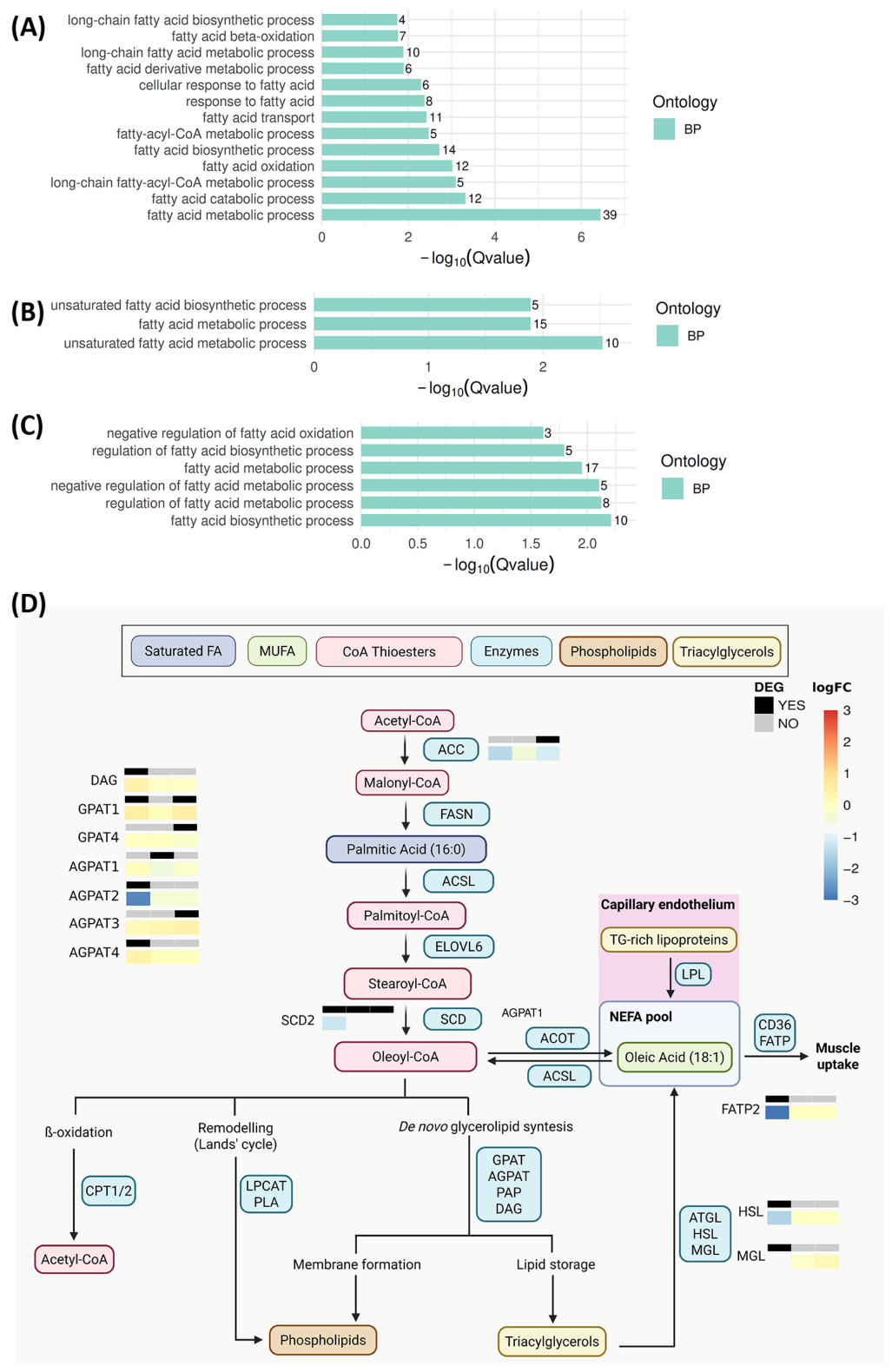
2.1. Transcriptomic Downregulation of Fatty-Acid Metabolic Pathways in HSALR Muscle
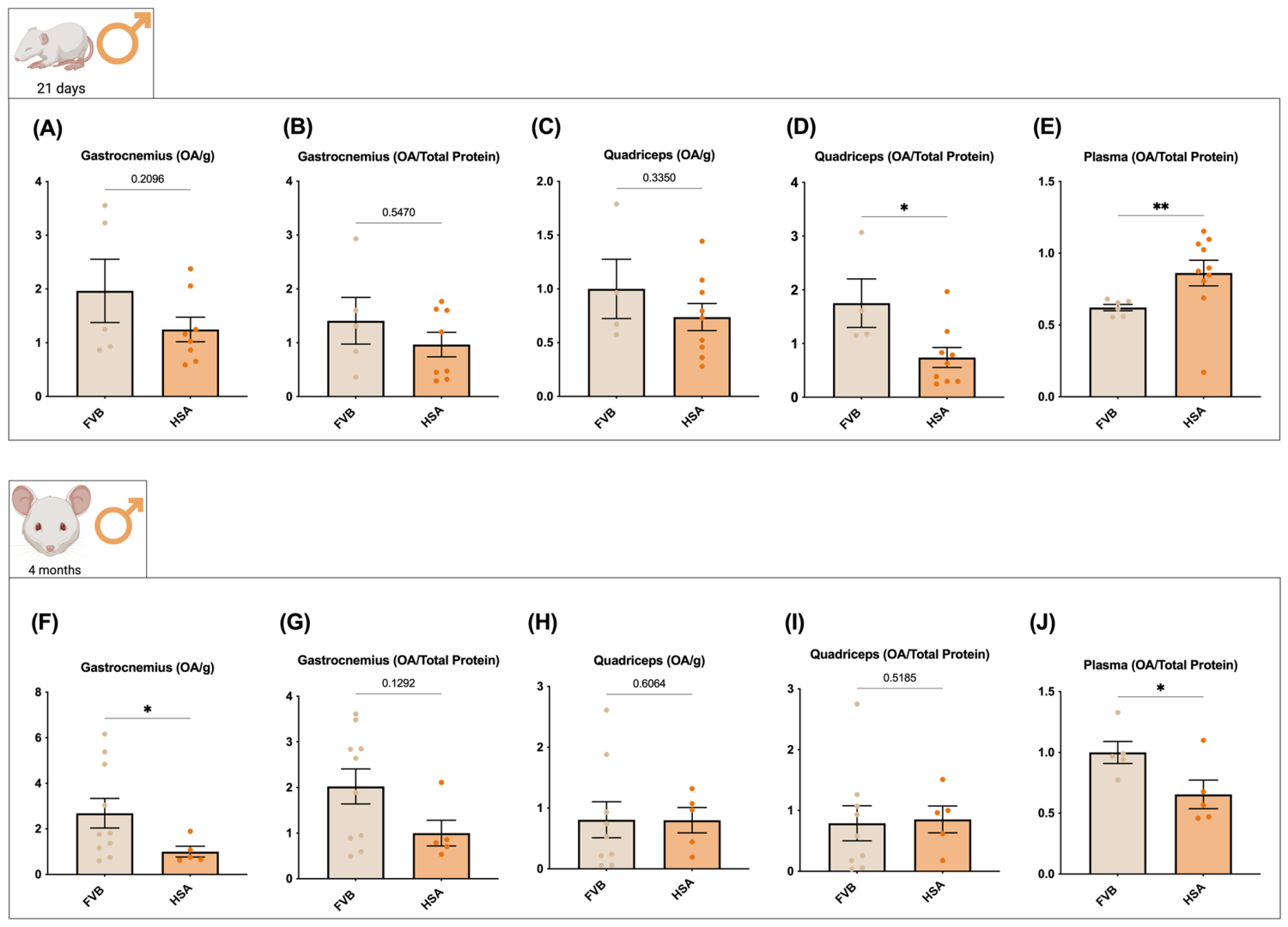
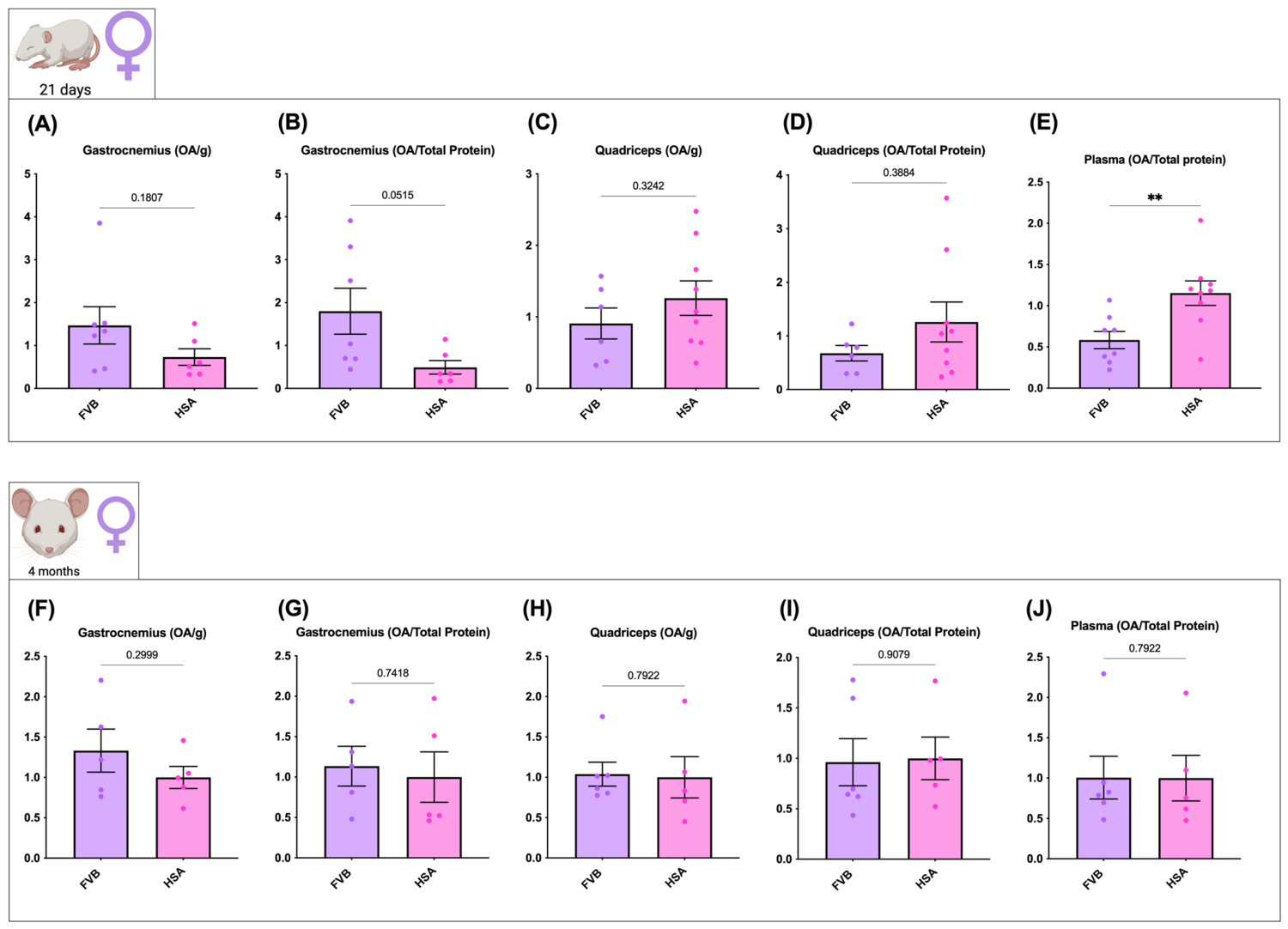
2.2. OA Levels in HSALR DM1 Model Are Tissue-, Sex-, Age- and Normalization-Dependent
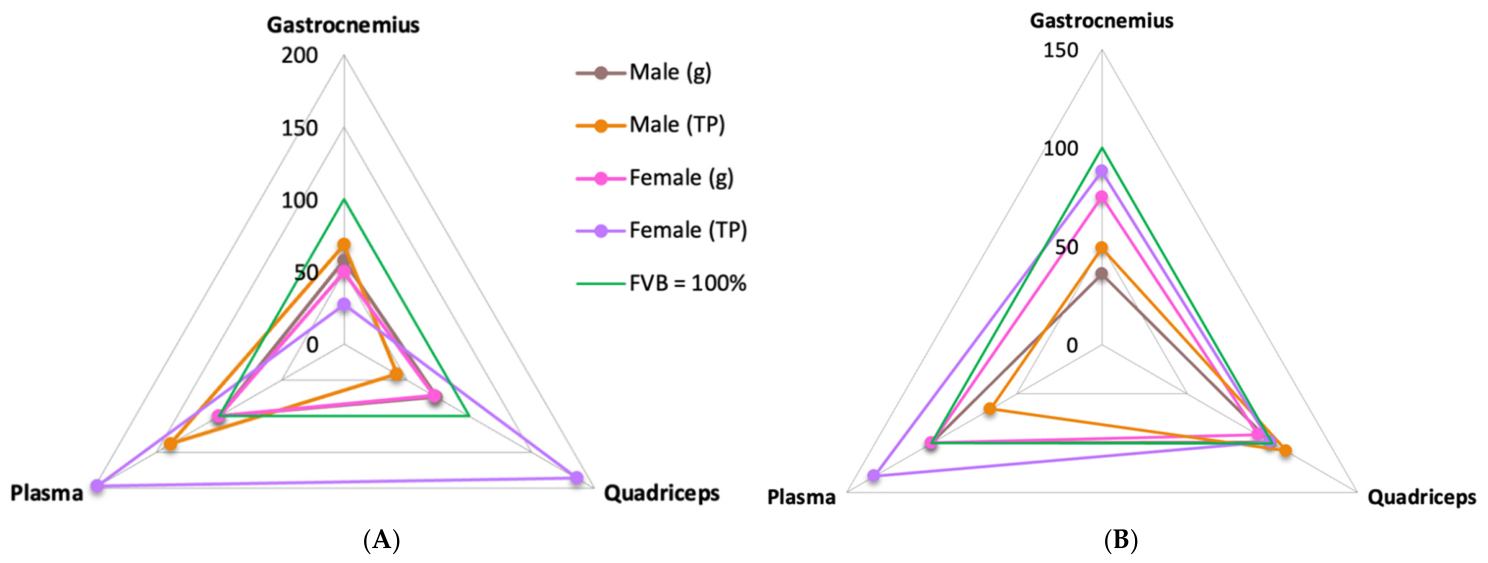
2.3. Summary Profiles of OA Variation in HSALR vs. FVB
3. Discussion
4. Materials and Methods
4.1. Animals and Experimental Design
4.2. Sample Collection and Lipid Extraction
4.3. Oleic Acid Quantification
4.4. RNA Sequencing Analysis
4.5. Statistical Analysis
Supplementary Materials
Author Contributions
Funding
Institutional Review Board Statement
Informed Consent Statement
Data Availability Statement
Acknowledgments
Conflicts of Interest
References
- Mahadevan, M.; Tsilfidis, C.; Sabourin, L.; Shutler, G.; Amemiya, C.; Jansen, G.; Neville, C.; Narang, M.; Barceló, J.; O’Hoy, K.; et al. Myotonic Dystrophy Mutation: An Unstable CTG Repeat in the 3′ Untranslated region of the Gene. Science 1992, 255, 1253–1255. [Google Scholar] [CrossRef]
- Brook, J.D.; McCurrach, M.E.; Harley, H.G.; Buckler, A.J.; Church, D.; Aburatani, H.; Hunter, K.; Stanton, V.P.; Thirion, J.P.; Hudson, T.; et al. Molecular basis of myotonic dystrophy: Expansion of a trinucleotide (CTG) repeat at the 3’ end of a transcript encoding a protein kinase family member. Cell 1992, 68, 799–808, Erratum in Cell 1992, 69, 385. [Google Scholar] [CrossRef]
- López-Martínez, A.; Soblechero-Martín, P.; De-La-puente-ovejero, L.; Nogales-Gadea, G.; Arechavala-Gomeza, V. An overview of alternative splicing defects implicated in myotonic dystrophy type 1. Genes 2020, 11, 1109. [Google Scholar] [CrossRef]
- Miller, J.W. Recruitment of human muscleblind proteins to (CUG)n expansions associated with myotonic dystrophy. EMBO J. 2000, 19, 4439–4448. [Google Scholar] [CrossRef] [PubMed]
- Ozimski, L.L.; Sabater-Arcis, M.; Bargiela, A.; Artero, R. The hallmarks of myotonic dystrophy type 1 muscle dysfunction. Biol. Rev. 2021, 96, 716–730. [Google Scholar] [CrossRef]
- Rakocevic Stojanovic, V.; Peric, S.; Lavrnic, D.; Popovic, S.; Ille, T.; Stevic, Z.; Basta, I.; Apostolski, S. Leptin and the metabolic syndrome in patients with myotonic dystrophy type 1. Acta Neurol. Scand. 2010, 121, 94–98. [Google Scholar] [CrossRef]
- Sun, Z.; Wang, X.; White, Z.; Dormuth, C.; Morales, F.; Bernatchez, P. Dyslipidemia in Muscular Dystrophy: A Systematic Review and Meta-Analysis. J. Neuromuscul. Dis. 2023, 10, 505–516. [Google Scholar] [CrossRef] [PubMed]
- Gramegna, L.L.; Giannoccaro, M.P.; Manners, D.N.; Testa, C.; Zanigni, S.; Evangelisti, S.; Bianchini, C.; Oppi, F.; Poda, R.; Avoni, P.; et al. Mitochondrial dysfunction in myotonic dystrophy type 1. Neuromuscul. Disord. 2018, 28, 144–149. [Google Scholar] [CrossRef]
- Mateus, T.; Martins, F.; Nunes, A.; Herdeiro, M.T.; Rebelo, S. Metabolic alterations in myotonic dystrophy type 1 and their correlation with lipin. Int. J. Environ. Res. Public Health 2021, 18, 1794. [Google Scholar] [CrossRef] [PubMed]
- Palomer, X.; Pizarro-Delgado, J.; Barroso, E.; Vázquez-Carrera, M. Palmitic and Oleic Acid: The Yin and Yang of Fatty Acids in Type 2 Diabetes Mellitus. Trends Endocrinol. Metab. 2018, 29, 178–190. [Google Scholar] [CrossRef]
- Perona, J.S.; Cabello-Moruno, R.; Ruiz-Gutierrez, V. The role of virgin olive oil components in the modulation of endothelial function. J. Nutr. Biochem. 2006, 17, 429–445. [Google Scholar] [CrossRef]
- Perdomo, L.; Beneit, N.; Otero, Y.F.; Escribano, Ó.; Díaz-Castroverde, S.; Gómez-Hernández, A.; Benito, M. Protective role of oleic acid against cardiovascular insulin resistance and in the early and late cellular atherosclerotic process. Cardiovasc. Diabetol. 2015, 14, 75. [Google Scholar] [CrossRef]
- Salvadó, L.; Coll, T.; Gómez-Foix, A.M.; Salmerón, E.; Barroso, E.; Palomer, X.; Vázquez-Carrera, M. Oleate prevents saturated-fatty-acid-induced ER stress, inflammation and insulin resistance in skeletal muscle cells through an AMPK-dependent mechanism. Diabetologia 2013, 56, 1372–1382. [Google Scholar] [CrossRef] [PubMed]
- Moreno, N.; Sabater-Arcis, M.; Sevilla, T.; Alonso, M.P.; Ohana, J.; Bargiela, A.; Artero, R. Therapeutic potential of oleic acid supplementation in myotonic dystrophy muscle cell models. Biol. Res. 2024, 57, 29. [Google Scholar] [CrossRef] [PubMed]
- Lipina, C.; Hundal, H.S. Lipid modulation of skeletal muscle mass and function. J. Cachexia Sarcopenia Muscle 2017, 8, 190–201. [Google Scholar] [CrossRef] [PubMed]
- Paton, C.M.; Ntambi, J.M. Biochemical and physiological function of stearoyl-CoA desaturase. Am. J. Physiol. Endocrinol. Metab. 2009, 297, 28–37. [Google Scholar] [CrossRef]
- Bargiela, A.; Cerro-Herreros, E.; Fernandez-Costa, J.M.; Vilchez, J.J.; Llamusi, B.; Artero, R. Increased autophagy and apoptosis contribute to muscle atrophy in a myotonic dystrophy type 1 Drosophila model. Dis. Model. Mech. 2015, 8, 679–690. [Google Scholar] [CrossRef]
- Fernandez-Costa, J.M.; Garcia-Lopez, A.; Zuñiga, S.; Fernandez-Pedrosa, V.; Felipo-Benavent, A.; Mata, M.; Jaka, O.; Aiastui, A.; Hernandez-Torres, F.; Aguado, B.; et al. Expanded CTG repeats trigger miRNA alterations in Drosophila that are conserved in myotonic dystrophy type 1 patients. Hum. Mol. Genet. 2013, 22, 704–716. [Google Scholar] [CrossRef]
- Sabater-Arcis, M.; Bargiela, A.; Furling, D.; Artero, R. miR-7 Restores Phenotypes in Myotonic Dystrophy Muscle Cells by Repressing Hyperactivated Autophagy. Mol. Ther. Nucleic Acids 2020, 19, 278–292. [Google Scholar] [CrossRef]
- Sabater-Arcis, M.; Bargiela, A.; Moreno, N.; Poyatos-Garcia, J.; Vilchez, J.J.; Artero, R. Musashi-2 contributes to myotonic dystrophy muscle dysfunction by promoting excessive autophagy through miR-7 biogenesis repression. Mol. Ther. Nucleic Acids 2021, 25, 652–667. [Google Scholar] [CrossRef]
- Choudhury, N.R.; de Lima Alves, F.; de Andrés-Aguayo, L.; Graf, T.; Cáceres, J.F.; Rappsilber, J.; Michlewski, G. Tissue-specific control of brain-enriched miR-7 biogenesis. Genes Dev. 2013, 27, 24–38. [Google Scholar] [CrossRef]
- Kumar, S.; Downie Ruiz Velasco, A.; Michlewski, G. Oleic Acid Induces MiR-7 Processing through Remodeling of Pri-MiR-7/Protein Complex. J. Mol. Biol. 2017, 429, 1638–1649. [Google Scholar] [CrossRef] [PubMed]
- Clingman, C.C.; Deveau, L.M.; Hay, S.A.; Genga, R.M.; Shandilya, S.M.D.; Massi, F.; Ryder, S.P. Allosteric inhibition of a stem cell RNA-binding protein by an intermediary metabolite. eLife 2014, 3, e02848. [Google Scholar] [CrossRef] [PubMed]
- Ntambi, J.M.; Miyazaki, M. Regulation of stearoyl-CoA desaturases and role in metabolism. Prog. Lipid Res. 2004, 43, 91–104. [Google Scholar] [CrossRef]
- Mankodi, A.; Logigian, E.; Callahan, L.; McClain, C.; White, R.; Henderson, D.; Krym, M.; Thornton, C.A. Myotonic dystrophy in transgenic mice expressing an expanded CUG repeat. Science 2000, 289, 1769–1773. [Google Scholar] [CrossRef]
- Huguet, A.; Medja, F.; Nicole, A.; Vignaud, A.; Guiraud-Dogan, C.; Ferry, A.; Decostre, V.; Hogrel, J.Y.; Metzger, F.; Hoeflich, A.; et al. Molecular, Physiological, and Motor Performance Defects in DMSXL Mice Carrying >1000 CTG Repeats from the Human DM1 Locus. PLoS Genet. 2012, 8, e1003043. [Google Scholar] [CrossRef]
- Jenquin, J.R.; Yang, H.; Huigens, R.W.; Nakamori, M.; Berglund, J.A. Combination Treatment of Erythromycin and Furamidine Provides Additive and Synergistic Rescue of Mis-splicing in Myotonic Dystrophy Type 1 Models. ACS Pharmacol. Transl. Sci. 2019, 2, 247–263. [Google Scholar] [CrossRef] [PubMed]
- Mishra, S.K.; Hicks, S.M.; Frias, J.A.; Vangaveti, S.; Nakamori, M.; Cleary, J.D.; Reddy, K.; Berglund, J.A. Quercetin selectively reduces expanded repeat RNA levels in models of myotonic dystrophy. bioRxiv 2023. [Google Scholar] [CrossRef]
- Solovyeva, E.M.; Utzinger, S.; Vissières, A.; Mitchelmore, J.; Ahrné, E.; Hermes, E.; Poetsch, T.; Ronco, M.; Bidinosti, M.; Merkl, C.; et al. Integrative Proteogenomics for Differential Expression and Splicing Variation in a DM1 Mouse Model. Mol. Cell. Proteom. 2024, 23, 100683. [Google Scholar] [CrossRef]
- Takeuchi, K.; Reue, K. AGPAT, and lipin enzymes in triglyceride synthesis. Am. J. Physiol. Endocrinol. Metab. 2009, 296, 1195–1209. [Google Scholar] [CrossRef]
- Coleman, R.A.; Mashek, D.G. Mammalian triacylglycerol metabolism: Synthesis, lipolysis, and signaling. Chem. Rev. 2011, 111, 6359–6386. [Google Scholar] [CrossRef]
- Anderson, C.M.; Stahl, A. SLC27 fatty acid transport proteins. Mol. Asp. Med. 2013, 34, 516–528. [Google Scholar] [CrossRef]
- Wang, M.; Wang, C.; Han, X. Selection of internal standards for accurate quantification of complex lipid species in biological extracts by electrospray ionization mass spectrometry—What, how and why? Mass Spectrom. Rev. 2017, 36, 693–714. [Google Scholar] [CrossRef]
- Bin Lee, G.; Yang, C.; Hu, F.; Hao, L. Evaluating sample normalization methods for MS-based multi-omics and the application to a neurodegenerative mouse model. Analyst 2025, 150, 1271–1279. [Google Scholar]
- Criswell, R.L.; Iszatt, N.; Demmelmair, H.; Ahmed, T.B.; Koletzko, B.V.; Lenters, V.C.; Eggesbø, M. Predictors of Human Milk Fatty Acids and Associations with Infant Growth in a Norwegian Birth Cohort. Nutrients 2022, 14, 3858. [Google Scholar] [CrossRef]
- Purkiewicz, A.; Pietrzak-Fiećko, R. Determination of the Fatty Acid Profile and Lipid Quality Indices in Selected Infant Formulas. Molecules 2024, 29, 2044. [Google Scholar] [CrossRef] [PubMed]
- O’Neill, L.M.; Guo, C.-A.; Ding, F.; Phang, Y.X.; Liu, Z.; Shamsuzzaman, S.; Ntambi, J.M. Stearoyl-CoA desaturase-2 in murine development, metabolism, and disease. Int. J. Mol. Sci. 2020, 21, 8619. [Google Scholar] [CrossRef] [PubMed]
- Miyazaki, M.; Dobrzyn, A.; Elias, P.M.; Ntambi, J.M. Stearoyl-CoA Desaturase-2 Gene Expression Is Required for Lipid Synthesis during Early Skin and Liver Development. Proc. Natl. Acad. Sci. USA 2005, 102, 12501–12506. [Google Scholar] [CrossRef]
- ALJohani, A.M.; Syed, D.N.; Ntambi, J.M. Insights into Stearoyl-CoA Desaturase-1 Regulation of Systemic Metabolism. Trends Endocrinol. Metab. 2017, 28, 831–842. [Google Scholar] [CrossRef] [PubMed]
- Attie, A.D.; Krauss, R.M.; Gray-Keller, M.P.; Brownlie, A.; Miyazaki, M.; Kastelein, J.J.; Lusis, A.J.; Stalenhoef, A.F.H.; Stoehr, J.P.; Hayden, M.R.; et al. Relationship between stearoyl-CoA desaturase activity and plasma triglycerides in human and mouse hypertriglyceridemia. J. Lipid Res. 2002, 43, 1899–1907. [Google Scholar] [CrossRef]
- Welle, S.; Tawil, R.; Thornton, C.A. Sex-related differences in gene expression in human skeletal muscle. PLoS ONE 2008, 3, e1385. [Google Scholar] [CrossRef]
- Schiaffino, S.; Reggiani, C. Fiber types in mammalian skeletal muscles. Physiol. Rev. 2011, 91, 1447–1531. [Google Scholar] [CrossRef]
- Talbot, J.; Maves, L. Skeletal muscle fiber type: Using insights from muscle developmental biology to dissect targets for susceptibility and resistance to muscle disease. Wiley Interdiscip. Rev. Dev. Biol. 2016, 5, 518–534. [Google Scholar] [CrossRef] [PubMed]
- Rahman, F.A.; Baechler, B.L.; Quadrilatero, J. Key considerations for investigating and interpreting autophagy in skeletal muscle. Autophagy 2024, 20, 2121–2132. [Google Scholar] [CrossRef]
- Morales-Scholz, M.G.; Wette, S.G.; Stokie, J.R.; Tepper, B.T.; Swinton, C.; Hamilton, D.L.; Dwyer, K.M.; Murphy, R.M.; Howlett, K.F.; Shaw, C.S. Muscle fiber type-specific autophagy responses following an overnight fast and mixed meal ingestion in human skeletal muscle. Am. J. Physiol. Endocrinol. Metab. 2022, 323, E242–E253. [Google Scholar] [CrossRef]
- Purslow, P.P. The Structure and Role of Intramuscular Connective Tissue in Muscle Function. Front. Physiol. 2020, 11, 495. [Google Scholar] [CrossRef]
- Jain, S.S.; Chabowski, A.; Snook, L.A.; Schwenk, R.W.; Glatz, J.F.C.; Luiken, J.J.F.P.; Bonen, A. Additive effects of insulin and muscle contraction on fatty acid transport and fatty acid transporters, FAT/CD36, FABPpm, FATP1, 4 and 6. FEBS Lett. 2009, 583, 2294–2300. [Google Scholar] [CrossRef]
- Sabater-Arcis, M.; Moreno, N.; Sevilla, T.; Perez Alonso, M.; Bargiela, A.; Artero, R. Msi2 enhances muscle dysfunction in a myotonic dystrophy type 1 mouse model. Biomed. J. 2024, 47, 100667. [Google Scholar] [CrossRef]
- Gomes-Pereira, M.; Cooper, T.A.; Gourdon, G. Myotonic dystrophy mouse models: Towards rational therapy development. Trends Mol. Med. 2011, 17, 506–517. [Google Scholar] [CrossRef] [PubMed]
- Chakraborty, D.; Borthakur, S.; Sarkar, R.; Singh, M.D. Gender disparities in myotonic dystrophy 1. Life Sci. 2025, 373, 123659. [Google Scholar] [CrossRef] [PubMed]
- Hanks, S.C.; Mauger, A.S.; Varshney, A.; Ciotlos, D.L.; Manickam, N.; Narisu, N.; Shumway, A.J.; Orchard, P.; Erdos, M.R.; Sweeney, M.D.; et al. Extensive differential gene expression and regulation by sex in human skeletal muscle. Cell Genom. 2025, 5, 100915. [Google Scholar] [CrossRef] [PubMed]
- Carrascosa-Sàez, M.; Colom-Rodrigo, A.; González-Martínez, I.; Pérez-Gómez, R.; García-Rey, A.; Piqueras-Losilla, D.; Ballestar, A.; Llamusí, B.; Cerro-Herreros, E.; Artero, R. Use of HSALR female mice as a model for the study of myotonic dystrophy type I. Lab Anim. 2025, 54, 92–102. [Google Scholar] [CrossRef]
- Childs, A.V.R.; Henderson, R.D.; Henderson, D.J.; Waldmann, J.Y.; Szollosi, I. Treatments and therapies for symptoms and clinical manifestations of adult type 1 myotonic dystrophy: A scoping review. J. Neurol. Sci. 2025, 472, 123470. [Google Scholar] [CrossRef]
- Vessby, B.; Gustafsson, I.B.; Tengblad, S.; Berglund, L. Indices of fatty acid desaturase activity in healthy human subjects: Effects of different types of dietary fat. Br. J. Nutr. 2013, 110, 871–879. [Google Scholar] [CrossRef]
- Vinknes, K.J.; Elshorbagy, A.K.; Nurk, E.; Drevon, C.A.; Gjesdal, C.G.; Tell, G.S.; Nygård, O.; Vollset, S.E.; Refsum, H. Plasma stearoyl-CoA desaturase indices: Association with lifestyle, diet, and body composition. Obesity 2013, 21, E294–E302. [Google Scholar] [CrossRef]
- Palmer, A.K.; Jensen, M.D. Metabolic changes in aging humans: Current evidence and therapeutic strategies. J. Clin. Investig. 2022, 132, e158451. [Google Scholar] [CrossRef] [PubMed]
- Grevendonk, L.; Connell, N.J.; McCrum, C.; Fealy, C.E.; Bilet, L.; Bruls, Y.M.H.; Mevenkamp, J.; Schrauwen-Hinderling, V.B.; Jörgensen, J.A.; Moonen-Kornips, E.; et al. Impact of aging and exercise on skeletal muscle mitochondrial capacity, energy metabolism, and physical function. Nat. Commun. 2021, 12, 4773. [Google Scholar] [CrossRef]
- Aas, V.; Thoresen, G.H.; Rustan, A.C.; Lund, J. Substrate oxidation in primary human skeletal muscle cells is influenced by donor age. Cell Tissue Res. 2020, 382, 599–608. [Google Scholar] [CrossRef]
- Sanjurjo, P.; AldámizEchevarría, L.; Prado, C.; Azcona, I.; Elorz, J.; Prieto, J.A.; Ruiz, J.I.; Rodríguez-Soriano, J. Fatty acid composition of skeletal muscle and adipose tissue in Spanish infants and children. Br. J. Nutr. 2006, 95, 168–173. [Google Scholar] [CrossRef] [PubMed]
- Andersson, A.; Nälsén, C.; Tengblad, S.; Vessby, B. Fatty Acid Composition of Skeletal Muscle Reflects Dietary Fat Composition in Humans. Am. J. Clin. Nutr. 2002, 76, 1222–1229. [Google Scholar] [CrossRef]
- Lazic, D.M.; Jovanovic, V.M.; Karanovic, J.; Savic-Pavicevic, D.; Jovanovic, B. HSALR Mice Exhibit Co-Expression of Proteostasis Genes Prior to Development of Muscle Weakness. Int. J. Mol. Sci. 2025, 26, 10793. [Google Scholar] [CrossRef] [PubMed]
- Chen, S.; Zhou, Y.; Chen, Y.; Gu, J. Fastp: An ultra-fast all-in-one FASTQ preprocessor. Bioinformatics 2018, 34, i884–i890. [Google Scholar] [CrossRef]
- Dobin, A.; Davis, C.A.; Schlesinger, F.; Drenkow, J.; Zaleski, C.; Jha, S.; Batut, P.; Chaisson, M.; Gingeras, T.R. STAR: Ultrafast universal RNA-seq aligner. Bioinformatics 2013, 29, 15–21. [Google Scholar] [CrossRef] [PubMed]
- Liao, Y.; Smyth, G.K.; Shi, W. FeatureCounts: An efficient general purpose program for assigning sequence reads to genomic features. Bioinformatics 2014, 30, 923–930. [Google Scholar] [CrossRef]
- Love, M.I.; Huber, W.; Anders, S. Moderated estimation of fold change and dispersion for RNA-seq data with DESeq2. Genome Biol. 2014, 15, 550. [Google Scholar] [CrossRef] [PubMed]
- Yu, G.; Wang, L.G.; Han, Y.; He, Q.Y. ClusterProfiler: An R package for comparing biological themes among gene clusters. OMICS 2012, 16, 284–287. [Google Scholar] [CrossRef]


Disclaimer/Publisher’s Note: The statements, opinions and data contained in all publications are solely those of the individual author(s) and contributor(s) and not of MDPI and/or the editor(s). MDPI and/or the editor(s) disclaim responsibility for any injury to people or property resulting from any ideas, methods, instructions or products referred to in the content. |
© 2026 by the authors. Licensee MDPI, Basel, Switzerland. This article is an open access article distributed under the terms and conditions of the Creative Commons Attribution (CC BY) license.
Share and Cite
Peris-Moreno, D.; Sabater-Arcis, M.; Moreno, N.; Orduña, L.; López-Castel, A.; Bargiela, A.; Artero, R. Oleic Acid Levels in HSALR Mouse Model of Myotonic Dystrophy Type 1. Int. J. Mol. Sci. 2026, 27, 4211. https://doi.org/10.3390/ijms27104211
Peris-Moreno D, Sabater-Arcis M, Moreno N, Orduña L, López-Castel A, Bargiela A, Artero R. Oleic Acid Levels in HSALR Mouse Model of Myotonic Dystrophy Type 1. International Journal of Molecular Sciences. 2026; 27(10):4211. https://doi.org/10.3390/ijms27104211
Chicago/Turabian StylePeris-Moreno, Dulce, Maria Sabater-Arcis, Nerea Moreno, Luis Orduña, Arturo López-Castel, Ariadna Bargiela, and Ruben Artero. 2026. "Oleic Acid Levels in HSALR Mouse Model of Myotonic Dystrophy Type 1" International Journal of Molecular Sciences 27, no. 10: 4211. https://doi.org/10.3390/ijms27104211
APA StylePeris-Moreno, D., Sabater-Arcis, M., Moreno, N., Orduña, L., López-Castel, A., Bargiela, A., & Artero, R. (2026). Oleic Acid Levels in HSALR Mouse Model of Myotonic Dystrophy Type 1. International Journal of Molecular Sciences, 27(10), 4211. https://doi.org/10.3390/ijms27104211