Comparative Metabolomic Approaches to Nanoplastic Toxicity in Mammalian and Aquatic Systems


Abstract
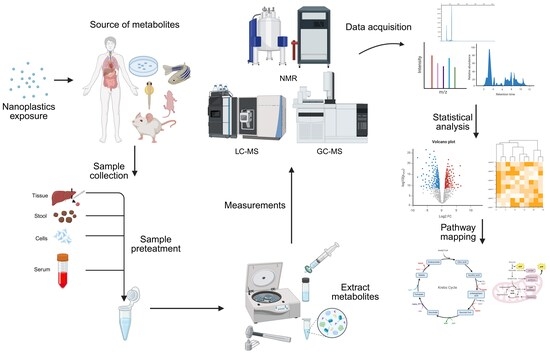
1. Introduction
2. Altered Metabolism and Toxicity Induced by Nanoplastic Exposure
2.1. Tissue-Specific Alterations in Metabolism and Toxicity
2.1.1. Intestinal Toxicity and Metabolic Disruption Induced by Nanoplastics
2.1.2. Hepatic Toxicity and Metabolic Disruption Induced by Nanoplastics
2.1.3. Lung Toxicity and Metabolic Disruption Induced by Nanoplastics
2.1.4. Brain Toxicity and Metabolic Alterations Induced by Nanoplastics
2.1.5. Metabolic Effects in Offspring and Reproductive Organs
2.1.6. Other Metabolic Disorders Due to Nanoplastics

| Nanoparticles | Size (nm) | Concentration | Exposure Time | Model | Method | Sample | Key Pathways | Reference |
|---|---|---|---|---|---|---|---|---|
| Polystyrene | 60 | 20 mg/kg/day | 35 d | C57 BL/6 J (Mouse) | UPLC-Q -TOF-MS | Testis Sperm | DNA repair pathway Glycerophospholipid metabolism * Innate immune-sensing Nucleotide metabolism * pathway Vitamin and nucleoside transport | [80] |
| 100 | 1000 µg/L | 28 d | C57 mouse | UPLC-MS | Liver | Arachidonic acid metabolism * Fatty acid metabolism ** Glyceride metabolism Glycerophospholipid metabolism * Linoleic acid metabolism | [64] | |
| 100 | 0.5 mg/day | 60 d | C57BL/6J | UPLC-MS | serum | Alkaloid biosynthesis pathway ATP-binding cassette (ABC) Bile secretion pathway Phenylpropanoid biosynthesis transporters pathway Tropane, Piperidine, and Pyridine pathway | [53] | |
| Polystyrene | 80 | 10, 100 µg/mL | 24 h | HKC (Kidney) | HPLC | Cell extracts | (Downregulation of key enzymes in glycolysis) (Downregulation of major enzymes in this process) (Electron transport chain) (Lysine degradation, tryptophan metabolism, valine, leucine, isoleucine degradation) Amino acid metabolism Energy metabolites Fatty acid metabolism ** Glutamate metabolism Glutathione (GSH) biosynthesis Glycolysis Nucleotide metabolism pathway Nucleotide metabolism * TCA cycle | [84] |
| 50, 500 | 100 µg/mL | 24 h | Human multi-organ-on-a-chip (DS-MPP) system | UPLC-MS | Huh-7 (Liver) | (Phosphatidic acid, Diacylglycerol, Triglyceride) (Phospholipids) Endocytosis pathway Hepatic lipid metabolism Phospholipase D (PLD) pathway | [52] | |
| 100 | 10 µg/mL | PND 21 | Kunming (Mouse) | LC-MS | Liver Testis | (DHAP, β-D-F6-P, AMP, D-G6-P, TPP) Energy metabolite reduction Hepatic glucose metabolism | [31] | |
| Polystyrene | 80 | 6–125 mg/mL | 48 h | L02 (Liver cell) | UPLC-QE Orbitrap MS | Cell extracts | (Associated with TCA cycle, Glutathione metabolism, purine metabolism) Mitochondrial metabolic pathways * (Urea cycle, electron transport chain) NAD+, NADH metabolism | [26] |
| 6–0.25 mg/mL | BEAS-2B (Lung cell) | (Associated with the TCA cycle, Glutathione (GSH, GSSG) Alanine, aspartate, and glutamate metabolism Arginine biosynthesis metabolism, purine metabolism) Mitochondrial metabolic pathways * (Urea cycle, Electron transport chain) | ||||||
| 20 | 0.1–10 mg/kg | 16 w | Balb/c (Mouse) | LC-MS | Colon | (Fatty acid metabolism and NF-κB signaling) | [19] | |
| LPS-treated Caco-2 | Cell extracts | Fatty acid metabolism ** Glycometabolism Lipid metabolism Lipid peroxidation | ||||||
| 50 | 80 µg/mL | 24 h | Caco-2 (Colon) | HILIC–LC–MS | Cell extracts | Arachidonic acid metabolism * Drug metabolism by cytochrome P450 Retinol metabolism Steroid hormone biosynthesis * | [54] | |
| 0.1 µg/mL | 6 w | Steroid hormone biosynthesis * Terpenoid backbone biosynthesis | ||||||
| Polystyrene | 80 | 200–1000 µg/L | 4 w | C57 BL/6 J (Mouse) | LC-MS | Testis | TCA cycle | [25] |
| 0.05–0.1 | 20 mg/kg/day | PND 7~10 | Sprague Dawley pup (Rat) | LC–MS | plasma | (glycerol phosphocholines, phosphosphingolipids) Amino acid biosynthesis Aminoacyl-tRNA biosynthesis Sphingolipid metabolism | [85] | |
| Polyethylene terephthalate | 200 ± 50 | 200 mg/kg | 14 d | KM (Mouse) | UPLC-MS | Stool | (Arachidonic acid, anserine, and histamine) Lipid metabolites | [30] |
| 700 ± 300 1 | (Sphinganeine) | |||||||
| 56 | 0.5 mg/day | 28 d | Mus musculus (Mouse) | GC-MS | Stool | Cysteine and methionine biosynthesis D-galactonate degradation Glyoxylate degradation L-alanine biosynthesis L-arginine metabolism Lipid A biosynthesis pathway Sulfate metabolism | [30] | |
| Polycarbonate | 30 | 20, 40 µg/mL | 48 h | Second generation UHHS (Liver) | LC-MS | Cell extracts | (Albumin gene downregulation) (CYP2C9) | [51] |
3. Metabolomics of Nanoplastic Toxicity in Aquatic Organisms
3.1. NPs Toxicity in Aquatic Fish
3.1.1. Gills, Mucus, and Intestine
3.1.2. Liver
3.1.3. Brain
3.1.4. Early Development Stage
3.2. NPs Toxicity in Aquatic Invertebrates
| Nano Particles | Size (nm) | Concentration | Exposure Time | Species | Method | Sample | Key Pathways | Reference |
|---|---|---|---|---|---|---|---|---|
| Polystyrene | 100 ± 5 | 20 mg/L | 7 d | O. mossambicus (Tilapia) | UPLC-Q -TOF-MS | Whole body (Larvae) | Alpha-Linolenic acid metabolism Arachidonic acid metabolism ** Pentose phosphate metabolism Synthesis of fatty acids TCA glycolysis/gluconeogenesis ** Unsaturated fatty acids biosynthesis * | [129] |
| 50–100 | 0.1–10 mg/L | 116 hpf | D. rerio (Zebra fish) | GC-TOF/MS | Whole body (Larvae) | Alanine, aspartate, and glutamate metabolism ** Citrate cycle ** Galactose metabolism * Glycerolipid metabolism * Purine metabolism ** Steroid hormone biosynthesis * | [130] | |
| 42–44 | 1–100 µg/L | 30 d | D. rerio | UHPLC-MRM-MS/MS | Brain | (Neurotransmitter-related metabolites) Phenylalanine metabolism ** Tryptophan metabolism * | [96] | |
| 51 ± 3, 52 ± 5 | 30–50 mg/L | 120 hpf | D. rerio | UHPLC-MS/MS | Whole body (Larvae) | (Neurotransmitter-related metabolites) Glutathione metabolism ** Polyamine metabolism Tryptophan-kynurenine pathway * | [144] | |
| Polystyrene | 143.36 ± 5.11 | 230 µg/L | 15 d | S. schlegelii (Jacopever) | UHPLC-MS/MS | Liver | ABC Transporters ** Cell apoptosis pathways Protein digestion and absorption Sphingolipid metabolism * TCA cycle ** Ubiquinone metabolism * | [107] |
| 80 | 15–150 µg/L | 21 d | D. rerio | UHPLC-MS/MS | Liver | Lipid metabolism (Ceramide, sphingomyelin, lysophosphatidylcholine, zymosterol, TG) | [105] | |
| 50.85 ± 8.74, 46.37 ± 0.49 | 3.2–320 µg/L | 37 d | D. magna | NMR | Whole body | (Lysine) Catecholamine synthesis | [135] | |
| 80 | 10–1000 µg/L | 96 h | H. molitrix (Carp) | UHPLC-MS/MS | Liver | ABC Transporters ** Aminoacyl-tRNA biosynthesis ** Arginine biosynthesis * Glycerophospholipid metabolism ** | [108] | |
| 100 | 100–1000 µg/L | 28 d | C. quadricarinatus (Cray fish) | UPLC-MS/MS | Hepatopancreas | Bile secretion Cholesterol metabolism Insect hormone biosynthesis Ovarian steroidogenesis Phenylalanine metabolism ** PPAR signaling | [142] | |
| Polystyrene | 109.1 ± 1.6 | 1–10 mg/L | 14 d | G. rarus (Minnow) | LC-MS | Intestine | Arachidonic acid metabolism ** Arginine and Proline metabolism ** Steroid biosynthesis Steroid hormone biosynthesis * Tyrosine metabolism | [98] |
| 29.15 ± 8.07 | 5 mg/L | 7 d | S. ocellatu (Red drum) | UHPLC-MS | Liver | ABC transporters ** Choline metabolism in cancer Glycerophospholipid metabolism ** Purine metabolism ** Pyrimidine metabolism * Retrograde endocannabinoid signaling * Sphingolipid signaling pathway * Taurine and hypotaurine metabolism | [109] | |
| 78.1 ± 0.4, 81.2 ± 0.9 | 100 µg/L | 28 d | O. niloticus (Tilapia) | UHPLC-MS/MS | Gill | (ADP) Arachidonic acid metabolism ** Arginine and Proline metabolism ** Glycerophospholipid metabolism ** Linoleic acid metabolism Retrograde endocannabinoid signaling * | [90] | |
| 50 ± 10 | 0.1–10 mg/L | 28 d | D. rerio | UHPLC/Q-TOF MS | Liver | Arachidonic acid metabolism ** Arginine metabolism ** Glutamine and glutamate metabolism Glycerophospholipid metabolism ** Ketone body synthesis and degradation Phenylalanine, tyrosine, and tryptophan metabolism ** Purine metabolism ** Steroid hormone synthesis ** | [106] | |
| Polystyrene | 44 | 10 µg/L | 120 d | D. rerio | LC-MS/MS | Brain | Alanine, aspartate, and glutamate metabolism ** Aminoacyl-tRNA biosynthesis ** Arginine and Proline metabolism ** Glycine, serine, and threonine metabolism Methane metabolism Phenylalanine, tyrosine, and tryptophan biosynthesis ** | [125] |
| 100 | 10–104 particles/L | 14 d | C. angulata (Triploid oyster) | UHPLC-MS/MS | Hepatopancreas | Arachidonic acid metabolism ** Arginine and proline metabolism ** Fructose and mannose metabolism Glutathione metabolism ** Lysine degradation * Phenylalanine, tyrosine and tryptophan biosynthesis ** Purine metabolism ** Thiamine metabolism Ubiquinone and other terpenoid -quinone biosynthesis * | [138] | |
| Polystyrene | 80 | 500 µg/L | 4 d | P. undulata (Marine clam) | GC-TOF/MS | Digestive glands | Phenylalanine, tyrosine and tryptophan biosynthesis Galactose metabolism * Starch and sucrose metabolism * | [138] |
| 70–500 | 200 µg/L | 48 h | B. plicatilis (Rotifer) | UHPLC-MS/MS | Whole body | Alanine, aspartate and glutamate metabolism ** TCA ** Purine metabolism ** Pyrimidine metabolism * | [137] | |
| Polypropylene | 100 | 1–100 mg/L | 21 d | Nile tilapia | OFT-MS/EESI-MS | Mucus | (4-Hydroxynonenal) (Caprylic acid) (Histamine) Lysine degradation * Phenylalanine metabolism ** Phenylalanine, tyrosine, and tryptophan biosynthesis ** Valine, leucine, and isoleucine biosynthesis * | [92] |
| 100 | 1–100 mg/L | 21 d | Nile tilapia | OFT-MS/EESI-MS | Liver | Aminoacyl-tRNA biosynthesis ** Arginine and Proline metabolism ** Glycerophospholipid metabolism ** | [110] | |
| Polyethylene terephthalate | 70 ± 5 | 100 mg/L | 24 d | D. rerio | NMR | Whole body | (Trimethylamine N-oxide) (Membrane lipid) Glutathione metabolism ** Phenylalanine, tyrosine, and tryptophan biosynthesis ** TCA ** Valine, leucine, and isoleucine biosynthesis * | [131] |
| Polyvinyl chloride | 200 | 50 µg/L | 18 d | D. rerio | GC-MS | Gut | Arginine biosynthesis * Fatty acid elongation and degradation Pyruvate metabolism Starch and sucrose metabolism * TCA ** Unsaturated fatty acids biosynthesis * | [102] |
4. Comparative Metabolic Signatures Across Mammalians and Aquatic Organisms
4.1. Common Metabolic Pathways by Organs
4.2. Linkage Between Nanoplastic Toxicity Mechanisms and Key Pathway Alterations
4.3. Translational Applications of Metabolomic Findings in Nanoplastic Toxicology
5. Conclusions and Perspectives
Author Contributions
Funding
Institutional Review Board Statement
Informed Consent Statement
Data Availability Statement
Conflicts of Interest
Abbreviations
| AA | Arachidonic acid |
| ABC transporter | Adenosine triphosphate-binding cassette transporters |
| ADP | Adenosine diphosphate |
| AOM/DSS mice | Azoxymethane and dextran sodium sulfate-treated mice |
| ATP | Adenosine triphosphate |
| BBB | Blood–brain barrier |
| BEAS-2B cells | Pulmonary epithelial cells |
| CAT | Catalase |
| CL | Cardiolipin |
| CNS | Central nervous system |
| FoxO signaling | Forkhead box O signaling |
| GC-MS | Gas chromatography–mass spectrometry |
| GC-TOF/MS | Gas chromatography–time-of-flight mass spectrometry |
| GSH | Glutathione |
| GSSG | Oxidized glutathione |
| HKC | Human kidney epithelial cells |
| LC-MS | Liquid chromatography–mass spectrometry |
| LPS | Lipopolysaccharide |
| MAPK | Mitogen-activated protein kinase |
| MDA | Malondialdehyde |
| MPs | Microplastics |
| mRNA | Messenger ribonucleic acid |
| mROS | Mitochondrial reactive oxygen species |
| NAD+/NADH | Nicotinamide adenine dinucleotide |
| NMR | Nuclear magnetic resonance spectroscopy |
| NPs | Nanoplastics |
| OFT-MS/EESI-MS | High-resolution orbitrap fusion tribrid mass spectrometer–extractive electrospray ionization mass spectrometry |
| PA | Phosphatidic acid |
| PC | Phosphatidylcholine |
| PC-NPs | Polycarbonate nanoplastics |
| PCR | Polymerase chain reaction |
| PE | Phosphatidylethanolamine |
| PET-NPs | Polyethylene terephthalate nanoplastics |
| PG | Phosphatidylglycerol |
| PI | Phosphatidylinositol |
| PLA2 | Phospholipase |
| PLGA | Poly (lactic-co-glycolic acid) |
| PND | Postnatal day |
| PP-NP | Polypropylene nanoplastic |
| PPAR | Peroxisome proliferator–activated receptors |
| PS | Phosphatidylserine |
| PS-NPs | Polystyrene nanoplastics |
| ROS | Reactive oxygen species |
| SOD | Superoxide dismutase |
| SREBP | Sterol regulatory element-binding proteins |
| TCA | Tricarboxylic acid |
| TG | Triacylglycerol |
| tRNA | Transfer ribonucleic acid |
| TXA2 | Thromboxylic acid |
| UHHS | Human hepatocellular model |
| UHPLC-MRM-MS/MS | Ultra-high-performance liquid chromatography–multiple reaction monitoring–tandem mass spectrometry |
| UHPLC/Q-TOF MS | Ultra-high-performance liquid chromatography–quadrupole time of flight mass spectrometer |
| UPLC-Q-TOF-MS | Ultra-performance liquid chromatography–quadrupole time of-flight mass spectrometry |
| UPLC-QE Orbitrap MS | Ultra-performance liquid chromatography–Q exactive orbitrap mass spectrometry |
References
- Nagalakshmaiah, M.; Afrin, S.; Malladi, R.P.; Elkoun, S.; Robert, M.; Ansari, M.A.; Svedberg, A.; Karim, Z. Biocomposites: Present trends and challenges for the future. In Green Composites for Automotive Applications; Elsevier Science: Cambridge, UK, 2019; pp. 197–215. [Google Scholar]
- Phuong, N.N.; Zalouk-Vergnoux, A.; Poirier, L.; Kamari, A.; Chatel, A.; Mouneyrac, C.; Lagarde, F. Is there any consistency between the microplastics found in the field and those used in laboratory experiments? Environ. Pollut. 2016, 211, 111–123. [Google Scholar] [CrossRef] [PubMed]
- Houssini, K.; Li, J.; Tan, Q. Complexities of the global plastics supply chain revealed in a trade-linked material flow analysis. Commun. Earth Environ. 2025, 6, 257. [Google Scholar] [CrossRef]
- Abdolahpur Monikh, F.; Hansen, S.F.; Vijver, M.G.; Kentin, E.; Nielsen, M.B.; Baun, A.; Syberg, K.; Lynch, I.; Valsami-Jones, E.; Peijnenburg, W.J. Can current regulations account for intentionally produced nanoplastics? Environ. Sci. Technol. 2022, 56, 3836–3839. [Google Scholar] [CrossRef] [PubMed]
- Gigault, J.; El Hadri, H.; Nguyen, B.; Grassl, B.; Rowenczyk, L.; Tufenkji, N.; Feng, S.; Wiesner, M. Nanoplastics are neither microplastics nor engineered nanoparticles. Nat. Nanotechnol. 2021, 16, 501–507. [Google Scholar] [CrossRef]
- Gigault, J.; Halle, A.T.; Baudrimont, M.; Pascal, P.Y.; Gauffre, F.; Phi, T.L.; El Hadri, H.; Grassl, B.; Reynaud, S. Current opinion: What is a nanoplastic? Environ. Pollut. 2018, 235, 1030–1034. [Google Scholar] [CrossRef]
- Kik, K.; Bukowska, B.; Sicinska, P. Polystyrene nanoparticles: Sources, occurrence in the environment, distribution in tissues, accumulation and toxicity to various organisms. Environ. Pollut. 2020, 262, 114297. [Google Scholar] [CrossRef]
- Masseroni, A.; Rizzi, C.; Urani, C.; Villa, S. Nanoplastics: Status and Knowledge Gaps in the Finalization of Environmental Risk Assessments. Toxics 2022, 10, 270. [Google Scholar] [CrossRef]
- Gouin, T.; Ellis-Hutchings, R.; Pemberton, M.; Wilhelmus, B. Addressing the relevance of polystyrene nano- and microplastic particles used to support exposure, toxicity and risk assessment: Implications and recommendations. Part. Fibre Toxicol. 2024, 21, 39. [Google Scholar] [CrossRef]
- Ma, C.; Chen, Q.; Li, J.; Li, B.; Liang, W.; Su, L.; Shi, H. Distribution and translocation of micro- and nanoplastics in fish. Crit. Rev. Toxicol. 2021, 51, 740–753. [Google Scholar] [CrossRef]
- Wang, X.; Li, C.; Liu, K.; Zhu, L.; Song, Z.; Li, D. Atmospheric microplastic over the South China Sea and East Indian Ocean: Abundance, distribution and source. J. Hazard. Mater. 2020, 389, 121846. [Google Scholar] [CrossRef]
- Li, J.; Yang, D.; Li, L.; Jabeen, K.; Shi, H. Microplastics in commercial bivalves from China. Environ. Pollut. 2015, 207, 190–195. [Google Scholar] [CrossRef] [PubMed]
- Fazlollahi, F.; Angelow, S.; Yacobi, N.R.; Marchelletta, R.; Yu, A.S.; Hamm-Alvarez, S.F.; Borok, Z.; Kim, K.J.; Crandall, E.D. Polystyrene nanoparticle trafficking across MDCK-II. Nanomedicine 2011, 7, 588–594. [Google Scholar] [CrossRef] [PubMed]
- Nihart, A.J.; Garcia, M.A.; El Hayek, E.; Liu, R.; Olewine, M.; Kingston, J.D.; Castillo, E.F.; Gullapalli, R.R.; Howard, T.; Bleske, B.; et al. Bioaccumulation of microplastics in decedent human brains. Nat. Med. 2025, 31, 1114–1119, Correction in Nat. Med. 2025, 31, 1367. https://doi.org/10.1038/s41591-025-03675-x. [Google Scholar] [CrossRef] [PubMed]
- Cox, K.D.; Covernton, G.A.; Davies, H.L.; Dower, J.F.; Juanes, F.; Dudas, S.E. Human Consumption of Microplastics. Environ. Sci. Technol. 2019, 53, 7068–7074. [Google Scholar] [CrossRef]
- Schwabl, P.; Koppel, S.; Konigshofer, P.; Bucsics, T.; Trauner, M.; Reiberger, T.; Liebmann, B. Detection of Various Microplastics in Human Stool: A Prospective Case Series. Ann. Intern. Med. 2019, 171, 453–457. [Google Scholar] [CrossRef]
- Freeman, B.A.; Crapo, J.D. Biology of disease: Free radicals and tissue injury. Lab. Investig. 1982, 47, 412–426. [Google Scholar]
- Paul-Pont, I.; Lacroix, C.; Gonzalez Fernandez, C.; Hegaret, H.; Lambert, C.; Le Goic, N.; Frere, L.; Cassone, A.L.; Sussarellu, R.; Fabioux, C.; et al. Exposure of marine mussels Mytilus spp. to polystyrene microplastics: Toxicity and influence on fluoranthene bioaccumulation. Environ. Pollut. 2016, 216, 724–737. [Google Scholar] [CrossRef]
- Tian, S.; Li, R.; Li, J.; Zou, J. Polystyrene nanoplastics promote colitis-associated cancer by disrupting lipid metabolism and inducing DNA damage. Environ. Int. 2025, 195, 109258. [Google Scholar] [CrossRef]
- Cui, H.; Jiang, X.; Cao, J.; Yang, W.; Yang, B.; Li, M. Comparative Analysis of Metabolic Dysfunctions Associated with Pristine and Aged Polyethylene Microplastic Exposure via the Liver-Gut Axis in Mice. ACS Nano 2025, 19, 14272–14283. [Google Scholar] [CrossRef]
- Cui, H.; Zhang, R.; Huang, J.; Kong, C.; Yao, C.; Jin, Z. Insights into mouse metabolic health and gut microbiota responses to conventional and biodegradable microplastics released from plastic food containers. J. Hazard. Mater. 2025, 497, 139652. [Google Scholar] [CrossRef]
- Deng, Y.; Yang, P.; Tan, H.; Shen, R.; Chen, D. Polylactic Acid Microplastics Do Not Exhibit Lower Biological Toxicity in Growing Mice Compared to Polyvinyl Chloride Microplastics. J. Agric. Food Chem. 2023, 71, 19772–19782. [Google Scholar] [CrossRef] [PubMed]
- Woo, J.H.; Seo, H.J.; Lee, J.Y.; Lee, I.; Jeon, K.; Kim, B.; Lee, K. Polypropylene nanoplastic exposure leads to lung inflammation through p38-mediated NF-kappaB pathway due to mitochondrial damage. Part. Fibre Toxicol. 2023, 20, 2. [Google Scholar] [CrossRef] [PubMed]
- Hu, X.; Liu, Y.; Ma, Y.; Zhang, J.; Ma, L.; Chen, W.; Tang, X.; Lu, J.; Chen, L.; Cai, G.; et al. Untargeted Metabolomics Uncovers Food Safety Risks: Polystyrene Nanoplastics Induce Metabolic Disorders in Chicken Liver. Foods 2025, 14, 2781. [Google Scholar] [CrossRef] [PubMed]
- Li, S.; Liu, L.; Luo, G.; Yuan, Y.; Hu, D.; Xiao, F. The crosstalk between M1 macrophage polarization and energy metabolism disorder contributes to polystyrene nanoplastics-triggered testicular inflammation. Food Chem. Toxicol. 2023, 180, 114002. [Google Scholar] [CrossRef]
- Lin, S.; Zhang, H.; Wang, C.; Su, X.L.; Song, Y.; Wu, P.; Yang, Z.; Wong, M.H.; Cai, Z.; Zheng, C. Metabolomics Reveal Nanoplastic-Induced Mitochondrial Damage in Human Liver and Lung Cells. Environ. Sci. Technol. 2022, 56, 12483–12493. [Google Scholar] [CrossRef]
- McCubrey, J.A.; Lahair, M.M.; Franklin, R.A. Reactive oxygen species-induced activation of the MAP kinase signaling pathways. Antioxid. Redox Signal. 2006, 8, 1775–1789. [Google Scholar] [CrossRef]
- Wang, H.; Pan, L.; Xu, R.; Si, L.; Zhang, X. The molecular mechanism of Nrf2-Keap1 signaling pathway in the antioxidant defense response induced by BaP in the scallop Chlamys farreri. Fish Shellfish. Immunol. 2019, 92, 489–499. [Google Scholar] [CrossRef]
- Yu, P.; Liu, Z.; Wu, D.; Chen, M.; Lv, W.; Zhao, Y. Accumulation of polystyrene microplastics in juvenile Eriocheir sinensis and oxidative stress effects in the liver. Aquat. Toxicol. 2018, 200, 28–36. [Google Scholar] [CrossRef]
- Lin, X.; Xie, H.; Zhang, Y.; Tian, X.; Cui, L.; Shi, N.; Wang, L.; Zhao, J.; An, L.; Wang, J.; et al. The toxicity of nano polyethylene terephthalate to mice: Intestinal obstruction, growth retardant, gut microbiota dysbiosis and lipid metabolism disorders. Food Chem. Toxicol. 2023, 172, 113585. [Google Scholar] [CrossRef]
- Huang, T.; Zhang, W.; Lin, T.; Liu, S.; Sun, Z.; Liu, F.; Yuan, Y.; Xiang, X.; Kuang, H.; Yang, B.; et al. Maternal exposure to polystyrene nanoplastics during gestation and lactation induces hepatic and testicular toxicity in male mouse offspring. Food Chem. Toxicol. 2022, 160, 112803. [Google Scholar] [CrossRef]
- He, Y.; Yu, T.; Li, H.; Sun, Q.; Chen, M.; Lin, Y.; Dai, J.; Wang, W.; Li, Q.; Ju, S. Polystyrene nanoplastic exposure actives ferroptosis by oxidative stress-induced lipid peroxidation in porcine oocytes during maturation. J. Anim. Sci. Biotechnol. 2024, 15, 117. [Google Scholar] [CrossRef] [PubMed]
- Coughlin, S.S. Toward a road map for global -omics: A primer on -omic technologies. Am. J. Epidemiol. 2014, 180, 1188–1195. [Google Scholar] [CrossRef] [PubMed]
- Chubukov, V.; Uhr, M.; Le Chat, L.; Kleijn, R.J.; Jules, M.; Link, H.; Aymerich, S.; Stelling, J.; Sauer, U. Transcriptional regulation is insufficient to explain substrate-induced flux changes in Bacillus subtilis. Mol. Syst. Biol. 2013, 9, 709. [Google Scholar] [CrossRef] [PubMed]
- Feussner, I.; Polle, A. What the transcriptome does not tell-proteomics and metabolomics are closer to the plants’ patho-phenotype. Curr. Opin. Plant Biol. 2015, 26, 26–31. [Google Scholar] [CrossRef]
- Fiehn, O. Metabolomics—The link between genotypes and phenotypes. Plant Mol. Biol. 2002, 48, 155–171. [Google Scholar] [CrossRef]
- Andrea, C.; Alfaro, T.Y. Showcasing metabolomic applications in aquaculture: A review. Rev. Aquac. 2018, 10, 135–152. [Google Scholar]
- Zhang, A.; Sun, H.; Wang, P.; Han, Y.; Wang, X. Modern analytical techniques in metabolomics analysis. Analyst 2012, 137, 293–300. [Google Scholar] [CrossRef]
- Scalbert, A.; Brennan, L.; Fiehn, O.; Hankemeier, T.; Kristal, B.S.; van Ommen, B.; Pujos-Guillot, E.; Verheij, E.; Wishart, D.; Wopereis, S. Mass-spectrometry-based metabolomics: Limitations and recommendations for future progress with particular focus on nutrition research. Metabolomics 2009, 5, 435–458. [Google Scholar] [CrossRef]
- Aretz, I.; Meierhofer, D. Advantages and Pitfalls of Mass Spectrometry Based Metabolome Profiling in Systems Biology. Int. J. Mol. Sci. 2016, 17, 632. [Google Scholar] [CrossRef]
- Lippa, K.A.; Aristizabal-Henao, J.J.; Beger, R.D.; Bowden, J.A.; Broeckling, C.; Beecher, C.; Clay Davis, W.; Dunn, W.B.; Flores, R.; Goodacre, R. Reference materials for MS-based untargeted metabolomics and lipidomics: A review by the metabolomics quality assurance and quality control consortium (mQACC). Metabolomics 2022, 18, 24. [Google Scholar] [CrossRef]
- Alseekh, S.; Aharoni, A.; Brotman, Y.; Contrepois, K.; D’Auria, J.; Ewald, J.; Ewald, J.C.; Fraser, P.D.; Giavalisco, P.; Hall, R.D.; et al. Mass spectrometry-based metabolomics: A guide for annotation, quantification and best reporting practices. Nat. Methods 2021, 18, 747–756. [Google Scholar] [CrossRef]
- Van Cauwenberghe, L.; Janssen, C.R. Microplastics in bivalves cultured for human consumption. Environ. Pollut. 2014, 193, 65–70. [Google Scholar] [CrossRef] [PubMed]
- Paul, M.B.; Stock, V.; Cara-Carmona, J.; Lisicki, E.; Shopova, S.; Fessard, V.; Braeuning, A.; Sieg, H.; Bohmert, L. Micro- and nanoplastics-current state of knowledge with the focus on oral uptake and toxicity. Nanoscale Adv. 2020, 2, 4350–4367. [Google Scholar] [CrossRef] [PubMed]
- Wen, J.; Sun, H.; Yang, B.; Song, E.; Song, Y. Long-term polystyrene nanoplastic exposure disrupt hepatic lipid metabolism and cause atherosclerosis in ApoE(-/-) mice. J. Hazard. Mater. 2024, 466, 133583. [Google Scholar] [CrossRef]
- Hong, T.; Sun, W.; Deng, Y.; Lyu, J.D.; Jin, C.H.; Bai, Y.L.; Na, J.; Zhang, R.; Gao, Y.; Pan, G.W.; et al. The Uptake and Distribution Evidence of Nano- and Microplastics In Vivo After a Single High Dose of Oral Exposure. Biomed. Environ. Sci. 2024, 37, 31–41. [Google Scholar] [CrossRef] [PubMed]
- Lee, D.W.; Jung, J.; Park, S.A.; Lee, Y.; Kim, J.; Han, C.; Kim, H.C.; Lee, J.H.; Hong, Y.C. Microplastic particles in human blood and their association with coagulation markers. Sci. Rep. 2024, 14, 30419. [Google Scholar] [CrossRef]
- Gou, Z.; Wu, H.; Li, S.; Liu, Z.; Zhang, Y. Airborne micro- and nanoplastics: Emerging causes of respiratory diseases. Part. Fibre Toxicol. 2024, 21, 50. [Google Scholar] [CrossRef]
- Kaushik, A.; Singh, A.; Kumar Gupta, V.; Mishra, Y.K. Nano/micro-plastic, an invisible threat getting into the brain. Chemosphere 2024, 361, 142380. [Google Scholar] [CrossRef]
- Roslan, N.S.; Lee, Y.Y.; Ibrahim, Y.S.; Tuan Anuar, S.; Yusof, K.; Lai, L.A.; Brentnall, T. Detection of microplastics in human tissues and organs: A scoping review. J. Glob. Health 2024, 14, 04179. [Google Scholar] [CrossRef]
- Tolardo, V.; Romaldini, A.; Fumagalli, F.; Armirotti, A.; Veronesi, M.; Magrì, D.; Sabella, S.; Athanassiou, A.; Fragouli, D. Polycarbonate nanoplastics and the in vitro assessment of their toxicological impact on liver functionality. Environ. Sci. Nano 2023, 10, 1413–1427. [Google Scholar] [CrossRef]
- Li, X.; Li, Y.; Liu, B.; Sui, G.; Liu, S.; Song, G. A digestive system microphysiological platform for assessment of internal-exposure risks and metabolic disease mechanisms induced by multi-size nano-plastics. J. Hazard. Mater. 2025, 485, 136865. [Google Scholar] [CrossRef]
- Chen, X.; Xu, L.; Chen, Q.; Su, S.; Zhuang, J.; Qiao, D. Polystyrene micro- and nanoparticles exposure induced anxiety-like behaviors, gut microbiota dysbiosis and metabolism disorder in adult mice. Ecotoxicol. Environ. Saf. 2023, 259, 115000. [Google Scholar] [CrossRef] [PubMed]
- Kim, S.J.; Long, N.P.; Jung, C.W.; Anh, N.H.; Min, J.E.; Kim, H.M.; Kwon, S.W. Exposure to nano-polystyrene induces metabolic alteration in lipid homeostasis in Caco-2. Environ. Sci. Nano 2021, 8, 1408–1424. [Google Scholar] [CrossRef]
- Haldar, S.; Yhome, N.; Muralidaran, Y.; Rajagopal, S.; Mishra, P. Nanoplastics Toxicity Specific to Liver in Inducing Metabolic Dysfunction—A Comprehensive Review. Genes 2023, 14, 590. [Google Scholar] [CrossRef] [PubMed]
- Schleh, C.; Semmler-Behnke, M.; Lipka, J.; Wenk, A.; Hirn, S.; Schaffler, M.; Schmid, G.; Simon, U.; Kreyling, W.G. Size and surface charge of gold nanoparticles determine absorption across intestinal barriers and accumulation in secondary target organs after oral administration. Nanotoxicology 2012, 6, 36–46. [Google Scholar] [CrossRef] [PubMed]
- Chen, X.; Xuan, Y.; Chen, Y.; Yang, F.; Zhu, M.; Xu, J.; Chen, J. Polystyrene nanoplastics induce intestinal and hepatic inflammation through activation of NF-kappaB/NLRP3 pathways and related gut-liver axis in mice. Sci. Total Environ. 2024, 935, 173458. [Google Scholar] [CrossRef]
- Popa, R.P.; Tabaran, A.F. A Systematic Review of the Toxicokinetics of Micro-and Nanoplastics in Mammals Following Digestive Exposure. Appl. Sci. 2025, 15, 6135. [Google Scholar] [CrossRef]
- Tallima, H.; El Ridi, R. Arachidonic acid: Physiological roles and potential health benefits—A review. J. Adv. Res. 2018, 11, 33–41. [Google Scholar] [CrossRef]
- Ravera, S.; Panfoli, I. The Liaison between Metabolism and Oxidative Stress in Human Diseases. Cells 2023, 12, 2823. [Google Scholar] [CrossRef]
- Yin, K.; Wang, D.; Zhang, Y.; Lu, H.; Wang, Y.; Xing, M. Dose-effect of polystyrene microplastics on digestive toxicity in chickens (Gallus gallus): Multi-omics reveals critical role of gut-liver axis. J. Adv. Res. 2023, 52, 3–18. [Google Scholar] [CrossRef]
- Chiang, C.C.; Yeh, H.; Shiu, R.F.; Chin, W.C.; Yen, T.H. Impact of microplastics and nanoplastics on liver health: Current understanding and future research directions. World J. Gastroenterol. 2024, 30, 1011–1017. [Google Scholar] [CrossRef] [PubMed]
- Li, Q.; Zhu, K.; Huang, L.; Niu, X.; Li, L.; Gao, L.; Xia, Z. Polystyrene microplastics induce liver fibrosis and lipid deposition in mice through three hub genes revealed by the RNA-seq. Sci. Rep. 2025, 15, 2583. [Google Scholar] [CrossRef] [PubMed]
- Chen, L.; Sui, G.; Wu, J.; Li, N.; Zhang, Z.; Du, Y.; Lu, M.; Yan, X.; Pan, G.; Jia, L. Untargeted metabolomics and transcriptomics joint analysis of the effects of polystyrene nanoplastics on lipid metabolism in the mouse liver. Lipids Health Dis. 2025, 24, 195. [Google Scholar] [CrossRef] [PubMed]
- He, S.; Wang, J.; Zhou, L.; Jia, T.; Mao, Z.; Zhang, X.; Zhang, L.; Wang, J.; Yang, M.; Huang, P. Short term exposure to polystyrene nanoplastics in mice evokes self-regulation of glycolipid metabolism. Ecotoxicol. Environ. Saf. 2023, 256, 114906. [Google Scholar] [CrossRef]
- Borgatta, M.; Breider, F. Inhalation of Microplastics—A Toxicological Complexity. Toxics 2024, 12, 358. [Google Scholar] [CrossRef]
- Winiarska, E.; Chaszczewska-Markowska, M.; Ghete, D.; Jutel, M.; Zemelka-Wiacek, M. Nanoplastics Penetrate Human Bronchial Smooth Muscle and Small Airway Epithelial Cells and Affect Mitochondrial Metabolism. Int. J. Mol. Sci. 2024, 25, 4724. [Google Scholar] [CrossRef]
- Kaluc, N.; Bertorello, S.; Tombul, O.K.; Baldi, S.; Nannini, G.; Bartolucci, G.; Niccolai, E.; Amedei, A. Gut-lung microbiota dynamics in mice exposed to Nanoplastics. NanoImpact 2024, 36, 100531. [Google Scholar] [CrossRef]
- Huang, Y.; Liang, B.; Li, Z.; Zhong, Y.; Wang, B.; Zhang, B.; Du, J.; Ye, R.; Xian, H.; Min, W.; et al. Polystyrene nanoplastic exposure induces excessive mitophagy by activating AMPK/ULK1 pathway in differentiated SH-SY5Y cells and dopaminergic neurons in vivo. Part. Fibre Toxicol. 2023, 20, 44. [Google Scholar] [CrossRef]
- Zeng, W.; Yang, F.; Shen, W.L.; Zhan, C.; Zheng, P.; Hu, J. Interactions between central nervous system and peripheral metabolic organs. Sci. China Life Sci. 2022, 65, 1929–1958. [Google Scholar] [CrossRef]
- Lagana, A.; Bille, B.; Visalli, G.; Facciola, A.; Cappello, T.; Maisano, M.; Di Pietro, A. Toxicological assays and metabolomic profiling to evaluate the effects of virgin and aged micro- and nano- polystyrene plastics in SH-SY5Y human neuroblastoma cells. Sci. Total Environ. 2025, 975, 179262. [Google Scholar] [CrossRef]
- Block, M.L.; Elder, A.; Auten, R.L.; Bilbo, S.D.; Chen, H.; Chen, J.C.; Cory-Slechta, D.A.; Costa, D.; Diaz-Sanchez, D.; Dorman, D.C.; et al. The outdoor air pollution and brain health workshop. Neurotoxicology 2012, 33, 972–984. [Google Scholar] [CrossRef] [PubMed]
- Facciolà, A.; Visalli, G.; La Maestra, S.; Ceccarelli, M.; D’Aleo, F.; Nunnari, G.; Pellicanò, G.F.; Di Pietro, A. Carbon nanotubes and central nervous system: Environmental risks, toxicological aspects and future perspectives. Environ. Toxicol. Pharmacol. 2019, 65, 23–30. [Google Scholar] [CrossRef] [PubMed]
- Shan, S.; Zhang, Y.; Zhao, H.; Zeng, T.; Zhao, X. Polystyrene nanoplastics penetrate across the blood-brain barrier and induce activation of microglia in the brain of mice. Chemosphere 2022, 298, 134261. [Google Scholar] [CrossRef] [PubMed]
- Shan, S.; Cheng, D.; Li, H.; Yao, W.; Kou, R.; Ji, J.; Liu, N.; Zeng, T.; Zhao, X. Short-term PS-NP exposure in early adulthood induces neuronal damage in middle-aged mice via microglia-mediated neuroinflammation. J. Hazard. Mater. 2025, 489, 137615. [Google Scholar] [CrossRef]
- Garcia, M.M.; Romero, A.S.; Merkley, S.D.; Meyer-Hagen, J.L.; Forbes, C.; El Hayek, E.; Sciezka, D.P.; Templeton, R.; Gonzalez-Estrella, J.; Jin, Y. In vivo tissue distribution of microplastics and systemic metabolomic alterations after gastrointestinal exposure. BioRxiv 2023. [Google Scholar] [CrossRef]
- Lim, S.L.; Ng, C.T.; Zou, L.; Lu, Y.; Chen, J.; Bay, B.H.; Shen, H.-M.; Ong, C.N. Targeted metabolomics reveals differential biological effects of nanoplastics and nanoZnO in human lung cells. Nanotoxicology 2019, 13, 1117–1132. [Google Scholar] [CrossRef]
- Engskog, M.K.; Ersson, L.; Haglöf, J.; Arvidsson, T.; Pettersson, C.; Brittebo, E. β-N-Methylamino-l-alanine (BMAA) perturbs alanine, aspartate and glutamate metabolism pathways in human neuroblastoma cells as determined by metabolic profiling. Amino Acids 2017, 49, 905–919. [Google Scholar] [CrossRef]
- Zhang, X.; Wu, Y.; Fu, X.; He, S.; Shi, L.; Xu, H.; Shi, X.; Yang, Y.; Zhu, Y.; Wang, Y.; et al. Toxicity to the Male Reproductive System After Exposure to Polystyrene Nanoplastics: A Macrogenomic and Metabolomic Analysis. Toxics 2024, 12, 531. [Google Scholar] [CrossRef]
- Liu, Y.; Hao, F.; Liang, H.; Liu, W.; Guo, Y. Exposure to polystyrene nanoplastics impairs sperm metabolism and pre-implantation embryo development in mice. Front. Cell Dev. Biol. 2025, 13, 1562331. [Google Scholar] [CrossRef]
- Kim, E.H.; Choi, S.; Kim, D.; Park, H.J.; Bian, Y.; Choi, S.H.; Chung, H.Y.; Bae, O.N. Amine-modified nanoplastics promote the procoagulant activation of isolated human red blood cells and thrombus formation in rats. Part. Fibre Toxicol. 2022, 19, 60. [Google Scholar] [CrossRef]
- Guo, X.; Cheng, C.; Chen, L.; Cao, C.; Li, D.; Fan, R.; Wei, X. Metabolomic characteristics in human CD34(+) hematopoietic stem/progenitor cells exposed to polystyrene nanoplastics. Food Chem. Toxicol. 2023, 177, 113817. [Google Scholar] [CrossRef] [PubMed]
- Meng, X.; Zhang, J.; Wang, W.; Gonzalez-Gil, G.; Vrouwenvelder, J.S.; Li, Z. Effects of nano- and microplastics on kidney: Physicochemical properties, bioaccumulation, oxidative stress and immunoreaction. Chemosphere 2022, 288, 132631. [Google Scholar] [CrossRef] [PubMed]
- Wang, H.; Shi, X.; Gao, Y.; Zhang, X.; Zhao, H.; Wang, L.; Zhang, X.; Chen, R. Polystyrene nanoplastics induce profound metabolic shift in human cells as revealed by integrated proteomic and metabolomic analysis. Environ. Int. 2022, 166, 107349. [Google Scholar] [CrossRef] [PubMed]
- Mortensen, N.P.; Caffaro, M.M.; Krovi, A.; Kim, J.; Watson, S.L.; Snyder, R.W.; Patel, P.R.; Fennell, T.R.; Johnson, L.M. Oral exposure to Nylon-11 and polystyrene nanoplastics during early-life in rats. Nanomaterials 2025, 15, 465. [Google Scholar] [CrossRef]
- Uddin, S.; Fowler, S.W.; Habibi, N.; Behbehani, M. Micro-Nano Plastic in the Aquatic Environment: Methodological Problems and Challenges. Animals 2022, 12, 297. [Google Scholar] [CrossRef]
- Wang, J.; Qiu, W.; Cheng, H.; Chen, T.; Tang, Y.; Magnuson, J.T.; Xu, X.; Xu, E.G.; Zheng, C. Caught in Fish Gut: Uptake and Inflammatory Effects of Nanoplastics through Different Routes in the Aquatic Environment. ACS EST Water 2024, 4, 91–102. [Google Scholar] [CrossRef]
- Habumugisha, T.; Zhang, Z.; Fang, C.; Yan, C.; Zhang, X. Uptake, bioaccumulation, biodistribution and depuration of polystyrene nanoplastics in zebrafish (Danio rerio). Sci. Total Environ. 2023, 893, 164840. [Google Scholar] [CrossRef]
- Evans, D.H.; Piermarini, P.M.; Choe, K.P. The multifunctional fish gill: Dominant site of gas exchange, osmoregulation, acid-base regulation, and excretion of nitrogenous waste. Physiol. Rev. 2005, 85, 97–177. [Google Scholar] [CrossRef]
- Zheng, S.; Tang, B.Z.; Wang, W.X. Microplastics and nanoplastics induced differential respiratory damages in tilapia fish Oreochromis niloticus. J. Hazard. Mater. 2024, 465, 133181. [Google Scholar] [CrossRef]
- Ekman, D.R.; Skelton, D.M.; Davis, J.M.; Villeneuve, D.L.; Cavallin, J.E.; Schroeder, A.; Jensen, K.M.; Ankley, G.T.; Collette, T.W. Metabolite profiling of fish skin mucus: A novel approach for minimally-invasive environmental exposure monitoring and surveillance. Environ. Sci. Technol. 2015, 49, 3091–3100. [Google Scholar] [CrossRef]
- Wu, X.; Yang, S.A.; Kan, Y.; Li, M.; Dong, J.; Qiu, T.; Gu, Y.; Zhao, Y.; Liang, D. Revealing Metabolic Dysregulation Induced by Polypropylene Nano- and Microplastics in Nile tilapia via Noninvasive Probing Epidermal Mucus. Anal. Chem. 2024, 96, 9416–9423. [Google Scholar] [CrossRef] [PubMed]
- Thakur, R.; Joshi, V.; Sahoo, G.C.; Jindal, N.; Tiwari, R.R.; Rana, S. Review of mechanisms and impacts of nanoplastic toxicity in aquatic organisms and potential impacts on human health. Toxicol. Rep. 2025, 14, 102013. [Google Scholar] [CrossRef] [PubMed]
- Mattsson, K.; Ekvall, M.T.; Hansson, L.A.; Linse, S.; Malmendal, A.; Cedervall, T. Altered behavior, physiology, and metabolism in fish exposed to polystyrene nanoparticles. Environ. Sci. Technol. 2015, 49, 553–561. [Google Scholar] [CrossRef] [PubMed]
- Lee, H.; Song, S.J.; Kim, C.S.; Park, B. Polystyrene nanoplastics-induced intestinal barrier disruption via inflammation and apoptosis in zebrafish larvae (Danio rerio). Aquat. Toxicol. 2024, 274, 107027. [Google Scholar] [CrossRef]
- Teng, M.; Zhao, X.; Wang, C.; Wang, C.; White, J.C.; Zhao, W.; Zhou, L.; Duan, M.; Wu, F. Polystyrene Nanoplastics Toxicity to Zebrafish: Dysregulation of the Brain-Intestine-Microbiota Axis. ACS Nano 2022, 16, 8190–8204. [Google Scholar] [CrossRef]
- Zhu, B.; Chen, X.; Zhang, T.; Zhang, Q.; Fu, K.; Hua, J.; Zhang, M.; Qi, Q.; Zhao, B.; Zhao, M.; et al. Interactions between intestinal microbiota and metabolites in zebrafish larvae exposed to polystyrene nanoplastics: Implications for intestinal health and glycolipid metabolism. J. Hazard. Mater. 2024, 472, 134478. [Google Scholar] [CrossRef]
- Chu, T.; Zhang, R.; Guo, F.; Zhu, M.; Zan, S.; Yang, R. The toxicity of polystyrene micro- and nano-plastics on rare minnow (Gobiocypris rarus) varies with the particle size and concentration. Aquat. Toxicol. 2024, 269, 106879. [Google Scholar] [CrossRef]
- Wong, J.T.; Tran, K.; Pierce, G.N.; Chan, A.C.; O, K.; Choy, P.C. Lysophosphatidylcholine stimulates the release of arachidonic acid in human endothelial cells. J. Biol. Chem. 1998, 273, 6830–6836. [Google Scholar] [CrossRef]
- Duan, Z.; Duan, X.; Zhao, S.; Wang, X.; Wang, J.; Liu, Y.; Peng, Y.; Gong, Z.; Wang, L. Barrier function of zebrafish embryonic chorions against microplastics and nanoplastics and its impact on embryo development. J. Hazard. Mater. 2020, 395, 122621. [Google Scholar] [CrossRef]
- Krishnan, N.; Dickman, M.B.; Becker, D.F. Proline modulates the intracellular redox environment and protects mammalian cells against oxidative stress. Free Radic. Biol. Med. 2008, 44, 671–681. [Google Scholar] [CrossRef]
- Xu, Z.; Zhang, Y.; Xu, Z.; Zhong, Y.; Wang, L.; Liu, C.; Chen, A.; Jiang, S.; Sun, W.; Yu, G.; et al. Dysregulation of gut health in zebrafish by differentially charged nanoplastic exposure: An integrated analysis of histopathology, immunology, and microbial informatics. Environ. Sci. Nano 2023, 10, 933. [Google Scholar] [CrossRef]
- Nguyen, P.; Leray, V.; Diez, M.; Serisier, S.; Le Bloc’h, J.; Siliart, B.; Dumon, H. Liver lipid metabolism. J. Anim. Physiol. Anim. Nutr. 2008, 92, 272–283. [Google Scholar] [CrossRef] [PubMed]
- van den Berghe, G. The role of the liver in metabolic homeostasis: Implications for inborn errors of metabolism. J. Inherit. Metab. Dis. 1991, 14, 407–420. [Google Scholar] [CrossRef]
- Li, Y.; Teng, M.; Zhao, L.; Sun, J.; Yan, J.; Zhu, W.; Wu, F. Vitamin D modulates disordered lipid metabolism in zebrafish (Danio rerio) liver caused by exposure to polystyrene nanoplastics. Environ. Int. 2023, 182, 108328. [Google Scholar] [CrossRef] [PubMed]
- Rehman, A.; Huang, F.; Zhang, Z.; Habumugisha, T.; Yan, C.; Shaheen, U.; Zhang, X. Nanoplastic contamination: Impact on zebrafish liver metabolism and implications for aquatic environmental health. Corrigendum to Environ. Int. 2024, 187, 108713. [Google Scholar] [CrossRef] [PubMed]
- Sun, X.; Wang, X.; Booth, A.M.; Zhu, L.; Sui, Q.; Chen, B.; Qu, K.; Xia, B. New insights into the impact of polystyrene micro/nanoplastics on the nutritional quality of marine jacopever (Sebastes schlegelii). Sci. Total Environ. 2023, 903, 166560. [Google Scholar] [CrossRef]
- Zhang, C.; Bao, F.; Wang, F.; Xue, Z.; Lin, D. Toxic effects of nanoplastics and microcystin-LR coexposure on the liver-gut axis of Hypophthalmichthys molitrix. Sci. Total Environ. 2024, 916, 170011. [Google Scholar] [CrossRef]
- Sun, Z.; Peng, X.; Zhao, L.; Yang, Y.; Zhu, Y.; Wang, L.; Kang, B. From tissue lesions to neurotoxicity: The devastating effects of small-sized nanoplastics on red drum Sciaenops ocellatus. Sci. Total Environ. 2024, 933, 173238. [Google Scholar] [CrossRef]
- Wu, X.; Li, M.; Yang, S.; Dong, J.; Pan, W.; Ning, Y.; Hua, X.; Dong, D.; Liang, D. Liver Metabolic Dysregulation Induced by Polypropylene Nano- and Microplastics in Nile tilapia Using Internal Extractive Electrospray Ionization Mass Spectrometry. Anal. Chem. 2023, 95, 7863–7871. [Google Scholar] [CrossRef]
- Chakraborty, M.; Jiang, X.C. Sphingomyelin and its role in cellular signaling. In Lipid-Mediated Protein Signaling; Advances in Experimental Medicine and Biology; Springer: Dordrecht, The Netherlands, 2013; Volume 991, pp. 1–14. [Google Scholar] [CrossRef]
- Mullen, T.D.; Obeid, L.M. Ceramide and apoptosis: Exploring the enigmatic connections between sphingolipid metabolism and programmed cell death. Anti-Cancer Agents Med. Chem. 2012, 12, 340–363. [Google Scholar] [CrossRef]
- Wymann, M.P.; Schneiter, R. Lipid signalling in disease. Nat. Rev. Mol. Cell Biol. 2008, 9, 162–176. [Google Scholar] [CrossRef] [PubMed]
- Hoffmann, U.; Kroemer, H.K. The ABC transporters MDR1 and MRP2: Multiple functions in disposition of xenobiotics and drug resistance. Drug Metab. Rev. 2004, 36, 669–701. [Google Scholar] [CrossRef]
- Zhang, Z.D.; Yang, Y.J.; Liu, X.W.; Qin, Z.; Li, S.H.; Li, J.Y. The Protective Effect of Aspirin Eugenol Ester on Paraquat-Induced Acute Liver Injury Rats. Front. Med. 2020, 7, 589011. [Google Scholar] [CrossRef] [PubMed]
- Barcelos, R.P.; Stefanello, S.T.; Mauriz, J.L.; Gonzalez-Gallego, J.; Soares, F.A. Creatine and the Liver: Metabolism and Possible Interactions. Mini Rev. Med. Chem. 2016, 16, 12–18. [Google Scholar] [CrossRef] [PubMed]
- Levillain, O. Expression and function of arginine-producing and consuming-enzymes in the kidney. Amino Acids 2012, 42, 1237–1252. [Google Scholar] [CrossRef]
- Andrisic, L.; Dudzik, D.; Barbas, C.; Milkovic, L.; Grune, T.; Zarkovic, N. Short overview on metabolomics approach to study pathophysiology of oxidative stress in cancer. Redox Biol. 2018, 14, 47–58. [Google Scholar] [CrossRef]
- Selen, E.S.; Bolandnazar, Z.; Tonelli, M.; Butz, D.E.; Haviland, J.A.; Porter, W.P.; Assadi-Porter, F.M. NMR Metabolomics Show Evidence for Mitochondrial Oxidative Stress in a Mouse Model of Polycystic Ovary Syndrome. J. Proteome Res. 2015, 14, 3284–3291. [Google Scholar] [CrossRef]
- Galea, I. The blood-brain barrier in systemic infection and inflammation. Cell. Mol. Immunol. 2021, 18, 2489–2501. [Google Scholar] [CrossRef]
- Gou, X.; Fu, Y.; Li, J.; Xiang, J.; Yang, M.; Zhang, Y. Impact of nanoplastics on Alzheimer’s disease: Enhanced amyloid-beta peptide aggregation and augmented neurotoxicity. J. Hazard. Mater. 2024, 465, 133518. [Google Scholar] [CrossRef]
- Liu, Z.; Sokratian, A.; Duda, A.M.; Xu, E.; Stanhope, C.; Fu, A.; Strader, S.; Li, H.; Yuan, Y.; Bobay, B.G.; et al. Anionic nanoplastic contaminants promote Parkinson’s disease-associated alpha-synuclein aggregation. Sci. Adv. 2023, 9, eadi8716. [Google Scholar] [CrossRef]
- Mayer, E.A.; Knight, R.; Mazmanian, S.K.; Cryan, J.F.; Tillisch, K. Gut microbes and the brain: Paradigm shift in neuroscience. J. Neurosci. 2014, 34, 15490–15496. [Google Scholar] [CrossRef] [PubMed]
- Chen, X.; D’Souza, R.; Hong, S.T. The role of gut microbiota in the gut-brain axis: Current challenges and perspectives. Protein Cell 2013, 4, 403–414. [Google Scholar] [CrossRef] [PubMed]
- Teng, M.; Li, Y.; Zhao, L.; White, J.C.; Sun, J.; Zhang, Z.; Chen, L.; Zhu, J.; Wu, F. Life cycle exposure to differentially charged polystyrene nanoplastics leads to gender-specific particle accumulation and neurotoxicity in zebrafish (Danio rerio). Environ. Int. 2025, 198, 109441. [Google Scholar] [CrossRef] [PubMed]
- Rothhammer, V.; Mascanfroni, I.D.; Bunse, L.; Takenaka, M.C.; Kenison, J.E.; Mayo, L.; Chao, C.C.; Patel, B.; Yan, R.; Blain, M.; et al. Type I interferons and microbial metabolites of tryptophan modulate astrocyte activity and central nervous system inflammation via the aryl hydrocarbon receptor. Nat. Med. 2016, 22, 586–597. [Google Scholar] [CrossRef]
- Agus, A.; Planchais, J.; Sokol, H. Gut Microbiota Regulation of Tryptophan Metabolism in Health and Disease. Cell Host Microbe 2018, 23, 716–724. [Google Scholar] [CrossRef]
- Gamarra, Y.; Santiago, F.C.; Molina-Lopez, J.; Castano, J.; Herrera-Quintana, L.; Dominguez, A.; Planells, E. Pyroglutamic acidosis by glutathione regeneration blockage in critical patients with septic shock. Crit. Care 2019, 23, 162. [Google Scholar] [CrossRef]
- Pang, M.; Wang, Y.; Tang, Y.; Dai, J.; Tong, J.; Jin, G. Transcriptome sequencing and metabolite analysis reveal the toxic effects of nanoplastics on tilapia after exposure to polystyrene. Environ. Pollut. 2021, 277, 116860. [Google Scholar] [CrossRef]
- Cheng, H.; Duan, Z.; Wu, Y.; Wang, Y.; Zhang, H.; Shi, Y.; Zhang, H.; Wei, Y.; Sun, H. Immunotoxicity responses to polystyrene nanoplastics and their related mechanisms in the liver of zebrafish (Danio rerio) larvae. Environ. Int. 2022, 161, 107128. [Google Scholar] [CrossRef]
- Bashirova, N.; Poppitz, D.; Kluver, N.; Scholz, S.; Matysik, J.; Alia, A. A mechanistic understanding of the effects of polyethylene terephthalate nanoplastics in the zebrafish (Danio rerio) embryo. Sci. Rep. 2023, 13, 1891. [Google Scholar] [CrossRef]
- Zhang, J.; Wang, J.; Wang, X.; Liu, S.; Zhou, L.; Liu, X. Evaluation of Microplastics and Microcystin-LR Effect for Asian Clams (Corbicula fluminea) by a Metabolomics Approach. Mar. Biotechnol. 2023, 25, 763–777. [Google Scholar] [CrossRef]
- Ockenden, A.; Mitrano, D.M.; Kah, M.; Tremblay, L.A.; Simon, K.S. Predator traits influence uptake and trophic transfer of nanoplastics in aquatic systems—A mechanistic study. Microplastics Nanoplastics 2024, 4, 20. [Google Scholar] [CrossRef]
- Besseling, E.; Redondo-Hasselerharm, P.; Foekema, E.M.; Koelmans, A.A. Quantifying ecological risks of aquatic micro- and nanoplastic. Correction in Crit. Rev. Environ. Sci. Technol. 2019, 49, 32–80. [Google Scholar] [CrossRef]
- Kelpsiene, E.; Cedervall, T.; Malmendal, A. Metabolomics-based analysis in Daphnia magna after exposure to low environmental concentrations of polystyrene nanoparticles. Environ. Sci. Nano 2023, 10, 1858. [Google Scholar] [CrossRef]
- Jones, D.T.; Woods, D.R. Acetone-butanol fermentation revisited. Microbiol. Rev. 1986, 50, 484–524. [Google Scholar] [CrossRef] [PubMed]
- Li, X.; Lu, L.; Ru, S.; Eom, J.; Wang, D.; Samreen; Wang, J. Nanoplastics induce more severe multigenerational life-history trait changes and metabolic responses in marine rotifer Brachionus plicatilis: Comparison with microplastics. J. Hazard. Mater. 2023, 449, 131070. [Google Scholar] [CrossRef]
- Lu, J.; Yao, T.; Yu, G.; Ye, L. Adaptive response of triploid Fujian oyster (Crassostrea angulata) to nanoplastic stress: Insights from physiological, metabolomic, and microbial community analyses. Chemosphere 2023, 341, 140027. [Google Scholar] [CrossRef]
- Li, P.; Kang, Z.; Lin, J.; Liu, M.; Deng, X.; Qu, Y.; Zeng, Y. GC-MS metabolomics coupled with multi-biomarker analysis reveal toxic effects of functionalized nanoplastics in Paphia undulata. J. Chromatogr. B Anal. Technol. Biomed. Life Sci. 2025, 1267, 124790. [Google Scholar] [CrossRef]
- FAO. Fisheries and aquaculture information and statistics service. In FAO Yearbook; FAO: Rome, Italy, 2010; Volume 72. [Google Scholar]
- Haubrock, P.J.; Oficialdegui, F.J.; Zeng, Y.; Patoka, J.; Yeo, D.C.J.; Kouba, A. The redclaw crayfish: A prominent aquaculture species with invasive potential in tropical and subtropical biodiversity hotspots. Rev. Aquac. 2021, 13, 1488–1530. [Google Scholar] [CrossRef]
- Zhu, T.; Yao, C.; Hong, S.; Song, W.; Zanuri, N.M.; Lv, W.; Jiang, Q. Multi-omics reveal toxicity mechanisms underpinning nanoplastic in redclaw crayfish (Cherax quadricarinatus). Sci. Total Environ. 2024, 951, 175680. [Google Scholar] [CrossRef]
- Kota, B.P.; Huang, T.H.; Roufogalis, B.D. An overview on biological mechanisms of PPARs. Pharmacol. Res. 2005, 51, 85–94. [Google Scholar] [CrossRef]
- Teng, M.; Zhao, X.; Wu, F.; Wang, C.; Wang, C.; White, J.C.; Zhao, W.; Zhou, L.; Yan, S.; Tian, S. Charge-specific adverse effects of polystyrene nanoplastics on zebrafish (Danio rerio) development and behavior. Environ. Int. 2022, 163, 107154. [Google Scholar] [CrossRef] [PubMed]
- Liska, O.; Boross, G.; Rocabert, C.; Szappanos, B.; Tengolics, R.; Papp, B. Principles of metabolome conservation in animals. Proc. Natl. Acad. Sci. USA 2023, 120, e2302147120. [Google Scholar] [CrossRef]
- Van Meer, G.; Voelker, D.R.; Feigenson, G.W. Membrane lipids: Where they are and how they behave. Nat. Rev. Mol. Cell Biol. 2008, 9, 112–124. [Google Scholar] [CrossRef] [PubMed]
- Shamim, A.; Mahmood, T.; Ahsan, F.; Kumar, A.; Bagga, P. Lipids: An insight into the neurodegenerative disorders. Clin. Nutr. Exp. 2018, 20, 1–19. [Google Scholar] [CrossRef]
- Borroni, M.V.; Valles, A.S.; Barrantes, F.J. The lipid habitats of neurotransmitter receptors in brain. Biochim. Biophys. Acta 2016, 1858, 2662–2670. [Google Scholar] [CrossRef]
- Wang, X.; Xu, Y.; Song, X.; Jia, Q.; Zhang, X.; Qian, Y.; Qiu, J. Analysis of glycerophospholipid metabolism after exposure to PCB153 in PC12 cells through targeted lipidomics by UHPLC-MS/MS. Ecotoxicol. Environ. Saf. 2019, 169, 120–127. [Google Scholar] [CrossRef]
- Burg, T.; Van Den Bosch, L. Glycerophospholipids in ALS: Insights into disease mechanisms and clinical implication. Mol. Neurodegener. 2025, 20, 85. [Google Scholar] [CrossRef]
- Banerjee, S.; Daetwyler, S.; Bai, X.; Michaud, M.; Jouhet, J.; Binns, D.; Madhugiri, S.; Johnson, E.; Wang, C.W.; Fiolka, R.; et al. The Vps13-like protein BLTP2 regulates phosphatidylethanolamine levels to maintain plasma membrane fluidity and breast cancer aggressiveness. Nat. Cell Biol. 2025, 27, 1125–1135. [Google Scholar] [CrossRef]
- Calzada, E.; Onguka, O.; Claypool, S.M. Phosphatidylethanolamine Metabolism in Health and Disease. Int. Rev. Cell Mol. Biol. 2016, 321, 29–88. [Google Scholar] [CrossRef]
- Raghupathy, R.; Anilkumar, A.A.; Polley, A.; Singh, P.P.; Yadav, M.; Johnson, C.; Suryawanshi, S.; Saikam, V.; Sawant, S.D.; Panda, A.; et al. Transbilayer lipid interactions mediate nanoclustering of lipid-anchored proteins. Cell 2015, 161, 581–594. [Google Scholar] [CrossRef]
- Yang, G.S.; Wagenknecht-Wiesner, A.; Yin, B.; Suresh, P.; London, E.; Baird, B.A.; Bag, N. Lipid-driven interleaflet coupling of plasma membrane order regulates FcepsilonRI signaling in mast cells. Biophys. J. 2024, 123, 2256–2270. [Google Scholar] [CrossRef]
- Dawaliby, R.; Trubbia, C.; Delporte, C.; Noyon, C.; Ruysschaert, J.M.; Van Antwerpen, P.; Govaerts, C. Phosphatidylethanolamine Is a Key Regulator of Membrane Fluidity in Eukaryotic Cells. J. Biol. Chem. 2016, 291, 3658–3667. [Google Scholar] [CrossRef]
- Li, Z.; Agellon, L.B.; Allen, T.M.; Umeda, M.; Jewell, L.; Mason, A.; Vance, D.E. The ratio of phosphatidylcholine to phosphatidylethanolamine influences membrane integrity and steatohepatitis. Cell Metab. 2006, 3, 321–331. [Google Scholar] [CrossRef] [PubMed]
- Fu, S.; Yang, L.; Li, P.; Hofmann, O.; Dicker, L.; Hide, W.; Lin, X.; Watkins, S.M.; Ivanov, A.R.; Hotamisligil, G.S. Aberrant lipid metabolism disrupts calcium homeostasis causing liver endoplasmic reticulum stress in obesity. Nature 2011, 473, 528–531. [Google Scholar] [CrossRef] [PubMed]
- Post, J.A.; Bijvelt, J.J.; Verkleij, A.J. Phosphatidylethanolamine and sarcolemmal damage during ischemia or metabolic inhibition of heart myocytes. Am. J. Physiol. 1995, 268, H773–H780. [Google Scholar] [CrossRef] [PubMed]
- Liu, J.J.; Hezghia, A.; Shaikh, S.R.; Cenido, J.F.; Stark, R.E.; Mann, J.J.; Sublette, M.E. Regulation of monoamine transporters and receptors by lipid microdomains: Implications for depression. Neuropsychopharmacology 2018, 43, 2165–2179. [Google Scholar] [CrossRef]
- Xiao, Y.; Liu, C.; Wang, X.; Li, H.; Wang, L.; Gou, K.; Liu, X.; Guan, X.; Zhou, X.; He, X.; et al. Dysregulated glycerophospholipid metabolism in amygdala may mediate favipiravir-induced anxiety-like behaviors in mice. Front. Pharmacol. 2025, 16, 1491150. [Google Scholar] [CrossRef]
- Yu, L.; Sun, R.; Xu, K.; Pu, Y.; Huang, J.; Liu, M.; Chen, M.; Zhang, J.; Yin, L.; Pu, Y. Lipidomic analysis reveals disturbances in glycerophospholipid and sphingolipid metabolic pathways in benzene-exposed mice. Toxicol. Res. 2021, 10, 706–718. [Google Scholar] [CrossRef]
- Mitjavila, M.T.; Moreno, J.J. The effects of polyphenols on oxidative stress and the arachidonic acid cascade. Implications for the prevention/treatment of high prevalence diseases. Biochem. Pharmacol. 2012, 84, 1113–1122. [Google Scholar] [CrossRef]
- Yao, J.; Xu, T.; Wang, C.; Xie, J.; Jiang, Q. Metabolic reprogramming of arachidonic acid in clear cell renal carcinoma promotes an immunosuppressive microenvironment by activating MDK signaling pathway. Clin. Exp. Med. 2025, 25, 291. [Google Scholar] [CrossRef]
- Liu, X.; Cui, C.; Sun, W.; Meng, J.; Guo, J.; Wu, L.; Chen, B.; Liao, D.; Jiang, P. Paclitaxel Induces Neurotoxicity by Disrupting Tricarboxylic Acid Cycle Metabolic Balance in the Mouse Hippocampus. J. Toxicol. 2023, 2023, 5660481. [Google Scholar] [CrossRef]
- Chen, Z.; Zhong, C. Decoding Alzheimer’s disease from perturbed cerebral glucose metabolism: Implications for diagnostic and therapeutic strategies. Prog. Neurobiol. 2013, 108, 21–43. [Google Scholar] [CrossRef] [PubMed]
- Ling-Hu, T.; Liu, S.B.; Gao, Y.; Han, Y.M.; Tian, J.S.; Qin, X.M. Stable Isotope-Resolved Metabolomics Reveals the Abnormal Brain Glucose Catabolism in Depression Based on Chronic Unpredictable Mild Stress Rats. J. Proteome Res. 2021, 20, 3549–3558. [Google Scholar] [CrossRef] [PubMed]
- Li, N.; Li, Y.; Huang, G.; Sun, H.; Wu, J.; Gao, Q.; Cui, Z.; Miao, Y. Sodium dehydroacetate induces porcine oocyte toxicity by inhibiting TCA cycle activity and mitochondrial function, with nicotinamide mononucleotide as a potential protective agent. Food Chem. Toxicol. 2025, 203, 115597. [Google Scholar] [CrossRef] [PubMed]
- An, Y.; Zhang, H.; Wang, C.; Jiao, F.; Xu, H.; Wang, X.; Luan, W.; Ma, F.; Ni, L.; Tang, X.; et al. Activation of ROS/MAPKs/NF-kappaB/NLRP3 and inhibition of efferocytosis in osteoclast-mediated diabetic osteoporosis. FASEB J. 2019, 33, 12515–12527. [Google Scholar] [CrossRef]
- Liu, T.; Wu, L.; Wang, D.; Wang, H.; Chen, J.; Yang, C.; Bao, J.; Wu, C. Role of reactive oxygen species-mediated MAPK and NF-kappaB activation in polygonatum cyrtonema lectin-induced apoptosis and autophagy in human lung adenocarcinoma A549 cells. J. Biochem. 2016, 160, 315–324. [Google Scholar] [CrossRef]
- Lingappan, K. NF-kappaB in Oxidative Stress. Curr. Opin. Toxicol. 2018, 7, 81–86. [Google Scholar] [CrossRef]
- Schulze-Osthoff, K.; Ferrari, D.; Riehemann, K.; Wesselborg, S. Regulation of NF-κB activation by MAP kinase cascades. Immunobiology 1997, 198, 35–49. [Google Scholar] [CrossRef]
- Malada Edelstein, Y.F.; Solomonov, Y.; Hadad, N.; Alfahel, L.; Israelson, A.; Levy, R. Early upregulation of cytosolic phospholipase A(2)alpha in motor neurons is induced by misfolded SOD1 in a mouse model of amyotrophic lateral sclerosis. J. Neuroinflammation 2021, 18, 274. [Google Scholar] [CrossRef]
- Sonnweber, T.; Pizzini, A.; Nairz, M.; Weiss, G.; Tancevski, I. Arachidonic Acid Metabolites in Cardiovascular and Metabolic Diseases. Int. J. Mol. Sci. 2018, 19, 3285. [Google Scholar] [CrossRef]
- Bertheloot, D.; Latz, E.; Franklin, B.S. Necroptosis, pyroptosis and apoptosis: An intricate game of cell death. Cell. Mol. Immunol. 2021, 18, 1106–1121. [Google Scholar] [CrossRef]


| Organ (Sample) | Model | Key Pathways |
|---|---|---|
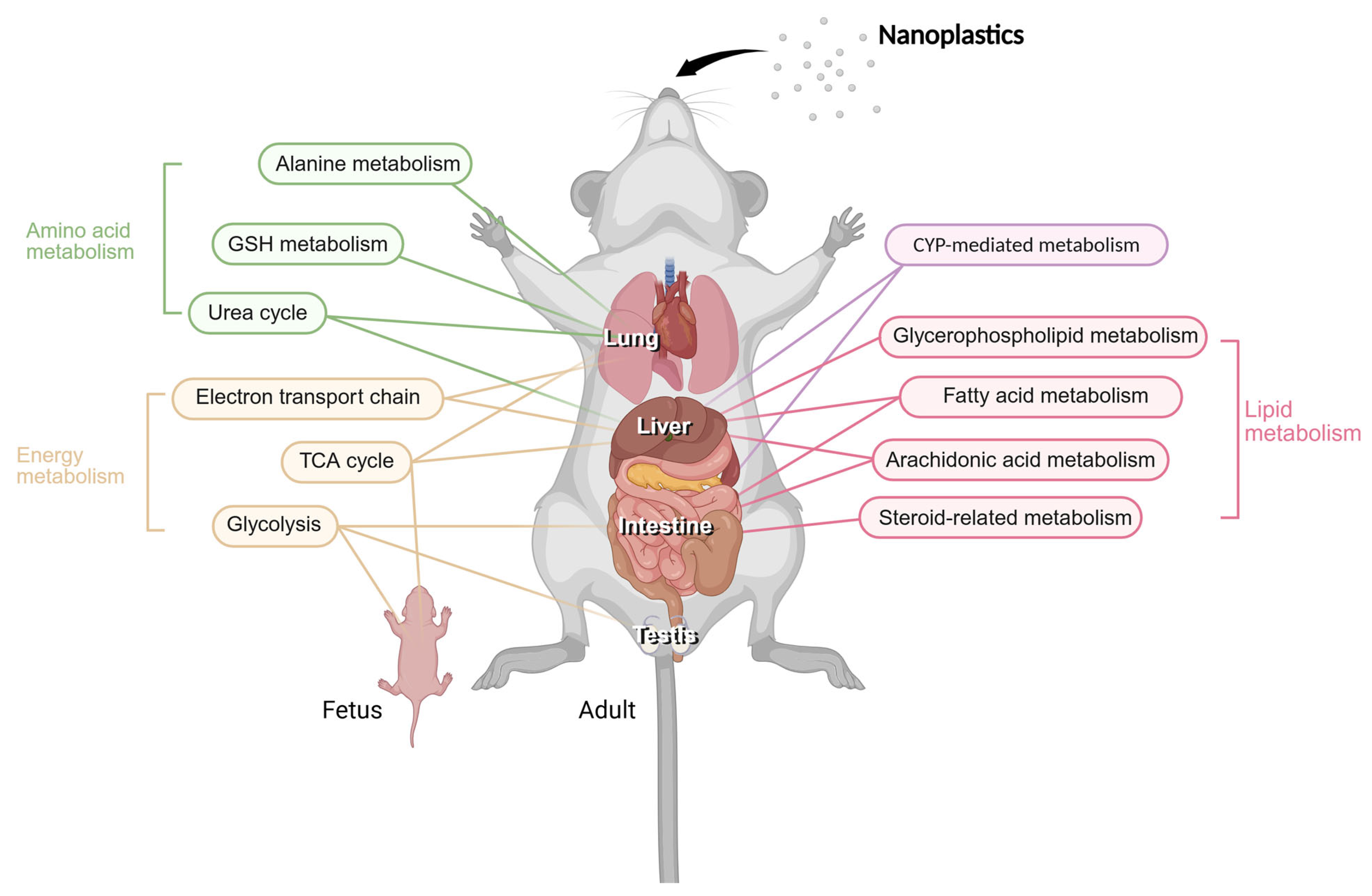
| Liver | Mammals | Arachidonic acid metabolism CYP-mediated metabolism Electron transport chain Fatty acid metabolism Glycerophospholipid metabolism TCA cycle Urea cycle |
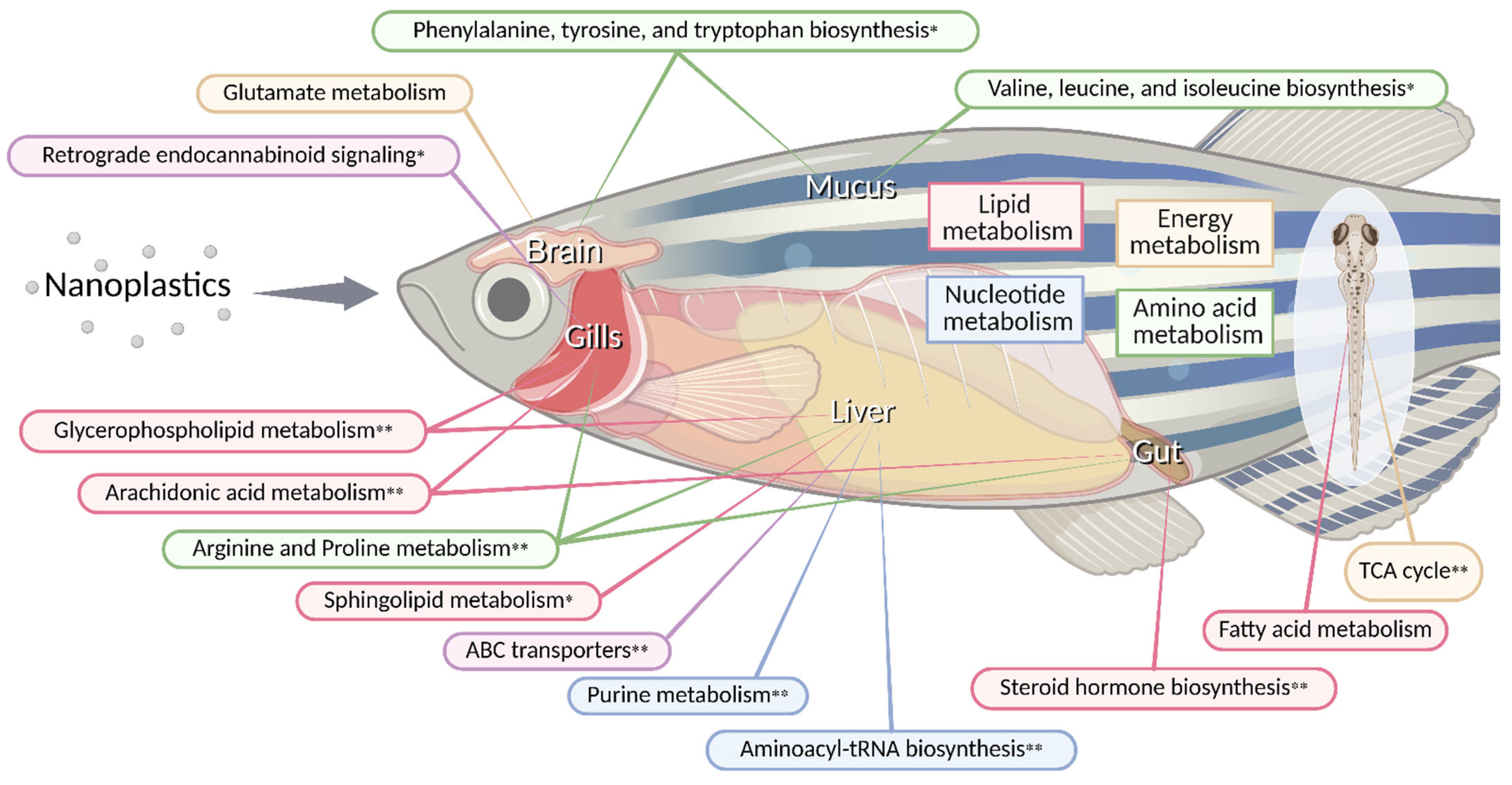
| Aquatic organisms | ABC Transporters Aminoacyl-tRNA biosynthesis Arginine and Proline metabolism Glycerophospholipid metabolism Purine metabolism Sphingolipid metabolism | |
| Intestine (Gut) | Mammals | Arachidonic acid metabolism CYP-mediated metabolism Fatty acid metabolism Steroid-related metabolism TCA cycle |
| Aquatic organisms | Arachidonic acid metabolism Arginine and Proline metabolism Steroid hormone biosynthesis | |
| Brain | Mammals | Cysteine metabolism Glutamate metabolism Glycerolipid metabolism Glycine, serine, and threonine metabolism Leucine, isoleucine, valine metabolism Sphingolipid metabolism Tyrosine metabolism |
| Aquatic organisms | Glutamate metabolism Phenylalanine, tyrosine, and tryptophan metabolism | |
| Lungs | Mammals | Alanine metabolism Electron transport chain Glutathione metabolism TCA cycle Urea cycle |
| Gills | Aquatic organisms | Arachidonic acid metabolism Arginine and Proline metabolism Glycerophospholipid metabolism Retrograde endocannabinoid signaling |
| Fetus | Mammals | TCA cycle Glycolysis |
| Larvae | Aquatic organisms | TCA cycle Fatty acid metabolism |
Disclaimer/Publisher’s Note: The statements, opinions and data contained in all publications are solely those of the individual author(s) and contributor(s) and not of MDPI and/or the editor(s). MDPI and/or the editor(s) disclaim responsibility for any injury to people or property resulting from any ideas, methods, instructions or products referred to in the content. |
© 2025 by the authors. Licensee MDPI, Basel, Switzerland. This article is an open access article distributed under the terms and conditions of the Creative Commons Attribution (CC BY) license.
Share and Cite
Lee, J.; Jang, H.; Kim, B.; Jung, J. Comparative Metabolomic Approaches to Nanoplastic Toxicity in Mammalian and Aquatic Systems. Int. J. Mol. Sci. 2026, 27, 50. https://doi.org/10.3390/ijms27010050
Lee J, Jang H, Kim B, Jung J. Comparative Metabolomic Approaches to Nanoplastic Toxicity in Mammalian and Aquatic Systems. International Journal of Molecular Sciences. 2026; 27(1):50. https://doi.org/10.3390/ijms27010050
Chicago/Turabian StyleLee, Junhyuk, Hyeonji Jang, Boyun Kim, and Jewon Jung. 2026. "Comparative Metabolomic Approaches to Nanoplastic Toxicity in Mammalian and Aquatic Systems" International Journal of Molecular Sciences 27, no. 1: 50. https://doi.org/10.3390/ijms27010050
APA StyleLee, J., Jang, H., Kim, B., & Jung, J. (2026). Comparative Metabolomic Approaches to Nanoplastic Toxicity in Mammalian and Aquatic Systems. International Journal of Molecular Sciences, 27(1), 50. https://doi.org/10.3390/ijms27010050