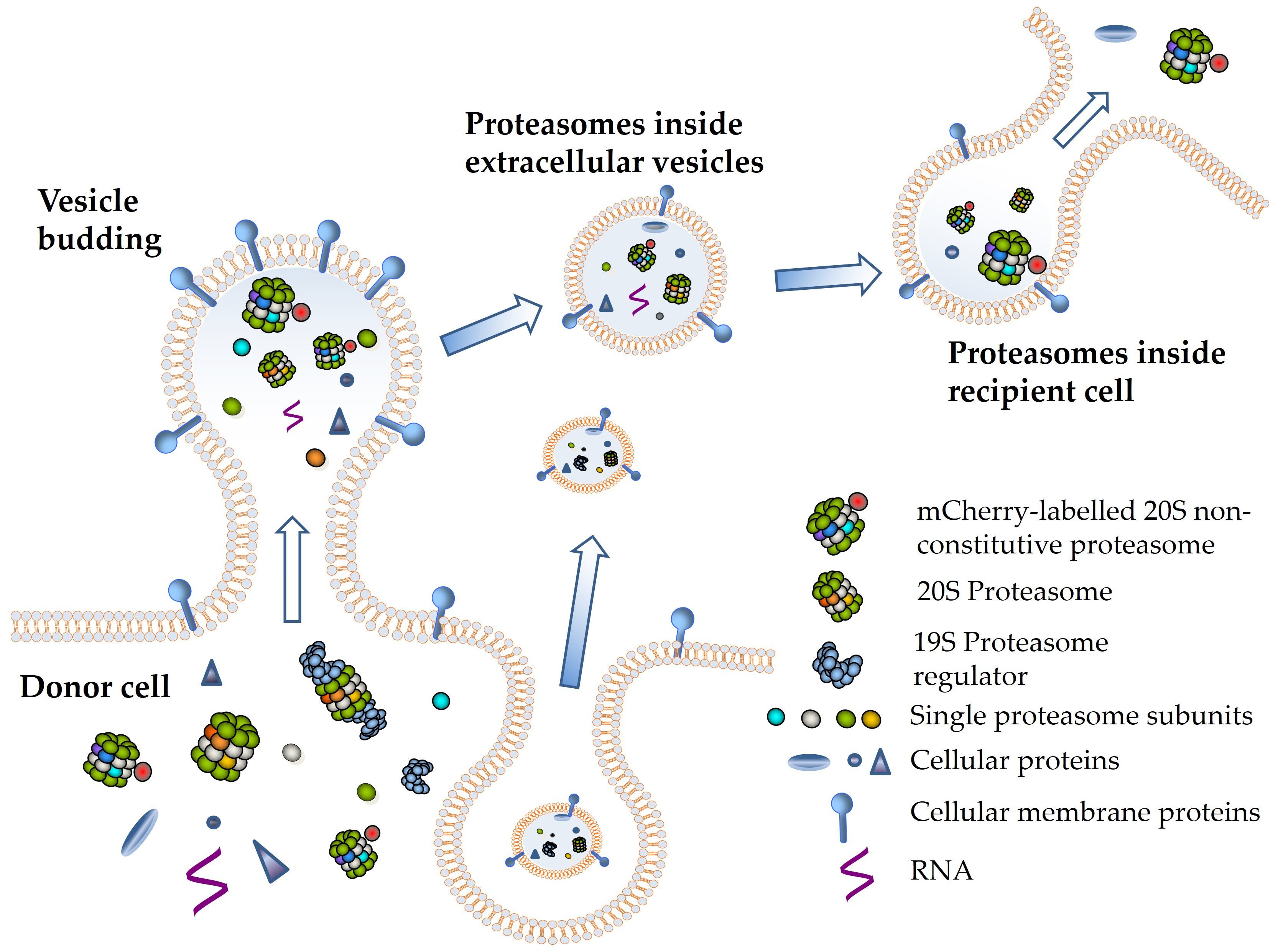
Transmission of Non-Constitutive Proteasomes Between Cells via Extracellular Vesicles
 , , , ,
Abstract
1. Introduction
2. Results
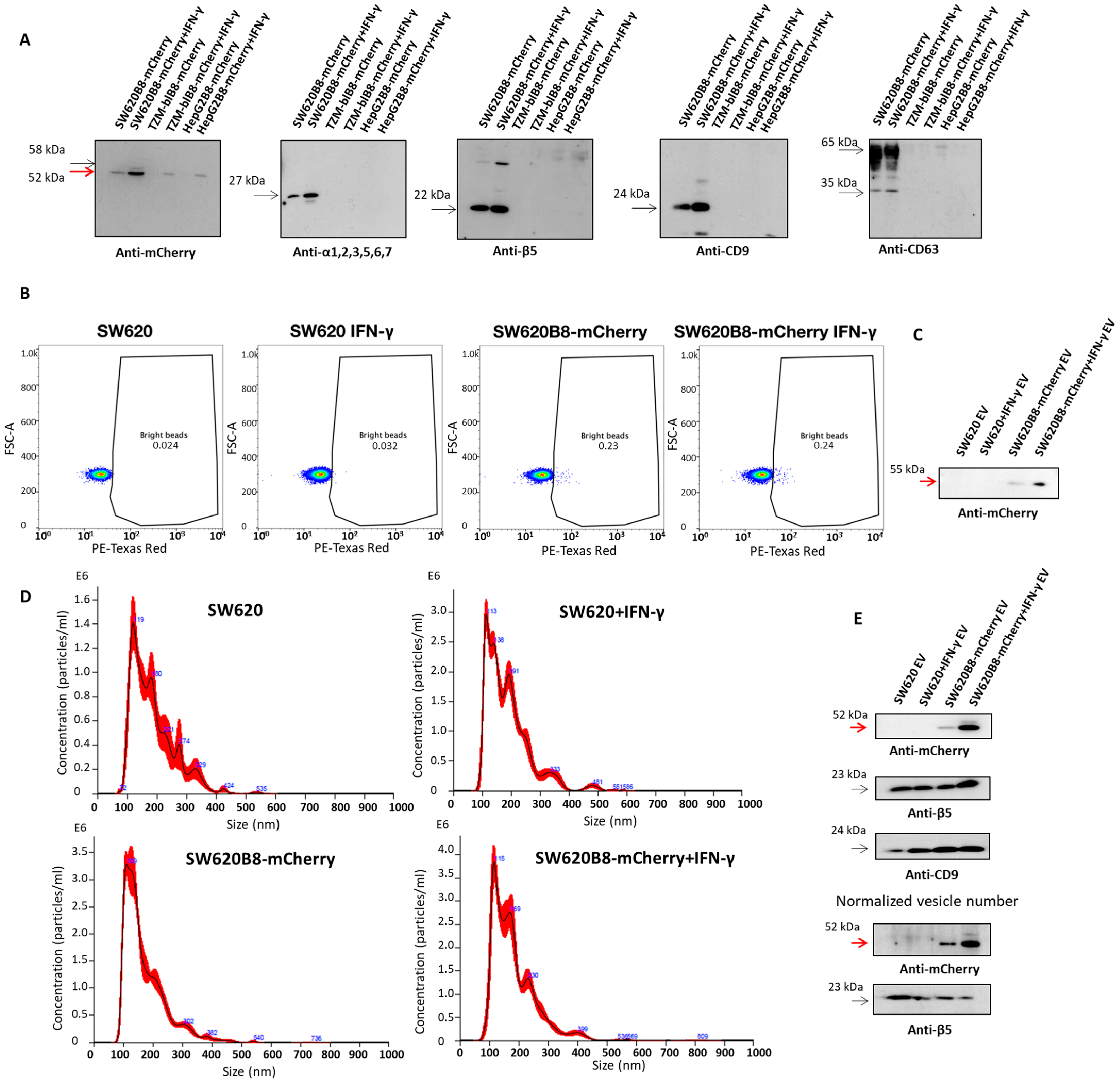
2.1. Different Cancer Cells Secrete Non-Constitutive Proteasomes
2.2. Extracellular Vesicles from SW620B8-mCherry Cells Are Characterized by mCherry Fluorescence
2.3. IFN-γ Mediates Changes Within the Proteasome Pool of EVs Derived from SW620B8-mCherry Cells
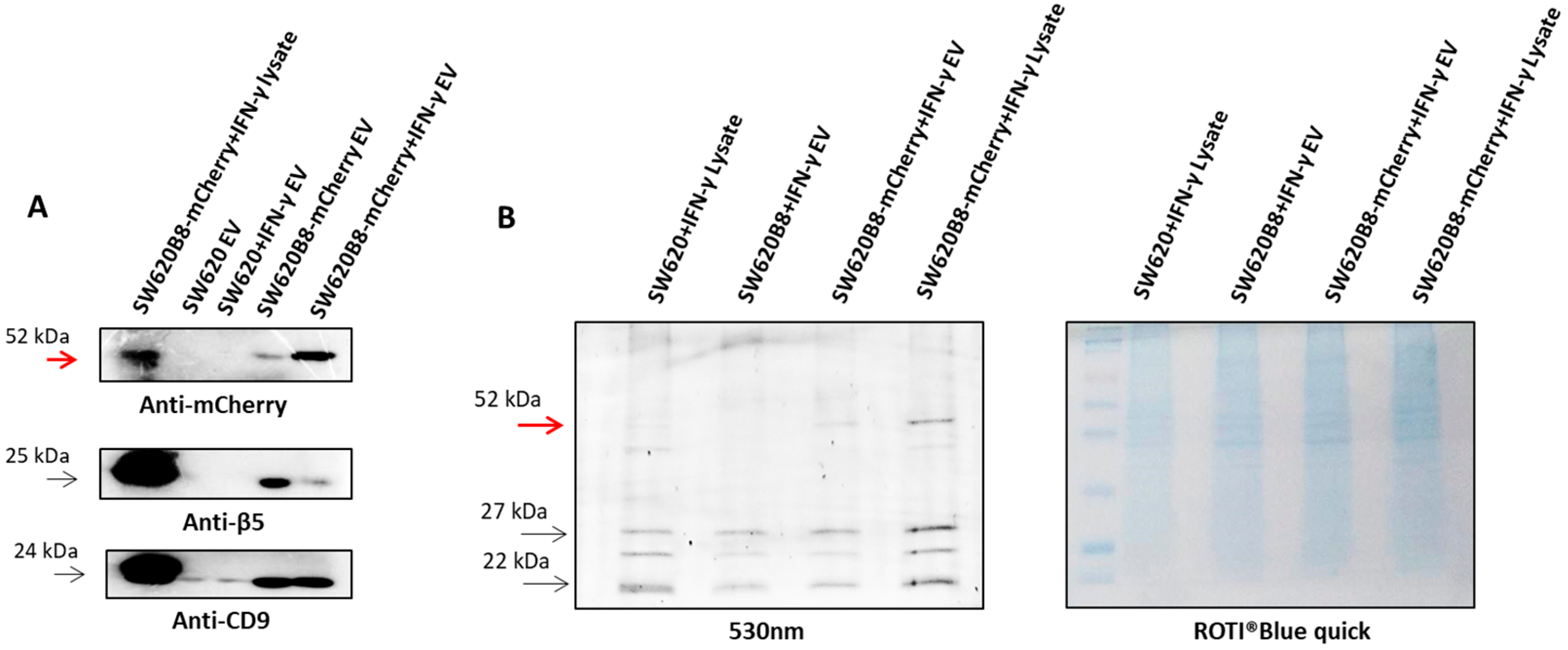
2.4. Chimeric β5i-mCherry Subunits Are Catalytically Active Within the EVs
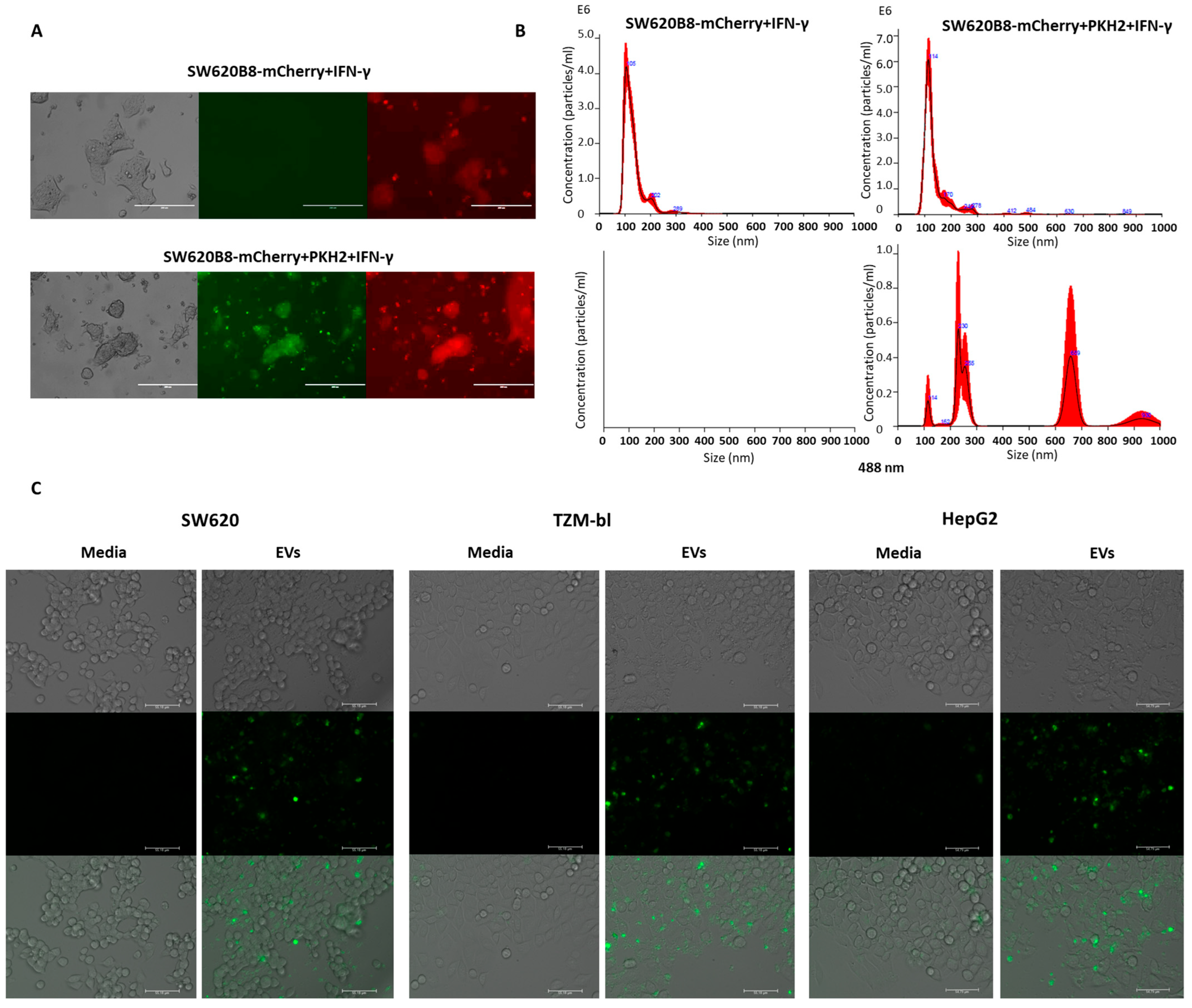
2.5. Vesicles Secreted by SW620B8-mCherry Cells Interact with Recipient Cells
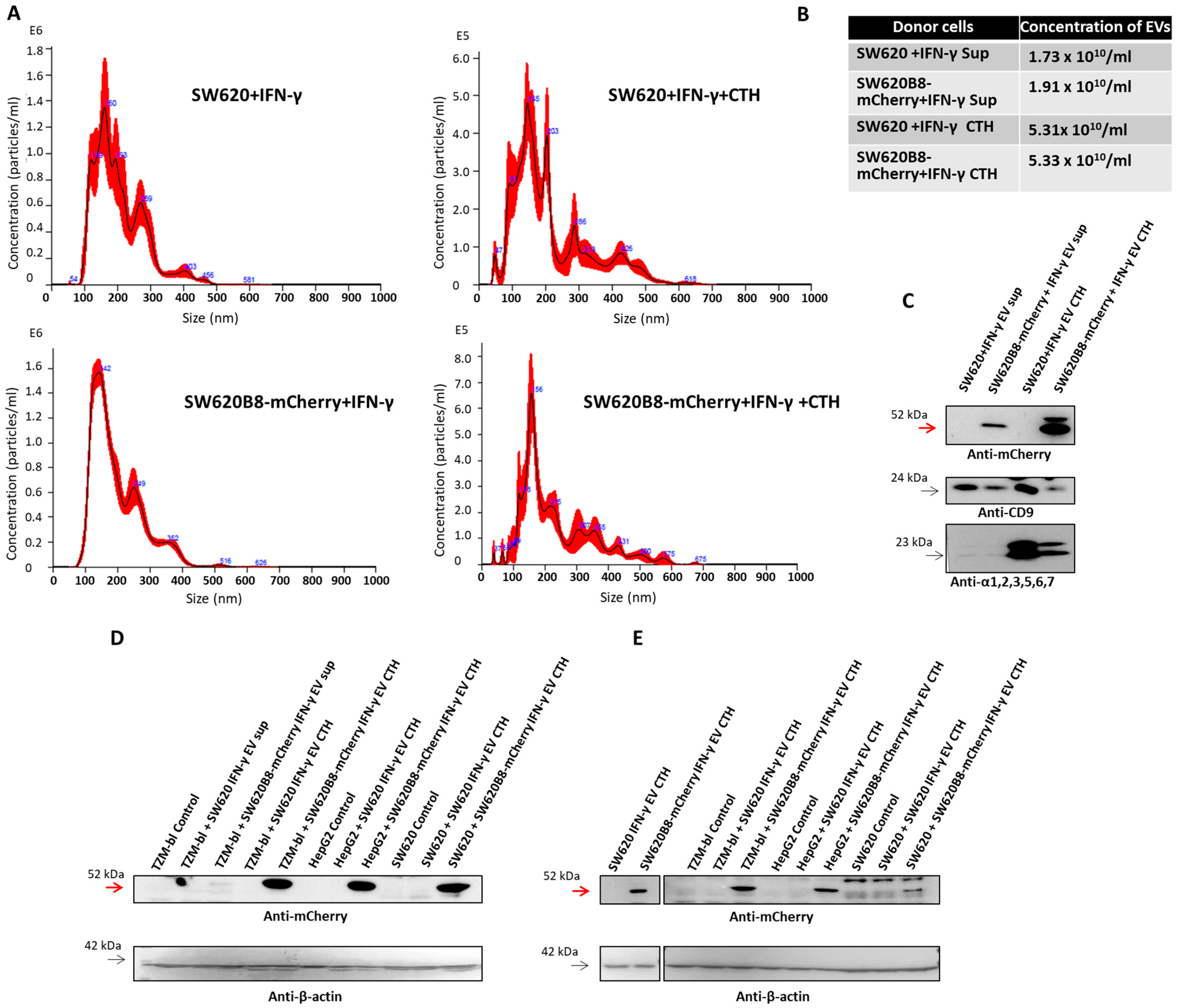
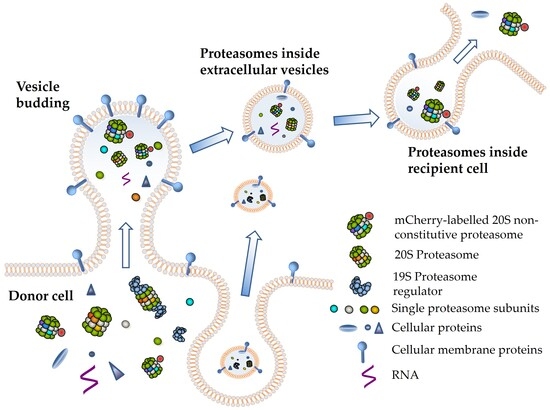
2.6. Non-Constitutive Proteasomes Are Transmitted Between Cells via EVs
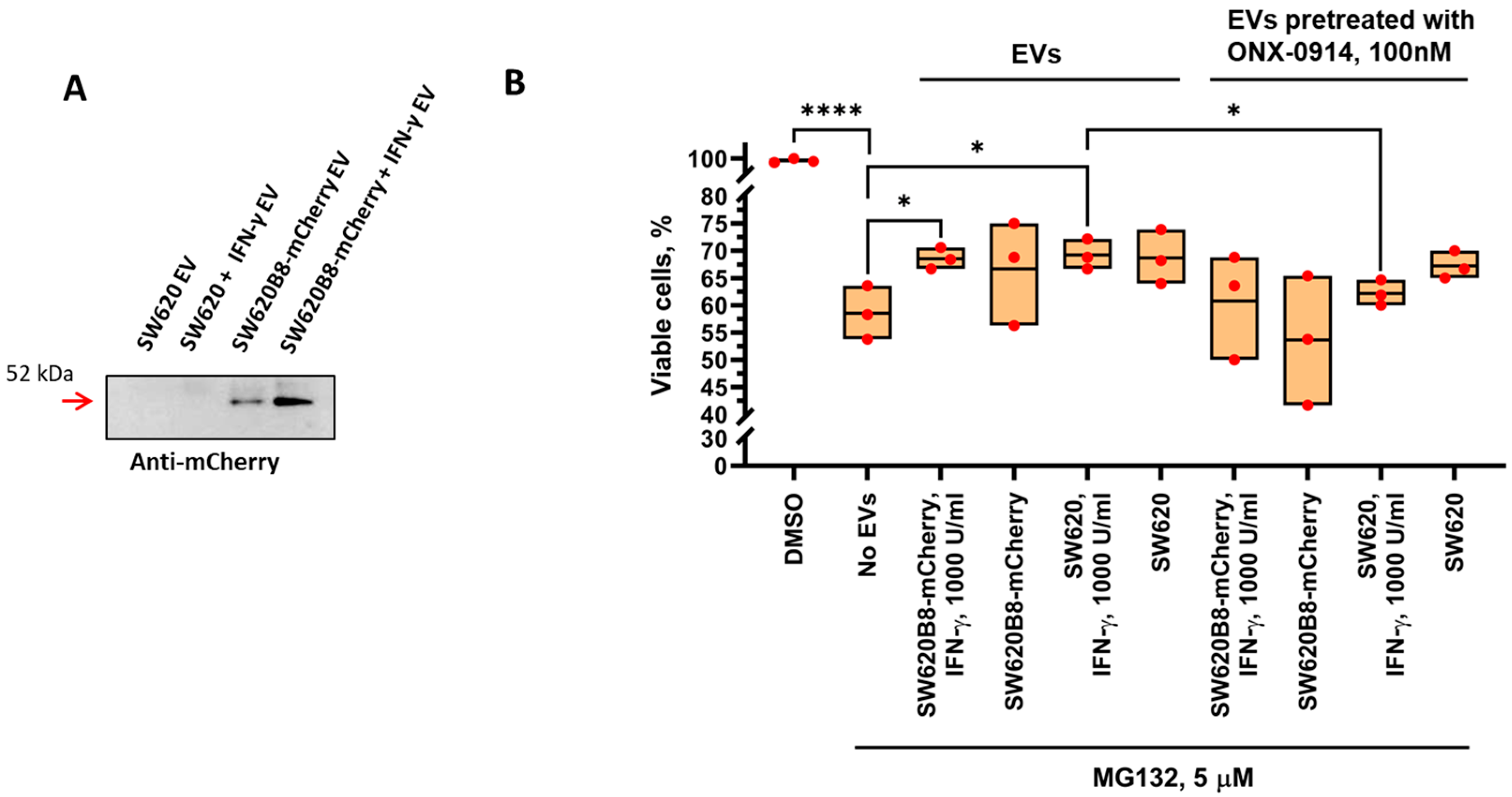
2.7. Treatment of Cells with EVs Increases Cell Viability Following Incubation with the Proteasome Inhibitor
3. Discussion
4. Materials and Methods
4.1. Cell Lines
4.2. Isolation of the EVs by Differential Centrifugation
4.3. Affinity Purification of EVs
4.4. Flow Cytometry
4.5. Precipitation of Exosomes Using the Total Exosome Isolation Reagent
4.6. Nanoparticle Size and Tracking Analysis
4.7. Cell Lysis and Western Blotting
4.8. Visualization of Catalytically Active Proteasome Subunits in EVs Derived from Modified Cells
4.9. Evaluation of the Possibility of Transferring Proteasomes from One Cell to Another Using Fluorescent Labeling of Donor Cell Membranes
4.10. Isolation of EVs Following Treatment with Cytochalasin B
4.11. Analysis of Cell-to-Cell Proteasome Transfer
4.12. Cell Viability Assay
4.13. Statistics and Software
5. Conclusions
Supplementary Materials
Author Contributions
Funding
Institutional Review Board Statement
Informed Consent Statement
Data Availability Statement
Conflicts of Interest
References
- Dikic, I. Proteasomal and Autophagic Degradation Systems. Annu. Rev. Biochem. 2017, 86, 193–224. [Google Scholar] [CrossRef] [Scilit] [PubMed]
- Ciechanover, A.; Schwartz, A.L. The ubiquitin-proteasome pathway: The complexity and myriad functions of proteins death. Proc. Natl. Acad. Sci. USA 1998, 95, 2727–2730. [Google Scholar] [CrossRef] [Scilit] [PubMed]
- Kisselev, A.F.; Akopian, T.N.; Woo, K.M.; Goldberg, A.L. The sizes of peptides generated from protein by mammalian 26 and 20 S proteasomes. Implications for understanding the degradative mechanism and antigen presentation. J. Biol. Chem. 1999, 274, 3363–3371. [Google Scholar] [CrossRef] [Scilit]
- Groll, M.; Ditzel, L.; Löwe, J.; Stock, D.; Bochtler, M.; Bartunik, H.D.; Huber, R. Structure of 20S proteasome from yeast at 2.4 A resolution. Nature 1997, 386, 463–471. [Google Scholar] [CrossRef] [Scilit] [PubMed]
- Tanaka, K. The proteasome: Overview of structure and functions. Proc. Jpn. Acad. Ser. B Phys. Biol. Sci. 2009, 85, 12–36. [Google Scholar] [CrossRef] [Scilit]
- Stadtmueller, B.M.; Hill, C.P. Proteasome activators. Mol. Cell 2011, 41, 8–19. [Google Scholar] [CrossRef] [Scilit]
- Akiyama, K.; Yokota, K.; Kagawa, S.; Shimbara, N.; Tamura, T.; Akioka, H.; Nothwang, H.G.; Noda, C.; Tanaka, K.; Ichihara, A. cDNA cloning and interferon-γ down-regulation of proteasomal subunits X and Y. Science 1994, 265, 1231–1234. [Google Scholar] [CrossRef] [Scilit]
- Ferrington, D.A.; Gregerson, D.S. Immunoproteasomes: Structure, function, and antigen presentation. Prog. Mol. Biol. Transl. Sci. 2012, 109, 75–112. [Google Scholar]
- Guillaume, B.; Chapiro, J.; Stroobant, V.; Colau, D.; Van Holle, B.; Parvizi, G.; Bousquet-Dubouch, M.P.; Théate, I.; Parmentier, N.; Van den Eynde, B.J. Two abundant proteasome subtypes that uniquely process some antigens presented by HLA class I molecules. Proc. Natl. Acad. Sci. USA 2010, 107, 18599–18604. [Google Scholar] [CrossRef] [Scilit]
- Guillaume, B.; Stroobant, V.; Bousquet-Dubouch, M.P.; Colau, D.; Chapiro, J.; Parmentier, N.; Dalet, A.; Van den Eynde, B.J. Analysis of the processing of seven human tumor antigens by intermediate proteasomes. J. Immunol. 2012, 189, 3538–3547. [Google Scholar] [CrossRef] [Scilit]
- Ciechanover, A.; Kwon, Y.T. Degradation of misfolded proteins in neurodegenerative diseases: Therapeutic targets and strategies. Exp. Mol. Med. 2015, 47, e147. [Google Scholar] [CrossRef] [Scilit]
- Basler, M.; Mundt, S.; Bitzer, A.; Schmidt, C.; Groettrup, M. The immunoproteasome: A novel drug target for autoimmune diseases. Clin. Exp. Rheumatol. 2015, 33 (4 Suppl. 92), S74–S79. [Google Scholar]
- Del Rio Oliva, M.; Mellett, M.; Basler, M. Immunoproteasome inhibition attenuates experimental psoriasis. Front. Immunol. 2022, 13, 1075615, Correction in Front. Immunol. 2024, 14, 1335691. [Google Scholar] [CrossRef] [Scilit] [PubMed]
- Tsvetkov, P.; Adler, J.; Myers, N.; Biran, A.; Reuven, N.; Shaul, Y. Oncogenic addiction to high 26S proteasome level. Cell Death Dis. 2018, 9, 773. [Google Scholar] [CrossRef] [Scilit]
- Manasanch, E.E.; Orlowski, R.Z. Proteasome inhibitors in cancer therapy. Nat. Rev. Clin. Oncol. 2017, 14, 417–433. [Google Scholar] [CrossRef] [Scilit]
- Béland, D.; Viens, M.; Kalin, E.M.; Bourgeois-Daigneault, M.-C. From oncogenesis to prognosis: The roles of the immunoproteasome in cancer. Front. Immunol. 2025, 16, 1603816. [Google Scholar] [CrossRef] [Scilit]
- Kumar, R.; Dhaka, B.; Sahoo, S.; Jolly, M.K.; Sabarinathan, R. Prognostic association of immunoproteasome expression in solid tumours is governed by the immediate immune environment. Mol. Oncol. 2023, 17, 1041–1059. [Google Scholar] [CrossRef] [Scilit]
- Muli, C.S.; Loy, C.A.; Trader, D.J. Immunoproteasome as a Target for Prodrugs. J. Med. Chem. 2025, 68, 6507–6517. [Google Scholar] [CrossRef] [Scilit]
- Ben-Nissan, G.; Katzir, N.; Füzesi-Levi, M.G.; Sharon, M. Biology of the Extracellular Proteasome. Biomolecules 2022, 12, 619. [Google Scholar] [CrossRef] [Scilit] [PubMed]
- Dianzani, C.; Bellavista, E.; Liepe, J.; Verderio, C.; Martucci, M.; Santoro, A.; Chiocchetti, A.; Gigliotti, C.L.; Boggio, E.; Ferrara, B.; et al. Extracellular proteasome-osteopontin circuit regulates cell migration with implications in multiple sclerosis. Sci. Rep. 2017, 7, 43718. [Google Scholar] [CrossRef] [Scilit] [PubMed]
- Bonhoure, A.; Henry, L.; Bich, C.; Blanc, L.; Bergeret, B.; Bousquet, M.P.; Coux, O.; Stoebner, P.E.; Vidal, M. Extracellular 20S proteasome secreted via microvesicles can degrade poorly folded proteins and inhibit Galectin-3 agglutination activity. Traffic 2022, 23, 287–304. [Google Scholar] [CrossRef] [Scilit]
- Dwivedi, V.; Yaniv, K.; Sharon, M. Beyond cells: The extracellular circulating 20S proteasomes. Biochim. Biophys. Acta-Mol. Basis Dis. 2021, 1867, 166041. [Google Scholar] [CrossRef] [Scilit]
- Zoeger, A.; Blau, M.; Egerer, K.; Feist, E.; Dahlmann, B. Circulating proteasomes are functional and have a subtype pattern distinct from 20S proteasomes in major blood cells. Clin. Chem. 2006, 52, 2079–2086. [Google Scholar] [CrossRef] [Scilit]
- Sixt, S.U.; Alami, R.; Hakenbeck, J.; Adamzik, M.; Kloss, A.; Costabel, U.; Jungblut, P.R.; Dahlmann, B.; Peters, J. Distinct proteasome subpopulations in the alveolar space of patients with the acute respiratory distress syndrome. Mediat. Inflamm. 2012, 2012, 204250. [Google Scholar] [CrossRef] [Scilit]
- Morozov, V.; Morozov, A.; Karpov, V. Functional 20S Proteasomes in Retroviruses: Evidence in Favor. Int. J. Mol. Sci. 2024, 25, 11710. [Google Scholar] [CrossRef] [Scilit]
- Lai, R.C.; Tan, S.S.; The, B.J.; Sze, S.K.; Arslan, F.; de Kleijn, D.P.; Choo, A.; Lim, S.K. Proteolytic Potential of the MSC Exosome Proteome: Implications for an Exosome-Mediated Delivery of Therapeutic Proteasome. Int. J. Proteom. 2012, 2012, 971907. [Google Scholar] [CrossRef] [Scilit] [PubMed]
- Bochmann, I.; Ebstein, F.; Lehmann, A.; Wohlschlaeger, J.; Sixt, S.U.; Kloetzel, P.M.; Dahlmann, B. T lymphocytes export proteasomes by way of microparticles: A possible mechanism for generation of extracellular proteasomes. J. Cell Mol. Med. 2014, 18, 59–68. [Google Scholar] [CrossRef] [Scilit] [PubMed]
- Zhu, Y.; Chen, X.; Pan, Q.; Wang, Y.; Su, S.; Jiang, C.; Li, Y.; Xu, N.; Wu, L.; Lou, X.; et al. A Comprehensive Proteomics Analysis Reveals a Secretory Path- and Status-Dependent Signature of Exosomes Released from Tumor-Associated Macrophages. J. Proteome Res. 2015, 14, 4319–4331. [Google Scholar] [CrossRef] [Scilit] [PubMed]
- Dieudé, M.; Bell, C.; Turgeon, J.; Beillevaire, D.; Pomerleau, L.; Yang, B.; Hamelin, K.; Qi, S.; Pallet, N.; Béland, C.; et al. The 20S proteasome core, active within apoptotic exosome-like vesicles, induces autoantibody production and accelerates rejection. Sci. Transl. Med. 2015, 7, 318ra200. [Google Scholar] [CrossRef] [Scilit]
- Kulichkova, V.A.; Artamonova, T.O.; Lyublinskaya, O.G.; Khodorkovskii, M.A.; Tomilin, A.N.; Tsimokha, A.S. Proteomic analysis of affinity-purified extracellular proteasomes reveals exclusively 20S complexes. Oncotarget 2017, 8, 102134–102149. [Google Scholar] [CrossRef] [Scilit]
- Marcoux, G.; Laroche, A.; Hasse, S.; Bellio, M.; Mbarik, M.; Tamagne, M.; Allaeys, I.; Zufferey, A.; Lévesque, T.; Rebetz, J.; et al. Platelet EVs contain an active proteasome involved in protein processing for antigen presentation via MHC-I molecules. Blood 2021, 138, 2607–2620. [Google Scholar] [CrossRef] [Scilit] [PubMed]
- Deshmukh, F.K.; Yaffe, D.; Olshina, M.A.; Ben-Nissan, G.; Sharon, M. The Contribution of the 20S Proteasome to Proteostasis. Biomolecules 2019, 9, 190. [Google Scholar] [CrossRef] [Scilit] [PubMed]
- Morozov, A.V.; Karpov, V.L. Biological consequences of structural and functional proteasome diversity. Heliyon 2018, 4, e00894. [Google Scholar] [CrossRef] [Scilit]
- Kim, J.; Zhao, Y.; Kim, H.Y.; Kim, S.; Jiang, Y.; Lee, M.J. Extracellular Vesicle-Mediated Delivery of 20S Proteasomes Enhances Tau Degradation in Recipient Cells. J. Extracell. Vesicles 2025, 14, e70086. [Google Scholar] [CrossRef] [Scilit]
- Jia, X.; Chen, J.; Megger, D.A.; Zhang, X.; Kozlowski, M.; Zhang, L.; Fang, Z.; Li, J.; Chu, Q.; Wu, M.; et al. Label-free Proteomic Analysis of Exosomes Derived from Inducible Hepatitis B Virus-Replicating HepAD38 Cell Line. Mol. Cell Proteom. 2017, 16 (Suppl. S1), S144–S160. [Google Scholar] [CrossRef] [Scilit]
- Lai, R.C.; Arslan, F.; Lee, M.M.; Sze, N.S.K.; Choo, A.; Chen, T.S.; Salto-Tellez, M.; Timmers, L.; Lee, C.N.; El Oakley, R.M.; et al. Exosome secreted by MSC reduces myocardial ischemia/reperfusion injury. Stem Cell Res. 2010, 4, 214–222. [Google Scholar] [CrossRef] [Scilit]
- Wang, J.; Hendrix, A.; Hernot, S.; Lemaire, M.; De Bruyne, E.; Van Valckenborgh, E.; Lahoutte, T.; De Wever, O.; Vanderkerken, K.; Menu, E. Bone marrow stromal cell-derived exosomes as communicators in drug resistance in multiple myeloma cells. Blood J. Am. Soc. Hematol. 2014, 124, 555–566. [Google Scholar] [CrossRef] [Scilit] [PubMed]
- Burov, A.; Funikov, S.; Vagapova, E.; Dalina, A.; Rezvykh, A.; Shyrokova, E.; Lebedev, T.; Grigorieva, E.; Popenko, V.; Leonova, O.; et al. A Cell-Based Platform for the Investigation of Immunoproteasome Subunit β5i Expression and Biology of β5i-Containing Proteasomes. Cells 2021, 10, 3049. [Google Scholar] [CrossRef] [Scilit] [PubMed]
- Burov, A.; Grigorieva, E.; Lebedev, T.; Vedernikova, V.; Popenko, V.; Astakhova, T.; Leonova, O.; Spirin, P.; Prassolov, V.; Karpov, V.; et al. Multikinase inhibitors modulate non-constitutive proteasome expression in colorectal cancer cells. Front. Mol. Biosci. 2024, 11, 1351641. [Google Scholar] [CrossRef] [Scilit]
- Santos, M.F.; Rappa, G.; Fontana, S.; Karbanová, J.; Aalam, F.; Tai, D.; Li, Z.; Pucci, M.; Alessandro, R.; Morimoto, C.; et al. Anti-Human CD9 Fab Fragment Antibody Blocks the Extracellular Vesicle-Mediated Increase in Malignancy of Colon Cancer Cells. Cells 2022, 11, 2474. [Google Scholar] [CrossRef] [Scilit]
- Berkers, C.R.; van Leeuwen, F.W.; Groothuis, T.A.; Peperzak, V.; van Tilburg, E.W.; Borst, J.; Neefjes, J.J.; Ovaa, H. Profiling proteasome activity in tissue with fluorescent probes. Mol. Pharm. 2007, 4, 739–748. [Google Scholar] [CrossRef] [Scilit]
- Kurbangaleeva, S.V.; Syromiatnikova, V.Y.; Prokopeva, A.E.; Rogov, A.M.; Khannanov, A.A.; Rizvanov, A.A.; Gomzikova, M.O. Increased Yield of Extracellular Vesicles after Cytochalasin B Treatment and Vortexing. Curr. Issues Mol. Biol. 2023, 45, 2431–2443. [Google Scholar] [CrossRef] [Scilit]
- Doyle, L.M.; Wang, M.Z. Overview of Extracellular Vesicles, Their Origin, Composition, Purpose, and Methods for Exosome Isolation and Analysis. Cells 2019, 8, 727. [Google Scholar] [CrossRef] [Scilit]
- Becker, A.; Thakur, B.K.; Weiss, J.M.; Kim, H.S.; Peinado, H.; Lyden, D. Extracellular Vesicles in Cancer: Cell-to-Cell Mediators of Metastasis. Cancer Cell 2016, 30, 836–848. [Google Scholar] [CrossRef] [Scilit]
- Xu, J.; Wang, Y.; Hsu, C.Y.; Gao, Y.; Meyers, C.A.; Chang, L.; Zhang, L.; Broderick, K.; Ding, C.; Peault, B.; et al. Human perivascular stem cell-derived extracellular vesicles mediate bone repair. Elife 2019, 8, e48191. [Google Scholar] [CrossRef] [Scilit]
- Huang, Z.; Yang, M.; Li, Y.; Yang, F.; Feng, Y. Exosomes Derived from Hypoxic Colorectal Cancer Cells Transfer Wnt4 to Normoxic Cells to Elicit a Prometastatic Phenotype. Int. J. Biol. Sci. 2018, 14, 2094–2102. [Google Scholar] [CrossRef] [Scilit] [PubMed]
- Wang, L.; He, J.; Hu, H.; Tu, L.; Sun, Z.; Liu, Y.; Luo, F. Lung CSC-derived exosomal miR-210-3p contributes to a pro-metastatic phenotype in lung cancer by targeting FGFRL1. J. Cell Mol. Med. 2020, 24, 6324–6339. [Google Scholar] [CrossRef] [Scilit]
- Ji, R.; Zhang, B.; Zhang, X.; Xue, J.; Yuan, X.; Yan, Y.; Wang, M.; Zhu, W.; Qian, H.; Xu, W. Exosomes derived from human mesenchymal stem cells confer drug resistance in gastric cancer. Cell Cycle 2015, 14, 2473–2483. [Google Scholar] [CrossRef] [Scilit] [PubMed]
- Sharon, M.; Regev-Rudzki, N. Cell communication and protein degradation: All in one parasitic package. J. Extracell. Vesicles 2021, 10, e12116. [Google Scholar] [CrossRef] [Scilit] [PubMed]
- Dekel, E.; Yaffe, D.; Rosenhek-Goldian, I.; Ben-Nissan, G.; Ofir-Birin, Y.; Morandi, M.I.; Ziv, T.; Sisquella, X.; Pimentel, M.A.; Nebl, T.; et al. 20S proteasomes secreted by the malaria parasite promote its growth. Nat. Commun. 2021, 12, 1172. [Google Scholar] [CrossRef] [Scilit]
- Liu, W.Z.; Ma, Z.J.; Kang, X.W. Current status and outlook of advances in exosome isolation. Anal. Bioanal. Chem. 2022, 414, 7123–7141. [Google Scholar] [CrossRef] [Scilit] [PubMed]
- Bhavsar, V.; Sahu, A.; Taware, R. Stress-induced extracellular vesicles: Insight into their altered proteomic composition and probable physiological role in cancer. Mol. Cell Biochem. 2025, 480, 2025–2041. [Google Scholar] [CrossRef] [Scilit]
- Li, H.; Zeng, C.; Shu, C.; Cao, Y.; Shao, W.; Zhang, M.; Cao, H.; Zhao, S. Laminins in tumor-derived exosomes upregulated by ETS1 reprogram omental macrophages to promote omental metastasis of ovarian cancer. Cell Death Dis. 2022, 13, 1028. [Google Scholar] [CrossRef] [Scilit]
- Muchamuel, T.; Basler, M.; Aujay, M.A.; Suzuki, E.; Kalim, K.W.; Lauer, C.; Sylvain, C.; Ring, E.R.; Shields, J.; Jiang, J.; et al. A selective inhibitor of the immunoproteasome subunit LMP7 blocks cytokine production and attenuates progression of experimental arthritis. Nat. Med. 2009, 15, 781–787, Erratum in Nat. Med. 2009, 15, 13333. [Google Scholar] [CrossRef] [Scilit]
- Hensley, S.E.; Zanker, D.; Dolan, B.P.; David, A.; Hickman, H.D.; Embry, A.C.; Skon, C.N.; Grebe, K.M.; Griffin, T.A.; Chen, W.; et al. Unexpected role for the immunoproteasome subunit LMP2 in antiviral humoral and innate immune responses. J. Immunol. 2010, 184, 4115–4122. [Google Scholar] [CrossRef] [Scilit] [PubMed]
- Hussong, S.A.; Kapphahn, R.J.; Phillips, S.L.; Maldonado, M.; Ferrington, D.A. Immunoproteasome deficiency alters retinal proteasome’s response to stress. J. Neurochem. 2010, 113, 1481–1490. [Google Scholar] [CrossRef] [Scilit]
- Robinson, M.D.; McCarthy, D.J.; Smyth, G.K. edgeR: A Bioconductor package for differential expression analysis of digital gene expression data. Bioinformatics 2010, 26, 139–140. [Google Scholar] [CrossRef] [Scilit] [PubMed]
- Wickham, H. Ggplot2: Elegant Graphics for Data Analysis; Springer: New York, NY, USA, 2016. [Google Scholar]



| Donor Cells | Concentration of EVs |
|---|---|
| SW620 | 1.58 × 10¹⁰/mL |
| SW620 + IFN-γ | 3.32 × 10¹⁰/mL |
| SW620B8-mCherry | 3.34 × 10¹⁰/mL |
| SW620B8-mCherry + IFN-γ | 4.06 × 10¹⁰/mL |
| Antibody | Manufacturer | RRID |
|---|---|---|
| Mouse monoclonal antibodies to α subunits 1, 2, 3, 5, 6, 7 | Enzo, Farmingdale, NY, USA | AB_10541045 |
| Rabbit polyclonal antibody to β5 | GeneTex, Irvine, CA, USA | AB_385014 |
| Rabbit monoclonal antibody to mCherry | Abcam, Cambridge, UK | AB_2814891 |
| Rabbit monoclonal antibody to CD9 | ABclonal, Woburn, MA, USA | AB_2862519 |
| Rabbit monoclonal antibody to CD63 | ABclonal, Woburn, MA, USA | AB_2862515 |
| Rabbit monoclonal antibody to β-actin | GeneTex, Irvine, CA, USA | AB_3073746 |
| HRP-conjugated antibodies to Mouse IgG | Enzo, Farmingdale, NY, USA | AB_10540652 |
| HRP-conjugated antibodies to Rabbit IgG | Abcam, Cambridge, UK | AB_10679899 |
Disclaimer/Publisher’s Note: The statements, opinions and data contained in all publications are solely those of the individual author(s) and contributor(s) and not of MDPI and/or the editor(s). MDPI and/or the editor(s) disclaim responsibility for any injury to people or property resulting from any ideas, methods, instructions or products referred to in the content. |
© 2026 by the authors. Licensee MDPI, Basel, Switzerland. This article is an open access article distributed under the terms and conditions of the Creative Commons Attribution (CC BY) license.
Share and Cite
Grigorieva, E.V.; Burov, A.V.; Starodubova, E.S.; Lebedev, T.D.; Rezvykh, A.P.; Belogurov, A.A., Jr.; Spirin, P.V.; Prassolov, V.S.; Karpov, V.L.; Morozov, A.V. Transmission of Non-Constitutive Proteasomes Between Cells via Extracellular Vesicles. Int. J. Mol. Sci. 2026, 27, 466. https://doi.org/10.3390/ijms27010466
Grigorieva EV, Burov AV, Starodubova ES, Lebedev TD, Rezvykh AP, Belogurov AA Jr., Spirin PV, Prassolov VS, Karpov VL, Morozov AV. Transmission of Non-Constitutive Proteasomes Between Cells via Extracellular Vesicles. International Journal of Molecular Sciences. 2026; 27(1):466. https://doi.org/10.3390/ijms27010466
Chicago/Turabian StyleGrigorieva, Ekaterina V., Alexander V. Burov, Elizaveta S. Starodubova, Timofey D. Lebedev, Alexander P. Rezvykh, Alexey A. Belogurov, Jr., Pavel V. Spirin, Vladimir S. Prassolov, Vadim L. Karpov, and Alexey V. Morozov. 2026. "Transmission of Non-Constitutive Proteasomes Between Cells via Extracellular Vesicles" International Journal of Molecular Sciences 27, no. 1: 466. https://doi.org/10.3390/ijms27010466
APA StyleGrigorieva, E. V., Burov, A. V., Starodubova, E. S., Lebedev, T. D., Rezvykh, A. P., Belogurov, A. A., Jr., Spirin, P. V., Prassolov, V. S., Karpov, V. L., & Morozov, A. V. (2026). Transmission of Non-Constitutive Proteasomes Between Cells via Extracellular Vesicles. International Journal of Molecular Sciences, 27(1), 466. https://doi.org/10.3390/ijms27010466