Multicomplex Pharmacophore Modeling of Estrogen Receptors Suggests the Probable Repurposing of Procaterol as an Antiproliferative Agent Against Breast Cancer Cells

 ,
,  ,
,  , , , and
Abstract
1. Introduction
2. Results and Discussion
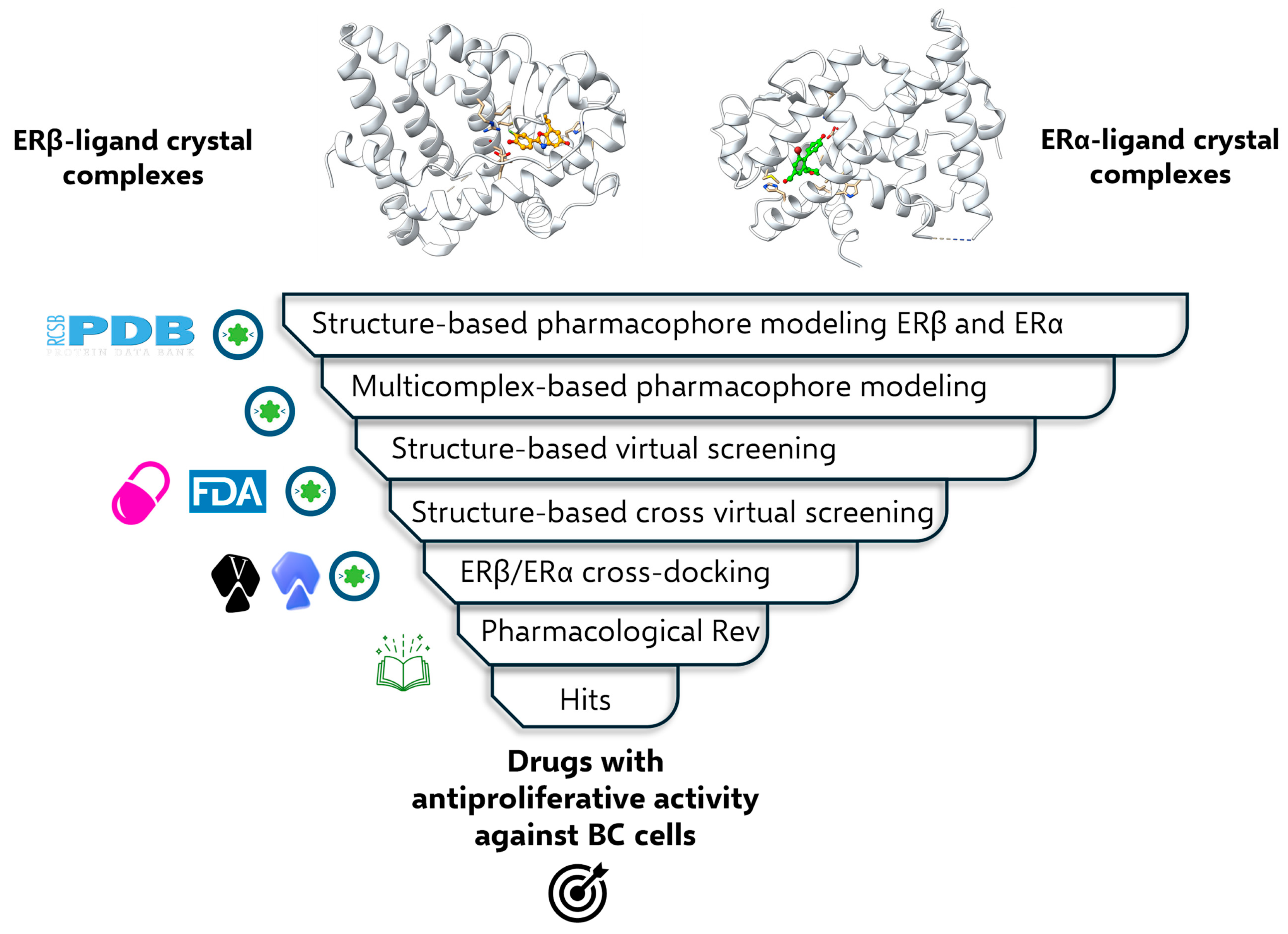
2.1. Structure-Based Pharmacophore Modeling
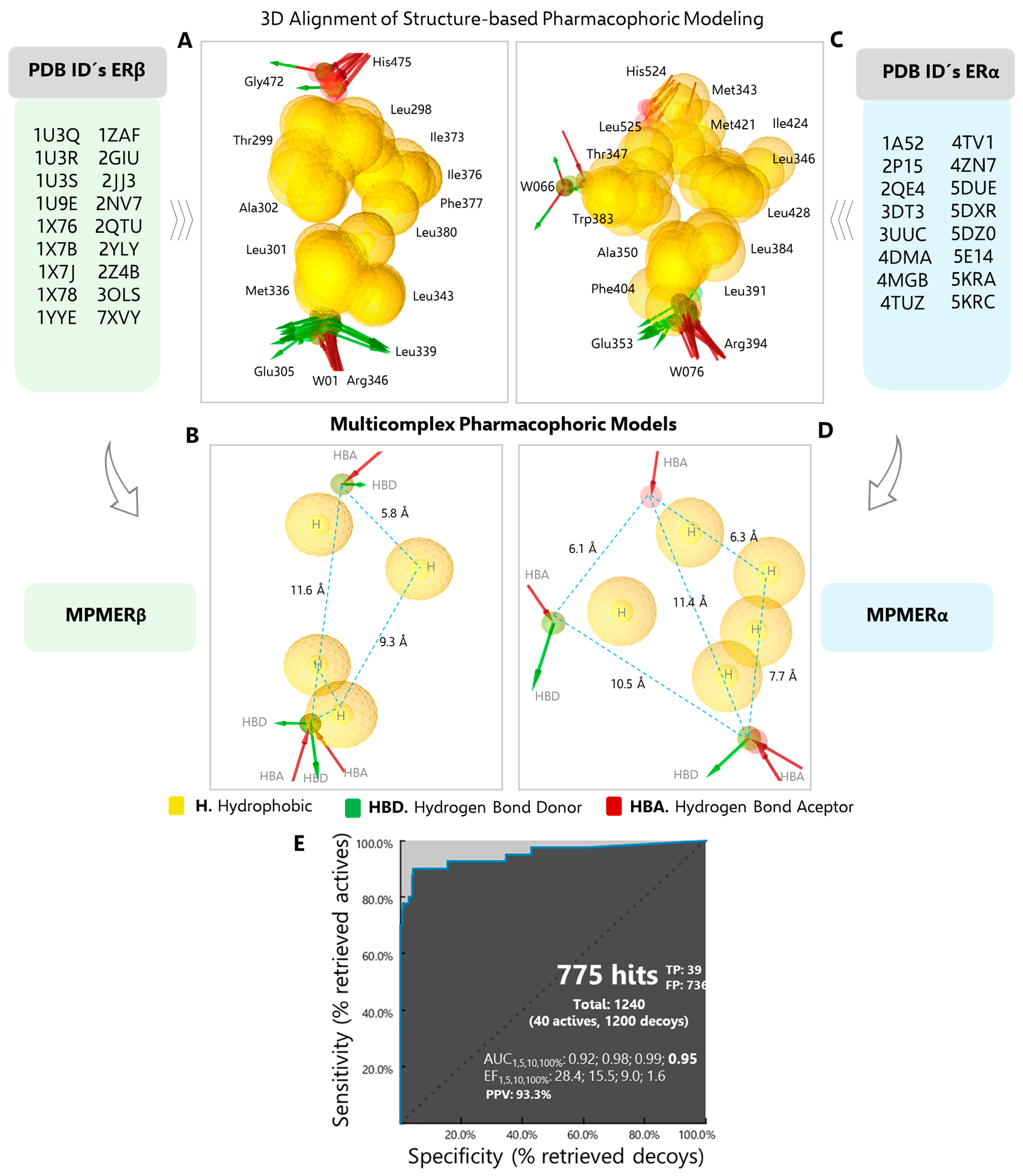
2.2. Multicomplex-Based Pharmacophore Modeling and Validation
2.3. Multicomplex Pharmacophore-Based Virtual Screening
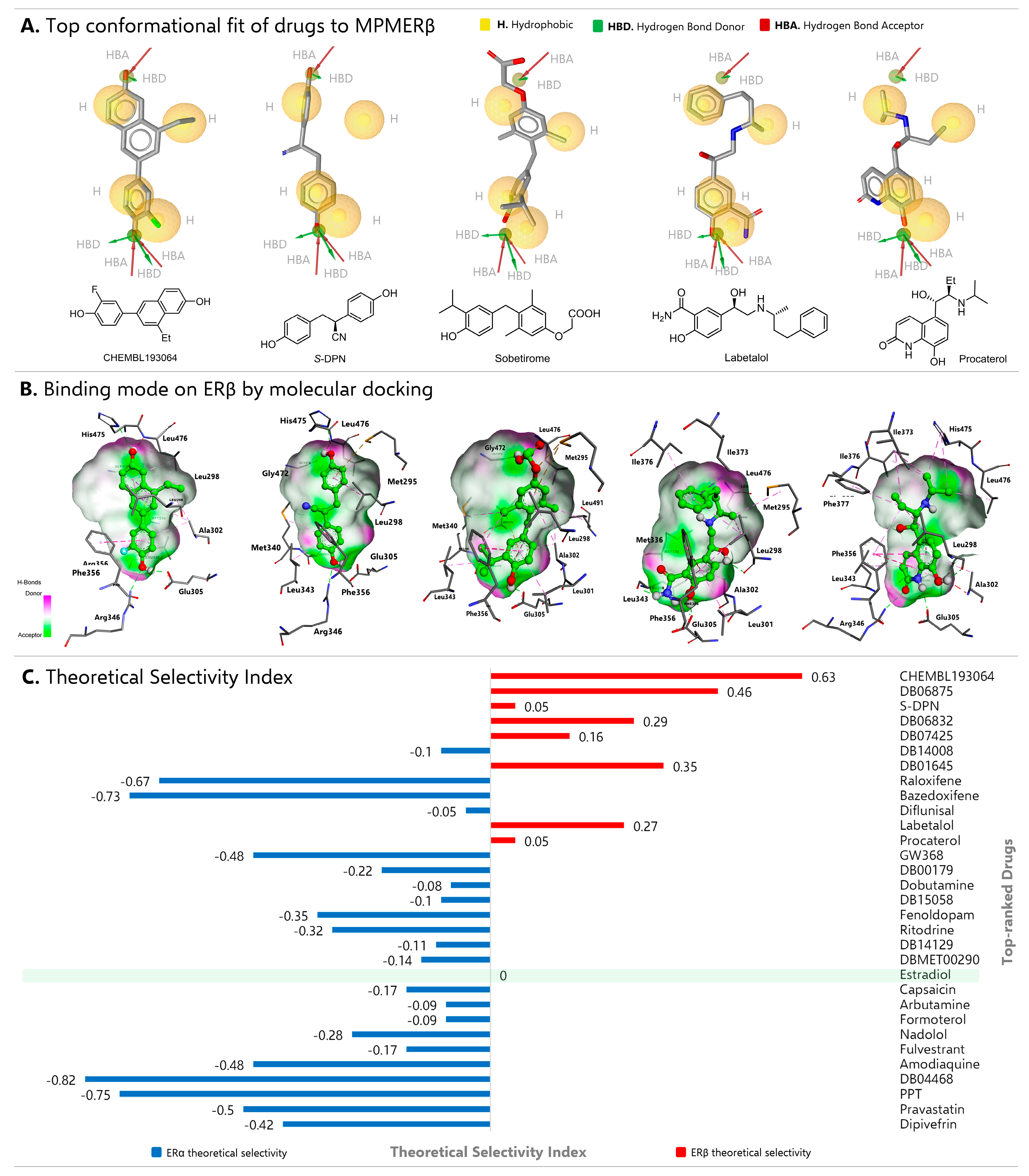
2.4. Molecular Docking
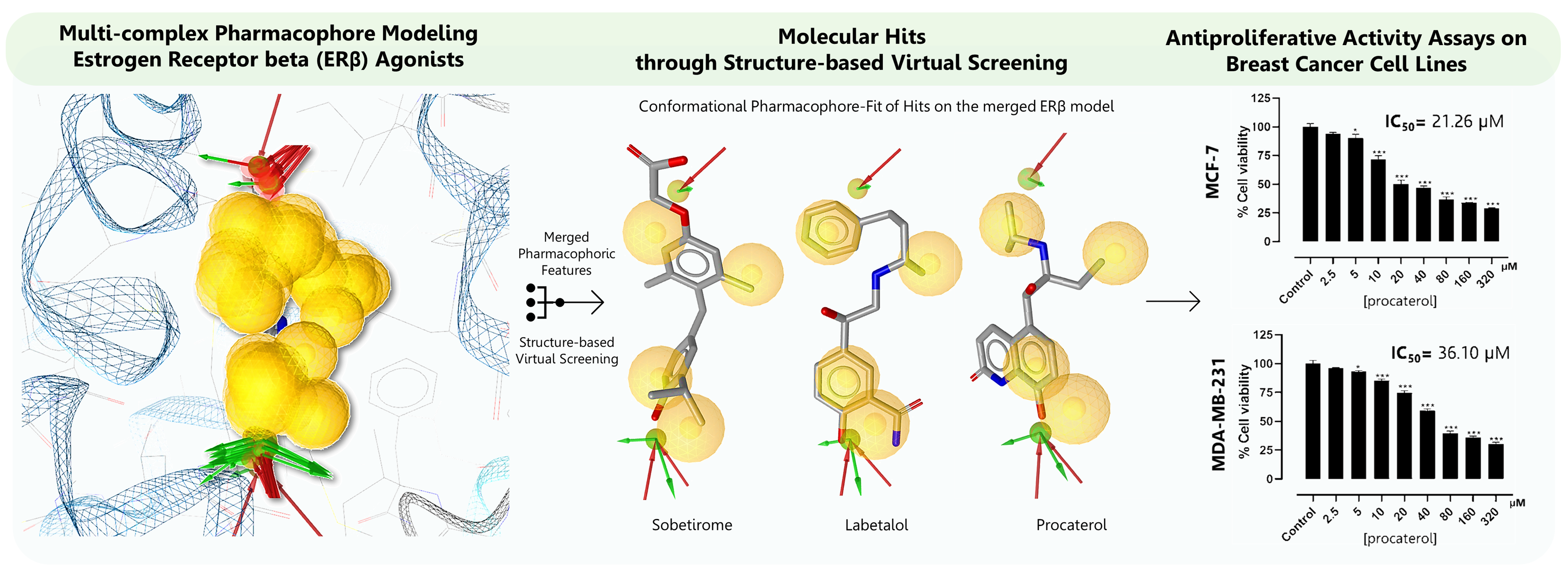
2.5. Antiproliferative Activity Assays on BC Cell Lines
3. Materials and Methods
3.1. Structural Data Collection
3.2. Structure-Based Pharmacophore Modeling
Multicomplex Pharmacophore Model Validation
3.3. Multicomplex Pharmacophore-Based Virtual Screening
3.4. Molecular Docking
3.5. Cell Culture
3.6. Cell Viability Assay
4. Conclusions
Supplementary Materials
Author Contributions
Funding
Institutional Review Board Statement
Informed Consent Statement
Data Availability Statement
Conflicts of Interest
Abbreviations
| AMPK | AMP-activated protein kinase |
| AUC | Area under the curve |
| E2 | 17β-Estradiol |
| EGFR | Epidermal growth factor receptor |
| ERs | Estrogen receptors |
| ERα | Estrogen receptor alpha |
| ERβ | Estrogen receptor beta |
| FBS | Fetal bovine serum |
| HBA | Hydrogen bond acceptor |
| HBD | Hydrogen bond donor |
| LBD | Ligand-binding domain |
| MPMERα | Multicomplex pharmacophore model for ERα |
| MPMERβ | Multicomplex pharmacophore model for ERβ |
| MTT | 3-(4,5-Dimethylthiazol-2-yl)-2,5-diphenyl tetrazolium bromide |
| PDB | Protein data bank |
| PfPMT | Phosphoethanolamine methyltransferase |
| PPT | Propyl pyrazole triol |
| ROC | Receiver operating characteristic |
| TSI | Theoretical selectivity index |
| ΔG | Binding free energy change (kcal/mol) in molecular docking |
References
- CDC. U.S. Department of Health and Human Services: Centers for Disease Control and Prevention [Updated in June 2025]. Available online: https://www.cdc.gov/breast-cancer/statistics/index.html (accessed on 1 July 2025).
- Bray, F.; Laversanne, M.; Sung, H.; Ferlay, J.; Siegel, R.L.; Soerjomataram, I.; Jemal, A. Global cancer statistics 2022: GLOBOCAN estimates of incidence and mortality worldwide for 36 cancers in 185 countries. CA Cancer J. Clin. 2024, 74, 229–263. [Google Scholar] [CrossRef]
- Filho, A.M.; Laversanne, M.; Ferlay, J.; Colombet, M.; Piñeros, M.; Znaor, A.; Parkin, D.M.; Soerjomataram, I.; Bray, F. The GLOBOCAN 2022 cancer estimates: Data sources, methods, and a snapshot of the cancer burden worldwide. Int. J. Cancer 2025, 156, 1336–1346. [Google Scholar] [CrossRef]
- Riggio, A.I.; Varley, K.E.; Welm, A.L. The lingering mysteries of metastatic recurrence in breast cancer. Br. J. Cancer 2021, 124, 13–26. [Google Scholar] [CrossRef]
- Hammarström, M.; Gabrielson, M.; Crippa, A.; Discacciati, A.; Eklund, M.; Lundholm, C.; Bäcklund, M.; Wengström, Y.; Borgquist, S.; Bergqvist, J.; et al. Side effects of low-dose tamoxifen: Results from a six-armed randomised controlled trial in healthy women. Br. J. Cancer 2023, 129, 61–71. [Google Scholar] [CrossRef]
- Pakdel, F. The Role of Estrogen Receptors in Health and Disease. Int. J. Mol. Sci. 2023, 24, 11354. [Google Scholar] [CrossRef] [PubMed]
- Pacheco-Velázquez, S.C.; Ortega-Mejía, I.I.; Vargas-Navarro, J.L.; Padilla-Flores, J.A.; Robledo-Cadena, D.X.; Tapia-Martínez, G.; Peñalosa-Castro, I.; Aguilar-Ponce, J.L.; Granados-Rivas, J.C.; Moreno-Sánchez, R.; et al. 17-β Estradiol up-regulates energy metabolic pathways, cellular proliferation and tumor invasiveness in ER+ breast cancer spheroids. Front. Oncol. 2022, 12, 1018137. [Google Scholar] [CrossRef] [PubMed]
- Zhou, Y.; Liu, X. The role of estrogen receptor beta in breast cancer. Biomark. Res. 2020, 8, 39. [Google Scholar] [CrossRef]
- Choi, Y. Estrogen Receptor β Expression and Its Clinical Implication in Breast Cancers: Favorable or Unfavorable? J. Breast Cancer 2022, 25, 75–93. [Google Scholar] [CrossRef]
- Wang, X.; Emch, M.J.; Goetz, M.P.; Hawse, J.R. Anti-Neoplastic Activity of Estrogen Receptor Beta in Chemoresistant Triple-Negative Breast Cancer. Cancers 2025, 17, 2132. [Google Scholar] [CrossRef] [PubMed]
- Lu, W.; Katzenellenbogen, B.S. Estrogen Receptor-β Modulation of the ERα-p53 Loop Regulating Gene Expression, Proliferation, and Apoptosis in Breast Cancer. Horm. Cancer 2017, 8, 230–242. [Google Scholar] [CrossRef]
- Greish, K.; Nehoff, H.; Bahman, F.; Pritchard, T.; Taurin, S. Raloxifene nano-micelles effect on triple-negative breast cancer is mediated through estrogen receptor-β and epidermal growth factor receptor. J. Drug Target. 2019, 27, 903–916. [Google Scholar] [CrossRef]
- Matsushima-Nishiwaki, R.; Yamada, N.; Hattori, Y.; Hosokawa, Y.; Tachi, J.; Hori, T.; Kozawa, O. SERMs (selective estrogen receptor modulator), acting as estrogen receptor β agonists in hepatocellular carcinoma cells, inhibit the transforming growth factor-α-induced migration via specific inhibition of AKT signaling pathway. PLoS ONE 2022, 17, e0262485. [Google Scholar] [CrossRef]
- Pozios, I.; Seel, N.N.; Hering, N.A.; Hartmann, L.; Liu, V.; Camaj, P.; Müller, M.H.; Lee, L.D.; Bruns, C.J.; Kreis, M.E.; et al. Raloxifene inhibits pancreatic adenocarcinoma growth by interfering with ERβ and IL-6/gp130/STAT3 signaling. Cell. Oncol. 2021, 44, 167–177, Erratum in Cell. Oncol. 2025, 48, 2085–2088. [Google Scholar] [CrossRef]
- Palmer, H.; Nimick, M.; Mazumder, A.; Taurin, S.; Rana, Z.; Rosengren, R.J. Raloxifene Suppresses Tumor Growth and Metastasis in an Orthotopic Model of Castration-Resistant Prostate Cancer. Biomedicines 2022, 10, 853. [Google Scholar] [CrossRef] [PubMed]
- Chen, L.; Wu, D.; Bian, H.P.; Kuang, G.L.; Jiang, J.; Li, W.H.; Liu, G.X.; Zou, S.E.; Huang, J.; Tang, Y. Selective ligands of estrogen receptor β discovered using pharmacophore mapping and structure-based virtual screening. Acta Pharmacol. Sin. 2014, 35, 1333–1341. [Google Scholar] [CrossRef]
- Comitato, R.; Nesaretnam, K.; Leoni, G.; Ambra, R.; Canali, R.; Bolli, A.; Marino, M.; Virgili, F. A novel mechanism of natural vitamin E tocotrienol activity: Involvement of ERbeta signal transduction. Am. J. Physiol. Endocrinol. Metab. 2009, 297, E427–E437. [Google Scholar] [CrossRef]
- Méndez-Álvarez, D.; Torres-Rojas, M.F.; Lara-Ramirez, E.E.; Marchat, L.A.; Rivera, G. Ligand-Based Virtual Screening, Molecular Docking, and Molecular Dynamic Simulations of New β-Estrogen Receptor Activators with Potential for Pharmacological Obesity Treatment. Molecules 2023, 28, 4389. [Google Scholar] [CrossRef] [PubMed]
- Bekić, S.; Petri, E.; Krstić, S.; Ćelić, A.; Jovanović-Šanta, S. Detection of isoflavones and phytoestrogen-rich plant extracts binding to estrogen receptor β using a yeast-based fluorescent assay. Anal. Biochem. 2024, 690, 115529. [Google Scholar] [CrossRef] [PubMed]
- Schaller, D.; Šribar, D.; Noonan, T.; Deng, L.; Nguyen, T.N.; Pach, S.; Machalz, D.; Bermudez, M.; Wolber, G. Next generation 3D pharmacophore modeling. WIREs Comput. Mol. Sci. 2020, 10, e1468. [Google Scholar] [CrossRef]
- Giordano, D.; Biancaniello, C.; Argenio, M.A.; Facchiano, A. Drug Design by Pharmacophore and Virtual Screening Approach. Pharmaceuticals 2022, 15, 646. [Google Scholar] [CrossRef]
- Jurj, E.D.; Colibășanu, D.; Vasii, S.O.; Suciu, L.; Dehelean, C.A.; Udrescu, L. Redefining Breast Cancer Care by Harnessing Computational Drug Repositioning. Medicina 2025, 61, 1640. [Google Scholar] [CrossRef]
- Alaseem, A.M.; Rashid, S.; Puneetha, J.; Babu, M.A.; Alasiri, G.; Singh, T.G.; Tyagi, Y.; Akhter, M.S.; Singh, A.M.; Bansal, N. Pharmacophore-based high-throughput virtual screening (HTVS) to identify new c-Src kinase inhibitors with anticancer potential. Bioorganic Med. Chem. 2026, 132, 118451. [Google Scholar] [CrossRef]
- Khalid, S.; Hanif, R.; Jabeen, I.; Mansoor, Q.; Ismail, M. Pharmacophore modeling for identification of anti-IGF-1R drugs and in-vitro validation of fulvestrant as a potential inhibitor. PLoS ONE 2018, 13, e0196312. [Google Scholar] [CrossRef]
- Silva Franco, L.; Rodrigues, D.A.; Baumart, G.J.; de Jesus, B.D.S.M.; Gomes, F.C.A.; Lima, L.M.; Fraga, C.A.M.; Pinheiro, P.S.M. Drug Repurposing by Virtual Screening: Identification of New Already Approved ROCK Inhibitors as Promising Drugs to Target Neurodegeneration. ACS Omega 2025, 10, 28446–28465. [Google Scholar] [CrossRef]
- Rabelo, V.W.; Sanchez-Nuñez, M.L.; Corrêa-Amorim, L.S.; Kuhn, R.J.; Abreu, P.A.; Paixão, I.C.N.P. In Silico Drug Repurposing Uncovered the Antiviral Potential of the Antiparasitic Drug Oxibendazole Against the Chikungunya Virus. ACS Omega 2024, 9, 27632–27642. [Google Scholar] [CrossRef] [PubMed]
- Peng, J.; Yu, J.L.; Yang, Z.B.; Chen, Y.T.; Wei, S.Q.; Meng, F.B.; Wang, Y.G.; Huang, X.T.; Li, G.B. Pharmacophore-oriented 3D molecular generation toward efficient feature-customized drug discovery. Nat. Comput. Sci. 2025, 5, 898–914. [Google Scholar] [CrossRef] [PubMed]
- Seo, S.; Kim, W.Y. PharmacoNet: Deep learning-guided pharmacophore modeling for ultra-large-scale virtual screening. Chem. Sci. 2024, 15, 19473–19487. [Google Scholar] [CrossRef]
- Yu, J.L.; Zhou, C.; Ning, X.L.; Mou, J.; Meng, F.B.; Wu, J.W.; Chen, Y.T.; Tang, B.D.; Liu, X.G.; Li, G.B. Knowledge-guided diffusion model for 3D ligand-pharmacophore mapping. Nat. Commun. 2025, 16, 2269. [Google Scholar] [CrossRef]
- Sun, H.; Li, J.; Zhang, Y.; Lin, S.; Chen, J.; Tan, H.; Wang, R.; Mao, X.; Zhao, J.; Li, R.; et al. Hot-Spot-Guided Generative Deep Learning for Drug-Like PPI Inhibitor Design. Interdiscip. Sci. Comput. Life Sci. 2025. [Google Scholar] [CrossRef] [PubMed]
- Abdel-Rahman, S.A.; Gabr, M.T. Small molecules from antibody pharmacophores (SMAbPs) as a hit identification workflow for immune checkpoints. Sci. Adv. 2024, 10, eadq5540. [Google Scholar] [CrossRef]
- O’Boyle, N.M.; Barrett, I.; Greene, L.M.; Carr, M.; Fayne, D.; Twamley, B.; Knox, A.J.S.; Keely, N.O.; Zisterer, D.M.; Meegan, M.J. Lead Optimization of Benzoxepin-Type Selective Estrogen Receptor (ER) Modulators and Downregulators with Subtype-Specific ERα and ERβ Activity. J. Med. Chem. 2018, 61, 514–534. [Google Scholar] [CrossRef]
- Mbachu, O.C.; Howell, C.; Simmler, C.; Malca Garcia, G.R.; Skowron, K.J.; Dong, H.; Ellis, S.G.; Hitzman, R.T.; Hajirahimkhan, A.; Chen, S.N.; et al. SAR study on estrogen receptor α/β activity of (iso)flavonoids: Importance of prenylation, C-ring (un)saturation, and hydroxyl substituents. J. Agric. Food Chem. 2020, 68, 10651–10663. [Google Scholar] [CrossRef] [PubMed]
- Bolt, M.J.; Oceguera, J.; Singh, P.K.; Safari, K.; Abbott, D.H.; Neugebauer, K.A.; Mancini, M.G.; Gorelick, D.A.; Stossi, F.; Mancini, M.A. Characterization of flavonoids with potent and subtype-selective actions on estrogen receptors alpha and beta. iScience 2024, 27, 109275. [Google Scholar] [CrossRef]
- Mayne, C.G.; Toy, W.; Carlson, K.E.; Bhatt, T.; Fanning, S.W.; Greene, G.L.; Katzenellenbogen, B.S.; Chandarlapaty, S.; Katzenellenbogen, J.A.; Tajkhorshid, E. Defining the energetic basis for a conformational switch mediating ligand-independent activation of mutant estrogen receptors in breast cancer. Mol. Cancer Res. 2021, 19, 1559–1570. [Google Scholar] [CrossRef] [PubMed]
- Sharma, D.; Kumar, S.; Narasimhan, B. Estrogen alpha receptor antagonists for the treatment of breast cancer: A review. Chem. Cent. J. 2018, 12, 107. [Google Scholar] [CrossRef] [PubMed]
- Duró, C.; Jernei, T.; Szekeres, K.J.; Láng, G.G.; Oláh-Szabó, R.; Bősze, S.; Szabó, I.; Hudecz, F.; Csámpai, A. Synthesis and SAR analysis of novel 4-hydroxytamoxifen analogues based on their cytotoxic activity and electron-donor character. Molecules 2022, 27, 6758. [Google Scholar] [CrossRef] [PubMed]
- Celik, L.; Lund, J.D.; Schiøtt, B. Conformational dynamics of the estrogen receptor alpha: Molecular dynamics simulations of the influence of binding site structure on protein dynamics. Biochemistry 2007, 46, 1743–1758. [Google Scholar] [CrossRef] [PubMed]
- Bafna, D.; Ban, F.; Rennie, P.S.; Singh, K.; Cherkasov, A. Computer-aided ligand discovery for estrogen receptor alpha. Int. J. Mol. Sci. 2020, 21, 4193. [Google Scholar] [CrossRef]
- Kumar, N.; Gulati, H.K.; Sharma, A.; Heer, S.; Jassal, A.K.; Arora, L.; Kaur, S.; Singh, A.; Bhagat, K.; Kaur, A.; et al. Most recent strategies targeting estrogen receptor alpha for the treatment of breast cancer. Mol. Divers. 2021, 25, 603–624. [Google Scholar] [CrossRef]
- Fegade, B.S.; Jadhav, S.B.; Chaudhari, S.Y.; Tandale, D.T.; Uttekar, P.S.; Tabrez, S.; Khan, M.S.; Zaidi, S.K.; Mukerjee, N.; Ghosh, A. Synthesis and computational insights of flavone derivatives as potential estrogen receptor alpha (ER-α) antagonist. J. Biomol. Struct. Dyn. 2023, 42, 13793–13802. [Google Scholar] [CrossRef] [PubMed]
- Manhas, A.; Lone, M.Y.; Jha, P.C. Multicomplex-based pharmacophore modeling in conjunction with multi-target docking and molecular dynamics simulations for the identification of PfDHFR inhibitors. J. Biomol. Struct. Dyn. 2019, 37, 4181–4199. [Google Scholar] [CrossRef] [PubMed]
- Qiu, S.; Jia, L.; Yuan, S.; Cai, Y.; Chen, Y.; Jin, J.; Xu, L.; Yu, L.; Zhu, J. Integration of multicomplex-based pharmacophore modeling and molecular docking in machine-learning-based virtual screening: Toward the discovery of novel PI3K inhibitors. Adv. Theory Simul. 2024, 7, 2400312. [Google Scholar] [CrossRef]
- Konstantinou, E.K.; Gioxari, A.; Dimitriou, M.; Panoutsopoulos, G.I.; Panagiotopoulos, A.A. Molecular pathways of genistein activity in breast cancer cells. Int. J. Mol. Sci. 2024, 25, 5556. [Google Scholar] [CrossRef] [PubMed]
- Nwachukwu, J.C.; Srinivasan, S.; Zheng, Y.; Wang, S.; Min, J.; Dong, C.; Liao, Z.; Nowak, J.; Wright, N.J.; Houtman, R.; et al. Predictive features of ligand-specific signaling through the estrogen receptor. Mol. Syst. Biol. 2016, 12, 864. [Google Scholar] [CrossRef] [PubMed]
- Jameera Begam, A.; Jubie, S.; Nanjan, M.J. Estrogen receptor agonists/antagonists in breast cancer therapy: A critical review. Bioorganic Chem. 2017, 71, 257–274. [Google Scholar] [CrossRef] [PubMed]
- Ekena, K.; Weis, K.E.; Katzenellenbogen, J.A.; Katzenellenbogen, B.S. Identification of amino acids in the hormone-binding domain of the human estrogen receptor important in estrogen binding. J. Biol. Chem. 1996, 271, 20053–20059. [Google Scholar] [CrossRef]
- Huang, W.; Peng, Y.; Kiselar, J.; Zhao, X.; Albaqami, A.; Mendez, D.; Chen, Y.; Chakravarthy, S.; Gupta, S.; Ralston, C.; et al. Multidomain architecture of estrogen receptor reveals interfacial cross-talk between its DNA-binding and ligand-binding domains. Nat. Commun. 2018, 9, 3520. [Google Scholar] [CrossRef] [PubMed]
- Farooq, A. Structural and functional diversity of estrogen receptor ligands. Curr. Top. Med. Chem. 2015, 15, 1372–1384. [Google Scholar] [CrossRef] [PubMed][Green Version]
- Makar, S.; Saha, T.; Swetha, R.; Gutti, G.; Kumar, A.; Singh, S.K. Rational approaches of drug design for the development of selective estrogen receptor modulators (SERMs) implicated in breast cancer. Bioorganic Chem. 2020, 94, 103380. [Google Scholar] [CrossRef]
- Réau, M.; Langenfeld, F.; Zagury, J.F.; Lagarde, N.; Montes, M. Decoys selection in benchmarking datasets: Overview and perspectives. Front. Pharmacol. 2018, 9, 11. [Google Scholar] [CrossRef] [PubMed]
- Doijen, J.; Xie, J.; Marsili, S.; Bains, T.; Mann, M.K.; Abeywickrema, P.; Van den Broeck, N.; Permann, C.; Langer, T.; Ibis, G.; et al. A new fragment-based pharmacophore virtual screening workflow identifies potent inhibitors of SARS-CoV-2 NSP13 helicase. J. Comput. Chem. 2025, 46, e70201. [Google Scholar] [CrossRef] [PubMed]
- Warner, M.; Fan, X.; Strom, A.; Wu, W.; Gustafsson, J.Å. 25 years of ERβ: A personal journey. J. Mol. Endocrinol. 2021, 68, R1–R9. [Google Scholar] [CrossRef] [PubMed]
- Kim, N.; Lukong, K.E. Treating ER-positive breast cancer: A review of the current FDA-approved SERMs and SERDs and their mechanisms of action. Oncol. Rev. 2025, 19, 1564642. [Google Scholar] [CrossRef] [PubMed]
- Ng, H.W.; Perkins, R.; Tong, W.; Hong, H. Versatility or promiscuity: The estrogen receptors, control of ligand selectivity and an update on subtype selective ligands. Int. J. Environ. Res. Public Health 2014, 11, 8709–8742. [Google Scholar] [CrossRef]
- Hanson, A.M.; Perera, K.L.I.S.; Kim, J.; Pandey, R.K.; Sweeney, N.; Lu, X.; Imhoff, A.; Mackinnon, A.C.; Wargolet, A.J.; Frick, K.M.; et al. A-C estrogens as potent and selective estrogen receptor-beta agonists (SERBAs) to enhance memory consolidation under low-estrogen conditions. J. Med. Chem. 2018, 61, 4720–4738. [Google Scholar] [CrossRef] [PubMed]
- Harris, H.A. The unexpected science of estrogen receptor-beta selective agonists: A new class of anti-inflammatory agents? Nucl. Recept. Signal. 2006, 4, e012. [Google Scholar] [CrossRef] [PubMed]
- Xiang, Z.; Ma, B.; Pei, X.; Wang, W.; Gong, W. Mechanism of action of genistein on breast cancer and differential effects of different age stages. Pharm. Biol. 2025, 63, 141–155. [Google Scholar] [CrossRef] [PubMed]
- Lammel Lindemann, J.; Webb, P. Sobetirome: The past, present and questions about the future. Expert Opin. Ther. Targets 2016, 20, 145–149. [Google Scholar] [CrossRef]
- Mészáros, L.; Himmler, M.; Schneider, Y.; Arnold, P.; Dörje, F.; Schubert, D.W.; Winkler, J. Sobetirome rescues α-synuclein-mediated demyelination in an in vitro model of multiple system atrophy. Eur. J. Neurosci. 2024, 59, 308–315. [Google Scholar] [CrossRef] [PubMed]
- Karim, H.; Kim, S.H.; Lauderdale, K.; Lapato, A.S.; Atkinson, K.; Yasui, N.; Yamate-Morgan, H.; Sekyi, M.; Katzenellenbogen, J.A.; Tiwari-Woodruff, S.K. Analogues of ERβ ligand chloroindazole exert immunomodulatory and remyelinating effects in a mouse model of multiple sclerosis. Sci. Rep. 2019, 9, 503. [Google Scholar] [CrossRef]
- Voskuhl, R.R.; Itoh, N.; Tassoni, A.; Matsukawa, M.A.; Ren, E.; Tse, V.; Jang, E.; Suen, T.T.; Itoh, Y. Gene expression in oligodendrocytes during remyelination reveals cholesterol homeostasis as a therapeutic target in multiple sclerosis. Proc. Natl. Acad. Sci. USA 2019, 116, 10130–10139. [Google Scholar] [CrossRef]
- O’Logbon, J.; Tarantola, L.; Williams, N.R.; Mehta, S.; Ahmed, A.; Davies, E.A. Does propranolol have a role in cancer treatment? A systematic review of the epidemiological and clinical trial literature on beta-blockers. J. Cancer Res. Clin. Oncol. 2025, 151, 212. [Google Scholar] [CrossRef]
- Liu, H.; Shin, S.H.; Chen, H.; Liu, T.; Li, Z.; Hu, Y.; Liu, F.; Zhang, C.; Kim, D.J.; Liu, K.; et al. CDK12 and PAK2 as novel therapeutic targets for human gastric cancer. Theranostics 2020, 10, 6201–6215. [Google Scholar] [CrossRef]
- Treeck, O.; Schüler-Toprak, S.; Ortmann, O. Estrogen actions in triple-negative breast cancer. Cells 2020, 9, 2358. [Google Scholar] [CrossRef] [PubMed]
- Sauvé, K.; Lepage, J.; Sanchez, M.; Heveker, N.; Tremblay, A. Positive feedback activation of estrogen receptors by the CXCL12–CXCR4 pathway. Cancer Res. 2009, 69, 5793–5800. [Google Scholar] [CrossRef]
- Pons, D.G.; Nadal-Serrano, M.; Blanquer-Rosselló, M.M.; Sastre-Serra, J.; Oliver, J.; Roca, P. Genistein modulates proliferation and mitochondrial functionality in breast cancer cells depending on ERα/ERβ ratio. J. Cell. Biochem. 2014, 115, 949–958. [Google Scholar] [CrossRef]
- Acconcia, F.; Fiocchetti, M.; Marino, M. Xenoestrogen regulation of ERα/ERβ balance in hormone-associated cancers. Mol. Cell. Endocrinol. 2017, 457, 3–12. [Google Scholar] [CrossRef] [PubMed]
- Ström, A.; Hartman, J.; Foster, J.S.; Kietz, S.; Wimalasena, J.; Gustafsson, J.Å. Estrogen receptor beta inhibits 17β-estradiol-stimulated proliferation of the breast cancer cell line T47D. Proc. Natl. Acad. Sci. USA 2004, 101, 1566–1571, Erratum in Proc. Natl. Acad. Sci. USA 2006, 103, 8298. [Google Scholar] [CrossRef] [PubMed]
- Gougelet, A.; Mueller, S.O.; Korach, K.S.; Renoir, J.M. Oestrogen receptors pathways to oestrogen responsive elements: The transactivation function-1 acts as the keystone of oestrogen receptor (ER)β-mediated transcriptional repression of ERα. J. Steroid Biochem. Mol. Biol. 2007, 104, 110–122. [Google Scholar] [CrossRef]
- Ma, L.; Liu, Y.; Geng, C.; Qi, X.; Jiang, J. Estrogen receptor β inhibits estradiol-induced proliferation and migration of MCF-7 cells through regulation of mitofusin 2. Int. J. Oncol. 2013, 42, 1993–2000, Erratum in Int. J. Oncol. 2016, 49, 2187. [Google Scholar] [CrossRef]
- Schüler-Toprak, S.; Häring, J.; Inwald, E.C.; Moehle, C.; Ortmann, O.; Treeck, O. Agonists and knockdown of estrogen receptor β differentially affect invasion of triple-negative breast cancer cells in vitro. BMC Cancer 2016, 16, 951. [Google Scholar] [CrossRef]
- Salahuddin, A.; Ghanem, H.; Omran, G.A.; Helmy, M.W. Epigenetic restoration and activation of ERβ: An inspiring approach for treatment of triple-negative breast cancer. Med. Oncol. 2022, 39, 150. [Google Scholar] [CrossRef]
- Lee, H.J.; An, S.; Bae, S.; Lee, J.H. Diarylpropionitrile inhibits melanogenesis via protein kinase A/cAMP-response element-binding protein/microphthalmia-associated transcription factor signaling pathway in α-MSH-stimulated B16F10 melanoma cells. Korean J. Physiol. Pharmacol. 2022, 26, 113–123. [Google Scholar] [CrossRef]
- Gillis, N.E.; Cozzens, L.M.; Wilson, E.R.; Smith, N.M.; Tomczak, J.A.; Bolf, E.L.; Carr, F.E. TRβ agonism induces tumor suppression and enhances drug efficacy in anaplastic thyroid cancer in female mice. Endocrinology 2023, 164, bqad135. [Google Scholar] [CrossRef]
- Zhu, X.; Cheng, S.Y. Thyroid hormone receptors as tumor suppressors in cancer. Endocrinology 2024, 165, bqae115. [Google Scholar] [CrossRef]
- Quan, T.; Cockburn, J.; Dhesy-Thind, S.; Bane, A.; Leong, H.; Geleff, C.; Devion, C.; Ajel, N.; Jerzak, K.J. The significance of thyroid hormone receptors in breast cancer: A hypothesis-generating narrative review. Curr. Oncol. 2024, 31, 2364–2375. [Google Scholar] [CrossRef]
- Gazova, S.; Klena, L.; Galvankova, K.; Babula, P.; Krizanova, O. Role of adrenergic receptors and their blocking in cancer research. Biomed. Pharmacother. 2025, 192, 118637. [Google Scholar] [CrossRef]
- Montoya, A.; Amaya, C.N.; Belmont, A.; Diab, N.; Trevino, R.; Villanueva, G.; Rains, S.; Sanchez, L.A.; Badri, N.; Otoukesh, S.; et al. Use of non-selective β-blockers is associated with decreased tumor proliferative indices in early-stage breast cancer. Oncotarget 2017, 8, 6446–6460. [Google Scholar] [CrossRef] [PubMed]
- Yang, Z.M.; Yang, M.F.; Yu, W.; Tao, H.M. Molecular mechanisms of estrogen receptor β-induced apoptosis and autophagy in tumors: Implication for treating osteosarcoma. J. Int. Med. Res. 2019, 47, 4644–4655. [Google Scholar] [CrossRef] [PubMed]
- Mal, R.; Magner, A.; David, J.; Datta, J.; Vallabhaneni, M.; Kassem, M.; Manouchehri, J.; Willingham, N.; Stover, D.; Vandeusen, J.; et al. Estrogen receptor beta (ERβ): A ligand-activated tumor suppressor. Front. Oncol. 2020, 10, 587386. [Google Scholar] [CrossRef]
- Scott, O.W.; TinTin, S.; Cavadino, A.; Elwood, J.M. Beta-blocker use and breast cancer outcomes: A meta-analysis. Breast Cancer Res. Treat. 2024, 206, 443–463. [Google Scholar] [CrossRef] [PubMed]
- Massalee, R.; Cao, X. Repurposing beta-blockers for combinatory cancer treatment: Effects on conventional and immune therapies. Front. Pharmacol. 2024, 14, 1325050. [Google Scholar] [CrossRef] [PubMed]
- Liang, X.; Li, P.; Qin, Y.; Mo, Y.; Chen, D. Beta-adrenergic receptor blockers improve survival in patients with advanced non-small cell lung cancer combined with hypertension undergoing radiotherapy. Sci. Rep. 2025, 15, 10702. [Google Scholar] [CrossRef]
- Kim, T.H.; Tran Le, M.T.; Oh, M.; Vazquez-Hidalgo, E.; Chavez, B.; Lamkin, D.M.; Abdou, A.; Tan, X.H.M.; Christodoulides, A.; Farris, C.M.; et al. β-adrenergic signaling modulates breast cancer cell mechanical behaviors through a RhoA–ROCK–myosin II axis. iScience 2025, 28, 112676. [Google Scholar] [CrossRef] [PubMed]
- Qie, S.; Diehl, J.A. Cyclin D1, cancer progression, and opportunities in cancer treatment. J. Mol. Med. 2016, 94, 1313–1326. [Google Scholar] [CrossRef]
- Datta, J.; Willingham, N.; Manouchehri, J.M.; Schnell, P.; Sheth, M.; David, J.J.; Kassem, M.; Wilson, T.A.; Radomska, H.S.; Coss, C.C.; et al. Activity of estrogen receptor β agonists in therapy-resistant estrogen receptor-positive breast cancer. Front. Oncol. 2022, 12, 857590. [Google Scholar] [CrossRef]
- Zavodovskaya, M.; Campbell, M.J.; Maddux, B.A.; Shiry, L.; Allan, G.; Hodges, L.; Kushner, P.; Kerner, J.A.; Youngren, J.F.; Goldfine, I.D. Nordihydroguaiaretic acid (NDGA), an inhibitor of the HER2 and IGF-1 receptor tyrosine kinases, blocks the growth of HER2-overexpressing human breast cancer cells. J. Cell. Biochem. 2008, 103, 624–635. [Google Scholar] [CrossRef]
- Yang, L.; Yao, Y.; Yong, L.; Feng, Y.; Su, H.; Yao, Q.; Xue, J.; Lu, W.; Zhou, T. Dopamine D1 receptor agonists inhibit lung metastasis of breast cancer reducing cancer stemness. Eur. J. Pharmacol. 2019, 859, 172499. [Google Scholar] [CrossRef]
- Che, N.; Li, M.; Liu, X.; Cui, C.A.; Gong, J.; Xuan, Y. Macelignan prevents colorectal cancer metastasis by inhibiting M2 macrophage polarization. Phytomedicine 2024, 122, 155144. [Google Scholar] [CrossRef]
- Chen, M.; Xiao, C.; Jiang, W.; Yang, W.; Qin, Q.; Tan, Q.; Lian, B.; Liang, Z.; Wei, C. Capsaicin inhibits proliferation and induces apoptosis in breast cancer by down-regulating FBI-1-mediated NF-κB pathway. Drug Des. Dev. Ther. 2021, 15, 125–140. [Google Scholar] [CrossRef]
- Dang, Y.; Zhang, Y.; Wang, Z. The role of statins in the regulation of breast and colorectal cancer and future directions. Front. Pharmacol. 2025, 16, 1578345. [Google Scholar] [CrossRef]
- Parvathaneni, V.; Chilamakuri, R.; Kulkarni, N.S.; Baig, N.F.; Agarwal, S.; Gupta, V. Exploring amodiaquine’s repurposing potential in breast cancer treatment—Assessment of in vitro efficacy and mechanism of action. Int. J. Mol. Sci. 2022, 23, 11455. [Google Scholar] [CrossRef]
- Barton, C.E.; Blair, B.; Godo, L.; Gray, A.; Heron-Goar, L.; Hill, H.; Long, A.; Moore, H.; Rickett, R.; Tomas, S. Repositioning antimalarial drugs as anticancer agents: Focus on tafenoquine. Exp. Cell Res. 2025, 448, 114551. [Google Scholar] [CrossRef]
- Poli, G.; Seidel, T.; Langer, T. Conformational sampling of small molecules with iCon: Performance assessment in comparison with OMEGA. Front. Chem. 2018, 6, 229. [Google Scholar] [CrossRef]
- Vázquez-Mendoza, L.H.; Mendoza-Figueroa, H.L.; García-Vázquez, J.B.; Correa-Basurto, J.; García-Machorro, J. In silico drug repositioning to target the SARS-CoV-2 main protease as covalent inhibitors employing a combined structure-based virtual screening strategy of pharmacophore models and covalent docking. Int. J. Mol. Sci. 2022, 23, 3987. [Google Scholar] [CrossRef]
- Wolber, G.; Dornhofer, A.A.; Langer, T. Efficient overlay of small organic molecules using 3D pharmacophores. J. Comput. Aided Mol. Des. 2006, 20, 773–788. [Google Scholar] [CrossRef] [PubMed]
- Wolber, G.; Langer, T. LigandScout: 3-D pharmacophores derived from protein-bound ligands and their use as virtual screening filters. J. Chem. Inf. Model. 2005, 45, 160–169. [Google Scholar] [CrossRef] [PubMed]
- Ibrahim, T.M.; Bauer, M.R.; Boeckler, F.M. Applying DEKOIS 2.0 in structure-based virtual screening to probe the impact of preparation procedures and score normalization. J. Cheminformatics 2015, 7, 21. [Google Scholar] [CrossRef] [PubMed]
- Nahm, F.S. Receiver operating characteristic curve: Overview and practical use for clinicians. Korean J. Anesthesiol. 2022, 75, 25–36. [Google Scholar] [CrossRef]
- Morris, G.M.; Huey, R.; Lindstrom, W.; Sanner, M.F.; Belew, R.K.; Goodsell, D.S.; Olson, A. AutoDock4 and AutoDockTools4: Automated docking with selective receptor flexibility. J. Comput. Chem. 2009, 30, 2785–2791. [Google Scholar] [CrossRef]
- Bell, E.W.; Zhang, Y. DockRMSD: An open-source tool for atom mapping and RMSD calculation of symmetric molecules through graph isomorphism. J. Cheminformatics 2019, 11, 40. [Google Scholar] [CrossRef]
- Arunachalam, K.; Sreeja, P.S. MTT Assay Protocol. In Advanced Cell and Molecular Techniques; Springer Protocols Handbooks; Humana: New York, NY, USA, 2025. [Google Scholar] [CrossRef]
- Möcklinghoff, S.; Rose, R.; Carraz, M.; Visser, A.; Ottmann, C.; Brunsveld, L. Synthesis and crystal structure of a phosphorylated estrogen receptor ligand binding domain. Chembiochem 2010, 11, 2251–2254. [Google Scholar] [CrossRef]
- Sun, W.; Cama, L.D.; Birzin, E.T.; Warrier, S.; Locco, L.; Mosley, R.; Hammond, M.L.; Rohrer, S.P. 6H-Benzo[c]chromen-6-one derivatives as selective ERbeta agonists. Bioorganic Med. Chem. Lett. 2006, 16, 1468–1472. [Google Scholar] [CrossRef]
- Malamas, M.S.; Manas, E.S.; McDevitt, R.E.; Gunawan, I.; Xu, Z.B.; Collini, M.D.; Miller, C.P.; Dinh, T.; Henderson, R.A.; Keith, J.C.; et al. Design and synthesis of aryl diphenolic azoles as potent and selective estrogen receptor-beta ligands. J. Med. Chem. 2004, 47, 5021–5040. [Google Scholar] [CrossRef] [PubMed]
- McDevitt, R.E.; Malamas, M.S.; Manas, E.S.; Unwalla, R.J.; Xu, Z.B.; Miller, C.P.; Harris, H.A. Estrogen receptor ligands: Design and synthesis of new 2-arylindene-1-ones. Bioorganic Med. Chem. Lett. 2005, 15, 3137–3142. [Google Scholar] [CrossRef] [PubMed]
- Mewshaw, R.E.; Bowen, S.M.; Harris, H.A.; Xu, Z.B.; Manas, E.S.; Cohn, S.T. ERbeta ligands. Part 5: Synthesis and structure-activity relationships of a series of 4′-hydroxyphenyl-aryl-carbaldehyde oxime derivatives. Bioorganic Med. Chem. Lett. 2007, 17, 902–906. [Google Scholar] [CrossRef]
- Richardson, T.I.; Dodge, J.A.; Wang, Y.; Durbin, J.D.; Krishnan, V.; Norman, B.H. Benzopyrans as selective estrogen receptor beta agonists (SERBAs). Part 5: Combined A- and C-ring structure-activity relationship studies. Bioorganic Med. Chem. Lett. 2007, 17, 5563–5566. [Google Scholar] [CrossRef]
- Manas, E.S.; Xu, Z.B.; Unwalla, R.J.; Somers, W.S. Understanding the selectivity of genistein for human estrogen receptor-beta using X-ray crystallography and computational methods. Structure 2004, 12, 2197–2207. [Google Scholar] [CrossRef] [PubMed]
- Manas, E.S.; Unwalla, R.J.; Xu, Z.B.; Malamas, M.S.; Miller, C.P.; Harris, H.A.; Hsiao, C.; Akopian, T.; Hum, W.T.; Malakian, K.; et al. Structure-based design of estrogen receptor-beta selective ligands. J. Am. Chem. Soc. 2004, 126, 15106–15119. [Google Scholar] [CrossRef]
- Roberts, L.R.; Armor, D.; Barker, C.; Bent, A.; Bess, K.; Brown, A.; Favor, D.A.; Ellis, D.; Irving, S.L.; MacKenny, M.; et al. Sulfonamides as selective oestrogen receptor β agonists. Bioorganic Med. Chem. Lett. 2011, 21, 5680–5683. [Google Scholar] [CrossRef]
- Handa, C.; Yamazaki, Y.; Yonekubo, S.; Furuya, N.; Momose, T.; Ozawa, T.; Furuishi, T.; Fukuzawa, K.; Yonemochi, E. Evaluating the correlation of binding affinities between isothermal titration calorimetry and fragment molecular orbital method of estrogen receptor beta with diarylpropionitrile (DPN) or DPN derivatives. J. Steroid Biochem. Mol. Biol. 2022, 222, 106152. [Google Scholar] [CrossRef] [PubMed]
- Mewshaw, R.E.; Edsall, R.J., Jr.; Yang, C.; Manas, E.S.; Xu, Z.B.; Henderson, R.A.; Keith, J.C., Jr.; Harris, H.A. ERbeta ligands. 3. Exploiting two binding orientations of the 2-phenylnaphthalene scaffold to achieve ERbeta selectivity. J. Med. Chem. 2005, 48, 3953–3979. [Google Scholar] [CrossRef] [PubMed]
- Wilkening, R.R.; Ratcliffe, R.W.; Tynebor, E.C.; Wildonger, K.J.; Fried, A.K.; Hammond, M.L.; Mosley, R.T.; Fitzgerald, P.M.; Sharma, N.; McKeever, B.M.; et al. The discovery of tetrahydrofluorenones as a new class of estrogen receptor beta-subtype selective ligands. Bioorganic Med. Chem. Lett. 2006, 16, 3489–3494. [Google Scholar] [CrossRef]
- Tanenbaum, D.M.; Wang, Y.; Williams, S.P.; Sigler, P.B. Crystallographic comparison of the estrogen and progesterone receptor’s ligand binding domains. Proc. Natl. Acad. Sci. USA 1998, 95, 5998–6003. [Google Scholar] [CrossRef] [PubMed]
- Nettles, K.W.; Bruning, J.B.; Gil, G.; O’Neill, E.E.; Nowak, J.; Guo, Y.; Kim, Y.; DeSombre, E.R.; Dilis, R.; Hanson, R.N.; et al. Structural plasticity in the oestrogen receptor ligand-binding domain. EMBO Rep. 2007, 8, 563–568, Erratum in EMBO Rep. 2007, 8, 610. [Google Scholar] [CrossRef]
- Norman, B.H.; Richardson, T.I.; Dodge, J.A.; Pfeifer, L.A.; Durst, G.L.; Wang, Y.; Durbin, J.D.; Krishnan, V.; Dinn, S.R.; Liu, S.; et al. Benzopyrans as selective estrogen receptor beta agonists (SERBAs). Part 4: Functionalization of the benzopyran A-ring. Bioorganic Med. Chem. Lett. 2007, 17, 5082–5085. [Google Scholar] [CrossRef]
- Fang, J.; Akwabi-Ameyaw, A.; Britton, J.E.; Katamreddy, S.R.; Navas, F., 3rd; Miller, A.B.; Williams, S.P.; Gray, D.W.; Orband-Miller, L.A.; Shearin, J.; et al. Synthesis of 3-alkyl naphthalenes as novel estrogen receptor ligands. Bioorganic Med. Chem. Lett. 2008, 18, 5075–5077. [Google Scholar] [CrossRef]
- Delfosse, V.; Grimaldi, M.; Pons, J.L.; Boulahtouf, A.; le Maire, A.; Cavailles, V.; Labesse, G.; Bourguet, W.; Balaguer, P. Structural and mechanistic insights into bisphenols action provide guidelines for risk assessment and discovery of bisphenol A substitutes. Proc. Natl. Acad. Sci. USA 2012, 109, 14930–14935. [Google Scholar] [CrossRef]
- Osz, J.; Brélivet, Y.; Peluso-Iltis, C.; Cura, V.; Eiler, S.; Ruff, M.; Bourguet, W.; Rochel, N.; Moras, D. Structural basis for a molecular allosteric control mechanism of cofactor binding to nuclear receptors. Proc. Natl. Acad. Sci. USA 2012, 109, E588–E594. [Google Scholar] [CrossRef]
- Delfosse, V.; Grimaldi, M.; Cavaillès, V.; Balaguer, P.; Bourguet, W. Structural and functional profiling of environmental ligands for estrogen receptors. Environ. Health Perspect. 2014, 122, 1306–1313. [Google Scholar] [CrossRef]
- Delfosse, V.; Maire, A.L.; Balaguer, P.; Bourguet, W. A structural perspective on nuclear receptors as targets of environmental compounds. Acta Pharmacol. Sin. 2015, 36, 88–101. [Google Scholar] [CrossRef] [PubMed]
- Nwachukwu, J.C.; Srinivasan, S.; Bruno, N.E.; Nowak, J.; Wright, N.J.; Minutolo, F.; Rangarajan, E.; Izard, T.; Yao, X.Q.; Grant, B.J.; et al. Systems Structural Biology Analysis of Ligand Effects on ERα Predicts Cellular Response to Environmental Estrogens and Anti-hormone Therapies. Cell Chem. Biol. 2017, 24, 35–45. [Google Scholar] [CrossRef] [PubMed]



| Drug | Pharmacophore Fit Score (PFSc) a | Affinity Energy b | TSI c | Therapeutic Target d | ||||
|---|---|---|---|---|---|---|---|---|
| ERβ | ERα | ERβ/ERα | ERβ | ERα | ERβ/ERα | |||
| CHEMBL193064 | 106.94 | 66.73 | 1.60 | −10.38 | −9.16 | 1.13 | 0.63 | ERβ agonist (ERβ Ref) |
| DB06875 | 98.03 | 67.77 | 1.45 | −10.29 | −9.15 | 1.12 | 0.46 | ERβ agonist |
| S-DPN | 87.98 | 80.06 | 1.10 | −8.77 | −8.24 | 1.06 | 0.05 | ERβ agonist (ERβ Ref) |
| DB06832 | 86.75 | 66.55 | 1.30 | −9.03 | −8.27 | 1.09 | 0.29 | ERβ agonist |
| DB07425 | 85.30 | 76.38 | 1.12 | −9.70 | −8.44 | 1.15 | 0.16 | TRβ1 agonist |
| DB14008 | 77.82 | 77.12 | 1.01 | −8.59 | −8.62 | 1.00 | −0.10 | JAK2/STAT3 inhibitor |
| DB01645 | 77.33 | 57.51 | 1.34 | −9.32 | −8.35 | 1.12 | 0.35 | ERβ agonist |
| Raloxifene | 76.87 | 96.82 | 0.79 | −8.86 | −13.66 | 0.65 | −0.67 | ERα antagonist |
| Bazedoxifene | 76.83 | 106.45 | 0.72 | −8.88 | −13.40 | 0.66 | −0.73 | ERα antagonist |
| Diflunisal | 76.82 | 76.76 | 1.00 | −6.74 | −6.38 | 1.06 | −0.05 | PTGS 1/2 inhibitor |
| Labetalol | 76.64 | 58.62 | 1.31 | −9.51 | −8.85 | 1.07 | 0.27 | Mixed β and αAR antagonist |
| Procaterol | 76.38 | 75.52 | 1.01 | −8.71 | −7.61 | 1.14 | 0.05 | β2AR agonist |
| GW368 | 75.60 | 105.85 | 0.71 | −9.91 | −10.80 | 0.92 | −0.48 | ERα agonist (ERα Ref) |
| DB00179 | 75.58 | 87.33 | 0.87 | −9.56 | −9.35 | 1.02 | −0.22 | 5-LO inhibitor |
| Dobutamine | 75.55 | 76.70 | 0.99 | −8.87 | −8.46 | 1.05 | −0.08 | β1AR agonist |
| DB15058 | 67.88 | 76.58 | 0.89 | −8.67 | −7.72 | 1.12 | −0.10 | Selective affinity for βA-plaques |
| Fenoldopam | 67.56 | 96.39 | 0.70 | −8.14 | −7.67 | 1.06 | −0.35 | D1 agonist |
| Ritodrine | 67.07 | 85.62 | 0.78 | −8.42 | −8.37 | 1.01 | −0.32 | β2AR agonist |
| DB14129 | 66.50 | 76.42 | 0.87 | −10.40 | −9.20 | 1.13 | −0.11 | NSAID and neuroprotective |
| DBMET00290 | 57.36 | 67.13 | 0.85 | −10.93 | −9.80 | 1.12 | −0.14 | Heme polymerase inhibitor |
| Estradiol | 56.89 | 57.09 | 1.00 | −10.74 | −9.67 | 1.11 | 0.00 | Endogenous estrogen |
| Capsaicin | 55.75 | 66.91 | 0.83 | −8.96 | −8.11 | 1.10 | −0.17 | TRPV1 agonist |
| Arbutamine | 54.86 | 57.43 | 0.96 | −8.46 | −7.94 | 1.07 | −0.09 | β1AR agonist |
| Formoterol | 54.68 | 57.94 | 0.94 | −8.88 | −8.27 | 1.07 | −0.09 | β2AR agonist |
| Nadolol | 46.57 | 66.10 | 0.70 | −9.15 | −8.15 | 1.12 | −0.28 | β2 and β1AR antagonist |
| Fulvestrant | 46.54 | 45.02 | 1.03 | −10.91 | −12.10 | 0.90 | −0.17 | ERα degrader |
| Amodiaquine | 37.36 | 67.42 | 0.55 | −9.92 | −9.26 | 1.07 | −0.48 | PfPMT inhibitor |
| DB04468 | >35.0 | 86.69 | 0.40 | −9.49 | −10.70 | 0.89 | −0.82 | ERα antagonist |
| PPT | >35.0 | 87.22 | 0.40 | −10.06 | −10.50 | 0.96 | −0.75 | ERα agonist (ERα Ref) |
| Pravastatin | >35.0 | 76.45 | 0.46 | −10.39 | −9.02 | 1.15 | −0.50 | HMG-CoA red inhibitor |
| Dipivefrin | >35.0 | 55.97 | 0.63 | −9.93 | −9.34 | 1.06 | −0.42 | β2 and αAR agonist |
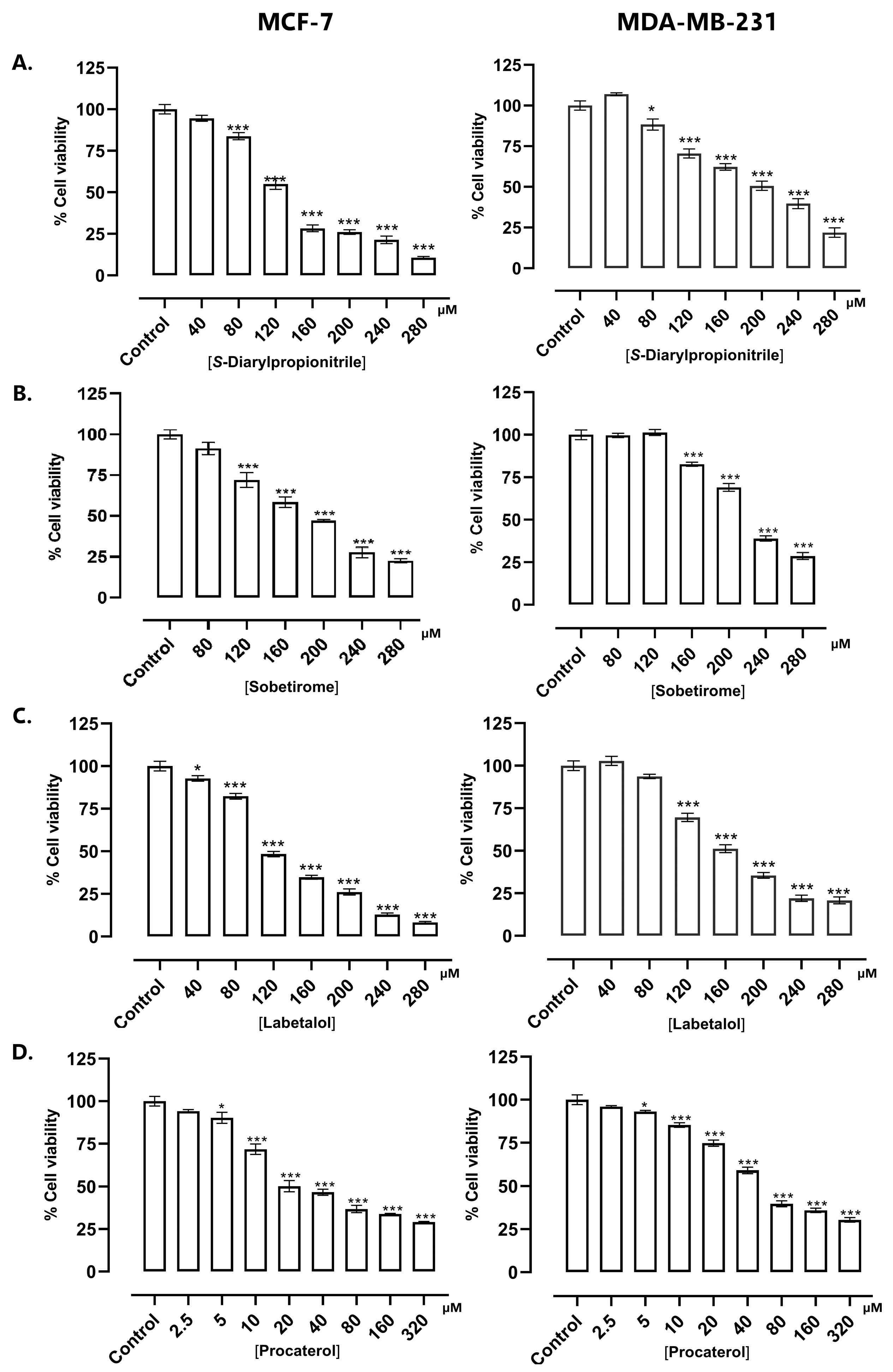
| Antiproliferative Activity IC50 (µM) | ||
|---|---|---|
| Drug | MCF-7 | MDA-MD-231 |
| S-DPN | 122.50 ± 3.09 | 186.85 ± 3.83 |
| Sobetirome | 170.50 ± 4.13 | 206.00 ± 2.59 |
| Labetalol | 127.50 ± 2.35 | 146.30 ± 3.10 |
| Procaterol | 21.26 ± 3.27 | 36.10 ± 2.92 |
Disclaimer/Publisher’s Note: The statements, opinions and data contained in all publications are solely those of the individual author(s) and contributor(s) and not of MDPI and/or the editor(s). MDPI and/or the editor(s) disclaim responsibility for any injury to people or property resulting from any ideas, methods, instructions or products referred to in the content. |
© 2026 by the authors. Licensee MDPI, Basel, Switzerland. This article is an open access article distributed under the terms and conditions of the Creative Commons Attribution (CC BY) license.
Share and Cite
Vazquez-Mendoza, L.H.; Mendoza-Figueroa, H.L.; Jacobo-Herrera, N.J.; Bakalara, N.; González-Juárez, D.E.; Correa-Basurto, J.; García-Vázquez, J.B. Multicomplex Pharmacophore Modeling of Estrogen Receptors Suggests the Probable Repurposing of Procaterol as an Antiproliferative Agent Against Breast Cancer Cells. Int. J. Mol. Sci. 2026, 27, 463. https://doi.org/10.3390/ijms27010463
Vazquez-Mendoza LH, Mendoza-Figueroa HL, Jacobo-Herrera NJ, Bakalara N, González-Juárez DE, Correa-Basurto J, García-Vázquez JB. Multicomplex Pharmacophore Modeling of Estrogen Receptors Suggests the Probable Repurposing of Procaterol as an Antiproliferative Agent Against Breast Cancer Cells. International Journal of Molecular Sciences. 2026; 27(1):463. https://doi.org/10.3390/ijms27010463
Chicago/Turabian StyleVazquez-Mendoza, Luis Heriberto, Humberto L. Mendoza-Figueroa, Nadia Judith Jacobo-Herrera, Norbert Bakalara, Daphne Edith González-Juárez, José Correa-Basurto, and Juan Benjamín García-Vázquez. 2026. "Multicomplex Pharmacophore Modeling of Estrogen Receptors Suggests the Probable Repurposing of Procaterol as an Antiproliferative Agent Against Breast Cancer Cells" International Journal of Molecular Sciences 27, no. 1: 463. https://doi.org/10.3390/ijms27010463
APA StyleVazquez-Mendoza, L. H., Mendoza-Figueroa, H. L., Jacobo-Herrera, N. J., Bakalara, N., González-Juárez, D. E., Correa-Basurto, J., & García-Vázquez, J. B. (2026). Multicomplex Pharmacophore Modeling of Estrogen Receptors Suggests the Probable Repurposing of Procaterol as an Antiproliferative Agent Against Breast Cancer Cells. International Journal of Molecular Sciences, 27(1), 463. https://doi.org/10.3390/ijms27010463