Triterpenoids CDDO and CDDO-EA Inhibit the Replication of Hepatitis B Virus by Modulating Nucleocapsid Assembly

 , ,
, ,
Abstract
1. Introduction
2. Results
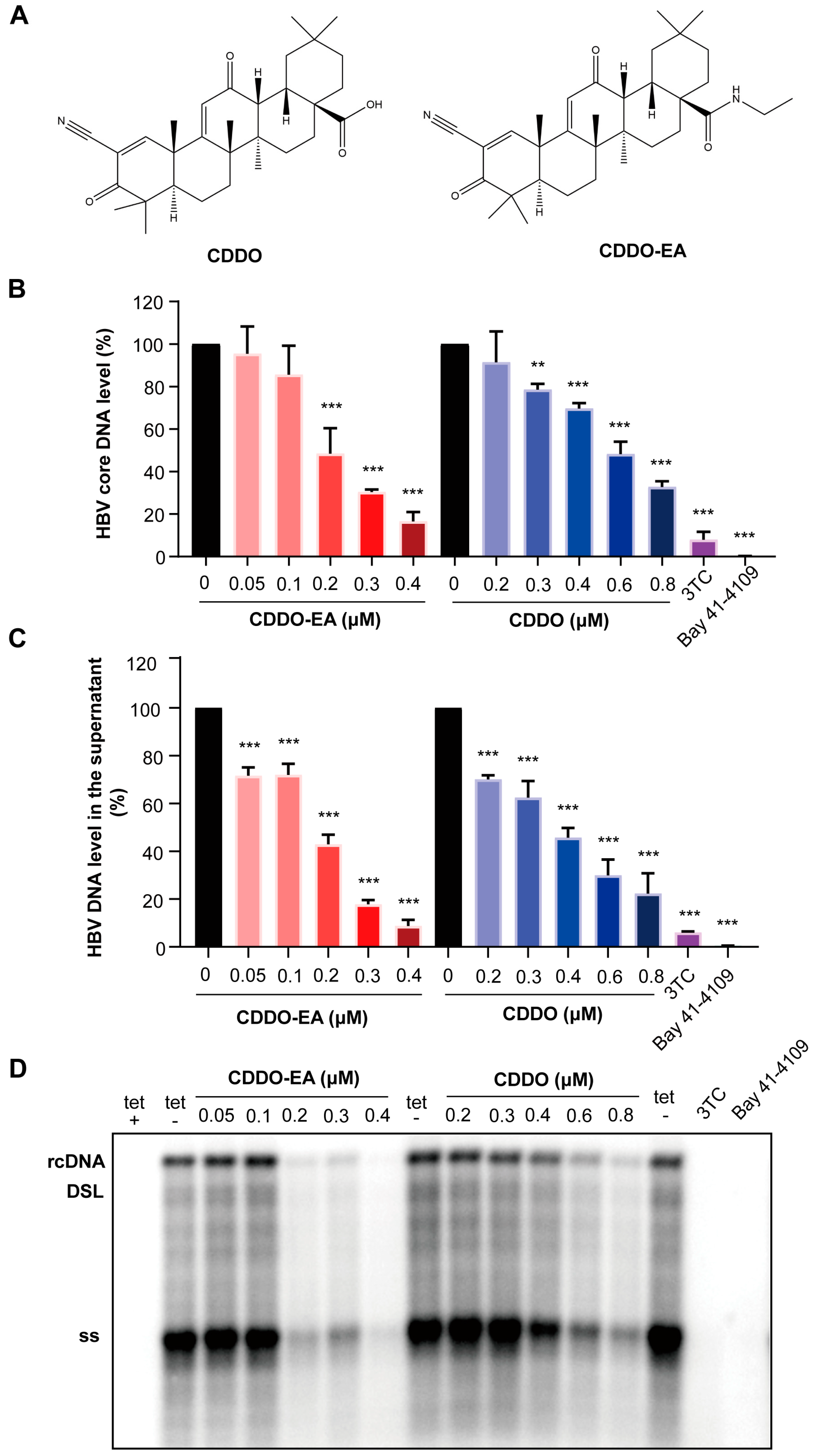
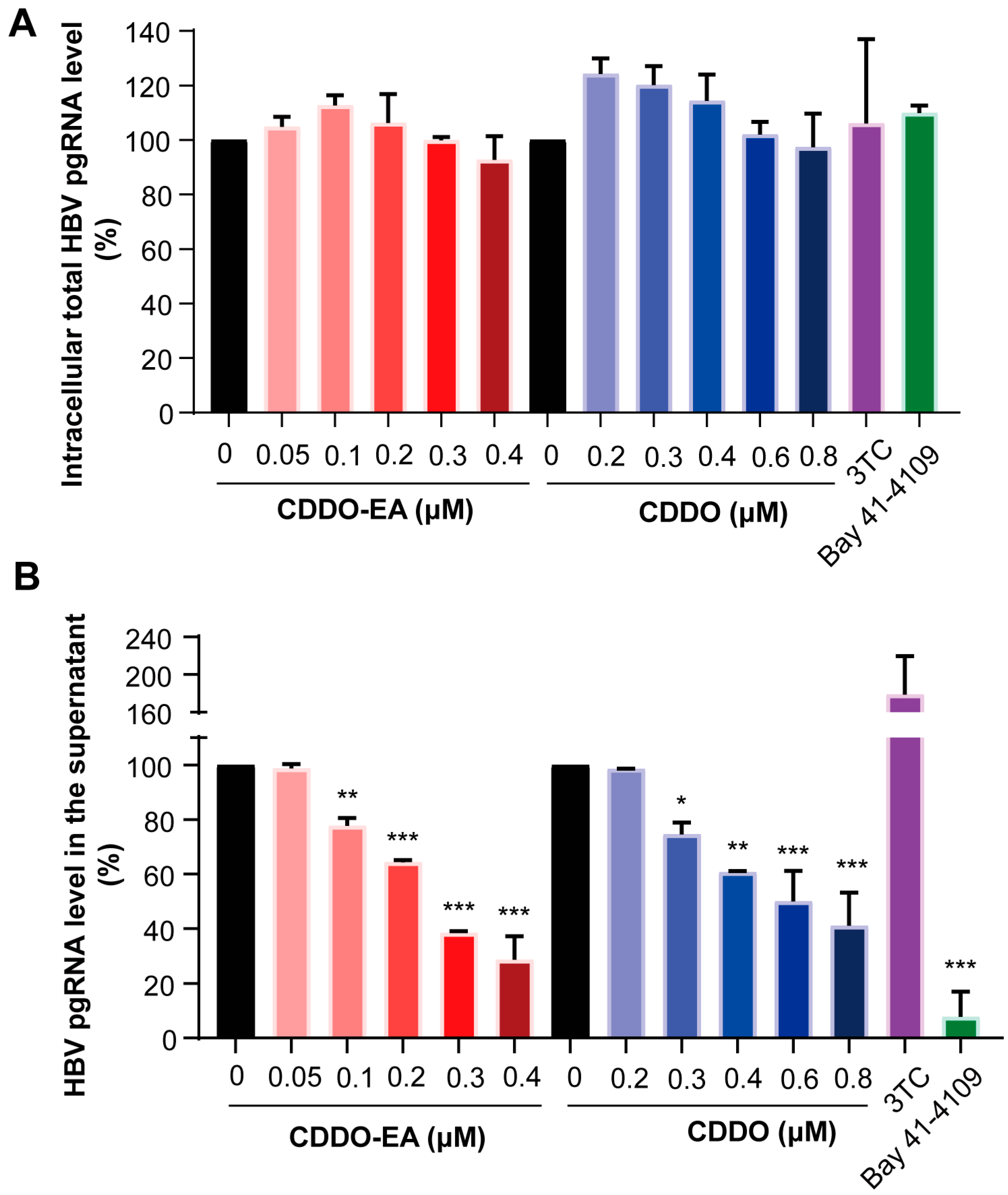
2.1. CDDO-EA and CDDO Inhibit HBV DNA Replication in Cell Cultures
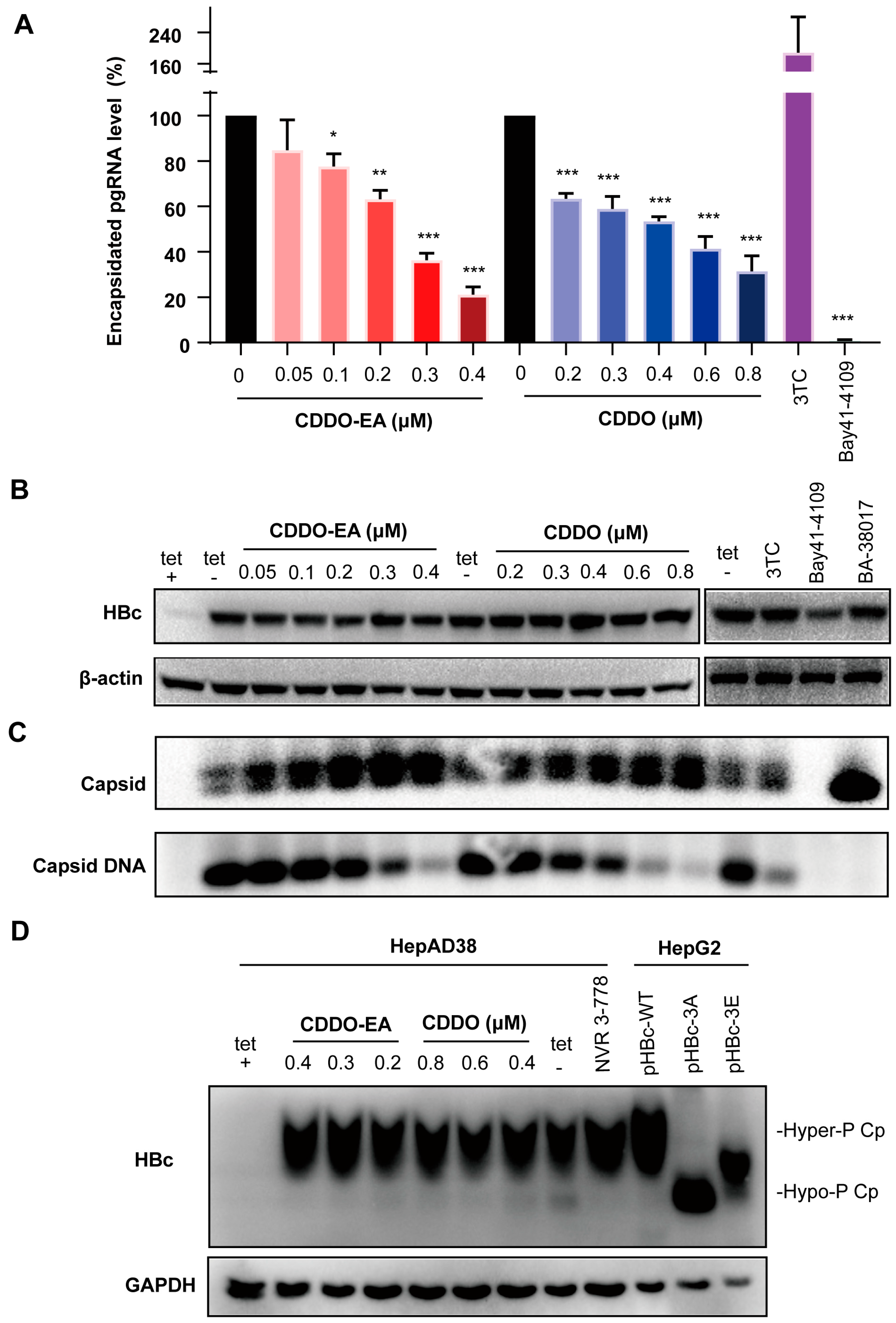
2.2. CDDO-EA and CDDO Inhibit HBV Nucleocapsid Assembly
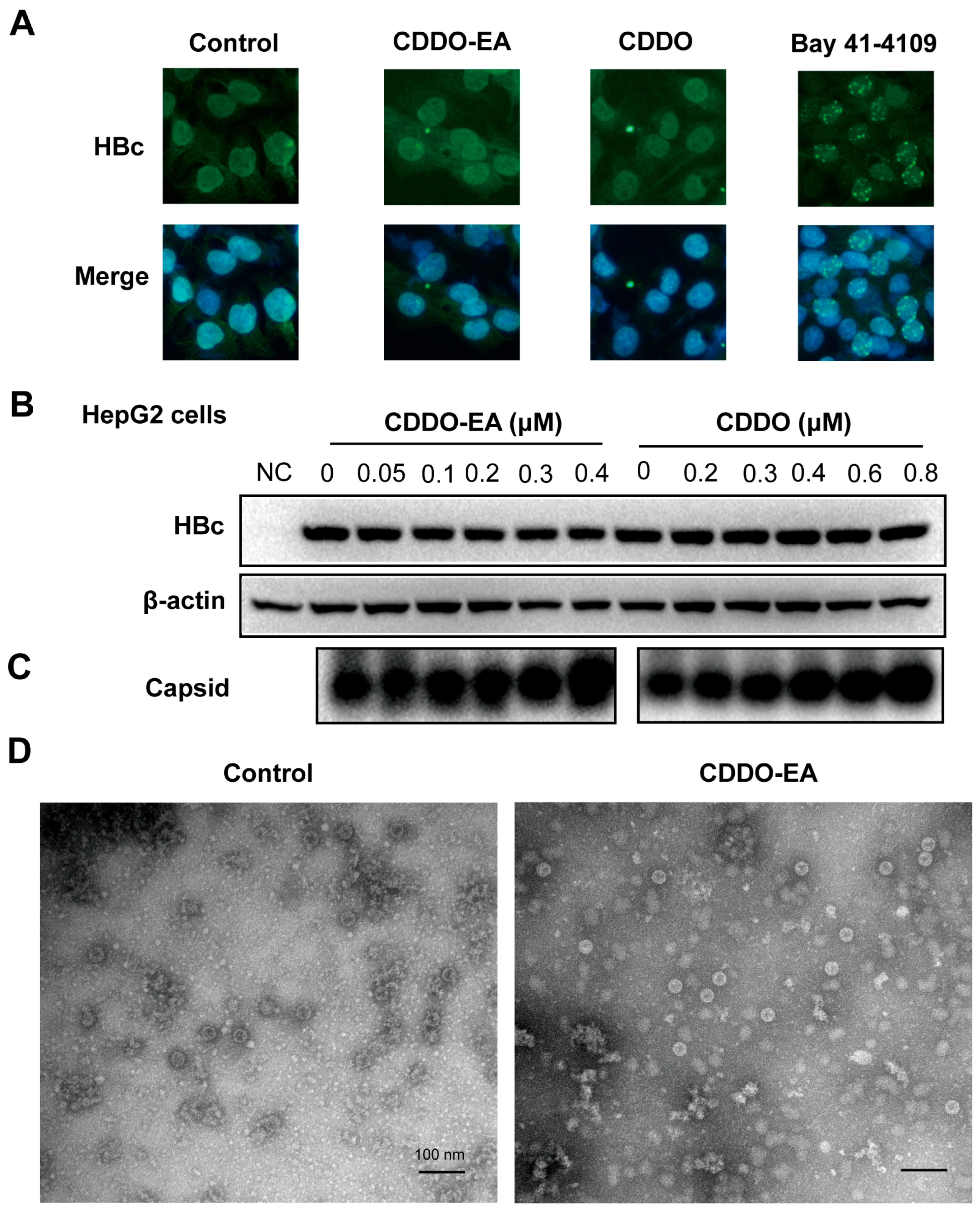
2.3. Properties of Capsids Derived from CDDO-EA or CDDO-Treated Cells
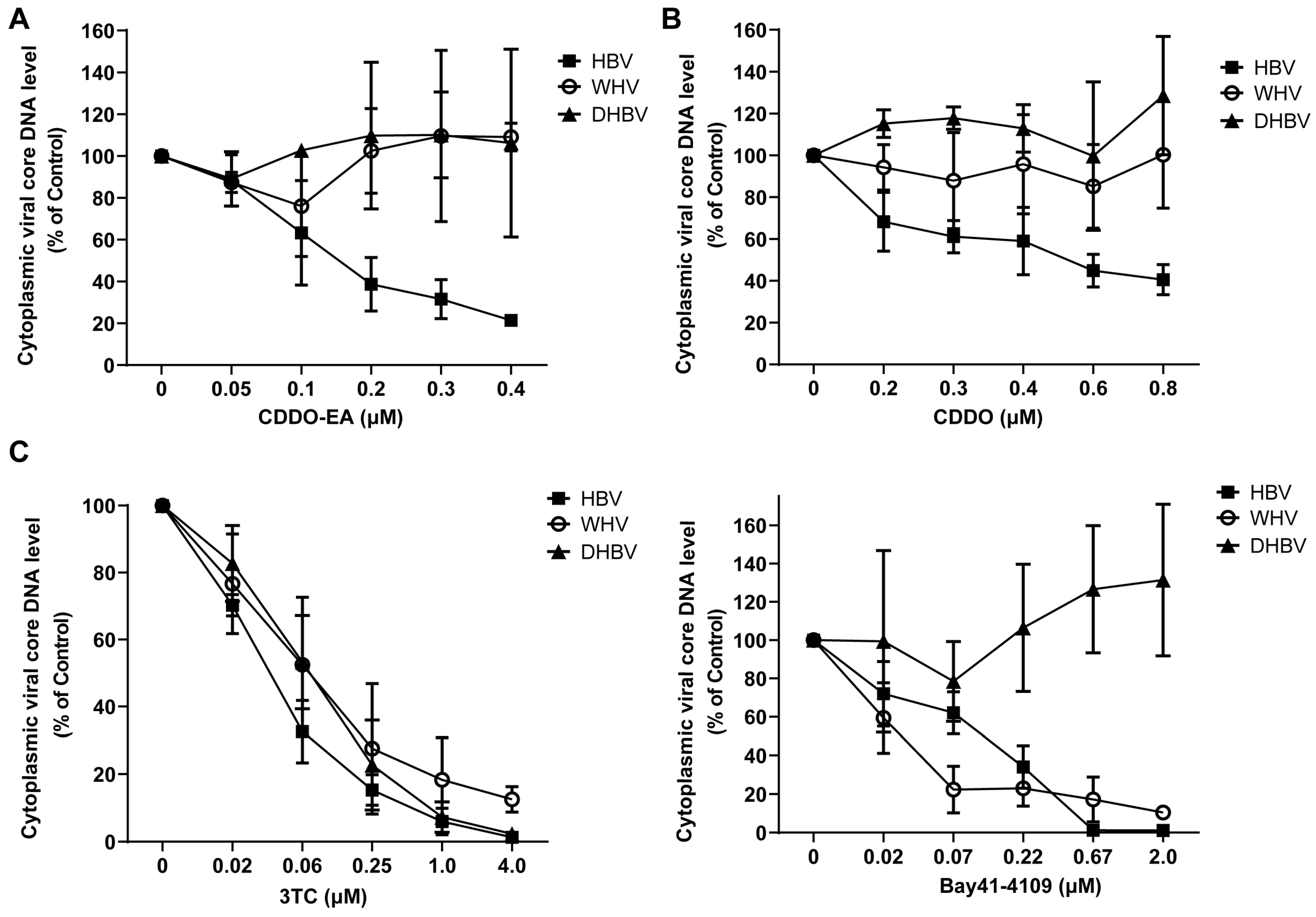
2.4. CDDO-EA and CDDO Specifically Inhibit the Replication of HBV but Not WHV and DHBV
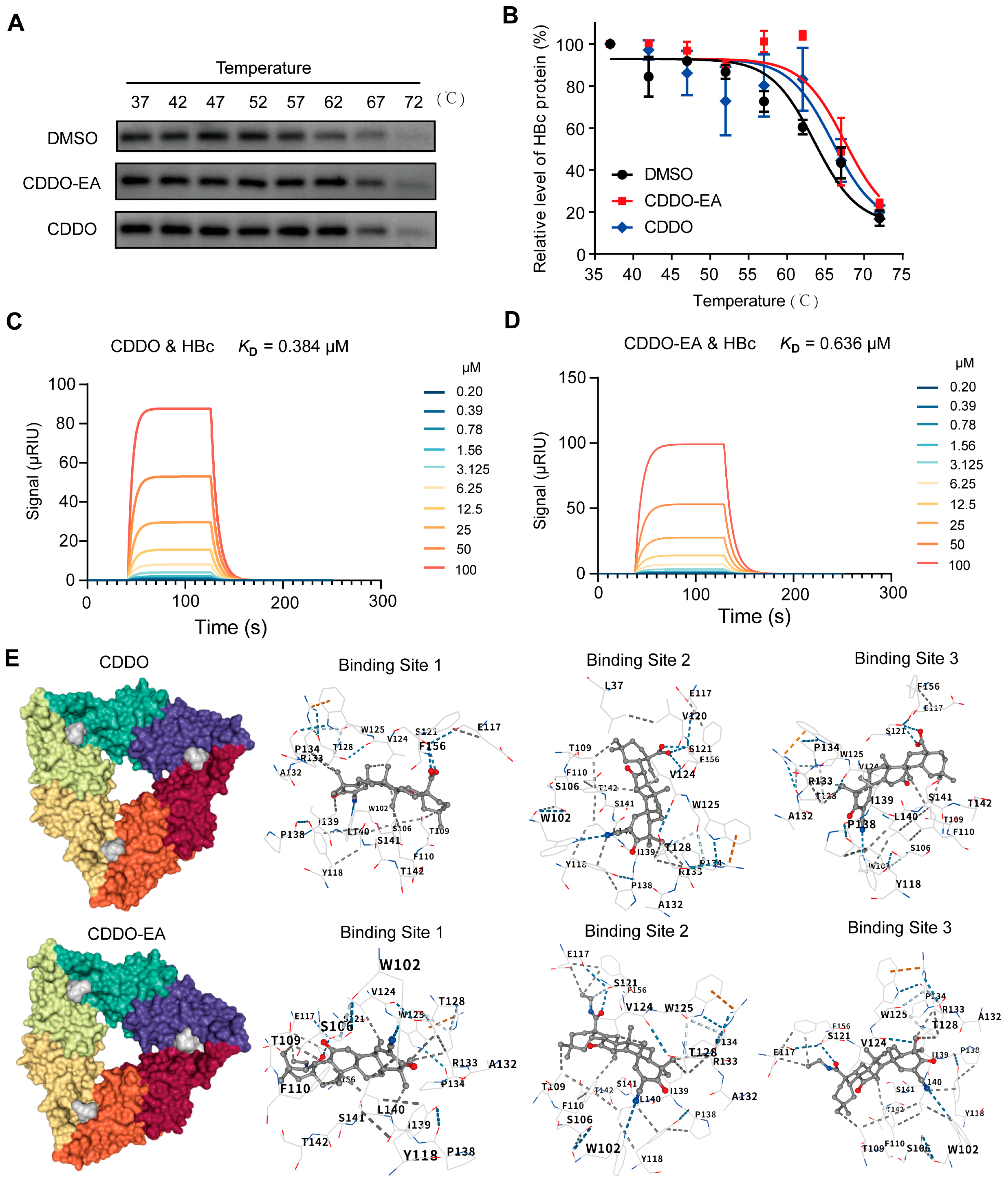
2.5. CDDO-EA and CDDO Alter Capsid Assembly and pgRNA Encapsidation via Specific Interaction with HBV Core Protein
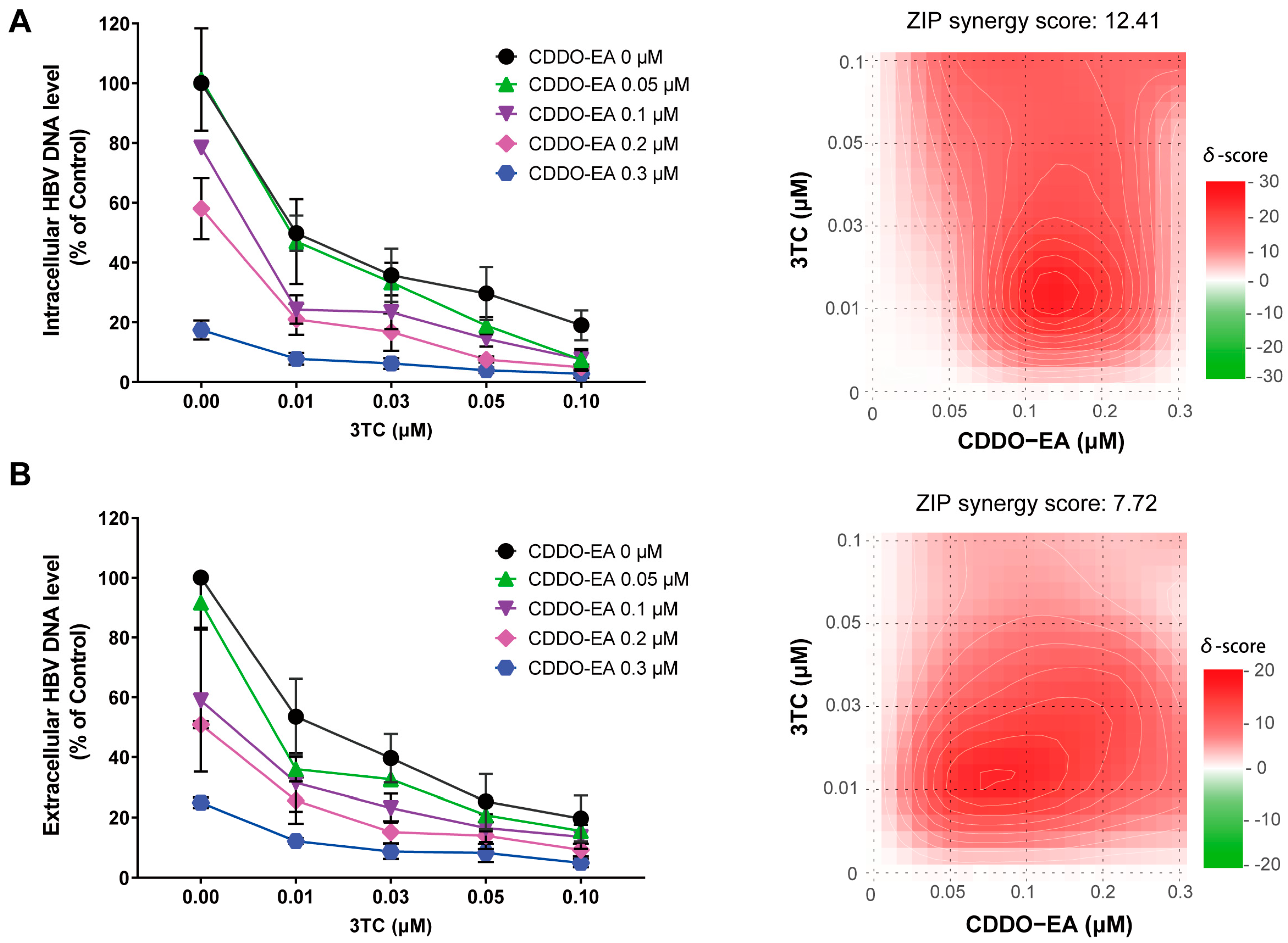
2.6. Combination of CDDO-EA with 3TC Enhances Their Antiviral Activities
3. Discussion
4. Materials and Methods
4.1. Cell Culture and Reagents
4.2. Plasmids
4.3. Cytotoxicity
4.4. Transient Transfection
4.5. Analyses of HBV Core DNA by Hybridization and qPCR Assays
4.6. Analyses of HBV pgRNA by RT-qPCR Assays
4.7. Western Blot Assay
4.8. Particle Gel Assay
4.9. Phos-Tag Gel Assay
4.10. Electron Microscopic (EM) Analysis of Capsids
4.11. Cellular Thermal Shift Assay
4.12. Surface Plasmon Resonance (SPR) Assay
4.13. Molecular Docking
4.14. Statistical Analysis
Supplementary Materials
Author Contributions
Funding
Institutional Review Board Statement
Informed Consent Statement
Data Availability Statement
Conflicts of Interest
References
- Jeng, W.J.; Papatheodoridis, G.V.; Lok, A.S.F. Hepatitis B. Lancet 2023, 401, 1039–1052. [Google Scholar] [CrossRef]
- Easterbrook, P.J.; Luhmann, N.; Bajis, S.; Min, M.S.; Newman, M.; Lesi, O.; Doherty, M.C. WHO 2024 hepatitis B guidelines: An opportunity to transform care. Lancet Gastroenterol. Hepatol. 2024, 9, 493–495. [Google Scholar] [CrossRef]
- Hu, J.; Cheng, J.; Tang, L.; Hu, Z.; Luo, Y.; Li, Y.; Zhou, T.; Chang, J.; Guo, J.T. Virological Basis for the Cure of Chronic Hepatitis B. ACS Infect. Dis. 2019, 5, 659–674. [Google Scholar] [CrossRef]
- Liang, T.J.; Block, T.M.; McMahon, B.J.; Ghany, M.G.; Urban, S.; Guo, J.T.; Locarnini, S.; Zoulim, F.; Chang, K.M.; Lok, A.S. Present and future therapies of hepatitis B: From discovery to cure. Hepatology 2015, 62, 1893–1908. [Google Scholar] [CrossRef]
- Tang, L.; Zhao, Q.; Wu, S.; Cheng, J.; Chang, J.; Guo, J.T. The current status and future directions of hepatitis B antiviral drug discovery. Expert Opin. Drug Discov. 2017, 12, 5–15. [Google Scholar] [CrossRef] [PubMed]
- Lumley, S.F.; Mokaya, J.; Maponga, T.G.; Kramvis, A.; Dusheiko, G.; Irving, W.; Delphin, M.; Said Mohammed, K.S.; Downs, L.O.; Waddilove, E.; et al. Hepatitis B virus resistance to nucleos(t)ide analogue therapy: WHO consultation on questions, challenges, and a roadmap for the field. Lancet Microbe 2025, 6, 101076. [Google Scholar] [CrossRef] [PubMed]
- Nguyen, M.H.; Wong, G.; Gane, E.; Kao, J.H.; Dusheiko, G. Hepatitis B Virus: Advances in Prevention, Diagnosis, and Therapy. Clin. Microbiol. Rev. 2020, 33, e00046-19. [Google Scholar] [CrossRef]
- Pergola, P.E.; Raskin, P.; Toto, R.D.; Meyer, C.J.; Huff, J.W.; Grossman, E.B.; Krauth, M.; Ruiz, S.; Audhya, P.; Christ-Schmidt, H.; et al. Bardoxolone methyl and kidney function in CKD with type 2 diabetes. N. Engl. J. Med. 2011, 365, 327–336. [Google Scholar] [CrossRef] [PubMed]
- Chin, M.P.; Bakris, G.L.; Block, G.A.; Chertow, G.M.; Goldsberry, A.; Inker, L.A.; Heerspink, H.J.L.; O’Grady, M.; Pergola, P.E.; Wanner, C.; et al. Bardoxolone Methyl Improves Kidney Function in Patients with Chronic Kidney Disease Stage 4 and Type 2 Diabetes: Post-Hoc Analyses from Bardoxolone Methyl Evaluation in Patients with Chronic Kidney Disease and Type 2 Diabetes Study. Am. J. Nephrol. 2018, 47, 40–47. [Google Scholar] [CrossRef]
- de Zeeuw, D.; Akizawa, T.; Audhya, P.; Bakris, G.L.; Chin, M.; Christ-Schmidt, H.; Goldsberry, A.; Houser, M.; Krauth, M.; Lambers Heerspink, H.J.; et al. Bardoxolone methyl in type 2 diabetes and stage 4 chronic kidney disease. N. Engl. J. Med. 2013, 369, 2492–2503. [Google Scholar] [CrossRef]
- Nio, Y.; Sasai, M.; Akahori, Y.; Okamura, H.; Hasegawa, H.; Oshima, M.; Watashi, K.; Wakita, T.; Ryo, A.; Tanaka, Y.; et al. Bardoxolone methyl as a novel potent antiviral agent against hepatitis B and C viruses in human hepatocyte cell culture systems. Antivir. Res. 2019, 169, 104537. [Google Scholar] [CrossRef]
- Getachew, Y.; Cusimano, F.A.; Gopal, P.; Reisman, S.A.; Shay, J.W. The Synthetic Triterpenoid RTA 405 (CDDO-EA) Halts Progression of Liver Fibrosis and Reduces Hepatocellular Carcinoma Size Resulting in Increased Survival in an Experimental Model of Chronic Liver Injury. Toxicol. Sci. 2016, 149, 111–120. [Google Scholar] [CrossRef] [PubMed]
- Xu, D.; Chen, L.; Chen, X.; Wen, Y.; Yu, C.; Yao, J.; Wu, H.; Wang, X.; Xia, Q.; Kong, X. The triterpenoid CDDO-imidazolide ameliorates mouse liver ischemia-reperfusion injury through activating the Nrf2/HO-1 pathway enhanced autophagy. Cell Death Dis. 2017, 8, e2983. [Google Scholar] [CrossRef]
- Ladner, S.K.; Otto, M.J.; Barker, C.S.; Zaifert, K.; Wang, G.H.; Guo, J.T.; Seeger, C.; King, R.W. Inducible expression of human hepatitis B virus (HBV) in stably transfected hepatoblastoma cells: A novel system for screening potential inhibitors of HBV replication. Antimicrob. Agents Chemother. 1997, 41, 1715–1720. [Google Scholar] [CrossRef]
- Stray, S.J.; Zlotnick, A. BAY 41-4109 has multiple effects on Hepatitis B virus capsid assembly. J. Mol. Recognit. 2006, 19, 542–548. [Google Scholar] [CrossRef]
- Liu, S.; Zhou, B.; Valdes, J.D.; Sun, J.; Guo, H. Serum Hepatitis B Virus RNA: A New Potential Biomarker for Chronic Hepatitis B Virus Infection. Hepatology 2019, 69, 1816–1827. [Google Scholar] [CrossRef]
- Wu, S.; Zhao, Q.; Zhang, P.; Kulp, J.; Hu, L.; Hwang, N.; Zhang, J.; Block, T.M.; Xu, X.; Du, Y.; et al. Discovery and Mechanistic Study of Benzamide Derivatives That Modulate Hepatitis B Virus Capsid Assembly. J. Virol. 2017, 91, e00519-17. [Google Scholar] [CrossRef]
- Zhao, Q.; Hu, Z.; Cheng, J.; Wu, S.; Luo, Y.; Chang, J.; Hu, J.; Guo, J.T. Hepatitis B Virus Core Protein Dephosphorylation Occurs during Pregenomic RNA Encapsidation. J. Virol. 2018, 92, e02139-17. [Google Scholar] [CrossRef]
- Hu, Z.; Ban, H.; Zheng, H.; Liu, M.; Chang, J.; Guo, J.T. Protein phosphatase 1 catalyzes HBV core protein dephosphorylation and is co-packaged with viral pregenomic RNA into nucleocapsids. PLoS Pathog. 2020, 16, e1008669. [Google Scholar] [CrossRef] [PubMed]
- Lam, A.M.; Espiritu, C.; Vogel, R.; Ren, S.; Lau, V.; Kelly, M.; Kuduk, S.D.; Hartman, G.D.; Flores, O.A.; Klumpp, K. Preclinical Characterization of NVR 3-778, a First-in-Class Capsid Assembly Modulator against Hepatitis B Virus. Antimicrob. Agents Chemother. 2019, 63, e01734-18. [Google Scholar] [CrossRef] [PubMed]
- Wu, S.; Luo, Y.; Viswanathan, U.; Kulp, J.; Cheng, J.; Hu, Z.; Xu, Q.; Zhou, Y.; Gong, G.Z.; Chang, J.; et al. CpAMs induce assembly of HBV capsids with altered electrophoresis mobility: Implications for mechanism of inhibiting pgRNA packaging. Antivir. Res. 2018, 159, 1–12. [Google Scholar] [CrossRef] [PubMed]
- Tavis, J.E.; Perri, S.; Ganem, D. Hepadnavirus reverse transcription initiates within the stem-loop of the RNA packaging signal and employs a novel strand transfer. J. Virol. 1994, 68, 3536–3543. [Google Scholar] [CrossRef] [PubMed]
- Hu, J.; Seeger, C. Hsp90 is required for the activity of a hepatitis B virus reverse transcriptase. Proc. Natl. Acad. Sci. USA 1996, 93, 1060–1064. [Google Scholar] [CrossRef]
- Hu, J.; Toft, D.O.; Seeger, C. Hepadnavirus assembly and reverse transcription require a multi- component chaperone complex which is incorporated into nucleocapsids. Embo J. 1997, 16, 59–68. [Google Scholar] [PubMed]
- Campagna, M.R.; Liu, F.; Mao, R.; Mills, C.; Cai, D.; Guo, F.; Zhao, X.; Ye, H.; Cuconati, A.; Guo, H.; et al. Sulfamoylbenzamide derivatives inhibit the assembly of hepatitis B virus nucleocapsids. J. Virol. 2013, 87, 6931–6942. [Google Scholar] [CrossRef]
- Yang, L.; Wang, H.; Yan, H.; Wang, K.; Wu, S.; Li, Y. (−)-Lariciresinol Isolated from the Roots of Isatis indigotica Fortune ex Lindl. Inhibits Hepatitis B Virus by Regulating Viral Transcription. Molecules 2022, 27, 3223. [Google Scholar] [CrossRef]
- Hong, X.; Schneider, W.M.; Rice, C.M. Hepatitis B Virus Nucleocapsid Assembly. J. Mol. Biol. 2025, 437, 169182. [Google Scholar] [CrossRef]
- Venkatakrishnan, B.; Katen, S.P.; Francis, S.; Chirapu, S.; Finn, M.G.; Zlotnick, A. Hepatitis B Virus Capsids Have Diverse Structural Responses to Small-Molecule Ligands Bound to the Heteroaryldihydropyrimidine Pocket. J. Virol. 2016, 90, 3994–4004. [Google Scholar] [CrossRef]
- Taverniti, V.; Ligat, G.; Debing, Y.; Kum, D.B.; Baumert, T.F.; Verrier, E.R. Capsid Assembly Modulators as Antiviral Agents against HBV: Molecular Mechanisms and Clinical Perspectives. J. Clin. Med. 2022, 11, 1349. [Google Scholar] [CrossRef]
- Bassit, L.; Amblard, F.; Patel, D.; Biteau, N.; Chen, Z.; Kasthuri, M.; Zhou, S.; Schinazi, R.F. The premise of capsid assembly modulators towards eliminating HBV persistence. Expert. Opin. Drug Discov. 2023, 18, 1031–1041. [Google Scholar] [CrossRef]
- Zlotnick, A.; Venkatakrishnan, B.; Tan, Z.; Lewellyn, E.; Turner, W.; Francis, S. Core protein: A pleiotropic keystone in the HBV lifecycle. Antivir. Res. 2015, 121, 82–93. [Google Scholar] [CrossRef] [PubMed]
- Viswanathan, U.; Mani, N.; Hu, Z.; Ban, H.; Du, Y.; Hu, J.; Chang, J.; Guo, J.T. Targeting the multifunctional HBV core protein as a potential cure for chronic hepatitis B. Antivir. Res. 2020, 182, 104917. [Google Scholar] [CrossRef] [PubMed]
- Guo, J.T.; Pryce, M.; Wang, X.; Barrasa, M.I.; Hu, J.; Seeger, C. Conditional replication of duck hepatitis B virus in hepatoma cells. J. Virol. 2003, 77, 1885–1893. [Google Scholar] [CrossRef] [PubMed]
- Xu, C.; Guo, H.; Pan, X.B.; Mao, R.; Yu, W.; Xu, X.; Wei, L.; Chang, J.; Block, T.M.; Guo, J.T. Interferons accelerate decay of replication-competent nucleocapsids of hepatitis B virus. J. Virol. 2010, 84, 9332–9340. [Google Scholar] [CrossRef]
- Xu, S.J.; Wang, Y.; Shi, D.Z.; Wang, S.; Qiao, L.J.; Yang, G.; Zhou, Y.; Liu, X.Y.; Wu, S.; Li, Y.H.; et al. Discovery and mechanism verification of first-in-class hydrophobic tagging-based degraders of HBV core protein. Acta Pharm. Sin. B 2025, 15, 2170–2196. [Google Scholar] [CrossRef]


Disclaimer/Publisher’s Note: The statements, opinions and data contained in all publications are solely those of the individual author(s) and contributor(s) and not of MDPI and/or the editor(s). MDPI and/or the editor(s) disclaim responsibility for any injury to people or property resulting from any ideas, methods, instructions or products referred to in the content. |
© 2025 by the authors. Licensee MDPI, Basel, Switzerland. This article is an open access article distributed under the terms and conditions of the Creative Commons Attribution (CC BY) license.
Share and Cite
Gao, Q.; Yang, G.; Wang, Y.; Yang, L.; Hu, J.; Wang, H.; Yan, H.; Wang, K.; Wu, S.; Li, Y.; et al. Triterpenoids CDDO and CDDO-EA Inhibit the Replication of Hepatitis B Virus by Modulating Nucleocapsid Assembly. Int. J. Mol. Sci. 2026, 27, 300. https://doi.org/10.3390/ijms27010300
Gao Q, Yang G, Wang Y, Yang L, Hu J, Wang H, Yan H, Wang K, Wu S, Li Y, et al. Triterpenoids CDDO and CDDO-EA Inhibit the Replication of Hepatitis B Virus by Modulating Nucleocapsid Assembly. International Journal of Molecular Sciences. 2026; 27(1):300. https://doi.org/10.3390/ijms27010300
Chicago/Turabian StyleGao, Qiang, Ge Yang, Ya Wang, Lu Yang, Jin Hu, Huiqiang Wang, Haiyan Yan, Kun Wang, Shuo Wu, Yuhuan Li, and et al. 2026. "Triterpenoids CDDO and CDDO-EA Inhibit the Replication of Hepatitis B Virus by Modulating Nucleocapsid Assembly" International Journal of Molecular Sciences 27, no. 1: 300. https://doi.org/10.3390/ijms27010300
APA StyleGao, Q., Yang, G., Wang, Y., Yang, L., Hu, J., Wang, H., Yan, H., Wang, K., Wu, S., Li, Y., & Jiang, J. (2026). Triterpenoids CDDO and CDDO-EA Inhibit the Replication of Hepatitis B Virus by Modulating Nucleocapsid Assembly. International Journal of Molecular Sciences, 27(1), 300. https://doi.org/10.3390/ijms27010300