Review

Drug Resistance: The Role of Sphingolipid Metabolism

1
Department of Biomedical Sciences, Nazarbayev University School of Medicine, Astana 010000, Kazakhstan
2
Drug Discovery and Development Laboratory, National Laboratory Astana, Astana 010000, Kazakhstan
3
LLP “VICTUS PHARM”, Astana 010000, Kazakhstan
*
Authors to whom correspondence should be addressed.
Int. J. Mol. Sci. 2025, 26(8), 3716; https://doi.org/10.3390/ijms26083716
Submission received: 4 March 2025 / Revised: 10 April 2025 / Accepted: 12 April 2025 / Published: 15 April 2025
(This article belongs to the Special Issue Cancer: Molecular Research and Novel Inflammatory Targets)

Abstract

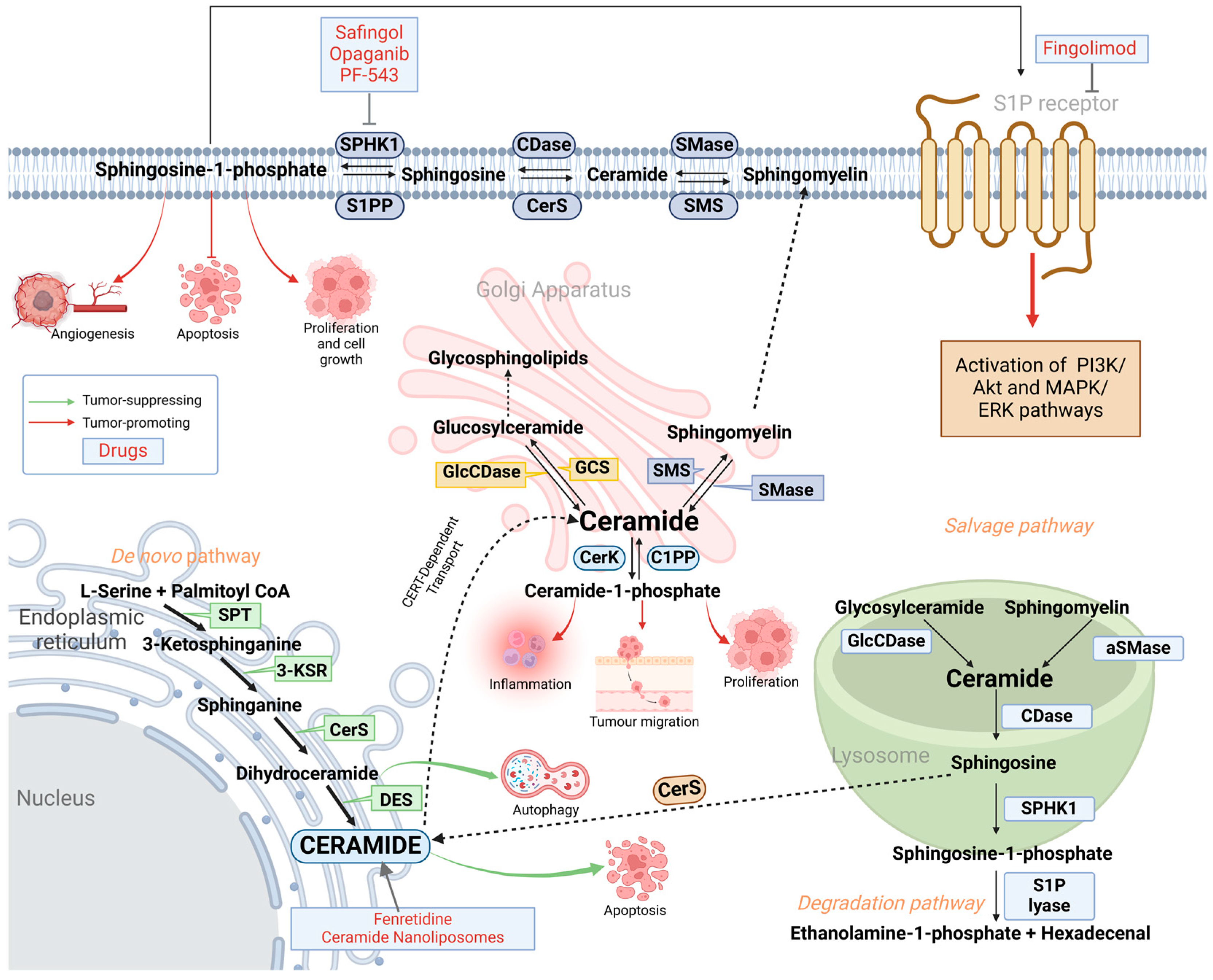
A significant challenge in cancer treatment is the rising problem of drug resistance that reduces the effectiveness of therapeutic strategies. Current knowledge shows that multiple mechanisms play a role in cancer drug resistance. Another mechanism that has gained attention is the alteration in sphingolipid trafficking and the dysregulation of its metabolism, which was reported to cause cancer-associated drug resistance. Sphingolipids are lipids containing sphingosine and have multiple roles, ranging from lipid raft formation, apoptosis, and cell signaling to immune cell trafficking. Recent studies show that in developing cancer cells, altered or dysregulated sphingolipids are associated with drug efflux and promote the survival of cancer cells by bypassing apoptosis. Upregulated levels of the glucosylceramide synthase (GCS), an enzyme that functions in sphingolipid metabolism, lead to the upregulated ABCB1 gene that induces drug efflux from the cancer cells. These bypass mechanisms make drugs that induce apoptosis in tumor cells ineffective. By highlighting the current findings, this review aims to provide a mechanism of drug resistance caused by the dysregulation of glucosylceramide synthase, sphingosine kinase, and acid ceramidase enzymes as possible therapeutic targets to enhance the effectiveness of the currently used chemotherapeutic agents.
Keywords: sphingolipid metabolism; drug resistance; glucosylceramide synthase; sphingosine kinase; acid ceramidase; sphingosine-1-phosphate; sphingomyelinase sphingolipid metabolism; drug resistance; glucosylceramide synthase; sphingosine kinase; acid ceramidase; sphingosine-1-phosphate; sphingomyelinase