Review

Abdominal Aortic Aneurysm and Liver Fibrosis: Clinical Evidence and Molecular Pathomechanisms
by
Mohamad Jamalinia
1,†,
Amedeo Lonardo
2,*,† and
Ralf Weiskirchen
3
1
Gastroenterohepatology Research Center, Shiraz University of Medical Sciences, Shiraz 41100, Iran
2
Department of Internal Medicine, Azienda Ospedaliero-Universitaria of Modena, 41126 Modena, Italy
3
Institute of Molecular Pathobiochemistry, Experimental Gene Therapy and Clinical Chemistry (IFMPEGKC), RWTH University Hospital Aachen, D-52074 Aachen, Germany
*
Author to whom correspondence should be addressed.
These authors contributed equally to this work.
Int. J. Mol. Sci. 2025, 26(7), 3440; https://doi.org/10.3390/ijms26073440
Submission received: 10 March 2025 / Revised: 29 March 2025 / Accepted: 5 April 2025 / Published: 7 April 2025
(This article belongs to the Section Molecular Endocrinology and Metabolism)

Abstract

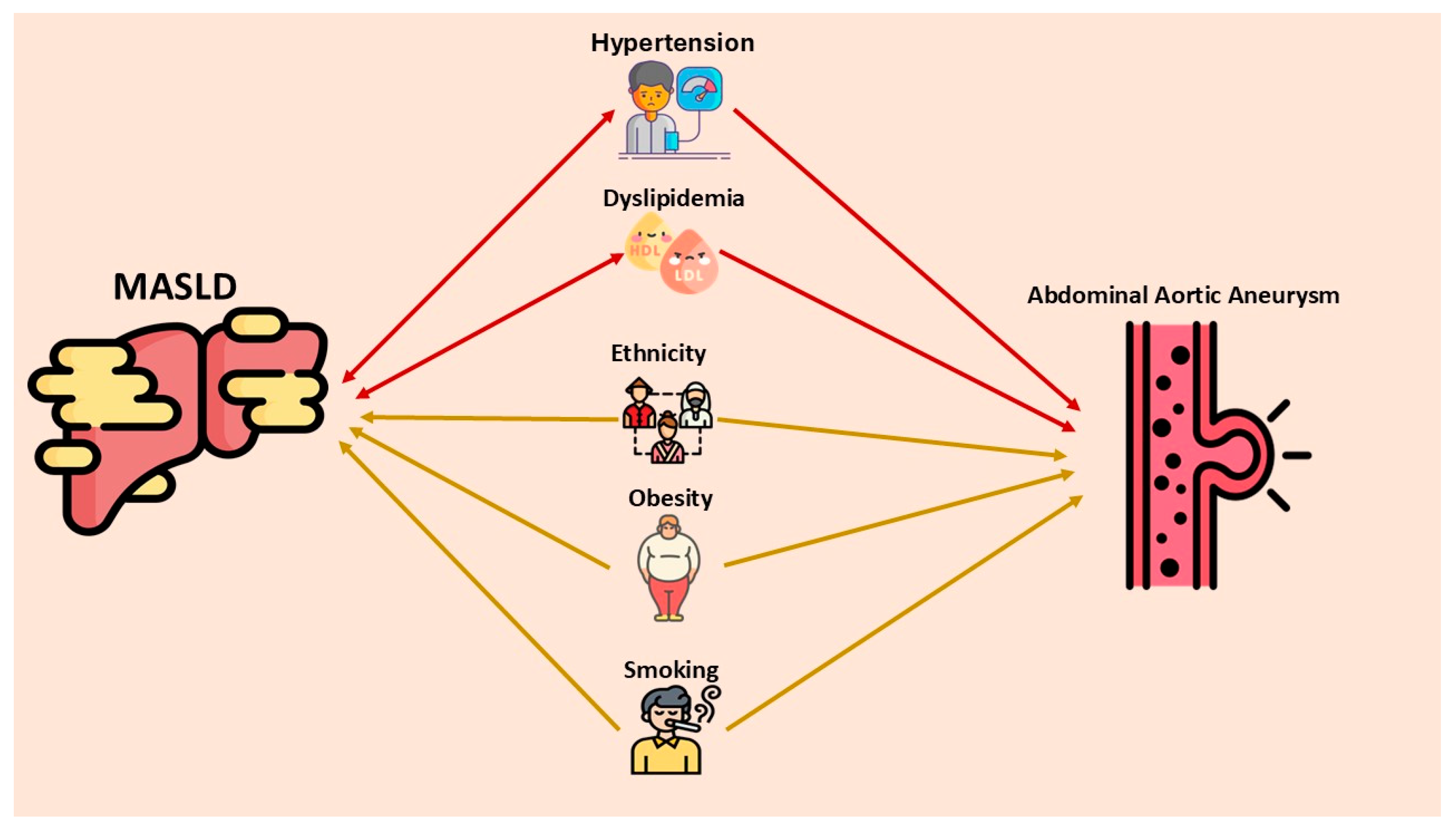
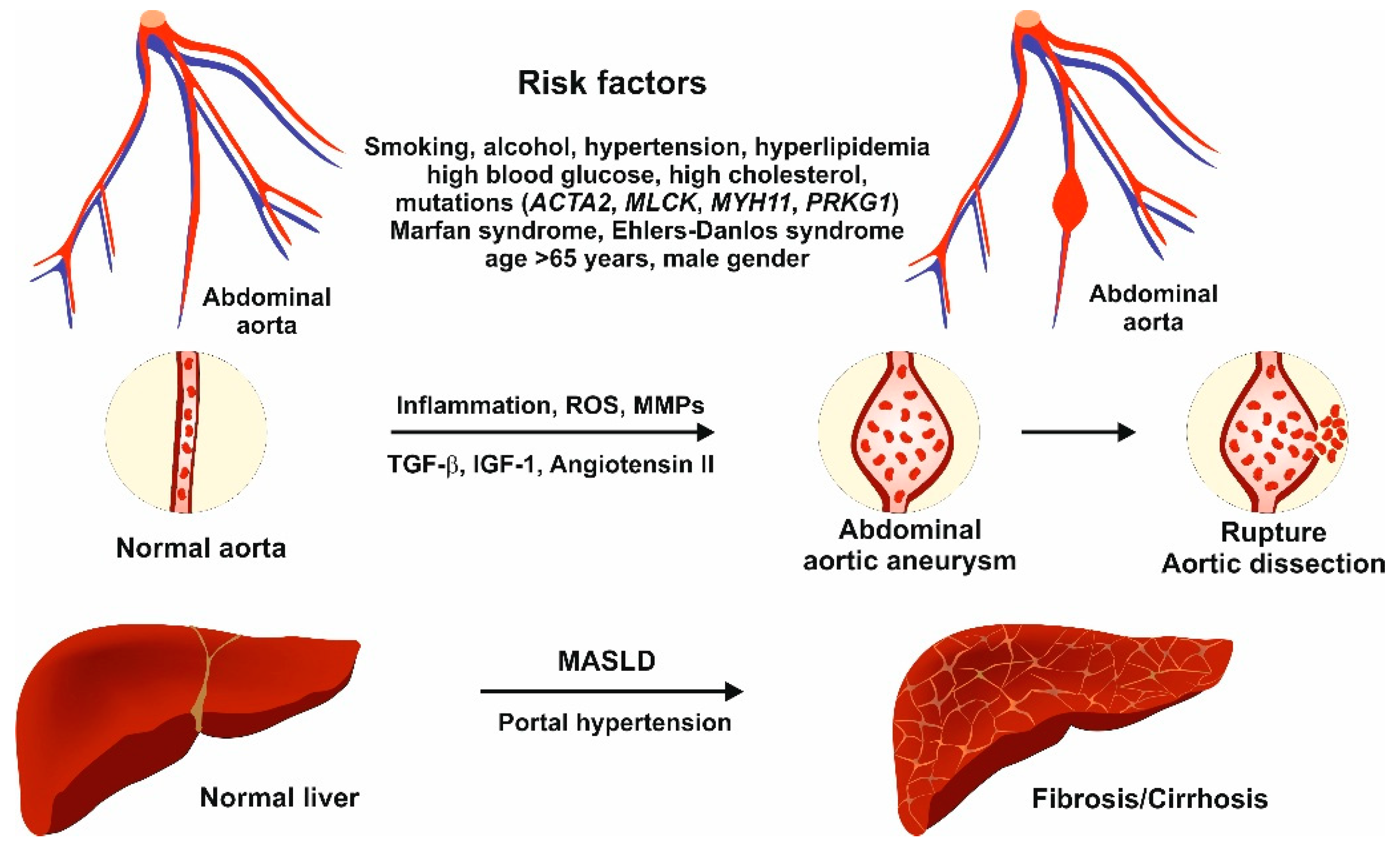
To stimulate further research, this review summarizes studies linking liver fibrosis with the risk of abdominal aortic aneurysms (AAA). AAA is defined as a permanently weakened and dilated abdominal aorta, which develops due to inflammation of the tunica media, activation of the renin–angiotensin–aldosterone system, immune system activation, and coagulation disorders. Typically asymptomatic, AAA is often incidentally detected through imaging done for abdominal symptoms or as part of screening programs. AAA follows a variable course and has a mortality rate strongly dependent on age and sex. Risk factors for AAA include age, male sex, ethnicity, family history of AAA, lifestyle habits, arterial hypertension, dyslipidemia, and comorbid atherosclerotic cardiovascular disease. Conversely, individuals with type 2 diabetes, female sex, and certain ethnicities are at a reduced risk of AAA. Liver fibrosis, resulting from chronic liver diseases owing to varying etiologies, is increasingly recognized as a potential contributor to AAA development. Evidence increasingly indicates that metabolic dysfunction-associated steatotic liver disease (MASLD) and other chronic liver conditions may intensify inflammatory pathways shared with AAA, thereby potentially exacerbating AAA progression. This review specifically examines the epidemiology and risk factors associated with the link between AAA and liver fibrosis. It also highlights potential pathomechanisms, including systemic inflammation, oxidative stress, and extracellular matrix remodeling, which may contribute to both conditions. Although these findings underscore significant overlaps in risk profiles, additional research is needed to clarify whether type 2 diabetes, female sex, and certain ethnicities truly confer protection against AAA or if this association is influenced by other confounding variables. Ultimately, addressing these open questions will help guide targeted therapeutic interventions and the identification of novel biomarkers to predict disease progression.
Keywords: aortic aneurysms; epidemiology; liver fibrosis; MASLD; molecular pathogenesis; risk factors aortic aneurysms; epidemiology; liver fibrosis; MASLD; molecular pathogenesis; risk factors