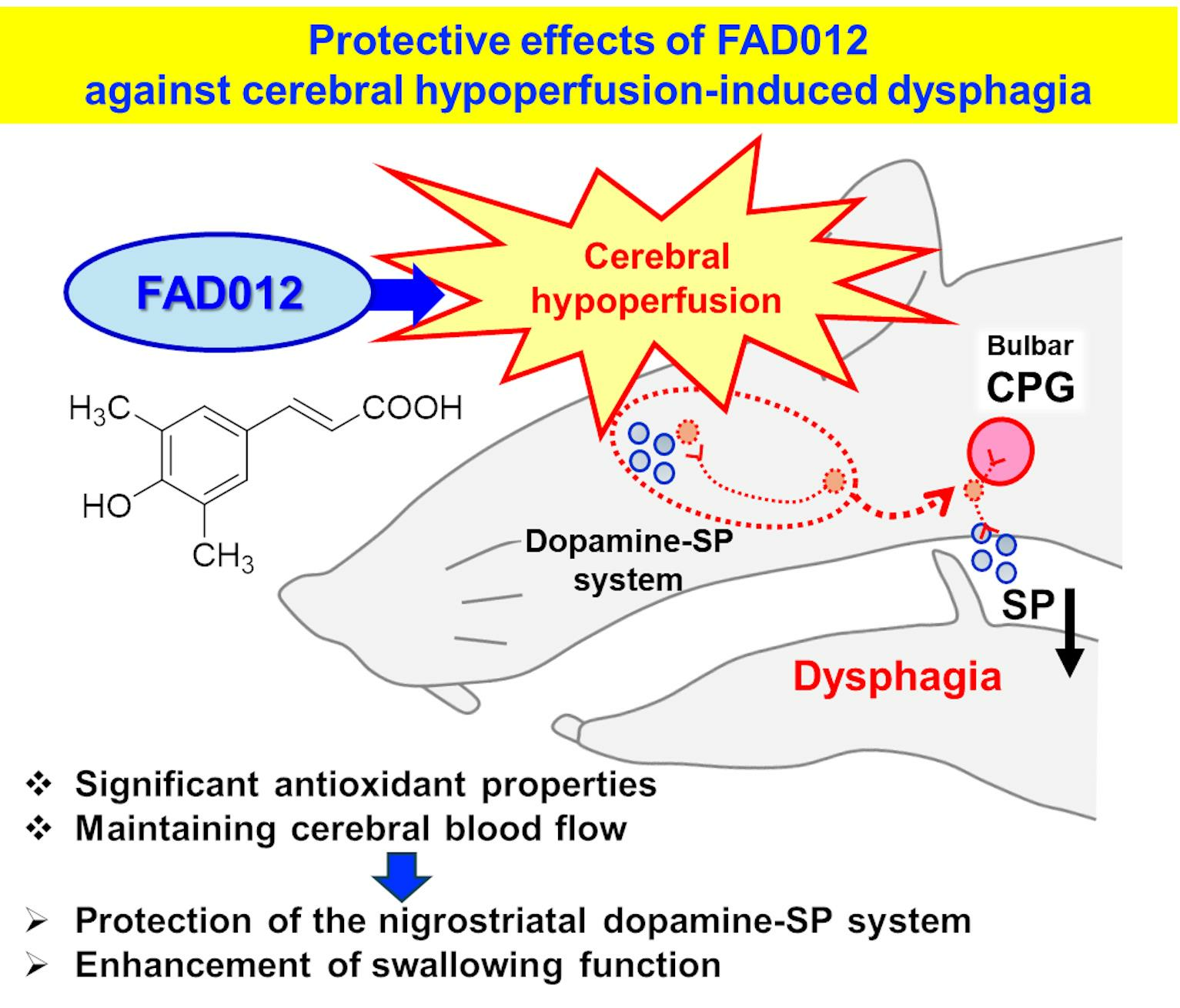
Chronic Administration with FAD012 (3,5-Dimethyl-4-hydroxycinnamic Acid) Maintains Cerebral Blood Flow and Ameliorates Swallowing Dysfunction After Chronic Cerebral Hypoperfusion in Rats

 , ,
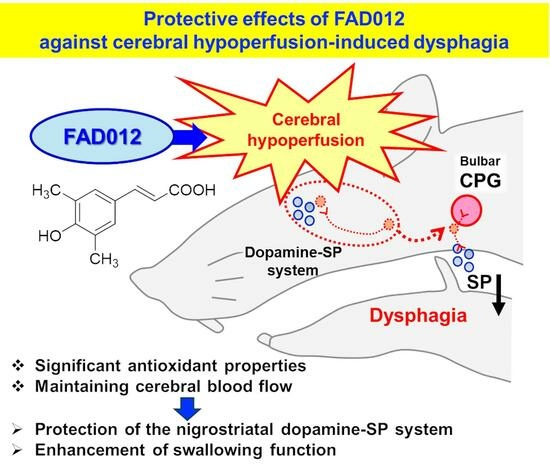
, , Abstract
Share and Cite
Asano, T.; Matsuzaki, H.; Xuan, M.; Yuan, B.; Takayama, J.; Sakamoto, T.; Okazaki, M. Chronic Administration with FAD012 (3,5-Dimethyl-4-hydroxycinnamic Acid) Maintains Cerebral Blood Flow and Ameliorates Swallowing Dysfunction After Chronic Cerebral Hypoperfusion in Rats. Int. J. Mol. Sci. 2025, 26, 3277. https://doi.org/10.3390/ijms26073277
Asano T, Matsuzaki H, Xuan M, Yuan B, Takayama J, Sakamoto T, Okazaki M. Chronic Administration with FAD012 (3,5-Dimethyl-4-hydroxycinnamic Acid) Maintains Cerebral Blood Flow and Ameliorates Swallowing Dysfunction After Chronic Cerebral Hypoperfusion in Rats. International Journal of Molecular Sciences. 2025; 26(7):3277. https://doi.org/10.3390/ijms26073277
Chicago/Turabian StyleAsano, Takashi, Hirokazu Matsuzaki, Meiyan Xuan, Bo Yuan, Jun Takayama, Takeshi Sakamoto, and Mari Okazaki. 2025. "Chronic Administration with FAD012 (3,5-Dimethyl-4-hydroxycinnamic Acid) Maintains Cerebral Blood Flow and Ameliorates Swallowing Dysfunction After Chronic Cerebral Hypoperfusion in Rats" International Journal of Molecular Sciences 26, no. 7: 3277. https://doi.org/10.3390/ijms26073277
APA StyleAsano, T., Matsuzaki, H., Xuan, M., Yuan, B., Takayama, J., Sakamoto, T., & Okazaki, M. (2025). Chronic Administration with FAD012 (3,5-Dimethyl-4-hydroxycinnamic Acid) Maintains Cerebral Blood Flow and Ameliorates Swallowing Dysfunction After Chronic Cerebral Hypoperfusion in Rats. International Journal of Molecular Sciences, 26(7), 3277. https://doi.org/10.3390/ijms26073277