Article

Host Proteins in Echinococcus multilocularis Metacestodes

by
Joachim Müller
1,
Beatrice Zumkehr
1,
Manfred Heller
2,
Anne-Christine Uldry
2,
Sophie Braga-Lagache
2 and
Britta Lundström-Stadelmann
1,3,*
1
Institute of Parasitology, Department of Infectious Diseases and Pathobiology, Vetsuisse Faculty, University of Bern, 3001 Bern, Switzerland
2
Proteomics and Mass Spectrometry Core Facility (PMSCF), Department for BioMedical Research (DBMR), University of Bern, 3008 Bern, Switzerland
3
Multidisciplinary Center for Infectious Diseases, University of Bern, 3012 Bern, Switzerland
*
Author to whom correspondence should be addressed.
Int. J. Mol. Sci. 2025, 26(7), 3266; https://doi.org/10.3390/ijms26073266
Submission received: 4 March 2025 / Revised: 26 March 2025 / Accepted: 29 March 2025 / Published: 1 April 2025
(This article belongs to the Section Molecular Microbiology)

Abstract

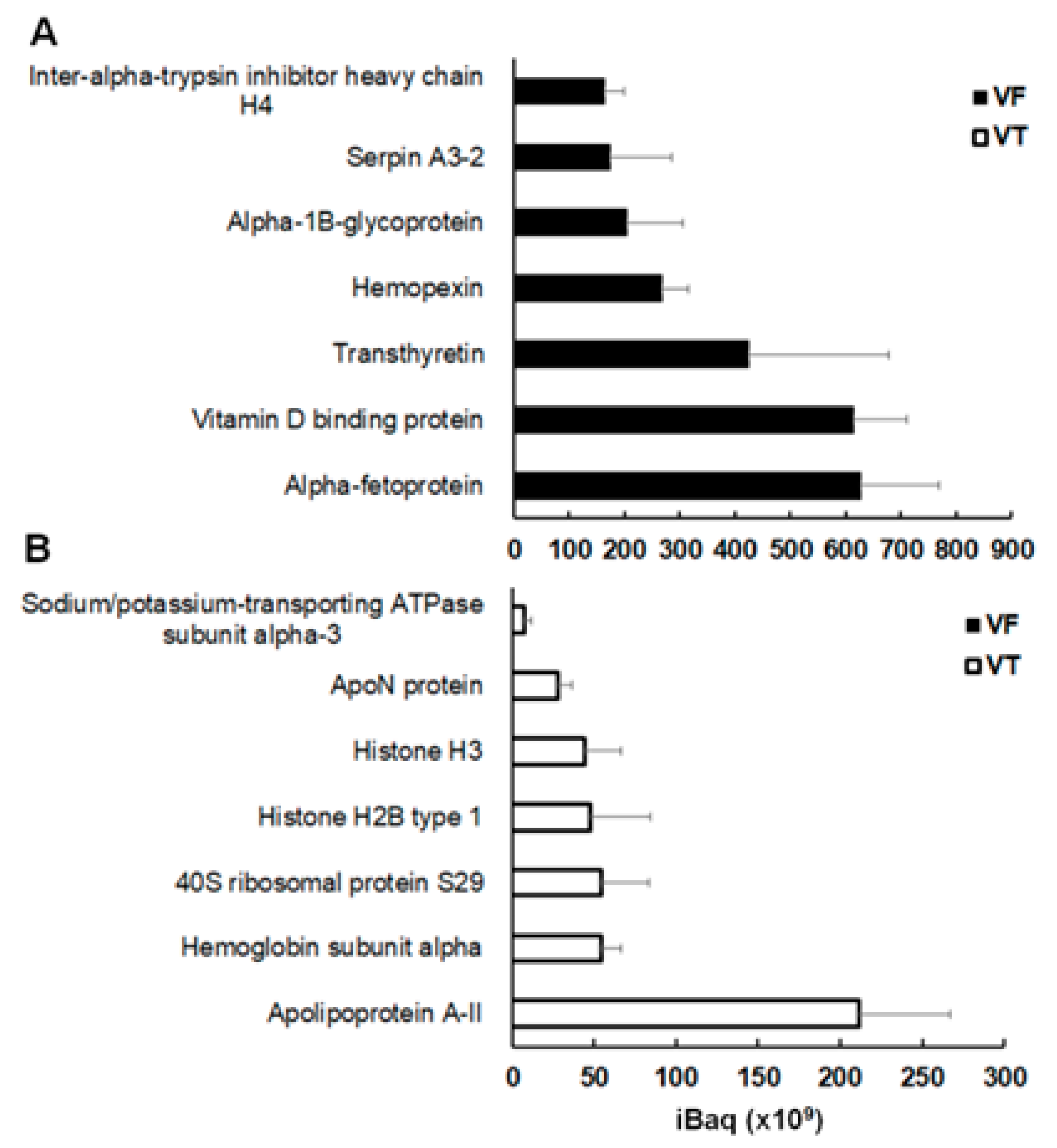
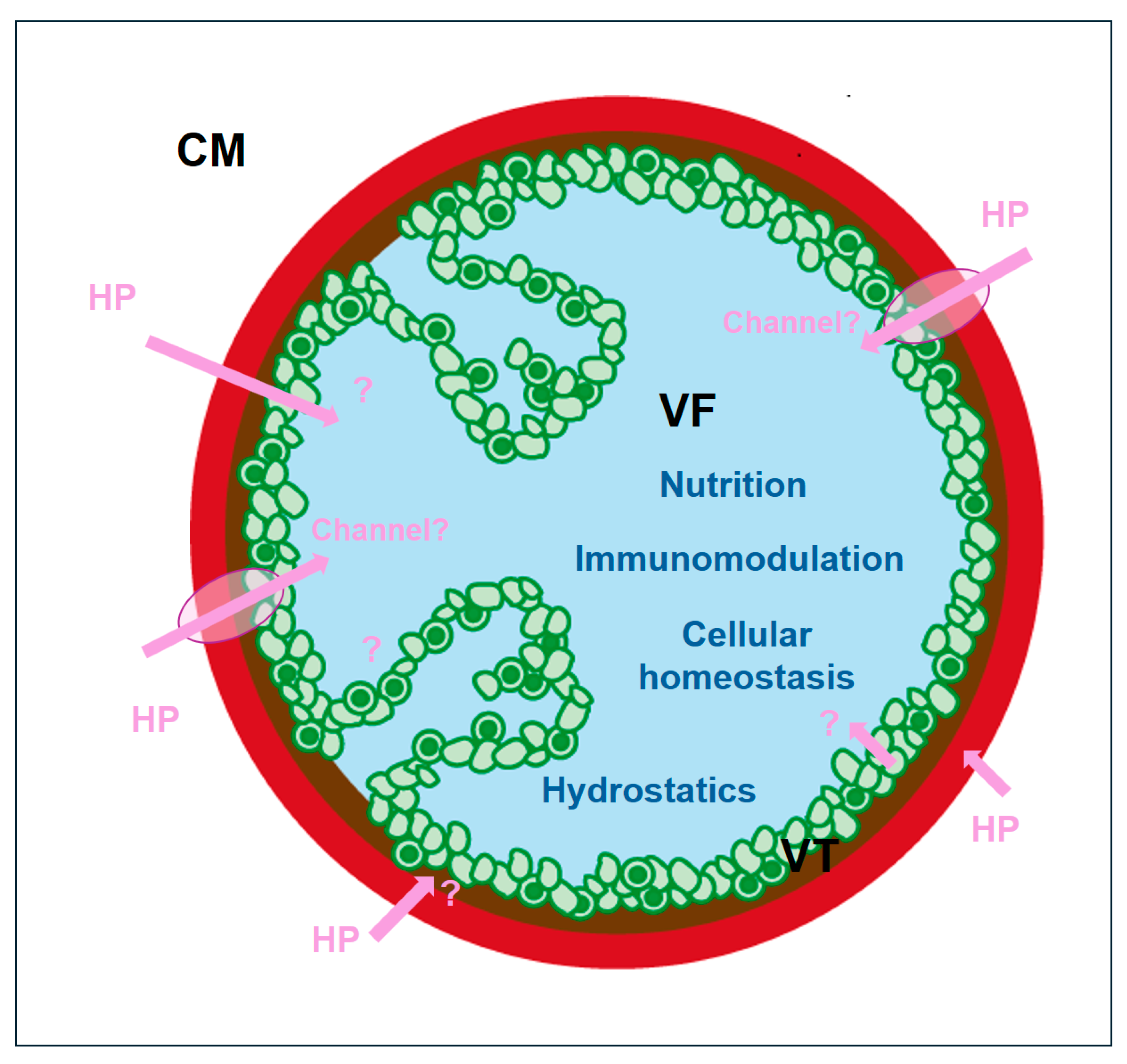
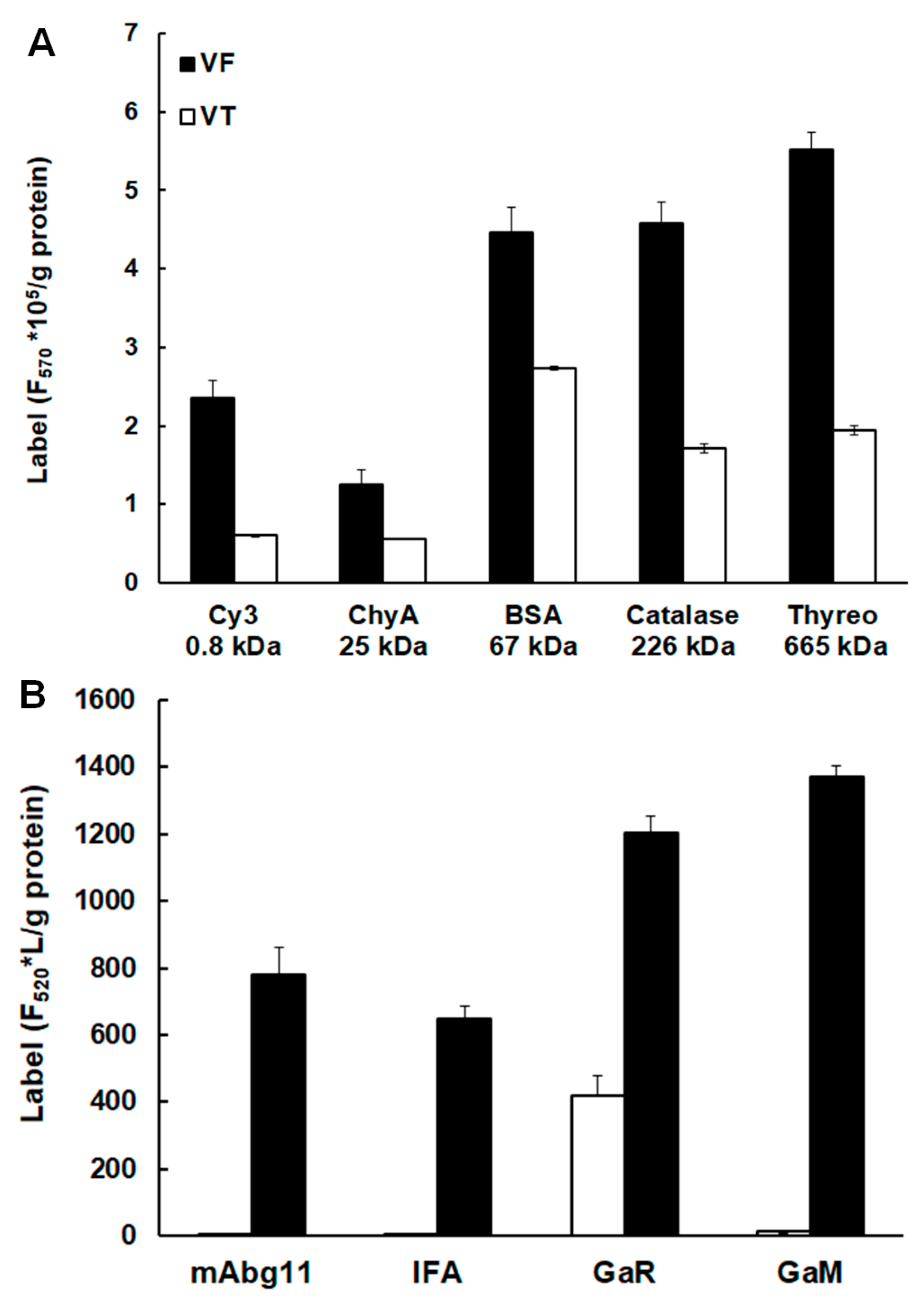
Metacestodes of Echinococcus multilocularis are the causative agents of alveolar echinococcosis, a neglected, life-threatening, zoonotic disease. To study these metacestodes in vitro, a model system using a culture medium conditioned by rat hepatoma cells is available. A key question is how the parasite interacts with the host and, in particular, which host-derived compounds are taken up. In this study, we focus on the uptake of host-derived proteins. Studies with artificially labeled proteins suggest that this uptake may occur independently of protein size or charge. Closer investigation using proteomics draws, however, a different picture. Of 1170 host (i.e., rat or bovine) proteins as identified by LC-MS/MS-based proteomics present in the culture medium, only 225 are found in metacestode vesicle tissue or fluid. Moreover, their relative abundances differ. Serum albumin, the most abundant culture medium host protein, is only the third most abundant protein in vesicle fluid, where Alpha-2-HS-glycoprotein becomes the most abundant protein. In vesicle fluid obtained ex vivo from experimentally infected mice, the situation is again different, with histone isoforms as the most abundant proteins. This suggests that while maintaining their internal milieu constant, metacestodes may adjust the spectrum of host proteins taken up. Potential uptake mechanisms and functions are discussed.
Keywords: homeostasis; helminth proteomics; host-parasite interaction; model system; systems biology homeostasis; helminth proteomics; host-parasite interaction; model system; systems biology