Article

m6A-Modified GATA2 Enhances Odontogenic Differentiation in Stem Cells from the Apical Papilla

1
Outpatient Department of Oral and Maxillofacial Surgery, School of Stomatology, Capital Medical University, Beijing 100070, China
2
Laboratory of Molecular Signaling and Stem Cells Therapy, Beijing Key Laboratory of Tooth Regeneration and Function Reconstruction, School of Stomatology, Capital Medical University, Beijing 100070, China
3
Beijing Laboratory of Oral Health, Capital Medical University, Beijing 100054, China
*
Author to whom correspondence should be addressed.
These authors contributed equally to this work.
Int. J. Mol. Sci. 2025, 26(7), 2920; https://doi.org/10.3390/ijms26072920
Submission received: 16 February 2025 / Revised: 14 March 2025 / Accepted: 15 March 2025 / Published: 24 March 2025
(This article belongs to the Section Molecular Biology)

Abstract

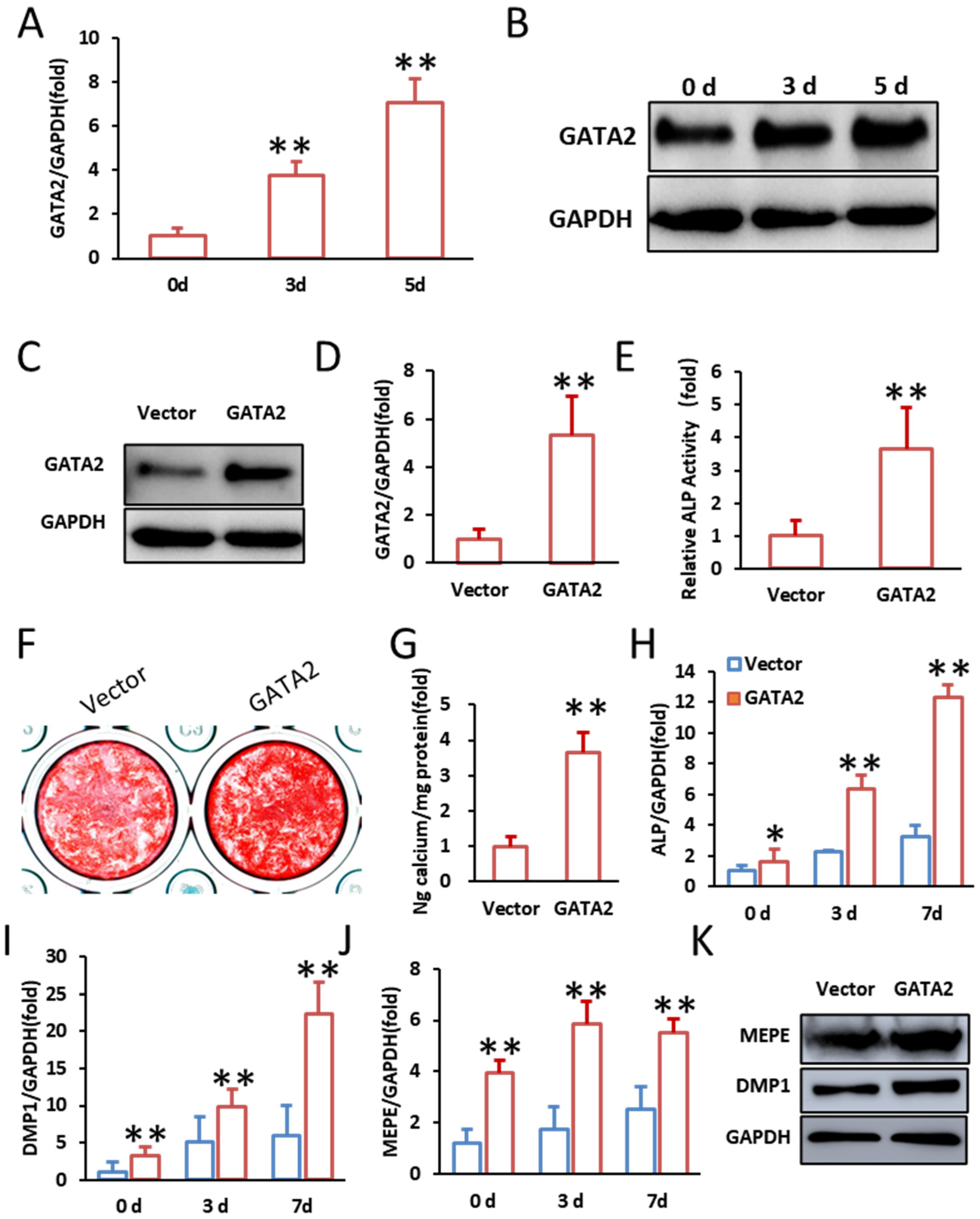
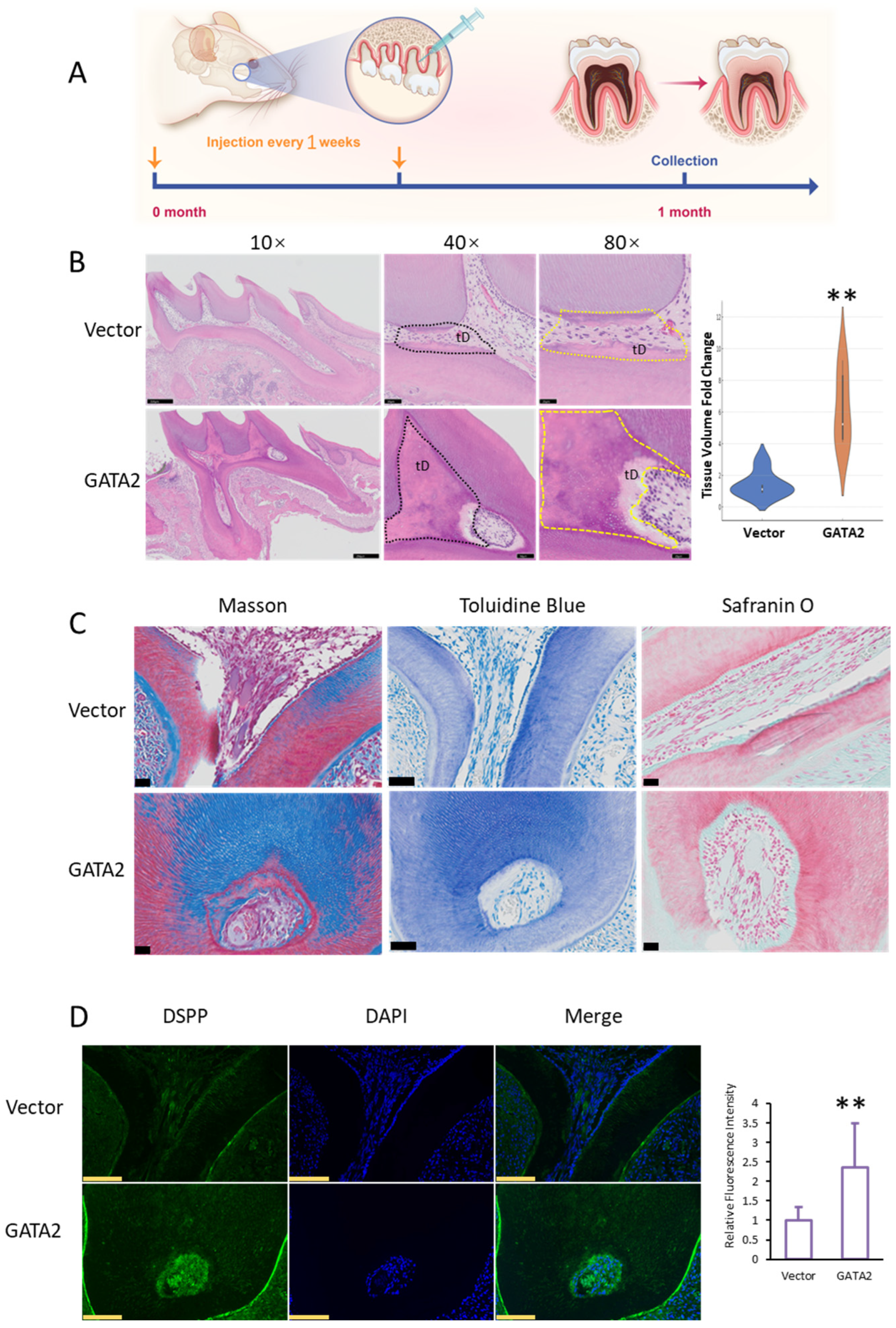
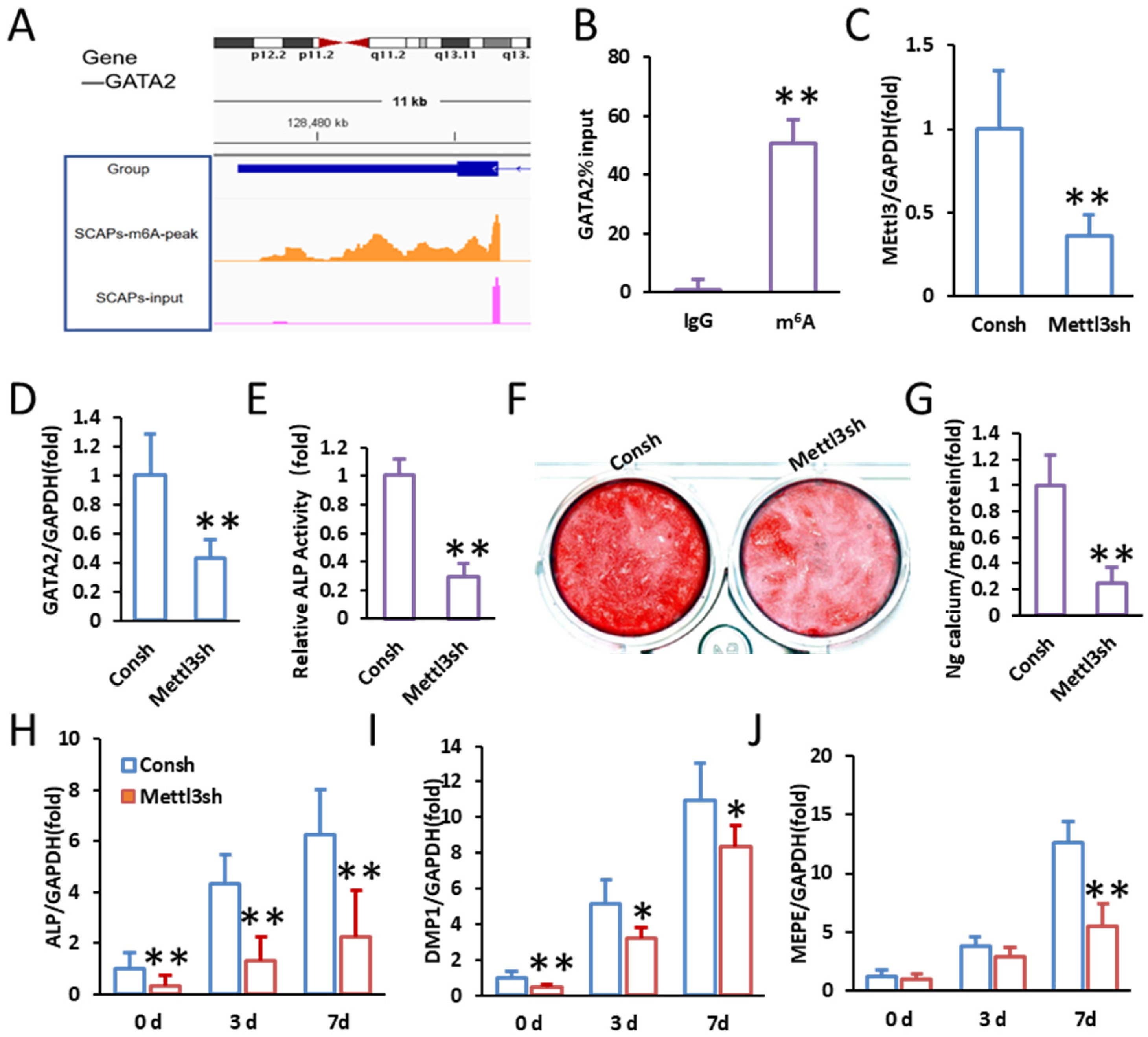
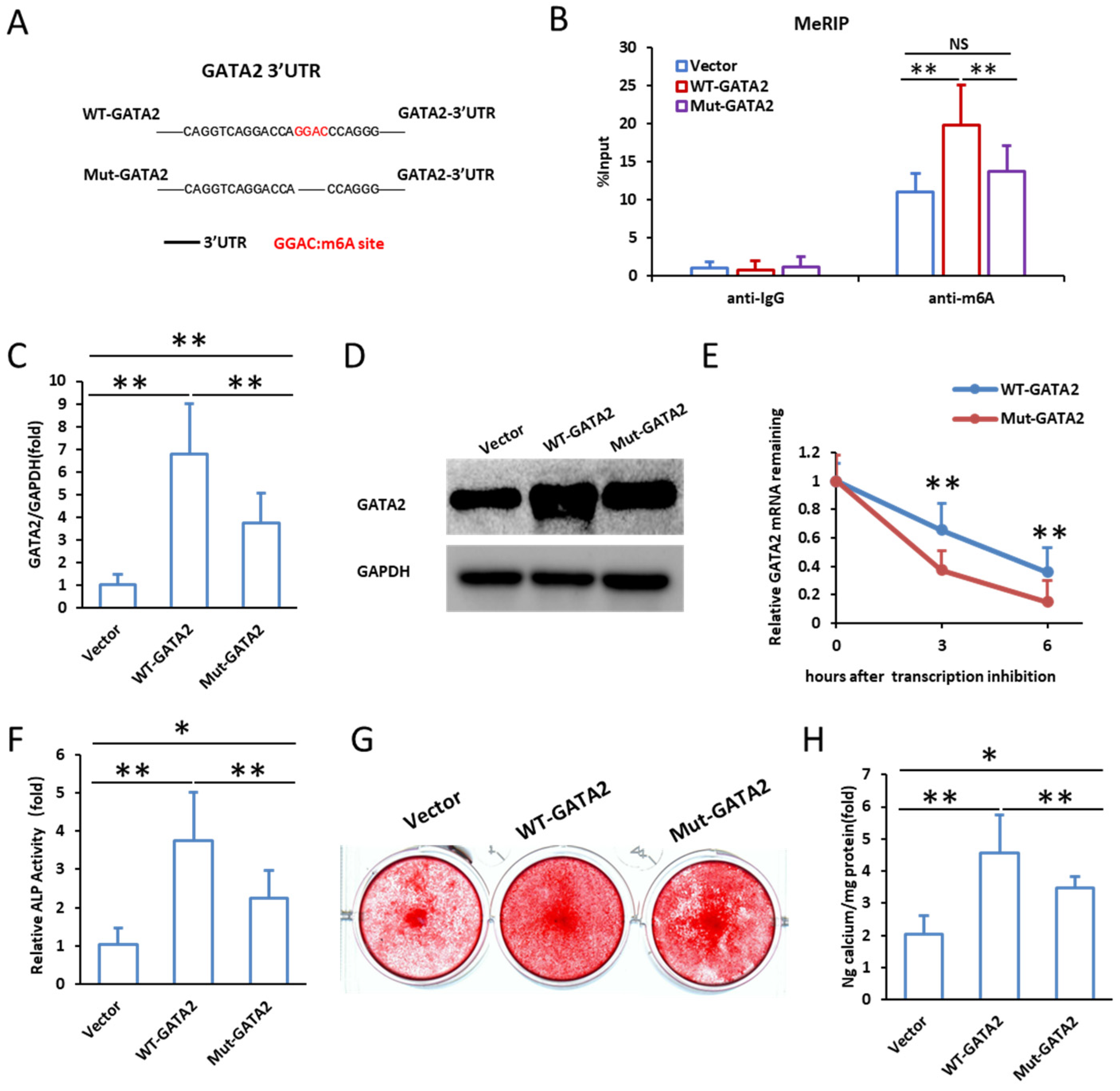
Epigenetic modifications play a crucial role in regulating stem cell differentiation. Among these, N6-methyladenosine (m6A) modification significantly impacts mRNA stability and translation. However, its role in dental stem cell differentiation remains largely unexplored. Functional assays, including ALP activity, alizarin red S staining, qPCR, and Western blot, were conducted to assess odontogenic differentiation. Then, an in vivo dentin formation model was used to validate our findings. Additionally, we employed RNA stability assays and m6A site mutagenesis to investigate the regulatory mechanism of m6A modification in GATA2-mediated differentiation. Our results demonstrated that overexpression of GATA2 significantly promoted SCAP odontogenic differentiation. Moreover, in vivo studies confirmed that GATA2 overexpression enhances dentin formation in mouse models. Conversely, knockdown of GATA2 or mutation of its m6A sites led to reduced mRNA stability and decreased odontogenic differentiation. m6A modification is enriched in the 3′ untranslated region (3′UTR) of GATA2 mRNA, regulating its stability and expression. Our findings indicate that m6A modification contributes to the post-transcriptional regulation of GATA2, enhancing its stability and promoting SCAP-mediated odontogenic differentiation and dentin formation. This study provides new insights into the epigenetic regulation of dental stem cells and suggests a potential molecular target for dental tissue regeneration.
Keywords: GATA2; m6A modification; odontogenic differentiation; SCAPs GATA2; m6A modification; odontogenic differentiation; SCAPs