Multi-Level Profiling of MAPK-Associated Genes and MicroRNAs Uncovers Regulatory Networks in Breast Cancer Subtypes
 , , , ,
Abstract
1. Introduction
2. Results
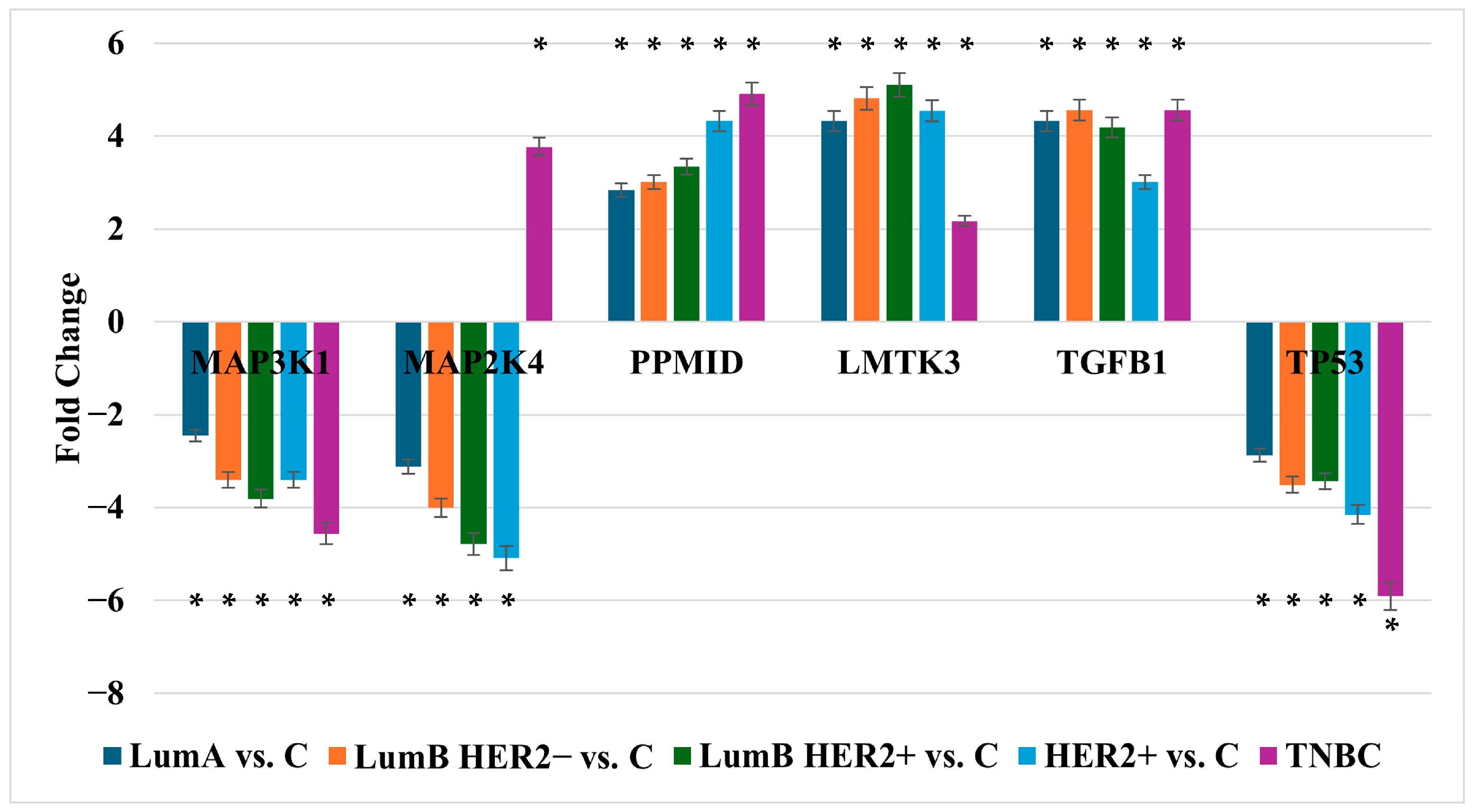
2.1. Differential Expression of MAPK-Associated Genes Across Breast Cancer Subtypes
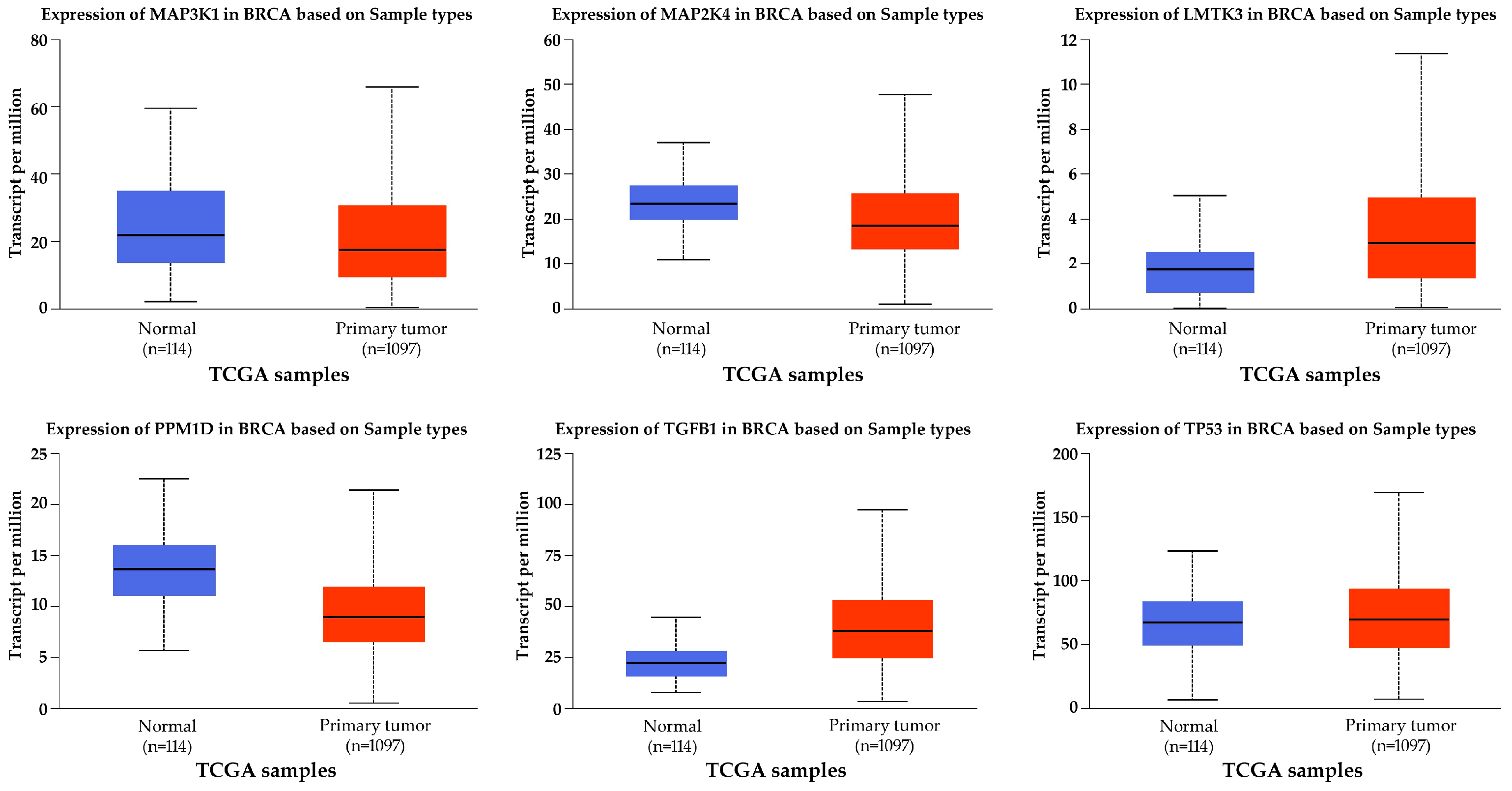
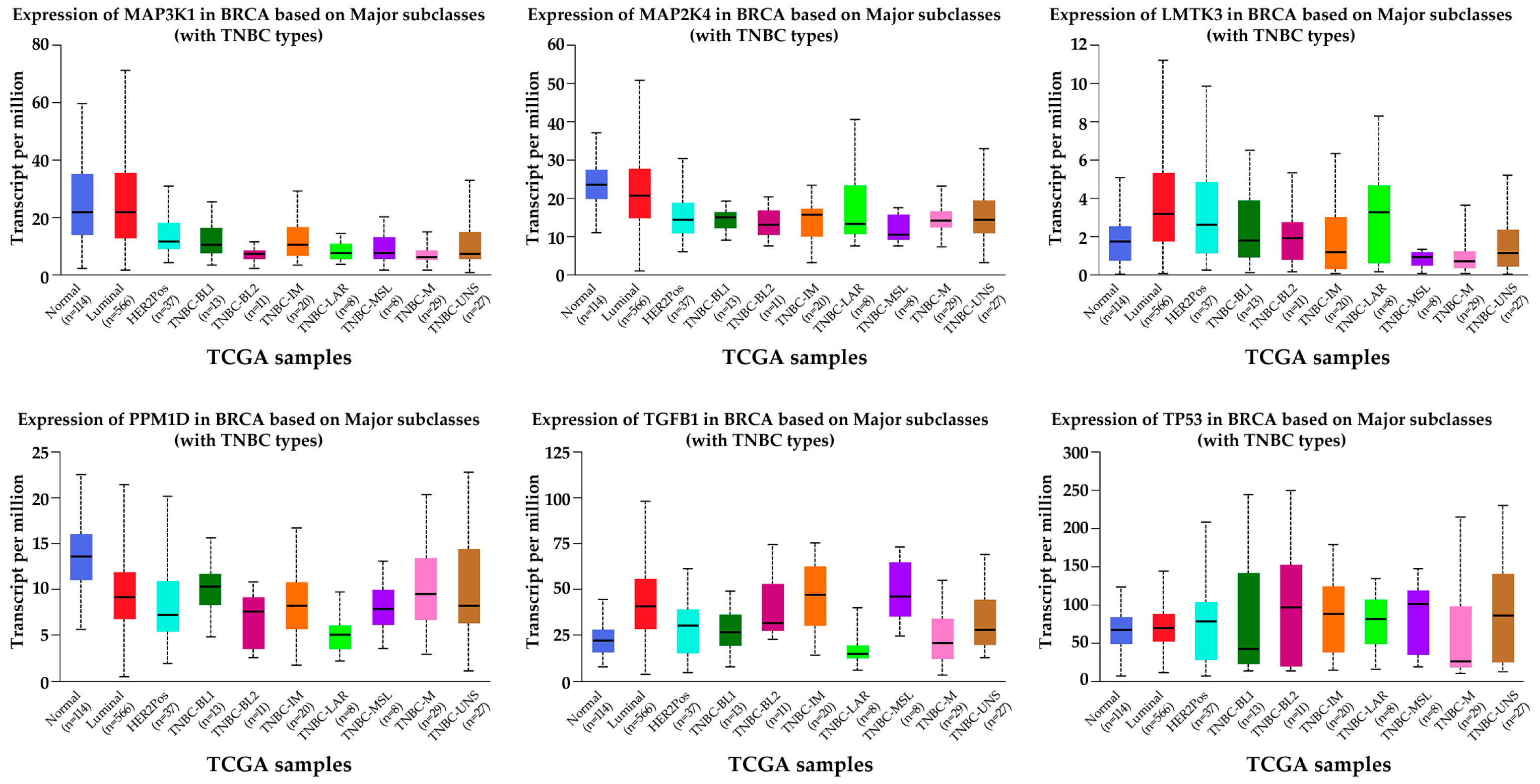
2.2. External Validation of MAPK-Associated Gene Expression Using University of Alabama at Birmingham Cancer Data Analysis Portal (UALCAN)
2.3. Prediction of MAPK Pathway Genes Expression Regulation by miRNA
2.4. Concentration of Selected Proteins in Breast Cancer Tissues and Control at the Protein Level
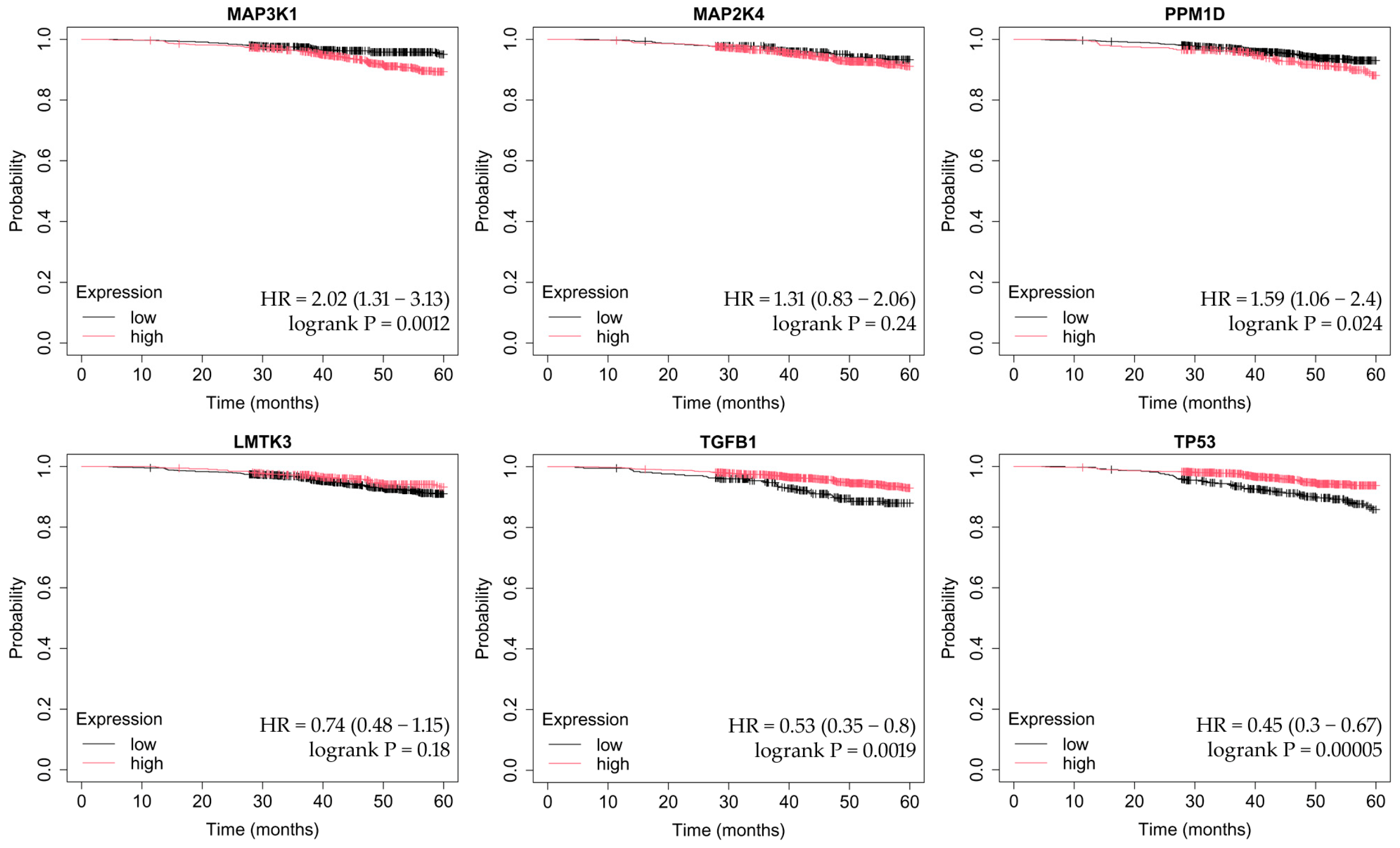
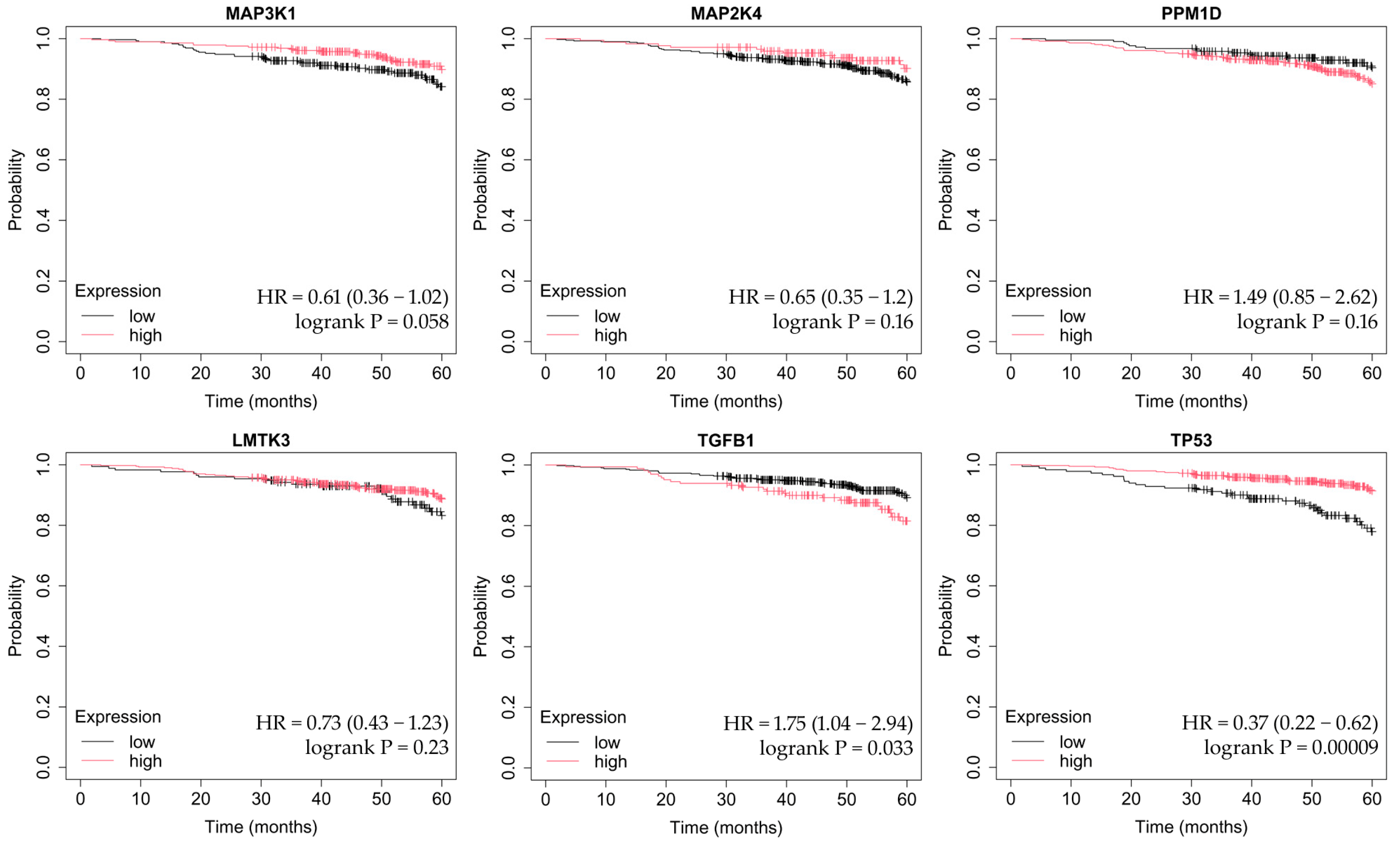
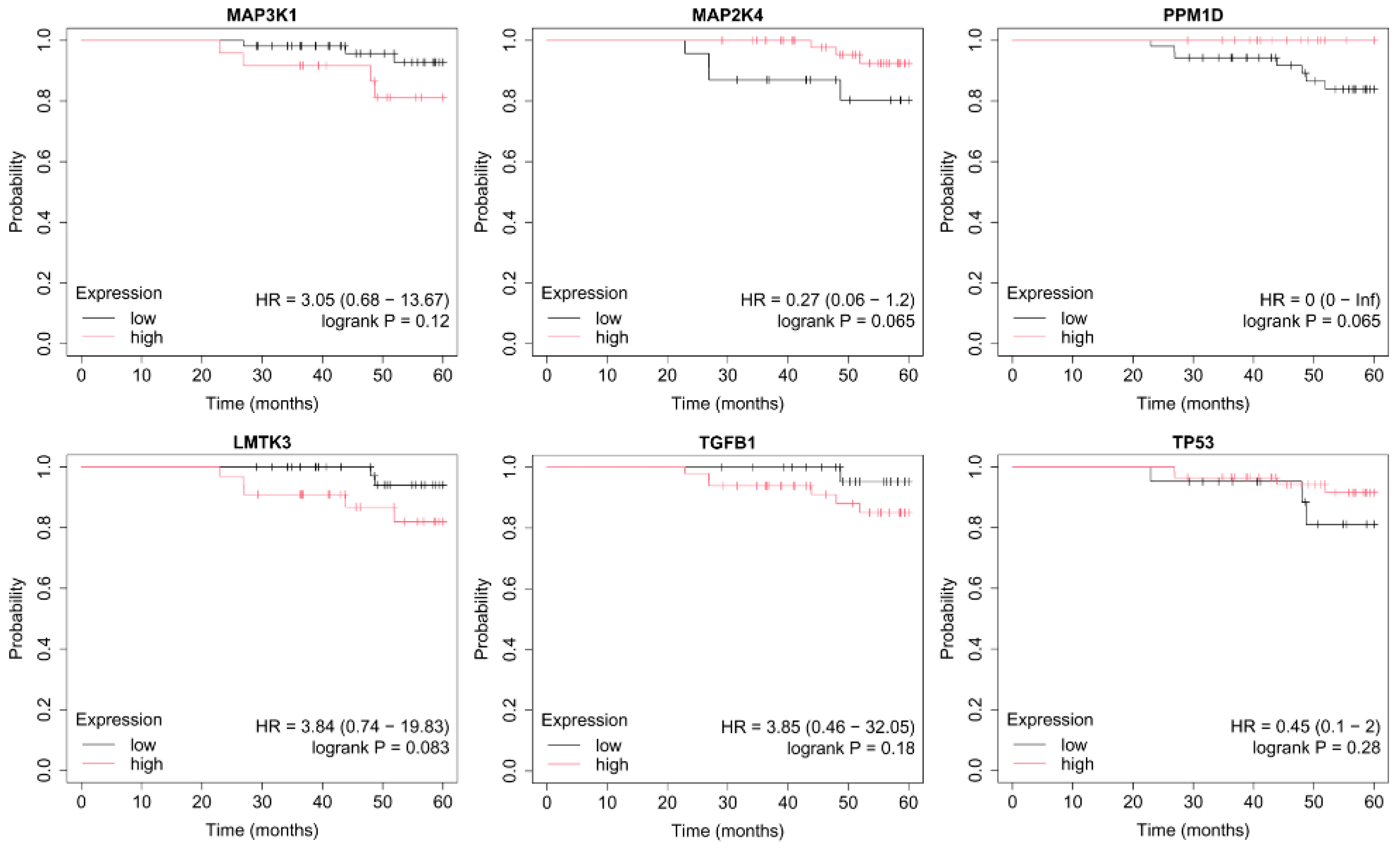
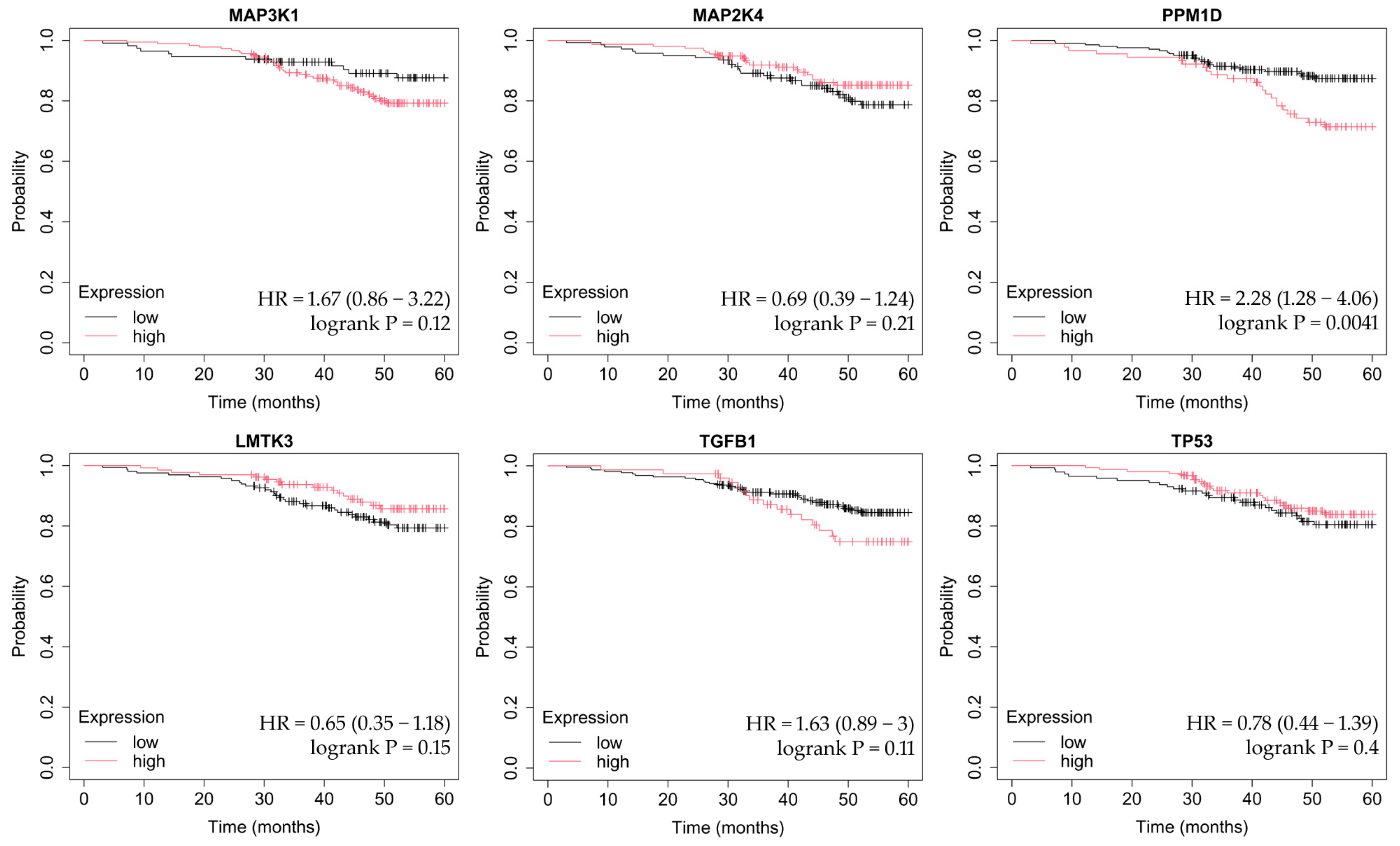
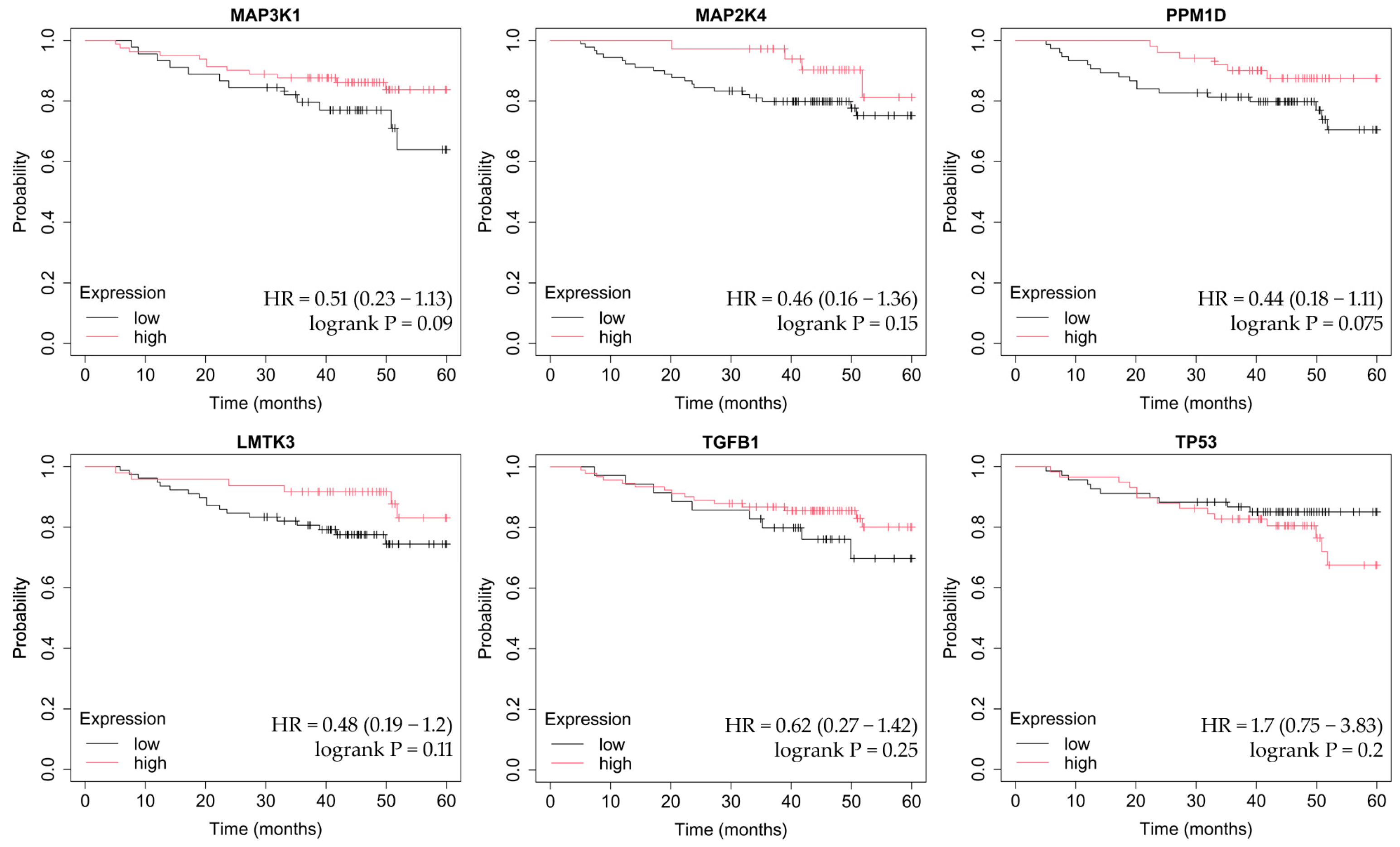
2.5. Overall Survival
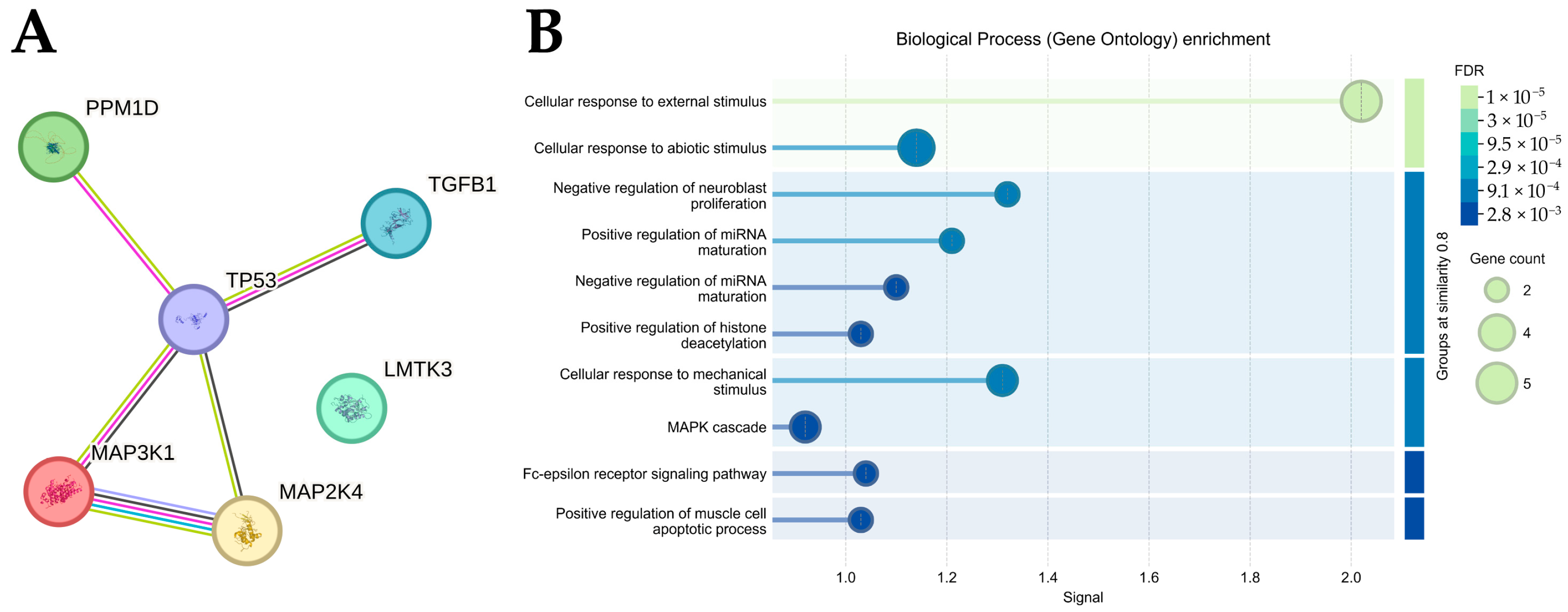
2.6. Functional Interaction Network and Enrichment Analysis of MAPK-Associated Genes
3. Discussion
4. Materials and Methods
4.1. Participants
4.2. Isolation of Total Ribonucleic Acid (RNA) from Tissues
4.3. mRNA Microarray Analysis
4.4. RT-qPCR Validation of Microarray Results
4.5. External Validation Using UALCAN Platform
4.6. Protein Quantification by ELISA
4.7. miRNA Profiling and Target Prediction
4.8. Statistical Analysis
5. Conclusions
Supplementary Materials
Author Contributions
Funding
Institutional Review Board Statement
Informed Consent Statement
Data Availability Statement
Conflicts of Interest
Abbreviations
| Abbreviation | Full Term |
| ACTB | Beta-Actin |
| ANOVA | Analysis of Variance |
| BC | Breast Cancer |
| BMI | Body Mass Index |
| C | Control |
| DNA | Deoxyribonucleic Acid |
| ELISA | Enzyme-Linked Immunosorbent Assay |
| EMT | Epithelial–Mesenchymal Transition |
| ER | Estrogen Receptor |
| ERK | Extracellular Signal-Regulated Kinase |
| FDR | False Discovery Rate |
| G*Power | General Power Analysis Program |
| HER2 | Human Epidermal Growth Factor Receptor 2 |
| IHC | Immunohistochemistry |
| JNK | c-Jun N-terminal Kinase |
| KEGG | Kyoto Encyclopedia of Genes and Genomes |
| LMTK3 | Lemur Tyrosine Kinase 3 |
| Log2FC | Log2 Fold Change |
| LumA | Luminal A Breast Cancer Subtype |
| LumB HER2− | HER2-Negative Luminal B Breast Cancer Subtype |
| LumB HER2+ | HER2-Positive Luminal B Breast Cancer Subtype |
| MAP2K4 | Mitogen-Activated Protein Kinase Kinase 4 |
| MAP3K1 | Mitogen-Activated Protein Kinase Kinase Kinase 1 |
| MAPK | Mitogen-Activated Protein Kinase |
| miRNA | microRNA |
| mRNA | Messenger Ribonucleic Acid |
| OS | Overall Survival |
| PCR | Polymerase Chain Reaction |
| PPI | Protein–Protein Interaction |
| PPM1D | Protein Phosphatase, Mg2+/Mn2+ Dependent 1D (WIP1) |
| PR | Progesterone Receptor |
| RNA | Ribonucleic Acid |
| RT-qPCR | Reverse Transcription Quantitative Polymerase Chain Reaction |
| SD | Standard Deviation |
| SMAD | Mothers Against Decapentaplegic Homolog |
| STRING | Search Tool for the Retrieval of Interacting Genes/Proteins |
| TGFB1 | Transforming Growth Factor Beta 1 |
| TNBC | Triple-Negative Breast Cancer |
| TP53 | Tumor Protein p53 |
| TGF-β | Transforming Growth Factor Beta |
| WIP1 | Wild-Type p53-Induced Phosphatase 1 |
References
- Sung, H.; Ferlay, J.; Siegel, R.L.; Laversanne, M.; Soerjomataram, I.; Jemal, A.; Bray, F. Global Cancer Statistics 2020: GLOBOCAN Estimates of Incidence and Mortality Worldwide for 36 Cancers in 185 Countries. CA Cancer J. Clin. 2021, 71, 209–249. [Google Scholar] [CrossRef] [PubMed]
- Liu, Y.-B.; Gao, X.-T.; Huang, L.-Y.; Liu, X.-L. Clinicopathological Characteristics and Prognostic Factors in Invasive Micropapillary Carcinoma of the Breast. Arch. Med. Sci. 2024, 20, 428–435. [Google Scholar] [CrossRef]
- Testa, U.; Castelli, G.; Pelosi, E. Breast Cancer: A Molecularly Heterogenous Disease Needing Subtype-Specific Treatments. Med. Sci. 2020, 8, 18. [Google Scholar]
- Rakha, E.A.; Tse, G.M.; Quinn, C.M. An Update on the Pathological Classification of Breast Cancer. Histopathology 2023, 82, 5–16. [Google Scholar] [CrossRef]
- Tsang, J.Y.; Gary, M.T. Molecular Classification of Breast Cancer. Adv. Anat. Pathol. 2020, 27, 27–35. [Google Scholar] [CrossRef]
- Lashen, A.G.; Toss, M.S.; Mongan, N.P.; Green, A.R.; Rakha, E.A. The Clinical Value of Progesterone Receptor Expression in Luminal Breast Cancer: A Study of a Large Cohort with Long-Term Follow-Up. Cancer 2023, 129, 1183–1194. [Google Scholar] [CrossRef] [PubMed]
- Wang, J.; Li, B.; Luo, M.; Huang, J.; Zhang, K.; Zheng, S.; Zhang, S.; Zhou, J. Progression from Ductal Carcinoma in Situ to Invasive Breast Cancer: Molecular Features and Clinical Significance. Sig. Transduct. Target. Ther. 2024, 9, 83. [Google Scholar] [CrossRef]
- Maqsood, Q.; Khan, M.U.; Fatima, T.; Khalid, S.; Malik, Z.I. Recent Insightsinto Breast Cancer: Molecular Pathways, Epigenetic Regulation, and Emerging Targeted Therapies. Breast Cancer 2025, 19, 11782234251355663. [Google Scholar] [CrossRef] [PubMed]
- Lavasani, M.A.; Moinfar, F. Molecular Classification of Breast Carcinomas with Particular Emphasis on “Basal-like” Carcinoma: A Critical Review. J. Biophotonics 2012, 5, 345–366. [Google Scholar] [CrossRef]
- Denkert, C.; Rachakonda, S.; Karn, T.; Weber, K.; Martin, M.; Marmé, F.; Untch, M.; Bonnefoi, H.; Kim, S.-B.; Seiler, S.; et al. Dynamics of Molecular Heterogeneity in High-Risk Luminal Breast Cancer—From Intrinsic to Adaptive Subtyping. Cancer Cell 2025, 43, 232–247.e4. [Google Scholar] [CrossRef]
- Caldarella, A.; Crocetti, E.; Bianchi, S.; Vezzosi, V.; Urso, C.; Biancalani, M.; Zappa, M. Female Breast Cancer Status According to ER, PR and HER2 Expression: A Population Based Analysis. Pathol. Oncol. Res. 2011, 17, 753–758. [Google Scholar] [CrossRef]
- Corti, C.; De Angelis, C.; Bianchini, G.; Malorni, L.; Giuliano, M.; Hamilton, E.; Jeselsohn, R.; Jhaveri, K.; Curigliano, G.; Criscitiello, C. Novel Endocrine Therapies: What Is next in Estrogen Receptor Positive, HER2 Negative Breast Cancer? Cancer Treat. Rev. 2023, 117, 102569. [Google Scholar] [CrossRef]
- Jin, X.; Zhou, Y.-F.; Ma, D.; Zhao, S.; Lin, C.-J.; Xiao, Y.; Fu, T.; Liu, C.-L.; Chen, Y.-Y.; Xiao, W.-X.; et al. Molecular Classification of Hormone Receptor-Positive HER2-Negative Breast Cancer. Nat. Genet. 2023, 55, 1696–1708. [Google Scholar] [CrossRef] [PubMed]
- Kumar, N.; Gann, P.H.; McGregor, S.M.; Sethi, A. Quantification of Subtype Purity in Luminal A Breast Cancer Predicts Clinical Characteristics and Survival. Breast Cancer Res. Treat. 2023, 200, 225–235. [Google Scholar] [CrossRef]
- Lafcı, O.; Celepli, P.; Öztekin, P.S.; Koşar, P.N. DCE-MRI Radiomics Analysis in Differentiating Luminal a and Luminal B Breast Cancer Molecular Subtypes. Acad. Radiol. 2023, 30, 22–29. [Google Scholar] [CrossRef]
- Yang, Z.; Liu, Y.; Huang, Y.; Chen, Z.; Zhang, H.; Yu, Y.; Wang, X.; Cao, X. The Regrouping of Luminal B (HER2 Negative), a Better Discriminator of Outcome and Recurrence Score. Cancer Med. 2023, 12, 2493–2504. [Google Scholar] [CrossRef] [PubMed]
- Falato, C.; Schettini, F.; Pascual, T.; Brasó-Maristany, F.; Prat, A. Clinical Implications of the Intrinsic Molecular Subtypes in Hormone Receptor-Positive and HER2-Negative Metastatic Breast Cancer. Cancer Treat. Rev. 2023, 112, 102496. [Google Scholar] [CrossRef] [PubMed]
- Thomas, A.; Reis-Filho, J.S.; Geyer, C.E., Jr.; Wen, H.Y. Rare Subtypes of Triple Negative Breast Cancer: Current Understanding and Future Directions. NPJ Breast Cancer 2023, 9, 55. [Google Scholar] [CrossRef] [PubMed]
- Liu, S.; Huang, J.; Zhang, Y.; Liu, Y.; Zuo, S.; Li, R. MAP2K4 Interacts with Vimentin to Activate the PI3K/AKT Pathway and Promotes Breast Cancer Pathogenesis. Aging 2019, 11, 10697–10710. [Google Scholar] [CrossRef]
- Asl, E.R.; Amini, M.; Najafi, S.; Mansoori, B.; Mokhtarzadeh, A.; Mohammadi, A.; Lotfinejad, P.; Bagheri, M.; Shirjang, S.; Lotfi, Z. Interplay between MAPK/ERK Signaling Pathway and MicroRNAs: A Crucial Mechanism Regulating Cancer Cell Metabolism and Tumor Progression. Life Sci. 2021, 278, 119499. [Google Scholar] [PubMed]
- Stefani, C.; Miricescu, D.; Stanescu-Spinu, I.-I.; Nica, R.I.; Greabu, M.; Totan, A.R.; Jinga, M. Growth Factors, PI3K/AKT/mTOR and MAPK Signaling Pathways in Colorectal Cancer Pathogenesis: Where Are We Now? Int. J. Mol. Sci. 2021, 22, 10260. [Google Scholar] [CrossRef]
- Braicu, C.; Buse, M.; Busuioc, C.; Drula, R.; Gulei, D.; Raduly, L.; Rusu, A.; Irimie, A.; Atanasov, A.G.; Slaby, O.; et al. A Comprehensive Review on MAPK: A Promising Therapeutic Target in Cancer. Cancers 2019, 11, 1618. [Google Scholar] [CrossRef]
- Gugliandolo, A.; Silvestro, S.; Sindona, C.; Bramanti, P.; Mazzon, E. MiRNA: Involvement of the MAPK Pathway in Ischemic Stroke. A Promising Therapeutic Target. Medicina 2021, 57, 1053. [Google Scholar] [CrossRef] [PubMed]
- Correia de Sousa, M.; Gjorgjieva, M.; Dolicka, D.; Sobolewski, C.; Foti, M. Deciphering miRNAs’ Action through miRNA Editing. Int. J. Mol. Sci. 2019, 20, 6249. [Google Scholar] [CrossRef] [PubMed]
- Safa, A.; Abak, A.; Shoorei, H.; Taheri, M.; Ghafouri-Fard, S. MicroRNAs as Regulators of ERK/MAPK Pathway: A Comprehensive Review. Biomed. Pharmacother. 2020, 132, 110853. [Google Scholar] [CrossRef]
- Otmani, K.; Lewalle, P. Tumor Suppressor miRNA in Cancer Cells and the Tumor Microenvironment: Mechanism of Deregulation and Clinical Implications. Front. Oncol. 2021, 11, 708765. [Google Scholar] [CrossRef] [PubMed]
- Reddy, K.B. MicroRNA (miRNA) in Cancer. Cancer Cell Int. 2015, 15, 38. [Google Scholar] [CrossRef]
- Ye, J.; Xu, M.; Tian, X.; Cai, S.; Zeng, S. Research Advances in the Detection of miRNA. J. Pharm. Anal. 2019, 9, 217–226. [Google Scholar] [CrossRef]
- Lao, D.T.; Quang, M.T.; Le, T.A.H. The Role of Hsa-miR-21 and Its Target Genes Involved in Nasopharyngeal Carcinoma. Asian Pac. J. Cancer Prev. 2021, 22, 4075–4083. [Google Scholar] [CrossRef]
- Plawgo, K.; Raczynska, K.D. Context-Dependent Regulation of Gene Expression by Non-Canonical Small RNAs. Noncoding RNA 2022, 8, 29. [Google Scholar] [CrossRef]
- Namdeo, P.K.; Mishra, S.; Das, A.; Tiwari, R.R.; Subbiah, R. The Interplay between microRNAs and Oxidative Stress and Its Implications in Respiratory Diseases. Free Radic. Res. 2025, 59, 667–687. [Google Scholar] [CrossRef]
- Chai, D.; Du, H.; Shi, Y. The Progress of miR-205 Regulating Apoptosis in Cancer. Front. Oncol. 2025, 15, 1532659. [Google Scholar] [CrossRef]
- Xiao, Y.; Humphries, B.; Yang, C.; Wang, Z. MiR-205 Dysregulations in Breast Cancer: The Complexity and Opportunities. Noncoding RNA 2019, 5, 53. [Google Scholar] [CrossRef]
- Shi, C.; Zhang, Z. Screening of Potentially Crucial Genes and Regulatory Factors Involved in Epithelial Ovarian Cancer Using Microarray Analysis. Oncol. Lett. 2017, 14, 725–732. [Google Scholar] [CrossRef]
- Maginnis, M.S. β-Arrestins and G Protein-Coupled Receptor Kinases in Viral Entry: A Graphical Review. Cell. Signal. 2023, 102, 110558. [Google Scholar] [CrossRef] [PubMed]
- Sirek, T.; Sirek, A.; Borawski, P.; Zmarzły, N.; Sułkowska, J.; Król-Jatręga, K.; Opławski, M.; Boroń, D.; Chalcarz, M.; Ossowski, P. miRNAs in Signal Transduction of SMAD Proteins in Breast Cancer. Int. J. Mol. Sci. 2024, 25, 10088. [Google Scholar] [CrossRef] [PubMed]
- Sirek, T.; Sirek, A.; Opławski, M.; Boroń, D.; Chalcarz, M.; Ossowski, P.; Dziobek, K.; Zmarzły, N.; Strojny, D.; Grabarek, B.O. Expression Profile of Messenger and Micro RNAs Related to the Histaminergic System in Patients with Five Subtypes of Breast Cancer. Front. Oncol. 2024, 14, 1407538. [Google Scholar] [CrossRef] [PubMed]
- Sirek, T.; Sirek, A.; Borawski, P.; Ryguła, I.; Król-Jatręga, K.; Opławski, M.; Boroń, D.; Chalcarz, M.; Ossowski, P.; Dziobek, K.; et al. Expression Profiles of Dopamine-Related Genes and miRNAs Regulating Their Expression in Breast Cancer. Int. J. Mol. Sci. 2024, 25, 6546. [Google Scholar] [CrossRef]
- Salemme, V.; Centonze, G.; Avalle, L.; Natalini, D.; Piccolantonio, A.; Arina, P.; Morellato, A.; Ala, U.; Taverna, D.; Turco, E.; et al. The Role of Tumor Microenvironment in Drug Resistance: Emerging Technologies to Unravel Breast Cancer Heterogeneity. Front. Oncol. 2023, 13, 1170264. [Google Scholar] [CrossRef]
- Andrade de Oliveira, K.; Sengupta, S.; Yadav, A.K.; Clarke, R. The Complex Nature of Heterogeneity and Its Roles in Breast Cancer Biology and Therapeutic Responsiveness. Front. Endocrinol. 2023, 14, 1083048. [Google Scholar] [CrossRef]
- Eiro, N.; Gonzalez, L.O.; Fraile, M.; Cid, S.; Schneider, J.; Vizoso, F.J. Breast Cancer Tumor Stroma: Cellular Components, Phenotypic Heterogeneity, Intercellular Communication, Prognostic Implications and Therapeutic Opportunities. Cancers 2019, 11, 664. [Google Scholar] [CrossRef]
- Ullah, R.; Yin, Q.; Snell, A.H.; Wan, L. RAF-MEK-ERK Pathway in Cancer Evolution and Treatment. Semin. Cancer Biol. 2022, 85, 123–154. [Google Scholar] [CrossRef]
- Yue, J.; López, J.M. Understanding MAPK Signaling Pathways in Apoptosis. Int. J. Mol. Sci. 2020, 21, 2346. [Google Scholar] [CrossRef] [PubMed]
- Cai, Y.-W.; Liu, C.-C.; Zhang, Y.-W.; Liu, Y.-M.; Chen, L.; Xiong, X.; Shao, Z.-M.; Yu, K.-D. MAP3K1 Mutations Confer Tumor Immune Heterogeneity in Hormone Receptor-Positive HER2-Negative Breast Cancer. J. Clin. Investig. 2024, 135, e183656. [Google Scholar] [CrossRef] [PubMed]
- Hong, Y.; He, J.; Deng, D.; Liu, Q.; Zu, X.; Shen, Y. Targeting Kinases That Regulate Programmed Cell Death: A New Therapeutic Strategy for Breast Cancer. J. Transl. Med. 2025, 23, 439. [Google Scholar] [CrossRef] [PubMed]
- Iuliano, L.; Dalla, E.; Picco, R.; Mallavarapu, S.; Minisini, M.; Malavasi, E.; Brancolini, C. Proteotoxic Stress-Induced Apoptosis in Cancer Cells: Understanding the Susceptibility and Enhancing the Potency. Cell Death Discov. 2022, 8, 407. [Google Scholar] [CrossRef]
- Otmani, K.; Rouas, R.; Lewalle, P. OncomiRs as Noncoding RNAs Having Functions in Cancer: Their Role in Immune Suppression and Clinical Implications. Front. Immunol. 2022, 13, 913951. [Google Scholar] [CrossRef]
- Nguyen, H.T.; Kacimi, S.E.O.; Nguyen, T.L.; Suman, K.H.; Lemus-Martin, R.; Saleem, H.; Do, D.N. MiR-21 in the Cancers of the Digestive System and Its Potential Role as a Diagnostic, Predictive, and Therapeutic Biomarker. Biology 2021, 10, 417. [Google Scholar] [CrossRef] [PubMed]
- van den Ende, N.S.; Nguyen, A.H.; Jager, A.; Kok, M.; Debets, R.; van Deurzen, C.H.M. Triple-Negative Breast Cancer and Predictive Markers of Response to Neoadjuvant Chemotherapy: A Systematic Review. Int. J. Mol. Sci. 2023, 24, 2969. [Google Scholar] [CrossRef]
- Liu, X.-D.; Zhang, Z.-W.; Wu, H.-W.; Liang, Z.-Y. A New Prognosis Prediction Model Combining TNM Stage with MAP2K4 and JNK in Postoperative Pancreatic Cancer Patients. Pathol. Res. Pr. 2021, 217, 153313. [Google Scholar] [CrossRef]
- Chen, L.; Lu, Q.; Chen, J.; Feng, R.; Yang, C. Upregulating miR-27a-3p Inhibits Cell Proliferation and Inflammation of Rheumatoid Arthritis Synovial Fibroblasts through Targeting Toll-like Receptor 5. Exp. Ther. Med. 2021, 22, 1227. [Google Scholar] [CrossRef] [PubMed]
- Wu, J.; Sun, Z.; Sun, H.; Li, Y. MicroRNA-27a Promotes Tumorigenesis via Targeting AKT in Triple Negative Breast Cancer. Mol. Med. Rep. 2018, 17, 562–570. [Google Scholar] [CrossRef]
- Ren, Y.; Fu, F.; Han, J. MiR-27a Modulates Radiosensitivity of Triple-Negative Breast Cancer (TNBC) Cells by Targeting CDC27. Med. Sci. Monit. 2015, 21, 1297–1303. [Google Scholar] [CrossRef] [PubMed]
- Zhang, L.-Y.; Chen, Y.; Jia, J.; Zhu, X.; He, Y.; Wu, L.-M. MiR-27a Promotes EMT in Ovarian Cancer through Active Wnt/β-Catenin Signalling by Targeting FOXO1. Cancer Biomark 2019, 24, 31–42. [Google Scholar] [CrossRef]
- Uyanik, B.; Goloudina, A.R.; Akbarali, A.; Grigorash, B.B.; Petukhov, A.V.; Singhal, S.; Eruslanov, E.; Chaloyard, J.; Lagorgette, L.; Hadi, T.; et al. Inhibition of the DNA Damage Response Phosphatase PPM1D Reprograms Neutrophils to Enhance Anti-Tumor Immune Responses. Nat. Commun. 2021, 12, 3622. [Google Scholar] [CrossRef]
- Kucheryavenko, A.S.; Muzyko, E.A.; Perfilova, V.N.; Kaplanov, K.D.; Frolov, M.Y. The Role of the PPM1D Gene in Tumor Pathogenesis. Biomed. Khim. 2025, 71, 19–28. [Google Scholar] [CrossRef] [PubMed]
- Zhang, L.; Hsu, J.I.; Goodell, M.A. PPM1D in Solid and Hematologic Malignancies: Friend and Foe? Mol. Cancer Res. 2022, 20, 1365–1378. [Google Scholar] [CrossRef]
- Milosevic, J.; Treis, D.; Fransson, S.; Gallo-Oller, G.; Sveinbjörnsson, B.; Eissler, N.; Tanino, K.; Sakaguchi, K.; Martinsson, T.; Wickström, M.; et al. PPM1D Is a Therapeutic Target in Childhood Neural Tumors. Cancers 2021, 13, 6042. [Google Scholar] [CrossRef] [PubMed]
- Whitaker, R.H.; Cook, J.G. Stress Relief Techniques: P38 MAPK Determines the Balance of Cell Cycle and Apoptosis Pathways. Biomolecules 2021, 11, 1444. [Google Scholar] [CrossRef] [PubMed]
- Shi, T.; van Soest, D.M.K.; Polderman, P.E.; Burgering, B.M.T.; Dansen, T.B. DNA Damage and Oxidant Stress Activate P53 through Differential Upstream Signaling Pathways. Free Radic. Biol. Med. 2021, 172, 298–311. [Google Scholar] [CrossRef]
- Ghosh, S.; Javia, A.; Shetty, S.; Bardoliwala, D.; Maiti, K.; Banerjee, S.; Khopade, A.; Misra, A.; Sawant, K.; Bhowmick, S. Triple Negative Breast Cancer and Non-Small Cell Lung Cancer: Clinical Challenges and Nano-Formulation Approaches. J. Control Release 2021, 337, 27–58. [Google Scholar] [CrossRef]
- Xu, Y.; Zhang, H.; Nguyen, V.T.M.; Angelopoulos, N.; Nunes, J.; Reid, A.; Buluwela, L.; Magnani, L.; Stebbing, J.; Giamas, G. LMTK3 Represses Tumor Suppressor-like Genes through Chromatin Remodeling in Breast Cancer. Cell Rep. 2015, 12, 837–849. [Google Scholar] [CrossRef]
- Rani, A.; Stebbing, J.; Giamas, G.; Murphy, J. Endocrine Resistance in Hormone Receptor Positive Breast Cancer-From Mechanism to Therapy. Front. Endocrinol. 2019, 10, 245. [Google Scholar] [CrossRef]
- Anbarasu, K.; Jayanthi, S. Identification of Curcumin Derivatives as Human LMTK3 Inhibitors for Breast Cancer: A Docking, Dynamics, and MM/PBSA Approach. 3 Biotech 2018, 8, 228. [Google Scholar] [CrossRef]
- Wang, X.; Eichhorn, P.J.A.; Thiery, J.P. TGF-β, EMT, and Resistance to Anti-Cancer Treatment. Semin. Cancer Biol. 2023, 97, 1–11. [Google Scholar] [CrossRef] [PubMed]
- Luo, W.; Shi, Q.; Han, M.; Zhang, Z.; Reiter, R.J.; Ashrafizadeh, M.; Nabavi, N.; Sethi, G.; Nicot, C.; Mao, Y. TGF-β-Driven EMT in Cancer Progression and Drug Resistance. Cytokine Growth Factor Rev. 2025, 85, 11–25. [Google Scholar] [CrossRef] [PubMed]
- Chen, M.; Wu, C.; Fu, Z.; Liu, S. ICAM1 Promotes Bone Metastasis via Integrin-mediated TGF-β/EMT Signaling in Triple-negative Breast Cancer. Cancer Sci. 2022, 113, 3751–3765. [Google Scholar] [CrossRef]
- Janus, P.; Kuś, P.; Jaksik, R.; Vydra, N.; Toma-Jonik, A.; Gramatyka, M.; Kurpas, M.; Kimmel, M.; Widłak, W. Transcriptional Responses to Direct and Indirect TGFB1 Stimulation in Cancerous and Noncancerous Mammary Epithelial Cells. Cell Commun. Signal 2024, 22, 522. [Google Scholar] [CrossRef] [PubMed]
- Chen, S.; Liu, S.; Ma, K.; Zhao, L.; Lin, H.; Shao, Z. TGF-β Signaling in Intervertebral Disc Health and Disease. Osteoarthr. Cartil. 2019, 27, 1109–1117. [Google Scholar] [CrossRef]
- Rizzotto, D.; Englmaier, L.; Villunger, A. At a Crossroads to Cancer: How P53-Induced Cell Fate Decisions Secure Genome Integrity. Int. J. Mol. Sci. 2021, 22, 10883. [Google Scholar] [CrossRef]
- Janic, A.; Abad, E.; Amelio, I. Decoding P53 Tumor Suppression: A Crosstalk between Genomic Stability and Epigenetic Control? Cell Death Differ. 2025, 32, 1–8. [Google Scholar] [CrossRef] [PubMed]
- Marvalim, C.; Datta, A.; Lee, S.C. Role of P53 in Breast Cancer Progression: An Insight into P53 Targeted Therapy. Theranostics 2023, 13, 1421–1442. [Google Scholar] [CrossRef] [PubMed]
- Berke, T.P.; Slight, S.H.; Hyder, S.M. Role of Reactivating Mutant P53 Protein in Suppressing Growth and Metastasis of Triple-Negative Breast Cancer. Onco. Targets Ther. 2022, 15, 23–30. [Google Scholar] [CrossRef] [PubMed]
- Zhang, Z.; Hao, R.; Guo, Q.; Zhang, S.; Wang, X. TP53 Mutation Infers a Poor Prognosis and Is Correlated to Immunocytes Infiltration in Breast Cancer. Front. Cell Dev. Biol. 2021, 9, 759154. [Google Scholar] [CrossRef] [PubMed]
- Wang, Z.; Strasser, A.; Kelly, G.L. Should Mutant TP53 Be Targeted for Cancer Therapy? Cell Death Differ 2022, 29, 911–920. [Google Scholar] [CrossRef]
- Agupitan, A.D.; Neeson, P.; Williams, S.; Howitt, J.; Haupt, S.; Haupt, Y. P53: A Guardian of Immunity Becomes Its Saboteur through Mutation. Int. J. Mol. Sci. 2020, 21, 3452. [Google Scholar] [CrossRef]
- Patel, S.A.; Minn, A.J. Combination Cancer Therapy with Immune Checkpoint Blockade: Mechanisms and Strategies. Immunity 2018, 48, 417–433. [Google Scholar] [CrossRef]
- Luo, K. Signaling Cross Talk between TGF-β/Smad and Other Signaling Pathways. Cold Spring Harb. Perspect. Biol. 2017, 9, a022137. [Google Scholar] [CrossRef]
- Zhang, J.-G.; Xu, C.; Zhang, L.; Zhu, W.; Shen, H.; Deng, H.-W. Identify Gene Expression Pattern Change at Transcriptional and Post-Transcriptional Levels. Transcription 2019, 10, 137–146. [Google Scholar] [CrossRef]
- Chandrashekar, D.S.; Karthikeyan, S.K.; Korla, P.K.; Patel, H.; Shovon, A.R.; Athar, M.; Netto, G.J.; Qin, Z.S.; Kumar, S.; Manne, U.; et al. UALCAN: An Update to the Integrated Cancer Data Analysis Platform. Neoplasia 2022, 25, 18–27. [Google Scholar] [CrossRef]
- Chen, Y.; Wang, X. miRDB: An Online Database for Prediction of Functional microRNA Targets. Nucleic Acids Res. 2020, 48, D127–D131. [Google Scholar] [CrossRef] [PubMed]
- Faul, F.; Erdfelder, E.; Buchner, A.; Lang, A.-G. Statistical Power Analyses Using G*Power 3.1: Tests for Correlation and Regression Analyses. Behav. Res. Methods. 2009, 41, 1149–1160. [Google Scholar] [CrossRef] [PubMed]
- Krajowy Rejestr Nowotworów. Nowotwór Piersi. 2019. Available online: https://onkologia.org.pl/sites/default/files/Pier%C5%9B.pdf (accessed on 1 February 2024).
- Kalkulator Doboru Próby. Available online: https://www.naukowiec.org/dobor.html (accessed on 19 April 2022).
- Győrffy, B. Integrated Analysis of Public Datasets for the Discovery and Validation of Survival-Associated Genes in Solid Tumors. Innovation 2024, 5, 100625. [Google Scholar] [CrossRef] [PubMed]
- Győrffy, B. Transcriptome-Level Discovery of Survival-Associated Biomarkers and Therapy Targets in Non-Small-Cell Lung Cancer. Br. J. Pharmacol. 2024, 181, 362–374. [Google Scholar] [CrossRef] [PubMed]
- Szklarczyk, D.; Kirsch, R.; Koutrouli, M.; Nastou, K.; Mehryary, F.; Hachilif, R.; Gable, A.L.; Fang, T.; Doncheva, N.T.; Pyysalo, S.; et al. The STRING Database in 2023: Protein-Protein Association Networks and Functional Enrichment Analyses for Any Sequenced Genome of Interest. Nucleic Acids Res. 2023, 51, D638–D646. [Google Scholar] [CrossRef] [PubMed]



| ID | mRNA | Log2 Fold Change | ||||
|---|---|---|---|---|---|---|
| LumA vs. C | LumB HER2− vs. C | LumB HER2+ vs. C | HER2+ vs. C | TNBC vs. C | ||
| 214786_at | MAP3K1 | −2.87 | −3.14 | −3.65 | −3.76 | −4.32 |
| 225927_at | −2.19 | −3.25 | −3.71 | −3.19 | −4.61 | |
| 203265_s_at | MAP2K4 | −3.43 | −4.51 | −4.71 | −4.65 | 3.89 |
| 203266_s_at | −3.18 | −4.41 | −4.76 | −4.81 | 3.81 | |
| 204566_at | PPM1D | 2.71 | 2.98 | 3.45 | 4.18 | 4.87 |
| 230330_at | 2.19 | 3.12 | 3.19 | 4.09 | 4.56 | |
| 1557103_a_at | LMTK3 | 4.56 | 4.71 | 4.98 | 4.88 | 2.19 |
| 203084_at | TGFB1 | 4.80 | 4.43 | 4.07 | 2.97 | 5.18 |
| 203085_s_at | 4.00 | 4.33 | 3.31 | 2.17 | 4.10 | |
| 201746_at | TP53 | −3.01 | −3.87 | −3.71 | −3.99 | −5.65 |
| 211300_s_at | −3.16 | −3.52 | −3.32 | −4.09 | −5.71 | |
| mRNA | miRNA | Target Score | Log2 Fold Change | ||||
|---|---|---|---|---|---|---|---|
| LumA vs. C | LumB HER2− vs. C | LumB HER2+ vs. C | HER2+ vs. C | TNBC | |||
| MAP3K1 | hsa-miR-21-3p | 94 | 2.11 ± 0.41 * | 2.65 ± 0.18 * | 2.45 ± 0.32 * | 2.91 ± 0.12 * | 3.19 ± 0.65 * |
| hsa-miR-23c | 97 | −3.12 ± 0.56 * | −3.54 ± 0.71 * | −3.19 ± 0.61 * | −2.87 ± 0.87 * | −3.88 ± 0.71 * | |
| MAP2K4 | hsa-miR-27a-3p | 92 | 3.12 ± 0.71 * | 3.19 ± 0.87 * | 2.99 ± 0.81 * | 4.51 ± 0.19 * | 4.81 ± 0.91 * |
| PPM1D | hsa-miR-205-3p | 90 | 2.91 ± 0.76 * | 2.01 ± 0.22 * | −3.41 ± 0.91 * | −3.17 ± 0.81 * | −5.91 ± 1.07 * |
| TP53 | hsa-miR-300 | 89 | −3.12 ± 0.17 * | −3.87 ± 0.65 * | −4.16 ± 0.91 * | −4.12 ± 0.78 * | −5.61 ± 1.01 * |
| Protein | Control | LumA | LumB HER2− | LumB HER2+ | HER2+ | TNBC |
|---|---|---|---|---|---|---|
| MAPK3K1 [ng/mL] | 3.45 ± 0.31 | 5.87 ± 0.43 * | 7.67 ± 0.81 * | 10.23 ± 0.81 * | 11.23 ± 1.92 * | 15.44 ± 0.56 * |
| MAP2K4 [ng/mL] | 581.92 ± 17.71 | 321.94 ± 7.65 * | 316.71 ± 10.41 * | 272.12 ± 11.61 * | 200.12 ± 12.23 * | 225.12 ± 18.81 * |
| PPM1D [ng/mL] | 1.12 ± 0.18 | 3.91 ± 0.92 * | 4.18 ± 0.54 * | 5.06 ± 0.61 * | 5.87 ± 0.91 * | 7.13 ± 0.42 * |
| LMTK3 [ng/mL] | 0.47 ± 0.03 | 0.91 ± 0.23 * | 1.23 ± 0.26 * | 4.32 ± 0.89 * | 4.96 ± 0.54 * | 6.79 ± 0.19 * |
| TGFB1 [pg/mL] | 79.81 ± 2.13 | 169.18 ± 5.65 * | 198.98 ± 12.56 * | 331.98 ± 32.19 * | 391.76 ± 40.16 * | 544.92 ± 29.81 * |
| TP53 [pg/mL] | 1341.01 ± 18.19 | 561.91 ± 10.91 * | 544.91 ± 9.61 * | 577.19 ± 9.1 8* | 918.81 ± 54.12 * | 1287.19 ± 31.41 * |
| mRNA | Nucleotide Sequence | |
|---|---|---|
| MAP3K1 | Forward | 5′-CCACAGAGAACAGTTCCCCT-3′ |
| Reverse | 5′-CCATTGGCTTTGGTTGCTCT-3′ | |
| MAP2K4 | Forward | 5′-TCGGGCTTGAGTGAGAAGAG-3′ |
| Reverse | 5′-GAGCACATCGATCCCCAAAC-3′ | |
| PPM1D | Forward | 5′-TGGGTGAGCATGGACAATCT-3′ |
| Reverse | 5′-GGTGGTGTAGAACATGGGGA-3′ | |
| LMTK3 | Forward | 5′-CCTTCGTGGTTCAAGTGAGC-3′ |
| Reverse | 5′-CCCGGGACTTTCTCTCTGTT-3′ | |
| TGFB1 | Forward | 5′-TGAACCGGCCTTTCCTGCTTCTCATG-3′ |
| Reverse | 5′-CGGAAGTCAATGTACAGCTGCCGC-3′ | |
| TP53 | Forward | 5′-TGGCCATCTACAAGCAGTCA-3′ |
| Reverse | 5′-CGGTACAGTCAGAGCCAACCT-3′ | |
| Reverse | 5′-CGGAAGTCAATGTACAGCTGCCGC-3′ | |
| ACTB | Forward | 5′-TCACCCACACTGTGCC CATCTACGA-3′ |
| Reverse | 5′-CAGCGGAACCGCTCATTGCCAATGG-3′ | |
Disclaimer/Publisher’s Note: The statements, opinions and data contained in all publications are solely those of the individual author(s) and contributor(s) and not of MDPI and/or the editor(s). MDPI and/or the editor(s) disclaim responsibility for any injury to people or property resulting from any ideas, methods, instructions or products referred to in the content. |
© 2025 by the authors. Licensee MDPI, Basel, Switzerland. This article is an open access article distributed under the terms and conditions of the Creative Commons Attribution (CC BY) license (https://creativecommons.org/licenses/by/4.0/).
Share and Cite
Król-Jatręga, K.; Mitka-Krysiak, E.; Boroń, K.; Ossowski, P.; Zmarzły, N.; Ordon, P.; Kulej, W.; Sirek, T.; Sirek, A.; Boroń, D.; et al. Multi-Level Profiling of MAPK-Associated Genes and MicroRNAs Uncovers Regulatory Networks in Breast Cancer Subtypes. Int. J. Mol. Sci. 2025, 26, 11831. https://doi.org/10.3390/ijms262411831
Król-Jatręga K, Mitka-Krysiak E, Boroń K, Ossowski P, Zmarzły N, Ordon P, Kulej W, Sirek T, Sirek A, Boroń D, et al. Multi-Level Profiling of MAPK-Associated Genes and MicroRNAs Uncovers Regulatory Networks in Breast Cancer Subtypes. International Journal of Molecular Sciences. 2025; 26(24):11831. https://doi.org/10.3390/ijms262411831
Chicago/Turabian StyleKról-Jatręga, Katarzyna, Elżbieta Mitka-Krysiak, Kacper Boroń, Piotr Ossowski, Nikola Zmarzły, Paweł Ordon, Wojciech Kulej, Tomasz Sirek, Agata Sirek, Dariusz Boroń, and et al. 2025. "Multi-Level Profiling of MAPK-Associated Genes and MicroRNAs Uncovers Regulatory Networks in Breast Cancer Subtypes" International Journal of Molecular Sciences 26, no. 24: 11831. https://doi.org/10.3390/ijms262411831
APA StyleKról-Jatręga, K., Mitka-Krysiak, E., Boroń, K., Ossowski, P., Zmarzły, N., Ordon, P., Kulej, W., Sirek, T., Sirek, A., Boroń, D., Wyrobiec, G., Prudnikov, Y., & Grabarek, B. O. (2025). Multi-Level Profiling of MAPK-Associated Genes and MicroRNAs Uncovers Regulatory Networks in Breast Cancer Subtypes. International Journal of Molecular Sciences, 26(24), 11831. https://doi.org/10.3390/ijms262411831