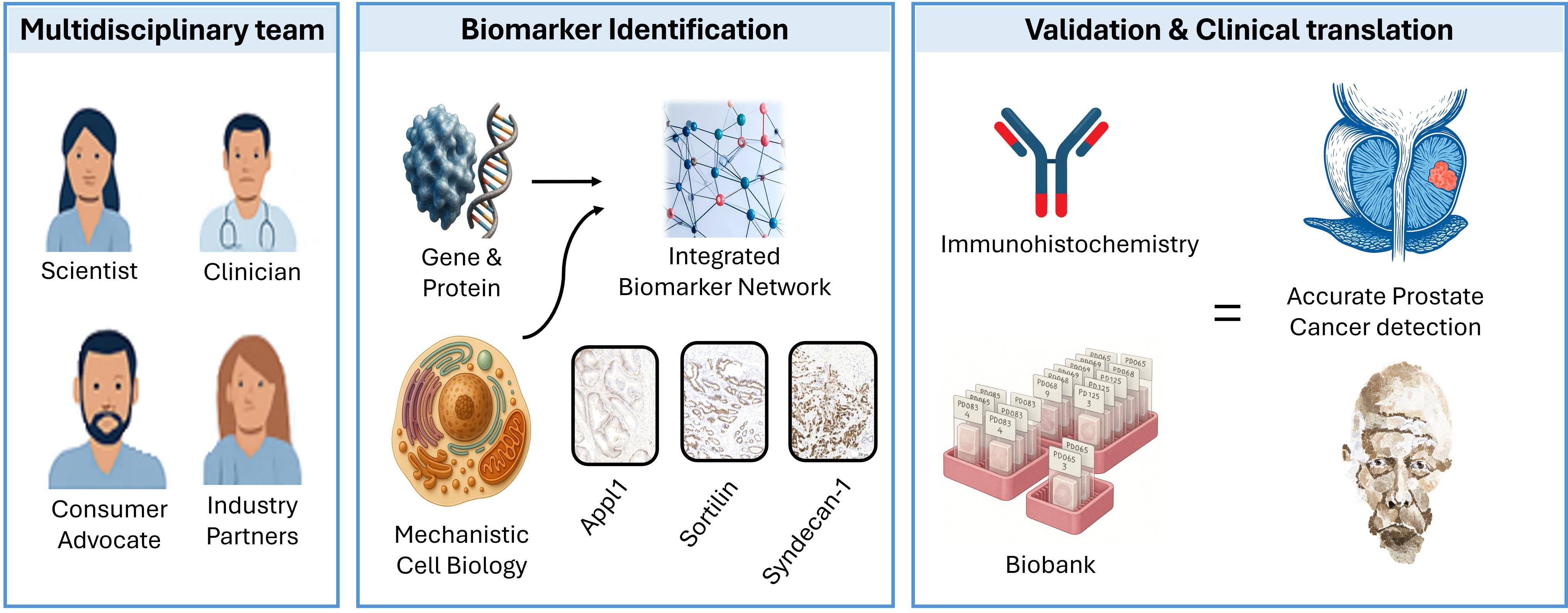
Pathogenesis-Guided Biomarker Assessment: A Shift in Prostate Cancer Diagnostics



Abstract
1. Introduction
2. Overcoming the Limitations of Gleason Grading in Prostate Cancer Assessment
3. New Approaches to Biomarker Discovery
4. Conclusions
5. Patents
Author Contributions
Funding
Institutional Review Board Statement
Informed Consent Statement
Data Availability Statement
Conflicts of Interest
Abbreviations
| IHC | Immunohistochemistry |
| ISUP | International Society of Urological Pathology |
| H&E | Haematoxylin and Eosin |
References
- World Cancer Research Fund International. Prostate Cancer Statistics. 2023. Available online: https://www.wcrf.org/preventing-cancer/cancer-types/prostate-cancer/ (accessed on 22 July 2024).
- Sung, H.; Ferlay, J.; Siegel, R.L.; Laversanne, M.; Soerjomataram, I.; Jemal, A.; Bray, F. Global Cancer Statistics 2020: GLOBOCAN Estimates of incidence and mortality worldwide for 36 cancers in 185 countries. CA Cancer J. Clin. 2021, 71, 209–249. [Google Scholar] [CrossRef]
- Chen, S.; Cao, Z.; Prettner, K.; Kuhn, M.; Yang, J.; Jiao, L.; Wang, Z.; Li, W.; Geldsetzer, P.; Bärnighausen, T.; et al. Estimates and projections of the global economic cost of 29 cancers in 204 countries and territories from 2020 to 2050. JAMA Oncol. 2023, 9, 465–472. [Google Scholar] [CrossRef]
- Gleason, D.F. Classification of prostatic carcinomas. Cancer Chemother. Rep. 1966, 50, 125–128. [Google Scholar] [PubMed]
- Epstein, J.I.; Allsbrook, W.C.; Amin, M.B.; Egevad, L.L.; ISUP Grading Committee. The 2005 International Society of Urological Pathology (ISUP) Consensus Conference on Gleason Grading of Prostatic Carcinoma. Am. J. Surg. Pathol. 2005, 29, 1228–1242. [Google Scholar] [CrossRef]
- Shore, N.D.; Moul, J.W.; Pienta, K.J.; Czernin, J.; King, M.T.; Freedland, S.J. Biochemical recurrence in patients with prostate cancer after primary definitive therapy: Treatment based on risk stratification. Prostate Cancer Prostatic Dis. 2024, 27, 192–201. [Google Scholar] [CrossRef]
- Cackowski, F.C.; Heath, E.I. Prostate cancer dormancy and recurrence. Cancer Lett. 2022, 524, 103–108. [Google Scholar] [CrossRef]
- Epstein, J.I.; Egevad, L.L.; Amin, M.B.; Delahunt, B.; Srigley, J.R.; Humphrey, P.A.; Grading Committee. The 2014 International Society of Urological Pathology (ISUP) consensus conference on Gleason grading of prostatic carcinoma. Am. J. Surg. Pathol. 2016, 40, 244–252. [Google Scholar] [CrossRef] [PubMed]
- Kench, J.G.; Judge, M.; Delahunt, B.; Humphrey, P.A.; Kristiansen, G.; Oxley, J.; Rasiah, K.; Takahashi, H.; Trpkov, K.; Varma, M.; et al. Dataset for the reporting of prostate carcinoma in radical prostatectomy specimens: Updated rec-ommendations from the international collaboration on cancer reporting. Virchows Arch. 2019, 475, 263–277. [Google Scholar] [CrossRef]
- Pierorazio, P.M.; Walsh, P.C.; Partin, A.W.; Epstein, J.I. Prognostic Gleason grade grouping: Data based on the modified Gleason scoring system. BJU Int. 2013, 111, 753–760. [Google Scholar] [CrossRef]
- Samaratunga, H.; Delahunt, B.; Gianduzzo, T.; Coughlin, G.; Duffy, D.; LeFevre, I.; Johannsen, S.; Egevad, L.; Yaxley, J. The prognostic significance of the 2014 International Society of Urological Pathology (ISUP) grading system for prostate cancer. Pathology 2015, 47, 515–519. [Google Scholar] [CrossRef] [PubMed]
- Srigley, J.R.; Delahunt, B.; Samaratunga, H.; Billis, A.; Cheng, L.; Clouston, D.; Evans, A.; Furusato, B.; Kench, J.; Leite, K.; et al. Controversial issues in Gleason and International Society of Urological Pathology (ISUP) prostate cancer grading: Proposed recommendations for international implementation. Pathology 2019, 51, 463–473. [Google Scholar] [CrossRef]
- van Leenders, G.J.L.H.; van der Kwast, T.H.; Grignon, D.J.; Evans, A.J.; Kristiansen, G.; Kweldam, C.F.; Litjens, G.; McKenney, J.K.; Melamed, J.; Mottet, N.; et al. The 2019 International Society of Urological Pathology (ISUP) consensus conference on grading of prostatic carcinoma. Am. J. Surg. Pathol. 2020, 44, e87–e99. [Google Scholar] [CrossRef] [PubMed]
- Goodman, M.; Ward, K.C.; Osunkoya, A.O.; Datta, M.W.; Luthringer, D.; Young, A.N.; Marks, K.; Cohen, V.; Kennedy, J.C.; Haber, M.J.; et al. Frequency and determinants of disagreement and error in Gleason scores: A population-based study of prostate cancer. Prostate 2012, 72, 1389–1398. [Google Scholar] [CrossRef] [PubMed]
- Egevad, L.; Delahunt, B.; Furusato, B.; Tsuzuki, T.; Yaxley, J.; Samaratunga, H. Benign mimics of prostate cancer. Pathology 2021, 53, 26–35. [Google Scholar] [CrossRef] [PubMed]
- Gansler, T.; Fedewa, S.A.; Lin, C.C.; Amin, M.B.; Jemal, A.; Ward, E.M. Trends in diagnosis of Gleason score 2 through 4 prostate cancer in the National Cancer Database, 1990–2013. Arch. Pathol. Lab. Med. 2017, 141, 1686–1696. [Google Scholar] [CrossRef] [PubMed]
- Logan, J.M.; Hopkins, A.M.; Martini, C.; Sorvina, A.; Tewari, P.; Prabhakaran, S.; Huzzell, C.; Johnson, I.R.D.; Hickey, S.M.; Ung, B.S.-Y.; et al. Prediction of prostate cancer biochemical and clinical recurrence is improved by IHC-assisted grading using Appl-1, sortilin and syndecan-1. Cancers 2023, 15, 3215. [Google Scholar] [CrossRef]
- Martini, C.; Logan, J.M.; Sorvina, A.; Gordon, G.; Beck, A.R.; Ung, B.S.-Y.; Caruso, M.C.; Moore, C.; Hocking, A.; Johnson, I.R.; et al. Aberrant protein ex-pression of Appl-1, sortilin and syndecan-1 during the biological progression of prostate cancer. Pathology 2023, 55, 40–51. [Google Scholar] [CrossRef]
- Evans, A.J. α-Methylacyl CoA racemase (P504S): Overview and potential uses in diagnostic pathology as applied to prostate needle biopsies. J. Clin. Path 2003, 56, 892–897. [Google Scholar] [CrossRef]
- Kristiansen, G. Markers of clinical utility in the differential diagnosis and prognosis of prostate cancer. Mod. Pathol. 2018, 31, S143–S155. [Google Scholar] [CrossRef]
- Epstein, J.I.; Egevad, L.; Humphrey, P.A.; Montironi, R.; Members of the ISUP Immunohistochemistry in Diagnostic Urologic Pathology Group. Best Practices Recommendations in the Ap-plication of Immunohistochemistry in the Prostate: Report From the International Society of Urologic Pathology Consensus Conference. Am. J. Surg. Pathol. 2014, 38, e6–e19. [Google Scholar] [CrossRef]
- Kiełb, P.; Kowalczyk, K.; Gurwin, A.; Nowak, Ł.; Krajewski, W.; Sosnowski, R.; Szydełko, T.; Małkiewicz, B. Novel Histopathological Biomarkers in Prostate Cancer: Implications and Perspectives. Biomedicines 2023, 11, 1552. [Google Scholar] [CrossRef]
- Johnson, I.R.D.; Parkinson-Lawrence, E.J.; Butler, L.M.; Brooks, D.A. Prostate cell lines as models for biomarker discovery: Performance of current markers and the search for new biomarkers. Prostate 2014, 74, 547–560. [Google Scholar] [CrossRef]
- Johnson, I.R.D.; Parkinson-Lawrence, E.J.; Keegan, H.; Spillane, C.D.; Barry-O’Crowley, J.; Watson, W.R.; Selemidis, S.; Butler, L.M.; O’lEary, J.J.; Brooks, D.A. Endosomal gene expression: A new indicator for prostate cancer patient prognosis? Oncotarget 2015, 6, 37919–37929. [Google Scholar] [CrossRef]
- Johnson, I.R.D.; Parkinson-Lawrence, E.J.; Shandala, T.; Weigert, R.; Butler, L.M.; Brooks, D.A. Altered endosome biogenesis in prostate cancer has biomarker potential. Mol. Cancer Res. 2014, 12, 1851–1862. [Google Scholar] [CrossRef] [PubMed]
- Johnson, I.R.D.; Sorvina, A.; Logan, J.M.; Moore, C.R.; Heatlie, J.K.; Parkinson-Lawrence, E.J.; Selemidis, S.; O’leary, J.J.; Butler, L.M.; Brooks, D.A. A Paradigm in immunochemistry, revealed by monoclonal antibodies to spatially distinct epitopes on syntenin-1. Int. J. Mol. Sci. 2019, 20, 6035. [Google Scholar] [CrossRef] [PubMed]
- Sorvina, A.; Martini, C.; Prabhakaran, S.; Logan, J.M.; Ung, B.S.-Y.; Moore, C.R.; Johnson, I.R.D.; Lazniewska, J.; Tewari, P.; Malone, V.; et al. Appl-1, sortilin and syndecan-1 immunohistochemistry on intraductal carcinoma of the prostate provides evi-dence of retrograde spread. Pathology 2023, 55, 792–799. [Google Scholar] [CrossRef] [PubMed]
- Logan, J.M.; Martini, C.; Sorvina, A.; Johnson, I.R.D.; Brooks, R.D.; Caruso, M.C.; Huzzell, C.; Moore, C.R.; Karageorgos, L.; Butler, L.M.; et al. Reinterpretation of prostate cancer pathology by Appl1, sortilin and syndecan-1 biomarkers. Sci. Data 2024, 11, 852. [Google Scholar] [CrossRef]
- Lazniewska, J.; Li, K.L.; Johnson, I.R.D.; Sorvina, A.; Logan, J.M.; Martini, C.; Moore, C.; Ung, B.S.-Y.; Karageorgos, L.; Hickey, S.M.; et al. Dynamic interplay between sortilin and syndecan-1 contributes to prostate cancer progression. Sci. Rep. 2023, 13, 13489. [Google Scholar] [CrossRef]
- Nturubika, B.D.; Guardia, C.M.; Gershlick, D.C.; Logan, J.M.; Martini, C.; Heatlie, J.K.; Lazniewska, J.; Moore, C.; Lam, G.T.; Li, K.L.; et al. Altered expression of vesicular trafficking machinery in prostate cancer affects lysosomal dynamics and provides insight into the underlying biology and disease progression. Br. J. Cancer 2024, 131, 1263–1278. [Google Scholar] [CrossRef]
- Nturubika, B.D.; Logan, J.; Johnson, I.R.; Moore, C.; Li, K.L.; Tang, J.; Lam, G.; Parkinson-Lawrence, E.; Williams, D.B.; Chakiris, J.; et al. Components of the Endo-some-Lysosome Vesicular Machinery as Drivers of the Metastatic Cascade in Prostate Cancer. Cancers 2024, 17, 43. [Google Scholar] [CrossRef]
- Prihadi, J.C.; Lionardi, S.K.; Widjanarko, N.D.; Alvianto, S.; Rinaldi, F.X.; Iskandar, A.F. AMACR is a highly sensitive and specific immunohistochemical marker for diagnosing prostate cancer on biopsy: A systematic review and meta-analysis. J. Pathol. Transl. Med. 2025, 59, 235–248. [Google Scholar] [CrossRef]
- Andarawi, M.O.; Otifi, H.; Hassan, H.; Yousif, A.A.; Mustafa, S.A.; Elsiddig, S.A.; Babker, A.M.; Ali, E.I.; Elhag, O.O. Exploring the efficacy of AMACR, ERG, and AR immunostains in prostatic adenocarcinoma and their association with novel grade groups. Eur. J. Histochem. 2025, 69, 4172. [Google Scholar] [CrossRef]
- David, M.K.; Leslie, S.W. Prostate-Specific Antigen. In StatPearls; StatPearls Publishing: Treasure Island, FL, USA, 2025. Available online: https://www.ncbi.nlm.nih.gov/books/NBK557495/ (accessed on 28 November 2025).
- Sandhu, K.; Lim, S.; Lawrentschuk, N.; Murphy, D.G.; Perera, M. Utilization of prostate-specific membrane antigen positron emission tomography in australia following government subsidization: Trends in primary staging and biochemical recurrence. In Prostate International; Elsevier: Amsterdam, The Netherlands, 2025. [Google Scholar] [CrossRef]
- Haese, A.; de la Taille, A.; van Poppel, H.; Marberger, M.; Stenzl, A.; Mulders, P.F.A.; Huland, H.; Abbou, C.-C.; Remzi, M.; Tinzl, M.; et al. Clinical utility of the PCA3 urine assay in European men scheduled for repeat biopsy. Eur. Urol. 2008, 54, 1081–1088. [Google Scholar] [CrossRef] [PubMed]
- Wang, F.; Ren, S.; Chen, R.; Lu, J.; Shi, X.; Zhu, Y.; Zhang, W.; Jing, T.; Zhang, C.; Shen, J.; et al. Development and prospective multicenter evaluation of the long noncoding RNA MALAT-1 as a diagnostic urinary biomarker for prostate cancer. Oncotarget 2014, 5, 11091–11102. [Google Scholar] [CrossRef]
- Wei, J.T.; Feng, Z.; Partin, A.W.; Brown, E.; Thompson, I.; Sokoll, L.; Chan, D.W.; Lotan, Y.; Kibel, A.S.; Busby, J.E.; et al. Can urinary PCA3 supplement PSA in the early detection of prostate cancer? J. Clin. Oncol. 2014, 32, 4066–4072. [Google Scholar] [CrossRef]
- Ramanayake, N.; Vargas, A.C.; Talbot, J.; Bonar, F.; Wong, D.D.; Wong, D.; Mahar, A.; Karim, R.; Luk, P.P.; Selinger, C.; et al. NKX3.1 immunohistochemistry is highly specific for the diagnosis of mesenchymal chondrosarcomas: Experience in the Australian population. Pathology 2021, 53, 705–712. [Google Scholar] [CrossRef]
- Pitra, T.; Pivovarcikova, K.; Alaghehbandan, R.; Compérat, E.M.; Hora, M.; Rogala, J.; Slisarenko, M.; Michal, M.; Hes, O. Utility of NKX3.1 immunohistochemistry in the differential diagnosis of seminal vesicles versus prostatic tissue in needle biopsy. Ann. Diagn. Pathol. 2020, 49, 151644. [Google Scholar] [CrossRef]
- Tribian, L.S.; Lennartz, M.; Höflmayer, D.; de Wispelaere, N.; Dwertmann Rico, S.; von Bargen, C.; Kind, S.; Reiswich, V.; Viehweger, F.; Lutz, F.; et al. Diagnostic Role and Prognostic Impact of PSAP Immunohistochemistry: A Tissue Microarray Study on 31,358 Cancer Tissues. Diagnostics 2023, 13, 3242. [Google Scholar] [CrossRef] [PubMed]
- Richardsen, E.; Andersen, S.; Al-Saad, S.; Rakaee, M.; Nordby, Y.; Pedersen, M.I.; Ness, N.; Grindstad, T.; Movik, I.; Dønnem, T.; et al. Evaluation of the proliferation marker Ki-67 in a large prostatectomy cohort. PLoS ONE 2017, 12, e0186852. [Google Scholar] [CrossRef] [PubMed]
- Vlachostergios, P.J.; Karasavvidou, F.; Kakkas, G.; Kapatou, K.; Gioulbasanis, I.; Daliani, D.D.; Moutzouris, G.; Papandreou, C.N. Lack of prognostic significance of p16 and p27 after radical prostatectomy in hormone-naïve prostate cancer. J. Negat. Results BioMed. 2012, 11, 2. [Google Scholar] [CrossRef]
- Burdelski, C.; Dieckmann, T.; Heumann, A.; Hube-Magg, C.; Kluth, M.; Beyer, B.; Steuber, T.; Pompe, R.; Graefen, M.; Simon, R.; et al. p16 upregulation is linked to poor prognosis in ERG negative prostate cancer. Tumour Biol. 2016, 37, 12655–12663. [Google Scholar] [CrossRef] [PubMed]
- Quest Diagnostics. Quest Diagnostics Launches Novel Prostate Cancer Test Aimed at Improving Diagnosis and Grading. 2023. Available online: https://newsroom.questdiagnostics.com/2023-07-13-Quest-Diagnostics-Launches-Novel-Prostate-Cancer-Test-Aimed-at-Improving-Diagnosis-and-Grading (accessed on 15 October 2025).
- Diggins, N.L.; Webb, D.J. APPL1 is a multifunctional endosomal signaling adaptor protein. Biochem. Soc. Trans. 2017, 45, 771–779. [Google Scholar] [CrossRef]
- Song, J.; Mu, Y.; Li, C.; Bergh, A.; Miaczynska, M.; Heldin, C.-H.; Landström, M. APPL Proteins Promote TGFβ-Induced Nuclear Transport of the TGFβ Type I Receptor Intracellular Domain. Oncotarget 2015, 7, 279–292. [Google Scholar] [CrossRef] [PubMed]
- Tanimoto, R.; Morcavallo, A.; Terracciano, M.; Xu, S.-Q.; Stefanello, M.; Buraschi, S.; Lu, K.G.; Bagley, D.H.; Gomella, L.G.; Scotlandi, K.; et al. Sortilin Regulates Progranulin Action in Castration-Resistant Prostate Cancer Cells. Endocrinology 2015, 156, 58–70. [Google Scholar] [CrossRef] [PubMed]
- Shimada, K.; Anai, S.; Fujii, T.; Tanaka, N.; Fujimoto, K.; Konishi, N. Syndecan-1 (CD138) Contributes to Prostate Cancer Progression by Stabilizing Tumour-Initiating Cells. J. Pathol. 2013, 231, 495–504. [Google Scholar] [CrossRef]
- Kind, S.; Kluth, M.; Hube-Magg, C.; Möller, K.; Makrypidi-Fraune, G.; Lutz, F.; Lennartz, M.; Rico, S.D.; Schlomm, T.; Heinzer, H.; et al. Increased Cytoplasmic CD138 Expression Is Associated with Aggressive Characteristics in Prostate Cancer and Is an Independent Predictor for Biochemical Recurrence. BioMed Res. Int. 2020, 2020, 5845374. [Google Scholar] [CrossRef]
- Santos, N.J.; Barquilha, C.N.; Barbosa, I.C.; Macedo, R.T.; Lima, F.O.; Justulin, L.A.; Barbosa, G.O.; Carvalho, H.F.; Felisbino, S.L. Syndecan Family Gene and Protein Expression and Their Prognostic Values for Prostate Cancer. Int. J. Mol. Sci. 2021, 22, 8669. [Google Scholar] [CrossRef]
- Szarvas, T.; Reis, H.; Vom Dorp, F.; Tschirdewahn, S.; Niedworok, C.; Nyirady, P.; Schmid, K.W.; Rübben, H.; Kovalszky, I. Soluble Syndecan-1 (SDC1) Serum Level as an Independent Pre-Operative Predictor of Cancer-Specific Survival in Prostate Cancer. Prostate 2016, 76, 977–985. [Google Scholar] [CrossRef]
- Szarvas, T.; Sevcenco, S.; Módos, O.; Keresztes, D.; Nyirády, P.; Kubik, A.; Romics, M.; Kovalszky, I.; Reis, H.; Hadaschik, B.; et al. Circulating Syndecan-1 Is Associated with Chemotherapy-Resistance in Castration-Resistant Prostate Cancer. Urol. Oncol. 2018, 36, 312.e9–312.e15. [Google Scholar] [CrossRef] [PubMed]


| Biomarker | Proposed Utility | Clinical Relevance | Limitations | Validation Status |
|---|---|---|---|---|
| AMACR (P504S) |
| |||
| P63 (34βE12) | ||||
| High-molecular-weight cytokeratin (CK 5/6) |
|
| ||
| PSA |
|
|
|
|
| PSMA prostate-specific membrane antigen |
|
| ||
| PCA3 (prostate cancer antigen 3) | ||||
| NKX3.1 |
|
|
| |
| PSAP (prostate-specific acid phosphatase) |
|
|
|
|
| Ki67 |
|
|
|
|
| p16 |
|
| ||
| Appl1 |
|
|
|
|
| Sortilin |
|
|
| |
| Syndecan-1 |
|
|
|
Disclaimer/Publisher’s Note: The statements, opinions and data contained in all publications are solely those of the individual author(s) and contributor(s) and not of MDPI and/or the editor(s). MDPI and/or the editor(s) disclaim responsibility for any injury to people or property resulting from any ideas, methods, instructions or products referred to in the content. |
© 2025 by the authors. Licensee MDPI, Basel, Switzerland. This article is an open access article distributed under the terms and conditions of the Creative Commons Attribution (CC BY) license (https://creativecommons.org/licenses/by/4.0/).
Share and Cite
Logan, J.M.; Malone, V.; O’Leary, J.J.; Brooks, D.A. Pathogenesis-Guided Biomarker Assessment: A Shift in Prostate Cancer Diagnostics. Int. J. Mol. Sci. 2025, 26, 11786. https://doi.org/10.3390/ijms262411786
Logan JM, Malone V, O’Leary JJ, Brooks DA. Pathogenesis-Guided Biomarker Assessment: A Shift in Prostate Cancer Diagnostics. International Journal of Molecular Sciences. 2025; 26(24):11786. https://doi.org/10.3390/ijms262411786
Chicago/Turabian StyleLogan, Jessica M., Victoria Malone, John J. O’Leary, and Doug A. Brooks. 2025. "Pathogenesis-Guided Biomarker Assessment: A Shift in Prostate Cancer Diagnostics" International Journal of Molecular Sciences 26, no. 24: 11786. https://doi.org/10.3390/ijms262411786
APA StyleLogan, J. M., Malone, V., O’Leary, J. J., & Brooks, D. A. (2025). Pathogenesis-Guided Biomarker Assessment: A Shift in Prostate Cancer Diagnostics. International Journal of Molecular Sciences, 26(24), 11786. https://doi.org/10.3390/ijms262411786