

First-Principles Modeling of Nitazoxanide Analogues as Prospective PFOR-Targeted Antibacterials

 , , , and
Abstract
1. Introduction
2. Results and Discussion
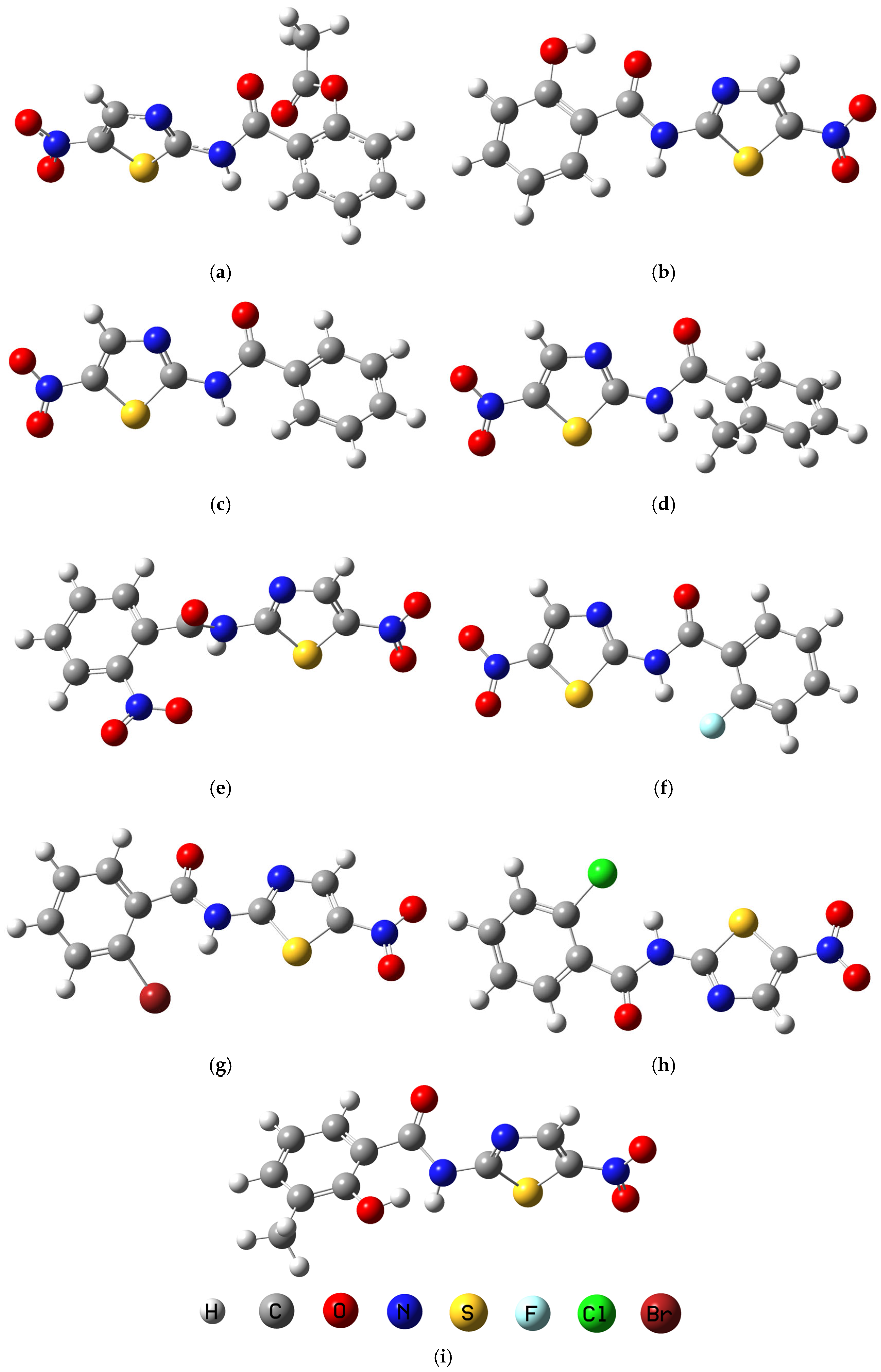
2.1. DFT Molecular Modeling and Electronic Structure Analysis
2.1.1. Dipole Moment and Molecular Polarity
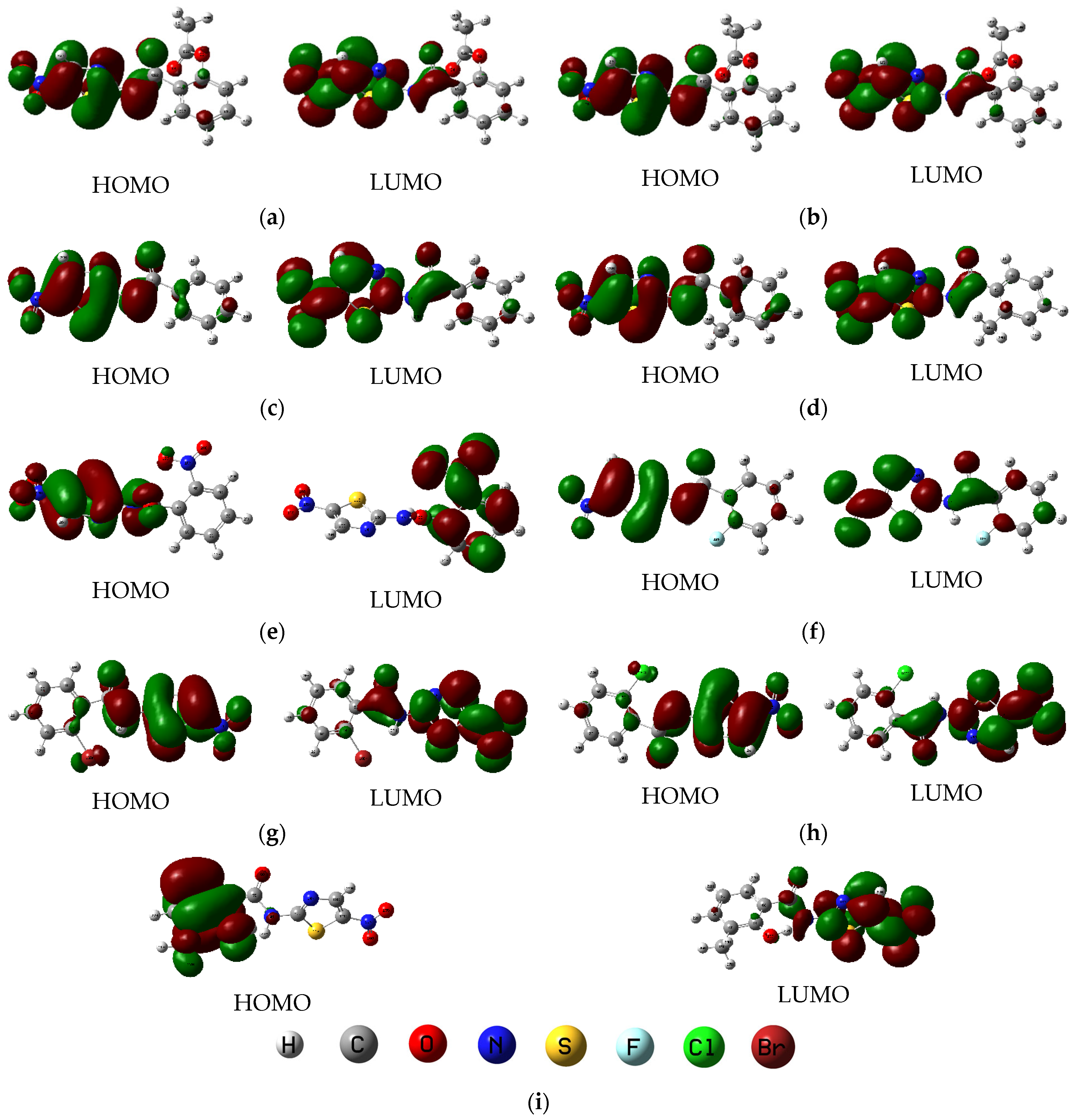
2.1.2. Frontier Molecular Orbitals and Chemical Reactivity
2.1.3. Global Reactivity Descriptors
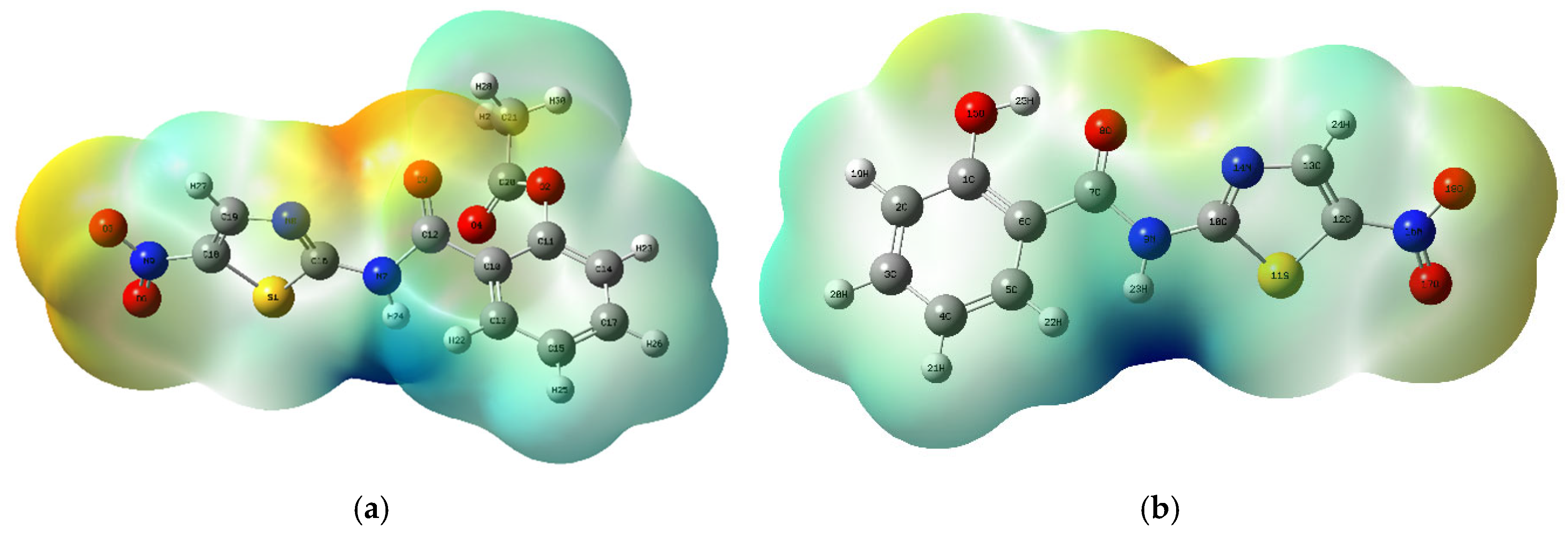
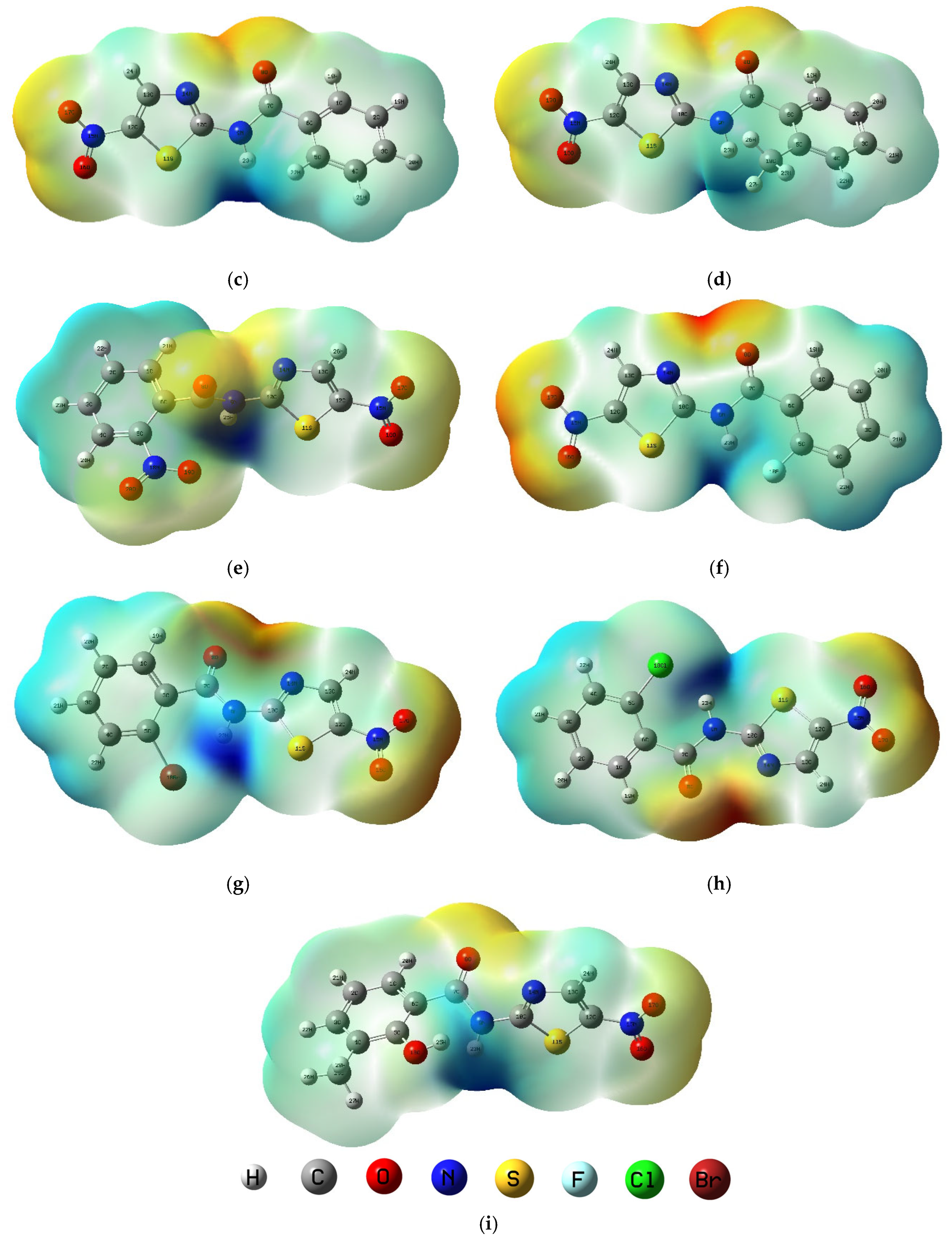
2.1.4. Molecular Electrostatic Potential (MEP) Analysis
2.2. Quantitative Structure-Activity Relationship (QSAR) Analysis
2.2.1. Molecular Size, Polarity, and the Prodrug-to-Drug Transformation
2.2.2. Electrostatic Profile and Implications for Molecular Recognition
2.2.3. Lipophilicity, Polarizability, and Hydrogen-Bonding Capacity
2.2.4. Integrated Analysis for Rational Drug Design
2.3. Molecular Docking Studies: Binding Mode Analysis and Correlation with Physicochemical Properties
2.3.1. Analysis of Docking Poses and Binding Affinities
2.3.2. Conserved Binding Motif and the Role of Key Residues
2.3.3. Prodrug vs. Active Metabolite: Nita and TIZ
2.3.4. Correlation Between QSAR Descriptors and Docking Performance
3. Materials and Methods
3.1. Molecular Modeling
3.2. Quantitative Structure-Activity Relationship
3.3. Molecular Docking
4. Conclusions
Supplementary Materials
Author Contributions
Funding
Data Availability Statement
Acknowledgments
Conflicts of Interest
References
- Gomaa, I.; Aleid, G.; EL-Moslamy, S.H.; AlShammari, A.; Al-Marshedy, S.; Alshammary, F.; Gharkan, J.; Abdel-Hameed, R.; Kamoun, E.A. Synergistic Efficacy of ZnO Quantum Dots, Ag NPs, and Nitazoxanide Composite against Multidrug-Resistant Human Pathogens as New Trend of Revolutionizing Antimicrobial Treatment. Discov. Nano 2024, 19, 164. [Google Scholar] [CrossRef] [PubMed]
- Müller, J.; Boubaker, G.; Müller, N.; Uldry, A.C.; Braga-Lagache, S.; Heller, M.; Hemphill, A. Investigating Antiprotozoal Chemotherapies with Novel Proteomic Tools—Chances and Limitations: A Critical Review. Int. J. Mol. Sci. 2024, 25, 6903. [Google Scholar] [CrossRef]
- Dunne, R.L.; Dunn, L.A.; Upcroft, P.; O’Donoghue, P.J.; Upcroft, J.A. Drug Resistance in the Sexually Transmitted Protozoan Trichomonas Vaginalis. Cell Res. 2003, 13, 239–249. [Google Scholar] [CrossRef]
- Lavecchia, A.; Rao Cheekatla, S. Benzothiazole-Based Therapeutics: FDA Insights and Clinical Advances. Chemistry 2025, 7, 118. [Google Scholar] [CrossRef]
- Alsehli, M.; Nafie, M.S.; Albujuq, N.R.; Bardaweel, S.; Aljuhani, A.; Tawfik, H.O.; Alraqa, S.Y.; Diab, M.K.; Rezki, N.; Aouad, M.R. Click Synthesis of Some Novel Benzo[d]Thiazole–1,2,3-Triazole Hybrid Compounds with Benzamide and/or Benzoate Tethers as EGFR-Dependent Signaling Inhibitors against Breast Cancer. RSC Med. Chem. 2025, 16, 5641–5660. [Google Scholar] [CrossRef]
- Petrou, A.; Fesatidou, M.; Geronikaki, A. Thiazole Ring—A Biologically Active Scaffold. Molecules 2021, 26, 3166. [Google Scholar] [CrossRef]
- Sripadung, P.; Rajchakom, C.; Nunthaboot, N.; Jiang, X.; Sungthong, B. Computational and Experimental Insights into Tyrosinase and Antioxidant Activities of Resveratrol and Its Derivatives: Molecular Docking, Molecular Dynamics Simulation, DFT Calculation, and In Vitro Evaluation. Int. J. Mol. Sci. 2025, 26, 8827. [Google Scholar] [CrossRef]
- Mozafari, E.S.; Baei, M.T.; Lemeski, E.T. Computational Study of the Therapeutic Properties of Allicin and Its Nanocomplexes Using DFT and Molecular Docking Techniques. Sci. Rep. 2025, 15, 23034. [Google Scholar] [CrossRef] [PubMed]
- Garczarek, F.; Dong, M.; Typke, D.; Witkowska, H.E.; Hazen, T.C.; Nogales, E.; Biggin, M.D.; Glaeser, R.M. Octomeric Pyruvate-Ferredoxin Oxidoreductase from Desulfovibrio Vulgaris. J. Struct. Biol. 2007, 159, 9–18. [Google Scholar] [CrossRef]
- Berger, M.B.; Walker, A.R.; Vázquez-Montelongo, E.A.; Cisneros, G.A. Computational Investigations of Selected Enzymes from Two Iron and α-Ketoglutarate-Dependent Families. Phys. Chem. Chem. Phys. 2021, 23, 22227–22240. [Google Scholar] [CrossRef]
- St-Jacques, A.D.; Rodriguez, J.M.; Eason, M.G.; Foster, S.M.; Khan, S.T.; Damry, A.M.; Goto, N.K.; Thompson, M.C.; Chica, R.A. Computational Remodeling of an Enzyme Conformational Landscape for Altered Substrate Selectivity. Nat. Commun. 2023, 14, 6058. [Google Scholar] [CrossRef]
- Mendez, L.; Henriquez, G.; Sirimulla, S.; Narayan, M. Looking Back, Looking Forward at Halogen Bonding in Drug Discovery. Molecules 2017, 22, 1397. [Google Scholar] [CrossRef]
- Zhou, X.; Xing, P. Beyond Halogen Bonding: σ-Hole Interactions. Trends Chem. 2025, 7, 460–473. [Google Scholar] [CrossRef]
- Wilcken, R.; Zimmermann, M.O.; Lange, A.; Joerger, A.C.; Boeckler, F.M. Principles and Applications of Halogen Bonding in Medicinal Chemistry and Chemical Biology. J. Med. Chem. 2013, 56, 1363–1388. [Google Scholar] [CrossRef]
- Li, W.; Zeng, Y.; Zhang, X.; Zheng, S.; Meng, L. The Enhancing Effects of Group V σ-Hole Interactions on the F…O Halogen Bond. Phys. Chem. Chem. Phys. 2014, 16, 19282–19289. [Google Scholar] [CrossRef] [PubMed]
- Scrocco, E.; Tomasi, J. The Electrostatic Molecular Potential as a Tool for the Interpretation of Molecular Properties. New Concepts II 2007, 42, 95–170. [Google Scholar] [CrossRef]
- Murray, J.S.; Politzer, P. Molecular Electrostatic Potentials and Noncovalent Interactions. Wiley Interdiscip. Rev. Comput. Mol. Sci. 2017, 7, e1326. [Google Scholar] [CrossRef]
- Murray, J.S.; Politzer, P. The Electrostatic Potential: An Overview. Wiley Interdiscip. Rev. Comput. Mol. Sci. 2011, 1, 153–163. [Google Scholar] [CrossRef]
- Agu, P.C.; Afiukwa, C.A.; Orji, O.U.; Ezeh, E.M.; Ofoke, I.H.; Ogbu, C.O.; Ugwuja, E.I.; Aja, P.M. Molecular Docking as a Tool for the Discovery of Molecular Targets of Nutraceuticals in Diseases Management. Sci. Rep. 2023, 13, 13398. [Google Scholar] [CrossRef]
- Yoğurtçu, H.N.; Ersanlı, C.C. Structural Parameters, NLO, HOMO, LUMO, MEP, Chemical Reactivity Descriptors, Mulliken-NPA, Thermodynamic Functions, Hirshfeld Surface Analysis and Molecular Docking of 1,3-Bis(4-Methylphenyl)Triazine. Int. Sci. Vocat. Stud. J. 2025, 9, 130–144. [Google Scholar] [CrossRef]
- Becke, A.D. Density-Functional Thermochemistry. III. The Role Exact Exchange. J. Chem. Phys. 1993, 98, 5648–5652. [Google Scholar] [CrossRef]
- Shafiq, I.; Haq, S.; Javed, T.; Bullo, S.; Ahmed, S.; Alhokbany, N.; Ahamad, T. Influence of Benzothiophene Acceptor Moieties on the Non-Linear Optical Properties of Pyreno-Based Chromophores: First-Principles DFT Framework. RSC Adv. 2024, 14, 15964–15978. [Google Scholar] [CrossRef]
- Parthasarathi, R.; Subramanian, V.; Roy, D.R.; Chattaraj, P.K. Electrophilicity Index as a Possible Descriptor of Biological Activity. Bioorg Med. Chem. 2004, 12, 5533–5543. [Google Scholar] [CrossRef]
- Politzer, P.; Murray, J.S. The Fundamental Nature and Role of the Electrostatic Potential in Atoms and Mols. Theor. Chem. Acc. 2002, 108, 134–142. [Google Scholar] [CrossRef]
- Lipinski, C.A. Compound Properties and Drug Quality. Pract. Med. Chem. Second Ed. 2003, 341–349. [Google Scholar] [CrossRef]
- Caron, G.; Ermondi, G. Molecular Descriptors for Polarity: The Need for Going Beyond Polar Surface Area. Future Med. Chem. 2016, 8, 2013–2016. [Google Scholar] [CrossRef]
- Rautio, J.; Kumpulainen, H.; Heimbach, T.; Oliyai, R.; Oh, D.; Järvinen, T.; Savolainen, J. Prodrugs: Design and Clinical Applications. Nat. Rev. Drug Discov. 2008, 7, 255–270. [Google Scholar] [CrossRef]
- Jensen, J.R.; Cisek, K.; Honson, N.S.; Kuret, J. Ligand Polarizability Contributes to Tau Fibril Binding Affinity. Bioorg Med. Chem. 2011, 19, 5147–5154. [Google Scholar] [CrossRef]
- Lipinski, C.A.; Lombardo, F.; Dominy, B.W.; Feeney, P.J. Experimental and Computational Approaches to Estimate Solubility and Permeability in Drug Discovery and Development Settings. Adv. Drug Deliv. Rev. 1997, 23, 3–25. [Google Scholar] [CrossRef]
- Sadowski, M.; Kula, K. Unexpected Course of Reaction Between (1E,3E)-1,4-Dinitro-1,3-Butadiene and N-Methyl Azomethine Ylide—A Comprehensive Experimental and Quantum-Chemical Study. Molecules 2024, 29, 5066. [Google Scholar] [CrossRef] [PubMed]
- Ertl, P.; Rohde, B.; Selzer, P. Fast Calculation of Molecular Polar Surface Area as a Sum of Fragment-Based Contributions and Its Application to the Prediction of Drug Transport Properties. J. Med. Chem. 2000, 43, 3714–3717. [Google Scholar] [CrossRef]
- Pierce, E.; Becker, D.F.; Ragsdale, S.W. Identification and Characterization of Oxalate Oxidoreductase, a Novel Thiamine Pyrophosphate-dependent 2-Oxoacid Oxidoreductase That Enables Anaerobic Growth on Oxalate. J. Biol. Chem. 2010, 285, 40515–40524. [Google Scholar] [CrossRef]
- Zhao, Y.; Truhlar, D.G. The M06 Suite of Density Functionals for Main Group Thermochemistry, Thermochemical Kinetics, Noncovalent Interactions, Excited States, and Transition Elements: Two New Functionals and Systematic Testing of Four M06-Class Functionals and 12 Other Functionals. Theor. Chem. Acc. 2008, 120, 215–241, Erratum in Theor. Chem. Acc. 2008, 119, 525. [Google Scholar] [CrossRef]
- Frisch, M.J.; Trucks, G.W.; Schlegel, H.B.; Scuseria, G.E.; Robb, M.A.; Cheeseman, J.R.; Scalmani, G.; Barone, V.; Petersson, G.A.; Nakatsuji, H.; et al. Gaussian 09, Revision D.01; Gaussian, Inc.: Wallingford, CT, USA, 2010. [Google Scholar]
- Geerlings, P.; De Proft, F.; Langenaeker, W. Conceptual Density Functional Theory. Chem. Rev. 2003, 103, 1793–1873. [Google Scholar] [CrossRef] [PubMed]
- Sherif, S.; Sameh, A.; Salah, S.M.; Omar, A.; Elhaes, H.; Ibrahim, A.; Refaat, A.; Ibrahim, M.A. DFT and QSAR Study of Catechol-O-Methyltransferase (COMT) as Inhibitors for Parkinson’s Disease Treatment. Opt. Quantum Electron. 2024, 56, 633. [Google Scholar] [CrossRef]
- Chabrière, E.; Vernède, X.; Guigliarelli, B.; Charon, M.-H.; Hatchikian, E.C.; Fontecilla-Camps, J.C. Crystal Structure of the Free Radical Intermediate of Pyruvate:Ferredoxin Oxidoreductase. Science 2001, 294, 2559–2563. [Google Scholar] [CrossRef] [PubMed]
- Morris, G.M.; Huey, R.; Lindstrom, W.; Sanner, M.F.; Belew, R.K.; Goodsell, D.S.; Olson, A.J. AutoDock4 and AutoDockTools4: Automated Docking with Selective Receptor Flexibility. J. Comput. Chem. 2009, 30, 2785–2791. [Google Scholar] [CrossRef]
- Trott, O.; Olson, A.J. AutoDock Vina: Improving the Speed and Accuracy of Docking with a New Scoring Function, Efficient Optimization, and Multithreading. J. Comput. Chem. 2010, 31, 455–461. [Google Scholar] [CrossRef]





| Structure | Dipole Moment (D) |
|---|---|
| Nita | 7.508 |
| TIZ | 6.389 |
| Mol 1 | 7.667 |
| Mol 2 | 7.356 |
| Mol 3 | 9.211 |
| Mol 4 | 8.367 |
| Mol 5 | 8.037 |
| Mol 6 | 8.085 |
| Mol 7 | 6.159 |
| Structure | LUMO (eV) | HOMO (eV) | ΔE (eV) |
|---|---|---|---|
| Nita | −3.159 | −7.309 | 4.1491943 |
| TIZ | −3.342 | −6.995 | 3.6523141 |
| Mol 1 | −3.205 | −7.326 | 4.1206223 |
| Mol 2 | −3.201 | −7.327 | 4.1260646 |
| Mol 3 | −3.393 | −7.511 | 4.117629 |
| Mol 4 | −3.191 | −7.257 | 4.0653832 |
| Mol 5 | −3.188 | −7.274 | 4.0860638 |
| Mol 6 | −3.196 | −7.281 | 4.0852475 |
| Mol 7 | −3.358 | −6.932 | 3.5742174 |
| Structure | IP (eV) | EA (eV) | μ (eV) | η (eV) | S (eV−1) | ω (eV) | χ |
|---|---|---|---|---|---|---|---|
| Nita | 7.309 | −3.159 | −5.234 | 2.074 | 0.482 | 6.603 | 5.234 |
| TIZ | 6.995 | −3.342 | −5.168 | 1.826 | 0.547 | 7.314 | 5.168 |
| Mol 1 | 7.326 | −3.205 | −5.265 | 2.060 | 0.485 | 6.728 | 5.265 |
| Mol 2 | 7.327 | −3.201 | −5.264 | 2.063 | 0.485 | 6.717 | 5.264 |
| Mol 3 | 7.511 | −3.393 | −5.452 | 2.059 | 0.486 | 7.218 | 5.452 |
| Mol 4 | 7.257 | −3.191 | −5.224 | 2.033 | 0.492 | 6.713 | 5.224 |
| Mol 5 | 7.274 | −3.188 | −5.231 | 2.043 | 0.489 | 6.698 | 5.231 |
| Mol 6 | 7.281 | −3.196 | −5.238 | 2.043 | 0.489 | 6.717 | 5.238 |
| Mol 7 | 6.932 | −3.358 | −5.145 | 1.787 | 0.559 | 7.406 | 5.145 |
| QSAR Descriptor | Nita | TIZ | 1 | 2 | 3 | 4 | 5 | 6 | 7 |
|---|---|---|---|---|---|---|---|---|---|
| Acc. Area (Å2) | 212.93 | 197.73 | 191.82 | 197.20 | 198.80 | 194.98 | 202.89 | 201.02 | 205.15 |
| P-Area (Å2) | 120.93 | 105.13 | 107.28 | 112.02 | 141.46 | 103.49 | 104.98 | 103.96 | 98.34 |
| Acc. P-Area (Å2) | 92.32 | 82.29 | 81.48 | 82.84 | 110.23 | 77.14 | 78.36 | 77.77 | 74.27 |
| Min. ElPot. (kJ/mol) | −196.79 | −179.58 | −205.05 | −206.49 | −186.33 | −223.47 | −220.39 | −220.60 | −157.24 |
| Max. ElPot. (kJ/mol) | 278.07 | 310.59 | 294.76 | 297.24 | 307.18 | 249.72 | 251.53 | 253.34 | 260.50 |
| Min. LocIonPot (kJ/mol) | 39.18 | 39.95 | 39.36 | 39.44 | 39.86 | 39.75 | 39.88 | 39.81 | 39.86 |
| Polarizability | 62.02 | 58.73 | 58.17 | 59.64 | 59.89 | 58.51 | 59.65 | 59.27 | 60.32 |
| Log P | 2.17 | −0.60 | 0.48 | 0.65 | −1.96 | −0.06 | 0.61 | 0.34 | −0.43 |
| HBD | 0 | 1 | 0 | 0 | 0 | 0 | 0 | 0 | 1 |
| HBA | 8 | 7 | 6 | 6 | 9 | 6 | 6 | 6 | 7 |
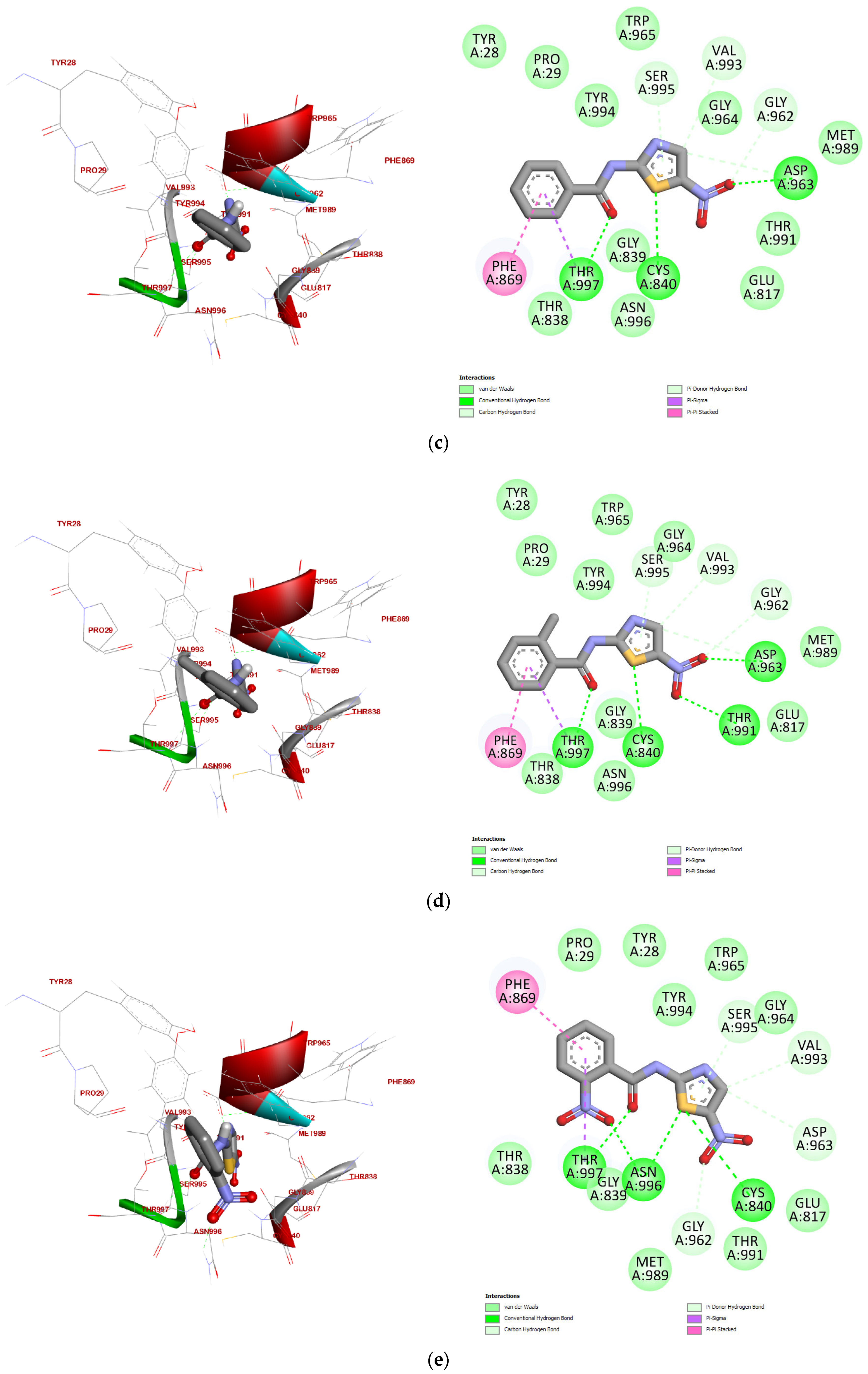
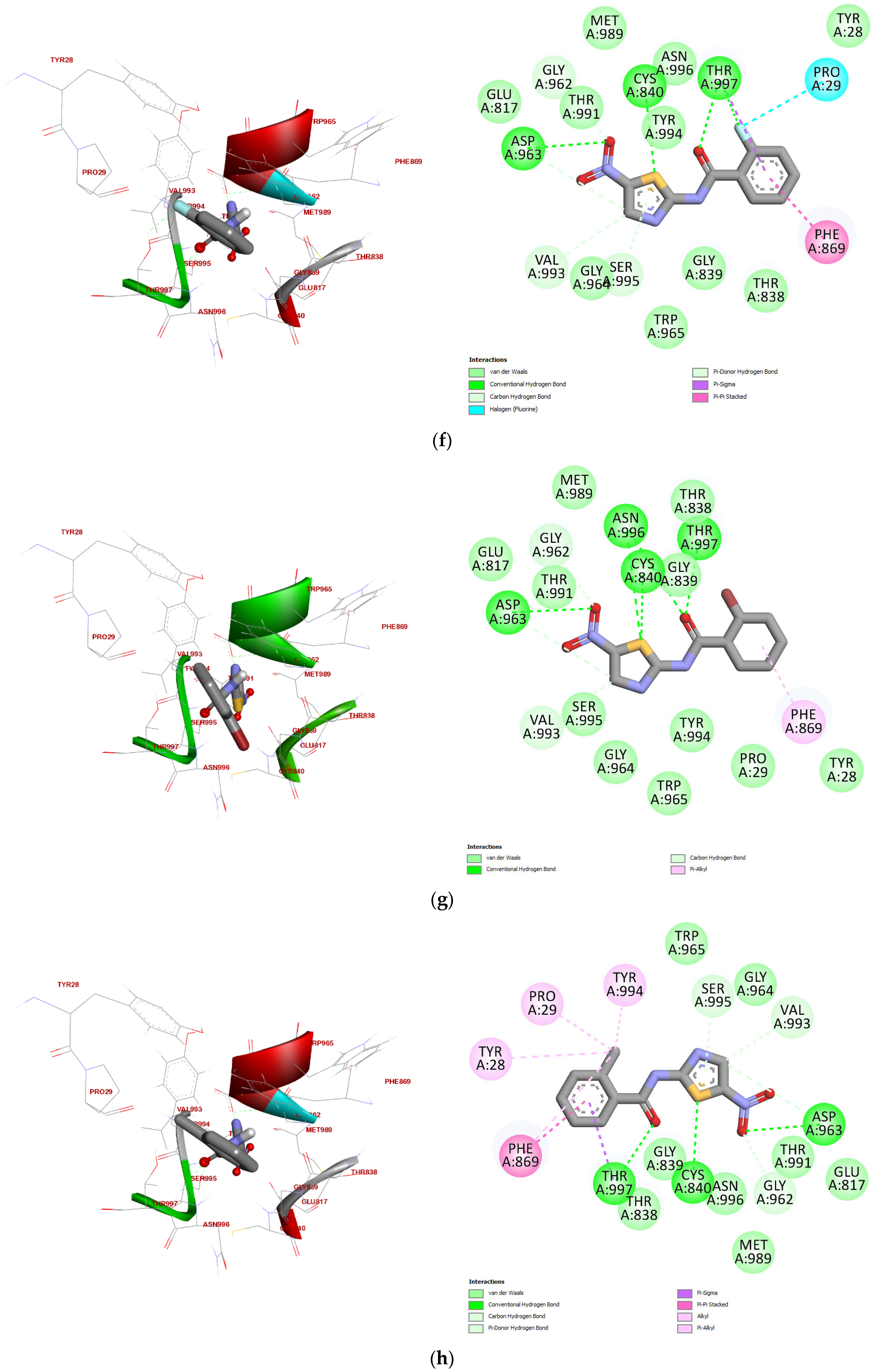
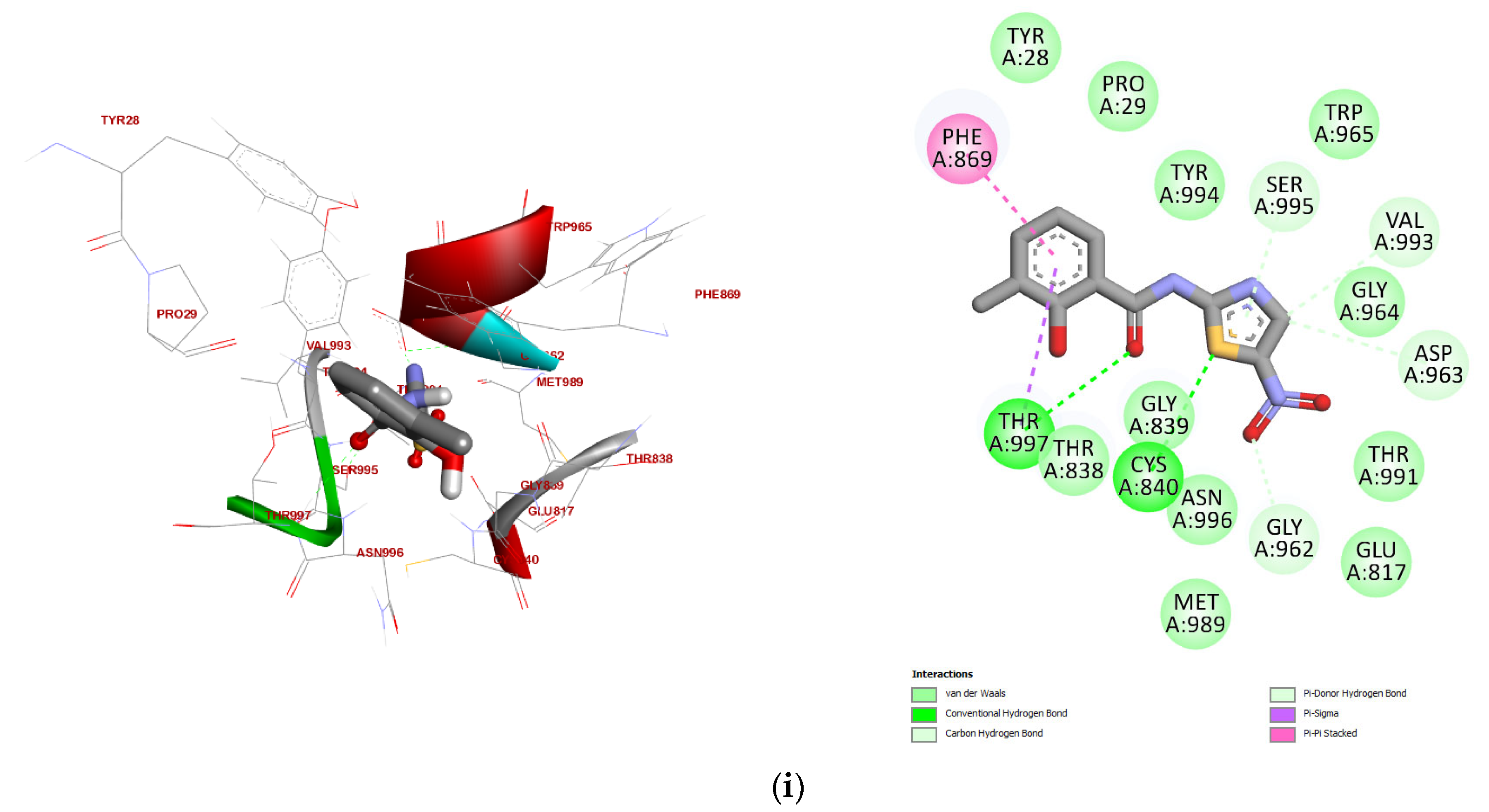
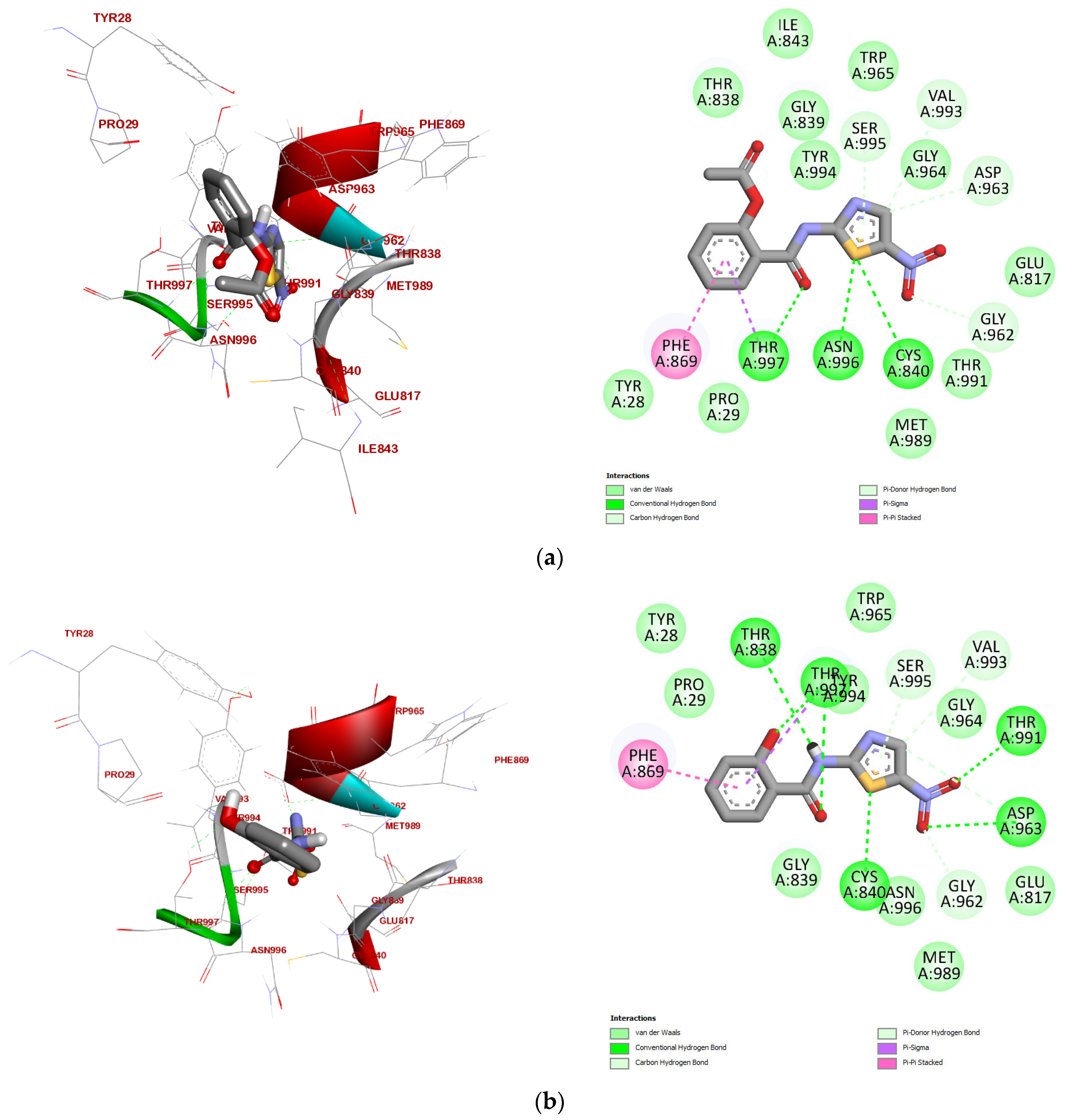
| Compound | Binding Affinity (kcal/mol) | Key Interactions with PFOR |
|---|---|---|
| Nita | −10.0 | Conventional H-bond (Thr-996, Thr-997, Cys-840), Carbon H-bond and π-donor H-bond (Gly-962, Asp-963, Val-993, Ser-995), vdW (Tyr-28, Pro-29, Met-989, Thr-991, Glu-817, Gly-964, Trp-965, Tyr-994, Gly-839, Ile-843, Thr838), π- π-stacked (Phe-869) |
| TIZ | −9.6 | Conventional H-bond (Thr-838, Thr-997, Cys-840, Thr-991, Thr-838, Asp-963), Carbon H-bond and π-donor H-bond (Gly-962, Asp-963, Val-993, Ser-995), vdW (Tyr-28, Pro-29, Trp-965, Gly-964, Glu-817, Asn-996, Met-989, Gly-839), π-σ (Thr-997), π-π-stacked (Phe-869) |
| Molecule 1 | −9.7 | Conventional H-bond (Thr-997, Cys-840, Asp-963), Carbon H-bond and π-donor H-bond (Gly-962, Asp-963, Val-993, Ser-995), vdW (Tyr-28, Pro-29, Trp-965, Tyr-994, Gly-964, Met-989, Thr-991, Glu-817, Asn-996, Gly-839, Thr-838), π-σ (Thr-997), π-π-stacked (Phe-869) |
| Molecule 2 | −10.0 | Conventional H-bond (Thr-997, Cys-840, Asp-963, Thr-991), Carbon H-bond and π-donor H-bond (Gly-962, Asp-963, Val-993, Ser-995), vdW (Tyr-28, Pro-29, Trp-965, Tyr-994, Gly-964, Met-989, Glu-817, Asn-996, Gly-839, Thr-838), π-σ (Thr-997), π-π-stacked (Phe-869) |
| Molecule 3 | −9.2 | Conventional H-bond (Thr-997, Cys-840, Asn-996), Carbon H-bond and π-donor H-bond (Gly-962, Asp-963, Val-993, Ser-995), vdW (Tyr-28, Pro-29, Trp-965, Tyr-994, Gly-964, Met-989, Thr-991, Glu-817, Gly-839, Thr-838), π-σ (Thr-997), π-π-stacked (Phe-869) |
| Molecule 4 | −10.1 | Conventional H-bond (Thr-997, Cys-840, Asp-963), Carbon H-bond and π-donor H-bond (Gly-962, Asp-963, Val-993, Ser-995), vdW (Tyr-28, Thr-838, Gly-839, Trp-965, Gly-964, Glu-817, Thr-991, Met-989, Tyr-994, Asn-996), Halogen (Pro-29), π-σ (Thr-997), π-π-stacked (Phe-869) |
| Molecule 5 | −9.5 | Conventional H-bond (Thr-997, Cys-840, Asp-963, Asn-996), Carbon H-bond (Gly-962, Asp-963, Val-993, Ser-995), vdW (Tyr-28, Pro-29, Trp-965, Tyr-994, Gly-964, Ser-995, Met-989, Thr-991, Glu-817, Gly-839, Thr-838), π-alkyl (Phe-869) |
| Molecule 6 | −9.9 | Conventional H-bond (Thr-997, Cys-840, Asp-963), Carbon H-bond and π-donor H-bond (Gly-962, Asp-963, Val-993, Ser-995), vdW (Thr-838, Gly-839, Asn-996, Met-989, Glu-817, Thr-991, Gly-964, Trp-965), π-σ (Thr-997), π-π-stacked (Phe-869), Alkyl and π-alkyl (Phe-869, Tyr-28, Pro-29, Tyr-994) |
| Molecule 7 | −10.0 | Conventional H-bond (Thr-997, Cys-840), Carbon H-bond and π-donor H-bond (Gly-962, Asp-963, Val-993, Ser-995), vdW (Tyr-28, Pro-29, Trp-965, Tyr-994, Gly-964, Met-989, Thr-991, Glu-817, Asn-996, Gly-839, Thr-838), π-σ (Thr-997), π-π-stacked (Phe-869) |
Disclaimer/Publisher’s Note: The statements, opinions and data contained in all publications are solely those of the individual author(s) and contributor(s) and not of MDPI and/or the editor(s). MDPI and/or the editor(s) disclaim responsibility for any injury to people or property resulting from any ideas, methods, instructions or products referred to in the content. |
© 2025 by the authors. Licensee MDPI, Basel, Switzerland. This article is an open access article distributed under the terms and conditions of the Creative Commons Attribution (CC BY) license (https://creativecommons.org/licenses/by/4.0/).
Share and Cite
Alqahtani, H.; Gomaa, I.; Refaat, A.; Mansour, M.S.A.; Alsaiari, R.A.; Rizk, M.A. First-Principles Modeling of Nitazoxanide Analogues as Prospective PFOR-Targeted Antibacterials. Int. J. Mol. Sci. 2025, 26, 11578. https://doi.org/10.3390/ijms262311578
Alqahtani H, Gomaa I, Refaat A, Mansour MSA, Alsaiari RA, Rizk MA. First-Principles Modeling of Nitazoxanide Analogues as Prospective PFOR-Targeted Antibacterials. International Journal of Molecular Sciences. 2025; 26(23):11578. https://doi.org/10.3390/ijms262311578
Chicago/Turabian StyleAlqahtani, Huda, Islam Gomaa, Ahmed Refaat, M. S. A. Mansour, Raiedhah A. Alsaiari, and Moustafa A. Rizk. 2025. "First-Principles Modeling of Nitazoxanide Analogues as Prospective PFOR-Targeted Antibacterials" International Journal of Molecular Sciences 26, no. 23: 11578. https://doi.org/10.3390/ijms262311578
APA StyleAlqahtani, H., Gomaa, I., Refaat, A., Mansour, M. S. A., Alsaiari, R. A., & Rizk, M. A. (2025). First-Principles Modeling of Nitazoxanide Analogues as Prospective PFOR-Targeted Antibacterials. International Journal of Molecular Sciences, 26(23), 11578. https://doi.org/10.3390/ijms262311578