Alteration of Hyaluronic Acid Metabolism in Tumor Microenvironment Can Modulate DNA Repair Gene Expression: Therapeutic Potential for Triple-Negative Breast Cancer

 , , ,
, , , 
Abstract
1. Introduction
2. Results
2.1. HA and CD44 Tissue Analysis
2.2. BRCA1 and BRCA2 Tissue Analysis
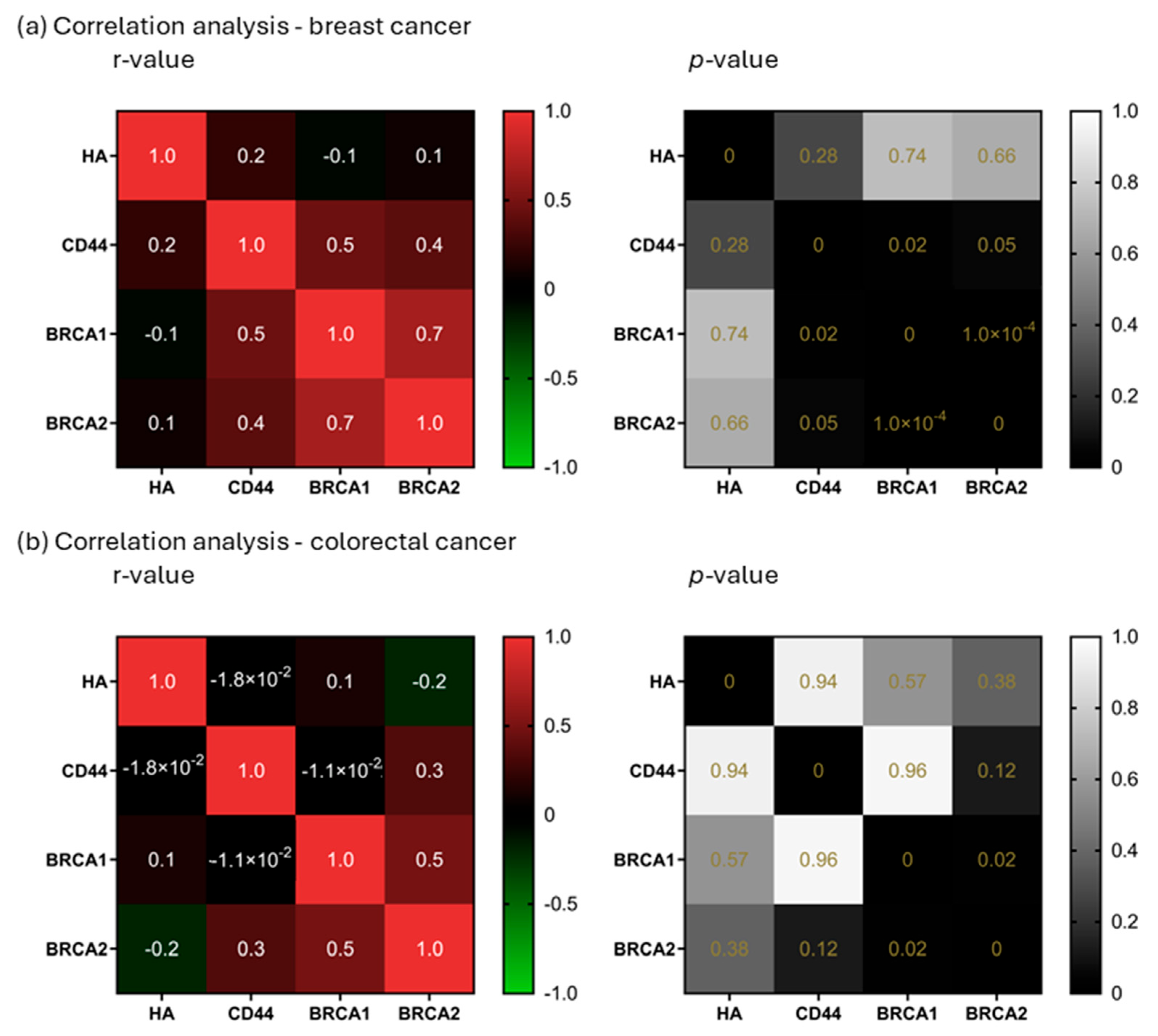
2.3. Correlation Analysis
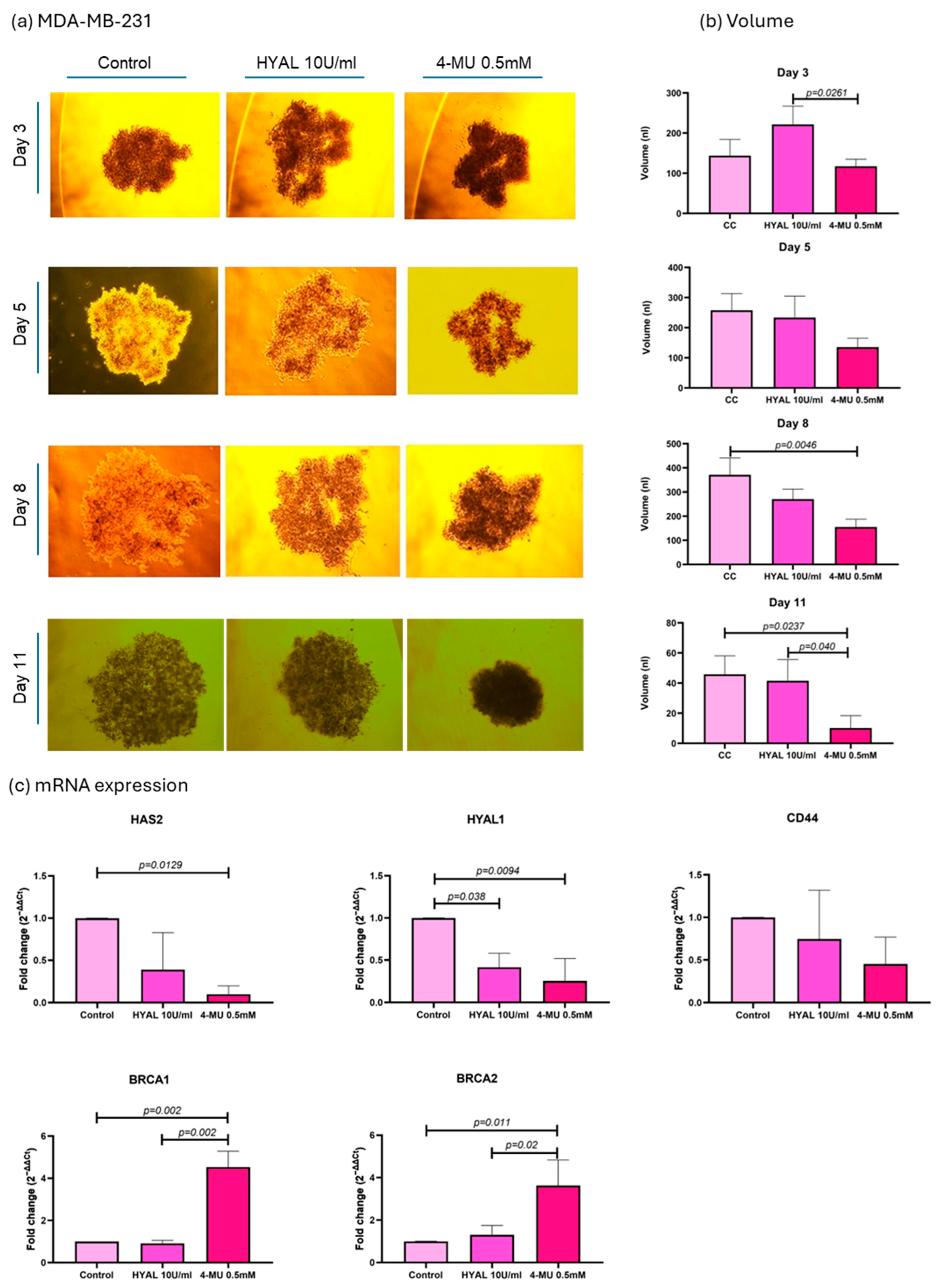
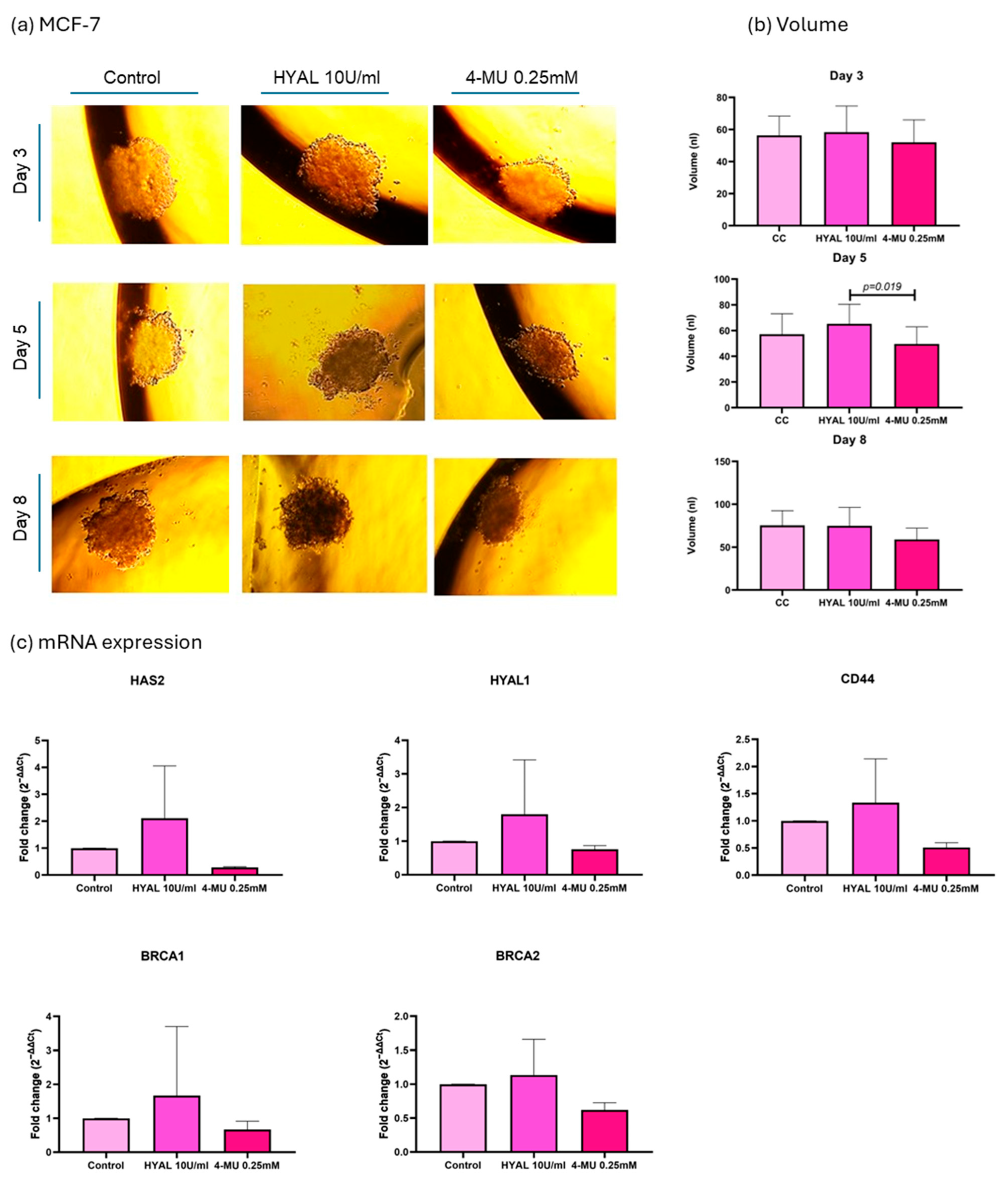
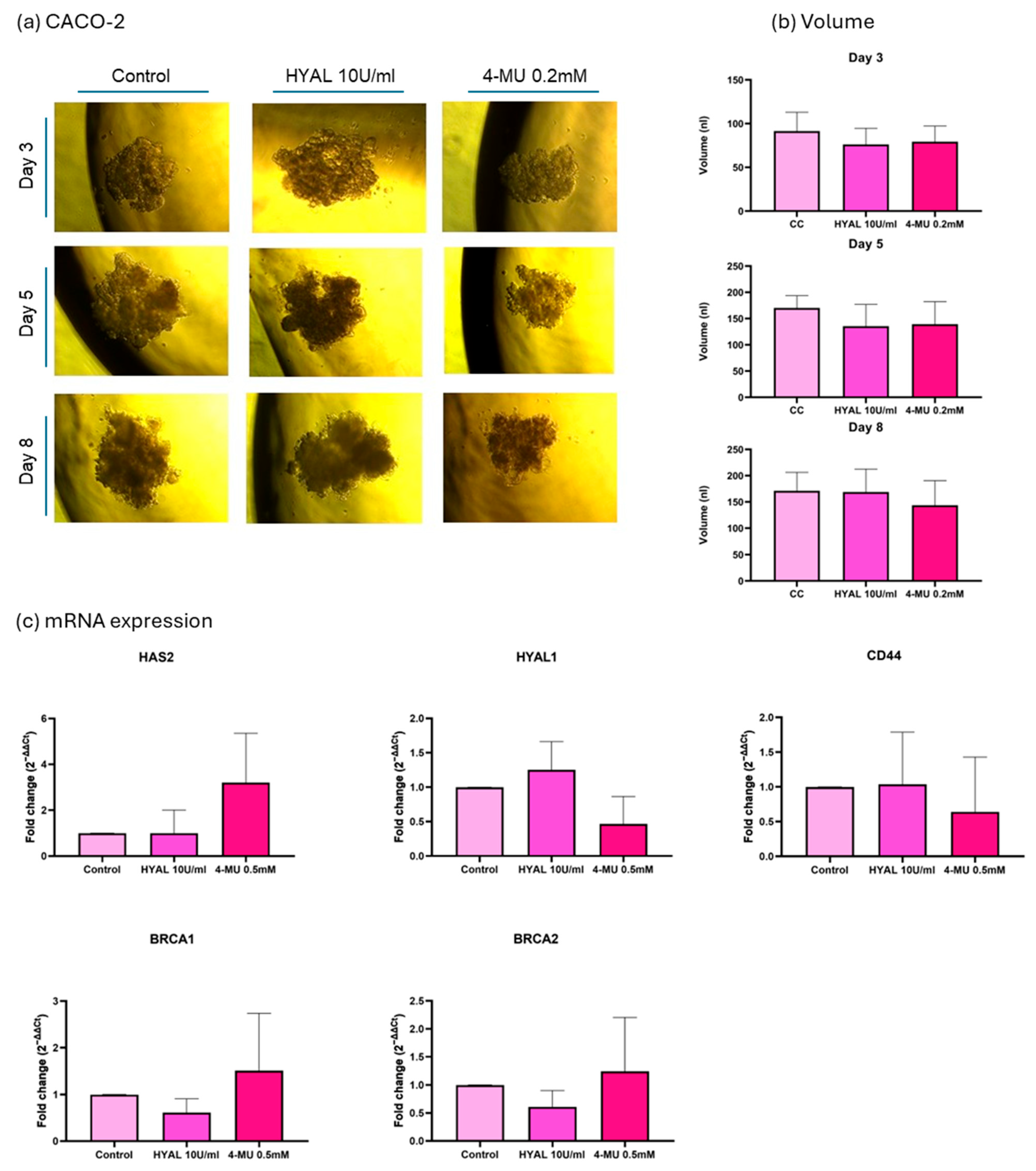
2.4. Spheroid Volume and mRNA Expression Analysis
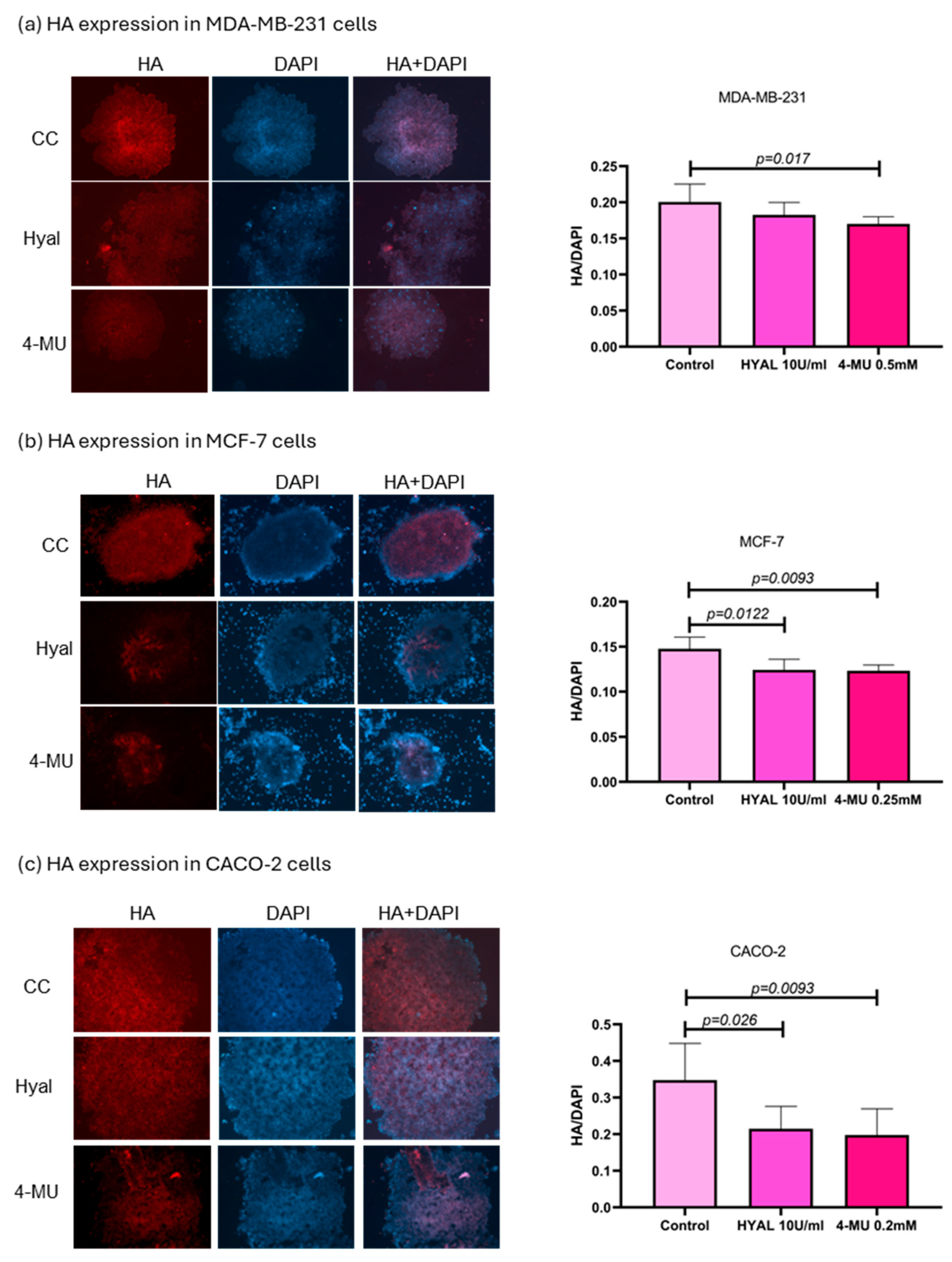
2.5. Spheroid HA Expression
3. Discussion
4. Materials and Methods
4.1. Patients
4.1.1. Sample Processing
4.1.2. Hematoxylin and Eosin Staining
4.1.3. HA, CD44, BRCA1, and BRCA2 Immunostaining
4.1.4. Correlation Analysis
4.2. Cell Culture
4.2.1. Formation of 3D Spheroid Models Using the Hanging Drop Method
4.2.2. Cytotoxicity Assay
4.2.3. Tumor Spheroid Volume Analysis
4.2.4. mRNA Expression
- RNA extraction
- Quantification of RNA by Real Time PCR
4.2.5. HA Expression
4.3. Statistical Analysis
5. Conclusions
Supplementary Materials
Author Contributions
Funding
Institutional Review Board Statement
Informed Consent Statement
Data Availability Statement
Acknowledgments
Conflicts of Interest
References
- Rodríguez-Bejarano, O.H.; Parra-López, C.; Patarroyo, M.A. A review concerning the breast cancer-related tumour microenvironment. Crit. Rev. Oncol. Hematol. 2024, 199, 104389. [Google Scholar] [CrossRef] [PubMed]
- Li, Q.; Geng, S.; Luo, H.; Wang, W.; Mo, Y.-Q.; Luo, Q.; Wang, L.; Song, G.-B.; Sheng, J.-P.; Xu, B. Signaling pathways involved in colorectal cancer: Pathogenesis and targeted therapy. Signal Transduct. Target. Ther. 2024, 9, 266. [Google Scholar] [CrossRef] [PubMed]
- Trejo-Solís, C.; Castillo-Rodríguez, R.A.; Serrano-García, N.; Silva-Adaya, D.; Vargas-Cruz, S.; Chávez-Cortéz, E.G.; Gallardo-Pérez, J.C.; Zavala-Vega, S.; Cruz-Salgado, A.; Magaña-Maldonado, R. Metabolic Roles of HIF1, c-Myc, and p53 in Glioma Cells. Metabolites 2024, 14, 249. [Google Scholar] [CrossRef]
- Wadowska, K.; Bil-Lula, I.; Trembecki, Ł.; Śliwińska-Mossoń, M. Genetic markers in lung cancer diagnosis: A review. Int. J. Mol. Sci. 2020, 21, 4569. [Google Scholar] [CrossRef] [PubMed]
- Carvalho, A.M.; Reis, R.L.; Pashkuleva, I. Hyaluronan Receptors as Mediators and Modulators of the Tumor Microenvironment. Adv. Heal. Mater. 2023, 12, e2202118. [Google Scholar] [CrossRef]
- Kobayashi, T.; Chanmee, T.; Itano, N. Hyaluronan: Metabolism and function. Biomolecules 2020, 10, 1525. [Google Scholar] [CrossRef]
- Donelan, W.; Dominguez-Gutierrez, P.R.; Kusmartsev, S. Deregulated hyaluronan metabolism in the tumor microenvironment drives cancer inflammation and tumor-associated immune suppression. Front. Immunol. 2022, 13, 971278. [Google Scholar] [CrossRef]
- Nagy, N.; Kuipers, H.F.; Frymoyer, A.R.; Ishak, H.D.; Bollyky, J.B.; Wight, T.N.; Bollyky, P.L. 4-Methylumbelliferone treatment and hyaluronan inhibition as a therapeutic strategy in inflammation, autoimmunity, and cancer. Front. Immunol. 2015, 6, 123. [Google Scholar] [CrossRef]
- Galkina, S.I.; Fedorova, N.V.; Ksenofontov, A.L.; Golenkina, E.A.; Serebryakova, M.V.; Stadnichuk, V.I.; Baratova, L.A.; Sud’ina, G.F. Inhibitor of Hyaluronic Acid Synthesis 4-Methylumbelliferone Suppresses the Secretory Processes That Ensure the Invasion of Neutrophils into Tissues and Induce Inflammation. Biomedicines 2022, 10, 314. [Google Scholar] [CrossRef]
- Rosenberg, S.; Devir, M.; Kaduri, L.; Grinshpun, A.; Miner, V.; Hamburger, T.; Granit, A.; Nissan, A.; Maymon, O.; Peretz, T. Distinct breast cancer phenotypes in BRCA 1/2 carriers based on ER status. Breast Cancer Res. Treat. 2023, 198, 197–205. [Google Scholar] [CrossRef]
- Wang, G.H.; Zhao, C.M.; Huang, Y.; Wang, W.; Zhang, S.; Wang, X. BRCA1 and BRCA2 expression patterns and prognostic significance in digestive system cancers. Hum. Pathol. 2018, 71, 135–144. [Google Scholar] [CrossRef]
- Simoneau, A.; Xiong, R.; Zou, L. The trans cell cycle effects of PARP inhibitors underlie their selectivity toward BRCA1/2-deficient cells. Genes. Dev. 2021, 35, 1271–1289. [Google Scholar] [CrossRef] [PubMed]
- Henderson, B.R. The BRCA1 Breast Cancer Suppressor: Regulation of Transport, Dynamics, and Function at Multiple Subcellular Locations. Scientifica 2012, 2012, 796808. [Google Scholar] [CrossRef] [PubMed]
- Zhong, A.X.; Chen, Y.; Chen, P.L. BRCA1 the Versatile Defender: Molecular to Environmental Perspectives. Int. J. Mol. Sci. 2023, 24, 14276. [Google Scholar] [CrossRef]
- Zimmer, K.; Kocher, F.; Puccini, A.; Seeber, A. Targeting BRCA and DNA Damage Repair Genes in GI Cancers: Pathophysiology and Clinical Perspectives. Front. Oncol. 2021, 11, 662055. [Google Scholar] [CrossRef] [PubMed]
- Khalizieva, A.; Moser, S.C.; Bouwman, P.; Jonkers, J. BRCA1 and BRCA2: From cancer susceptibility to synthetic lethality. Genes Dev. 2025, 39, 86–108. [Google Scholar] [CrossRef]
- Sevic, I.; Spinelli, F.M.; Vitale, D.L.; Icardi, A.; Romano, L.; Brandone, A.; Giannoni, P.; Cristina, C.; Bolontrade, M.F.; Alaniz, L. Hyaluronan metabolism is associated with DNA repair genes in breast and colorectal cancer. Screening of potential progression markers using qPCR. Biomedicines 2020, 8, 183. [Google Scholar] [CrossRef]
- Auvinen, P.; Tammi, R.; Parkkinen, J.; Tammi, M.; Ågren, U.; Johansson, R.; Hirvikoski, P.; Eskelinen, M.; Kosma, V.-M. Hyaluronan in peritumoral stroma and malignant cells associates with breast cancer spreading and predicts survival. Am. J. Pathol. 2000, 156, 529–536. [Google Scholar] [CrossRef]
- Tammi, R.H.; Kultti, A.; Kosma, V.M.; Pirinen, R.; Auvinen, P.; Tammi, M.I. Hyaluronan in human tumors: Pathobiological and prognostic messages from cell-associated and stromal hyaluronan. Semin. Cancer Biol. 2008, 18, 288–295. [Google Scholar] [CrossRef]
- Köbel, M.; Weichert, W.; Crüwell, K.; Schmitt, W.D.; Lautenschläger, C.; Hauptmann, S. Epithelial hyaluronic acid and CD44v6 are mutually involved in invasion of colorectal adenocarcinomas and linked to patient prognosis. Virchows Arch. 2004, 445, 456–464. [Google Scholar] [CrossRef]
- Rakha, E.A.; El-Sheikh, S.E.; Kandil, M.A.; El-Sayed, M.E.; Green, A.R.; Ellis, I.O. Expression of BRCA1 protein in breast cancer and its prognostic significance. Hum. Pathol. 2008, 39, 857–865. [Google Scholar] [CrossRef]
- Madjd, Z.; Karimi, A.; Molanae, S.; Asadi-Lari, M. BRCA1 protein expression level and CD44+ phenotype in breast cancer patients. Cell J. 2011, 13, 155–162. [Google Scholar]
- Mahmoud, A.M.; Macias, V.; Al-alem, U.; Deaton, R.J.; Kadjaksy-Balla, A.; Gann, P.H.; Rauscher, G.H. BRCA1 protein expression and subcellular localization in primary breast cancer: Automated digital microscopy analysis of tissue microarrays. PLoS ONE 2017, 12, e0184385. [Google Scholar] [CrossRef] [PubMed]
- Kaur, A.; Lim, J.Y.S.; Sepramaniam, S.; Patnaik, S. WNT inhibition creates a BRCA-like state in Wnt-addicted cancer. EMBO Mol. Med. 2021, 13, e13349. [Google Scholar] [CrossRef] [PubMed]
- Gharib, E.; Robichaud, G.A. From Crypts to Cancer: A Holistic Perspective on Colorectal Carcinogenesis and Therapeutic Strategies. Int. J. Mol. Sci. 2024, 25, 9463. [Google Scholar] [CrossRef]
- El Khachibi, M.; El Karroumi, M.; Ayoubi, S.E.; El Kadmiri, N.; Nadifi, S. Assessment of the expression of the BRCA1, BRCA2, TP53, MDM2, BAX and CASP-3 genes in normal and tumor tissues for patients with breast cancer in Morocco. Gene Rep. 2018, 10, 47–53. [Google Scholar] [CrossRef]
- Egawa, C.; Miyoshi, Y.; Taguchi, T.; Tamaki, Y.; Noguchi, S. Quantitative analysis of BRCA1 and BRCA2 mRNA expression in sporadic breast carcinomas and its relationship with clinicopathological characteristics. Jpn. J. Cancer Res. 2001, 92, 624–630. [Google Scholar] [CrossRef]
- Roy, R.; Chun, J.; Powell, S.N. BRCA1 and BRCA2: Different roles in a common pathway of genome protection. Nat. Rev. Cancer 2012, 12, 68–78. [Google Scholar] [CrossRef]
- Panagopoulou, M.; Panou, T.; Gkountakos, A.; Tarapatzi, G.; Karaglani, M.; Tsamardinos, I.; Chatzaki, E. BRCA1 & BRCA2 methylation as a prognostic and predictive biomarker in cancer: Implementation in liquid biopsy in the era of precision medicine. Clin. Epigenetics 2024, 16, 178. [Google Scholar] [CrossRef] [PubMed]
- Kultti, A.; Pasonen-Seppänen, S.; Jauhiainen, M.; Rilla, K.J.; Kärnä, R.; Pyöriä, E.; Tammi, R.H.; Tammi, M.I. 4-Methylumbelliferone inhibits hyaluronan synthesis by depletion of cellular UDP-glucuronic acid and downregulation of hyaluronan synthase 2 and 3. Exp. Cell Res. 2009, 315, 1914–1923. [Google Scholar] [CrossRef]
- Subik, K.; Lee, J.-F.; Baxter, L.; Strzepek, T.; Costello, D.; Crowley, P.; Xing, L.; Hung, M.-C.; Bonfiglio, T.; Hicks, D.G.; et al. Breast Cancer: Basic and Clinical Research The Expression Patterns of ER, PR, HER2, CK5/6, EGFR, Ki-67 and AR by Immunohistochemical Analysis in Breast Cancer Cell Lines. Breast Cancer Basic. Clin. Res. 2010, 4, 35–41. [Google Scholar] [CrossRef]
- Valla, S.; Hassan, N.; Vitale, D.L.; Madanes, D.; Spinelli, F.M.; Teixeira, F.C.O.B.; Greve, B.; Espinoza-Sánchez, N.A.; Cristina, C.; Alaniz, L.; et al. Syndecan-1 depletion has a differential impact on hyaluronic acid metabolism and tumor cell behavior in luminal and triple-negative breast cancer cells. Int. J. Mol. Sci. 2021, 22, 5874. [Google Scholar] [CrossRef]
- Wang, M.; Du, S.; Gao, S.; Zhao, R.; Liu, S.; Jiang, W.; Peng, C.; Chai, R.; Zhang, L. MRI-based tumor shrinkage patterns after early neoadjuvant therapy in breast cancer: Correlation with molecular subtypes and pathological response after therapy. Breast Cancer Res. 2024, 26, 26. [Google Scholar] [CrossRef] [PubMed]
- Hoarau, A.; Polette, M.; Coraux, C. Lung Hyaluronasome: Involvement of Low Molecular Weight Ha (Lmw-Ha) in Innate Immunity. Biomolecules 2022, 12, 658. [Google Scholar] [CrossRef]
- Michalczyk, M.; Humeniuk, E.; Adamczuk, G.; Korga-Plewko, A. Hyaluronic Acid as a Modern Approach in Anticancer Therapy-Review. Int. J. Mol. Sci. 2023, 24, 103. [Google Scholar]
- Tavianatou, A.G.; Piperigkou, Z.; Koutsakis, C.; Barbera, C.; Beninatto, R.; Franchi, M.; Karamanos, N.K. The action of hyaluronan in functional properties, morphology and expression of matrix effectors in mammary cancer cells depends on its molecular size. FEBS J. 2021, 288, 4291–4310. [Google Scholar] [CrossRef] [PubMed]
- Chaudhry, G.E.S.; Akim, A.; Zafar, M.N.; Safdar, N.; Sung, Y.Y.; Muhammad, T.S.T. Understanding hyaluronan receptor (CD44) interaction, HA-CD44 activated potential targets in cancer therapeutics. Adv. Pharm. Bull. 2021, 11, 426–438. [Google Scholar]
- Li, X.; Zou, L. BRCAness, DNA gaps, and gain and loss of PARP inhibitor–induced synthetic lethality. J. Clin. Invest. 2024, 134, e181062. [Google Scholar] [CrossRef]
- Chen, Y.; Salas, L.A.; Marotti, J.D.; Jenkins, N.P.; Cheng, C.; Miller, T.W.; Kettenbach, A.N.; Christensen, B.C. Extensive epigenomic dysregulation is a hallmark of homologous recombination deficiency in triple-negative breast cancer. Int. J. Cancer 2024, 156, 1191–1202. [Google Scholar] [CrossRef]
- Belli, C.; Duso, B.A.; Ferraro, E.; Curigliano, G. Homologous recombination deficiency in triple negative breast cancer. Breast 2019, 45, 15–21. [Google Scholar] [CrossRef]
- Xie, Y.; Gou, Q.; Wang, Q.; Zhong, X.; Zheng, H. The role of BRCA status on prognosis in patients with triplenegative breast cancer. Oncotarget 2017, 8, 87151–87162. [Google Scholar] [CrossRef]
- Leaf, S.; Carlsen, L.; El-Deiry, W.S. Opposing effects of BRCA1 mRNA expression on patient survival in breast and colorectal cancer and variations among African American, Asian, and younger patients. Oncotarget 2021, 12, 1992–2002. [Google Scholar] [CrossRef]
- Schroth, W.; Buttner, F.A.; Kandabarau, S.; Hoppe, R.; Fritz, P.; Kumbrink, J.; Kirchner, T.; Brauer, H.A.; Ren, Y.; Henderson, D.; et al. Gene Expression Signatures of BRCAness and Tumor Inflammation Define Subgroups of Early-Stage Hormone Receptor–Positive Breast Cancer Patients. Clin. Cancer Res. 2020, 26, 6523–6534. [Google Scholar] [CrossRef]
- Liu, L.; Matsunaga, Y.; Tsurutani, J.; Akashi-Tanaka, S.; Masuda, H.; Ide, Y.; Hashimoto, R.; Inuzuka, M.; Watanabe, C.; Taruno, K.; et al. BRCAness as a prognostic indicator in patients with early breast cancer. Sci. Rep. 2020, 10, 21173. [Google Scholar] [CrossRef]
- Wang, Y.; Ung, M.H.; Cantor, S.; Cheng, C. Computational Investigation of Homologous Recombination DNA Repair Deficiency in Sporadic Breast Cancer. Sci. Rep. 2017, 7, 15742. [Google Scholar] [CrossRef]
- Grabsch, H.; Dattani, M.; Barker, L.; Maughan, N.; Maude, K.; Hansen, O.; Gabbert, H.E.; Quirke, P.; Mueller, W. Expression of DNA double-strand break repair proteins ATM and BRCA1 predicts survival in colorectal cancer. Clin. Cancer Res. 2006, 12, 1494–1500. [Google Scholar] [CrossRef] [PubMed]
- Du, C.; Peng, Y.; He, Y.; Chen, G.; Chen, H. Low levels of BRCA1 protein expression predict a worse prognosis in stage I–II colon cancer. Int. J. Biol. Markers 2021, 36, 47–53. [Google Scholar] [CrossRef] [PubMed]
- Gupta, A.; Stead, T.S.; Ganti, L. Determining a Meaningful R-squared Value in Clinical Medicine. Acad. Med. Surg. 2024. [Google Scholar] [CrossRef]
- Costa, E.C.; Moreira, A.F.; Melo-Diogo, D.; Gaspar, V.M.; Carvalho, M.P.; Correia, I.J. 3D tumor spheroids: An overview on the tools and techniques used for their analysis. Biotechnol. Adv. 2016, 34, 1427–1441. [Google Scholar] [CrossRef]
- Hamester, F.; Stürken, C.; Legler, K.; Eylmann, K.; Möller, K.; Roßberg, M.; Gorzelanny, C.; Bauer, A.T.; Windhorst, S.; Schmalfeldt, B.; et al. Key Role of Hyaluronan Metabolism for the Development of Brain Metastases in Triple-Negative Breast Cancer. Cells 2022, 11, 3275. [Google Scholar] [CrossRef]
- Brett, M.-E.; Bomberger, H.E.; Doak, G.R.; Price, M.A.; McCarthy, J.B.; Wood, D.K. In vitro Elucidation of the Role of Pericellular Matrix in Metastatic Extravasation and Invasion of Breast Carcinoma Cells. Integr. Biol. 2018, 10, 242–252. [Google Scholar] [CrossRef] [PubMed]
- Bock-Hennig, B.S.; Köhle, C.; Nill, K.; Bock, K.W. Influence of t-butylhydroquinone and β-naphthoflavone on formation and transport of 4-methylumbelliferone glucuronide in Caco-2/TC-7 cell monolayers. Biochem. Pharmacol. 2002, 63, 123–128. [Google Scholar] [CrossRef] [PubMed]



| Patient Characteristic | Breast Cancer | Colorectal Cancer |
|---|---|---|
| Number of patients | 26 | 22 |
| Average age ± SD, years | 63.5 ± 11.5 | 69.7 ± 12.0 |
| Gender, male/female | 0/26 | 15/7 |
| Prior treatment history: | ||
| Chemotherapy | 2 | 1 |
| Radiotherapy | 2 | 0 |
| Tumor size: | ||
| T1 | 7 | 0 |
| T2 | 15 | 3 |
| T3 | 1 | 9 |
| T4 | 0 | 3 |
| Unknown | 3 | 7 |
| Lymph node status: | ||
| N0 | 11 | 9 |
| N1 | 2 | 4 |
| N2 | 4 | 2 |
| N3 | 1 | 0 |
| Unknown | 7 | 7 |
| Metastasis | 0 | 0 |
| KI67: | ||
| Low | 10 | 3 |
| Medium | 5 | 1 |
| High | 4 | 9 |
| Unknown | 7 | 9 |
| Molecular classification: | ||
| Luminal A | 11 | _ |
| Luminal B | 5 | _ |
| Triple neg | 1 | _ |
| HER2 | 3 | _ |
| Unknown | 6 | _ |
| Nottingham grade: | ||
| Grade 1 | 1 | _ |
| Grade 2 | 11 | _ |
| Grade 3 | 11 | _ |
| Unknown | 3 | _ |
Disclaimer/Publisher’s Note: The statements, opinions and data contained in all publications are solely those of the individual author(s) and contributor(s) and not of MDPI and/or the editor(s). MDPI and/or the editor(s) disclaim responsibility for any injury to people or property resulting from any ideas, methods, instructions or products referred to in the content. |
© 2025 by the authors. Licensee MDPI, Basel, Switzerland. This article is an open access article distributed under the terms and conditions of the Creative Commons Attribution (CC BY) license (https://creativecommons.org/licenses/by/4.0/).
Share and Cite
Sevic, I.; Vitale, D.L.; Moran Maidana, C.; Rosales, P.; Icardi, A.; Latina, C.; Romano, L.; Brandone, A.; Giannoni, P.; Alaniz, L. Alteration of Hyaluronic Acid Metabolism in Tumor Microenvironment Can Modulate DNA Repair Gene Expression: Therapeutic Potential for Triple-Negative Breast Cancer. Int. J. Mol. Sci. 2025, 26, 11328. https://doi.org/10.3390/ijms262311328
Sevic I, Vitale DL, Moran Maidana C, Rosales P, Icardi A, Latina C, Romano L, Brandone A, Giannoni P, Alaniz L. Alteration of Hyaluronic Acid Metabolism in Tumor Microenvironment Can Modulate DNA Repair Gene Expression: Therapeutic Potential for Triple-Negative Breast Cancer. International Journal of Molecular Sciences. 2025; 26(23):11328. https://doi.org/10.3390/ijms262311328
Chicago/Turabian StyleSevic, Ina, Daiana Lujan Vitale, Candela Moran Maidana, Paolo Rosales, Antonella Icardi, Catalina Latina, Lucia Romano, Alejandra Brandone, Paula Giannoni, and Laura Alaniz. 2025. "Alteration of Hyaluronic Acid Metabolism in Tumor Microenvironment Can Modulate DNA Repair Gene Expression: Therapeutic Potential for Triple-Negative Breast Cancer" International Journal of Molecular Sciences 26, no. 23: 11328. https://doi.org/10.3390/ijms262311328
APA StyleSevic, I., Vitale, D. L., Moran Maidana, C., Rosales, P., Icardi, A., Latina, C., Romano, L., Brandone, A., Giannoni, P., & Alaniz, L. (2025). Alteration of Hyaluronic Acid Metabolism in Tumor Microenvironment Can Modulate DNA Repair Gene Expression: Therapeutic Potential for Triple-Negative Breast Cancer. International Journal of Molecular Sciences, 26(23), 11328. https://doi.org/10.3390/ijms262311328