

Artificial Intelligence in Histopathological Analysis for Predicting Immunotherapy Response in Cutaneous Melanoma


Abstract
1. Introduction
1.1. Cutaneous Melanoma and the Emergence of Immunotherapy
1.2. Limitations of Current Biomarkers for Immunotherapy in Melanoma
1.3. The Potential of AI in Enhancing Biomarker Discovery
1.4. Scope of This Review
2. Tumor Microenvironment (TME) and TILs
2.1. The Central Role of TME and Emergence of TILs
2.2. Prognostic and Predictive Value in Melanoma
2.3. Barriers to Clinical Implementation
- Standardization of cutoffs: Although numerous studies have confirmed the favorable impact of higher TIL densities, translating this finding into clinical practice requires harmonized criteria. Defining clinically meaningful, tumor-specific cutoff values is essential for consistent patient stratification [40].
3. AI-Based Quantification and Analysis of TILs
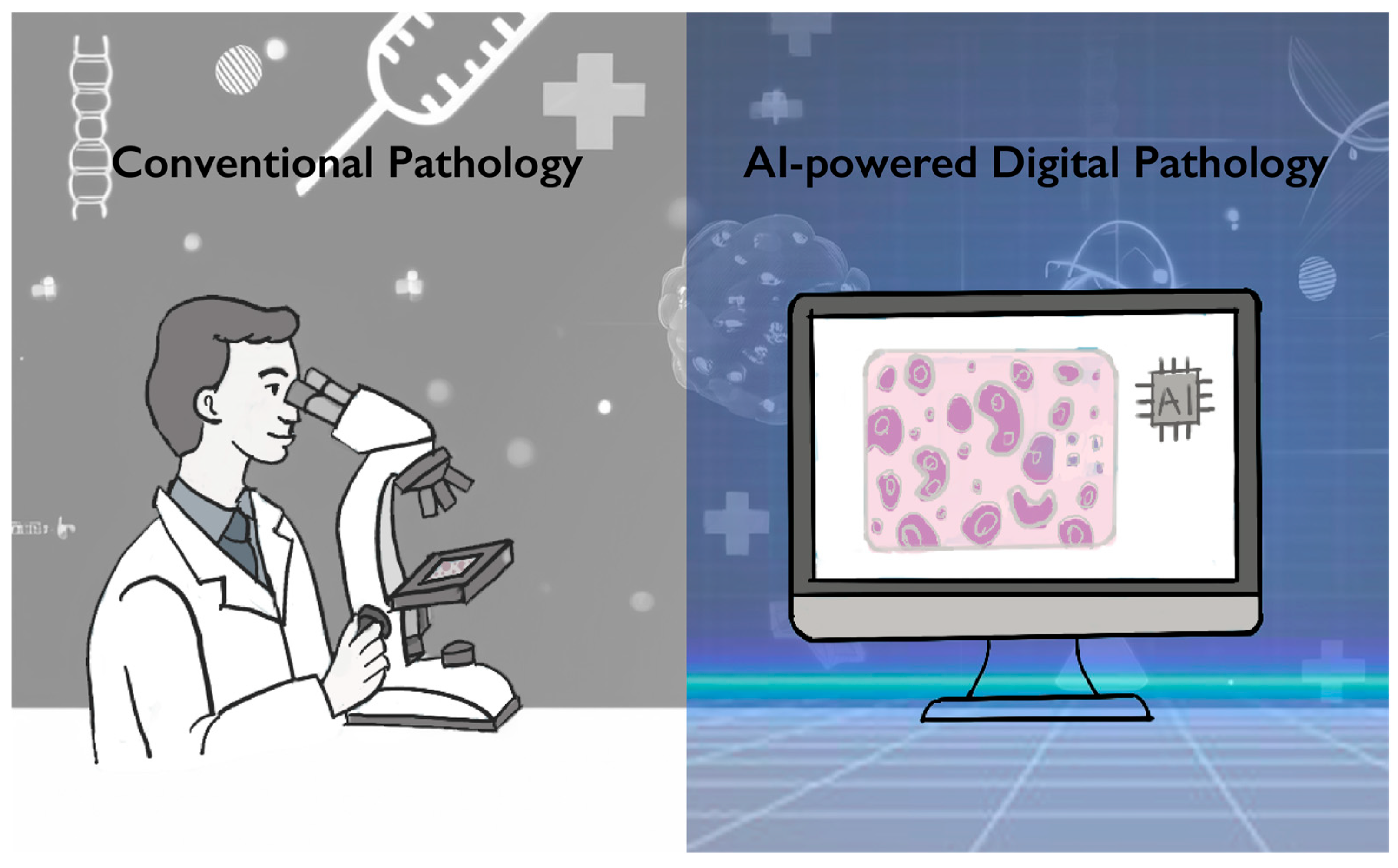
3.1. From Manual to Automated Assessment
3.2. Models and Approaches for TIL Detection
- Convolutional Neural Networks (CNNs): CNNs remain the most widely used architecture in medical image analysis due to their ability to automatically learn hierarchical features from raw image data [44,45]. Through sequential convolutional, pooling, and fully connected layers, they convert pixel-level inputs into increasingly abstract representations [46]. Saltz et al. developed a CNN-based pipeline to quantify TIL density in The Cancer Genome Atlas (TCGA) cohort, demonstrating strong correlations with clinical outcomes across multiple tumor types [47]. CNNs are particularly effective for detecting cells and segmenting tissue regions, as they efficiently capture local textures, shapes, and structural patterns.
- Vision Transformers (ViTs): ViTs adapt the Transformer architecture, originally designed for natural language processing, to image analysis. By dividing images into patches and applying self-attention mechanisms, ViTs capture long-range spatial relationships while preserving positional information. In a large study of over 50,000 melanocytic lesions, a multi-ViT ensemble achieved high AUROC values and strong external generalizability, highlighting its clinical promise [48]. Unlike CNNs, which focus on local feature extraction, ViTs excel at modeling global tissue architecture and stromal-tumor organization [49].
- Graph Neural Networks (GNNs): GNNs represent histologic data as cell-level graphs, where nodes correspond to cells and edges encoding spatial or phenotypic relationships. Through iterative message passing, GNNs capture higher-order interactions within the TME that pixel-based methods may overlook. In melanoma, modeling cell-to-cell interactions with GNNs improved classification accuracy by about 10% compared with conventional machine-learning methods [50]. GNNs are particularly powerful for characterizing immune-cell clustering and tertiary lymphoid structures (TLS), offering insight into immune organization beyond simple density measures [51].
3.3. Linking TIL Metrics to Therapy Response
4. Spatial Distribution of TILs as an Advanced Biomarker
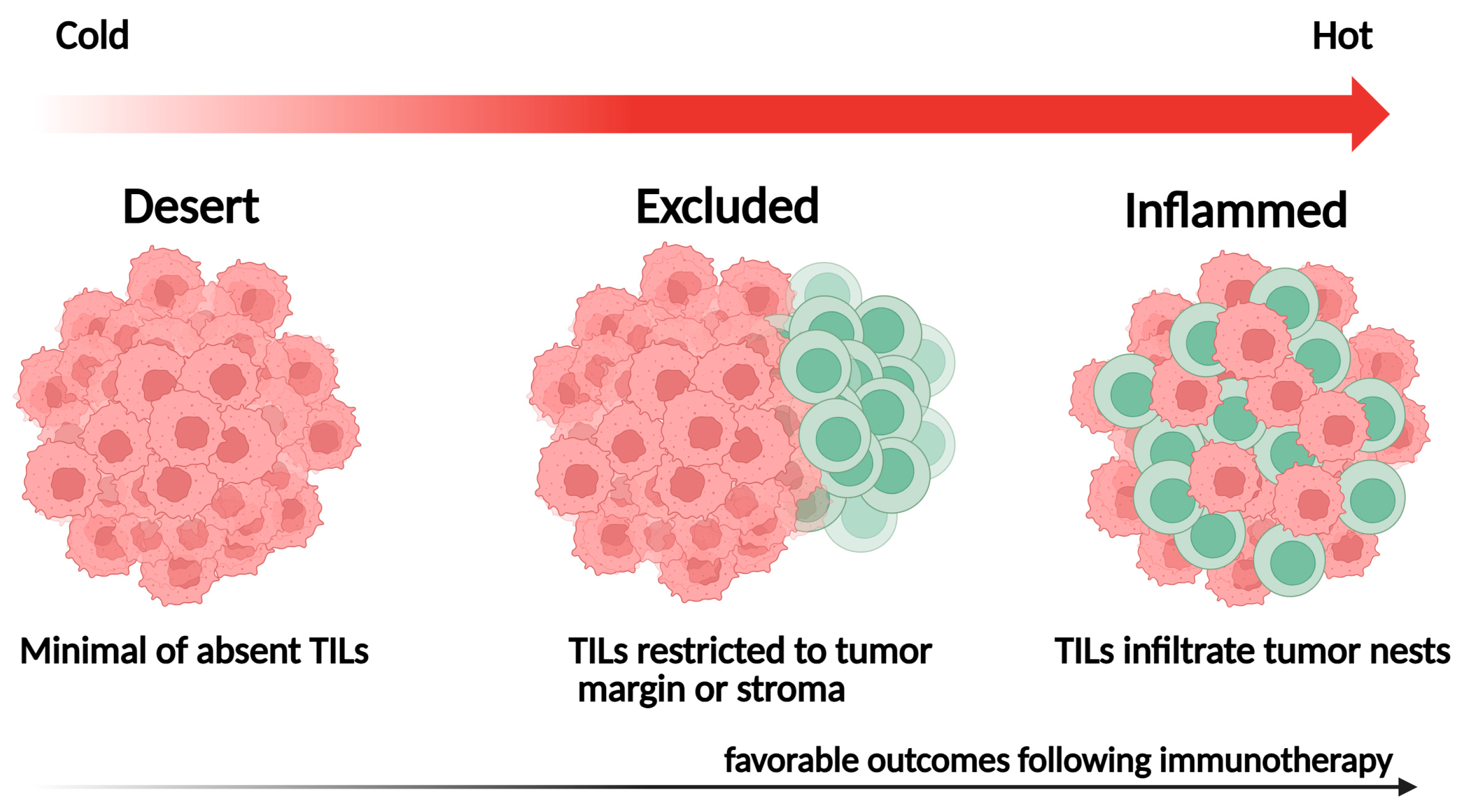
4.1. Concept of Inflamed, Excluded, and Desert Tumors
- Inflamed tumors: Characterized by dense TIL infiltration within the tumor parenchyma, often indicating a pre-existing antitumor immune response and favorable outcomes following ICI therapy;
- Immune-excluded tumors: Contain abundant TILs confined to the surrounding stroma, reflecting stromal or vascular barriers that hinder immune-cell infiltration;
- Immune-desert tumors: Display minimal TIL presence in both tumor and stroma, signifying immune ignorance or tolerance and typically associated with poor outcomes.
4.2. AI-Assisted Spatial Mapping
4.3. Predictive and Prognostic Value for Immunotherapy
5. TLS: Ectopic Immune Niches
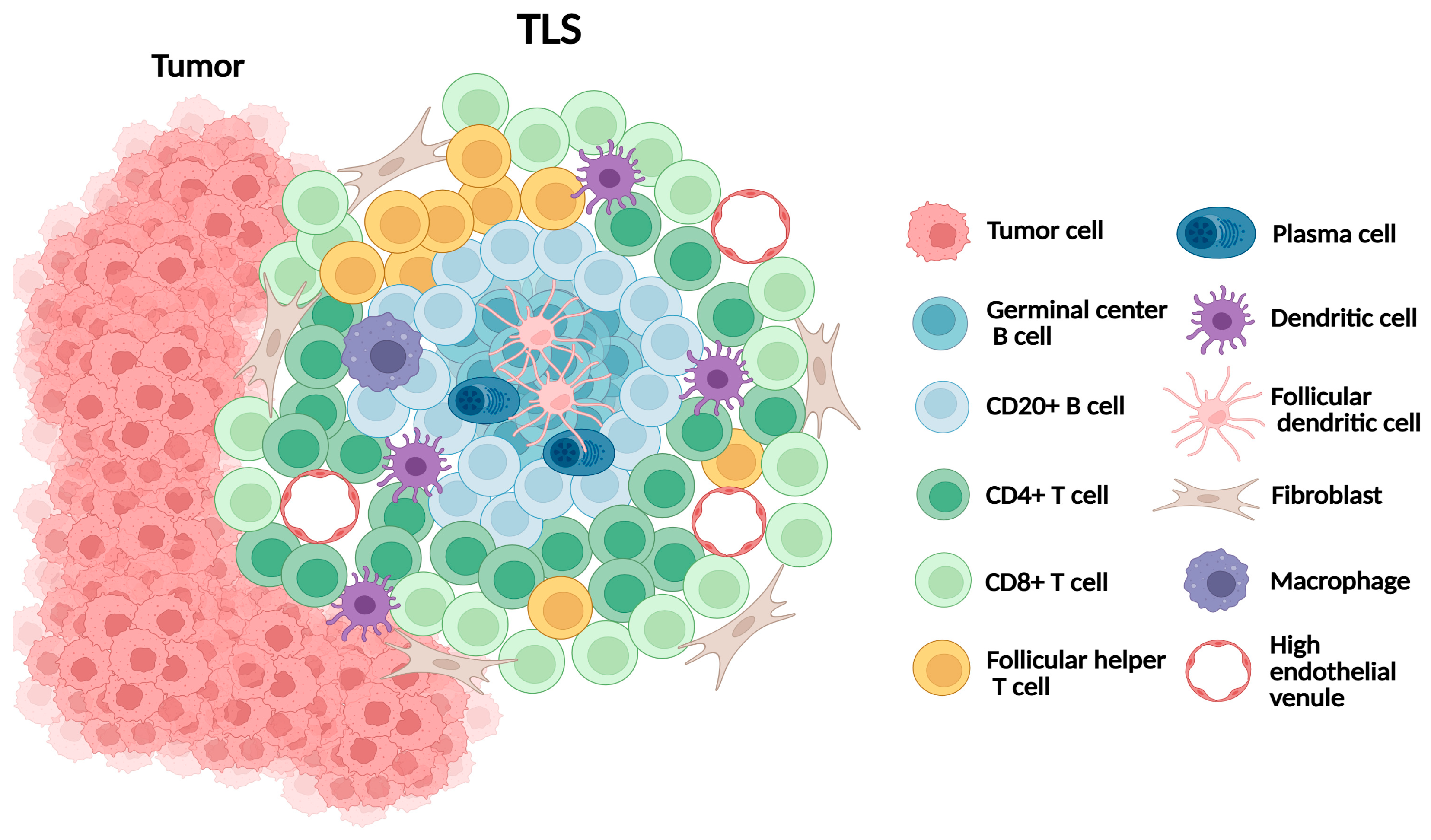
5.1. Definition, Cellular Composition, and Formation in Melanoma
5.2. TLS and Survival/Immunotherapy Response in Melanoma
6. Current Challenges and Future Directions
6.1. Remaining Gaps in Current Evidence
6.2. Technical Barriers and Multimodal Integration
6.3. Translational and Practical Considerations
7. Conclusions
Author Contributions
Funding
Institutional Review Board Statement
Informed Consent Statement
Data Availability Statement
Conflicts of Interest
References
- Glazer, A.M.; Winkelmann, R.R.; Farberg, A.S.; Rigel, D.S. Analysis of Trends in US Melanoma Incidence and Mortality. JAMA Dermatol. 2017, 153, 225–226. [Google Scholar] [CrossRef]
- Saginala, K.; Barsouk, A.; Aluru, J.S.; Rawla, P.; Barsouk, A. Epidemiology of Melanoma. Med. Sci. 2021, 9, 63. [Google Scholar] [CrossRef]
- Hamp, A.; Anderson, J.; Sivesind, T.E.; Szeto, M.D.; Hadjinicolaou, A. From the Cochrane Library: Systemic Treatments for Metastatic Cutaneous Melanoma. JMIR Dermatol. 2021, 4, e30270. [Google Scholar] [CrossRef]
- Hoeijmakers, L.L.; Reijers, I.L.M.; Blank, C.U. Biomarker-Driven Personalization of Neoadjuvant Immunotherapy in Melanoma. Cancer Discov. 2023, 13, 2319–2338. [Google Scholar] [CrossRef]
- Shin, S.; Moon, J.; Oum, C.; Kim, S.; Cho, S.I.; Lim, Y.; Ock, C.Y.; Shin, S. Discontinuation risk from adverse events: Immunotherapy alone vs. combined with chemotherapy: A systematic review and network meta-analysis. BMC Cancer 2024, 24, 152. [Google Scholar] [CrossRef]
- Alifu, M.; Tao, M.; Chen, X.; Chen, J.; Tang, K.; Tang, Y. Checkpoint inhibitors as dual immunotherapy in advanced non-small cell lung cancer: A meta-analysis. Front. Oncol. 2023, 13, 1146905. [Google Scholar] [CrossRef]
- Scobie, M.R.; Zhou, K.I.; Ahmed, S.; Kelley, M.J. Utility of Tumor Mutational Burden as a Biomarker for Response to Immune Checkpoint Inhibition in the VA Population. JCO Precis. Oncol. 2023, 7, e2300176. [Google Scholar] [CrossRef] [PubMed]
- Hossain, S.M.; Carpenter, C.; Eccles, M.R. Genomic and Epigenomic Biomarkers of Immune Checkpoint Immunotherapy Response in Melanoma: Current and Future Perspectives. Int. J. Mol. Sci. 2024, 25, 7252. [Google Scholar] [CrossRef] [PubMed]
- Hamid, O.; Molinero, L.; Bolen, C.R.; Sosman, J.A.; Munoz-Couselo, E.; Kluger, H.M.; McDermott, D.F.; Powderly, J.D.; Sarkar, I.; Ballinger, M.; et al. Safety, Clinical Activity, and Biological Correlates of Response in Patients with Metastatic Melanoma: Results from a Phase I Trial of Atezolizumab. Clin. Cancer Res. 2019, 25, 6061–6072. [Google Scholar] [CrossRef] [PubMed]
- Johnson, D.B.; Frampton, G.M.; Rioth, M.J.; Yusko, E.; Xu, Y.; Guo, X.; Ennis, R.C.; Fabrizio, D.; Chalmers, Z.R.; Greenbowe, J.; et al. Targeted Next Generation Sequencing Identifies Markers of Response to PD-1 Blockade. Cancer Immunol. Res. 2016, 4, 959–967. [Google Scholar] [CrossRef]
- Roszik, J.; Haydu, L.E.; Hess, K.R.; Oba, J.; Joon, A.Y.; Siroy, A.E.; Karpinets, T.V.; Stingo, F.C.; Baladandayuthapani, V.; Tetzlaff, M.T.; et al. Novel algorithmic approach predicts tumor mutation load and correlates with immunotherapy clinical outcomes using a defined gene mutation set. BMC Med. 2016, 14, 168. [Google Scholar] [CrossRef]
- Samstein, R.M.; Lee, C.H.; Shoushtari, A.N.; Hellmann, M.D.; Shen, R.; Janjigian, Y.Y.; Barron, D.A.; Zehir, A.; Jordan, E.J.; Omuro, A.; et al. Tumor mutational load predicts survival after immunotherapy across multiple cancer types. Nat. Genet. 2019, 51, 202–206. [Google Scholar] [CrossRef]
- Ning, B.; Liu, Y.; Wang, M.; Li, Y.; Xu, T.; Wei, Y. The Predictive Value of Tumor Mutation Burden on Clinical Efficacy of Immune Checkpoint Inhibitors in Melanoma: A Systematic Review and Meta-Analysis. Front. Pharmacol. 2022, 13, 748674. [Google Scholar] [CrossRef]
- Sinha, N.; Sinha, S.; Cheng, K.; Madan, S.; Schaffer, A.; Aldape, K.; Erez, A.; Ryan, B.M.; Ruppin, E. Abstract 29: The recently approved high-TMB criteria may introduce a sex bias in response to PD1 inhibitors. Cancer Res. 2021, 81, 29. [Google Scholar] [CrossRef]
- Madore, J.; Vilain, R.E.; Menzies, A.M.; Kakavand, H.; Wilmott, J.S.; Hyman, J.; Yearley, J.H.; Kefford, R.F.; Thompson, J.F.; Long, G.V.; et al. PD-L1 expression in melanoma shows marked heterogeneity within and between patients: Implications for anti-PD-1/PD-L1 clinical trials. Pigment Cell Melanoma Res. 2015, 28, 245–253. [Google Scholar] [CrossRef]
- Nebhan, C.A.; Johnson, D.B. Predictive biomarkers of response to immune checkpoint inhibitors in melanoma. Expert Rev. Anticancer Ther. 2020, 20, 137–145. [Google Scholar] [CrossRef]
- Song, K.Y.; Desar, S.; Pengo, T.; Shanley, R.; Giubellino, A. Correlation of MET and PD-L1 Expression in Malignant Melanoma. Cancers 2020, 12, 1847. [Google Scholar] [CrossRef] [PubMed]
- Ma, W.; Liu, W.; Zhong, J.; Zou, Z.; Lin, X.; Sun, W.; Hu, T.; Xu, Y.; Chen, Y. Advances in predictive biomarkers for melanoma immunotherapy. Holist. Integr. Oncol. 2024, 3, 48. [Google Scholar] [CrossRef]
- Morrison, C.; Pabla, S.; Conroy, J.M.; Nesline, M.K.; Glenn, S.T.; Dressman, D.; Papanicolau-Sengos, A.; Burgher, B.; Andreas, J.; Giamo, V.; et al. Predicting response to checkpoint inhibitors in melanoma beyond PD-L1 and mutational burden. J. Immunother. Cancer 2018, 6, 32. [Google Scholar] [CrossRef] [PubMed]
- Ciresan, D.C.; Giusti, A.; Gambardella, L.M.; Schmidhuber, J. Mitosis detection in breast cancer histology images with deep neural networks. In Medical Image Computing and Computer-Assisted Intervention—MICCAI 2013; Springer: Berlin/Heidelberg, Germany, 2013; Volume 8150, pp. 411–418. [Google Scholar]
- Esteva, A.; Kuprel, B.; Novoa, R.A.; Ko, J.; Swetter, S.M.; Blau, H.M.; Thrun, S. Dermatologist-level classification of skin cancer with deep neural networks. Nature 2017, 542, 115–118, Correction in Nature 2017, 546, 686. [Google Scholar] [CrossRef]
- Noorbakhsh-Sabet, N.; Zand, R.; Zhang, Y.; Abedi, V. Artificial Intelligence Transforms the Future of Health Care. Am. J. Med. 2019, 132, 795–801. [Google Scholar] [CrossRef]
- Phillips, S.P.; Spithoff, S.; Simpson, A. Artificial intelligence and predictive algorithms in medicine: Promise and problems. Can. Fam. Physician 2022, 68, 570–572. [Google Scholar] [CrossRef]
- Rodriguez-Ruiz, A.; Lang, K.; Gubern-Merida, A.; Broeders, M.; Gennaro, G.; Clauser, P.; Helbich, T.H.; Chevalier, M.; Tan, T.; Mertelmeier, T.; et al. Stand-Alone Artificial Intelligence for Breast Cancer Detection in Mammography: Comparison with 101 Radiologists. J. Natl. Cancer Inst. 2019, 111, 916–922. [Google Scholar] [CrossRef] [PubMed]
- Niazi, M.K.K.; Parwani, A.V.; Gurcan, M.N. Digital pathology and artificial intelligence. Lancet Oncol. 2019, 20, e253–e261. [Google Scholar] [CrossRef]
- Pitt, J.M.; Marabelle, A.; Eggermont, A.; Soria, J.C.; Kroemer, G.; Zitvogel, L. Targeting the tumor microenvironment: Removing obstruction to anticancer immune responses and immunotherapy. Ann. Oncol. 2016, 27, 1482–1492. [Google Scholar] [CrossRef]
- Li, Y.R.; Fang, Y.; Lyu, Z.; Zhu, Y.; Yang, L. Exploring the dynamic interplay between cancer stem cells and the tumor microenvironment: Implications for novel therapeutic strategies. J. Transl. Med. 2023, 21, 686. [Google Scholar] [CrossRef]
- Lv, B.; Wang, Y.; Ma, D.; Cheng, W.; Liu, J.; Yong, T.; Chen, H.; Wang, C. Immunotherapy: Reshape the Tumor Immune Microenvironment. Front. Immunol. 2022, 13, 844142. [Google Scholar] [CrossRef]
- Rohaan, M.W.; Borch, T.H.; van den Berg, J.H.; Met, O.; Kessels, R.; Geukes Foppen, M.H.; Stoltenborg Granhoj, J.; Nuijen, B.; Nijenhuis, C.; Jedema, I.; et al. Tumor-Infiltrating Lymphocyte Therapy or Ipilimumab in Advanced Melanoma. N. Engl. J. Med. 2022, 387, 2113–2125. [Google Scholar] [CrossRef] [PubMed]
- Maibach, F.; Sadozai, H.; Seyed Jafari, S.M.; Hunger, R.E.; Schenk, M. Tumor-Infiltrating Lymphocytes and Their Prognostic Value in Cutaneous Melanoma. Front. Immunol. 2020, 11, 2105. [Google Scholar] [CrossRef] [PubMed]
- Park, S.; Ock, C.Y.; Kim, H.; Pereira, S.; Park, S.; Ma, M.; Choi, S.; Kim, S.; Shin, S.; Aum, B.J.; et al. Artificial Intelligence-Powered Spatial Analysis of Tumor-Infiltrating Lymphocytes as Complementary Biomarker for Immune Checkpoint Inhibition in Non-Small-Cell Lung Cancer. J. Clin. Oncol. 2022, 40, 1916–1928. [Google Scholar] [CrossRef]
- Sun, R.; Limkin, E.J.; Vakalopoulou, M.; Dercle, L.; Champiat, S.; Han, S.R.; Verlingue, L.; Brandao, D.; Lancia, A.; Ammari, S.; et al. A radiomics approach to assess tumour-infiltrating CD8 cells and response to anti-PD-1 or anti-PD-L1 immunotherapy: An imaging biomarker, retrospective multicohort study. Lancet Oncol. 2018, 19, 1180–1191. [Google Scholar] [CrossRef]
- Amaria, R.N.; Reddy, S.M.; Tawbi, H.A.; Davies, M.A.; Ross, M.I.; Glitza, I.C.; Cormier, J.N.; Lewis, C.; Hwu, W.J.; Hanna, E.; et al. Neoadjuvant immune checkpoint blockade in high-risk resectable melanoma. Nat. Med. 2018, 24, 1649–1654, Correction in Nat. Med. 2018, 24, 1941. Correction in Nat. Med. 2018, 24, 1942. [Google Scholar] [CrossRef] [PubMed]
- Fu, Q.; Chen, N.; Ge, C.; Li, R.; Li, Z.; Zeng, B.; Li, C.; Wang, Y.; Xue, Y.; Song, X.; et al. Prognostic value of tumor-infiltrating lymphocytes in melanoma: A systematic review and meta-analysis. Oncoimmunology 2019, 8, 1593806. [Google Scholar] [CrossRef]
- Ladanyi, A. Prognostic and predictive significance of immune cells infiltrating cutaneous melanoma. Pigment Cell Melanoma Res. 2015, 28, 490–500. [Google Scholar] [CrossRef] [PubMed]
- Aeffner, F.; Zarella, M.D.; Buchbinder, N.; Bui, M.M.; Goodman, M.R.; Hartman, D.J.; Lujan, G.M.; Molani, M.A.; Parwani, A.V.; Lillard, K.; et al. Introduction to Digital Image Analysis in Whole-slide Imaging: A White Paper from the Digital Pathology Association. J. Pathol. Inform. 2019, 10, 9, Erratum in J. Pathol. Inform. 2019, 10, 15. [Google Scholar] [CrossRef]
- Chen, C.L.; Chen, C.C.; Yu, W.H.; Chen, S.H.; Chang, Y.C.; Hsu, T.I.; Hsiao, M.; Yeh, C.Y.; Chen, C.Y. An annotation-free whole-slide training approach to pathological classification of lung cancer types using deep learning. Nat. Commun. 2021, 12, 1193. [Google Scholar] [CrossRef] [PubMed]
- Corredor, G.; Wang, X.; Zhou, Y.; Lu, C.; Fu, P.; Syrigos, K.; Rimm, D.L.; Yang, M.; Romero, E.; Schalper, K.A.; et al. Spatial Architecture and Arrangement of Tumor-Infiltrating Lymphocytes for Predicting Likelihood of Recurrence in Early-Stage Non-Small Cell Lung Cancer. Clin. Cancer Res. 2019, 25, 1526–1534. [Google Scholar] [CrossRef]
- Lim, Y.; Choi, S.; Oh, H.J.; Kim, C.; Song, S.; Kim, S.; Song, H.; Park, S.; Kim, J.W.; Kim, J.W.; et al. Artificial intelligence-powered spatial analysis of tumor-infiltrating lymphocytes for prediction of prognosis in resected colon cancer. NPJ Precis. Oncol. 2023, 7, 124. [Google Scholar] [CrossRef]
- Roxburgh, C.S.; McMillan, D.C. The role of the in situ local inflammatory response in predicting recurrence and survival in patients with primary operable colorectal cancer. Cancer Treat. Rev. 2012, 38, 451–466. [Google Scholar] [CrossRef]
- Albusayli, R.; Graham, J.D.; Pathmanathan, N.; Shaban, M.; Raza, S.E.A.; Minhas, F.; Armes, J.E.; Rajpoot, N. Artificial intelligence-based digital scores of stromal tumour-infiltrating lymphocytes and tumour-associated stroma predict disease-specific survival in triple-negative breast cancer. J. Pathol. 2023, 260, 32–42. [Google Scholar] [CrossRef]
- Rakaee, M.; Adib, E.; Ricciuti, B.; Sholl, L.M.; Shi, W.; Alessi, J.V.; Cortellini, A.; Fulgenzi, C.A.M.; Viola, P.; Pinato, D.J.; et al. Association of Machine Learning-Based Assessment of Tumor-Infiltrating Lymphocytes on Standard Histologic Images with Outcomes of Immunotherapy in Patients with NSCLC. JAMA Oncol. 2023, 9, 51–60. [Google Scholar] [CrossRef]
- Aung, T.N.; Liu, M.; Su, D.; Shafi, S.; Boyaci, C.; Steen, S.; Tsiknakis, N.; Vidal, J.M.; Maher, N.; Micevic, G.; et al. Pathologist-Read vs AI-Driven Assessment of Tumor-Infiltrating Lymphocytes in Melanoma. JAMA Netw. Open 2025, 8, e2518906. [Google Scholar] [CrossRef]
- Kong, X.Y.; Zhao, X.S.; Sun, X.H.; Wang, P.; Wu, Y.; Peng, R.Y.; Zhang, Q.Y.; Wang, Y.Z.; Li, R.; Yang, Y.H.; et al. Classification of Glomerular Pathology Images in Children Using Convolutional Neural Networks with Improved SE-ResNet Module. Interdiscip. Sci. Comput. Life Sci. 2023, 15, 602–615. [Google Scholar] [CrossRef]
- Li, Y.X.; Chen, F.; Shi, J.J.; Huang, Y.L.; Wang, M. Convolutional Neural Networks for Classifying Cervical Cancer Types Using Histological Images. J. Digit. Imaging 2023, 36, 441–449. [Google Scholar] [CrossRef]
- Khosravi, P.; Kazemi, E.; Imielinski, M.; Elemento, O.; Hajirasouliha, I. Deep Convolutional Neural Networks Enable Discrimination of Heterogeneous Digital Pathology Images. eBioMedicine 2018, 27, 317–328. [Google Scholar] [CrossRef]
- Saltz, J.; Gupta, R.; Hou, L.; Kurc, T.; Singh, P.; Nguyen, V.; Samaras, D.; Shroyer, K.R.; Zhao, T.; Batiste, R.; et al. Spatial Organization and Molecular Correlation of Tumor-Infiltrating Lymphocytes Using Deep Learning on Pathology Images. Cell Rep. 2018, 23, 181–193.e7. [Google Scholar] [CrossRef]
- Lucassen, R.T.; Stathonikos, N.; Breimer, G.E.; Veta, M.; Blokx, W.A. Artificial intelligence-based triaging of cutaneous melanocytic lesions. npj Biomed. Innov. 2025, 2, 10. [Google Scholar] [CrossRef]
- Katayama, A.; Aoki, Y.; Watanabe, Y.; Horiguchi, J.; Rakha, E.A.; Oyama, T. Current status and prospects of artificial intelligence in breast cancer pathology: Convolutional neural networks to prospective Vision Transformers. Int. J. Clin. Oncol. 2024, 29, 1648–1668. [Google Scholar] [CrossRef] [PubMed]
- Monroy, L.C.R.; Rist, L.; Eberhardt, M.; Ostalecki, C.; Baur, A.; Vera, J.; Breininger, K.; Maier, A. Employing graph representations for cell-level characterization of melanoma MELC samples. In Proceedings of the 2023 IEEE 20th International Symposium on Biomedical Imaging (ISBI), Cartagena, Colombia, 18–21 April 2023; pp. 1–5. [Google Scholar]
- Gogoshin, G.; Rodin, A.S. Graph Neural Networks in Cancer and Oncology Research: Emerging and Future Trends. Cancers 2023, 15, 5858. [Google Scholar] [CrossRef] [PubMed]
- Lapuente-Santana, O.; Kant, J.; Eduati, F. Integrating histopathology and transcriptomics for spatial tumor microenvironment profiling in a melanoma case study. NPJ Precis. Oncol. 2024, 8, 254. [Google Scholar] [CrossRef]
- Ge, Y.; Leng, J.; Tang, Z.; Wang, K.; U, K.; Zhang, S.M.; Han, S.; Zhang, Y.; Xiang, J.; Yang, S.; et al. Deep Learning-Enabled Integration of Histology and Transcriptomics for Tissue Spatial Profile Analysis. Research 2025, 8, 0568. [Google Scholar] [CrossRef]
- Yang, J.; Lian, J.W.; Chin, Y.H.; Wang, L.; Lian, A.; Murphy, G.F.; Zhou, L. Assessing the Prognostic Significance of Tumor-Infiltrating Lymphocytes in Patients with Melanoma Using Pathologic Features Identified by Natural Language Processing. JAMA Netw. Open 2021, 4, e2126337. [Google Scholar] [CrossRef]
- Moore, M.R.; Friesner, I.D.; Rizk, E.M.; Fullerton, B.T.; Mondal, M.; Trager, M.H.; Mendelson, K.; Chikeka, I.; Kurc, T.; Gupta, R.; et al. Automated digital TIL analysis (ADTA) adds prognostic value to standard assessment of depth and ulceration in primary melanoma. Sci. Rep. 2021, 11, 2809. [Google Scholar] [CrossRef]
- Chou, M.; Illa-Bochaca, I.; Minxi, B.; Darvishian, F.; Johannet, P.; Moran, U.; Shapiro, R.L.; Berman, R.S.; Osman, I.; Jour, G.; et al. Optimization of an automated tumor-infiltrating lymphocyte algorithm for improved prognostication in primary melanoma. Mod. Pathol. 2021, 34, 562–571. [Google Scholar] [CrossRef]
- Aung, T.N.; Shafi, S.; Wilmott, J.S.; Nourmohammadi, S.; Vathiotis, I.; Gavrielatou, N.; Fernandez, A.; Yaghoobi, V.; Sinnberg, T.; Amaral, T.; et al. Objective assessment of tumor infiltrating lymphocytes as a prognostic marker in melanoma using machine learning algorithms. eBioMedicine 2022, 82, 104143. [Google Scholar] [CrossRef]
- Ugolini, F.; De Logu, F.; Iannone, L.F.; Brutti, F.; Simi, S.; Maio, V.; de Giorgi, V.; Maria di Giacomo, A.; Miracco, C.; Federico, F.; et al. Tumor-Infiltrating Lymphocyte Recognition in Primary Melanoma by Deep Learning Convolutional Neural Network. Am. J. Pathol. 2023, 193, 2099–2110. [Google Scholar] [CrossRef] [PubMed]
- Chatziioannou, E.; Rossner, J.; Aung, T.N.; Rimm, D.L.; Niessner, H.; Keim, U.; Serna-Higuita, L.M.; Bonzheim, I.; Kuhn Cuellar, L.; Westphal, D.; et al. Deep learning-based scoring of tumour-infiltrating lymphocytes is prognostic in primary melanoma and predictive to PD-1 checkpoint inhibition in melanoma metastases. eBioMedicine 2023, 93, 104644. [Google Scholar] [CrossRef]
- Tan, S.X.; Aung, T.N.; Claeson, M.; Acs, B.; Zhou, C.; Brown, S.; Lambie, D.; Baade, P.D.; Pandeya, N.; Soyer, H.P.; et al. Automated scoring of tumor-infiltrating lymphocytes informs risk of death from thin melanoma: A nested case-case study. J. Am. Acad. Dermatol. 2024, 90, 179–182. [Google Scholar] [CrossRef] [PubMed]
- Zheng, S.; Wang, W.; Shen, L.; Yao, Y.; Xia, W.; Ni, C. Tumor battlefield within inflamed, excluded or desert immune phenotypes: The mechanisms and strategies. Exp. Hematol. Oncol. 2024, 13, 80. [Google Scholar] [CrossRef]
- Li, X.; Eastham, J.; Giltnane, J.M.; Zou, W.; Zijlstra, A.; Tabatsky, E.; Banchereau, R.; Chang, C.W.; Nabet, B.Y.; Patil, N.S.; et al. Automated tumor immunophenotyping predicts clinical benefit from anti-PD-L1 immunotherapy. J. Pathol. 2024, 263, 190–202. [Google Scholar] [CrossRef] [PubMed]
- Shen, J.; Choi, Y.L.; Lee, T.; Kim, H.; Chae, Y.K.; Dulken, B.W.; Bogdan, S.; Huang, M.; Fisher, G.A.; Park, S.; et al. Inflamed immune phenotype predicts favorable clinical outcomes of immune checkpoint inhibitor therapy across multiple cancer types. J. Immunother. Cancer 2024, 12, e008339. [Google Scholar] [CrossRef]
- Failmezger, H.; Muralidhar, S.; Rullan, A.; de Andrea, C.E.; Sahai, E.; Yuan, Y. Topological Tumor Graphs: A Graph-Based Spatial Model to Infer Stromal Recruitment for Immunosuppression in Melanoma Histology. Cancer Res. 2020, 80, 1199–1209. [Google Scholar] [CrossRef]
- Aung, T.N.; Warrell, J.; Martinez-Morilla, S.; Gavrielatou, N.; Vathiotis, I.; Yaghoobi, V.; Kluger, H.M.; Gerstein, M.; Rimm, D.L. Spatially Informed Gene Signatures for Response to Immunotherapy in Melanoma. Clin. Cancer Res. 2024, 30, 3520–3532. [Google Scholar] [CrossRef]
- Hwang, S.; Ryu, H.J.; Kim, Y.; Cho, S.I.; Oum, C.; Puche, A.V.; Lee, J.; Kim, K.H.; Chung, K.Y.; Shin, S.J.; et al. Immune phenotype profiling based on anatomic origin of melanoma and impact on clinical outcomes of immune checkpoint inhibitor treatment. J. Clin. Oncol. 2024, 42, 9569. [Google Scholar] [CrossRef]
- Sautes-Fridman, C.; Petitprez, F.; Calderaro, J.; Fridman, W.H. Tertiary lymphoid structures in the era of cancer immunotherapy. Nat. Rev. Cancer 2019, 19, 307–325. [Google Scholar] [CrossRef]
- Zhang, Q.; Wu, S. Tertiary lymphoid structures are critical for cancer prognosis and therapeutic response. Front. Immunol. 2022, 13, 1063711. [Google Scholar] [CrossRef] [PubMed]
- Su, G.L.; Zhang, M.J.; Li, H.; Sun, Z.J. Dissecting Tertiary Lymphoid Structures in Cancer: Maturation, Localization and Density. Theranostics 2025, 15, 9459–9485. [Google Scholar] [CrossRef]
- Rakaee, M.; Kilvaer, T.K.; Jamaly, S.; Berg, T.; Paulsen, E.E.; Berglund, M.; Richardsen, E.; Andersen, S.; Al-Saad, S.; Poehl, M.; et al. Tertiary lymphoid structure score: A promising approach to refine the TNM staging in resected non-small cell lung cancer. Br. J. Cancer 2021, 124, 1680–1689. [Google Scholar] [CrossRef] [PubMed]
- Yoshimitsu, M.; Nakamura, M.; Kano, S.; Magara, T.; Kato, H.; Sakai, A.; Sugiyama, M.; Mizokami, M.; Morita, A. CXCL13 and CCL21 Induce Tertiary Lymphoid Structures and Enhance the Efficacy of Immunotherapy for Melanoma. Cancer Sci. 2025, 116, 2075–2085. [Google Scholar] [CrossRef] [PubMed]
- Rodriguez, A.B.; Peske, J.D.; Woods, A.N.; Leick, K.M.; Mauldin, I.S.; Meneveau, M.O.; Young, S.J.; Lindsay, R.S.; Melssen, M.M.; Cyranowski, S.; et al. Immune mechanisms orchestrate tertiary lymphoid structures in tumors via cancer-associated fibroblasts. Cell Rep. 2021, 36, 109422. [Google Scholar] [CrossRef]
- Sautes-Fridman, C.; Lawand, M.; Giraldo, N.A.; Kaplon, H.; Germain, C.; Fridman, W.H.; Dieu-Nosjean, M.C. Tertiary Lymphoid Structures in Cancers: Prognostic Value, Regulation, and Manipulation for Therapeutic Intervention. Front. Immunol. 2016, 7, 407. [Google Scholar] [CrossRef]
- van Rijthoven, M.; Obahor, S.; Pagliarulo, F.; van den Broek, M.; Schraml, P.; Moch, H.; van der Laak, J.; Ciompi, F.; Silina, K. Multi-resolution deep learning characterizes tertiary lymphoid structures and their prognostic relevance in solid tumors. Commun. Med. 2024, 4, 5. [Google Scholar] [CrossRef]
- Li, Z.; Jiang, Y.; Li, B.; Han, Z.; Shen, J.; Xia, Y.; Li, R. Development and Validation of a Machine Learning Model for Detection and Classification of Tertiary Lymphoid Structures in Gastrointestinal Cancers. JAMA Netw. Open 2023, 6, e2252553. [Google Scholar] [CrossRef]
- Cabrita, R.; Lauss, M.; Sanna, A.; Donia, M.; Skaarup Larsen, M.; Mitra, S.; Johansson, I.; Phung, B.; Harbst, K.; Vallon-Christersson, J.; et al. Tertiary lymphoid structures improve immunotherapy and survival in melanoma. Nature 2020, 577, 561–565, Correction in Nature 2020, 580, E1. [Google Scholar] [CrossRef]
- Tarhini, A.A.; Li, T.; Tao, R.; Lee, S.J.; Eljilany, I.; Hodi, F.S.; Streicher, H.; Karunamurthy, A.; Kirkwood, J.M.; Wang, X. Abstract 3358: Tertiary lymphoid structures (TLS) estimated by AI tools from digital H&E slides significantly enhance survival prediction in high-risk AJCC stages III/IV melanoma. Cancer Res. 2025, 85, 3358. [Google Scholar]
- Broit, N.; Johansson, P.A.; Rodgers, C.B.; Walpole, S.T.; Hayward, N.K.; Pritchard, A.L. Systematic review and meta-analysis of genomic alterations in acral melanoma. Pigment Cell Melanoma Res. 2022, 35, 369–386. [Google Scholar] [CrossRef] [PubMed]
- Borkowska, A.M.; Szumera-Cieckiewicz, A.; Chraszczewska, M.; Sokol, K.; Goryn, T.; Rutkowski, P.L. Clinical Significance of Tumor Microenvironment in Acral Melanoma: A Large Single-Institution Study of Caucasians. J. Clin. Med. 2021, 10, 1452. [Google Scholar] [CrossRef] [PubMed]
- Asadi-Aghbolaghi, M.; Darbandsari, A.; Zhang, A.; Contreras-Sanz, A.; Boschman, J.; Ahmadvand, P.; Kobel, M.; Farnell, D.; Huntsman, D.G.; Churg, A.; et al. Learning generalizable AI models for multi-center histopathology image classification. npj Precis. Oncol. 2024, 8, 151. [Google Scholar] [CrossRef] [PubMed]
- Haggenmuller, S.; Schmitt, M.; Krieghoff-Henning, E.; Hekler, A.; Maron, R.C.; Wies, C.; Utikal, J.S.; Meier, F.; Hobelsberger, S.; Gellrich, F.F.; et al. Federated Learning for Decentralized Artificial Intelligence in Melanoma Diagnostics. JAMA Dermatol. 2024, 160, 303–311. [Google Scholar] [CrossRef]
- Gschwind, A.; Ossowski, S. AI Model for Predicting Anti-PD1 Response in Melanoma Using Multi-Omics Biomarkers. Cancers 2025, 17, 714. [Google Scholar] [CrossRef]
- Chelebian, E.; Avenel, C.; Wahlby, C. Combining spatial transcriptomics with tissue morphology. Nat. Commun. 2025, 16, 4452. [Google Scholar] [CrossRef] [PubMed]



| Study | Dataset (N) | AI Method | Target Features | Key Findings |
|---|---|---|---|---|
| Yang et al., 2021 [54] † | Text-based pathology reports (N = 2624) | Natural language processing (NLP) model (TIL extraction from medical records) | TIL grade (absent, nonbrisk, brisk) | Brisk TILs significantly associated with improved OS (HR = 0.63, p = 0.03, 5-year OS +14.2%); nonbrisk TILs not significant. |
| Moore et al., 2021 [55] † | H&E WSIs of primary melanoma (N = 145; multiple slides per tumor) | CNN (automated digital TIL analysis, ADTA; QuIP TIL CNN) | ADTA score = TIL-positive patches/total tumor patches | ADTA score correlated with pathologist grading (p < 0.001) and significantly predicted DSS (HR = 4.18, p = 0.006). |
| Chou et al., 2021 [56] † | H&E WSIs of primary melanoma (N = 453) | Machine learning algorithm for TIL quantification | TIL density | High TIL density predicted longer RFS (HR = 0.92 per 10% increase, p < 0.001) and OS (HR = 0.90, p = 0.002); manual grading did not predict RFS (p > 0.05). |
| Aung et al., 2022 [57] † | H&E WSIs of primary melanoma (N = 785) | Automated TIL quantification algorithm (eTILs, etTILs) | TIL density (eTIL%, etTILs) | eTIL% and etTILs significantly predicted OS (AUC = 0.77 and 0.793); identified high-risk stage II patients; TILs mainly CD3+/CD8+ or CD4+. |
| Ugolini et al., 2023 [58] | H&E WSIs of stage II–III melanoma with H&E and CD3 IHC (N = 307) | CNN (Inception-ResNet-v2) | TIL density (AI-TIL score = [TILs/(TILs + noTILs)] × 100) | High AI-TIL score predicted longer DFS (HR = 0.60, p = 0.013) and OS (HR = 0.59, p = 0.017). |
| Chatziioannou et al., 2023 [59] † | H&E WSIs of stage IB–IV melanoma (N = 641) | Neural network (NN192) | TIL density (eTIL score = [TILs/(TILs + tumor cells)] × 100%) | Low eTILs (≤16.6%) predicted poor prognosis; eTILs were lower in metastases (p = 0.0012). High eTILs (>12.2%) in therapy-naïve metastases associated with better survival under anti–PD-1 therapy (p = 0.037). |
| Tan et al., 2024 [60] | H&E WSIs of thin melanoma (≤1 mm) from 20-year cohort (N = 170; 85 fatal vs. 85 non-fatal) | Neural network (NN192) | eTIL% (electronic TIL density = TILs/[TILs + tumor cells]) | Lowest eTIL% quartile associated with higher disease-specific mortality (OR = 4.77, p = 0.003); manual pathologist grading not predictive. |
| Aung et al., 2025 [43] † | H&E WSIs of primary melanoma (N = 208) | Machine learning algorithm (AI-assisted) | TIL density/stromal TILs | AI TIL scoring showed superior reproducibility vs. manual assessment (ICC > 0.90 vs. Kendall W 0.44) and predicted outcomes (median cutoff HR = 0.45, p = 0.005; 16.6% cutoff HR = 0.56, p = 0.04). |
Disclaimer/Publisher’s Note: The statements, opinions and data contained in all publications are solely those of the individual author(s) and contributor(s) and not of MDPI and/or the editor(s). MDPI and/or the editor(s) disclaim responsibility for any injury to people or property resulting from any ideas, methods, instructions or products referred to in the content. |
© 2025 by the authors. Licensee MDPI, Basel, Switzerland. This article is an open access article distributed under the terms and conditions of the Creative Commons Attribution (CC BY) license (https://creativecommons.org/licenses/by/4.0/).
Share and Cite
Yoo, S.; Lee, J.H. Artificial Intelligence in Histopathological Analysis for Predicting Immunotherapy Response in Cutaneous Melanoma. Int. J. Mol. Sci. 2025, 26, 10729. https://doi.org/10.3390/ijms262110729
Yoo S, Lee JH. Artificial Intelligence in Histopathological Analysis for Predicting Immunotherapy Response in Cutaneous Melanoma. International Journal of Molecular Sciences. 2025; 26(21):10729. https://doi.org/10.3390/ijms262110729
Chicago/Turabian StyleYoo, Seungah, and Ji Hyun Lee. 2025. "Artificial Intelligence in Histopathological Analysis for Predicting Immunotherapy Response in Cutaneous Melanoma" International Journal of Molecular Sciences 26, no. 21: 10729. https://doi.org/10.3390/ijms262110729
APA StyleYoo, S., & Lee, J. H. (2025). Artificial Intelligence in Histopathological Analysis for Predicting Immunotherapy Response in Cutaneous Melanoma. International Journal of Molecular Sciences, 26(21), 10729. https://doi.org/10.3390/ijms262110729