Review

Anthozoan Chemical Defenses: Integrating Compounds, Enzymatic Activities, and Omics-Based Discoveries


by
Muhammad Zakariya
1,
Oliver J. Lincoln
2,3,
Isabella D’Ambra
4,† and
Chiara Lauritano
1,*,†
1
Ecosustainable Marine Biotechnology Department, Stazione Zoologica Anton Dohrn, Via Acton n. 55, 80133 Naples, Italy
2
School of Biological Sciences, Queen’s University Belfast, 19 Chlorine Gardens, Co. Antrim, Belfast BT9 5DL, UK
3
Queen’s University Belfast Marine Laboratory, 12-13 The Strand, Co. Down, Portaferry BT22 1PF, UK
4
Integrative Marine Ecology Department, Stazione Zoologica Anton Dohrn, Villa Comunale, 80121 Naples, Italy
*
Author to whom correspondence should be addressed.
These authors contributed equally to this work.
Int. J. Mol. Sci. 2025, 26(13), 6109; https://doi.org/10.3390/ijms26136109
Submission received: 23 April 2025 / Revised: 26 May 2025 / Accepted: 16 June 2025 / Published: 25 June 2025

Abstract

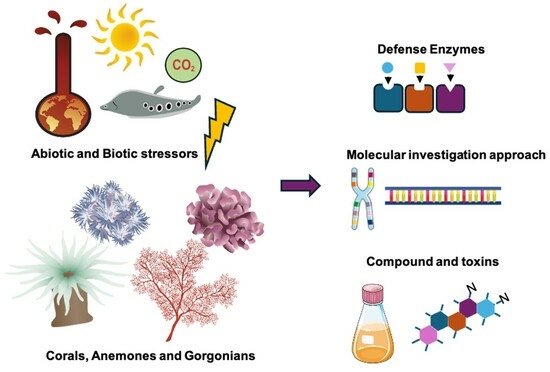
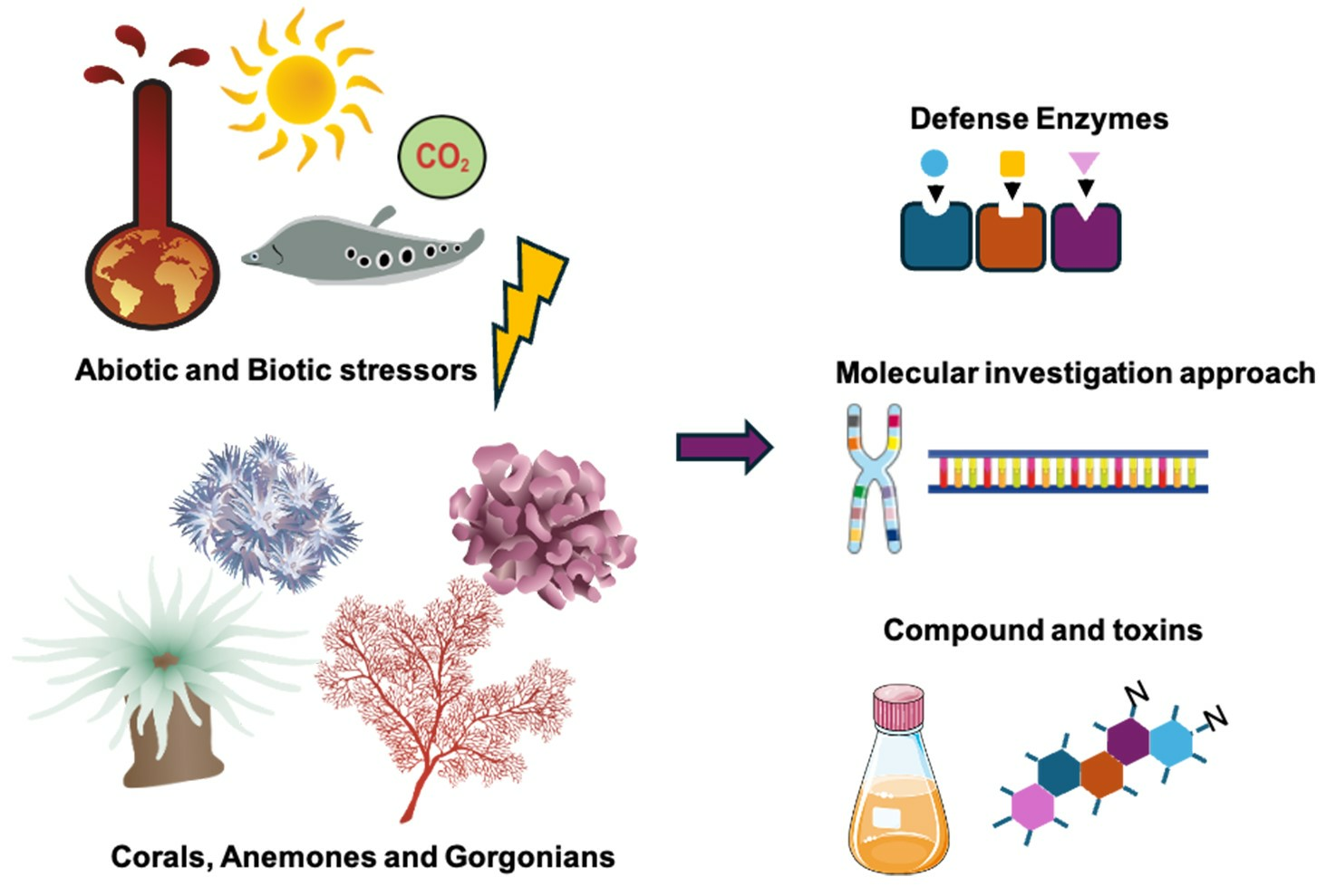
Anthozoa is a species-rich class with an innate immune system that acts as a defensive tool and shares many of its cellular pathways with mammalian immune responses. In addition to immune-related strategies (e.g., allorecognition and xenorecognition), anthozoans have evolved to use compounds or toxins for chemical communication, defense, or predation, which may exhibit biological activities useful for human health, mainly antiviral, antibacterial, anti-inflammatory, anticancer, and antitumor properties of pharmaceutical interest. These compounds/toxins can be alkaloids, amino acids, proteins, ceramides, diterpenes, and sesquiterpenes and are mainly distributed into Hexacorallia and Octocorallia. Anthozoans are enriched in defensive enzymes, which can either be found in anthozoan species or their symbionts and help them survive in hostile conditions. Studies related to genomics and transcriptomics using advanced sequencing efforts revealed the presence of genetic elements in anthozoans that help them survive against abiotic and biotic stressors in the marine environment. This review presents developments and highlights the current state of knowledge about anthozoans’ chemical weaponry that can drive further bioprospection of anthozoan species producing compounds and toxins which may be useful in biotechnological applications. Omics research in Anthozoa is still nascent, and more efforts are required to fully understand the chemical ecology, diversity, and possible biotechnological applications of cnidarian genes and their products.
Keywords: bioactive compounds; toxins; omics; enzymes; stress responses bioactive compounds; toxins; omics; enzymes; stress responses
Graphical Abstract