Article

Hollow Mesoporous Silica Nanoparticles as a New Nanoscale Resistance Inducer for Fusarium Wilt Control: Size Effects and Mechanism of Action

School of Tropical Agriculture and Forestry, Hainan University, Haikou 570228, China
*
Authors to whom correspondence should be addressed.
These authors contributed equally to this work.
Int. J. Mol. Sci. 2024, 25(8), 4514; https://doi.org/10.3390/ijms25084514
Submission received: 27 February 2024 / Revised: 7 April 2024 / Accepted: 8 April 2024 / Published: 20 April 2024
(This article belongs to the Special Issue Bioactive Nanoparticles: Synthesis and Potential Applications)

Abstract

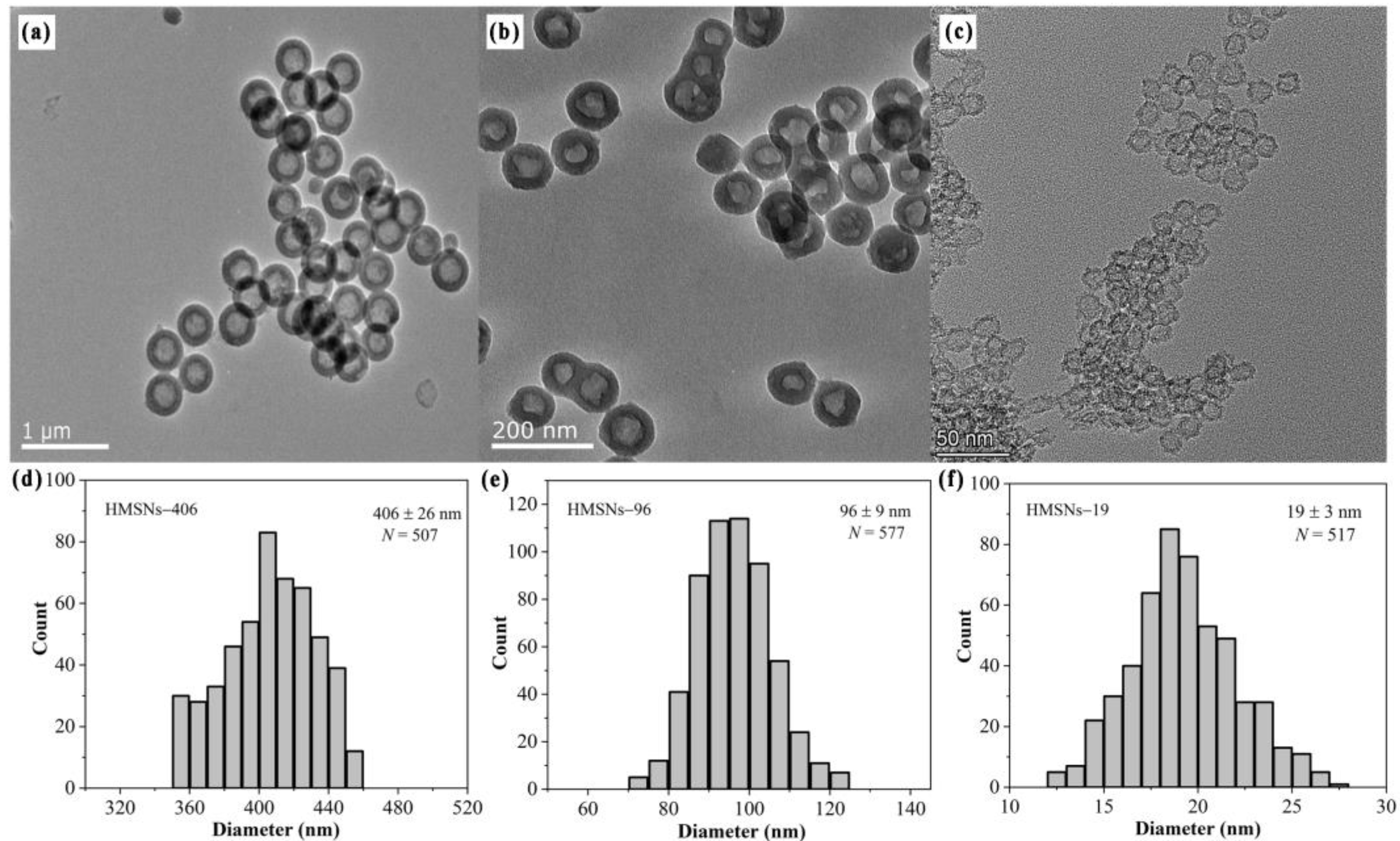
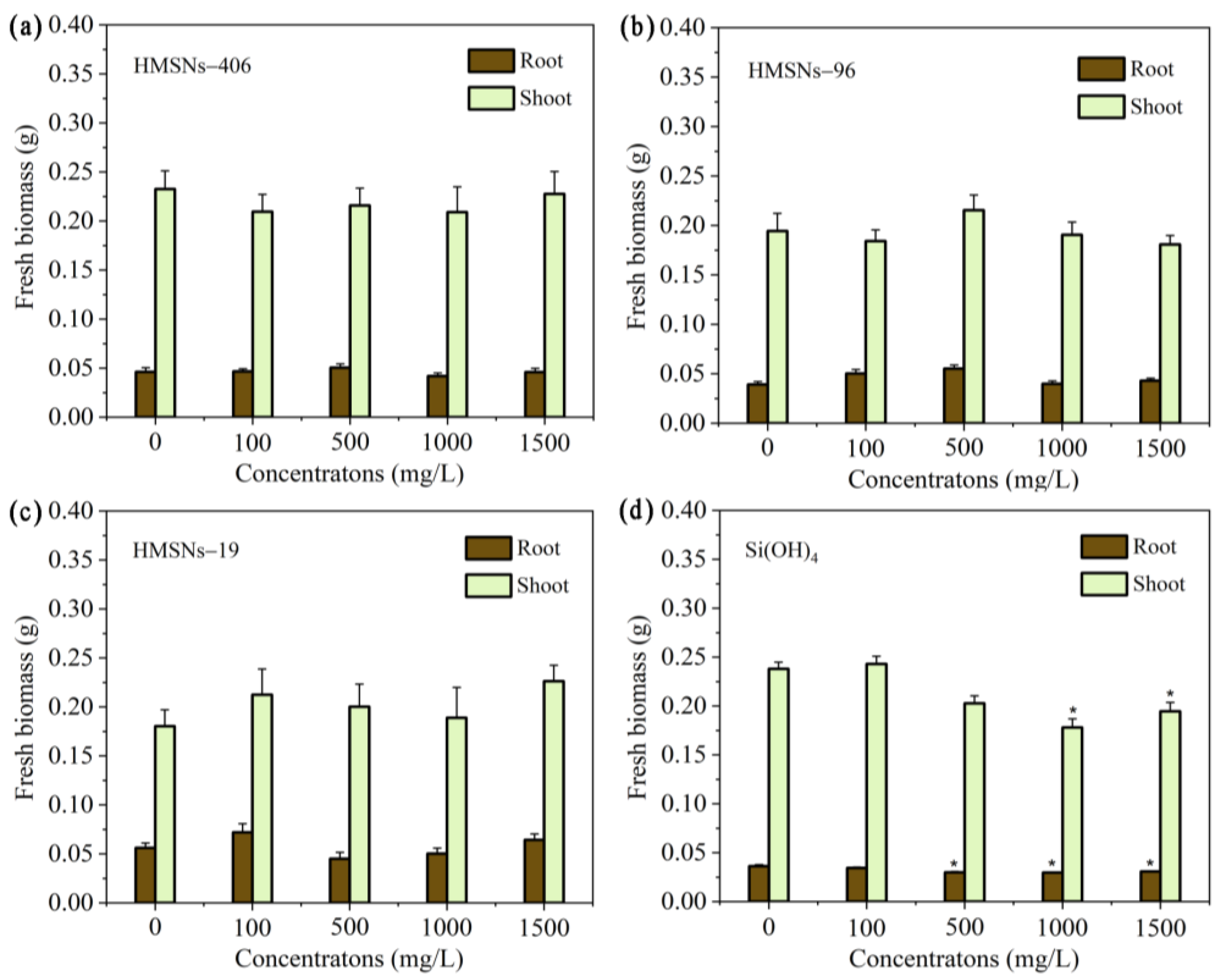
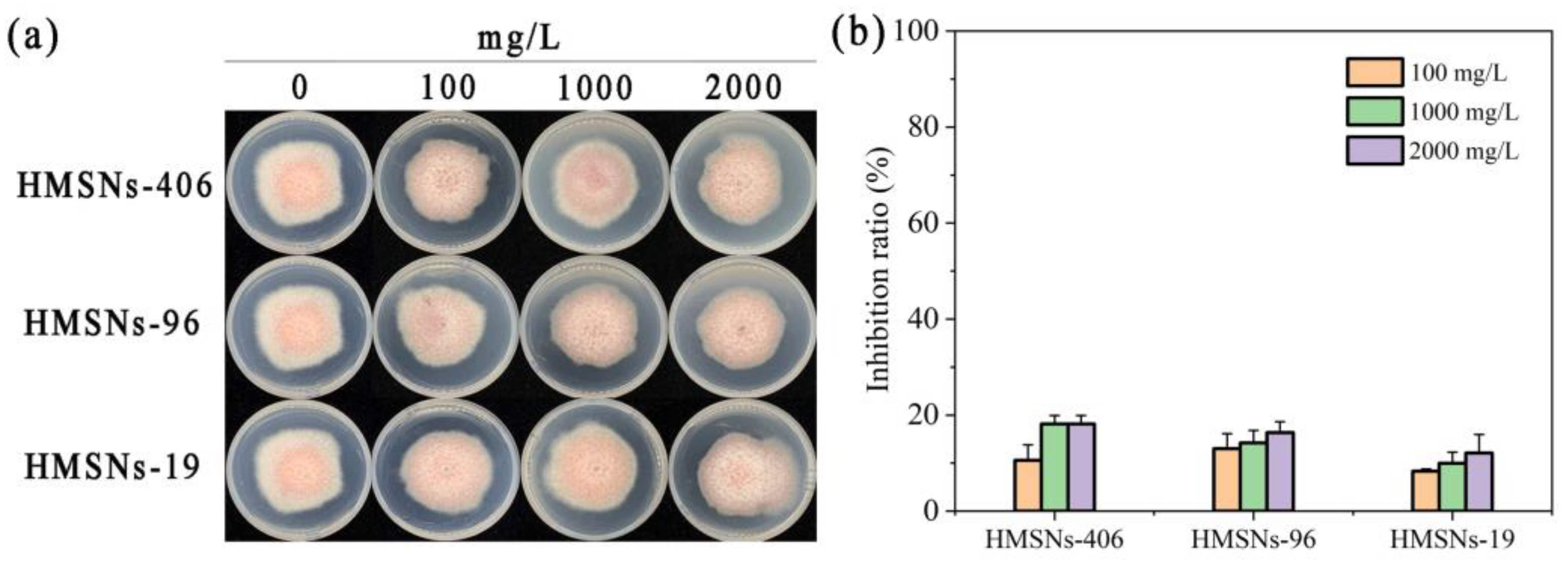
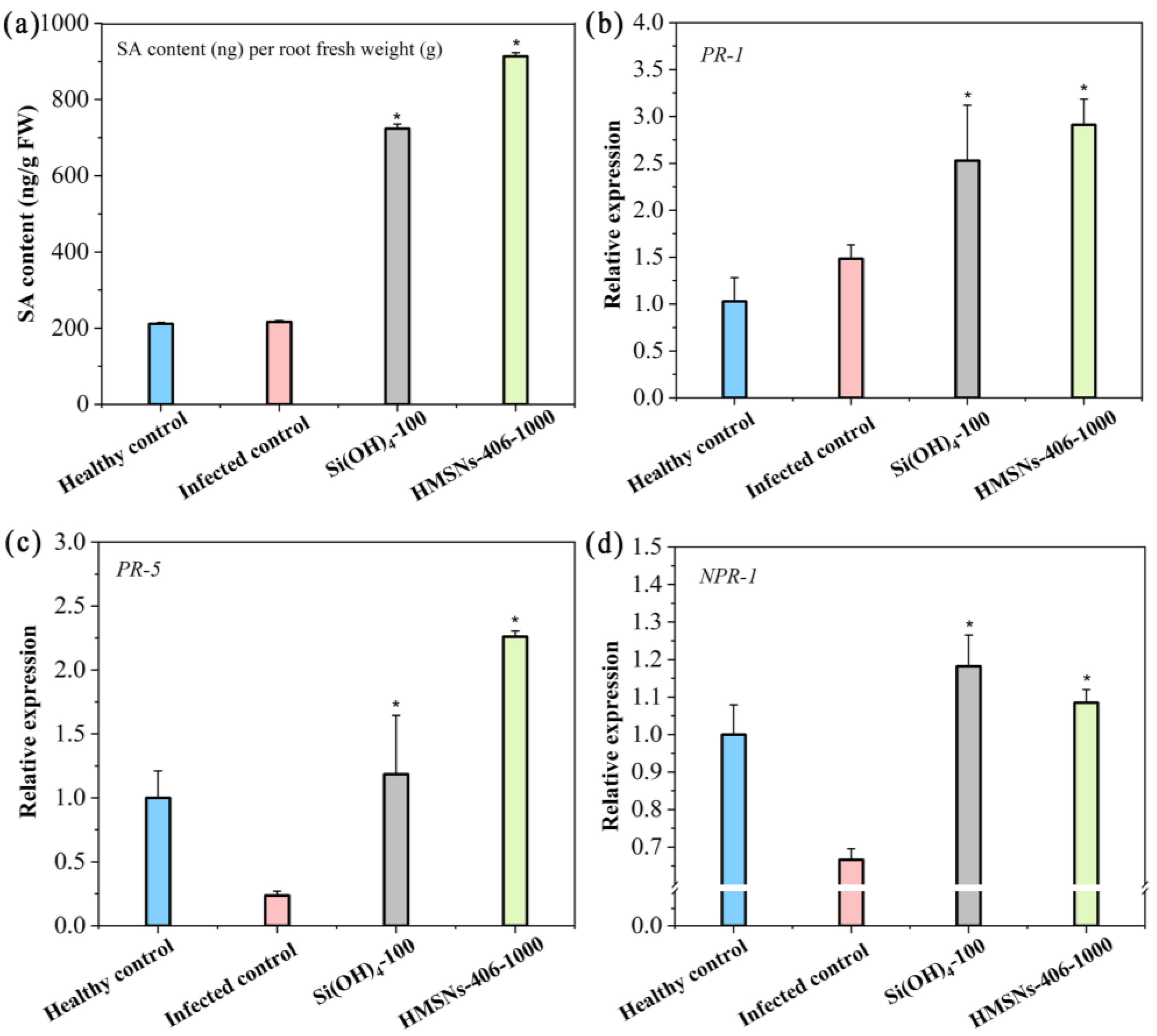
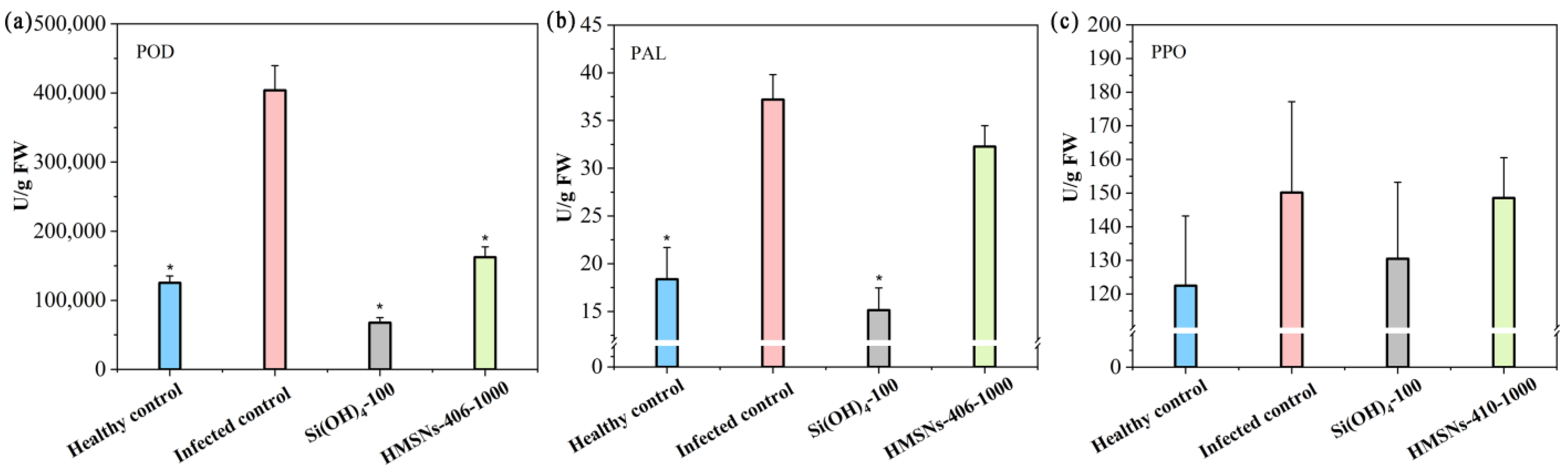
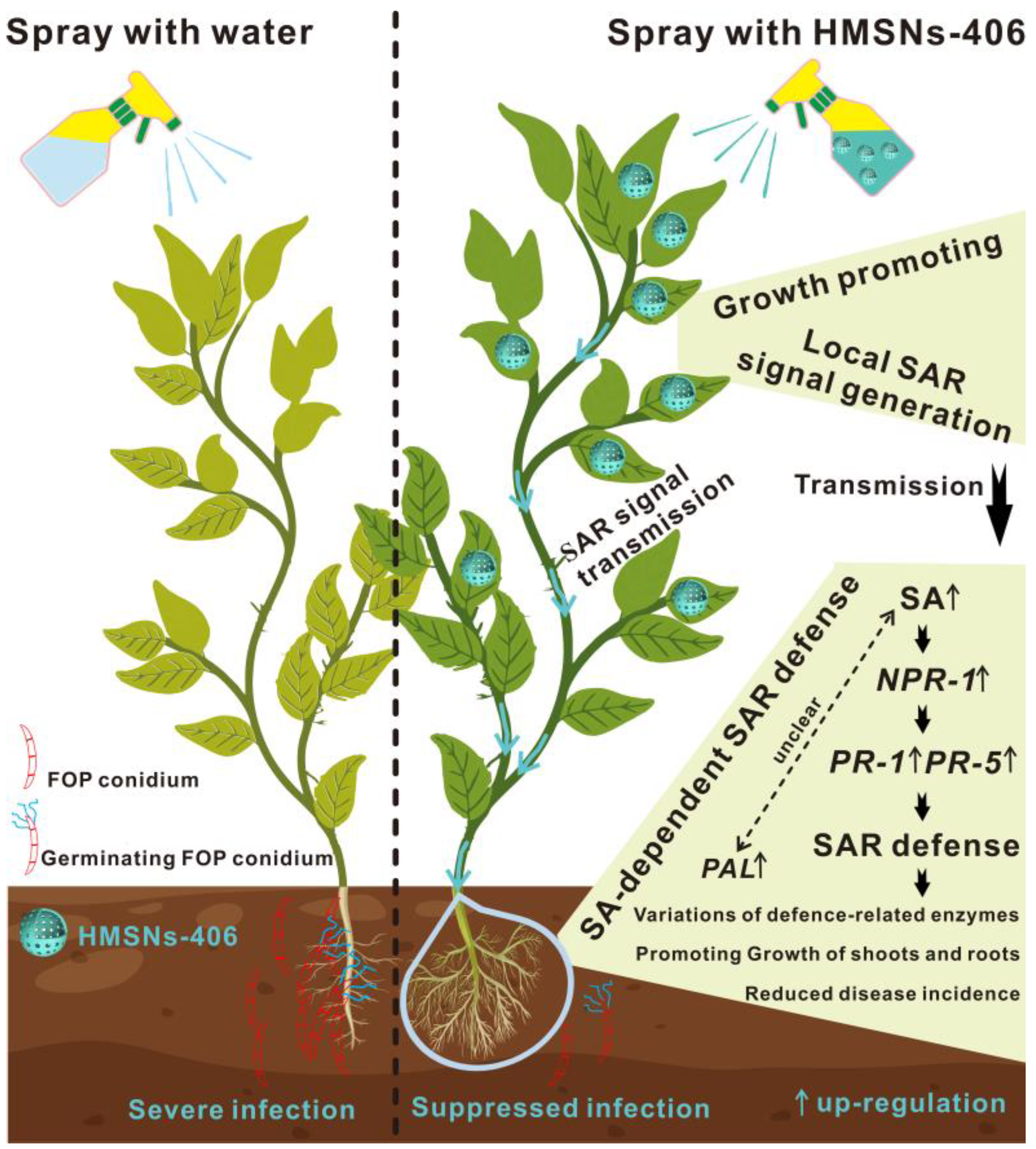
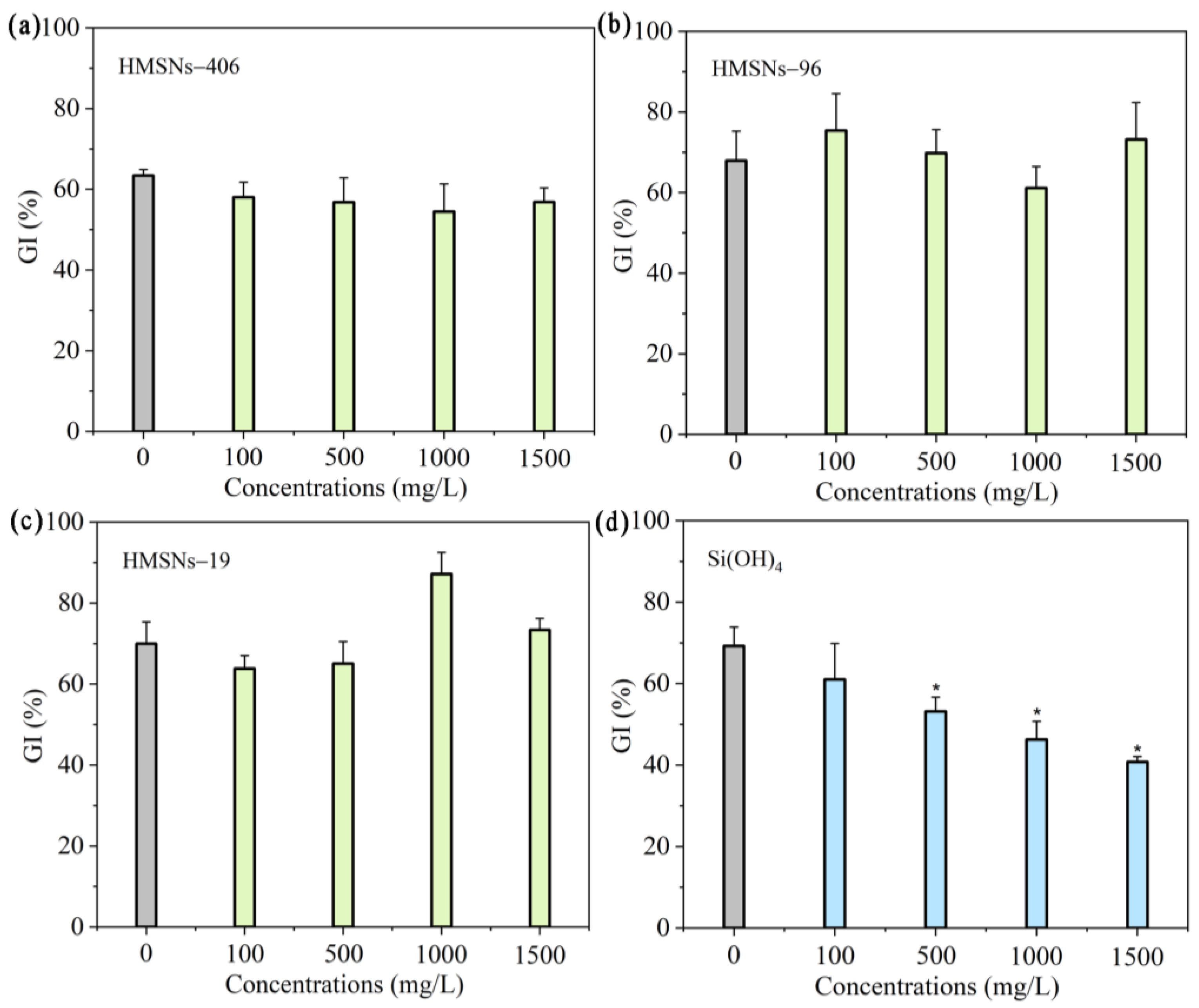
In agriculture, soil-borne fungal pathogens, especially Fusarium oxysporum strains, are posing a serious threat to efforts to achieve global food security. In the search for safer agrochemicals, silica nanoparticles (SiO2NPs) have recently been proposed as a new tool to alleviate pathogen damage including Fusarium wilt. Hollow mesoporous silica nanoparticles (HMSNs), a unique class of SiO2NPs, have been widely accepted as desirable carriers for pesticides. However, their roles in enhancing disease resistance in plants and the specific mechanism remain unknown. In this study, three sizes of HMSNs (19, 96, and 406 nm as HMSNs-19, HMSNs-96, and HMSNs-406, respectively) were synthesized and characterized to determine their effects on seed germination, seedling growth, and Fusarium oxysporum f. sp. phaseoli (FOP) suppression. The three HMSNs exhibited no side effects on cowpea seed germination and seedling growth at concentrations ranging from 100 to 1500 mg/L. The inhibitory effects of the three HMSNs on FOP mycelial growth were very weak, showing inhibition ratios of less than 20% even at 2000 mg/L. Foliar application of HMSNs, however, was demonstrated to reduce the FOP severity in cowpea roots in a size- and concentration-dependent manner. The three HMSNs at a low concentration of 100 mg/L, as well as HMSNs-19 at a high concentration of 1000 mg/L, were observed to have little effect on alleviating the disease incidence. HMSNs-406 were most effective at a concentration of 1000 mg/L, showing an up to 40.00% decline in the disease severity with significant growth-promoting effects on cowpea plants. Moreover, foliar application of HMSNs-406 (1000 mg/L) increased the salicylic acid (SA) content in cowpea roots by 4.3-fold, as well as the expression levels of SA marker genes of PR-1 (by 1.97-fold) and PR-5 (by 9.38-fold), and its receptor gene of NPR-1 (by 1.62-fold), as compared with the FOP infected control plants. Meanwhile, another resistance-related gene of PAL was also upregulated by 8.54-fold. Three defense-responsive enzymes of POD, PAL, and PPO were also involved in the HMSNs-enhanced disease resistance in cowpea roots, with varying degrees of reduction in activity. These results provide substantial evidence that HMSNs exert their Fusarium wilt suppression in cowpea plants by activating SA-dependent SAR (systemic acquired resistance) responses rather than directly suppressing FOP growth. Overall, for the first time, our results indicate a new role of HMSNs as a potent resistance inducer to serve as a low-cost, highly efficient, safe and sustainable alternative for plant disease protection.
Keywords: hollow mesoporous silica nanoparticles; cowpea resistance; Fusarium wilt; salicylic acid; systemic acquired resistance hollow mesoporous silica nanoparticles; cowpea resistance; Fusarium wilt; salicylic acid; systemic acquired resistance