Review

Multiple Roles of Glycerate Kinase—From Photorespiration to Gluconeogenesis, C4 Metabolism, and Plant Immunity


by
Leszek A. Kleczkowski
1,* and
Abir U. Igamberdiev
2
1
Department of Plant Physiology, Umeå Plant Science Centre, Umeå University, 901 87 Umeå, Sweden
2
Department of Biology, Memorial University of Newfoundland, St. John’s, NL A1C 5S7, Canada
*
Author to whom correspondence should be addressed.
Int. J. Mol. Sci. 2024, 25(6), 3258; https://doi.org/10.3390/ijms25063258
Submission received: 2 February 2024 / Revised: 4 March 2024 / Accepted: 9 March 2024 / Published: 13 March 2024
(This article belongs to the Special Issue Plant Respiration in the Light and Photorespiration)

Abstract

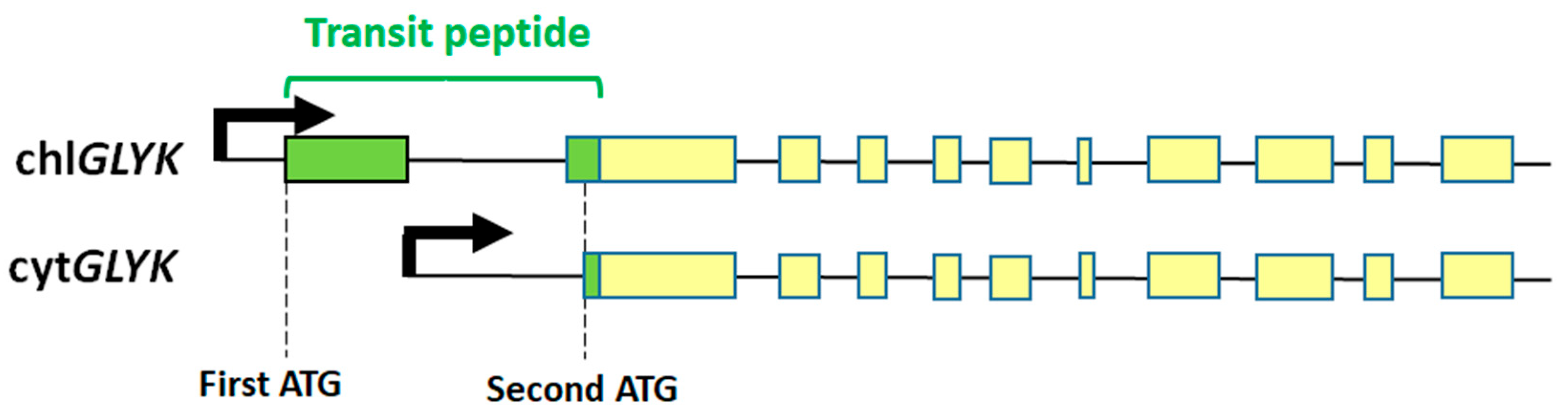
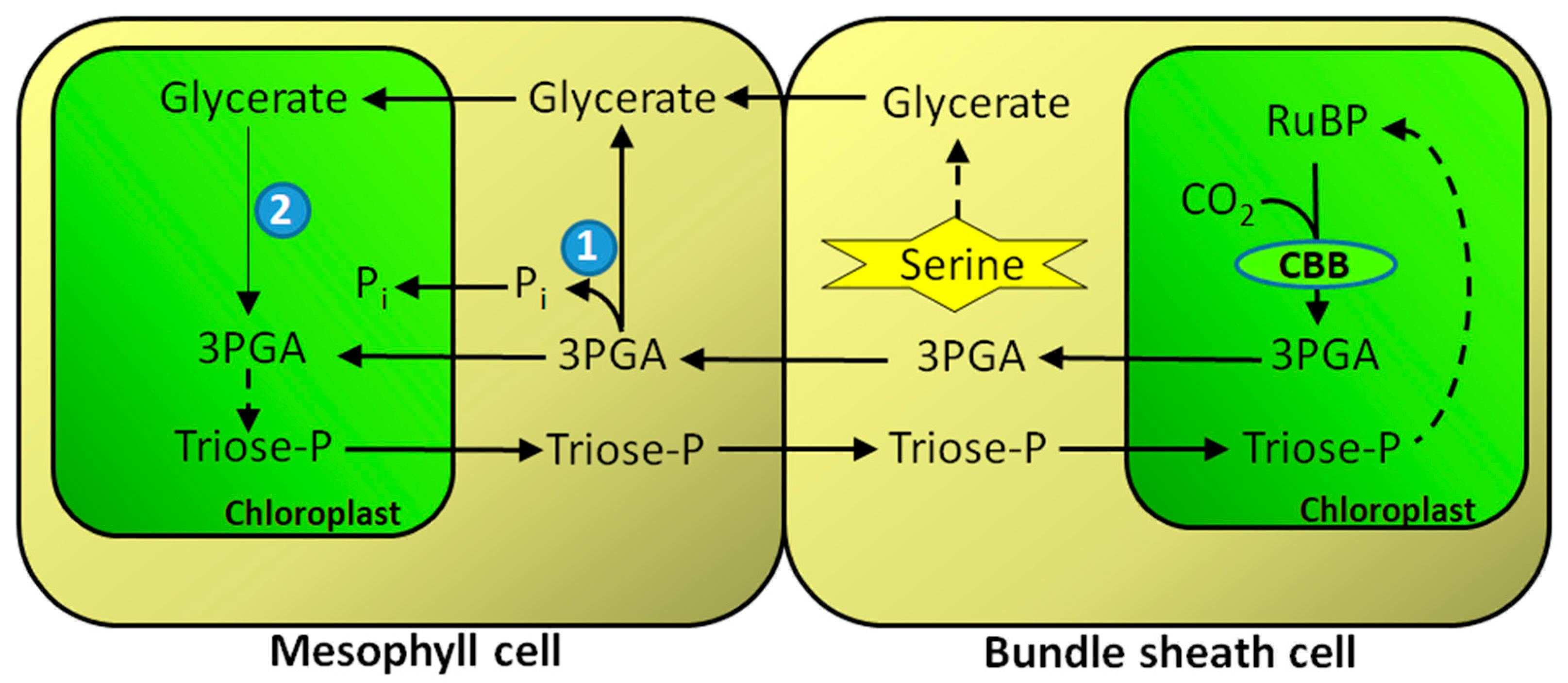
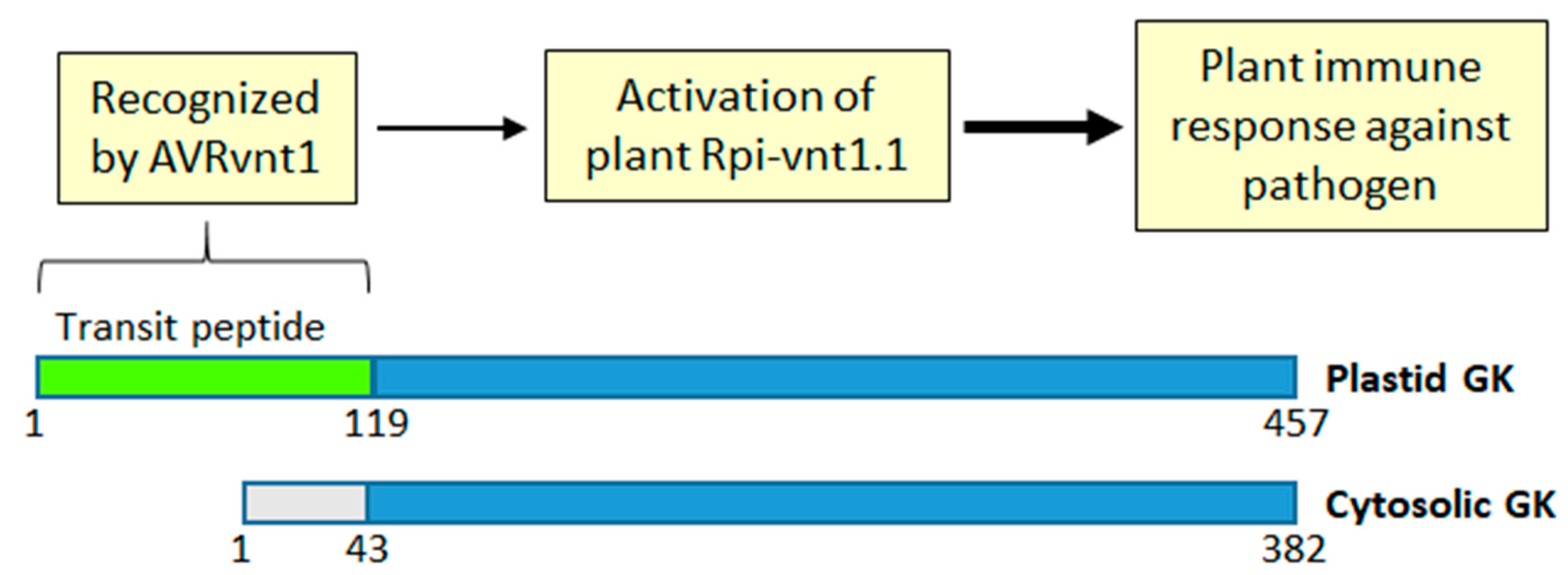
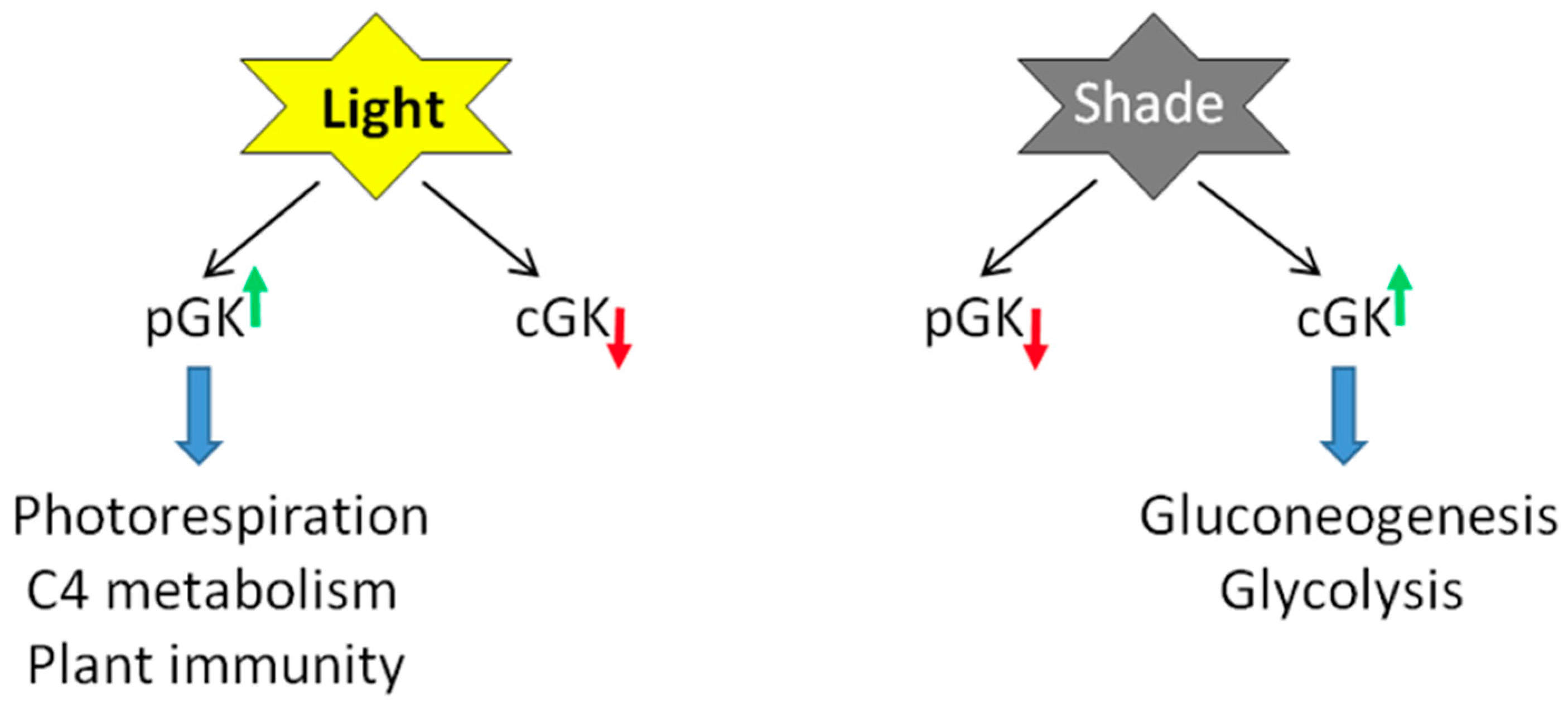
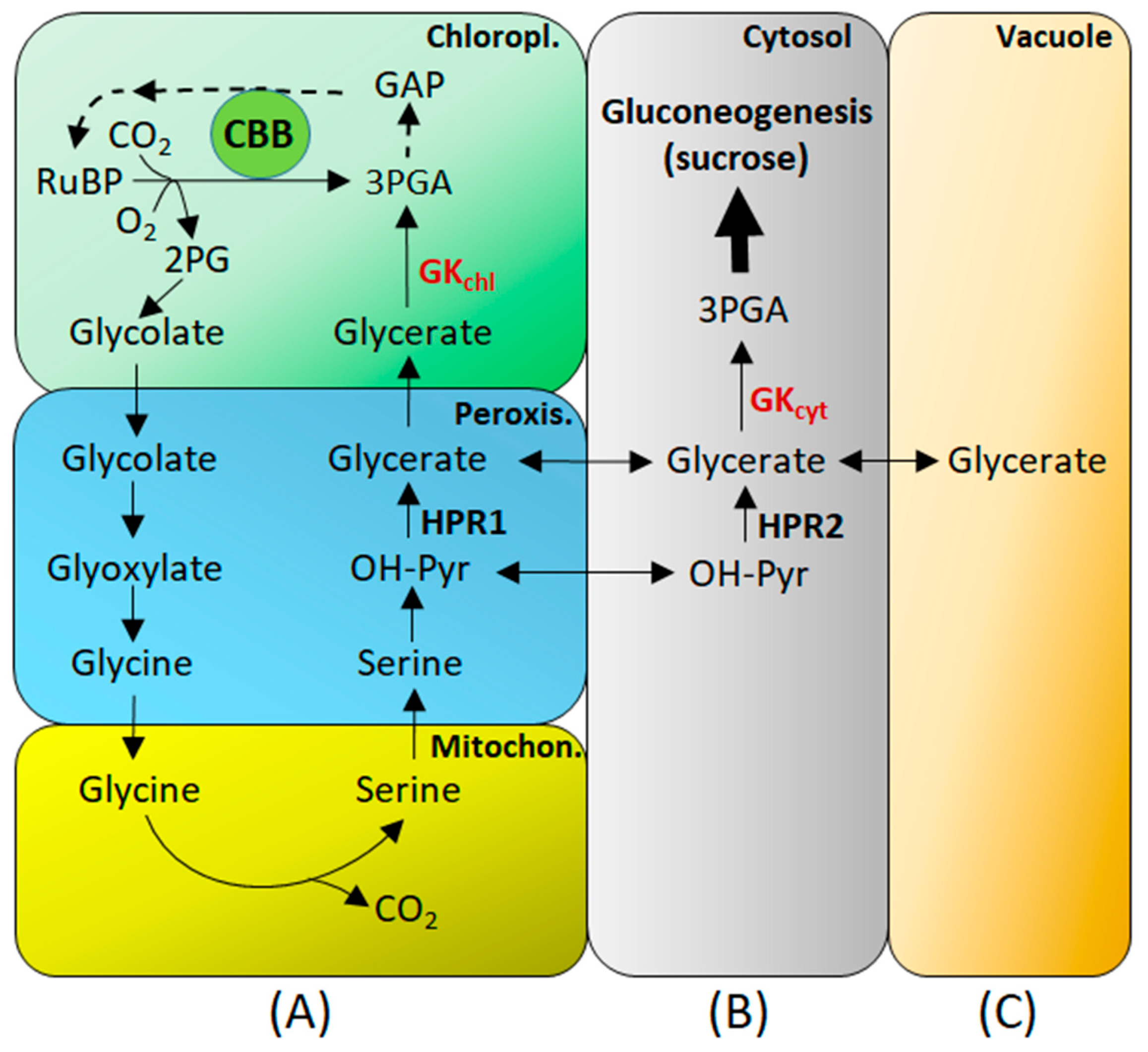
Plant glycerate kinase (GK) was previously considered an exclusively chloroplastic enzyme of the glycolate pathway (photorespiration), and its sole predicted role was to return most of the glycolate-derived carbon (as glycerate) to the Calvin cycle. However, recent discovery of cytosolic GK revealed metabolic links for glycerate to other processes. Although GK was initially proposed as being solely regulated by substrate availability, subsequent discoveries of its redox regulation and the light involvement in the production of chloroplastic and cytosolic GK isoforms have indicated a more refined regulation of the pathways of glycerate conversion. Here, we re-evaluate the importance of GK and emphasize its multifaceted role in plants. Thus, GK can be a major player in several branches of primary metabolism, including the glycolate pathway, gluconeogenesis, glycolysis, and C4 metabolism. In addition, recently, the chloroplastic (but not cytosolic) GK isoform was implicated as part of a light-dependent plant immune response to pathogen attack. The origins of glycerate are also discussed here; it is produced in several cell compartments and undergoes huge fluctuations depending on light/dark conditions. The recent discovery of the vacuolar glycerate transporter adds yet another layer to our understanding of glycerate transport/metabolism and that of other two- and three-carbon metabolites.
Keywords: C4 photosynthesis; gluconeogenesis; glycerate metabolism; glycolate pathway; Phytophthora infestans; sucrose synthesis C4 photosynthesis; gluconeogenesis; glycerate metabolism; glycolate pathway; Phytophthora infestans; sucrose synthesis