Article

Monomeric CXCL12-Engineered Adipose-Derived Stem Cells Transplantation for the Treatment of Ischemic Stroke

1
Shanghai Jiao Tong University Affiliated Sixth People’s Hospital, School of Biomedical Engineering, Shanghai Jiao Tong University, Shanghai 200030, China
2
Health Management Center, Department of Neurology, Renji Hospital of Medical School of Shanghai Jiao Tong University, Shanghai 200127, China
*
Authors to whom correspondence should be addressed.
These authors contributed equally to this work.
Int. J. Mol. Sci. 2024, 25(2), 792; https://doi.org/10.3390/ijms25020792
Submission received: 13 September 2023 / Revised: 6 November 2023 / Accepted: 28 December 2023 / Published: 8 January 2024
(This article belongs to the Special Issue Advances in the Prevention and Treatment of Ischemic Diseases)

Abstract

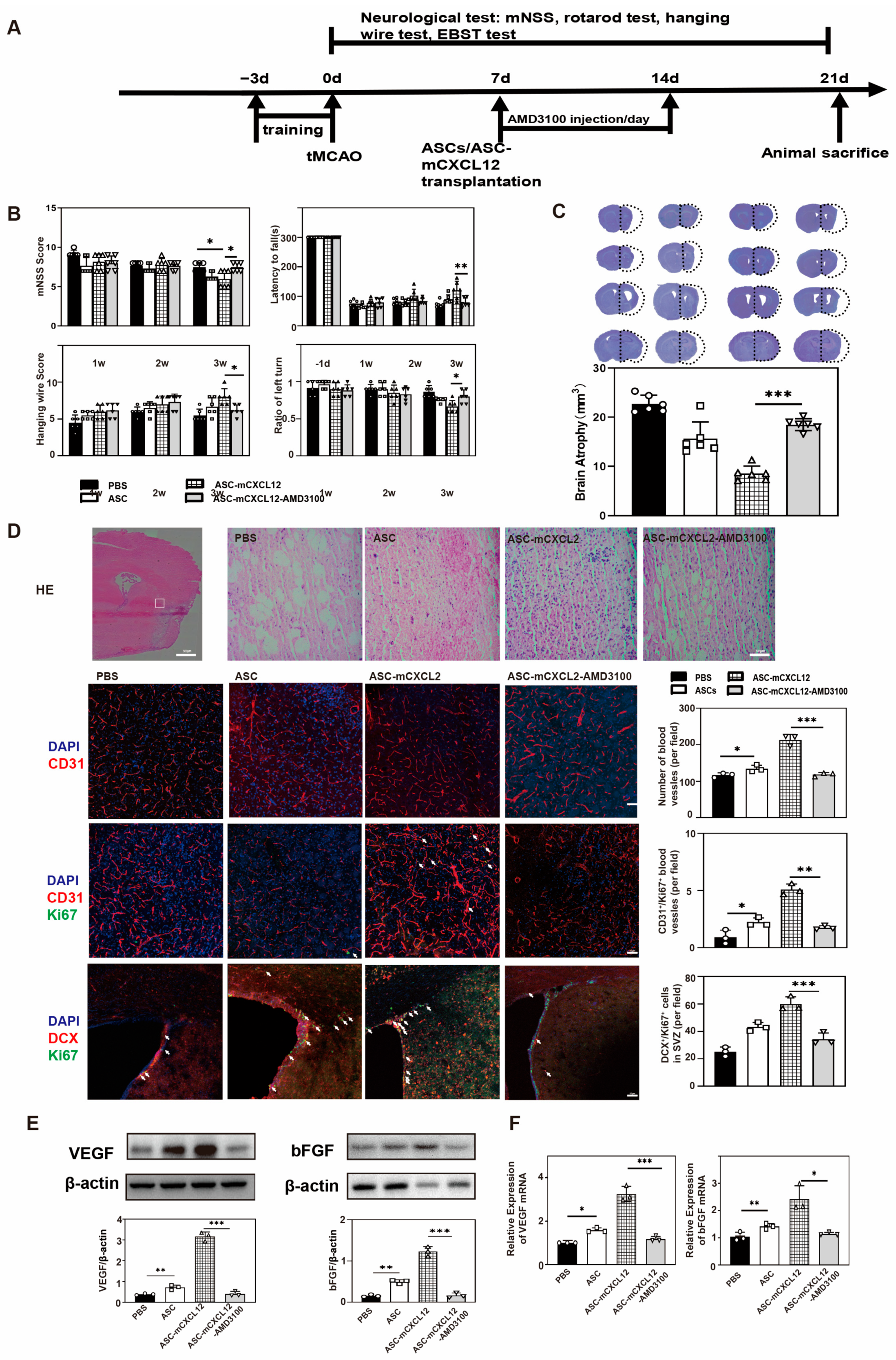
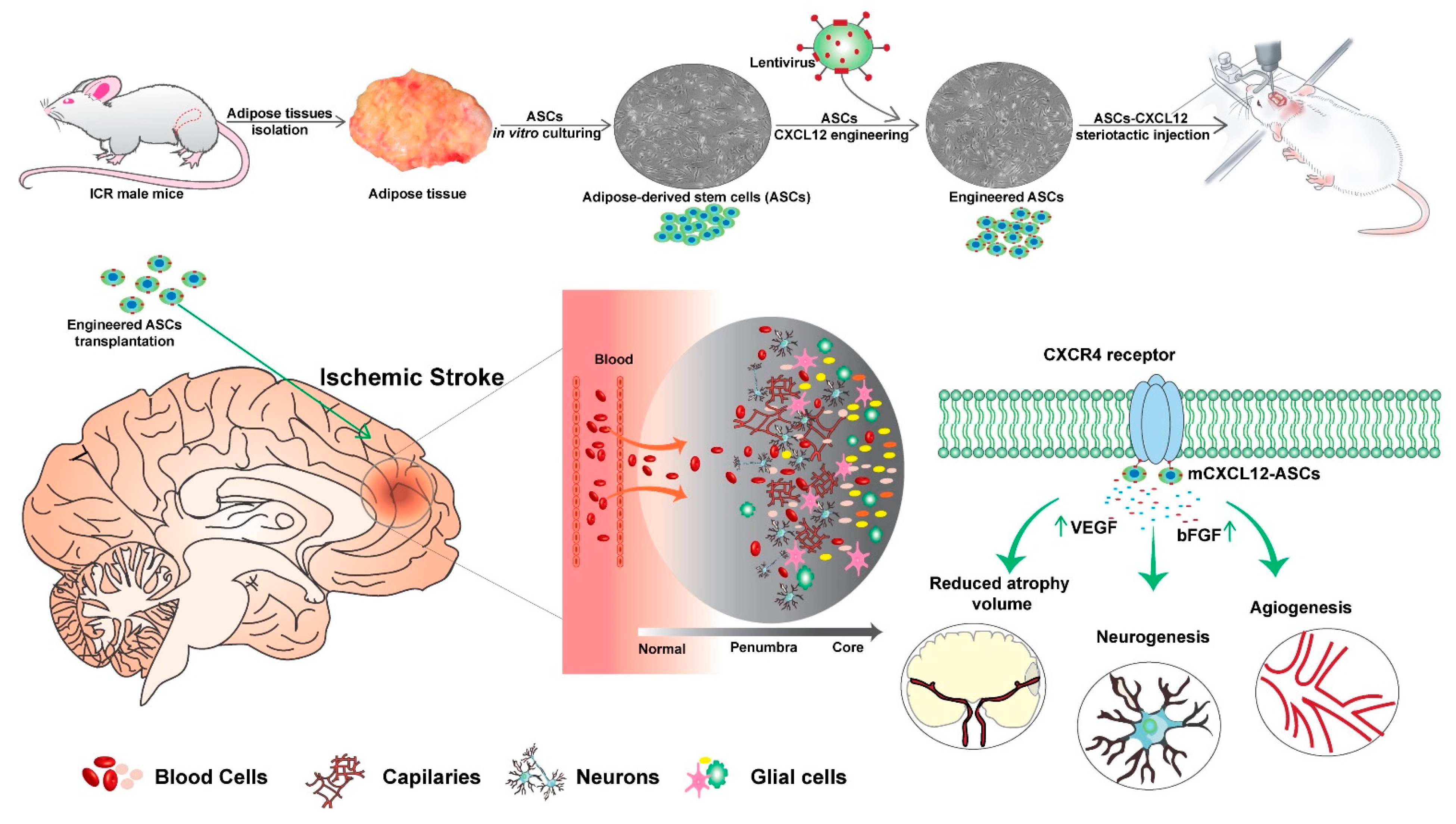
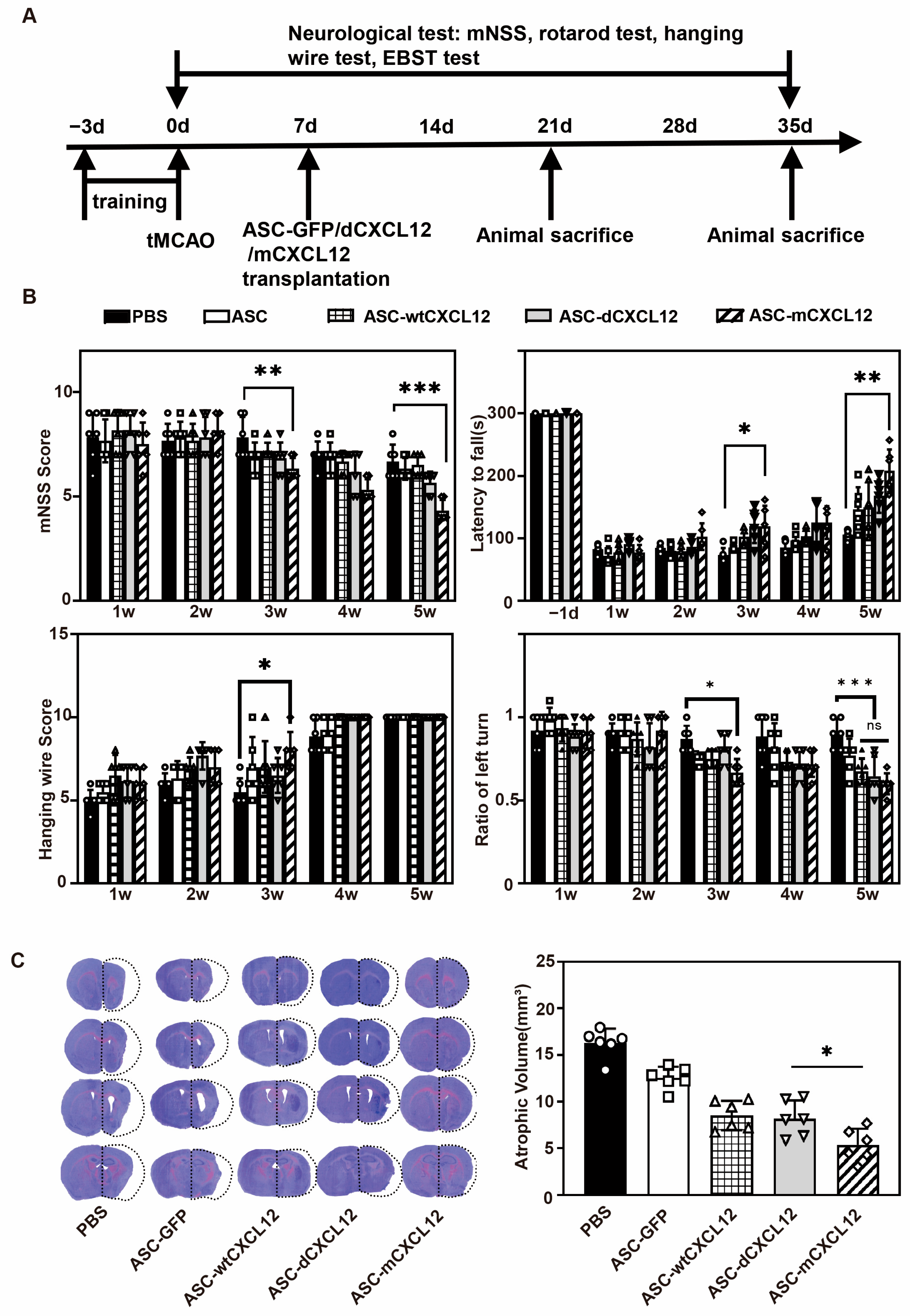
Adipose-derived stem cells (ASCs) possess therapeutic potential for ischemic brain injury, and the chemokine CXCL12 has been shown to enhance their functional properties. However, the cumulative effects of ASCs when combined with various structures of CXCL12 on ischemic stroke and its underlying molecular mechanisms remain unclear. In this study, we genetically engineered mouse adipose-derived ASCs with CXCL12 variants and transplanted them to the infarct region in a mice transient middle cerebral artery occlusion (tMCAO) model of stroke. We subsequently compared the post-ischemic stroke efficacy of ASC-mCXCL12 with ASC-dCXCL12, ASC-wtCXCL12, and unmodified ASCs. Neurobehavior recovery was assessed using modified neurological severity scores, the hanging wire test, and the elevated body swing test. Changes at the tissue level were evaluated through cresyl violet and immunofluorescent staining, while molecular level alterations were examined via Western blot and real-time PCR. The results of the modified neurological severity score and cresyl violet staining indicated that both ASC-mCXCL12 and ASC-dCXCL12 treatment enhanced neurobehavioral recovery and mitigated brain atrophy at the third and fifth weeks post-tMCAO. Additionally, we observed that ASC-mCXCL12 and ASC-dCXCL12 promoted angiogenesis and neurogenesis, accompanied by an increased expression of bFGF and VEGF in the peri-infarct area of the brain. Notably, in the third week after tMCAO, the ASC-mCXCL12 exhibited superior outcomes compared to ASC-dCXCL12. However, when treated with the CXCR4 antagonist AMD3100, the beneficial effects of ASC-mCXCL12 were reversed. The AMD3100-treated group demonstrated worsened neurological function, aggravated edema volume, and brain atrophy. This outcome is likely attributed to the interaction of monomeric CXCL12 with CXCR4, which regulates the recruitment of bFGF and VEGF. This study introduces an innovative approach to enhance the therapeutic potential of ASCs in treating ischemic stroke by genetically engineering them with the monomeric structure of CXCL12.
Keywords: monomeric CXCL12; stroke; adipose derived stem cells; CXCR4; AMD3100 monomeric CXCL12; stroke; adipose derived stem cells; CXCR4; AMD3100