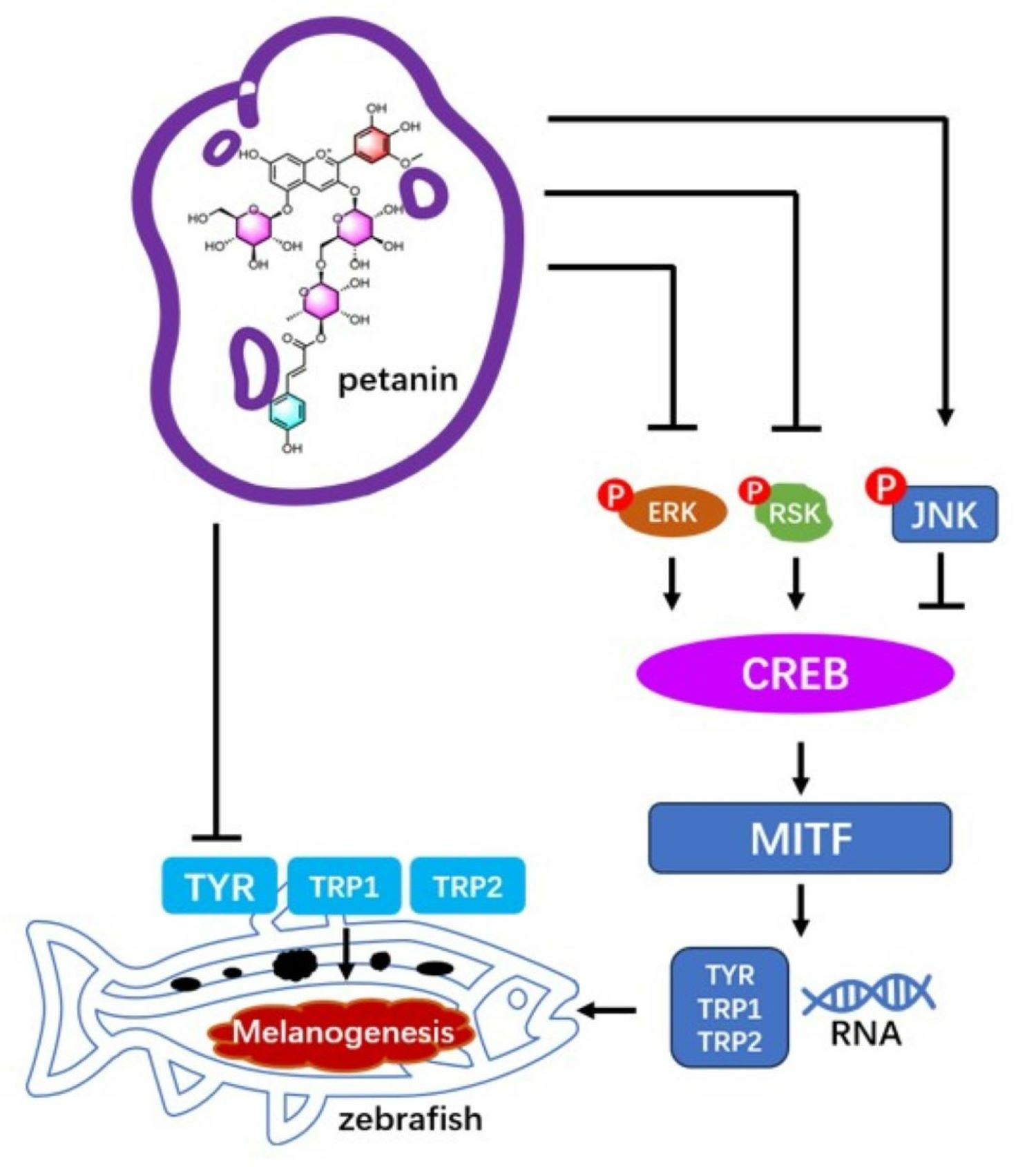
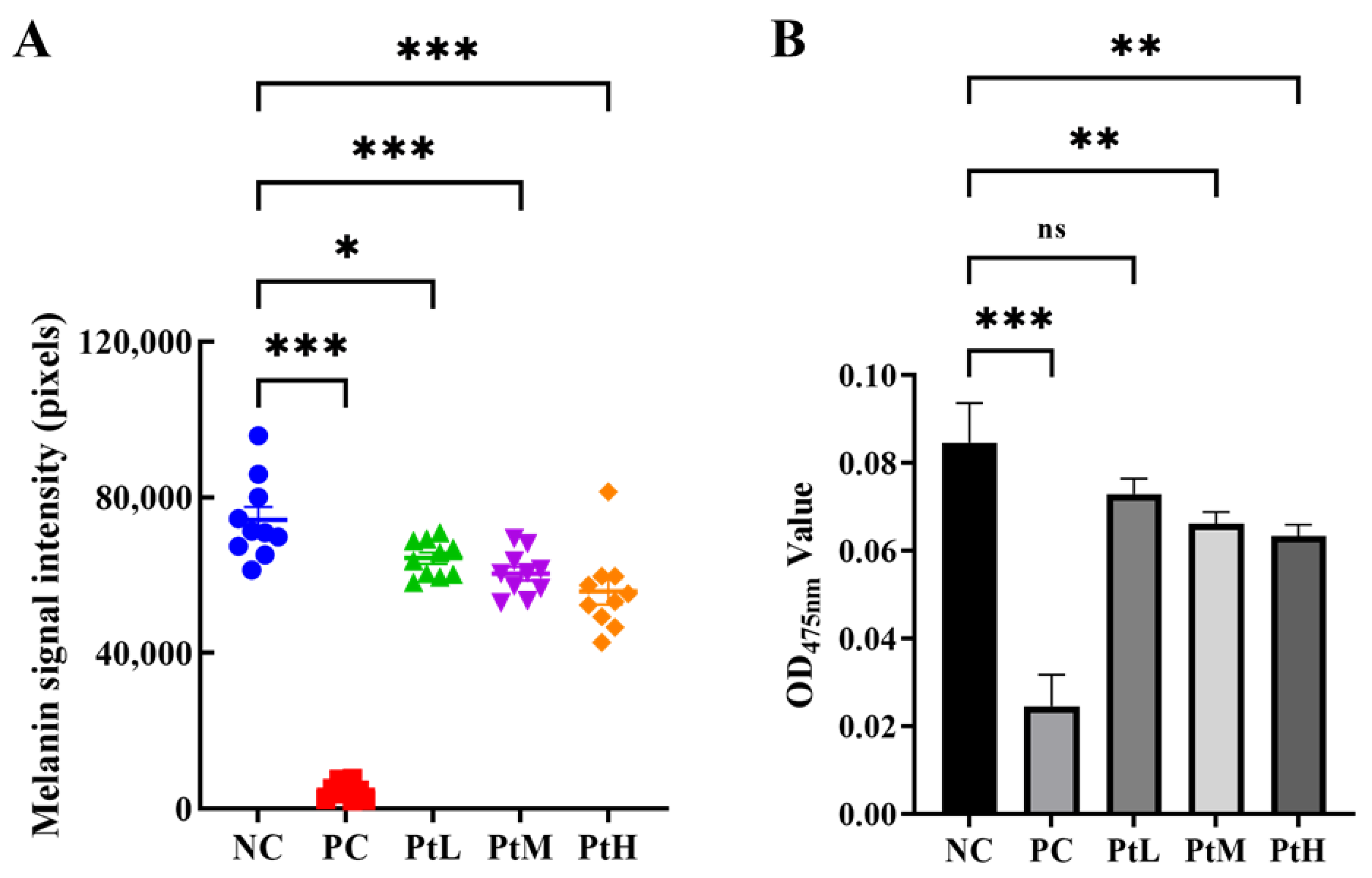
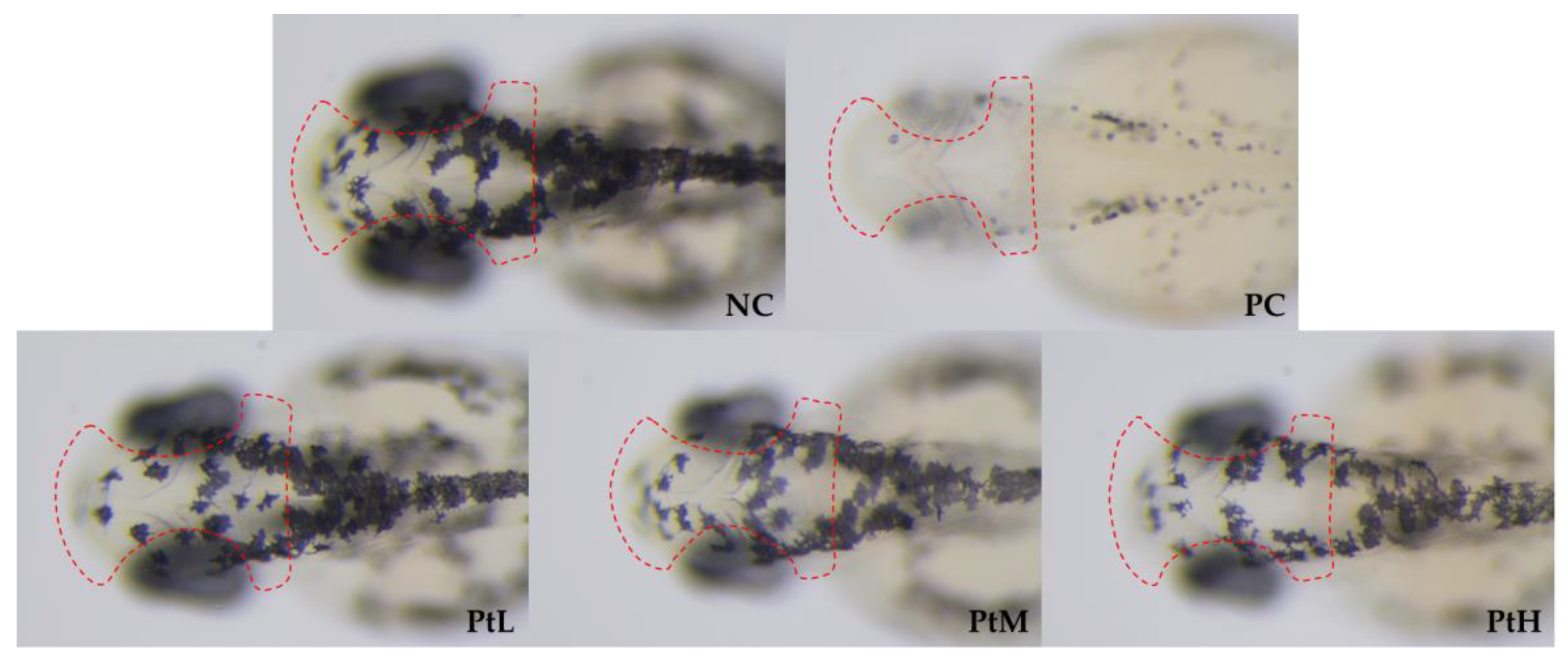
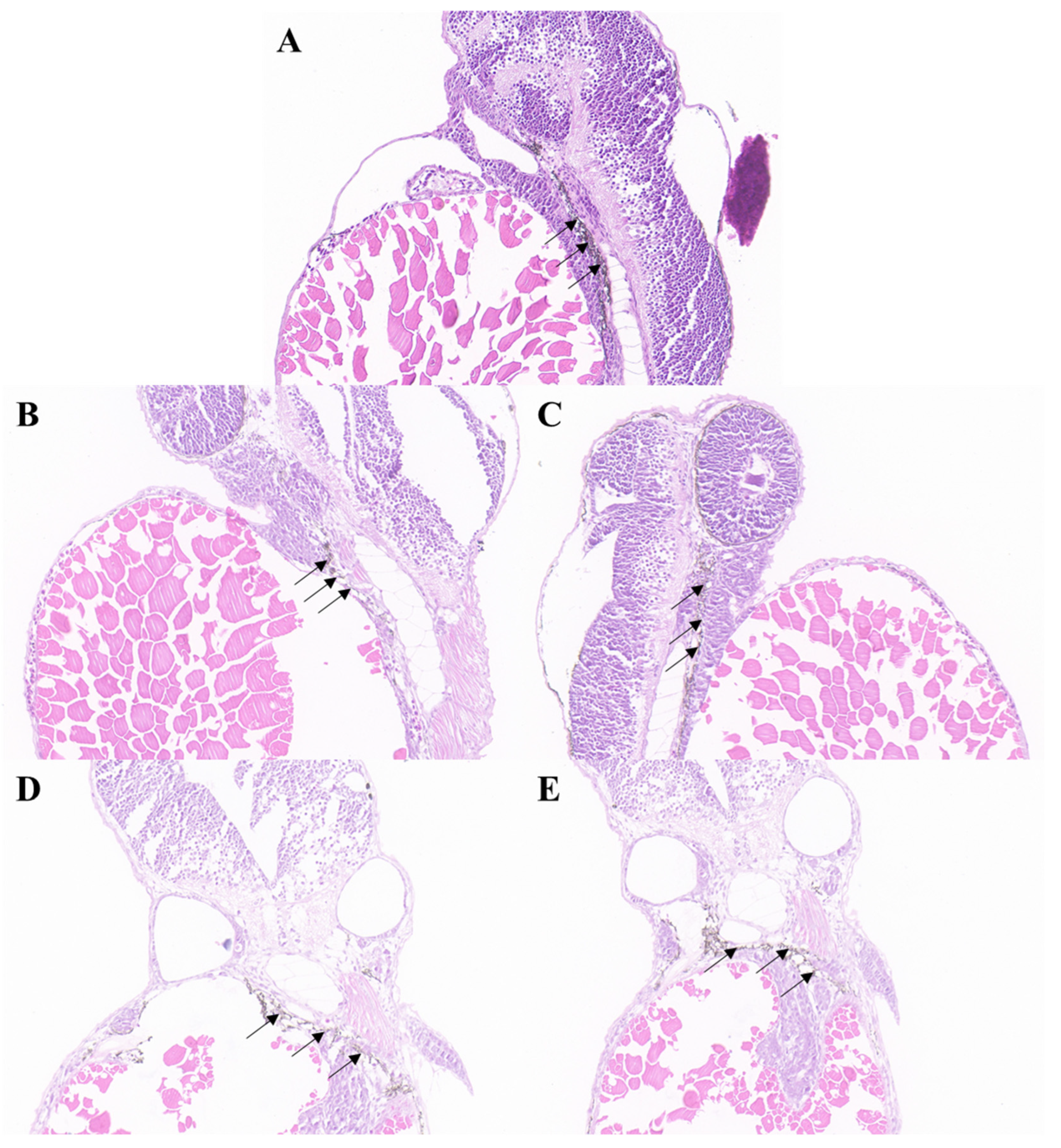
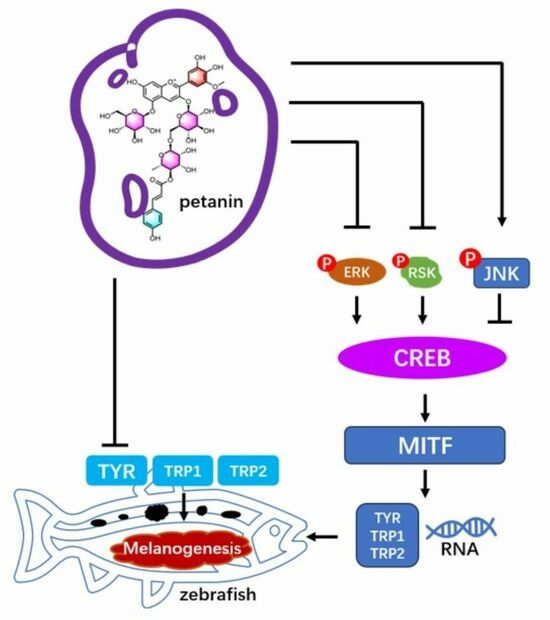
Petanin Potentiated JNK Phosphorylation to Negatively Regulate the ERK/CREB/MITF Signaling Pathway for Anti-Melanogenesis in Zebrafish


Abstract
Share and Cite
Ouyang, J.; Hu, N.; Wang, H. Petanin Potentiated JNK Phosphorylation to Negatively Regulate the ERK/CREB/MITF Signaling Pathway for Anti-Melanogenesis in Zebrafish. Int. J. Mol. Sci. 2024, 25, 5939. https://doi.org/10.3390/ijms25115939
Ouyang J, Hu N, Wang H. Petanin Potentiated JNK Phosphorylation to Negatively Regulate the ERK/CREB/MITF Signaling Pathway for Anti-Melanogenesis in Zebrafish. International Journal of Molecular Sciences. 2024; 25(11):5939. https://doi.org/10.3390/ijms25115939
Chicago/Turabian StyleOuyang, Jian, Na Hu, and Honglun Wang. 2024. "Petanin Potentiated JNK Phosphorylation to Negatively Regulate the ERK/CREB/MITF Signaling Pathway for Anti-Melanogenesis in Zebrafish" International Journal of Molecular Sciences 25, no. 11: 5939. https://doi.org/10.3390/ijms25115939
APA StyleOuyang, J., Hu, N., & Wang, H. (2024). Petanin Potentiated JNK Phosphorylation to Negatively Regulate the ERK/CREB/MITF Signaling Pathway for Anti-Melanogenesis in Zebrafish. International Journal of Molecular Sciences, 25(11), 5939. https://doi.org/10.3390/ijms25115939