Opinion

Neuro-Adipokine Crosstalk in Alzheimer’s Disease

1
Laboratory of Neurovascular Control of Homeostasis, Department of Cellular and Molecular Physiology, Yale School of Medicine, New Haven, CT 06510, USA
2
Wu Tsai Institute for Mind and Brain, Yale University, New Haven, CT 06510, USA
*
Author to whom correspondence should be addressed.
Int. J. Mol. Sci. 2024, 25(11), 5932; https://doi.org/10.3390/ijms25115932
Submission received: 27 April 2024 / Revised: 24 May 2024 / Accepted: 27 May 2024 / Published: 29 May 2024
(This article belongs to the Special Issue Advances in Homeostasis and Metabolism in Health and Disease)

Abstract

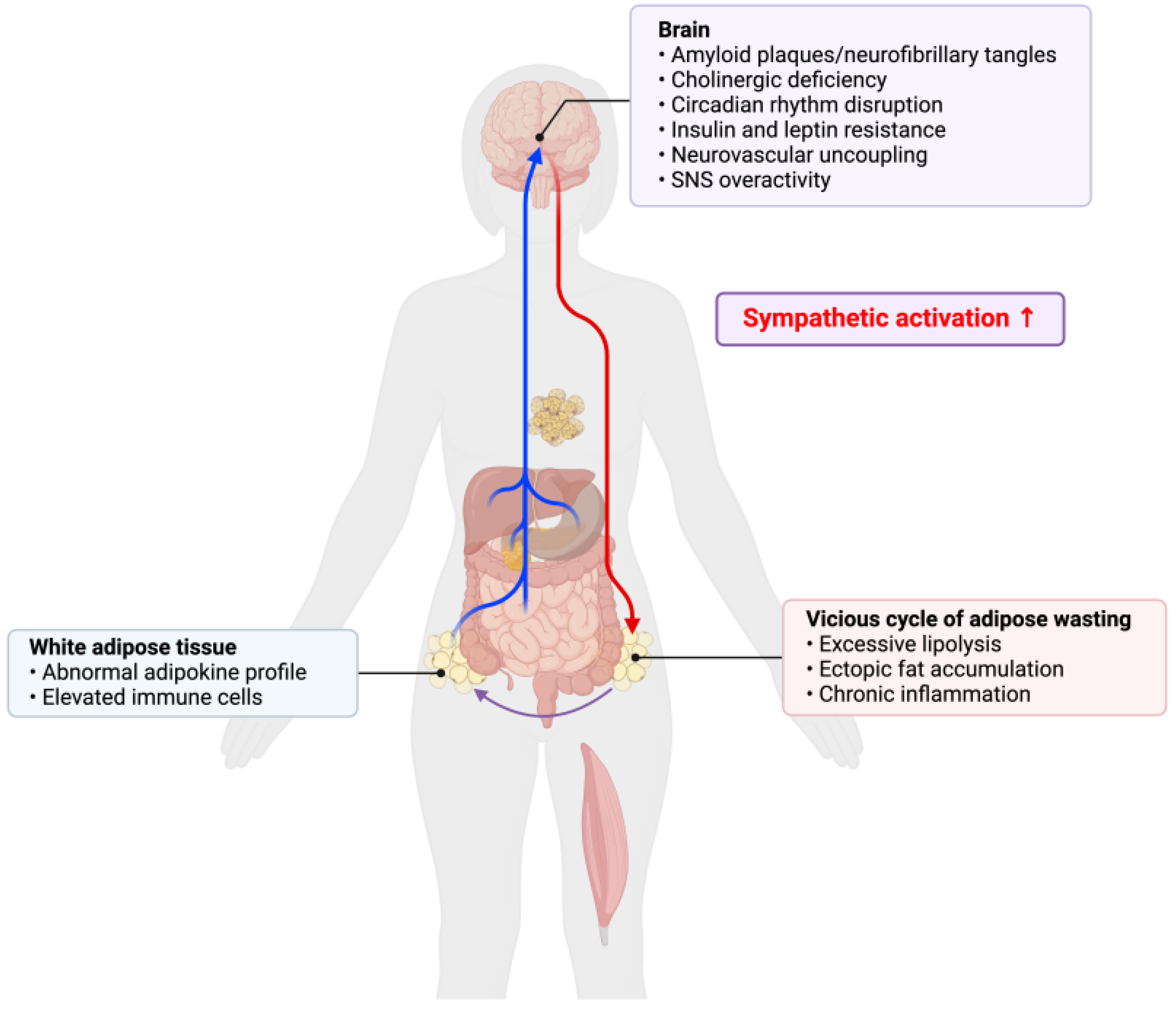
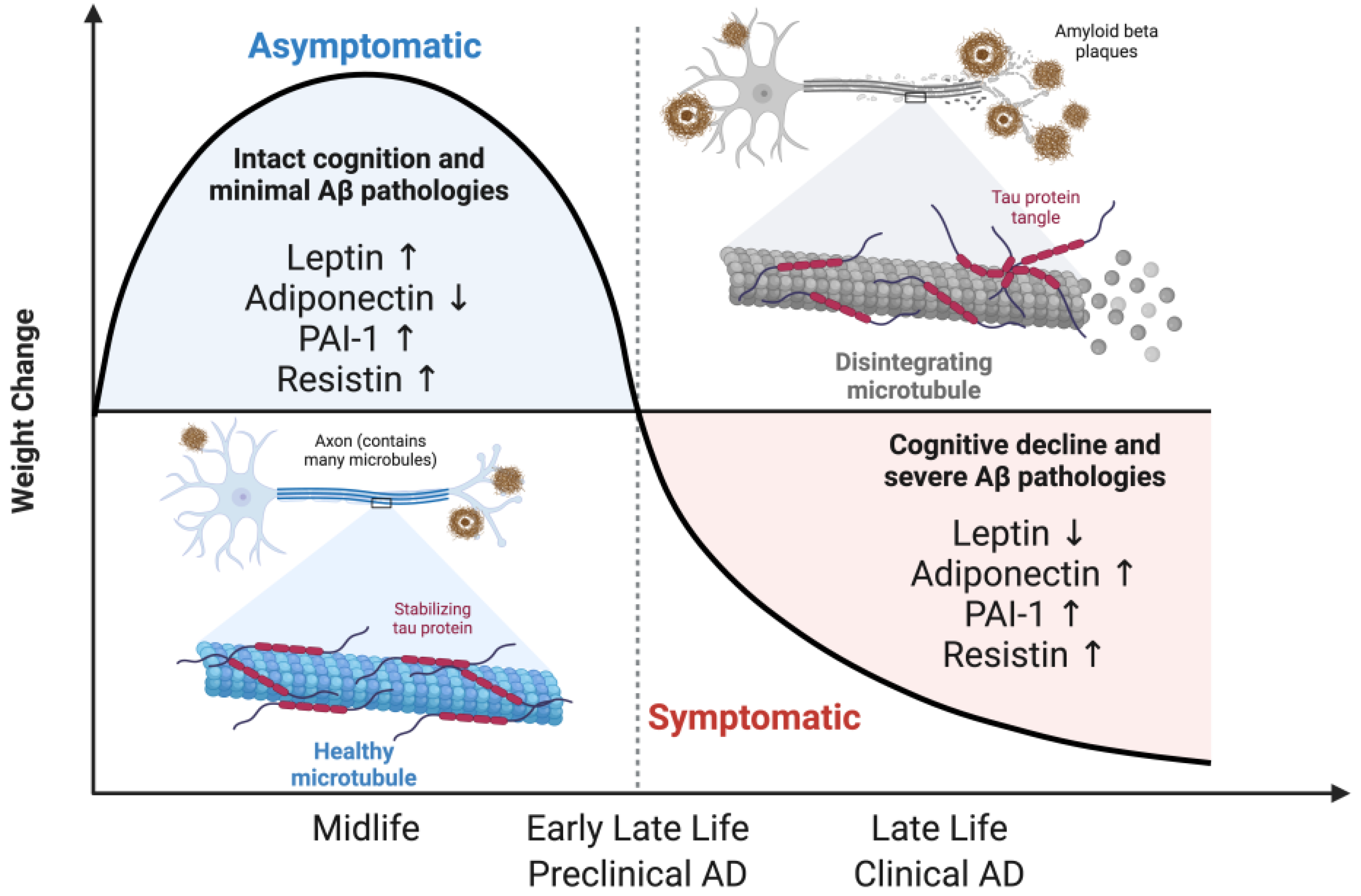
The connection between body weight alterations and Alzheimer’s disease highlights the intricate relationship between the brain and adipose tissue in the context of neurological disorders. During midlife, weight gain increases the risk of cognitive decline and dementia, whereas in late life, weight gain becomes a protective factor. Despite their substantial impact on metabolism, the role of adipokines in the transition from healthy aging to neurological disorders remains largely unexplored. We aim to investigate how the adipose tissue milieu and the secreted adipokines are involved in the transition between biological and pathological aging, highlighting the bidirectional relationship between the brain and systemic metabolism. Understanding the function of these adipokines will allow us to identify biomarkers for early detection of Alzheimer’s disease and uncover novel therapeutic options.
Keywords: adipokines; aging; Alzheimer’s disease; neurodegeneration; obesity adipokines; aging; Alzheimer’s disease; neurodegeneration; obesity