Article

The Regulation of ZIP8 by Dietary Manganese in Mice

School of Nutritional Sciences and Wellness, The University of Arizona, Tucson, AZ 85721, USA
*
Author to whom correspondence should be addressed.
Int. J. Mol. Sci. 2023, 24(6), 5962; https://doi.org/10.3390/ijms24065962
Submission received: 8 February 2023 / Revised: 18 March 2023 / Accepted: 20 March 2023 / Published: 22 March 2023
(This article belongs to the Special Issue Zinc and Manganese in Human Health and Disease)

Abstract

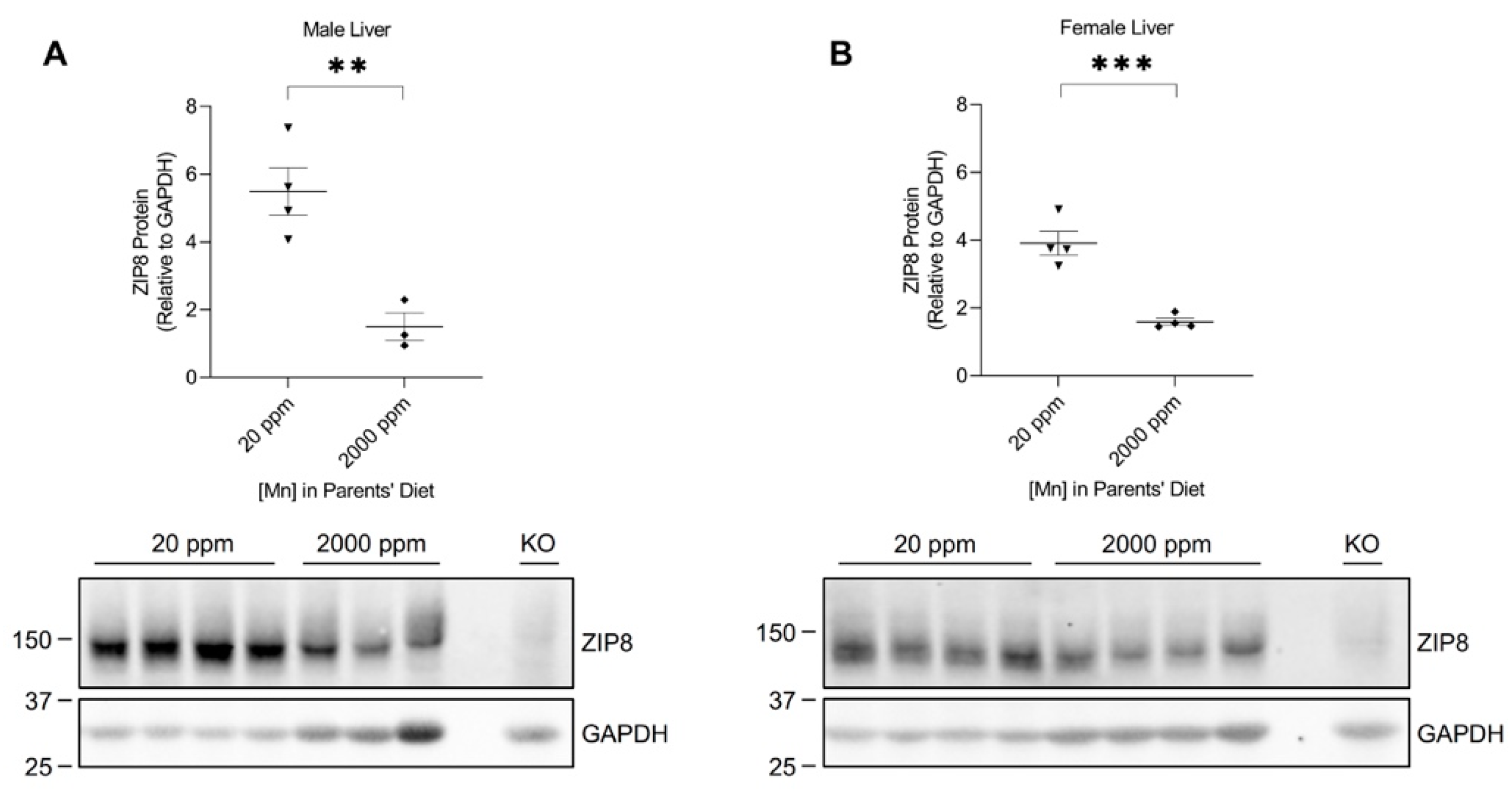
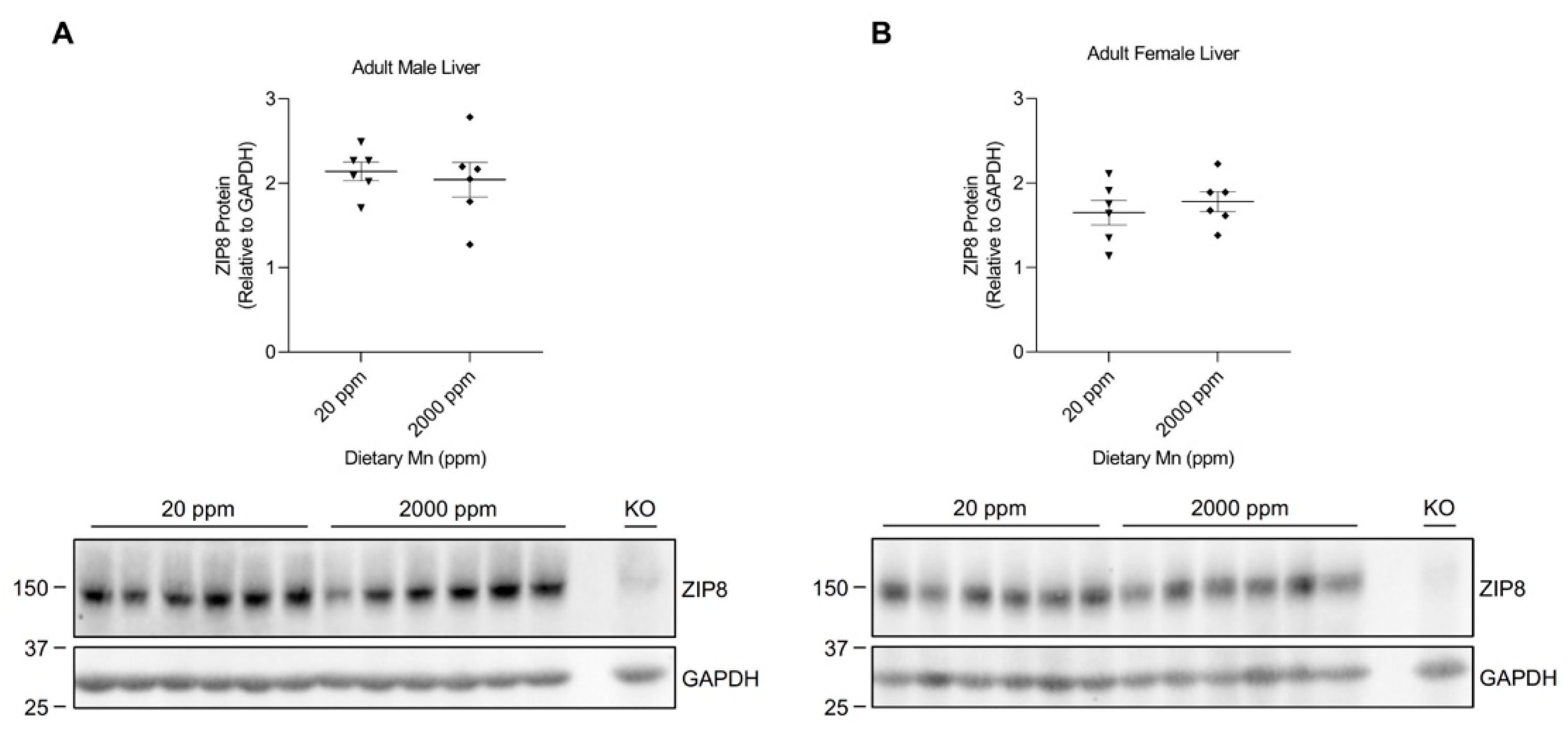
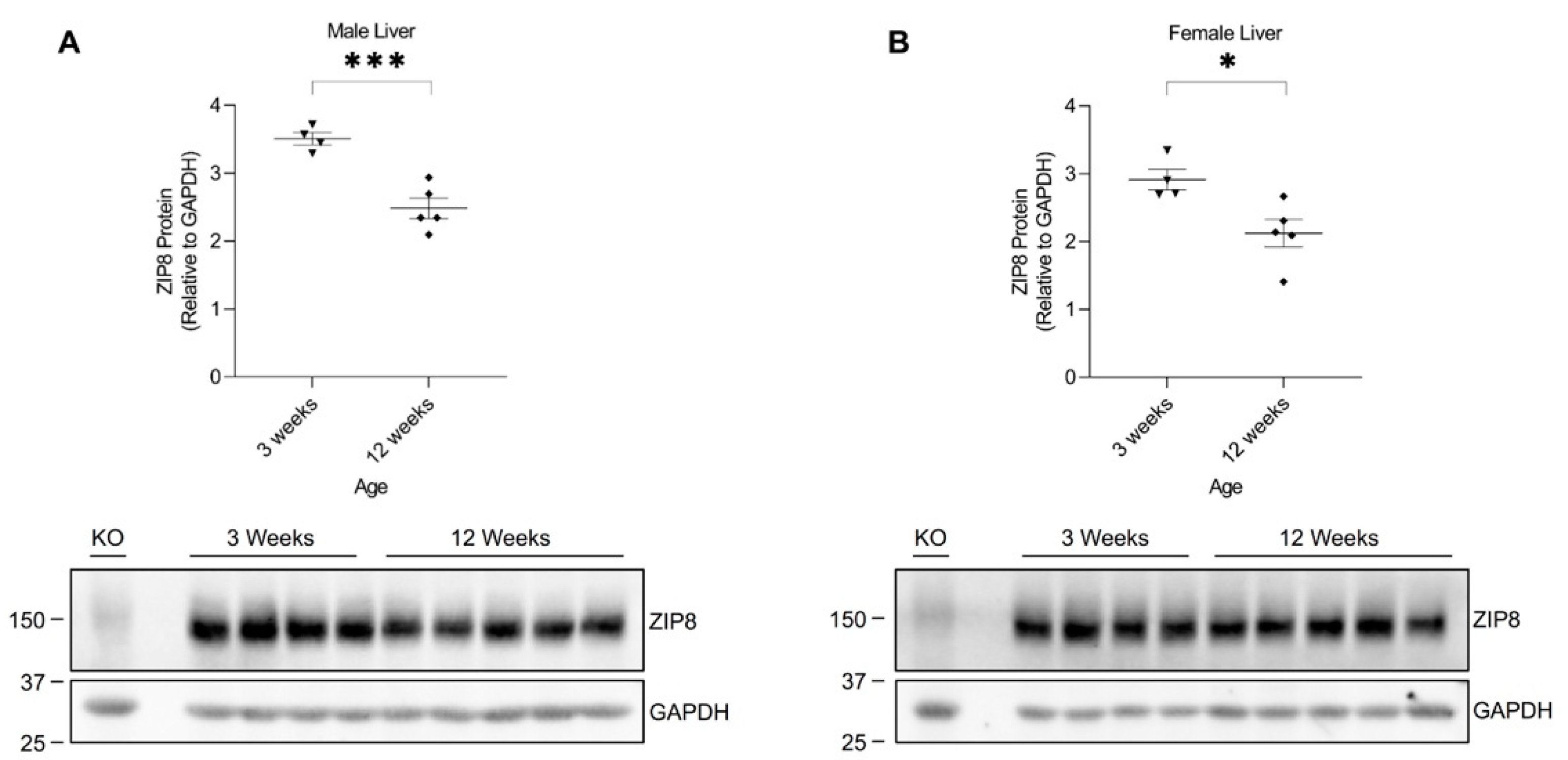
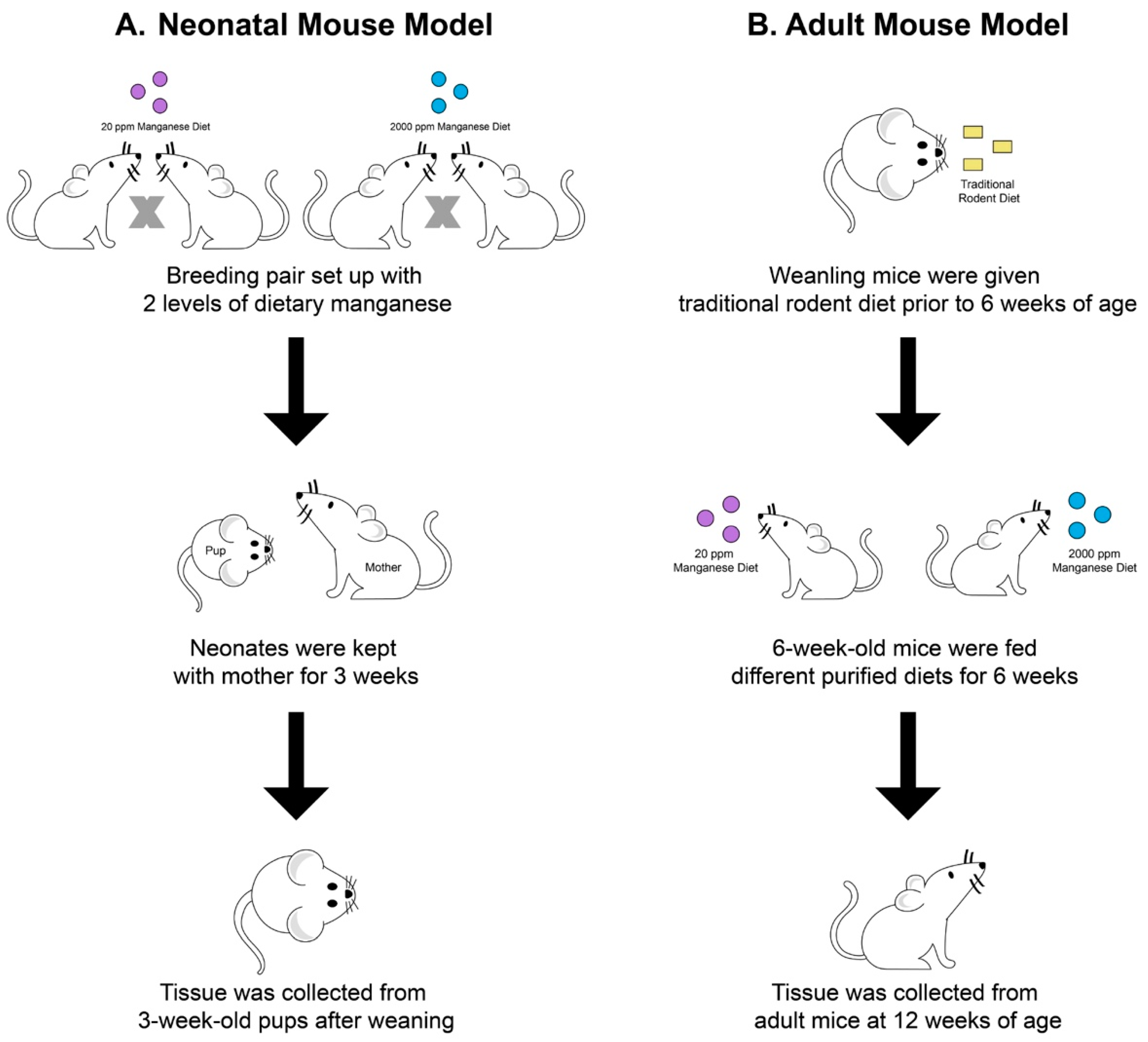
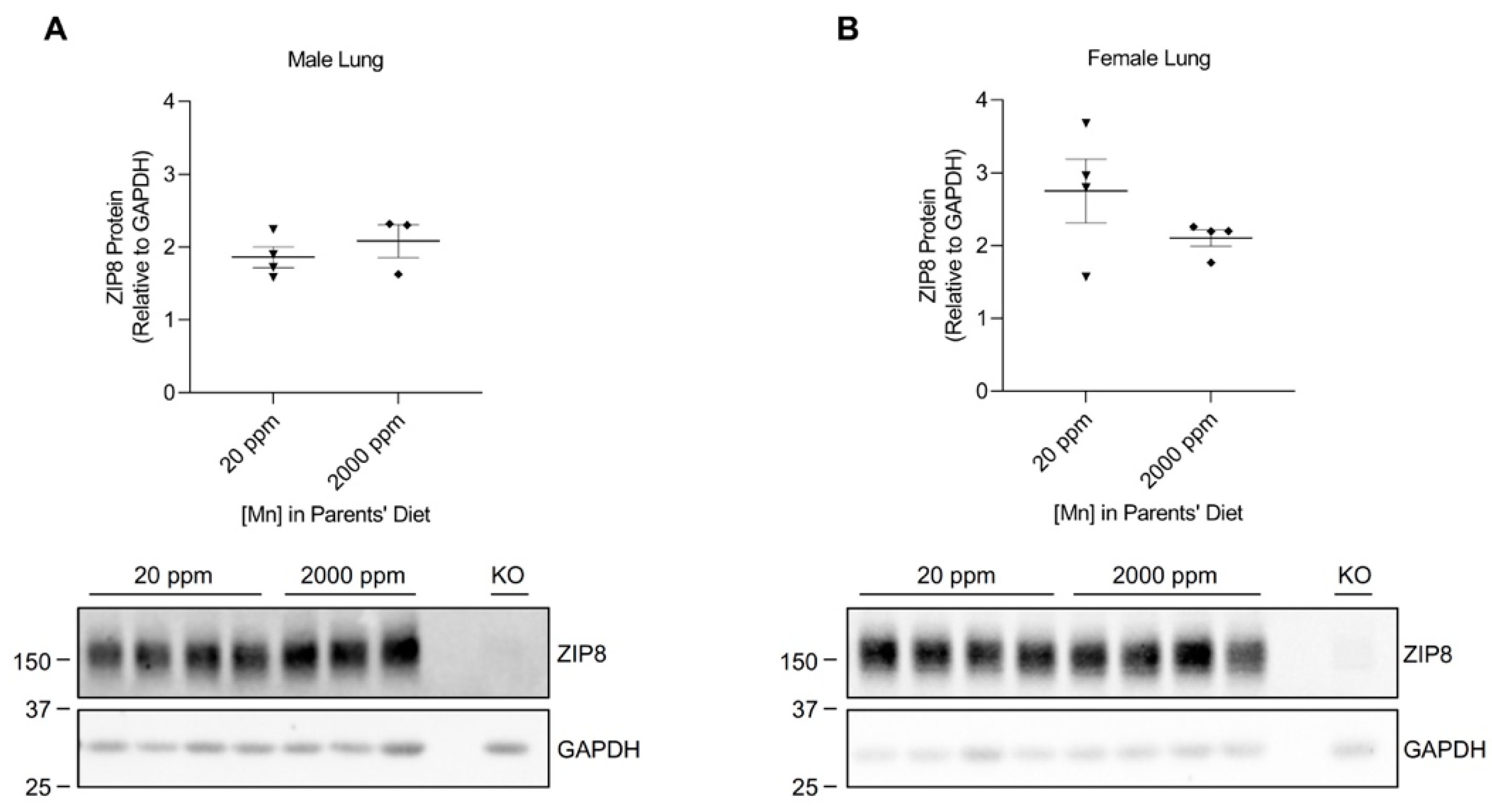
ZIP8 is a newly identified manganese transporter. A lack of functional ZIP8 results in severe manganese deficiency in both humans and mice, indicating that ZIP8 plays a crucial role in maintaining body manganese homeostasis. Despite a well-acknowledged connection between ZIP8 and manganese metabolism, how ZIP8 is regulated under high-manganese conditions remains unclear. The primary goal of this study was to examine the regulation of ZIP8 by high-manganese intake. We used both neonatal and adult mouse models in which mice were supplied with dietary sources containing either a normal or a high level of manganese. We discovered that high-manganese intake caused a reduction in liver ZIP8 protein in young mice. Since a decrease in hepatic ZIP8 leads to reduced manganese reabsorption from the bile, our study identified a novel mechanism for the regulation of manganese homeostasis under high-manganese conditions: high dietary manganese intake results in a decrease in ZIP8 in the liver, which in turn decreases the reabsorption of manganese from the bile to prevent manganese overload in the liver. Interestingly, we found that a high-manganese diet did not cause a decrease in hepatic ZIP8 in adult animals. To determine the potential reason for this age-dependent variation, we compared the expressions of liver ZIP8 in 3-week-old and 12-week-old mice. We found that liver ZIP8 protein content in 12-week-old mice decreases when compared with that of 3-week-old mice under normal conditions. Overall, results from this study provide novel insights to facilitate the understanding of ZIP8’s function in regulating manganese metabolism.
Keywords: ZIP8; SLC39A8; manganese; liver; nutrient metabolism ZIP8; SLC39A8; manganese; liver; nutrient metabolism