Review

Vitamin D and Diabetic Kidney Disease

1
Department of Pharmacy, Kaohsiung Medical University Hospital, Kaohsiung Medical University, Kaohsiung 807, Taiwan
2
School of Pharmacy, College of Pharmacy, Kaohsiung Medical University, Kaohsiung 807, Taiwan
3
Graduate Institute of Clinical Medicine, College of Medicine, Kaohsiung Medical University, Kaohsiung 807, Taiwan
4
Division of Nephrology, Department of Internal Medicine, Kaohsiung Medical University Hospital, Kaohsiung Medical University, Kaohsiung 807, Taiwan
5
School of Medicine, College of Medicine, Kaohsiung Medical University, Kaohsiung 807, Taiwan
*
Author to whom correspondence should be addressed.
Int. J. Mol. Sci. 2023, 24(4), 3751; https://doi.org/10.3390/ijms24043751
Submission received: 27 November 2022 / Revised: 28 January 2023 / Accepted: 9 February 2023 / Published: 13 February 2023
(This article belongs to the Special Issue Novel Aspects in Kidney Disease in Diabetes 2.0)

Abstract

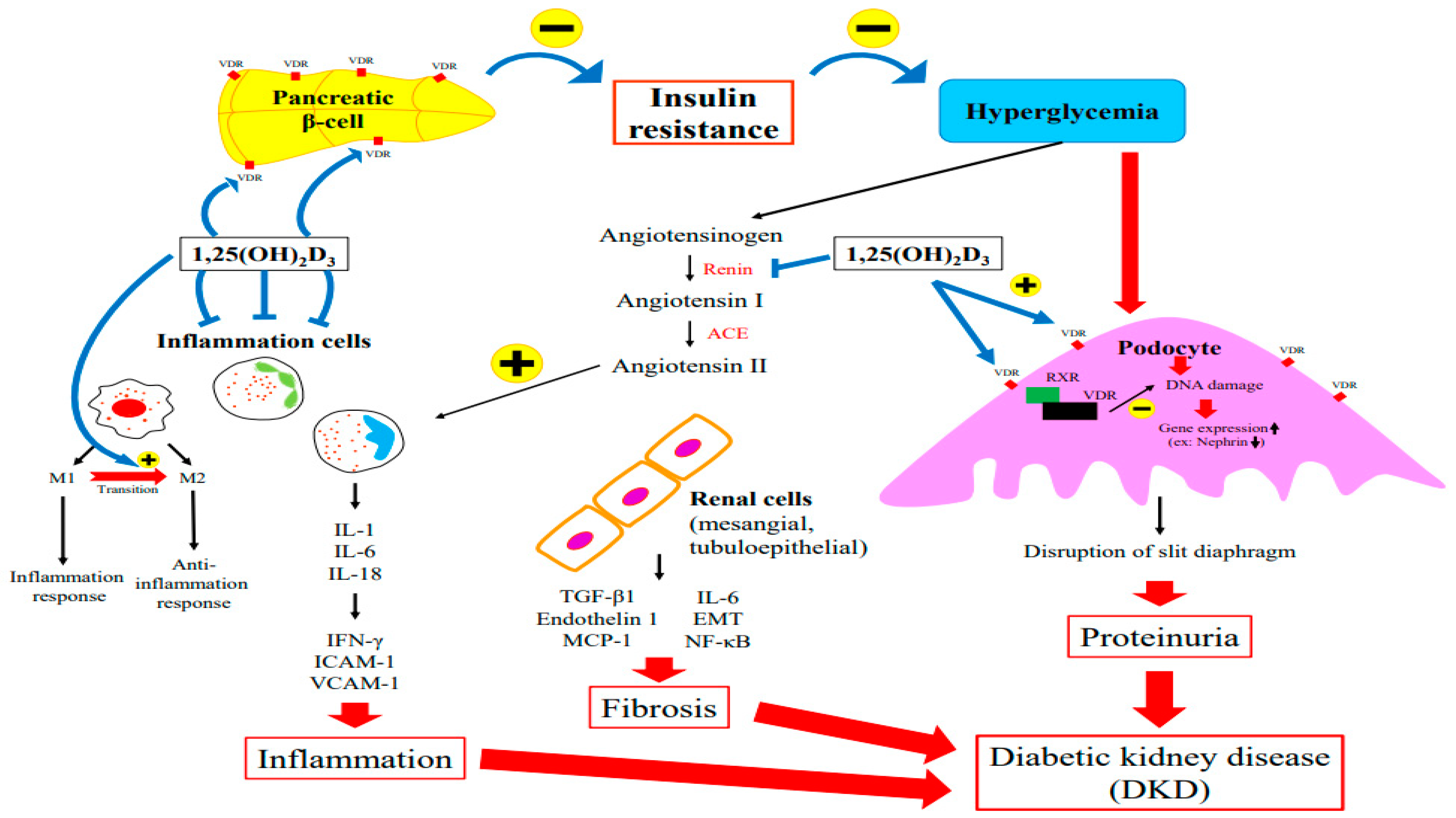
Vitamin D is a hormone involved in many physiological processes. Its active form, 1,25(OH)2D3, modulates serum calcium–phosphate homeostasis and skeletal homeostasis. A growing body of evidence has demonstrated the renoprotective effects of vitamin D. Vitamin D modulates endothelial function, is associated with podocyte preservation, regulates the renin–angiotensin–aldosterone system, and has anti-inflammatory effects. Diabetic kidney disease (DKD) is a leading cause of end-stage kidney disease worldwide. There are numerous studies supporting vitamin D as a renoprotector, potentially delaying the onset of DKD. This review summarizes the findings of current research on vitamin D and its role in DKD.
Keywords: Vitamin D; 1,25(OH)2D3; vitamin D receptor (VDR); diabetic kidney disease (DKD); diabetic nephropathy (DN) Vitamin D; 1,25(OH)2D3; vitamin D receptor (VDR); diabetic kidney disease (DKD); diabetic nephropathy (DN)