Review

Aggregation of Disordered Proteins Associated with Neurodegeneration

by
Phoebe S. Tsoi
,
My Diem Quan
,
Josephine C. Ferreon
* and
Allan Chris M. Ferreon
*
Department of Pharmacology and Chemical Biology, Baylor College of Medicine, Houston, TX 77030, USA
*
Authors to whom correspondence should be addressed.
Int. J. Mol. Sci. 2023, 24(4), 3380; https://doi.org/10.3390/ijms24043380
Submission received: 14 January 2023 / Revised: 2 February 2023 / Accepted: 6 February 2023 / Published: 8 February 2023
(This article belongs to the Special Issue Intrinsically Disordered Proteins (IDPs) 2.0)

Abstract

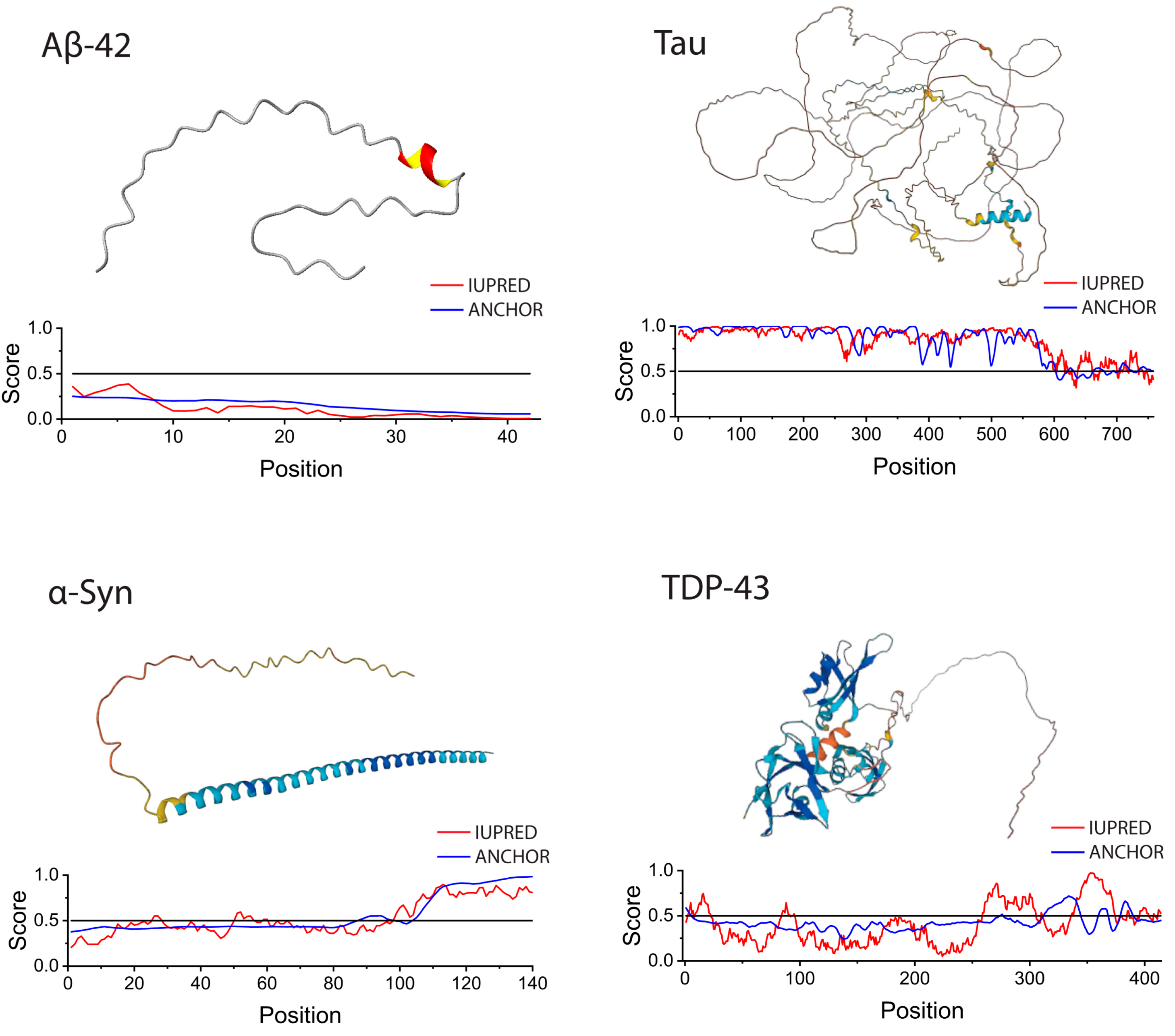
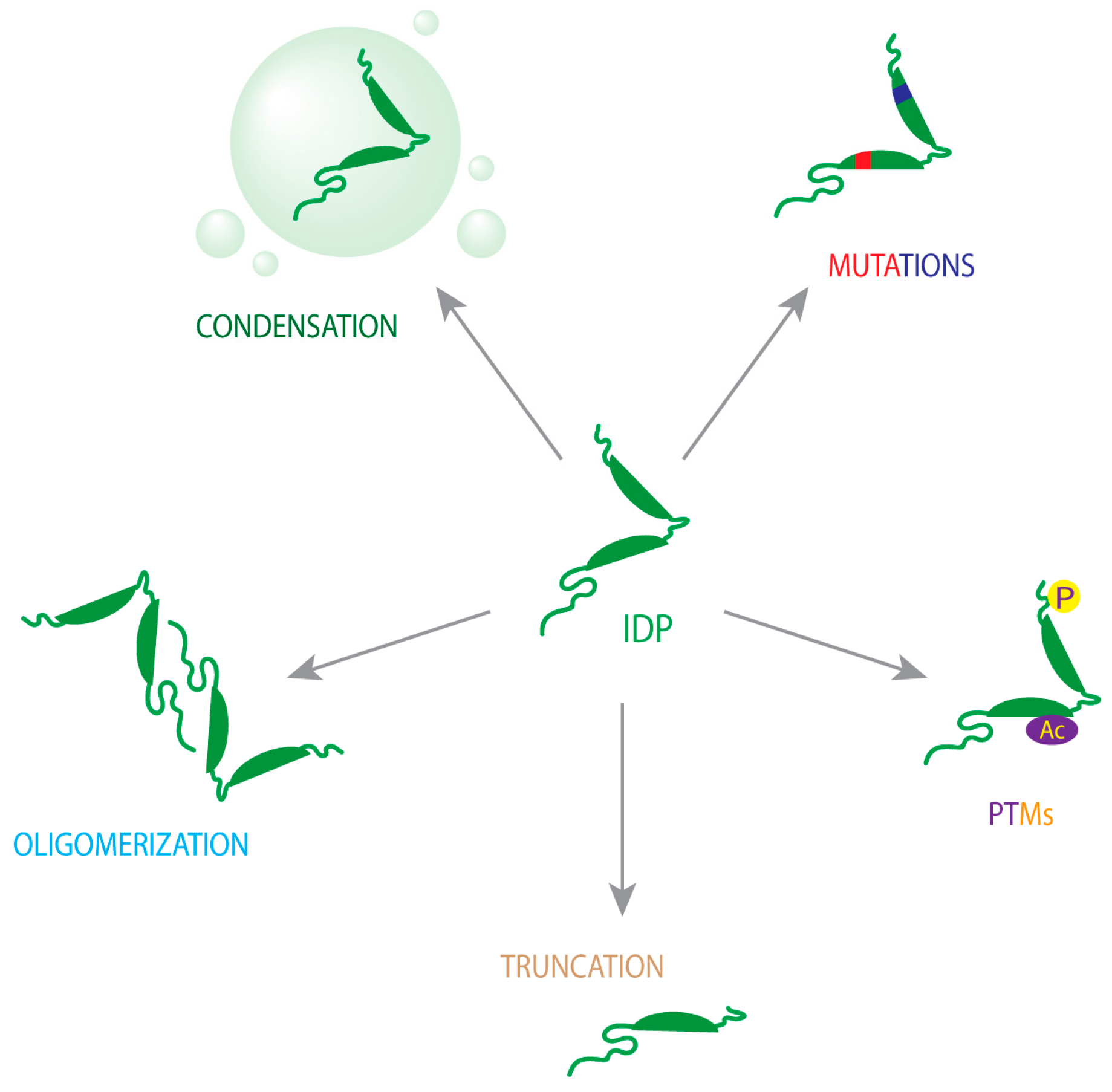
Cellular deposition of protein aggregates, one of the hallmarks of neurodegeneration, disrupts cellular functions and leads to neuronal death. Mutations, posttranslational modifications, and truncations are common molecular underpinnings in the formation of aberrant protein conformations that seed aggregation. The major proteins involved in neurodegeneration include amyloid beta (Aβ) and tau in Alzheimer’s disease, α-synuclein in Parkinson’s disease, and TAR DNA-binding protein (TDP-43) in amyotrophic lateral sclerosis (ALS). These proteins are described as intrinsically disordered and possess enhanced ability to partition into biomolecular condensates. In this review, we discuss the role of protein misfolding and aggregation in neurodegenerative diseases, specifically highlighting implications of changes to the primary/secondary (mutations, posttranslational modifications, and truncations) and the quaternary/supramolecular (oligomerization and condensation) structural landscapes for the four aforementioned proteins. Understanding these aggregation mechanisms provides insights into neurodegenerative diseases and their common underlying molecular pathology.
Keywords: neurodegenerative diseases; intrinsically disordered proteins; Aβ; tau; α-synuclein; TDP-43; AlphaFold; biomolecular condensates; liquid–liquid phase separation; LLPS neurodegenerative diseases; intrinsically disordered proteins; ; tau; α-synuclein; TDP-43; AlphaFold; biomolecular condensates; liquid–liquid phase separation; LLPS