


Vitamin D in Neurological Diseases

 , , and
Abstract
1. Introduction
2. Methods of Literature Search
3. Vitamin D Chemistry, Metabolism, Mechanisms of Action, and Recommended Daily Intake
3.1. Vitamin D Chemistry and Metabolism
3.2. Vitamin D Recommended Daily Intake
4. The Role of Vitamin D: Gene Transcription and Immune Response
5. Vitamin D and Neurological Diseases: Current Evidence
5.1. Alzheimer’s Disease
5.2. Parkinson’s Disease
5.3. Amyotrophic Lateral Sclerosis
5.4. Multiple Sclerosis
5.5. Migraine
5.6. Diabetic Neuropathy
6. Conclusions and Future Directions
Author Contributions
Funding
Institutional Review Board Statement
Informed Consent Statement
Data Availability Statement
Conflicts of Interest
References
- Ma, Y.; Khalifa, B.; Yee, Y.K.; Lu, J.; Memezawa, A.; Savkur, R.S.; Yamamoto, Y.; Chintalacharuvu, S.R.; Yamaoka, K.; Stayrook, K.R.; et al. Identification and Characterization of Noncalcemic, Tissue-Selective, Nonsecosteroidal Vitamin D Receptor Modulators. J. Clin. Investig. 2006, 116, 892–904. [Google Scholar] [CrossRef] [PubMed]
- Yeshokumar, A.K.; Saylor, D.; Kornberg, M.D.; Mowry, E.M. Evidence for the Importance of Vitamin D Status in Neurologic Conditions. Curr. Treat. Opt. Neurol. 2015, 17, 51. [Google Scholar] [CrossRef]
- di Somma, C.; Scarano, E.; Barrea, L.; Zhukouskaya, V.V.; Savastano, S.; Mele, C.; Scacchi, M.; Aimaretti, G.; Colao, A.; Marzullo, P. Vitamin D and Neurological Diseases: An Endocrine View. Int. J. Mol. Sci. 2017, 18, 2482. [Google Scholar] [CrossRef] [PubMed]
- Koduah, P.; Paul, F.; Dörr, J.M. Vitamin D in the Prevention, Prediction and Treatment of Neurodegenerative and Neuroinflammatory Diseases. EPMA J. 2017, 8, 313–325. [Google Scholar] [CrossRef]
- Moretti, R.; Morelli, M.E.; Caruso, P. Vitamin D in Neurological Diseases: A Rationale for a Pathogenic Impact. Int. J. Mol. Sci. 2018, 19, 2245. [Google Scholar] [CrossRef]
- DeLuca, H.F. History of the Discovery of Vitamin D and Its Active Metabolites. BoneKEy Rep. 2014, 3, 479. [Google Scholar] [CrossRef]
- McCollum, E.V.; Simmonds, N.; Becker, J.E.; Shipley, P.G. The effect of additions of fluorine to the diet of the rat on the quality of the teeth. 1925. Studies on experimental rickets. XXI. An experimental demonstration of the existence of a vitamin which promotes calcium deposition. 1922. The effect of additions of fluorine to the diet of the rat on the quality of the teeth. 1925. J. Biol. Chem. 2002, 277, E8. [Google Scholar]
- Koshy, K.T. Vitamin D: An Update. J. Pharm. Sci. 1982, 71, 137–153. [Google Scholar] [CrossRef]
- Houghton, L.A.; Vieth, R. The Case against Ergocalciferol (Vitamin D2) as a Vitamin Supplement. Am. J. Clin. Nutr. 2006, 84, 694–697. [Google Scholar] [CrossRef]
- Sugimoto, H.; Shiro, Y. Diversity and Substrate Specificity in the Structures of Steroidogenic Cytochrome P450 Enzymes. Biol. Pharm. Bull. 2012, 35, 818–823. [Google Scholar] [CrossRef][Green Version]
- Zhu, J.; Deluca, H.F. Vitamin D 25-Hydroxylase—Four Decades of Searching, Are We There Yet? Arch. Biochem. Biophys. 2012, 523, 30–36. [Google Scholar] [CrossRef] [PubMed]
- Zhu, J.G.; Ochalek, J.T.; Kaufmann, M.; Jones, G.; DeLuca, H.F. CYP2R1 Is a Major, but Not Exclusive, Contributor to 25-Hydroxyvitamin D Production in Vivo. Proc. Natl. Acad. Sci. USA 2013, 110, 15650–15655. [Google Scholar] [CrossRef]
- Adams, J.S.; Rafison, B.; Witzel, S.; Reyes, R.E.; Shieh, A.; Chun, R.; Zavala, K.; Hewison, M.; Liu, P.T. Regulation of the Extrarenal CYP27B1-Hydroxylase. J. Steroid Biochem. Mol. Biol. 2014, 144 Pt A, 22–27. [Google Scholar] [CrossRef]
- Bikle, D.D. Vitamin D Metabolism, Mechanism of Action, and Clinical Applications. Chem. Biol. 2014, 21, 319–329. [Google Scholar] [CrossRef] [PubMed]
- Bikle, D.D.; Rasmussen, H. The Ionic Control of 1,25-Dihydroxyvitamin D3 Production in Isolated Chick Renal Tubules. J. Clin. Investig. 1975, 55, 292–298. [Google Scholar] [CrossRef] [PubMed]
- Jones, G.; Strugnell, S.A.; DeLuca, H.F. Current Understanding of the Molecular Actions of Vitamin D. Physiol. Rev. 1998, 78, 1193–1231. [Google Scholar] [CrossRef]
- Sakaki, T.; Sawada, N.; Komai, K.; Shiozawa, S.; Yamada, S.; Yamamoto, K.; Ohyama, Y.; Inouye, K. Dual Metabolic Pathway of 25-Hydroxyvitamin D3 Catalyzed by Human CYP24. Eur. J. Biochem. 2000, 267, 6158–6165. [Google Scholar] [CrossRef]
- Jones, G.; Prosser, D.E.; Kaufmann, M. 25-Hydroxyvitamin D-24-Hydroxylase (CYP24A1): Its Important Role in the Degradation of Vitamin D. Arch. Biochem. Biophys. 2012, 523, 9–18. [Google Scholar] [CrossRef]
- Slominski, A.T.; Kim, T.K.; Slominski, R.M.; Song, Y.; Janjetovic, Z.; Podgorska, E.; Reddy, S.B.; Song, Y.; Raman, C.; Tang, E.K.Y.; et al. Metabolic activation of tachysterol3 to biologically active hydroxyderivatives that act on VDR, AhR, LXRs, and PPARγ receptors. FASEB J. 2022, 36, e22451. [Google Scholar] [CrossRef]
- Slominski, A.T.; Janjetovic, Z.; Fuller, B.E.; Zmijewski, M.A.; Tuckey, R.C.; Nguyen, M.N.; Sweatman, T.; Li, W.; Zjawiony, J.; Miller, D.; et al. Products of Vitamin D3 or 7-Dehydrocholesterol Metabolism by Cytochrome P450scc Show Anti-Leukemia Ef-fects, Having Low or Absent Calcemic Activity. PLoS ONE 2010, 5, e9907. [Google Scholar] [CrossRef]
- Slominski, A.T.; Li, W.; Kim, T.K.; Semak, I.; Wang, J.; Zjawiony, J.K.; Tuckey, R.C. Novel activities of CYP11A1 and their potential physiological significance. J. Steroid. Biochem. Mol. Biol. 2015, 151, 25–37. [Google Scholar] [CrossRef] [PubMed]
- Slominski, A.T.; Kim, T.K.; Shehabi, H.Z.; Semak, I.; Tang, E.K.; Nguyen, M.N.; Benson, H.A.; Korik, E.; Janjetovic, Z.; Chen, J.; et al. In vivo evidence for a novel pathway of vitamin D₃ metabolism initiated by P450scc and modified by CYP27B1. FASEB J. 2012, 26, 3901–3915. [Google Scholar] [CrossRef] [PubMed]
- Slominski, A.T.; Kim, T.K.; Li, W.; Postlethwaite, A.; Tieu, E.W.; Tang, E.K.Y.; Tuckey, R.C. Detection of novel CYP11A1-derived secosteroids in the human epidermis and serum and pig adrenal gland. Sci. Rep. 2015, 5, 14875. [Google Scholar] [CrossRef]
- Slominski, A.T.; Chaiprasongsuk, A.; Janjetovic, Z.; Kim, T.K.; Stefan, J.; Slominski, R.M.; Hanumanthu, V.S.; Raman, C.; Qayyum, S.; Song, Y.; et al. Photoprotective Properties of Vitamin D and Lumisterol Hydroxyderivatives. Cell Biochem. Biophys. 2020, 78, 165–180. [Google Scholar] [CrossRef]
- Slominski, A.T.; Kim, T.K.; Takeda, Y.; Janjetovic, Z.; Brozyna, A.A.; Skobowiat, C.; Wang, J.; Postlethwaite, A.; Li, W.; Tuckey, R.C.; et al. RORα and ROR γ are expressed in human skin and serve as receptors for endogenously produced noncalce-mic 20-hydroxy- and 20,23-dihydroxyvitamin D. FASEB J. 2014, 28, 2775–2789. [Google Scholar] [CrossRef] [PubMed]
- Slominski, A.T.; Kim, T.K.; Janjetovic, Z.; Brożyna, A.A.; Żmijewski, M.A.; Xu, H.; Sutter, T.R.; Tuckey, R.C.; Jetten, A.M.; Crossman, D.K. Differential and Overlapping Effects of 20,23(OH)₂D3 and 1,25(OH)₂D3 on Gene Expression in Human Epidermal Keratinocytes: Identification of AhR as an Alternative Receptor for 20,23(OH)₂D3. Int. J. Mol. Sci. 2018, 19, 3072. [Google Scholar] [CrossRef]
- Slominski, A.T.; Kim, T.K.; Qayyum, S.; Song, Y.; Janjetovic, Z.; Oak, A.S.W.; Slominski, R.M.; Raman, C.; Stefan, J.; Mier-Aguilar, C.A.; et al. Vitamin D and lumisterol derivatives can act on liver X receptors (LXRs). Sci. Rep. 2021, 11, 8002. [Google Scholar] [CrossRef]
- Agoro, R.; Ni, P.; Noonan, M.L.; White, K.E. Osteocytic FGF23 and Its Kidney Function. Front. Endocrinol. 2020, 11, 592. [Google Scholar] [CrossRef]
- Tanaka, H.; Seino, Y. Direct Action of 1,25-Dihydroxyvitamin D on Bone: VDRKO Bone Shows Excessive Bone Formation in Normal Mineral Condition. J. Steroid Biochem. Mol. Biol. 2004, 89–90, 343–345. [Google Scholar] [CrossRef]
- Weissen-Plenz, G.; Nitschke, Y.; Rutsch, F. Mechanisms of Arterial Calcification. Spotlight on The Inhibitors. Adv. Clin. Chem. 2008, 46, 263–293. [Google Scholar]
- Sroga, G.E.; Karim, L.; Colón, W.; Vashishth, D. Biochemical Characterization of Major Bone-Matrix Proteins Using Nanoscale-Size Bone Samples and Proteomics Methodology. Mol. Cell Proteom. 2011, 10, M110.006718. [Google Scholar] [CrossRef] [PubMed]
- Diaz De Barboza, G.; Guizzardi, S.; Tolosa De Talamoni, N. Molecular Aspects of Intestinal Calcium Absorption. World J. Gastroenterol. 2015, 21, 7142–7154. [Google Scholar] [CrossRef] [PubMed]
- Haussler, M.R.; Whitfield, G.K.; Kaneko, I.; Haussler, C.A.; Hsieh, D.; Hsieh, J.C.; Jurutka, P.W. Molecular Mechanisms of Vitamin D Action. Calcif. Tissue Int. 2013, 92, 77–98. [Google Scholar] [CrossRef] [PubMed]
- Sempos, C.T.; Vesper, H.W.; Phinney, K.W.; Thienpont, L.M.; Coates, P.M. Vitamin D Status as an International Issue: National Surveys and the Problem of Standardization. Scand. J. Clin. Lab. Investig. 2012, 243, 32–40. [Google Scholar] [CrossRef]
- Cashman, K.D.; Dowling, K.G.; Škrabáková, Z.; Gonzalez-Gross, M.; Valtueña, J.; de Henauw, S.; Moreno, L.; Damsgaard, C.T.; Michaelsen, K.F.; Mølgaard, C.; et al. Vitamin D Deficiency in Europe: Pandemic? Am. J. Clin. Nutr. 2016, 103, 1033–1044. [Google Scholar] [CrossRef] [PubMed]
- Schleicher, R.L.; Sternberg, M.R.; Looker, A.C.; Yetley, E.A.; Lacher, D.A.; Sempos, C.T.; Taylor, C.L.; Durazo-Arvizu, R.A.; Maw, K.L.; Chaudhary-Webb, M.; et al. National Estimates of Serum Total 25-Hydroxyvitamin D and Metabolite Concentrations Measured by Liquid Chromatography-Tandem Mass Spectrometry in the US Population during 2007–2010. J. Nutr. 2016, 146, 1051–1061. [Google Scholar] [CrossRef]
- Sarafin, K.; Durazo-Arvizu, R.; Tian, L.; Phinney, K.W.; Tai, S.; Camara, J.E.; Merkel, J.; Green, E.; Sempos, C.T.; Brooks, S.P.J. Standardizing 25-Hydroxyvitamin D Values from the Canadian Health Measures Survey. Am. J. Clin. Nutr. 2015, 102, 1044–1050. [Google Scholar] [CrossRef]
- Rabenberg, M.; Scheidt-Nave, C.; Busch, M.A.; Thamm, M.; Rieckmann, N.; Durazo-Arvizu, R.A.; Dowling, K.G.; Škrabáková, Z.; Cashman, K.D.; Sempos, C.T.; et al. Implications of Standardization of Serum 25-Hydroxyvitamin D Data for the Evaluation of Vitamin D Status in Germany, Including a Temporal Analysis. BMC Public Health 2018, 18, 845. [Google Scholar] [CrossRef]
- Cashman, K.D.; Dowling, K.G.; Škrabáková, Z.; Kiely, M.; Lamberg-Allardt, C.; Durazo-Arvizu, R.A.; Sempos, C.T.; Koskinen, S.; Lundqvist, A.; Sundvall, J.; et al. Standardizing Serum 25-Hydroxyvitamin D Data from Four Nordic Population Samples Using the Vitamin D Standardization Program Protocols: Shedding New Light on Vitamin D Status in Nordic Individuals. Scand. J. Clin. Lab. Investig. 2015, 75, 549–561. [Google Scholar] [CrossRef]
- Bouillon, R. Comparative Analysis of Nutritional Guidelines for Vitamin D. Nat. Rev. Endocrinol. 2017, 13, 466–479. [Google Scholar] [CrossRef]
- Pilz, S.; März, W.; Cashman, K.D.; Kiely, M.E.; Whiting, S.J.; Holick, M.F.; Grant, W.B.; Pludowski, P.; Hiligsmann, M.; Trummer, C.; et al. Rationale and Plan for Vitamin D Food Fortification: A Review and Guidance Paper. Front. Endocrinol. 2018, 9, 373. [Google Scholar] [CrossRef] [PubMed]
- Cashman, K.D. Vitamin D Requirements for the Future—Lessons Learned and Charting a Path Forward. Nutrients 2018, 10, 533. [Google Scholar] [CrossRef] [PubMed]
- Pilz, S.; Trummer, C.; Pandis, M.; Schwetz, V.; Aberer, F.; Grübler, M.; Verheyen, N.; Tomaschitz, A.; März, W. Vitamin D: Current Guidelines and Future Outlook. Anticancer Res. 2018, 38, 1145–1151. [Google Scholar] [CrossRef]
- Brouwer-Brolsma, E.M.; Bischoff-Ferrari, H.A.; Bouillon, R.; Feskens, E.J.M.; Gallagher, C.J.; Hypponen, E.; Llewellyn, D.J.; Stoecklin, E.; Dierkes, J.; Kies, A.K.; et al. Vitamin D: Do We Get Enough?: A Discussion between Vitamin D Experts in Order to Make a Step towards the Harmonisation of Dietary Reference Intakes for Vitamin D across Europe. Osteoporos. Int. 2013, 24, 1567–1577. [Google Scholar] [CrossRef] [PubMed]
- Grossman, D.C.; Curry, S.J.; Owens, D.K.; Barry, M.J.; Caughey, A.B.; Davidson, K.W.; Doubeni, C.A.; Epling, J.W.; Kemper, A.R.; Krist, A.H.; et al. Vitamin D, Calcium, OR Combined Supplementation for the Primary Prevention of Fractures in Community-Dwelling Adults Us Preventive Services Task Force Recommendation Statement. JAMA 2018, 319, 1592–1599. [Google Scholar] [CrossRef]
- Pilz, S.; Zittermann, A.; Trummer, C.; Theiler-Schwetz, V.; Lerchbaum, E.; Keppel, M.H.; Grübler, M.R.; März, W.; Pandis, M. Vitamin D Testing and Treatment: A Narrative Review of Current Evidence. Endocr. Connect. 2019, 8, R27–R43. [Google Scholar] [CrossRef]
- Jääskeläinen, T.; Itkonen, S.T.; Lundqvist, A.; Erkkola, M.; Koskela, T.; Lakkala, K.; Dowling, K.G.; Hull, G.L.J.; Kröger, H.; Karppinen, J.; et al. The Positive Impact of General Vitamin D Food Fortification Policy on Vitamin D Status in a Representative Adult Finnish Population: Evidence from an 11-y Follow-up Based on Standardized 25-HydroxyVitamin D Data. Am. J. Clin. Nutr. 2017, 105, 1512–1520. [Google Scholar] [CrossRef]
- Calvo, M.S.; Whiting, S.J. Survey of Current Vitamin D Food Fortification Practices in the United States and Canada. J. Steroid Biochem. Mol. Biol. 2013, 136, 211–213. [Google Scholar] [CrossRef]
- Wilson, L.R.; Tripkovic, L.; Hart, K.H.; Lanham-New, S.A. Vitamin D Deficiency as a Public Health Issue: Using Vitamin D2 or Vitamin D3 in Future Fortification Strategies. Proc. Nutr. Soc. 2017, 76, 392–399. [Google Scholar] [CrossRef] [PubMed]
- Moulas, A.N.; Vaiou, M. Vitamin D Fortification of Foods and Prospective Health Outcomes. J. Biotechnol. 2018, 285, 91–101. [Google Scholar] [CrossRef]
- Itkonen, S.T.; Erkkola, M.; Lamberg-Allardt, C.J.E. Vitamin D Fortification of Fluid Milk Products and Their Contribution to Vitamin D Intake and Vitamin D Status in Observational Studies—A Review. Nutrients 2018, 10, 1054. [Google Scholar] [CrossRef] [PubMed]
- Sales, N.M.R.; Pelegrini, P.B.; Goersch, M.C. Nutrigenomics: Definitions and Advances of This New Science. J. Nutr. Metab. 2014, 2014, 202759. [Google Scholar] [CrossRef] [PubMed]
- Pike, J.W. Genome-wide Principles of Gene Regulation by the Vitamin D Receptor and Its Activating Ligand. Mol. Cell Endocrinol. 2011, 347, 3–10. [Google Scholar] [CrossRef] [PubMed]
- Carlberg, C. Nutrigenomics of Vitamin D. Nutrients 2019, 11, 676. [Google Scholar] [CrossRef] [PubMed]
- Brumbaugh, P.F.; Haussler, M.R. 1 Alpha,25-Dihydroxycholecalciferol Receptors in Intestine. I. Association of 1 Alpha,25-Dihydroxycholecalciferol with Intestinal Mucosa Chromatin. J. Biol. Chem. 1974, 249, 1251–1257. [Google Scholar] [CrossRef] [PubMed]
- Pike, J.W. Vitamin D3 Receptors: Structure and Function in Transcription. Annu. Rev. Nutr. 1991, 11, 189–216. [Google Scholar] [CrossRef]
- Pike, J.W.; Meyer, M.B.; Benkusky, N.A.; Lee, S.M.; St. John, H.; Carlson, A.; Onal, M.; Shamsuzzaman, S. Genomic Determinants of Vitamin D-Regulated Gene Expression. Vitam. Horm. 2016, 100, 21–44. [Google Scholar] [CrossRef]
- Prüfer, K.; Racz, A.; Lin, G.C.; Barsony, J. Dimerization with Retinoid X Receptors Promotes Nuclear Localization and Subnuclear Targeting of Vitamin D Receptors. J. Biol. Chem. 2000, 275, 41114–41123. [Google Scholar] [CrossRef]
- Pike, J.W.; Meyer, M.B. Fundamentals of Vitamin D Hormone-Regulated Gene Expression. J. Steroid Biochem. Mol. Biol. 2014, 144 Pt A, 5–11. [Google Scholar] [CrossRef]
- Pike, J.W.; Meyer, M.B.; Martowicz, M.L.; Bishop, K.A.; Lee, S.M.; Nerenz, R.D.; Goetsch, P.D. Emerging Regulatory Paradigms for Control of Gene Expression by 1,25-Dihydroxyvitamin D3. J. Steroid Biochem. Mol. Biol. 2010, 121, 130–135. [Google Scholar] [CrossRef][Green Version]
- Schräder, M.; Bendik, I.; Becker-André, M.; Carlberg, C. Interaction between Retinoic Acid and Vitamin D Signaling Pathways. J. Biol. Chem. 1993, 268, 17830–17836. [Google Scholar] [CrossRef] [PubMed]
- Carlberg, C. Vitamin D and Its Target Genes. Nutrients 2022, 14, 1354. [Google Scholar] [CrossRef] [PubMed]
- Carlberg, C.; Molnár, F. Vitamin D Receptor Signaling and Its Therapeutic Implications: Genome-Wide and Structural View. Can. J. Physiol. Pharmacol. 2015, 93, 311–318. [Google Scholar] [CrossRef] [PubMed]
- Nandi, S.; Blais, A.; Ioshikhes, I. Identification of cis-regulatory modules in promoters of human genes exploiting mutual positioning of transcription factors. Nucleic Acids Res. 2013, 41, 8822–8841. [Google Scholar] [CrossRef]
- Pike, J.W.; Christakos, S. Biology and Mechanisms of Action of the Vitamin D Hormone. Endocrinol. Metab. Clin. N. Am. 2017, 46, 815–843. [Google Scholar] [CrossRef]
- Joshi, S.; Pantalena, L.-C.; Liu, X.K.; Gaffen, S.L.; Liu, H.; Rohowsky-Kochan, C.; Ichiyama, K.; Yoshimura, A.; Steinman, L.; Christakos, S.; et al. 1,25-Dihydroxyvitamin D(3) Ameliorates Th17 Autoimmunity via Transcriptional Modulation of Interleukin-17A. Mol. Cell Biol. 2011, 31, 3653–3669. [Google Scholar] [CrossRef]
- Nanduri, R.; Mahajan, S.; Bhagyaraj, E.; Sethi, K.; Kalra, R.; Chandra, V.; Gupta, P. The Active Form of Vitamin D Transcriptionally Represses Smad7 Signaling and Activates Extracellular Signal-Regulated Kinase (ERK) to Inhibit the Differentiation of a Inflammatory T Helper Cell Subset and Suppress Experimental Autoimmune Encephalomyelitis. J. Biol. Chem. 2015, 290, 12222–12236. [Google Scholar] [CrossRef]
- Griffin, M.D.; Lutz, W.; Phan, V.A.; Bachman, L.A.; McKean, D.J.; Kumar, R. Dendritic Cell Modulation by 1alpha,25 Dihydroxyvitamin D3 and Its Analogs: A Vitamin D Receptor-Dependent Pathway That Promotes a Persistent State of Immaturity in Vitro and in Vivo. Proc. Natl. Acad. Sci. USA 2001, 98, 6800–6805. [Google Scholar] [CrossRef]
- Carlberg, C. Molecular Endocrinology of Vitamin D on the Epigenome Level. Mol. Cell Endocrinol. 2017, 453, 14–21. [Google Scholar] [CrossRef]
- Fetahu, I.S.; Höbaus, J.; Kállay, E. Vitamin D and the Epigenome. Front. Physiol. 2014, 5, 164. [Google Scholar] [CrossRef]
- Kim, S.; Shevde, N.K.; Pike, J.W. 1,25-Dihydroxyvitamin D3 Stimulates Cyclic Vitamin D Receptor/Retinoid X Receptor DNA-Binding, Co-Activator Recruitment, and Histone Acetylation in Intact Osteoblasts. J. Bone Miner. Res. 2005, 20, 305–317. [Google Scholar] [CrossRef] [PubMed]
- Nurminen, V.; Neme, A.; Seuter, S.; Carlberg, C. The Impact of the Vitamin D-Modulated Epigenome on VDR Target Gene Regulation. Biochim. Biophys. Acta Gene Regul. Mech. 2018, 1861, 697–705. [Google Scholar] [CrossRef] [PubMed]
- Herdick, M.; Carlberg, C. Agonist-Triggered Modulation of the Activated and Silent State of the Vitamin D(3) Receptor by Interaction with Co-Repressors and Co-Activators. J. Mol. Biol. 2000, 304, 793–801. [Google Scholar] [CrossRef]
- Polly, P.; Herdick, M.; Moehren, U.; Baniahmad, T.; Carlberg, C. VDR-Alien: A Novel, DNA-Selective Vitamin D(3) Receptor-Corepressor Partnership. FASEB J. 2000, 14, 1455–1463. [Google Scholar] [CrossRef]
- Pereira, F.; Barbáchano, A.; Silva, J.; Bonilla, F.; Campbell, M.J.; Muñoz, A.; Larriba, M.J. KDM6B/JMJD3 Histone Demethylase Is Induced by Vitamin D and Modulates Its Effects in Colon Cancer Cells. Hum. Mol. Genet. 2011, 20, 4655–4665. [Google Scholar] [CrossRef]
- Battaglia, S.; Karasik, E.; Gillard, B.; Williams, J.; Winchester, T.; Moser, M.T.; Smiraglia, D.J.; Foster, B.A. LSD1 Dual Function in Mediating Epigenetic Corruption of the Vitamin D Signaling in Prostate Cancer. Clin. Epigenet. 2017, 9, 82. [Google Scholar] [CrossRef]
- Wei, Z.; Yoshihara, E.; He, N.; Hah, N.; Fan, W.; Pinto, A.F.M.; Huddy, T.; Wang, Y.; Ross, B.; Estepa, G.; et al. Vitamin D Switches BAF Complexes to Protect β Cells. Cell 2018, 173, 1135–1149. [Google Scholar] [CrossRef]
- Prietl, B.; Treiber, G.; Pieber, T.R.; Amrein, K. Vitamin D and Immune Function. Nutrients 2013, 5, 2502–2521. [Google Scholar] [CrossRef]
- von Essen, M.R.; Kongsbak, M.; Schjerling, P.; Olgaard, K.; Ødum, N.; Geisler, C. Vitamin D Controls T Cell Antigen Receptor Signaling and Activation of Human T Cells. Nat. Immunol. 2010, 11, 344–349. [Google Scholar] [CrossRef]
- Heine, G.; Niesner, U.; Chang, H.D.; Steinmeyer, A.; Zügel, U.; Zuberbier, T.; Radbruch, A.; Worm, M. 1,25-Dihydroxyvitamin D(3) Promotes IL-10 Production in Human B Cells. Eur. J. Immunol. 2008, 38, 2210–2218. [Google Scholar] [CrossRef]
- Jeffery, L.E.; Wood, A.M.; Qureshi, O.S.; Hou, T.Z.; Gardner, D.; Briggs, Z.; Kaur, S.; Raza, K.; Sansom, D.M. Availability of 25-Hydroxyvitamin D(3) to APCs Controls the Balance between Regulatory and Inflammatory T Cell Responses. J. Immunol. 2012, 189, 5155–5164. [Google Scholar] [CrossRef] [PubMed]
- Sigmundsdottir, H.; Pan, J.; Debes, G.F.; Alt, C.; Habtezion, A.; Soler, D.; Butcher, E.C. DCs Metabolize Sunlight-Induced Vitamin D3 to “program” T Cell Attraction to the Epidermal Chemokine CCL27. Nat. Immunol. 2007, 8, 285–293. [Google Scholar] [CrossRef] [PubMed]
- Kongsbak, M.; von Essen, M.R.; Levring, T.B.; Schjerling, P.; Woetmann, A.; Ødum, N.; Bonefeld, C.M.; Geisler, C. Vitamin D-Binding Protein Controls T Cell Responses to Vitamin D. BMC Immunol. 2014, 15, 35. [Google Scholar] [CrossRef] [PubMed]
- Esteban, L.; Vidal, M.; Dusso, A. 1alpha-Hydroxylase Transactivation by Gamma-Interferon in Murine Macrophages Requires Enhanced C/EBPbeta Expression and Activation. J. Steroid Biochem. Mol. Biol. 2004, 89–90, 131–137. [Google Scholar] [CrossRef] [PubMed]
- Baeke, F.; Korf, H.; Overbergh, L.; van Etten, E.; Verstuyf, A.; Gysemans, C.; Mathieu, C. Human T Lymphocytes Are Direct Targets of 1,25-Dihydroxyvitamin D3 in the Immune System. J. Steroid Biochem. Mol. Biol. 2010, 121, 221–227. [Google Scholar] [CrossRef]
- XU, H.; SORURI, A.; GIESELER, R.K.H.; PETERS, J.H. 1,25-Dihydroxyvitamin D3 Exerts Opposing Effects to IL-4 on MHC Class-II Antigen Expression, Accessory Activity, and Phagocytosis of Human Monocytes. Scand. J. Immunol. 1993, 38, 535–540. [Google Scholar] [CrossRef]
- Baeke, F.; Takiishi, T.; Korf, H.; Gysemans, C.; Mathieu, C. Vitamin D: Modulator of the Immune System. Curr. Opin. Pharmacol. 2010, 10, 482–496. [Google Scholar] [CrossRef]
- Wang, T.-T.; Nestel, F.P.; Bourdeau, V.; Nagai, Y.; Wang, Q.; Liao, J.; Tavera-Mendoza, L.; Lin, R.; Hanrahan, J.W.; Mader, S.; et al. Cutting Edge: 1,25-Dihydroxyvitamin D3 Is a Direct Inducer of Antimicrobial Peptide Gene Expression. J. Immunol. 2004, 173, 2909–2912. [Google Scholar] [CrossRef]
- Gombart, A.F.; Borregaard, N.; Koeffler, H.P. Human Cathelicidin Antimicrobial Peptide (CAMP) Gene Is a Direct Target of the Vitamin D Receptor and Is Strongly up-Regulated in Myeloid Cells by 1,25-Dihydroxyvitamin D3. FASEB J. 2005, 19, 1067–1077. [Google Scholar] [CrossRef]
- White, J.H. Vitamin D Metabolism and Signaling in the Immune System. Rev. Endocr. Metab. Disord. 2012, 13, 21–29. [Google Scholar] [CrossRef]
- Zhang, Y.; Leung, D.Y.M.; Richers, B.N.; Liu, Y.; Remigio, L.K.; Riches, D.W.; Goleva, E. Vitamin D Inhibits Monocyte/Macrophage Proinflammatory Cytokine Production by Targeting MAPK Phosphatase-1. J. Immunol. 2012, 188, 2127–2135. [Google Scholar] [CrossRef] [PubMed]
- Wancket, L.M.; Frazier, W.J.; Liu, Y. Mitogen-activated protein kinase phosphatase (MKP)-1 in immunology, physiology, and disease. Life Sci. 2012, 90, 237–248. [Google Scholar] [CrossRef] [PubMed]
- Wang, Q.; He, Y.; Shen, Y.; Zhang, Q.; Chen, D.; Zuo, C.; Qin, J.; Wang, H.; Wang, J.; Yu, Y. Vitamin D Inhibits COX-2 Expression and Inflammatory Response by Targeting Thioesterase Superfamily Member 4. J. Biol. Chem. 2014, 289, 11681–11694. [Google Scholar] [CrossRef] [PubMed]
- Ferreira, G.B.; van Etten, E.; Verstuyf, A.; Waer, M.; Overbergh, L.; Gysemans, C.; Mathieu, C. 1,25-Dihydroxyvitamin D3 Alters Murine Dendritic Cell Behaviour in Vitro and in Vivo. Diabetes Metab. Res. Rev. 2011, 27, 933–941. [Google Scholar] [CrossRef]
- Ao, T.; Kikuta, J.; Ishii, M. The Effects of Vitamin D on Immune System and Inflammatory Diseases. Biomolecules 2021, 11, 1624. [Google Scholar] [CrossRef]
- Sommer, A.; Fabri, M. Vitamin D regulates cytokine patterns secreted by dendritic cells to promote differentiation of IL-22-producing T cells. PLoS One 2015, 10, e0130395. [Google Scholar] [CrossRef]
- Penna, G.; Amuchastegui, S.; Giarratana, N.; Daniel, K.C.; Vulcano, M.; Sozzani, S.; Adorini, L. 1,25-Dihydroxyvitamin D3 Selectively Modulates Tolerogenic Properties in Myeloid but Not Plasmacytoid Dendritic Cells. J. Immunol. 2007, 178, 145–153. [Google Scholar] [CrossRef]
- Veldman, C.M.; Cantorna, M.T.; DeLuca, H.F. Expression of 1,25-Dihydroxyvitamin D(3) Receptor in the Immune System. Arch. Biochem. Biophys. 2000, 374, 334–338. [Google Scholar] [CrossRef]
- Ahangar-Parvin, R.; Mohammadi-Kordkhayli, M.; Azizi, S.V.; Nemati, M.; Khorramdelazad, H.; Taghipour, Z.; Hassan, Z.; Moazzeni, S.M.; Jafarzadeh, A. The Modulatory Effects of Vitamin D on the Expression of IL-12 and TGF-β in the Spinal Cord and Serum of Mice with Experimental Autoimmune Encephalomyelitis. Iran. J. Pathol. 2018, 13, 10–22. [Google Scholar]
- Martens, P.J.; Gysemans, C.; Verstuyf, A.; Mathieu, C. Vitamin D’s Effect on Immune Function. Nutrients 2020, 12, 1248. [Google Scholar] [CrossRef]
- Agraz-Cibrian, J.M.; Giraldo, D.M.; Urcuqui-Inchima, S. 1,25-Dihydroxyvitamin D 3 Induces Formation of Neutrophil Extracellular Trap-like Structures and Modulates the Transcription of Genes Whose Products Are Neutrophil Extracellular Trap-Associated Proteins: A Pilot Study. Steroids 2019, 141, 14–22. [Google Scholar] [CrossRef] [PubMed]
- Takahashi, K.; Nakayama, Y.; Horiuchi, H.; Ohta, T.; Komoriya, K.; Ohmori, H.; Kamimura, T. Human Neutrophils Express Messenger RNA of Vitamin D Receptor and Respond to 1alpha,25-Dihydroxyvitamin D3. Immunopharmacol. Immunotoxicol. 2002, 24, 335–347. [Google Scholar] [CrossRef] [PubMed]
- Mora, J.R.; Iwata, M.; von Andrian, U.H. Vitamin Effects on the Immune System: Vitamins A and D Take Centre Stage. Nat. Rev. Immunol. 2008, 8, 685–698. [Google Scholar] [CrossRef] [PubMed]
- Chen, S.; Sims, G.P.; Chen, X.X.; Gu, Y.Y.; Chen, S.; Lipsky, P.E. Modulatory Effects of 1,25-Dihydroxyvitamin D3 on Human B Cell Differentiation. J. Immunol. 2007, 179, 1634–1647. [Google Scholar] [CrossRef]
- Drozdenko, G.; Scheel, T.; Heine, G.; Baumgrass, R.; Worm, M. Impaired T Cell Activation and Cytokine Production by Calcitriol-Primed Human B Cells. Clin. Exp. Immunol. 2014, 178, 364–372. [Google Scholar] [CrossRef]
- Danner, O.K.; Matthews, L.R.; Francis, S.; Rao, V.N.; Harvey, C.P.; Tobin, R.P.; Wilson, K.L.; Alema-Mensah, E.; Newell Rogers, M.K.; Childs, E.W. Vitamin D3 Suppresses Class II Invariant Chain Peptide Expression on Activated B-Lymphocytes: A Plausible Mechanism for Downregulation of Acute Inflammatory Conditions. J. Nutr. Metab. 2016, 2016, 4280876. [Google Scholar] [CrossRef]
- Colotta, F.; Jansson, B.; Bonelli, F. Modulation of Inflammatory and Immune Responses by Vitamin D. J. Autoimmun. 2017, 85, 78–97. [Google Scholar] [CrossRef]
- Lemire, J.M.; Adams, J.S.; Kermani-Arab, V.; Bakke, A.C.; Sakai, R.; Jordan, S.C. 1,25-Dihydroxyvitamin D3 suppresses human T helper/inducer lymphocyte activity in vitro. J. Immunol. 1985, 134, 3032–3035. [Google Scholar]
- Cantorna, M.T. Mechanisms Underlying the Effect of Vitamin D on the Immune System. Proc. Nutr. Soc. 2010, 69, 286–289. [Google Scholar] [CrossRef]
- Baeke, F.; Korf, H.; Overbergh, L.; Verstuyf, A.; Thorrez, L.; van Lommel, L.; Waer, M.; Schuit, F.; Gysemans, C.; Mathieu, C. The Vitamin D Analog, TX527, Promotes a Human CD4+CD25highCD127low Regulatory T Cell Profile and Induces a Migratory Signature Specific for Homing to Sites of Inflammation. J. Immunol. 2011, 186, 132–142. [Google Scholar] [CrossRef]
- Lemire, J.M.; Archer, D.C.; Beck, L.; Spiegelberg, H.L. Immunosuppressive actions of 1,25-dihydroxyvitamin D3: Preferential inhibition of Th1 functions. J. Nutr. 1995, 125, 1704S–1708S. [Google Scholar] [CrossRef] [PubMed]
- van Belle, T.L.; Gysemans, C.; Mathieu, C. Vitamin D in Autoimmune, Infectious and Allergic Diseases: A Vital Player? Best Pract. Res. Clin. Endocrinol. Metab. 2011, 25, 617–632. [Google Scholar] [CrossRef] [PubMed]
- Palmer, M.T.; Lee, Y.K.; Maynard, C.L.; Oliver, J.R.; Bikle, D.D.; Jetten, A.M.; Weaver, C.T. Lineage-Specific Effects of 1,25-Dihydroxyvitamin D(3) on the Development of Effector CD4 T Cells. J. Biol. Chem. 2011, 286, 997–1004. [Google Scholar] [CrossRef] [PubMed]
- Giulietti, A.; Gysemans, C.; Stoffels, K.; van Etten, E.; Decallonne, B.; Overbergh, L.; Bouillon, R.; Mathieu, C. Vitamin D Deficiency in Early Life Accelerates Type 1 Diabetes in Non-Obese Diabetic Mice. Diabetologia 2004, 47, 451–462. [Google Scholar] [CrossRef] [PubMed]
- da Costa, D.S.; Hygino, J.; Ferreira, T.B.; Kasahara, T.M.; Barros, P.O.; Monteiro, C.; Oliveira, A.; Tavares, F.; Vasconcelos, C.C.; Alvarenga, R.; et al. Vitamin D modulates different IL-17-secreting T cell subsets in multiple sclerosis patients. J. Neuroimmunol. 2016, 299, 8–18. [Google Scholar] [CrossRef]
- Boonstra, A.; Barrat, F.J.; Crain, C.; Heath, V.L.; Savelkoul, H.F.J.; O’Garra, A. 1alpha,25-Dihydroxyvitamin D3 Has a Direct Effect on Naive CD4(+) T Cells to Enhance the Development of Th2 Cells. J. Immunol. 2001, 167, 4974–4980. [Google Scholar] [CrossRef] [PubMed]
- Lysandropoulos, A.P.; Jaquiéry, E.; Jilek, S.; Pantaleo, G.; Schluep, M.; du Pasquier, R.A. Vitamin D Has a Direct Immunomodulatory Effect on CD8+ T Cells of Patients with Early Multiple Sclerosis and Healthy Control Subjects. J. Neuroimmunol. 2011, 233, 240–244. [Google Scholar] [CrossRef] [PubMed]
- Aly, M.G.; Trojan, K.; Weimer, R.; Morath, C.; Opelz, G.; Tohamy, M.A.; Daniel, V. Low-Dose Oral Cholecalciferol Is Associated with Higher Numbers of Helios(+) and Total Tregs than Oral Calcitriol in Renal Allograft Recipients: An Observational Study. BMC Pharmacol. Toxicol. 2016, 17, 24. [Google Scholar] [CrossRef] [PubMed]
- Bock, G.; Prietl, B.; Mader, J.K.; Höller, E.; Wolf, M.; Pilz, S.; Graninger, W.B.; Obermayer-Pietsch, B.M.; Pieber, T.R. The Effect of Vitamin D Supplementation on Peripheral Regulatory T Cells and β Cell Function in Healthy Humans: A Randomized Controlled Trial. Diabetes Metab. Res. Rev. 2011, 27, 942–945. [Google Scholar] [CrossRef]
- Chen, L.; Cencioni, M.T.; Angelini, D.F.; Borsellino, G.; Battistini, L.; Brosnan, C.F. Transcriptional Profiling of Gamma Delta T Cells Identifies a Role for Vitamin D in the Immunoregulation of the V Gamma 9V Delta 2 Response to Phosphate-Containing Ligands. J. Immunol. 2005, 174, 6144–6152. [Google Scholar] [CrossRef]
- Waddell, A.; Zhao, J.; Cantorna, M.T. NKT Cells Can Help Mediate the Protective Effects of 1,25-Dihydroxyvitamin D3 in Experimental Autoimmune Encephalomyelitis in Mice. Int. Immunol. 2015, 27, 237–244. [Google Scholar] [CrossRef] [PubMed]
- Mazahery, H.; von Hurst, P.R. Factors Affecting 25-Hydroxyvitamin D Concentration in Response to Vitamin D Supplementation. Nutrients 2015, 7, 5111–5142. [Google Scholar] [CrossRef] [PubMed]
- 2021 Alzheimer’s Disease Facts and Figures. Alzheimer’s Dement. 2021, 17, 327–406. [CrossRef] [PubMed]
- Jack, C.R.; Bennett, D.A.; Blennow, K.; Carrillo, M.C.; Dunn, B.; Haeberlein, S.B.; Holtzman, D.M.; Jagust, W.; Jessen, F.; Karlawish, J.; et al. NIA-AA Research Framework: Toward a Biological Definition of Alzheimer’s Disease. Alzheimer’s Dement. 2018, 14, 535–562. [Google Scholar] [CrossRef] [PubMed]
- Hardy, J.; Selkoe, D.J. The Amyloid Hypothesis of Alzheimer’s Disease: Progress and Problems on the Road to Therapeutics. Science 2002, 297, 353–356. [Google Scholar] [CrossRef]
- Ahmed, Z.; Cooper, J.; Murray, T.K.; Garn, K.; McNaughton, E.; Clarke, H.; Parhizkar, S.; Ward, M.A.; Cavallini, A.; Jackson, S.; et al. A Novel in Vivo Model of Tau Propagation with Rapid and Progressive Neurofibrillary Tangle Pathology: The Pattern of Spread Is Determined by Connectivity, Not Proximity. Acta Neuropathol. 2014, 127, 667–683. [Google Scholar] [CrossRef]
- Sonawane, S.K.; Chinnathambi, S. Prion-Like Propagation of Post-Translationally Modified Tau in Alzheimer’s Disease: A Hypothesis. J. Mol. Neurosci. 2018, 65, 480–490. [Google Scholar] [CrossRef]
- Bhatia, S.; Rawal, R.; Sharma, P.; Singh, T.; Singh, M.; Singh, V. Mitochondrial Dysfunction in Alzheimer’s Disease: Opportunities for Drug Development. Curr. Neuropharmacol. 2021, 20, 675–692. [Google Scholar] [CrossRef]
- Halliday, G.; Robinson, S.R.; Shepherd, C.; Kril, J. Alzheimer’s Disease and Inflammation: A Review of Cellular and Therapeutic Mechanisms. Clin. Exp. Pharmacol. Physiol. 2000, 27, 1–8. [Google Scholar] [CrossRef]
- Mentis, A.F.A.; Dardiotis, E.; Chrousos, G.P. Apolipoprotein E4 and Meningeal Lymphatics in Alzheimer Disease: A Conceptual Framework. Mol. Psychiatry 2021, 26, 1075–1097. [Google Scholar] [CrossRef]
- Zatta, P.; Drago, D.; Bolognin, S.; Sensi, S.L. Alzheimer’s Disease, Metal Ions and Metal Homeostatic Therapy. Trends Pharmacol. Sci. 2009, 30, 346–355. [Google Scholar] [CrossRef] [PubMed]
- Sweeney, M.D.; Montagne, A.; Sagare, A.P.; Nation, D.A.; Schneider, L.S.; Chui, H.C.; Harrington, M.G.; Pa, J.; Law, M.; Wang, D.J.J.; et al. Vascular Dysfunction—The Disregarded Partner of Alzheimer’s Disease. Alzheimers Dement. 2019, 15, 158–167. [Google Scholar] [CrossRef] [PubMed]
- Popugaeva, E.; Pchitskaya, E.; Bezprozvanny, I. Dysregulation of Neuronal Calcium Homeostasis in Alzheimer’s Disease—A Therapeutic Opportunity? Biochem. Biophys. Res. Commun. 2017, 483, 998–1004. [Google Scholar] [CrossRef] [PubMed]
- Wong, K.Y.; Roy, J.; Fung, M.L.; Heng, B.C.; Zhang, C.; Lim, L.W. Relationships between Mitochondrial Dysfunction and Neurotransmission Failure in Alzheimer’s Disease. Aging Dis. 2020, 11, 1291–1316. [Google Scholar] [CrossRef]
- Tönnies, E.; Trushina, E. Oxidative Stress, Synaptic Dysfunction, and Alzheimer’s Disease. J. Alzheimers Dis. 2017, 57, 1105–1121. [Google Scholar] [CrossRef]
- Cai, Q.; Tammineni, P. Mitochondrial Aspects of Synaptic Dysfunction in Alzheimer’s Disease. J. Alzheimers Dis. 2017, 57, 1087–1103. [Google Scholar] [CrossRef] [PubMed]
- Masoumi, A.; Goldenson, B.; Ghirmai, S.; Avagyan, H.; Zaghi, J.; Abel, K.; Zheng, X.; Espinosa-Jeffrey, A.; Mahanian, M.; Liu, P.T.; et al. 1α,25-Dihydroxyvitamin D3 Interacts with Curcuminoids to Stimulate Amyloid-β Clearance by Macrophages of Alzheimer’s Disease Patients. J. Alzheimers Dis. 2009, 17, 703–717. [Google Scholar] [CrossRef] [PubMed]
- Patel, P.; Shah, J. Role of Vitamin D in Amyloid Clearance via LRP-1 Upregulation in Alzheimer’s Disease: A Potential Therapeutic Target? J. Chem. Neuroanat. 2017, 85, 36–42. [Google Scholar] [CrossRef] [PubMed]
- Mizwicki, M.T.; Menegaz, D.; Zhang, J.; Barrientos-Durán, A.; Tse, S.; Cashman, J.R.; Griffin, P.R.; Fiala, M. Genomic and Nongenomic Signaling Induced by 1α,25(OH) 2-Vitamin D3 Promotes the Recovery of Amyloid-β Phagocytosis by Alzheimer’s Disease Macrophages. J. Alzheimers Dis. 2012, 29, 51–62. [Google Scholar] [CrossRef]
- Burton, T.; Liang, B.; Dibrov, A.; Amara, F. Transforming Growth Factor-β-Induced Transcription of the Alzheimer β-Amyloid Precursor Protein Gene Involves Interaction between the CTCF-Complex and Smads. Biochem. Biophys. Res. Commun. 2002, 295, 713–723. [Google Scholar] [CrossRef]
- Yanagisawa, J.; Yanagi, Y.; Masuhiro, Y.; Suzawa, M.; Watanabe, M.; Kashiwagi, K.; Toriyabe, T.; Kawabata, M.; Miyazono, K.; Kato, S. Convergence of Transforming Growth Factor-β and Vitamin D Signaling Pathways on SMAD Transcriptional Coactivators. Science 1999, 283, 1317–1321. [Google Scholar] [CrossRef] [PubMed]
- Wimalawansa, S.J. Vitamin D Deficiency: Effects on Oxidative Stress, Epigenetics, Gene Regulation, and Aging. Biology 2019, 8, 30. [Google Scholar] [CrossRef] [PubMed]
- Bivona, G.; Lo Sasso, B.; Gambino, C.M.; Giglio, R.V.; Scazzone, C.; Agnello, L.; Ciaccio, M. The Role of Vitamin D as a Biomarker in Alzheimer’s Disease. Brain Sci. 2021, 11, 334. [Google Scholar] [CrossRef]
- Banerjee, A.; Khemka, V.K.; Ganguly, A.; Roy, D.; Ganguly, U.; Chakrabarti, S. Vitamin D and Alzheimer’s Disease: Neurocognition to Therapeutics. Int. J. Alzheimers Dis. 2015, 2015, 192747. [Google Scholar] [CrossRef]
- Littlejohns, T.J.; Henley, W.E.; Lang, I.A.; Annweiler, C.; Beauchet, O.; Chaves, P.H.M.; Fried, L.; Kestenbaum, B.R.; Kuller, L.H.; Langa, K.M.; et al. Vitamin D and the Risk of Dementia and Alzheimer Disease. Neurology 2014, 83, 920–928. [Google Scholar] [CrossRef]
- Licher, S.; de Bruijn, R.F.A.G.; Wolters, F.J.; Zillikens, M.C.; Ikram, M.A.; Ikram, M.K. Vitamin D and the Risk of Dementia: The Rotterdam Study. J. Alzheimers Dis. 2017, 60, 989–997. [Google Scholar] [CrossRef]
- Buell, J.S.; Dawson-Hughes, B.; Scott, T.M.; Weiner, D.E.; Dallal, G.E.; Qui, W.Q.; Bergethon, P.; Rosenberg, I.H.; Folstein, M.F.; Patz, S.; et al. 25-Hydroxyvitamin D, Dementia, and Cerebrovascular Pathology in Elders Receiving Home Services. Neurology 2010, 74, 95. [Google Scholar] [CrossRef]
- Afzal, S.; Bojesen, S.E.; Nordestgaard, B.G. Reduced 25-Hydroxyvitamin D and Risk of Alzheimer’s Disease and Vascular Dementia. Alzheimers Dement. 2014, 10, 296–302. [Google Scholar] [CrossRef]
- Etgen, T.; Sander, D.; Bickel, H.; Sander, K.; Förstl, H. Vitamin D Deficiency, Cognitive Impairment and Dementia: A Systematic Review and Meta-Analysis. Dement. Geriatr. Cogn. Disord. 2012, 33, 297–305. [Google Scholar] [CrossRef]
- Knekt, P.; Sääksjärvi, K.; Järvinen, R.; Marniemi, J.; Männistö, S.; Kanerva, N.; Heliövaara, M. Serum 25-Hydroxyvitamin D Concentration and Risk of Dementia. Epidemiology 2014, 25, 799–804. [Google Scholar] [CrossRef]
- Balion, C.; Griffith, L.E.; Strifler, L.; Henderson, M.; Patterson, C.; Heckman, G.; Llewellyn, D.J.; Raina, P. Vitamin D, Cognition, and Dementia; A Systematic Review and Meta-Analysis. Neurology 2012, 79, 1397–1405. [Google Scholar] [CrossRef]
- Feart, C.; Helmer, C.; Merle, B.; Herrmann, F.R.; Annweiler, C.; Dartigues, J.F.; Delcourt, C.; Samieri, C. Associations of Lower Vitamin D Concentrations with Cognitive Decline and Long-Term Risk of Dementia and Alzheimer’s Disease in Older Adults. Alzheimers Dement. 2017, 13, 1207–1216. [Google Scholar] [CrossRef]
- Ouma, S.; Suenaga, M.; Bölükbaşı Hatip, F.F.; Hatip-Al-Khatib, I.; Tsuboi, Y.; Matsunaga, Y. Serum Vitamin D in Patients with Mild Cognitive Impairment and Alzheimer’s Disease. Brain Behav. 2018, 8, e00936. [Google Scholar] [CrossRef]
- Wang, L.; Qiao, Y.; Zhang, H.; Zhang, Y.; Hua, J.; Jin, S.; Liu, G. Circulating Vitamin D Levels and Alzheimer’s Disease: A Mendelian Randomization Study in the IGAP and UK Biobank. J. Alzheimers Dis. 2020, 73, 609–618. [Google Scholar] [CrossRef]
- Ulstein, I.; Bohmer, T. Normal Vitamin Levels and Nutritional Indices in Alzheimer’s Disease Patients with Mild Cognitive Impairment or Dementia with Normal Body Mass Indexes. J. Alzheimers Dis. 2017, 55, 717–725. [Google Scholar] [CrossRef]
- Karakis, I.; Pase, M.P.; Beiser, A.; Booth, S.L.; Jacques, P.F.; Rogers, G.; DeCarli, C.; Vasan, R.S.; Wang, T.J.; Himali, J.J.; et al. Association of Serum Vitamin D with the Risk of Incident Dementia and Subclinical Indices of Brain Aging: The Framingham Heart Study. J. Alzheimers Dis. 2016, 51, 451–461. [Google Scholar] [CrossRef]
- Yang, K.; Chen, J.; Li, X.; Zhou, Y. Vitamin D Concentration and Risk of Alzheimer Disease: A Meta-Analysis of Prospective Cohort Studies. Medicine 2019, 98, e16804. [Google Scholar] [CrossRef]
- Jayedi, A.; Rashidy-Pour, A.; Shab-Bidar, S. Vitamin D status and risk of dementia and Alzheimer’s disease: A meta-analysis of dose-response. Nutr. Neurosci. 2019, 22, 750–759. [Google Scholar] [CrossRef]
- Chai, B.; Gao, F.; Wu, R.; Dong, T.; Gu, C.; Lin, Q.; Zhang, Y. Vitamin D deficiency as a risk factor for dementia and Alzheimer’s disease: An updated meta-analysis. BMC Neurol. 2019, 19, 284. [Google Scholar] [CrossRef]
- Du, Y.; Liang, F.; Zhang, L.; Liu, J.; Dou, H. Vitamin D Supplement for Prevention of Alzheimer’s Disease: A Systematic Review and Meta-Analysis. Am. J. Ther. 2020, 28, e638–e648. [Google Scholar] [CrossRef]
- Bode, L.E.; McClester Brown, M.; Hawes, E.M. Vitamin D Supplementation for Extraskeletal Indications in Older Persons. J. Am. Med. Dir. Assoc. 2020, 21, 164–171. [Google Scholar] [CrossRef] [PubMed]
- Rutjes, A.W.S.; Denton, D.A.; di Nisio, M.; Chong, L.Y.; Abraham, R.P.; Al-Assaf, A.S.; Anderson, J.L.; Malik, M.A.; Vernooij, R.W.M.; Martínez, G.; et al. Vitamin and Mineral Supplementation for Maintaining Cognitive Function in Cognitively Healthy People in Mid and Late Life. Cochrane Database Syst. Rev. 2018, 12, CD011906. [Google Scholar] [CrossRef]
- Jorde, R.; Kubiak, J.; Svartberg, J.; Fuskevåg, O.M.; Figenschau, Y.; Martinaityte, I.; Grimnes, G. Vitamin D Supplementation Has No Effect on Cognitive Performance after Four Months in Mid-Aged and Older Subjects. J. Neurol. Sci. 2019, 396, 165–171. [Google Scholar] [CrossRef]
- Bischoff-Ferrari, H.A.; Vellas, B.; Rizzoli, R.; Kressig, R.W.; da Silva, J.A.P.; Blauth, M.; Felson, D.T.; McCloskey, E.V.; Watzl, B.; Hofbauer, L.C.; et al. Effect of Vitamin D Supplementation, Omega-3 Fatty Acid Supplementation, or a Strength-Training Exercise Program on Clinical Outcomes in Older Adults: The DO-HEALTH Randomized Clinical Trial. JAMA 2020, 324, 1855–1868. [Google Scholar] [CrossRef]
- Moran, C.; Scotto di Palumbo, A.; Bramham, J.; Moran, A.; Rooney, B.; de Vito, G.; Egan, B. Effects of a Six-Month Multi-Ingredient Nutrition Supplement Intervention of Omega-3 Polyunsaturated Fatty Acids, Vitamin D, Resveratrol, and Whey Protein on Cognitive Function in Older Adults: A Randomised, Double-Blind, Controlled Trial. J. Prev. Alzheimers Dis. 2018, 5, 175–183. [Google Scholar] [CrossRef]
- Gil Martínez, V.; Avedillo Salas, A.; Santander Ballestín, S. Vitamin Supplementation and Dementia: A Systematic Review. Nutrients 2022, 14, 1033. [Google Scholar] [CrossRef]
- Przybelski, R.; Agrawal, S.; Krueger, D.; Engelke, J.A.; Walbrun, F.; Binkley, N. Rapid Correction of Low Vitamin D Status in Nursing Home Residents. Osteoporos. Int. 2008, 19, 1621–1628. [Google Scholar] [CrossRef]
- Stein, M.S.; Scherer, S.C.; Ladd, K.S.; Harrison, L.C. A Randomized Controlled Trial of High-Dose Vitamin D2 Followed by Intranasal Insulin in Alzheimer’s Disease. J. Alzheimers Dis. 2011, 26, 477–484. [Google Scholar] [CrossRef]
- Jia, J.; Hu, J.; Huo, X.; Miao, R.; Zhang, Y.; Ma, F. Effects of Vitamin D Supplementation on Cognitive Function and Blood Aβ-Related Biomarkers in Older Adults with Alzheimer’s Disease: A Randomised, Double-Blind, Placebo-Controlled Trial. J. Neurol. Neurosurg. Psychiatry 2019, 90, 1347–1352. [Google Scholar] [CrossRef]
- Yang, T.; Wang, H.; Xiong, Y.; Chen, C.; Duan, K.; Jia, J.; Ma, F. Vitamin D Supplementation Improves Cognitive Function through Reducing Oxidative Stress Regulated by Telomere Length in Older Adults with Mild Cognitive Impairment: A 12-Month Randomized Controlled Trial. J. Alzheimers Dis. 2020, 78, 1509–1518. [Google Scholar] [CrossRef]
- Lai, R.H.; Hsu, C.C.; Yu, B.H.; Lo, Y.R.; Hsu, Y.Y.; Chen, M.H.; Juang, J.L. Vitamin D supplementation worsens Alzheimer’s progression: Animal model and human cohort studies. Aging Cell 2022, 21, e13670. [Google Scholar] [CrossRef] [PubMed]
- Poewe, W.; Seppi, K.; Tanner, C.M.; Halliday, G.M.; Brundin, P.; Volkmann, J.; Schrag, A.E.; Lang, A.E. Parkinson Disease. Nat. Rev. Dis. Prim. 2017, 3, 17013. [Google Scholar] [CrossRef]
- Samuel, S.; Sitrin, M.D. Vitamin D’s Role in Cell Proliferation and Differentiation. Nutr. Rev. 2008, 66, S116–S124. [Google Scholar] [CrossRef] [PubMed]
- Knekt, P.; Kilkkinen, A.; Rissanen, H.; Marniemi, J.; Sääksjärvi, K.; Heliövaara, M. Serum Vitamin D and the Risk of Parkinson Disease. Arch. Neurol. 2010, 67, 808–811. [Google Scholar] [CrossRef] [PubMed]
- Shrestha, S.; Lutsey, P.L.; Alonso, A.; Huang, X.; Mosley, T.H.; Chen, H. Serum 25-Hydroxyvitamin D Concentrations in Mid-Adulthood and Parkinson’s Disease Risk. Mov. Disord. 2016, 31, 972–978. [Google Scholar] [CrossRef]
- Fullard, M.E.; Xie, S.X.; Marek, K.; Stern, M.; Jennings, D.; Siderowf, A.; Willis, A.W.; Chen-Plotkin, A.S. Vitamin D in the Parkinson Associated Risk Syndrome (PARS) Study. Mov. Disord. 2017, 32, 1636–1640. [Google Scholar] [CrossRef]
- Wang, X.; Shen, N.; Lu, Y.; Tan, K. Vitamin D Receptor Polymorphisms and the Susceptibility of Parkinson’s Disease. Neurosci. Lett. 2019, 699, 206–211. [Google Scholar] [CrossRef]
- Meamar, R.; Shaabani, P.; Tabibian, S.R.; Aghaye Ghazvini, M.R.; Feizi, A. The Effects of Uric Acid, Serum Vitamin D3, and Their Interaction on Parkinson’s Disease Severity. Park. Dis. 2015, 2015, 463483. [Google Scholar] [CrossRef]
- Luo, X.; Ou, R.; Dutta, R.; Tian, Y.; Xiong, H.; Shang, H. Association between Serum Vitamin D Levels and Parkinson’s Disease: A Systematic Review and Meta-Analysis. Front. Neurol. 2018, 9, 909. [Google Scholar] [CrossRef]
- Ding, H.; Dhima, K.; Lockhart, K.C.; Locascio, J.J.; Hoesing, A.N.; Duong, K.; Trisini-Lipsanopoulos, A.; Hayes, M.T.; Sohur, U.S.; Wills, A.M.; et al. Unrecognized Vitamin D3 Deficiency Is Common in Parkinson Disease: Harvard Biomarker Study. Neurology 2013, 81, 1531–1537. [Google Scholar] [CrossRef]
- Suzuki, M.; Yoshioka, M.; Hashimoto, M.; Murakami, M.; Kawasaki, K.; Noya, M.; Takahashi, D.; Urashima, M. 25-Hydroxyvitamin D, Vitamin D Receptor Gene Polymorphisms, and Severity of Parkinson’s Disease. Mov. Disord. 2012, 27, 264–271. [Google Scholar] [CrossRef]
- Evatt, M.L.; DeLong, M.R.; Kumari, M.; Auinger, P.; McDermott, M.P.; Tangpricha, V. High Prevalence of Hypovitaminosis D Status in Patients with Early Parkinson Disease. Arch. Neurol. 2011, 68, 314–319. [Google Scholar] [CrossRef]
- McCarty, D.E.; Reddy, A.; Keigley, Q.; Kim, P.Y.; Marino, A.A. Vitamin D, Race, and Excessive Daytime Sleepiness. J. Clin. Sleep Med. 2012, 8, 693–697. [Google Scholar] [CrossRef]
- Kim, J.E.; Oh, E.; Park, J.; Youn, J.; Kim, J.S.; Jang, W. Serum 25-Hydroxyvitamin D3 Level May Be Associated with Olfactory Dysfunction in de Novo Parkinson’s Disease. J. Clin. Neurosci. 2018, 57, 131–135. [Google Scholar] [CrossRef]
- Peterson, A.L.; Murchison, C.; Zabetian, C.; Leverenz, J.B.; Watson, G.S.; Montine, T.; Carney, N.; Bowman, G.L.; Edwards, K.; Quinn, J.F. Memory, Mood, and Vitamin D in Persons with Parkinson’s Disease. J. Park. Dis. 2013, 3, 547–555. [Google Scholar] [CrossRef]
- Wei, F.L.; Li, T.; Gao, Q.Y.; Huang, Y.; Zhou, C.P.; Wang, W.; Qian, J.X. Association Between Vitamin D Supplementation and Fall Prevention. Front. Endocrinol. 2022, 13, 919839. [Google Scholar] [CrossRef]
- Bischoff-Ferrari, H.A.; Dawson-Hughes, B.; Willett, W.C.; Staehelin, H.B.; Bazemore, M.G.; Zee, R.Y.; Wong, J.B. Effect of Vitamin D on falls: A meta-analysis. JAMA 2004, 291, 1999–2006. [Google Scholar] [CrossRef]
- Gillespie, L.D.; Robertson, M.C.; Gillespie, W.J.; Sherrington, C.; Gates, S.; Clemson, L.M.; Lamb, S.E. Interventions for preventing falls in older people living in the community. Cochrane Database Syst. Rev. 2012, 2012, CD007146. [Google Scholar] [CrossRef]
- Suzuki, M.; Yoshioka, M.; Hashimoto, M.; Murakami, M.; Noya, M.; Takahashi, D.; Urashima, M. Randomized, Double-Blind, Placebo-Controlled Trial of Vitamin D Supplementation in Parkinson Disease. Am. J. Clin. Nutr. 2013, 97, 1004–1013. [Google Scholar] [CrossRef]
- Luthra, N.S.; Kim, S.; Zhang, Y.; Christine, C.W. Characterization of Vitamin D Supplementation and Clinical Outcomes in a Large Cohort of Early Parkinson’s Disease. J. Clin. Mov. Disord. 2018, 5, 7. [Google Scholar] [CrossRef]
- Masrori, P.; van Damme, P. Amyotrophic Lateral Sclerosis: A Clinical Review. Eur. J. Neurol. 2020, 27, 1918–1929. [Google Scholar] [CrossRef] [PubMed]
- Hardiman, O.; Al-Chalabi, A.; Chio, A.; Corr, E.M.; Logroscino, G.; Robberecht, W.; Shaw, P.J.; Simmons, Z.; van den Berg, L.H. Amyotrophic Lateral Sclerosis. Nat. Rev. Dis. Prim. 2017, 3, 17071. [Google Scholar] [CrossRef]
- Lanznaster, D.; Bejan-Angoulvant, T.; Gandía, J.; Blasco, H.; Corcia, P. Is There a Role for Vitamin D in Amyotrophic Lateral Sclerosis? A Systematic Review and Meta-Analysis. Front. Neurol. 2020, 11, 697. [Google Scholar] [CrossRef] [PubMed]
- Crick, P.J.; Griffiths, W.J.; Zhang, J.; Beibel, M.; Abdel-Khalik, J.; Kuhle, J.; Sailer, A.W.; Wang, Y. Reduced Plasma Levels of 25-Hydroxycholesterol and Increased Cerebrospinal Fluid Levels of Bile Acid Precursors in Multiple Sclerosis Patients. Mol. Neurobiol. 2017, 54, 8009–8020. [Google Scholar] [CrossRef]
- Elf, K.; Askmark, H.; Nygren, I.; Punga, A.R. Vitamin D Deficiency in Patients with Primary Immune-Mediated Peripheral Neuropathies. J. Neurol. Sci. 2014, 345, 184–188. [Google Scholar] [CrossRef]
- Libonati, L.; Onesti, E.; Gori, M.C.; Ceccanti, M.; Cambieri, C.; Fabbri, A.; Frasca, V.; Inghilleri, M. Vitamin D in Amyotrophic Lateral Sclerosis. Funct. Neurol. 2017, 32, 35. [Google Scholar] [CrossRef]
- Cortese, R.; D’Errico, E.; Introna, A.; Schirosi, G.; Scarafino, A.; Distaso, E.; Nazzaro, P.; Zoccolella, S.; Simone, I. Vitamin D Levels in Serum of Amyotrophic Lateral Sclerosis Patients. (P2.069). Neurology 2015, 84, P2.069. [Google Scholar]
- Paganoni, S.; Macklin, E.A.; Karam, C.; Yu, H.; Gonterman, F.; Fetterman, K.A.; Cudkowicz, M.; Berry, J.; Wills, A.M. Vitamin D Levels Are Associated with Gross Motor Function in Amyotrophic Lateral Sclerosis. Muscle Nerve 2017, 56, 726–731. [Google Scholar] [CrossRef]
- Blasco, H.; Madji Hounoum, B.; Dufour-Rainfray, D.; Patin, F.; Maillot, F.; Beltran, S.; Gordon, P.H.; Andres, C.R.; Corcia, P. Vitamin D Is Not a Protective Factor in ALS. CNS Neurosci. Ther. 2015, 21, 651–656. [Google Scholar] [CrossRef]
- Camu, W.; Tremblier, B.; Plassot, C.; Alphandery, S.; Salsac, C.; Pageot, N.; Juntas-Morales, R.; Scamps, F.; Daures, J.P.; Raoul, C. Vitamin D Confers Protection to Motoneurons and Is a Prognostic Factor of Amyotrophic Lateral Sclerosis. Neurobiol. Aging 2014, 35, 1198–1205. [Google Scholar] [CrossRef]
- Yang, J.; Park, J.S.; Oh, K.W.; Oh, S.; Park, H.M.; Kim, S.H. Vitamin D Levels Are Not Predictors of Survival in a Clinic Population of Patients with ALS. J. Neurol. Sci. 2016, 367, 83–88. [Google Scholar] [CrossRef]
- Juntas-Morales, R.; Pageot, N.; Marin, G.; Dupuy, A.M.; Alphandery, S.; Labar, L.; Esselin, F.; Picot, M.C.; Camu, W. Low 25OH Vitamin D Blood Levels Are Independently Associated with Higher Amyotrophic Lateral Sclerosis Severity Scores: Results from a Prospective Study. Front. Neurol. 2020, 11, 363. [Google Scholar] [CrossRef]
- Török, N.; Török, R.; Klivényi, P.; Engelhardt, J.; Vécsei, L. Investigation of vitamin D receptor polymorphisms in amyotrophic lateral sclerosis. Acta Neurol. Scand. 2016, 133, 302–308. [Google Scholar] [CrossRef]
- Dardiotis, E.; Siokas, V.; Sokratous, M.; Tsouris, Z.; Michalopoulou, A.; Andravizou, A.; Dastamani, M.; Ralli, S.; Vinceti, M.; Tsatsakis, A.; et al. Genetic polymorphisms in amyotrophic lateral sclerosis: Evidence for implication in detoxification pathways of environmental toxicants. Environ. Int. 2018, 116, 122–135. [Google Scholar] [CrossRef]
- Trojsi, F.; Siciliano, M.; Passaniti, C.; Bisecco, A.; Russo, A.; Lavorgna, L.; Esposito, S.; Ricciardi, D.; Monsurrò, M.R.; Tedeschi, G.; et al. Vitamin D Supplementation Has No Effects on Progression of Motor Dysfunction in Amyotrophic Lateral Sclerosis (ALS). Eur. J. Clin. Nutr. 2020, 74, 167–175. [Google Scholar] [CrossRef]
- Karam, C.; Barrett, M.J.; Imperato, T.; Macgowan, D.J.L.; Scelsa, S. Vitamin D Deficiency and Its Supplementation in Patients with Amyotrophic Lateral Sclerosis. J. Clin. Neurosci. 2013, 20, 1550–1553. [Google Scholar] [CrossRef]
- Brownlee, W.J.; Hardy, T.A.; Fazekas, F.; Miller, D.H. Diagnosis of Multiple Sclerosis: Progress and Challenges. Lancet 2017, 389, 1336–1346. [Google Scholar] [CrossRef]
- Lublin, F.D.; Reingold, S.C.; Cohen, J.A.; Cutter, G.R.; Sørensen, P.S.; Thompson, A.J.; Wolinsky, J.S.; Balcer, L.J.; Banwell, B.; Barkhof, F.; et al. Defining the Clinical Course of Multiple Sclerosis: The 2013 Revisions. Neurology 2014, 83, 278–286. [Google Scholar] [CrossRef]
- Miller, D.H.; Leary, S.M. Primary-Progressive Multiple Sclerosis. Lancet Neurol. 2007, 6, 903–912. [Google Scholar] [CrossRef]
- Ascherio, A. Environmental Factors in Multiple Sclerosis. Expert Rev. Neurother. 2013, 13, 3–9. [Google Scholar] [CrossRef]
- Vukusic, S.; van Bockstael, V.; Gosselin, S.; Confavreux, C. Regional Variations in the Prevalence of Multiple Sclerosis in French Farmers. J. Neurol. Neurosurg. Psychiatry 2007, 78, 707–709. [Google Scholar] [CrossRef]
- Hammond, S.R.; Mcleod, J.G.; Millingen, K.S.; Stewart-wynne, E.G.; English, D.; Holland, J.T.; Mccall, M.G. The Epidemiology of Multiple Sclerosis in Three Australian Cities: Perth, Newcastle and Hobart. Brain 1988, 111, 1–25. [Google Scholar] [CrossRef]
- Miller, D.H.; Purdie, G.; Hammond, S.R.; McLeod, J.G.; Skegg, D.C.G. Multiple Sclerosis in Australia and New Zealand: Are the Determinants Genetic or Environmental? J. Neurol. Neurosurg. Psychiatry 1990, 53, 903–905. [Google Scholar] [CrossRef]
- Acheson, E.D.; Bachrach, C.A.; Wright, F.M. Some comments on the relationship of the distribution of multiple sclerosis to latitude, solar radiation, and other variables. Acta Psychiatr. Scand. 1960, 35, 132–147. [Google Scholar] [CrossRef]
- Kurtzke, J.F.; Beebe, G.W.; Norman, J.E. Epidemiology of Multiple Sclerosis in U.S. Veterans: 1. Race, Sex, and Geographic Distribution. Neurology 1979, 29, 1228–1235. [Google Scholar] [CrossRef]
- Bäärnhielm, M.; Olsson, T.; Alfredsson, L. Fatty Fish Intake Is Associated with Decreased Occurrence of Multiple Sclerosis. Mult. Scler. 2014, 20, 726–732. [Google Scholar] [CrossRef]
- Swank, R.L.; Lerstad, O.; Strøm, A.; Backer, J. Multiple sclerosis in rural Norway its geographic and occupational incidence in relation to nutrition. N. Engl. J. Med. 1952, 246, 722–728. [Google Scholar] [CrossRef]
- Kampman, M.T.; Wilsgaard, T.; Mellgren, S.I. Outdoor Activities and Diet in Childhood and Adolescence Relate to MS Risk above the Arctic Circle. J. Neurol. 2007, 254, 471–477. [Google Scholar] [CrossRef]
- Behrens, J.R.; Rasche, L.; Gieß, R.M.; Pfuhl, C.; Wakonig, K.; Freitag, E.; Deuschle, K.; Bellmann-Strobl, J.; Paul, F.; Ruprecht, K.; et al. Low 25-Hydroxyvitamin D, but Not the Bioavailable Fraction of 25-Hydroxyvitamin D, Is a Risk Factor for Multiple Sclerosis. Eur. J. Neurol. 2016, 23, 62–67. [Google Scholar] [CrossRef]
- Munger, K.L.; Levin, L.I.; Hollis, B.W.; Howard, N.S.; Ascherio, A. Serum 25-Hydroxyvitamin D Levels and Risk of Multiple Sclerosis. J. Am. Med. Assoc. 2006, 296, 2832–2838. [Google Scholar] [CrossRef]
- Thouvenot, E.; Orsini, M.; Daures, J.P.; Camu, W. Vitamin D Is Associated with Degree of Disability in Patients with Fully Ambulatory Relapsing-Remitting Multiple Sclerosis. Eur. J. Neurol. 2015, 22, 564–569. [Google Scholar] [CrossRef]
- Oliveira, S.R.; Simão, A.N.C.; Alfieri, D.F.; Flauzino, T.; Kallaur, A.P.; Mezzaroba, L.; Lozovoy, M.A.B.; Sabino, B.S.; Ferreira, K.P.Z.; Pereira, W.L.C.J.; et al. Vitamin D Deficiency Is Associated with Disability and Disease Progression in Multiple Sclerosis Patients Independently of Oxidative and Nitrosative Stress. J. Neurol. Sci. 2017, 381, 213–219. [Google Scholar] [CrossRef] [PubMed]
- Smolders, J.; Menheere, P.; Kessels, A.; Damoiseaux, J.; Hupperts, R. Association of Vitamin D Metabolite Levels with Relapse Rate and Disability in Multiple Sclerosis. Mult. Scler. 2008, 14, 1220–1224. [Google Scholar] [CrossRef]
- Zhang, Y.; Liu, G.; Han, X.; Dong, H.; Geng, J. The Association of Serum 25-Hydroxyvitamin D Levels with Multiple Sclerosis Severity and Progression in a Case-Control Study from China. J. Neuroimmunol. 2016, 297, 127–131. [Google Scholar] [CrossRef] [PubMed]
- Mandia, D.; Ferraro, O.E.; Nosari, G.; Montomoli, C.; Zardini, E.; Bergamaschi, R. Environmental Factors and Multiple Sclerosis Severity: A Descriptive Study. Int. J. Environ. Res. Public Health 2014, 11, 6417–6432. [Google Scholar] [CrossRef] [PubMed]
- Ascherio, A.; Munger, K.L.; White, R.; Köchert, K.; Simon, K.C.; Polman, C.H.; Freedman, M.S.; Hartung, H.P.; Miller, D.H.; Montalbán, X.; et al. Vitamin D as an Early Predictor of Multiple Sclerosis Activity and Progression. JAMA Neurol. 2014, 71, 306–314. [Google Scholar] [CrossRef] [PubMed]
- Muris, A.H.; Smolders, J.; Rolf, L.; Klinkenberg, L.J.J.; van der Linden, N.; Meex, S.; Damoiseaux, J.; Hupperts, R. Vitamin D Status Does Not Affect Disability Progression of Patients with Multiple Sclerosis over Three Year Follow-Up. PLoS ONE 2016, 11, e0156122. [Google Scholar] [CrossRef] [PubMed]
- Fitzgerald, K.C.; Munger, K.L.; Köchert, K.; Arnason, B.G.W.; Comi, G.; Cook, S.; Goodin, D.S.; Filippi, M.; Hartung, H.P.; Jeffery, D.R.; et al. Association of Vitamin D Levels with Multiple Sclerosis Activity and Progression in Patients Receiving Interferon Beta-1b. JAMA Neurol. 2015, 72, 1458–1465. [Google Scholar] [CrossRef] [PubMed]
- Muris, A.H.; Rolf, L.; Broen, K.; Hupperts, R.; Damoiseaux, J.; Smolders, J. A Low Vitamin D Status at Diagnosis Is Associated with an Early Conversion to Secondary Progressive Multiple Sclerosis. J. Steroid Biochem. Mol. Biol. 2016, 164, 254–257. [Google Scholar] [CrossRef] [PubMed]
- Correale, J.; Ysrraelit, M.C.; Gaitán, M.I. Vitamin D-Mediated Immune Regulation in Multiple Sclerosis. J. Neurol. Sci. 2011, 311, 23–31. [Google Scholar] [CrossRef]
- Soilu-Hänninen, M.; Laaksonen, M.; Laitinen, I.; Erälinna, J.P.; Lilius, E.M.; Mononen, I. A Longitudinal Study of Serum 25-Hydroxyvitamin D and Intact Parathyroid Hormone Levels Indicate the Importance of Vitamin D and Calcium Homeostasis Regulation in Multiple Sclerosis. J. Neurol. Neurosurg. Psychiatry 2008, 79, 152–157. [Google Scholar] [CrossRef] [PubMed]
- Simpson, S.; Taylor, B.; Blizzard, L.; Ponsonby, A.L.; Pittas, F.; Tremlett, H.; Dwyer, T.; Gies, P.; van der Mei, I. Higher 25-Hydroxyvitamin D Is Associated with Lower Relapse Risk in Multiple Sclerosis. Ann. Neurol. 2010, 68, 193–203. [Google Scholar] [CrossRef] [PubMed]
- James, E.; Dobson, R.; Kuhle, J.; Baker, D.; Giovannoni, G.; Ramagopalan, S.V. The Effect of Vitamin D-Related Interventions on Multiple Sclerosis Relapses: A Meta-Analysis. Mult. Scler. 2013, 19, 1571–1579. [Google Scholar] [CrossRef] [PubMed]
- Mokry, L.E.; Ross, S.; Ahmad, O.S.; Forgetta, V.; Smith, G.D.; Goltzman, D.; Leong, A.; Greenwood, C.M.; Thanassoulis, G.; Richards, J.B. Vitamin D and Risk of Multiple Sclerosis: A Mendelian Randomization Study. PLoS Med. 2015, 12, e1001866. [Google Scholar] [CrossRef]
- Harroud, A.; Manousaki, D.; Butler-Laporte, G.; Mitchell, R.E.; Davey Smith, G.; Richards, J.B.; Baranzini, S.E. The relative contributions of obesity, vitamin D, leptin, and adiponectin to multiple sclerosis risk: A Mendelian randomization mediation analysis. Mult. Scler. 2021, 27, 1994–2000. [Google Scholar] [CrossRef]
- Vandebergh, M.; Dubois, B.; Goris, A. Effects of Vitamin D and Body Mass Index on Disease Risk and Relapse Hazard in Multiple Sclerosis: A Mendelian Randomization Study. Neurol. Neuroimmunol. Neuroinflamm. 2022, 9, e1165. [Google Scholar] [CrossRef]
- Derakhshandi, H.; Etemadifar, M.; Feizi, A.; Abtahi, S.H.; Minagar, A.; Abtahi, M.A.; Abtahi, Z.A.; Dehghani, A.; Sajjadi, S.; Tabrizi, N. Preventive Effect of Vitamin D3 Supplementation on Conversion of Optic Neuritis to Clinically Definite Multiple Sclerosis: A Double Blind, Randomized, Placebo-Controlled Pilot Clinical Trial. Acta Neurol. Belg. 2013, 113, 257–263. [Google Scholar] [CrossRef]
- Achiron, A.; Givon, U.; Magalashvili, D.; Dolev, M.; Liraz Zaltzman, S.; Kalron, A.; Stern, Y.; Mazor, Z.; Ladkani, D.; Barak, Y. Effect of Alfacalcidol on Multiple Sclerosis-Related Fatigue: A Randomized, Double-Blind Placebo-Controlled Study. Mult. Scler. 2015, 21, 767–775. [Google Scholar] [CrossRef]
- Shaygannejad, V.; Janghorbani, M.; Ashtari, F.; Dehghan, H. Effects of Adjunct Low-Dose Vitamin D on Relapsing-Remitting Multiple Sclerosis Progression: Preliminary Findings of a Randomized Placebo-Controlled Trial. Mult. Scler. Int. 2012, 2012, 452541. [Google Scholar] [CrossRef]
- Soilu-Hänninen, M.; Åivo, J.; Lindström, B.M.; Elovaara, I.; Sumelahti, M.L.; Färkkilä, M.; Tienari, P.; Atula, S.; Sarasoja, T.; Herrala, L.; et al. A Randomised, Double Blind, Placebo Controlled Trial with Vitamin D3 as an Add on Treatment to Interferon β-1b in Patients with Multiple Sclerosis. J. Neurol. Neurosurg. Psychiatry 2012, 83, 565–571. [Google Scholar] [CrossRef]
- Kampman, M.T.; Steffensen, L.H.; Mellgren, S.I.; Jørgensen, L. Effect of Vitamin D3 Supplementation on Relapses, Disease Progression, and Measures of Function in Persons with Multiple Sclerosis: Exploratory Outcomes from a Double-Blind Randomised Controlled Trial. Mult. Scler. 2012, 18, 1144–1151. [Google Scholar] [CrossRef]
- Sotirchos, E.S.; Bhargava, P.; Eckstein, C.; van Haren, K.; Baynes, M.; Ntranos, A.; Gocke, A.; Steinman, L.; Mowry, E.M.; Calabresi, P.A. Safety and Immunologic Effects of High- vs Low-Dose Cholecalciferol in Multiple Sclerosis. Neurology 2016, 86, 382–390. [Google Scholar] [CrossRef]
- Golan, D.; Halhal, B.; Glass-Marmor, L.; Staun-Ram, E.; Rozenberg, O.; Lavi, I.; Dishon, S.; Barak, M.; Ish-Shalom, S.; Miller, A. Vitamin D Supplementation for Patients with Multiple Sclerosis Treated with Interferon-Beta: A Randomized Controlled Trial Assessing the Effect on Flu-like Symptoms and Immunomodulatory Properties. BMC Neurol. 2013, 13, 60. [Google Scholar] [CrossRef]
- Stein, M.S.; Liu, Y.; Gray, O.M.; Baker, J.E.; Kolbe, S.C.; Ditchfield, M.R.; Egan, G.F.; Mitchell, P.J.; Harrison, L.C.; Butzkueven, H.; et al. A Randomized Trial of High-Dose Vitamin D2 in Relapsing-Remitting Multiple Sclerosis. Neurology 2011, 77, 1611–1618. [Google Scholar] [CrossRef]
- Salari, M.; Janghorbani, M.; Etemadifar, M.; Dehghani, A.; Razmjoo, H.; Naderian, G. Effects of Vitamin D on Retinal Nerve Fiber Layer in Vitamin D Deficient Patients with Optic Neuritis: Preliminary Findings of a Randomized, Placebo-Controlled Trial. J. Res. Med. Sci. 2015, 20, 372–378. [Google Scholar]
- O’Connell, K.; Sulaimani, J.; Basdeo, S.A.; Kinsella, K.; Jordan, S.; Kenny, O.; Kelly, S.B.; Murphy, D.; Heffernan, E.; Killeen, R.P.; et al. Effects of Vitamin D3 in Clinically Isolated Syndrome and Healthy Control Participants: A Double-Blind Randomised Controlled Trial. Mult. Scler. J. Exp. Transl. Clin. 2017, 3, 2055217317727296. [Google Scholar] [CrossRef]
- Hupperts, R.; Smolders, J.; Vieth, R.; Holmøy, T.; Marhardt, K.; Schluep, M.; Killestein, J.; Barkhof, F.; Beelke, M.; Grimaldi, L.M.E. Randomized Trial of Daily High-Dose Vitamin D3 in Patients with RRMS Receiving Subcutaneous Interferon β-1a. Neurology 2019, 93, e1906. [Google Scholar] [CrossRef]
- Camu, W.; Lehert, P.; Pierrot-Deseilligny, C.; Hautecoeur, P.; Besserve, A.; Deleglise, A.S.J.; Payet, M.; Thouvenot, E.; Souberbielle, J.C. Cholecalciferol in Relapsing-Remitting MS: A Randomized Clinical Trial (CHOLINE). Neurol. Neuroimmunol. Neuroinflamm. 2019, 6, e597. [Google Scholar] [CrossRef]
- McLaughlin, L.; Clarke, L.; Khalilidehkordi, E.; Butzkueven, H.; Taylor, B.; Broadley, S.A. Vitamin D for the Treatment of Multiple Sclerosis: A Meta-Analysis. J. Neurol. 2018, 265, 2893–2905. [Google Scholar] [CrossRef]
- Dörr, J.; Bäcker-Koduah, P.; Wernecke, K.D.; Becker, E.; Hoffmann, F.; Faiss, J.; Brockmeier, B.; Hoffmann, O.; Anvari, K.; Wuerfel, J.; et al. High-Dose Vitamin D Supplementation in Multiple Sclerosis—Results from the Randomized EVIDIMS (Efficacy of Vitamin D Supplementation in Multiple Sclerosis) Trial. Mult. Scler. J. Exp. Transl. Clin. 2020, 6, 2055217320903474. [Google Scholar] [CrossRef]
- Bhargava, P.; Cassard, S.; Steele, S.U.; Azevedo, C.; Pelletier, D.; Sugar, E.A.; Waubant, E.; Mowry, E.M. The Vitamin D to Ameliorate Multiple Sclerosis (VIDAMS) Trial: Study Design for a Multicenter, Randomized, Double-Blind Controlled Trial of Vitamin D in Multiple Sclerosis. Contemp. Clin. Trials 2014, 39, 288–293. [Google Scholar] [CrossRef]
- Moen, S.M.; Celius, E.G.; Sandvik, L.; Nordsletten, L.; Eriksen, E.F.; Holmoøy, T. Low Bone Mass in Newly Diagnosed Multiple Sclerosis and Clinically Isolated Syndrome. Neurology 2011, 77, 151–157. [Google Scholar] [CrossRef]
- Moen, S.M.; Celius, E.G.; Nordsletten, L.; Holmøy, T. Fractures and Falls in Patients with Newly Diagnosed Clinically Isolated Syndrome and Multiple Sclerosis. Acta Neurol. Scand. Suppl. 2011, 124, 79–82. [Google Scholar] [CrossRef]
- Dobson, R.; Ramagopalan, S.; Giovannoni, G. Risk of Fractures in Patients with Multiple Sclerosis: A Population-Based Cohort Study. Neurology 2012, 79, 1934–1935. [Google Scholar] [CrossRef]
- Smolders, J.; Torkildsen, Ø.; Camu, W.; Holmøy, T. An Update on Vitamin D and Disease Activity in Multiple Sclerosis. CNS Drugs 2019, 33, 1187–1199. [Google Scholar] [CrossRef]
- Slominski, A.T.; Zmijewski, M.A.; Plonka, P.M.; Szaflarski, J.P.; Paus, R. How UV Light Touches the Brain and Endocrine System Through Skin, and Why. Endocrinology 2018, 159, 1992–2007. [Google Scholar] [CrossRef]
- Mattiuzzi, C.; Lippi, G. Updates on Migraine Epidemiology. Eur. J. Neurol. 2020, 27, e13. [Google Scholar] [CrossRef]
- Bussone, G.; Usai, S.; Grazzi, L.; Rigamonti, A.; Solari, A.; D’Amico, D. Disability and Quality of Life in Different Primary Headaches: Results from Italian Studies. Neurol. Sci. 2004, 25 (Suppl. 3), S105–S107. [Google Scholar] [CrossRef]
- Michel, P.; Dartigues, J.F.; Lindoulsi, A.; Henry, P. Loss of Productivity and Quality of Life in Migraine Sufferers among French Workers: Results from the GAZEL Cohort. Headache 1997, 37, 71–78. [Google Scholar] [CrossRef]
- Leonardi, M.; Raggi, A. A Narrative Review on the Burden of Migraine: When the Burden Is the Impact on People’s Life. J. Headache Pain 2019, 20, 41. [Google Scholar] [CrossRef]
- Antonaci, F.; Nappi, G.; Galli, F.; Manzoni, G.C.; Calabresi, P.; Costa, A. Migraine and Psychiatric Comorbidity: A Review of Clinical Findings. J. Headache Pain 2011, 12, 115–125. [Google Scholar] [CrossRef] [PubMed]
- Schwedt, T.J. Chronic Migraine. BMJ 2014, 348, g1416. [Google Scholar] [CrossRef] [PubMed]
- Starling, A.J.; Vargas, B.B. A Narrative Review of Evidence-Based Preventive Options for Chronic Migraine. Curr. Pain Headache Rep. 2015, 19, 49. [Google Scholar] [CrossRef] [PubMed]
- Mitsikostas, D.D.; Rapoport, A.M. New Players in the Preventive Treatment of Migraine. BMC Med. 2015, 13, 279. [Google Scholar] [CrossRef]
- Diener, H.C.; Charles, A.; Goadsby, P.J.; Holle, D. New Therapeutic Approaches for the Prevention and Treatment of Migraine. Lancet Neurol. 2015, 14, 1010–1022. [Google Scholar] [CrossRef]
- Prakash, S.; Rathore, C.; Makwana, P.; Dave, A.; Joshi, H.; Parekh, H. Vitamin D Deficiency in Patients with Chronic Tension-Type Headache: A Case-Control Study. Headache 2017, 57, 1096–1108. [Google Scholar] [CrossRef]
- Buettner, C.; Burstein, R. Association of Statin Use and Risk for Severe Headache or Migraine by Serum Vitamin D Status: A Cross-Sectional Population-Based Study. Cephalalgia 2015, 35, 757–766. [Google Scholar] [CrossRef]
- Celikbilek, A.; Gocmen, A.Y.; Zararsiz, G.; Tanik, N.; Ak, H.; Borekci, E.; Delibas, N. Serum Levels of Vitamin D, Vitamin D-Binding Protein and Vitamin D Receptor in Migraine Patients from Central Anatolia Region. Int. J. Clin. Pract. 2014, 68, 1272–1277. [Google Scholar] [CrossRef]
- Prakash, S.; Kumar, M.; Belani, P.; Susvirkar, A.; Ahuja, S. Interrelationships between Chronic Tension-Type Headache, Musculoskeletal Pain, and Vitamin D Deficiency: Is Osteomalacia Responsible for Both Headache and Musculoskeletal Pain? Ann. Indian Acad. Neurol. 2013, 16, 650–658. [Google Scholar] [CrossRef]
- Virtanen, J.K.; Giniatullin, R.; Mäntyselkä, P.; Voutilainen, S.; Nurmi, T.; Mursu, J.; Kauhanen, J.; Tuomainen, T.P. Low Serum 25-Hydroxyvitamin D Is Associated with Higher Risk of Frequent Headache in Middle-Aged and Older Men. Sci. Rep. 2017, 7, 39697. [Google Scholar] [CrossRef]
- Knutsen, K.V.; Brekke, M.; Gjelstad, S.; Lagerløv, P. Vitamin D Status in Patients with Musculoskeletal Pain, Fatigue and Headache: A Cross-Sectional Descriptive Study in a Multi-Ethnic General Practice in Norway. Scand. J. Prim. Health Care 2010, 28, 166–171. [Google Scholar] [CrossRef] [PubMed]
- Iannacchero, R.; Costa, A.; Squillace, A.; Gallelli, L.; Cannistrà, U.; de Sarro, G. P060. Vitamin D Deficiency in Episodic Migraine, Chronic Migraine and Medication-Overuse Headache Patients. J. Headache Pain 2015, 16, A184. [Google Scholar] [CrossRef] [PubMed][Green Version]
- Rapisarda, L.; Mazza, M.R.; Tosto, F.; Gambardella, A.; Bono, F.; Sarica, A. Relationship between Severity of Migraine and Vitamin D Deficiency: A Case-Control Study. Neurol. Sci. 2018, 39, 167–168. [Google Scholar] [CrossRef]
- Donmez, A.; Orun, E.; Sonmez, F.M. Vitamin D Status in Children with Headache: A Case-Control Study. Clin. Nutr. ESPEN 2018, 23, 222–227. [Google Scholar] [CrossRef]
- Togha, M.; Razeghi Jahromi, S.; Ghorbani, Z.; Martami, F.; Seifishahpar, M. Serum Vitamin D Status in a Group of Migraine Patients Compared With Healthy Controls: A Case-Control Study. Headache 2018, 58, 1530–1540. [Google Scholar] [CrossRef]
- Song, T.J.; Chu, M.K.; Sohn, J.H.; Ahn, H.Y.; Lee, S.H.; Cho, S.J. Effect of Vitamin D Deficiency on the Frequency of Headaches in Migraine. J. Clin. Neurol. 2018, 14, 366–373. [Google Scholar] [CrossRef]
- Hancı, F.; Kabakuş, N.; Türay, S.; Bala, K.A.; Dilek, M. The Role of Obesity and Vitamin D Deficiency in Primary Headaches in Childhood. Acta Neurol. Belg. 2020, 120, 1123–1131. [Google Scholar] [CrossRef]
- Rebecchi, V.; Gallo, D.; Princiotta Cariddi, L.; Piantanida, E.; Tabaee Damavandi, P.; Carimati, F.; Gallazzi, M.; Clemenzi, A.; Banfi, P.; Candeloro, E.; et al. Vitamin D, Chronic Migraine, and Extracranial Pain: Is There a Link? Data From an Observational Study. Front. Neurol. 2021, 12, 651750. [Google Scholar] [CrossRef]
- Kjãrgaard, M.; Eggen, A.E.; Mathiesen, E.B.; Jorde, R. Association between Headache and Serum 25-Hydroxyvitamin D: The Tromsø Study: Tromsø 6. Headache 2012, 52, 1499–1505. [Google Scholar] [CrossRef]
- Zandifar, A.; Masjedi, S.S.; Banihashemi, M.; Asgari, F.; Manouchehri, N.; Ebrahimi, H.; Haghdoost, F.; Saadatnia, M. Vitamin D Status in Migraine Patients: A Case-Control Study. Biomed. Res. Int. 2014, 2014, 514782. [Google Scholar] [CrossRef]
- Liampas, I.; Siokas, V.; Brotis, A.; Dardiotis, E. Vitamin D serum levels in patients with migraine: A meta-analysis. Rev. Neurol. 2020, 176, 560–570. [Google Scholar] [CrossRef]
- Liampas, I.; Bourlios, S.; Siokas, V.; Aloizou, A.M.; Dervenis, P.; Nasios, G.; Bakirtzis, C.; Bogdanos, D.P.; Dardiotis, E. Vitamin D and tension-type headache: Causal association or epiphenomenon? Int. J. Neurosci. 2022, 9, 1–11. [Google Scholar] [CrossRef]
- Cayir, A.; Turan, M.I.; Tan, H. Effect of Vitamin D Therapy in Addition to Amitriptyline on Migraine Attacks in Pediatric Patients. Braz. J. Med. Biol. Res. 2014, 47, 349–354. [Google Scholar] [CrossRef]
- Mottaghi, T.; Askari, G.; Khorvash, F.; Maracy, M.R. Effect of Vitamin D Supplementation on Symptoms and C-Reactive Protein in Migraine Patients. J. Res. Med. Sci. 2015, 20, 477–482. [Google Scholar] [CrossRef]
- Buettner, C.; Nir, R.R.; Bertisch, S.M.; Bernstein, C.; Schain, A.; Mittleman, M.A.; Burstein, R. Simvastatin and Vitamin D for Migraine Prevention: A Randomized, Controlled Trial. Ann. Neurol. 2015, 78, 970–981. [Google Scholar] [CrossRef]
- Gazerani, P.; Fuglsang, R.; Pedersen, J.G.; Sørensen, J.; Kjeldsen, J.L.; Yassin, H.; Nedergaard, B.S. A Randomized, Double-Blinded, Placebo-Controlled, Parallel Trial of Vitamin D 3 Supplementation in Adult Patients with Migraine. Curr. Med. Res. Opin. 2019, 35, 715–723. [Google Scholar] [CrossRef]
- Edwards, J.L.; Vincent, A.M.; Cheng, H.T.; Feldman, E.L. Diabetic Neuropathy: Mechanisms to Management. Pharmacol. Ther. 2008, 120, 1–34. [Google Scholar] [CrossRef]
- Dyck, P.J.; Litchy, W.J.; Hokanson, J.L.; Low, J.L.; O’Brien, P.C. Variables Influencing Neuropathic Endpoints: The Rochester Diabetic Neuropathy Study of Healthy Subjects. Neurology 1995, 45, 1115–1121. [Google Scholar] [CrossRef]
- Feldman, E.L.; Callaghan, B.C.; Pop-Busui, R.; Zochodne, D.W.; Wright, D.E.; Bennett, D.L.; Bril, V.; Russell, J.W.; Viswanathan, V. Diabetic Neuropathy. Nat. Rev. Dis. Prim. 2019, 5, 42. [Google Scholar] [CrossRef]
- Pop-Busui, R.; Boulton, A.J.M.; Feldman, E.L.; Bril, V.; Freeman, R.; Malik, R.A.; Sosenko, J.M.; Ziegler, D. Diabetic Neuropathy: A Position Statement by the American Diabetes Association. Diabetes Care 2017, 40, 136–154. [Google Scholar] [CrossRef]
- Edmonds, M.; Manu, C.; Vas, P. The Current Burden of Diabetic Foot Disease. J. Clin. Orthop. Trauma 2021, 17, 88–93. [Google Scholar] [CrossRef]
- Benbow, S.J.; Wallymahmed, M.E.; Macfarlane, I.A. Diabetic Peripheral Neuropathy and Quality of Life. QJM 1998, 91, 733–737. [Google Scholar] [CrossRef]
- Soderstrom, L.H.; Johnson, S.P.; Diaz, V.A.; Mainous, A.G. Association between Vitamin D and Diabetic Neuropathy in a Nationally Representative Sample: Results from 2001-2004 NHANES. Diabet Med. 2012, 29, 50–55. [Google Scholar] [CrossRef]
- Shehab, D.; Al-Jarallah, K.; Mojiminiyi, O.A.; al Mohamedy, H.; Abdella, N.A. Does Vitamin D Deficiency Play a Role in Peripheral Neuropathy in Type 2 Diabetes? Diabet. Med 2012, 29, 43–49. [Google Scholar] [CrossRef]
- Chaychi, L.; Mackenzie, T.; Bilotta, D.; Lynch, M.; Cohen, J. Association of Serum Vitamin D Level with Diabetic Polyneuropathy. Med. Pract. Rev. 2011, 2, 11–15. [Google Scholar]
- Fan, L.; Zhang, Y.; Zhu, J.; Song, Y.; Lin, J. Association of Vitamin D Deficiency with Diabetic Peripheral Neuropathy and Diabetic Nephropathy in Tianjin, China. Asia Pac. J. Clin. Nutr. 2018, 27, 599–606. [Google Scholar] [CrossRef]
- He, R.; Hu, Y.; Zeng, H.; Zhao, J.; Zhao, J.; Chai, Y.; Lu, F.; Liu, F.; Jia, W. Vitamin D Deficiency Increases the Risk of Peripheral Neuropathy in Chinese Patients with Type 2 Diabetes. Diabetes Metab. Res. Rev. 2017, 33, e2820. [Google Scholar] [CrossRef]
- Yammine, K.; Abi Kharma, J.; Kaypekian, T.; Assi, C.; Zeeni, N. Is Diabetic Neuropathy Associated with Vitamin D Status? A Meta-Analysis. Br. J. Nutr. 2022, 127, 972–981. [Google Scholar] [CrossRef]
- McCarty, M.F. Secondary Hyperparathyroidism Promotes the Acute Phase Response—A Rationale for Supplemental Vitamin D in Prevention of Vascular Events in the Elderly. Med. Hypotheses 2005, 64, 1022–1026. [Google Scholar] [CrossRef]
- Boulton, A.J.M.; Malik, R.A. Diabetic Neuropathy. Med. Clin. N. Am. 1998, 82, 909–929. [Google Scholar] [CrossRef]
- Faye, P.A.; Poumeaud, F.; Miressi, F.; Lia, A.S.; Demiot, C.; Magy, L.; Favreau, F.; Sturtz, F.G. Focus on 1,25-Dihydroxyvitamin D3 in the Peripheral Nervous System. Front. Neurosci. 2019, 13, 348. [Google Scholar] [CrossRef] [PubMed]
- Shillo, P.; Selvarajah, D.; Greig, M.; Gandhi, R.; Rao, G.; Wilkinson, I.D.; Anand, P.; Tesfaye, S. Reduced Vitamin D Levels in Painful Diabetic Peripheral Neuropathy. Diabet. Med. 2019, 36, 44–51. [Google Scholar] [CrossRef] [PubMed]
- Maser, R.E.; Lenhard, M.J.; Pohlig, R.T. Vitamin D Insufficiency Is Associated with Reduced Parasympathetic Nerve Fiber Function in Type 2 Diabetes. Endocr. Pract. 2015, 21, 174–181. [Google Scholar] [CrossRef] [PubMed]
- Pinzon, R.T.; Wijaya, V.O.; Veronica, V. The Benefits of Add-on Therapy of Vitamin D 5000 IU to the Vitamin D Levels and Symptoms in Diabetic Neuropathy Patients: A Randomized Clinical Trial. J. Pain Res. 2021, 14, 3865–3875. [Google Scholar] [CrossRef]
- Ghadiri-Anari, A.; Mozafari, Z.; Gholami, S.; Khodaei, S.A.; Aboutorabi-zarchi, M.; Sepehri, F.; Nadjarzade, A.; Rahmanian, M.; Namiranian, N. Dose Vitamin D Supplementations Improve Peripheral Diabetic Neuropathy? A before-after Clinical Trial. Diabetes Metab. Syndr. 2019, 13, 890–893. [Google Scholar] [CrossRef]
- Shehab, D.; Al-Jarallah, K.; Abdella, N.; Mojiminiyi, O.A.; al Mohamedy, H. Prospective Evaluation of the Effect of Short-Term Oral Vitamin d Supplementation on Peripheral Neuropathy in Type 2 Diabetes Mellitus. Med. Princ. Pract. 2015, 24, 250–256. [Google Scholar] [CrossRef] [PubMed]
- Basit, A.; Basit, K.A.; Fawwad, A.; Shaheen, F.; Fatima, N.; Petropoulos, I.N.; Alam, U.; Malik, R.A. Vitamin D for the Treatment of Painful Diabetic Neuropathy. BMJ Open Diabetes Res. Care 2016, 4, e000148. [Google Scholar] [CrossRef] [PubMed]
- Lee, P.; Chen, R. Vitamin D as an Analgesic for Patients with Type 2 Diabetes and Neuropathic Pain. Arch. Intern. Med. 2008, 168, 771–772. [Google Scholar] [CrossRef]
- Putz, Z.; Tordai, D.; Hajdú, N.; Vági, O.E.; Kempler, M.; Békeffy, M.; Körei, A.E.; Istenes, I.; Horváth, V.; Stoian, A.P.; et al. Vitamin D in the Prevention and Treatment of Diabetic Neuropathy. Clin. Ther. 2022, 44, 813–823. [Google Scholar] [CrossRef]
- Wei, W.; Zhang, Y.; Chen, R.; Qiu, X.; Gao, Y.; Chen, Q. The Efficacy of Vitamin D Supplementation on Painful Diabetic Neuropathy: Protocol for a Systematic Review and Meta-Analysis. Medicine 2020, 99, E20871. [Google Scholar] [CrossRef]
- Karonova, T.; Stepanova, A.; Bystrova, A.; Jude, E.B. High-Dose Vitamin D Supplementation Improves Microcirculation and Reduces Inflammation in Diabetic Neuropathy Patients. Nutrients 2020, 12, 2518. [Google Scholar] [CrossRef]
- Gonnelli, S.; Caffarelli, C.; Giordano, N.; Nuti, R. The Prevention of Fragility Fractures in Diabetic Patients. Aging Clin. Exp. Res. 2015, 27, 115–124. [Google Scholar] [CrossRef]
- Rossom, R.C.; Espeland, M.A.; Manson, J.E.; Dysken, M.W.; Johnson, K.C.; Lane, D.S.; Leblanc, E.S.; Lederle, F.A.; Masaki, K.H.; Margolis, K.L. Calcium and Vitamin D Supplementation and Cognitive Impairment in the Women’s Health Initiative. J. Am. Geriatr. Soc. 2012, 60, 2197–2205. [Google Scholar] [CrossRef]
- Annweiler, C.; Herrmann, F.R.; Fantino, B.; Brugg, B.; Beauchet, O. Effectiveness of the Combination of Memantine plus Vitamin D on Cognition in Patients with Alzheimer Disease: A Pre-Post Pilot Study. Cogn. Behav. Neurol. 2012, 25, 121–127. [Google Scholar] [CrossRef]
- Scragg, R.; Stewart, A.W.; Waayer, D.; Lawes, C.M.M.; Toop, L.; Sluyter, J.; Murphy, J.; Khaw, K.T.; Camargo, C.A. Effect of Monthly High-Dose Vitamin D Supplementation on Cardiovascular Disease in the Vitamin D Assessment Study: A Randomized Clinical Trial. JAMA Cardiol. 2017, 2, 608–616. [Google Scholar] [CrossRef]
- Ghorbani, Z.; Togha, M.; Rafiee, P.; Ahmadi, Z.S.; Rasekh Magham, R.; Djalali, M.; Shahemi, S.; Martami, F.; Zareei, M.; Razeghi Jahromi, S.; et al. Vitamin D3 Might Improve Headache Characteristics and Protect against Inflammation in Migraine: A Randomized Clinical Trial. Neurol. Sci. 2020, 41, 1183–1192. [Google Scholar] [CrossRef]
- Fallah, R.; Sarraf Yazd, S.; Sohrevardi, S.M. Efficacy of Topiramate Alone and Topiramate plus Vitamin D3 in the Prophylaxis of Pediatric Migraine: A Randomized Clinical Trial. Iran. J. Child Neurol. 2020, 14, 77–86. [Google Scholar] [CrossRef]
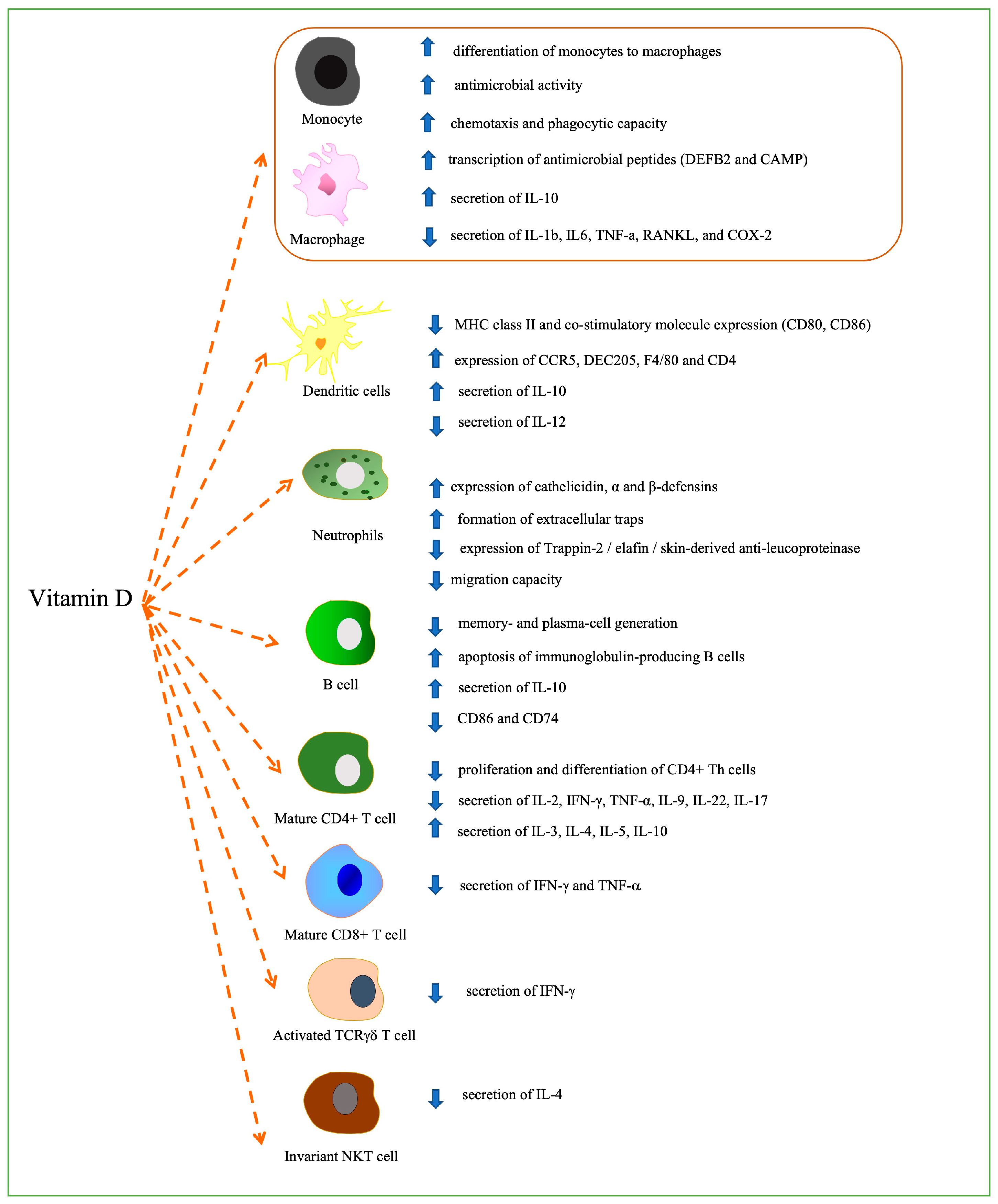

| Formulation | Indication(s) | Status | Phase | Notes | References |
|---|---|---|---|---|---|
| Cholecalciferol | RRMS and serum vitamin D level below 25 ng/mL; age ≥ 18 years old | Recruiting | N/A | low dose vitamin D3 supplementation (800 IU daily for 6 months) or high dose vitamin D3 supplementation (50,000 IU weekly dose) | NCT03610139 |
| Calcifediol or Cholecalciferol | RRMS and Vitamin D deficiency/insufficiency [25(OH)D < 30 ng/mL]; age ≥ 18 years old | Recruiting | IV | calcifediol 50 micrograms per day or cholecalciferol 50 micrograms per day, for 24 weeks | NCT05340985 |
| Vitamin D | AD; age 50 to 90; CDR 0.5 to 1 | Recruiting | N/A | Behavioural interventions (therapeutic lifestyles changes) and diet (intake of micronutrient supplements consisting of multivitamin, vitamin D, calcium, and phosphorus) | NCT03860792 |
| Cholecalciferol | CIS or RRMS; age 18 to 45; EDSS of 5.5 or less; patients must demonstrate features of a first typical optic neuritis within 21 days of recruitment | Recruiting | II | 5 days of high-dose oral vitamin D3 (50,000 IU daily × 5), followed by 85 days of moderate dose oral vitamin D3 (10,000 IU daily × 85 days) | NCT03302585 |
| Cholecalciferol | Patient has had a classic CIS within the past 90 days | Active, not recruiting | III | Patients will receive 100.000 IU of cholecalciferol every 14 days for a maximum of 24 months | NCT01817166 |
| Cholecalciferol | PD in STN-DBS treatment | Enrolling by invitation | N/A | Juvit D3 dosage based on the BMI: for BMI under 25–4000 IU/day; for BMI 25 to 30–5000 IU/day; for BMI over 30–6000 IU/day. | NCT04768023 |
| Cholecalciferol | Painful diabetic neuropathy, insulin dependent diabetes or insulin independent diabetes; age 25 to 80 years; HbA1c level must be ≥6.5% | Recruiting | N/A | single oral dose capsule 200,000 IU of Cholecalciferol | NCT05080530 |
| Cholecalciferol | episodic cluster headache as well as cluster periods that are predictable and have a duration of 6 weeks or greater and approxi-mately one attack daily minimum OR chronic cluster headache with approximately one attack daily | Recruiting | III | Vitamin D + multi-vitamin for 3 weeks. At the end of 3 weeks they will complete an online or paper questionnaire and blood work will be done. | NCT04570475 |
| Vitamin D | Episodic migraine without or without aura; age 20 to 65; baseline migraine days 4 to 15 days per month, blood level of vitamin D < 30 ng/mL at baseline | Recruiting | N/A | Omega-3 FA (first 4-week) plus Vitamin D (second 4-week) | NCT05449145 |
| Cholecalciferol | Cerebral palsy with spastic or mixed tone; GMFCS Level I-III (i.e., ambulatory); age 13 to 17 | Enrolling by invitation | N/A | 3 g β-hydroxy-β-methylbutyrate + 1000 IU of Vitamin D3 per day for 12 weeks | NCT05384951 |
| Vitamin D | Painful diabetic neuropathy (diagnosis based on validated Diabetic Neuropathy Symptoms and Diabetic Neuropathy Examination); low vitamin D status at baseline (<30 ng/mL) | Recruiting | III | Vitamin D 5000 IU Oral Tablet once daily for 8 weeks | NCT04689958 |
| 1,25(OH)2D | Friedreich’s Ataxia with confirmed genetic diagnosis | Active, not recruiting | IV | 1,25(OH)2D 0.25 mcg/24 h for a year, to evaluate the effects on the neurological symptoms. | NCT04801303 |
| Formulation | Indication(s) | Phase | Main Results | References |
|---|---|---|---|---|
| Cholecalciferol | 2-year study, 181 RRMS patients with (1) a low serum 25-hydroxy vitamin D concentration (<75 nmol/L), (2) treatment with interferon beta-1a 44 μg (SC 3 times per week) 4 months ± 2 months before randomization, and (3) at least one documented relapse during the previous 2 years, randomized to oral cholecalciferol 100,000 IU or placebo every other week for 96 weeks | II | No change in the ARR at 96 week; good efficacy on MRI parameters (less new hypointense T1-weighted lesions; a lower volume of hypointense T1-weighted lesions, and a lower progression of EDSS) | NCT01198132 Cholecalciferol in relapsing-remitting MS: A randomized clinical trial (CHOLINE) [248]. |
| Cholecalciferol | 229 RRMS patients treated with SC IFN-β-1a 44 μg 3 times weekly and serum vitamin D levels <150 nmol/were included and randomized 1:1 to receive SC IFN-β-1a plus placebo (n = 116) or SC IFN-β-1a plus oral high-dose vitamin D3 14,007 IU/d (n = 113). | II | No significant difference in the proportion of patients with no evidence of disease activity at week 48. Better MRI outcomes (combined unique active lesions and change from baseline in total volume of T2 lesions) in those patients receiving SC IFN-β-1a plus oral high-dose vitamin D3 | NCT01285401 Randomized trial of daily high-dose vitamin D3 in patients with RRMS receiving subcutaneous interferon β-1a [247]. |
| Cholecalciferol | CIS patients and healthy control participants were randomised to: placebo, 5000 IU or 10,000 IU vitamin D3/day (Vigantol oil) | I/II | No immunological, MRI or clinical evidence of benefit over 24 weeks | NCT01728922 Effects of vitamin D3 in clinically isolated syndrome and healthy control participants: A double-blind randomised controlled trial [246]. |
| Cholecalciferol | 52 patients with confirmed unilateral ON aged 15–38 years and low serum vitamin D levels. Patients were randomly allocated to receive 6 months of treatment with adding either 50,000 IU/week vitamin D or placebo | II | In the 27 patients treated with vitamin D, no significant effect on the thickness of RNFL or macula was found. | NCT01465893 Effects of vitamin D on retinal nerve fiber layer in vitamin D deficient patients with optic neuritis: Preliminary findings of a randomized, placebo-controlled trial [245]. |
| Ergocalciferol | 23 adults with clinically active RRMS were randomized to 6 months’ double-blind placebo-controlled high-dose vitamin D2, 6000 IU capsules, dose adjusted empirically aiming for a serum vitamin D 130–175 nmol/L. All received daily low-dose (1000 IU) D2 to prevent deficiency | I/II | No significant therapeutic advantage in RRMS for high-dose D2 over low-dose D2 supplementation was found | ACTRN12606000359538 A randomized trial of high-dose vitamin D2 in relapsing-remitting multiple sclerosis [244]. |
| Cholecalciferol | 45 IFNβ-treated MS patients were recruited. 21 patients were assigned to 800 IU of vitamin D3 per day, while 24 patients received 4370 IU per day for one year. | IV | No significant change in flu-like symptoms. IL-17 levels were significantly increased in the low dose group, while patients receiving high dose vitamin D had a heterogeneous IL-17 response. No significant differences in relapse rate, EDSS, QoL, serum IL10 and IFNγ were found | NCT01005095 Vitamin D supplementation for patients with multiple sclerosis treated with interferon-beta: a randomized controlled trial assessing the effect on flu-like symptoms and immunomodulatory properties [243]. |
| Cholecalciferol | 40 patients with RRMS were randomized to receive 10,400 IU or 800 IU cholecalciferol daily for 6 months | I | Cholecalciferol with 10,400 IU daily is associated with reduction of IL-17 production by CD4+ T cells and decreased proportion of effector memory CD4+ T cells with concomitant increase in central memory CD4+ T cells and naive CD4+ T cells | NCT01024777 Safety and immunologic effects of high- vs. low-dose cholecalciferol in multiple sclerosis [242]. |
| Cholecalciferol | 35 adult and fully ambulatory RRMS patients were included in the vitamin D3 Supplementation with 20,000 IU weekly group and 33 in the placebo group | III | Supplementation with 20,000 IU vitamin D(3) weekly did not result in beneficial effects on the measured MS-related outcomes | NCT00785473 Effect of vitamin D3 supplementation on relapses, disease progression, and measures of function in persons with multiple sclerosis: exploratory outcomes from a double-blind randomised controlled trial [241]. |
| Vitamin D | Peroral 20,000 IU once weekly as an add on therapy to IFNβ-1b vs placebo in patients with MS | IV | Vitamin D3 add on treatment to IFNB reduces MRI disease activity in MS (fewer new T2 lesions, T1 enhancing lesions). There was a tendency to reduced disability accumulation and to improved tandem gait. No significant differences in the ARR | NCT01339676 A randomised, double blind, placebo controlled trial with vitamin D3 as an add on treatment to interferon β-1b in patients with multiple sclerosis [240]. |
| Cholecalciferol | 50 patients with RRMS aged 25 to 57 years and normal serum 25-hydroxyvitamin D were randomly allocated to receive 12 months of treatment with either escalating 1,25(OH)2D doses up to 0.5 μg/day or placebo combined with disease-modifying therapy | II | Adding low-dose vitamin D to routine disease-modifying therapy had no significant effect on the EDSS score or relapse rate | N/A Effects of Adjunct Low-Dose Vitamin D on Relapsing-Remitting Multiple Sclerosis Progression: Preliminary Findings of a Randomized Placebo-Controlled Trial [239]. |
| Alfacalcidol | Alfacalcidol (1 mcg/d, n = 80) or placebo (n = 78) was administered for six consecutive months in MS patients | N/A | Alfacalcidol decreased the fatigue score and improved QoLas compared with placebo. The Alfacalcidol-treated group had reduced number of relapses and higher proportion of relapse-free patients | (The trial was not registered as Alfacalcidol is considered a natural supplement and not a drug in Israel) Effect of Alfa-calcidol on multiple sclerosis-related fatigue: A randomized, double-blind placebo-controlled study [238]. |
| Cholecalciferol | 30 ON patients (15 in each of 2 groups, aged 20–40 years) with serum 25 hydroxyvitamin D levels of less than 30 ng/mL were enrolled. The treatment group received 50,000 IU of vitamin D3 weekly for 12 months and the control group received a placebo weekly for 12 months | N/A | Risk reduction of 68.4% for the conversion to MS after 12 months. Patients in the treatment group had a significantly lower incidence rate of cortical, juxtacortical, corpus callosal, new T2, new gadolinium-enhancing lesions and black holes. The mean number of total plaques showed a marginally significant decrease in the group receiving vitamin D3 supplementation as compared with the placebo group. | IRCT201205319919N1 Preventive effect of vitamin D3 supplementation on conversion of optic neuritis to clinically definite multiple sclerosis: a double blind, randomized, placebo-controlled pilot clinical trial [237]. |
| Cholecalciferol | 172 patients with RRMS, age 18 to 50 years, and EDSS ≤ 4.0, after completing a one-month run-in of glatiramer acetate, were randomized 1:1 to oral vitamin D3 5000 IU versus 600 IU daily | III | No significant difference was shown in terms of the proportion of subjects that experienced a relapse nor in terms of annualised relapse rate | NCT01490502 The vitamin D to ameliorate multiple sclerosis (VIDAMS) trial: study design for a multicenter, randomized, double-blind controlled trial of vitamin D in multiple sclerosis [251]. |
| Cholecalciferol | The EVIDIMS trial compared the effects of every other day high- (20,400 IU) vs low-dose (400 IU) cholecalciferol supplementation on clinical and imaging markers of disease activity in 53 MS patients of which 41 completed the study. | II | The Authors recognized that the sample size of this trial was underpowered but no significant difference in terms of clinical and MRI metrics (including lesion development, enhancing lesions, and brain atrophy) between the two groups, after 18 months. | NCT01440062 High-dose vitamin D supplementation in multiple sclerosis—results from the randomized EVIDIMS (efficacy of vitamin D supplementation in multiple sclerosis) trial [250]. |
| Cholecalciferol | 4143 women aged 65 and older without probable dementia at baseline who participated in the WHI Calcium and Vitamin D Trial and the WHI Memory Study. 2034 women were randomized to receive 1000 mg of calcium carbonate combined with 400 IU of vitamin D3 (treatment) and 2109 to placebo. | III | no association between treatment assignment and incident cognitive impairment | Part of NCT00000611 Calcium and Vitamin D Supplementation and Cognitive Impairment in the Women’s Health Initiative [313]. |
| Vitamin D supplements | 43 white outpatients with a new diagnosis of AD, who had not taken anti-dementia drugs or vitamin D supplements were prescribed memantine alone (n = 18), vitamin D alone (n = 17), or memantine plus vitamin D (n = 8) for an average of 6 months. Vitamin D supplements were given orally, either daily or monthly. The dose ranged between 400 and 1000 IU per day, or 100,000 and 200,000 IU per month. | N/A | Patients with AD who were treated for 6 months with the combination of memantine plus vitamin D supplements had a statistically and clinically significant gain in global cognitive performance | N/A Effectiveness of the Combination of Memantine Plus Vitamin D on Cognition in Patients with Alzheimer Disease [314]. |
| Cholecalciferol | 5110 participants were randomized to receive vitamin D3 (n = 2558) or placebo (n = 2552). Oral vitamin D3 in an initial dose of 200 000 IU, followed a month later by monthly doses of 100 000 IU, or placebo for a median of 3.3 years (range, 2.5–4.2 years). | III | Negative results on stroke prevention | ACTRN12611000402943 Effect of Monthly High-Dose Vitamin D Supplementation on Cardiovascular Disease in the Vitamin D Assessment Study: A Randomized Clinical Trial [315]. |
| Cholecalciferol | The experimental group received an add-on oral vitamin D 5000 IU once daily and standard treatment (pregabalin, gabapentin, or amitriptyline) over eight weeks. The control group received standard treatment alone. | II/III | The addition of oral vitamin D 5000 IU to standard treatment significantly improves pain, mood, and vitamin D levels more effectively than standard treatment alone in patients with diabetic neuropathy. | NCT04689958 The Benefits of Add-on Therapy of Vitamin D 5000IU to the Vitamin D Levels and Symptoms in Diabetic Neuropathy Patients: A Randomized Clinical Trial [304]. |
| Cholecalciferol | A single intramuscular dose of 600,000 IU of vitamin D to 143 participants with predominantly type 2 diabetes | N/A | Treatment with a single intramuscular dose of 600,000 IU of vitamin D in patients with painful diabetic neuropathy is associated with a significant decrease in the symptoms of painful diabetic neuropathy | NCT02737423 Vitamin D for the treatment of painful diabetic neuropathy [207]. |
| Cholecalciferol | 112 type 2 diabetic patients with diabetic peripheral neuropathy and vitamin D deficiency were assigned to a treatment group (n = 57) and a placebo group (n = 55). Patients received either oral vitamin D3 capsules or starch capsules once weekly for 8 weeks | N/A | Short-term oral vitamin D3 supplementation improved vitamin D status and the symptoms of neuropathy in patients with type 2 diabetes. | N/A Prospective Evaluation of the Effect of Short-Term Oral Vitamin D Supplementation on Peripheral Neuropathy in Type 2 Diabetes Mellitus [306]. |
| Cholecalciferol | 60 type 2 diabetic patients with painful diabetic neuropathy were enrolled and received weekly 50,000 IU of vitamin D3 for 12 weeks orally | N/A | Oral supplementation of vitamin D 3 (50,000 IU) once weekly for 12 weeks was associated with improvement in the serum level of vitamin D and significant decrease in the symptoms and sign of diabetic neuropathy. | IRCT2017102325266N2 Dose vitamin D supplementations improve peripheral diabetic neuropathy? A before-after clinical trial [305]. |
| Cholecalciferol | Patients with migraine. 24 weeks of vitamin D3 (24 patients, 100 μg/day) or placebo (24 patients) | III | Vitamin D3 was superior to placebo in reducing migraine days in migraine patients | NCT01695460 A randomized, double-blinded, placebo-controlled, parallel trial of vitamin D3 supplementation in adult patients with migraine [286]. |
| Cholecalciferol | 80 episodic migraineurs who randomly assigned into two equal groups to receive either daily dose of vitamin D3 2000 IU (50 μg) or placebo for 12 weeks | N/A | Improvement of headache characteristics and reduction of neuro-inflammation in episodic migraine | IRCT20151128025267N6 Vitamin D3 might improve headache characteristics and protect against inflammation in migraine: a randomized clinical trial [316]. |
| Cholecalciferol | 31 female and 26 male 5–15-year-old children with migraine headaches were randomly allocated to receive 2 mg/kg/day of topiramate or 2 mg/kg/day of topiramate plus one 500,000 IU vitamin D3 pearl weekly for two consecutive months | N/A | the combination of topiramate and vitamin D3 was more effective than topiramate alone in reducing the monthly headaches frequency and disability score | IRCT201701092639N20 Efficacy of topiramate alone and topiramate plus vitamin D3 in the prophylaxis of pediatric migraine: A randomized clinical trial [317]. |
| Cholecalciferol | 39 patients in intervention group and 38 patients in the control group were allocated with simple randomization method (Vitamin D 50,000 IU/week vs placebo) during 10 weeks | N/A | Mean headache frequency and headache diary result were lower among the intervention group compared to placebo group | IRCT2012122911763N4 Effect of Vitamin D supplementation on symptoms and C-reactive protein in migraine patients [284]. |
| Cholecalciferol | 57 adults with episodic migraine were randomized to simvastatin 20 mg tablets twice-daily plus vitamin D3 1000 international units capsules twice-daily or matching placebo tablets and capsules for 24 weeks | II | Efficacy of simvastatin plus vitamin D3 in decreasing the number of migraine days from the baseline period | NCT01225263 Simvastatin and vitamin D for migraine prevention: A randomized, controlled trial [285]. |
| Cholecalciferol | 48 ALS patients, 34 with deficient (<20 ng/mL) and 14 with insufficient (20–29 ng/mL) serum levels of vitamin D, were randomized and treated by 3 different doses of cholecalciferol [50,000, 75,000 and 100,000 IU /month] and evaluated after 6-months | N/A | no significant effects on motor dysfunction | Vitamin D supplementation has no effects on progression of motor dysfunction in amyotrophic lateral sclerosis (ALS) [205]. |
Disclaimer/Publisher’s Note: The statements, opinions and data contained in all publications are solely those of the individual author(s) and contributor(s) and not of MDPI and/or the editor(s). MDPI and/or the editor(s) disclaim responsibility for any injury to people or property resulting from any ideas, methods, instructions or products referred to in the content. |
© 2022 by the authors. Licensee MDPI, Basel, Switzerland. This article is an open access article distributed under the terms and conditions of the Creative Commons Attribution (CC BY) license (https://creativecommons.org/licenses/by/4.0/).
Share and Cite
Plantone, D.; Primiano, G.; Manco, C.; Locci, S.; Servidei, S.; De Stefano, N. Vitamin D in Neurological Diseases. Int. J. Mol. Sci. 2023, 24, 87. https://doi.org/10.3390/ijms24010087
Plantone D, Primiano G, Manco C, Locci S, Servidei S, De Stefano N. Vitamin D in Neurological Diseases. International Journal of Molecular Sciences. 2023; 24(1):87. https://doi.org/10.3390/ijms24010087
Chicago/Turabian StylePlantone, Domenico, Guido Primiano, Carlo Manco, Sara Locci, Serenella Servidei, and Nicola De Stefano. 2023. "Vitamin D in Neurological Diseases" International Journal of Molecular Sciences 24, no. 1: 87. https://doi.org/10.3390/ijms24010087
APA StylePlantone, D., Primiano, G., Manco, C., Locci, S., Servidei, S., & De Stefano, N. (2023). Vitamin D in Neurological Diseases. International Journal of Molecular Sciences, 24(1), 87. https://doi.org/10.3390/ijms24010087

