Article

Activation of Transposable Elements in Human Skeletal Muscle Fibers upon Statin Treatment

by
Braulio Valdebenito-Maturana
1,
Franco Valdebenito-Maturana
2,
Mónica Carrasco
3,
Juan Carlos Tapia
3,* and
Alejandro Maureira
3,*
1
Instituto de Investigación Interdisciplinaria, Vicerrectoría Académica, Universidad de Talca, Campus Talca, Talca 3460000, Chile
2
Centro de Investigación en Células Madres y Neurociencias, Universidad de Talca, Campus Talca, Talca 3460000, Chile
3
Escuela de Medicina, Universidad de Talca, Campus Talca, Talca 3460000, Chile
*
Authors to whom correspondence should be addressed.
Int. J. Mol. Sci. 2023, 24(1), 244; https://doi.org/10.3390/ijms24010244
Submission received: 27 September 2022 / Revised: 18 November 2022 / Accepted: 29 November 2022 / Published: 23 December 2022
(This article belongs to the Special Issue Muscle Atrophy: From Bench to Bedside)

Abstract

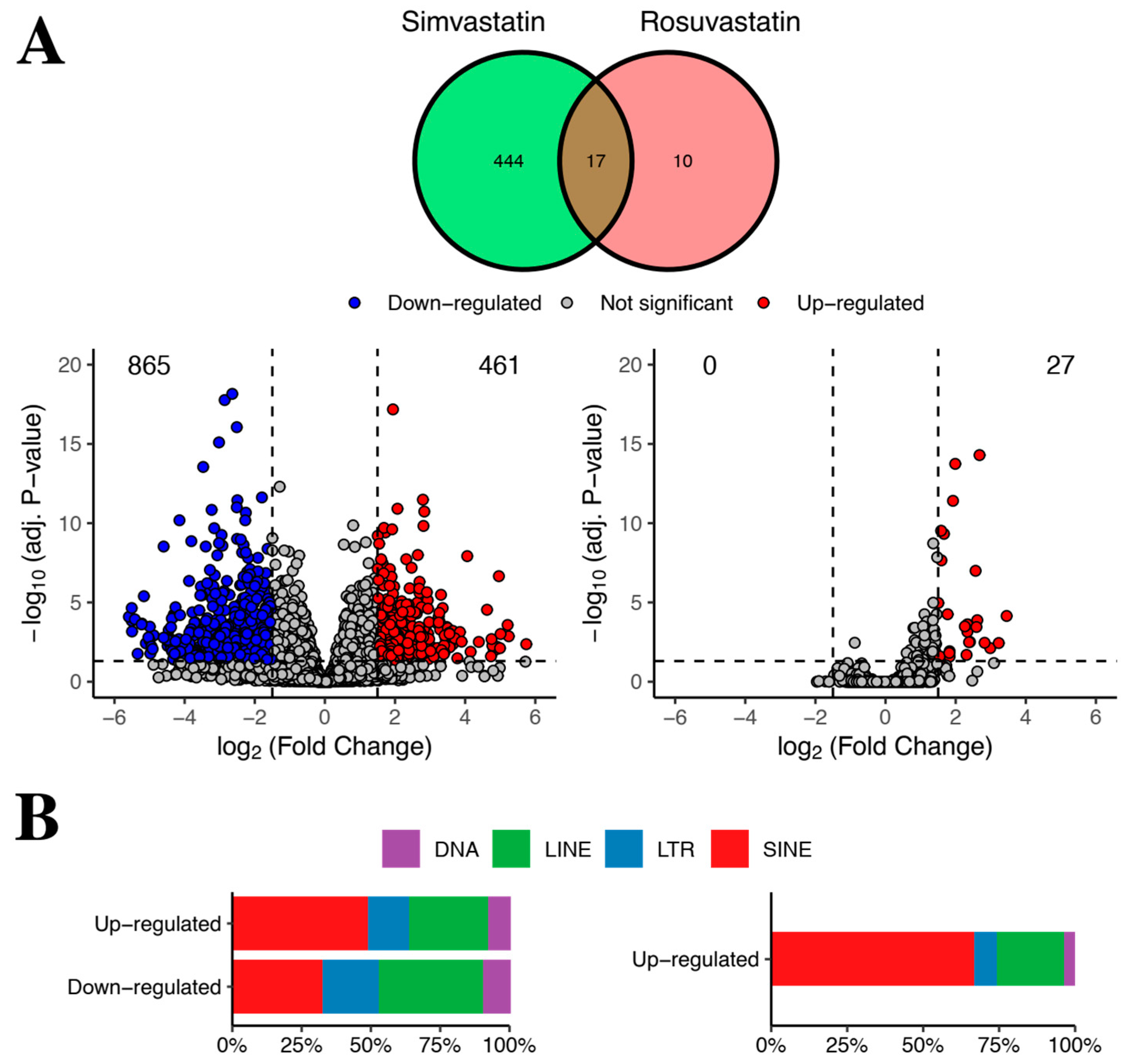
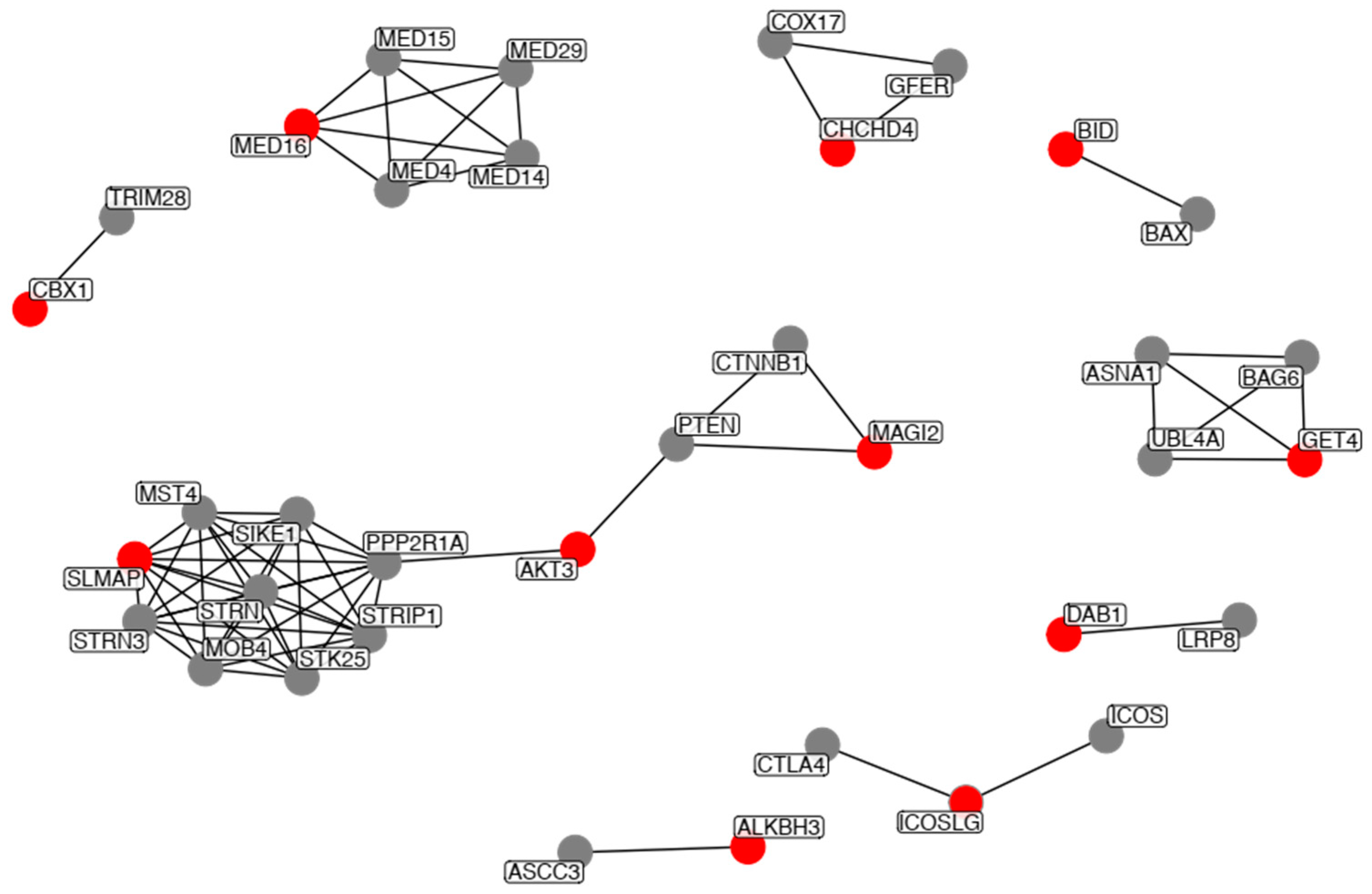
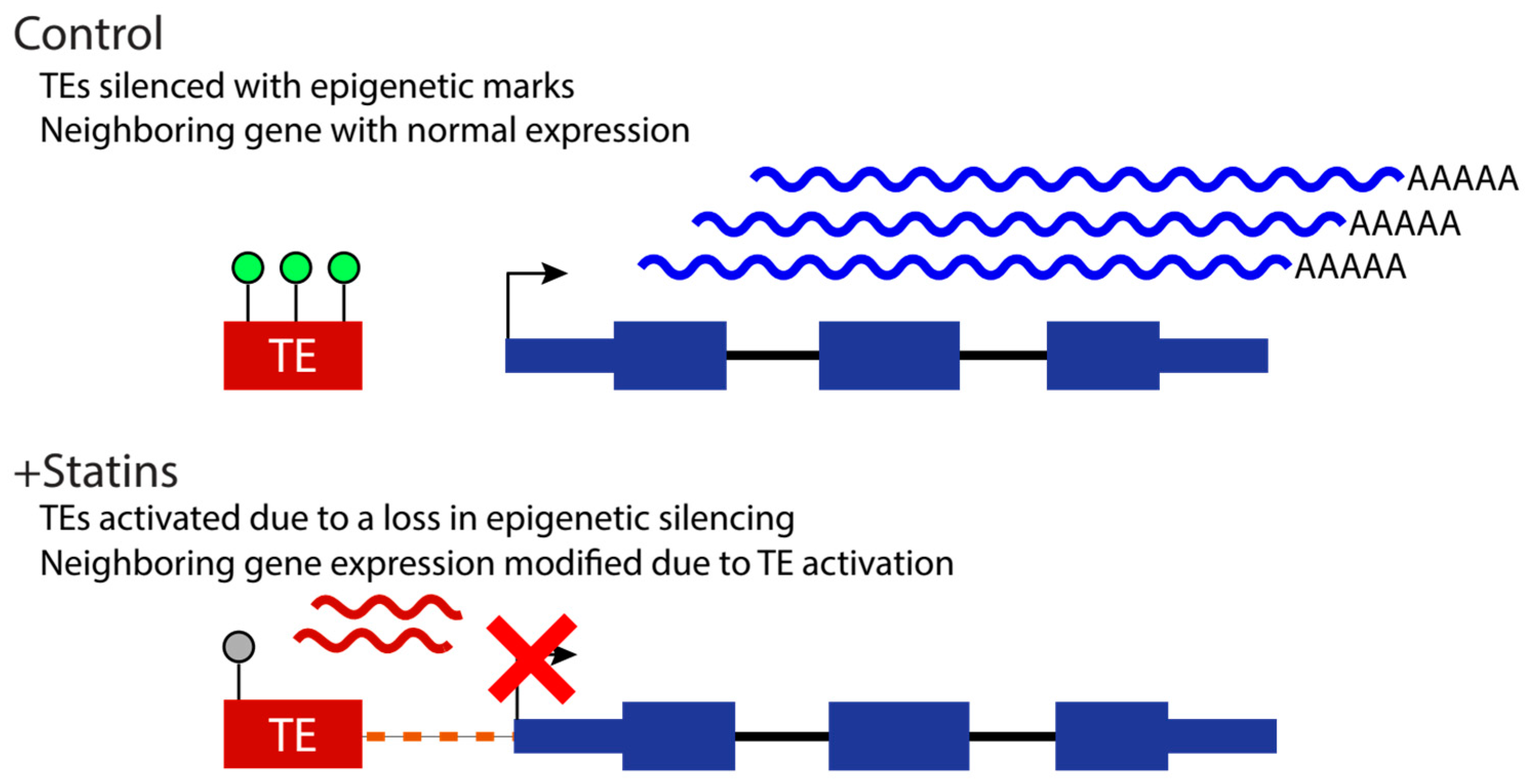
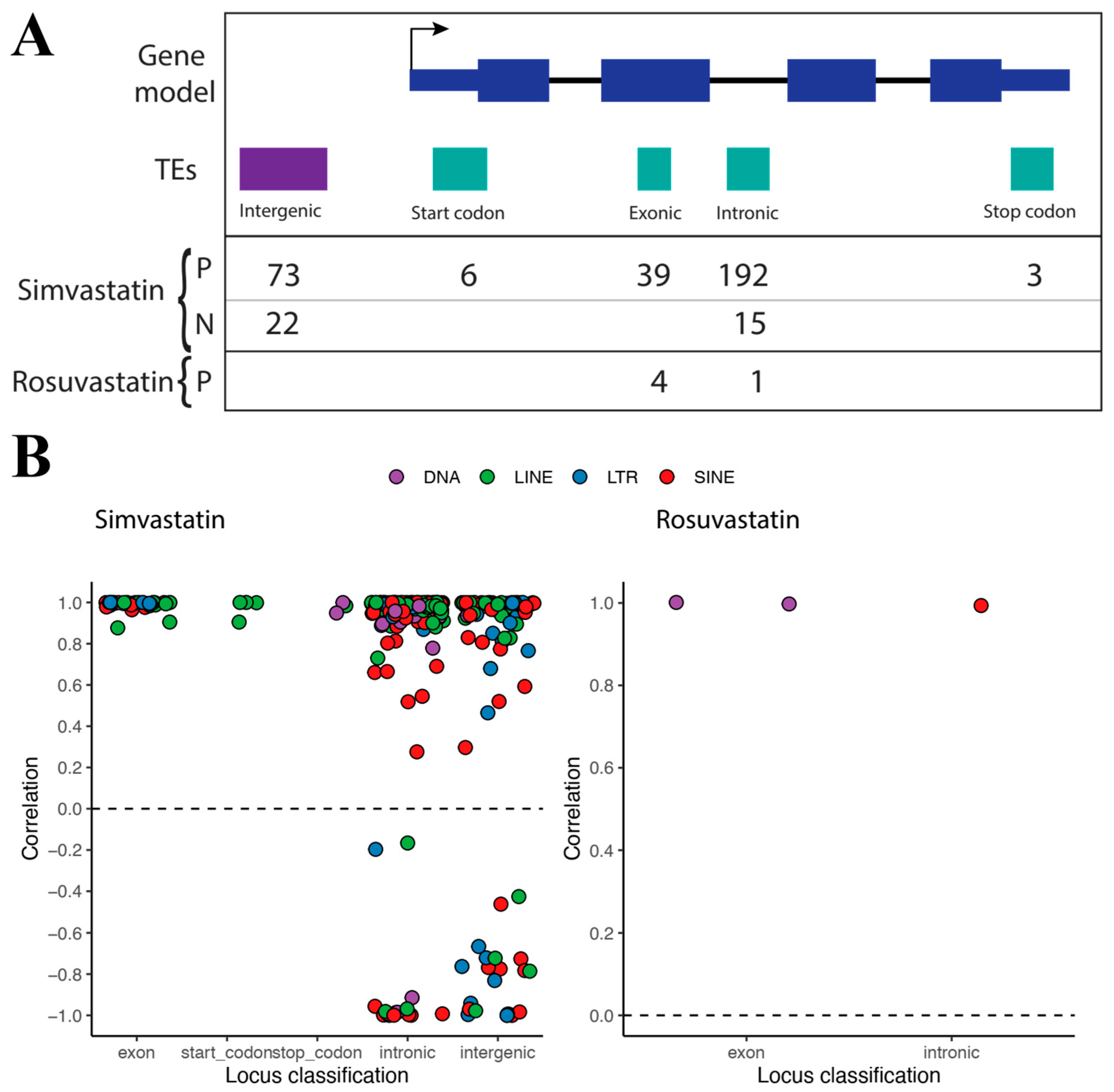
High cholesterol levels have been linked to a high risk of cardiovascular diseases, and preventative pharmacological care to lower cholesterol levels is critically important. Statins, which are hydroxymethylglutaryl-coenzyme A (HMG-CoA) reductase inhibitors, are drugs used to reduce the endogenous cholesterol synthesis, thus minimizing its pathophysiological effects. Despite the proven benefits, statins therapy is known to cause a number of skeletal muscle disorders, including myalgia, myopathy and myositis. The mechanisms underlying such statin-induced side effects are unknown. Recently, a group of genes and molecular pathways has been described to participate in statin-induced myopathy, caused by either simvastatin or rosuvastatin, although the mechanism by which changes in gene regulation occur was not studied. Transposable Elements (TEs), repetitive elements that move within the genome, are known to play regulatory roles in gene expression; however, their role in statin-induced muscle damage has not been studied. We analyzed the expression of TEs in human skeletal fiber cells treated with either simvastatin or rosuvastatin, as well as their respective controls, and identified TEs that change their expression in response to the treatment. We found that simvastatin resulted in >1000 differentially expressed (DE) TEs, whereas rosuvastatin resulted in only 27 DE TEs. Using network analysis tools, we predicted the impact of the DE TEs on the expression of genes and found that amongst the genes potentially modulated by TEs, there are some previously associated to statin-linked myopathy pathways (e.g., AKT3). Overall, our results indicate that TEs may be a key player in the statin-induced muscle side effects.
Keywords: transposable elements; gene regulation; statins; pharmacogenomics; cholesterol; cardiovascular diseases transposable elements; gene regulation; statins; pharmacogenomics; cholesterol; cardiovascular diseases