Article

Molecular Indicators of Blood-Brain Barrier Breakdown and Neuronal Injury in Pregnancy Complicated by Fetal Growth Restriction


by
Natalia Misan
1,*,
Sławomir Michalak
2,
Piotr Rzymski
3,4,
Barbara Poniedziałek
3,
Katarzyna Kapska
1,
Krystyna Osztynowicz
2 and
Mariola Ropacka-Lesiak
1
1
Department of Perinatology and Gynecology, Poznan University of Medical Sciences, 60-535 Poznan, Poland
2
Department of Neurochemistry and Neuropathology, Poznan University of Medical Sciences, 60-355 Poznan, Poland
3
Department of Environmental Medicine, Poznan University of Medical Sciences, 61-848 Poznan, Poland
4
Integrated Science Association (ISA), Universal Scientific Education and Research Network (USERN), 60-806 Poznań, Poland
*
Author to whom correspondence should be addressed.
Int. J. Mol. Sci. 2022, 23(22), 13798; https://doi.org/10.3390/ijms232213798
Submission received: 22 September 2022 / Revised: 2 November 2022 / Accepted: 2 November 2022 / Published: 9 November 2022
(This article belongs to the Special Issue Pathogenesis of Pregnancy-Related Complication)

Abstract

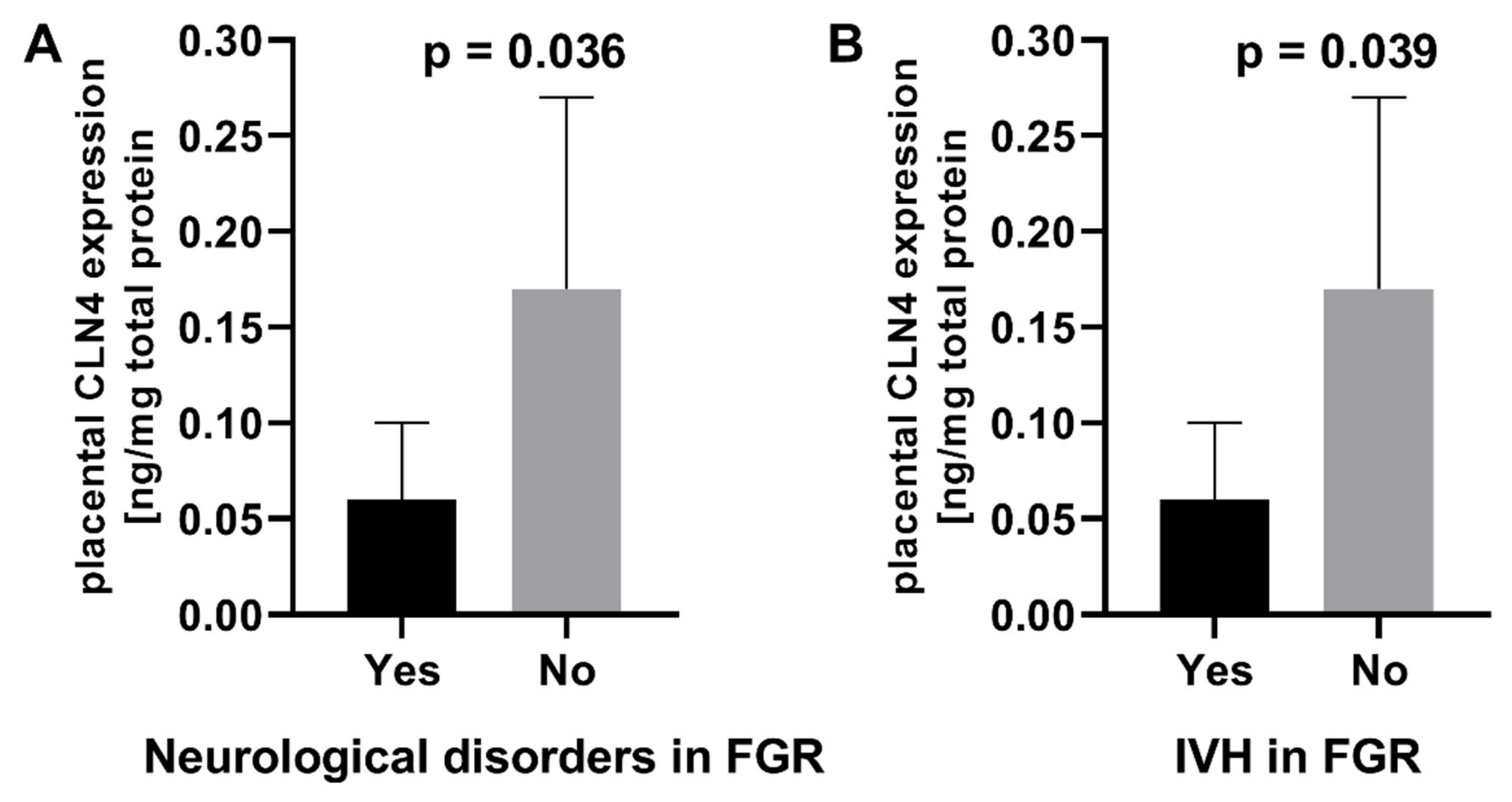
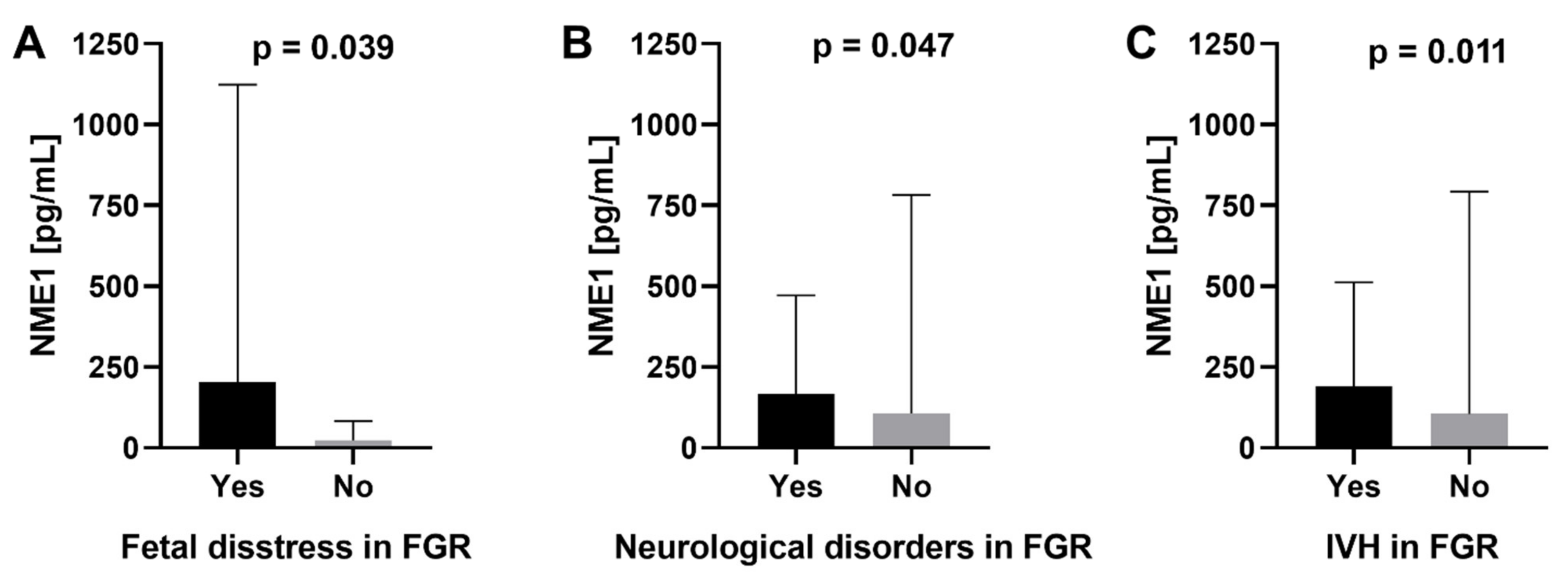
This study evaluated the damage to the endothelial tight junctions (TJs) in pregnancies complicated by fetal growth restriction (FGR) and investigated whether FGR is related to blood–brain barrier disintegration and, subsequently, to the appearance of proteins indicative of neuronal injury in maternal blood. The studied group included 90 pregnant women diagnosed with FGR. The control group consisted of 70 women with an uncomplicated pregnancy. The biochemical measurements included serum neuronal proteins (subunit of the N-methyl-D-aspartate receptor—NR1, nucleoside diphosphate kinase A—NME1, and S100 calcium-binding protein B—S100B), serum TJ proteins (occludin—OCLN, claudin-5—CLN5, zonula occludens—zo-1, and OCLN/zo-1 and CLN5/zo-1 ratios), and placental expression of TJ proteins (OCLN, claudin-4 CLN4, CLN5, zo-1). The significantly higher serum S100B and CLN5 levels and serum CLN5/zo-1 ratio were observed in FGR compared to healthy pregnancies. Moreover, FGR was characterized by increased placental CLN5 expression. Both serum NME1 levels and placental CLN4 expression in FGR pregnancies were significantly related to the incidence of neurological disorders in newborns. Mothers of FGR neonates who developed neurological complications and intraventricular hemorrhage (IVH) had statistically higher NME1 concentrations during pregnancy and significantly lower placental CLN4 expression than mothers of FGR neonates without neurological abnormalities. The serum NME1 levels and placental CLN4 expression were predictive markers of IVH in the FGR group. The blood–brain barrier is destabilized in pregnancies complicated by FGR. Neurological disorders, including IVH, are associated with higher serum concentrations of NME1 and the decreased placental expression of CLN4. The serum NME1 levels and placental CLN4 expression may serve as biomarkers, helpful in predicting IVH in FGR. It may allow for more precise monitoring and influence decision-making on the optimal delivery time to avoid developing neurological complications.
Keywords: blood–brain barrier; endothelium; fetal growth restriction; fetal hypoxia; neuronal damage; tight junctions; tight junction proteins blood–brain barrier; endothelium; fetal growth restriction; fetal hypoxia; neuronal damage; tight junctions; tight junction proteins