Article

Cellular Electrical Impedance as a Method to Decipher CCR7 Signalling and Biased Agonism
1
Laboratory of Virology and Chemotherapy, Department of Microbiology, Immunology and Transplantation, Rega Institute, KU Leuven, Herestraat 49, 3000 Leuven, Belgium
2
Janssen Pharmaceutica NV, Turnhoutseweg 30, 2340 Beerse, Belgium
*
Author to whom correspondence should be addressed.
Int. J. Mol. Sci. 2022, 23(16), 8903; https://doi.org/10.3390/ijms23168903
Submission received: 14 July 2022 / Revised: 5 August 2022 / Accepted: 8 August 2022 / Published: 10 August 2022
(This article belongs to the Section Biochemistry)

Abstract

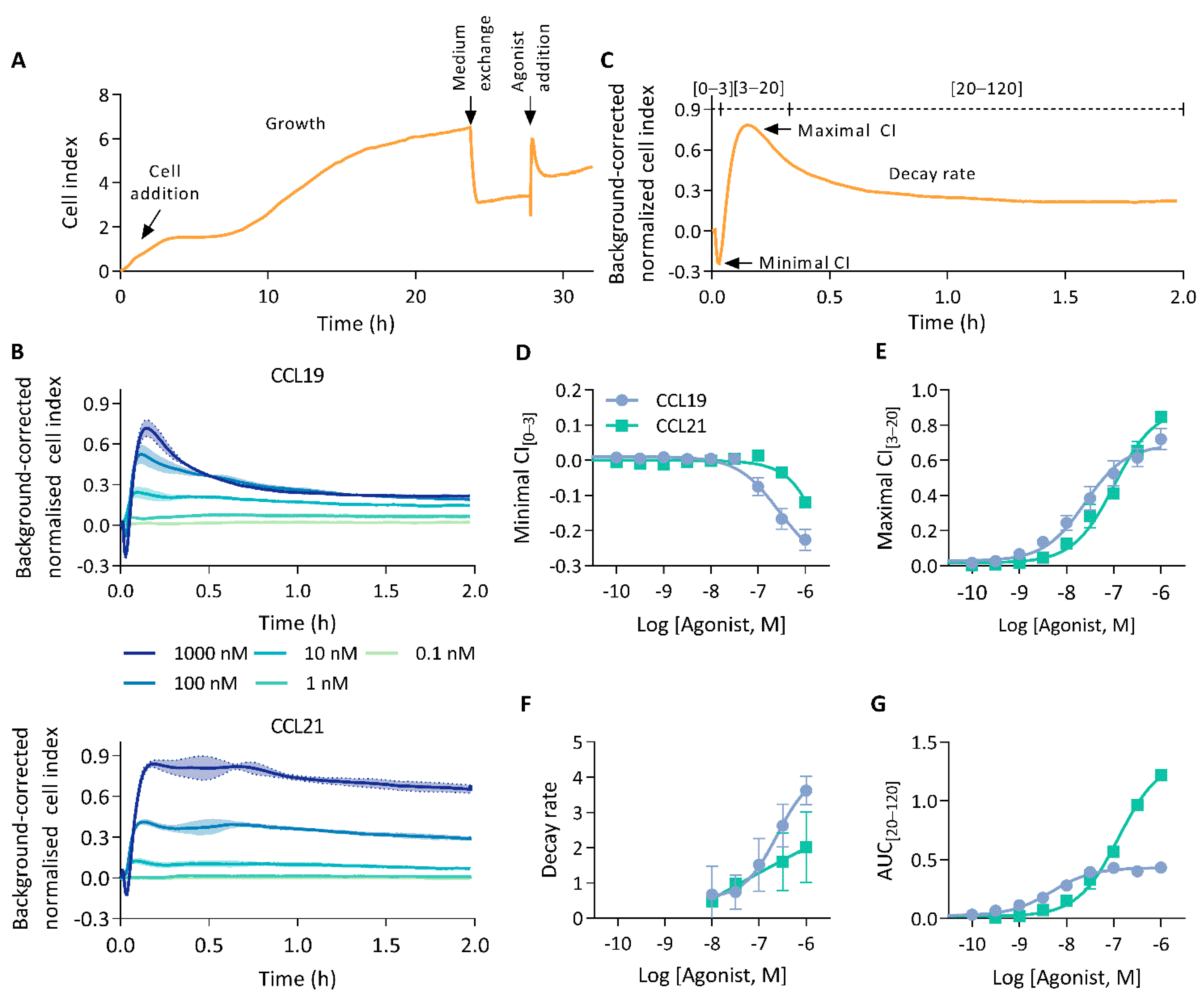
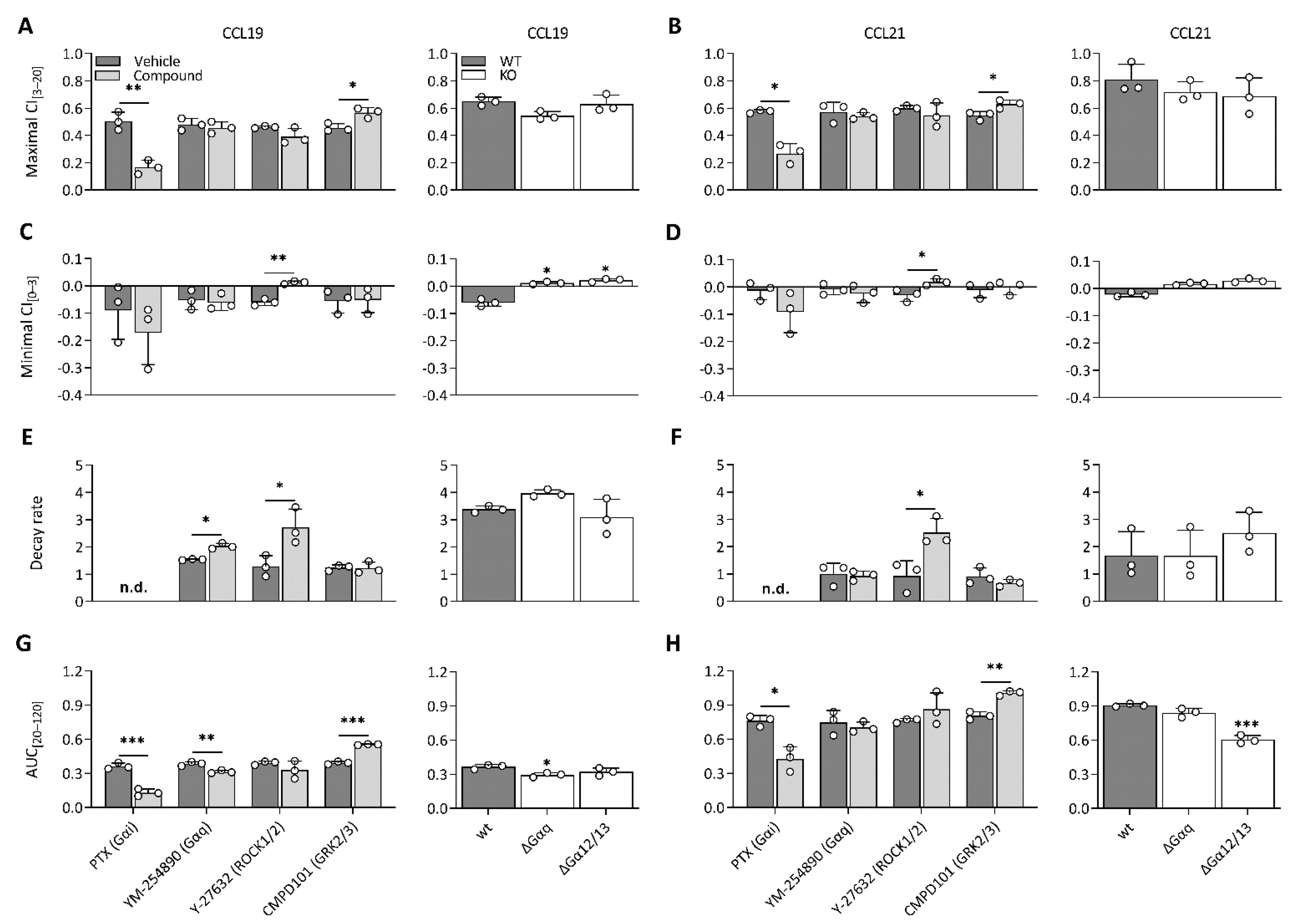
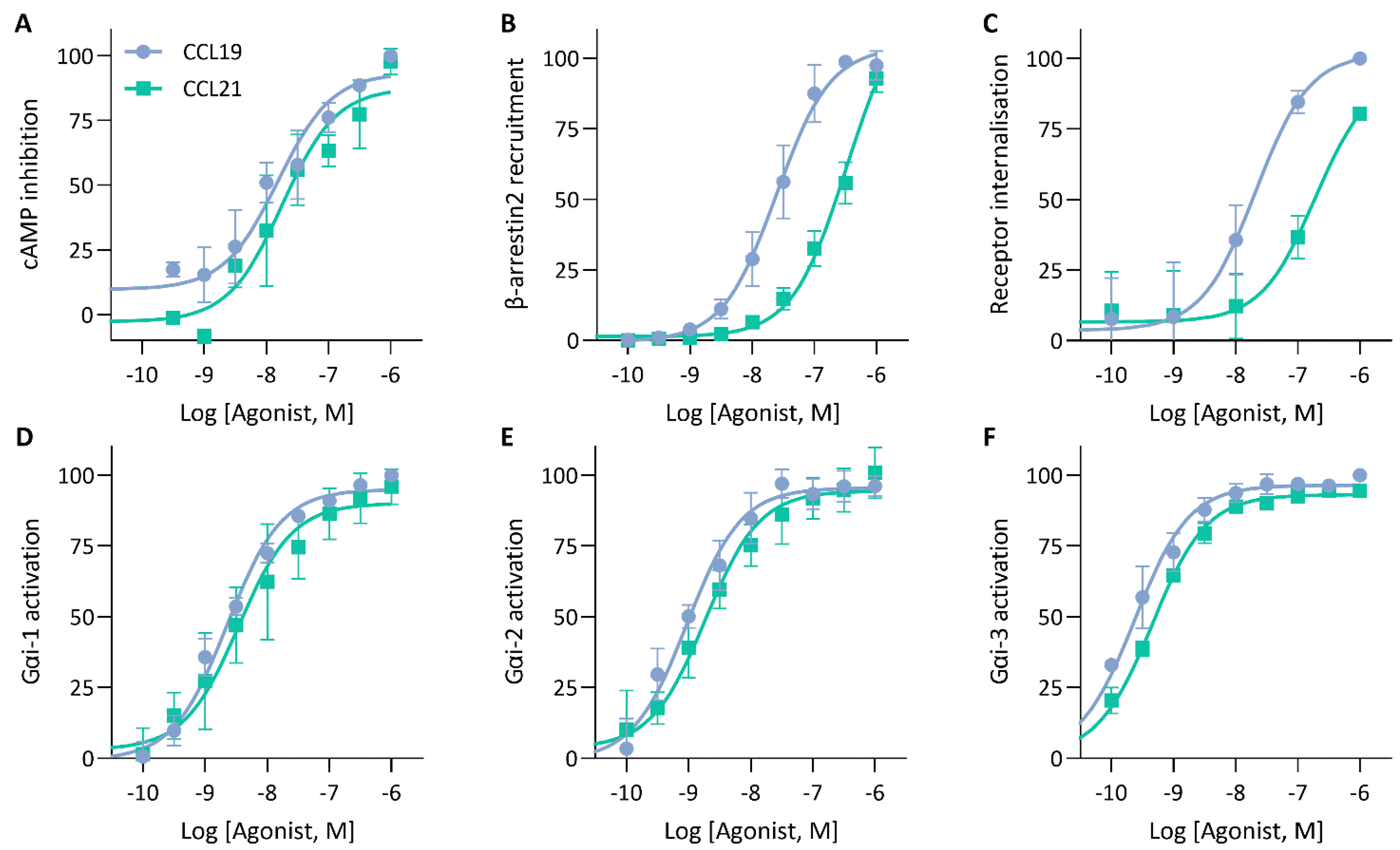
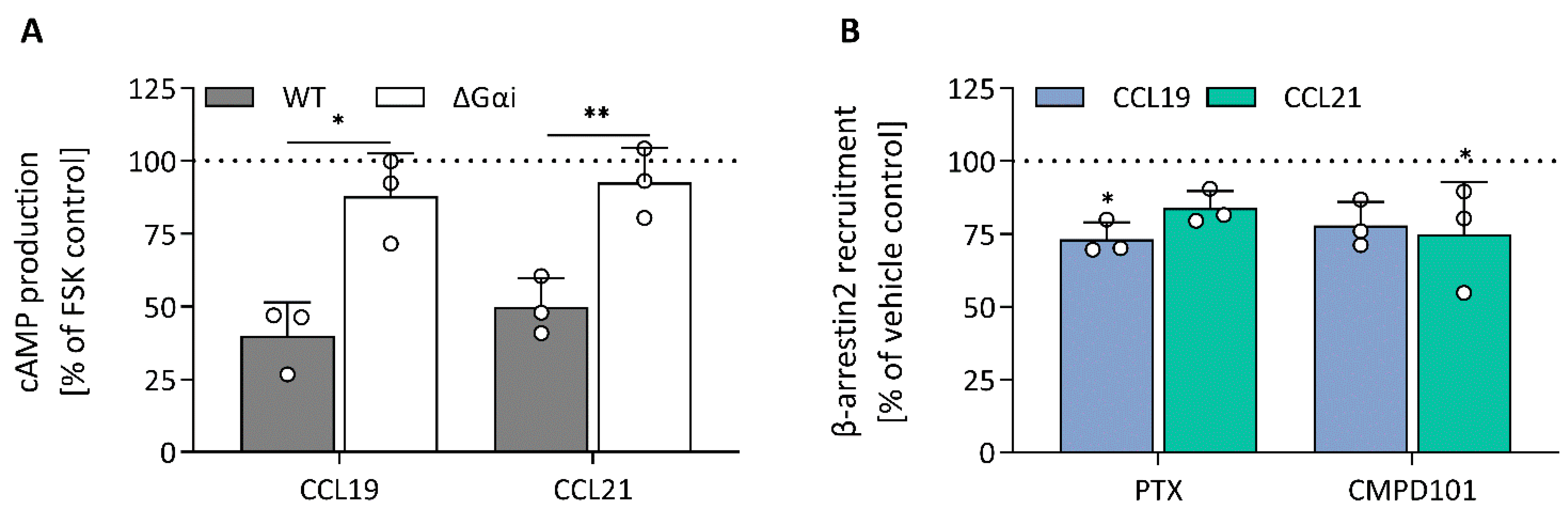
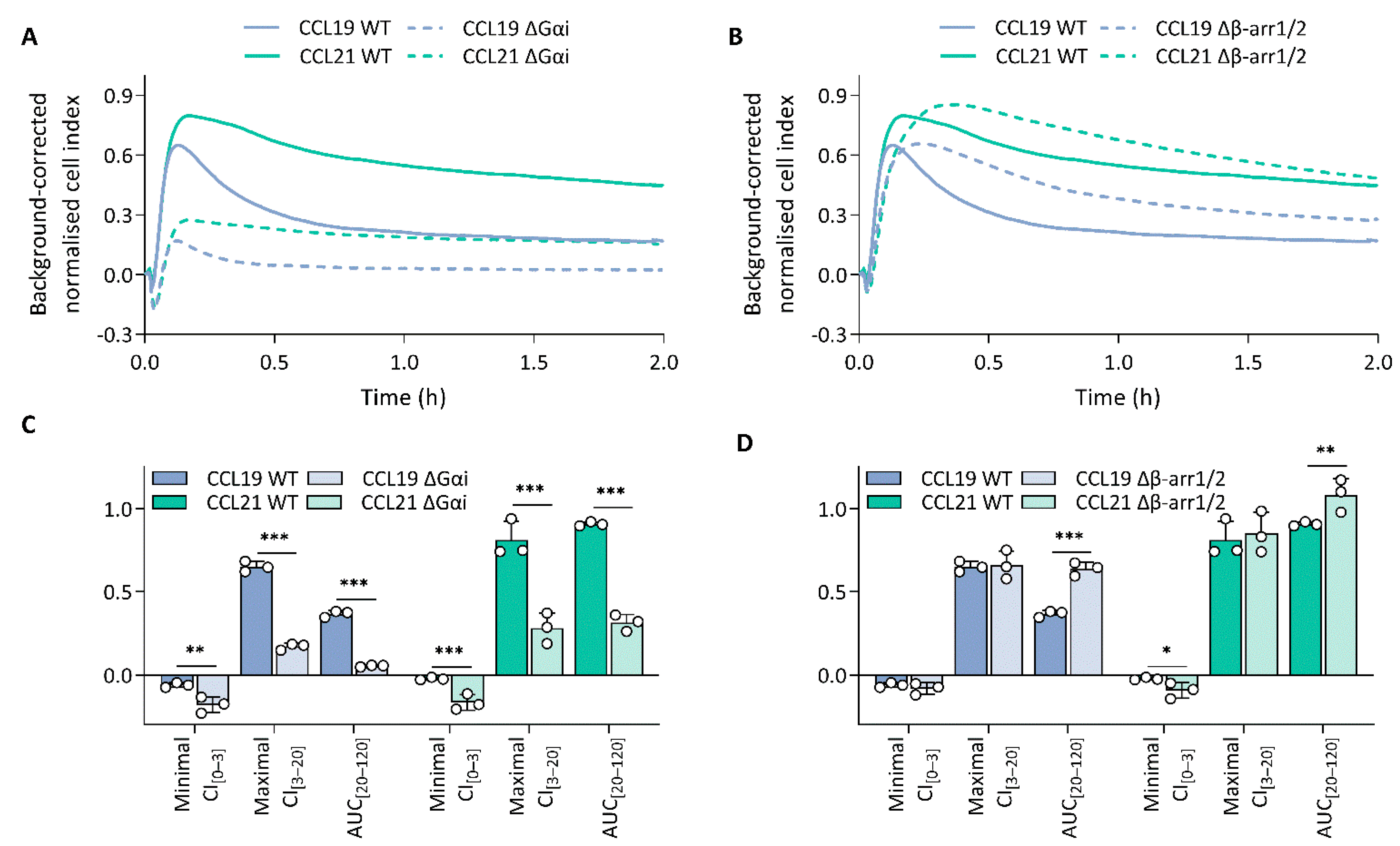
The human C-C chemokine receptor type 7 (CCR7) has two endogenous ligands, C-C chemokine ligand 19 (CCL19) and CCL21, displaying biased agonism reflected by a pronounced difference in the level of β-arrestin recruitment. Detecting this preferential activation generally requires the use of separate, pathway-specific label-based assays. In this study, we evaluated an alternative methodology to study CCR7 signalling. Cellular electrical impedance (CEI) is a label-free technology which yields a readout that reflects an integrated cellular response to ligand stimulation. CCR7-expressing HEK293 cells were stimulated with CCL19 or CCL21, which induced distinct impedance profiles with an apparent bias during the desensitisation phase of the response. This discrepancy was mainly modulated by differential β-arrestin recruitment, which shaped the impedance profile but did not seem to contribute to it directly. Pathway deconvolution revealed that Gαi-mediated signalling contributed most to the impedance profile, but Gαq- and Gα12/13-mediated pathways were also involved. To corroborate these results, label-based pathway-specific assays were performed. While CCL19 more potently induced β-arrestin2 recruitment and receptor internalisation than CCL21, both chemokines showed a similar level of Gαi protein activation. Altogether, these findings indicate that CEI is a powerful method to analyse receptor signalling and biased agonism.
Keywords: G protein-coupled receptor; C-C chemokine receptor 7; cellular electrical impedance; label-free; G protein; β-arrestin; signalling; biased agonism G protein-coupled receptor; C-C chemokine receptor 7; cellular electrical impedance; label-free; G protein; β-arrestin; signalling; biased agonism