Review

Chloroplasts Protein Quality Control and Turnover: A Multitude of Mechanisms
1
College of Life Sciences, China Jiliang University, Hangzhou 310018, China
2
Department of Botany and Plant Pathology, Purdue University, West Lafayette, IN 47907-2054, USA
*
Authors to whom correspondence should be addressed.
These authors contributed equally to this work.
Int. J. Mol. Sci. 2022, 23(14), 7760; https://doi.org/10.3390/ijms23147760
Submission received: 23 June 2022 / Revised: 11 July 2022 / Accepted: 12 July 2022 / Published: 14 July 2022
(This article belongs to the Section Molecular Biology)

Abstract

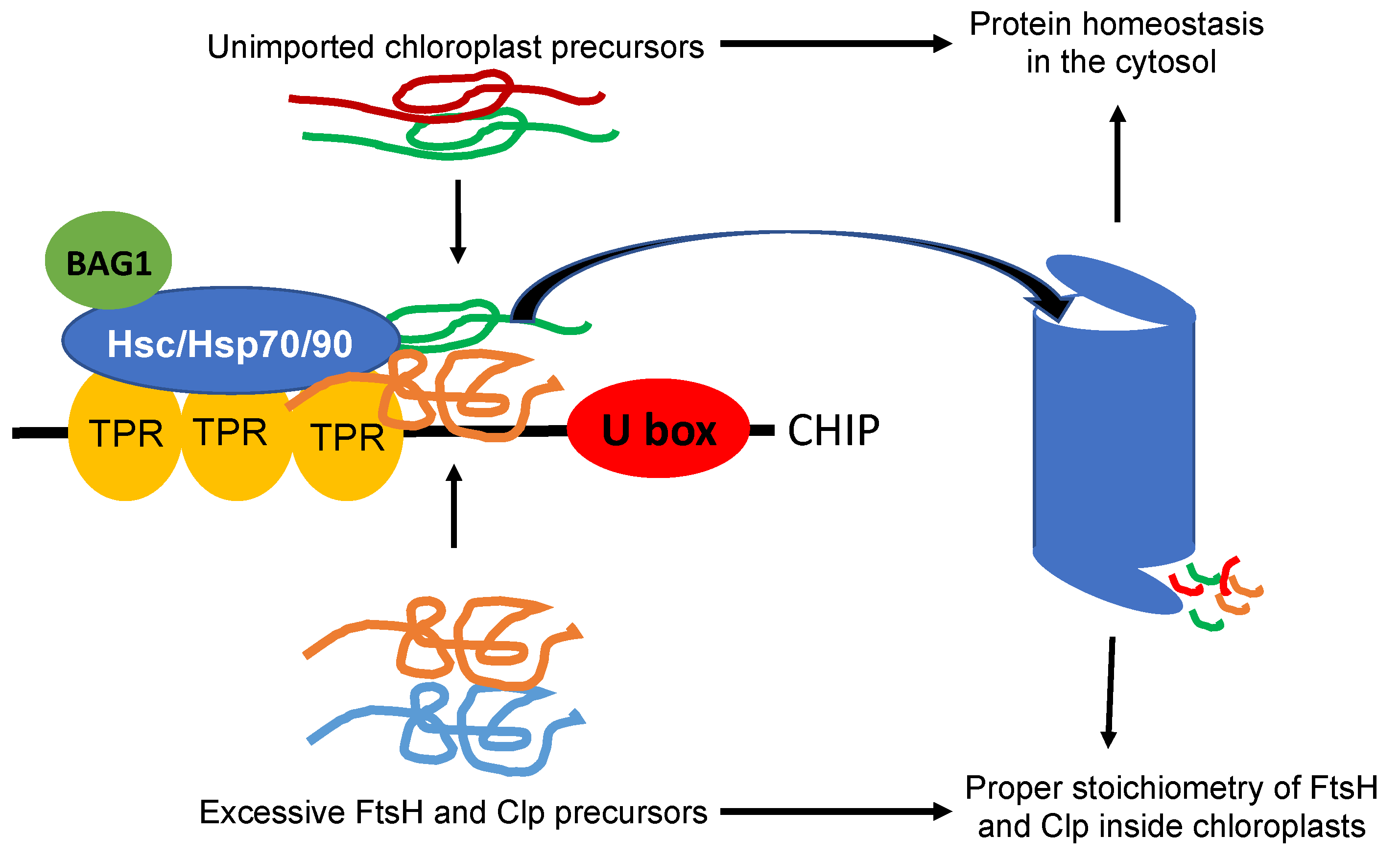
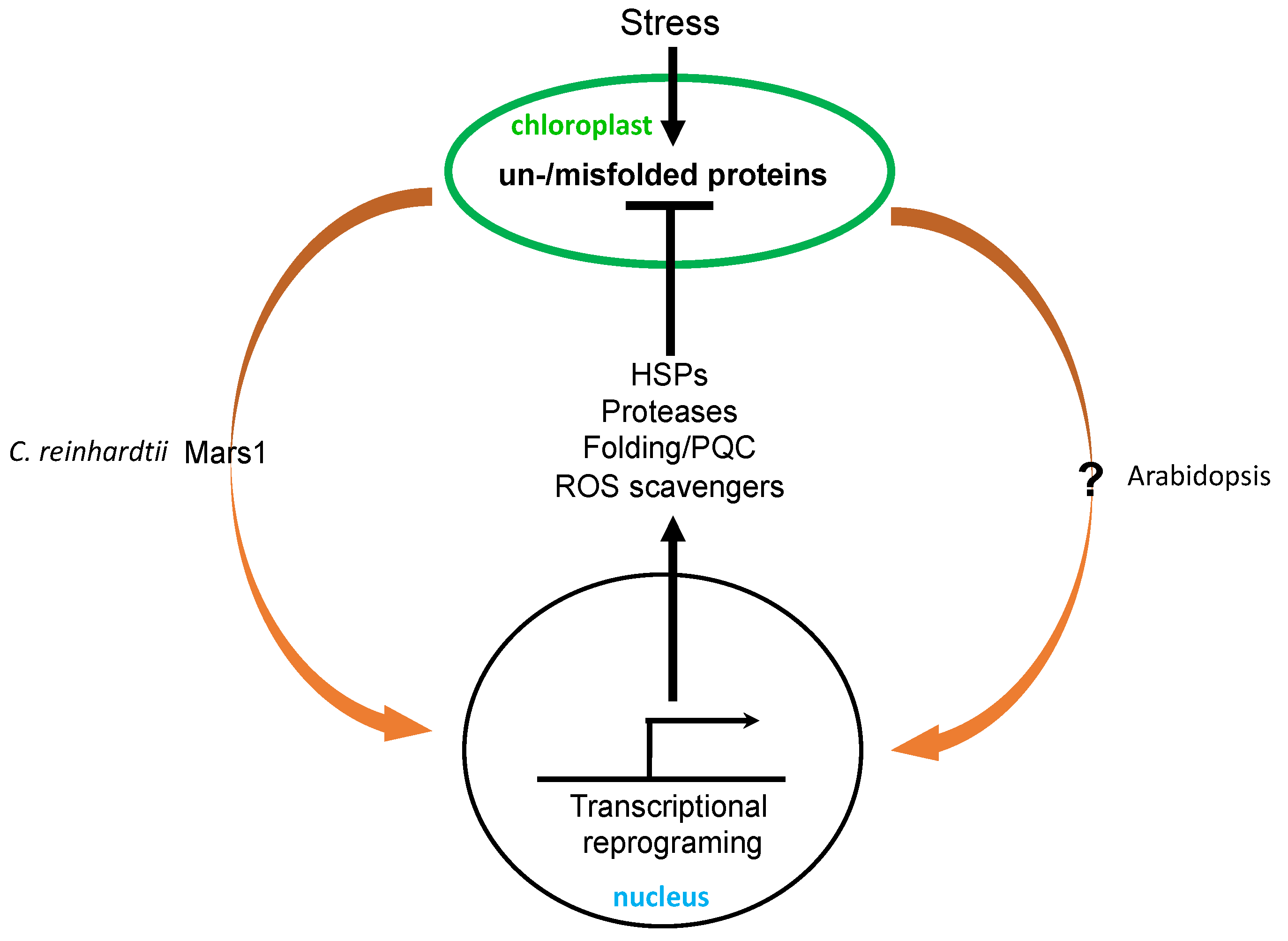
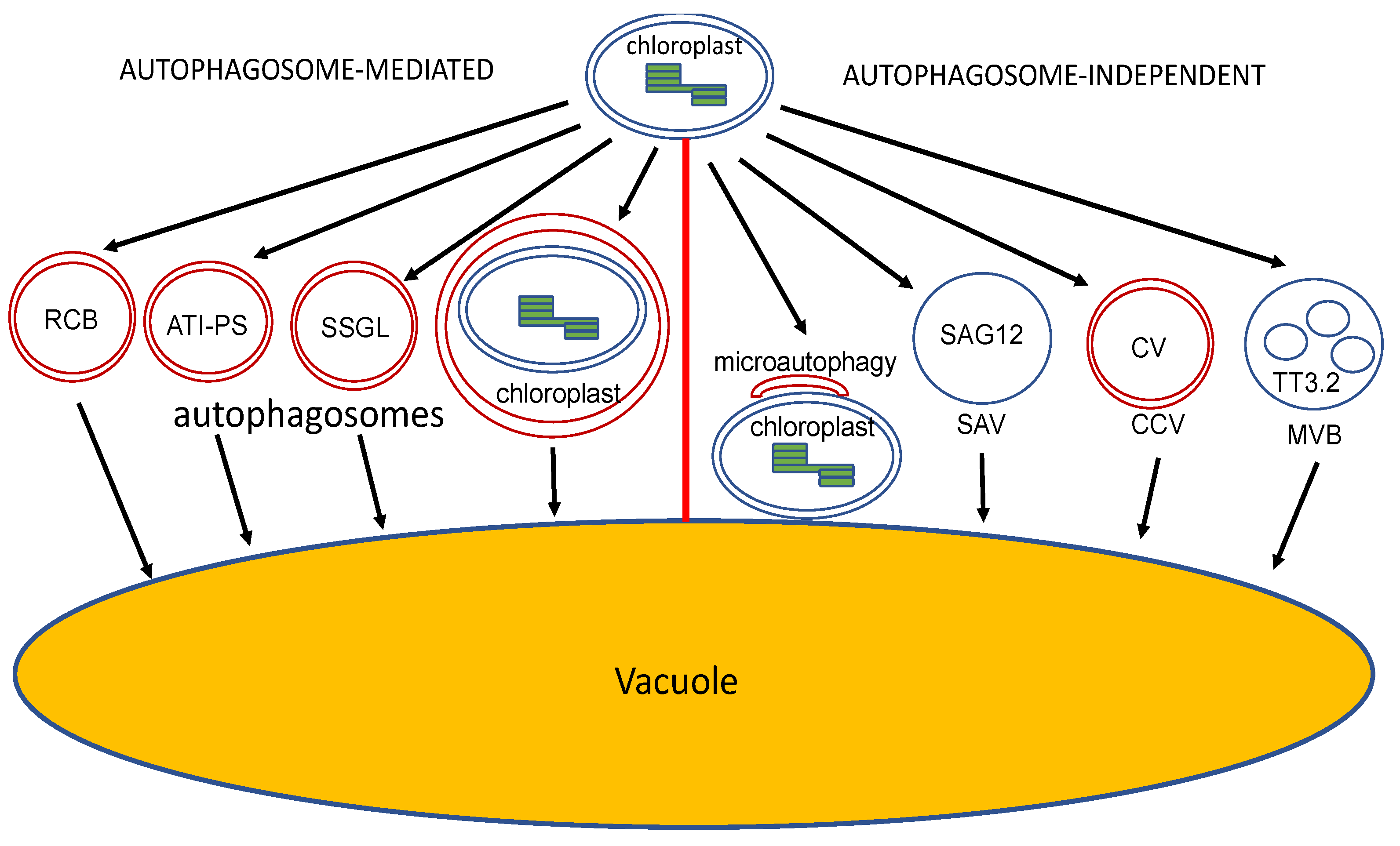
As the organelle of photosynthesis and other important metabolic pathways, chloroplasts contain up to 70% of leaf proteins with uniquely complex processes in synthesis, import, assembly, and turnover. Maintaining functional protein homeostasis in chloroplasts is vitally important for the fitness and survival of plants. Research over the past several decades has revealed a multitude of mechanisms that play important roles in chloroplast protein quality control and turnover under normal and stress conditions. These mechanisms include: (i) endosymbiotically-derived proteases and associated proteins that play a vital role in maintaining protein homeostasis inside the chloroplasts, (ii) the ubiquitin-dependent turnover of unimported chloroplast precursor proteins to prevent their accumulation in the cytosol, (iii) chloroplast-associated degradation of the chloroplast outer-membrane translocon proteins for the regulation of chloroplast protein import, (iv) chloroplast unfolded protein response triggered by accumulated unfolded and misfolded proteins inside the chloroplasts, and (v) vesicle-mediated degradation of chloroplast components in the vacuole. Here, we provide a comprehensive review of these diverse mechanisms of chloroplast protein quality control and turnover and discuss important questions that remain to be addressed in order to better understand and improve important chloroplast functions.
Keywords: chloroplast protein quality control; chloroplast proteases; ubiquitin proteasome system; chloroplast associated protein degradation; chloroplast unfolded protein responses; autophagy; vesicle-mediated protein degradation chloroplast protein quality control; chloroplast proteases; ubiquitin proteasome system; chloroplast associated protein degradation; chloroplast unfolded protein responses; autophagy; vesicle-mediated protein degradation