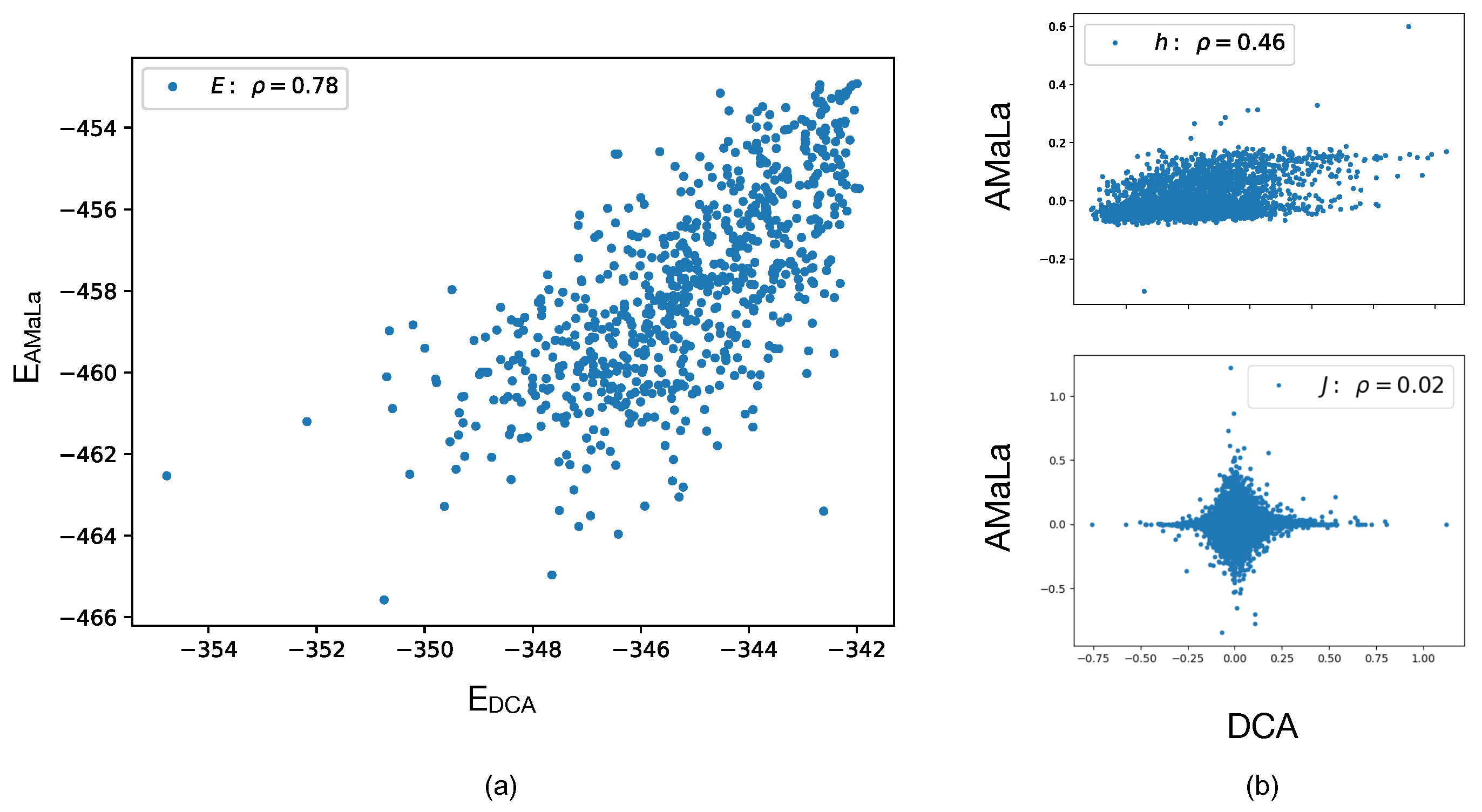
AMaLa: Analysis of Directed Evolution Experiments via Annealed Mutational Approximated Landscape

Abstract
1. Introduction
2. New Approach
3. Results
3.1. Directed Evolution Experiments
3.1.1. Prediction of Mutation Effect on Fitness
3.1.2. Residue Contacts Predictions
3.2. In Silico Directed Evolution Experiments
4. Materials and Methods
4.1. Experimental Pipeline
4.2. Model Learning
4.3. Contacts Prediction
4.4. Experiment Simulation
5. Conclusions
Supplementary Materials
Author Contributions
Funding
Data Availability Statement
Acknowledgments
Conflicts of Interest
Abbreviations
| AMaLa | Annealed mutational approximated Landscape |
| DCA | Direct coupling analysis |
| DMS | Deep mutational scanning |
| PCR | Polymerase chain reaction |
| AUC | Area under the curve |
| PPV | Positive predicted value |
References
- Deng, Z.; Huang, W.; Bakkalbasi, E.; Brown, N.G.; Adamski, C.J.; Rice, K.; Muzny, D.; Gibbs, R.A.; Palzkill, T. Deep sequencing of systematic combinatorial libraries reveals β-lactamase sequence constraints at high resolution. J. Mol. Biol. 2012, 424, 150–167. [Google Scholar] [CrossRef] [Scilit] [PubMed]
- Araya, C.L.; Fowler, D.M.; Chen, W.; Muniez, I.; Kelly, J.W.; Fields, S. A fundamental protein property, thermodynamic stability, revealed solely from large-scale measurements of protein function. Proc. Natl. Acad. Sci. USA 2012, 109, 16858–16863. [Google Scholar] [CrossRef] [Scilit] [PubMed]
- McLaughlin, R.N., Jr.; Poelwijk, F.J.; Raman, A.; Gosal, W.S.; Ranganathan, R. The spatial architecture of protein function and adaptation. Nature 2012, 491, 138–142. [Google Scholar] [CrossRef] [Scilit] [PubMed]
- Jacquier, H.; Birgy, A.; Le Nagard, H.; Mechulam, Y.; Schmitt, E.; Glodt, J.; Bercot, B.; Petit, E.; Poulain, J.; Barnaud, G.; et al. Capturing the mutational landscape of the beta-lactamase TEM-1. Proc. Natl. Acad. Sci. USA 2013, 110, 13067–13072. [Google Scholar] [CrossRef] [Scilit] [PubMed]
- Starita, L.M.; Pruneda, J.N.; Lo, R.S.; Fowler, D.M.; Kim, H.J.; Hiatt, J.B.; Shendure, J.; Brzovic, P.S.; Fields, S.; Klevit, R.E. Activity-enhancing mutations in an E3 ubiquitin ligase identified by high-throughput mutagenesis. Proc. Natl. Acad. Sci. USA 2013, 110, E1263–E1272. [Google Scholar] [CrossRef] [Scilit] [PubMed]
- Melamed, D.; Young, D.L.; Gamble, C.E.; Miller, C.R.; Fields, S. Deep mutational scanning of an RRM domain of the Saccharomyces cerevisiae poly(A)-binding protein. RNA 2013, 19, 1537–1551. [Google Scholar] [CrossRef] [Scilit] [PubMed]
- Firnberg, E.; Labonte, J.W.; Gray, J.J.; Ostermeier, M. A comprehensive, high-resolution map of a gene’s fitness landscape. Mol. Biol. Evol. 2014, 31, 1581–1592. [Google Scholar] [CrossRef] [Scilit] [PubMed]
- Fowler, D.M.; Fields, S. Deep mutational scanning: A new style of protein science. Nat. Methods 2014, 11, 801–807. [Google Scholar] [CrossRef] [Scilit] [PubMed]
- Melnikov, A.; Rogov, P.; Wang, L.; Gnirke, A.; Mikkelsen, T.S. Comprehensive mutational scanning of a kinase in vivo reveals substrate-dependent fitness landscapes. Nucleic Acids Res. 2014, 42, e112. [Google Scholar] [CrossRef] [Scilit] [PubMed]
- Olson, C.A.; Wu, N.C.; Sun, R. A comprehensive biophysical description of pairwise epistasis throughout an entire protein domain. Curr. Biol. 2014, 24, 2643–2651. [Google Scholar] [CrossRef] [Scilit] [PubMed]
- Roscoe, B.P.; Bolon, D.N. Systematic Exploration of Ubiquitin Sequence, E1 Activation Efficiency, and Experimental Fitness in Yeast. J. Mol. Biol. 2014, 426, 2854–2870. [Google Scholar] [CrossRef] [Scilit] [PubMed]
- Starita, L.M.; Young, D.L.; Islam, M.; Kitzman, J.O.; Gullingsrud, J.; Hause, R.J.; Fowler, D.M.; Parvin, J.D.; Shendure, J.; Fields, S. Massively parallel functional analysis of BRCA1 RING domain variants. Genetics 2015, 200, 413–422. [Google Scholar] [CrossRef] [Scilit] [PubMed]
- Aakre, C.D.; Herrou, J.; Phung, T.N.; Perchuk, B.S.; Crosson, S.; Laub, M.T. Evolving new protein-protein interaction specificity through promiscuous intermediates. Cell 2015, 163, 594–606. [Google Scholar] [CrossRef] [Scilit] [PubMed]
- Kitzman, J.O.; Starita, L.M.; Lo, R.S.; Fields, S.; Shendure, J. Massively parallel single-amino-acid mutagenesis. Nat. Methods 2015, 12, 203–206. [Google Scholar] [CrossRef] [Scilit] [PubMed]
- Romero, P.A.; Tran, T.M.; Abate, A.R. Dissecting enzyme function with microfluidic-based deep mutational scanning. Proc. Natl. Acad. Sci. USA 2015, 112, 7159–7164. [Google Scholar] [CrossRef] [Scilit] [PubMed]
- Stiffler, M.A.; Hekstra, D.R.; Ranganathan, R. Evolvability as a function of purifying selection in TEM-1 β-lactamase. Cell 2015, 160, 882–892. [Google Scholar] [CrossRef] [Scilit] [PubMed]
- Wu, N.C.; Dai, L.; Olson, C.A.; Lloyd-Smith, J.O.; Sun, R. Adaptation in protein fitness landscapes is facilitated by indirect paths. Elife 2016, 5, e16965. [Google Scholar] [CrossRef] [Scilit] [PubMed]
- Julien, P.; Miñana, B.; Baeza-Centurion, P.; Valcárcel, J.; Lehner, B. The complete local genotype–phenotype landscape for the alternative splicing of a human exon. Nat. Commun. 2016, 7, 1–8. [Google Scholar] [CrossRef] [Scilit] [PubMed]
- Li, C.; Qian, W.; Maclean, C.J.; Zhang, J. The fitness landscape of a tRNA gene. Science 2016, 352, 837–840. [Google Scholar] [CrossRef] [Scilit] [PubMed]
- Mavor, D.; Barlow, K.; Thompson, S.; Barad, B.A.; Bonny, A.R.; Cario, C.L.; Gaskins, G.; Liu, Z.; Deming, L.; Axen, S.D.; et al. Determination of ubiquitin fitness landscapes under different chemical stresses in a classroom setting. Elife 2016, 5, e15802. [Google Scholar] [CrossRef] [Scilit] [PubMed]
- Doud, M.B.; Bloom, J.D. Accurate measurement of the effects of all amino-acid mutations on influenza hemagglutinin. Viruses 2016, 8, 155. [Google Scholar] [CrossRef] [Scilit] [PubMed]
- Gasperini, M.; Starita, L.; Shendure, J. The power of multiplexed functional analysis of genetic variants. Nat. Protoc. 2016, 11, 1782–1787. [Google Scholar] [CrossRef] [Scilit]
- Boyer, S.; Biswas, D.; Kumar Soshee, A.; Scaramozzino, N.; Nizak, C.; Rivoire, O. Hierarchy and extremes in selections from pools of randomized proteins. Proc. Natl. Acad. Sci. USA 2016, 113, 3482–3487. [Google Scholar] [CrossRef] [Scilit] [PubMed]
- Sarkisyan, K.S.; Bolotin, D.A.; Meer, M.V.; Usmanova, D.R.; Mishin, A.S.; Sharonov, G.V.; Ivankov, D.N.; Bozhanova, N.G.; Baranov, M.S.; Soylemez, O.; et al. Local fitness landscape of the green fluorescent protein. Nature 2016, 533, 397–401. [Google Scholar] [CrossRef] [Scilit] [PubMed]
- Starr, T.N.; Picton, L.K.; Thornton, J.W. Alternative evolutionary histories in the sequence space of an ancient protein. Nature 2017, 549, 409–413. [Google Scholar] [CrossRef] [Scilit] [PubMed]
- Fantini, M.; Lisi, S.; De Los Rios, P.; Cattaneo, A.; Pastore, A. Protein Structural Information and Evolutionary Landscape by In Vitro Evolution. Mol. Biol. Evol. 2019, 37, 1179–1192. [Google Scholar] [CrossRef] [Scilit] [PubMed]
- Rollins, N.J.; Brock, K.P.; Poelwijk, F.J.; Stiffler, M.A.; Gauthier, N.P.; Sander, C.; Marks, D.S. Inferring protein 3D structure from deep mutation scans. Nat. Genet. 2019, 51, 1170. [Google Scholar] [CrossRef] [Scilit] [PubMed]
- Packer, M.S.; Liu, D.R. Methods for the directed evolution of proteins. Nat. Rev. Genet. 2015, 16, 379–394. [Google Scholar] [CrossRef] [Scilit] [PubMed]
- Stiffler, M.A.; Poelwijk, F.J.; Brock, K.P.; Stein, R.R.; Riesselman, A.; Teyra, J.; Sidhu, S.S.; Marks, D.S.; Gauthier, N.P.; Sander, C. Protein structure from experimental evolution. Cell Syst. 2020, 10, 15–24. [Google Scholar] [CrossRef] [Scilit] [PubMed]
- Weigt, M.; White, R.A.; Szurmant, H.; Hoch, J.A.; Hwa, T. Identification of direct residue contacts in protein–protein interaction by message passing. Proc. Natl. Acad. Sci. USA 2009, 106, 67–72. [Google Scholar] [CrossRef] [Scilit] [PubMed]
- Morcos, F.; Pagnani, A.; Lunt, B.; Bertolino, A.; Marks, D.S.; Sander, C.; Zecchina, R.; Onuchic, J.N.; Hwa, T.; Weigt, M. Direct-coupling analysis of residue coevolution captures native contacts across many protein families. Proc. Natl. Acad. Sci. USA 2011, 108, E1293–E1301. [Google Scholar] [CrossRef] [Scilit]
- Figliuzzi, M.; Jacquier, H.; Schug, A.; Tenaillon, O.; Weigt, M. Coevolutionary landscape inference and the context-dependence of mutations in beta-lactamase TEM-1. Mol. Biol. Evol. 2016, 33, 268–280. [Google Scholar] [CrossRef] [Scilit]
- Bloom, J.D.; Labthavikul, S.T.; Otey, C.R.; Arnold, F.H. Protein stability promotes evolvability. Proc. Natl. Acad. Sci. USA 2006, 103, 5869–5874. [Google Scholar] [CrossRef] [Scilit] [PubMed]
- Rivoire, O. Parsimonious evolutionary scenario for the origin of allostery and coevolution patterns in proteins. Phys. Rev. E 2019, 100, 032411. [Google Scholar] [CrossRef] [Scilit] [PubMed]
- Zheng, J.; Guo, N.; Wagner, A. Selection enhances protein evolvability by increasing mutational robustness and foldability. Science 2020, 370. [Google Scholar] [CrossRef] [Scilit]
- Romero, P.A.; Arnold, F.H. Exploring protein fitness landscapes by directed evolution. Nat. Rev. Mol. Cell Biol. 2009, 10, 866. [Google Scholar] [CrossRef] [Scilit]
- Yang, K.K.; Wu, Z.; Arnold, F.H. Machine-learning-guided directed evolution for protein engineering. Nat. Methods 2019, 16, 687–694. [Google Scholar] [CrossRef] [Scilit]
- Figliuzzi, M.; Barrat-Charlaix, P.; Weigt, M. How pairwise coevolutionary models capture the collective residue variability in proteins? Mol. Biol. Evol. 2018, 35, 1018–1027. [Google Scholar] [CrossRef] [Scilit]
- Hopf, T.A.; Ingraham, J.B.; Poelwijk, F.J.; Schärfe, C.P.; Springer, M.; Sander, C.; Marks, D.S. Mutation effects predicted from sequence co-variation. Nat. Biotechnol. 2017, 35, 128–135. [Google Scholar] [CrossRef] [Scilit]
- Miton, C.M.; Tokuriki, N. How mutational epistasis impairs predictability in protein evolution and design. Protein Sci. 2016, 25, 1260–1272. [Google Scholar] [CrossRef] [Scilit] [PubMed]
- Starr, T.N.; Thornton, J.W. Epistasis in protein evolution. Protein Sci. 2016, 25, 1204–1218. [Google Scholar] [CrossRef] [Scilit] [PubMed]
- Cadet, F.; Fontaine, N.; Li, G.; Sanchis, J.; Chong, M.N.F.; Pandjaitan, R.; Vetrivel, I.; Offmann, B.; Reetz, M.T. A machine learning approach for reliable prediction of amino acid interactions and its application in the directed evolution of enantioselective enzymes. Sci. Rep. 2018, 8, 1–15. [Google Scholar] [CrossRef] [Scilit] [PubMed]
- Kemble, H.; Nghe, P.; Tenaillon, O. Recent insights into the genotype–phenotype relationship from massively parallel genetic assays. Evol. Appl. 2019, 12, 1721–1742. [Google Scholar] [CrossRef] [Scilit] [PubMed]
- Kinney, J.B.; McCandlish, D.M. Massively parallel assays and quantitative sequence–function relationships. Annu. Rev. Genom. Hum. Genet. 2019, 20, 99–127. [Google Scholar] [CrossRef] [Scilit]
- Sun, Z.; Liu, Q.; Qu, G.; Feng, Y.; Reetz, M.T. Utility of B-factors in protein science: Interpreting rigidity, flexibility, and internal motion and engineering thermostability. Chem. Rev. 2019, 119, 1626–1665. [Google Scholar] [CrossRef] [Scilit] [PubMed]
- Bisardi, M.; Rodriguez-Rivas, J.; Zamponi, F.; Weigt, M. Modeling sequence-space exploration and emergence of epistatic signals in protein evolution. arXiv 2021, arXiv:2106.02441. [Google Scholar]
- Rubin, A.F.; Gelman, H.; Lucas, N.; Bajjalieh, S.M.; Papenfuss, A.T.; Speed, T.P.; Fowler, D.M. A statistical framework for analyzing deep mutational scanning data. Genome Biol. 2017, 18, 150. [Google Scholar] [CrossRef] [Scilit]
- Otwinowski, J.; McCandlish, D.M.; Plotkin, J.B. Inferring the shape of global epistasis. Proc. Natl. Acad. Sci. USA 2018, 115, E7550–E7558. [Google Scholar] [CrossRef] [Scilit]
- Schmiedel, J.M.; Lehner, B. Determining protein structures using deep mutagenesis. Nat. Genet. 2019, 57, 1177–1186. [Google Scholar] [CrossRef] [Scilit]
- Wu, Z.; Kan, S.J.; Lewis, R.D.; Wittmann, B.J.; Arnold, F.H. Machine learning-assisted directed protein evolution with combinatorial libraries. Proc. Natl. Acad. Sci. USA 2019, 116, 8852–8858. [Google Scholar] [CrossRef] [Scilit]
- Frisby, T.S.; Langmead, C.J. Bayesian optimization with evolutionary and structure-based regularization for directed protein evolution. Algorithms Mol. Biol. 2021, 16, 1–15. [Google Scholar] [CrossRef] [Scilit] [PubMed]
- Otwinowski, J. Biophysical Inference of Epistasis and the Effects of Mutations on Protein Stability and Function. Mol. Biol. Evol. 2018, 35, 2345–2354. [Google Scholar] [CrossRef] [Scilit] [PubMed]
- Fernandez-de Cossio-Diaz, J.; Uguzzoni, G.; Pagnani, A. Unsupervised Inference of Protein Fitness Landscape from Deep Mutational Scan. Mol. Biol. Evol. 2020, 38, 318–328. [Google Scholar] [CrossRef] [Scilit] [PubMed]
- Cocco, S.; Feinauer, C.; Figliuzzi, M.; Monasson, R.; Weigt, M. Inverse statistical physics of protein sequences: A key issues review. Rep. Prog. Phys. 2018, 81, 032601. [Google Scholar] [CrossRef] [Scilit] [PubMed]
- Jukes, T.H.; Cantor, C.R. Evolution of protein molecules. Mamm. Protein Metab. 1969, 3, 21–132. [Google Scholar]
- Ekeberg, M.; Lövkvist, C.; Lan, Y.; Weigt, M.; Aurell, E. Improved contact prediction in proteins: Using pseudolikelihoods to infer Potts models. Phys. Rev. E 2013, 87, 012707. [Google Scholar] [CrossRef] [Scilit] [PubMed]
- Ekeberg, M.; Hartonen, T.; Aurell, E. Fast pseudolikelihood maximization for direct-coupling analysis of protein structure from many homologous amino-acid sequences. J. Comput. Phys. 2014, 276, 341–356. [Google Scholar] [CrossRef] [Scilit]
- Amrein, B.A.; Runthala, A.; Kamerlin, S.C.L. In silico-directed evolution using CADEE. In Computational Methods in Protein Evolution; Springer: Berlin/Heidelberg, Germany, 2019; pp. 381–415. [Google Scholar]
- Usman, S.; Chua, J.; Ardhanari-Shanmugam, K. Pseudomonas balearica DSM 6083T promoters can potentially originate from random sequences. MOJ Proteom. Bioinform. 2019, 8, 66–70. [Google Scholar]
- Dunn, S.D.; Wahl, L.M.; Gloor, G.B. Mutual information without the influence of phylogeny or entropy dramatically improves residue contact prediction. Bioinformatics 2008, 24, 333–340. [Google Scholar] [CrossRef] [Scilit]
- Fowler, D.M.; Araya, C.L.; Fleishman, S.J.; Kellogg, E.H.; Stephany, J.J.; Baker, D.; Fields, S. High-resolution mapping of protein sequence-function relationships. Nat. Methods 2010, 7, 741. [Google Scholar] [CrossRef] [Scilit]
- Sohail, M.S.; Louie, R.H.; McKay, M.R.; Barton, J.P. MPL resolves genetic linkage in fitness inference from complex evolutionary histories. Nat. Biotechnol. 2021, 39, 472–479. [Google Scholar] [CrossRef] [Scilit] [PubMed]
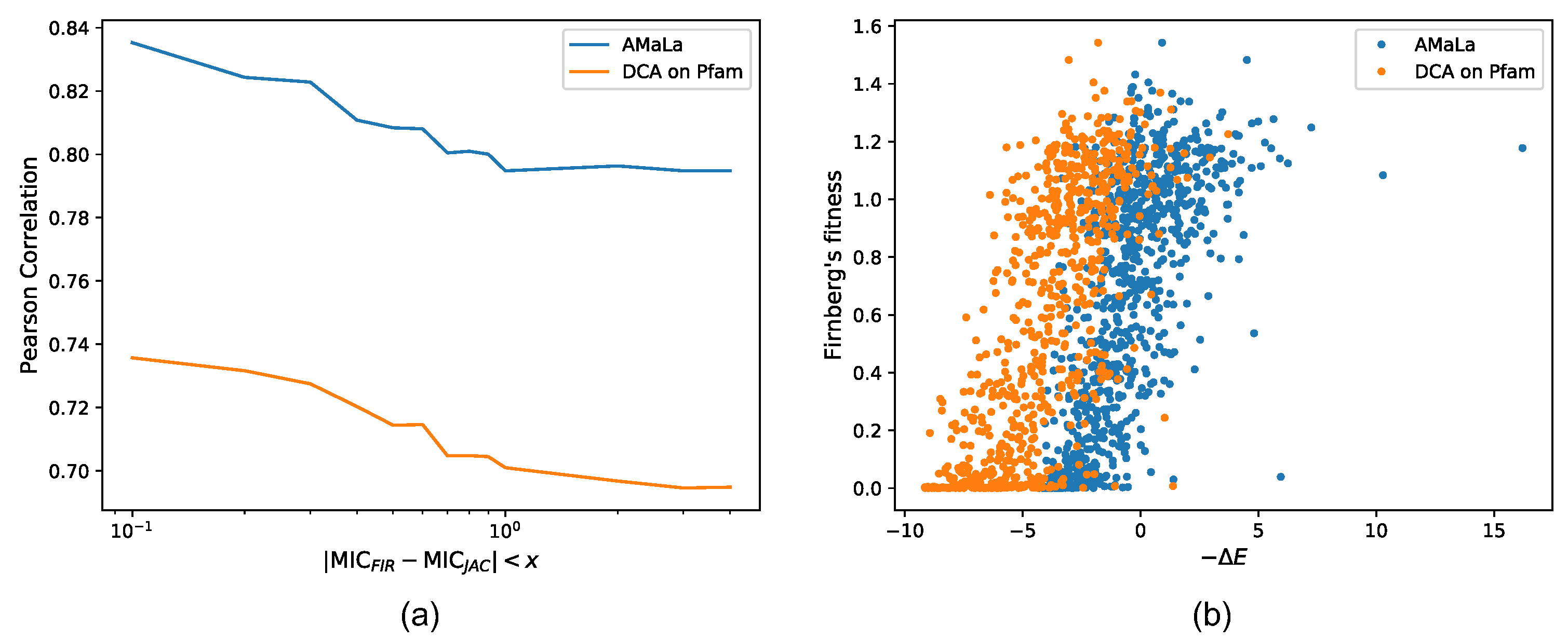

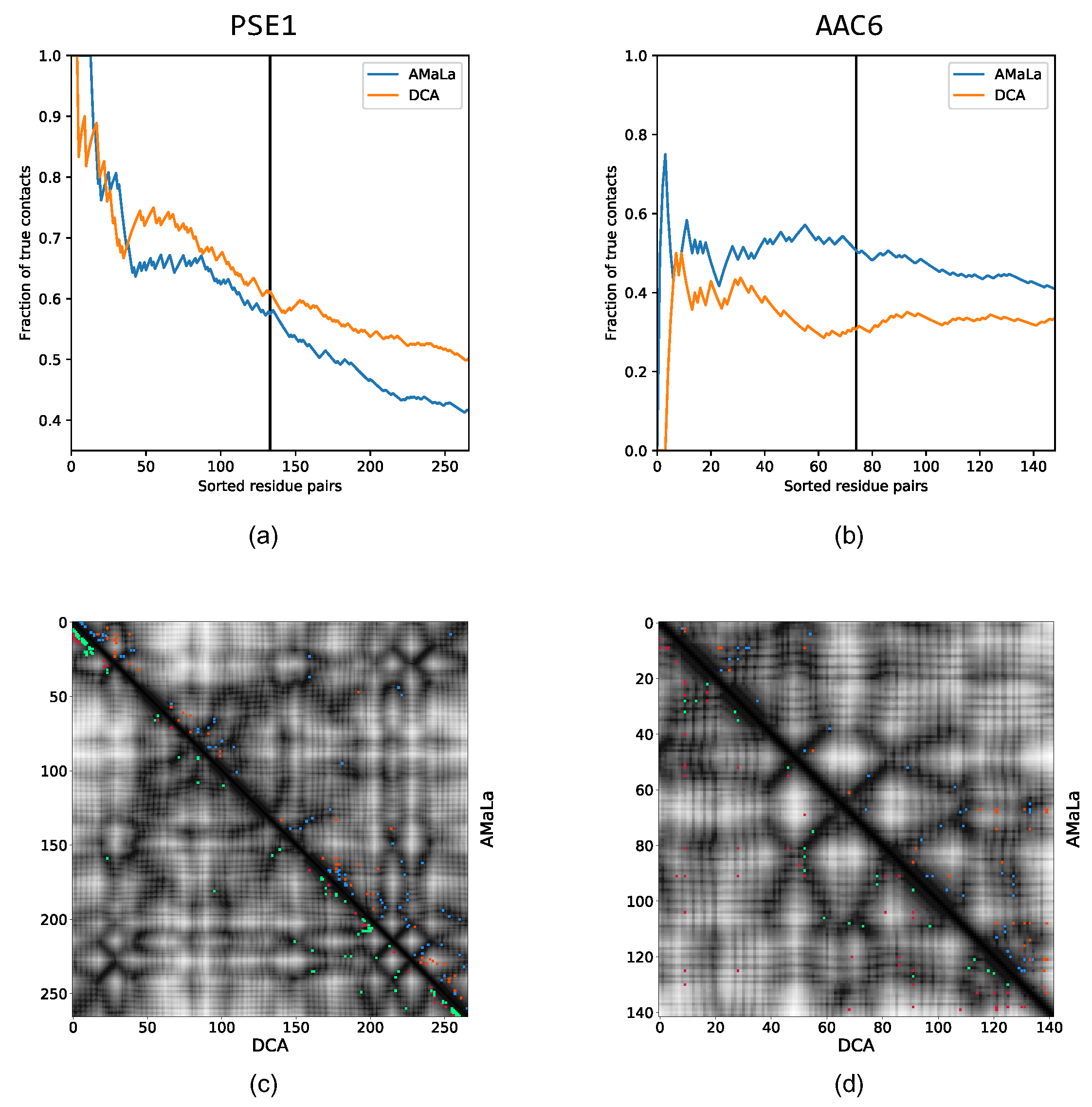
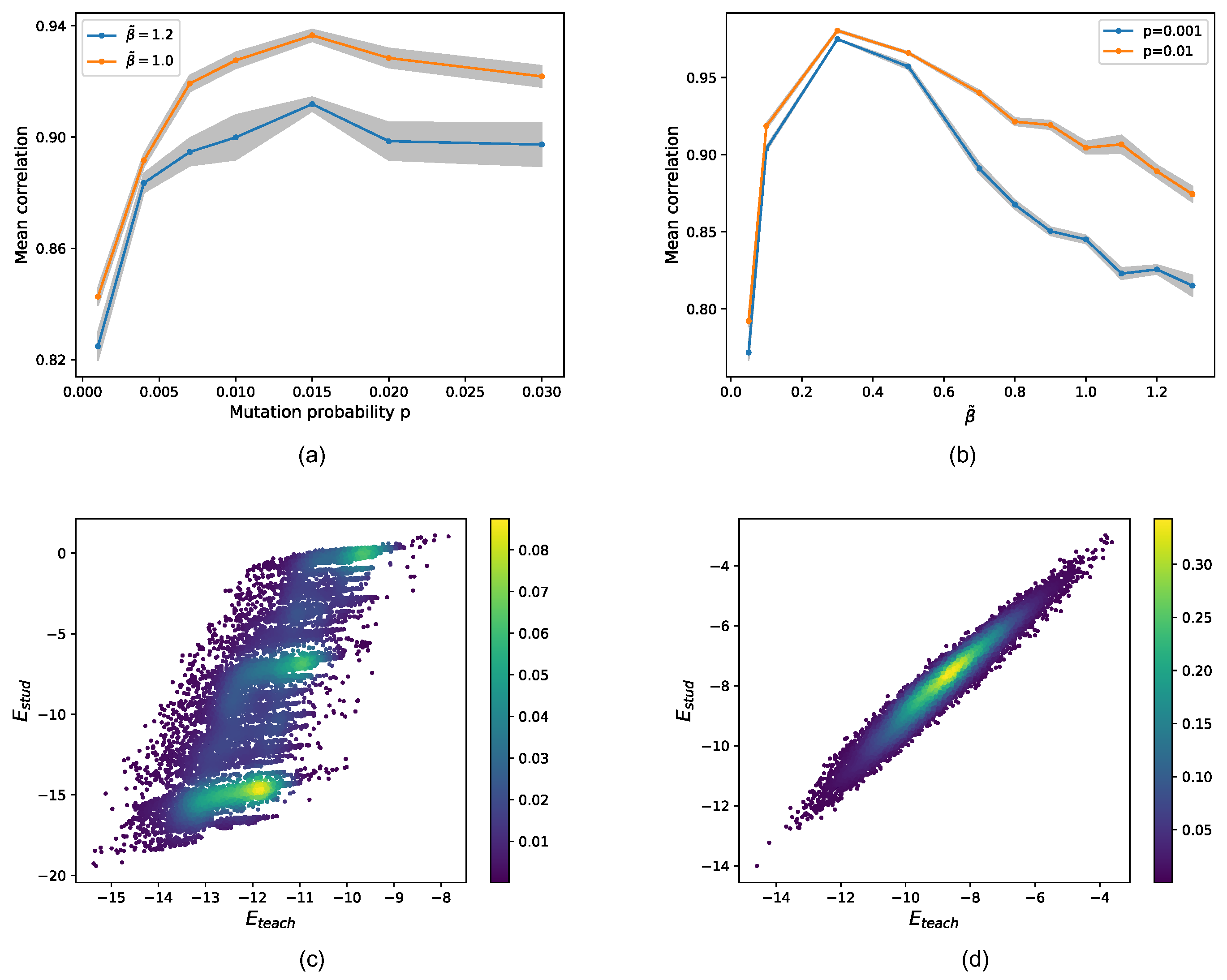
Publisher’s Note: MDPI stays neutral with regard to jurisdictional claims in published maps and institutional affiliations. |
© 2021 by the authors. Licensee MDPI, Basel, Switzerland. This article is an open access article distributed under the terms and conditions of the Creative Commons Attribution (CC BY) license (https://creativecommons.org/licenses/by/4.0/).
Share and Cite
Sesta, L.; Uguzzoni, G.; Fernandez-de-Cossio-Diaz, J.; Pagnani, A. AMaLa: Analysis of Directed Evolution Experiments via Annealed Mutational Approximated Landscape. Int. J. Mol. Sci. 2021, 22, 10908. https://doi.org/10.3390/ijms222010908
Sesta L, Uguzzoni G, Fernandez-de-Cossio-Diaz J, Pagnani A. AMaLa: Analysis of Directed Evolution Experiments via Annealed Mutational Approximated Landscape. International Journal of Molecular Sciences. 2021; 22(20):10908. https://doi.org/10.3390/ijms222010908
Chicago/Turabian StyleSesta, Luca, Guido Uguzzoni, Jorge Fernandez-de-Cossio-Diaz, and Andrea Pagnani. 2021. "AMaLa: Analysis of Directed Evolution Experiments via Annealed Mutational Approximated Landscape" International Journal of Molecular Sciences 22, no. 20: 10908. https://doi.org/10.3390/ijms222010908
APA StyleSesta, L., Uguzzoni, G., Fernandez-de-Cossio-Diaz, J., & Pagnani, A. (2021). AMaLa: Analysis of Directed Evolution Experiments via Annealed Mutational Approximated Landscape. International Journal of Molecular Sciences, 22(20), 10908. https://doi.org/10.3390/ijms222010908