


Stress and the Role of the Gut–Brain Axis in the Pathogenesis of Schizophrenia: A Literature Review

Abstract
1. Introduction
2. Schizophrenia
3. Stress
4. Gut–Brain Axis
5. Stress and Gut Microbiome
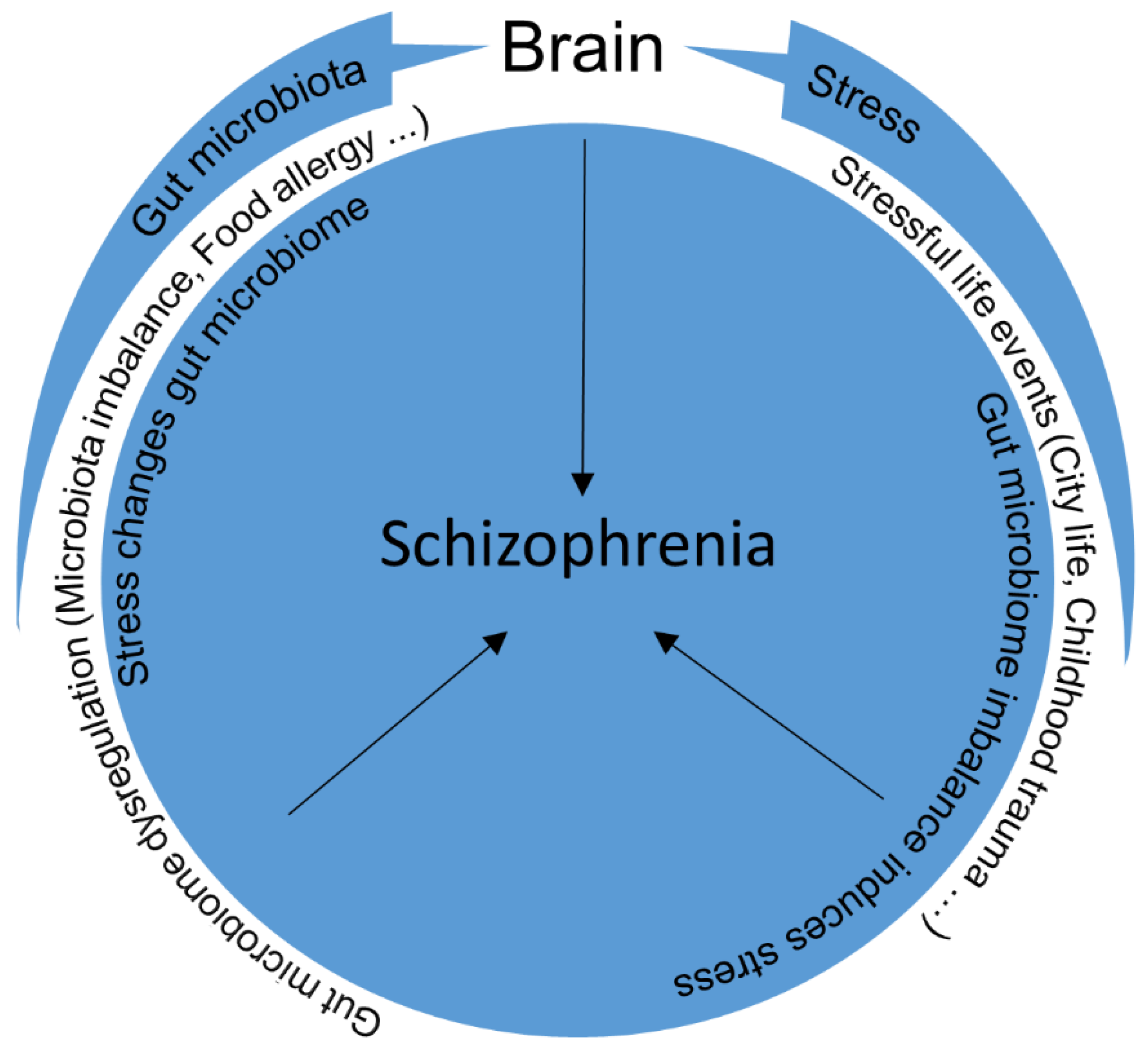
6. Stress, the Gut, and Schizophrenia
7. Conclusions
Funding
Acknowledgments
Conflicts of Interest
References
- Roser, H.R.A.M. Mental Health. Available online: https://ourworldindata.org/mental-health (accessed on 5 July 2021).
- Mervi, L.S.; Pitkanen, T.S.; Kopelman, M.D. Neuropsychiatric disorders. In Oxford Textbook of Medicine, 5th ed.; David, A., Warrell, T.M.C., John, D., Eds.; Oxford University Press: Oxford, UK, 2010. [Google Scholar]
- Vafadari, B.; Mitra, S.; Stefaniuk, M.; Kaczmarek, L. Psychosocial Stress Induces Schizophrenia-Like Behavior in Mice with Reduced MMP-9 Activity. Front. Behav. Neurosci. 2019, 13, 195. [Google Scholar] [CrossRef] [Scilit] [PubMed]
- Vafadari, B.; Salamian, A.; Kaczmarek, L. MMP-9 in translation: From molecule to brain physiology, pathology, and therapy. J. Neurochem. 2016, 139 (Suppl. 2), 91–114. [Google Scholar] [CrossRef] [Scilit]
- Dinan, T.G.; Cryan, J.F. Brain-Gut-Microbiota Axis and Mental Health. Psychosom. Med. 2017, 79, 920–926. [Google Scholar] [CrossRef] [Scilit]
- Nguyen, T.T.; Kosciolek, T.; Eyler, L.T.; Knight, R.; Jeste, D.V. Overview and systematic review of studies of microbiome in schizophrenia and bipolar disorder. J. Psychiatr. Res. 2018, 99, 50–61. [Google Scholar] [CrossRef] [Scilit] [PubMed]
- Konturek, P.C.; Brzozowski, T.; Konturek, S.J. Stress and the gut: Pathophysiology, clinical consequences, diagnostic approach and treatment options. J. Physiol. Pharm. 2011, 62, 591–599. [Google Scholar]
- Haddad, L.; Schafer, A.; Streit, F.; Lederbogen, F.; Grimm, O.; Wust, S.; Deuschle, M.; Kirsch, P.; Tost, H.; Meyer-Lindenberg, A. Brain structure correlates of urban upbringing, an environmental risk factor for schizophrenia. Schizophr. Bull. 2015, 41, 115–122. [Google Scholar] [CrossRef] [Scilit]
- Kelly, B.D.; O’Callaghan, E.; Waddington, J.L.; Feeney, L.; Browne, S.; Scully, P.J.; Clarke, M.; Quinn, J.F.; McTigue, O.; Morgan, M.G.; et al. Schizophrenia and the city: A review of literature and prospective study of psychosis and urbanicity in Ireland. Schizophr. Res. 2010, 116, 75–89. [Google Scholar] [CrossRef] [Scilit]
- Lederbogen, F.; Haddad, L.; Meyer-Lindenberg, A. Urban social stress--risk factor for mental disorders. The case of schizophrenia. Env. Pollut. 2013, 183, 2–6. [Google Scholar] [CrossRef] [Scilit] [PubMed]
- Van Os, J.; Kenis, G.; Rutten, B.P. The environment and schizophrenia. Nature 2010, 468, 203–212. [Google Scholar] [CrossRef] [Scilit] [PubMed]
- Foster, J.A.; Rinaman, L.; Cryan, J.F. Stress & the gut-brain axis: Regulation by the microbiome. Neurobiol. Stress 2017, 7, 124–136. [Google Scholar] [CrossRef] [Scilit] [PubMed]
- Disease, G.B.D.; Injury, I.; Prevalence, C. Global, regional, and national incidence, prevalence, and years lived with disability for 354 diseases and injuries for 195 countries and territories, 1990–2017: A systematic analysis for the Global Burden of Disease Study 2017. Lancet 2018, 392, 1789–1858. [Google Scholar] [CrossRef] [Scilit]
- Haddad, F.L.; Patel, S.V.; Schmid, S. Maternal Immune Activation by Poly I:C as a preclinical Model for Neurodevelopmental Disorders: A focus on Autism and Schizophrenia. Neurosci. Biobehav. Rev. 2020, 113, 546–567. [Google Scholar] [CrossRef] [Scilit]
- Genedi, M.; Janmaat, I.E.; Haarman, B.; Sommer, I.E.C. Dysregulation of the gut-brain axis in schizophrenia and bipolar disorder: Probiotic supplementation as a supportive treatment in psychiatric disorders. Curr. Opin. Psychiatry 2019, 32, 185–195. [Google Scholar] [CrossRef] [Scilit]
- Health, Topics. Schizophrenia. Available online: https://www.nimh.nih.gov/health/topics/schizophrenia/ (accessed on 5 July 2021).
- Akdeniz, C.; Tost, H.; Streit, F.; Haddad, L.; Wust, S.; Schafer, A.; Schneider, M.; Rietschel, M.; Kirsch, P.; Meyer-Lindenberg, A. Neuroimaging evidence for a role of neural social stress processing in ethnic minority-associated environmental risk. JAMA Psychiatry 2014, 71, 672–680. [Google Scholar] [CrossRef] [Scilit]
- Meyer-Lindenberg, A.; Tost, H. Neural mechanisms of social risk for psychiatric disorders. Nat. Neurosci. 2012, 15, 663–668. [Google Scholar] [CrossRef] [Scilit]
- Flores, G.; Morales-Medina, J.C.; Diaz, A. Neuronal and brain morphological changes in animal models of schizophrenia. Behav. Brain Res. 2016, 301, 190–203. [Google Scholar] [CrossRef] [Scilit]
- Lewis, D.A.; Lieberman, J.A. Catching up on schizophrenia: Natural history and neurobiology. Neuron 2000, 28, 325–334. [Google Scholar] [CrossRef] [Scilit]
- Schmitt, A.; Bertsch, T.; Tost, H.; Bergmann, A.; Henning, U.; Klimke, A.; Falkai, P. Increased serum interleukin-1beta and interleukin-6 in elderly, chronic schizophrenic patients on stable antipsychotic medication. Neuropsychiatr. Dis. Treat 2005, 1, 171–177. [Google Scholar] [CrossRef] [Scilit] [PubMed]
- Owen, M.J.; Craddock, N.; O’Donovan, M.C. Schizophrenia: Genes at last? Trends Genet. 2005, 21, 518–525. [Google Scholar] [CrossRef] [Scilit]
- Foussias, G.; Remington, G. Negative symptoms in schizophrenia: Avolition and Occam’s razor. Schizophr. Bull. 2010, 36, 359–369. [Google Scholar] [CrossRef] [Scilit]
- Elvevag, B.; Goldberg, T.E. Cognitive impairment in schizophrenia is the core of the disorder. Crit. Rev. Neurobiol. 2000, 14, 1–21. [Google Scholar] [CrossRef] [Scilit] [PubMed]
- Joyce, E.M.; Roiser, J.P. Cognitive heterogeneity in schizophrenia. Curr. Opin. Psychiatry 2007, 20, 268–272. [Google Scholar] [CrossRef] [Scilit] [PubMed]
- Lewis, D.A.; Gonzalez-Burgos, G. Neuroplasticity of neocortical circuits in schizophrenia. Neuropsychopharmacology 2008, 33, 141–165. [Google Scholar] [CrossRef] [Scilit] [PubMed]
- Rodrigues-Amorim, D.; Rivera-Baltanas, T.; Lopez, M.; Spuch, C.; Olivares, J.M.; Agis-Balboa, R.C. Schizophrenia: A review of potential biomarkers. J. Psychiatr. Res. 2017, 93, 37–49. [Google Scholar] [CrossRef] [Scilit]
- Lodge, D.J.; Grace, A.A. Developmental pathology, dopamine, stress and schizophrenia. Int. J. Dev. Neurosci. 2011, 29, 207–213. [Google Scholar] [CrossRef] [Scilit] [PubMed]
- Morgan, C.; Fisher, H. Environment and schizophrenia: Environmental factors in schizophrenia: Childhood trauma—A critical review. Schizophr. Bull. 2007, 33, 3–10. [Google Scholar] [CrossRef] [Scilit] [PubMed]
- Corcoran, C.; Walker, E.; Huot, R.; Mittal, V.; Tessner, K.; Kestler, L.; Malaspina, D. The stress cascade and schizophrenia: Etiology and onset. Schizophr. Bull. 2003, 29, 671–692. [Google Scholar] [CrossRef] [Scilit] [PubMed]
- Tienari, P.; Wynne, L.C.; Moring, J.; Lahti, I.; Naarala, M.; Sorri, A.; Wahlberg, K.E.; Saarento, O.; Seitamaa, M.; Kaleva, M.; et al. The Finnish adoptive family study of schizophrenia. Implications for family research. Br. J. Psychiatry Suppl. 1994, 164, 20–26. [Google Scholar] [CrossRef] [Scilit]
- Patrono, E.; Svoboda, J.; Stuchlik, A. Schizophrenia, the gut microbiota, and new opportunities from optogenetic manipulations of the gut-brain axis. Behav. Brain Funct. 2021, 17, 7. [Google Scholar] [CrossRef] [Scilit] [PubMed]
- Ellenbroek, B.A.; Derks, N.; Park, H.J. Early maternal deprivation retards neurodevelopment in Wistar rats. Stress 2005, 8, 247–257. [Google Scholar] [CrossRef] [Scilit]
- Palmer, A.A.; Printz, D.J.; Butler, P.D.; Dulawa, S.C.; Printz, M.P. Prenatal protein deprivation in rats induces changes in prepulse inhibition and NMDA receptor binding. Brain Res. 2004, 996, 193–201. [Google Scholar] [CrossRef] [Scilit]
- Ratajczak, P.; Wozniak, A.; Nowakowska, E. Animal models of schizophrenia: Developmental preparation in rats. Acta. Neurobiol. Exp. 2013, 73, 472–484. [Google Scholar]
- Chida, Y.; Sudo, N.; Sonoda, J.; Hiramoto, T.; Kubo, C. Early-life psychological stress exacerbates adult mouse asthma via the hypothalamus-pituitary-adrenal axis. Am. J. Respir. Crit. Care Med. 2007, 175, 316–322. [Google Scholar] [CrossRef] [Scilit] [PubMed]
- O’Mahony, S.M.; Hyland, N.P.; Dinan, T.G.; Cryan, J.F. Maternal separation as a model of brain-gut axis dysfunction. Psychopharmacology 2011, 214, 71–88. [Google Scholar] [CrossRef] [Scilit] [PubMed]
- Gispen-de Wied, C.C. Stress in schizophrenia: An integrative view. Eur. J. Pharm. 2000, 405, 375–384. [Google Scholar] [CrossRef] [Scilit]
- Schneider, M.L.; Clarke, A.S.; Kraemer, G.W.; Roughton, E.C.; Lubach, G.R.; Rimm-Kaufman, S.; Schmidt, D.; Ebert, M. Prenatal stress alters brain biogenic amine levels in primates. Dev. Psychopathol. 1998, 10, 427–440. [Google Scholar] [CrossRef] [Scilit]
- Schneider, M.L.; Moore, C.F.; Roberts, A.D.; Dejesus, O. Prenatal stress alters early neurobehavior, stress reactivity and learning in non-human primates: A brief review. Stress 2001, 4, 183–193. [Google Scholar] [CrossRef] [Scilit] [PubMed]
- Walker, E.; Mittal, V.; Tessner, K. Stress and the hypothalamic pituitary adrenal axis in the developmental course of schizophrenia. Annu. Rev. Clin. Psychol. 2008, 4, 189–216. [Google Scholar] [CrossRef] [Scilit] [PubMed]
- Sochocka, M.; Donskow-Lysoniewska, K.; Diniz, B.S.; Kurpas, D.; Brzozowska, E.; Leszek, J. The Gut Microbiome Alterations and Inflammation-Driven Pathogenesis of Alzheimer’s Disease-a Critical Review. Mol. Neurobiol. 2019, 56, 1841–1851. [Google Scholar] [CrossRef] [Scilit] [PubMed]
- Li, F.; McClain, C.J.; Feng, W. Microbiome dysbiosis and alcoholic liver disease. Liver Res. 2019, 3, 218–226. [Google Scholar] [CrossRef] [Scilit] [PubMed]
- Cryan, J.F.; Dinan, T.G. Mind-altering microorganisms: The impact of the gut microbiota on brain and behaviour. Nat. Rev. Neurosci. 2012, 13, 701–712. [Google Scholar] [CrossRef] [Scilit]
- Cryan, J.F.; O’Riordan, K.J.; Sandhu, K.; Peterson, V.; Dinan, T.G. The gut microbiome in neurological disorders. Lancet Neurol. 2020, 19, 179–194. [Google Scholar] [CrossRef] [Scilit]
- Mayer, E.A. Gut feelings: The emerging biology of gut-brain communication. Nat. Rev. Neurosci. 2011, 12, 453–466. [Google Scholar] [CrossRef] [Scilit]
- Rhee, S.H.; Pothoulakis, C.; Mayer, E.A. Principles and clinical implications of the brain-gut-enteric microbiota axis. Nat. Rev. Gastroenterol. Hepatol. 2009, 6, 306–314. [Google Scholar] [CrossRef] [Scilit]
- Cowan, C.S.M.; Dinan, T.G.; Cryan, J.F. Annual Research Review: Critical windows—The microbiota-gut-brain axis in neurocognitive development. J. Child Psychol. Psychiatry 2020, 61, 353–371. [Google Scholar] [CrossRef] [Scilit]
- Bravo, J.A.; Forsythe, P.; Chew, M.V.; Escaravage, E.; Savignac, H.M.; Dinan, T.G.; Bienenstock, J.; Cryan, J.F. Ingestion of Lactobacillus strain regulates emotional behavior and central GABA receptor expression in a mouse via the vagus nerve. Proc. Natl. Acad. Sci. USA 2011, 108, 16050–16055. [Google Scholar] [CrossRef] [Scilit] [PubMed]
- Svensson, E.; Horvath-Puho, E.; Thomsen, R.W.; Djurhuus, J.C.; Pedersen, L.; Borghammer, P.; Sorensen, H.T. Vagotomy and subsequent risk of Parkinson’s disease. Ann. Neurol. 2015, 78, 522–529. [Google Scholar] [CrossRef] [Scilit] [PubMed]
- Gheorghe, C.E.; Martin, J.A.; Manriquez, F.V.; Dinan, T.G.; Cryan, J.F.; Clarke, G. Focus on the essentials: Tryptophan metabolism and the microbiome-gut-brain axis. Curr. Opin. Pharm. 2019, 48, 137–145. [Google Scholar] [CrossRef] [Scilit] [PubMed]
- Desbonnet, L.; Garrett, L.; Clarke, G.; Kiely, B.; Cryan, J.F.; Dinan, T.G. Effects of the probiotic Bifidobacterium infantis in the maternal separation model of depression. Neuroscience 2010, 170, 1179–1188. [Google Scholar] [CrossRef] [Scilit] [PubMed]
- Lyte, M. Microbial endocrinology in the microbiome-gut-brain axis: How bacterial production and utilization of neurochemicals influence behavior. PLoS Pathog. 2013, 9, e1003726. [Google Scholar] [CrossRef] [Scilit] [PubMed]
- Lyte, M. Microbial endocrinology and the microbiota-gut-brain axis. Adv. Exp. Med. Biol. 2014, 817, 3–24. [Google Scholar] [CrossRef] [Scilit] [PubMed]
- Sherwin, E.; Bordenstein, S.R.; Quinn, J.L.; Dinan, T.G.; Cryan, J.F. Microbiota and the social brain. Science 2019, 366, 6465. [Google Scholar] [CrossRef] [Scilit] [PubMed]
- Yolken, R.H.; Severance, E.G.; Sabunciyan, S.; Gressitt, K.L.; Chen, O.; Stallings, C.; Origoni, A.; Katsafanas, E.; Schweinfurth, L.A.; Savage, C.L.; et al. Metagenomic Sequencing Indicates That the Oropharyngeal Phageome of Individuals With Schizophrenia Differs From That of Controls. Schizophr. Bull. 2015, 41, 1153–1161. [Google Scholar] [CrossRef] [Scilit]
- Scheepers, I.M.; Cryan, J.F.; Bastiaanssen, T.F.S.; Rea, K.; Clarke, G.; Jaspan, H.B.; Harvey, B.H.; Hemmings, S.M.J.; Santana, L.; van der Sluis, R.; et al. Natural compulsive-like behaviour in the deer mouse (Peromyscus maniculatus bairdii) is associated with altered gut microbiota composition. Eur. J. Neurosci. 2020, 51, 1419–1427. [Google Scholar] [CrossRef] [Scilit] [PubMed]
- Desbonnet, L.; Clarke, G.; O’Sullivan, O.; Cotter, P.D.; Dinan, T.G.; Cryan, J.F. Re: Gut microbiota depletion from early adolescence in mice: Implications for brain and behaviour. Brain Behav. Immun. 2015, 50, 335–336. [Google Scholar] [CrossRef] [Scilit] [PubMed]
- Ng, Q.X.; Soh, A.Y.S.; Venkatanarayanan, N.; Ho, C.Y.X.; Lim, D.Y.; Yeo, W.S. A Systematic Review of the Effect of Probiotic Supplementation on Schizophrenia Symptoms. Neuropsychobiology 2019, 78, 1–6. [Google Scholar] [CrossRef] [Scilit]
- Nemani, K.; Hosseini Ghomi, R.; McCormick, B.; Fan, X. Schizophrenia and the gut-brain axis. Prog. Neuropsychopharmacol. Biol. Psychiatry 2015, 56, 155–160. [Google Scholar] [CrossRef] [Scilit]
- Kraeuter, A.K.; Phillips, R.; Sarnyai, Z. The Gut Microbiome in Psychosis from Mice to Men: A Systematic Review of Preclinical and Clinical Studies. Front. Psychiatry 2020, 11, 799. [Google Scholar] [CrossRef] [Scilit]
- Zheng, P.; Zeng, B.; Liu, M.; Chen, J.; Pan, J.; Han, Y.; Liu, Y.; Cheng, K.; Zhou, C.; Wang, H.; et al. The gut microbiome from patients with schizophrenia modulates the glutamate-glutamine-GABA cycle and schizophrenia-relevant behaviors in mice. Sci. Adv. 2019, 5, 8317. [Google Scholar] [CrossRef] [Scilit] [PubMed]
- Zhu, F.; Guo, R.; Wang, W.; Ju, Y.; Wang, Q.; Ma, Q.; Sun, Q.; Fan, Y.; Xie, Y.; Yang, Z.; et al. Transplantation of microbiota from drug-free patients with schizophrenia causes schizophrenia-like abnormal behaviors and dysregulated kynurenine metabolism in mice. Mol. Psychiatry 2020, 25, 2905–2918. [Google Scholar] [CrossRef] [Scilit]
- Zhu, F.; Ju, Y.; Wang, W.; Wang, Q.; Guo, R.; Ma, Q.; Sun, Q.; Fan, Y.; Xie, Y.; Yang, Z.; et al. Metagenome-wide association of gut microbiome features for schizophrenia. Nat. Commun. 2020, 11, 1612. [Google Scholar] [CrossRef] [Scilit] [PubMed]
- Castro-Nallar, E.; Bendall, M.L.; Perez-Losada, M.; Sabuncyan, S.; Severance, E.G.; Dickerson, F.B.; Schroeder, J.R.; Yolken, R.H.; Crandall, K.A. Composition, taxonomy and functional diversity of the oropharynx microbiome in individuals with schizophrenia and controls. Peer J. 2015, 3, e1140. [Google Scholar] [CrossRef] [Scilit]
- Fond, G.B.; Lagier, J.C.; Honore, S.; Lancon, C.; Korchia, T.; Sunhary De Verville, P.L.; Llorca, P.M.; Auquier, P.; Guedj, E.; Boyer, L. Microbiota-Orientated Treatments for Major Depression and Schizophrenia. Nutrients 2020, 12, 1024. [Google Scholar] [CrossRef] [Scilit] [PubMed]
- Severance, E.G.; Prandovszky, E.; Castiglione, J.; Yolken, R.H. Gastroenterology issues in schizophrenia: Why the gut matters. Curr. Psychiatry Rep. 2015, 17, 27. [Google Scholar] [CrossRef] [Scilit]
- Pascal, M.; Perez-Gordo, M.; Caballero, T.; Escribese, M.M.; Lopez Longo, M.N.; Luengo, O.; Manso, L.; Matheu, V.; Seoane, E.; Zamorano, M.; et al. Microbiome and Allergic Diseases. Front. Immunol. 2018, 9, 1584. [Google Scholar] [CrossRef] [Scilit] [PubMed]
- Morais, L.H.; Felice, D.; Golubeva, A.V.; Moloney, G.; Dinan, T.G.; Cryan, J.F. Strain differences in the susceptibility to the gut-brain axis and neurobehavioural alterations induced by maternal immune activation in mice. Behav. Pharm. 2018, 29, 181–198. [Google Scholar] [CrossRef] [Scilit]
- Polkowska-Pruszynska, B.; Gerkowicz, A.; Krasowska, D. The gut microbiome alterations in allergic and inflammatory skin diseases—An update. J. Eur. Acad. Derm. Venereol. 2020, 34, 455–464. [Google Scholar] [CrossRef] [Scilit]
- Prince, B.T.; Mandel, M.J.; Nadeau, K.; Singh, A.M. Gut Microbiome and the Development of Food Allergy and Allergic Disease. Pediatr. Clin. North Am. 2015, 62, 1479–1492. [Google Scholar] [CrossRef] [Scilit] [PubMed]
- Zhuang, L.; Chen, H.; Zhang, S.; Zhuang, J.; Li, Q.; Feng, Z. Intestinal Microbiota in Early Life and Its Implications on Childhood Health. Genom. Proteom. Bioinform. 2019, 17, 13–25. [Google Scholar] [CrossRef] [Scilit] [PubMed]
- Bressan, P.; Kramer, P. Bread and Other Edible Agents of Mental Disease. Front Hum. Neurosci. 2016, 10, 130. [Google Scholar] [CrossRef] [Scilit] [PubMed]
- Dohan, F.C. Wheat “consumption” and hospital admissions for schizophrenia during World War II. A preliminary report. Am. J. Clin. Nutr. 1966, 18, 7–10. [Google Scholar] [CrossRef] [Scilit]
- Reichelt, K.L.; Seim, A.R.; Reichelt, W.H. Could schizophrenia be reasonably explained by Dohan’s hypothesis on genetic interaction with a dietary peptide overload? Prog. Neuropsychopharmacol Biol. Psychiatry 1996, 20, 1083–1114. [Google Scholar] [CrossRef] [Scilit]
- Lachance, L.R.; McKenzie, K. Biomarkers of gluten sensitivity in patients with non-affective psychosis: A meta-analysis. Schizophr. Res. 2014, 152, 521–527. [Google Scholar] [CrossRef] [Scilit] [PubMed]
- Buscaino, V.M. Patologia Extraneurale della Schizofrenia: Fegato, Tubo Digerente, Sistema Reticolo-Endoteliale; Policlinico: Napoli, Italy, 1953; Volume 4. [Google Scholar]
- Hemmings, G. Schizophrenia. Lancet 2004, 364, 1312–1313. [Google Scholar] [CrossRef] [Scilit]
- Madison, A.; Kiecolt-Glaser, J.K. Stress, depression, diet, and the gut microbiota: Human-bacteria interactions at the core of psychoneuroimmunology and nutrition. Curr. Opin. Behav. Sci. 2019, 28, 105–110. [Google Scholar] [CrossRef] [Scilit]
- Rea, K.; Dinan, T.G.; Cryan, J.F. Gut Microbiota: A Perspective for Psychiatrists. Neuropsychobiology 2020, 79, 50–62. [Google Scholar] [CrossRef] [Scilit] [PubMed]
- Bailey, M.T.; Coe, C.L. Maternal separation disrupts the integrity of the intestinal microflora in infant rhesus monkeys. Dev. Psychobiol. 1999, 35, 146–155. [Google Scholar] [CrossRef]
- Bailey, M.T.; Dowd, S.E.; Galley, J.D.; Hufnagle, A.R.; Allen, R.G.; Lyte, M. Exposure to a social stressor alters the structure of the intestinal microbiota: Implications for stressor-induced immunomodulation. Brain Behav. Immun. 2011, 25, 397–407. [Google Scholar] [CrossRef] [Scilit]
- Van de Wouw, M.; Lyte, J.M.; Boehme, M.; Sichetti, M.; Moloney, G.; Goodson, M.S.; Kelley-Loughnane, N.; Dinan, T.G.; Clarke, G.; Cryan, J.F. The role of the microbiota in acute stress-induced myeloid immune cell trafficking. Brain Behav. Immun. 2020, 84, 209–217. [Google Scholar] [CrossRef] [Scilit] [PubMed]
- Carlson, A.L.; Xia, K.; Azcarate-Peril, M.A.; Rosin, S.P.; Fine, J.P.; Mu, W.; Zopp, J.B.; Kimmel, M.C.; Styner, M.A.; Thompson, A.L.; et al. Infant gut microbiome composition is associated with non-social fear behavior in a pilot study. Nat. Commun. 2021, 12, 3294. [Google Scholar] [CrossRef] [Scilit] [PubMed]
- Clarke, G.; Grenham, S.; Scully, P.; Fitzgerald, P.; Moloney, R.D.; Shanahan, F.; Dinan, T.G.; Cryan, J.F. The microbiome-gut-brain axis during early life regulates the hippocampal serotonergic system in a sex-dependent manner. Mol. Psychiatry 2013, 18, 666–673. [Google Scholar] [CrossRef] [Scilit]
- Diaz Heijtz, R.; Wang, S.; Anuar, F.; Qian, Y.; Bjorkholm, B.; Samuelsson, A.; Hibberd, M.L.; Forssberg, H.; Pettersson, S. Normal gut microbiota modulates brain development and behavior. Proc. Natl. Acad. Sci. USA 2011, 108, 3047–3052. [Google Scholar] [CrossRef] [Scilit]
- Luczynski, P.; McVey Neufeld, K.A.; Oriach, C.S.; Clarke, G.; Dinan, T.G.; Cryan, J.F. Growing up in a Bubble: Using Germ-Free Animals to Assess the Influence of the Gut Microbiota on Brain and Behavior. Int. J. Neuropsychopharmacol. 2016, 19, 8. [Google Scholar] [CrossRef] [Scilit] [PubMed]
- Neufeld, K.M.; Kang, N.; Bienenstock, J.; Foster, J.A. Reduced anxiety-like behavior and central neurochemical change in germ-free mice. Neurogastroenterol. Motil. 2011, 23, 255–264.e119. [Google Scholar] [CrossRef] [Scilit]
- Leclercq, S.; Mian, F.M.; Stanisz, A.M.; Bindels, L.B.; Cambier, E.; Ben-Amram, H.; Koren, O.; Forsythe, P.; Bienenstock, J. Low-dose penicillin in early life induces long-term changes in murine gut microbiota, brain cytokines and behavior. Nat. Commun. 2017, 8, 15062. [Google Scholar] [CrossRef] [Scilit] [PubMed]
- Dunphy-Doherty, F.; O’Mahony, S.M.; Peterson, V.L.; O’Sullivan, O.; Crispie, F.; Cotter, P.D.; Wigmore, P.; King, M.V.; Cryan, J.F.; Fone, K.C.F. Post-weaning social isolation of rats leads to long-term disruption of the gut microbiota-immune-brain axis. Brain Behav. Immun. 2018, 68, 261–273. [Google Scholar] [CrossRef] [Scilit]
- Bastiaanssen, T.F.S.; Cussotto, S.; Claesson, M.J.; Clarke, G.; Dinan, T.G.; Cryan, J.F. Gutted! Unraveling the Role of the Microbiome in Major Depressive Disorder. Harv. Rev. Psychiatry 2020, 28, 26–39. [Google Scholar] [CrossRef] [Scilit]
- Hoffman, K.W.; Lee, J.J.; Corcoran, C.M.; Kimhy, D.; Kranz, T.M.; Malaspina, D. Considering the Microbiome in Stress-Related and Neurodevelopmental Trajectories to Schizophrenia. Front. Psychiatry 2020, 11, 629. [Google Scholar] [CrossRef] [Scilit]
- Burokas, A.; Arboleya, S.; Moloney, R.D.; Peterson, V.L.; Murphy, K.; Clarke, G.; Stanton, C.; Dinan, T.G.; Cryan, J.F. Targeting the Microbiota-Gut-Brain Axis: Prebiotics Have Anxiolytic and Antidepressant-like Effects and Reverse the Impact of Chronic Stress in Mice. Biol. Psychiatry 2017, 82, 472–487. [Google Scholar] [CrossRef] [Scilit]
- Liu, J.C.W.; Gorbovskaya, I.; Hahn, M.K.; Muller, D.J. The Gut Microbiome in Schizophrenia and the Potential Benefits of Prebiotic and Probiotic Treatment. Nutrients 2021, 13, 1152. [Google Scholar] [CrossRef] [Scilit] [PubMed]
- Upthegrove, R.; Marwaha, S.; Birchwood, M. Depression and Schizophrenia: Cause, Consequence, or Trans-diagnostic Issue? Schizophr. Bull. 2017, 43, 240–244. [Google Scholar] [CrossRef] [Scilit] [PubMed]
- Li, S.; Song, J.; Ke, P.; Kong, L.; Lei, B.; Zhou, J.; Huang, Y.; Li, H.; Li, G.; Chen, J.; et al. The gut microbiome is associated with brain structure and function in schizophrenia. Sci. Rep. 2021, 11, 9743. [Google Scholar] [CrossRef] [Scilit] [PubMed]
- Hoban, A.E.; Stilling, R.M.; Moloney, G.; Shanahan, F.; Dinan, T.G.; Clarke, G.; Cryan, J.F. The microbiome regulates amygdala-dependent fear recall. Mol. Psychiatry 2018, 23, 1134–1144. [Google Scholar] [CrossRef] [Scilit] [PubMed]
- Ressler, K.J. Amygdala activity, fear, and anxiety: Modulation by stress. Biol. Psychiatry 2010, 67, 1117–1119. [Google Scholar] [CrossRef] [Scilit] [PubMed]
- Qiao, H.; Li, M.X.; Xu, C.; Chen, H.B.; An, S.C.; Ma, X.M. Dendritic Spines in Depression: What We Learned from Animal Models. Neural. Plast. 2016, 2016, 8056370. [Google Scholar] [CrossRef] [Scilit]
- Tebartz Van Elst, L.; Baeumer, D.; Lemieux, L.; Woermann, F.G.; Koepp, M.; Krishnamoorthy, S.; Thompson, P.J.; Ebert, D.; Trimble, M.R. Amygdala pathology in psychosis of epilepsy: A magnetic resonance imaging study in patients with temporal lobe epilepsy. Brain 2002, 125, 140–149. [Google Scholar] [CrossRef] [Scilit]
- Zhang, M.; Yang, F.; Fan, F.; Wang, Z.; Hong, X.; Tan, Y.; Tan, S.; Hong, L.E. Abnormal amygdala subregional-sensorimotor connectivity correlates with positive symptom in schizophrenia. Neuroimage Clin. 2020, 26, 102218. [Google Scholar] [CrossRef] [Scilit]
- Gao, W.; Salzwedel, A.P.; Carlson, A.L.; Xia, K.; Azcarate-Peril, M.A.; Styner, M.A.; Thompson, A.L.; Geng, X.; Goldman, B.D.; Gilmore, J.H.; et al. Gut microbiome and brain functional connectivity in infants-a preliminary study focusing on the amygdala. Psychopharmacology 2019, 236, 1641–1651. [Google Scholar] [CrossRef] [Scilit]
- Buchanan, R.W.; Vladar, K.; Barta, P.E.; Pearlson, G.D. Structural evaluation of the prefrontal cortex in schizophrenia. Am. J. Psychiatry 1998, 155, 1049–1055. [Google Scholar] [CrossRef] [Scilit]
- Goto, Y.; Yang, C.R.; Otani, S. Functional and dysfunctional synaptic plasticity in prefrontal cortex: Roles in psychiatric disorders. Biol. Psychiatry 2010, 67, 199–207. [Google Scholar] [CrossRef] [Scilit]
- Hoban, A.E.; Stilling, R.M.; Ryan, F.J.; Shanahan, F.; Dinan, T.G.; Claesson, M.J.; Clarke, G.; Cryan, J.F. Regulation of prefrontal cortex myelination by the microbiota. Transl. Psychiatry 2016, 6, e774. [Google Scholar] [CrossRef] [Scilit] [PubMed]
- Wible, C.G.; Anderson, J.; Shenton, M.E.; Kricun, A.; Hirayasu, Y.; Tanaka, S.; Levitt, J.J.; O’Donnell, B.F.; Kikinis, R.; Jolesz, F.A.; et al. Prefrontal cortex, negative symptoms, and schizophrenia: An MRI study. Psychiatry Res. 2001, 108, 65–78. [Google Scholar] [CrossRef] [Scilit]
- Sullivan, R.M.; Gratton, A. Prefrontal cortical regulation of hypothalamic-pituitary-adrenal function in the rat and implications for psychopathology: Side matters. Psychoneuroendocrinology 2002, 27, 99–114. [Google Scholar] [CrossRef] [Scilit]
- Morgan, M.A.; Romanski, L.M.; LeDoux, J.E. Extinction of emotional learning: Contribution of medial prefrontal cortex. Neurosci. Lett. 1993, 163, 109–113. [Google Scholar] [CrossRef] [Scilit]
- Gacias, M.; Gaspari, S.; Santos, P.M.; Tamburini, S.; Andrade, M.; Zhang, F.; Shen, N.; Tolstikov, V.; Kiebish, M.A.; Dupree, J.L.; et al. Microbiota-driven transcriptional changes in prefrontal cortex override genetic differences in social behavior. Elife 2016, 5, e13442. [Google Scholar] [CrossRef] [Scilit]
- Chen, J.J.; Xie, J.; Zeng, B.H.; Li, W.W.; Bai, S.J.; Zhou, C.; Chen, W.; Wei, H.; Xie, P. Absence of gut microbiota affects lipid metabolism in the prefrontal cortex of mice. Neurol. Res. 2019, 41, 1104–1112. [Google Scholar] [CrossRef] [Scilit]
- Brunet-Gouet, E.; Decety, J. Social brain dysfunctions in schizophrenia: A review of neuroimaging studies. Psychiatry Res. 2006, 148, 75–92. [Google Scholar] [CrossRef] [Scilit]
- Ikegame, T.; Bundo, M.; Okada, N.; Murata, Y.; Koike, S.; Sugawara, H.; Saito, T.; Ikeda, M.; Owada, K.; Fukunaga, M.; et al. Promoter Activity-Based Case-Control Association Study on SLC6A4 Highlighting Hypermethylation and Altered Amygdala Volume in Male Patients with Schizophrenia. Schizophr. Bull. 2020, 46, 1577–1586. [Google Scholar] [CrossRef] [Scilit]
- Joyal, C.C.; Laakso, M.P.; Tiihonen, J.; Syvalahti, E.; Vilkman, H.; Laakso, A.; Alakare, B.; Rakkolainen, V.; Salokangas, R.K.; Hietala, J. The amygdala and schizophrenia: A volumetric magnetic resonance imaging study in first-episode, neuroleptic-naive patients. Biol. Psychiatry 2003, 54, 1302–1304. [Google Scholar] [CrossRef] [Scilit]
- Maas, D.A.; Valles, A.; Martens, G.J.M. Oxidative stress, prefrontal cortex hypomyelination and cognitive symptoms in schizophrenia. Transl. Psychiatry 2017, 7, e1171. [Google Scholar] [CrossRef] [Scilit]
- Calhoon, G.G.; Tye, K.M. Resolving the neural circuits of anxiety. Nat. Neurosci. 2015, 18, 1394–1404. [Google Scholar] [CrossRef] [Scilit] [PubMed]
- Hoban, A.E.; Stilling, R.M.; Moloney, G.M.; Moloney, R.D.; Shanahan, F.; Dinan, T.G.; Cryan, J.F.; Clarke, G. Microbial regulation of microRNA expression in the amygdala and prefrontal cortex. Microbiome 2017, 5, 102. [Google Scholar] [CrossRef] [Scilit] [PubMed]
- Luczynski, P.; Whelan, S.O.; O’Sullivan, C.; Clarke, G.; Shanahan, F.; Dinan, T.G.; Cryan, J.F. Adult microbiota-deficient mice have distinct dendritic morphological changes: Differential effects in the amygdala and hippocampus. Eur. J. Neurosci. 2016, 44, 2654–2666. [Google Scholar] [CrossRef] [Scilit] [PubMed]
- Kelly, J.R.; Minuto, C.; Cryan, J.F.; Clarke, G.; Dinan, T.G. The role of the gut microbiome in the development of schizophrenia. Schizophr. Res. 2020, 234, 4–23. [Google Scholar] [CrossRef] [Scilit] [PubMed]

| Reference | Animal Model/Human | Stress/Gut Microbiome | Outcome |
|---|---|---|---|
| [39] | animal model | stress | attention impairment, decreased locomotion and hyperreactivity in the adult offspring |
| [33] | animal model | stress | role of maternal deprivation |
| [38] | human | stress | hypercortisolemia in schizophrenic patients |
| [107,108] | human | both | prefrontal cortex role in anxiety and fear processes |
| [30,31] | human | stress | children raised in dysfunctional adoptive families and institutions |
| [30] | animal model | stress | maternal stress increases locomotor behavior in the adult offspring |
| [34] | animal model | stress | maternal malnutrition model and reduced PPI |
| [29] | human | stress | childhood trauma |
| [8,9,10,11] | human | stress | stressful life events, especially city life |
| [76] | human | gut microbiome | gluten sensitivity |
| [65] | human | gut microbiome | different microbial composition in schizophrenic patients |
| [105] | human | both | important role of the microbiome in prefrontal cortex myelination |
| [105,117] | animal model | both | abnormalities in prefrontal cortex and amygdala changes were seen in germ free mice |
| [5] | human | gut microbiome | disorders such as schizophrenia are associated with an imbalance in the gut microbiome |
| [90] | animal model | both | alterations in the gut microbiota due to the early-life stress |
| [97] | animal model | both | microbiome can regulate amygdala-dependent fear memory in germ free mice |
| [62] | animal model | gut microbiome | the schizophrenic patients gut microbiome modulates the glutamate-glutamine-GABA cycle and schizophrenia like behaviors in mice |
| [3] | animal model | stress | psychosocial stress induces schizophrenia-like behavior in genetically modified Mice |
| [80] | animal model | both | stressors can change the gut microbiome composition |
| [92] | human | both | the early childhood trauma can affect the gut microbiome and this may influence the risk of schizophrenia |
| [66] | human | gut microbiome | human gut microbiota transplantation, might improve the treatment of the schizophrenia |
| [64] | animal model | gut microbiome | transplantation of Streptococcus vestibularis (schizophrenia-enriched bacterium) can cause the social behaviors deficits in mice |
Publisher’s Note: MDPI stays neutral with regard to jurisdictional claims in published maps and institutional affiliations. |
© 2021 by the author. Licensee MDPI, Basel, Switzerland. This article is an open access article distributed under the terms and conditions of the Creative Commons Attribution (CC BY) license (https://creativecommons.org/licenses/by/4.0/).
Share and Cite
Vafadari, B. Stress and the Role of the Gut–Brain Axis in the Pathogenesis of Schizophrenia: A Literature Review. Int. J. Mol. Sci. 2021, 22, 9747. https://doi.org/10.3390/ijms22189747
Vafadari B. Stress and the Role of the Gut–Brain Axis in the Pathogenesis of Schizophrenia: A Literature Review. International Journal of Molecular Sciences. 2021; 22(18):9747. https://doi.org/10.3390/ijms22189747
Chicago/Turabian StyleVafadari, Behnam. 2021. "Stress and the Role of the Gut–Brain Axis in the Pathogenesis of Schizophrenia: A Literature Review" International Journal of Molecular Sciences 22, no. 18: 9747. https://doi.org/10.3390/ijms22189747
APA StyleVafadari, B. (2021). Stress and the Role of the Gut–Brain Axis in the Pathogenesis of Schizophrenia: A Literature Review. International Journal of Molecular Sciences, 22(18), 9747. https://doi.org/10.3390/ijms22189747

