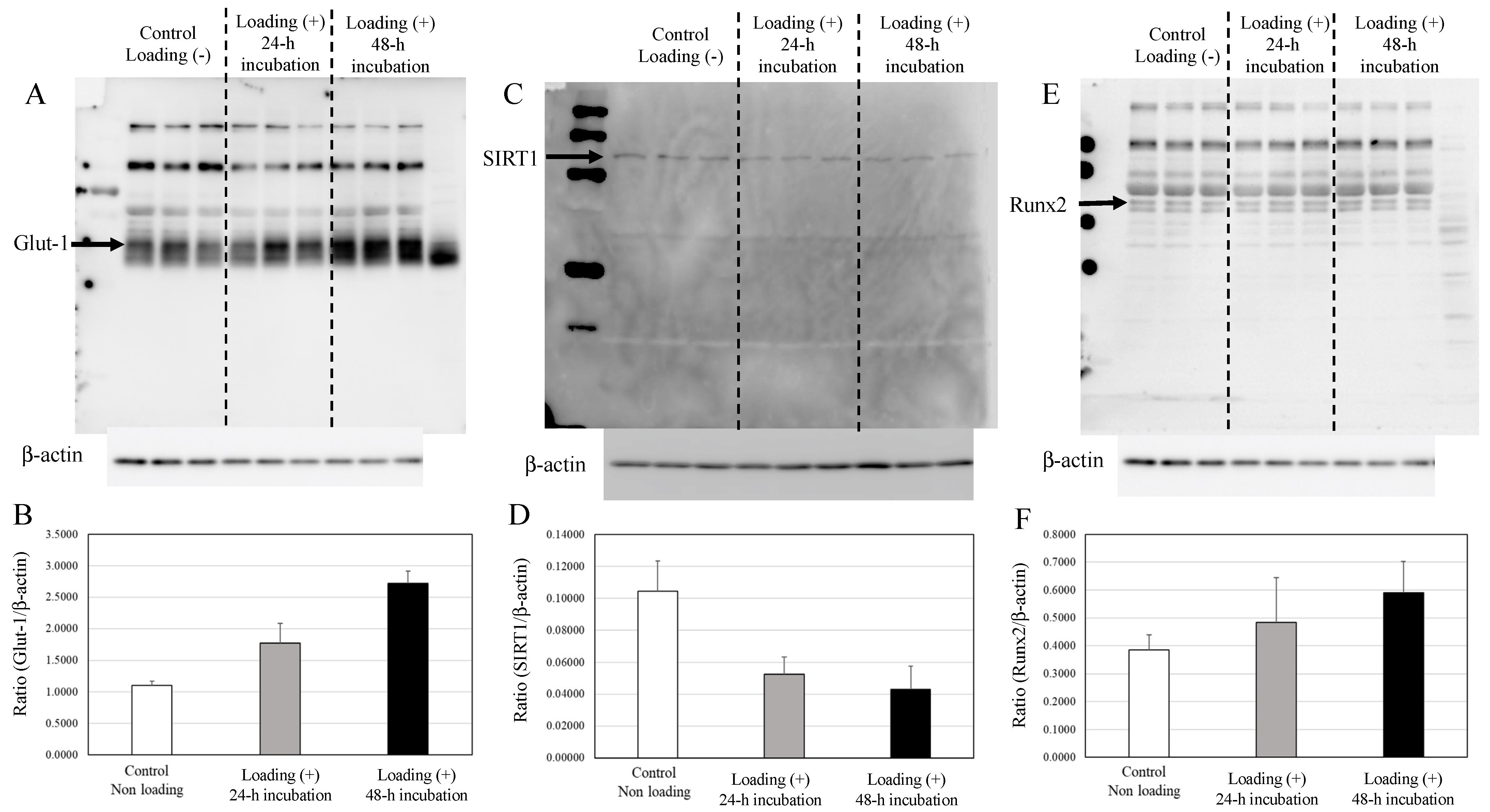
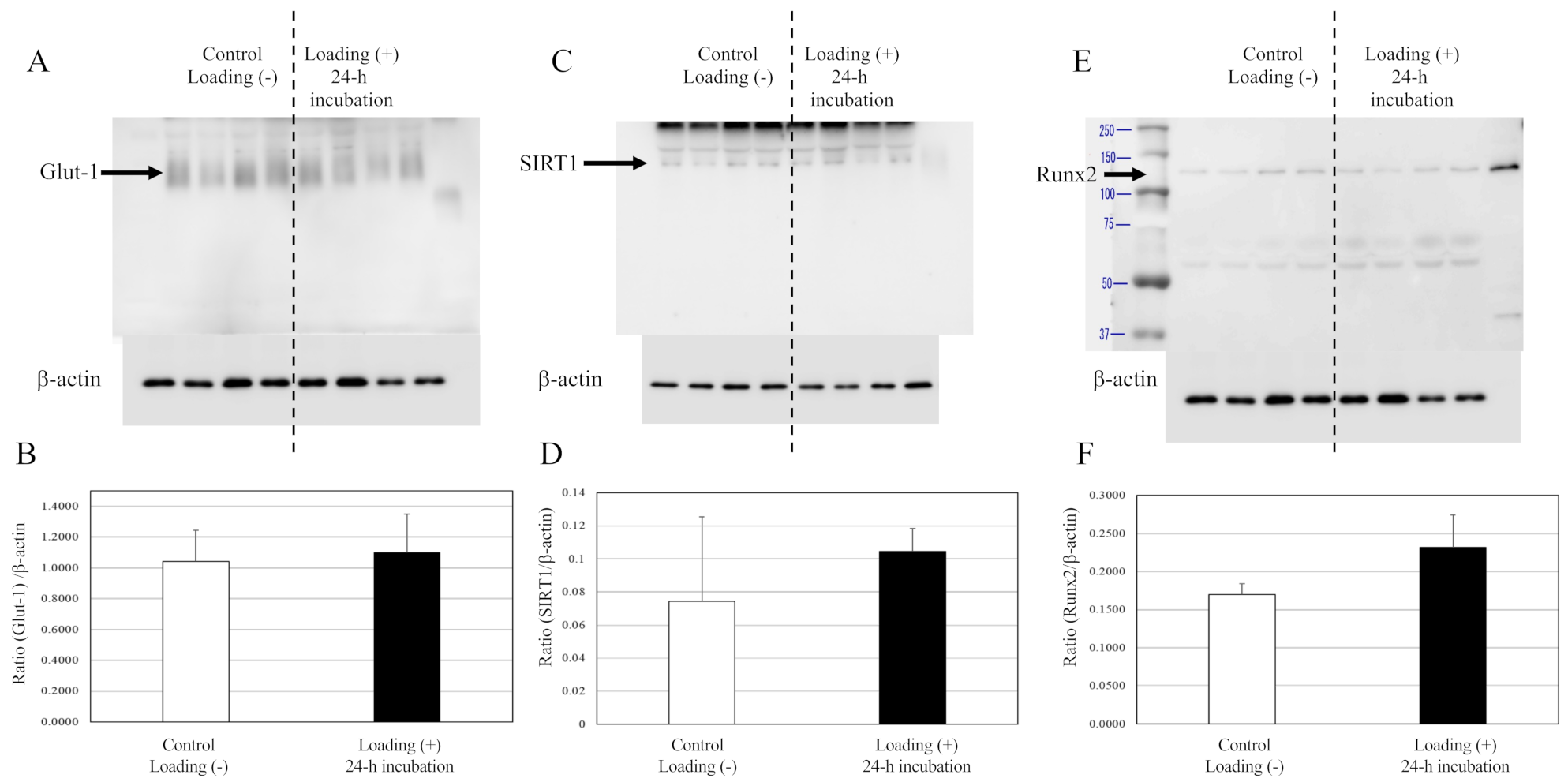
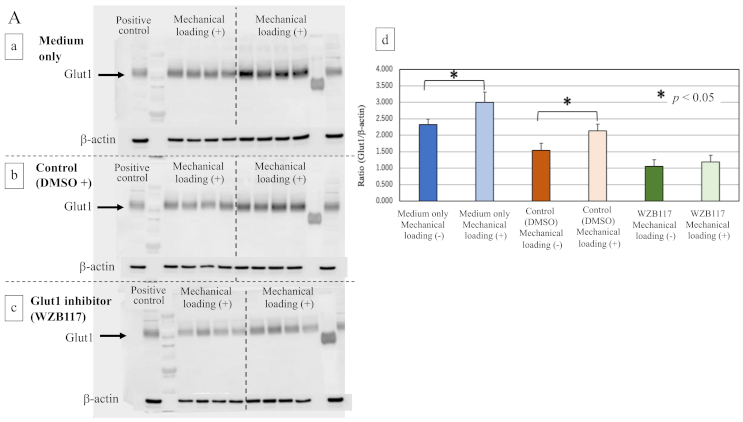
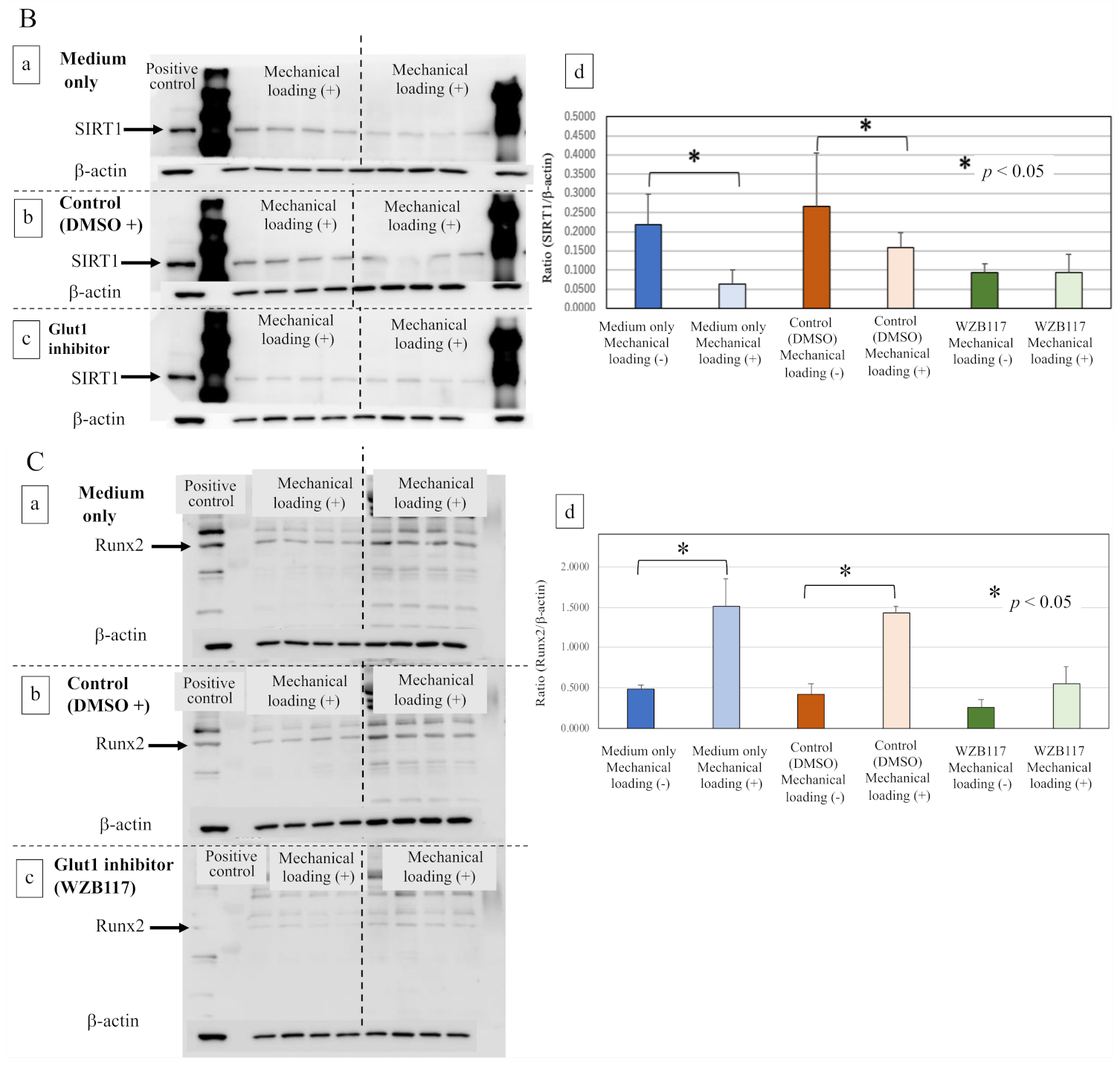
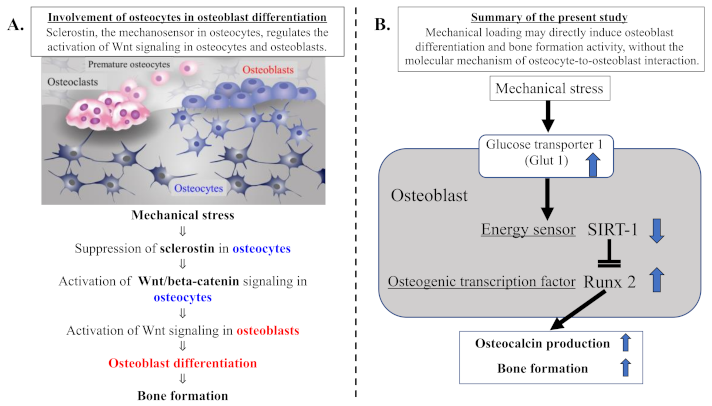
Physiologic Mechanical Stress Directly Induces Bone Formation by Activating Glucose Transporter 1 (Glut 1) in Osteoblasts, Inducing Signaling via NAD+-Dependent Deacetylase (Sirtuin 1) and Runt-Related Transcription Factor 2 (Runx2)
 ,
, Abstract
Share and Cite
Somemura, S.; Kumai, T.; Yatabe, K.; Sasaki, C.; Fujiya, H.; Niki, H.; Yudoh, K. Physiologic Mechanical Stress Directly Induces Bone Formation by Activating Glucose Transporter 1 (Glut 1) in Osteoblasts, Inducing Signaling via NAD+-Dependent Deacetylase (Sirtuin 1) and Runt-Related Transcription Factor 2 (Runx2). Int. J. Mol. Sci. 2021, 22, 9070. https://doi.org/10.3390/ijms22169070
Somemura S, Kumai T, Yatabe K, Sasaki C, Fujiya H, Niki H, Yudoh K. Physiologic Mechanical Stress Directly Induces Bone Formation by Activating Glucose Transporter 1 (Glut 1) in Osteoblasts, Inducing Signaling via NAD+-Dependent Deacetylase (Sirtuin 1) and Runt-Related Transcription Factor 2 (Runx2). International Journal of Molecular Sciences. 2021; 22(16):9070. https://doi.org/10.3390/ijms22169070
Chicago/Turabian StyleSomemura, Shu, Takanori Kumai, Kanaka Yatabe, Chizuko Sasaki, Hiroto Fujiya, Hisateru Niki, and Kazuo Yudoh. 2021. "Physiologic Mechanical Stress Directly Induces Bone Formation by Activating Glucose Transporter 1 (Glut 1) in Osteoblasts, Inducing Signaling via NAD+-Dependent Deacetylase (Sirtuin 1) and Runt-Related Transcription Factor 2 (Runx2)" International Journal of Molecular Sciences 22, no. 16: 9070. https://doi.org/10.3390/ijms22169070
APA StyleSomemura, S., Kumai, T., Yatabe, K., Sasaki, C., Fujiya, H., Niki, H., & Yudoh, K. (2021). Physiologic Mechanical Stress Directly Induces Bone Formation by Activating Glucose Transporter 1 (Glut 1) in Osteoblasts, Inducing Signaling via NAD+-Dependent Deacetylase (Sirtuin 1) and Runt-Related Transcription Factor 2 (Runx2). International Journal of Molecular Sciences, 22(16), 9070. https://doi.org/10.3390/ijms22169070